Showing posts with label Anubhav Sinha. Show all posts
Showing posts with label Anubhav Sinha. Show all posts
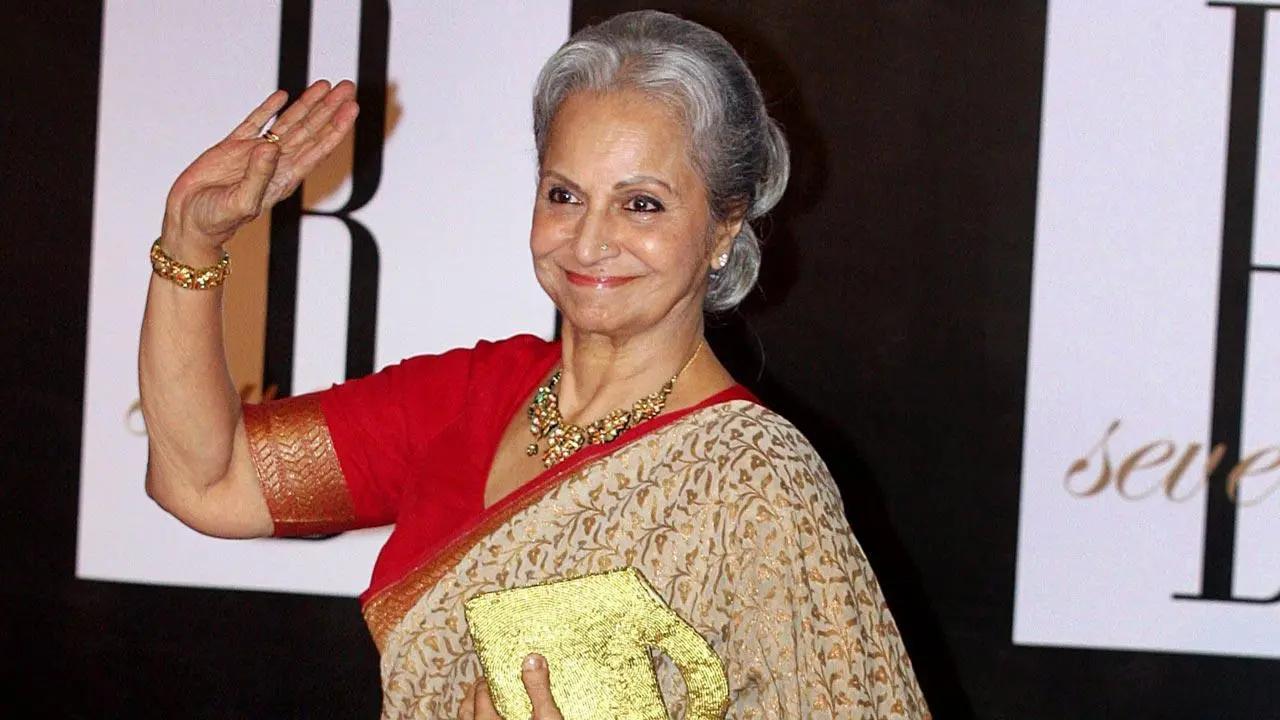
Waheeda Rehman to make rare screen comeback as Mahatma Gandhi’s mother Putlibai in Manoj Bajpayee starrer
4:36 PM
Iti Shree Misra (BOMBAY TIMES; September 21, 2026)
It took more than a few sittings and a promise of the best food in Lucknow to coax Waheeda Rehman back onto a film set. After a brief, memorable appearance in the 2021 OTT film Skater Girl, the veteran actress had been reluctant to take on new assignments, citing age and a desire to step back – until now. The actress will be seen in a major role in Sudhir Mishra and Anubhav Sinha’s next.
The pitch that worked
Director Sudhir Mishra was adamant about having Waheedaj i in his Mahatma Gandhi film, and producer-director Anubhav Sinha backed him with a series of patient meetings.
“Waheeda ji was rather unsure of coming back to acting in another movie. But Sudhir was very keen on having her as part of the cast,” Sinha says.
Over several rounds of conversation, Mishra reassured her about the role, while Sinha leaned into charm and cuisine. “I promised to feed her the best food in Lucknow,” he says.
Waheeda Rehman, who had visited Lucknow a long time ago and wasn’t very familiar with the city, finally agreed. She is now in Lucknow, shooting for the film and playing what the team describes as a very important part although not Putlibai, as some reports suggest.
Sinha further shared, “Waheeda ji found the script very exciting and the character very interesting but she was reluctant and unsure if she wanted to come back to acting. But Sudhir and my insistence and the story convinced her enough to say yes to the role.”
For the two filmmakers, securing Waheeda Rehman was less about casting and more about legacy. Sinha says that sitting with her to discuss cinema and this particular script has been ‘an incredible honour’.
A 21-day chapter, a starry ensemble
The yet-untitled film, currently working under the title Gandhi And My Mother, focuses on a lesser-known 21-day chapter from Gandhi’s life. Manoj Bajpayee essays the Mahatma, reuniting on screen with Saurabh Shukla after Satya (1998) and Aarakshan (2011).
The ensemble also includes Divya Dutta, Aamir Bashir and Ashwath Bhatt in significant roles. Divya, incidentally, plays Sushila Nayyar, Gandhi’s personal physician and close associate, who authored several books on her experiences with him. Her brother Pyarelal Nayyar served as Gandhi’s personal secretary.
“For me to be playing such an iconic character is a real high”: Divya Dutta on playing Sushila Nayyar
For Divya, signing up for the biopic felt like a double win. “For me to be playing such an iconic character is a real high. Being on the set and just playing the role takes me back to that remarkable era and that feels amazing,” says the actress.
The film also marks her first collaboration with Mishra, a filmmaker she has long admired. “To be part of the cast of such a talented and amazing director is like a dream come true,” she says. With producer-director Anubhav Sinha, meanwhile, it’s reunion time. “This is my second film with Anubhav who’s an amazing friend and being back on the set with him is like party time,” Dutta adds.
Though Divya and Manoj Bajpayee have acted together in several films earlier, this will be the first time they share screen space in the same frame, a milestone she notes with quiet excitement. In a project that blends legacy, craft and camaraderie, Dutta’s enthusiasm is simple, “It’s an all-out win-win situation for me!”
I find being called 'Gareebon ki Madhuri Dixit' derogatory-Niki Aneja Walia
10:53 AM

Neha Maheshwri (MUMBAI MIRROR; September 12, 2026)
After spending years in the UK, Niki Aneja Walia is back in India for good and taking on more acting assignments, with a focus on films and OTT. Last seen in Bhai Tera Star Hai, she is keen to explore roles that allow her to move beyond the preconceived image associated with her. Her first stint in Bollywood, however, did not unfold as she had hoped.
Niki, who made her acting debut with Mr Azaad before walking away from films, recalls, “I chose to give up films and move to TV for personal reasons. I never felt comfortable in the film industry because, back then, the casting couch used to give me the creeps. So, apart from the MD comparison, my biggest challenge was compromising. I refused to do it. I am not selling my soul to earn an audience. I want to wake up and love who I see in the mirror.”
Walking away came at a professional cost. The actress, who has been part of several TV shows, including Baat Ban Jaye, Sea Hawks, Dastaan, Samandar, Gharwaali Uparwaali, Astitva...Ek Prem Kahani and Dil Sambhal Jaa Zara, says, “I paid a price for being honest. When I moved away, I had spoken about a filmmaker, and I don’t think the industry took too kindly to my honesty. I had been asked to go out for dinners with distributors, and when I refused, I was not treated well on the sets the following day. There were pleasant experiences with other makers too, but somewhere deep inside, I felt I could not continue. I chose conscience over a successful movie career.”
The comparison with Madhuri Dixit also came into play when Anubhav Sinha was casting Gulaab Gang. Having worked with the director before, Niki approached him because she really wanted to play the character eventually portrayed by Juhi Chawla.
She shares, “I have worked with Anubhav a lot, and he is like a brother to me. So, I reached out to him when he was casting for Gulaab Gang because I really wanted to play the character eventually portrayed by Juhi Chawla. He said, ‘Main toh Madhuri ko le raha hoon, do-do Madhuri mere frame mein kya karengi.’”
She admits that being compared to Madhuri has always flattered her, but she draws the line at comparisons that diminish her own identity and work as an actor.
She says, “In films, I have always been compared to Madhuri Dixit. I have had fans write to me that if it was not for her, I would have had a more successful career. Personally, I have felt so flattered every time someone has said I resemble Madhuri Dixit. But one thing I don’t understand is, what’s ‘Gareebon ki Madhuri Dixit’? I find it very derogatory.”
There should be one or two films made on Gandhi every year for the next 100 years-Anubhav Sinha
9:44 AM

Anshul Chaturvedi (BOMBAY TIMES; October 2, 2026)
Hindi cinema doesn’t have a great track record, at least of commercial success, when it comes to projects around the generation of freedom fighters. Not many movies have been made, fewer still have connected to the larger audience. Is there any point in making more movies on characters such as Mahatma Gandhi? Anubhav Sinha says yes, that filmmakers have a responsibility to keep making these films, in the hope that maybe the next one will work, or the one after that, or the one after that...
Why should another film be made on Gandhi today?
I feel there should be one or two films made on Gandhi every year, for the next hundred years. His contribution to the modern history of our country is just amazing. The weaknesses he shows, the strength that he shows, the tough decisions that he takes…
I was telling my son ki Gandhi woh aadmi tha jo kehta tha ki tum log jhagda band nahi karoge toh main khana nahi khaunga. Toh mera beta hasne lag gaya. Bola toh? Toh maine kaha log jhagda band kar dete thay. Ek baar nahi hua, kai baar hua. Ye uss aadmi ka power tha. Ambedkar ke, Gandhi ke views sabko maloom hain. Par jab Constituent Assembly banti hai toh woh Nehru se jaakar kehta hai ki Constitution inse likhwao. Because yeh desh ko behtar samajhte hain. Desh ke vanchiton ko behtar samajhte hain. Aur woh aadmi jo criticize karta tha, woh aisa karne ko agree kar deta hai. Woh Congress party join karta hai. Yeh bade unique log thay. Ambedkar ho, Gandhi ho, Patel ho. Yeh baat toh sach hai na ki Patel ko vote zyada mile thay aur Gandhi ne kaha ki nahi Nehru. Toh woh step back kar jaate hain, aur aapko kahin bhi Gandhi aur Patel aur Nehru ke beech mein koi animosity ya koi sarcastic remark kahin dekhne ko nahi milta. Ye bade unique log hain! Patel, Nehru, Gandhi, even V P Menon. Inn logon par toh itna zyada kaam hone ki zaroorat hai. Bhagat Singh. Bose. Matlab aapas ke itne contradictions...
A counter thought: We had a large number of Bhagat Singh movies in 2002. Five came out together. And maybe some of them did not even recover their cost. Is the audience willing to consume all those movies if you make them?
We have to understand that we are not making glucose biscuits. These are films, and these films live. A glucose biscuit is consumed with a cup of tea and it’s over. Then you buy a new packet. This is a different ball game. This is an art form. And every film, every such film will leave an impact on X number of people.
And slowly for all we know that X number of people will swell into a much larger number, which it should and it will. So just because two films on Bhagat Singh did not work, it doesn’t mean that the audience is not interested in him.
And also, those films were made with people who were in their thirties. When Bhagat Singh started, he was 17. He was born in 1907. He died in 1931. 24 saal mein toh phaansi ho gayi thi. Toh 17 saal ke ladke ke saath Bhagat Singh kab bani? Jab tak aap 17 saal ka Bhagat Singh nahi dekhenge, aap Bhagat Singh ko samajh hi nahi sakte.
A second counter thought: India is fascinated, captivated with the persona of Subhas Bose. And I remember vividly when Benegal’s The Forgotten Hero was released. I went to Kanpur to meet Captain Lakshmi Sehgal (who was then 90 years old), to ask her what she thought of the portrayal of her character. She said, “Beta abhi I have not watched the movie, because it is not running in a single hall in Kanpur.” And I was taken aback. Sahara was the distributor, I had gone from Lucknow, it was on Bose – and the INA veteran hadn’t been able to find a show in her city. As an audience, do we care about these movies – at least proportionate to how we apparently idolize those leaders?
Those are the predicaments of the cinema being run by corporations, right? See, any art form is very intimate, very personal. But cinema is so capital intensive that it becomes a corporate-run art form. So it will have these hiccups and roadblocks. But that still doesn’t mean that the next Bose should not be made or the one after that should not be made – or the one after that should not be made. It is our responsibility as filmmakers to keep on doing it because these people have played the most significant part in the making of India that we live in and that we chant about. We will never be able to contribute to India like they did.
That’s a legit POV too. Hollywood never tires of making movie after movie on the men who fought for them in WWII, and it just keeps coming. And they never say, we are now tired of seeing what our soldiers did. From the Battle Of The Bulge (1965) to A Bridge Too Far (1977) to Pearl Harbor (2001), Saving Private Ryan (1998), to Dunkirk (2017)… there are dozens, literally.
True. And we do not; we do not have this argument about the other side of the spectrum. So are you telling me that if a film about Air Force warfare doesn’t work, we should stop making films about Air Force warfare? No! It didn’t work. The next time it will work. Maybe the time after that.
Maybe a Safed Sagar comes in 2026 and it will sort of restore the perception.
Yeah, yeah. Maybe in 2047, a Netaji Subhas Chandra Bose film will work. We have to keep making it. And it’s not easy to make these films. It’s very difficult to make these films. But that’s the game. That’s the business of films.
So you say films on Gandhi should keep being made. There are films on Godse also now. What is your take on that?
But why shouldn’t they? I am not opposed to it. There are people who believe in Godse. They should make films about Godse. There are people who believe in Savarkar. They should make films about Savarkar. There are people who believe in Nehru. They should make films about Nehru. These people, whether it’s Godse or Savarkar – they have a place in history, right? They have a definite place in history, and their stories should be brought to the table.
We should not live on WhatsApp myths. There should be a biopic on Godse. There should be a biopic on every such person who played a part in the making of this nation. Because we can have these n number of dining table conversations about them, but we have a responsibility to acknowledge them, to recognize them, to talk about them, to know them. I’ve just ordered a book by Savarkar. I want to read Savarkar. I want to know Savarkar. And why shouldn’t I?
You’re saying, essentially, that people of every single spectrum/affiliation should understand every other spectrum as well to know what the actual debates were, rather than taking this condensed version 70 years later and arguing over it?
I think they were all human beings. I’m reasonably certain that they all made mistakes. But there was something going on between 1915 and 1950. There was something going on, and there were significant things going on. People losing lives, people changing history’s course. According to me, there are 200 films between 1915 and 1950. 200. 200 films minimum.
The Komagata Maru ship tragedy is not explored yet. A whole lot of things, like even Bose. Bose’s days in Germany when he goes to meet Hitler, there’s a film there. You can agree, disagree with anybody. That’s besides the point. But there are at least two movies there. There’s maybe more. What happened in Singapore?
What was Bose doing in Singapore? There’s a story there. There’s a film there. I would love to make a love story between Nehru, Gandhi and Patel. I think it’s a love story. It’s a beautiful love story.
Did you read up on Gandhi earlier as well?
Yeah, There’s... In my office, in my room, there’s only one picture on a wall, which is Gandhi. And for a reason. I try to visit every place that Gandhi visited. I go and sit there alone. I went to Bhitiharwa where he started his first Indigo Revolution. I sat there for two hours. I was sitting in the cottage that he made with his own hands. I sat under the tree that he planted. I… sort of spent time with him. One thing I miss terribly is that I never met him.
Any movie you think that got Gandhi’s persona right? We all began by seeing, of course, Attenborough’s Gandhi as a first starting point.
That’s a very hagiographical film.
Irrespective, but that’s the first time most Indians saw Gandhi on screen, so that remains your initial definer of what... it’s like seeing Arun Govil as Ram.
Yeah. No, there’s no other film on Gandhi, actually, and there’s none that treats Gandhi as a human being, which this film is doing. Just as a human being. I mean, we forget that the first time Gandhi ever got political, it was a rather racist cause. In South Africa, he was saying, ‘Don’t treat Brown people like Black people. Treat them like White people.’
But then he corrects himself. By the time he comes back in 1915, he’s a different man, and between 1915 and 1948, he’s a different man. And he’s changed over time. He’s constantly improving himself and at the same time not rejecting his mistakes. You read his autobiography, he talks about his stint with non-vegetarianism. He talks about that night when his father passed away.
By the time he wrote this book, he was a Mahatma already. He didn’t need to write all that. He didn’t need to write all that. His non-vegetarianism was between him and his friend and could easily have been buried. You and I wouldn’t talk about it today. But he wrote it in his autobiography. And that’s when I... And it comes on the fourth page or the sixth page, and I was like, “Whoa. What a man.”
We haven’t seen a film of that kind about Gandhi, the kind of truthfulness and faithfulness he has in his narrative about his own life without being worried of, uh, its interpretations.
He wrote what he lived. That’s a lot of courage. I was recently reading something that Marcus Aurelius said – that nobody knows you fully well. There are 17 sides that are inside of you. Nobody knows you. Even if you don’t know yourself very well. Then why should you worry about what people think of you? Because they don’t know you. And Gandhi explores himself in that book, and, he says everything that he knows about himself.
Some of the pictures are dark, some of the pictures are bright, but he puts them out, and he allows you to interpret him in the manner you choose to.
What was your buy-in into the project when Sudhir discussed it with you?
The first thing was that I... The first thought that came to mind was, how can I steal this story? (laughs). Can I... Should I ask him? Can I? Because he had come over. He comes over home quite frequently in the night, sometimes for dinner, sometimes for post-dinner coffee or ice cream, and we sit and we talk about films and life and the world. And one of these days, he told me that story, and I actually considered asking him, ‘Do you want... Do you mind giving this story to me?’ But then I didn’t, because he was so passionate about it. So, I thought I’ll get associated with it as a producer.
No, but what stayed in the story? I don’t know that part.
The fact that he was looking at Gandhi in such a personal humanist vision. A man who could make mistakes.
The audience played the role of PR for Hanuman Ansh-Vishal Chaturvedi
9:21 AM

Deep Saxena (HINDUSTAN TIMES; September 2, 2026)
Starting at 250 theaters and coming down to 25 in a week and now running in 1,200 screens in the fourth week, doctor-turned-debutant writer-filmmaker Dr Vishal Chaturvedi’s Hanuman Ansh on Neem Karoli Baba is doing wonders at the box office.
Calling it “magical, divine and driven by the audience,” he says, “At Rs. 1.7 cr, we just wanted the audience to watch and the investment to return but it did wonders (according to data Rs. 45 Cr only in India and counting). We have stopped looking at collections and counting the blessings, appreciation and love.”
Vishal is himself surprised with the “grace.” He says, “I guess what worked in the film primarily is Baba’s divine story (played by actor Shobhinaw Satyaa), music and the actors and makers who are very emotional about the subject. We hardly did any promotion and PR as we did not have any budget, but the audience played the role of PR with word-of-mouth and posting on social media. The audience have driven the film on their shoulders.”
He recalled how August 15 big releases hit them. “Due to the big films (Batwara 1947 and Awarapan 2,) our shows were reduced to just 25 screens but they kept running well. The audience wanted to watch but there were no shows, so people travelled 200-250 kms and posted on SM. There were videos that even after the film ended, the audience were so emotional that they did not get up from their seats. Probably that all worked which no PR can do.”
They did bhandaras instead on PR exercise. After the shows were reduced, they did a road trip from Mumbai. “We went to Rajkot, Surat, Ahmedabad and even small towns where we met the audience, local media and cinema owners. We did not have funds, so we amplified it on social media, and it was boosted by content creators and users with very emotional reels. It organically became viral and shows increased,” he says.
The film has been shot in Chitrakoot and has used Braj, Awadhi and Bundeli language to connect with the wider audience, he says.
A Lucknowite, Vishal completed his MBBS from Gorakhpur in 2006 and in the same year was posted in Haldwani when he got introduced to Baba and went to his ashram in Kainchi Dham (Uttarakhand) where he became a bhakt.
“In 2011, I stopped medical practice and came into writing and assisting in film. I have also worked with Anubhav Sinha for a few years and have assisted in films Hurdang (2022), Dedh Bigha Zameen (2024) and some shows too. My medical profession helps me a scientific and skeptical approach,” says the writer of TV series Fauji 2.
He also runs a Hanuman Chalisa Club which has 12,000 members.
As per Sacnilk, after 25 days it has earned gross collections to ₹53.82Cr and net collections to Rs. 45.63Cr so far.
Anubhav Sinha, Ajay Devgn to reunite for an action film
9:58 AM

Ajay Devgn and filmmaker Anubhav Sinha, who weren’t on talking terms after their 2007 outing ‘Cash’, likely to reunite for an action flick
Upala KBR (MID-DAY; May 18, 2026)
In a 2025 interview, filmmaker Anubhav Sinha had revealed that Ajay Devgn had not spoken to him in the 18 years since their film, Cash (2007), had a poor run at the box office. Well, the good news is that creative differences, if any, between the two are a thing of the past. mid-day has exclusively learnt that the superstar and the director are in talks to reunite for a movie.
Since 2017, Sinha has gravitated towards social dramas, churning out Mulk (2017), Thappad (2020), and the recent Assi, among others. But he is changing gears for his next with Devgn.
A source revealed, “It will be the kind of larger-than-life entertainers that Anubhav used to make before — think Dus [2005] or Ra.One [2011]. Now, the director wants to try his hand again at an ambitious action movie.”
Who better than Devgn to headline an action film? From what we’ve heard, it was Devgn’s manager and producer Kumar Mangat Pathak who arranged the meeting between Sinha and the actor at the latter’s office.
The source elaborated, “After Cash, even though the duo did not speak, there wasn’t ever a direct disagreement. Anubhav had clarified that the disagreement was between the film’s producers and financiers. A few months ago, Kumar Mangat brought them together, and Anubhav pitched one of his three scripts to Ajay. The superstar, Mangat, as well as producer Bhushan Kumar instantly liked it, and the latter may come on board. Ajay asked Anubhav to make the scale bigger.”
True to Sinha’s style, the action-heavy film will have strong elements of realism. If all goes well, it may roll by 2026-end.
The fact that you said Assi and Dhurandhar in the same breath is good enough-Anubhav Sinha
3:01 PM
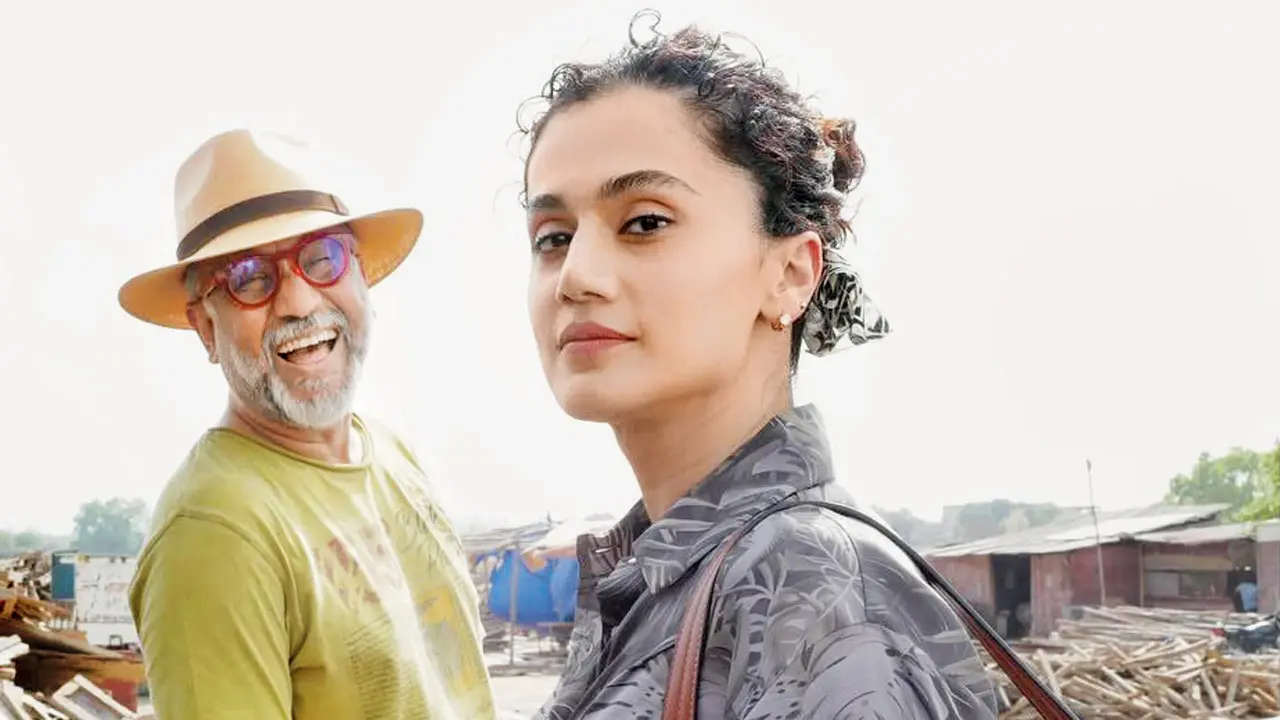
As Assi drops online, filmmaker Anubhav Sinha gets candid about its box office reception, making unpopular choices, and why he believes films like The Kerala Story and The Kashmir Files have a right to exist
Priyanka Sharma (MID-DAY; May 3, 2026)
Stationed at a city hotel, filmmaker Anubhav Sinha is busy recording long media interactions about his latest film, Assi. If one didn’t know better, the director’s enthusiasm would give the impression the film is about to release. But the Taapsee Pannu-starrer released two months ago, and began its streaming run last week. For Sinha, though, it feels like a re-release.
“The film dropped on Zee5 on Thursday night (April 17). Friday was a little quiet. So, I thought maybe OTT release is like this. But, Friday night onwards, it became viral — whether it was Instagram Reels or Whatsapps or DMs from filmmakers, friends, bichhde hue dost Mathura aur Jaipur se. So, for me, it’s feeling like a re-release,” he smiles.
Still, two months is a long time for a maker to observe the reactions that a film received during its theatrical run, agrees Sinha. “Largely, things that are said about the film are in appreciation. There are a slim percentage of people who find Kumud’s [Mishra] character, Kartik, to be an outsider to the story. But that’s all that I have heard as a critique. The other observation is that the film is very disturbing, which it was intended to be,” he says.
It feels the right time to register a feedback that one felt while watching the movie that works both as an investigation and an introspection centred around the rape of a school teacher (played by Kani Kusruti) in the capital. The feminist intent notwithstanding, the execution in parts feel preachy, we share with Sinha. The director replies, “I respect this observation and if I looked at the film from that viewpoint and it’s not absolutely unfounded.”
Sinha, consistently, has been among the voices in the industry who remain open to dialogue and dissent. So, we ask him how he views Pannu’s widely-discussed Instagram post, before Assi’s release, where she appealed to the audience to be louder in their support for films that aren’t cut from the cloth of mainstream. “You deserve good cinema only when you value it,” reads a sentence from her post. Doesn’t it put an unfair amount of responsibility on the audience, which is an outsider to the rooms that decide what gets made in the industry?
“The responsibility of the audience is directly proportional to the expectation of the audience. So, Tapsee is probably coming from a place where she very regularly hears that good cinema is not made. Even though, I don’t agree much with this because how do I assume my cinema is good? People will decide that. But Tapsee was probably trying to talk about real cinema, real stories. So, if the audience has expectations and demands from cinema, then it becomes your responsibility as well [to support it] because making such films is an unpopular choice. People have no idea what it takes to get these films off the ground,” he says.
But another argument arises that the audience merely reacts to the visual assets of a film or to a star, if it’s a star-fronted feature. If a filmmaker fails to ignite excitement among the viewers, the onus shouldn’t fall on them to still pay to watch a film, howsoever well-intentioned it is. Sinha agrees that the responsibility lies more on the industry to churn out diverse stories on a regular basis, even if it fails at times, in an attempt to reach out to the audience and eventually condition it to give a chance to “unpopular films”.
How does one restore the balance that an Assi and Lapataa Ladies can co-exist with a Dhurandhar and a Pathaan [2023]? “Yes, the balance has become very lopsided. But the fact that you said Assi and Dhurandhar in the same breath is good enough. Around 13 lakh people went to see Assi in the theatres. If I draw an analogy, 40–50 thousand people sit in a stadium to watch a match. Now, three crore people went to Dhurandhar, but its stakes and ambition were different. Assi’s ambition was not that three crore people should go to see me,” he argues.
But Sinha is a producer as well and the commercial ambition of Assi will have a number attached to it. “It should have done much better than what it did for it to fall into that [success] category. But that’s one of the later metrics that I look at. In the real world, it seems that the math of a film is very urgent. But it takes a backseat, not only for the filmmaker but for the whole team, including the stars and the studio. Years later, it doesn’t matter how much money did Satya [1998], Chandni [1989] or Lamhe [1991] make. On an urgent basis, Lamhe was a flop. But today, it is a hit.”
What remain urgent are Sinha’s stories. So, we mention our recent conversation with filmmaker Mahesh Bhatt, who said that stories on screen are being weaponised to push people away from each other.
“As an audience, you can choose one story over the other but all of them have the right to exist. The Kerala Story [2023] has a right to exist, and so does The Kashmir Files [2022],” Sinha says.
So, where does an artiste’s responsibility lie? “Artistes will make their own choices and then history will place them on shelves. It’s not my job to place another artiste on a shelf or myself on another shelf. We are making films, and today there is a knee-jerk response. Twenty years later, when a smart girl writes a massive article about what happened in this era in India, we will all be judged much later. If you are fortunate, you will be judged, otherwise you will most likely be ignored by history.”
The enemy within: Changing face of rape on screen
10:45 AM

No torn blouses, leering villains and revenge sagas. Some filmmakers are moving beyond tropes to confront the ordinariness of sexual offenders and systems that enable everyday harm
Shruti Sonal (THE TIMES OF INDIA; April 26, 2026)
For decades, Indian cinema has had a rape script with three roles. A lecherous villain, a woman violated, and a hero who arrived just in time to avenge her. That template is cracking with a new crop of films and shows where the perpetrator grows up listening to poetry about women’s empowerment, speaks English, and belongs to your family.
‘Chiraiya’, a new web series that has ruffled feathers in India’s ever-growing manosphere, puts a face to that. In a reputed joint family in Lucknow, a sari-clad Kamlesh — the elder bahu — asks a question that old cinema never had to answer. “As women, we’ve been taught to never cross the rekha like Sita, and we’d be safe. But what if we aren’t safe inside the rekha itself?”
Her question follows an event that rarely makes it to popular culture: her sister-in-law being subjected to marital rape, an act not yet criminalized in India.
The show’s afterlife online has seen one of the rape scenes turned into a meme in incel circles online, where it is used to argue that ‘modern women’ are okay with increasing their ‘body count’ before marriage but quick to label sex within marriage as rape.
Beyond these rage-bait debates, however, the show is emblematic of how a string of recent shows and films are tackling rape, moving beyond helpless victims, macho male saviours, and neat definitions of justice. They are taking on ‘hushed’ issues like marital rape, and also examining systemic failures, legal hurdles, and the everyday-ness of perpetrators — a far cry from voyeuristic tropes, torn blouses, and villains laughing as women beg ‘bhagwan ke liye mujhe chod do’.
When the villain looks like us
‘Chiraiya’ director Shashant Shah says moving beyond villains was a “conscientious” decision, as is placing the story of rape in a liberal, middle-class family. Arun, who commits marital rape on multiple occasions, is shown as an English-speaking younger son of a progressive father, who writes evocative poetry about women’s empowerment — but fails to stand up for his bahu.
“We wanted to show education has nothing to do with how women are getting treated, and it’s not something that happens in lower-strata societies,” he adds.
Assamese short film ‘Xoudaamini’ takes a similar approach. It begins where most films tend to end — with an intercaste couple eloping and marrying. But instead of a happy ending, the marriage unravels when the husband, in a drunken state, forces himself on his wife.
Priyanka Sohoria, the film’s director, says the story was born out of personal experiences of women in her family. In ‘Xoudaamini’, the woman leaves home after the incident, along with her son.
“After watching it, many women reached out to me and said they had gone through something similar, but couldn’t leave,” Sohoria adds. “That’s why such stories are important — to show other possibilities.” Released on YouTube for free, the short film has amassed nearly three lakh views.
The National Award-winning Malayalam film ‘Aattam’, too, avoids depicting the act itself, and instead focuses on what follows within a ‘liberal’ theatre group. The accused, a colleague, is defended by peers, while the survivor faces questions in a space she once considered safe.
This move away from stereotyped villains towards familiar, everyday perpetrators has implications beyond cinema, says Nikunj Kulshreshtha, assistant professor at Jindal Global Law School.
In a study of 4,485 Hindi films between 1980 and 2022, he analyzed markers commonly associated with rape victims, such as whether the victim was educated, her relation with the perpetrator, whether she struggled physically, and her dressing.
“I found that these films were not only pushing the image of an ideal rape victim, but also the ideal offender,” says Nikunj, pointing to the long-standing depiction of rapists as visibly deviant men with criminal pasts or addictions.
“Such depictions impact how the judiciary views offenders, and often damage the credibility of victim narratives, as a lot of people have difficulties in believing that a boy from a good family could be a potential sexual offender,” he adds.
Takes more than a hero
Along with the changing depiction of victims, the hero too is being reimagined. In older films such as ‘Shahenshah’, ‘Damini’, and ‘Insaf Ka Tarazu’, rape often functioned as a plot device to trigger a male protagonist-led revenge arc. While such narratives persist in some recent blockbusters like ‘Dhurandhar 2’ and ‘Maharaja’, a growing number of filmmakers are moving away from it.
In Anubhav Sinha’s ‘Assi’, a courtroom drama centred around a gang rape where Taapsee Pannu plays a fierce lawyer, there are no dramatic victory speeches or cathartic endings. Instead, there’s a call for reflection, with the movie title alluding to the NCRB data of over 80 rapes happening every day in the country.
“I was not interested in creating a hero, or making this incident the podium the hero stands on. I also didn’t want to blame a single perpetrator, or even the police or the judiciary in isolation,” Sinha says. “Maybe the onus rests on us. There’s a lot left to be desired in the way we raise our boys. On the other hand, from a young age, we ask girls to keep quiet and ignore small acts of harassment.”
‘Chiraiya’ too resists a cliched saviour saga to focus on imperfect allies and female solidarity. At its centre is Kamlesh, who initially struggles to recognise marital rape but gradually educates herself and stands by her sister-in-law, acknowledging that women often pass on and perpetuate patriarchal norms, too.
“I wanted to focus on this aspect of sisterhood because even today, a lot of women feel that they don’t have anybody to go to when something like this happens to them,” Shah says.
Unlearning the everyday
More recent narratives are also widening the lens. Oscar-nominated crime drama ‘Santosh’ examines caste bias and corruption in the investigation of a Dalit woman’s rape and murder, while the sequel to the successful ‘Dhurandhar’ briefly touches on sexual violence against men — as a way of exerting masculinity and power — often ignored in mainstream depictions.
“It’s more about looking inward. I’m fighting with my own misogyny every day,” says Sinha, recalling how he grew up in a household where he would get his plate of food before his sister.
Unlearning such “small” acts, he argues, is crucial in battling ‘rape culture’. “We have to understand that it’s not a group of men gleefully fantasizing about rape. It’s the normalization of sexual objectification. Rape is probably the by-product of that…both on and off the screen.”
Mid-sized films have the highest chance of good ROI-Anubhav Sinha
10:01 AM

Dropping his earlier proposal of limited theatrical release for mid-budget movies, ‘Assi’ director Anubhav Sinha asserts high-concept films will find their rightful screens and audience
Mohar Basu (MID-DAY; February 22, 2026)
During the release of Anek (2022), filmmaker Anubhav Sinha had proposed that small films could adopt a model of limited theatrical release, followed by a quick OTT première. He believed the approach would give small movies the chance to co-exist alongside big-screen spectacles. However, now, days after his latest offering Assi has arrived in cinemas, the director admits he has had a change of heart.
“I’m saying the exact opposite today. The future is this size [of films]. Mid-size, medium budget, and high-concept films have the highest chance of a good ROI [return on investment],” he tells mid-day.
In the past eight years, Sinha has championed mid-budget movies, delivering thoughtful stories in Mulk (2018), Thappad (2020), and Bheed (2023). “That’s the only cinema I know as a maker,” he smiles.
Even as tentpole movies dominate theatres today, the director remains clear that filmmakers should continue to make rightly budgeted, content-driven movies and they will find their audience. “I love Rajkumar Hirani and Rohit Shetty films as a viewer. But as a filmmaker, this is all I want. So, I will fight for my and my peers’ right to make films we believe in.”
Is making such films in today’s ecosystem difficult? Sinha admits it’s tough, probably tougher for others than him.
“[You have to] make a good film and recover the money. I make my films frugally. But it’s not easy for everybody. There will be six more directors who want to make such films; they are running around with their scripts. But they won’t get funded. I’m too senior and I’ve seen more than reasonable success. [So] I get to do this.”
Every time Gaurav Solanki and I went to write a scene, we were trying to think like a woman-Anubhav Sinha
8:57 AM

Mohar Basu (MID-DAY; February 17, 2026)
In its first 10 seconds, the trailer of Assi tells you a chilling statistic — that there are 80 reported rape cases in India every day. “That’s one every 20 minutes. By the time you finish this interview, one more would have happened,” director Anubhav Sinha told us, when we met him to discuss his upcoming film that sees Taapsee Pannu as a lawyer, who takes up the case of a sexual assault survivor, essayed by Kani Kusruti.
With Assi, Sinha aims to show how rape culture is rooted in patriarchy. More importantly, he wants to examine our society’s generational failure. “Mothers tell their daughters at 13 that this [sexual violence] may happen, and this is how you deal with it. But men don’t tell their sons about gender equality. We don’t tell them that you might be attracted to another person’s body, but you can’t snatch it,” he rued.
The director teamed up with Gaurav Solanki to write the social drama. Yet, they entered the writing process at a disadvantage. “Every time Gaurav and I went to write a scene, we were trying to think like a woman. That was the toughest part for me. I was watching a lot of films about women to understand women, to feel like one.”
Reuniting with Pannu after Thappad (2020) was a deliberate choice. The director knew she’d front the film for the right reasons. “I meet a lot of actors who want to be in my movies because they think they should want to be in a movie like that. That doesn’t work for me. You will see Taapsee’s honesty in her eyes. She walks the talk.”
Chal Cinema Chale: 'I know my country better now,' says filmmaker Anubhav Sinha
10:29 AM

Anubhav Sinha (BOMBAY TIMES; February 4, 2026)
Distribution teams, over years, would regularly inform me – of ten with charts – that “intelligent cinema” does not work in smaller centres or single screens. This came as news to me, because as a youngster I had seen Ardh Satya, Chakra, Dharavi, Khamosh, Jaane Bhi Do Yaaron, Aakrosh in packed theatres – many of them single screens, many of them smaller centres. Apparently, intelligence had since migrated exclusively to metros. I was shown data. Lots of data. And as everyone likes to say, data never lies – though it occasionally misses reasons.
All this while, another idea was quietly taking shape. Earlier in 2025, while working on a script about youngsters in a small town, I realized I had no idea what youngsters in small towns actually did anymore... I felt strangely disconnected from my roots, which is not a great feeling when you’re writing about them. These were not answers available in books, newspapers, or even panel discussions. They needed to be experienced: all over again. Then came the declarations: cinema theatres were dead. COVID had killed them, we were told, and the funeral seemed to be held every Friday.
Meanwhile, films continued to break box-office records with impressive disregard for these obituaries. 2022 gave us The Kashmir Files and Bhool Bhulaiyaa 2. 2023 followed with Pathaan, Jawan, Animal, Gadar 2. The box office was witnessing numbers so large they required new adjectives. And yet, article after article mourned the death of theatres – sometimes with what felt like enthusiasm. One began to wonder who was benefiting from this narrative. Because this was no accident. It was a campaign. It still is. So I decided to go and check for myself.
Multiplex chains are listed companies; their numbers are easily available. They also represent only about half of India’s theatrical business. The other half exists utterly ignored, away from press releases and publicity materials. I wanted to meet cinema hall owners in these cities and ask them what was actually happening. I will admit – since honesty is the theme – that local food was also a motivating factor. We listed forty cities and made a travel plan. The budget file was named Chal Picture Chalein. I had no idea this yatra would soon become about far more than movies – people, society, changing culture, history, and an alarming amount of street food. I had passed through some of these cities before, even visited a few briefly, but never with intent.
This time, the plan – or the lack of it – was to spend a day in each city and pretend that was enough. The team decided the journey should be documented, which is how four air tickets and two cars entered the picture. The first stop was obvious: home. Benaras. I made a firm decision: no fine dining. All meals would be on the street. I would meet anyone who wanted to meet me. A message went out on social media with a phone number.
The Times of India found this intriguing and sent a photographer from Delhi to document my Benaras days. They published a generous spread. Benaras, as it tends to do, took charge of the journey. Over the next few weeks, across 33 cities, I met digital creators, film clubs, theatre workers, literary organizations, vice-chancellors, senior journalists. I visited schools, colleges, universities, newspaper offices, and radio stations. Young people ferried me around on motorbikes, navigating traffic with a confidence I no longer possess.
One morning in Benaras, my understanding shifted. A group of young digital creators invited me for a 6.30 am photowalk, followed by what they called a “breakfast crawl.” They showed me parts of my own city I had never seen, and eateries I had never entered. They knew Benaras better than I ever had.
That morning, I realized something uncomfortable but important: I had been away too long. I am grateful to those youngsters for the reminder. It reset the tone of everything that followed. In every city, I visited cinema halls – some crumbling, some renovated. Some in ruins and some flourishing. Almost unanimously, the owners dismissed two popular beliefs: that theatres were dying, and that smaller centres wouldn’t watch “intelligent cinema.” So why did Mumbai’s data show poor collections for non-massy films?
There were explanations – technical ones – but not ones that fit into headlines. Nor should they. That’s our problem to solve, the audience should just concentrate on liking the films or not. I am also wary of public self-flagellation. “Bollywood this, Bollywood that.” I’ve heard it often, sometimes from people who have made their entire living from the industry. I don’t subscribe to that. Yes, Bollywood is flawed. But then, so is most of humanity. We can return to that later. Friends often ask me what I learned. I don’t have a tidy answer. I may never. When I asked Sudhir bhai (Mishra, filmmaker) what this journey might do to me, he said, “You will never know. But it will show up in your future work.”
That felt accurate, and also safely unquantifiable. The plan was forty cities. Thirty three are done – after days of three to four hundred kilometres of driving, a rotating cast of hotel rooms, and a growing intimacy with unfamiliar beds. It was exhausting. It was also completely worth it. I know my country a little better now.
Mumbai mera shareer hai; Banaras meri aatma-Anubhav Sinha
9:25 AM

Meera Vohra (BOMBAY TIMES; August 12, 2025)
Today, we begin a new series – Hometown Diaries – where storytellers of Hindi cinema take us back to the places where their roots lie. With hearts full of bachpan ke kisse-kahaniyaan, they revisit the old, familiar lanes that have shaped their present. Join us as we kickstart this journey with Anubhav Sinha as he revisits Banaras ki galiyan.
When Anubhav Sinha recently revisited Varanasi, we accompanied him as he walked through the lanes of his old school, sipped chai at tapris, and stopped by iconic cinema halls. The filmmaker shares that this is the city that shaped both his memories and his movies. In the first chapter of our Hometown Diaries, Sinha tells us about his bond with the city and how it has influenced him in myriad ways – from his taste in cinema to his taste in food.
‘Main jo bhi hoon yahin se hun’
A visit to his alma mater, Government Queens Inter College, triggered a flood of memories – from his first day of school to playing cricket on the sprawling field. With a smile, he says, “Main jo hoon, woh yahin se hoon.”
The Bheed director fondly remembers the day he got admitted to the school. “My parents took me for admission. My mother had written the principal’s name on a small piece of paper and slipped it into my father’s pocket. Someone had told her it was a totka to make things go your way. When my admission was approved, I could see that glint in her eyes, like the totka had worked. That’s the kind of belief people had back then, that a name on paper could change your luck,” he laughs.
Sinha also recalls playing gend-tari, a local game where kids strike each other with a ball. “During monsoon, the moisture made it hit really hard (to play) but it was great fun,” he grins. One cricket match also stands out. “I lost track of time while playing, and when I looked up after scoring a run, I saw my father standing across the field. Instead of completing the run, I ran straight home. But I got a spanking later from my father for being late,” he laughs.
‘I miss the authentic Banarasi food in Mumbai’
Anubhav Sinha often finds himself craving the flavours of his hometown, Varanasi, especially the authentic Banarasi food he struggles to find in Mumbai. He fondly recalls his childhood visits to Basant Bahar, a local Varanasi restaurant where his father would take him and his elder sister. “We used to wait eagerly for the kaju-wala dosa. It was slightly expensive than the regular ones – Rs. 2 at the time – which was a lot back in the 70s. We’d feel bad later that papa had to spend extra for us,” he smiles.
The taste of jalebi and lassi brings back a flood of memories. “I only eat jalebi and lassi when I’m in Banaras, I don’t even remember the last time I had lassi in Mumbai,” he says, sipping from his second kullhar of lassi at Basant Bahar, the place where, he reveals, he had his first proper dining-out experience.
After his mother passed away, Sinha and his family turned to YouTube and recipe blogs in search of that elusive Banarasi taste. “We never thought we’d need to learn her recipes, it never occurred to us that maa wouldn’t always be around. But once she was gone, we missed her food terribly. We figured out how saunf is used in Banarasi sabzis, but there’s still a lot to learn to get that taste right,” he admits.
For special occasions like Holi, Sinha even flies down a cook from Banaras who brings with him local spices just to recreate the flavours of home. “The food tastes awesome. Ghar ki yaad aa jaati hai,” he says.
He also reminisces about his mornings spent at the city’s chai tapris, sipping on kullhar wali chai amid buzzing conversations. “It was never just about the tea. These stalls were the meeting grounds for most Banarasis, where everyone gathered – you’d pick up a newspaper, chat with strangers and discuss everything from local news to world politics,” he says.
Interestingly, Sinha found a similar culture in Rome. “Just like in Banaras, people there start their mornings with coffee, a croissant, and the newspaper. In Banaras, it’s tea and a newspaper at a tea stall. Uss akhbaar ki khabron se phir baat ka silsila shuru hota hai. These tea stalls across Banaras are such happening places,” he adds.
Sinha credits Varanasi for nurturing his love for music, literature, and his laid-back approach to life. The city’s warmth and unhurried charm have deeply influenced his interactions with people, even in a fast-paced city like Mumbai, where he now straddles two very different worlds.
The famed Banarasi attitude of ‘jo hoga, dekha jayega’ stayed with him. So did the spirit of connection. “My friends in Mumbai get surprised that I talk to everyone, from the building guard to the taxi driver. They ask, ‘Why do you chat with everyone?’ I tell them, it’s not planned. It just comes from within.”
He believes that ease comes from Banaras. “There, if you meet someone’s eyes, they’ll smile at you, no matter who you are or where you’re from. People are open, confident, and genuinely friendly. That spirit is something I carry within me, even now.”
Balancing the philosophies of both cities isn’t easy, he admits. “Mumbai mera shareer hai aur Banaras meri aatma hai. Inn dono ke beech mein ladai chalti rehti hai. But I am happy that even if I stay in a plush hotel, I like eating at a nondescript place. Being a Banarasi at heart, I am equally comfortable at five-star hotels and roadside dhabas.”
‘My fascination with films began in Varanasi’
Sinha also took us to Anand Mandir Cinema in Teliyabagh, the only single-screen theatre still running in Varanasi. “I brought the entire star cast of my first film Tum Bin (2001) here nearly 24 years ago because I wanted my hometown to see what I’d created. Their opinion mattered to me the most,” he recalls. The show ran to a full house, a moment that overwhelmed Sinha. “Back then, the theatre screened Hindi films too, contrary to only regional cinema nowadays,” he adds.
His connection with Anand Cinema goes back even further. “It was in the vicinity of my school, so one day I bunked classes and watched Love Story (1981), the Kumar Gaurav film, my first movie without my parents. Jab yeh silsila ek baar shuru hua, toh phir chalta raha. You could say my fascination with films began right here.”
---------------------------------
I am happy that even if I stay in a plush hotel, I like eating at a nondescript or no-frills place. Being a Banarasi at heart, I am equally comfortable at five-star hotels and roadside dhabas
In Varanasi, if you meet someone’s eyes, they’ll smile at you, no matter who you are or where you’re from. People are genuinely friendly. That spirit is something I carry within me, even now
I only eat jalebi and lassi when I’m in Banaras, I don’t even remember the last time I had lassi in Mumbai
I used to go early in the morning to fetch milk from a dairy in Kabir Chaura, where many music legends lived. While waiting for my turn, I’d hear them doing riyaaz. Woh sangeet ki aawaz abhi tak mere zehan mein hai. My love for literature also began here
Not starting is way easier than quitting to smoke-Anubhav Sinha
9:16 AM

On World No Tobacco Day today, filmmaker Anubhav Sinha reflects on his journey as a non-smoker, celebrating five years of quitting smoking
Anubhav Sinha (HINDUSTAN TIMES; May 31, 2025)
Smoking, when I was growing up, generally started at boyhood, when you are struggling to become a man. Cigarette advertising back then used to be associated with ‘manhood’. Macho film stars or models with such an appearance would normally feature in cigarette ads. It was presented as a symbol of machismo and style. Of course, there was a statutory warning with it, but that’s an age when warnings are read as challenges. The rebel in you is fledgling to break free. Little does one know at that age that nicotine is a highly addictive chemical substance. By the time you crossed over to some wisdom and were at peace with your adulthood, it was late. You were addicted.
Then starts a struggle to quit. But you are deeply addicted to it. Also, you are still at an age where you give an adult damn. You think you are Iron Man. But no one is. What I personally learnt was that cigarette will never forgive you. Never. It will hit back sooner or later. In some form or the other.
By the time I was in my mid-30s, I was smoking a pack of 20 a day. By now other signs of manhood had visibly set in. Now it was a style statement. Which brand do you smoke? The mild one or the strong one? But the sane side of you knew you needed to quit.
There are phases of quitting. Some last three days, some seven. Then you run into months of not smoking. Then creeps in a feeling that now I don’t need it. But you are wrong. You light one, and you go back to where you were in two days. Then you quit quitting. Then three years later, you start trying again. Ninety-nine per cent of smokers I know want to quit. They are struggling. So, I always tell youngsters never to start. In my opinion it is way rarer to turn into an alcoholic than to turn into a deeply addicted smoker. I have known smokers smoking after a heart attack, after a heart procedure. It is so addictive.
I got lucky. Five years back, one day I said, Enough. I had tried no less than 20 times during my thirty-plus years of smoking; one day I quit. I just quit. I tried some alternate addictions, but now I am clean. My pillow doesn’t stink anymore. It is a great feeling to ask for non-smoking public spaces. Now I wonder why I smoked ever because after a point cigarettes do nothing to you. You smoke because you smoke. It is a chemical that keeps you hooked. Cross that line, and you see the futility – actually, the damage. Thankfully there was enough support around me, like my younger brother Anupam, who quit a month before me, and my son Shlok, who hates the idea of smoking. So here is a final word to youngsters on the verge of starting for whatever reason. Not starting is way easier than quitting because once you start, you will want to quit, and then it will be way tougher. And if you don’t quit, it will hit you hard. Very hard. So, don’t start.
Anubhav Sinha is the director of films such as Ra.One, Mulk, Article 15 and Thappad
Mulk 2: Taapsee Pannu shoots intense scene in Bandra church; Anubhav Sinha plans outdoor schedule
3:07 PM

Sources say Taapsee Pannu shooting Mulk 2’s courtroom scenes in a Bandra church; unit to head to UP and Haryana for the next leg
Mohar Basu (MID-DAY; May 17, 2025)
In April, mid-day reported that Taapsee Pannu and filmmaker Anubhav Sinha had kicked off Mulk 2, the sequel to their hard-hitting 2018 courtroom drama (Court mein phir se haazir ho, April 14). Over a month on, work on the drama is on in full swing. The actor, over the past two weeks, has been filming pivotal scenes at a Bandra church, which has been transformed into a courtroom for the shoot.
Like Mulk, the sequel will explore themes of identity, faith, and civil liberties. It remains unclear whether Pannu is reprising her role of lawyer Aarti.
A source from the unit reveals, “Taapsee has been shooting courtroom portions over the past few days. The emotionally charged sequences see her delivering lengthy monologues. She is fully prepped, and one can see how deeply she is invested in the material.”
From what we’ve heard, the Mumbai leg will go on for another four days. After that, Sinha is apparently planning an intensive 20-day outdoor schedule in Uttar Pradesh and Haryana. Another insider tells us, “Anubhav’s past films are proof that he tells his stories in a gritty and realistic manner. He wants to root Mulk 2’s story in its social and geographical context. Locations have been finalised in Lucknow, Meerut, and Karnal, where the director will film some rally and courtroom scenes. The movie will have another 20-25 days of work before he calls it a wrap.”
After Mulk 2, Pannu will move to Haseen Dillruba 3.
Anubhav Sinha begins shooting for Mulk 2 with Taapsee Pannu
9:50 AM

Sources say seven years after legal drama Mulk’s release, filmmaker Anubhav Sinha has begun filming its sequel with Taapsee Pannu
Priyanka Sharma (MID-DAY; April 14, 2025)
Anubhav Sinha’s career can be divided into two parts, pre- and post-Mulk (2018). The Rishi Kapoor and Taapsee Pannu-led courtroom drama marked a new chapter in his filmmaking career as he went on to helm several hard-hitting movies. Now, it looks like the director is back to where it all started—sources tell us he is filming his next, Mulk 2. For the sequel, Sinha has reunited with not only Pannu, but also Gaurav Solanki, who wrote Article 15 (2019).
In February, Pannu had hinted at a reunion as she celebrated five years of their film, Thappad (2020). A source says, “Anubhav has begun filming his next with Taapsee. Like Mulk, the movie explores a socially relevant theme.”
The 2018 offering examined the bigotry faced by a Muslim family. It’s not known yet whether Mulk 2 picks up where the first ended or is a spiritual sequel.
The movie will apparently also feature Manoj Pahwa, who starred in Mulk.
Ajay Devgn and I I haven’t spoken in 18 years, he doesn’t reply to my texts-Anubhav Sinha
11:03 PM

HINDUSTAN TIMES (February 12, 2025)
Filmmaker Anubhav Sinha teamed up with actor Ajay Devgn for the 2007 film, Cash. However, they never collaborated again, leading to reports of a tiff. Anubhav addressed the rumours in an interview with The Lallantop, saying, “We’ve never fought. He just doesn’t speak to me and I have no idea why. Since the making of Cash, we haven’t even met for me to tell you he ignored me or something. So, maybe, its just me overthinking. However, I did text him a couple of times, and never received a response, so I told myself that maybe it slipped his mind or he must have missed my message. But, its been about 18 years since we have spoken.”
When asked if there were disagreements between them, he said, “It was the producer and financier who had a disagreement. I was neither.”
However, Anubhav said that his tweets about people’s political views might have upset Ajay. “I did comment on people’s political views, so I must have told him something, too. But he was not the only person I commented about... I am his admirer and I really respect him as an actor and individual,” he said.
‘People wanted SRK to fail’
Anubhav collaborated with actor Shah Rukh Khan for Ra.One in 2011. While the film was much anticipated, it failed at the box office.
Opening up on its fate, Anubhav said, “I believe there were people in the film industry who wanted Shah Rukh Khan to fail. I have been long enough in the movies to understand that.... But yeah, when Shah Rukh Khan conceded that the film flopped, it was heartbreaking because I betrayed the film, and his trust in me. I couldn’t deliver a film that he could be proud of.”
He added, “Ra.One was a bad film, that’s why it didn’t perform well. The script was bad, the editing was bad, and the film’s ambition to appeal to everyone proved to be detrimental.”
My nationalism is different. Nobody can force that nationalism on anyone-Anubhav Sinha
8:28 AM

Anshul Chaturvedi (BOMBAY TIMES; December 31, 2024)
Anubhav Sinha’s first OTT project, IC 814: The Kandahar Hijack, hit some turbulence almost as soon as it took off, but held on to its flight path, broke through to calmer skies after a while, and coasted thereafter. The director looks back at 2024 from the lens of the series. The initial days were a mix of audience appreciation and unexpected trolling, he says, but as he looks back, he is happy at the reach of the show and the praise for his work, and wants to make more films on India’s intelligence agencies. Excerpts from a chat:
You entered the OTT space for the first time in 2024 with IC 814, and the series was talked about a lot, continues to be. What has been the feedback, other than the immediate controversy around release time?
Bahut tareef aati hai. I’m not saying I’m endorsing it, but people in general believe this is my best work. I was with Naseer bhai recently and he doesn’t need to, but he was still saying how wonderful it was to make the show, and how people reacted to it. The reviews, too, were very kind to the show. So, I have no complaints about that. In terms of the audience love and press’s love, it was outstanding. The PR teams were constantly telling me that 10/10 reviews, not a single lukewarm review. I’ve been told by responsible people that this is the best show of the year. Aur mujhe zyada shows karne bhi nahi thay, ek karna tha, woh kar liya maine.
Do you agree with the view that it’s your best work?
That’s not my call. I don’t think my best work is my call, and I don’t think best work is an absolute measure... that there can be a measure to judge your best. It is the way sometimes people express love, and I don’t think it has any bearing on you or any of your other good work. I don’t take it very seriously. But two things happened – one, most people ended up calling it a ‘movie’, and my deduction is that because they binged it, it felt like a movie. And two, a very large percentage of the reactions said, ‘This is your best work’. I don’t know if there is a way to measure if it is. But it’s their way of expressing love.
You didn’t talk too much when the series released, perhaps because much of the public conversation veered off into what was probably a needless controversy. As you look back at the year, what stays with you from the whole thing?
I think it was such a huge hit. The actors get more feedback than us, because actors meet people on a daily basis. And also, the numbers that Netflix keeps telling me. It is probably their biggest hit of the year. And baaki haan, thodi bahut controversy thi, thoda shor tha. Ab you know how internet has become so... it has become very impossible to figure what a human being is saying and what a computer is saying.
You had made a point regarding the portrayal of the people from the intelligence services – that you brought them with their flaws, as they were as people, and not like some Avengers entity. In Hollywood films, like a Zero Dark Thirty or any other, they also struggle with their flaws, and that’s how things happen in real life. Perhaps our audiences are not as accustomed to the grey portrayal. Did the community ever get back to you? Because it’s easier to put a policeman or an intelligence officer as one of those heroes on a horse who just come and do everything.
There’s a shot when they get out of the aircraft in Kandahar – the first time the four of them walking in. That’s my most favourite image from the series, actually. So, I thought what we accomplished... How ridiculous is it that a plane which is carrying close to 200 people is hijacked by some people that we don’t know who, why for three days and they take it to a city called Kandahar, where Osama bin Laden lives, where Mullah Omar lives, who are also internally at war. How ridiculous is that situation! And guess what? We brought them all back!
Ever since I’ve worked in this series, I have studied a lot about spying and intelligence gathering and all. It’s not as easy as it sounds. I think the four guys that went to Kandahar did a fabulous job, all four of them. They were talking to extremely unreasonable people, but they got everyone back safe. I think we did fairly well. And you know, such mature people who at the end of it are discussing, did we win? But they got the people back and that’s what the series is.
When I did my research, I realized our agencies are quite fantastic. But you know, you can see anything in any light. And that’s okay. US mein filmein banti rehti hain unki agencies ko celebrate karne ke liye. Hamare yahan unko celebrate karne ke liye filmein hi nahi banti. Bahut rare. I can’t remember many. And the things that our agencies have done are outstanding, and I’m a fan. I think I’d love to make more films about their achievements.
Do you feel under pressure to reassert your pro-nation credentials?
By whom?
Just by the trolls, or random critics who can question your nationalism over micro points in a show?
No, I don’t even read them anymore. I used to when it started in Mulk. I used to, but not anymore. I am who I am. I have loved Gandhi all my life. I have loved Bhagat Singh all my life. I want to read Vivekananda. These are the stalwarts of this country.
My nationalism is different. Nobody can force that nationalism on anyone. I deeply love where I am from – Banaras. My company is called Benaras. I have been saying this for years that I am made up of two cities – Banaras and Aligarh. These are two of the most precious cities to me as an individual.
I don’t question anyone else’s nationalism. Yours can be different, mine can be different. You celebrate, I crib and I fix. As long as... Country is a word, country is a geopolitical word, it’s the society that we’re talking about. It’s a society that we live in. Country is people. If I think there’s something that I need to do to criticize some of those people, I will.
As to the controversy at the time of the release – I mean, when you’re receiving 40 calls a day praising this thing and calling it your best work and what not, then this noise, at the same time, obviously is not welcome. And there are moments when you’re disturbed. But no, I think I’ve learned to deal with it.
You’re not new to being disturbed.
Just the other day I was talking to somebody, and he said, ‘Anubhav, your films love India so much. Not many do’. I asked, ‘Why do you say that?’ He said, ‘Because a man is looking at his country in a manner that a 4,000-year-old, 5,000-year-old tradition bothers him and he says, let’s correct it.’
I’m a great believer of this country. And the more I travel, the more I think we are probably the greatest country in the world. But we need to fix some problems, and we will fix them. We are a very young country. We’ve only just begun. The US got liberated in 1776. What was it doing 75 years later? It was still struggling with slavery. It still had the long civil war coming up. India is way ahead of that in 75 years. And you know, it’s a 10,000 times more complex society.
Expectations will be higher now. Iss saal ka ye aap ka best work tha toh ek do saal rahega woh pressure thoda?
Haan, but I can’t pay much heed to it. Aisa bahut zyada seriously leta nahi main inn sab baaton ko, na apne aap ko. I like to be happy. I like to eat good food. I’m playing the piano from the past 18 months – learning. That’s my big high every day.
Are you calmer, or more cynical, as the year ends?
Both, interestingly. I was telling Sudhir bhai (Sudhir Mishra) the other day – I said, ‘I’m getting more cynical’. He laughed. But I find myself way calmer now. Like this time, I did not react to the controversy. I did not feel like it.
The calm of the cynic?
I don’t know what that is. What is a cynic? A cynic is one who foresees the futility of things, right? So ya, but it has no contradiction with calm. The more you live, the more you understand the futility of most things, and it makes you cynical. Wiser, cynical. I think wise and cynic are close to each other. Wisdom is a problem. And age gets you wisdom, you can’t help.
Has age got you wisdom?
Yeah, I think so.
I don’t believe that films show a mirror to society. All that films can do is trigger a discussion-Anubhav Sinha
8:29 AM
Niharika Lal (BOMBAY TIMES; December 16, 2024)
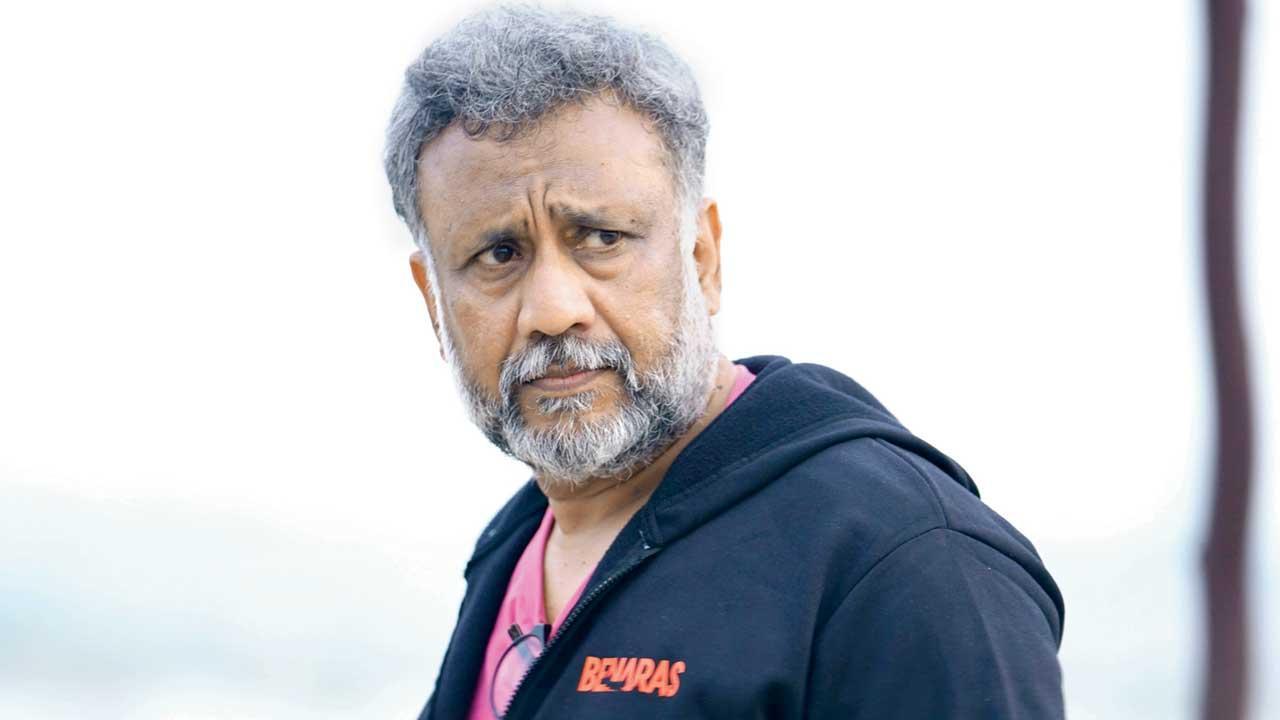
Anubhav Sinha ko gussa kyun aata hai? When former IPS officer Aloke Lal recently posed this question to the filmmaker during a conversation about his films at the Crime Literature Festival in Dehradun, Anubhav shared an anecdote. He revealed that a senior filmmaker had recently advised him to “be less angry” and make lighter films.
He said, “I know I’m that irritating man (who points out issues). I’d love to make funny films; I’d love to not see all this (the problems in society), but I don’t know how not to see all of this. I’d love to not see it.” He later added, “If you look at my films, they all complain (about the issues in our society), and all of these films end on a note of hope.”
‘I DON’T BELIEVE THAT FILMS SHOW A MIRROR TO SOCIETY’
Discussing Article 15, Aloke Lal told Anubhav, “When I was SP Barabanki, I distinctly recall the road shown in Article 15. In fact, the scene where Ayushmann’s character joins as ASP and is clueless about the caste system – that aspect of the film resonated with me. Do you think Article 15 and your other socially relevant films have an impact on society?”
Anubhav responded, “Personally, I think that when we make such films, they have no significant impact on society. People watch a film, discuss it for a while, and then forget all about it. I don’t believe that films show a mirror to society. All that films can do is trigger a discussion.”
‘Mulk is a love story’
Anubhav shared that he has travelled a lot, and visited many countries, and found that there is no country in the world equal to India. He said, “Mujhe lagta hai ki ye duniya ka sabse behtareen mulk hai, uske baad bhi agar aap meri pichhli paanch filmein dekhein toh kaafi shikayatein hain. So I asked myself, ‘Tu shikayatein bahut karta hai.’ And then I thought that we also have complaints against our father, against our mother, against our school.”
He elaborated, “Hum Amitabh Bachchan ko dekh kar bade hue hain. Toh hum woh brooding lover hain jo ishq ka izhaar kam karte hain aur bolte hain – arey, pyaar toh hai, toh baar-baar batana kya?”
Talking about Mulk, Anubhav said, “When Mulk was being released, I said that it is a love story. It’s a love story between Hindus and Muslims – and in love stories, people fight.”
I don't have much knowledge about the IC 814 controversy-Rajiv Thakur
7:57 AM
Rishabh Suri (HINDUSTAN TIMES; September 4, 2024)
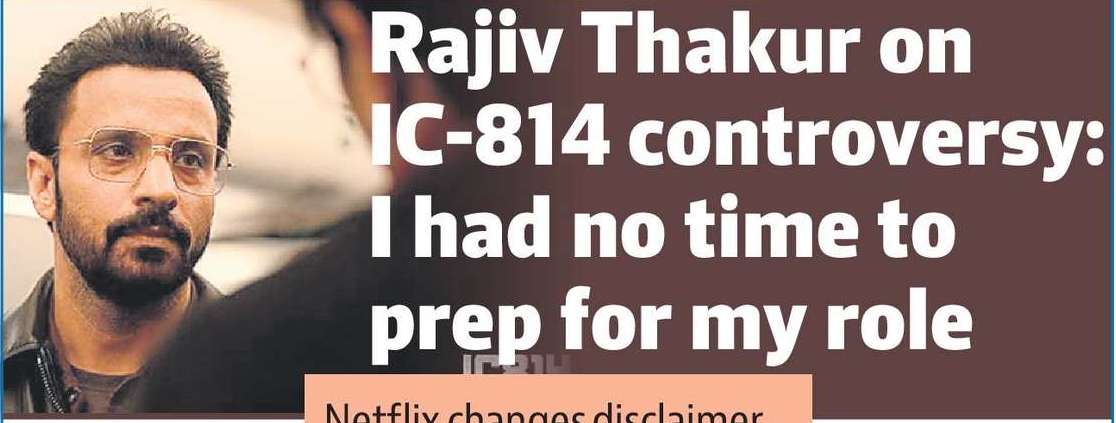
Actor-comedian Rajiv Thakur left viewers surprised with his recent role of the antagonist, named Chief, in filmmaker Anubhav Sinha’s IC-814: The Kandahar Hijack. While the web series gave him a chance to break out of his image as a comic, the raging controversy might just overshadow it all.
The series has been hit with allegations of distortion of facts about the real identities of the hijackers and has drawn criticism for naming the two terrorists Bhola and Shankar, instead of using their real names, while the other three are referred to as Chief, Doctor and Burger.
Thakur admits that he didn’t get much time to prepare for his role and doesn’t “have much knowledge about the controversy”: “It was such a big show and I should have done some prep. When I met the other actors who played the hijackers, they had read books. I am thankful that Anubhav Sinha sir, the associate director and the writers explained my character to me. In the series, I was only associated with Vijay Varma (actor) and (the character) Doctor.”
Thakur, 40, who played the mastermind behind the 1999 hijacking, is certain that his work will be noticed: “When someone does good work, it can’t be buried. I’ve got such good reactions for my role. My friends and Insta followers are sending me messages. Some said I was unrecognizable.”
Netflix changes disclaimer
After a meeting with the Ministry of Information and Broadcasting, the streaming platform issued a statement. “For the benefit of audiences unfamiliar with the 1999 hijacking of Indian Airlines Flight 814, the opening disclaimer has been updated to include the real and code names of the hijackers. The code names in the series reflect those used during the actual event. India has a rich culture of storytelling — and we are committed to showcasing these stories and their authentic representation,” said Monika Shergill, Vice President, Content at Netflix India.
Netflix content head summoned by I&B Ministry over IC 814 series row
8:54 AM

MID-DAY (September 3, 2024)
The government has summoned the content head of OTT platform Netflix over the series 'IC-814: The Kandahar Hijack', which has triggered a row over the depiction of hijackers. Official sources said the Ministry of Information and Broadcasting has summoned the content head of Netflix India on Tuesday, seeking an explanation about the allegedly contentious aspects of the OTT series.
The depiction of hijackers of the Indian Airlines flight from Kathmandu to Delhi has kicked off a row with a section of viewers objecting to the 'humane' projection of the perpetrators. BJP IT Cell chief Amit Malviya said the hijackers of IC-814 were dreaded terrorists, who acquired aliases to hide their Muslim identities.
"Filmmaker Anubhav Sinha, legitimised their criminal intent, by furthering their non-Muslim names," Malviya posted on X. "Decades later, people will think Hindus hijacked IC-814," he said.
"Left's agenda to whitewash the crimes of Pakistani terrorists, all Muslims, served. This is the power of cinema, which the Communists have been using aggressively, since the 70s. Perhaps even earlier," Malviya said.
"This will not just weaken/put in question India's security apparatus in the long run, but also shift the blame away from the religious cohort, that is responsible for all the bloodshed," he said.
Former Jammu and Kashmir Chief Minister Omar Abdullah said it was really amusing to see the people who took movies like 'The Kashmir Files' as the gospel truth having a meltdown at the way the events of IC814 are depicted in the Netflix show.
"Now suddenly they want accuracy and nuance packaged in the script," Abdullah said on X.
Halfway into proposing the role, Naseeruddin Shah said yes-Anubhav Sinha
10:27 AM

Bringing together heavyweights in IC 814: The Kandahar Hijack, director Anubhav recalls how roping in Naseeruddin Shah, Pankaj Kapur and Vijay Varma was easier than he had thought
Priyanka Sharma (MID-DAY; August 28, 2024)
Getting acting heavyweights like Pankaj Kapur, Naseeruddin Shah, Arvind Swami, Manoj Pahwa and Kumud Mishra in one room can be an uphill task. Anubhav Sinha is surprised that the stellar cast — which includes Vijay Varma, Dia Mirza and Patralekhaa — has come together for his maiden series, IC 814: The Kandahar Hijack. The upcoming thriller traces the 1999 hijacking of the Indian Airlines Flight 814, in which a group of militants hijacked the Delhi-bound aircraft carrying 173 passengers and flew to several locations before landing in Kandahar.
Sinha knew his working relationship with Kapur, developed on Dus (2005) and Bheed (2023), would give him an advantage. “Pankaj bhai said, ‘Main nahin karunga,’ but I knew he would,” says the filmmaker, who has co-created, co-written and directed the thriller. Despite his faith in the material, Sinha was skeptical about getting the nod from Shah and Swami. He was pleasantly surprised on both occasions.
“I had thought it would be difficult to cast Naseer bhai because he does less work and is more interested in doing theatre. I was halfway into proposing the role to him, and he said yes. As for Arvind, we got on a conference call, and he said, ‘Okay.’ But I was [still unsure] whether he was doing it. But how do you ask [again] if the person has said okay?” he laughs.
Varma, who plays the pilot flying the ill-fated aircraft, also said yes more easily than Sinha had assumed. The director recalls, “When he left [the meeting], I thought we’d send him the script, he would read it and tell us if he wanted to do it. But two hours later, they were already talking dates. I wasn’t on such terms with him that I could call and say, ‘Script toh bheji nahin maine!’”
When Netflix approached Sinha to retell the story of the Kandahar hijack, he realized he was unaware of many details of the chapter. That motivated the director to probe further.
“The plane landed in Kandahar on the morning of December 25, the Indian negotiation team reached on December 26. On a conversation level, you’d say, ‘Why did it take them [so long] to reach?’ But there was so much going on at home. [They] had to know what they could offer. There were moral, ethical and political questions that the government was dealing with.”
The series shows the attack could have been averted. So, have we learned from history? “The human mind doesn’t learn from history; we make it worse. Nine months after this, 9/11 happened. So, that was the time when militants were toying with the idea of using an aircraft as a weapon. So, one has to think ahead of them and make sure this doesn’t happen again. But [such events] are still happening.”
Subscribe to:
Posts (Atom)