Showing posts with label Ankur Tewari. Show all posts
Showing posts with label Ankur Tewari. Show all posts
A R Rahman talks about lack of work in Bollywood; musicians, producers dive into the Indian music industry
9:48 AM
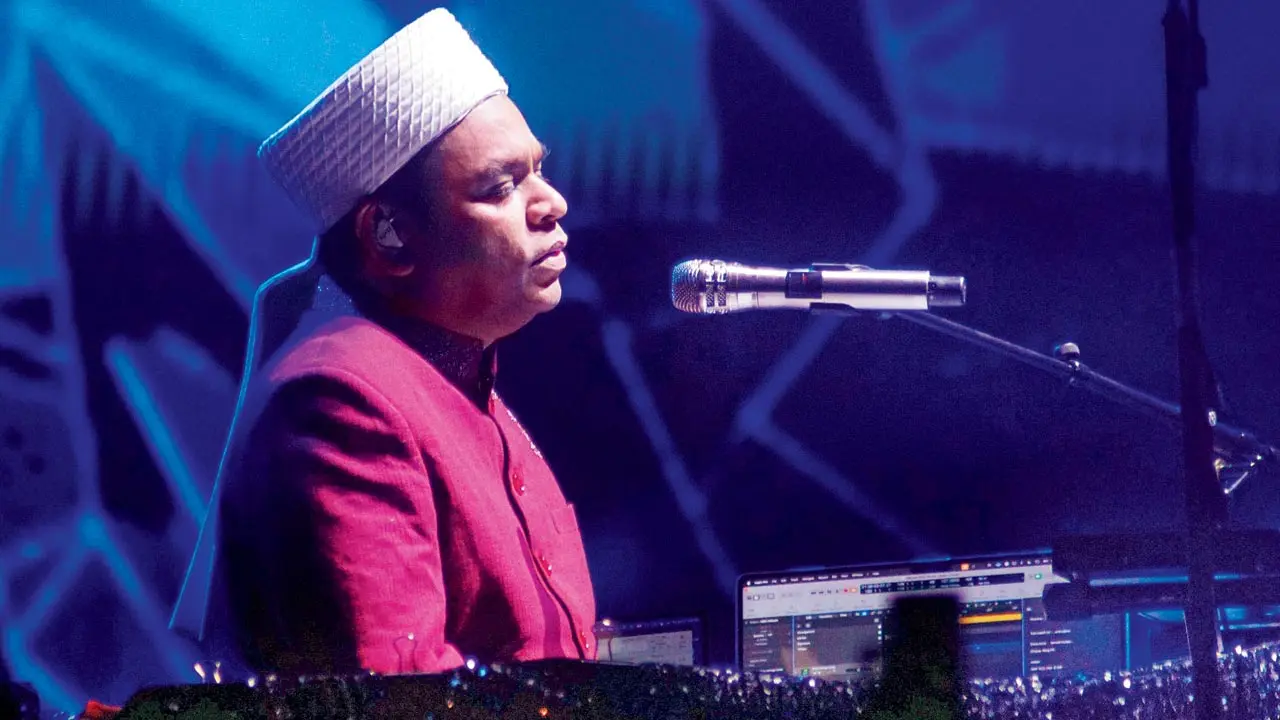
If the legendary A R Rahman is lamenting the lack of work in Bollywood, what chance do others have? Or is his dissatisfaction something that lesser-known musicians have been feeling for a while? Here’s what it takes to be in the music industry in 2026
Tanisha Banerjee (MID-DAY; January 25, 2026)
In a recent BBC interview, A R Rahman said, “Past eight years maybe I have felt that people who are not creative hold the power now. Might have been a communal thing also. Not in my face but I can hear Chinese whispers. That they booked you and the other music company funded the movie and got their own five composers.”
The reaction to his observation was instant and intense. This was not a young composer struggling to find a foothold, nor a mid-career artiste navigating irrelevance. This was Rahman — an Oscar winner, whose music has shaped the emotional memory of Indian cinema for over three decades — articulating a sense of scarcity. If someone of his stature felt the slowdown, what does that say about Bollywood’s music ecosystem?
The moment made us revisit the questions the industry has been circling for years. Is Bollywood music shrinking, or simply reorganizing itself in ways that no longer sustain most musicians? According to the latest IPRS report, film music still leads streams in India, but its share has fallen from around 80 per cent to about 63 per cent of total music consumption over the last few years — a clear sign that listeners are exploring non-film and independent music more than before. So what does “making it” even mean for a Hindi musician in 2026?
Singer, producer, and independent musician Sona Mohapatra believes the question itself needs reframing. Known for carving a career outside film music through projects like Tarasha, The Lal Pari Mastani Show, and most recently Sona 24K, which debuted to a full house at Mumbai’s NMACC Grand Theatre, Mohapatra has spent over a decade building audiences beyond Bollywood.
“I’d like to gently reframe the premise of the conversation. I don’t quite see this moment as one where musicians are trying to ‘break into’ Bollywood anymore. The ecosystem has shifted,” she says.
What is often read as exclusion, Mohapatra argues, is actually the result of a structural issue. “The film industry increasingly operates on tight timelines, formulaic briefs, and shrinking creative risk within the mainstream film music system.”
For her, the story isn’t about younger artistes replacing older ones, or social-media-friendly music displacing layered compositions. “I think it’s about Bollywood no longer being the centre of gravity. Music doesn’t need films the way it once did.”
She points instead to packed concert venues, relentless touring schedules, and artistes collaborating across regions and genres without waiting for film validation. “Artistes today can be relevant, successful, and globally visible without waiting for a film to validate them,” she says, adding that calling symphonic or layered music outdated “is missing the point.”
In Rahman’s situation, Mohapatra says, “I don’t agree that A R Rahman is being sidelined. He’s still scoring some of the biggest Hindi film projects. Chhaava (2025) went to him over cultural fits like Ajay-Atul, and he’s scoring Ramayana (slated to release in 2026), not Ram Sampath. This is not what marginalization looks like.”
For those working within film music, the shift is less philosophical and more physical. A Mumbai-based sound engineer and music producer, Krish Agashe [name changed], describes the Indian film industry, “Bollywood functions in very different ways,” he says, “People work here for a week without sleeping or anything. To get on that network, you have to get it in your mind that you are not a 9 to 5 person here. There are no time zones. There are no timelines.”
For newcomers, the entry barrier is paradoxically high and deeply unstable. “Even if you are a good musician, you are supposed to have a lot of knowledge and a lot of experience to even get hired,” he explains. The hours are punishing, pay is often modest, and visibility becomes as important as skill. “You have to be famous. The average pay scale in India is very less for music.”
Seen through this lens, Rahman’s remarks points less to exclusion, and more to an industry obsessed with momentum. Agashe says, “But it’s not like Rahman is not doing work. It’s not like Bollywood has boycotted him.” What Rahman articulated, he believes, is a loss of creative control. In a crowded, deadline-driven industry, patience for complex, time-intensive music is often the first casualty.
If the problem feels structural, Anand Iyer forces the conversation into economics. A former music producer and sound designer who worked on Gangs Of Wasseypur (2012) which won the National Film Award for Best Audiography in 2013, Iyer has exited the music industry altogether. He is now the founder and creative director of flippit.media, an AI-led content and performance marketing agency.
“After the COVID [pandemic] and Instagram, the content industry went through a major shift,” he says. “Audiences moved toward short-form, high-volume digital content. That naturally changed how much they spend on music and long-format productions.”
As budgets shrank, so did the perceived value of original music. In his view, this collapse hit everyone — Rahman included — but much later. “There isn’t the same value for music that existed before COVID as the market has now reached efficiency,” he says. “Now Mr Rahman is a little sore about the fact that he is not getting work. But nobody has work these days. And obviously, he’s more expensive.”
He frames this not as “targeting”, but timing. “It was interesting to hear Mr Rahman speak about this now, because many in the industry have been experiencing this transition and have been feeling it for a while.”
In 2024 — as per a 2025 Digital Music News research — the Indian music market’s total digital revenues dropped around 11 per cent, even as paid subscriptions grew from roughly 8 million to 10.5 million. That illustrates how monetization has become harder even while streaming remains dominant. According to Iyer, Rahman isn’t an outlier. He is simply encountering the economic reality that has already pushed many musicians out.
Composer and producer Ankur Tewari offers a recalibration rather than a rebuttal. “There are multiple ways that a director would look at who they want to work with,” he says. The idea that Bollywood music is now a young person’s game doesn’t hold for him. “I don’t believe that younger people make younger sounds or older people make older sounds. Whoever feels correct for the project — you look at the work, the budget, the availability.”
What has changed, he argues, is not struggle, but terrain. “Earlier, there was nowhere you could be seen. Now there is so much stuff, that you get lost in the noise. The circumstances have changed, but the struggles remain the same.” Tewari resists nostalgia. Rahman himself, he notes, struggled for years before landing his first major film. So did composers like Pritam and the trio Shankar-Ehsaan-Loy. “Somebody took a punt on them.”
Technology, he says, has simply widened the funnel. “It’s much easier to record music now. It’s more democratic. There’s a lot more music being created. However, the amount of music being created is not directly proportional to the amount of good talent.” In other words, saturation isn’t new. It’s just more visible now.
Varun Parikh, founder of Bay Owl Studios, a premier commercial recording and post-production facility, has watched this shift play out at close range. For him, the erosion seems contractual. “There have been times where I’ve gone completely out of my way for clients, doing work I wasn’t hired to do just to meet deadlines,” he says. “But that gets taken for granted. The moment you set boundaries, it becomes a problem.”
He also acknowledges the new reality of music as test content. “I’ve seen artistes pay for a 60-second song just to see if it goes viral. They spend good money on getting that 60-second song with a catchy hook out there. It’s almost like a tester and if it goes viral, then maybe they can sell it further or make it into a proper song. We live in a world of quick and easy gratification where everybody wants that instant dopamine hit,” he observes.
To understand how these pressures play out at the entry level, music producer Deep Gulati [name changed] describes a system that rewards recognition over suitability. “One of the obvious challenges is social media following,” he says.
“Sometimes the talent might not be appropriate for the job, but because someone has better clout, they get it. Either you have a network or a social media crowd.” Alongside clout, comes role creep. “Earlier, you were hired as a specialist. Now people are expected to know ten other things,” he says, tying this to shrinking budgets, “People are expected to do much more than just their specialty.”
That same risk logic explains why even respected composers can be priced out. “The budgets that Rahman has, not all films can afford it,” Gulati says. With trade reports showing big films failing, “projects are very risky right now”.
Smaller films simply cannot absorb that cost, “even though he might be the best choice”. “I know a couple of my friends who have walked out of a film or have done that film, but they have not publicized it at all, because ideologically, they don’t want to associate with the film for whatever reason. And if you disagree, it might be held against you,” he mentions, pointing to his anonymity.
For newcomers, the illusion collapses quickly because of the pressures of networking, branding, social media presence, and brutal work hours. “You are expected to pull in crazy amounts of hours at work that people are not really used to. People are fed the idea that it’s glamorous, but it’s actually an extreme level of hard work,” adds Gulati.
Rahman, then, is not a victim of a hostile industry so much as a late mirror to a reality many musicians have already absorbed. As Iyer puts it bluntly, “I don’t think this reflects anger or division but how strongly technology and consumption patterns have shifted. I think he’s just getting old and angry now. It’s misplaced frustration in my opinion.”
What Rahman is feeling now, Iyer argues, is what his team felt earlier when budgets collapsed and copyright value dropped. “People were surprised when I pivoted out of music, but it was a strategic choice. I’d encourage young people today to study where the market and technology are heading, and then learn their craft in a way that fits those realities. Art still matters, but it has to align with how the industry is evolving,” he says.
Agashe’s description of Bollywood as a “superhuman network” fills in the human cost behind that shift. “You have to know a lot of people in the industry to make a mark. You have to be famous. Hit makers are what Bollywood needs. And it’s all about creators being able to deliver that,” he states. Fame becomes currency because pay isn’t. “It’s about relevance, about delivering in the present era.”
Not every song needs to go viral, some just need to be heard-Dhvani Bhanushali
8:31 AM

Admitting that her latest number Aankhon marks a shift from her brand of music, singer Dhvani Bhanushali on how social media trends don’t influence her craft
Komal R J Panchal (MID-DAY; June 2, 2025)
At the first listen of Aankhon, chances are you’ll do a double take. After all, the gentle melody is nothing like the songs belted out by singer Dhvani Bhanushali so far. Collaborating with OAFF, Savera, and lyricist Ankur Tewari, she has crafted a number that blends emotional depth with an experimental edge. “I think I got slightly cooler with this song,” Bhanushali says with a smile, admitting that Aankhon marks a shift in her music.
“I went niche with it, and for once, I didn’t seek too many opinions. I just loved it and wanted to put it out. So, I did.”
Aankhon, she reveals, is one of the two songs the musicians made together in 2024. “This one sounded fresh. We felt like writing about how we make different connections throughout life; Ankur started penning the lyrics, and the structure just kept forming. As soon as we heard the final version, we related to it immediately. There was something [novel] in the sound — a space I hadn’t explored before,” she recalls.
However, the song was on the backburner throughout last year. Bhanushali eventually felt that it was the right piece to launch in 2025. “I dropped the audio recently and released a visualizer as well. It’s quite a cool concept, experimental for me. Let’s see how people respond,” she smiles.
In her seven-year career so far, the singer has straddled film music and her originals with ease. If she is the voice behind Bollywood chartbusters like Dilbar (Satyameva Jayate, 2018) and Duniya (Luka Chuppi, 2019), she has also belted out popular singles like Vaaste and Leja Re. Does the growing influence of social media, where tracks go viral for their hooks, affect her creative process and approach to music? “A song is made like a song,” she responds, after some thought.
“Subconsciously, yes, the pressure is there. But no one can predict which part of a song will go viral. We follow the organic process, where there is a chorus, verse, and bridge. While some music might be made with Instagram in mind, I don’t think we consciously do that. But we’ve seen so many reels that maybe something gets embedded in our minds. Not every song needs to go viral, some just need to be heard.”
Bhanushali, whose live performances and fan interactions have played a big part in her rise, believes she has evolved with her experiences. The journey so far has left her with valuable lessons. “One of the biggest learnings is detaching from the obsession with views and traction. As a musician, you need to separate yourself from that. Otherwise, it becomes too much about business. During the creation process, it’s important to set that aside; it’s difficult, but necessary.”
We have 16 songs in The Archies, some of which are as short as 20 seconds-Ankur Tewari
9:46 AM
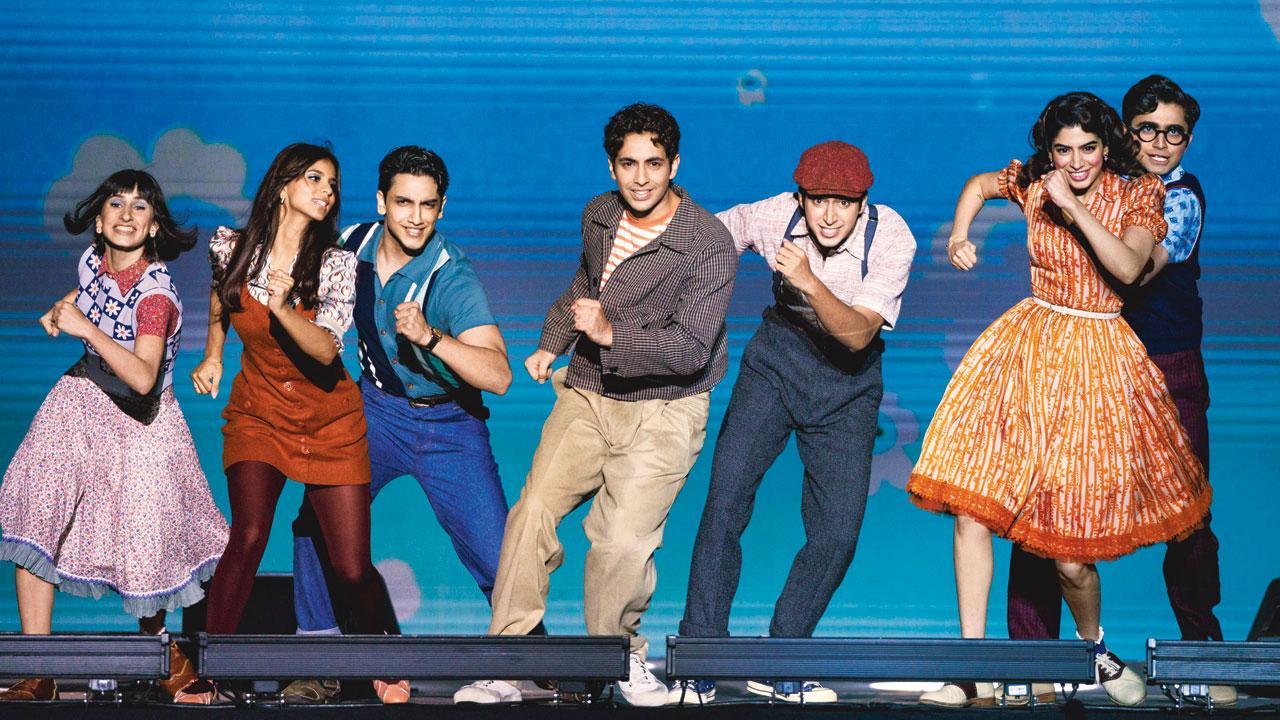
The Archies sound engineer and supervisor Ankur Tewari explains how he hopes to keep viewers entertained as they gear up for his 16-song musical
Sonia Lulla (MID-DAY; October 23, 2023)
The transitive property in mathematics states that if a equals b, and b equals c, then a equals c. In cinema though, we wonder if this equality would be challenged. Zoya Akhtar never makes a bad film; musicals rarely work in Bollywood; Zoya Akhtar is making a musical. Given Akhtar’s past streak, and the fact that The Archies is set to serve as the launch pad for the kids of the industry’s biggest stars, it’s safe to suppose that the film would be delightful. How accurately though, does it fit into the defined template of a musical? Entirely, promises sound engineer Ankur Tewari.
“We have 16 songs, some of which are as short as 20 seconds. A piece of poetry, or music, takes the story forward, and the idea was to do it in a way such that the viewer doesn’t notice that a song has begun. It needed to be done, organically, as though the audience was seamlessly flowing into and out of the dialogues and the songs. It needed to feel as natural as simply watching a scene, which is why we used music as a texture. We wanted to keep viewers on their toes—excited, and indulgent. We wanted to tease and flirt, but not overindulge. It’s interesting to see how Zoya has used the music.”
Previous successful collaborations would have, perhaps, contributed to their equation, with Tewari—who also supervised the music of Akhtar’s hit, Gully Boy—referring to the filmmaker as a friend who he “continues to learn from”.
Tewari was elated to be associated with the project for more reasons than one. Apart from the fact that he had grown up with an appetite for The Archies comics—which have inspired this film—he would get the chance to explore the soundscape of the ’60s, the “golden period of music”.
“Because it is set in the ’60s, I dug into a few books and did some research. Since it was not set in [this day and age], we recorded every bit of the album, live, including the guitars, drums, horns, vocals, and harmonica. The idea was to record as if we were doing so in the ’60s. Even when we were choosing the mics and the hardware to record on, we picked those that would not make the music sound new-age. At the same time, we created a balance so as to ensure it doesn’t sound dated. Live-recording is a different discipline. One needs more practice, and rehearsal, because [all the artistes] play together. Even though some may find it cumbersome, you find yourself at an advantage when you play off [another artiste’s rendition].”
While the film’s soundtrack was composed by Shankar-Ehsaan-Loy, Tewari also doubled up as the composer of the number, Sunoh. With the film set in an “Anglo-Indian hill station”, Tewari had to immerse himself in research work before creating the sounds.
“The screenplay is extremely breezy. [Surfing through every page], we could come up with a gazillion ideas on what we could do with the music. It is reminiscent of simpler times. So, we knew that a lot of rock and roll, and jazz would be used. That’s where we were headed, as far as the sonic palette was concerned. We wanted it to reflect the energy of the kids, and the exuberance of youth. Also, because it is Anglo-Indian, we knew it would be nice to have English in it. So, apart from taking it to Javed sir [Akhtar], we got [musician] Dot involved for the English lyrics. It was amazing to see somebody as seasoned as Javed sir sitting with Dot, who is like a new kid on the block.”

TV circuit will always be a beneficial market as it is vast in nature-Swanand Kirkire
8:10 AM

Wearing actor and lyricist hats, Swanand Kirkire who is readying to feature alongside Shefali and Jaideep in a new film says that success today means catering to diverse audiences
Parth Srivastava (MID-DAY; June 12, 2023)
Lyricist Swanand Kirkire grew up in a musical family, with his parents always teaching him the importance of leading a good life. “But, I was more interested in theatre than music. Before I learnt about the National School of Drama, I would offer a helping hand to the local theatres in Indore,” says Kirkire, who subsequently arrived in Mumbai to write for a TV serial named Swaraj, and work as filmmaker Sudhir Mishra’s assistant.
It is perhaps this amalgamation of the craft he pursued and the one his family exposed him to, which enables Kirkire to don several hats at once. His upcoming slate of projects is only testimony to this fact. “I’m [acting] in a film with Jaideep Ahlawat and Shefali Shah. It is called Three Of Us. We still don’t know whether it will be released on OTT or in theatres. It was a pleasure to work with director Avinash Arun, who has received much love for his previous works like Pataal Lok, Drishyam and Masaan.”
Artistes across the industry have attempted to distinguish between the demands of cinematic projects and web offerings, but Kirkire believes such segregations are inessential. “I don’t think that the audience has been segregated. Earlier, there were two sources of entertainment — TV and theatrical films. Now, with the addition of OTT, there are three. This platform has attracted many people, but the TV circuit will always be a beneficial market as it is vast in nature. Every platform is equally important to us. When it comes to revenue, cinema is a direct medium — a film is either a hit or a flop. But, on the web, it’s tough to decipher if a film is a hit or a flop. The generation of revenue is also not linear. So, for an artiste, the [medium via which] revenue is direct, is good. Gradually, people are trying to learn the tropes required to succeed in each platform. The main motive is to entertain, that’s it.”
Up next for him is a musical with Ankur Tewari. He lights up while discussing the project, stating, “Ankur and I had a terrific time working on that show. It will be released soon, and I’m sure people will love it. Apart from this, I will also release an album with different composers. I have created a band with two young musicians named Shrey Gupta and Harshit Mishra.”

Jaideep Ahlawat, Shefali Shah, and Swanand Kirkire
Our initial approach was a bit younger, but the characters in Gehraiyaan were more complex-Ankur Tewari
9:16 AM
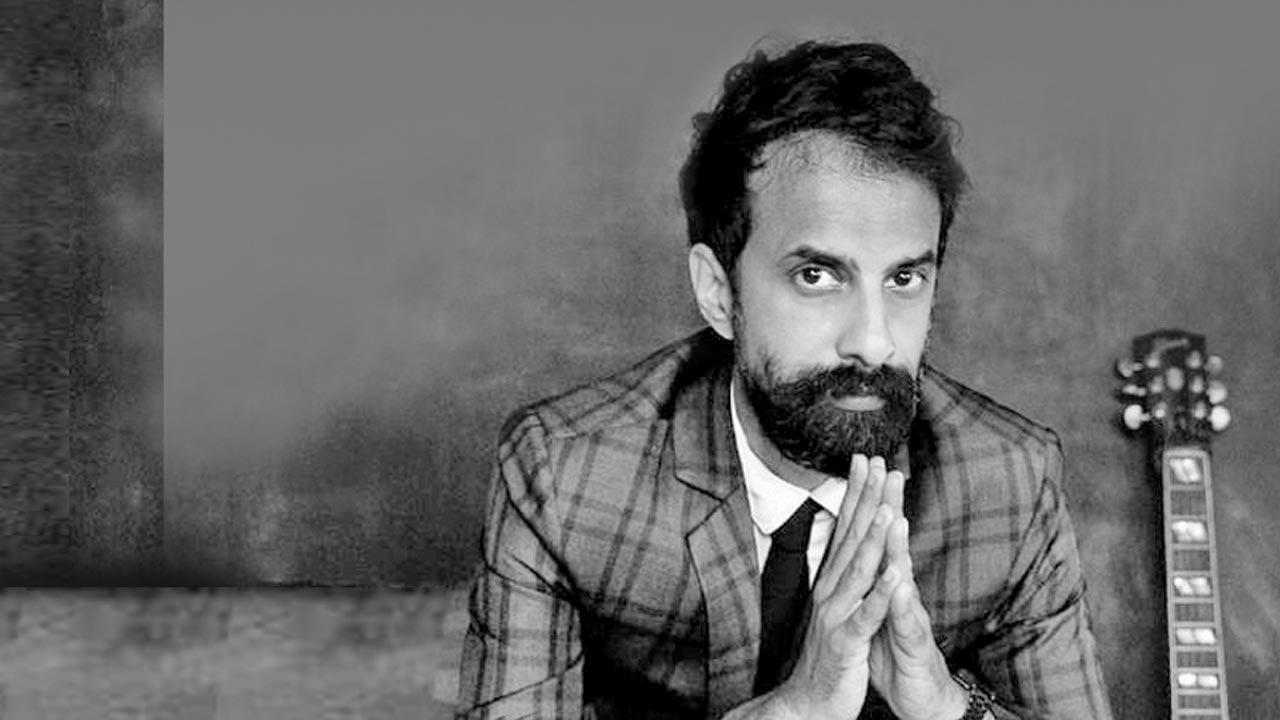
Kicking off the new year with what promises to be a great musical score, Gehraiyaan sound designer Ankur Tewari on the Deepika starrer
Sonia Lulla (MID-DAY; January 3, 2022)
Raise your hands if you, like us, had a second look at the trailer of Shakun Batra’s Gehraiyaan only to listen to its balletic music, again. Sound designer Ankur Tewari — responsible for monitoring the score and soundtrack artistes for the making of a cohesive theme — discusses breathing life into the Deepika Padukone, Ananya Panday, and Siddhant Chaturvedi starrer.
Edited excerpts from the interview:
What was your initial discussion with Shakun about the film’s music?
We were sure that the music should not be mainstream. A lot of films on infidelity have been made, and they have had a certain kind of sound attached to them. We wanted to approach this with a new sound. Having said that, we first paid heed to what the script was saying. The film is about a group of young people who are going through a transactional relationship, when it come to love. We thought about the kind of music that these guys would listen to. All the songs in the film are in terms of a score. None has been [lip-synced] to. We thought about the music that would be in their playlist, and then dug deeper into each character.
Did you ask the actors what they listened to?
No. But I got sneaky. I started noticing their Instagram pages — songs they were posting about, or sharing on stories. Since I have worked with Siddhant in Gully Boy, I know the kind of music he listens to. I was also thinking about the characters. This film is very strong, even on paper. So when you have access to a script where the character is so well defined, it’s easy to work accordingly. Kabir and Savera are two musicians who have worked on the score to give it a distinct sound. Their music is precisely the kind that these characters would consume.
When you have such a fine understanding of creating music best suited for a script, how do you navigate filmmakers’ demands to create a commercial score even if the story doesn’t require it?
Unlike in the indie space, where you write as you desire, in films, every one is catering to the script. You are committed to that. Different scripts have different needs, and some of them need a commercial treatment. If that is not done, then what is the difference between your approach towards an independent song and film music. Each sound-scape has a different colour, and that can be niche, mainstream or an entirely new genre. In this film, for instance, a lot of the [music] is inspired by French [music]. The song needs to pull you further into the film; not pull you out of it with a sound that doesn’t fit.
How often do you end up changing your work after seeing the first cut?
When I saw the rough cut, I noticed that there were places where we were going off, especially, as far as Deepika’s performance is concerned. She is such a powerful performer. Also, actors put a lot of work into understanding the characters. So when you learn of a character on paper, and then see how the actor has pulled it off, you start understanding their perspective. I had to move away from the music and lyrics that I [had etched in my mind]. The brief that I gave Kausar [Munir, lyricist], before I saw the rough draft was different from the one I gave her after it. Our initial approach was a bit younger, but the characters were more complex. We had to tweak it to suit that.
Coronavirus: Get ready for the virtual entertainment amid the lockdown
8:39 AM

Vir Das and Jonita Gandhi
From live-streaming music gigs and comedy specials to interactive plays, mid-day gets a behind-the-scenes understanding of virtual entertainment amid the lockdown
Mohar Basu (MID-DAY; April 17, 2020)
The film and television industry may have come to a screeching halt, but Indian viewers are, by no means, short on entertainment. When Prateek Kuhad is not live-streaming his performance on the Internet, Vir Das pops up on your laptop screen, ready with his at-home comedy special. In the three weeks of lockdown, how we consume entertainment has changed as much as how we live, with an increasing number of artistes exploring virtual gigs.
Amongst the first to tap into this was BookMyShow that enabled various virtual live properties, including performances by Indian Ocean and Karsh Kale. "Thanks to great collaborations and Instagram as the host platform, we brought live music, dramatised readings, poetry recitals and stand-up comedy sessions to the safety of viewers' homes. We kickstarted the #StayFitIndiaChallenge that features over 50 trainers offering more than 500 fitness sessions," says Albert Almeida, COO, Live Entertainment, BookMyShow.
He explains that they promote an upcoming offering aggressively through various social media channels to ensure maximum eyeballs. "#LiveInYourLivingRoom, which had Armaan Malik, Ankur Tewari, and Jonita Gandhi performing, amassed close to half a million viewers."
 While promotion is the relatively easy part of the game, the execution poses a bigger challenge. Ask Roshan Abbas (right), whose company Kommune took entertainment a step ahead by curating the virtual play, Lockdown Love, that was performed over Zoom by Priyanshu Painyuli and Shriya Pilgaonkar.
"We experimented for two weeks with the core team to perfect the technological aspect of our play. A week went into scripting and casting, after which we prepped for the next few days. The challenge here is the [Internet's] bandwidth. We took feedback after our first preview on Sunday, and people categorically said two things — that it's a lot less personal than regular plays, and it should be made more interactive. So, we will be incorporating these aspects in our next show," explains Abbas.
While the Internet has its share of open-to-all gigs, organisers are slowly moving towards monetising the acts. For instance, Abbas's play was priced at Rs 499 per person. "The proceeds from the gig went to charity. As far as monetisation goes, there are different models to tap into different sections of the audience. Some comics are selling their shows for Rs 299 and there are four-week virtual workshops available for Rs 5,000." He adds that this could be the way ahead as brands are heavily investing in virtual content. "After all, for the next few months, this is the new normal."
It is evident that there is no dearth of takers — Vir Das has sold out 12 virtual shows of Vir Das At Home, tickets for which were priced at Rs 499. "Technology has made it easier for us to plan and produce shows over video calls. The audience is available out there. How long can it be sustained? That's tough to say. I hope people keep coming in larger numbers over the next few weeks. If there's a demand, there will be supply."

The team of Lockdown Love during their prep

Prateek Kuhad and Ankur Tiwari singing live from home
There are polarising views in the country, and I wanted to unite them-Ankur Tewari
7:50 AM

With Woh hum nahin finding a spot on music app, singer-songwriter Ankur says track is an attempt to ‘identify what we stand for’
Sonia Lulla (MID-DAY; January 31, 2020)
Stunned on seeing the violence at Jamia Millia University earlier this month, composer-singer Ankur Tewari put pen to paper to voice his emotions, thus giving rise to Woh Hum Nahin. Unsurprisingly, his “anthem of love against the agents of hate” moved his fans on social media, and subsequently, the protestors at Carter Road, Bandra, where he performed it. The song also caught the attention of music-streaming app Jio Saavn, which invited Tewari to record it for the platform.
“They said the song is about peace and love, and has that feel of an anthem that can bring the world together. They felt it’s everything [their company] stands for, and that encouraged me to record it [for them],” Tewari tells mid-day as the track unveiled on the platform yesterday.
Pointing out that an opinion voiced with substantial logic should never be met with criticism, the singer- songwriter laments the atmosphere of fear that has gripped the country. “Violence is not a solution to anything, whether you are in uniform, or not. There are polarising views in the country, and I wanted to unite them, even if the views are opposing. The idea was to lyrically identify what we stand for,” he says of the track that reiterates that he isn’t one to cower in fear when those in power abuse it. “[With Woh hum nahin] if I constantly speak about the person that I am not, you’ll figure out the person that I am.”
He adds that the team chose to release the anthem on Mahatma Gandhi’s death anniversary because “on this day, our agent of love was killed by an agent of hate.”
Music composer Dub Sharma breaks silence on Azadi's reworked version in Gully Boy
9:24 AM

Composer Dub Sharma says nothing wrong in the makers dropping 'Brahmanvad' and 'Manuvad' from Azadi's reworked version in Gully Boy due to narrative constraints
Sonil Dedhia (MID-DAY; February 6, 2019)
 In the days since Gully Boy's latest track Azadi dropped online, social media users have pointed out how the makers have presumably played it safe by dropping references to casteism and Brahmanical oppression that the original song bore.
Musician Dub Sharma had created the song in 2016, after Kanhaiya Kumar made the slogan popular during his protest against the 2013 hanging of Afzal Guru at JNU. Sharma's track had lines that went, 'Aazadi...Manuvaad se, Aazadi... Brahmanvaad se', thus reiterating the JNU students' protests against social evils. However, the reworked version featuring Ranveer Singh has relatively tepid lines that go, 'Aazadi bhukhmari (poverty) se, aazadi bhedbhav (discrimination) se.'
Defending the changes made to the track, Sharma says it has been reworked to suit the film's context and has little to do with appeasing the ruling government. "When people watch the film, they will realise that the lyrics are in sync with the character [Singh here] and the hardships that he has gone through. There is nothing wrong in tweaking the song to suit the narrative of a film. This song has nothing to do with any propaganda."
Sharma adds that neither director Zoya Akhtar nor the production house interfered in reimagining the song. "When Ankur Tewari approached me for this song, I asked him whether they would change the tune and he said no. They told me about the sequence, and were happy with what I presented."
The artiste says that in 2016, the track was born from his desire to challenge the powers that be. "My father is a journalist; we have seen the change in the way news is presented. Earlier, there was a balanced approach. But now, bite-sized information is provided and the decision is already given to viewers as to who is anti-national and who isn't. So, the song was my answer to them."

I am shattered, but can't let my family see it. I have to keep smiling for their sake-Ankit Tiwari
7:55 AM

Neha Maheshwri and Seema Mattoo (BOMBAY TIMES; May 9, 2017)
Barely a few days after the
Mumbai Sessions Court acquitted singer Ankit Ti wari in a 2014 rape
case citing lack of evidence, the complainant said that she was planning
to move the High Court to reopen the case. Talking to BT last week
(edition dated May 3), she said that her decision was prompted by the
post-acquittal statements made by Ankit and his brother, Ankur.
According to the complainant, the brothers had signed a document promising that they would
not speak about the case or her in the media.
Now, Ankit has reacted to her claim saying that he had never signed any document. He also denied being in a relationship with the woman or committing to marriage. Ankit and Ankur spoke to BT about the trauma of the three-yearlong trial and more...
'IT WAS PURE FRIENDSHIP'
Ankit says, “I never spoke about the case during the trial. I opened up only after I was acquitted by the honourable court. And even then, all I said was that I had complete faith in the judiciary. Having said that, we haven't given her any written acknowledgement. I first met her during Durga Puja celebrations in 2013. We were introduced by a mutual acquaintance and exchanged numbers. Then we started meeting as friends and going out for coffee. From my side, it was pure friendship. There was no shaadi ki baat. In fact, she had lied to me about her marital status, but since I was not romantically interested in her, it didn't matter. There was no physical intimacy between us. This feels like a film script. Ek script nayi nayi taiyyar kee jaa rahi hai. Her version has changed at least four times.“ Ankit adds, “The first notice that I received was different from the FIR, which was again different from what was mentioned before the court. And now, all of it is different from what is being reported. Rape is a serious offence and it becomes even more serious when it involves a celebrity. It is to be noted that she lodged the complaint only after I became popular.“
'NO GRUDGES, NO COMPLAINTS'
Talking about the three-year-long trial, the composer-singer says, “It was extremely tough. I faced many problems and lost out on projects. I was a very positive person till this incident occurred. It also made me realise the value of family. I could not face my parents; when the case was going on, I didn't speak at all. I spoke only after my acquittal, but I'm being put to trial even now. I have no grudges or complaints against her or anyone else. It's unfortunate that people are believing a scripted story and that too, after my acquittal. Main khud ko toh sambhaal loonga, but mummy daddy ko kaise sambhaaloon?“ About the complainant's allegations that she had supported him financially during his days as a struggler, Ankit says, “My struggle has been graceful. Yes, I have taken money from family, but never from outsiders.“
ALL SET FOR A SECOND INNINGS
Ankit says that he wants to restart life and his career on a positive note. “All I know is that I have to work hard and get cracking again, which I will. My priority is my work. I am shattered, but can't let my family see it. I have to keep smiling for their sake. After this incident, I am scared to even meet friends who are girls. However, they supported me during the trial. In fact, they still come home to meet me since I don't go out much and was never the partying kind. I am not interested in anyone and will let my mother decide about my marriage.“
I DON'T WANT TO REACT TO SOMEONE'S COOKED-UP STORY: ANKUR TIWARI
 Ankit's brother Ankur, who was also accused of threatening the complainant, says that
contrary to her claims, she never visited Ankit's parents with a marriage proposal. Ankur says, “She could have visited our parents in Kanpur as a friend,
but it is not on record. Why are we being asked about it now? All these
complaints started only after Ankit became popular. I don't want to
react to someone's cooked-up story. Kal sadak se uth kar koi bhi kuchh
bhi bolega toh main apna kaam dekhunga ki answer doonga? The latest
development has affected us, especially since we have been acquitted.“
THERE APPEARS TO BE NO GROUND FOR REOPENING THIS CASE: ANKIT'S LAWYER
Rizwan Merchant, who is defending the Ankit and Ankur, says, “The complainant's problem is that she doesn't want to be declared hostile, but she has stepped in the witness box once and told the court that Ankit and she were just friends. She said that they knew each other and used to go out for parties. If she now claims that she was pressured by the other party to take the case back, why didn't she complain to the court at that time itself? Had that been the case, any court would have cancelled the bail and they would have been taken into custody. There was no physical relationship at all and that's been our line of defence. Also, there is no mention of rape in the first handwritten complaint submitted by her. In that, she has mentioned consensual relationship. However, we have not even admitted to that. And if you say consensual, it can't be rape. And if it was rape, it couldn't have been consensual. There appears to be no ground for reopening this case.“
Now, Ankit has reacted to her claim saying that he had never signed any document. He also denied being in a relationship with the woman or committing to marriage. Ankit and Ankur spoke to BT about the trauma of the three-yearlong trial and more...
'IT WAS PURE FRIENDSHIP'
Ankit says, “I never spoke about the case during the trial. I opened up only after I was acquitted by the honourable court. And even then, all I said was that I had complete faith in the judiciary. Having said that, we haven't given her any written acknowledgement. I first met her during Durga Puja celebrations in 2013. We were introduced by a mutual acquaintance and exchanged numbers. Then we started meeting as friends and going out for coffee. From my side, it was pure friendship. There was no shaadi ki baat. In fact, she had lied to me about her marital status, but since I was not romantically interested in her, it didn't matter. There was no physical intimacy between us. This feels like a film script. Ek script nayi nayi taiyyar kee jaa rahi hai. Her version has changed at least four times.“ Ankit adds, “The first notice that I received was different from the FIR, which was again different from what was mentioned before the court. And now, all of it is different from what is being reported. Rape is a serious offence and it becomes even more serious when it involves a celebrity. It is to be noted that she lodged the complaint only after I became popular.“
'NO GRUDGES, NO COMPLAINTS'
Talking about the three-year-long trial, the composer-singer says, “It was extremely tough. I faced many problems and lost out on projects. I was a very positive person till this incident occurred. It also made me realise the value of family. I could not face my parents; when the case was going on, I didn't speak at all. I spoke only after my acquittal, but I'm being put to trial even now. I have no grudges or complaints against her or anyone else. It's unfortunate that people are believing a scripted story and that too, after my acquittal. Main khud ko toh sambhaal loonga, but mummy daddy ko kaise sambhaaloon?“ About the complainant's allegations that she had supported him financially during his days as a struggler, Ankit says, “My struggle has been graceful. Yes, I have taken money from family, but never from outsiders.“
ALL SET FOR A SECOND INNINGS
Ankit says that he wants to restart life and his career on a positive note. “All I know is that I have to work hard and get cracking again, which I will. My priority is my work. I am shattered, but can't let my family see it. I have to keep smiling for their sake. After this incident, I am scared to even meet friends who are girls. However, they supported me during the trial. In fact, they still come home to meet me since I don't go out much and was never the partying kind. I am not interested in anyone and will let my mother decide about my marriage.“
I DON'T WANT TO REACT TO SOMEONE'S COOKED-UP STORY: ANKUR TIWARI
Ankit's brother Ankur, who was also accused of threatening the complainant, says that
contrary to her claims, she never visited Ankit's parents with a marriage proposal. Ankur says, “She could have visited our parents in Kanpur as a friend,
but it is not on record. Why are we being asked about it now? All these
complaints started only after Ankit became popular. I don't want to
react to someone's cooked-up story. Kal sadak se uth kar koi bhi kuchh
bhi bolega toh main apna kaam dekhunga ki answer doonga? The latest
development has affected us, especially since we have been acquitted.“THERE APPEARS TO BE NO GROUND FOR REOPENING THIS CASE: ANKIT'S LAWYER
Rizwan Merchant, who is defending the Ankit and Ankur, says, “The complainant's problem is that she doesn't want to be declared hostile, but she has stepped in the witness box once and told the court that Ankit and she were just friends. She said that they knew each other and used to go out for parties. If she now claims that she was pressured by the other party to take the case back, why didn't she complain to the court at that time itself? Had that been the case, any court would have cancelled the bail and they would have been taken into custody. There was no physical relationship at all and that's been our line of defence. Also, there is no mention of rape in the first handwritten complaint submitted by her. In that, she has mentioned consensual relationship. However, we have not even admitted to that. And if you say consensual, it can't be rape. And if it was rape, it couldn't have been consensual. There appears to be no ground for reopening this case.“
Arunoday Singh ties the knot with Canadian GF Lee Elton at Bhopal home; his dogs join the baraat
7:53 AM

Sanyukta Iyer (MUMBAI MIRROR; December 15, 2016)
Arunoday Singh tied the knot with girlfriend of two-and-a-half years, Lee Elton, in a traditional Hindu ceremony at his parents’ bungalow in Bhopal. The bride’s parents and grandparents flew down from Newfoundland in Canada on Sunday. Arunoday’s photographer sister, Ambika, flew back to her home from New York earlier this month and his youngest sister, Akriti, was part of the wedding prep since last week.
Calling the three-day celebration a “A Day-Lee affair” close friends of the groom, including singer Ankur Tewari, actor-host Cyrus Sahukar, host Gaurav Kapur, newlyweds Yudhisthtar Urs and wife Aditi Mehra, cinematographer Vikash Nowlakha, model-VJ Sheetal Mallar, actress Sarah Jane Dias and actor-writer Suhaas Ahuja descended at his home on Sunday and called out the happy couple for consistently looking fabulous.
“Arunoday got married in the home where he grew up. All the food was prepared by local chefs and his dogs were part of the baraat. Everybody lazed around near the farm, got mehendi applied on their hands and sang Beyonce tracks at the top of their voice. It was spectacular yet homely,” reveals a guest.
While the mehendi, sangeet and shaadi were at home, the reception was hosted at Bhopal’s Shivrajpur Palace. “The garden was beautifully decorated and drones flew over the couple to capture every moment of their special day. The celebrations ended on Tuesday night with the groom and bride, with their families, releasing fire lanterns into the sky,” adds the guest. The actor was last seen fighting Hrithik Roshan in Ashutosh Gowariker’s Mohenjo Daro. He had clicked instantly with 29-year-old Lee when they met at a yoga retreat in Goa. They began to live together in Goa where Lee now runs a successful garden restaurant. The couple juggle between their sprawling Juhu apartment and their cozy nook in Goa. “Home is wherever Lee is,” a lovelorn Arunoday had asserted.
Akshay Kumar starrer Gold will look at 12 crucial years in India’s history-Reema Kagti
8:13 AM

Reema Kagti talks about directing Akshay Kumar in Gold
Subhash K Jha (DNA; November 15, 2016)
Reema Kagti hasn’t directed a film since her Aamir Khan-starrer Talaash. Saif Ali Khan opted out of her next film Mr Chaalu. For the director who worked with Aamir in her last project, the painful hunt for a hero was humiliating and discouraging. But Reema isn’t complaining. “Casting changes are an inevitable part of the filmmaking process. One can’t be bogged down by such problems,” she says.
Zoya as support
Now Reema is all set to direct Akshay Kumar in Gold, a film recreating India’s historic win for hockey at the 1948 Olympics. “I was sitting doing nothing when Mr Chaalu got delayed. In fact, we have found a leading man for the project and I will be making the film after Gold. I am also writing Zoya Akhtar’s next film which she directs soon,” informs Reema. She and Zoya go back a long way, “Apart from Luck By Chance, which she wrote on her own, I’ve been a part of all her films so far, as she has been a part of mine. She has been a huge creative support in putting together Gold.”
Fictional take
Right now, Reema’s entire focus is on Gold. “I’ve always been interested in great sports films. And I wanted to direct one. It wasn’t until my friend, lyricist-writer Ankur Tewari shared the idea of a film on a historic hockey match that India played at the 1948 Olympics and brought home India’s first gold medal, that I finally got down to doing my own film.”
Reema is prompt to stress that the film, scripted by Rajesh Devraj, is not a historical account of the actual game. “Mine would be a fictional take on what actually happened. The game of hockey would feature prominently in the plot, but there will also be a strong human drama playing at the forefront. And it wouldn’t be just the Olympics victory in 1948 we will be looking at. Gold will look at 12 crucial years in India’s history.”
The director is aware of the inevitable comparisons with Shimit Amin’s Chak De! India. “Just because hockey is the sport at the backdrop of my film it will be compared with Chak De. But why can’t two films on the same sport co-exist? Ashutosh Gowariker’s Lagaan and Neeraj Pandey’s M S Dhoni - The Untold Story are based on cricket. But they are very different films. There is room for two films based on a game of hockey as well.”
Reema says Akshay was the first and only choice to play the lead in the film. “It is a dream casting. I couldn’t have hoped for a better lead actor. In fact, my earlier two films worked because of the brilliant actors I got.”
Subscribe to:
Posts (Atom)