Showing posts with label Ankur. Show all posts
Showing posts with label Ankur. Show all posts
A junoon without parallel: Shyam Benegal sowed Ankur of new cinema, rediscovered Bharat
8:13 AM
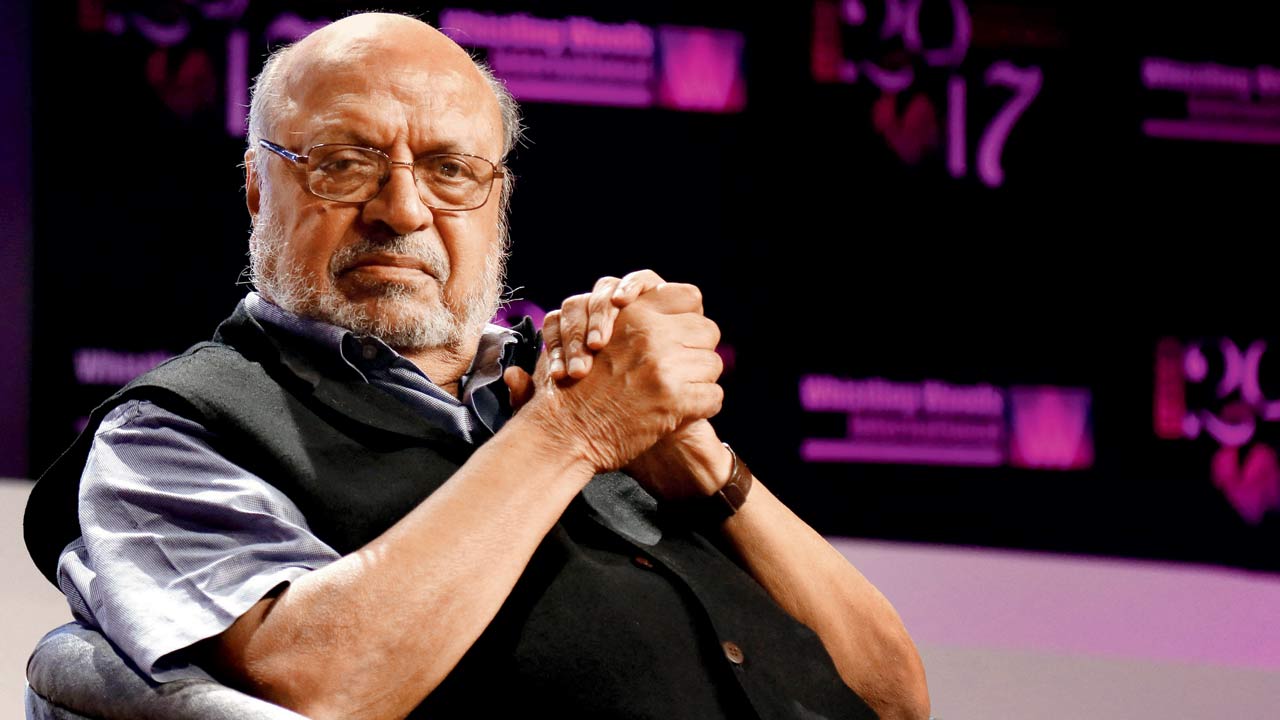
Benegal Pioneered New Wave Cinema, Created Cult Classics
Sunil Nair (THE TIMES OF INDIA; December 24, 2024)
Shyam Benegal came out of nowhere and lit up the Hindi film scene in the 1970s at a time when the industry was "an absolutely closed shop", as a close associate recalled it. It was the age of melodrama and action - 'Roti Kapda Aur Makaan' and 'Sholay' were big hits - and every release flaunted a roll-call of stars. "There was no possibility for any young filmmaker to get into it at all," is how Girish Karnad, who was then director of the Film and Television Institute of India, described it.
Benegal's neorealism struck a deep chord with a generation keen on films that would mirror the social and political tensions of their time. His debut film 'Ankur' (The Seedling), a tale of sexual exploitation set against a feudal background with a cast of unknown yet riveting newcomers, ran 25 weeks at the landmark Eros theatre in Bombay. He had begun writing the script of 'Ankur' when he was in college in Hyderabad and spent 20 years looking for a financier before an ad film distributor agreed to produce it. Its success staked out new ground for the 'art/parallel cinema' movement that over time showcased new talent such as Naseeruddin Shah, Shabana Azmi, Smita Patil, Om Puri, Govind Nihalani, Vijay Tendulkar and Vanraj Bhatia.
Benegal, who pioneered parallel cinema in India and created the 53-episode Bharat Ek Khoj, and whose last project was a 2023 biopic on Mujibur Rahman - 'Mujib: The Making Of A Nation' - passed away in a hospital in Mumbai, days after he turned 90 on Dec 14.
Shyam Benegal grew up in a cantonment town near Hyderabad in 1930-40’s where his father, a professional still photographer, introduced him to the camera. The obsession with movies began early, his appetite whetted by Hollywood and Indian releases screened at a local hall for the morale of the troops. “There used to be two programme changes a week,” he once recalled. “…like in Cinema Paradiso, I befriended the projectionist so I could see both...”
Shifting base after his education, he began working at Lintas in Mumbai as a copywriter. The next decade and a half were spent on a prodigious number of ad films and documentaries. Traces of the social concerns underpinning his cinema are evident in the shorts he made, including the earliest ones, such as A Child Of The Street, which took a compassionate look at juvenile vagrancy, and Close to Nature, a colourful take on tribal life in Madhya Pradesh.
His stint as a teacher at the Film and Television Institute of India (FTII) drew him closer to celluloid. But his bleak stories still had no takers among financiers. Lalit Bijlani of Blaze Advertising eventually stepped in. Both Ankur and Nishant, which came a year later, were set in the feudal lands of Telangana, a region under the Nizam. It was a world Benegal had seen up close in his formative years. Touted as his most striking works, the narratives and characters were situated in a rural milieu with a distinct dialect and attendant class-caste equations. Coming around the time of the Emergency, the two films spurred a movement of sorts and cemented his reputation as the high priest of the ‘New Wave’.
Benegal’s eclectic interests showed in the diversity of subjects. From Gujarat’s milk cooperatives (Manthan) to the life of a silent film era actress (Bhumika), from 1857 (Junoon) to feuding business families (Kalyug), his projects spanned periods and themes. A bearded, Renaissance figure at the centre of the ‘art film’ circuit, he was equally a mentor to actors, musicians, writers and technicians.
At a felicitation to celebrate Benegal’s 25 years as a filmmaker, actor-playwright Girish Karnad spoke of his innate ability to help artistes tap their potential. “He was not just a director but also a doctor, a psychiatrist, a father figure and a banker,” said Karnad.
The latter part of Benegal’s career was marked by biopics, including one on Gandhi’s years in South Africa and a tetralogy on Muslim women (Mammo, Sardari Begum, Hari-Bhari and Zubeidaa). By then, the ‘art film’ movement had dissipated. He had turned to a new set of collaborators, many from commercial cinema. His standout work in this period, however, was a part elegiac, part quirky interpretation of a Dharamvir Bharti novel, Suraj Ka Saatvan Ghoda. Occasional forays into television too made for interesting viewing: Bharat Ek Khoj, the mega-series based on Jawaharlal Nehru’s Discovery of India, and Samvidhaan, on the making of the Indian Constitution, were the best examples.
Benegal’s influence on the Indian film industry extended far beyond his own body of work. He headed a govt committee set up in 2016 to streamline the film certification process and lay down a framework that would allow more room for artistic expression.
--------------------------------------------
'Benegal told raw & real stories about ordinary people'
Bella Jaisinghani (THE TIMES OF INDIA; December 24, 2024)
Mumbai: The passing of Shyam Benegal, the torchbearer of New Wave cinema, evoked a lament of loss across the film fraternity Monday night. It was Shyam Babu who discovered and mentored an entire generation of the finest natural actors including Shabana Azmi, Naseeruddin Shah, Smita Patil and Om Puri, having fathered the parallel cinema movement with 'Ankur' in 1974.
In fact as recently as Dec 14, the entire clan met to celebrate Shyam Babu's 90th birthday, with happy pictures featuring Azmi, Shah, Kulbhushan Kharbanda, Kunal Kapoor of Prithvi Theatre, Divya Dutta and Rajit Kapur.
Filmmaker Shekhar Kapur posted: "He created 'the new wave' cinema. Shyam Benegal will always be remembered as the man that changed the direction of Indian Cinema with films like Ankur, Manthan and countless others. He created stars out of great actors like Shabana Azmi and Smita Patil. Farewell my friend and guide."
Actor Manoj Bajpayee whose career was baptised by his prince's act in 'Zubeidaa', termed it a "heartbreaking loss for Indian cinema. Shyam Benegal wasn't just a legend, he was a visionary who redefined storytelling and inspired generations". Actor-singer Ila Arun said, "I feel as if I lost my father. It is the end of a golden cinematic era."
Filmmaker Mahesh Bhatt said, "Shyam Benegal was a giant of Indian cinema. He told stories without pretense. They were raw and real, about the struggles of ordinary people. His films had craft and conviction. He changed Indian cinema, not with noise, but purpose."
Filmmaker Sudhir Mishra said, "Not many talk about the fact that there was a lament in his films and a sadness about the fact we were not living in the best of all possible worlds."
People from all walks of life mourned his loss. Congress leader Rahul Gandhi said, "Saddened by the passing of Shyam Benegal ji, a visionary filmmaker who brought India's stories to life with depth and sensitivity. His legacy in cinema and commitment to social issues will inspire generations. Heartfelt condolences to his loved ones and admirers worldwide."
Congress MP Shashi Tharoor recalled how Shyam Babu during his early years as ad filmmaker had photographed his sister and other children as "the first Amul Babies".
(With inputs by Swati Deshpande)
--------------------------------------------
He leaves behind a body of work so sprawling—shorts, documentaries, features, TV movies, series—that his CV alone might be longer than an obituary
Mayank Shekhar (MID-DAY; December 24, 2024)
Shyam Benegal’s last work, Mujib (2023), was possibly the most important film for Bangladesh; a biopic on the neigbouring nation’s founder, Sheikh Mujibur Rahman. He was 89, when the movie released. You did well, Mr Benegal. His first feature, Ankur (1974), was possibly the most important Hindi film for India’s art-house movement, heralding the Indian New Wave, from Bombay.
In between is a life so full of all kinds of cinema—shorts, documentaries, features, TV movies, series—that his CV alone, let alone its range, might be longer than an obituary can do justice. This would include a series of firsts; again, starting with Ankur itself, that was actor Shabana Azmi’s screen debut. Nishant (1975) was Naseeruddin Shah’s. He picked both actors, after they’d graduated from Pune’s Film & Television Institute of India.
One evening, while watching news on television, the anchor caught his eye, and he cast her in his children’s film, Charandas Chor (1975). That was Smita Patil. Bhumika remains, arguably, her greatest performance. Between Naseer, Shabana and Smita, forming an alternate, Bombay star-system of their own—besides Om Puri (Susman, Arohan), Anant Nag (Konduran, Kalyug), Rajit Kapur (The Making of the Mahatma, Suraj Ka Satvan Ghoda), and so many others—Benegal didn’t just make films.
He built an entire eco-system, for what came to be known as Hindi parallel cinema. Named such, because it did not intersect with the Bombay mainstream—remaining true to its realism, social consciousness, barely appeasing to audience’s baser instincts, or ignoring its intellect, while staying within commercial cinema, after all, for his features were still mostly privately funded (Blaze Productions, in particular).
An unassuming, gentle soul, gifted with gravitas, foremost, Benegal was a young mind. How else do you explain a career scripted over seven decades. Consider that when he made his first short, in 1962 (Ghar Betha Ganga), Jawaharlal Nehru was still India’s Prime Minister; man was several years away from stepping on the moon; and it’d be 20 years before we’d get Doordarshan (DD) for a proper national broadcaster.
Last checked, Benegal was still making movies. His partner, Nira, both in life and films, was his sounding board. He gave DD, and indeed Indian television, its greatest OTT slow-burn, decades before there was OTT, with Bharat Ek Khoj (1988), based on Nehru’s Discovery of India. He made India’s crowd-funded film, Manthan (1976), based on the life of dairy engineer, Verghese Kurien, with contribution of 500,000 farmers, decades before crowd funding became a term.
With Junoon (1979), he made the sharpest effort, until then, to take art-house into a big-budget space, with stalwarts of the time, adapting Ruskin Bond’s A Flight Of Pigeons. At the turn of the century, when multiplexes offered a short-lived window into exploring meaningful yet entertaining content, beyond simply the starry space, he brought forward intelligent comedies, Welcome to Sajjanpur (2008), Well Done Abba! (2009).
This is before he swiftly switched gear, and embarked on the astoundingly ambitious series, on the making of the Indian Constitution, Samvidhaan (2014), for Rajya Sabha TV. Yup, Benegal has always been there. Not just in terms of works, but also for how he inspired. What’s the final shot in Nagraj Manjule’s Fandry (2013), if not the stone-throwing finale of Ankur!
Given the widest possible gamut, surely, everybody has a Benegal Top 10. And each might read so different from the other. Kalyug (1981), modern adaptation of Mahabharat, set in Bombay’s corporate world, tops mine; Mammo (1994) might be a second; Mandi (1983) could be yours, or Zubeidaa (2001), if you’re younger.
A cousin of Guru Dutt, who got interested in cinema, because of his photographer-father Sridhar Benegal, who gave him access to a movie camera, when he was only 12—once Benegal moved to Bombay, from Hyderabad, he started out as a man of advertising.
It’s something he shared with Satyajit Ray, his inspiration of sorts. One of the most enlightening conversations on cinema that Benegal left behind for film buffs was his interview with Ray himself, for a documentary (that occasionally appears and disappears from YouTube).
It’s where you see Benegal for simply a curious movie mind. And a consummate movie buff, you would always spot at screenings at cinemas and festivals. The last I met him, in 2019, at his Tardeo office, which is a shrine of sorts in filmmakers in Mumbai—it was right after his Manthan actor and long-time associate, Girish Karnad, had passed on.
“Everybody’s leaving now,” he said. The very next minute, he began revealing how the then Bangladesh PM, Sheikh Haseena, had entrusted him with a film on her father, Mujib, along the lines of Richard Attenborough’s Gandhi. Benegal was 85 then—speaking about recommendations to the Indian censor board that never got implemented, or his public commitments in Goa, initiated from his Member of Parliament fund.
We discussed movies as a changing medium. He told me the cellphone was the best way to watch films—the eye’s distance should, anyway, be one and half times the length of the screen’s diagonal, and the sound doesn’t get better than a headphone. I’ve followed his advice since. There was so much more to learn. The movies remain. He lives on forever.
Javed Akhtar says, ‘Shabana is my best friend, and even marriage could not change her’-Shabana Azmi
8:14 AM

As Shabana Azmi completes 50 years in showbiz, she reflects on her achievements and the many changes the industry has undergone
Navya Kharbanda (HINDUSTAN TIMES; May 16, 2024)
Shabana Azmi — who entered the film industry with Shyam Benegal’s debut film Ankur in 1974 — has completed 50 glorious years in Bollywood. “When I started out, I never thought about how long my career would last. It is heartening that I’ve still got my boots on and that I’m getting a variety of roles,” says the actor, who was last seen in Rocky Aur Rani Kii Prem Kahaani (2023).
Azmi’s cinematic legacy is also being celebrated globally. Last week, the actor was honoured with London (UK)’s oldest award, the Freedom Of The City. Additionally, the upcoming New York Indian Film Festival (NYIFF) in June will host a special screening of her film, Fire (1996).
“It is humbling that it’s all coming together at 50 years. It’s heartwarming that my work is considered worthy of respect,” the five-time National Award winner adds.
Reminiscing about the shifts that the film industry has undergone, the 73-year-old shares, “I remember this crazy situation where (late actor) Rajesh Khanna and I were doing the first page of a scene, not knowing what the dialogues on the second page would be.”
She continues, “We used to work on pre-production for a month while post-production would take two years. Cut to now, they spend two years on pre-production and finish shooting in two to three months. That’s how I feel it should be,” she ends.
--------------------------------
Natasha Coutinho (BOMBAY TIMES; May 16, 2024)
Shabana Azmi and Javed Akhtar are one of the most loved couples in B-town and the veteran actress recently opened up on the secret of her successful marriage. The couple, who tied the knot on December 9, 1984, will complete 40 years of marriage this year.
Shabana says, “Javed says that the success of our marriage is that we don’t meet too often and are both busy running in different directions. We come from similar backgrounds, our fathers were poets from UP and communists, and we have a common view of things. Considering these factors, people say we should have had an arranged marriage. We have a happy and strong relationship. He says, ‘Shabana is my best friend, and even marriage could not change her’.”

Shabana Azmi lists her five special films from her 50-year career
3:10 PM

Natasha Coutinho (BOMBAY TIMES; March 15, 2024)
Five decades in the movies – and what a glorious journey it has been for Shabana Azmi. “But then, acting can’t be taught in 15 days or a month, that’s not even touching the tip of the iceberg. The greatest resource for an actor is life itself. Getting into the world of the character is not an easy task, just learning your lines is not enough,” she says.
It’s a 50-year career marked with several milestones, from winning a National Award for her debut in Ankur (1974) to choosing to play a queer character in Fire (1996). Here are five movies from her 50-year career that she exclusively spoke on during an hour-long chat.
ANKUR (1974): ‘I TOLD MY MOTHER THAT IT WAS LIKE SHOOTING A SATYAJIT RAY FILM’
I had started shooting for Faslah and Parinay, but it was Shyam Benegal’s Ankur that was my first release (Shabana won the Best Actress National Award). I was an urban, city-bred girl who spoke English and had never gone to a village. Then, Shyam Babu got Lakshmi’s costumes ready and we started working on what her gait would be like. It was interesting working with Shyam Benegal and I told my mother that it was like shooting a Satyajit Ray film. We went to the Berlin Film Festival and it was so glamorous. We got special treatment because Satyajit Ray’s film had been screened there in the past and were widely appreciated. Richard Dreyfuss and I were announced as the talented newcomers. The journey afterwards was a dream, and I was lucky as I faced no struggle.
ARTH (1982): 'EVEN TODAY PEOPLE TELL ME THAT THE FILM CHANGED THEIR LIVES’
One could give up an arm or a leg for my role in Arth. Mahesh Bhatt and I were friends and he excited me as a director. It’s like he would press a button and I would become the character. When the film released, people said it was nice, but objected to the ending – how could a woman not forgive her husband when he was apologizing? We said that we had made the film with that specific ending in mind and thank god for that! I won the National award, and it was a big hit. Even today people tell me that the film changed their lives and gave them courage. It was a small-budget film and many of the clothes I wore were my own. It didn’t have a bound script and kept developing even as we were shooting. One day, I was shooting for another film and Bhatt asked me to come over for 10 minutes. When I reached, he started shooting the important telephone call scene, with just one technical rehearsal. I started trembling, but today I’m glad it turned out that way and I did not over-prepare.
MANDI (1983): ‘I VISITED THREE BROTHELS TO UNDERSTAND THE WORLD OF THE FILM’
There was no question of saying no to Shyam Benegal and I gave 40 days for Mandi. My secretary was baffled and told me that I could’ve finished more films in that time. Most people on set were from FTII or NSD and we had a great time. Smita and I were given cars, but we gave it up to travel by bus with the others. Ila Arun would keep us entertained with her songs. I visited three brothels to understand that world. Faaroq Shaikh took me to Peela House and I noticed the girls were not garishly dressed; they wanted to look like film stars. Amrita Singh’s mother Rukhsana Sultana took me to GB Road, Delhi, that had tawaifs. Shyam Benegal took me to Heeramandi, where the madam asked one girl to perform on Dil Mein Tujhe Bitha Ke (from Fakira, that stars Shabana opposite Shashi Kapoor). Afterwards, she went back to being the person she was, a woman who had to support a family of eight. Pankaj Kapur had one scene but Shyam Babu would like the actors to be around. So he built a volleyball court and a carrom space so that we wouldn’t get bored.
FIRE (1996): ‘IT WAS NANDITA DAS’S FIRST FILM BUT SHE HAD THE COURAGE TO SPARKLE’
People still talk about Fire. It was Nandita Das’s first film but she had the courage to sparkle. We shot in a small house in Lajpat Nagar in Delhi and I knew there would be different reactions. People would be disturbed and overwhelmed, as these subjects were generally shoved under the carpet. The final confrontation between the characters played by Kulbhushan Kharbanda and me, where I talk about desire, was memorable. Deepa (Mehta) described my character as a ‘centred woman’ and for me, that’s when the penny dropped in my head. I don’t like directors showing how to act; one has to inspire the actor – not make them imitate. Having said that, the director is the most important person on the film, it’s their vision. But actors get more credit because we are on camera.
ROCKY AUR RANI KII PREM KAHAANI (2023): ‘KARAN JOHAR WOULD SAY ‘TRUST ME’ AND I WAS HAPPY TO SURRENDER’
Rocky Aur Rani Kii Prem Kahaani was a very different world for me. Karan Johar would just say ‘trust me’ and I was happy to surrender. Karan has kept up with the times and also wanted to bring in the world of Yash Chopra. The film raises such important points on gender roles. On one side I was playing Jamini and on the other side I was shooting for R Balki’s Ghoomer, I was also shooting for Shekhar Kapur’s What's Love Got To Do With It? In the same period.
Unique collection of foreign posters tells the global story of Indian cinema
8:19 AM

Curator Jahan Bakshi, who scours the globe for local reincarnations of movie posters, has found gems like Awara in German and Raju Ban Gaya Gentleman in manga style
Mohua Das (THE TIMES OF INDIA; February 4, 2021)

When Jahan Bakshi, a movie art curator in Mumbai, stumbled upon old Czech and British quad posters for Satyajit Ray films with neo-futurist fonts and colourful surrealism, he knew he was onto something special. His curiosity led him down a rabbit hole — of familiar yet outlandish — doppelgangers of Indian movie visuals from across the globe that revealed a fascinating yet undocumented history of how different countries reimagined Indian films.
“Looking for foreign posters of Indian films started as research for an article but soon became an obsession. It was a revelation to see what Indian films look like when seen through a foreign prism,” says Bakshi who has unearthed around 150-odd foreign origin Indian posters and acquired around 50 physical copies from places spanning Russia, Latvia, Bulgaria and East Europe to France, Germany, the UK, US, Japan, China, Thailand and Egypt. “They’re unique both aesthetically and conceptually... like watching an act of translation via a poster image. It was also eyeopening to see just how much Indian cinema had travelled globally in the past.”

Recast, often dramatically, to resonate in the local market, these foreign posters blend local language, sexual allure, religion, violence and intellectualism. If some are reminiscent of the myths and legends of that land — for instance, the Russian poster for 1990 action thriller Khoon Bhari Maang borders on a folktale with the magnified head of an alligator occupying centrestage against an intense pink background and the Hungarian reincarnation of Benegal’s Nishant has little dragons wrapped around Azmi’s face — many are visual time capsules indicative of the prevailing politics and censorship in the country.

More recently, Chinese posters for Andhadhun — a massive success collecting over $35 million at the box office in China — took on a darker shade with black and white overtones and a braille piano in the foreground as opposed to the popping colours and quirky vibe of the Indian version.
“Interesting patterns emerge from posters of other countries, too. The US posters tend to be text heavy with emphasis on captions and pull-quotes. Posters from Europe and Central Asia are surprisingly flamboyant, eccentric and at times exoticize Indian-ness. Japanese posters are bizarrely unpredictable varying from subtle to whimsical, gonzo to pulpy,” observes Bakshi who scours popular poster sites like New York’s Posteritati Gallery to obscure ones in Germany, Czech Republic and Japan in his rescue mission though the pandemic did delay some of his packages.
But he is fortunate to have found an ally — the Academy of Motion Picture Arts and Sciences. The 30-year-old who had started ‘Posterphilia’ — a hobby project of posting his favourite movie posters on social media two years ago — drew the attention of Anne Coco, the head of graphic arts collections at the Oscars library, last September. “She approached me, asking if I could help build their collection of Indian film posters which was quite scant,” recounts Bakshi, who over the past few months of sourcing Indian film posters for the Academy, pitched the idea of “also” exploring their foreign counterparts.
“Since then I’ve helped them acquire a bunch of Ray, Raj Kapoor and V Shantaram posters of foreign origin and hope we can build it up further,” he says with his fingers crossed. “Old movie posters are cultural artefacts and I want to reclaim this aspect of Indian film history,” he signs off.
I am completely fine and have fully recovered-Shabana Azmi
8:15 AM

Sonil Dedhia (HINDUSTAN TIMES; March 18, 2020)
If you compare those graphic images to the outpouring of love and concern that came my way from my audience, it overwhelmed me so completely that nothing else mattered,” says Shabana Azmi from Budapest, Hungary, where she’s currently shooting for Steven Spielberg’s Halo. The veteran actor met with an accident on the Mumbai-Pune-Expressway a couple of months back. As her upcoming short film, Sheer Qorma, on same sex relationship is about to release, she opens up on the changing portrayal of homosexuality in Hindi cinema across decades. Excerpts:
You met with a road accident in January. How is your health now?
I am completely fine and have fully recovered. Currently, I am in Budapest shooting for Halo (produced by Steven Spielberg) and I am happy to be back on the sets.
Pictures of the unfortunate incident were circulated on social media. Many felt that it was insensitive and intrusive. Did that bother you?
My family was upset. It was kept away from me for the longest time as I didn’t have my cellphone. When I saw it, I was on my way to recovery. At that moment, I was just really grateful to those who helped me and the hospital staff.
Right from Fire (1996), the release of which was opposed and banned, to Sheer Qorma now, how do you think the portrayal of the LGBTQ community in Hindi cinema has changed?
I have to say that this genre has opened up, really. The frequency of films that deal with a sensitive subject like homosexuality are being made, have increased in the last few years which is a great sign. The audience, too, is accepting this kind of cinema. Earlier, homosexuality was ridiculed in mainstream cinema but now, we see this subject being tackled sensitively. But at the same time, I feel it is only a section of audience especially in the metros who has have accepted this change.
What would you attribute this change to?
The notion of a family is changing. It is no longer just a heterogeneous family that we accept as a norm. We have seen two partners of the same sex having a baby and I think it is a healthy sign. The notion of family is being redefined as it is no longer restricted to having a baby biologically.
What do you think about mainstream actors working in films dealing with sensitive subjects?
I always believe that films are a reflection of our society and good films can influence society. There is a relation but there is an acceptance, too, and that has to be applauded. Actors today, aren’t shying away from experimenting. The credit should also go to the producer who is ready to back a film on a sensitive subject and the writer who writes the script. The Supreme Court’s decision of scrapping Section 377 was a big propeller towards positively changing the perspective that people had towards the LGBTQ community. It is a great time to be an actor. Gender and age are no longer considered while casting someone.
In a career spanning over 45 years, have you ever faced sexism and ageism?
I have been extremely lucky and my career has always been about being at the right place at the right time. It was my good fortune that Shyam Benegal’s Ankur (1974) became the film that propelled parallel cinema forward. Consequently, I got many different roles from what I would have got had I worked only in mainstream cinema. I never faced lack of acceptance.
Waheeda Rehman was not confident I could pull Ankur off, having never made a film before-Shyam Benegal
8:14 AM

Roshmila Bhattacharya (MUMBAI MIRROR; September 21, 2019)
 In early 1973, Shyam Benegal, an ad filmmaker, decided it was time to make a movie. He already had a story in mind, and also an actress—Waheeda Rehman, who had worked with his cousin Guru Dutt and whose work he admired to play the central character.
Laxmi, a maid from a lower caste, is married to a deaf-mute drunk. She’s seduced by circumstances and false promises into having an affair with the young landlord, Surya, only to be left high and dry after she discovers she’s pregnant with his child. What made Guide’s Rosie the ideal choice for Ankur’s Laxmi was that being from Telangana where the story was set, Waheeda ji could speak the local dialect Dakhini fluently. “But she was a big star at the time while I was a debutant director. She was not confident I could pull it off, having never made a film before,” Shyam babu reminisces with a laugh.
After Waheeda ji turned him down, he thought of approaching National Award winning actress Sharada who had worked in Telugu films. But he changed his mind when he learnt that not being from Telangana, she couldn’t speak the lingo, a mix of Hindi-Urdu, which was essential to fleshing out the character.
That’s when one of his assistants told him about this girl who, while studying at St. Xavier’s college, had impressed in a couple of stage productions. “Does she have a background in performing arts?” he wondered, and was told that her father, Kaifi Azmi, was a famous poet, while her mother, Shaukat Kaifi, had done a lot of theatre. She, too, was a graduate from the Film and Television Institute of India (FTII). Instantly interested, he asked for her to come and meet him.
“One look at Shabana (Azmi) and I knew she was perfect for Laxmi. Yes, she was young and looked young too, but I was willing to tweak the role for her. Going with my instincts, I immediately signed her on, after learning that since her mother was from Telangana, she spoke Dakhini. I didn’t even audition her like I had Anant (Nag) who played Surya, surprising even her,” he flashbacks.
Anant Nag had accompanied an actor whose name Shyam babu has since forgotten, for an audition. “He came to offer moral support to his friend and caught my eye. I auditioned Anant as well and finding him perfect, introduced him in Hindi films. He became a big star in Kannada cinema but always made time for a role in my films,” Shyam babu smiles.
And so, Ankur rolled, with a team of newcomers, with the exception of cinematographer, Govind Nihalani, who had some cinematic experience having assisted V K Murthy. Straightaway, Shyam babu, with his two first-time actors, along with Sadhu Meher (he played the deaf-mute husband), dived into a dramatic scene wherein Laxmi rushes to rescue Kishtaya who, accused of stealing toddy, is being mercilessly whipped by Surya.
Shabana Azmi turned out to be a real find. Her performance bagged her many awards, including the National Award for Best Actress. “She’s an incredible actress with a huge range. Give her a role and Shabana owns the part,” raves her mentor, pointing out that the actress who brought in her 69th birthday on Wednesday, has also earned a reputation internationally, on screen and on stage.
Ankur also bagged the Best Actor award for Sadhu Meher and was adjudged Second Best Feature Film at the National Awards. “It made me a filmmaker and I never went back to advertising,” points out Shyam babu, who’s seen as the pioneer of parallel cinema in India.
After Ankur, he signed Shabana ji for Nishant, Junoon, followed by Mandi in which she played the madam of a brothel. “She was a really slim girl then, I pushed her to put on weight because I wanted Rukmini Bai to be a well-endowed woman, who chewed paan, cracked betel nuts and kept the girls in place,” Shyam babu recalls.
The duo went on to do more films but haven’t worked together of late. Has his protégée changed as an actress or a person in the decades since, you wonder, and he quips, “No, except for the weight she’s put on, which, as I have told her innumerable times, I don’t like. I guess Mandi is partly to blame for it and I will always feel guilty for that.”
If there was no TV, people wouldn't have seen Shyam Benegal's films-Anurag Kashyap
8:59 AM

Genteel doyen Shyam Benegal and Bollywood's enfant terrible Anurag Kashyap on how India's movie capital shaped them, and they shaped it too
Mayank Shekhar (MID-DAY; June 28, 2019)
It's pre-noon. We are at Shyam Benegal's office in South Mumbai. Anurag Kashyap has travelled all the way from Oshiwara in North Mumbai, where Bollywood currently resides. Between two of India's most iconoclast filmmakers rest stories that equally span the journey of Mumbai as a movie capital, since they also personify the change that they wished to see.
What we didn't know is Kashyap's own struggles in this city, when he moved from Delhi in 1993, began from the same Everest building, Tardeo office we are at. It was the first door he'd knocked, looking for a job. This is his first visit since. Understandably, we start the conversation with:
Mid-Day: What Happened When You First Came To Mr Benegal's Office [In 1993]?
Anurag: It was my second day in Bombay, rainy June 4. I found his address, and came right here. Shyam ji wasn't in. I met a sweet man, Mr Ravi Khemu [actor Kunal Kemmu's father; Benegal's associate]. He realised I'd only watched movies at film festivals, and recommended that I go to FTII. The exams of which were over. Then he gave me other addresses — of Govind ji [Nihalani], and Prahlad Kakkar, who was also in the same building. Eventually, I realised, I needed to do something [for a résumé], before looking for a job.
Mid-Day: Mr Benegal, You've Been In This Office For Years. Even Up Until The '90s, South Bombay Was Actually The Hub Of The City's Film Industry, Wasn't It?
Benegal: I've been here since the '70s. Before this, I used to be at Jyoti Studios [in Nana Chowk]. It was the first sound studio in the country — Alam Ara [1931] was shot there. I used to love that place. Just about anybody/everybody in the history of Indian/Hindi cinema had worked at Jyoti Studios. For years, before things became expensive in this part of the world, and offices moved to Dadar and thereafter, Andheri, this street in Tardeo was the capital of the entire film industry.
Anurag: When I came to Bombay, Lokhandwala was a small hub, with Four Bungalows, and a road between them. Nothing else. Zee and STAR had started setting up offices, and we used to come to Worli all the time. The student-lot, like Imtiaz Ali, stayed at Lalbaug.
Benegal: The film industry had been gradually moving northwards given land value. B R Chopra used to be in Parel, and then his brother [Yash Chopra] moved further up [to Juhu]. Now, many have moved beyond Andheri because it's not affordable.
Mid-Day: Has The Demographic Of People Looking For Jobs In Films In Bombay Changed Over The Decades?
Benegal: Not at all. Most of them come from smaller towns with stars in their eyes, given the larger-than-life image of cinema itself.
Anurag: Most of them come here to be actors. But now with so many job opportunities in various media, what's come down is passion for making a movie — and living and dying for it.
Mid-Day: When You Hang In Versova/Andheri, The Sense You Get Is That Actually Everyone Is From Delhi. Did That Begin In The '90s?
Anurag: A lot of people moved from Delhi, after Shah Rukh Khan. Delhi had a strong theatre scene, where Shah Rukh used to do smaller roles. But when he broke out [in the mainstream] in such a big way, everybody came to Bombay thinking, if Shah Rukh can, so can we. The exodus that was otherwise taking place anyway didn't comprise people who wanted to be part of mainstream. We liked a certain kind of cinema and theatre, and wished to be part of it. The entire cast of Bandit Queen moved to Bombay from Delhi after the film. Piyush Mishra even wrote a play about it called Jinhe Jaldi Thi Woh Chale Gaye!

Mid-Day: By The '80s, Mr Benegal, While You Were An Established Filmmaker, Your Cinema Must've Been Still Hard For The City's Showbiz To Define Within Its Constructs. True?
Anurag: They used to call it "parallel" cinema [laughs].
Benegal: I hated those terms! Somebody once called me a middle-of-the-road filmmaker. I said if I stand in the middle of the road, I'd get run over! Calling something alternate/parallel denoted a caste system. The terminology automatically indicated that nobody can see your films. Even with press reviews, while they wrote good things, there would always be a line, "This is not for general public!" That's it. Killed your film! [laughs].
Anurag: And we were categorised the "Shyam Benegal" type! Which means I need another job to sustain myself.
Mid-Day: Say A Karan Johar Collaborates With Anurag. Curious To Know How Mainstream Showbiz Comprising Manmohan Desais Of The World With Amitabh Bachchan At The Centre Interacted With You Personally, Mr Benegal.
Benegal: I had a similar kind of [joint] conversation [for the press] as we're doing now, with Manmohan Desai, and it went off quite well actually! And there was no feeling [of discord with people from "commercial cinema"] of any kind, seriously. Because you were not seen as a threat. They could be very patronising.
Anurag: There must also have been resentment that if people like Shyam ji didn't exist, then all other awards could've also been ours — outside of box-office! [laughs].
Mid-Day: Anurag, You On The Other Hand, Were The Wild-Child Seeking Validation From The [Mainstream] Film Industry. Threat In That Sense?
Anurag: I made myself into one! My career started precisely because I wasn't a threat — available to do any job for free, because I was learning, and figuring out if I can do it, or not. That's how I broke in. In the early 2000s, I started fighting aggressively for sustenance of a certain kind of cinema. Because I realised the '70s/'80s were not going to come back. Back then, to watch a film that I wanted to, I'd have to travel all the way to Town, that too to one cinema, which was playing one show, over 20 weeks! And even that began to be taken away from us. It was a massive fight.
Benegal: Multiplexes [that came in after] made a huge difference. It gave an incredible boost to filmmakers who were not part of the mainstream, as it were. Because, you had to fill a theatre of 60 or 100 seats, which was not so difficult.
Anurag: Single screens were very different for us. How do you fill up that many seats? And they wouldn't give us more than a morning or a late-night slot.
Benegal: And if you couldn't get 80 per cent audience on the first weekend, you were out on Monday. Even if you filled up 75 per cent of a 1,000-seat cinema, you'd still be out.
Mid-Day: When Television Entered The Scene In The '80s, Did That Change Things For You As A Filmmaker, Mr Benegal?
Benegal: Of course. For one, people who had never seen my films started watching them, because they were coming to your home. That's really where I developed an audience.
Anurag: That's when our fathers said, his film is coming, watch it on TV. Our introduction to his works was the TV series, Bharat Ek Khoj.
Mid-Day: While We Categorise Films As Mainstream/Parallel, The Fact Is Both Of You Have Been Commercial Filmmakers, Backed By Private Funding With Expectation Of Returns, Isn't It?
Benegal: Except for Suraj Ka Satvan Ghoda [1992] and Mammo [1994], which were NFDC [state-funded] films, all my features were made through regular, private finance. Naturally, they had to cover their cost. There's no way I could've remained a filmmaker, if they didn't. Any filmmaker would feel commercial pressure. But you really have to work on strategies, and be clever to get your way.
Anurag: You have to say things that people believe in, to protect your vision.

Mid-Day: Both Of You Worked With New Actors, Who Could Build A Fresh Audience-Base. Say Nawaz, Vicky, Etc. In One Case; And Naseer, Shabana, Smita And Others In The Other. This Created A Parallel Star-System Of Its Own, Didn't It?
Benegal: It did, to the extent that some of them [actors] started to resent it! [laughs]. They weren't getting an 'in' into the mainstream. Because they were considered to be a certain 'type' of actors. Well, you can't beat the system in matters like these. I wanted to make films that I wanted to make, and in my own way. I don't think there was any intention beyond that.
Anurag: All my actors at least get strong-character, or even lead, roles in the mainstream. That transition has happened. Because the old star-system doesn't work anymore. There's greater democracy over how the medium has changed, especially with the advent of the Internet. A person who pulls in the biggest crowds these days is Bhuvan Bam, who's a YouTube sensation.
Mid-Day: The Way Mr Benegal Did With Actors Fresh From FTII In The '70s, You Also Created A Similar Ecosystem, Decades Later, In Mumbai, Though.
Anurag: I didn't do it thinking I was creating a new ecosystem. I didn't have money, so I developed a new way of making movies. It started with Black Friday [2007] — shooting on the street, in full public view. I had no option but to hide cameras, and shoot everywhere. I had no money to create Zaveri Bazaar, so I'd shoot there.
Mid-Day: Black Friday Was Produced By Mid-Day.
Anurag: Which helped, because mid-day gave us these badges, that we flaunted around saying we're shooting a documentary. In the process, I learnt how to shoot on streets without people ever finding out. Primary requirement of that language is to work with people who won't be recognised. I went looking for good actors, with screen presence, and who aren't known. So I created casting systems, with [people like] Gautam [Kishanchandani], Mukesh Chhabra..
Mid-Day: For The Longest, Since Local Distribution Was A Bottleneck, Did You Both Consciously Look At International Markets To Expand Audience-Base?
Benegal: I never did. But because my first film Ankur [1974] went to a few international film festivals, garnering excellent audiences, I found a distributor with presence in all of western Europe. And another distributor in Britain, with a string of art-house cinemas in London. Automatically, my films after that got distribution.
Anurag: I was only trying to survive, having grown tired of people telling me that nobody would want to see my films. I spent considerable time trying to understand that market. I had to make a film that I owned — That Girl In Yellow Boots — so I could experiment in that direction.
Benegal: Now you have OTT platforms. You find your films in their bank. They're available to people all over the world.
Mid-Day: Given Where We Are Now, With The Internet, Where Practically Everyone Is A Filmmaker, Do We Even See Mumbai As A Centre Of Filmmaking In The Future?
Anurag: The world's completely changed. I just saw a whole shoot, where the producer is Bengali, the film is in Hindi, the filmmaker is from the South, the cinematographer is from Poland, sound-designer is from elsewhere. Everybody had only met on the Internet. And they're now making a film together.
Mid-Day: Looking Back At 40 Years Of Films, If You Were To Place A Turning Point, Where Would That Be?
Benegal: It was television, which went national. That made the huge difference.
Anurag: I think it was television, when it came in the '80s. And then Internet, which went global. If there was no TV, people wouldn't have seen Shyam ji's films. Likewise, if there weren't pirated downloads on the Internet, they wouldn't have seen my films either.
Mid-Day: Disappointed That Two Filmmakers Are Calling TV And Internet As Turning Points. There's Still Cinema, Right; Or Is That Charm Over?
Anurag: It's my personal choice to watch films in cinemas. But I can't deny that I found my audience online.
Benegal: The classic distance that you must keep from any screen is two and half times its diagonal length. That gives you the kind of image that you'd get in a cinema hall. I can get that in my home — on a large screen, with surround sound, the works. What I miss is the audience!

Shivendra Dungarpur takes on the task of preserving Shyam Benegal’s cinematic oeuvre
7:47 AM

Avinash Lohana (MUMBAI MIRROR; December 27, 2017)
 Four days after Shivendra Dungarpur, founder of the Film Heritage
Foundation, tweeted about Shyam Benegal donating some of his work to the
archives, the former’s office is lined with over 20 cartons of material
as they deliberate on the impending process of preservation.
Dungarpur informs that Benegal is on the advisory board of his organisation and has been an eminent supporter since its inception in 2014. “We have set up a ‘Shyam Benegal archive’, under which we have some of his scripts, including The Making Of The Mahatma, Samvidhaan and Bose: The Forgotten Hero, among others. We also have stills, books on films, photographs and original posters of a few of his films including Zubeidaa, Antarnaad, Ankur, Mandi and Bhumika. He has also made several ad films, documentaries and two televisions shows – Bharat Ek Khoj and Yatra – and we are in possession of their original camera negatives, film clap boards, call sheets and film-related letters,” informs Dungarpur.
Benegal is confident of his decision. “Shivendra is extremely serious about what he is doing and has got a wonderful museum. I have been working for close to 58-59 years. It’s a long period to have accumulated a great deal of material and one has to let people make the right use of it. Quite a few original negatives of the films that I have made have been given to the National Film Archive and what I had in my office has been given to Shivendra,” the filmmaker tells Mirror.
 Dungarpur, who counts Bhumika, Ankur and Manthan among his favourite
Benegal films, says that his biggest challenge is to save the original
camera negative of Susman. “It’s in a very poor condition; it reeks of
vinegar and we have to start work on it soon. The challenge is to
collect more material and to make sure that it is accessible to public
as well. We will take six months to figure out the entire material
donated by Shyamji,” he says. Dungarpur has previously acquired film
material of other directors like Mani Ratnam, Kundan Shah, Saeed Mirza,
Govind Nihalani, JBH Wadia and films produced by Amitabh Bachchan. “We
have also conducted three workshops on film preservation and restoration
to bring in more people who are equipped to look after this archive.”
When asked if he’d like to have one of his films restored, Benegal says, “Only if other people are interested in doing it, which is why I gave them away. There used to be a vault in Mahim where master negatives were kept for years and years. The people running it went out of business and didn’t inform anyone before the air conditioning was taken out. Finally we had to go running to look for our negatives,” the veteran filmmaker reflects on the current state of film preservation in India. Dungarpur, however, argues that restoration is an expensive process. “We don’t have as much funds right now so we will first start preserving them,” he signs off.
How Nehruvian view of social change shaped Indian Cinema-Shyam Benegal
10:09 AM

As told to Mithila Phadke (THE TIMES OF INDIA; November 9, 2014)
I remember the first time I saw Nehru. It was soon after the police action that liberated Hyderabad from
Nizam's rule. I must have been about 12 at the time. A friend of
mine and I were walking towards a disused golf course close to my home
where we often played cricket. It was early in the morning. Two horsemen
came cantering along on their horses. One was General J N Chaudhuri who
was the Military Governor of Hyderabad at the time and the second was
Jawaharlal Nehru. He looked like a bronze god. The second time I saw him
was several years later at an Inter University Youth Festival in New
Delhi. He gave an extraordinarily inspirational speech which in fact
changed the course of my life.
 The early years of Independent
India were times of great optimism. Nehru was the great hero, with his
film star good looks and his charming manner. Also, he was an extremely
inspiring leader, particularly for young people. Nehru in his youth was
greatly inspired by the Russian Revolution. He travelled to the Soviet
Union with his father in the late 1920s and was most impressed with the
idea of the social engineering that he saw being attempted there. He was
all for creating a new society but
not necessarily by altogether dismantling the earlier economic and
social structures. He substituted the ideal of socialist society with the
term socialist pattern of the society which was described as a mixed
economy with space for both private and public sector. He wanted a
self-reliant India rather than attempting to make it self
sufficient.
Many mainstream filmmakers were impacted by the optimism of the early Nehruvian years. The films of Khwaja Ahmed Abbas ('Jagte Raho', 'Awara') and others such as B R Chopra ('Naya Daur') were critical of the present but were extremely optimistic of the future. Their films were essentially Nehruvian in concept.
Another important development in the Nehruvian era were the creation of the three cultural academies - Sangeet Natak Akademi, Lalit Kala Akademi and the Sahitya Akademi. The Film and Television Institute was founded during Nehru's tenure. The FTII was designed to train filmmakers who would create films that would reflect changes taking place in Indian society rather than turn out escapist fantasies which were the staple of mainstream cinema.
The impact of Nehruvian thinking was felt most significantly in Bengali, Malayalam, Kannada and Oriya cinema before it was felt in Hindi films. These films were clubbed together by the press and described as parallel cinema.
Most of the early graduates of the FTII, began to make films that were far more original and reflected social and aesthetic attitudes and views very much their own rather than being influenced by popular mainstream cinema of the time. Among the notable filmmakers, who made their mark were Adoor Gopalakrishnan and Aravindan in Kerala, Girish Karnad in Karanataka, Nirad Mahapatra in Orissa among others. As far as Hindi Cinema was concerned, there were filmmakers like M S Sathyu and myself.
Hindsight criticism of Nehru has become fairly fashionable today. Nehru's contribution according to me was a foundational one and contributed hugely in making India an independent minded democratic country. What Nehru did was help open up minds to different kinds of thinking and to possibilities whose significance can never be underestimated.
My film 'Ankur' was essentially about social change. So was 'Manthan' while 'Bhumika' was about the liberation of women from the oppression they suffered in the traditional patriarchal society of our country. 'Kondura' was about breaking free of traditional superstitions that held society in thrall.
These were all influenced either directly or obliquely by Nehruvian views on social change - the idea that one cannot develop society and move forward without actively helping to make far reaching social changes.
These views are as relevant today as they were yesterday.
The early years of Independent
India were times of great optimism. Nehru was the great hero, with his
film star good looks and his charming manner. Also, he was an extremely
inspiring leader, particularly for young people. Nehru in his youth was
greatly inspired by the Russian Revolution. He travelled to the Soviet
Union with his father in the late 1920s and was most impressed with the
idea of the social engineering that he saw being attempted there. He was
all for creating a new society but
not necessarily by altogether dismantling the earlier economic and
social structures. He substituted the ideal of socialist society with the
term socialist pattern of the society which was described as a mixed
economy with space for both private and public sector. He wanted a
self-reliant India rather than attempting to make it self
sufficient.Many mainstream filmmakers were impacted by the optimism of the early Nehruvian years. The films of Khwaja Ahmed Abbas ('Jagte Raho', 'Awara') and others such as B R Chopra ('Naya Daur') were critical of the present but were extremely optimistic of the future. Their films were essentially Nehruvian in concept.
Another important development in the Nehruvian era were the creation of the three cultural academies - Sangeet Natak Akademi, Lalit Kala Akademi and the Sahitya Akademi. The Film and Television Institute was founded during Nehru's tenure. The FTII was designed to train filmmakers who would create films that would reflect changes taking place in Indian society rather than turn out escapist fantasies which were the staple of mainstream cinema.
The impact of Nehruvian thinking was felt most significantly in Bengali, Malayalam, Kannada and Oriya cinema before it was felt in Hindi films. These films were clubbed together by the press and described as parallel cinema.
Most of the early graduates of the FTII, began to make films that were far more original and reflected social and aesthetic attitudes and views very much their own rather than being influenced by popular mainstream cinema of the time. Among the notable filmmakers, who made their mark were Adoor Gopalakrishnan and Aravindan in Kerala, Girish Karnad in Karanataka, Nirad Mahapatra in Orissa among others. As far as Hindi Cinema was concerned, there were filmmakers like M S Sathyu and myself.
Hindsight criticism of Nehru has become fairly fashionable today. Nehru's contribution according to me was a foundational one and contributed hugely in making India an independent minded democratic country. What Nehru did was help open up minds to different kinds of thinking and to possibilities whose significance can never be underestimated.
My film 'Ankur' was essentially about social change. So was 'Manthan' while 'Bhumika' was about the liberation of women from the oppression they suffered in the traditional patriarchal society of our country. 'Kondura' was about breaking free of traditional superstitions that held society in thrall.
These were all influenced either directly or obliquely by Nehruvian views on social change - the idea that one cannot develop society and move forward without actively helping to make far reaching social changes.
These views are as relevant today as they were yesterday.
When Shabana Azmi was mistaken for a maid on the sets of Ankur
8:32 AM

Roshmilla Bhattacharya (MUMBAI MIRROR; June 24, 2014)
Shabana Azmi's journey in films began when Deepak Parasher, filmmaker Pankaj Parashar's elder brother, came knocking on the door of her Janki Kutir home, looking for Zarina Wahab, who after passing out from the Film and Television Institute of India (FTII) had moved in with Shabana. Deepak wanted Zarina to play Ananth Nag's child bride, Saru, in the Shyam Benegal directed Ankur. Though that role eventually went to Priya Tendulkar, Deepak advised Shabana, a college mate, to meet Benegal too.
"I had no idea who Shyam was. But Hrishida (Hrishikesh Mukherjee) who'd presented me with the gold medal at the FTII, told me he was a good technician and I should meet him. Within 30 minutes, he'd offered me Ankur and Nishant," says Shabana.
Shyam had approached Waheeda Rehman earlier for the role of Lakshmi, the fiesty Dalit woman who is impregnated by the much-married landlord's son (Ananth Nag) while being married to a deaf-mute alcoholic potter, played by Sadhu Meher. Waheeda had turned him down, and so did Lakshmi (of Julie fame) and Anju Mahendroo.
Shabana was a bit young for the part, but she could even speak in the Hyderabadi dialect Dakkhani and despite being a city girl, was quite comfortable roaming around the village in Lakshmi's clothes. The only problem was that she couldn't sit on her haunches.
"Shyam would insist that during lunch, I should have my food sitting on my haunches on the floor," says Shabana.
One day during the shoot, a couple of students came down to the village and asked about the heroine. Shabana blithely told them that she wasn't well so hadn't reported for work. "And who are you?" they asked. "I'm the maid," she replied.
They believed her, and this convinced Shyam that she was indeed ready for the film. "Only after this incident was I allowed to join the rest of the crew at the dining table but the village women still taunted me for not knowing how to pound mirchi despite all my education," she laughs.
For Shabana, the bigger fear was trying to appear matter-of-fact when confronted with a snake, even though she was even more terrified by the creature than Nag's character Surya.
"Later Shyam told me that I was a really good actress because no traces of my terror were evident on my face on camera," she smiles.
A bigger compliment came from Satyajit Ray, who in his book, Our Films, Their Films, wrote that she was one of the finest dramatic actresses in the country after seeing her performance in Ankur.
According to Shabana, he was particularly impressed with the scene where she breaks down on seeing Sadhu return home. She admits that even though crying had never been a problem for her, when she faced the camera for this last scene of the film, she simply froze. Realising what had happened, Shyam switched the lights off and whisked her off for a chat.
"Without alluding to what had happened or telling me to relax, he started narrating a story about a family during the Bangladesh famine. When he saw that I was moved, he took me in front of the camera and I did the shot in one take," says Shabana giving Shyam credit for sensitively handling an actor's block.
Through a process of trial-and-error, Shabana completed Ankur and was caught completely unawares when she bagged the National Award for Best Actress for her debut performance.
"I have no memories of the award except that Shyam (he bagged the award for Second Best Feature Film), Sadhu (Best Actor) and I went to Delhi together to receive the award," she admits.
What she does remember is that Ankur was nominated for the Golden Bear at the Berlin Film Festival. It didn't win the coveted prize, and since there was no category for Best Actress, Shabana and the film got a Special Mention from the Jury. Ankur, made on a shoestring budget of Rs 5 lakh, out of which Shabana was paid Rs 15,000, became a cult film that pioneered the Hindi parallel cinema movement.
Subscribe to:
Posts (Atom)