Showing posts with label Amul Mohan. Show all posts
Showing posts with label Amul Mohan. Show all posts
We offered The Sabarmati Report to Vikrant Massey a few months before 12th Fail was released-Amul Mohan
8:38 AM

Glad to have Massey front The Sabarmati Report, producer Amul discusses how the political thriller about the Godhra train burning case is ‘emotion-driven’
Upala KBR (MID-DAY; April 7, 2024)
The Sabarmati Report’s teaser has created a flutter. Starring Vikrant Massey and Raashii Khanna, the Ranjan Chandel-directed political thriller revolves around two reporters who investigate the burning of the Sabarmati Express in 2002. Amul Mohan, who has backed the movie along with Ektaa R Kapoor, says that as a producer, he is looking for compelling narratives and The Sabarmati Report delivered on that count.
“Aseem sir [Arora, writer] had a take on The Sabarmati Report, and we built on that. It’s emotion-driven, as it deals with a timeline in India when such a ghastly act happened. The sense of injustice we felt while we were researching it, made us gravitate towards it,” starts Mohan.
On February 27, 2002, 59 pilgrims returning from Ayodhya were killed in a blaze in the four coaches of the Sabarmati Express near Godhra railway station in Gujarat. It had led to one of the worst communal riots in Gujarat. While the film is a mix of fact and fiction, Mohan highlights that it isn’t centred on the Sabarmati Express fire or the subsequent riots, but focuses on the following decade and the findings of the actual Sabarmati report.
“We are not touching on anything that happened immediately, post the Godhra train incident but the investigation as to what really transpired that night, near Godhra station, in Gujarat in 2002. Our subject is controversial, but our take will make it more palatable for the masses,” states Mohan.
Massey is on a career high since the runaway success of his last release, 12th Fail (2023). The producer says they had approached the actor before he struck gold at the box office. “We offered the film to him a few months before 12th Fail was released. Before we came for the narration, Vikrant had read the story. That shows the kind of actor he is. After working with him, I respect him even more.”
He is grateful to Kapoor, with whom he worked as a creative producer on Ek Villain (2013) and Ek Villain Returns (2022), for backing the project. Kapoor is known to be clear about what she wants, which some interpret as interference, but Mohan says she has a finger on the audience’s pulse like no other.
“It’s a dream come true that Ektaa is backing a new producer like me. I’m lucky to have witnessed her insight about stories that she wants to tell. She connects with the masses.”

12th Fail actor Vikrant Massey begins shooting for The Sabarmati Report
8:27 AM
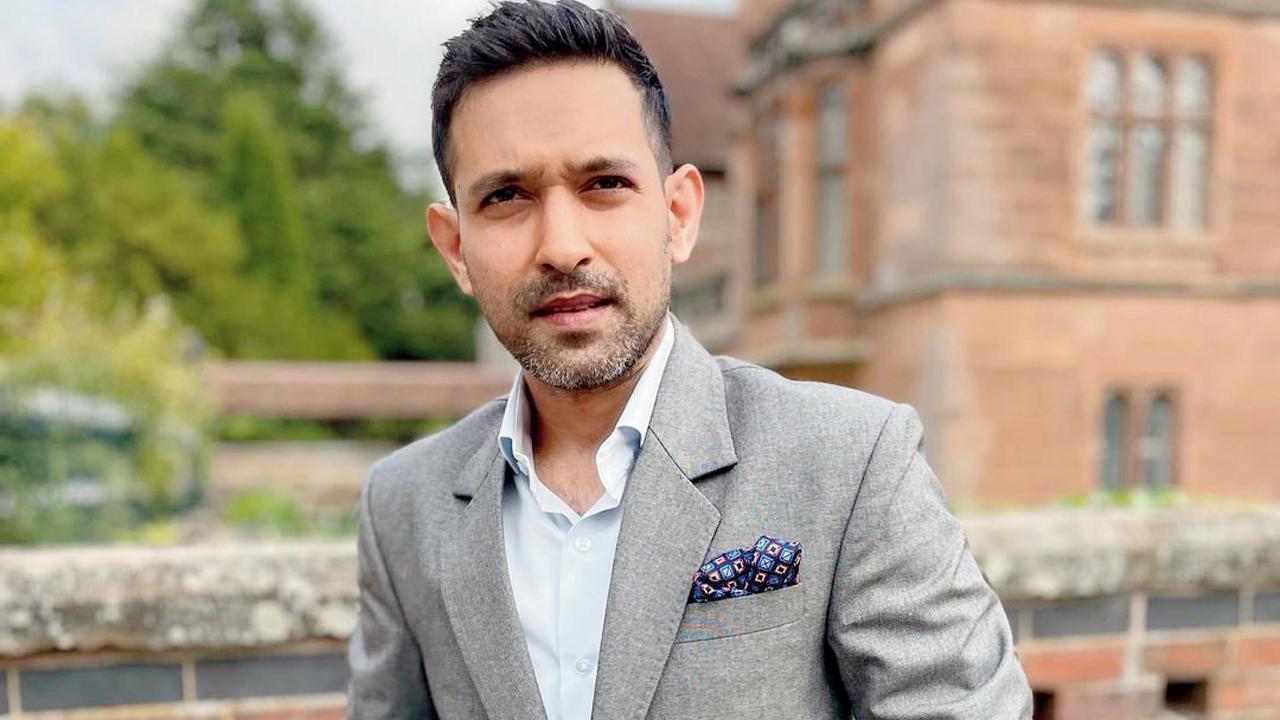
Sources say 12th Fail star Vikrant has begun shooting for The Sabarmati Report, which sees him as journalist investigating 2002 Godhra train burning case
Upala KBR (MID-DAY; January 16, 2024)
What would be a fitting film to continue Vikrant Massey’s golden run after 12th Fail (2023)? Vidhu Vinod Chopra’s directorial venture, one of the finest Indian movies of 2023 and a sleeper hit, is a tough act to follow. But it looks like Massey has found another powerful story, this time with producer Ektaa R Kapoor. The duo have teamed up for a political thriller titled The Sabarmati Report.
Beginning with the real-life episode of the burning of the Sabarmati Express in 2002, the movie then focuses on two journalists who investigate the incident and the cause of the fire. While Massey and Raashii Khanna play the reporters, we hear Ridhi Dogra—recently seen in Jawan (2023)—portrays a negative role.
On February 27, 2002, 59 Hindu pilgrims returning from Ayodhya were killed in a fire in the four coaches of the Sabarmati Express near the Godhra railway station in Gujarat. The incident led to one of the worst communal riots in Gujarat.
A source from the creative team reveals, “While The Sabarmati Report is based on the burning of the Sabarmati Express, the makers have completely stayed away from the Gujarat riots. Ektaa and director Ranjan Chandel, who previously helmed the acclaimed Grahan [2021], want to treat the subject with utmost sensitivity. When co-producer Amul Mohan and writer Aseem Arora first narrated the story to Ektaa, she was moved and told them that it was the best political thriller she had come across in years. Aseem’s story is loosely based on real-life incidents. It plays out over a decade, from 2002 to 2012.”
We hear Chandel took the film on floors in Ahmedabad on December 17 last year. The director has charted out a start-to-finish schedule.
“It was always planned as a 36-day schedule. Currently, the film is being shot near Madh Island, where life-size trains and the Godhra railway station have been recreated by art director Rajat Poddarr and his production design team. Chandel has chosen Amlendu Choudhury to serve as the director of photography.”
Post Galwan Valley attack, Hindi films won't release in China?
8:44 AM

As the ‘boycott China’ chorus grows louder, we find out what’s at stake for Hindi films in China
Prashant Singh and Juhi Chakraborty (HINDUSTAN TIMES; June 19, 2020)
 Of late, China has emerged as a lucrative market for Hindi films, though it’s still not anywhere near other overseas countries such as US, UK or Europe. PK which released in China in 2015, Dangal in 2017, Secret Superstar, Bajrangi Bhaijaan (BB) and Hindi Medium in 2018 and Andhadhun have had dream run at the China box office.
However, the present situation in eastern Ladakh, where 20 soldiers of the Indian Army were killed in a violent confrontation with Chinese troops in Galwan Valley late on Monday, has posed the question of whether Indian films will cease to release in the neighbouring country.
While Dangal earned a whopping ₹1,908 crore, Secret Superstar raked in ₹874 crore. Likewise, PK made ₹831 crore, even as Andhadhun touched ₹324 crore figure in China, while BB also crossed ₹300 crore mark.
 No more number games
Filmmaker Nikkhil Advani refuses to look at the balance sheets. “If 20 of our soldiers have been brutally killed, there’s no question of even talking or thinking about having our films released there, or how much financial losses — miniscule or big — it will entail. Hypothetically, if we are in such a tense situation with a country that contributes in a big way to our overseas film business, will we think of releasing films there? No, I don’t think so,” he says.
Filmmaker Sanjay Gupta, whose Kaabil released recently in China, admits that China is “undoubtedly the fastest growing movie market in the world”. “But Hindi films don’t have a definite market share there yet, with a very negligible business. So, it’s not like we are going to lose out on a huge pie if we skip China,” says Gupta. Exhibitor-distributor Akshaye Rathi puts it in perspective. “It’s a producer’s call. Money-wise, you don’t stand to lose much. So, our filmmakers can skip it,” he says.
 A high probability
Film trade expert Amul Vikas Mohan feels that film industry is most likely to take a stand on the matter. “I will be shocked if they don’t. I understand that China is a brand new market, and movies are doing well there. But regardless of the financial aspect, the patriotic feeling is much stronger and that will affect decisions,” he says. Trade analyst Atul Mohan also agrees that when emotions run high in the country, it won’t be business as usual for the film industry.
Not a big blow
Despite the whole monstrosity about the China market, Rathi notes that revenue-wise, not releasing films in China will not make much of a difference to the overall scheme of things.
“China has a policy where they allow only a limited number of foreign language films to release. So, we weren’t looking at the release of more than three to four Indian films there anyway. Plus, the business policies that the Chinese entertainment industry has is such that out of the big money that a film makes, a very small share comes to the producers,” Rathi explains.
The Covid factor
While it indeed is lucrative for Indian filmmakers to release their films directly on 25,000 screens in China, the Coronavirus pandemic has anyway dented that prospect and cast a cloud of uncertainty about theatres opening in such large numbers.
Joginder Tuteja says, “It will take two months for an Indian film to get a clearance for release there. The films which are going to release are anyway old, they will go there, release silently and come back. It won’t make much of an impact,” he shares.
The big rush!
Till now, a number of Hindi films have hit Chinese big screens starting with 3 Idiots and PK among others. Of late, Hindi films like Hichki, Andhadhun, Kaabil and Mom released in the neighbouring country to varying degrees of success. In April, reports suggested that Hrithik Roshan-starrer Super 30 will release in China once the situation becomes ‘normal’ after Coronavirus pandemic. We tried to reach out to Reliance Entertainment Group CEO Shibasish Sarkar about the same, but he refused to comment.
#CoronaCrisis: With shoots stalled and theatres shut, Bollywood to suffer massive losses
7:55 AM

Rachana Dubey (BOMBAY TIMES; March 17, 2020)
 With advisories issued by the state and central governments following the COVID-19 outbreak, cinema halls in major markets like Mumbai and Delhi will remain closed till March 31. While the Producers Guild of India released an official statement on Sunday, stating that shoots of Hindi films, shows and ads across the country will be suspended from March 19 to 31, the units of Jersey, Bhool Bhulaiyaa 2 and Laal Singh Chaddha were among the first in Bollywood to call off work voluntarily.
Rohit Shetty’s Sooryavanshi was the first film to announce a change in its release date, the cascading effect of which will be seen on releases across the year. Angrezi Medium’s opening collections have taken a hit, too.
While it’s only been a few days since the lockdown, experts are finding it difficult to place a ball-park figure on the losses that the industry stands to suffer. Distributor Amod Mehra believes, “Theatres running Hindi films do an average business of Rs 15 crore between Monday and Thursday. The weekend numbers are higher. So, if we have three-four weeks’ shutdown, we stand to lose close to Rs 100 crore on Hindi films alone. If you add the screens allocated to cinema from other languages, the number will escalate to Rs 200-300 crore. This is just a modest number that we stand to lose in cinemas in India alone, the overseas collections will also see a huge dip. It’s difficult to gauge the exact figures as of now. Producers have to bear cancellation costs of their on-going and pre-planned shoots. The transportation business affiliated to Bollywood dancers, workers and technicians are also going to suffer because they earn daily wages. Procuring dates from actors to reschedule shoots is another ball game altogether. The crisis does not end here. The films that have all been postponed will come in clusters and fight for footfalls eventually, which will lead to more chaos.”
 Nitin Datar, the head of the association for single-screen cinemas in India, points out, “Distributors and producers can release a film at a later date, but we will lose 15 days. We have to keep our business shut and won’t be able to recover the lost time, while we continue to pay salaries and overhead costs. We’re counting on films like Sooryavanshi to help us make up for the monetary losses.”
Kamal Gianchandani, the head of a leading cinema chain, shares, “We are supportive of the measures implemented by the government. In the cities, where cinemas are still operational, we’re following all the measures for hygiene and safety,” he says.
Rajesh Thadani, a distributor from Mumbai, explains, “Angrezi Medium is the worst affected. We can only hope that filmmakers will act sensibly while choosing their release windows to ensure that they eat as little into each other’s businesses as possible. Hollywood films are also going to queue up. In all of this, my worry is that smaller films will have to put up a bigger fight for their little space.”
Trade expert Komal Nahta says, “It was already getting difficult to avoid clashes between big films in the year. Now, with this situation, it will get even more difficult. Sooryavanshi has moved and in effect, films like '83 will also look for another window. A chain-reaction has set in. The business will also suffer losses to the tune of Rs 300-500 crore because the weeks when the cinemas are not functioning will have to be wiped out of the calendar in terms of income.”
Amul Mohan, trade expert, sums up, “The numbers can be dizzying because the impact of lockdowns is multi-layered. There will be weeks when you might see several big films releasing across the limited number of screens that we have. In such a scenario, it may not be wise to attach numbers because that can add to the panic in the business. The numbers could be much higher than what is being quoted all over; let’s just pray that it does not escalate too much.”
Mumbai theatres hike fares by an average 20 per cent for Bharat
9:03 AM

Despite the suggestion of Salman Khan keeping Bharat ticket rates to the minimum, city theatres hike fares by an average 20 per cent
Sonil Dedhia (MID-DAY; June 3, 2019)
A recent report suggesting that Salman Khan had refrained from hiking the ticket price of his Eid release, Bharat, seemed to be much in sync with the actor's traditional practice of sweeping in at eleventh hour with a welcome announcement. But, a lot seems to have been lost in translation, with ticket prices across the city indicating that the drama will be priced at a higher rate than usual.
At odds with rumours that the minimal fare was touted to be bhai's eidi to his followers, prices at select cinema houses seem to have been hiked by an average 20 per cent. Mahim's Citylight cinema, which sold tickets of recent releases De De Pyaar De and India's Most Wanted at Rs 200, has set the Ali Abbas Zafar-directed venture at a rate of Rs 250. At Lower Parel's PVR Luxe, theatre owners are drawing Rs 1,800 per ticket. Prices at Juhu and Wadala theatres too sit at an increased fare.
Trade expert Amod Mehra suggests that the limited hype surrounding the film has edged producers to up the per-ticket fare. "Bharat will see a five-day opening weekend. The producers want to take advantage of it, especially because the buzz isn't strong. Also, an aim to break previous box-office records is always a reason to increase prices," he says. As cinephiles wriggle their way into the festive week today, Mehra admits that advance bookings for the film don't look promising, just yet. "I hope it picks up over the next two days. With big-ticket films not performing well enough, the audience has grown cautious."
At odds with Mehra's stance, trade expert Amul Mohan isn't bothered by the rates. He says that as far as a film's release goes, the actor's word isn't binding. "The distributors and exhibitors are actually aware of the pricing." Producer Atul Agnihotri says he wasn't aware of the development. "I can only get clarity after speaking to [distributor] Anil Thadani."
Thadani, on his part, reiterates that upping prices during festive periods is a regular practice.
Open defecation, erectilye dysfunction, vasectomy, menstrual hygiene - Bollywood is showing it all
3:19 PM

Chaya Unnikrishnan (DNA; August 25, 2017)
Who would have thought a mainstream film on the subject of open defecation would have people flocking to the theatres? But that’s exactly what’s happening with Toilet - Ek Prem Katha. The film starring Akshay Kumar has crossed Rs 100 crore and is still holding strong. A couple of years ago, Piku, that had Amitabh Bachchan’s character obsessed with his bowel movements, was a money-spinner.
From constipation to open defecation, sperm donation to erectile dysfunction, vasectomy, menstrual hygiene — topics that were considered taboo in Bollywood are now in the forefront with Hindi cinema undergoing a paradigm shift. Filmmakers and A-list actors are no longer shying away from making movies that deal with personal and intimate issues.
In fact, Akshay’s next, Pad Man, is about a man who made a low-cost sanitary pad making machine, Ayushmann Khurrana, who made his debut playing a sperm donor in Vicky Donor is now suffering from erectile dysfunction in Shubh Mangal Saavdhan, while the Deols — Sunny and Bobby find themselves in a bind when their pictures appear on the poster of vasectomy in Poster Boys.
Change for the better
Amul Mohan, trade anaylst and Editor, Super Cinema says, “Filmmakers, actors and audiences are looking for new content all the time. Also, content with a little bit of shock value that makes people realise their mistakes or shortcomings is in vogue. Toilet - Ek Prem Katha (TEPK) took head-on a situation like open defecation. How you weave that story around normal parameters of a Bollywood film makes all the difference as it’s working well.”
Akshaye Rathi, exhibitor, attributes it to the fact that India as a country as well as people’s mindset has progressed a lot over the years. “This is mainly because the globe is shrinking. There is exposure to content from media — Internet, TV films, etc. from across the world. And since for the longest time, there were no such taboos or boundaries there, that has trickled down to mainstream India. As a result, a lot of things that were spoken behind closed doors earlier, are now commonly discussed.” Aanand L Rai, who is producing Shubh Mangal Saavdhan (SMS), avers that society is ever-changing and growing, and cinema is a platform that reflects this change in the society. “It’s a give and take relationship between audiences and makers, now. We take one step ahead and they give us the courage to take a leap and go and try Piku, TEPK, SMS, etc,” he shares.
The game-changer
While Bollywood has made films on sensitive and topical subjects in the past, too, they were mostly experimental and niche. Vicky Donor was the first mainstream film to bring to light the issue of infertility with the hero playing a sperm donor! Granted, with Ayushmann playing the lead, but the film directed by Shoojit Sircar was a sleeper hit that year. “I didn’t expect the film to be accepted so well. I thought the youth might like it, but never thought families will go together and watch the film because it is such a taboo topic and adult in nature. But saas, bahu, maasi, father, daughter everyone went to see the film, laughed, cried and enjoyed it,” Shoojit says. However, back then, it wasn’t easy for him to make the film. “People, even those from the fraternity didn’t have faith in how it will turn out. A-list actors turned it down, saying how can there be a film on a sperm donor,” reveals Shoojit, adding that these kind of films are difficult to pull of and have to be dealt with sensitivity. “Vicky Donor could have easily gone on the other side of the ring and become a slapstick comedy. As for Piku, a film just on bowel movements and constipation, talking about the colour of sh*t could have been disgusting. It’s up to you how you treat the film,” he Shoojit.
Actors are all for it
At a time when A-list actors turned down the role of a sperm donor, Ayushmann embraced it and now as an established actor, he has taken on the role of a guy with erectile dysfunction. “As a newcomer, I was surprised when I was approached, but when I saw the script, I liked it. Now, my life has come a full circle with this role as a person who suffers from — I won’t say erectile dysfunction, but performance anxiety. I’ve no reservations about playing such roles as long as I trust that the filmmaker will present it in the best manner possible.” Akshay, who lent his name both to TEPK and Padman, in an interview said, “If you are talking about issue-based stories like Toilet - Ek Prem Katha, I think being a successful actor by the grace of God, if my association gives the film a better mileage and if the story intrigued me, I do it.”
Talking point
While TEPK has begun a conversation on the issue of open defecation, the youth is piqued with the trailer of SMS. They are curious to know the problem Ayushmann’s character undergoes with his fiancee. Says Amul, “While people may not discuss issues like these at their dinner tables, these have become talking points when friends and family get together. They may praise or disregard the film, but the conversation has started.” Agrees Bhumi Pednekar, who starred in TEPK and is part of SMS, “We live in a time when, especially in our society, we don’t speak about a lot of things. And then, you watch a film that speaks about it and the talk becomes easier. Films like Pad Man, Toilet and others start a conversation which should have started 20 years ago, so I definitely feel these films should be made. It helps our society evolve.”
The icing on the cake is these films are being welcomed by the audience. RS Prasanna who has helmed the hit Tamil film Kalyan Samayal Saadhal, the original of SMS almost four years ago, says the youth of new-age India is confident about questioning themselves. “They relate with these stories,” he shares. And as Amul puts it, “Films that were earlier considered niche have now found a sweet spot where it is translating into box-office success.”
Gulzar's unreleased 1988 film Libaas to finally release this year
7:48 AM

Sonil Dedhia (MID-DAY; August 19, 2017)
Naseeruddin Shah, Shabana Azmi and Raj Babbar starrer Libaas, which was helmed by Gulzar, is finally getting a theatrical release, almost 30 years after it was made. Based on the short story Seema penned by the poet-lyricist, the film revolves around extramarital relationship and adultery.
Turns out, the film was not released upon its completion in 1988 as the producer, late Vikas Mohan wanted a different ending to the story. When Gulzar refused to alter the end, Mohan decided to can the film altogether. Now, the late producer’s sons Amul and Anshul Mohan, along with Zee studios, are planning to release the film by the end of the year.
Says Amul, “We’re in the process of locking a release date. We don’t want to clash with a big film, as the essence of Libaas will be lost.”
He further adds that the team intends to promote the film like any other new release. “We are planning a full-fledged marketing campaign, and hope to promote the film with the cast. There has been a huge section of the audience that has waited for this film to release. So, we also want to restore the original print and enhance the print quality when we release the film.”
Libaas was first shown at the International Film Festival of India (IFFI) in Bengaluru in 1992, followed by another screening at the same festival in 2014.
Three wise men: How Aditya Chopra, Karan Johar, Sajid Nadiadwala have emerged as biggest producers in Bollywood
8:03 AM

Deepali Singh (DNA; June 22, 2017)
A wise guy once said, ‘Success is never owned. It’s rented and the rent is due every day.’ And if we follow the career paths of some of the top producers of the country today, it can be said that Aditya Chopra, Karan Johar and Sajid Nadiadwala have rarely faltered when it comes to paying this rent.
Creativity and commerce
The heads of Yash Raj Films (YRF), Dharma Productions, and Nadiadwala Grandson Entertainment Pvt Ltd respectively, are considered pioneers in their field today, with their hand on the audience’s pulse. “Not only are they the top filmmakers, but the top production houses of the country as well. They not only understand creativity, but also the economics and business of the film industry in an in-depth manner. They are backing the right kind of content, which is commercially viable as well,” says Girish Johar, film and trade business analyst.
Bigger than their brands
There is no denying the fact that Aditya, Karan and Sajid, have today become bigger than their brands. While Aditya has given the industry massive hits such as Dhoom, Sultan and Ek Tha Tiger among others, Karan’s contribution as a producer has been with hits such as 2 States, Badrinath Ki Dulhania, Yeh Jawaani Hai Deewani, and Ae Dil Hai Mushkil, to name a few. Sajid, on his part, has churned out movies like Housefull, Baaghi, Kick and Heropanti among others. While Adi and KJo have also directed a number of films, Sajid made his debut as director with Kick in 2014.
All about films
In 1955, Abdul Karim Nadiadwala came to Mumbai from Gujarat and started producing films. Later, his son Suleman, too, followed in his father’s footsteps. It’s no wonder then that after working as a production assistant in his uncle’s company, when Suleman’s son Sajid started his own production company, he named it Nadiadwala Grandson Entertainment Pvt Ltd. “These three guys’ (Sajid, Karan and Aditya) whole lives have been about the movies. They have eaten, drunk and breathed films from their childhood and therefore, they understand it so well,” says trade analyst Komal Nahta.
In their genes
Karan and Aditya, too, belong to filmi families. While KJo’s father Yash Johar started Dharma Productions, Aditya belongs to the illustrious Chopra parivaar. “That’s the reason they have a constant drive to do better. They have seen their fathers or uncles in the movies. They have seen times when their seniors had to make something new to appease the audience and bring them to the theatres. They have seen their failures and successes and learnt from their mistakes. It is this experience, which has helped them get where they are,” believes Amul Vikas Mohan, Editor, Super Cinema.
Reinvention game
One of the key aspects of staying ahead of the pack is the ability to reinvent yourself or change with the times, which, believes Amul, all three of them have managed to do. “Karan, Aditya and Sajid have become almost like a studio, where they work clockwork like a studio, churning out movies with the same passion and adventurous scenario like independent producers would, and at the same time, being cautious about the market and knowing what works, when it works and how much it works,” he adds.
The balancing act!
With each of the three producers backing not just big budget extravaganzas, but also putting their might behind smaller films, the market has expanded even more. “They have not restricted themselves to one kind of cinema and they have produced films that fall under all kinds of budgets. If Sajid has made a Kick, which is a big budget movie, then he has produced Highway too, which had a moderate budget. Aditya made a Bankchor, but he made a Sultan as well. Karan has made movies such as Ae Dil Hai Mushkil, which had huge stars but he has produced smaller films as well,” says Komal.
Strategy gurus
According to Amul, another important aspect of being a successful producer in India today, is the knack of balancing various scenarios and studios. “Barring YRF that works on its own model, the other two have been working with different studios at different times. They have smartly synergised their energies and constantly keep working with different studios. If for instance, Sajid does a deal with UTV and makes three films, then he goes to Eros or Viacom after that. Having that balance is important,” he points out.
True mentors
When you are at a level that the three top producers of the country have achieved, then it is time to give back to the industry. And Sajid, Karan and Aditya have done that umpteen number of times, giving the industry new actors, filmmakers, script writers, music directors and technicians. “When you’re creatively strong, you know what to extract out of a given talent, whether new or experienced. They are true mentors in that sense,” believes Girish.
Superpower trio
The trade analyst adds that the three producers have what it takes to take the industry to the next level. “Karan has become a superpower in terms of film production. YRF, on their part, has branched out in different ways — talent division, online division, music, Y Films etc. So, they have found that great niche in all these situations they have ventured into. Same with Mr Nadiadwala, he is one of the guys I genuinely feel knows the pulse of the masses. When it comes to the commercial mounting of the film, or picking up stories and actors, nobody can match him in that,” he concludes.
Will Sachin: A Billion Dreams be able to BEAT 'Baahubali 2's hold at the box-office?
7:20 AM

Chaya Unnikrishnan (DNA; May 19, 2017)
A biographical docudrama, Sachin: A Billion Dreams, based on the life of cricket’s living legend Sachin Tendulkar, is set to release next month. Producer Ravi Bhagchandaka has raised expectations by saying that this ‘Baahubali’ (i) will demolish the Baahubali ruling the theatres at the moment.
We’re not sure about that, but there is no denying that the cricket star has a pan-India appeal and a fan in every Indian. So, will the opening of his film be bigger than the opening of a Khan film? Will it have a record opening? Will it be a game-changer?
A Billion Dreams is being released in five languages. Trade pundits talk about the film’s box-office potential. Over to the experts...
Can Sachin beat the Khans?
Super Cinema editor Amul Mohan says it’s difficult to predict whether the film will open bigger than a Khan film. “Sachin is obviously cricket’s God and his popularity can’t be questioned. All the Khans have their individual fan-following, but Sachin's fans are across the country. Who hasn’t heard of him? Even those who don’t follow cricket, know him. But having said that, you should understand that Sachin: A Billion Dreams is not a full-blown film, it’s a docu-drama. India is not used to such a situation — it’s a new genre, so it is difficult to gauge now,” says Amul.
Distributor Akshaye Rathi says. “There is no comparison because while the Khan films release in 3,500-5,000 screens, Sachin’s film has a relatively limited release potentially up to 2,000 screens. It’s a beautiful docu-drama and I am sure lakhs of Sachin’s fans will be watching. It will get brilliant numbers — I expect an opening of Rs 10 crore-plus on day one — but it is unfair to compare it to the Khans’ films.”
According to film and trade business analyst Girish Johar, the trailer and other publicity material has received extraordinary response, which leads him to believe that the film will get almost 70 per cent occupancy on the first day.
Connectivity with the new generation
Of the two cricketers’ biopics — Azhar and M S Dhoni - The Untold Story — released so far, the former flopped, while the latter went on to do business of Rs 100 crore. Most felt that the audience couldn’t connect with Azhar because Mohammad Azharuddin is not relevant to today’s generation. Dhoni, on the other hand, is still playing for the country and has a huge fan following.
Will Sachin, who is a retired superstar, pull in the Gen Next to theatres? “I agree that this generation knows a little less about Sachin, but that’s the reason there is a lot of excitement. They have all heard about him from their family members, because of which there is a lot of inquisitiveness about seeing such a huge phenomenon on screen,” says Girish.
Even Amul feels that though Sachin has retired, it is not going to matter. “He is such a big brand, and he is only half a generation behind today’s youth. People who are young and are fans of Virat Kohli or Dhoni have seen Sachin fleetingly in his last playing years, where he scored 200 not out.”
Akshaye points out that Sachin has played for two decades and multiple generations have rooted for him. “My grandfather, who is over 80 now, started following Sachin’s career since he made his debut at the age of 16. I have been following his journey, since I was 10 years old. He is the man who stopped traffic and had people glued to the TV screens when he played. He has a massive emotional connect,” he adds.
A game-changer?
Docudramas are not new, but it is definitely the first time that it is being released like a big film. Will it change the way the genre is perceived in India? “Honestly, there is no better time like now for films like these to be made. With the kind of exposure that the Indian audience is getting to the global content, the market is ready for game-changers. Be it Amazon, Netflix, we have so many avenues to consume content. New kind of narrative is being accepted. Just see Danny Boyle’s 127 Hours, which did extremely well. I am very confident that it will do very well,” says Akshaye.
However, Girish feels that Sachin is one of very few living legends, who people might want to see as docudrama. “This is a rare, special case,” he says. If this is received positively, will it encourage more such docudramas? “I don’t think so. Cricket is the first love of our country as is Sachin. I don’t think any other sporting personality or for that matter, anyone, can match up to this euphoria,” says Girish.
The real Baahubali!
Sachin has dubbed all his lines in Hindi, English and Marathi. The biopic opens a month after Baahubali 2. And it has the same distributor. Producer Ravi Bhagchandka said in an interview, ‘You have the fictional Baahubali and then you have the real Baahubali coming up.’ So, will it break the record of Baahubali 2? “I don’t think so simply because of the sheer vibe and hype that Baahubali had. The first one had done great business and people were anticipating the second one, which sailed through on the hype. I don’t see any other film breaking that record. Also, Baahubali had a large number of screens. It opened to 5,000 screens across India, while Sachin has 1,200 screens. That is very little and that’s the reason it cannot break Baahubali’s record,” reasons Amul.
It’s unfair to compare Sholay and Baahubali 2-Ramesh Sippy
7:51 AM

Upala KBR (DNA; May 3, 2017)
S S Rajamouli’s Baahubali 2 is being labelled the greatest Hindi film ever. It’s said to have replaced Sholay from that position.
We asked Sholay director Ramesh Sippy what he thinks of the ongoing discussion. He says, “How will I say Baahubali 2 is the greatest Indian movie ever without watching it? I haven’t been able to watch Baahubali 2 as yet as I couldn’t get a ticket. In any case, Sholay is a 42-year-old film, and those times were different. It’s heartening to see the film doing such great business, but I don’t know how comparisons work. Some films have to cross those barriers like before Sholay there was a Mother India and before that, Mughal-E-Azam. Now 42 years later, Baahubali 2 has crossed those barriers. We should salute the film but I think the fairest thing would be is to give it time.”
‘Sholay ran for five years at Minerva theatre’: Taran Adarsh
I don’t think you can compare either film or say one can replace the other. Both are iconic films. Baahubali 2 has done phenomenal business across the country and is rewriting the rules of the business, but Sholay is an iconic film that changed the entire way people thought of Hindi films with the business it did. Sholay was a different era and genre. It was a path-breaking film in terms of business. It ran for five years at Minerva theatre in Grant Road in Mumbai and was only discontinued because Ramesh Sippy’s Shaan was coming (There were no multiplexes then). You can’t compare both because of today’s times and the social media and television spotlight. Media wasn’t so aggressive 42 years ago. One commonality both films have is that both were steeped in Indian ethos and emotions and were desi entertainers. They were not inspired by the Indiana Jones or Star Wars series.
‘Baahubali 2 is a parallel and not a substitute to replace Sholay.’: Akshaye Rathi
The business model has changed entirely since Sholay (1975). The film went on to become a golden jubilee and became a trendsetter. Now, Baahubali 2 is a trendsetter. The kind of business it’s done is the equivalent of Sholay or a DDLJ then. You can say that Baahubali 2 is a parallel and not a substitute to replace Sholay. Baahubali 2 has shown the potential of what the Indian theatrical market can be. In Bollywood, people throw success parties when their films do Rs 100 crore business. Baahubali 2 has done overall business spanning across pan-India even though it lacked pan-India stars, with the Hindi BO business being as huge as Telugu, Malayalam and other languages. It’s a phenomenon and these things don’t happen too often in the history of Indian cinema. It may not happen in the next 25 years till S S Rajamouli makes his next movie.
‘Every generation gets a new big movie’: Amul Mohan
Sholay can never be replaced as the greatest Hindi film ever. It has stood the test of time and been here for the longest time and people have used it as a textbook. Every generation gets a new big movie which stays in the mind for a very long time. The way B2 has made money and has opened up scenarios for Hindi films also, is tremendous, but you need to build the hype like Baahubali 2 did. The movie is a blockbuster in the truest form. Whatever numbers it makes in its lifetime, everybody will speak about it for the longest time.
Hollywood considering reducing theatrical windows but it'll be a while till that happens in Bollywood
8:00 AM

Bryan Durham (DNA; April 9, 2017)
It isn’t too far-fetched to assume that pretty much what Hollywood does, gets mirrored in Bollywood at some point. It’s something even the trade and exhibitors here admit. And so, if you go by what some major Hollywood studios are telling exhibitors at CinemaCon 2017, there is a possibility that the theatrical window (the amount of time films play exclusively in theaters before they are made available for home viewing) could get drastically reduce. Not this year or the next, maybe, but pretty soon, anyway.
As it stands, the window is 90 days for Hollywood. The clamour is to reduce it to 10-15 days minimum. And if tech innovators Sean Parker and Prem Akkaraju had found support from exhibitors and studios for their start-up Screening Room last year, that window wouldn’t exist at all and you’d get the latest theatrical releases to your phone, tablet, laptop or TV day-and-date.
What studios are saying
However, at the time, Sean & Co were scoffed at and Warner Bros Chairman/CEO Kevin Tsujihara even told exhibitors, “I assure you we are not going to let a third party or middleman come between us.” This year, Tsujihara wasn’t present at the annual event. Instead, Warner Bros worldwide distribution and marketing chief Sue Kroll took the podium to sing a different tune. “Consumer tastes are changing… They want more choices and the option of engaging in the process differently. Wherever the demand is, someone else will step in and address the void. We need to address the challenges of the marketplace,” she warned.
Sony chairman Tom Rothman was more succinct. After showing some footage from Blade Runner 2049, he cheekily remarked, “Netflix, my ass. Let’s see you see that over there!” he said. Dave Hollis, the executive vice president of distribution at the Walt Disney Company told exhibitors. “We all believe deeply that films should be seen in a theatre and we have a common goal to get people to see them in your cinemas.”
So, maybe, exhibitors needn’t sweat it just yet. But they’re still a worried lot. The year has just begun and a lot could change in that time. Or in a few years at the least.
The B-Town dilemma
Everyone we spoke to in Bollywood — on record or off-record — said the same thing. It WILL happen because we do ape Hollywood and the trends there. For better or for worse, the decisions made there and the evolving technology there does aid or hamper our dealings here, in some way or the other.
But Bollywood is a different beast beset with its own set of problems. Yes, while we do have access to affordable streaming options and to a range of other homegrown PVOD (Premium Video On Demand) options, the numbers don’t quite match up to those who catch movies in theatres — but that number is on the decline. And there are several reasons for this — high ticket prices, expensive food-and-beverages options, the cost of getting to a theatre et al.
Amul Vikas Mohan, Editor — Super Cinema feels the reason the audience doesn’t visit theatres anymore is high ticket prices. He adds, “That’s just one of the things holding us back. We make the most movies, but have few screens to see them on. Then there’s rampant piracy. On any given day, it’s easier to download something for free rather than legally pay and stream something.”
Exhibitor Akshaye Rathi admits that the theatrical format has faced problems and setbacks in the past several years — the VCRs and later DVDs and torrents — ate into a huge chunk of the audience and thereby, theatrical revenue. He charts them out, “Looking at it in the Indian context, let’s address the fact that the Ekta Kapoor revolution was the first to take away a huge chunk of women, who traditionally visited theatres since the 1970s to a large extent. Today, younger audiences in large numbers, are hooked on to Netflix, Amazon Prime and its ilk. As a consumer, if I had to choose between paying Rs 650 for a movie (not to mention other things you pay on the way to your seat) and Rs 650 a month for entertainment, the choice would be pretty obvious.” At the same time, he admits that piracy is a very real threat that needs to be addressed. “Nothing is being done about it. If the industry and the authorities are proactive about dealing with the menace, they can stop it. As of now, it happens in broad daylight.”
Atul Mohan, Editor-Complete Cinema, squarely puts the blame on exhibitors. “They are themselves to blame for declining numbers. They don’t understand one basic fact that if you keep exhibition rates lower, footfalls could get converted into sales of foods and beverages. It’s plain to see… who will watch a Swara Bhaskar film (no matter how good it is) for Rs 400? Or the same amount for a non-starcast film like Laali Ki Shaadi… Or even a Baahubali on a repeat run at Rs 700?”
The Indian theatrical window
Atul feels that the gap between theatrical releases and their telecasts is already shrinking. “India has a limited window anyway. A majority of our films do well in the first three days. Few last more than a week.”
However, Amul feels that we’re still several years away from the possibility of a theatrical window being reduced, at least in India. “Think about it. India isn’t ready for this jump forward. Fewer people are going to theatres, but we’re still making films that make Rs 300 crore plus. Most films make their money in the first weekend anyway. But it still takes time to head to the small screen or streaming platforms for various reasons. For example, something like a Netflix would pick up an A-rated film and put it out before satellite channels at a premium, but the same film would get a subsidised price from the channels because of that rating. Think Udta Punjab.”
Akshaye is of the opinion that the theatrical window is anyway non existent because of piracy.
Playing catch-up
Amul says it’s going to be a while for us to head the way Hollywood is. “The internet penetration isn’t as good as we’d like it to be. Streaming speeds suck here. We’re literally behind everything happening in the West. If you ask me, I don’t think exhibitors should have any problem right now.”
Atul thinks the shift will happen, too. “Corporates making movies or multiplexes, the West had it decades back, we’ve seen the culture grow here only in the past decade. Besides now the audience is more tech-savvy and streaming sites are offering competitive rates. Our smartphones are getting cheaper. Netflix and Amazon will catch up. I won’t be surprised if their subscribers increase. To survive, one has to understand, that you cannot stop technology. PVOD will come sooner rather than later.”
Solutions
Akshaye believes that the theatrical format has to serve content in a much better way. “To expect audiences to choose cinemas over a free entertainment avenue (piracy) or a legit one (Netflix),is a big ask. We’ve to change how we serve our content. Just telling a tale is not good enough anymore. We have to provide an experience. It has to become more immersive that cannot be replicated on smaller formats. The price of tickets have to go down and needs to really reach out to the volume market as much as to the value market. If you have a PVR Icon, you also need to have a budget multiplex that provides all sorts of films that can be afforded by the man on the street multiple times a month. That coupled with the kind of experience that cannot be replicated elsewhere, I’m sure theatres will come back in a big way. A Ranveer Singh is not a bigger star than a SRK, but a Bajirao Mastani definitely did better than a Dilwale, let’s face it. That’s because it was an experience that demanded cinematic viewing. Ultimately, it’s all about experiences.”
Closing argument ke liye, quoting George Clooney on the matter. He believes theatres and PVOD can co-exist. “I think it’s inevitable in some way. But people still go to concerts because at some point, you’ve got to go out. You can’t keep telling your wife, ‘Oh honey, let’s stay home and watch TV’ … I don’t think it’s mutually exclusive. I think both can survive.”
4 Movies cross Rs 100 crore mark in 3 first months of 2017
8:11 AM

It’s that time of the year when everyone is awaiting their appraisal, the film industry is no different. Here’s the report card of how films fared in the first quarter...
Chaya Unnikrishnan (DNA; April 3, 2017)
Bollywood has had a good start in 2017. As many as four films have done Rs 100 crore business in three months creating a record of sorts! Despite clashing at the box-office, this year’s biggest releases, Shah Rukh Khan’s Raees and Hrithik Roshan’s Kaabil churned out over Rs 100 crore each. So have Akshay Kumar’s Jolly LLB 2 and Varun Dhawan-Alia Bhatt starrer Badrinath Ki Dulhania. Raees grossed Rs 110 crore, Jolly LLB 2 minted Rs 108 crore, Kaabil raked in Rs 103 crores and Badrinath..., which is still running in theatres has already collected Rs 107 crores and is expected to do business of Rs 122 crores.
“This is the first time since the concept of Rs 100 crore films came into our lives with Ghajini in 2008, that we’ve had Rs 100 crore films in three consecutive months! It’s a great new sign. Also, earlier, producers wouldn’t release their big films over the Holi weekend, but that myth has also been busted by Badrinath Ki Dulhania, so it’s a good, new trend,” says trade analyst Amul Vikas Mohan.
Film exhibitor and distributor Akshaye Rathi agrees that Raees, Kaabil, Jolly LLB 2 and Badrinath Ki Dulhania stand out in the first quarter for its business. “Jolly LLB 2 and BKD particularly, as these films catered to universal audience. People went out on dates to watch these movies and families went together, so they were universal fun films,” he explains.
Biggest misses
Even as the trade is rejoicing the windfall of blockbusters, there are disappointments like OK Jaanu, too. “Some films have under-performed, the most notable among them being the Saif Ali Khan, Shahid Kapoor, Kangana Ranaut-starrer Rangoon. It hasn’t got any money back for the people involved,” says Amul.
The Vishal Bhardwaj directorial made on a budget of Rs 67 crore managed to make only Rs 22 crore. It brings to mind the disastrous Fitoor, which incidentally released in the same month as Rangoon, last year, ie February.
Last year, this time
No doubt, compared to the last year’s first quarter, the performance this trimester at the box-office has been good in terms of more movies making it to the coveted Rs 100 crore club. But last year wasn’t bad either. Airlift, a Republic Day weekend release crossed Rs 100 crores. Neerja (February) and Kapoor & Sons (March) made a business of around Rs 70 crore. “A Republic Day release, doing Rs 100 crore business is nothing new, but films that release in February and March usually don’t do the kind of business Neerja and Kapoor & Sons did. The first film to do Rs 80 crore business in March was Race in 2008. But the fact that this year’s releases in the same months have reached Rs 100 crores is a good turnaround,” says Amul.
Interesting second quarter
Even the next quarter looks promising with several big releases — the eagerly-awaited sequel of Baahubali, Baahubali — The conclusion, Half Girlfriend, Meri Pyaari Bindu and Tubelight slated in April-May-June. “The tent pole obviously is Baahubali (April 28), and Tubelight (June 23) is the other big one. The opening month and the closing month of this quarter are poised with these blockbusters. The Fate Of The Furious 8 (April 14) is also big. These are the three films people are really looking forward to,” reckons Akshaye. He adds that this quarter has a nice spread of films coming up. Some are blockbuster material and some interesting fare for the niche audience. “A Begum Jaan is not for everyone, it is for specific collective audience, then there’s something like Noor that caters to a different audience. Meri Pyaari Bindu is an urban multiplex film, Half Girlfriend about a Bihari boy and Delhi girl is for the masses. There is some entertainment for every kind of audience, which is good for cinema to sustain. Else people will seek alternatives like piracy and the Internet and it will be difficult to bring them back to cinema,” he points out.
Potential blockbusters
Amul observes that there are a couple of potential Rs 100 crore movies on paper with Baahubali being the biggest film ever. “It’s a hectic quarter and May is looking tight with Sarkar 3, Half Girlfriend and Meri Pyaari Bindu, which are huge on people’s wishlist. Post that June is looking slightly off right now, because Toilet — Ek Prem Katha has shifted to August, but there is Salman Khan’s Tubelight, which comes after Eid and is poised to be Rs 100 crore film.” Akshaye adds that the Kabir Khan-Salman combo has never gone wrong. Besides, the subject of Tubelight is universal. As for Baahubali, Akshaye predicts that it is a potentially highest grossing movie — including all languages — bypassing even the figures of Dangal. “The figures these kind of films get in Telugu market are much bigger than some of the biggest Hindi movies. In Hindi alone, we are anticipating on day one approximately Rs 25 crores, and that plus Telugu, Tamil and Malayalam business can be a game changer.”
Clearly, the coming three months have a mixed bag of films — small content-driven cinema, fantasy flicks as well as the typical masala fare. Which among these will hit the bullseye, become a surprise hit or let us down? Your guess is as good as ours.
Shah Rukh Khan Vs Akshay Kumar: Here's the real reason why Akki postponed Toilet - Ek Prem Katha?
8:29 AM

Hiren Kotwani (BOMBAY TIMES; March 29, 2017)
This year, the Independence
Day weekend will witness the clash of two titans at the box office.
Akshay Kumar and Neeraj Pandey's collaboration, Toilet - Ek Prem Katha
will release on August 11, 2017. Shah Rukh Khan's Imtiaz
Ali-directorial, co-starring Anushka Sharma has also been scheduled for
the same date.
Incidentally, it was Akshay who had first claimed the date. After Rustom's release last August, he had announced that Crack will hit screens on August 11. However, with Crack getting delayed, the actor and his filmmaker friend reclaimed the date with Toilet - Ek Prem Katha, which was originally scheduled for June 2. In November last year, Salman Khan announced August 11 as the release date for his buddy SRK's movie.
A source associated with Akshay and Neeraj's films told BT, “The other producers of this film, Prerna Arora and Arjun N Kapoor, also felt that Toilet - Ek Prem Katha is more suitable for the Independence Day weekend. Taking into view the Prime Minister's Swachh Bharat Abhiyaan, everyone felt it will connect with people.“
A face-off between Akshay and SRK was averted four years ago, when the producers of Once Upon A Time In Mumbai Dobaraa deferred its release by a week to avoid a clash with Khan's Chennai Express.
---------------------------
Upala KBR (DNA; March 29, 2017)
Akshay Kumar’s next Toilet — Ek Prem Katha will release on August 11 instead of June 2, leading to a head-on clash with the Shah Rukh Khan-starrer Rehnuma. Trade analysts attempt to predict the outcome of the clash.
And here’s what the issue essentially is. Of late, Akshay is consistently churning out successful films, with most managing Rs 100 crore returns. SRK’s past few films have met with middling success for a star of his stature.
But the two have a history of clashes between them. Their first was in 1993 between Khan’s Maya Memsaab and Kumar’s Waqt Hamara Hai. Their last one was in 2013, when Chennai Express went up against Once Upon Ay Time In Mumbai Dobaara, which released a week after CE. AK won the first clash, SRK the last and the ones in between.
Exhibitor Akshaye Rathi opines, “While Akshay will rock it in India, Shah Rukh will do that overseas. They also have powerful distributors behind them, so it will be a clash of equals. Eventually of course, depending on the content, the better film will win — as it always does!”
Super Cinema editor Amul Vikas Mohan admits it’s a big clash (SRK’s third in a row) but believes it’s too early to predict the box-office outcome as not a single frame of both films is out. But he does suggest a remedy. “What we do need is to have more screens in India and that’s what will really help. We have around 200 films releasing a year, but only 52 weeks to release them, so it’s almost impossible to have solo-week releases always unless you are a solo star but that line, too, is blurring now,” he says.
The date is important, too, he says, as it offers the films releasing on August 11 a five-day weekend ending on Independence day (Aug 15). He admits, “While Toilet could have been postponed because it was due to release in the middle of Ramzan, there’s no reason to make a fuss about August 11 as he and Neeraj Pandey had picked the date for Crack way before Shah Rukh and Imtiaz Ali announced their release date. All AK & Co are doing is coming with a different film on the same date. That’s all.”
Trade analyst Girish Johar adds, “It all depends on the content. If the content of both the films is good they will find their audiences. It’s a long holiday weekend and people will see both the films. Also, both SRK and Akshay are great actors and the genres are different. It’s true that Akshay has a good successful track record with four back-to-back hits but it’s nothing for SRK to be worried about.”
Akshay Kumar on a biopic picking spree; experts analyse why this works for him
8:27 AM

Prachita Pandey (DNA; March 29, 2017)
Akshay Kumar has announced his latest film, Mogul, based on the life of a late music baron. The biopic sees him reuniting with his Jolly LLB 2 helmer Subhash Kapoor. With the latest film, Akki has signed three biopics this year, the other two being Pad Man (based on the life of social entrepreneur Arunachalam Muruganantham) and Gold (a sports biopic on former hockey captain Balbir Singh).
Going by his recent filmography, the actor has made a habit of picking films based on real-life incidents/people. Be it Special 26 (inspired by a real-life jewellery heist conducted by a conman posing as a Central Bureau of Investigation official), Airlift (the biggest human evacuation from war-torn Kuwait) or Rustom (which revived memories of the controversial Nanavati murder case). In Special 26, he played the brains behind the heist, in Airlift, his character was inspired by Mathunny Mathews, who played a significant role in the Kuwait evacuation and in Rustom, he played the Parsi naval officer accused of killing his wife’s lover. All three turned out to be box-office grossers with Airlift and Rustom entering the coveted Rs 100 crore club.
Trade analyst Taran Adarsh explains, “When you have four releases a year you can’t be doing the same stuff again and again. Akshay balances his roles — he did a Housefull 3 with Airlift and Rustom at the same time. If you have a real character and you present it in a commercial format, it’s great. Akshay’s movies based on real incidents or characters have worked for him in the past because the common man could relate to the story as well as the format. They were presented in a commercial packaging.”
Agrees Amul Vikas Mohan, Editor, Super Cinema, “He always likes to do films that are different and he probably made a conscious decision before Special 26 to take on films which can show him in a different light and most of them have paid off really well for him. And with the kind of response he’s getting, I think it gives him more confidence to attempt more such films in a similar genre.”
While one may assume that by doing such movies Akshay has probably hit the bullseye, noted film critic Anupama Chopra opines, “I don’t think there’s any formula that if you do movies based on real-life people, it will work or that Akshay is especially good in movies based on real people. I just think that he’s selecting good stories and he’s delivering very strong performances. That’s what is making them work. As far as his upcoming reality-based films are concerned, from the little I know about the characters that he’s playing, these are obviously fascinating men and I would love to get to know them better.”
Akshay has already started shooting for Padman about a man credited for inventing low-cost sanitary napkins for women in the rural parts of the country. Next up, would be Gold, which will chronicle the story of ex-hockey captain Balbir Singh, who was also a member of three Olympic gold-winning teams from 1948-1956 and holds an unbeaten record for the maximum number of goals scored by an individual in an Olympics men’s hockey finals.
What’s interesting is that these movies are about people from different strata. While one is about a social entrepreneur, another has him playing sportsman, and the latest one is steeped in music. The actor now has as many as six movies of the genre to his credit. What remains to be seen is, if he will take a break from biopics now or find another real-life personality to bring on the celluloid.
From Kal Ho Naa Ho to 2 States, here's how Bollywood has been stereotyping communities
8:32 AM

Stereotyping of communities in Bollywood was more prevalent several decades ago than now
Lisa Antao (DNA; March 12, 2017)
Last month, the Supreme Court refused to pass any order on a writ petition seeking a ban on jokes on Sikhs by advocate Harvinder Choudhary. Choudhary argued that the Sikh community needed a “vigorous” law to protect themselves from being the butt of jokes and asked the court to prosecute websites that carry ‘Sardar jokes’. The court questioned, “Why should the Supreme Court issue guidelines on how people should conduct themselves when they hear jokes?” and also argued that even if any order is passed, it’s impossible to implement it, asking, “Even if we issue guidelines, who will control it?”
If counted as a crime, then Bollywood has long been guilty of portraying and in the process, propagating community stereotypes. Sardar jokes and the stereotype of the goofy dim-wit Sardarji are found aplenty in countless Bollywood movies. However, in Bollywood, it’s not only the Sikh community, but also many other communities, which have been stereotyped galore. For example, the loud over-the-top
Punjabis, all South Indians are shown as idli-dosa eating Madrasis, mad- hatter Parsis, alcohol-swigging and plunging neckline-wearing Catholics to serious, argumentative rasgolla-gulping Bengalis.
Stereotyping of communities in Bollywood was more prevalent several decades ago than now. However, Bollywood doesn’t seem to be entirely purged off it. In recent years, stereotyping of communities has been done in movies like Kal Ho Naa Ho (2013), Finding Fanny (2014), 2 States (2014), Shaandaar (2015). We won’t state the obvious by naming the communities, you can do the math! We asked trade experts for their take on the subject.
A purpose for stereotyping
Amul Vikas Mohan, Editor Super Cinema says that stereotypes in Bollywood have always been there and are not limited to communities. The reason for them being there is to cater to the larger Pan-India audiences, and that they work for the movies. He explains, “Stereotyping works and it’s the reason filmmakers connect with the masses. If it’s an inside joke, everyone won’t get it. It’s never the intention of a filmmaker to hurt a particular community. Certain jokes are made about mannerisms about a particular community. For example, besides being known to be cheap, Sindhis are also known to be loud, rich, flashy and wearing lots of gold. And in the movie Shandaar, director Vikas Bahl has shown this. It made sense because everyone knows this.”
No exclusive targeting
Film critic, Raja Sen adds that there is stereotyping of communities in Bollywood movies, there are various cultural biases that tilt towards the North, which are inevitable. “However, Bollywood being an equal opportunity offender, has stereotyped various communities be it Punjabis, Bengalis or South Indians across the country. It’s not like only a particular community is being targeted. It’s nothing personal and doesn’t need to be taken so seriously,” he says.

Taking offence at the drop of a hat
Amul points out that nowadays people get offended too easily. “If a villain from a movie belongs to a particular community, it doesn’t mean that everyone has begun hating that community. Targeting a particular community is not the motive here. If there aren’t stereotypical jokes in movies, it won’t be funny for the masses,” he says.
Sen says that stereotyping has been going on for a long time now in Bollywood. However, the bigger sin is making bad jokes in movies. Being unfunny is worse than being politically incorrect. “Today, people are taking offence for anything and everything and filing PILs. In that case, even we film critics should file PILs against filmmakers for making bad jokes, bad movies and incompetence. In this quest to please everyone, freedom of speech and creativity is being curbed,” he laments.
Purely for entertainment purposes
Akshaye Rathi, film exhibitor and distributor minces no words and opines that movies are made for entertainment and not for spreading social messages. “Let’s be absolutely clear that movies are not meant for education or to urge people to not to smoke, not to consume alcohol and so on. Movies are purely meant for entertainment. Take the example of displaying those ‘No Smoking’ health warnings before the screening of movies. Has anybody actually quit smoking because of those disclaimers?” he questions.
“Movies are a form of entertainment for the masses. It’s a route for escapism from reality. And let’s just leave it at that. Even these No Smoking health warnings is just tokenism. It has no impact on people. It’s unfair to microanalyse movies like that,” says Rathi. He goes on to cite examples of stereotyping of communities in movies like Kal Ho Naa Ho, of the Gujarati community and in Shandaar, of the Sindhi community in a light-hearted manner. He further adds, “In a comic scene, there’s a joke on a character and that character belongs to some community or the other. Nobody wishes to make a movie to target any community in a negative light. People need to take this with a pinch of salt! It’s entertainment after all!”
Need intelligent humour
Amul does acknowledge that filmmakers and the audience too, need to grow a sense of humour. “Having said that stereotyping does work in Bollywood, personally, I feel that it’s not the right way to go. Filmmakers today need to do away with stereotyping. They need to raise the standard of humour by cracking intelligent, smart, witty jokes,” he says, adding that today’s younger audience is into intelligent humour.
Dangal vs Sultan: Aamir Khan stuns, but Salman Khan wins round 1
8:22 AM

Trade experts blame Dangal not breaking box office records on cash crunch, suggest the film will overtake Sultan in the long run
Sonil Dedhia (MID-DAY; December 26, 2016)
When two films on a common setting are made, comparisons are but inevitable. The fact that one starred Salman Khan and the other, Aamir Khan, makes the debate all the more interesting. Critics are done comparing notes, and now trade hawks are keeping a keen eye on the box office.
So far, Aamir Khan’s Dangal, which hit theatres last Friday, has failed to overtake Salman’s Eid release, Sultan. On day one, Dangal made Rs 29.19 crore from its Hindi version, with an additional Rs 59 lakh from its Tamil and Telugu versions, taking the total to a solid Rs 29.78 crore. However, compared to Sultan, it fell short by nearly Rs 7 crore.
As expected, critical acclaim and word of mouth buzz boosted the business of the pre-Christmas release, but didn’t match up to Sultan’s day 2 figures. So, within the first two days, Dangal had raked in Rs 64.40 crore, about Rs 9 crore less than Sultan’s Rs 73.74 crore.
Trade analyst Amod Mehra says the industry is still reeling under the after effects of demonetization. “The collection for Dangal has been fantastic in multiplexes, but has suffered a hit in single screen theatres where a movie-goer generally buys tickets in cash,” he says.
Echoing the thought, box office pundit Amul Mohan says, “Due to note ban, smaller centres are still struggling. But, I feel that despite tough times, the collection of Dangal in the first two days is no mean feat. Salman and Aamir are in different leagues and their movie releases are like a big event, so I am sure Dangal will score well at the box office.”
Reasoning why Aamir failed to beat Salman, trade expert Komal Nahta says it’s because Dangal released on a non- holiday. “Christmas was on a Sunday, which is anyway a holiday. So, I feel Sultan had a bit of a public holiday advantage; it had hit screens on a Wednesday and then had a legit weekend to follow. But, I still feel Dangal will shatter all box office records, including that of Sultan, in the long run.”

From Aishwarya Rai Bachchan to Salman Khan: Here are Bollywood's down-to-earth stars
7:09 AM

A star will have airs, make unreasonable demands and throw tantrums. But not everybody is like that
Lisa Antao (DNA; December 11, 2016)
Stardom comes with some accepted truths. A star will have airs, make unreasonable demands and throw tantrums. But not everybody is like that.
In fact, most recently, Orange Is The New Black star (and a successful DJ) Ruby Rose admitted to washing her own lingerie as she finds hotel laundry charges expensive. This, despite her not being in dire financial straits at all. Completely the opposite, in fact.
Here’s another example. Hollywood hottie and megastar Leonardo DiCaprio (we all know who he is!) doesn’t own a fleet of cars (like some Bollywood actors or a few rappers we know). He owns just one. A humble Toyota Prius.
Wanna know who the frugal Bollywood actors are here? Read on...
DEEPIKA PADUKONE
Says who: A studio executive
WHY: “On some of her previous outdoor shoots, the crew members would have their meals together with Deepika. After we were done eating, we’d leave our plates and cutlery on the table and leave. But Deepika would clear up the mess and clean the table by getting rid of plates and cutlery. She has no airs and is nothing like a diva,” says a studio excecutive.
AISHWARYA RAI BACHCHAN
Says who: Publicist Archana Sadanand, Founder-Imagesmiths
WHY: “Whether it’s for an event or a live performance or for a brand endorsement, agencies ask for what kind of car she would like to be chauffeured in, what particular things she wants to be there in her hotel room, etc. but Ash has never made any demands asking for a particular car or particular things in her room. Also, her entourage is minimal, there’s no fleet of followers. Sometimes, she doesn’t take bodyguards along.” The publicist also recalls how Aishwarya is very hands-on and gets involved in production work and gives suggestions to prevent costing to go overboard. When she’s abroad for shoots, she doesn’t have any demands for fancy food. Another thing, Mrs Bachchan Jr looks after her staff well and is even attentive to valet parking personnel. “She’s been in the industry long enough and is still grounded and I believe it’s because of the family values that she’s imbibed from her parents,” says Sadanand.
ARJUN KAPOOR
Says who: Amul Vikas Mohan (Trade analyst; Editor - Super Cinema)
WHY: He wonders if he’ll ‘get killed’ for sharing this, but does it anyway. “While shooting for Half Girlfriend in the city, one day Arjun called for South Indian grub from Muthuswamy Caterers for the entire unit and ensured that everyone on the sets was well-fed, be it the technicians or the spot boys. This was a sweet gesture that makes a lasting impression on the crew,” recounts Amul.
SALMAN KHAN
Says who: Stylist Ashley Rebello
WHY: “Because Salman digs regular food. When shooting in small towns, he readily eats and relishes the local cuisine along with his dal chawal or chicken. No fancy-sounding food for him. Also, he cycles to his sets in Film City every other day. And not just for exercise, either! He finds it to be the fastest mode of transport. In fact, he made a few rickshaw drivers happy by hailing rides from them if his car would take too long to arrive.”
ABHISHEK BACHCHAN
Says who: His friend Amul Vikas Mohan (Trade analyst and Editor— Super Cinema)
WHY: The two bond over their common love for the Premier League football team, Chelsea. Amul narrates an anecdote to show how thoughtful Bachchan Jr can be. He says, “When my marriage was fixed, I spoke to him about it. Abhishek somehow managed to get gajak (a sweet popular in North India) to celebrate the news of my marriage, since I’m from North India where it is customary to have gajak on festive or good occasions. It was a very touching gesture on his part.”
He adds, “Abhishek studied abroad when he was younger, and he did his own laundry, cooked his own food. He has no airs about being the son of a superstar and that’s how he connects with people. He likes to cook and makes a mean peeli dal,” vouches Amul.
FARAH KHAN
Is just like us. A little birdie tells us that choreographer and director Farah Khan who lives in Lokhandwala, goes to the fish market to buy fish. Like us ordinary folk.
Did Kahaani 2 break the sequel jinx?
8:00 AM

Shilpi Sampad (MID-DAY; December 6, 2016)
Franchise films that hit screens over the last month and half — Rock On 2, Force 2 and Tum Bin 2 — failed to set the box office coffers ringing. Blame it on demonetisation or a general disinterest on the audience’s part, each of the highly anticipated sequels bit the dust. The trade was expecting last Friday’s release, Vidya Balan-starrer Kahaani 2, to change the industry’s fortunes and in its opening weekend, the thriller has collected Rs 16.97 crore. But, the question here is: has this sequel managed managed to break the jinx of the twos falling in a row?
Trade pundit Taran Adarsh says, “It has managed to break the jinx to an extent, and that’s evident from the day-wise growth in collections. Post demonetization, entertainment is not on top of people’s priority list now. But, with Dear Zindagi, which released on November 25, normalcy had somewhat returned. Things are slowly but surely getting back on track. Business is expected to recover with Aamir Khan’s Dangal.”
However, box office analyst Amod Mehra disagrees. “Kahaani 2 didn’t live up to expectations. The opening was poor, and the weekend saw a small rise in business. To its disadvantage, the audience has been comparing the film to the first part. For good business, the film has to bank only on positive word-of-mouth buzz now,” he explains.
It’s too early to declare if the Sujoy Ghosh film will meet the same fate as the other sequels, argues tradesmith Amul Mohan. “I wouldn’t want to jump the gun. Kahaani 2 is slightly more expensive than the first instalment, and given a darker subject this time, the family audience has been isolated, so to say. Demonetization has also played a part in keeping movie buffs away from theatres. But, things will look up around fortnight later when Dangal releases,” he adds.
Rajinikanth and Akshay Kumar-starrer 2.0 will be made at the cost of Rs 350 crore?
9:48 AM

Upala KBR (DNA; November 28, 2016)
Shankar’s Robot starring Rajinikanth was made at Rs 150 crore. The director has upped the ante with the film’s sequel, 2.0, at a jaw-dropping Rs 350 cr making it India’s most expensive film ever made. The film that once held that title was the upcoming Baahubali 2, directed by SS Rajamouli (at a whopping Rs 250 cr).
Sequel stats
While 2.0 releases on Diwali next year, Baahubali 2 is set for an April release. While Baahubali 2 is a period film and will be released in three languages including Hindi, Tamil and Telugu, 2.0 will be released in several languages including Hindi.
Statement of intent
Trade analyst Amul Mohan says, “I have heard that the budget of 2.0 is Rs 350 crore. It’s a big statement of intent from the South industry. We, in Mumbai, are struggling to make movies at a fraction of that amount. But the budget of 2.0 makes sense as the first film was a worldwide success. And when Rajinikanth teams up with Akshay Kumar, you always know it is going to be a bigger player. But having said that, 2.0 is not a big budget film by Hollywood standards. Rs 350 crore, when compared to a Hollywood film, is nothing, given today’s currency exchange rate. But if anybody can pull it off here, it’s Shankar.”
B-Town gets left behind
According to Amul, both Baahubali 2 and 2.0 will be competing with each other. “I genuinely feel that the Tamil and Telugu film industry are at loggerheads with each other. There’s much excitement about Baahubali 2 as it’s releasing in April 2017. It’s Rajamouli vs Shankar and Tamil vs Telugu films, more than anything else. That’s the game and why they have such a great and healthy competition to go and outdo each other with the best kind of effects and pushing the envelope. That’s the reason I feel that the Mumbai film industry is a little behind. We are so busy fighting among ourselves, that we are getting left behind in this whole rat race.”
On a massive scale
Trade analyst and exhibitor Akshaye Rathi adds, “2.0 will be counted as among the most expensive films in India because of its super expensive VFX, robots and all kinds of creatures. Baahubali 2’s landing cost will be Rs 175-180 crore (approx). The makers of 2.0 have scaled up the budget because of the massive combination of Rajinikanth, Akshay, Shankar and AR Rahman — so they have to play at a scale which comes at a cost. Clearly in terms of VFX and technology, it is being aimed as grand in terms of scale, naturally associated with a filmmaker like Shankar, who made the hugely expensive film. Robot was also massive in terms of mounting and scale. In 2.0, when you add Akshay to the cast, it is bound to leave the audience dumbstruck.”
Why is 2.0 so expensive?
The makers of the film announced last year that the production cost of the film was expected to be around Rs 350 crore, making it the most expensive film in Indian cinema’s history.
Bollywood’s Akshay Kumar, who charges around Rs 45 crore per film, plays the villain.
Several international technicians and experts were roped in for the stunt sequences. A particular fight sequence in the film alone amounted to Rs 20 crore. This fight between Rajinikanth and Akshay Kumar is the most thrilling sequence of the film and is part of the climax.
It took Akshay three hours to put on the make-up and one hour to remove it. He plays Dr Richards who turns into a crow as a result of a wrong experiment. His drastic make-over was created by Hollywood make-up artist Sean Foot (who has earlier worked in James Cameron’s Avatar) cost the producers a hefty Rs 4 crore.
The first look of Rajinikanth and Akshay was revealed in 3-D at an event in Mumbai last week to attract the attention of the national media. The first look launch itself was done on a budget of Rs 6 crores with gigantic LCD screens all round the venue at the mega launch. The marketing of 2.0 is estimated to be around Rs 40 cr.
Rock On 2 is a disaster; upcoming sequels Force 2 & Kahaani 2 in trouble?
7:59 AM

The fate of Force 2 and Kahaani 2 hangs in the balance after Rock On 2 is rejected
Upala KBR (DNA; November 15, 2016)
Rock On 2 released to dismal figures on Friday. The film’s fate is cause for worry for two upcoming sequels Force 2 (releases on November 18) and Kahaani 2 (releases on December 2). Is it a wrong time for sequels? Here is what trade pundits have to say about the release of the two sequels and what went wrong with the Farhan Akhtar-Shraddha Kapoor starrer.
Trade analyst Amul Mohan says, “We can’t write off Kahaani 2 and Force 2. It depends from movie to movie. Box-office success also depends on the popularity of the first part. Force and Kahaani were good pan-India hits, so their sequels have a good base to build on. Rock On 2 didn’t do well as it is a metro-centric and not a pan-India film. Rock On! wasn’t a universal hit, so the sequel needed to hit it out of the park from day one. RO2 released with Chaar Sahibzaade: Rise Of Banda Singh Bahadur which did phenomenally better. The fate of Force 2 or Kahaani 2 will be much better than Rock On 2. Both films are relevant. Force 2 is an action-based film and action works well with the masses while Kahaani was a runaway success."
Film exhibitor Akshaye Rathi says, “You can’t say that the fate of Force 2 and Kahaani 2 looks bleak because Rock On 2 did poorly. Rock On!! became a cult film post its release, but the makers failed to capitalise on that and make the sequel bigger and better. They missed out on a huge opportunity. The reactions for Rock On 2 are negative. The promos of Kahaani 2 and Force 2 look extremely exciting and the content looks promising. Force was John’s first solo mass hit. The brand value of the series give the film some visibility and awareness, but eventually the audience decides purely on merits of promos. Demonetisation is a good excuse to use as a reason for its failure. But if that was true, why did Chaar Sahibzaade: Rise Of Banda Singh Bahadur do so well?”
Subscribe to:
Posts (Atom)