Showing posts with label Amol Palekar. Show all posts
Showing posts with label Amol Palekar. Show all posts
Amol Palekar on student protest: "When questions are answered with batons, the State stands diminished"
9:35 AM

Anguished by the police brutality at the Delhi protest, actor and filmmaker Amol Palekar pens an open letter for mid-day, applauding the students’ courage; offers financial and medical support
MID-DAY (July 24, 2026)
Dear brave students,
I write to you not merely in solidarity, but with gratitude. Every generation inherits the unfinished work of democracy. Yours has accepted both the burden and the privilege of carrying it forward.
Albert Camus’s Caligula tells the story of an emperor who comes to believe that because he possesses absolute power, he is answerable to no moral limits. Convinced that power alone can define justice, he imprisons himself within his own tyranny. He systematically dismantles every restraint on governance, believing that authority itself entitles him to do so. As I and Sandhya, my wife, watched the deeply disturbing events unfold in Delhi, we were reminded of that enduring truth.
History has taught this lesson repeatedly. From Tsarist Russia to the student revolt of Paris in 1968, from the youth-led struggle against apartheid in South Africa, Tiananmen Square, to the Navnirman Andolan of 1974 in Gujarat, attempts to suppress young voices have never extinguished the desire for freedom. Authority may command obedience for a while; it cannot indefinitely command the conscience of a generation.
The images of the brutality inflicted upon you have filled us with anguish and anger.
A society learns to question itself in its universities. To question those who hold power over your future is not a privilege you seek; it is a democratic responsibility you fulfil. When questions are answered with batons instead of reason, it is not the students who stand diminished. It is the State.
Reflecting on his years in a Siberian prison camp, Fyodor Dostoevsky observed that the civilization of a society is revealed by the way it treats those it imprisons. One might extend that thought today: the health of a democracy is equally revealed by the way it treats its students and citizens. On that count, our democracy failed. In unleashing force instead of dialogue, those in authority revealed not their strength, but their insecurity.
If I was not there beside you physically, it was for two reasons. The first one I resent deeply: age has imposed boundaries on my body that my spirit refuses to accept. If I could not march beside you, it was never because my conscience hesitated. The second was a conscious choice. I did not want the attention to drift away from where it rightly belongs.
This is your movement, your voice, your moment of moral courage. You do not need celebrity validation. Democratic movements derive their legitimacy from the courage of those at their centre, not from the visibility of those who stand beside them.
Please know that distance has never meant detachment. Sandhya and I shall continue to stand with you in every way available to us. Should this struggle require legal support, medical care, or financial assistance within our means, please do not hesitate to reach out.
You are not merely the seeds of transformation; you are its first green shoots. Today you may be called students. Tomorrow you will be known as the generation that chose courage over silence. The future belongs to those who refuse to surrender their humanity. Long after today’s slogans have faded and today’s rulers have passed, it is your courage that history will remember.
Take care of one another. Guard your compassion and your hope. Do not allow anger to harden into hatred. Stand firm. Walk forward without bitterness, without fear, and without apology.
Affectionately,
Amol Palekar
We had a thriving indie cinema movement, that space has disappeared today-Richa Chadha
11:20 PM

Neha Maheshwri (BOMBAY TIMES; April 10, 2026)
At a time when the lines between mainstream and independent cinema continue to blur, casting choices have become a key point of debate within the industry. Actress-producer Richa Chadha has weighed in on the conversation, questioning the growing tendency of independent films casting commercial faces even when they can’t guarantee box office or add meaningful value on the festival circuit.
Highlighting what she sees as a contradiction in the way indie projects are being mounted today, the actress says, “If an actor isn’t opening a film theatrically on a Friday and doesn’t add any real weight at festivals, then what exactly is the advantage of casting them in an independent film?”
Richa, who backed the Indian- French co-production Girls Will Be Girls which premiered at the 2024 Sundance Film Festival, also points to the economic reality behind such decisions.
She says, “I am not suggesting anything, but with trained actors, you are at least assured that performance quality will be maintained. There is a commerce behind indie films too. Some stories don’t need big faces to pull crowds. It is more economical to sign on an actor who brings credibility without creating a huge hole in the budget. Without taking away from any actor’s ability or worth, if indie films are to truly survive in 2026, we have to understand that audiences want quality stories with credible actors, and filmmakers do not want to put a strain on the budget.”
Drawing from the past, she adds, “In the 1980s, we had a thriving indie cinema movement, and actors like Farooq Sheikh, Amol Palekar and Shabana Azmi were stars in their own right. That space has disappeared today. If the industry continues to wait for a nod from a handful of top male actors, on whose already tired and busy shoulders films are mounted, all the best to you. There won’t be enough output.”
Even when I go back to Mumbai penthouse, I have to remind myself that 'Tu Dilli ka middle-class ladka hai'-Aanand L Rai
9:08 AM
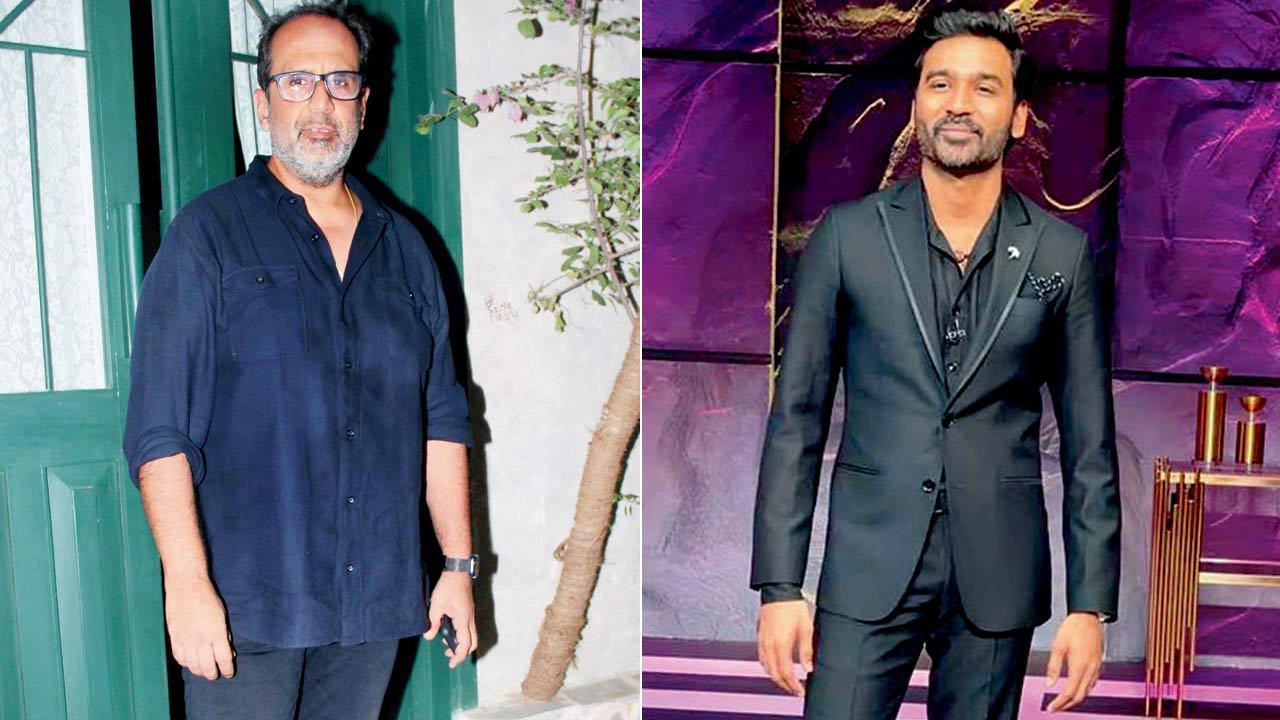
Anshul Chaturvedi (BOMBAY TIMES; November 17, 2025)
In an industry fixated with figuring out what the audience will opt for next, director Aanand L Rai insists that the real crisis isn’t of misreading the audience, but of diminishing honesty and genuineness from the filmmakers. It wasn’t the audience that changed, he says – it was the filmmakers whose conviction began to wobble. From his learnings from the success of Raanjhanaa and Tanu Weds Manu, and the failure of Raksha Bandhan, to the coming full circle and trying to reconnect to his middle-class grounding, the director opens up about an internal battle that many artists face, but few admit to.
Why are Hindi filmmakers often struggling to predict audience behaviour?
The audience has become very – how do I put it – woh thodi se bhi beimaani ab nahi le pa rahe hain storytelling mein.
What does that mean? Audience ka imaan jaag gaya hai ab?
Nahi, I think woh toh aise hi thay, hum (filmmakers) beimann ho gaye. Humko lagne laga, achcha, unka yeh emotion exploit kiya ja sakta hai. Iss tarah ki kahani, uss tarah ki kahani unko pasand aayegi. But in all that, joh ek cheez chali gayi in filmmaking, woh thi conviction – jo ki ek Pushpa ya KGF ya Kantara – inmein hai. They have proved that conviction works.
Define conviction. What’s the difference here?
Our approach to the film was just to please the audience. Their approach was to tell a story. There is a huge, huge difference between the two. I can speak for myself – kahani hi banayi thi na Tanu Weds Manu, kahani hi banayi thi na Raanjhanaa. But jahan mujhe laga ki audience ko yeh pasand aayega – Raksha Bandhan – nahi! It didn’t work for anyone.
So, when you made an audience-led film, it didn’t work because it was not with your personal conviction?
My conviction was that they will like it.
‘Maine detour liya toh mujhe sab yaad aaya’
When I was shooting last in Delhi, over a year back, I was staying near Nehru Place. And early morning I was on my way to the shooting location when I asked my driver to take a short detour to Sadiq Nagar. Our family stayed in Sadiq Nagar, government quarters – a Type III Quarter – that was allotted to my mother. I stayed there till my Class XII and then went to do my engineering. So on an impulse I told my driver, idhar le chal, main zara dekhoon Flat 152, Sector 1, kaisa dikh raha hai. Maine neeche khade ho kar dekha.
I remembered all those days. Roz wahin se nikalna, peeche bus stop se bus pakadna, uss window pe baithna, 2:45 pe ek ladki ka wahan se cross kar ke jaana, school uniform mein…that was such a memory. Maa ka chale jaana pyaaz ki rotiyan bana ke. Mera ghar aana, fridge mein se chhachh ka jug uthana…But if I don’t go there, all this is not happening to me. Main toh bhool gaya tha. Maine woh detour liya toh sab mujhe yaad aaya.
But the story was not your conviction?
No. Even if I make a film that I want to make, there is no assurance that it will work – but at least ek jana to khush hoga! Doosre tareeke mein toh dono hi khush nahi hain. This theory is easy, the practical – not so much. But when I think like this – mujhe mazaa aa raha hai – I can see the difference in how things go when I change the approach.
What is your learning curve of the last half a decade or so? What is your selfeducation in this journey?
My self-education is that when I was telling stories fearlessly, and at the same time, main apne pe kabhi successful film ka pressure nahi le raha tha, sirf kahani sunane ka pressure le raha tha – achche se sunane ka – tab tak meri duniya theek thi. Jab mujhe laga ki there are these growing expectations from this director, and I should go bigger – I started faltering.
That ‘formula’ work has been the reason for many an artiste to lose touch with their original craft.
Haan. At the end of the day, we are human – but at the end of the day, artiste jitna apni fakeeri mein reh jaye, utna achcha…
Artiste ki fitrat badal jaati hai toh uske kaam mein bhi farak aa jaata hai?
Aa jaata hai! Mujhe khud ko hi lagne laga ki bolta rehta hai middle class, middle class, but it doesn’t reflect in your work anymore – but it used to, earlier.
Achanak se sab badal gaya. So you keep talking about middle class, middle class, but you didn’t nurture the middle-class sensibility inside of you. My holidays changed – I began holidaying in Europe. I’m not saying that is wrong. If God has given you that success, you have to enjoy, there is nothing wrong with that. But it is a professional hazard – this profession makes you lose touch with your roots, and you have to understand that, and to hold on to it, if you want to remain in that space.
Midway nahi hai yahan. Ya toh aisa kar lo, ya toh phir udd jao. Be clear ki main toh aaya hi paise kamane ke liye tha. That is a different direction, a different track. But if you want to tell the stories that are inside you, then you have to stay grounded, stay in that world, and tell your stories.
And where are you placed – returning back to your original world?
Yes, I feel I am coming back to my world, jahan mujhe maza aayega.
What has changed in your approach to filmmaking now, as you come back?
I think if I am evolving, I should try to have my audience evolve with me. I will never be scared of telling an old story in a new way. I think the man-woman relationship was not depicted as an equal one for a long time. Many filmmakers got it wrong, and I need to make it right – that is my learning. Shayad main Tanu Weds Manu ya Raanjhanaa ke waqt iss tarike se nahi sochta tha, lekin ab sochta hoon.
You got a fair amount of flak for Raanjhanaa – not entirely unfair – in terms of your depiction of how a man behaved with a woman.
Yes, yes, and I took it. I understood. Ho sakta hai ki mere kaam mein going ahead you will see that I understood.
Hasn’t cinema sold the male entitlement pitch so often while making money at the box office? There is also a view that many of the blockbusters from the south have worked by playing that up while relatively more woke multiplex-ish Bollywood stories struggled.
I don’t disagree that many of the hits have a strong male perspective, they are very macho, and all that, but at the same time I think we cannot be the masters who decide beforehand what the audience should or should not watch.
I disagree with the thought that if we show them a lot of aggressive, macho male characters it will reflect in their behaviour. Because the reverse does not happen, does it? If I make films on Swami Vivekananda tomorrow, will all of them start doing sadhna? If they will not emulate what he does after watching a film on him, then they will not emulate the macho aggressive character either, will they?
Now you have seen me with my success and failures and trajectory. Obviously, success and failure matter, but at the end of the day, I enjoy the process. I am trying to not be afraid. I am trying to experiment. When I was making Raksha Bandhan I was thinking we don’t make enough cinema for the Tier-2 and Tier-3 cities. I thought I had it all clear in my head. But my judgement was wrong.
Staying connected is very important. Meri zameen chhoot jaati hai, phir mujhe pakadna padta hai, phir mai apne penthouse mein chala jaata hoon, phir mujhe yaad dilana padta hai apne ko Tu woh Dilli ka ladka hai, teri aadhi zindagi unn peele gharon mein guzri hai. Teri apni kahaniyan woh hain! Tu soch kyun nahi raha hai!
Isn’t it true that a lot of names, after they enter Bollywood, tend to forget the USPs or the nuances that brought them into Bollywood in the first place. Even if you’re circling back to the place you started from, mentally, that’s also part of any artiste’s graph, perhaps? And nothing teaches us more than failures, always, right?
Obviously (laughs)! The problem is that, fortunately or unfortunately, even when you have failures, so to say, your bank balance does not change dramatically. Your lifestyle does not change. So, you feel ki theek toh chal raha hai sab. After a point you have to realize that it does not matter how much you made or how much you lost in a project. You need to sit down and introspect and see how far you have drifted from your original path. If you don’t do that then even failure is teaching you nothing.
Right now I am enjoying myself. I am also relishing making films for other directors as a producer. I can’t compete with the big houses, but I will try to pick the stories that others won’t. I will search for an identity, something that is original, not a copy of anything ‘successful’. I have not reached a 200-crore movie ever. But I ask myself, what is a better option? To make something that I have fun making and have something that is still not a bad return, or to chase that number? I am not chasing that number. I am not chasing any number. I will keep my middle-class approach. Mujhe khana achcha chahiye, lekin mujhe chaandi ki thaali nahi chahiye.
It’s not just directors, though, is it?
Amol Palekar, Farooq Sheikh – they played some very relatable, everyday; then paused and said: Main dhoond raha hoon Vinod Mehra in this character. Tu mujhe bana ke de raha hai Vinod Khanna. If I do that, the character itself will change and you may not be the right fit for that version of it! Some directors complete the circle, like we were discussing, and come back to a more grounded version. But actors, if they do the same, wapas aa hi nahi paate hain. They reach a point of no return and sometimes they are neither grounded, nor superstars either.
Amol Palekar, Farooq Sheikh – they played some very relatable, everyday; then paused and said: Main dhoond raha hoon Vinod Mehra in this character. Tu mujhe bana ke de raha hai Vinod Khanna. If I do that, the character itself will change and you may not be the right fit for that version of it! Some directors complete the circle, like we were discussing, and come back to a more grounded version. But actors, if they do the same, wapas aa hi nahi paate hain. They reach a point of no return and sometimes they are neither grounded, nor superstars either.
Irrfan went to Hollywood but stayed capable of playing the everyday character, though.
Bilkul. Woh chala gaya, phir bhi aaj bhi kahaani bolte-bolte aap ruk jaate ho aur kehte ho, ‘Irrfan sahab hone chahiye thay…’ (Pauses) Bahut kahaniyan directors ke andar maar gaye woh. Ab aap suna hi nahi sakte, unke bina.
To wrap up what we’ve been talking about: Your USP, that you are rooted, gives you a nuance, an audience connect and also gives you commercial success. However, that success means that shortly thereafter, you are no longer rooted. So you lose your ability to repeat the original connect, and to do the same sort of work that brought you success in the first place.
Yes (laughs)! Yeh ajeeb sa circle hai! When you talk about great makers – and when I say great makers, I mean Hrishikesh Mukherjee or Bimal Roy, names like that – they somehow never lost connect with their roots or their storytelling. Even the Hollywood names who have taught us things about filmmaking – they have kept a consistency in their storytelling. I hope more of us can do that.
Shah Rukh Khan was unsure about his Paheli look-Amol Palekar
10:57 AM

Niharika Lal (BOMBAY TIMES; July 17, 2025)
Director Amol Palekar believes Paheli has aged well – not because it aligned with the norm, but because it chose not to. “The film didn’t chase trends; it carved its own path,” he says. “I’m very proud of the film.”
At the time, casting Shah Rukh Khan – the romantic hero – as a ghost was both audacious and risky. But Palekar recalls that once people read the script, “many were intrigued by the role’s poetic complexity.” Shah Rukh, he says, “embraced it wholeheartedly, lending the character both charm and melancholy.”
As Paheli completes 20 years, Amol Palekar and Sandhya Gokhale, his long-time collaborator and wife, revisit the film, which Palekar says, “feels like an early spark in the evolution of female centric and genre-bending narratives in Indian cinema.”
‘Changing the ending honours the spirit of the original folk tale while speaking to modern sensibilities’
In the film, SRK plays a double role – of Kishanlal (Lachchi’s husband) and of a ghost (who falls in love with Lachchi). When Kishanlal goes away on business the day after his wedding, the ghost takes his place. It is based on a Rajasthani folk tale by Vijaydan Detha, titled Duvidha. However, the film’s maker changed one crucial part – the ending.
“In the original version, Lachchi returns to her husband, choosing duty over desire. She hides the fact that she had accepted the ghost as her lover despite the knowledge that he was not her husband. She chooses to live a lie and conforms to societal expectations. Sandhya thought it was dishonest. Ultimately, for us, love, honesty, and purity were the driving forces. Lachchi’s final confession (in the film) to her husband – that the ghost had given her the choice to accept or to reject him and that she chose an adulterous relationship – was quietly revolutionary. It honours the spirit of the original folk tale while speaking to modern sensibilities,” says Palekar.
Sandhya adds, “Balancing the ghost’s romantic idealism with Lachchi’s autonomy was especially delicate. We didn’t want the spirit to merely symbolize longing or escapism — he had to evolve as a character. And Lachchi had to be both rooted in her world and quietly subversive. Embedding feminism in fantasy without making it didactic was a continuous tightrope walk.”
‘We wanted the palette of the film to give a feel of a fantasy’
“We had visited every corner of Rajasthan at least 3-4 times and had noted every detail such as the motifs used on the walls of the haveli, the mannerisms observed there, the props in a baniya kacheri etc. We wanted the palette of the film to give a feel of a fantasy. The locations used, such as the big well, the sand dunes of Jaisalmer etc, were not just picturesque; they were immersive. The architecture, the light, the earthy tones — they shaped the visual language of the film,” says Palekar.
‘SRK was unsure about his look’
The idea of casting Shah Rukh as a ghost initially raised eyebrows. Palekar says, “Shah Rukh Khan’s casting as a ghost was seen as both audacious and risky. Some wondered, ‘Will audiences accept him in such an abstract, non-human role?’ But that’s precisely what made it exciting. The ghost in Paheli isn’t scary or sinister – he’s tender, philosophical, and full of yearning. Eventually, the surprise became the selling point. In later years, many (viewers) say that it was his best performance. Shah Rukh himself was unsure about his look in the Rajasthani attire and with a mustache. I had no doubts that people would love him.”
Addressing the influence that Shah Rukh and Rani had on their characters, Sandhya says, “I had Shah Rukh and Rani in my mind when I wrote their characters. Shah Rukh has given such a superlative performance in Paheli that the ghost lingers in our mind. Rani Mukerji’s Lachchi wasn’t written for a ‘star’ — she was written as a woman caught between longing and loyalty.”
In the era of the angry young man, I was just a common man trying to survive-Amol Palekar
9:25 AM
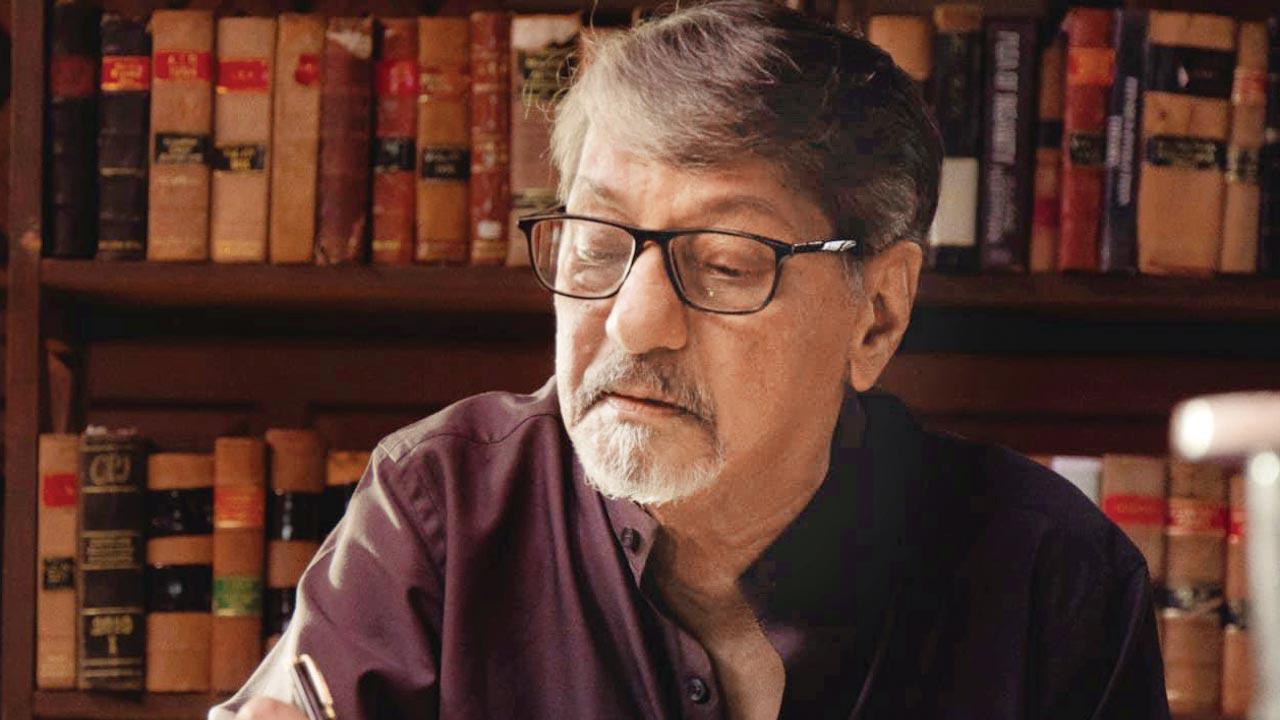
Divya Kaushik (BOMBAY TIMES; January 6, 2024)
Among his many achievements as an actor and filmmaker, one thing that Amol Palekar will always be proud of is how he came close to every common man through the characters he played on screen. From Gharonda, Gol Maal to Chhoti Si Baat, the actor says that he always tried to be the “boy-next-door who comes across as vulnerable as any common man is.” The veteran actor, who was in the city recently, spoke to us about Hrishikesh Mukherjee and Basu Chatterjee’s era of filmmaking, when simple stories ruled the celluloid.
‘I CONSCIOUSLY TRIED TO RETAIN THAT VULNERABILITY OF A COMMON MAN’
“I feel nice that I was a part of the era when parallel cinema evolved,” says the actor as he talks about the audience relating to his characters.
He adds, “In Rajnigandha, Chhoti Si Baat, Chitchor, Baton Baton Mein, Gol Maal, Naram Garam – the hero that I played never utters a simple line ‘I love you’ and that was the continuing point in all those portrayals. I think every young boy related to it. I think I managed to bring out that aspect of the boy-next-door quite nicely. And the vulnerability of the man... I have consciously tried to retain that vulnerability. I found this vulnerability in every character that I portrayed, and I think I haven’t done badly.”
Talking about what made him stand out, Palekar says, “The time when I was portraying the boy-next-door, it was not just the era of angry young man, it was the era of lover boy Rajesh Khanna, Dharmendra the He-Man, Jeetendra who could dance so beautifully and charm a girl – I think I had none of those qualities and that’s what people liked. What I also liked was that I was none of those ‘heroes’, I was just a common man trying to survive, trying to convey his love without uttering those words. It made me stand out among all those larger-than-life portrayals on screen back then.”
‘WORKING WITH BASU DA, HRISHI DA, SHYAM BENEGAL USED TO BE LIKE A FAMILY PICNIC’
Palekar credits Basu Chatterjee for his acting career. “Basu da approached me for Piya Ka Ghar, which I refused. I didn’t think he’d ever come back to me – I was a nobody from theater. But he did and that’s how Rajnigandha happened. Basu da, had a great command on his craft and celluloid narration, but in real life, he was a terrible narrator. Woh kahani bata hi nahi paate thay. Our conversation was like, ‘Amol main ek film banane ja raha hoon. Ek ladka hai, maano tum ho, aur ek nayi ladki hai Vidya Sinha naam ki, aur phir… yaar tum yeh padh lo!’ This was his narration!”
He adds, “Hrishi da (Hrishikesh Mukherjee), Basu da, Shyam Benegal, all the people that I have worked with – it used to be like a family picnic. It was like fun and hansi mazak karte karte film ban jaati thi. And that’s what reflected on screen. The kind of fun we used to have in Gol Maal, oh my god! We were like a family on the sets, it worked beautifully.”
The veteran actor has relived many of his memories in his book, View finder: A Memoir. “The end result of writing this book was a catharsis, but to reach that catharsis it was like excavating and peeling off oneself. So many memories came out, I thought I had forgotten them. I relived so many memories. I felt nice, relieved and quite overwhelmed... The dilemma was what to keep and what not keep from all those memories. That was a major step. I belong to the dinosaur era, I still write on a paper. They were about 450 hand written pages in Marathi and I handed over to Sandhya (his wife). Sandhya and I have associated in so many roles. So this final product is our collaboration in the true sense as we have been doing for the last 25 years of our marriage. This proudly can be termed as the lovely climax to that journey.”
‘ENJOYED PLAYING GREY CHARACTERS’
In contrast to the vulnerable, common man, Palekar also played characters with a grey or dark side. “I played a villain in Benegal’s Bhumika, which was unheard of at that time. The industry resisted that, they said you are a successful hero with three silver jubilees in your belt why do you want to play a villain, have you gone bonkers? But I chose to because it was a huge challenge for me as an actor. From there to Vidhu Vinod Chopra’s Khamosh, where I play a murderer, I was very happy to choose such roles. In Gharonda, too, the character is so grey, he is actually a villain. All these grey shades are attributed to a villain, and I enjoyed that.”
"The film industry should bow to the last Trojan": Amol Palekar, Manoj Bajpayee pay tribute to Shyam Benegal
8:16 AM

Bhumika collaborator Amol Palekar and Zubeidaa actor Manoj Bajpayee remember the pioneer who spearheaded parallel cinema
Upala KBR, Priyanka Sharma (MID-DAY; December 24, 2024)
"We always want our greats to live on forever,” says Manoj Bajpayee, moments into our call with him. On Monday evening, that wish was shattered as Shyam Benegal, one of the finest filmmakers of Hindi cinema, passed away at 90.
For Bajpayee, Benegal, who cast him as the male lead in Zubeidaa (2001), represented someone who made him confident about his looks. “When nobody could understand why he cast me as a prince in Zubeidaa, he had his own idea. For him, I was a better-looking guy than all the real princes at that time. He gave me a lot of confidence when I didn’t have confidence in my own looks. Every day, I would rush to be on the sets with him, to listen to him and be directed by him. It was a time that I will never be able to forget,” recounts the actor.
Bajpayee echoes the sentiments of many in the film industry when he describes Benegal as “a pioneer, a pathbreaker, and a guiding light for so many filmmakers of this generation”. “It was all started by that great man. It’s a sad day for all of us, who define cinema not as a commercial medium, but as one of art. He never compromised with the art of cinema. He kept changing the grammar of cinema. I admire him because he was existing in the extreme times when mainstream cinema was ruling the roost, where Mr Amitabh Bachchan came like a tsunami. Here was a man quietly carving a niche for himself, carving a new path for all the new generations to come.”
Amol Palekar fondly remembered the filmmaker with whom he collaborated on Bhumika (1977), which was fronted by the late Smita Patil. Saddened by the loss, Palekar said, “The film industry should bow to the last Trojan! I do.”
There are no hard and fast rules to making music-M M Keeravani
8:31 AM

Anukriti Sharma (BOMBAY TIMES; January 23, 2024)
Academy Award and Golden Globe winner MM Keeravani feels that the popularity of Indian music is largely based on movies, thanks to the visualization.
“You don’t see the singer, composer or programmer on screen, so the association and recall value of a song is largely based on the actor it features. But ultimately, a song has to be enjoyed through your ears. When you start to do that, you would ask for Md Rafi, Lata Mangeshkar or an Anand Bakshi playlist and not rely on, say, a Shah Rukh Khan or Aamir Khan song,” said the Naatu Naatu composer.
At a recent session at the Pune International Film Festival, Keeravani also touched upon changes in music production, and his introduction to Marathi music.
“I was introduced to Marathi music by Amol Palekar and his wife Sandhya Gokhale. They suggested some albums to me and that is how I started listening to Marathi film and non-film music. It’s also how I got introduced to Babuji’s (Sudhir Phadke) work.”
‘No harm in experimentation in music’
The composer says that collaborations are welcome, but people should find what they are good at and do it perfectly. “In Mohabbatein, which had three young couples and one older couple, there was a common love theme in all four pairs instead of four different themes. That formula worked. So, there’s no problem in experimenting, even in music,” he says, adding, “We have now registered that creating a background score is different from composing songs. There are no hard and fast rules to making music and there is no harm in dividing the work. However, there should be harmony among the people working together.”
On use of AI in music
Talking about the inclusion of AI and technology in music, Keeravani says, “AI can only assist or tell you how to do a task. As AI is not telling you what to do, it won’t become a replacement for human intelligence. A bullock cart and a car will both take you to your destination, albeit at different speeds. But someone has to steer the car or the cart. Usage of AI is very similar to that.”
------------------------------------------
“I don’t understand Hindi language, but I thoroughly enjoy Hindi music”
------------------------------------------
“Budget is an essential part of music production that is often ignored”
Propaganda movies such as The Kashmir Files and The Kerala Story are made tax free in India today-Amol Palekar
9:37 AM
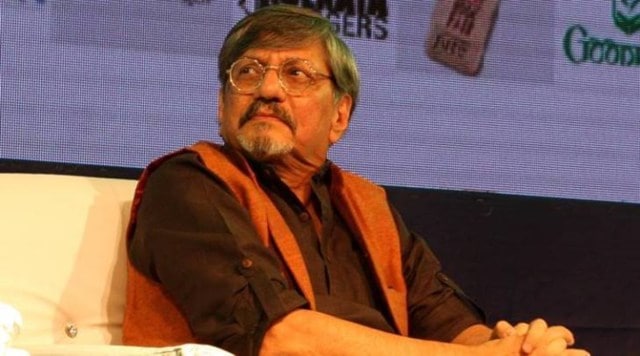
Abhijeet Patil (THE TIMES OF INDIA; June 27, 2023)
Kolhapur: Veteran actor Amol Palekar said here on Monday that earlier goons used to harass people, but now the government and politicians support masked mobs that run amok in the country He said, “Work of terrorizing minorities is going on for the last few decades.”
Palekar was speaking at the Samajik Salokha Parishad organised in Kolhapur by Left parties and progressive outfits on the birth anniversary of king and social reformer of the early twentieth century Shahu Maharaj.
Palekar said dictatorship is the result of masked mobs supporting one person. “The web of such a mob of blind followers has surrounded us all. However, we have remained inactive and unawares.”
He further said that people who did not beat ‘thalis’ during the lockdown were named urban naxals and traitors. “It is easy to control a society with homogenous characters,” he added.
A saffronised Hindu India is ‘their’ quintessential goal, he said. “Virtual threats by troll army is a reality today. Social media is a form of symbolic violence that creates structures and prevents collective discourse. Moreover, propaganda movies such as ‘The Kashmir Files’ and ‘The Kerala Story’ are made tax-free in India today.”
He spoke about Olympian women wrestlers who, he said, would not have had to protest for so long demanding action against MP Brij Bhushan Sharan Singh accused of sexual harassment if Shahu Maharaj had been alive.
He said that Shahu Maharaj had passed orders to punish those who commit crime against women. “He fought orthodox ideology.”
Palekar said that even though the murders of Govind Pansare, MM Kalburgi, Gauri Lankesh and Narendra Dabholkar killed individuals, the attempt was to finish their thoughts.
Amitabh Bachchan, Shashi Kapoor, Sharmila Tagore were original choices for Basu Chatterji's Rajnigandha
9:57 AM
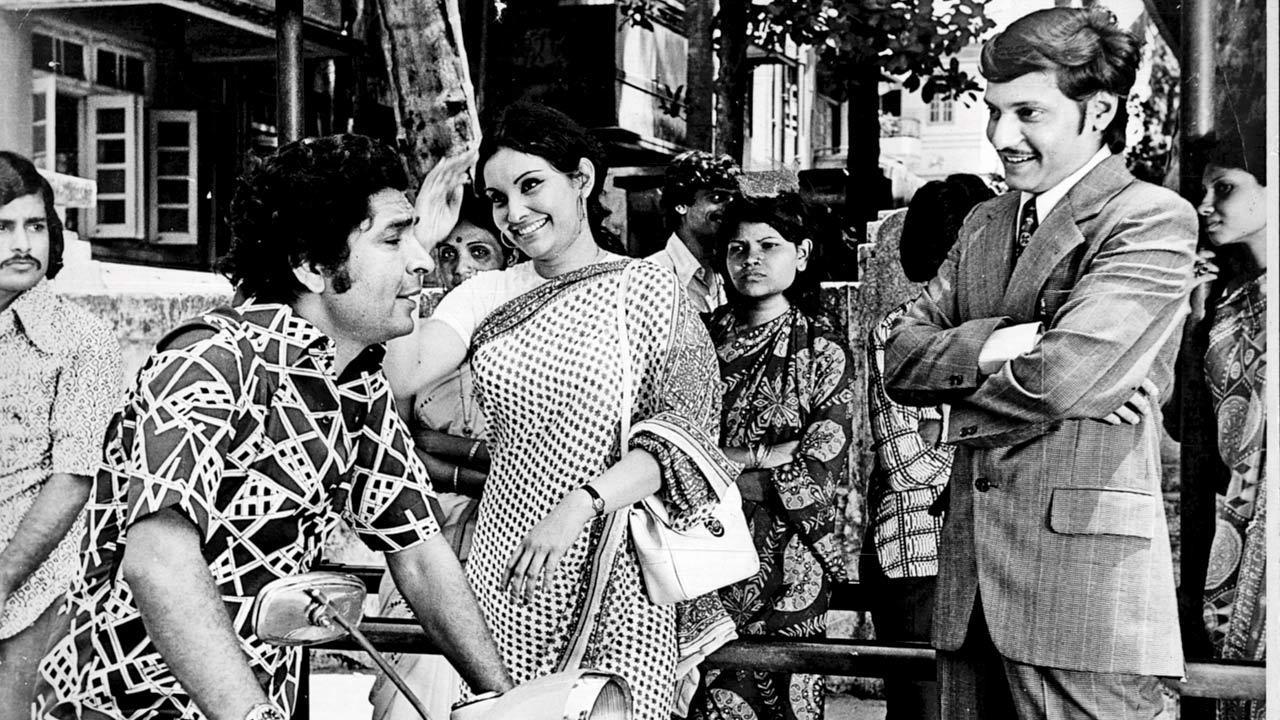
Rajnigandha’s lead pair Amol Palekar and Vidya Sinha, who play Sanjay and Deepa, were later seen in Chatterji’s 1976 film
It was Shashi Kapoor and a host of other big stars, who Basu Chatterji first had in mind for the lead pair of his 1974 film Rajnigandha. A new biography of the late filmmaker discusses how the ‘simple-looking’ Amol Palekar made the cut
MID-DAY (March 26, 2023)
Like most small-towners, Basu was an early riser. Post Piya Ka Ghar, he would be at work by 7 am. By 8.30 am, the ceiling fans would be switched off in the rooms where the others would be sleeping. It was their wake-up call. Those who woke up early would find Basu in his chair, sometimes on the floor, writing his screenplays. Except for the days when he had a morning shoot. This was the time when Basu cut down his professional assignments for Blitz. The script of Rajnigandha happened during the early morning sessions when Piya Ka Ghar was in the making.
The first actor Basu had in mind for the role of Sanjay was Amitabh Bachchan. He was yet to become the Alpha Male then. History could have been very different had Basu stuck to his original choice. Shashi Kapoor was offered the role of Naveen. Suave, slick, with leadership qualities that extended beyond the college campus to wield influence in college selection panels, he was, as defined by Sulagna Biswas, the original LinkedIn Man.
Sharmila Tagore was Basu’s first choice as Deepa. Independent, but not a renegade. Observant, sentimental, committed, steadfast and yet ambivalent. The plan fell through. Shashi Kapoor was fine with playing Naveen, subject to the condition that the film was sold to distributors at the existing rate for a Shashi Kapoor film, something Basu was not comfortable with. Sharmila was out of the contention too, but the reason is not known. Maybe Basu wanted fresher faces.
Meanwhile, Basu flew to Calcutta and offered Aparna Sen the role of Deepa. Aparna, who probably had not seen Sara Aakash, felt that the story of Deepa was ordinary. Her refusal prompted Basu to pitch it to Mallika Sarabhai. She was referred by Yogesh. Both Yogesh and Mallika were working in Sonal (1973) then. Basu met Mallika in Ahmedabad and the dates for a few shoots were fixed. However, Mallika was planning to do her MBA and later walked out of the film. In the meantime, Piya Ka Ghar was released in Calcutta. News of its critical acclaim reached the cognoscenti. Aparna Sen, being one of them, had a change of mind and wrote to Basu expressing a desire to play Deepa.
A few days after Basu acknowledged the mail, Aparna came down to Bombay to complete her part of the shoot of Tapan Sinha’s Sagina (1974). Basu met her, and when the discussion boiled down to money, Sen said she was fine receiving in kind as a small film-maker like Basu would find it difficult to compensate her at the market rate. The contract with Suresh Jindal had been finalised by then.
Said Basu: “I discussed the possibility of giving Aparna Sen a Fiat car. It would have cost us around Rs. 32,000. But things began to get topsy-turvy when she refused to work with the Naveen I had in mind—Samit Bhanja, who I had seen in Guddi (1971) and liked. While the producer and I were fine with the monetary arrangements, we started to become skeptical of starry tantrums. This is when we consciously took the decision of taking all new faces.”
The search for rookies thus commenced. Basu, for a short time, had also mulled trying out Rakesh Pandey, but he was preoccupied, as told to the author. “Basu-da wanted me to do Rajnigandha. At the time, I was doing a film with Mohan Segal called Intezar (1973). The set was at Rooptara Studios. Basu-da came down to the set, and said, ‘I am doing a film called Rajnigandha. It is about a girl and two boys. It will take 20 days to shoot.’ I said, okay, when do you want to start? He said next week. I said, ‘Basu-da, I am doing this film, and it will take at least 15–20 days here on this set. I can manage three to four days at the most if you shoot in Bombay.’ He said, ‘No no, the producer might run away.’”
-----------------------------------------------
In addition to his National Award-winning screenplay for Shyam Benegal’s Bhumika (1977), theatre veteran Satyadev Dubey—who people would recall as the weekly waged stevedore who confronts the goons only to be run over by a truck in Deewar (1975)—made one extremely significant contribution to Hindi cinema: Amol Palekar.
Dubey had directed the Hindi play Aadhe Adhure, starring Amol, who was acting in Marathi plays at the time. Basu loved his acting, and Amol was Basu’s original choice for Piya Ka Ghar (1972), but producer Tarachand Barjatya’s son Raj Kumar Barjatya, who was there at the theatre with Basu, opined that Amol was too simple-looking for a hero. Suresh Jindal, however, had no issues in accepting Amol, a postgraduate of JJ School of Arts, Bombay, as the Sanjay of his film.
Basu was happy with the onboarding, about which he told the author: “Amol was then working with Bank of India. He was a part-time actor. I was fond of Marathi theatre and had seen Amol in a few plays. He used to come to film shows arranged by Film Forum as well. Raja Thakur, the maker of Mumbai Cha Jawai (1970) had also put in a word. Amol had played a small role in his film Bajiravacha Beta (1971). After he was rejected by Raj, I proposed his name to Suresh Jindal.”
Amol had talked about his first business meeting with Basu with author Balaji Vittal: “There used to be a café named Samovar inside the Jahangir Art Gallery. I met Basu-da and producer Suresh Jindal there. Mr Jindal did not talk during this meeting. But the interesting part was that Basu-da did not talk much either. He narrated the story of the film like this. ‘Amol, kya hai, ek ladka hai, mano tum. Aur ek ladki hai. Nayi ladki hai, Vidya Sinha hai uska naam. Usse miloge tum. Toh, ye dono hai . . . aur . . . yaar ye tum padh lo na [Amol, there’s a boy. You. And a girl, a new actress called Vidya Sinha. You will meet her . . . you two . . . oh, why don’t you read it for yourself].’
Basu-da handed me Mannu Bhandari’s story. Following my acceptance to do his film, he gave me the script as well. After reading that, I kept wondering how someone who was so ill at ease narrating a story could write a screenplay in so much detail. Even the dialogues were there. He was extremely eloquent in the cinematic language. Once you understood that, communication becomes easy.”
Excerpted with permission from Basu Chatterji And Middle-of-the-Road Cinema by Anirudha Bhattacharjee; Vintage, Penguin Random House
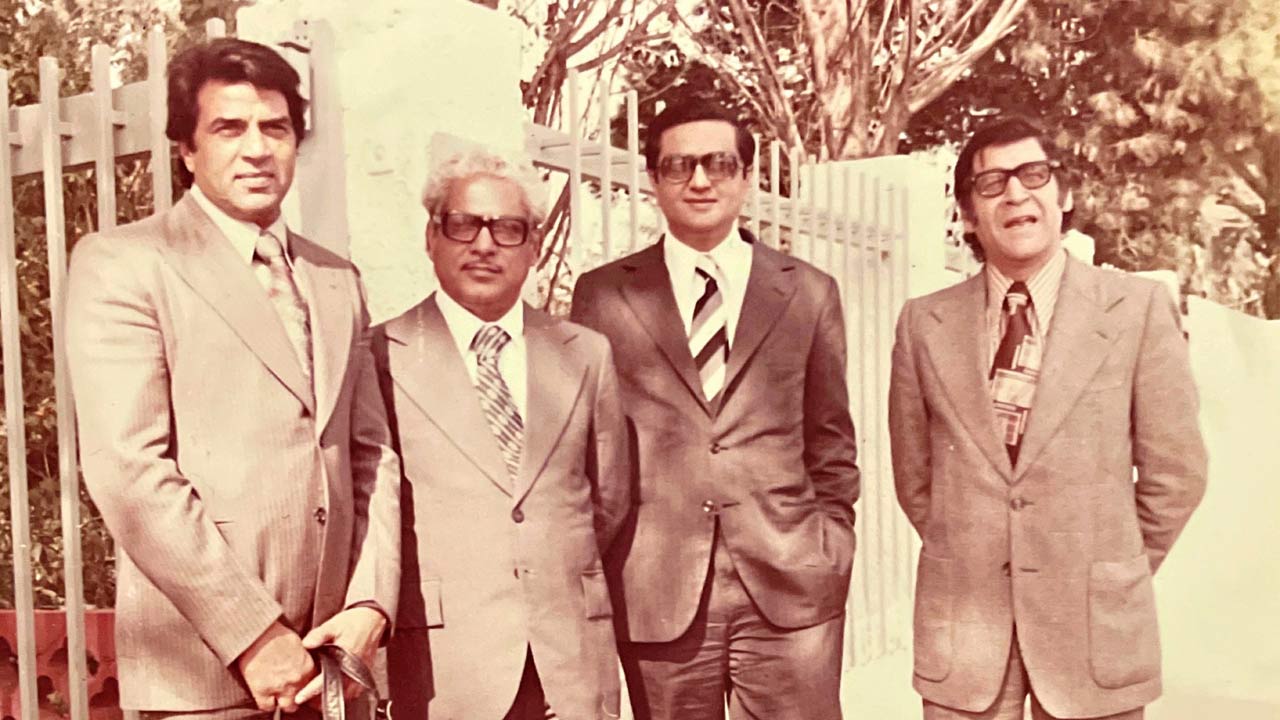
Chatterji and Dharmendra at the Cairo Film Festival. Pics courtesy/Rupali Guha
Vikram Gokhale, who stamped authority on screen, takes his final bow
8:01 AM
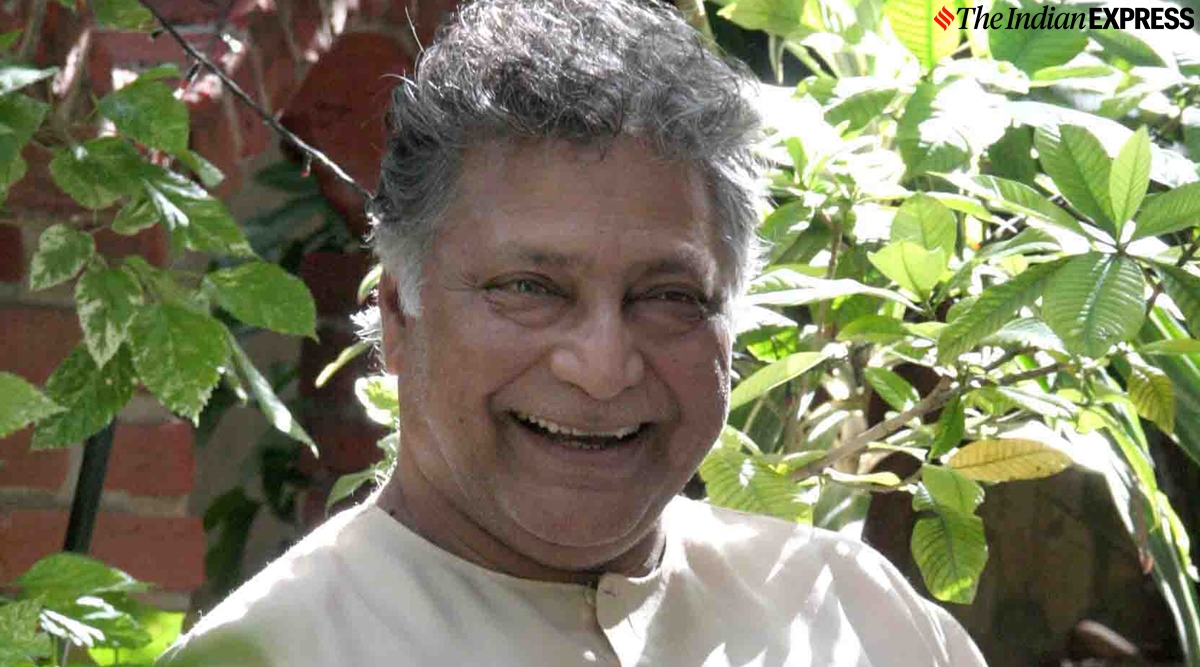
Shiladitya Pandit (THE TIMES OF INDIA; November 27, 2022)
Pune: Noted theatre, film and television actor Vikram Gokhale, who delivered a towering performance as the dignified and stern Hindustani classical music guru in the Bollywood superhit ‘Hum Dil De Chuke Sanam’ (1999), passed away at a hospital due to multi-organ failure on Saturday. He was 77.
Among those who expressed their condolences on social media were actors Akshay Kumar, Anupam Kher and Manoj Bajpayee. “Indian cinema lost (a) gem of an actor,” posted Bajpayee, who acted with him in Aiyyary (2018).
Popular in both Marathi and Hindi films, Gokhale received the National Film Award for best actor for his portrayal of a distressed old man struggling to pay his comatose wife’s medical expenses in Gajendra Ahire’s Marathi film, ‘Anumati’ (2013). And he was first-rate as the confidant of an angst-ridden stage legend in director Mahesh Manjrekar’s ‘Natasamrat’ (2016). Gokhale also received the Sangeet Natak Akademi award in 2011 for his contributions to the stage.
“He gave a new dimension to the acting style prevalent on the Marathi commercial stage before the 1970s,” said long-time friend and occasional collaborator Satish Alekar.
Actor and director Amol Palekar, who collaborated with him in the musical ‘Thoda Sa Roomani Ho Jayein’ (1990) said, “I particularly remember his performance in the play ‘Barrister.’ It is a landmark performance in Marathi theatre. Future generations should learn from it. However, theatre did not provide him the roles that were worth his salt. His style of acting, or rather under-acting, was so effective and good, few can achieve with dignity. Unfortunately, the film industry did not provide him his due, particularly the Marathi film industry.”
Versatility was his calling card. The actor lent grace and added depth to the characters he performed. Gokhale’s expressive eyes and commanding voice - he was also a voice coach later - were fundamental to the creation of the socially conservative guru who’s generous at heart but also bound by tradition in Sanjay Leela Bhansali’s ‘Hum Dil De Chuke Sanam’. And yet, in ‘Thoda Sa Roomani…” he handled the role of a remote town’s district collector, who’s the object of an unfussy young woman’s (Anita Kanwar) secret attraction, with equal aplomb. He also acted in a bunch of TV serials: from ‘Katha Sagar’ and ‘Udaan’ in the DD monopoly days of the 1980s to ‘Virrudh’ and ‘Kuch Apne Kuch Paraye’ in recent decades.
Pune-born Gokhale acted in over 200 films and TV shows and was a worthy descendant of his pioneering ancestors starting with great grandmother Durga Kamat, considered the first actress in Indian cinema, and her daughter, Kamla Kamat, both of whom made their debut in Dadasaheb Phalke’s ‘Mohini Bhasmasur’ (1913).
Gokhale’s father, Chandrakant, was also a veteran of the stage and film, and was also a well-known philanthropist, a tradition carried on by his son. His family supports war veterans at the Queen Mary Technical Institute and works for welfare of orphans.
He also nailed his political colours to the mast, criticizing politicians for casting aspersions on Veer Savarkar.
Gokhale, who had caught everyone’s eye playing Lord Krishna in the 1977 film, ‘Yehi Hai Zindagi’, was recently seen in the Hindi comedy-action flop ‘Nikamma,’ but received critical acclaim in the 2021 Marathi film Godavari (2021).
-------------------------------
BOMBAY TIMES (November 27, 2022)
Veteran actor Vikram Gokhale, who was undergoing treatment at a multi-speciality hospital in Pune, passed away on Saturday afternoon. He was 77. Shirish Yadgikar, the PRO of the hospital, confirmed the news and said, “It’s with a sad heart that we announce the passing of Mr Vikram Gokhale. He passed away in the afternoon. Our condolences to the family and near ones.”
Gokhale’s family friend Rajesh Damle said, “The last rites were carried out at Pune’s Vaikunth Smashan Bhumi at 6 pm yesterday.”
The senior actor’s condition had been critical for the last few days, and he had been kept on the ventilator. On Friday, the hospital authorities shared that the actor had shown some signs of improvement, but on Saturday morning, they shared that his condition had deteriorated.
As per his family, Gokhale was suffering from multiple health issues and had multi-organ failure, post which he was put on life support.
Throughout the course of his long and successful career, Gokhale appeared in both Hindi and Marathi films. The veteran actor came from a family of actors. His father, Chandrakant Gokhale, was a renowned Marathi theatre and film performer. After working in Marathi theatre at an early age, he made his film debut with the Amitabh Bachchan-starrer Parwana when he was 26. Following that he acted in several Marathi and Bollywood films, including Amitabh Bachchan’s Agneepath in 1990 and Hum Dil De Chuke Sanam with Salman Khan and Aishwarya Rai Bachchan in 1999.
The powerhouse performer worked in Bollywood films like Agneepath, Khuda Gawah, Insaaf, Salim Langde Pe Mat Ro, Bhool Bhulaiyaa, Mission Mangal and Aiyaary, among others. He made his directorial debut with Aaghaat, a Marathi film that released in 2010. His body of work in the Marathi film industry includes films like Natsamrat, Lapandav, Kalat Nakalat, Vazir, Bala Gau Kashi Angar, Anumati, Mukta, Me Shivaji Park and AB Aani CD.
He was also well-known for the TV show Ya Sukhanno Ya. For his contribution to the world of theatre, he was presented the Sangeet Natak Akademi Award in 2011. In 2013, his Marathi film Anumati won him the National Film Award in the Best Actor category. This year, he was seen in the Bollywood film Nikamma along with Shilpa Shetty and Abhimanyu Dassani. His Marathi film Godavari released earlier this month. He is survived by his wife, Vrushali Gokhale, and their two children.
At the time of going to press tributes were pouring in from the industry. Sonali Kulkarni said, “With Vikram kaka’s passing, the film industry has lost a true artiste who built his career on hishonest performances and passion. I was fortunate to know him and work with him. He was a source of encouragement for everyone and someone who built a name for himselfacross various platforms and languages. My prayers are with his family and near ones.”
Akshay Kumar posted, “Very sad to know of the demise of Vikram Gokhale ji. Worked with him in films like Bhool Bhulaiyaa, Mission Mangal, had so much to learn from him. Om Shanti (sic).”
Manoj Bajpayee said, “Indian cinema lost a gem of an actor. Had the privilege of working with him in Aiyyari and shared few great moments with him on the set! Saddened to hear about Shri Vikram Gokhale ji’s demise. My thoughts & prayers are with the family (sic).”
—Inputs by Mihir Bhanage and Shashank Sane
Amol Palekar admitted to Pune hospital, wife says his condition is fine
8:04 AM

HINDUSTAN TIMES (February 11, 2022)
Veteran actor and filmmaker Amol Palekar has been admitted to the Deenanath Mangeshkar Hospital in Pune due to a prolonged illness. The actor’s wife, Sandhya Gokhale, confirmed the reports to ABP Live.
“There is nothing to worry about Amol Palekar’s health. He is recovering and his condition is better than before,” she said. Talking about the 77-year-old’s illness and health, Gokhale informed, “This is an old illness. Due to excessive smoking, he was admitted to the hospital 10 years ago as well. But his condition is fine.”
The legendary actor is known for his fine work in projects such as Rajnigandha (1974), Chhoti Si Baat (1976), Chitchor (1976), Gol Maal (1979) and Shriman Shrimati (1982). Palekar was last seen in an OTT film, 200 Halla Ho (2021).
Unlike poetry, art has played less crucial role in the Dalit movement-Amol Palekar
8:11 AM
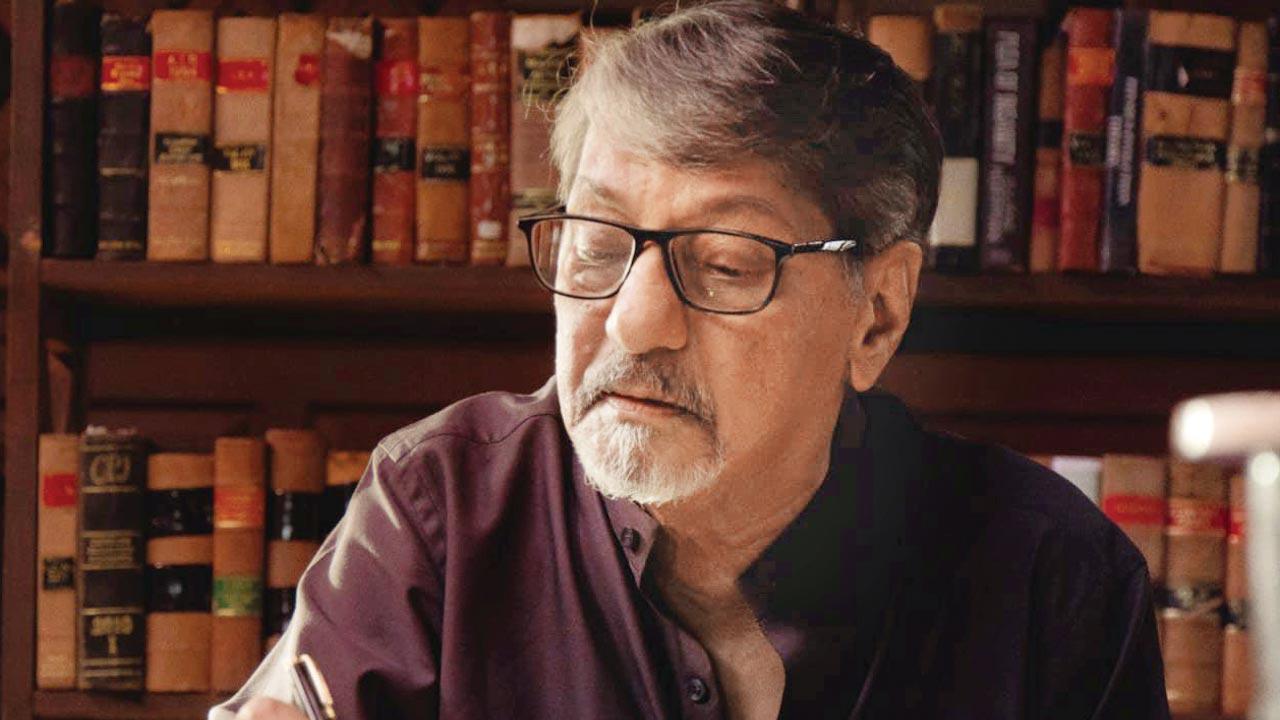
Returning to screen with 200 Halla Ho that revolves around Dalit oppression, Palekar lashes out at Hindi cinema for not highlighting the social issue
Uma Ramasubramanian (MID-DAY; August 21, 2021)
A sign, presumptive as it may be, that 200 Halla Ho has the makings of a powerful movie is the fact that Amol Palekar agreed to front it. It is, after all, not easy to lure the actor — one of the finest of his generation — to face the camera. Then again, he argues that few scripts in Hindi cinema are stimulating. Shining on screen over a decade after Samaantar (2009), the veteran actor is glad that the OTT boom has enabled strong stories like 200 Halla Ho, which revolves around the oppression of Dalit women, to reach the audience.
“Caste is the underlying truth of our socio-cultural-political reality. Art and cinema ought to [depict] our fractured sensibilities, but they don’t. Unlike poetry, art has played less crucial role in the Dalit movement. Why is classical music bereft of lower caste participation? Isn’t it because of their systematic exclusion? Why does no one challenge the Brahminical aesthetics that have ruled us for centuries? Is it because the upper caste is in majority?”
Palekar is appalled at how popular cinema doesn’t invest in the depiction of the disturbing reality. “There is a conspicuous silence on the issues of social rejects. Thanks to OTT platforms, the themes that are banned from mainstream Hindi films are offered to the audience. Who wants to enlighten the masses? [Bollywood’s] aim is to make Rs. 100 crore,” he says wryly.
The Sarthak Dasgupta-directed drama sees him play a retired Dalit judge, who heads the fact-finding committee investigating the lynching of a rape-accused by 200 Dalit women. The ZEE5 film is inspired by the 2004 incident when around 200 women had killed Akku Yadav at Nagpur district court. “That the subject revolved around the oppression of Dalit women and their revolt, not as a wishful narration of upper-caste filmmakers, but was based on true events, attracted me.”
Besides becoming a worthy rival to cinemas, digital entertainment has contributed significantly to the changing content landscape. However, the actor-director warns that the shift is only temporary. “Wait till the virus wave subsides, and people start planning films for theatrical release. The same old trash will come to the surface, although the audience has repeatedly rejected them.”
I feel lucky to have worked with Amol Palekar in the initial years of my career-Rinku Rajguru
8:10 AM
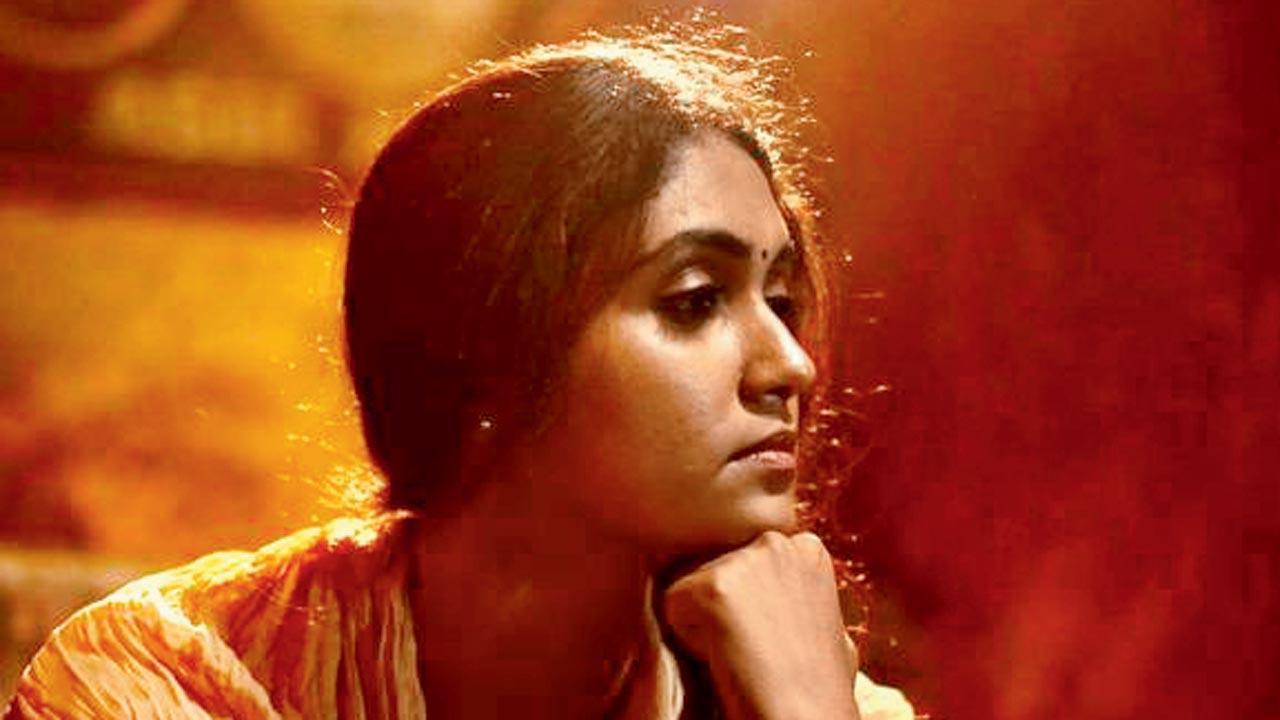
Sairat actor Rinku Rajguru ecstatic to work with Amol Palekar in the initial years of her career as they team up for 200 Halla Ho
Uma Ramasubramanian (MID-DAY; August 16, 2021)
To Rinku Rajguru, 200 Halla Ho is an affirmation that her career is enabling her to do what she wanted — collaborate with artistes to tell urgent stories.
Director Sarthak Dasgupta’s drama tells the story of 200 Dalit women who, tired of being oppressed for years, take the law into their own hands and lynch a rapist in open court. Joining her in the ZEE5 offering is Amol Palekar.
Never in her wildest dream had Rajguru imagined that the opportunity to share screen space with the senior actor would present itself so early on in her career. “I remember watching his films as a child, and thinking how brilliantly he portrays all his characters. There are so many actresses who have been in the industry for years, and have wanted to work with him. I feel lucky to have worked with him in the initial years of my career,” says Rajguru of Sairat (2016) fame.
In 200 Halla Ho, she plays Asha, who mobilises women to speak up against the rape and murder of a Dalit woman. She is proud that the narrative tackles not only crimes against women, but also caste oppression. “I saw it as an opportunity to spread awareness about the injustice faced by women and how it is important to speak up. I was [shocked] that Dalit women are brutalised every day, and no one even raises their voice.”
Basu Chatterjee would never call for pack up when it rained-Bindiya
9:17 AM

As told to Upala KBR (MID-DAY; June 5, 2020)
I first met Basuda when I was cast for my debut movie, Mukti, directed by Raj Tilak. I was sitting in the office of B R Films, and Basu da — who was making a film for the production house — was also present. Realising he is in the office, Tilak ji sought his advice. He said, 'Bindiya's front teeth [incisors] are a bit too prominent, I think we will have to sort this out.' It was Basu da who told him, 'No, let her be as she is. She has big eyes and her face is perfect for the screen.'
[Months after the episode], he cast me in Khatta Meetha. Most actors who have worked with him will tell you Basuda had a habit of carrying a handkerchief in his hand while directing.
When we would be delivering our shot, he used to bite on a strip of that handkerchief as he directed us. By the end of the day, the handkerchief would be crumpled into a ball.
By the time I worked with him on Hamari Bahu Alka, we had developed a warm equation. Once I asked him why he used to cast me in such homely roles, and he said, 'Tu fit ho jaati hai mere films aur yeh wali characters mein.' For Hamari Bahu Alka, we shot a song in Lonavala in the rains. Most directors would call for pack-up since there was no sunlight. But Basu da would never call for pack-up when it rained. He would steal moments in that cloudy weather — whenever the rains would stop, we would resume shooting. I last met Basu da at Amol Palekar's 70th birthday, a few years ago. We went together and spent an evening at Basu da's home. He was quieter than earlier, but his smile was just the same.
Remembering Basu Chatterjee: Khalid Mohamed pens tribute; Amol Palekar, Zarina Wahab too remember Basu da
9:12 AM

Chhoti-badi baatein about Basu Chatterjee, champion of middle class cinema who passed away on Thursday
Khalid Mohamed (MUMBAI MIRROR; June 5, 2020)
 Bustling into his airy study room, on the first storey of Violet Villa, Santacruz, he nonchalantly pulled out a file titled “The Window.”
“That’s my last script,” Basu Chatterjee, often attired in a grey safari suit, darted his boyish grin. “You make it. I’m tired of flogging it around to producers.”
The story revolved around a Muslim girl in love with a police officer who proposes marriage. It turns out to be a ruse to arrest her brother, a suspected terrorist, at the wedding. Heartbroken, the girl never opens her home’s window again.
“But Basu da, who’ll finance a film with Muslim characters?” I asked.
He countered, “Just get one or two big stars. I’m not charging you a rupee anyway. Now, what’ll you have —scotch and soda or with water?”
 Scotch evenings with the puckish writer-director, who was surmised to be 90-93 and passed away on Thursday of age-related ailments, were enlivened with conversations about his early days in Ajmer and his move to Mumbai, where he became a cartoonist-cum-illustrator with the Blitz tabloid.
Backbone of the cineaste club, Film Forum, and a constant presence at its pokey office overlooking the Dadar railway station over-bridge, he was working on the script of Sara Akash (1969), and could no longer edit the Forum’s quarterly magazine Close-Up. He asked a college friend, Abbas, and me, to take over. We didn’t know the ‘e’ of editing. “Neither do I,” he had chortled. In return, we could attend the film society screenings for free.
 After the uncompromised Sara Akash and the slice-of-life Piya Ka Ghar, he became a champion of the middle-class ethos with the sleeper success Rajnigandha (1974).
In 1975-’76, Chitchor and Chhoti Si Baat once again sided with Simple Simon over cool man-about-town.
Intermittently, Basu da took on more than he could chew, resulting in the disappointing Us Paar, Tumhare Liye and Do Ladke Dono Kadke. Yet, the writer-director bounced back with Khatta Meetha, Baton Baton Mein, Swami, Apne Paraye and Shaukeen.
He did work with the top heroes — Rajesh Khanna (Chakravyuha), Amitabh Bachchan (Manzil), Dharmendra (Dillagi), Jeetendra (Priyatama) and Anil Kapoor (Chameli Ki Shaadi) — but sought to avoid the star system, preferring intimate to showy cinema.
The film Jeena Yahan (1979), featuring Shabana Azmi and Shekhar Kapur, remained closest to his heart. “It was quite easily my best,” he would say about the barely-remembered reflection on a young couple’s adjustment to daily commutes and housing issues. Not Ek Ruka Hua Faisla? “Naah,” he’d say. “You know that was taken from 12 Angry Men.”
Not the sort to whine, he was okay with his light-hearted Prateeksha (Jimmy Sheirgill-Dia Mirza) being dumped on Sahara TV channel. From what I could glean, he at least hoped to travel to Kolkata where he’d be received with open arms, thanks to the success of his two Bengali films (Hochheta Ki, Trishanku).
When he retired (not out of choice), he’d spend time surfing the net and emailing. Worried about his huge collection of cinema books, he’d wonder, “What’ll happen to them? You take them.” “Basu da, stop it, you’re going nowhere”, I’d retort.
By the time I gathered a team to work on a documentary on Basu da, some three years ago, he had started to fade. He walked by taking support of the wall, would recognise his wife and TV filmmaker-daughter Rupali Guha, but drew a blank on seeing me. Alzheimer’s was setting in.
During the first and only shoot, he tried to be amiable, but answered only with “Yes” or “No”. Questions about his firebrand TV series Rajni or the sleuthing Byomkesh Bakshi made him restless. Maybe, he didn’t wish to delve into the past or he had erased them subconsciously.
Once, he told me he had started writing his biography in Hindi but quit midway because “it meant writing lies on every page, I would have cheated myself”. And if he had done that, he wouldn’t have been able to open his study room’s window again.
-----------------------------
Amol Palekar: He never attempted a typical masala movie, yet top heroes worked with him
Basu da was a simple person. It reflected in all his films and his humour. He was a man of few words. When we met for a narration of Rajnigandha, he started off saying, “Ek ladka hota hai, maan lo tum ho, ek ladki hoti hai, Vidya Sinha…” Then, he stopped, handing me the story, screenplay and dialogue. “It’s better if you read this.” Looking back, I’m amazed by his inability to narrate a simple story. However, he could do it on screen beautifully, without the cliched melodrama.
It took us almost two years to release Rajnigandha because no one wanted to distribute it. They would ask “Hero kaun hai?”, and wonder how a new boy with a Marathi name could be the hero? Then, they would learn that the heroine was a debutante, too, and that the film had no villain. Quickly losing interest, they’d ask Basu da, “Toh phir film kyun bana rahe ho?” Later, these memories made him laugh but at the time, I could see the trouble he was going through and marveled that he stuck to his vision.
He never attempted a typical masala movie, yet all the top heroes, from Dharmendra and Hema Malini to Amitabh (Bachchan), Vinod Mehra and Moushumi (Chatterjee), worked with him. Basu da was probably the first major link between parallel and commercial cinema, thanks to the subtle humour that lit up his films and the strength of his characters. Hailing from the film society movement, he was aware of world cinema, took its strength and carved his own niche. I’m privileged to have had such a long association with him.
—As told to Hiren Kotwani
-----------------------------
Zarina Wahab: He could crack a joke with a straight face
This year has been very bad so far and Basu da’s demise is very upsetting because I was really close to him and his family. His daughter was our neighbour till she moved away. Around two years ago, Amol Palekar, Deepti Naval, Vidya Sinha, Bindya Goswami and I all met at Basu da’s place. He was fine then, a really sweet man. After that, I passed by his house a couple of times and today, wonder why I didn’t drop by.
I played the main lead in his film, Chitchor, for the first time. Once, during the shoot, I was sitting around with Master Raju (the child artiste then) and a few others. Raju was showing us how a mute man would ask for water. Basu da watched for 10 minutes, then, incorporated it in the sequence where we go to Amol’s house.
After Chitchor, I did Hua Savera, which never released. He told me that he couldn’t pay me but would get the producer to give me a car. Back then, you could get a car for Rs 25,000-Rs 30,000. He was one of the best directors I worked with, a genuinely wonderful person who could crack a joke with a straight face.
— As told to Hiren Kotwani
‘Basu Chatterjee was a director who was always ahead of his time’: Bollywood remembers the legendary filmmaker
9:08 AM

Bollywood remembers the legendary filmmaker, who passed away in Mumbai yesterday
Rachana Dubey (BOMBAY TIMES; June 5, 2020)
 The film industry woke up to the news of filmmaker Basu Chatterjee’s demise yesterday morning. The 93-year-old director, known for his unique take on cinema, passed away due to age-related ailments. The last rites were conducted at a crematorium in Santacruz at 2 pm. Basu da, as his colleagues loved to address him, was a gifted director and writer, who helmed films like Chhoti Si Baat (1976), Rajnigandha (1974), Chitchor (1976), Khatta Meetha (1978), Baton Baton Mein (1979), Shaukeen (1982), and Chameli Ki Shaadi (1986) among others, along with shows like Rajani and Byomkesh Bakshi. People from the film industry, including Amitabh Bachchan and Anil Kapoor, posted heartfelt messages on social media remembering the veteran filmmaker.
 Talking about his beloved Basu da, actor Amol Palekar told BT, “I acted in six of his films, and I did guest appearances in two. One of the biggest contributions that he made was that he was the perfect bridge between commercial and parallel cinema. I had met him at his home five years ago. Sandhya (Gokhale, Palekar’s wife and actress) and my heroines Bindiya Goswami, Zarina Wahab and Vidya Sinha, and I had gone to his house. He was so happy to meet us. Knowing that he wouldn’t want to talk about his health, I would speak to his wife. The last time he was in the hospital, it was before the pandemic hit us. I heard he died in his sleep, quietly, something that goes with his personality.”
 Rajit Kapur, who played Byomkesh Bakshi in the show by Chatterjee, said, “Basu da was not the pondering, dekhte hain sort of a person. I met him for the first time after my colleagues suggested my name for Byomkesh Bakshi. They had shown him some of my work. After a 10-minute chat, I was on board. He gave me the script for 33 episodes, with dialogues, which I don’t see happening even now. He was a fast worker and a taskmaster. Shifts would begin and end on time, and we had to go prepared. He was an uncomplicated person.”
Filmmaker-actor Rakesh Roshan shares, “In those days, he lived close to my home in Santacruz. We would meet often and I never missed a chance to tell him how much I wanted to work with him. We eventually did three films — Priyatama (1977), Khatta Meetha (1978) and Hamari Bahu Alka (1982). He was a great storyteller, had an amazing sense of humour and a beautiful smile. Working with him was like a picnic. Sadly, he has parted with us, leaving a void that can never be filled.”


Utpal Dutt was a natural in front of the camera, a riot in the climax of Gol Maal-Bindiya Goswami
8:03 AM

Roshmila Bhattacharya (MUMBAI MIRROR; April 24, 2020)
 It’s been 41 years since Hrishikesh Mukherjee’s comedy of errors, Gol Maal, opened, on April 20, 1979, but for its leading lady, Bindiya Goswami, it seems like only yesterday. She can almost see herself as a 17-year-old, her co-star Amol Palekar standing across from her, giving her cues, and Dada sitting close by, instructing her on the emotions he wants her to express, while playing chess with one of his assistants. “He called me Bindi and would glance up occasionally to check if I was doing it right, then, go back to the chess board. He was very chilled out even though his knee was giving him a lot of trouble and he shot the film sitting down. I don’t know film kab khatam ho gayi, with absolutely no stress or pressure,” she marvels.
Bindiya goes on to recount that the filmmaker was very particular about two scenes featuring her, one in which she is trying to convince her father, Utpal Dutt, to let her marry the man she loves. And the other? “When Amol tells me, towards the end, that he will use a makeshift rope of bedsheets to get out of my bedroom. Nodding, I tell him, ‘Suno toh, I will wait for you in the car’, then, go up to the built-in wardrobe and return to him anxiously a couple of times with more ‘suno toh’, telling him to take care, before his exasperated expression has me scurrying out of the room,” she shares, saying Hrishida actually enacted these scenes for her.
Her favourite scene is her introduction, where, draped in a sari, a mangalsutra around her neck and a red bindi dotting her forehead, she is pleading with her lover not to desert her, reminding him that she has left everyone for him and is now carrying his baby. The last bit has her eavesdropping bua, Shubha Khote, dashing off with the news of her badnaami and Utpal Dutt turning up all agitated, only to learn she had been rehearsing for a college play. “That scene was so me that it came out very spontaneously,” admits Bindiya.
She remembers Amol as a quiet man whose measured speech was lightened up with with tongue-in-cheek quips. They have grown close over the years and Bindiya remembers visiting him in Pune for his 70th birthday, to which his wife Sandhya had invited all his school friends and leading ladies.
She has equally fond memories of Utpal Dutt, with whom she also worked in Basu Chatterjee’s Prem Vivah , which released in the same year, and later in Hamari Bahu Alka, husband J P Dutta’s favourite film. “Utpal Dutt was a natural in front of the camera, a riot in the climax where he chases after Amol and me, in a pair of pyjamas and vest, with his hair standing on end, through the bylanes of Juhu. The trio were masters of the craft, with Dada as one of the Gods of Hindi cinema. I got lucky landing this film with them as a teenager,” Bindiya exults.
Interestingly, script-writer Salim Khan landed up at the shoot one day, asking Hrishida if he could borrow Bindiya for half an hour. “I had bought Salim saab’s Mercedes and he knew my mother, sister and me well, and had also seen my movies. My mother and I accompanied him to Ramesh Sippy’s office that day. I later learnt that he had recommended me highly to him, and in 10 minutes, I landed Shaan,” she narrates, admitting that the action-thriller, one of the most talked-about films of that time, featuring Sunil Dutt, Raakhee, Amitabh Bachchan, Shatrughan Sinha, Shashi Kapoor and Parveen Babi, with Kulbhushan Kharbanada as the bald villain, was a huge break. “The film was written by Salim-Javed. They spoke to me about Shakti too, but eventually Smita (Patil) did that film.”
Gol Maal was shot in Hrishida’s own bungalow in Bandra and producer N C Sippy’s bungalow in Juhu. “I felt at home there as it was called Bindiya, named after his daughter. Now, the Bachchans live there and Bindiya bungalow is known as Jalsa,” she reveals.
Four decades have passed… Hrishikesh Mukherjee has passed away. Bindiya retired from films in 1986 and even Amol is an artist today, but Gol Maal remains evergreen. “There have been four Golmaals since, the title track has been borrowed for a sitcom, yet, the original remains pure gold. It’s a hit with every generation, including my own daughters (Nidhi and Siddhi). Even though I didn’t work very long, thanks to Khatta Meetha and my biggest hit, Gol Maal, people still remember me. It’s nice to know you left a mark and remain in people’s hearts,” Bindiya signs off.
The stage persona of Hasmukh is like that of Amol Palekar-Vir Das
8:03 AM

Vir Das discusses modelling his character in Hasmukh on ’ 70s actor, and Peter Sellers
Mohar Basu (MID-DAY; April 10, 2020)
 Vir Das’s latest fictional series, Hasmukh, sees him in a new avatar. As the mild-mannered stand-up comic from Saharanpur who comes alive on stage only when he commits a murder before each gig, the actor turns from timid to terrifying on a dime. Turns out, the writer-actor took inspiration from Amol Palekar’s onscreen parts while developing the comic side to Hasmukh’s personality.
“The stage persona of Hasmukh is like that of Amol Palekar. He is so sweet that you would never expect him to have a dark side. I wanted to tap into that innocence of the character,” explains Das, highlighting the vulnerability of the protagonist of the dark comedy.
He also turned to his favourite comedian Peter Sellers’ movies for a tip or two on portraying a seemingly innocent man with a mercurial temperament. “Peter Sellers changed like a chameleon, and that’s a striking quality in Hasmukh. He can go from coy to wild in a matter of minutes. I took elements from people I have studied, and brought my own interpretation to the rest of it.”
People love and respect me. I, therefore, believe that I owe them something-Amol Palekar
8:10 AM

As veteran actor Amol Palekar returns to stage after 25 years, he speaks of his three-point guide to picking new projects
Vinaya Patil (MID-DAY; November 17, 2019)
It is the thrill of doing something "totally new" that has pushed Amol Palekar to give us all the beautiful movies that he has. His new play, Kusur – The Mistake, is no different. Written and co-directed by Sandhya Gokhale, the play is a social thriller, and "an experiment never seen before," according to her.
The play, an adaptation of Danish film Den Skyldige, sees Palekar's return to the stage after 25 years. It will be first staged at NCPA on November 24, the day Palekar turns 75. He plays the role of an ACP which is "extremely challenging, physically and emotionally, especially at this age," Palekar says, adding that even as the play is a thriller, it can be categorised into a niche socio-political genre. "In India, when you say political, one only imagines party politics. But that's not what this play is about; it has several layers to it that can open up to multiple issues," he explains, seated in his home-turned-studio in a quiet lane on Pune's Prabhat Road.
On what made him end his stage hiatus, Palekar says, "I am an actor by accident and director by choice. I hadn't acted in years. The reasons are many. Once I know that I have had a successful project—personally and for the audience—my interest in it vanishes. I, then, want to do something different. People love and respect me, which is overwhelming. I, therefore, believe that I owe them something, and this was my best possible chance—an extremely challenging script. It is nothing close to what I have done in the past."
But, even for the talented artiste, "unknown territory is always scary, especially when you are successful." It is his formative theatre days that have taught him to do it. Has it ever failed, his attempt at experimenting? "Very rarely, perhaps a couple of times: once with the 2013 Marathi movie Houn Jau Dya that I directed and with a French classic adaptation," he says. The couple of failures though were far too less in comparison with the numerous hits that the actor has delivered over the decades—from Chhoti Si Baat and Ankahee to Bhumika, Thodasa Roomani Ho Jaye and Apne Paraye.
What Then Does He Look At In The Projects He Chooses?
Three things. "It has to offer something new, to me and to the audience. It has to say something about contemporary spaces, and very importantly, if it is not a progressive thought, it must at least not be a regressive one," says the man who insists that he "acts with conviction". And in that case, he does not want to take up something regressive and present it convincingly. That is "supremely dangerous."
Which brings us to his idea of contemporary spaces and standing up for the right causes. Palekar, who has more often than not challenged the establishment, says he is not against parties but against "atrocities committed by the establishment." From speaking against The Emergency to protesting the government's idea of censorship, he says he must be the "only man to have protested the maximum number of governments—Congress, BJP, Janta Dal and more."
On the current state of cinema, Palekar says the scene in India is once again where it was during the Renaissance period of the early 1970s. "We are once again making some path-breaking cinema, regional cinema is rising yet again, and movies are going beyond pure entertainment." The one disappointing bit though, for him with regard to regional cinema vis-à-vis Bollywood, is that the latter has trained us to look at art from an extremely commercial point of view. Citing an example of the Marathi hit Sairat, Palekar says that all that was spoken about the movie was its crossing the Rs 100-crore mark. "[Nagraj] Manjule has done some phenomenal work with that movie. It is his filmmaking that has turned a simple story into beauty. But no one spoke about that," he sighs, hoping that the way we look at art and cinema evolves for the better, sooner than later.
I’ve already said that I will not take this play beyond 25 shows-Amol Palekar
8:06 AM

Legendary actor Amol Palekar on why he’s returning to stage, 25 years on, with Kusur, a play based on a Danish film adapted by his wife Sandhya Gokhale
Sanchita Das (MUMBAI MIRROR; November 17, 2019)
Come November 24, a veteran thespian will take the stage he quit 25 years ago. With this, he says, he will be flagging off his last round of performances. The date holds special meaning to Amol Palekar, who turns 75 on that day. So does the venue — National Centre for the Performing Arts (NCPA), at Nariman Point — the place he’d performed last at (in Kala Wazir Pandhra Raja).
Palekar’s life appears to have come full circle. He completed another such cycle when he turned 70, by going back to the artform he first favoured — painting. He celebrated his return to the easel with a solo exhibition after a gap of 30 years. But unlike his continued engagement with the canvas, Palekar is very categorical that Kusur — the play he is set to perform in — will not reboot his acting career. “I’ve already said that I will not take this play beyond 25 shows,” he says, “I don’t know whether I will have the fitness, energy and emotional strength to go on performing beyond this.” He also doesn’t want to limit his performances to the metros this time. “I will explore new grounds such as Guwahati, Ahmedabad, Chandigarh and smaller towns — to reach as many people as possible.”
The present exercise, he says, is homage to his followers who’ve been coaxing him to return to acting for a long time. “The kind of love and adulation I continue to enjoy, despite quitting the scene 25 years ago, and the continuous coaxing to perform, is really overwhelming,” he says. “I felt I owed my admirers one last showcasing of my talent or skills, however you may wish to put it. It had to be a show-stopper and I did not find a proper vehicle to do this, until Sandhya’s script threw out this challenge.”
Kusur is his wife Sandhya Gokhale’s adaptation of Danish film, Den Skyldige, and it’s being produced by BookMyShow. Gokhale says the script was the culmination of a long search for material that might appeal to her husband, who’d turned a reluctant actor. “I had heard him say ‘no’ just too many times,” she recounts. “He doesn’t like to do anything that does not challenge him. I was looking for a play but I am not a theatre person and I don’t take to theatre scripts. I prefer to draw my inspiration from literature and novels. When I saw this film, I thought — now here is some drama that lends itself to theatre. But nothing in the film could be associated with in the Indian context.”
“After I was done with the adaptation, I read it to Amol and he actually liked it. He demanded no changes and that is something, after my experience of scripting eight of his films. Once the script was ready, after some fine-tuning, I sent it to the original screenplay writers, and they too commended it. Adaptation is a tricky train where one cannot be truthful to the original piece of art, but when the original authors approve, it is very fulfilling.”
Palekar, who is co-directing the play with her, finds the script he is working with challenging on multiple levels. “It is terribly taxing, both physically and emotionally, and I hope, I can deliver on it,” he tells Mirror.
Palekar believes the play will afford an opportunity to present his craft — one that has been honed by observing some of the country’s doyens in theatre, primary among them being his mentor Satyadev Dubey. Palekar, who prefers to call himself an “accidental actor”, would hang around Dubey’s theatre group those days, as he was dating Chitra (now, Palekar’s ex-wife). Dubey offered him a role, with the disclaimer that he had not spotted any talent in the young man, but had simply observed that he had a lot of time to spare.
This uncharted career path got him out of the clerical bank job he’d taken on for subsistence, while he experimented with his creative outings. Dubey, who had sculpted the theatre career of many luminaries, exposed him to various theatre forms. “Back then, Dubey was networking with theatre movements across the country. Thanks to him, I got to sit in on sessions where people such as Badal Sircar, Mohan Rakesh, Vijay Tendulkar, Girish Karnad and Dubey hobnobbed and exchanged notes. It opened up new vistas for me,” he recalls wistfully.
Dubey, he says, did not hold back when it came to sharing his craft. Most important was the nuanced exposure he ensured Palekar got. “He made me go watch Kolkata’s Shyamanand Jalan perform Badal Sircar’s Evam Indrajit. It was so removed from the realistic Marathi theatre (which remains so to date) in its abstract and yet eloquent form. Then I saw Dubey’s interpretation of the same play, which, without any change to the script, managed to change the very protagonist of the play. While Jalan had made the playwright central to the play, in Dubey’s version, Indrajit’s was the pivotal role. This triggered a creative surge in me,” he reminiscences.
Palekar who went on to become a face of India’s parallel cinema, working with Basu Chatterjee (who drew him into the cinematic fold), Hrishikesh Mukherjee, Tapan Sinha, Shyam Benegal among others, points out that this body of work was done during what he considers the cultural renaissance period of the country. “The ecosystem was such that I could indulge in all three of my creative endeavours — painting, theatre and movies — between 1967 and 1984,” he says. He rules out, however, that this coming full circle will translate into a return to cinema, as he reiterates his resolve to take on commitments commensurate with his age and energy levels.
Along with his sketches, self-portraits and other artworks on a sideboard in his studio, sits a group photograph of Palekar flanked by three of his most popular costars — Zarina Wahab, Bindya Goswami and the late Vidya Sinha. All three are holding up portraits of themselves that were made by Palekar. The picture was taken five years ago during that solo exhibition to celebrate his turning 70, Palekar says.
The artist-actor-director who has been unabashedly vocal about his political views right through his career, says that the present day scenario is one of the most oppressive times he’s lived through. “Dissent was not deemed a crime even during Emergency,” adds the actor. “Today, even if we share an opinion with our friends on social media, we can be labelled secessionists,” he says, recalling the ignominy he suffered at National Gallery of Modern Art earlier this year. At that event, Palekar was repeatedly interrupted and asked to wind up his speech, when he spoke against the dissolution of the advisory committee of local artists that used to guide the gallery on exhibitions and events.
Both, Gokhale and he have made it clear that they resent the censorship theatre is subjected to in Maharashtra and Gujarat. “This is unconstitutional. When I can stage a play unfettered everywhere else, why not in these two states. We are fighting the matter in court, but at the same time, have passed Kusur’s script by the monitoring body — ironic as that may be,” Palekar scoffs.
He remains determined. Palekar, whose parents had never restrained him from pursuing his dreams — their lower middleclass station notwithstanding — says that he will continue to protest, question and criticise, unmindful of the circumstances.
Subscribe to:
Posts (Atom)