Showing posts with label Alka Yagnik. Show all posts
Showing posts with label Alka Yagnik. Show all posts
I feel composers ko aur thodi si freedom milni chahiye-Kumar Sanu
11:12 PM

Debarati S Sen (MUMBAI MIRROR; August 8, 2026)
Nearly three decades after Aankhon Se Tune Kya Keh Diya from the Aamir Khan starrer Ghulam, became one of Bollywood's most-loved romantic melodies, the iconic track has found a new life now with Aankhon Se Tune 2.0 (in the film Bhai Tera Star Hai). Bringing together the original voices of Kumar Sanu and Alka Yagnik with Palak Muchhal and Dev Negi, the recreated version introduces the classic to a new generation while retaining its nostalgic charm.
Aankhon Se Tune Kya Keh Diya has been recreated after nearly three decades. What was your reaction when you heard Aankhon Se Tune 2.0?
I originally sang this song with Alka ji, and hearing the recreated version after so many years has given me immense joy. It reminded me of the time when we first recorded it. The song became very popular back then, and seeing the recreated version connect with today's audience honestly makes my heart full. When we recorded the original, we never imagined that the song would stay with people for so long and come back in a new form years later. I have always been very fond of this song, and hearing it again brought back many memories of that time. I am happy that the song is reaching today's listeners as well, and I hope they give the new version the same love and affection that they have given the original over the years.
Your songs continue to be recreated for a new generation, often with electronic beats and altered arrangements. Do you believe these recreations help preserve the legacy of the originals, or do they dilute the emotion and craftsmanship that made those songs timeless?
Ye depend karta hai ki kaun bana raha hai. There are some composers jo original song ke soul ko intact rakh ke usme new elements add karke banate hai. Some composers retain the soul of the original while adding fresh elements to make it appealing for today's listeners. When that's done with sincerity, these recreated versions help the songs reach a new generation. I'm happy to see that happening because it gives classic hits a new life and makes people rediscover and fall in love with them all over again.
There is growing criticism that Bollywood relies too heavily on remakes because it has run out of original musical ideas. As one of the defining voices of the 1990s, do you think the industry today is taking the easy route instead of investing in fresh melodies and new composers?
I definitely feel new composers ko chance milna chahiye to create the kind of music they want. Aaj kal production houses ka pressure bahut rehta hai, aur purane gaanon ko recreate karna ek easy way hota hai sure-shot hit ka. That's because those classics had strong compositions, meaningful lyrics and soulful singing that stay with people for years.
Having said that, it's not true that original music isn't being made anymore. We have immensely talented composers like Mithoon, Amaal Mallik, Sachin-Jigar and Shashwat Sachdev, who have already proved they can create excellent original music. Bas unhe aur creative freedom milni chahiye. If they're trusted to experiment and express themselves, we'll hear many more memorable original songs.
If a filmmaker wanted to recreate one of your iconic songs today, what would make you say yes? Do you think original singers and composers should have a greater say in how a classic is reimagined?
The first thing is that the rights to most of these songs are owned by the music labels. So, anyone who wants to recreate them only needs permission from the label. Unfortunately, as singers, we don't really have much of a say in that process. What I would always request is that the soul of the original song should remain intact. You can certainly add new elements and give it a contemporary sound, but don't lose the emotion that made the song a hit in the first place. Audiences get upset only when their favourite songs are spoiled. Composers should remember that these classics are deeply connected to people's hearts, so they deserve to be recreated with great care and respect.
It wasn’t easy, but I’m ecstatic I went personally and received the Padma Bhushan award-Alka Yagnik
9:22 AM

Tanvi Trivedi (BOMBAY TIMES; June 25, 2026)
After two years away from the public eye due to health issues, Alka Yagnik says receiving the Padma Bhushan in person was an emotional moment for her. Speaking exclusively to BT, she reflected on the health challenges that forced her to step back from public life. In 2024, the singer had revealed on Instagram that she had been diagnosed with rare sensorineural hearing loss following a viral attack.
“I am ecstatic that I could personally go and receive the Padma Bhushan, even though it was not easy. For the last two years, I have stayed away from the spotlight, from public appearances, and from sharing much of my journey. Many know I have been going through a difficult phase with my health, and through it all, people’s love, prayers, messages and unwavering support have stayed with me,” she said.
Talking about the ceremony, Alka Yagnik said, “This was a once-in-a-lifetime opportunity and I wanted to be there not just for myself, but for all the listeners who have supported and loved me. This moment is especially meaningful because it marks not just a recognition of my work, but also a reminder of the strength that comes from love, hope and resilience. I am slowly finding my way back.”
The recognition has reaffirmed her belief in patience and perseverance. “Life unfolds in its own rhythm, and destiny reveals its gifts when the moment is right. Once an honour of this magnitude arrives, the question of ‘when’ begins to fade into the background. What remains is the joy of being recognized, the warmth of being remembered, and the profound gratitude that accompanies such an honour,” she shared.
A part of me feels the Padma Bhushan could have arrived sooner-Alka Yagnik
4:05 PM

Tanvi Trivedi (BOMBAY TIMES; May 28, 2026)
Receiving the Padma Bhushan has been a deeply emotional and humbling moment for veteran singer Alka Yagnik, who says the honour feels like “an embrace of a lifetime’s devotion.” After decades of lending her voice to some of Indian cinema’s most memorable songs, the singer says being recognised by the country is among the greatest blessings an artiste can receive.
“Receiving the Padma Bhushan is a deeply moving and profoundly humbling moment for me. To be honoured by my country in this way feels like an embrace of a lifetime’s devotion — one of the highest blessings an artiste can receive — and I accept it.”
Reflecting on her long musical journey, Alka says music was never merely a profession for her, but the very essence of her life. “Music has been the very soul of my existence — it is not something I chose, but something that chose me. From my earliest memories, music has been my constant companion, my refuge, and my deepest form of expression,” she shares.
The singer adds that her relationship with music has been driven by constant learning and the emotional connection she feels with every song she sings. “What has kept me devoted is the endless joy of learning, the emotional connection with every song, and the privilege of touching people’s hearts through my voice,” she says.
While expressing gratitude for the Padma Bhushan, Alka candidly admits that a small part of her feels the recognition may have come a little late. “If I speak from the heart, there may be a gentle part of me that wonders whether this recognition could have arrived sooner. After dedicating my entire life to music, offering myself fully to my art with sincerity, discipline, and love, it is only natural to feel that such acknowledgement may have been due some time ago,” she says.
However, she believes time and experience have taught her patience and acceptance. “Life unfolds in its own rhythm, and destiny reveals its gifts when the moment is right. Once an honour of this magnitude arrives, the question of ‘when’ begins to fade into the background. What remains is the beauty of being seen, the warmth of being remembered, and the profound gratitude that accompanies such recognition,” she explains.
A R Rahman reacts as Tamasha's Agar Tum Saath Ho becomes most streamed Indian song
9:59 AM

With ‘Agar Tum Saath Ho’ becoming the most streamed Indian song since last week, A R Rahman recalls toiling through four scores to arrive at the ‘Tamasha’ track
Priyanka Sharma (MID-DAY; April 16, 2026)
Is it the power of the melody, two timeless voices, or the universal experience of heartbreak? What makes Agar Tum Saath Ho from Tamasha (2015) relevant over a decade after it first released? Since last week, the poignant ballad from Imtiaz Ali’s movie has claimed the top spot as the most streamed Indian song on Spotify. When mid-day reached out to its composer A R Rahman, he recalled that the song came to him after several attempts.
“It’s a song people can universally relate to because we all go through problems and need a shoulder to lean on. ‘Lean on me’ was the brief. We had to go through the process three times to get there. Once we got the song, we knew we had something special,” he told mid-day. The composer added that getting “iconic voices” like Alka Yagnik and Arijit Singh to sing the track added to its magic.
In Tamasha, Agar Tum Saath Ho comes at a critical point — after their break-up, as Deepika Padukone’s Tara tells Ranbir Kapoor’s Ved to confront his inner turmoil, he breaks down and walks away.
Interestingly, Ali had shot the emotional sequence on a different track. The musician recounted that the three initially created tracks felt out of sync. “Initially, I felt the melody was light-hearted. The second one was more classical. So, I felt we should do something, which is universal and simple. We finally got it right [the fourth time],” Rahman shared.
Palak Muchhal is the torchbearer of industry’s music legacy-Mithoon
9:46 AM

Natasha Coutinho (HINDUSTAN TIMES; January 28, 2026)
Music director-composer Mithoon, an introvert, admits performing on stage isn’t easy despite a 20-year career. “I’ve never been much of a stage artiste. I’ve been making music for 20 years but never been comfortable on stage,” he says.
“Only recently have I developed a specific sound for my band, and I’m not competing with any artiste. When the audience sees an artiste live, it’s an intimate experience, that’s the vision I want to give them.”
When asked if India’s booming live music scene influenced him, Mithoon says, “No. It’s more of an internal journey of being prepared that happened to coincide with the boom, but I’m happy live music is being celebrated in the country.”
He adds, “The audience understands, and many introverts present in the audience enjoy the music along with me. What they appreciate is honesty. It’s ‘main jaisa hoon, aapka hoon.”
Mithoon says he and wife, singer Palak Muchhal, keep work talk out of their home. “She’s a busy professional herself. We do riyaz together and discuss some musicality, but we keep work sanctified.”
Calling himself her biggest critic, he adds, “Since the time she sang the female version of ‘Meri Aashiqui Tum Hi Ho’ (Aashiqui 2), I’ve always believed in her potential and have been demanding of the level I expect from her,” Mithoon says.
Praising her, he adds, “There’s an unsaid legacy led by Lata ji (Mangeshkar), Kavita ji (Krishnamurthy), Alka ji (Yagnik), Shreya (Ghoshal), Palak belongs there on her own merit, she is the torchbearer of the music industry’s legacy.”
Meanwhile, brother-in law Palaash is currently making news for taking the legal route to deal with a cheating and financial fraud case initiated by former fiancee and cricketer Smriti Mandhana’s friend, Vidnyan Mane. Mithoon however chooses to steer clear of the controversial subject.
A R Rahman’s presence gave me the confidence to call the film Taal-Subhash Ghai
8:29 AM

Niharika Lal (BOMBAY TIMES; August 24, 2024)
In 1992, when Subhash Ghai was shooting for Khalnayak in Bangalore, his driver was playing the music of Roja. The songs struck a chord with Ghai, and he asked the driver, “Who is the music director of this film?” It was A R Rahman. And from that moment on, Taal’s journey was set in motion, leading to its release seven years later. 25 years on, we take a look at what keeps the film’s enduring appeal alive.
The making of Taal se Taal Mila…
Percussionist Sivamani recalled in an interview, “We were talking about how the title song was going to start in the mixer room. I said, ‘A R, why don’t we start with a snap of the fingers?’ So A R recorded that, and then, one by one, we added vessels and water.”
Talking about the film’s music, Subhash Ghai had said in 1999, “This is not the kind of music you heard in the ’70s and ’80s. Rahman said he didn’t want to adopt traditional (styles). As a director, it is my work to develop the music of Hindi cinema and Indian cinema.”
My favourite memories of Taal involve discovering my music: A R Rahman
Looking back on 25 years of the film, Rahman says that even now, people think Taal is one of his best works. He told us, “Taal is one of the most important tracks from north India that I have composed. Working on music for an icon like Mr Ghai, who had been at the peak of his career for almost two decades, with his guidance and vision, has helped my music travel to the north and the world over. My favourite memories of Taal involve discovering my music and seeing how it transformed with the different people I worked with.”
‘Rahman’s presence gave me the confidence to call the film Taal’
At the press conference for the launch of Taal’s music, Subhash Ghai had said, “I credit the name of the movie to composer A R Rahman. This film is a romance, and I could have called it anything Dil, Pyaar, Hum Bhaag Gaye - but it was Rahman’s presence in the movie that gave me the confidence to call it Taal. Taal means music, and music means Taal. The whole credit goes to A R Rahman and Anand Bakshi. Rahman kept me awake many nights, but after listening to the songs, I felt it was worth all the trouble.”
Ramta Jogi is one of my favourite songs from Taal: Anil
“Ramta Jogi is one of my favourite songs from the film, but what makes it truly special is the incredible story behind it. Farah Khan was originally supposed to choreograph the song, but she opted out at the last minute! Saroj Khan, the legendary choreographer, stepped in just a night before the shoot at Filmistan. And I, being the enthusiastic actor I am, did the song with no rehearsals at all! Working alongside the phenomenal dancer, Aishwarya Rai Bachchan, was a thrill in itself,” wrote Anil Kapoor in a post marking 25 years of Taal.
The making of Nahi Saamne Tu
For film songs, Rahman composes the tunes first and then asks lyricists to write the lyrics. However, for Nahi Saamne Tu..., Anand Bakshi had already written the lyrics, and Subhash Ghai wanted to use them. Ghai recalled in an interview, “Next day I told Anand Bakshi, ‘Anand ji, aapki lines toh bahut ordinary thi, lekin jo gaana bana hai, aapki lines kahan se kahan uth ke chali gayi hain’
DID YOU KNOW?
- Taal became the first Indian film to reach the Top 20 on Variety’s box-office list
- The song Ishq Bina Kya Jeena Yaaron was originally recorded for a film called Shikhar that Subhash Ghai was making. He had approached Rahman for Shikhar
- The film’s singers, Kavita Krishnamurthy and Alka Yagnik, mentioned in multiple interviews that they sang the same lines in different variations for Rahman. And he used what he felt suited for the situation
- Like all his films, Subhash Ghai also made a cameo in Taal
Alka Yagnik suddenly loses hearing, cancels all concerts
9:20 AM

THE TIMES OF INDIA (June 19, 2024)
Top Bollywood playback singer Alka Yagnik on Tuesday revealed that she suffered extensive hearing loss while on a personal visit to Goa. The singer added that the hearing loss was caused by a viral attack, reports Lata Mishra.
She had gone to Goa with friends in May when she first began to lose hearing in her right ear. Within 24 hours she lost hearing in her right ear entirely and felt her left ear too getting affected.
The singer’s PR team said all her stage shows, including one in London, have been cancelled. Her manager, Niraj Mishra, said all treatment options are being explored, both within India and abroad.
In an Instagram post, the singer wrote as she walked out of a flight in Goa felt like she couldn’t hear anything. Initially she thought it was because of cabin pressure and that her ear would pop soon, it only became worse as time passed. By evening, she felt, she had lost hearing in her right ear completely.
According to sources at Lilavati Hospital, where she was admitted upon her return from Goa, Yagnik was diagnosed with sensorineural nerve hearing loss. Doctors said that sensorineural nerve hearing loss is hard to reverse. However, there are several treatment options available to manage the symptoms and improve quality of life for those with this condition.
----------------------------------
BOMBAY TIMES (June 19, 2024)
Alka Yagnik, who ruled the music scene in the ’90s and 2000s, revealed a challenging health diagnosis to her fans with an Instagram post. The singer shared that she has been diagnosed with a rare sensory neural nerve condition caused by a viral infection.
Sharing the update, she wrote, “To all my fans, friends, followers and well wishers. A few weeks ago, as I walked out of a flight, I suddenly felt I was not able to hear anything. Having mustered some courage in the weeks following the episode, I want to break my silence now for all my friends and well wishers who have been asking me why I’m missing in action. It has been diagnosed by my docs as a rare sensory neural nerve hearing loss, due to a viral attack. This setback has caught me completely unaware. As I attempt to come to terms with it, please keep me in your prayers. For my fans and young colleagues, I would add a word of caution regarding exposure to very loud music and headphones. One day, I wish to share the health perils of my professional life. With all your love and support, I am hoping to recalibrate my life and come back to you soon. Your support and understanding will mean the world to me in this critical hour.”
– Inputs by Divya Kaushik & Riya Sharma
----------------------------------
While Alka has cautioned her fans and young musicians regarding the exposure to loud music and headphones, Dr Madhukar Bhardwaj, Senior Consultant & HOD, Neurology, says, “Repeated loud music over a period of time can definitely cause hearing loss but it does not cause sudden hearing loss. The sudden hearing loss involves other causes and occurs without any particular cause.”
He adds, “What Alka Yagnik has encountered is a sudden hearing loss. Loud music most certainly wasn’t the cause of her sudden hearing loss.”
Dr Vipul Gupta, director of Neurointervention and co-chief of the stroke unit, says, “Alka Yagnik has been diagnosed with sensory neural nerve hearing loss, a condition where damage to the inner ear or auditory nerve pathways affects one’s ability to perceive sound. This type of hearing loss typically results from aging, prolonged exposure to loud noises, genetic predispositions, infections, or certain medications”
Diljit Dosanjh usually sings on a high scale. Here, we made him sing on a low scale-Akshay & IP Singh
8:58 AM
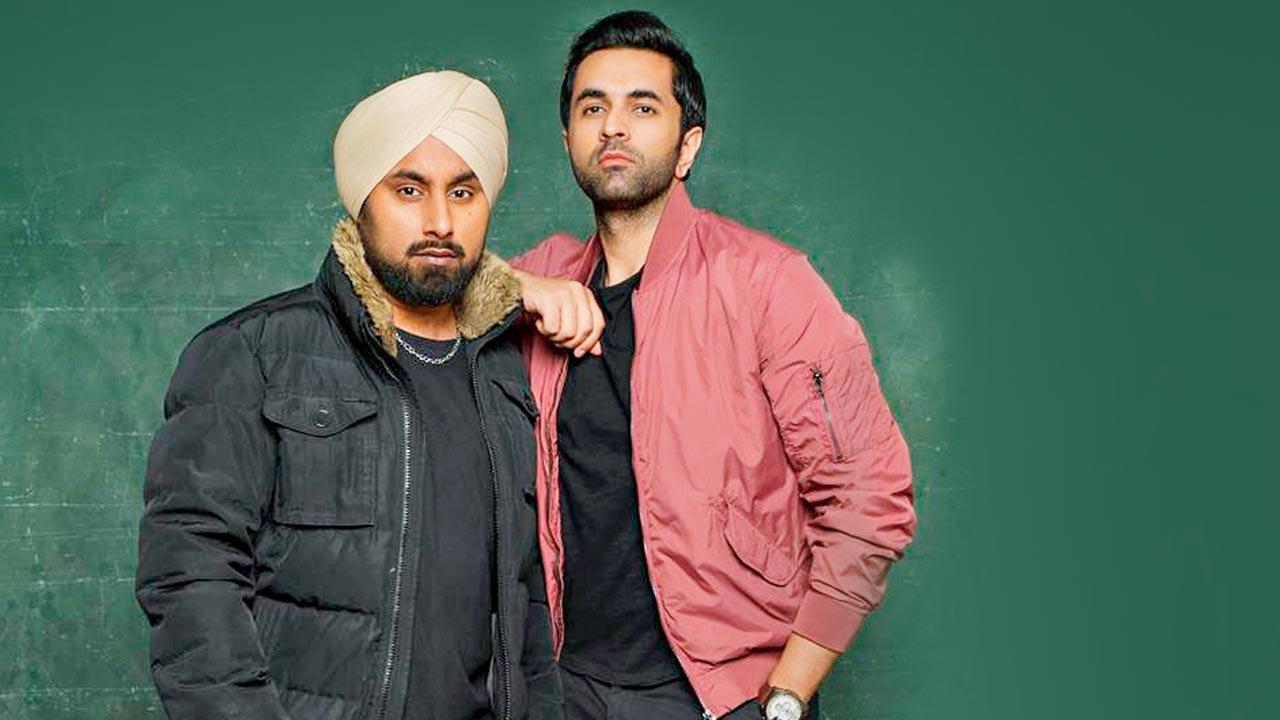
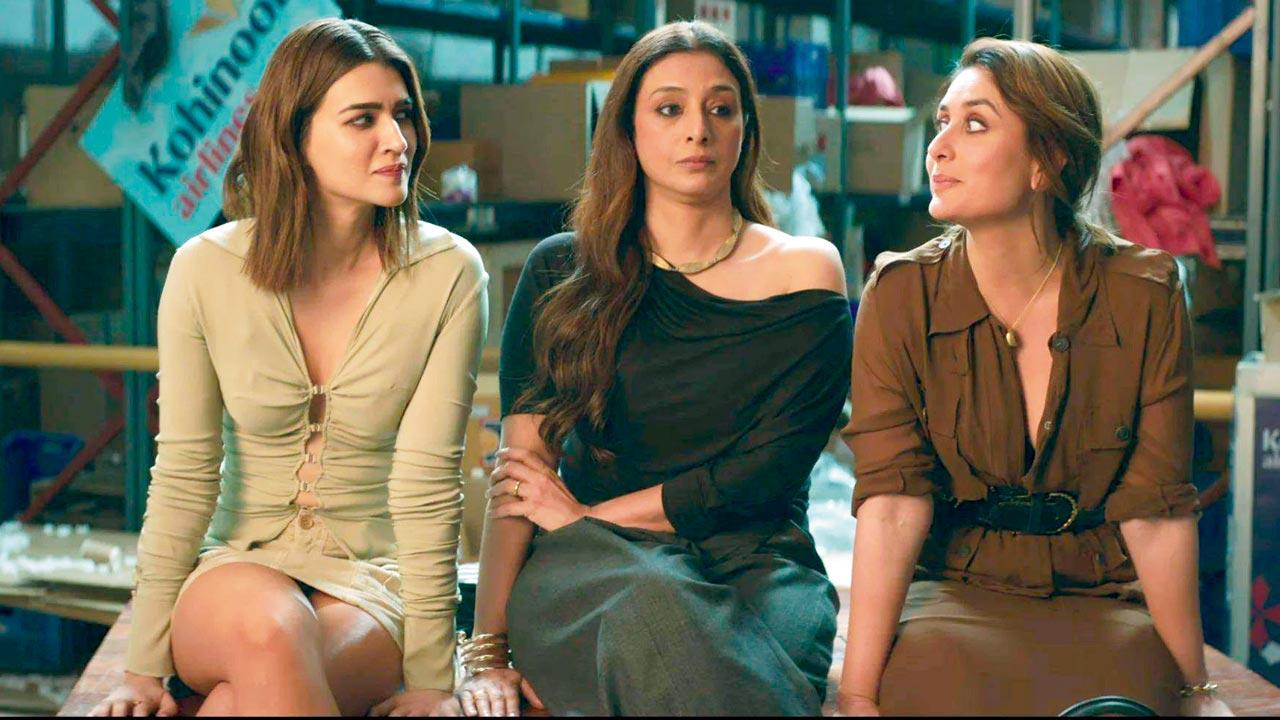
Having crafted one original and two re-imagined numbers for Crew, composer duo Akshay & IP Singh on the liberties they enjoyed while working on the Tabu, Kareena and Kriti starrer
Sonia Lulla (MID-DAY; March 26, 2024)
Rendered by B Praak and Asees Kaur, Akshay & IP Singh’s composition Dar Ba Dar was a track safely guarded by Rhea Kapoor who admired it when she first heard it, several years ago. It wasn’t until Crew came along that the song found a suitable home.
“Rhea, who had been listening to it since we first played it for her, contacted us to use it for this film,” recalls Akshay of the Friday release, adding, “There was no script that demanded this song before Crew, but when this was made, the song was a fitting [addition]. She wanted us to see the film so that we could make some minor tweaks for it to fit the story, and that’s how this number came about,” says Akshay, who calls the track “special” given that it resulted from a casual jamming session with Singh.
“Until now, it was only [played] on the piano. But Rhea encouraged us by stating that even if it was a soft romantic number, we could venture into an electronic zone. We are glad that it plays at an integral part in the film,” he says of the Tabu, Kareena Kapoor Khan, and Kriti Sanon starrer.
When Rhea asked the musician duo to watch the film and introduce suitable tweaks to the track to make it “fit the movie”, the composers realized that there were “more situations” in the film to which they could contribute their skills.
“We went through the catalogue of the [music label] and arrived at two past numbers that we could re-imagine,” says Singh, as Akshay adds, “In the film, [some characters] are seen smuggling gold. That’s why we zeroed in on Sona Kitna Sona. Similarly, Choli Ke Peeche was selected for another appropriate situation.”
Credits have been retained for the original singers of Choli Ke Peeche, including Ila Arun and Alka Yagnik. “We know remakes are not appreciated, and that’s why we call them reimagined numbers—because, apart from the hook line, it’s like a fresh composition. We’ve retained the original integrity. There’s a reason why a song was loved. If we do something wrong, we’ll [invite criticism]. So, the songs are like the originals, and we’ve kept the original vocals of Ila ji and Alka ji. Sonically, though, it has a contemporary treatment,” says Akshay.
Singh adds, “We wanted to retain the song’s legacy, flavours, and essence, and add our tadka to it. We jammed along and came up with the Punjabi and hip-hop bits.”
Given that Diljit Dosanjh features in the offering, approaching him to render this new version was a no-brainer. “Diljit usually sings on a high scale. Here, we made him sing on a low scale. So, while this is not typically his sound, [it is enjoyable]. We had 30 minutes [to record it], and he gave us everything we needed.”
30 Years of Khalnayak: Choli Ke Peeche was mischievous, but nothing vulgar-Alka Yagnik
8:45 AM
Samarth Goyal (HINDUSTAN TIMES; August 6, 2023)
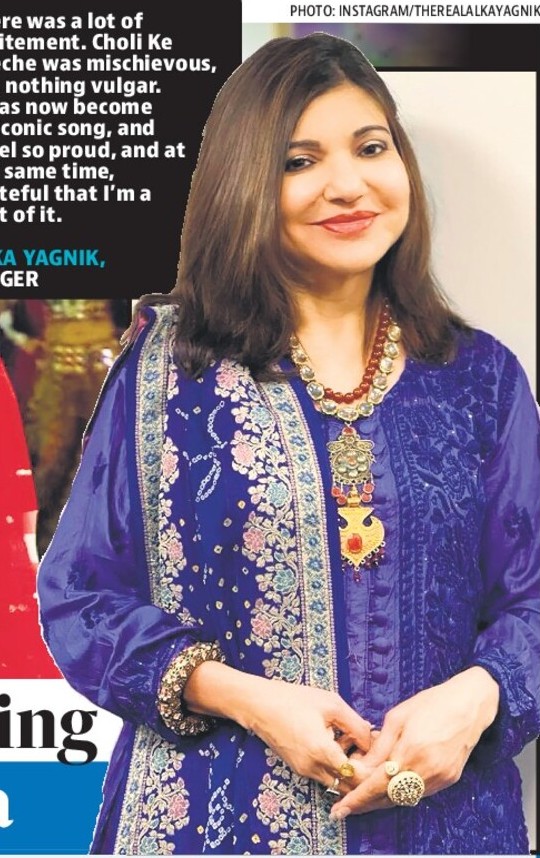
It’s three decades to the release of the iconic drama Khal Nayak today but the one thing that continues to resonate with audiences even today is the song Choli Ke Peeche. Reminiscing about her experience of singing the song, singer Alka Yagnik says she “never thought it would become such a massive hit”.
Revealing that she wasn’t fully convinced about the song initially because of its lyrics that she found a “little strange”, the singer adds, “When I went to rehearse, they gave me only my lines, not Ila ji’s (singer Ila Arun). I only read, ‘Choli mein dil hai mera.’ I wasn’t aware of the other lines and it was only later that I discovered them.”
She says the recording process was quite unique, which only contributed to its charm. “We used to do live recordings. Along with composers Laxmikant-Pyarelal, (lyricist) Anand Bakshi ji and Ila ji, we worked on reacting to the lines. It ended up sounding like a playful conversation between two sisters or two female friends,” she says.
The 57-year-old admits that the song had a “little naughtiness”, and being someone “extremely shy”, she had her inhibitions. “I was still new. Ila ji really helped me in making the song memorable and enjoyable,” recalls Yagnik.
She signs off, “There was a lot of excitement. Choli Ke Peeche was mischievous, but nothing vulgar. It has now become an iconic song, and I feel so proud, and at the same time, grateful that I’m a part of it.”
25 Years of Ghulam: Rani Mukerji was asked to laugh the Aati Kya Khandala way wherever she went-Alka Yagnik
9:59 AM
Soumya Vajpayee (HINDUSTAN TIMES; June 19, 2023)
A song from Ghulam (1998) that has, inarguably, gained cult status is Aati Kya Khandala. Sung by singer Alka Yagnik and actor Aamir Khan, the track appeals to people across generations even today. Yagnik says, “Aati Kya Khandala was one of a kind. Such tracks were not made those days. It was also very cutely picturised. The fact that Aamir sang it also added to its popularity.”
Actor Rani Mukerji’s laugh at the beginning of the song is remembered vividly. “The laugh definitely stood out,” says Yagnik, adding, “Ghulam was among Rani’s earliest films and my laugh gelled well with her face. In fact, she told me that wherever she went, people would tell her, ‘Aap ek baar has ke dikha dijiye, jaise aap uss gaane mein hasi hain’. So she had to always clarify, ‘It was not me, but Alka ji’.”
Yagnik admits that she was impressed with how Khan recorded Aati Kya Khandala: “I didn’t expect Aamir to sing so well. He was right in tune. Though we didn’t record it together, the way our portions blended was amazing.”
Calling working with composers Jatin-Lalit “a great experience, thanks to the comfort I always felt with them”, Yagnik says the song Aakhon Se Tune Ye Kya Keh Diya is also close to her heart. “It’s a beautiful one. All the songs from Ghulam are loved by audiences when I sing them during my stage shows,” she ends.

Royalty now a reality: Singers rejoice at landmark feat
8:43 AM
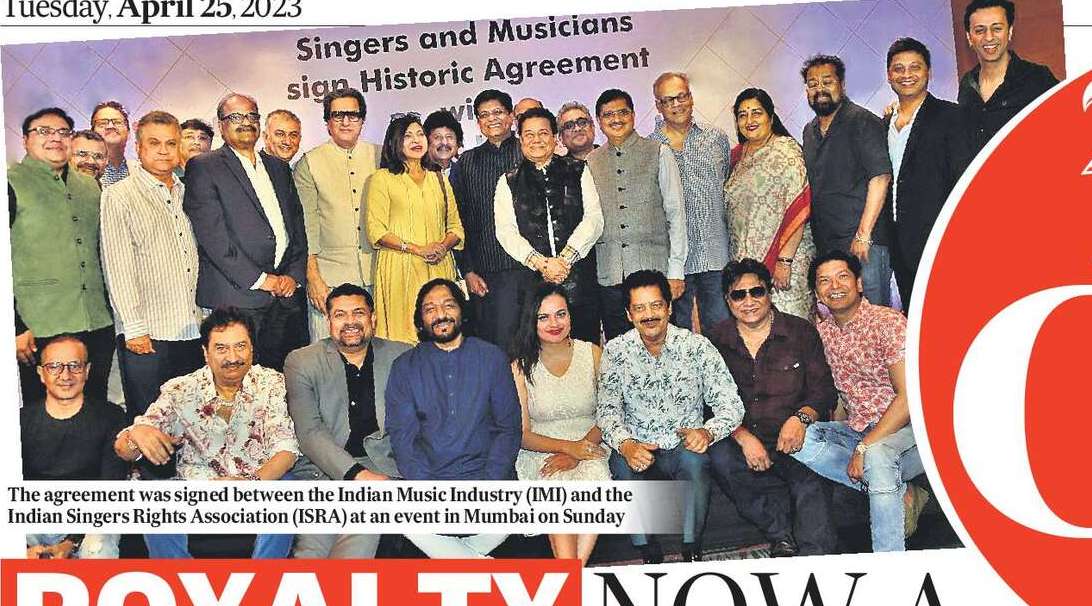
A crucial agreement signed recently has paved the way for artistes to be paid their dues
Rishabh Suri (HINDUSTAN TIMES; April 25, 2023)
In a glittering event held in Mumbai on Sunday, the Hindi music industry turned up in full force to witness a big feat for artistes. The Indian Music Industry (IMI) and the Indian Singers Rights Association (ISRA) signed an agreement, whereby all registered singers will now be paid royalty by music labels for the songs they have sung.
As per this, 25% of the collections of Phonographic Performance Ltd (PPL) — the governing body responsible for collecting and distributing royalty — will be paid to singers who are part of the ISRA. This also includes posthumous royalty paid to an artiste’s surviving family.
Union minister Piyush Goyal, who played a key role in facilitating the agreement, said on the occasion, “When this amendment was made in 2012, I was an MP of the opposition. But, in June 2019, when I took charge of the Ministry of Commerce and Industry, I came to know that nothing had been done in seven years. I felt that this was an injustice to those singers who had served the nation with their talent.”
Welcoming the agreement, singer Udit Narayan tells us, “Jiss din ka humein intezaar tha, woh ab nazdeek lag raha hai. We have struggled for this for so many years now. Chaliye, marne se pehle kam se kam royalty mil raha hai. I am very happy, thanks to ISRA and the ministry.”
For singer Alka Yagnik, this agreement has been no less than a dream. “This is a significant decision. We never really thought it would happen. This debate started in the early 1990s, so this dream has been there with me for 30 years. Pehle singers mein unity nahin thi, iss endeavour ke liye unity badhaai gayi,” she says.
How much royalty will be paid will be decided basis the number of songs of a singer played across radio stations, concerts, shows, etc. Sanjay Tandon, CEO of ISRA, informs that in India, radio stations, OTT and TV stations refuse to pay singers their dues: “Even after the 2012 amendment, where it was clear that radio stations playing a singer’s song will have to pay royalty, they (radio stations) ganged up and decided to not pay. They are people with big pockets, they expect us to take them to court, and we cannot fight them. It is a huge expense... People playing music at concerts and occasions — why do they want to play a singer’s song, but not pay them? This is why we took the initiative.”
Singer Shaan adds that the disagreement between singers and music labels has been a huge obstacle. “What they thought was fair, was not fair for us, and vice versa. A lot of credit goes to Anup Jalota ji (president, ISRA). He put that hand out and welcomed music companies towards us.”
As A P Dhillon gets flak for lip-syncing at a recent show, musicians share their views on the trend
8:45 AM

As A P Dhillon gets flak for lip-syncing at a recent show, musicians share their views on the trend; call it ‘criminal’
Rishabh Suri (HINDUSTAN TIMES; March 25, 2023)
Remember singer Justin Bieber’s 2017 gig in India or musician A P Dhillon’s performances at Lollapalooza India 2023 and more recently at the Women’s Premier League? Their acts left audiences fuming. Reason? The artistes were accused of lip-syncing at their respective shows.
Singer Armaan Malik’s recent tweet denouncing the trend of lip-syncing triggered reactions on social media. He wrote: “Sad to see that lip-syncing at a live concert has become a normal thing. Like c’mon, why is there zero effort? The worst part is some people don’t even lip sync and the let the track play as is while they “vibe”. Like is this a joke? Do you not care about your fans? (sic).”
Ask how fair is it for musicians to lip-sync on stage when music lovers buy tickets to see them sing live, and artistes unanimously criticize the trend. Singer Jasleen Royal, who returned from a concert tour along with actor Akshay Kumar recently, says, “I perform all my songs live. The fans pay to watch me sing on stage. There are so many things one does at live shows — talk, dance, jump... So, sometimes, you can go off-note too. I feel live rendition should be different from the original version.”
IT’S CRIMINAL
Singer Shaan says artistes like him invest a lot of effort in their shows, as they like to entertain the audience. He adds, “Thanks to technology, anyone can sing in the studio. The real test of a singer is when you sing live. If it’s a regular show and someone is lip-syncing, it’s criminal. Whether it’s a ticketed show or not, you should put in effort in your singing. If someone is not even lip-syncing and just ‘vibing’, what’s next? Kal ko main apna poster laga ke chala jaunga and my songs will be played on a recorder!”
ONLY FOR SOS
Singer Alka Yagnik feels one should take to lip-syncing only “if there is an issue with the singer’s voice”. She explains, “If the artiste has to take the stage because the show cannot be cancelled last-minute, lip-syncing can be an SOS, but not otherwise. Fans pay to see us perform live.”
Malik’s tweet also suggested that lip-syncing sets “a wrong precedent for the next generation”. Singer Amit Mishra says, “I have never lip-synced in any show yet. Since we, musicians, have such big bands, we can produce music live, with so many instrumentalists on stage.”
Songs should have soul and not be just gimmicks-Alka Yagnik
8:34 AM

Singer talks about being the most streamed artiste in 2022 with 15.3b streams, beating the big names
Preeti Atulkar (BOMBAY TIMES; February 5, 2023)
Having sung several blockbuster songs in various languages in her career spanning over four decades, Alka Yagnik is delighted to have achieved another milestone by becoming the most streamed artiste online in 2022. She has outpaced rapper Bad Bunny, Korean band BTS, Taylor Swift, and many other international music sensations. “I got very emotional when I heard the news,” shares the playback singer as she recollects her reaction.
“Seeing many renowned singers from various parts of the world featured in the list, I felt happy that I could do something for my country, in my own little way, as an Indian artiste. This also proves that millions of people across the world are listening to our music,” says Alka, who talks about her journey and the current music scenario.
‘LATA AND KISHORE ARE MY FAVOURITES’
While the whole world is listening to her, Alka listens to Lata Mangeshkar and Kishore Kumar. “They are my all-time favourites. So, when I am listening to music, these legends are always with me,” she says.
Reflecting on her journey so far, she mentions that she wasn’t as ambitious as a child, but her mother, Shubha Yagnik, who was a classical singer, trained her. “My parents wanted me to be out there so the world could listen to me, and, gradually, I started to enjoy my work. My parents were my strong pillars and encouraged me throughout my journey. I wish they were alive today.”
‘THE SOUL IN SONGS HAS GONE MISSING’
Sharing her views on changing trends in the world of music, she says she appreciates how Indian artistes are open to experimentation. “We have also become more technically advanced with time. Sound gimmicks and rhythm patterns are in use now. But, I feel that, somewhere, the soul in songs has gone missing, and it needs to be brought back. Songs today should have substance, intensity, and more lyrical value.”
‘DIFFICULT TO HAVE A STRONG REPERTOIRE TODAY’
Pointing out the reason why newer singers aren’t able to build a good body of work, she says, “There are so many talented music artistes today. But, not many are able to sustain themselves. The primary reason for this is the fact that work is getting divided somewhere. It is getting difficult to have a strong repertoire of songs. Artists don’t have the kind of body of work that my contemporaries and I had back in the 90s.”
DID YOU KNOW?
Alka Yagnik was only 14 when she sang her first playback song for the film Payal Ki Jhankaar in 1980.
ALKA’S STELLAR CAREER
* 40 years – a long career that started in the 80s
* 8,000 songs sung in various Indian languages
* 20 tracks featured in BBC’s list of top 40 Bollywood soundtracks of all-time
* 331 weeks on the chart with 371 million views
* 42 million streams daily on an average in 2022
* 17 billion streams in 2021
* 16.6 billion streams in 2020
Lalit Pandit ropes in industry veterans for upcoming concert that celebrate his best hits across decades
8:08 AM
Sonia Lulla (MID-DAY; September 12, 2022)
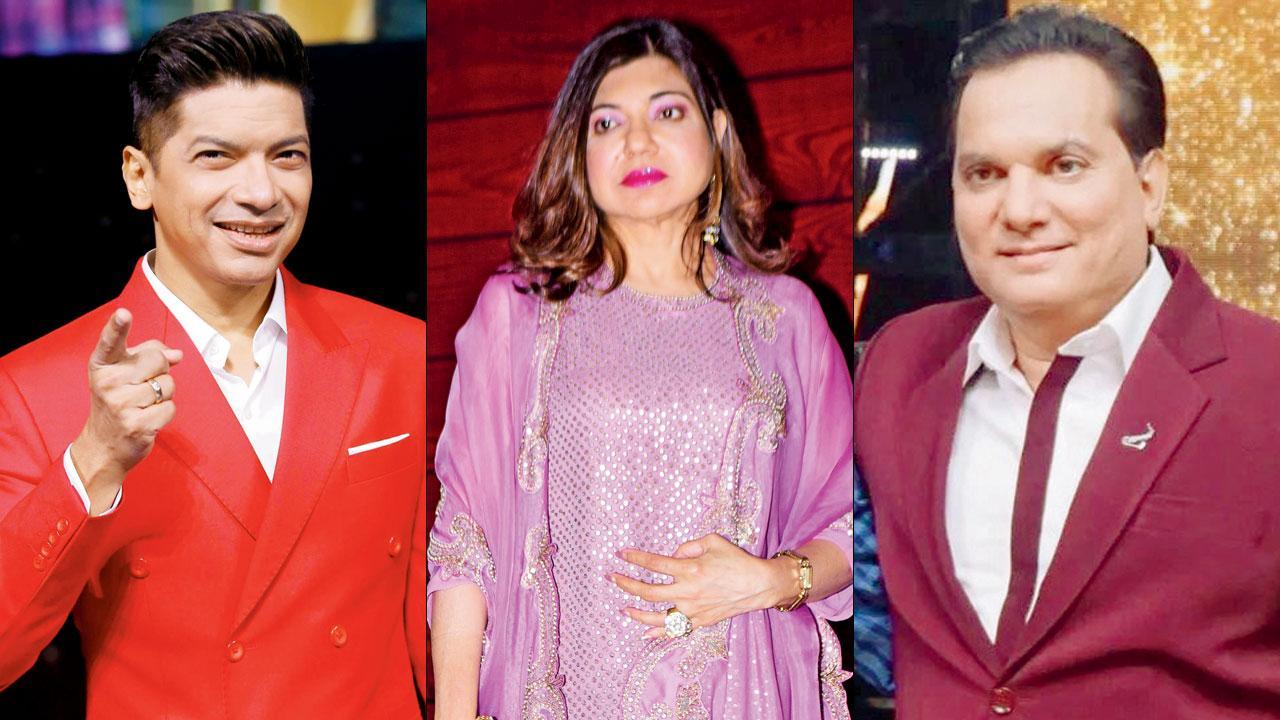
On September 23, Lalit Pandit is set to bring veterans of the Bollywood music industry for a concert that celebrates his, and brother Jatin’s work. Set to be held at Shanmukhananda Hall, the show will host performances by Abhijeet Bhattacharya, Shaan, Sadhna Sargam, and Alka Yagnik, among others.
“We had wanted to make this a yearly celebration, but then the pandemic struck. The singers will come together to perform the songs, which have been some of the country’s most iconic numbers. We will render songs from Dilwale Dulhania Le Jayenge, Jo Jeeta Wohi Sikandar, Sarfarosh, Kabhi Khushi Kabhie Gham, and Khamoshi, among others. The singers who sang the originals will sing the songs at the concert too,” says the composer, adding that the concert marks another milestone for him.
“I have completed over 25 films as an independent artiste since I split from my brother [Jatin]. So, this is a reckoning of sorts that life has moved on.”
Given that the numbers are as iconic as they are, Pandit says he isn’t tweaking the melody substantially, but will add nuances, and change the orchestration so as to surprise the audience. “People had been writing to me, asking for [a concert that celebrates] our eternal hits. I will conduct an orchestra, my sister Vijayata will be part of it, and so will my sons. My elder son, Rohaansh, who already made his debut with the song, Say No To War, will be part of it, as will my younger son Abeer, who is trained in the guitar and drums. Both of them are prolific musicians and composers who have joined me for this venture.”
About his time spent as a solo composer in the recent past, Pandit says he has noticed significant change in the industry’s working methods that tend to be restrictive for composers. “I don’t think music gets as much appreciation today. Of the albums that I have heard of late, I may have liked one or two numbers, but not the full soundtrack. And that should not be the case. Directors should take initiatives and give freedom to composers, because they are talented. Composers are not being trusted. And that’s why you end up with only one or two [good] songs, and then seek remixes.”
I don’t think I had seen a girl expose herself with so much confidence as Madhuri Dixit did in Ek Do Teen-Divya Unny
8:53 AM

It’s possibly the only Hindi film song to have a movie of its own. Madhuri’s Ek Do Teen inspires a young female director to delve into the track’s power of emancipation
Aastha Atray Banan (MID-DAY; March 13, 2022)
The lyrics of one of Bollywood’s most famous item numbers, Ek Do Teen, started off as “dummy text”. N Chandra, who directed and produced the super-hit Tezaab in 1988, shared an old Koli folk ditty with the film’s music composers Laxmikant Pyarelal which went, “Ding dong ding”. The legendary duo created a melody with dummy lyrics that went, “Ek Do Teen chaar paanch chhe saat aath nau...”, and lyricist Javid Akhtar took over, to make it a song that spoke about a young woman tired of waiting for her lover. It was Dixit’s first mega hit, and possibly the beginning of the item number trend as we know it. Dixit, as Mohini, danced on stage, choreographed by late Saroj Khan, in a glittery pink, one-shoulder crop top, matching mini skirt. And history was made.
Mumbai-based journalist-turned filmmaker Divya Unny has drawn inspiration from the song 34 years later with her 12-minute short film, Dancing Queen. The film’s protagonist Madhu echoes Unny’s love for the song, which she first heard when she was nine, in 1995. She was a kid growing up in the suburb of Mulund, and attended a convent school where Bollywood music wasn’t encouraged.
She now sits at her Lokhandwala home with her cat Tara, and husband Somesh Saha, remembering the time. “I was very proper, except on Annual Day when we’d let go. Every Annual Day, I have danced only to Madhuri’s songs, especially Ek Do Teen. It became such a powerful image—I don’t think I had seen a girl expose herself with so much confidence as she did in that picturisation. It created a distinct live audience vibe... you know, how the crowd roars, ‘Mohini, Mohini!’ We replicated that at school. Even the nuns couldn’t eventually help dance.”
It was her mother, Bhamini, who would dress Unny, put on a bit of glitter make-up and gently nudge her on to the stage from the wings. “My mother came to Mumbai when she was 17, and gave up being the Bharatnatyam dancer she was back in Kerala. But she encouraged both of us [daughters] to do what we liked. She wanted this for me, and told me to go fly with my feet. It was like I was carrying her dream forward.”
In 2018, Unny released her first film titled, Her First Time, about a girl’s first menstrual period, and her relationship with her mother. Her latest short also hinges on the mother-daughter bond, and a young girl’s fascination with Dixit and the song.
“When Madhuri was on stage or screen, she was fearless with her body, and expressions. Her dance became a common language of communication among those who loved her. We would imitate her moves, feel like we had achieved something! Ek Do Teen was the beginning of my fan girl time, and the reason I chose it as the focus of this film,” she says.
The track journeys through the film as Madhu transforms from the kid and teen dancing with abandon at home to the TV set, pressured into marriage at 17 and breaking down on her wedding day when the speakers blare the track, to once again finding happiness in it as she and her daughter in turn enjoy it years later. “The song has meant different things to me as I’ve grown older, as it does to Madhu. I had a different idea of romance when I first heard it.”
Saha, who has produced, edited and composed for films, says that when Unny first discussed the idea with him, he discouraged her because of copyright claim challenges. “The movie is now available on YouTube for free, and can’t be monetised, as T-series holds the copyright to the song, and the price for it would exceed the entire film’s budget,” says Saha, who composed an original score for the movie. “I studied in Shillong, so Bollywood wasn’t big for me, but the song grew on me as I heard it. When Divya broke down the lyrics for me, I sort of saw how she would build her movie around it.”
Aayushi Lahiri, who plays Madhu discusses the crux of the short—girls abandoning their dreams when under societal pressures. “When I danced on the song, I felt like I was the character, I could see Madhu in every girl. It’s such a bright song, it urges to you to dance, fly.”
Madhu lip syncs in a cluttered bedroom to Alka Yagnik’s voice. The playback singer, who has a habit of writing the lyrics down before singing, admits she was initially perplexed. Yagnik tells mid-day, “I thought, this is just counting.”
It was then that composer Laxmikant Kudalkar stepped in, and gave Yagnik a half smile. “He urged me to continue. When I wrote all the lines down, I began to get excited. It was a one-of-a-kind song. Never before was a item song so poetic, and light. Ek Do Teen is part of every film-loving Indian’s life because it’s so catchy. Of course, because it was a dance number, little girls also easily caught on to it.”
Despite a hugely successful career, she admits the song is the biggest landmark in her professional life, and there isn’t a concert that can wrap up without the audience asking for it. “The lyrics that progress from the first day of the month to the end was a brilliant idea by Javed saab, as was the orchestration by Pyarelal ji. Madhuri’s performance added the emotion to every little nuance of the singing. In the end, it was team work,” says Yagnik, who watched Dancing Queen and dropped Unny a line about how much “I loved it”.
The director hopes more women will watch it and feel inspired. “It’s an ode to mothers and daughters, and of course, it’s meant to inspire young girls today, who have so many more platforms than we did to do whatever they want.”
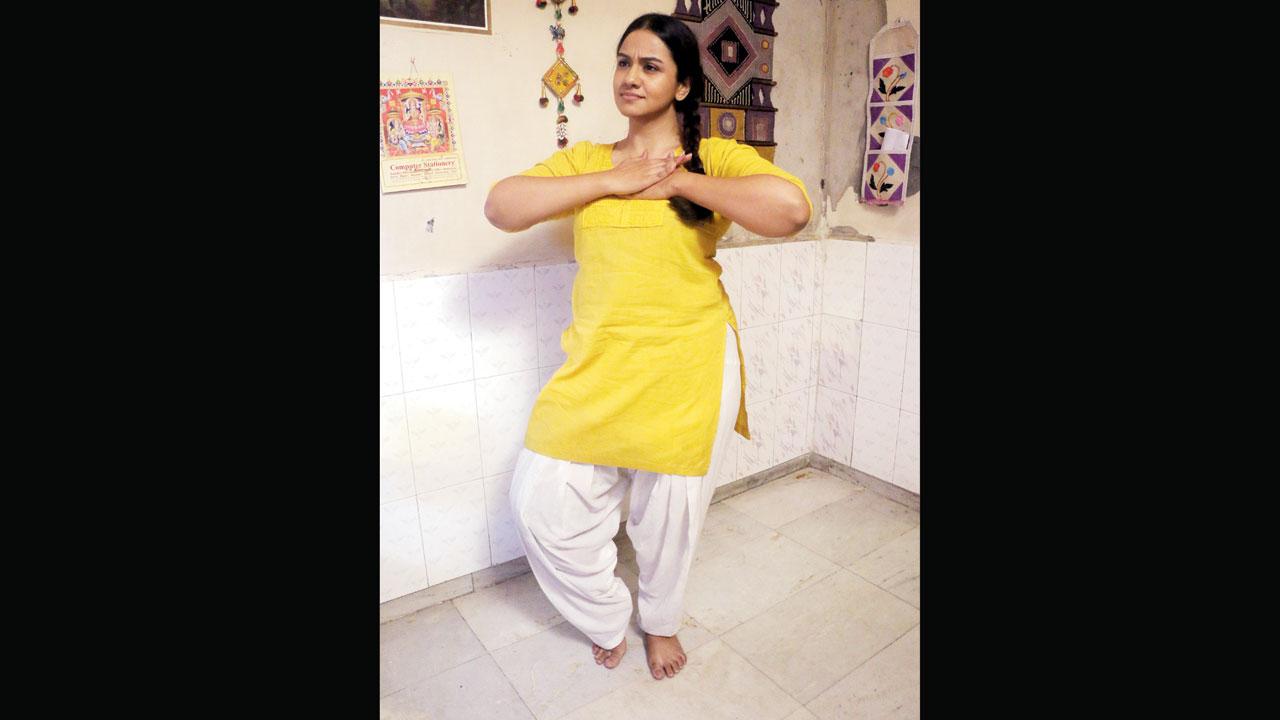
Ayushi Lahiri, who plays Madhu in Dancing Queen, believes her character represents almost every young, urban Indian girl at the time
Viju Shah reveals the story behind the sizzling rain song 'Tip Tip Barsa Paani'
8:14 AM

As told to Sonam Joshi (THE TIMES OF INDIA; July 18, 2021)

Finally, he told me to play it one more time and suddenly came up with the line ‘Tip Tip Barsa Paani’. The thing was once Bakshi sahab got the first line, the entire song would be over in 10-15 minutes. When I would play a tune for Bakshi sahab, I would write some dummy lyrics just to give him a feel. The only line he kept from my dummy lyrics was the last one ‘Main Kya Karun’. I think he penned the other lines around it: ‘Teri yaad aayi toh jal utha mera bheega badan, ab tu hi bata o sajan main kya karun...’
It was only after he came up with this line that it turned out to be a rain song and (director) Rajiv Rai thought of picturising it that way. In those times, rain songs were very popular, maybe because of the dance and the sensual element. Take Mr India’s ‘Kaante Nahin Kat Te’, for instance. But the song also has to have some beat. If ‘Tip tip’ only had visuals, why would people still listen to it?
Nowadays, there are much fewer rain songs in films. Similarly, there have been no mujras and qawwalis for many years, maybe because youngsters are not open to that. Everyone wants to play safe, and everything is either Punjabi or rap. Today’s directors say they want “halke phulke words jo logo ko samajh aaye” and insist on some English words. But I think people will listen to a good track.
Everything that you hear in ‘Tip Tip’ — even the tabla — was electronic, created with 12 synthesisers. The only acoustic element came from the violin. We had first tried this approach of going all out with electronic in Tridev in 1989, just to give it a new sound.
Today, even I can’t recreate the opening sound of Tang Nanana Tang Nanana — that just happened and is the life behind the song. It is what people remember. After I recorded it in 1993, many producers would demand this same sound but even I didn’t know what the combination was. If I hear it and try to analyse it, I may come close, but it wouldn’t be identical.
Honestly, I never expected it would still be playing after 27 years. It has been remixed so many times, with another one in a forthcoming film. But it is only the basic arrangement that these remixes change. The singing is nowhere close to Alka (Yagnik) and Udit’s (Narayan).
Shilpa Shetty remakes Chura Ke Dil Mera; sparks debate among fans
8:18 AM

The recreation of this iconic track from the 1994 film Main Khiladi Tu Anari has die hard fans questioning why is there even a need for such endeavours
Rishabh Suri (HINDUSTAN TIMES; July 7, 2021)
Remaking old classics is a trend which refuses to die down. And the latest to join the list is Chura Ke Dil Mera, which featured in the 1994 Akshay Kumar-starrer Main Khiladi Tu Anari. Filmed on Kumar and Shilpa Shetty Kundra, the song has been a favourite for decades, and has now been recreated by the original composer, Anu Malik for Hungama 2.
Taking over the vocals are Benny Dayal and Malik’s daughter Anmol. Fans, however, are not pleased with it.
Ever since the song dropped on Tuesday, social media has been abuzz with people missing the original singers Kumar Sanu and Alka Yagnik.
“#ChuraKeDilMera is one of my fav 90s songs... STOP ruining 90s classics... nothing can bring the old charm back... (sic),” wrote a Twitter user. “They Couldn’t Match the 1% of the Original Song... don’t spoil the old songs please” wrote another.
Many liked Kundra’s avatar, but missed Kumar. Meezaan, actor Jaaved Jaffery’s son, has stepped in his shoes.
When we reached out to Sanu and Yagnik to know their take, the former tells us, “Mujhe naya wala sunke bauhaut achha laga. I didn’t know it was being recreated.” Yagnik, too, says she did not know about this new version coming out. “It sounds cute, very different from the original,” she adds.
People who have been in the music world for long are not too pleased with this trend. Lyricist Sameer, who has seen a lot of his songs such as Ankhiyon Se Goli Maare and Dilbar be recreated, says, “The question is not about recreation, it is about not destroying the originality. Try not to disturb the basic structure. If there is a song Lata Mangeshkar ji has sung, and you take a new singer (for recreation); what are you doing? You will ruin the song.”
Singer Abhijeet adds that he liked Anmol’s voice, but is not in favour of old songs being touched. “The original music director recreated it. I won’t say this is a good attempt, but gaali mile ya tareef, it is for the original composer. In this song, the male voice dominates, that has been changed. I didn’t like it. Logon ke dimaag mein original baitha hua hai,” he asserts.

Pallavi Joshi to host an indoor live music concert to collect funds for Covid-19 relief
8:00 AM
Mohar Basu (MID-DAY; May 29, 2021)
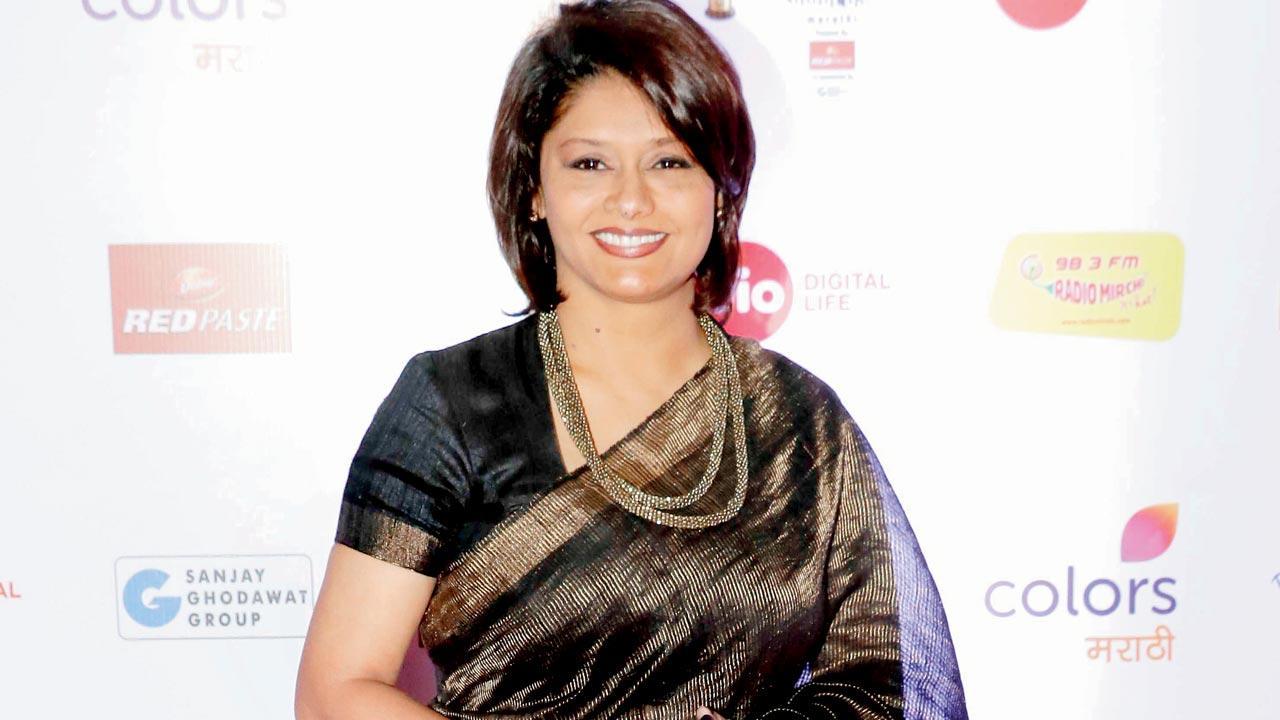
The entertainment industry has gathered again to do their bit for Coronavirus relief. While several have donated their time, money and social media space to the cause, Pallavi Joshi is set to host an indoor live music concert to collect funds. “Whenever the country has faced trials, we, as a society, have stepped up to help each other,” says the actor, who will be hosting singers Sonu Nigam, Talat Aziz, Pankaj Udhas, Hariharan, Prasoon Joshi, Alka Yagnik, Papon, Daler Mehandi, Babul Supriyo, among others for the music event called Ek Saath-India Will Rise Again, on June 5.
In the face of tragedy, Joshi asserts that the film industry has always come forward to help people. “When I was a kid, I remember actors — Sunil Dutt, Balraj Sahni, Amitabh Bachchan, Dharmendra, Shashi Kapoor — everyone had take rallies on streets to collect money to help drought-affected villages. The second wave has been devastating and we want to help orphans, daily-wage workers, women widowed, migrants, refugees and everyone who has lost their means to livelihood [during the pandemic].”
We have to be masked till the camera rolls-Maniesh Paul
8:23 AM

Maniesh Paul, the host of a kiddy talent hunt contest, explains the new normal
Himesh Mankad (MUMBAI MIRROR; July 14, 2020)
 Over the weekend, Maniesh Paul returned to the sets as the host of Zee TV’s singing reality show, Sa Re Ga Ma Pa: L'il Champs. The actor admitted it was wonderful to be back in action, even though a lot has changed. “It’s not about the warm welcomes, hugs and handshakes anymore,” he pointed out.
Prod him on changes in the process of shooting and he informs that there are two-three entry points and they have to go through the sanitisation tunnel every time. “We have a doctor to check our oxygen levels and temperature at the entrance. One has to wash hands before entering the vanity van, as it’s sanitised before use,” Maniesh reveals, adding that it is mandatory for the team of judges and hosts to wear PPE kits all the time. “And we have to be masked until the camera rolls. The saddest part for me is that there’s no live audience anymore.”
The show is judged by Alka Yagnik, Himesh Reshammiya and Javed Ali. In the opening episode, the makers decided to pay tribute to real-life Coronavirus warriors. Maniesh shares, “We had an ambulance driver who had not gone home for the last three months and a doctor who had lost her doctor-husband to the dreaded virus. A couple donated all the money they had saved for their wedding to procure oxygen machines and beds. It’s inspiring to have such ‘warriors’ on the set. We all should be out there helping people.”
Being the host, it was difficult for Maniesh to maintain social distancing. He points out that he has the habit of meeting contestants with warmth but has to keep his jhappis in check now.
He will be shooting every week and while he admits they were all a little scared earlier, he is reassured now that all the precautions are being taken. “It’s not easy being on the set right now but the show must go on. I was happy that now some of my crew members will be able to earn a steady income again. I hope I can spread some happiness,” he signs off on a positive note.
Himesh Reshammiya and Javed Ali replace Kumar Sanu, Udit Narayan on Sa Re Ga Ma Pa Li'l Champs
4:22 PM

Musicians filling in for Kumar Sanu, Udit Narayan on show
Akash Bhatnagar (MUMBAI MIRROR; July 7, 2020)
 In February, Zee TV returned with another season of Sa Re Ga Ma Pa Li’l Champs with the ’90s trio of Alka Yagnik, Kumar Sanu and Udit Narayan as judges. Within a month of its launch, the show came to an abrupt halt due to the Coronavirus pandemic. Now, its team is all set to return to work on July 10, but with new faces on the jury.
Turns out, Sanu and Narayan had to opt out of the show due to other work commitments. Now, Himesh Reshammiya and Javed Ali will be joining Yagnik on the panel.
Javed, who has been a jury member earlier on the 2011 and 2017 editions of Li’l Champs, is excited to return to his “second family”. “Sanu ji and Udit ji are legends with their own signature styles, I have mine. I am emotional about kids, so I will try my best not to upset them. Alka ji, Himesh and I have an amazing chemistry and being a part of this trio will be magical,” promises the singer, adding that the safety of the child participants while working during the pandemic will be of prime concern. “Zee has a legacy to carry forward, so I have confidence in their preparations. It would be a new experience for all of us.”
 Javed believes that with no audience present during the shoot, the bond between judges and contestants will strengthen. “They will be singing just for us. Our instant reaction will be the key in encouraging them. So, we’ll be more expressive and find ways to express appreciation to ensure that they feel as much warmth as a hug from us would feel,” he explains.
 Himesh, who had co-judged the 2017 edition of the show with Javed and was recently a part of the silver jubilee celebrations, is equally excited to be back. “My association with Zee goes back 20 years, and this is like homecoming for me. I am looking forward to a fresh start with the current season post the lockdown and hope we receive a great response,” he says, adding that he is taking his role as a mentor very seriously. “I would like to nurture the kids’ aspirations and dreams and hope to lay the groundwork for them to enhance their talent.”
Subscribe to:
Posts (Atom)