Showing posts with label Akshaye Rathi. Show all posts
Showing posts with label Akshaye Rathi. Show all posts
2026 January to June: Bollywood finds its mojo again
8:44 AM

Vinay MR Mishra (BOMBAY TIMES; July 4, 2026)
Just six months ago, Bollywood was staring at another uncertain year. Today, the mood is noticeably brighter. Driven by the record-smashing success of Dhurandhar The Revenge, strong performances from the war action film Border 2, followed by the horror comedy Bhooth Bangla, and now the sleeper hit Main Vaapas Aaunga, the Hindi film industry finally has something it has lacked for years: momentum.
Yet beneath the celebrations lies a reality check. While a handful of films have soared, many others have struggled to survive, making 2026 a story so far, one of spectacular highs and equally visible lows. As trade analyst Taran Adarsh puts it, "It has been a case of kam khushi zyada gham. We've had successes, but very few that you can count on your fingertips."
'The biggest hit of 2026 is the word of mouth’
If the first half of 2026 proved anything, it is that Bollywood's audience has become more discerning than ever. Films that connected emotionally and generated strong word-of-mouth continued to grow beyond their opening weekend. Films that relied solely on star value found the road much tougher.
"The biggest trend in the first half of 2026 was the power of word-of-mouth," says trade analyst Ramesh Bala. "Films like Main Vaapas Aaunga, Border 2, Bhooth Bangla, and Dhurandhar The Revenge sustained because audiences connected with them."
Akkshay Rathie, Director - Ashirwad Theatres Pvt Ltd, adds, "To see Main Vaapas Aaunga open small but grow day by day purely on the merits of word-of-mouth is extremely encouraging.”
Novelty is winning. Formulas aren't
One of the clearest shifts this year has been the audience's appetite for fresh storytelling. "I don't think audiences are rewarding the repetition of a genre or style that has worked before. What people really appreciate is novelty and bravery from filmmakers. The repetition and herd mentality of trying to replicate success is something that we should put well behind us and we should have filmmakers staying true to their conviction to the stories that they really want to tell and to genres that come very naturally to them. And the more we see that happening, the more successful we'll be as an industry at the box office," says Rathi.
The Dhurandhar Effect
The biggest winner of the year was undoubtedly Dhurandhar The Revenge, which shattered box-office records and redefined the upper ceiling of Hindi cinema's theatrical potential.
Rathi shares, "One movie that really towers above every other movie in the last six months is of course Dhurandhar The Revenge. The box-office collections that we witnessed were truly historic. We realized that the glass ceiling we thought existed at the Rs. 500-600 crore benchmark has been shattered. The potential of the Hindi-speaking market is humongous."
He adds, "I hope more films attempt to build the intrinsic value that allows them to go closer to those numbers."
'Average films won't survive'
While the industry celebrates its winners, films like O'Romeo, which was highly anticipated due to the reunion of Kaminey duo Shahid Kapoor and Vishal Bhardwaj, and Chand Mera Dil starring Ananya Panday and Lakshya that looked promising didn’t quite shine at the box office.
While Hai Jawani Toh Ishq Hona Hai may have recovered its budget, the film's poor reviews and underwhelming box office performance have left a lingering sense of disappointment. Do Deewane Seher Mein, won appreciation from critics and the audience, but the film couldn’t draw in the crowds. Ikkis, Ek Din and Pati Patni Aur Woh Do also failed to attract the kind of audience they were expected to.
"The gap between films that work and films that don't has become very evident," says Taran Adarsh. Ramesh Bala echoes the concern. "Audiences have become far more selective, making it difficult for average films to survive."
The second half could be even bigger
The industry now turns its attention to a packed second-half slate. From King and Toxic, Dhamaal 4 and Ramayana, the coming months are loaded with franchise titles, star vehicles and large-scale spectacles.
"With the kind of movies lined up in the second half, 2026 is well on its way to being an iconic year," says Rathi.
Bala adds, "If these films live up to expectations, the second half could be even stronger than the first."
-------------------------------
Rishabh Suri (HINDUSTAN TIMES; July 2, 2026)
The first half of 2026 has delivered a much-needed boost to the film industry, with audiences backing films across genres, languages and budgets. Strong theatrical footfalls, breakout regional successes and the return of comedy have helped restore confidence in the business after a volatile few years.
“For the industry, admissions are up by at least 10%, and the box office, our estimate is, would be up by at least 16-17%, if not more,” says Kamal Gianchandani, president of the Multiplex Association of India.
What worked
From patriotic dramas and comedies to regional cinema, the year’s biggest successes came from varied genres. Sunny Deol’s Border 2 emerged as one of the biggest hits of the year, while Dhurandhar The Revenge became the highest-grossing Hindi film of 2026 so far.
Comedy also found favour with audiences. Akshay Kumar’s reunion with Priyadarshan in Bhooth Bangla paid off at the box office, while his latest release, Welcome To The Jungle, has continued the momentum, netting over Rs. 80 crore within five days of its release.
For Devang Sampat, managing director, Cinepolis India, the biggest takeaway has been the diversity of successful films: “Dhurandhar The Revenge, Border 2, Bhooth Bangla all did well, but for me the real takeaway is how broad the success has been. The business has come from all kinds of films, across languages and across budgets, not just the big titles.”
One of the biggest surprises of the year has been Imtiaz Ali’s Main Vaapas Aaunga. Despite a modest opening, strong word of mouth helped the film steadily gain momentum and move towards hit status.
Reflecting on the film’s journey, Imtiaz had earlier told us, “It’s the audience who has embraced the film. Somewhere, the industry had started saying ki ‘Arre kuchh bhi halka phulka de do audience ko, chal jaayega, emotional mat do’. But the people proved this wrong.”
What didn’t
Yet, not every well-reviewed film translated into ticket sales. Vishal Bhardwaj’s O'Romeo, Ananya Panday and Lakshya’s Chand Mera Dil, Anurag Kashyap’s Bandar and Kangana Ranaut’s Bharat Bhhagya Viddhaata failed to generate the expected box-office momentum despite positive reviews and strong subjects.
Trade analyst Atul Mohan believes financial discipline is becoming just as important as content in determining a film’s fate. “The first half has been so far, so good. Like Akshay Kumar and Ranveer Singh, actors need to shoulder the responsibility of a film, and not burden it with their high fees,” he says.
The message from the first half of 2026 is clear: audiences are showing up for good stories, regardless of genre or budget. But they are also more selective than ever, making strong content and positive word-of-mouth Bollywood’s safest bets.
Kiara Advani, Sidharth Malhotra to clash at the box office in August last week
9:57 AM

After several delays, Toxic gets a new release date, which will see it clash with Sidharth Malhotra’s Vvan and several other films
Vinay MR Mishra (BOMBAY TIMES; June 22, 2026)
After months of speculation, the makers of Toxic: A Fairytale For Grown-Ups have finally locked a new release date. Headlined by Yash, also starring Kiara Advani, and directed by Geetu Mohandas, the pan-India action spectacle will now hit theatres worldwide on August 26.
While Toxic arrives on a Wednesday, coinciding with Onam and giving it a two-day head start before the weekend, it will still face competition at the box office. On August 28, three other films — Khosla Ka Ghosla 2, Shraddha Kapoor’s Eetha and Sidharth Malhotra’s Vvan — are currently slated to release, setting up one of the busiest weekends on the 2026 release calendar. Interestingly, if the films release as planned, real-life couple Sidharth and Kiara will see their films clash at the box office.
Toxic was originally slated for an earlier release before undergoing several date changes. Industry buzz linked one of the shifts to a crowded release calendar and a clash with Ranveer Singh’s Dhurandhar The Revenge, which eventually secured the March 19 release slot. Toxic was later set for a June 4 release, but Yash confirmed in April that the team needed more time to align its global distribution strategy and international partnerships ahead of its worldwide rollout.
Akkshay Rathie, Director, Ashirwad Theatres Pvt Ltd, believes the situation remains fluid and that producers may still rethink their release strategies. “Two films with the ability to create a significant impact across the length and breadth of India ideally shouldn’t arrive together because every stakeholder wants to optimize revenues. Toxic is undoubtedly the bigger pan-India film in terms of geographical reach. Eetha may have stronger relevance in Maharashtra and certain markets, but Toxic has the potential to perform across urban as well as rural India,” he says.
Rathie adds that the announcement has caught the industry off guard and could trigger further movement on the release calendar. “This announcement has come completely out of the blue. There is still time and everyone will do whatever it takes to protect the best interests of their respective films,” he explains.
Kamal Gianchandani, CEO, PVR, believes that even if the clash is not averted, four films can be accommodated. He shares, “Cinemas have enough and more capacity to accommodate three or more films, especially when the movies are varied in sizes. We’ll see what decision other producers take on their release dates, because they often go back to the drawing board and rethink their dates.”
Sameer Munshi, VP, Miraj Entertainment Ltd, adds, “From an exhibitor’s perspective, this is a good clash to have. A packed release calendar indicates confidence in the theatrical business and gives audiences more choice. If the content works, all films can find an audience, even though Toxic is likely to be the clear opening-weekend leader.”
‘All filmmakers want to showcase their work well’
Deepak Mishra, director of Vvan, confirms that the movie is set to release on August 28, on the occasion of Raksha Bandhan. On the clash, he says, “We are the same industry. As artistes, we all want to showcase our work well. Eventually, the audience is the king. My best wishes to the Toxic team.”
When asked if there is a possibility that Vvan could be pushed to another date, Mishra says, “That will be a call that the makers will take. I am only focused on my work.”
Is a Hollywood 'Obsession' sidelining Hindi releases?
2:59 PM

After filmmaker Anurag Kashyap claimed that Hollywood films are getting priority over Hindi films in theatres, trade experts weigh in on the impact on Indian releases
Akash Bhatnagar (HINDUSTAN TIMES; June 17, 2026)
The global success of the Hollywood horror film Obsession, which has reportedly earned 330 times its budget, has become a case study in world cinema. However, it has sparked mixed reactions within the Hindi film industry.
Filmmaker Anurag Kashyap recently expressed concern on his Instagram Stories that theatre chains are prioritizing Obsession over Hindi releases, including his film Bandar (released on June 5) and recent Friday releases such as Main Vaapas Aaunga, Governor, and others.
Trade analyst Komal Nahta, however, believes international films aren’t an impediment. He shares, “Only bad content is coming in the industry. Bandar is not doing well even otherwise, so the number of shows isn’t going to make a difference,” adding, “If in two shows, they can’t get houseful, what will they get in 20 shows?”
Trade analyst Atul Mohan adds that multiplex programming is largely driven by audience response. He says, “In a way, Anurag is right. Business is ruthless. If a film doesn’t do well in the first two days, they reduce the shows drastically, which doesn’t give time for word of mouth to spread. Hindi films deserve that time to grow.”
Film exhibitor Akshaye Rathi echoes the sentiment and says that the audience makes the ultimate decision. “If Main Vaapas Aaunga or any other film have very good occupancy levels, cinemas across the country would increase the number of shows, like they did for Haunted – Echoes Of The Past in the same week. So, it’s not about the theatres but what the audience decides,” he shares.
--------------------------------------------------
These are business-oriented decisions. There is a policy for encouraging local produce, and there should also be a policy for encouraging local cinema. But there are arguments on both sides of the matter, and can’t be compared.
- IMTIAZ ALI, DIRECTOR OF MAIN VAAPAS AAUNGA
--------------------------------------------------
Nothing is coming in the industry except bad content. If Anurag thinks it is because of Obsession that Bandar is not doing well, he should see the collections. Critical acclaim is not the same as the box office, and when we talk about competition, we talk about box office. So, Obsession is not acting as an impediment to the running of Indian films at all.
- KOMAL NAHTA, TRADE ANALYST
--------------------------------------------------
‘FOR EVERY DHURANDHAR, THERE WILL BE FIVE EXPENSIVE FILMS THAT WILL BOMB’
Rishabh Suri (HINDUSTAN TIMES; June 17, 2026)
For Indian films to not get enough attention from theatres, despite having good reviews, does not go down well with Anurag.
He tells us, “Films like Bandar and Main Vaapas Aaunga should get proper shows so that people can watch them, allowing word of mouth to build up. Then another problem is that there’s an audience that is getting used to seeing such films on OTT. So you’re building an audience only for event movies. But such films are so expensive, and the hit-and-miss ratio is huge. For every Dhurandhar, there will be five expensive films that will bomb.”
He emphasizes strategic show timings for smaller films too. He adds, “Bandar’s night shows were full. But who’s going to go watch Bandar at 9 am, when it is going to upset you for the rest of the day? There’s human psychology also involved.”
Salman Khan’s Maatrubhumi undergoes reshoots and Army consultations?
4:15 PM

Niharika Lal (BOMBAY TIMES; April 13, 2026)
The title of Salman Khan’s forthcoming war drama Battle Of Galwan was changed to Maatrubhumi last month. Salman had shared a new poster of the film with the revised title, writing, “May War Rest In Peace #Maatrubhumi.”
While there has been no official statement from the makers regarding the reason for the title change, industry speculation suggests that the decision may have followed discussions with authorities. Chinese state media outlet Global Times had previously accused the film of distorting facts following the release of its teaser.
Between the two titles, the film’s plot has reportedly been modified. “There have been industry discussions for months, but we are not aware of anything official. The release date has been announced, but there is still speculation about when the film will be in theatres,” says exhibitor and veteran business analyst Raj Bansal.
‘For a movie that has not had its script approved, if the ADGPI becomes aware of it, they get in touch with the producer’
There are also industry talks about the film facing several hurdles with the CBFC. Major (Retd) Sandeep Sangwan, who is also a defence consultant on films like Pippa, explains what could have happened.
“When there is a movie based on a battle or war, the script is submitted to the Additional Directorate General of Public Information, IHQ of MoD (Army) (ADGPI). Most major changes, if any, are suggested by the ADGPI, and producers incorporate them. The changes are suggested at the script stage, and then the movie moves into the production phase. In the post-production phase, when the movie is ready, a special screening is conducted for the ADGPI. If they find that further changes are required, they suggest them. For instance, with Sam Bahadur and Pippa, I am aware that a couple of changes were suggested by the ADGPI after screening, and the films were released after those changes were made.”
He further adds, “First, the title itself could have been an issue because even China does not officially name Galwan. Accurate locations or references are often avoided. In general, when a film deals with the Army, the CBFC asks producers to first get a go-ahead from the ADGPI. The CBFC only clears the film once ADGPI approval is in place. Now, for a movie that has not had its script approved, if the ADGPI becomes aware of it, they get in touch with the producer and ask for submission and changes.”
The makers and the ADGPI are yet to comment on the issue.
‘Any kind of wrong optics, involving a popular star like Salman, can have an impact’
Since the new title of Battle Of Galwan was announced, industry chatter suggests nearly 40% of the film is being reshot, with references to China removed and a fictional twist added.
Exhibitor and industry expert Akshaye Rathi says, “No statement has been issued by the makers of the film yet and we are only hearing from industry sources. Obviously, national interest is paramount. Any kind of wrong optics, especially involving a popular star like Salman Khan, can have an impact on how things are perceived by citizens of other countries or by the Chinese Embassy in India.”
Dhurandhar The Revenge marching towards beating Dangal to become India’s highest grosser
9:20 AM

With Dhurandhar 2 raking in Rs 440 cr over the opening weekend, trade says the film may beat Dangal to become Indian cinema’s highest grosser
Priyanka Sharma (MID-DAY; March 23, 2026)
Expectedly, ‘Dhurandhar The Revenge’ has taken the box office by storm. By the evening of March 22, the Ranveer Singh-starrer collected about Rs 440 crore, including its paid previews, in the domestic market. The film’s run is far from done. According to trade analyst Taran Adarsh, director Aditya Dhar’s action drama could cross the Rs. 1000 crore mark in domestic collections.
“Like the first part, ‘Dhurandhar 2’ has come like a tsunami. I am confident it will cross Rs 1000 crore in the domestic market. Many theatres are facing capacity issues where there are more people to watch the film [than shows]. The demand will spill over to Monday,” Adarsh told mid-day.
Given its unstoppable run, trade is buzzing with speculation that the movie could beat the worldwide collection of Aamir Khan’s ‘Dangal’ (2016) to become the biggest grosser of Indian cinema. “It cannot be ruled out right now,” said Adarsh.
However, sections of the audience have criticized the movie’s propagandist nature. Some also felt that it ran too long at three-hour-55-minutes.
About the polarizing reactions, exhibitor and trade analyst Akshaye Rathi said, “Whether it’s ‘Dhurandhar’, ‘Animal’ [2023], or ‘The Kashmir Files’ [2022], they wouldn’t have done that kind of business had those polarizing opinions not come into play. The more [the opinions are] polarized, the more it creates a debate and generates curiosity among people to see what the hype is all about.”
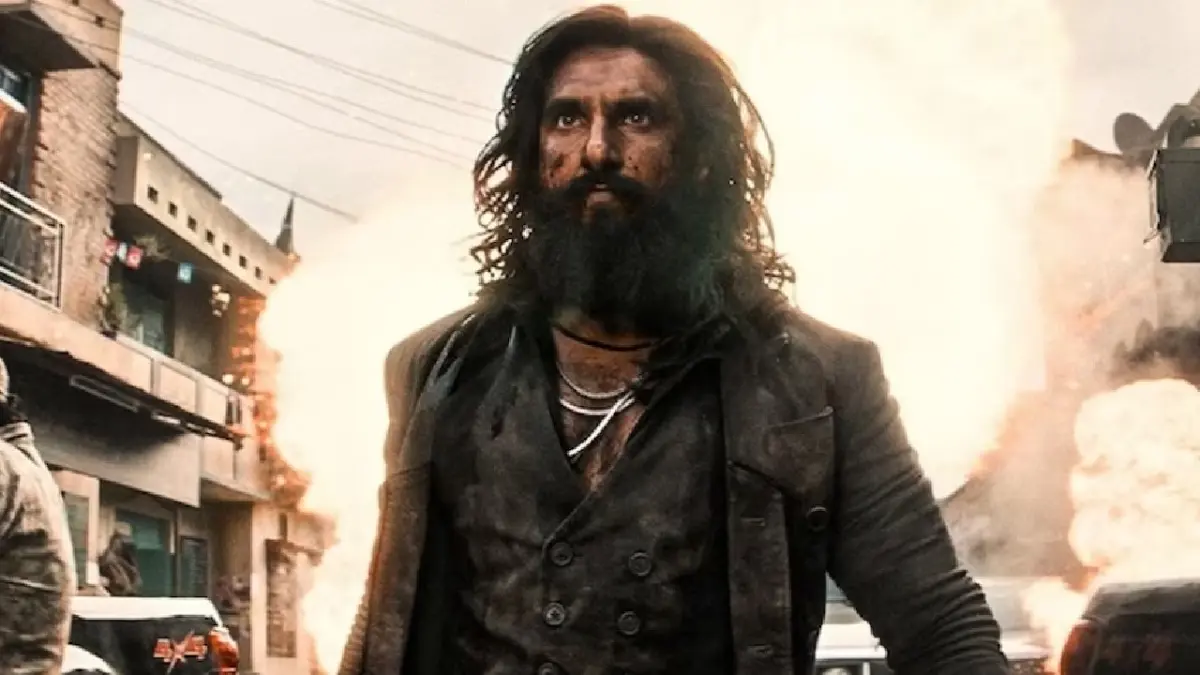
Tech glitches hit Dhurandhar The Revenge’s paid previews
9:46 AM
Niharika Lal (BOMBAY TIMES; March 20, 2026)
The much-anticipated preview screenings of Dhurandhar The Revenge didn’t go as planned across multiple cities, with shows abruptly halting at interval as the second half failed to reach many cinemas. Disappointed moviegoers, who had booked the film’s previews in advance, had to either wait 1.5-2 hours for the film to start, watch it begin after the interval, or leave as the film failed to resume in most cinemas. “I had booked a 7.30 pm show in Noida, and when we came out during the interval at 8.30 pm, we found that moviegoers who had come for the 5pm show were also waiting for the post-interval version of the film,” a moviegoer shared.
‘It’s not that we don’t want to show a film; it’s just that we don’t have one’
When we spoke to the exhibitors, they refused to comment on the issue and said they had tried their best to ensure that moviegoers could watch the film, but it was not possible in some cases due to technical glitches.
At some screens, the situation turned almost humorous, as moviegoers actually called the police to complain that the film was not being played. Police officials had to intervene to calm down furious fans, telling them, “It’s not the cinema’s fault; they don’t have the film.” Hassled cinema managers claimed, “It’s not that we don’t want to show a film; it’s just that we don’t have one.”
Delays happened due to content-related challenges: PVR
Issuing a statement, PVR clarified, “To everyone who stayed back and watched the film despite the delays – thank you for your patience, warmth, and love for cinema. It truly means a lot to us. To those whose shows were delayed or cancelled, we sincerely apologize. We understand how disappointing it feels when something you were looking forward to doesn’t go as planned. We wanted to share a clearer update with you: Delays happened due to content-related challenges in certain locations beyond our control. Cancellations occurred as regional language versions were not made available by the production side, as also shared on their official platforms.”
Film reaches late, second half missing at many screens
The film didn’t reach most screens in time, leaving audiences angry. The delivery to digital service providers like UFO Moviez happened at the very last minute. Usually, it is done two days before. Insiders say there were multiple instances of things going wrong for the preview content not reaching in time and, in some cases, the second half of the film not reaching cinemas at all. The paid previews were scheduled to start at 5 pm, and digital cinema providers received the content post 1 pm.
An insider says, “Content was delivered somewhere around noon yesterday, and shows were meant to start at 5 pm. The fact that shows could happen at many places at 5 pm itself is a miracle. It speaks volumes about the efforts and hustle that the distribution team and digital cinema providers put in to maximize the number of shows that could at least play.”
Another industry source added, “With just a 4-5 hour lead time between when the content was provided and the release, it had to be distributed across more than 6,000 screens in less than five hours something that can only be described as extremely challenging.”
Moviegoers across cities say that it was chaotic as they had to wait for long hours for the film to start after interval or for the refund. A manager shares, “Fans were not leaving even after being told that we were issuing refunds. Some moviegoers waited for over five hours for the post-interval screening.”
In Mumbai, most Hindi paid preview shows of Dhurandhar 2 at 5 pm on Wednesday were cancelled, and the 5.30 pm ones were delayed by 40 minutes. A source told us, “Most theatres didn’t receive content and Key Delivery Message (KDM), a security file often referred to as a digital ‘passcode’ required to play the digital movie files in theatres on time. The Hindi ones were delivered by 6 pm, after which most shows started.”
Manoj Desai, Executive Director of G7 and Maratha Mandir, said, “It’s strange that they weren’t prepared even though they had opened advanced bookings for paid previews days ago. The south centres will get to see the dubbed versions a day after the film’s worldwide release. How were they not prepared? This inconvenienced the audience a lot. The crowd was angry at our staff because the shows were cancelled, but we had nothing to do with it.”
While there were delays and cancellations, exhibitor Raj Bansal says the paid previews have earned over Rs. 42 crore.
Last-minute cancellations left us confused: Audiences
Confusion and delays were reported across several locations. Jothika M Joshi, a PhD student in Chennai, says, “The show was scheduled for 5 pm, but we waited outside the theatre for nearly 30 minutes. Even after taking our seats, there was another delay before the film began. No one offered any explanation, and we were left waiting without knowing if the film would be screened at all.”
Another moviegoer Divya Reddy says, “We reached the theatre around 5.40 pm only to be told that it was cancelled due to a ‘screening issue.’ By then, a crowd had gathered near the concession area, many having travelled long distances. What made it more confusing was that while booking, the platform carried a disclaimer that even IMAX shows would run in a regular format. Yet at the theatre, we were told only IMAX screenings would go ahead. The lack of clarity and last-minute cancellation left people confused and disappointed.”
Paid preview shows of Tamil, Kannada versions cancelled
The paid preview shows of the film in Tamil Nadu, Andhra Pradesh, and Telangana were cancelled due to the unavailability of dubbed language versions.
Exhibitor Akkshay Rathie said, “The Hindi version is out there now. Every cinema, every property, every screen that was meant to play the Hindi version is now active. The South Indian language versions will hopefully be available in 1-2 days. But as far as Hindi is concerned, every screen meant to play it is now running shows.”
– With inputs from Renuka Vyavahare and Roopa Radhakrishnan
Averting a box office clash will help both Toxic and Dhurandhar 2, say exhibitors
4:30 PM

Renuka Vyavahare (BOMBAY TIMES; March 5, 2026)
Yash’s much-anticipated action drama Toxic has a new date at the box office. For weeks, conversations around a potential clash between two big films — Toxic and Dhurandhar 2 — had been intensifying. On Thursday morning, the makers of Toxic announced that the film will skip its March 19 release date and instead hit screens on June 4, citing the ongoing crisis in the Middle East.
An official statement from KVN Productions and Monster Mind Creations read: “Filmed in Kannada and English, Toxic: A Fairy Tale for Grown-ups is a film created for a global audience. We were excited to share our film with you all on March 19. However, the current uncertainty in the Middle East impacts our goal to connect with the widest possible audience. Therefore, in the interest of our partners and our audience, Toxic: A Fairy Tale for Grown-ups will now be released in cinemas across the globe in English and Indian languages on June 4, 2026 (sic).”
‘Pushing Toxic’s release date makes everyone’s life more comfortable’
While exhibitors believe there is space for multiple releases in theatres, averting a clash is often the best-case scenario for tentpole films.
“We have enough capacity for two films to co-exist. As far as exhibitors are concerned, handling the maara-mari that happens during screen sharing is part and parcel of our job, but overall, this does make everyone’s life more comfortable. I don’t think the reason to push the release of Toxic is an excuse. Yash is a big star in the Middle East, so it’s a fair decision. Dhurandhar 2 is 3 hours 55 minutes long, so now we can give it four slots easily. Since Dhurandhar never released in the Middle East, it won’t be affected anyway,” explains Kamal Gianchandani, CEO, PVR Pictures Limited, and President of the Multiplex Association of India (MAI).
‘Dhurandhar 2 is one of the reasons for the change in Toxic’s release date’
Some exhibitors, however, believe the delay may have more to do with the looming box-office clash. Manoj Desai, Executive Director of G7 and Maratha Mandir, says, “As far as Toxic’s delay is concerned, the Middle East feels like an excuse. Dhurandhar 2 is one of the reasons, if not the only reason. However, I do think this is a good decision as the public won’t be divided.”
Speaking about Dhurandhar 2’s runtime, he adds, “The first film was 3 hours 34 minutes long, and now the second one is 3 hours 55 minutes. We can only have three shows a day in single screens, which itself is our loss. Our standard show timings are 12 pm, 3 pm, 6 pm and 9 pm. If a film is four hours long, with an interval, it becomes almost four and a half hours.”
‘Dhurandar 2 and Toxic will benefit by at least Rs. 75–100 crore now’
Talking about how the industry stands to gain from spacing out big-ticket releases, Akkshay Rathie, Director, Ashirwad Theatres Pvt Ltd, says, “This will benefit both films by at least Rs. 75–100 crore of net box office business, which would have eroded from their collections had they come together. This puts us in a good state because it allows every quarter to have something big — Dhurandhar 2 in March, Bhoot Bangla in April and Toxic in June. Big films spreading out over months always helps the business.”
An exhibitor on condition of anonymity revealed how screen-sharing is a major issue when two big films go head to head. “Revenue share is never an issue between the producers and the exhibitors, that all is pre-decided. Bigger issue is screen sharing. It can get ugly as both films will demand more screens and prime time. The audience is also unlikely to watch two big films in the same week as going out for a movie is not cheap, especially with big families. By averting clash with Dhurandhar, Toxic has made sure that they don’t eat into each other’s business. No one will go on record saying they were not confident about clashing with Dhurandhar so the middle east excuse. Everyone wants to save their face and wants an upper hand.”
'Business prospects for both films will be stronger'
Ashish Kanakia, CEO, Moviemax Cinemas said, "The decision has been taken by the producers in view of the current situation in the Middle East, and averted clashes are naturally in the best interest of both producers and exhibitors. Both Toxic and Dhurandhar are highly anticipated, large-scale films with strong audience interest. Two major releases arriving on the same date is not ideal in the present scenario; with Toxic now moving to 4th June, we believe the business prospects for both films will be stronger, which is ultimately a positive for the industry as a whole.”
When films miss the Gulf market, how much does it impact?
8:17 AM

From Border 2 to Dhurandhar and The Diplomat, films remain unreleased across key Gulf markets — a pattern trade can’t ignore. We speak to experts to understand how it impacts business
Yashika Mathur (HINDUSTAN TIMES; January 30, 2026)
Border 2, starring Sunny Deol, may be flying high at the Indian box office, but the war drama will not release across key Gulf markets including Bahrain, Kuwait, Oman, Qatar, Saudi Arabia and the UAE. While no official reason has been issued, industry insiders point to the film’s India-Pakistan war backdrop and strong military narrative as the likely factor behind the decision, a pattern seen with several recent titles in the region.
Why the Gulf matters
The Gulf Cooperation Council (GCC) region remains a crucial overseas market for Hindi cinema, often contributing 3-5% of a big film’s global business. Trade figures suggest a well-performing Hindi film can earn between Rs. 30 crore and Rs. 50 crore from the region.
Film exhibitor Akshaye Rathi explains: “For a film like Border 2, expectations are massive, so the loss is felt. At the same time, exhibitors in the Gulf also lose out by not being able to screen big titles. For Indian films, 3-5% of business going away is still a large number.”
Border 2 isn’t the first high-profile Hindi film to face resistance in the Gulf. Last year, Ranveer Singh-starrer Dhurandhar did not release in the region despite a strong global run. Earlier, The Diplomat, starring John Abraham, and Fighter, led by Hrithik Roshan, faced similar roadblocks, though Fighter was later cleared for release in the UAE.
Trade reactions
Trade analyst Taran Adarsh believes the impact varies by film: “A Shah Rukh Khan film would mean something very different in the Gulf compared to others. In Dhurandhar’s case, which has already done well without a Gulf release, the loss could be Rs. 20-40 crore. For Border 2, it’s early to judge, but business in other territories could compensate.”
Filmmaker Ashoke Pandit, president of the Indian Film and TV Directors’ Association, has called for diplomatic clarity. “We are told India shares strong relations with the UAE. If a film talks about fighting terrorism, why should it be blocked?” he asks.
Aamir Khan's YouTube release for Sitare Zameen Par sparks rage among exhibitors: "No one will trust him next time"
9:28 AM
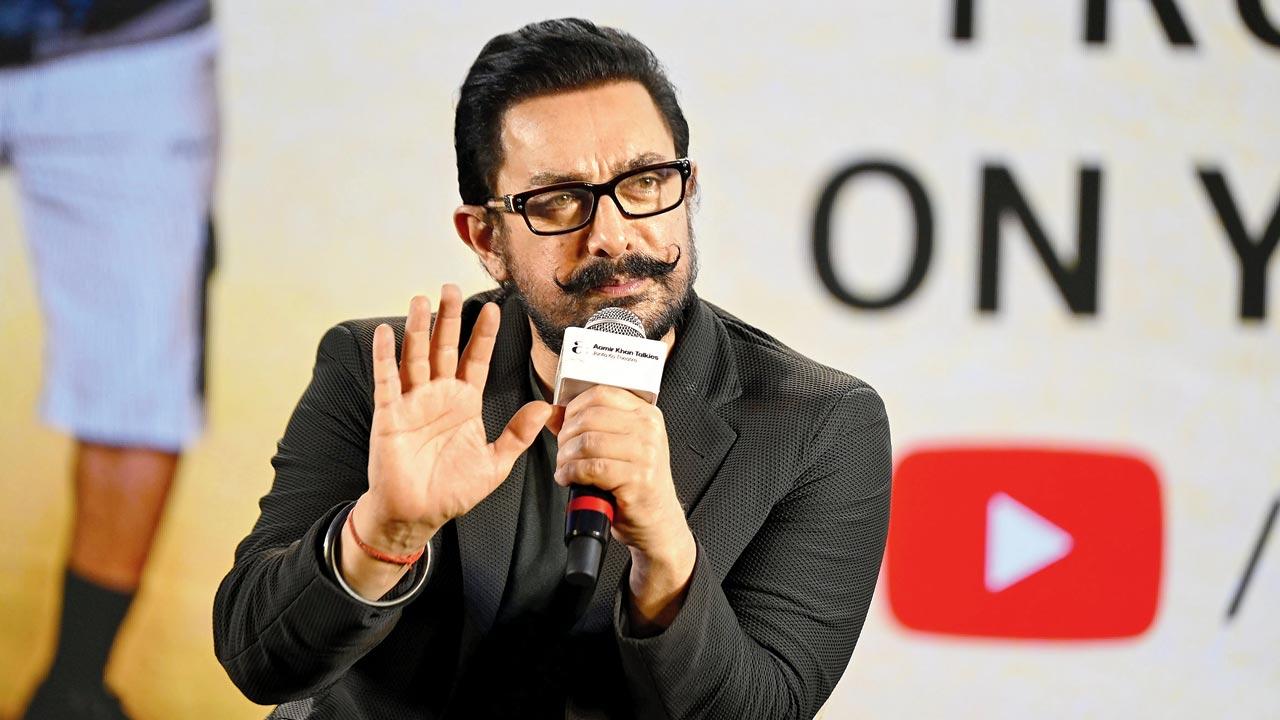
As Aamir Khan announces YouTube pay-per-view release of ‘Sitaare Zameen Par’, trade disappointed that the superstar’s decision reduces the theatrical-OTT window to 42 days; says the model will work only in urban centres
Priyanka Sharma (MID-DAY; July 31, 2025)
In June, Aamir Khan had announced that Sitaare Zameen Par would be a theatrical-only offering, categorically denying taking it to YouTube after its big-screen run (Amitji backed me to take the film only to theatres, June 7). But after the dramedy has collected Rs 167 crore in its six weeks of release, the superstar appears to have done a volte-face. On July 29, he announced that beginning August 1, the R S Prasanna-directed venture would be available on YouTube for Rs 100 per view.
The decision hasn’t gone down well with exhibitors, especially since the film is running in many theatres and a YouTube release would bring a premature end to its business.
Rajasthan-based exhibitor Raj Bansal tells mid-day, “The Multiplex Association of India honoured Aamir for his [theatres-only] stand. Now, we are disappointed with this decision. By bringing the film on YouTube less than eight weeks after release, he is going back on what he had promised. The film’s theatrical run hasn’t ended yet. It’s running in my theatre in Jaipur. Aamir’s credibility has been put at stake. No one will trust him next time,” he says.
In bringing Sitaare Zameen Par to his own YouTube channel, Khan is showing that there can be an alternative to the streaming giants. Whether the film industry adopts this new model will depend on the superstar’s success with his plan.
But exhibitor Akkshay Rathie, while appreciating the business move, believes the actor has made one misstep. “Strategically, it is the right decision. With digital penetration at its peak, now is a good time to experiment with transactional video-on-demand. But [he should have] kept a bigger window — an eight-week gap — between the theatrical and YouTube release,” assesses Rathie.
Bansal believes the model will only work among the urban demographic, which has disposable income. He decodes, “One viewing is for R100. If I [subscribe] to Netflix [at a competitive price], I will have a month to watch a wider variety of programmes.”
He believes Khan’s decision was also motivated by the movie’s box-office performance. “Maybe, the film didn’t perform according to his hopes. So, he thought of taking this route.”
Trade weighs in on success of Aamir Khan's Sitaare Zameen Par at box office
9:54 AM

Aamir Khan’s Sitaare Zameen Par earns over Rs. 57 crore in the first weekend; trade says it is the first ‘multiplex hit’ in the post-pandemic market that favours extravaganzas
Komal RJ Panchal, Priyanka Sharma (MID-DAY; June 24, 2025)
Aamir Khan’s star is finally shining bright at the box office. The actor’s latest release Sitaare Zameen Par has registered an impressive opening weekend collection of over Rs 57 crore. While the R S Prasanna-directed venture has spread cheer among exhibitors, trade analysts also note that the success is a marker of two crucial things — first, that Khan may have pulled off a wise move by skipping the post-theatrical OTT run. More importantly, the feel-good movie’s strong run can be seen as a revival of the genre that almost disappeared from the big screen in the post-pandemic market.
Exhibitor Akshaye Rathi says, “[In the past few years], we had Pathaan [2023], Jawan [2023], Gadar 2: The Katha Continues [2023], and Pushpa kind of films [becoming hits]. The notion was that people would come to theatres for these mass-oriented action films. I think this is the first multiplex hit since the pandemic. It’s good to see the genre, which targets urban India, being revived.”
Rajasthan-based exhibitor Raj Bansal shares that women and families are driving the footfall in his Jaipur multiplex. Noting that Sunday’s collection of Rs. 26 crore was almost 2.5 times the opening day’s figure of Rs 10.5 crore, Bansal is optimistic of the film’s growth.
“From now, Aamir’s decision to not [stream] the film on OTT will play a role. The first week’s collection should close at about Rs. 80 crore.”
Trade analyst Girish Johar adds that the movie has found takers in the international market too. “Over time, it could touch the Rs 100 crore mark in the domestic market.”
Vishek Chauhan, however, states that its success doesn’t indicate a change. “It does not penetrate the rural market. This is not the kind of film people in villages will throng to watch,” he says.
Donald Trump's 100 per cent tariff on foreign films could hurt Indian cinema, experts warn
8:52 AM

After US President Trump announces 100 per cent tariff on movies made outside the country, trade says move detrimental for Indian films as America is a key market
Mohar Basu, Komal RJ Panchal (MID-DAY; May 7, 2025)
On May 4, US President Donald Trump announced a 100 per cent tariff on movies produced outside the country, believing that the move would boost the number of films made in America. The result was chaos and confusion within Hollywood as well as film industries around the world, as Trump did not provide details on how the tariffs would be implemented. Even as the President softened his stance on May 5 and stated that a decision would be made only after he met with members of Hollywood, the news has sparked concern in the Indian film industry. After all, the US is a key overseas market that contributes significantly to the box-office revenue of major Hindi, Telugu, and Tamil films.
As mid-day reached out to producers and trade experts, they unanimously noted the ambiguity of the current situation as it is unclear whether the tariff would apply to payments made to acquire distribution rights of foreign films for their US release. There is also a lack of clarity whether tariffs would apply to movies on streamers as well.
Trade expert Ramesh Bala pointed out, “Many American films are shot in Canada, Europe, and elsewhere to lower production costs. If the tariff applies to any part of the film made outside US borders, then many Hollywood films would technically qualify as foreign.”
America, a crucial market
Bala agreed that the move, if implemented, would be detrimental for Indian films. “The US market is crucial for Indian theatrical releases, especially because of the sizeable South Asian diaspora,” he stated, pointing to blockbusters like RRR (2022) and Jawan (2023) that earned significantly from their US market.
“High price points due to tariffs will dissuade distributors, reduce the number of films reaching theatres, and ultimately limit consumer choice. Small or medium-budget movies will likely skip theatrical release in the US entirely, missing out on a potentially lucrative market. The governments of affected countries, including India, will need to step in and engage in dialogue with the US administration to either seek exemptions or negotiate a more balanced trade approach,” he stated.
Trade analyst Akshaye Rathi said it was too early to respond to Trump’s announcement “with assumptions”. He, however, said that this could serve as a trigger to fortify our own ecosystem. Citing the example of Russia, he said, “After the Ukraine conflict, Hollywood studios stopped releasing films in Russia, cutting off nearly 95 per cent of their box-office content overnight. The Russian government actively invested in its local film industry boosting both volume and quality. Within two-three years, they’ve managed to nearly return to pre-war box office numbers. The Indian film industry is still operating at a fraction of its potential.”
Don’t panic before the policy rollout
Housefull 5 will be one of the first big Bollywood releases in the wake of the announcement. With Akshay Kumar, Abhishek Bachchan and Riteish Deshmukh leading it, the laugh riot is targeted as much at the Indian audience as at the diaspora. Diljit Dosanjh’s Sardaar Ji 3, slated for June 27 release, too is aimed at the diaspora.
Bala assumed the films would go unscathed, reasoning, “The proposal is under consideration and is part of a broader USTR [United States Trade Representative] investigation. There is no final rollout date. This gives a buffer, but later films will have to review [their distribution plans].”
An executive from Jio Studios, who did not wish to be named, dialled down the fear with facts. “The US market contributes only around four per cent to the total box-office earnings of an average Indian film. So, the overall damage is limited. If the tariff doesn’t apply to OTT platforms, it might even benefit producers, as they can sell their films directly to streaming services.”
Supriya Yarlagadda, executive director, Annapurna Studios, which backed the Telugu film franchise, Goodachari, admitted that the policy will hurt not only Hindi films, but also their South counterpart. “US is a large distribution territory for various Indian language films. While the latest news is of concern, we will have to wait for the policy details to emerge before panicking,” she said.
A new territory to capture
A question on the mind of many is: Can China or Japan replace the US? Bala said a hard no. “China’s annual foreign film quota [around 10 titles under revenue-sharing rules] makes it an unreliable replacement for the US. Other regions like Australia and Southeast Asia are much smaller. The US remains the only overseas market with scale, infrastructure, and a sizeable diaspora audience.”
Q1 Report Card: Cold star for Bollywood this year
8:10 AM

With only one film scoring major success at the box office, Bollywood’s performance in the first quarter of this year is far from impressive
Rishabh Suri (HINDUSTAN TIMES; April 2, 2025)
Bollywood’s box office ‘report card’ for the first quarter of 2025 projects a rather bleak picture. Only one film has done extraordinary business in the first three months of this year — Chhaava, featuring Vicky Kaushal in the lead role. Two other films have just about managed to draw audiences to the theatres — Akshay Kumar’s Sky Force and The Diplomat, starring John Abraham.
Compare this to the corresponding period last year, and there were multiple hits such as Shaitaan, Article 370, and Crew. The industry is understandably unhappy.
Talking about Sikandar, the big-ticket Eid release, trade analyst Taran Adarsh says, “One didn’t expect this performance from a Salman Khan film. It started off okay due to the Eid holiday, but the foundation is weak for the numbers to sustain in the weekdays. Also, the BOGO and free ticket offers for the film are very unfortunate. It shows the phase the industry is going through.”
The silver lining
Amit Sharma, managing director of Miraj Cinemas, however, is optimistic: “After five years of struggle, we now have a release every week. It’s a spread-out calendar unlike last year, when multiple films released on the same day.”
There’s room for improvement in the second quarter, feels Devang Sampat, CEO, Cinepolis Cinemas. “Q2 looks very good, especially the combination of Hollywood and Bollywood films will give a huge boost this summer,” he says.
---------------------------------------------------
“I won’t say that there should be a Chhaava every week, it’s not possible. We needed more hits; we can’t survive on one hit or one plus film to carry us till the next quarter.”
- Taran Adarsh
“It’s important for films like The Diplomat (to earn) because we have only about 10-15 tentpole releases in a year. The exhibition sector needs smaller films to do well to stay afloat.”
- Akkshay Rathie
---------------------------------------------------
MAJOR RELEASES SO FAR
Chhaava: Rs. 545 crore
Sky Force: Rs. 131.44 crore
The Diplomat: Rs. 30 crore (still running in theatres)
Deva: Rs. 32 crore
Badass Ravi Kumar: Rs. 9.66 crore
Sikandar: Rs. 55 crore (still running in theatres)
(All figures according to Box Office India and trade estimates)
"All We Imagine As Light's lack of screens has no connection with Pushpa 2", says trade
9:47 AM

After Motwane slams Pushpa 2 for dominating screens and sidelining All We Imagine As Light, trade says Payal Kapadia’s gem couldn’t register 40 per cent occupancy in two-week run; Onir rues indie films are shortchanged
Mohar Basu, Priyanka Sharma (MID-DAY; December 12, 2024)
In a space of two weeks, the Indian audience was treated to two different releases. Cannes Grand Prix winner All We Imagine As Light made history by making Payal Kapadia the first Indian to score the Best Director nomination at the 2025 Golden Globe Awards, while Pushpa 2 – The Rule rewrote history at the Indian box office with its stupendous collections. Yet, only one of them finds a place in theatres. On Tuesday, filmmaker Vikramaditya Motwane called out the Allu Arjun-starrer for dominating screens across multiplexes, leaving no room for Kapadia’s gem to “breathe” or “find an audience”.
With All We Imagine As Light set to be re-released in select theatres, Motwane’s post has brought the question out in the open: Do mainstream entertainers sideline independent films, making it difficult for them to survive?
Trade expert Girish Wankhede strongly disagrees with Motwane. “All We Imagine… released on November 22 and had a two-week run. One understands that such a film needs institutional push, but any film needs to show 40 per cent occupancy for it to be carried forward. It couldn’t fill the occupancy requirement; its lack of screens has no connection with Pushpa 2. Since Pushpa 2 is showing 80 per cent occupancy, it is preferred,” reasons Wankhede.
If one looks at the screen count, it is skewed. Pushpa 2 – The Rule is running in 4,500 screens across the country; in contrast, All We Imagine… is expected to be re-released in 200 screens on Friday. But trade expert Akshaye Rathi says that films like the Kani Kusruti, Divya Prabha and Chhaya Kadam-starrer require alignment of all channels, especially in today’s unpredictable market.
Rathi says, “The makers of Pushpa 2 were in discussion with cinema owners for eight months before the film was released. All We Imagine’s distributors should’ve engaged with the exhibition sector and figured a way to make it reach the masses. For instance, Cinepolis is doing a week-long Japanese anime film festival in January, and it will be robustly promoted. We need to engage to make space for each other. No one wants to kill independent cinema because for theatre owners, people who appreciate such cinema are also [a source of income].”
Weighing in on the debate, filmmaker Onir says that indie films have been shortchanged for long in this country. He, however, asserts that the onus is not on exhibitors alone; he believes everyone, from the media to the audience, should do their part to support small films. “All We Imagine... didn’t get funding in India. Even the media didn’t talk about it. Not enough viewers watch indie cinema whereas the masses make sure that the [mainstream] films work,” he notes.
Onir says that change must begin from the top. “Has All We Imagine... been made tax free? Why are ministers not watching it? There has to be government support. Multiplexes have bled during the pandemic. So, now they are trying to recover money. Every producer will want their film to make money. So, whom do you blame? It’s a vicious cycle.”
Singham Again vs Bhool Bhulaiyaa 3: Do toxic fan clubs steer movie success?
8:03 AM

Many say a smear campaign sank Alia Bhatt’s Jigra. Should Singham Again watch out?
Mohar Basu (MID-DAY; October 27, 2024)
When the trailers for two Diwali releases Singham Again and Bhool Bhulaiyaa 3 dropped, social media went into a tizzy. Every aspect of the former was critiqued—including Deepika Padukone’s cameo and the length of the trailer—and fan clubs were locked in rivalry over the next few weeks.
Spend more than five hours a day on Twitter and Instagram, and you’ll get good at spotting social media bots. While fans have locked horns before, the tonality of clashes has grown more dangerous with this shift to social media… and it’s affecting box office numbers. Once fan groups focused on supporting favourite stars; now they have morphed into highly competitive communities that actively engage in sabotaging each other’s films, especially when big releases clash.
“Toxic fandom” is when fan criticism turns into a hostile, bigoted campaign targeting a project, its stars, or creative heads. In today’s franchise-driven entertainment landscape, where studios rely heavily on fan loyalty to boost financial success, the rise of toxic fandoms threatens movie-goers’ enthusiasm.
“The noise has become deafening lately,” a marketing executive from a major studio notes, “People are out for blood, and will make sure you know of their hate. I personally feel Jigra didn’t work because of the hate towards Alia [Bhatt].”
Jigra, which released early in October, faced multiple controversies. Producer Divya Khosla Kumar alleged manipulation of box office numbers, while Manipuri actor Bijou Thaangjam accused the producers of keeping him in the dark about the quality of his role. These controversies pivoted online debates away from the emotional core of its story.
A studio insider, who worked on the film, tells us, “While Jigra had a good opening day, its collections dropped sharply, making it one of Alia’s lowest-grossing films. Also if you look at the reactions, they are on opposite ends of the spectrum. How can a film about a sister saving her brother garner this reaction? The environment around Jigra showed the impact of fan club rivalries and how it can influence BO performance. Social media plays a significant role in shaping public perception, particularly when it comes to high-profile films such as this one.”
The same tone was used against Deepika Padukone after the Singham Again trailer. Many took issue with her portrayal of SP Shakti Shetty, labelling her performance “cringe” and saying she was miscast. Some specifically criticized her dialogue delivery and accent. The backlash was further amplified by videos of influencers mimicking her scenes, which went viral on platforms such as Reddit.
A member of a fan club on Twitter told us, “How the hate spiralled out of control is not something a loyal fan expected. Do we feel Alia’s team is generating hate? No. Hate is an entity by itself. Once you start the fire, you don’t know what shape it will take. Alia’s fans might have started it, but it turned into something none of us could have predicted.”
We traced a comment on Reddit to the IG account of Disha Pundit, a cinephile from Pune, who stood up for Padukone. “I have become increasingly wary of aggressive PR for Alia,” she says.
“Every few weeks, hate for DP shows up, and goes beyond films. For example, ‘Deepika is not pregnant, she is pretending’—how are these narratives built and propagated? It’s all too personal and exhausting. I miss when we connected with actors organically because of their acting and personality. Why are we not talking about how a movie is? Why do we care so much about what, who and how they are as people?”
“Toxic culture is particularly harsh toward women,” observes Tushar Joshi, Entertainment Head, India Today, “with sexist comparisons and rivalries. This misogynistic trend not only affects the actors but also plays into a broader, troubling dynamic online.”
With the upcoming clash between Singham Again and BB3, wars have reached fever pitch. Twitter, Instagram, TikTok and YouTube have turned into battlegrounds, allowing fans to engage directly with promotional campaigns. Fans of SA, led by Ajay Devgn and Rohit Shetty loyalists, are fiercely promoting the movie while dismissing BB3. Kartik Aaryan’s followers are not sitting idle.
“You can see patterns of hate,” says exhibitor and trade analyst Akshaye Rathi, “Dozens of micro influencers tweet the same thing, in the same language, at the same time.”
The tactics include manipulating algorithms to boost or damage a film’s perception. Coordinated down voting and leaving poor reviews on aggregator platforms such as IMDb, are standard practices. These are aimed at creating a narrative that a film is subpar, affecting its early buzz and ticket sales.
One of the most striking aspects of toxic fandoms is how well-organized they are. Members strategize attacks in closed circles on Telegram or Reddit, co-ordinating timings to make hashtags trend, flooding social media with favourable or unfavourable content, and targeting specific critics or influencers to sway public opinion.
But do these smear campaigns have any effect?
Media promotional cycles certainly get affected, says Joshi. “Fan clubs can dictate social media trends,” he tells us, “which can affect a star’s psyche and influence decisions regarding press interactions. You are playing at someone’s insecurities and vulnerabilities. An actor may choose to avoid a public engagement entirely due to a trending social media narrative; or their manager may advise against addressing it, as even a simple comment could impact the marketing, publicity, or release of their film.”
A celebrity publicist, who handles several A-listers, admits, “We don’t allow our actors to speak to the press. I need to control the narrative because even if the interviewer isn’t ill-intended, what it becomes eventually is not in his or her hands. In RJ Anmol’s interview with the Jigra team, Vasan Bala had said, ‘I had sent one very kaccha pakka [roughly drafted] email… to Karan [Johar]. Six or seven hours later, he called to say, ‘I’ve already sent it to Alia’. We were not very happy about this as Karan had to defend it when the hate for Alia got wild.”
Joshi says that actors, knowingly or unknowingly, sometimes fuel fan clubs by engaging with them. Shah Rukh Khan and Salman Khan have mastered the art of handling their fan bases. They encourage support one another’s films during interviews, something they’ve been doing long before social media’s rise.
“For example, Shah Rukh might say, ‘If my film releases on Diwali, go watch Salman’s film on Eid’,” says Joshi. “These gestures have been a hallmark of their camaraderie and contributed to their long careers.” In fact, one way to mitigate toxicity would be for actors to publicly call out their fan clubs when their behaviour crosses a line.
The longevity of older stars could, in part, be credited to their refusal to let fan clubs dictate the trajectory of their careers. While some fans may think they are helping their favourite star by attacking rivals’ films, in reality, they are contributing to a culture of hostility that affects the whole industry.
Shrenik Gandhi, CEO, White Rivers Media (a digital agency working on film promotions), breaks it down for us, “There are two types of toxic fan clubs: Organic and manipulated. The latter is driven by agendas and is located in the echo chamber of Twitter. But the first one travels [authentically].”
Another digital agency head corroborates, “Let me explain how word of mouth works. The Friday a film drops, WhatsApp, Twitter and Instagram get activated. Fake accounts of reviewers may be made. Taran Adarsh has faced it. The account will change Taran’s spelling slightly and give a one word review: Disappointing. Before you can combat it, everyone has believed the fake account. This reduces bookings considerably, no matter how big the star or film is.”
Though Rathi feels a good film can power through, he feels stakeholders have to work together to fix this. “No one benefits in a dog-eat-dog world. The insecurity in our stars is scary. People want to celebrate each other’s failures. Producers, exhibitors, stars, studios never sit down and ask each other how we can grow the market together.”
This is not good for already sliding number. “The overall turnover is not promising this year,” Rathi points out. “Last year, Jawan, Pathaan and Animal doing well showed hope for a bit. People were united. But in 2024, we have gone back to negativity, which can also be used well if there’s intent.” He cites the example of how Animal’s polarization became a marketing tool.
Fan clubs can be utilized well, and Shah Rukh Khan knows how. As do stars in the South. “Be it Allu Arjun, Rajinikanth, or Jr NTR,” Rathi says, “This is why they guarantee big openings, which our biggest stars—despite being credible actors—can’t.”
Trade experts say figures of Alia Bhatt's Jigra are not tampered with
8:07 AM

After Savi actor Divya accuses Jigra makers of inflating earnings and sparks row with Karan Johar, trade says Alia-starrer’s figures not tampered with; cites the thriller’s ‘limited storytelling’ for its low numbers
Mohar Basu (MID-DAY; October 14, 2024)
Alia Bhatt’s Jigra has sparked a war of words between one of its producers Karan Johar, and actor-filmmaker Divya Khossla Kumar. On Saturday, Khossla took to social media to question the veracity of the film’s earnings, which was reported to have opened at Rs 4.25 crore, making it Bhatt’s lowest opener since Highway (2014). Posting a picture of an empty theatre, Khossla insinuated that Jigra’s box-office figures were being inflated by the makers, possibly through bulk ticket purchases. Soon, Johar posted a cryptic message on social media—“Silence is the best speech you will ever give to fools”—that was viewed as a jab at her.
This public spat is said to have its roots in Savi. In the May release, Khossla played a woman who breaks into a prison and frees her husband. With Jigra being a jailbreak thriller where Bhatt’s character hatches a plan to save her brother, a section of the audience has drawn parallels between the two plots.
As Khossla continues to challenge the box-office numbers of Vasan Bala’s directorial venture, which released alongside Vicky Vidya Ka Woh Wala Video (VVKWWV), the one question on everyone’s minds is: Are the figures fudged?
A trade analyst, on the condition of anonymity, says, “No, the figures are low. Jigra opened in 2,800 screens, and VVKWWV in 3,500 screens. On day one, the average occupancy for both was 20 per cent. So, they earned Rs 4.25 crore and Rs 5 crore respectively. The reason why the films aren’t working is because the storytelling is limited. VVKWWV isn’t for the urban sectors, and Jigra is doing okay in multiplexes. Figures being fudged is a general problem; all big films do this. But this time, it isn’t the case. Divya’s theatre might not have had people, but many screens are witnessing [moderate] occupancy.”
Trade analyst Taran Adarsh says Jigra and VVKWWV had come amid high expectations. “That’s because Alia Bhatt is a bona fide star and Rajkummar was coming after Stree 2’s success. Despite it being a holiday weekend, the collections aren’t great. All eyes are on the Diwali releases already.”
Jigra’s two-day collections reportedly stand at Rs 11.13 crore and VVKWWV’s at R12.77 crore. Trade expert Akshaye Rathi is surprised that the films didn’t witness a jump over the weekend. “Jigra deserved a wider viewership. But the first weekend is too early to gauge the fate of both movies,” he states.
Does the audience’s tepid response indicate that it’s story over stars for them? “The storytelling has to appeal to the widest possible audience. What separates Rajkummar’s Stree 2 and Vicky Vidya are their telling. This happened with Ajay Devgn too. He had a [runaway hit in] Shaitaan and then [a flop in] Auron Mein Kahan Dum Tha.”
Joker: Folie a Deux set for a huge opening in India
9:06 AM

With Joker: Folie à Deux’s advance booking opening a month before its Oct 2 release, trade says the move signals India is an important market for Hollywood
Mohar Basu (MID-DAY; September 24, 2024)
This year, Bollywood doesn’t have a big release slated for October 2. But cinephiles have already pencilled in the holiday as their date with Joaquin Phoenix’s Joker: Folie à Deux. Knowing the anticipation around Todd Phillips’ directorial venture, Warner Bros Discovery seems to have found a way to maximise early ticket sales. While films usually open their advance booking a week ahead of release, the studio opened the counters on September 2, a month ahead of its October outing. Local trade experts suggest that the Hollywood studio is capitalising on the absence of big domestic films.
To the suits at the studio, the early access is their effort to provide Indian audiences the same experience that is enjoyed in international markets.
Denzil Dias, VP & Managing Director, India Theatrical, Warner Bros Discovery, states, “To provide fans with ample opportunity to secure their preferred seats, we have made tickets available well in advance. This early access aligns with international practices, offering Indian fans the same experience enjoyed by audiences worldwide.”
Trade expert Akshaye Rathi views the development as another sign that India has become an important market for Hollywood. He cites the example of Oppenheimer’s (2023) incredible run in India, making the country among the film’s top five markets.
“Hollywood has always looked at India seriously for the sheer population and the market size that they get. Avengers: Endgame [2019] was among that year’s top three grossers in India. So, now, many studios are all the more focused on enhancing their market share in India. Sony Pictures and Disney have become aggressive with their promotional campaigns,” he explains.
In the month since Stree 2’s runaway success, the box office hasn’t seen a Bollywood hit. Trade analyst Taran Adarsh points out that Joker: Folie à Deux has the potential to end the dry spell in urban centres. “It’s too early to give projections, but Joker will [open] huge. The only film that could be a competition is Devara - Part 1.”
The Telugu action drama stars Jr NTR, Saif Ali Khan and Janhvi Kapoor. Rathi states there is little chance of Joker hampering the September 27 release’s box-office prospects.
He notes, “It is a fact that Indian movies are not doing as well as they should. But I don’t think Hollywood cannibalizes our business. In fact, [films] doing good numbers encourages more theatres to flourish. Devara and Joker have different audiences; the former is [for] the masses and Joker has an urban reach.”
Singham Again, Pushpa 2, Stree 2: Trade experts, filmmakers talk about the phenomenon of sequels, franchises
3:57 PM

Allu Arjun returns as Pushpa in the eponymous franchise and Deepika Padukone smoulders for the first time as a cop in a new Singham film, among a flurry of franchise revivals and sequels in the works this year. We dive deep into the phenomenon
Mugdha Kapoor (HINDUSTAN TIMES; July 1, 2024)
In recent years, particularly after the pandemic, a noticeable trend has emerged in films: the rise of sequels. In 2022 and 2023, several sequels achieved remarkable success. KGF: Chapter 2, the follow-up to the 2018 hit KGF: Chapter 1, became a pan-India sensation, breaking records and grossing over Rs. 1,200 crore worldwide. Similarly, Drishyam 2, a sequel to the 2015 thriller Drishyam, amassed both critical acclaim and strong box-office returns. Bhool Bhulaiyaa 2, a spiritual sequel to the 2007 horror-comedy, and Gadar 2, which hit theatres 22 years after the first part, also did well.
According to Ormax Media data, franchise films accounted for 17% of the Indian box office in 2019, but by 2023, this figure had risen to 45%. “The most anticipated Hindi films among regular theatregoers in India include Stree 2, Pushpa 2 - The Rule, Hera Pheri 3, Bhool Bhulaiyaa 3, War 2 and Singham Again,” Sanket Kulkarni, head of business development (theatrical), Ormax Media, tells us, adding that the trend also applies to Tamil and Telugu films.
The comfort of familiarity
“Sequels, by their very nature, bring with them a sense of continuity and established connection with characters,” says director Amar Kaushik, who is gearing up for the release of Stree 2. Elaborating, Kaushik says, “When a sequel is announced, viewers feel connected to the franchise because they have already loved the first part. The audiences think of such films as their own. Log expect karte hain sequel se, ki jitna maza unhein first part dekh kar aaya tha, next part bhi utna hi interesting bana hoga aur paise vasool honge.”
Seeing characters that they have loved, and looking forward to new journeys for them, makes it compelling for audiences, notes Gadar 2 director Anil Sharma. “So, the allure lies in revisiting familiar worlds and characters they’ve grown to love,” says Sharma, adding that that’s exactly why “characters and film ka essence same hona chahiye, jo pehle part mein tha, bas”.
Financial incentives and marketability
The financial aspect of making sequels is a significant driving force behind the proliferation. “When a sequel is made, financing and selling become much easier. Studios and investors are more willing to back a project with a proven track record, just as audiences are more inclined to watch a continuation of a beloved story. These factors make sequels an attractive proposition for everyone involved,” says Sharma.
Film exhibitor Akshaye Rathi opines, “[For industry stakeholders, too], sequels are a sure shot recipe for success as filmmakers build on the popularity of a movie that’s already touched the hearts of the people.”
Sequels v/s stand-alone films
Are sequels in abundance because of a lack of original scripts and the failure of stand-alone, big-ticket films to draw audiences? “There’s no dearth of original scripts. Films such as Pathaan (2023) and Jawaan (2023) have done extremely well,” says trade analyst Taran Adarsh, adding, “Even biopics like Srikanth, which is also an original script, have done well.” Meanwhile, concurring, film exhibitor Akshaye Rathi notes that films across genres — from Laapataa Ladies (2023) and Animal (2023) to the recent Munjya — are working well at the box office.
Look forward to:
The lineup of upcoming films is dominated by sequels — Stree 2, Singham Again and Raid 2 — demonstrating that sequels are a mainstay in the cinematic landscape.
Stree 2
Pushpa 2 - The Rule
Singham Again
Raid 2
War 2
Indian 2
Welcome To The Jungle
Bhool Bhulaiyaa 2
Border 2
Hera Pheri 3
Kantara A Legend: Chapter 1
Bhediya 2
-------------------------------------------
There’s no set formula for a sequel. The first thing is to see if you have a story left [from the first part]. There should be honesty. I took 5-6 years to come up with a sequel [to Stree] because I think not just the audience, but even I, should feel excited about the story and the graph of the characters. I believe that all filmmakers who are making a sequel should maintain the essence of the first film and its characters.
-Amar Kaushik director (Stree and Bhediya)
The second half of the year looks far more promising-Exhibitors
2:29 PM

Vinay MR Mishra (BOMBAY TIMES; June 29, 2024)
In the first half of 2024 Bollywood saw a lull at the box office. There weren’t too many big-ticket films released, and those that did, performed below expectation. Fighter, Shaitaan, and Crew brought in some moolah, and some medium-budget (Srikantj, Munjya, Article 370, Madgaon Express) films clocked in good numbers, but overall, the numbers didn’t give the industry a reason to celebrate. As we look ahead at the second half of the year, BT talked to industry experts to understand their expectations and hopes from the upcoming lineup of theatrical releases and why exhibitors are relying on Telugu films to bring in phenomenal numbers.
‘Positive about business in the next six months’
Industry experts seem quite optimistic about the second half of the year. Trade analyst Taran Adarsh says, “We are optimistic. Hopefully we will recover lots more.”
Amit Sharma, MD, Miraj Entertainment Limited, chimes in, “The past six months have been really dull for Bollywood, however, the calendar for the upcoming months look exciting. We have a medium budget get film coming in every month, along with big budget films. And to have that mixed slate is important. The next six months are going to be really crowded at the box office. I am positive about the business. The next six months we will repeat the numbers that we did last year.”
‘The big-ticket entertainers are the true-blue theatrical watches’
Film exhibitor Akshaye Rathi stresses on the importance of tentpole movies. He explains, “The second half of the year looks a far more promising because you have a much higher number of big-ticket releases. We have pan-India movies ranging from Kalki 2898 AD and Pushpa 2 - The Rule to big Tamil movies like Indian 2 and then of course, there is Singham Again, which is one of the biggest franchises. These big-ticket entertainers are the true-blue theatrical watches. Hopefully, these films will create an impact and get revenues for multiplexes, single screens - tier one, tier two, tier three - everywhere across the board.”
Exhibitors depending on pan-India films to rake in huge numbers
Devara, Kalki 2898 AD, Pushpa and Game Changer are few of the pan-Indian movies that the trade experts are pinning their hopes on. Moreover, Sanjeev Kumar Bijli, Executive Director, PVR INOX Ltd, mentions that Hollywood movies such as Deadpool & Wolverine, Joker, and Venom 2, might be saviours in the second half of 2024.
Anand Pandit says, “Indian makers are no longer making films for a single demographic.” He also said, “Every year, we may not be able to deliver back-to-back blockbusters but as long as we remain creative, inspired and optimistic, we will always see more success than failure.”
Akshaye Rathi elaborates, “It is not that we don’t have confidence in Hindi films, but there aren’t as many big-ticket Hindi films coming out this year. It is a year run by Ajay Devgn and Akshay Kumar on Hindi front. There is no Shah Rukh Khan, Salman Khan, Hrithik Roshan, Ranbir Kapoor or Ranveer Singh film releasing. Hence, this dependence on the Telugu movies is huge.”
Films expected to be money spinners from July-Dec 2024
1. Kalki 2898 AD
2. Auron Mein Kahan Dum Tha
3. Sarfira
4. Stree 2
5. Singham Again
6. Bhool Bhulaiyaa 3
7. Chhaava
8. Welcome to the Jungle
9. Sitaare Zameen Par
10. Baby John
11. Devara
12. Game Changer
13.Kanguva
14. Indian 2
15. Pushpa 2
Is Bollywood in panic mode after the failure of big-budget films?
8:39 AM

Astronomical star fees, lack of promotion or wrong timing of release – industry experts discuss what’s led to the recent box office disasters
Vinay MR Mishra (BOMBAY TIMES; May 8, 2024)
The dismal performance of the two big Eid releases has left the industry stunned once again. Akshay Kumar and Tiger Shroff-led Bade Miyan Chote Miyan (BMCM) and Ajay Devgn’s Maidaan were released on Eid. Maidaan’s budget was approximately Rs. 250 crore, while BMCM was mounted at Rs. 350 crore. So far, Maidaan’s collections stand at Rs. 48.85 crore and BMCM Rs. 64 crore (India nett).
Reportedly, G7, a popular theatre chain in Mumbai, was temporarily shut down for renovation due to poor footfalls. Even the medium-budget movies that were released post-Eid, Do Aur Do Pyaar and Love Sex Aur Dhokha 2, didn’t leave an impact at the box office.
In the first quarter of 2024, the total collection of all Hindi movies released was approximately Rs. 700 crore, with only the Hrithik Roshan-Deepika Padukone-led Fighter (Rs. 212 crore India nett) being the tentpole film that was released between January and March.
Distributor Anil Thadani says, “Everything was correct with BMCM, but we are yet to figure out what went wrong. We don’t know what will work. We are living in an unknown territory.”
According to industry experts, while the film business is largely unpredictable, there are certain measures that can be taken to help the current crisis.
Pump up promotions in the right direction
The industry is witnessing another trend of minimal promotions with the hope of maximum impact. It worked for Shah Rukh Khan during Pathaan and Jawan as the films went on to become huge successes. However, when other films adopted that policy, it didn’t quite work out.
“Publicity is very important for movies. Otherwise, your films won’t run. These days stars don’t do any promotions, they only stick to social media. Back in the days, people would do so many newspaper interviews,” says Manoj Desai, Executive director of G7 (Gaiety-Galaxy) and Maratha Mandir. For Crew, its promotional songs drew the audience’s interest, which other films could not achieve.
Trade analyst Komal Nahta adds, “Actors don’t do interviews, they don’t make appearances, they don’t go to the malls, and they have even stopped promoting their films on television. Many people watch television, and if they don’t see ads, the audience is not even aware that a film is releasing.”
Film exhibitor Akshaye Rathi shares, “More than lack of promotional activities, it’s the direction of the promotional activities that matters. We should not just make the audience aware, but also have them excited and compel them to buy tickets. For that, the vanilla template for marketing and PR that’s being followed needs to be reworked.”
Pick the right release window
“The critics and audiences praised Maidaan for its superior content. Despite its quality production and storyline, Maidaan encountered significant challenges in its marketing efforts. There was minimal ground-level marketing, and the film’s release was postponed multiple times, which is what probably diminished audience’s interest and anticipation. These marketing missteps contributed significantly to its disappointing box office returns,” says Amit Sharma, MD, Miraj Entertainment.
Taran adds, “Maidaan shouldn’t have been an Eid release. People want to watch a masala movie on such occasions and not something serious.”
‘Failure of BMCM and Maidaan has affected the trade badly’
Film trade analyst Komal Nahta explains, “The underperformance of both these films has been a shocker. The budgets were so high that their failure meant a major setback for the industry. Exhibitors are in panic mode.”
Renegotiate stars’ fees
According to a media report, Akshay Kumar charged Rs. 80 crores, while Tiger Shroff commanded a fee of Rs. 40-45 crores for Ali Abbas Zafar’s directorial BMCM. Komal Nahta says, “If the budget is going to be Rs. 350 crores, out of which Rs. 150 or 200 crores are paid to the actors, it is nonsense. People are eventually going to see the content. Yes, stars do add value, but if the content is not up to the mark and the films are costly, they will only take the movie down.”
Akshaye Rathi suggests a better pay model. He explains, “Given the uncertainty that the box office has thrown at all of us, irrespective of who the star is, what the size and scale and production values are, I think purely for the sake of sustainability and survival, stars need to work on a revenue sharing model.”
Taran Adarsh, adds, "The fees of actors and paraphernalia around them should be curtailed. Actors should do revenue sharing in today’s times. Tab maalum hoga how much pull the actor has, aur doodh ka doodh aur paani ka paani hoga."

Would moviegoing be incomplete without the ads? Experts share their views
8:38 AM
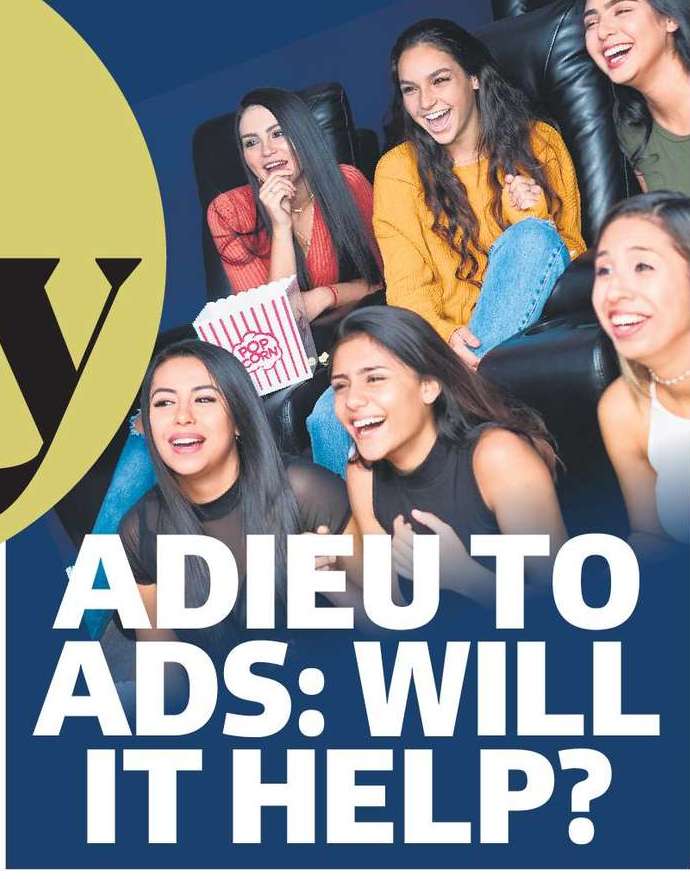
Would moviegoing be incomplete without the ads played before a film and during the interval? A theatre chain has set in motion a debate around its feasibility and if it will really raise footfall
Navya Kharbanda (HINDUSTAN TIMES; April 28, 2024)
Recently, PVR INOX launched an ad-free movies policy in select luxury screens across Delhi, Gurugram, Bengaluru and Mumbai, amid declining theatre footfalls. Also, it is believed that weak box-office collections of even the big-budget films have affected the theatre business in the last quarter.
Cutting down the length of the ads slotted before a movie from 35 minutes to 10 minutes, the theatre chain is looking to add extra shows. Can this practice actually increase footfalls? Will it change the experience for moviegoers in any way? Will the time buffer that these ads allow audiences to reach the cinemas, render it counter-intuitive?
“One of the things that the consumers expressed is that when they get in, they have to wait 15-20 minutes as a pre-show. So, they’d like it if the ad time was a bit shorter. Another set of audience expressed that they don’t mind if we scrapped the ads and charge them a little more. We aim to get the right balance between the number of ads playing and the overall experience,” says Gautam Dutta, CEO-Revenue and Operations, PVR INOX Limited, adding, “We will see if people will pay a little extra for a more premium experience, or if we are able to get one extra show in.”
Will more theatres follow suit?
Negating the query that they will anytime adopt the no-ad policy and emphasising the value of ad revenue, Devang Sampat, CEO, Cinepolis, shares: “In the past, advertisers looked at blockbusters, but that is changing. They’re now advertising throughout the year, no matter how well the movie performs.”
Addressing the reasoning for such a step being footfall, he continues, “Footfalls are only improving every year. You never know which film would work. So, advertisers and brands are now looking at continuing campaigns running round the year.”
On the other hand, Rajan Gupta, owner, Liberty Cinema, says, “At Liberty, we haven’t been showing ads for years. We are anti-ads. I am really surprised that it has taken them this long to figure it out. You might be making money from ads, but it is taking away from the viewers’ experience.”
To show or not to show?
The high-end properties where this has been announced have tickets priced at around Rs. 1,500, so ad revenue is a fraction of the revenue that comes to the cinemas. But for theatres where the price of tickets is Rs. 150-200, if there are no advertisements, it becomes infeasible for the projection systems to be deployed and ticket cost to be justified. For this larger demographic, 10-15 minutes of advertisements don’t really spoil the movie-going experience.
Experts speak
Akshaye Rathi, film exhibitor: If you really have a flow of great movies that can entertain, no one cares about ads or no ads. In the last few months, there has been a decrease in footfall because of the inconsistency in the quality of content. Give me a Jawan, Pathaan, Gadar or The Kerala Story every second week, and the footfalls will skyrocket.
Girish Johar, producer and film trade analyst: The issue on ground is that this is happening only in the metros. They will ask for an extra amount on the ticket price for this premium offering. It’s a good marketing tool to be explored, but it should give them a couple of hours to add another show on their screens.
Subscribe to:
Posts (Atom)