Showing posts with label Agra. Show all posts
Showing posts with label Agra. Show all posts
Emmanuel Macron was actively thinking of solutions to the problems being raised-Richa Chadha
8:34 AM

Vishakha Pandit (HINDUSTAN TIMES; February 19, 2026)
French President Emmanuel Macron on his three-day India tour ahead of inaugurating the India-France Year of Innovation 2026, met several Bollywood biggies on Tuesday, including actors Richa Chadha, Shabana Azmi, Anil Kapoor, and Manoj Bajpayee for a conversation on cinema and cultural collaborations. For Richa, it was “as thrilling as it gets”.
The 39-year-old tells us that the exchange focused on paving the way for many more successful Indo-French productions, citing her film Masaan (2015) as an example. “I hope these synergies between the two democracies continue. Strengthening these collaborations can open doors for richer storytelling and a wider global reach for independent cinema,” she shares.
She also included Girls Will Be Girls (2024) and All We Imagine As Light (2024) as examples of what sustained partnerships can achieve: “France and India have a very good relationship in terms of producing films together. The discussion was about how to strengthen those ties.”
Gushing about “the youngest President” Richa appreciated how Macron was more focused on solving issues than just listening to problems. “He wasn’t passively listening. He was actively thinking of solutions to the problems being raised,” she says.
Speaking about the challenges faced by Kanu Behl’s Indo-French co-production Agra, she noted that despite premiering at Cannes, it secured only a limited release in India. “Globally, traditional theatre-going has dropped, but cinema attendance has risen in interesting ways. There needs to be an adaptive distribution model.”
From Kanu Behl to Chaitanya Tamhane, filmmakers are challenging a system that decides what India can and cannot watch
9:52 AM

Jane Borges (MUMBAI MIRROR; November 23, 2025)
“It’s taken me over nine years, a large chunk of my life and a lot of blood, sweat, toil and tears to make Agra,” filmmaker Kanu Behl shares over a phone call, “I couldn’t have let this go.” Agra, which won Best Indie Film at the Indian Film Festival of Melbourne and premiered at the Cannes Directors’ Fortnight to critical acclaim, is a psychological drama, exploring sexuality and loneliness. Earlier this week, after being given severely limited screenings for his film—only 70 screens across the country—the filmmaker took to social media to call out the “long-standing systemic pattern affecting all independent films in India”: the denial of theatrical access.
His post immediately found support within the community, with 46 filmmakers, including Chaitanya Tamhane, Payal Kapadia, Shaunak Sen, Vasan Bala, co-signing a statement demanding fair access for independent films.
“The group is expanding as we speak,” Behl told Mirror, “We are now in the process of forming a body that will come together to talk about our collective rights.”
Reel dreams, real struggle
Directors Alankrita Shrivastava and Arati Kadav, co-signees to the statement, say their solidarity stems from having experienced similar helplessness. Shrivastava remembers the difficulty she faced in getting a theatrical release for her film Turning 30 (2011), a romantic comedy, starring Gul Panag, revolving around an ad executive who gets dumped and has her ideas stolen before her 30th birthday.
“We got screens in certain places where the film honestly did not have any resonance, whereas we needed more screens in places where the film was doing well,” she says.
For Kadav, who found OTT fame with Mrs (2023) — a remake of the Malayalam film, The Great Indian Kitchen — bootstrapping her career had been the norm for the longest time. Her sci-fi fantasy film Cargo (2019), starring Vikrant Massey and Shweta Tripathi, set aboard a spaceship where souls of the deceased arrive before they are prepared for reincarnation, went to over 25 festivals, including the Miami International Science Fiction Film Festival (MiSciFi).
“Though it was lapped up by everyone outside India, I struggled with distribution for about one-and-a-half years. I had put in a lot of money into this project, and felt quite dejected,” she says.
While the film didn’t get a theatrical release — Kadav says she understands “theatrical reservations for some festival films”, though the need of the hour is to find “incentives for them”—it was eventually picked up by Netflix where it had a decent five-year run. Having the backing of an industry powerhouse like Anurag Kashyap, who was among Cargo’s many co-producers helped. “I got lucky,” Kadav admits.
Showtime comes at a price
The fight at the ground level for independent films is getting harder with each passing year, says Kimaya Hemdev, director and head of acquisition at Star Entertainment Pvt Ltd. “Companies that were once only theatre owners have now also become distributors. So, you’re competing with a distributor who also has the bargaining power of a theatre,” she explains.
When producers, distributors and exhibitors are the same people, it creates a monopoly—one where, she says, “there’s a clear preference for the films they distribute, especially studio movies.”
Quality time slots and cinemas are carved out for the big studio films, which are also exonerated from paying a Virtual Print Fee —a charge producers pay to exhibitors to help cover the costs of converting to digital cinema projectors — which Hemdev says is anywhere between Rs 25,000-Rs 50,000 per screen, per show, and can be prohibitive for independent filmmakers. If a film had to run for a week with a single show daily, it would translate to Rs 3.5 lakh approx.
Audience is king
The long-held argument that there’s no audience for independent films, Behl says, is “fallacious”. “On Tuesday night, when I finally got a show [for Agra] at PVR Citi Mall in Andheri, there were 119 people who came to watch it,” he says.
According to Shrivastava, what’s happening right now is neither fair to independent films, nor the audience. “If the audience can’t access these films, how will they ever get a taste of another kind of cinema?”
Vishek Chauhan, CEO of Rupbani Cinemas, Purnia, Bihar, says that ultimately, “the programming power lies only with the audience.” He stresses that no exhibitor in their right mind would deliberately refuse a good film that promises viewership, because theatres operate as businesses and decisions depend on demand and viability. He finds it unfair to pin the blame solely on exhibitors.
Theatrical success, he says, is no longer the only metric of a film’s performance. The majority of the viewers consume films at home on OTT or television, with theatre earnings form only “12–20 per cent of a film’s overall pie.” Therefore, he says, forcing exhibitors to run films with low turnout “jeopardizes other films that could do better.”
Kerala files
Down South, in the Malayalam film industry, filmmakers working with novel scripts have tried to negotiate the system to reach the right kind of viewers. A case in point is the 2023 National Award-winning drama Aattam, written and directed by Anand Ekarshi, which turns the spotlight on a theatre group whose sole actress faces sexual assault by one of the men. According to him, “shooting and making the film is actually the easiest part; releasing the film is the toughest.”
As an early business strategy, Ekarshi raised funds to make a 10-minute pilot of his film to show producers. “The idea was to give them a glimpse of the script, understand the characters, and see what the actors could pull off.” Joy Movie Productions came on board soon after. Aattam, despite its experimental nature, turned into commercial project. It was made on a shoestring budget of Rs 3 crore, of which Rs 80 lakh was dedicated solely to marketing—the movie enjoyed a successful theatrical run and bagged a prime OTT release.
Meanwhile, the theatre run of Prasanth Vijay’s Ithiri Neram, a romantic drama starring Zarin Shihab and Roshan Mathew, earlier this month in Kerala has been hard-won. Vijay has made two critically acclaimed films before, Athisayangalude Venal and Daayam, funded by a school friend and his wife respectively, which didn’t make it to theatres. He tried to cut the risks with Ithiri Neram by getting a producer — Jomon Jacob of Mankind Cinemas and four others — who shared his sensibility. “Even after the film was made, it took a while to find the right distributor,” he says.
“But I waited, because I wanted the film to reach the last mile, even if it were fewer theatres.” The goal was also to be able to get a good OTT platform for wider reach. The film opened in 60 theatres in the first week of November and continues to reach newer audiences.
The fact that the Kerala state government has taken up initiatives to support the arts, has also come to the aid of filmmakers. Debutante filmmaker Sivaranjini J won a Rs 1.5 crore woman’s empowerment programme grant for her film, Victoria in 2022 — there is no such equivalent grant in Maharashtra for women. The production was taken care of by the Kerala State Film Development Corporation and the movie, when it releases next week, will be shown across eight government-run theatres in major cities. A government grant comes with its own set of challenges with filmmakers having to deal with red-tapeism and mounds of paperwork. “But it gives you a good start,” she admits.
Meenakshi Shedde, Senior Programming Advisor-South Asia at the Toronto International Film Festival (TIFF) and South Asia Delegate to the Berlin Film Festival for 27 years, says that in contrast with Bollywood, Kerala has a very strong grassroots film movement.
“Even the rice farmers know their cinema, and that’s unthinkable in most parts of the country,” she says, adding “that the International Film Festival of Kerala and film societies have played a huge role in shaping their taste”.
Alternative script
Internationally, independent American production house A24 has been backing indie and artistically driven films in its attempt to push high-quality cinema. Closer home, Manish Mundra, filmmaker and founder-producer, Drishyam Films has emerged as an unlikely champion of independent films — Masaan (2015) and Newton (2017) are part of the success story.
“For things to change, everyone must play a part. Producers and distributors cannot do it alone. Audiences need to show up for these films, and the government needs to recognize that cinema is a cultural resource. We need more single screens, art-house theatres and community spaces across the country, and not just urban and expensive multiplexes focused on mainstream releases,” Mundra says.
Shedde believes that independent filmmakers should also tap into movements taking place within cities like Mumbai, that provide platforms to showcase good, quality cinema. “Film Heritage Foundation and VHS [Versova Homage Screenings], for instance, regularly screen indie productions and also get audiences for these screenings.” She stresses the need for filmmakers to think more about “how to help create an audience for their films as well.
Karan Talwar, filmmaker and co-founder of Harkat Studios, has for the last decade been building an alternative community-driven space for independent and experimental films. “Harkat now screens nine to 10 films a month under our independent calendar, with guest curators and rotating themes,” he says. They operate on a 50-50 box-office sharing model, to help filmmakers earn revenue.
“We are seeing a massive uptick of people who want to come in for these screenings,” he says, adding. He believes that the one way to fight this system is to make new inroads and find new friends.
Nothing in the system is designed to nurture our stories-Arati Kadav
10:13 AM

Arati Kadav, Kanu Behl, Aditya Kripalani
As 46 filmmakers sign a joint letter demanding equitable screens, Kanu Behl and Arati Kadav discuss forming a body to secure minimum rights for indie cinema after years of being stifled by theatres and OTT
Mohar Basu, Priyanka Sharma (MID-DAY; November 19, 2025)
Change is what Kanu Behl urged for, as he spoke to mid-day last week after his film Agra was allotted only 70 screens across the country (I will quit filmmaking, Nov 15). Within days, his appeal has transformed into an industry-wide call for action. On November 17, 46 independent filmmakers across India signed a joint letter asking multiplex chains to give their films a fair shot by providing them equitable showtimes, transparency in how the screens are allotted, and urged OTT platforms for acquisition parity. The signatories include acclaimed voices such as Nandita Das, Chaitanya Tamhane, Cannes Grand Prix-winning director Payal Kapadia, Orizzonti Award winner Anuparna Roy, National Film Award winner Rima Das, Arati Kadav, Vasan Bala, and many more.
The first step
Behl reveals that the idea of a joint statement sprung from his conversation with a bunch of filmmakers right after Agra’s release. After all, each of their films, at one point or the other, had been snubbed the way Agra was. “So, we felt it was high time we came together and spoke about this in one voice,” he tells mid-day.
The letter appeals the industry to make space for independent films. It points out the irony of how countless indie movies have been celebrated at renowned film festivals — Cannes, Venice, and Busan — but fail to reach the Indian audience. It highlights that small films face limited screenings, morning or weekday-only slots, and cancellations even.
A wave of reactions
The letter has received an overwhelming support from the industry, with actors, filmmakers, and writers spreading the word through their social media accounts. The reaction itself is telling, notes Behl. “If there is such a huge public outcry, it’s because every single person in the town feels stifled in one way or another.”
Echoing the sentiment is Mrs director Kadav. She voices what every indie filmmaker feels when she says, “Nothing in the system is designed to nurture our stories! Indie filmmakers spend five, six years shaping a film, and when it’s finally ready, there is barely any space for it — not in theatres, not even on OTT, which was supposed to be the great equaliser! We’re constantly told to make what ‘works’, but what about what the artiste needs to say?”
Filmmaker-writer-editor Sumit Purohit, another signatory on the statement, believes solidarity in the industry needs to go beyond words.
“Everyone needs to actively support and promote independent voices. Especially actors and filmmakers who began their journeys with indie films and have gone on to do bigger work. They can make a huge difference by backing new, smaller films. If they cannot always be part of them as cast, they can still support as producers, executive producers, presenters, or by helping the films find funding,” he says.
Actionable change
Kadav terms the letter as “just the beginning”. The plan ahead is to make a filmmakers’ guild. Behl elaborates, “We are developing a collective of filmmakers, which will become an official body and will have a larger conversation about securing minimum rights for this kind of cinema.”
Main Actor Nahi Hoon director Aditya Kripalani highlights that a formal body will give filmmakers far stronger leverage than fighting these battles alone. It will also provide a streamlined approach to champion each other’s work. He cites an example from Hollywood to show how a community of filmmakers can bring the change they want to see. “Agnès Varda, Martin Scorsese, Francis Ford Coppola, Brian De Palma, and so many others were friends who backed each other’s films and ambitions. The same is true of the three Mexican auteurs — Alfonso Cuarón, [Alejandro Gonzalez] Iñárritu and [Guillermo] del Toro.”
Et tu, OTT!
Streamers, once considered the harbinger of a new wave of storytelling, have also been called out in the letter. It questions why OTT platforms consider a movie’s theatrical performance as a prerequisite for acquisition. Here, Kripalani points out that OTT has perhaps benefited the most from indie talent. “They find all their directors for their series from indie films — be it Avinash Arun [who directed Paatal Lok], Devashish [Makhija] who is now making Gandhari, or Vasan,” he shares, before making an appeal. “What would help us is if OTT platforms can keep aside some budget every year for indie films. Even if it’s one-tenth of the big films, it’s enough.”
I cannot struggle anymore. I will not keep pushing anymore-Kanu Behl
9:32 AM
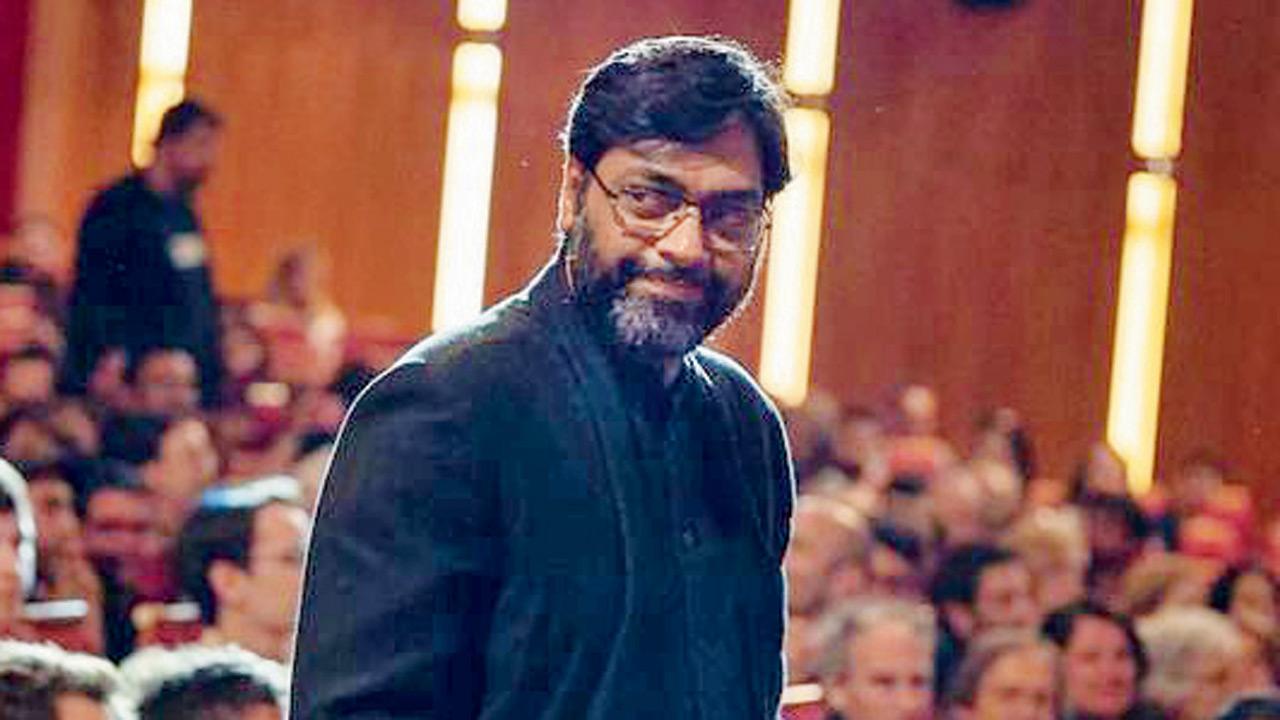
Priyanka Sharma (MID-DAY; November 15, 2025)
The morning of a release day for a filmmaker is usually filled with hope, excitement and anxiety about the audience’s response. But for director Kanu Behl, it was marked by struggle and disillusionment. After a wait of almost two years, Behl’s Agra released on Friday on 70 screens across the country. The filmmaker criticised multiplexes on social media over the film’s showcasing. “We’re being denied shows because small films ‘don’t fit into’ multiplex chain programming,” he wrote on X.
On a call with mid-day, Behl shared his frustration over the relentless fight he had to put up until the day before the release. “Till the last minute, we were told [by theatres], ‘We’ll figure, but nothing [happened],” he said.
When told that only four shows were available in Mumbai on the opening day, Behl pointed out the irony. “On Thursday night, we held a screening in Bengaluru. We had to turn away people because it was houseful. We got a standing ovation. I did around 12 pre-release screenings in India and at least 10 were with aam janta. It played to packed halls,” he said.
Agra has also gained recognition on global platforms, premiering at the Cannes Film Festival 2023. The anticipation was heightened because this is Behl’s theatrical comeback after the 2015 acclaimed Titli. It’s why the cold response of theatrical stakeholders has alarmed Behl — not for himself but for the future of young filmmakers.
“If this is their treatment of a film that opened at Cannes, I shudder to think what younger filmmakers and the next generation will go through. Then they [multiplexes] turn around and say, ‘Aisi filme chalti nahi hain.’ And those they run across 2000 screens, play to empty theatres. So when is this system going to change?”
Behl shared that releasing a film on the big screen is becoming a mental health crisis for independent filmmakers. “The illusion that multiplexes were there to accommodate all kinds of films is long gone. Now it is just about fighting for survival. But I am not going to fight for survival anymore. Either this system has to work or I’m out. I don’t want to do this anymore. How long will a filmmaker fight? This is a larger mental health issue within the industry. This happened with All We Imagine As Light and Sabar Bonda. It will keep happening,” he lamented.
Unless, the audience proves the decision makers wrong, Behl said. Even though the director never believed in putting the onus on the audience to make a film breathe on the big screen, this time he could only look towards the viewers for some hope. Behl said that if Agra doesn’t find audience support, he would quit filmmaking.
“I really want to reach out to the audience and say, ‘It’s in your hands. You come and watch this film and show these guys how much money a film like this can earn or I'm quitting filmmaking. Mujhe nahi karna. I cannot struggle anymore. I will not keep pushing anymore. I will leave filmmaking. (In any other scenario) I would never put this sort of a responsibility on the audience. It's not their responsibility. It is of the gatekeepers. It is these guys who should be doing their job. But in the absence of that, I think the responsibility finally comes upon the audience, including me. This has to be a protest and some sort of a coming together for the audience. So, if there’s only one show available, it should run houseful. If the audience wants to give them an answer and tell them what it wants, this has to come out of the social media echo chamber. Only that will wake these guys up.”
Shouldn’t the industry also unite against the crisis, we asked the filmmaker. The industry would never do it, he replied. “Because they are a cabal. They're a mafia. They all have their families. They all have the kids within the families to protect. It is an incestuous sort of mafianess. So they are not going to move,” he said.
Kanu Behl on Agra getting limited screens: "Are we only going to talk about the next Bollywood star kid vehicle?"
10:29 AM

Vinay MR Mishra (BOMBAY TIMES; November 15, 2025)
Kanu Behl’s Agra — a Cannes-lauded, deeply personal film about sexual repression and constrained spaces — final hit the Indian theatres; however, the celebration is bittersweet. On the eve of its release, Behl publicly accused multiplex chains of denying his film adequate shows, laying bare a recurring struggle in independent Indian cinema.
Expressing his frustration, Kanu, who had directed the critically acclaimed film, Titli (2015), wrote on X, "Update on ‘Agra’, the film: We’re being denied shows because of the so-called ‘big blockbusters’ and because small films ‘don’t fit into’ multiplex chain programming. It’s up to you the audience now! Speak up and tag the chains. Say that you want to see the film!"
He added, "Spread the word, or this will just go on and on. And the space for anything else other than mindless ‘infantilized cinema’ will disappear."
'I am going to continue fighting'
While talking to us Behl says, “I am now immune to all of this. All that remains inside me is the fight. I am going to continue fighting. This film has been a nine year long fight. I am not about to give up now. I have faced every single roadblock that this film right from the time I started writing it, to trying to find finance for it. This is an independent filmmaker's life. But I'm done keeping quiet now. Now I think I want to speak out.”
'We were not looking for 1,000 shows or 500 shows'
It’s not just about the number of screens; according to Behl, the shows they do get are marginal, poorly timed, and not conducive to reaching a real audience. “The kind of shows that we were getting were very peripheral at odd timings and that would not have given proper access to the film. We were not looking for 1,000 shows or 500 shows. We were supposed to release only on 100 screens, but we were looking for 100 significant shows," he informs.
Behl insists the issue isn’t just his — it’s deeply structural. He calls on the broader filmmaking community to unite: “We need more voices from within the industry to come together and fight not just for … This is not anymore about just Agra. These past two – three months, we've seen Jugnuma, we've seen Sabar Bonda, we've seen Homebound, all acclaimed films, acknowledged films, and we've seen what has happened with them.”
He goes on to add, "It’s really time where the community needs to come out and speak up all in one voice. All those people who strut around on red carpets in these film festivals need to finally speak about a film that actually showed in one of these film festivals.”
'It absolutely does demotivate you'
Behl admits that this is not just a business or artistic crisis — it’s deeply demoralizing. “It absolutely does demotivate you. That is the truth. I don't know how many filmmakers will come up and talk about this.” The fight to be heard, he says, wears you down. “It is disheartening. It is very troubling.”
'Are we only going to talk about the next Bollywood star kid vehicle?'
This isn’t merely about Agra getting its due. For Behl, there’s a larger battle happening — for the kind of cinema we allow, normalise, and reward. “We need to move the needle beyond just doing Disneyfied rubbish entertainment, which is essentially for third standard or fourth standard students sold to adults,” he argues.
He poses a broader question: “How long will this go on and how long are we, the audience, going to accept it? What is the kind of world that we are creating for ourselves today and for our children that are going to follow? Is this going to be the level of nuance in this country, the level of conversation, the level of debate where each weekend we are only going to talk about the next Bollywood star kid vehicle, and there's no other conversation to be had?”
I was so bored of hearing adjectives like ‘hot and sexy’, ‘sultry actress’-Priyanka Bose
8:19 AM

Priyanka Sharma (MID-DAY; October 19, 2025)
Six years is a long wait for any actor, more so if it’s for a project close to their heart. Naturally, Priyanka Bose is relieved that Agra is finally set to release in theatres in less than a month, after much struggle.
“What’s the use of so much hard work if no one in the ecosystem nurtures it and sees that this film is potent? I am very grateful that Agra, by far my most favourite work in the Indian milieu, is coming out. Had this film become a cult, [only] Kanu [Behl, director] would have been celebrated. Artistes who are in the film need our films to come out for people to know that we are reliable.”
Also starring Rahul Roy and Mohit Agarwal, Agra premièred at the Cannes Film Festival 2023. Though the film was ready for over two years, Behl struggled to find distributors in India owing to its central theme — sexual repression in the context of urban space constraints. Bose admits she had apprehensions about taking up a part that might reinforce the stereotype she had long wanted to shed.
“I came with a lot of fear because I [have been] trying to change a certain narrative about myself. I was so bored of hearing adjectives like ‘hot and sexy’, ‘sultry actress’. I was willing to be very fearless. [But] Agra felt like a perceived danger. I would think, ‘When this comes out, the attention I will get will not be because of my craft, but because of how bold it is.’ But do people even understand this adjective? I don’t want a bravery award. I want people to understand that I am a very reliable artiste,” she says.
Bose adds that Behl understood her concerns and gave her the freedom to navigate them. “I never had that with any of the directors. Kanu Behl gave me the space to explore my skill set and potential. There is so much vulnerability in boldness. Only we know how we did it.”
The actor says she took up Agra also because of the support she received from her partner and friends. Her perseverance seems to have paid off. Last month, her film Jugnuma, co-starring Manoj Bajpayee and directed by Raam Reddy, opened in theatres to unanimous praise.
Even as she celebrates back-to-back collaborations with filmmakers she admires, Bose says her focus remains on growth. “I want to work with Neeraj Ghaywan, Konkona Sen Sharma, and Payal Kapadia. I want to work with the best. Whether they see me worthy right now or not, I’m just going to continue working on my craft. I’ll be ready when they’re ready with a script saying, ‘Pri, we think you’ll be great at this’.”
Kanu Behl on bringing Agra to Indian theatres: "Difficult, disheartening, and sometimes depressing"
9:27 AM
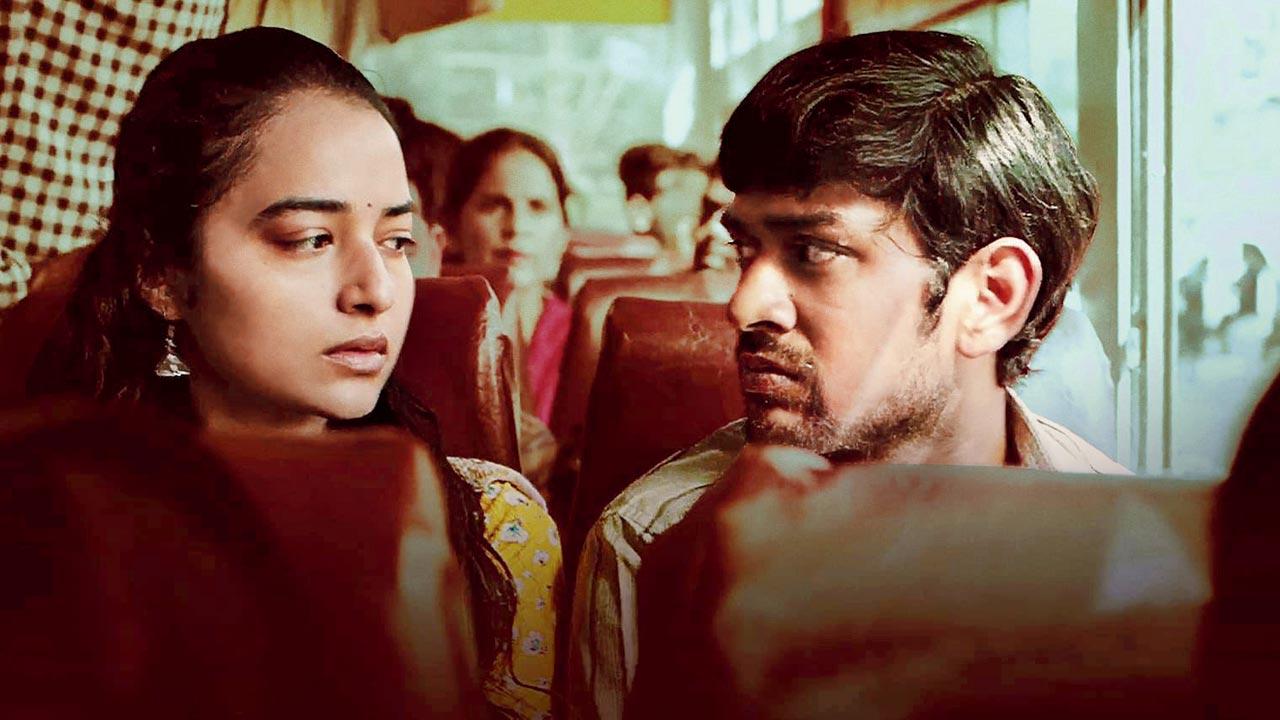
Priyanka Sharma (MID-DAY; October 14, 2025)
“Difficult, disheartening, and sometimes depressing” — that’s how Kanu Behl describes his last two years as he fought to bring Agra to Indian theatres. This, even though the Rahul Roy, Priyanka Bose, and Mohit Agarwal-starrer won wide praise at the Cannes Film Festival 2023. Now, the drama is finally arriving in Indian cinemas on November 14.
Behl’s jubilation is evident when he, over a phone call, tells us, “It was such a long and hard battle. We all know the state of independent cinema now. To finally get here where the film will meet its real audience is an indescribable feeling of joy.”
Finding a distributor that could put faith in the story — of a sexually repressed man in the context of India’s space crunch — was the struggle. Eventually, Saregama Films came on board as the distributor. Behl, who has written the story with Atika Chohan, shares, “It was a daily battle. If you’re trying to make a difficult film, you need to have strong collaborators from the production point of view.”
Film banners apart, the director has another collaborator in mind — the government. He believes it’s imperative for the government to sponsor a distribution channel so that independent films can thrive in Indian cinema.
He says, “The top five or 10 films that come through festivals should get government support. There must be a quality check. If a film clears that, the government must mandate a certain number of screens for its release. It also needs to give tax breaks so that the audience has an incentive to watch that film as opposed to the next blockbuster playing in the next screen.”
Agra is coming to theatres a month after a slew of indie films, from Jugnuma to Sabar Bonda, released on the big screen. Does it seem like a shift? “I hope it’s a shift,” asserts Behl, before adding, “But I’ve seen this before. When I came out with Titli [2014], a lot of independent voices were emerging. Then there was a lull. So, I’m happy about all of these films, but I’m also wary because I don’t see a sustainable system. I hope we all can create a system for independent films.”
Mujhe kabhi nahi laga ki Laapataa Ladies keval ladies ki film hai-Sparsh Shrivastava
9:09 AM
Niharika Lal (BOMBAY TIMES; July 24, 2025)
When Sparsh Shrivastava first read the script of Laapataa Ladies, he didn’t see Deepak just as a boy who loses his wife on a train. He saw someone carrying the entire film. “Deepak ka jo character hai, woh shuru mein apni wife ko leke chalta hai, then he loses his wife, and in the entire film, he’s only searching for her. That’s the whole character,” he says, adding, “There was nothing much. Pata nahi kyun, mujhe kabhi laga hi nahi ki yeh keval ladies ki film hai. Mujhe hamesha laga yeh utni hi meri bhi film hai.”
In a recent chat with us, he recalled his Agra and Delhi days and spoke about finding footing in the industry.
‘JITNA ZYADA AAP APNE CHARACTER KE SAATH TIME BITANE LAGTE HO, WOH AAPKE ACTING MEIN AANE LAGTA HAI’
Sparsh says the honesty of his character Deepak was in the eyes. “Jitna zyada aap apne character ke saath time bitane lagte ho, woh aapke acting mein aane lagta hai. Meri honesty uss character ko leke, zara sa bhi corrupt nahi hui. Mujhe hamesha laga yeh utni hi meri bhi film hai jitni makers ki.” At a meeting at Aamir Khan’s house after the film finished, he remembers, “Aamir sir ne bola, ‘You’ve brought the character above the paper.’”
‘MAKERS ARE LOOKING FOR ACTORS, NOT NAMES’
Sparsh isn’t naive about the way the industry treats people differently. “People say there’s no balance in the industry and different people get treated differently. But aaj bahut badal gaya hai. Makers are looking for actors, not names. Having worked with directors like Kiran Rao, Soumendra Padhi, and Sonam Nair, I’ve seen them treat the spot boy with as much warmth as someone coming in to shoot for just an hour.”
‘AB JAB AGRA JATA HOON, TOH TOURIST KI FEELING KE SAATH JATA HOON’
Sparsh says the joy of working still colours his memories – whether it was 17-hour rehearsals as a child or shuttling between Agra and Delhi for dance classes, and between Agra and Mumbai for work. At 8 or 9, he’d travel to Delhi for classes at Shiamak Davar’s institute. And even now, he finds himself caught between the cities. “Jab main Mumbai mein hota hoon, toh sabse zyada Agra ki language miss karta hoon. Aur jab Agra jata hoon, toh tourist ki feeling ke saath jata hoon,” he laughs.
‘I’m a really good dancer’
Sparsh says what matters more than dialogue is silence. He says, “I love playing parts where I don’t have to say much and I could emote through my body, eyes, movements.” “The reason might be simple – ‘I’m a really good dancer,’” he admits, grinning. “To be a good dancer, you have to express a lot.” At 11, he won Chak Dhoom Dhoom, a reality dance show, after hours of daily rehearsals.
In the web show Dupahiya, Sparsh did danced to the Photua song in a ghaghra-choli. “Ganesh Master ji (Ganesh Acharya) choreographed it. Sabko ghaghra-choli pehnake perform karwaya. Earlier we thought the back dancers would be girls, but it was his idea to keep everyone – even the background dancers – as men. It’s really unusual to see a song like that in a web show,” he says.
Why do people always compare me to my brother Vicky Kaushal and not other actors?-Sunny Kaushal
8:52 AM
Akash Wadhwa (BOMBAY TIMES; October 2, 2024)
Sunny Kaushal, of Shiddat and Phir Aayi Hasseen Dillruba fame, may have made his debut visit to Lucknow recently, but the actor said that he is in love with the language in the state. Having shot for two projects in Agra and another in Prayagraj, Sunny shared how his interaction with the locals helped him learn his now favourite word ‘hum’. Excerpts…
How does it feel to be in Lucknow?
I have not been to Lucknow earlier though I have been to Prayagraj and Agra in the past. The only thing I know about the city is ki muskuraiye ki aap Lucknow mein hain. And being a complete foodie, I love kebabs, and I tried Tundey kababs, which were really yummy.
And what about Agra and Prayagraj?
I shot for my film Hurdang in Agra and Prayagraj and then Phir Aayi Hasseen Dillruba in Agra. Experience of shooting in Prayagraj was fantastic. I used go for long walks in the city and chit-chat with the chai waala and uncles at the tapri to prep for the role. I used to do that often since I was playing a localite in the film and mujhe woh apni zubaan mein lehja leke aana tha. Since I am a Punjabi from Mumbai, I had no idea about the dialect of UP. The use of ‘hum’ is a lot in this part of the country. For us it is a collective noun but for people here it is singular. I am a very ‘tu’ and ‘main’ kind of a guy so for me the usage of ‘hum’ in daily life was a very meetha experience.
And talking about Agra, I love that city. The strangest part is that despite people coming from different parts of the world to see the Taj Mahal, I couldn’t visit the monument. The more I am shooting in India, I am realizing that I have so many places here to explore. It is very weird that whenever we go on trips, we travel abroad, when we should be seeing more of our country.
How has your journey been in the entertainment industry so far?
The journey has been fantastic. Hiccups have been a part and parcel of the journey, uske bina mazaa bhi nahi aayega. Mediocrity is still a bit easy but if you want to reach somewhere and if you have set a goal for yourself then things are not going to be always smooth. Right now, my goal is to entertain as many people as I can. I want to do some great stories and be a part of some great narratives and touch upon some good characters. It is not as if I don’t do many projects, I have a lot in the pipeline. Plus, pandemic has changed a lot of things. I didn’t shoot for any projects for a long time and now, I have been shooting back-to-back and the releases too are back-to-back.
Has the pandemic brought changes in the viewing patterns of the people?
It has and it is there to see for everyone. We have become comfortable watching things at home on our mobile devices. Forget about others, even I have become comfortable in such viewing. Even I wait for movies to release on OTT to watch. People might say that average stories do not sell any more, but I feel it is about how you tell a story that sells. Like a love story with a conflict will always be an iteration of Romeo and Juliet. But it is how you tell it that makes a difference. One thing I am sure is not going to change in India is the love for cinema. Despite the present craze for OTT, Indian’s love for silver screen will never change. Also, there will come a time when theatre and OTT will coexist nicely together. I don’t want that saturation of OTT should ever come, meri toh rozi roti ka sawal hai. (laughs)
Most of your projects are for the OTT. So, do you not miss seeing yourself on the silver screen with a houseful audi?
What I look at is just the fact that I am getting an opportunity to work and be here. I am grateful for all the work I am getting, and I do not want to look at what I am missing in life.
Talking about the content on OTT, it has been under constant scanner – sometimes for its bold content sometimes for abusive language. Have you, as an actor drawn any line for yourself?
I feel that the maker always writes the content, whether abusive or bold, according to the need of story and it is really difficult for an actor to make a judgement whether it is needed or not. I have not done anything so far in which I had to use cuss words. Chor Nikal Ke Bhaga had just one or two such words that too in English. Having said that I haven’t drawn any boundary for myself for the kind of content I will do.
Both you and your brother Vicky Kaushal are doing great career wise and have very different trajectories when it comes to your acting projects, yet people compare the two of you. How does that make you feel?
As individuals, we both are two completely different individuals despite coming from the same blood line. Our craft is completely different and the way we perceive a character and bring it to life on screen is also very different. The comparison has always baffled me as to why do people keep comparing me to my sibling. Why do people always compare me to my brother and not other actors?
CBFC instructs Agra director Kanu Behl to replace frontal nudity scene and drop sex sequence
8:30 AM
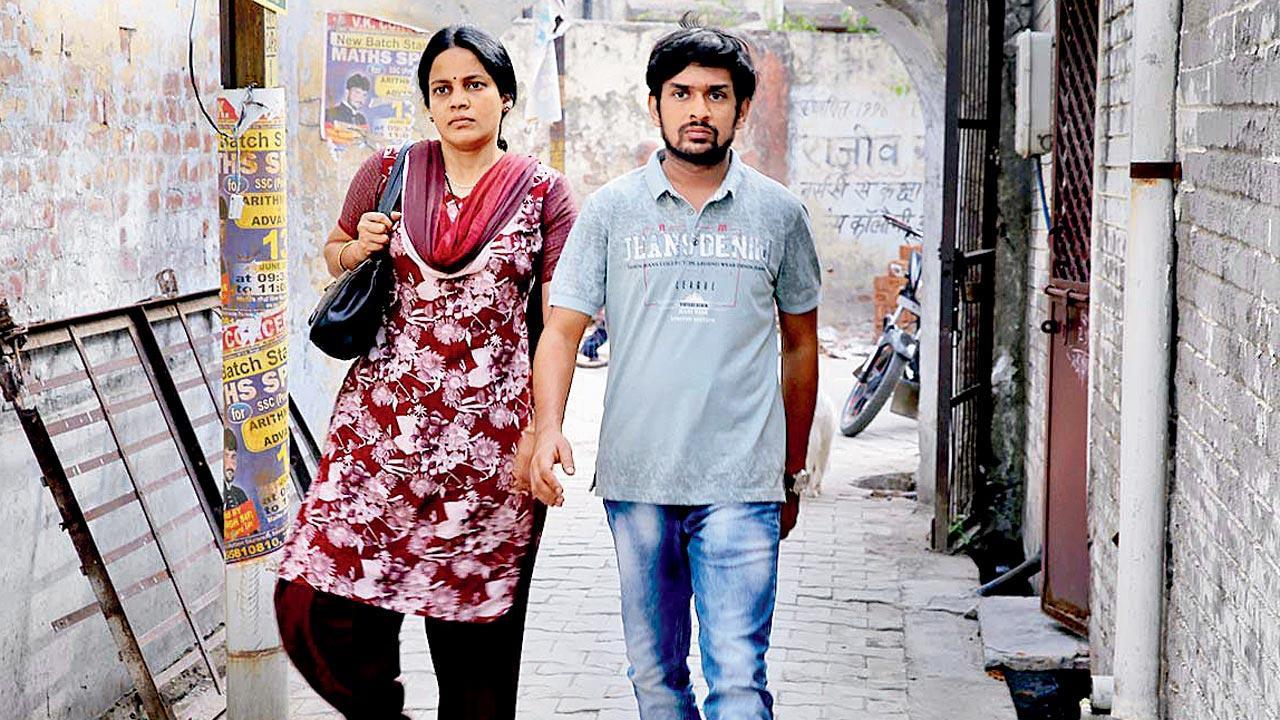
CBFC grants ‘A’ certificate to Agra, instructs director Behl to replace frontal nudity scene and drop sex sequence; makers yet to consider challenging it
Mohar Basu (MID-DAY; June 10, 2024)
During our last conversation with Kanu Behl, the director wasn’t worried about Agra—which explores the subject of sexual repression—having a hard time with the Central Board of Film Certification (CBFC) as his previous experience with the board was “reasonable” (To find a producer is the toughest bit, Aug 6).
Unfortunately, the film has now had a run-in with the board. It has granted Behl’s movie an ‘A’ certificate, with two instructions—that a scene with frontal nudity be replaced with another visual, and a sex sequence be deleted altogether.
A copy of the CBFC certification is in mid-day’s possession. A source tells us, “They have asked for a few expletives to be eliminated, which the makers agreed to. However, the team is deliberating over the remaining two instructions. For a film that explores the protagonist’s sexual journey, the two sequences are crucial to the narrative.”
Over the next few days, the director and the team at Saregama’s Yoodlee Films, which has produced the Mohit Agarwal and Priyanka Bose-starrer, will decide whether they will accept the cuts or head to the court to challenge the board’s decision.
The news about the CBFC’s objections to Agra’s scenes is likely to add to the ongoing discourse about censorship in Indian cinema. The subject came under the spotlight recently with Dev Patel’s Monkey Man, the release of which remains in limbo.
Not many people know this, but I keep listening to Bollywood songs on set while shooting-Hande Erçel
8:27 AM

In India for the first time, Turkish actress Hande Erçel says she would love to collaborate with Indian filmmakers
Renuka Vyavahare (BOMBAY TIMES; March 9, 2024)
One of Turkey’s biggest stars, Hande Erçel has a whopping 31.8M followers on Instagram, making her one of the most influential names in the Turkish film and TV industry.
In her first visit to India for FICCI Frames 2024, we caught up with the actress in Mumbai for an in-depth exclusive chat and even made her try the city’s iconic cutting chai! Deeply observant and excited about her first visit here, though it’s just for 4 days, Ercel spoke about Indian cinema, beauty standards for women, social media and more. Excerpts…
Turkish heartthrob Burak Deniz was here last year for this event and this year it’s you. Did you speak with him before getting here?
Yes, we spoke. He loved the food and he talked about it a lot. What struck him the most about India was the kindness and warmth in people here. They are extremely loving and it’s true. I was aware that people knew me here but didn’t know I was this popular. This is my first time here. I had heard a lot about Indian culture, people, and music. I had so much curiosity and wonder about India and the country surpassed my expectations. The weather’s good and I like bright sunshine over cold conditions, so this is perfect. It’s a short visit, but I went to the Sanjay Gandhi National Park and liked it. I also hope to visit the famous Ganpati temple (Shree Siddhivinayak) and Dhobi Ghat in the city. It won’t happen this time but it’s a dream to witness the The Taj Mahal in Agra. It’s gorgeous.
Are you familiar with Indian cinema?
I loved watching this film called Black (by Sanjay Leela Bhansali). I like Indian actors a lot, too. I like Dev Patel (British actor of Indian origin) and Hrithik Roshan. I know Ranveer Singh and of course Aamir Khan, who is big in Turkey. I enjoyed PK and 3 Idiots. Not many people know this, but I keep listening to Bollywood songs on set while shooting. You’ll always find Bollywood music on my playlist. I would love to collaborate with Indian filmmakers.
You are one of the most followed Turkish actors on Instagram. Is that a pressure sometimes? To be constantly watched and judged.
It’s good pressure. It makes me more thoughtful, responsible, and inspirational by wanting to do good things for people. I ensure I separate my private and professional life. That can help you strike a balance between how much of you you put out there. I like to be sincere instead of putting on a mask and present a different persona online. It’s important to stay true to who you are as a person. I am aware of the pressure on women to always look perfect. Young girls look up to their screen idols and want to imitate them. That’s why I try to be as natural and organic on social media. I want to tell them that nobody’s perfect. Every woman is beautiful and distinct. We radiate beauty due to the light and warmth we have within, which matters the most. Believe in yourself.
Any person that you look up to?
Cate Blanchett is inspirational as an actor and a person. I like the way Anne Hathaway carries herself and most importantly my mother is my idol.
What are your thoughts on marriage?
Everything has a time. I believe in marriage. I would love to have kids and bring them up in a way that they do good for society.
(Crisp) Movie Review: AGRA by FENIL SETA
5:12 PM

Agra is directed by Titli director Kanu Behl and just like his 2015 film, this one is also about a dysfunctional family. Agra shows reality as very few films have, be it the character’s way of life, their struggles, their dark sides, their costumes etc. The film begins on an astonishing and even amusing note and then gets quite disturbing. A few scenes are arresting. However, there’s a change of tonality in the second half. One expects things to go a certain way because that’s how the set-up has been done. However, it takes a turn. Instead of surprising the audience, it dents the impact. Speaking of performances, Mohit Agarwal is terrific and gets totally into the skin of his character. Priyanka Bose is the best performer in the film and gets all aspects of her character, including her handicap, right. Rahul Roy suits the part but doesn’t get much scope. Vibha Chibber is dependable. Aanchal Goswami (Chaavi) and Sonal Jha (Aunty) leave a mark. All in all, Agra is a fine effort.
My rating - *** out of 5!
My rating - *** out of 5!
Agra is not sensationalizing sexuality; I hope CBFC sees Agra reasonably-Kanu Behl
8:32 AM
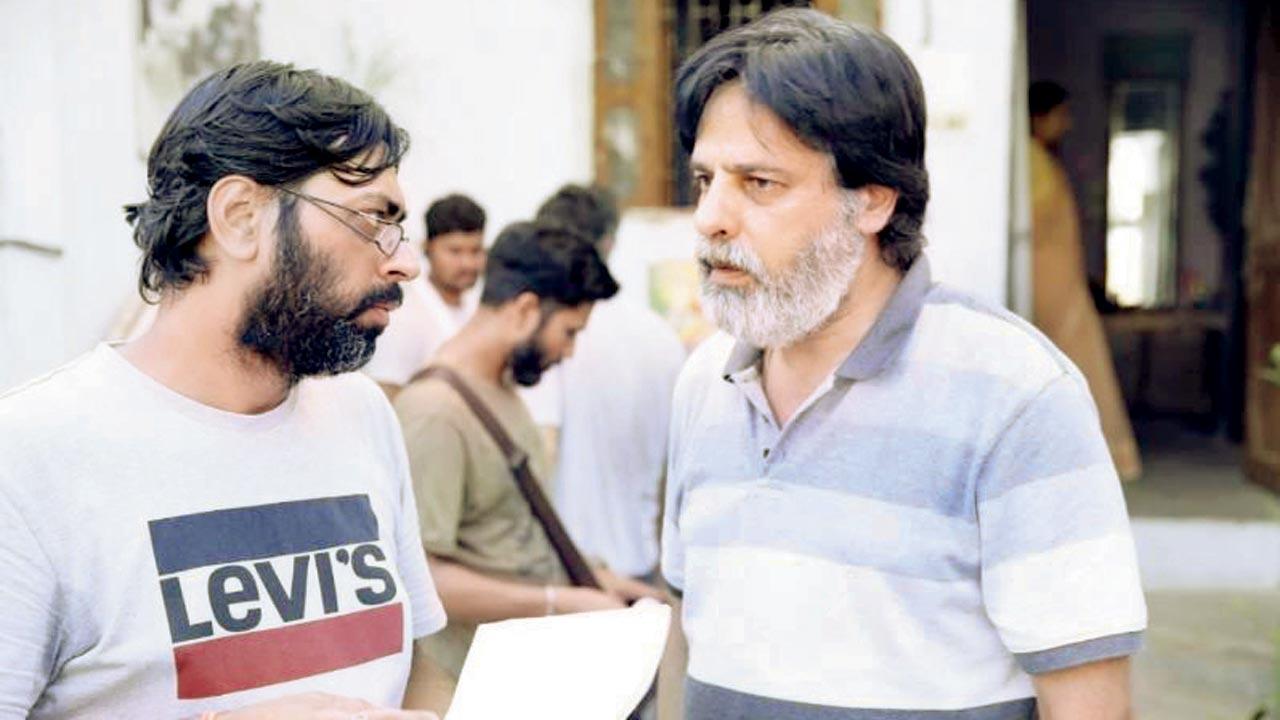
With Agra set to be screened at Melbourne film fest, director Kanu Behl on how indie filmmakers struggle to get backing for movies
Mohar Basu (MID-DAY; August 6, 2023)
“Making the kind of films I make is tough,” Kanu Behl’s opening line hits us hard. At a time when we believe that there is enough space for diverse voices out there, the director observes that independent filmmakers still find it difficult to get backing for their movies. It was the same story with Agra, which won immense love at the Cannes Film Festival this year. Now, the drama is set to be screened at the Indian Film Festival of Melbourne on August 15.
“It takes a lot of work to make a film exactly the way you make it. I have many more stories I’d love to tell at a quicker pace. But to find a producer and get the film released is the toughest bit. This, even when there is no dearth of courageous people, who want to push the envelope,” says the director.
Starring Rahul Roy and Priyanka Bose, Agra is described as an exploration of sexual dynamics within a family. It is a deeply personal film for Behl. “Growing up, from the age of 15 to 25, I felt sexual repression and an inability to express myself. This was still coming from a place of privilege; I lived in a 3 BHK in Delhi. But imagine, people who were a few notches below me economically going through the same thing. There is a sense of transactionality in our most intimate moments. It was an important emotion to discuss.”
It is worrisome that the story is being told at a time when censorship is at its peak. But the director isn’t perturbed at the moment. Right now, the film is enjoying its festival runs, and hasn’t got a CBFC certificate. “My previous experience with the CBFC was reasonable, so I hope they see Agra in the same light. It is not sensationalizing sexuality.”
A story about sexual repression will most likely elicit strong reactions in the sensitive and reactive world of today. Does he find his voice curtailed in such a scenario? “For a while on the initial drafts, I was censoring myself. I’d ask myself how to make this movie. But the only way to battle it is to continuously try and be honest. I asked myself, what is my base impulse to work? My output should be fair to my impulse.”
I have done 60 films but Agra is the most fantastic one-Rahul Roy
8:25 AM
Rishabh Suri (HINDUSTAN TIMES; April 24, 2023)
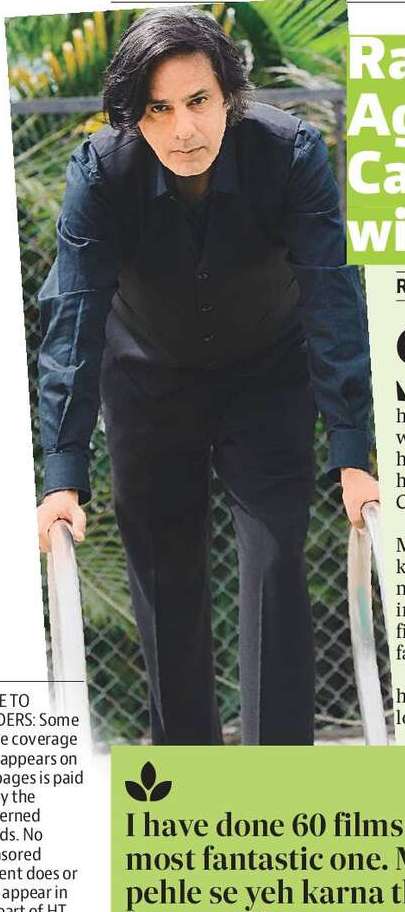
So what if Rahul Roy has barely recuperated after a brain stroke and begun to speak properly? The happiness in him is evident when you talk to him about his film Agra, which is set to have a world premiere at the Cannes Film Festival.
“It was very good news. Mujhe bahut pehle se yeh karna tha — something for myself. Now it has all fallen into place. I have done 60 films but this is the most fantastic one,” he exclaims.
Roy feels that having made his debut with the widely loved romantic musical Aashiqui (1990) always led to him being boxed as fit for a specific kind of character. “[Filmmakers] didn’t explore my talent. I don’t think that was done. Hopefully, now it will be. Whatever is being offered to me at this moment is good. I just had a brain stroke, the situation was very bad. But slowly, I am back to working now. I have been telling everyone that I am back to the grind,” says the Junoon and Phir Teri Kahani Yaad Aayee (both 1992) actor.
The filming of Agra, directed by Kanu Behl, took three years to complete. “I’ve been shooting for it very slowly, because of my recovery and also the pandemic. It was very difficult to shoot during those times. I can’t talk much about my role, but you would have never seen me in such a character before,” he says.
Will he be travelling to Cannes for the premiere, if his health permits? “Of course, yes!” he ends.
Kanu Behl talks about Agra and Cannes honour: "Like me, I had seen a lot of young men who had felt this repression"
8:23 AM
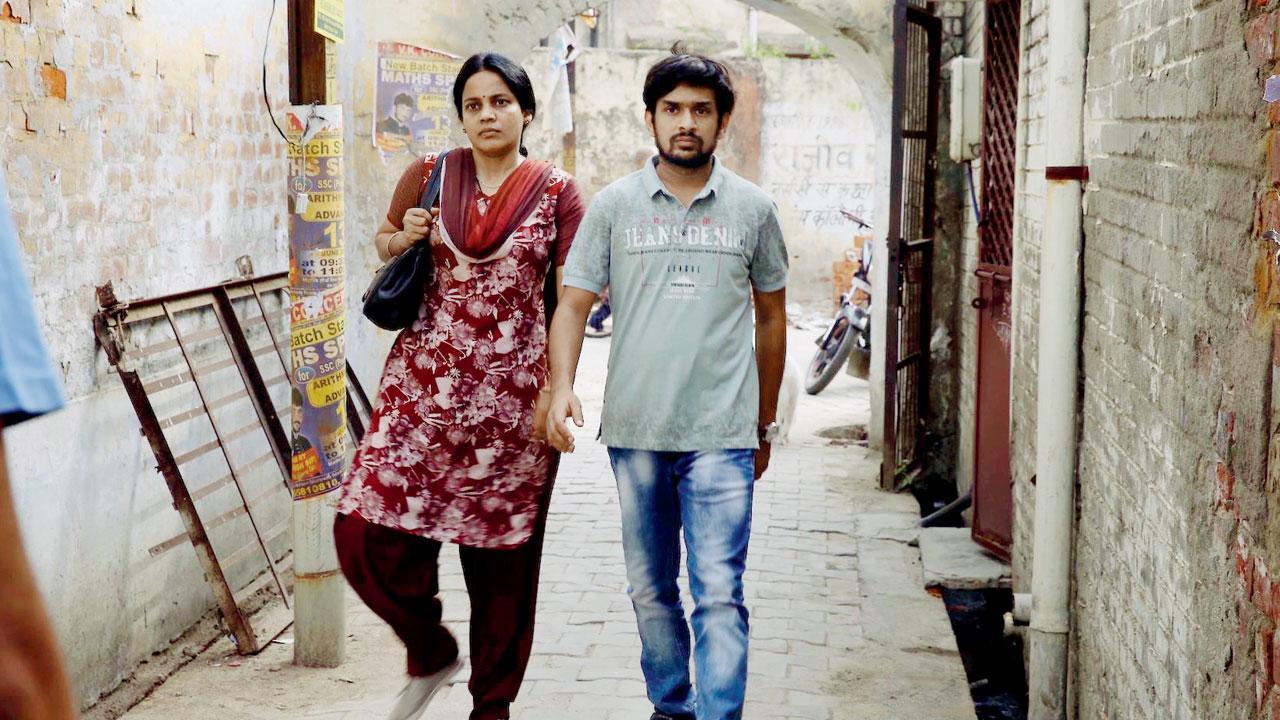
As Agra is set to premiere at Cannes, director Behl says festival support is important for offbeat films to reach the audience
Priyanka Sharma (MID-DAY; April 24, 2023)
Having one’s feature screen in the prestigious section of Directors’ Fortnight at the Cannes Film Festival is a matter of pride. But to director Kanu Behl, the upcoming première of Agra at the French Riviera is the means to an end. “The biggest reason for feeling good is because I know that the film is one step closer to reaching the audiences in India,” beams Behl, whose last feature film, Titli (2015), premièred at the Un Certain Regard section of the 2014 Cannes Film Festival.
Behl’s films are divorced from the mainstream, frothy offerings of Bollywood. This knowledge has come to him with the realization that his movies will need a festival endorsement to see the light of day in India.
“I am clearly not Bollywood. There is a certain kind of film that gets financed here through a certain structure. Unfortunately, there is no commercial structure for the cinema I subscribe to, and hope a certain audience would want to engage with. So, a film festival debut becomes a necessary component in the journey of such a movie,” he explains.
Starring Rahul Roy and Priyanka Bose, Agra is described as an exploration of sexual dynamics within a family. The director believes that the movie tackles an urgent subject.
“After Titli released, I asked myself, ‘What do I want to talk about?’ That’s when I realized there was a part of me, which I had felt over the years, but not expressed. Like me, I had seen a lot of young men who had felt this repression. It made me question the presence of sexuality and desire within our lives in the specific cultural context of our country.”
I didn’t use soap for two months as I wanted the dust to settle on my body-Prakash Jha
9:01 AM

Set to play a daily wager in his first film as protagonist, Prakash Jha on stepping into the role for M Ganis upcoming offering, Mato Ki Saikil
Upala KBR (MID-DAY; September 4, 2022)
Marking his full-fledged acting debut with M Gani’s Matto Ki Saikil, Prakash Jha plays the leading role of a daily-wage labourer who loves his rusty bicycle. In a bid to slip into the skin of the character, Jha spent several days in Mathura and also interacted with daily wagers to actually get a job. Jha tells mid-day, “M Gani has lived in Mathura and understands these characters. Coming from a small town, I have also known these characters. I was surprised and happy to get the chance to play this part.”
Having attended acting workshops across the globe, Jha says he is aware of the importance of learning the nuances of the craft. “Matto was not an easy character to nab. It’s not difficult for an actor to physically look the part, but I had to change my persona too. I am known to play characters that are tough, and strict, but to become a subservient, meek man like Matto, needed work.”
Jha spent several days with daily wagers, observing how they wore clothes, and smoking bidis with them. “Just before we would roll, I would go to their spots, watch them for hours, and wait for somebody to pick me up [for employment]. I got picked up twice, and did the job for a couple of hours. I didn’t use soap for two months as I wanted the dust to settle on my body. I stopped using the air conditioner too.”
Juggling both worlds of acting and film-making, Jha establishes that few can understand the pulse of a film as well as a director. After putting in the effort to conduct workshops, and understand the nitty-gritties of the role, he says he ought to follow his director’s vision. “If I am directing, and some great actor comes in and tells me how to take a shot, I will put him in his place. So, I must give the same liberty to my director, because it is his vision.”
Matto Ki Saikil features both, professional actors from local theatres of Agra and Mathura, as well as non-professional artistes. “Before M Gani made this into a film, he used to stage it as a play in Mathura with these actors,” he says, elated that this crucial project on his resume will enjoy a theatrical release. “It’s a pure story about that part of India where people toil throughout their lives. They build our homes, roads, flyovers, and atomic plants, but we don’t know how they live. It takes a pandemic for us to realise that there are crores of people who are working like that.”
Images: Check out Ranbir Kapoor, Shraddha Kapoor, Kartik Aaryan at Luv Ranjan's wedding in Agra
8:33 AM

HINDUSTAN TIMES (February 22, 2022)
Filmmaker Luv Ranjan tied the knot with his longtime girlfriend, Alisha Vaid, in a private ceremony surrounded by family and close friends on Sunday. The wedding took place at a plush hotel overlooking the Taj Mahal in Agra. As per reports, the pheras were followed by a reception in the evening.
On Saturday, actor Ranbir Kapoor, producer Dinesh Vijan, and music composer Pritam Chakraborty were spotted outside the Mumbai airport as they jetted off to Agra to attend Ranjan’s big day. Other guests at the wedding included actors Arjun Kapoor, Shraddha Kapoor, Rakul Preet Singh, Rajkummar Rao, Varun Sharma and actor-producer Jaccky Bhagnani.
Ranjan’s close pals, actors Kartik Aaryan, Nushrratt Bharuccha and Sunny Singh, who have collaborated with him on Akaash Vani (2013), Pyaar Ka Punchnama 2 (2015) and Sonu Ke Titu Ki Sweety (2018) also joined the celebrations. As per reports, the couple wore outfits by designer Manish Malhotra on their big day. If rumours are to be believed, Vaid was Ranjan’s college sweetheart, and it is their shared love for art that connected them.

Kartik Aaryan and Rajkummar Rao

Pritam, Arjun Kapoor and Varun Sharma


Luv Ranjan ties the knot with Alisha Vaid in Agra
8:12 AM

Rachana Dubey (BOMBAY TIMES; February 21, 2022)
Filmmaker Luv Ranjan exchanged wedding vows with his girlfriend Alisha Vaid at a private ceremony, at a plush hotel in Agra overseeing the Taj Mahal yesterday. The wedding was attended by the couple’s family and close friends. From the Bollywood brigade, Arjun Kapoor, Ranbir Kapoor, Shraddha Kapoor, Varun Sharma, filmmakers Dinesh Vijan and Bhushan Kumar, composer Pritam apart from Luv and Alisha’s other friends were in attendance.
Rakul Preet Singh and beau Jackky Bhagnani also attended the wedding, but only after a quick detour at the Taj Mahal. Kartik Aaryan, Sunny Singh and Nushrratt Bharuccha, three of Luv’s oldest actor-collaborators were at the ceremony, participating in the revelry. The wedding functions kicked off two days ago with mehndi, sangeet and haldi ceremonies.
The overall decor for the wedding rituals was created keeping the couple’s taste with every ritual designed thematically. The celebrity guests started trickling in from Saturday noon for the nuptials that took place yesterday. The couple apparently wore outfits from designers like Manish Malhotra and Sabyasachi for the various functions. It was a simple wedding ceremony, replete with followed by the reception in the evening.
On the work front, Luv, known for films like Punchnama series, has an impending schedule of his romantic drama with Ranbir and Shraddha left to be shot in Spain. He’s expected to resume work in a few days.
A source close to the filmmaker says, “Luv and Alisha wanted to keep their wedding extremely private and away from the media glare. Luv is fiercely guarded about his personal space. That’s the reason he has never uttered a word about anything except his work. ”
Whenever Parag Tyagi sneezes or coughs, I hit the panic button-Shefali Jariwala
8:32 AM

Hasti Doshi (BOMBAY TIMES; May 11, 2021)

Shefali, who says that it’s important to focus on mental health and talk about it in the current situation, posts messages encouraging people to think positive on social media. Talking about the things that she finds solace in, Shefali shares, “When restrictions were lifted, Parag and I went camping and hiking, which gave us a lot of joy. I have created a small garden in my balcony, and tending to the plants gives me a lot of joy. Just going back to basics has brought a certain sense of calm in my life. In fact, today, rather than the treadmill, I prefer walking on green grass.”
I have waited for these chances, says Yami Gautam as as she signs eight films
8:03 AM

Kavita Awaasthi (HINDUSTAN TIMES; February 5, 2021)
With eight films in her kitty, actor Yami Gautam is on a roll. This year started for her with a bang as she recently wrapped up the shoot of her upcoming film, Bhoot Police. Next, she starts prep for Dasvi, a social drama, which will be shot in Agra (Uttar Pradesh) in mid-February, alongside Abhishek Bachchan.
“I am looking forward to playing a cop in this film, it will be fun to learn Haryanvi. Another film that I am excited about is, A Thursday, which is a sequel of A Wednesday (2008). It is one of the best scripts I have read in a long time. Apart from headlining this film, I am also the lead in director Aniruddha Roy Chowdhury’s next, which is a take on crime journalism. I didn’t want to headline a movie just because it is female led. These are really good scripts and roles with some amazing directors,” says Gautam, adding that the other four films will be announced soon.
The actor admits that in nine years of her career, she has had phases where she would have just one film in hand. “People would say, why are you so choosy? One can be choosy only when you have many options. If you don’t, then you do one film at a time, like I did. But things changed after I did films like Kaabil (2017), Uri: The Surgical Strike and Bala (both 2019). These films changed people’s perspective about me, and things started rolling,” she says.
Gautam adds that she waited for these opportunities as she wanted to focus on strong subjects. “The idea was to select films and be a part of scripts which also help me portray and become a versatile actor. I want to be who I am as a person but on screen, I want to surprise myself and the audience and see what more can I explore. That’s what makes it fun,” she says.
Subscribe to:
Posts (Atom)