Showing posts with label Aamir Khan interview. Show all posts
Showing posts with label Aamir Khan interview. Show all posts
Gauri Spratt brings a lot of calm, she brings a lot of steadiness-Aamir Khan
4:43 PM

The actor speaks of bonds that outlast marriage, co-parenting with grace, and the unexpected arrival of new love at HTLS 2025
HINDUSTAN TIMES (December 8, 2025)
Celebrated actor-filmmaker Aamir Khan, long known as Bollywood’s Mr Perfectionist, has often drawn attention not just for his work but for the unusually warm relationships he maintains with his former partners. On Sunday, at the 2025 Hindustan Times Leadership Summit in Delhi, he spoke candidly with Sonal Kalra, Chief Managing Editor (Entertainment and Lifestyle) about the harmony within his blended family and the new chapter in his personal life.
WE DIDN’T PART AS HUMAN BEINGS: ON REENA DUTTA
Aamir married Reena Dutta in 1986. The couple were together for 16 years and have two children: Junaid and Ira. Their marriage ended in 2002, but their friendship endured. “Reena is an amazing person. She’s someone I have grown up with… The fact that we fell apart as husband and wife does not mean we fell apart as human beings. I truly value the time that I’ve spent with her.”
WE ARE FAMILY: ON KIRAN RAO
Aamir married filmmaker Kiran Rao in 2005, and the two parted ways in 2021 after 16 years of marriage. They continue to co-parent their son Azad Rao Khan and remain closely connected. “Kiran is an amazing person. She and I decided to part ways as husband and wife, but we are family. And I’m not kidding when I say that, I really mean it.” He expanded on the unusual yet harmonious dynamic: “Kiran, her parents, my family, Reena, her parents... we are all actually one family.”
FINDING LOVE AGAIN AT 60
When asked whether he imagined finding love again at 60, he admitted, “No, I didn’t actually. I felt I probably wouldn’t be able to find someone who can be my partner. I was not expecting it.”
SHE BRINGS CALM AND STEADINESS: ON GAURI SPRATT
Describing what Gauri brings into his life, Aamir said with a laugh: “Oh! She brings a lot of calm, she brings a lot of steadiness. She’s a really amazing person and I’m so fortunate that I met her.”
The HTLS 2025 Gala wasn’t just a dinner; it was Delhi’s most eclectic mix of thinkers, stars and changemakers.
I am loyal to cinema first, and then to theatres-Aamir Khan
9:20 AM

Madhureeta Mukherjee (BOMBAY TIMES; August 11, 2025)
Breaking the mould is second nature to him. Now, in a bold move that challenges the norms of a largely risk-averse industry, Aamir Khan has chosen the pay-per-view model on his YouTube channel for his latest film, Sitaare Zameen Par (SZP), which had released in theatres in June. This aligns with his decades-long pattern of being a disruptor – as an actor and filmmaker. In this freewheeling conversation with us, the superstar talks about access, affordability and the future of cinema beyond theatres. Aamir also confesses that he’s not fearless, unlike what most would assume, and tells us why, at 60, comfort is not an option — “ab comfort hai hi nahi, toh kuch karna padega.” Read on...
How do you think the pay-per-view model gives more power and choice to both the audience and the producer?
You are aware that we are able to reach only 2-3% of our population in the theatrical business, and this is for the biggest hit. For a film like Sitaare Zameen Par, around one crore people would have watched it by the end of its theatrical run. In the absence of enough theatres being built, this model is perhaps the only way to reach the vast majority of India, especially with rising internet penetration. In one stroke, this solves that problem for everyone. It’s great for filmmakers because it strengthens them and empowers them to make better films.
To be able to watch a movie, access and affordability are key. Was this model born out of that philosophy – to make both these points a reality?
Today, cinemas in India, and here I am talking about the multiplexes, are trying to give a unique experience, but that costs money. So, over the years, theatres have evolved from the time when I started out with Qayamat Se Qayamat Tak (QSQT). Back then, the average ticket price was Rs 10. Today, the ticket prices are not affordable for a large section of society. And multiplexes, because of the high cost and heavy investment (in terms of rent, etc), have also started catering to an audience who can afford to come there. So, who will cater to the masses? This model caters straight to the masses.
Continue…
In every press conference prior to my film’s release in the past 10 years, I would be asked, ‘Aap filmbana rahe ho, jo masses hai woh kaise dekhenge?’ The answer to this and the pricing of tickets is not in my hands. I can’t tell theatre owners who have invested a lot of money to go into a loss. If this model works, it will dramatically change the way we distribute films. From an economical point of view, I had strong OTT offers for SZP, if I were to accept that, it would have been a safe bet. I chose not to. I would rather earn Rs 100 from each Indian who watches my movie. Also, this is a great opportunity for younger filmmakers who are trying to break in and don’t get a chance to showcase their work. It will give creative voices more freedom. It will give them the freedom to price their content the way they want to.
You are a theatre loyalist and have spoken about ‘protecting our theatres’. What are some ways exhibitors and filmmakers can work together to reimagine cinema-going as a more inclusive, feasible experience?
Let me clarify, my loyalty is to cinema. Cinemas came first, then theatres came to serve cinema. Earlier, there was no theatre. Cinema dikhaneke liye pardah laga dete the, and it would be shown through a projector. Phir tent aaya, wahan dikhate the. Then permanent theatres came about. Cinema is what I am protecting, and emotionally, I am very tied to theatres. I believe that the theatrical experience cannot be replaced by anything else. When you are sitting in that dark space with 300 people around you, it’s a group experience where you laugh and cheer together. Imagine watching Lagaan, where the whole theatre is cheering...abhi woh experience aapko ghar pe baithke apne family ke saath bhi nahin milega. I am loyal to cinema first, and then to theatres, clearly in that order. To answer your question, I think first of all, we need more theatres. In districts where there is no single screen, not even a single theatre, we should at least have one theatre. India needs many more theatres, but they should be economical theatres.
Do you believe that, at some point, the theatrical business will start thriving again?
Yes, of course. I really hope so.
Do you think that, as makers, focusing on tier-2 and tier-3 cities is key, as therein lies the scope for theatrical recovery in India?
Absolutely! I believe that we need theatres in tier-2 and tier-3 cities. The tier-2 cities have theatres, but as we go deeper, we don’t. I also feel that it’s not that people want to watch only action films in theatres – that was the feeling for some time. If that were the case, SZP wouldn’t have done well, and Saiyaara wouldn’t have been such a success. These are phases that keep coming and going. When I did Ghajini, everyone told me that you are doing an action film at a time when this genre was not working. It worked. I think audiences are interested in watching films irrespective of the genre.
So, the genre of your film and how it fits with current trends and mood doesn’t concern you?
No, it doesn’t. Stories that inspire me and affect me the most are what I gravitate towards.
You’ve consistently been a disruptor — as an actor and a filmmaker. In an industry that often plays it safe, where does this creative fearlessness come from?
No, no, there is a lot of fear. There is fear every time I am doing a film, and unfortunately, my choices are also unusual, but I can’t help but make them. When I was doing Dangal, I felt that dus saal baad karte hain, abhi mein itna mota, buddha dikh raha hoon. Just before that, I had done PK and Dhoom 3. People thought I am 30-35, they didn’t know I am 55. I thought yeh film karoonga toh meri asliyat saamne aa jayegi (laughs). It was in my blood; I had to do it. I am not a fearless person. Before the release, you can’t assume the film will work, at least my films. There were exceptions like Ghajini and Dhoom 3, where you could say yeh kuch toh karegi. But with the unusual ones, it’s difficult to tell. I go with my instinct and my heart. So, I am not thinking about what the audience wants to see. I am thinking mujhe kya banana hai.
There’s still this restless energy about you. Does that fuel your creativity?
I suppose so. If the status quo is comfortable, I have no problem with it. But when it’s not, then I want to do something to correct it. I am comfortable about being comfortable, but ab comfort hai hi nahi, toh kuch karna padega, haath pair marna padega, because in today’s times it is difficult for creative people to make what they want to make. Unless you have a subscription model pre-sale, you can’t greenlight a project. That’s not a comfortable situation to be in for creative people.
Knowing the kind of connection and influence you have with audiences across generations, do you feel a certain sense of responsibility when you take on a film?
I do feel a sense of responsibility, so I don’t do films that propagate any thoughts, views or ethos which are not mine. At the same time, I also believe in having my freedom as an artiste, as that’s how I always operated from the beginning. I have selected films that I wanted to do. Some of them worked, some didn’t. Fortunately, most of them did. I have tried not to take the unnecessary load, ki meri har film 300, 500 ya 600 crore banayegi. I am not chasing that. Mujhe Talaash ki script pasand aayi aur mujhe pata tha yeh 500 crore ki film nahin hai, yeh 200 crore ki bhi nahin hai. In fact, I remember telling the team that I believe the film will do about 70 crores. It went on to do 95 crores. I did the film as I loved the story. Just because I knew it wouldn’t break my Ghajini record, didn’t mean I wouldn’t do it. I can’t think like that. This comes from my excitement as an artiste, and also because I can’t keep doing the same kind of films again and again; I don’t know how to do that.
You said that you feel a sense of fear every time you embark on something new. Can you recall what you felt on the first day first show of QSQT?
I still remember that moment – I remember the premiere show of the film. My uncle (Nasir Hussain) had booked the balcony, and the stall was for the paid audience for the first day, 6 pm show. And Shammi (Kapoor) uncle had come, in fact, he was the only star my uncle had called from the film industry. I remember walking into the film with no one recognizing me, and when the film got over and I walked out, I was mobbed.
Studios and producers will have to insist, ‘We won’t sell to OTT before six months’-Aamir Khan
8:03 AM

Actor Aamir Khan talks about the love his new film is receiving, the state of the industry and taking risks to roll out the project the way he wanted to
Sonal Kalra (HINDUSTAN TIMES; June 28, 2025)
With the release of his film Sitaare Zameen Par recently Aamir Khan has shut down the voices of those predicting Bollywood’s doomsday. The actor candidly opens up about sticking to his guns for its release on the next episode of the weekly show, TheRight Angle with Sonal Kalra. The episode drops today at 7pm across Hindustan Times’ YouTube channels. Excerpts:
Aamir, you have been called the man of the moment...
Right now, I am just relieved!
Is it a relief because Bollywood has been having a tough run lately?
Not just Bollywood, every language is; don’t count the top hits like say, Pathaan, Jawan (both 2023) or Pushpa (2021), whether it’s in the south or Hindi films. I am including Hollywood — this exists all over the world.
One has been hoping that theatrical viewing finds its mojo again... many are wondering why people don’t want to come to theatres for films, isn’t it?
The quality of cinema hasn’t changed in the last three to four years. Jaisi filmein 10 saal ya 8 saal pehle bann rahi thi, quality abhi bhi wahi hai. Kuch achchi hoti thi pehle, kuch buri. The difference is, earlier, films would come to OTT six months after release. If you give me an offer — come to theatres ya free mein ghar par dekho, main kahan dekhunga? World over, film industry ke log sar kyun khujla rahe hain, mujhe samajh nahin aa raha.
Simple solution hai: if people want us to return to square one, studios and producers will have to insist, ‘We won’t sell to OTT before six months.’ Phir dekhiye dhandha kaise badalta hai. OTTs zyada paisa de rahe hain, ek safety crutch mil raha hai producers ko. Koi risk nahin lena chah raha hai.
Are you hopeful that other producers will be able to sustain the risk you have taken?
We have to decide for ourselves. I have made it very clear to my audience: I will stick to the old pattern of releases. OTTs have given me healthy offers to bring the film out within two months of its theatrical release. Woh mujhe manzoor nahin. For me, OTT is no longer an option as a producer. Every producer has to do this — if things need to change, mere akele se cheezein nahin badlengi. Haan, mere liye badal jaayengi, but industry ke liye karna hai toh industry ko step lena padhega.
You have always stayed under the radar, but several people feels Aamir only comes out of hibernation when he has a film releasing...
Very true. I am a creative person, I get lost in my work. Main film banaun ya interview doon? Sachin Tendulkar ko aap pitch par bolte ho kya ‘Interview do, batting baad mein karo’? Mujhe kaam toh karne do!
Uska risk yeh hai ki jab koi newsy cheez aati hai — you aren’t on social media — you are giving people freeway to create the perception they want.
Woh galat hai, I should correct that. People make false allegations and I keep quiet because I think my audience knows me, so farak nahin padhega. I am not a talkative person. While making a film, I am not available often to my family, too. At that time, I’m not thinking of interviews.
As a journalist, I wouldn’t disturb anyone in creative work. Zahir hai, jab film aayegi, main baat karna chahunga. Mera audience ke sath gehra rishta hai.
Main har jagah ja ke bolunga, ‘Meri film dekho’. Isme galat kya hai? Aap mujhse kyun complain kar rahe ho!
OTT platforms give a lot of temptations. One hears that you were offered a lot of money for your film. Are you hopeful that other producers will be able to sustain the risk you have taken to not sell your film to an OTT platform for a post theatrical release, as an example?
We all have to decide for ourselves. I have made it very clear to my audience: I will stick to the old pattern of theatre release. OTTs are not buying my film because I am not selling it before six months. They have given me healthy offers, only for bringing the film out on OTT after two months of it’s theatrical release, voh mujhe manzoor nahi. For me, OTT is no longer available as a producer, because OTT doesn’t want a film after six months. I said okay. Every producer has to do this if things need to change, mere akele se cheezein nahi badlengi. Haan, mere liye badal jaayengi, but industry ke liye karna hai toh industry ko step lena padhega. It’s high time, they need to for their own, and our own, survival.
Relief and happiness is what one has been hoping for in Bollywood, and you have spearheaded that. Lovely compliments are coming your way for Sitaare Zameen Par. What did Gauri (Spratt, girlfriend) say the moment she finished watching it?
Itna pyaar mil raha hai iss film ko, people have fallen in love with it. They feel so happy when watching it. Gauri has really loved the film. She has been confident from the beginning.
When a person like Amitabh Bachchan backed me to do it, I became confident-Aamir Khan
8:34 AM
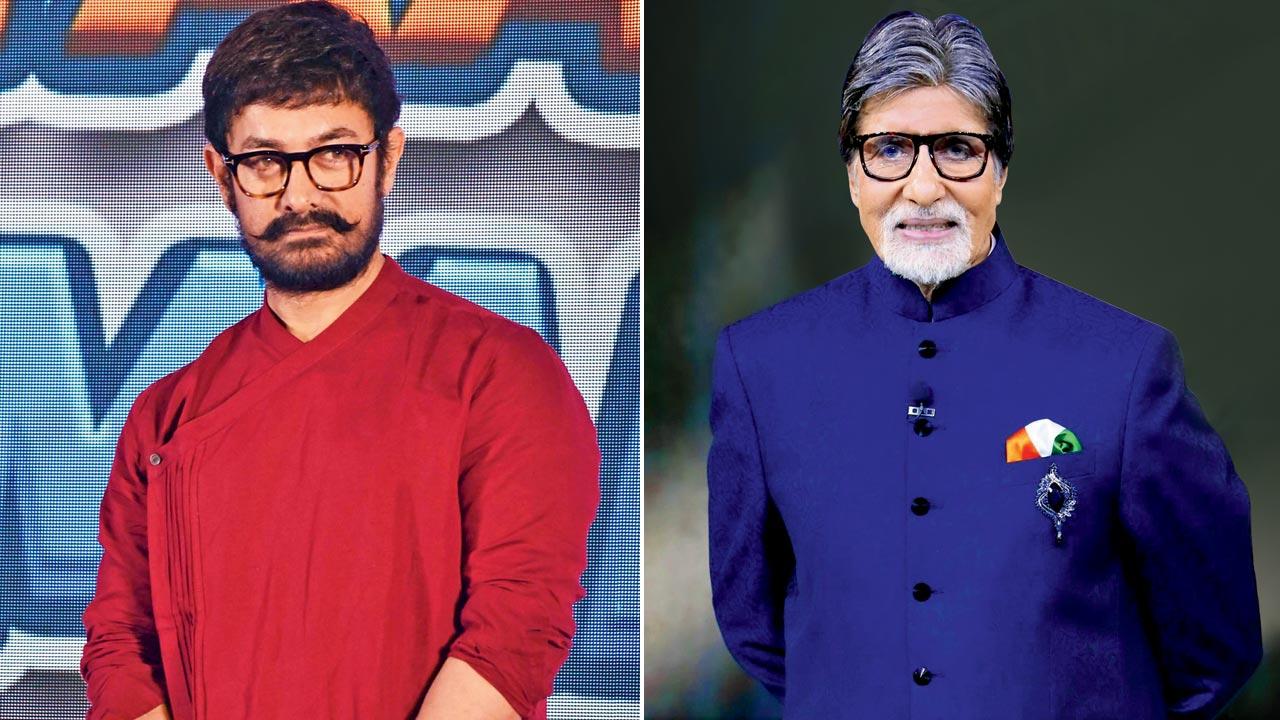
As Aamir Khan bypasses OTT giants to release Sitaare Zameen Par only in theatres, he opens up on how Amitabh Bachchan gave him confidence when no one else supported his decision
Priyanka Sharma, Upala KBR (MID-DAY; June 7, 2025)
At one point in our interview, Aamir Khan candidly says, “I’m not known for my practicality.” We’d disagree. After all, the actor and producer is one of the sharpest business minds in the Indian film industry. That explains why the industry is looking to him as he tries what could well be a gamble with his upcoming release, Sitaare Zameen Par.
Khan has announced that the slice-of-life film, directed by R S Prasanna, won’t be available on OTT after its theatrical release, defying the current business model of the industry.
To some, it’s a risky move. To him, it’s a matter of loyalty. “I’m a loyalist of cinema. I have reached here because of theatres, and I won’t turn my back on them. Secondly, I have faith in my audience. We keep saying that the audience doesn’t come to theatres. It’s common sense that I cannot sell the same thing twice. That’s why I am coming only in theatres,” explains Khan, while also refuting rumours that he is opting for a pay-per-view model on YouTube for the film.
Making the unusual decision was admittedly scary. Scarier even was that no one in the industry endorsed the move. The superstar recalls, “Some of my friends said that I was taking too big a risk. I was in a dilemma because, of course, I also get scared.”
But one person showed faith in him, when nobody else did. “One person put me on the track — Mr [Amitabh] Bachchan. During a dinner at his house, I told him my problem. He said, ‘You always take risks. You are known to be a risk taker. You should do it.’ When a person like Amit ji backed me to do it, I became confident. The next day, I told my team, ‘Amit ji has told us. We are not releasing anywhere, only in theatres.’”
The superstar knows that with Sitaare Zameen Par — which also stars Genelia Deshmukh, and tells a heartfelt story of how 10 neuro-divergent kids inspire an ill-mannered basketball coach to change for the better — he is changing the norms of the industry. But he insists he is doing what feels right to him.
Khan says, “No production house is green-lighting a film until you pre-sell it digitally. So, you’ve shown that you won’t make a film without OTT. I’ve made it clear that I won’t make a film with OTT. I have no problem with streamers, but I don’t think it’s logical that a film streams so soon after its release. Show my film on OTT after six months, I won’t mind it. But OTT platforms told me, ‘If you are not streaming it within eight weeks of release, then we don’t want it.’ I said no to that. I’m losing a lot of money. If a film of mine without presale from OTT doesn’t do well in theatres, I’m finished.”
The question then is: How did streamers become so powerful to dictate the business in Bollywood? “We’ve taken the wrong step. We are responsible,” admits Khan.
Now, as he is hoping to undo the practice, the actor believes he couldn’t have asked for a better film. He remembers being touched by the story — an adaptation of the Spanish film, Campeones (2018) — when Prasanna approached him with it in 2022. The actor’s only hesitation was that the character of Gulshan, a politically incorrect guy, was far from him.
“I told R S Prasanna that the character is politically incorrect, rude, and arrogant. There are a lot of people in the industry who will suit him. Why don’t we go to them? I even suggested the name,” he laughs. But the director was clear that he wanted Khan in the role, and the superstar agreed.
Khan’s excitement regarding the film, however, turned into desolation after Laal Singh Chaddha (2022) tanked at the box office within days of its release. “When Laal Singh didn’t do well, I was heartbroken. We were to start Sitaare… I called Prasanna and said, ‘I am in depression. How will I work in depression? I won’t be able to do it. I don’t want to leave the house right now. My crying hasn’t ended yet.’ I told him to make it with someone else,” recounts the actor. Prasanna respected his wishes, and chose two actors to lead the film that was to be made in two languages, at that time.
Khan reveals, “We finalised Farhan Akhtar for Hindi and Sivakarthikeyan for the Tamil version. Dates were locked.” However, just before going into prep, the superstar started having a change of heart. “In that one week [of fine-tuning the script], as Divy Nidhi Sharma [writer] was reading it, I suddenly felt, ‘Why am I not doing this film? It’s such a good script.’ As the week ended, I told them how I was feeling. I said that of course, nothing could be done as the bullet had left the gun.”
While Prasanna was happy to know that Khan, his first choice, wished to lead the film, he requested the superstar to talk to Akhtar and Sivakarthikeyan. After much pressure from his collaborators, when Khan spoke to the two actors, they were graceful about the turn of events. He remembers, “Farhan was disappointed. He really loved the role, but he understood. Sivakarthikeyan said, ‘Why are you saying sorry, sir? Please do the film. It’s yours.’”
Did you know?
Aamir Khan’s mother Zeenat Hussain and sister Nikhat Hegde have cameos in Sitaare Zameen Par. When Hussain visited the movie set one day, director R S Prasanna decided to cast her in the title song that plays at the end of the film. Hegde features in another scene.
Karan Johar, Aditya Chopra advised not to shoot Lagaan in single schedule-Aamir Khan
8:33 AM
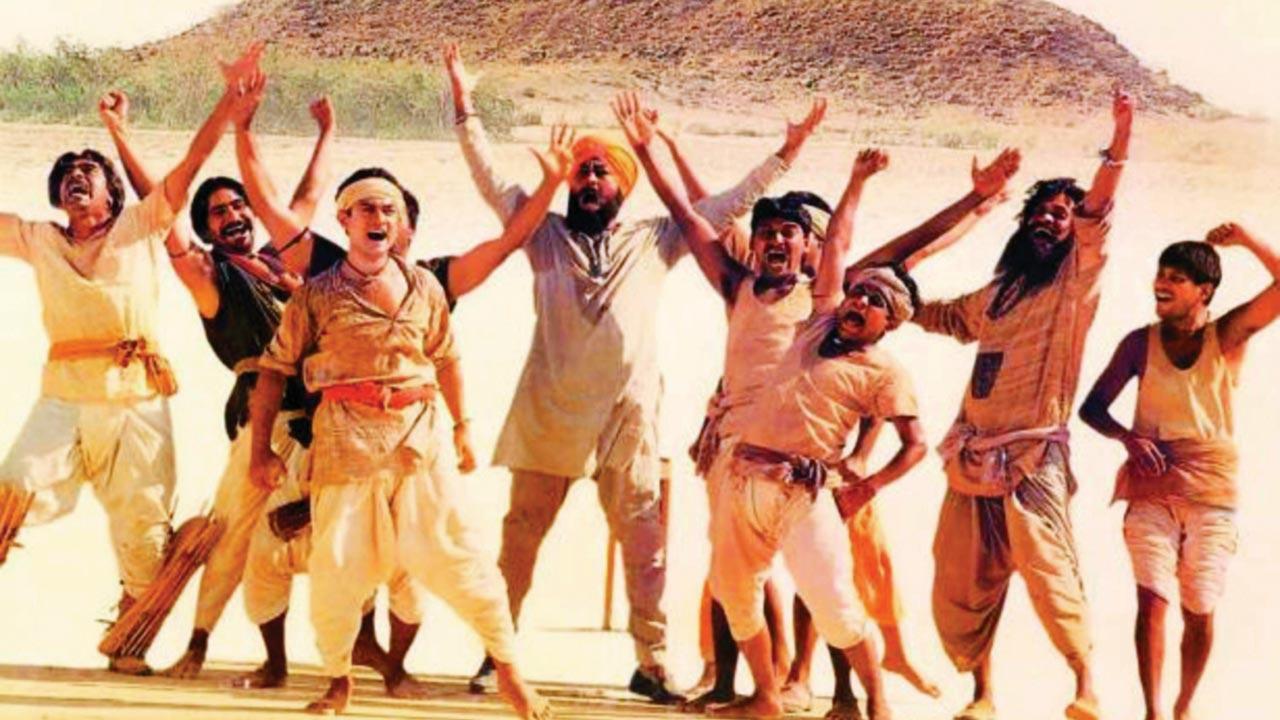
From not paying heed to peers’ advice to taking Lagaan to Oscars, producer-actor Aamir Khan discusses it all as his masterpiece completes 20 years
Uma Ramasubramanian (MID-DAY; June 15, 2021)
In theory, 'Lagaan' (2001) is the classic underdog story. But on screen, it transformed into a masterpiece, becoming so much more than the David-versus-Goliath premise. Steeped in India’s history, the movie spoke of the oppression meted out to Indians during the British Raj, while questioning our country’s social evils of casteism and untouchability. It’s hardly surprising that the gem came from one of Hindi cinema’s brightest minds, Aamir Khan. Such was his faith in director Ashutosh Gowariker’s material that the actor turned producer with the magnum opus, mounting it on a budget unheard of in the early 2000s.
As the film completes 20 years today, Khan remembers Aditya Chopra and Karan Johar had advised him before he took the project on floors in Gujarat. “Karan and Adi were concerned for me. They said, ‘We heard you are planning it as a single-schedule shoot and [will employ] sync sound.’ They advised me against both ideas, stating that no one has used sync sound for years. But I went ahead [with my instinct]. The experiment was so successful that since then, I have only done sync sounds and all my projects have been filmed over one long schedule. It made me realise that I was thinking in the right direction,” says the superstar.
In the two decades since its release, Lagaan has earned a place among the finest films of Indian cinema. The actor believes that the lion’s share of the credit goes to former wife Reena Dutta. “The one thing that has remained with me is the way Reena handled the film. I told her one night that I would need her help in producing the film. She said, ‘I don’t know anything about filmmaking. How will I help you?’ But then, she went on to meet producers to understand [what the job entails], cracked it and produced Lagaan as if she was a veteran. Till date, I wonder how a person, belonging to another field, came and took complete control over the project.”
The sports drama became the third Indian film to be nominated at the Oscars for the Best Foreign Language Feature Film, at the 74th Academy Awards. “I was disappointed that we lost. A lot of people then asked me what I could’ve done differently so that Lagaan could have won at the Oscars. But they fail to appreciate that the members in the foreign language committee loved our film, which is why it was among the top five nominees. That means nothing was wrong with our film.”
Lagaan is probably my most unprepared performance-Aamir Khan
8:32 AM

Monika Rawal Kukreja (HINDUSTAN TIMES; June 15, 2021)
Aur Bhuvan ka naam itihas ke panno mein kahi kho gaya... This concluding voiceover in Lagaan (2001) is perhaps the exact opposite of what the Ashutosh Gowariker-directed film, did to Aamir Khan’s career. And 20 years later, memories of the film are still so vivid. Khan, 56, shares, “Lagaan was such a prep-heavy film that we didn’t have the time to discuss my character. So, literally the night before our first day of shoot in Bhuj, I told Ashu, ‘You have spent time with all other actors, mere saath ek bar bhi nahi baitha’. He was just assuming I’ll do it right. Though I had been preparing in my head, I never got to share it with him if he also imagined Bhuvan like that. Luckily, when we talked, we were on the same page.”
Given that Khan was turning producer with Lagaan, did that count in him getting less time to prep for his role? “Certainly, my lack of prep in Lagaan, I can blame it on my work as a producer,” he chuckles, and adds, “It was the first film I was producing and I wanted to be sure nothing goes wrong. So, Lagaan is probably my most unprepared performance.”
However, Khan says he fully trusted Gowariker, his script and his ability as a director. “I remember after one of the shots, Ashu told me that while the film is going on, Bhuvan is like any other villager and only when he says, ‘Sarat manjoor hai’, he becomes the leader and everyone follows him. That progression Ashu had thought of, and that impressed me a lot,” recounts the actor.
When asked about the most unusual casting, Khan went on to reveal about the casting that didn’t happen. “The role of Bhura that Raghubir Yadav did, was originally offered to (late) Ravi Baswani, but he couldn’t commit so many days due to his mother’s health. I still miss Ravi and wonder if he’d have done it, it’d have been very charming,” he says, further sharing, “Raghubir ji was cast to play Ram Singh, the translator to the Queen. When Ravi said no, we told him to do Bhura’s part and got Javed Khan Amrohi for Ram Singh's role.”
Mention about the possibility of a remake if anyone comes up with an idea, Khan says why not! “I’m not possessive about these things. If a creative team wants to do so, I’d not stop anyone. It’ll rather be interesting to see their work,” he adds.
Rajkumar Hirani told me, you must take on 3 Idiots, the core of the film is what you’ve lived by-Aamir Khan
8:55 AM

Aamir Khan delivered a masterclass in the basics of learning and also stepped into throwback mode about playing a student in 3 Idiots at the convocation ceremony of Bennett University on Thursday. Excerpts:
BOMBAY TIMES (October 4, 2020)
‘I WAS VERY CLEAR WHAT FIELD I WANTED TO BE IN VERY EARLY’
I don’t know if many know here that I am not a graduate myself. But I do strongly believe in education. I may not have been to a formal college, but I did strongly believe in educating myself. When I actually stopped my formal education, I remember there was a big ruckus at home when I told my parents that I want to start learning about cinema and films. I remember I was 16 and by then I was pretty clear this is the field I want to be in. This is the world I belong to – of stories, of characters, of being part of storytelling, of touching people’s hearts, make them smile, cry and affecting them in different ways – and that excited me. So it was then that I decided that I want to learn about cinema and films. At that time there was FTII and there were film schools elsewhere in the world, but I couldn’t afford any film school. My parents weren’t that well-off. It was very difficult to get into FTII as it had limited seats, plus you had to be a graduate to be in FTII, which I wasn’t. So what was left for me to learn about cinema and filmmaking was learning at work – and which is why I decided to start working as an Assistant Director in films. This was in 1983. I remember when I even suggested this there was such a big ruckus, my entire family was like are you mad, you have to be a graduate, no matter what! None of them wanted me to be in films, though my father was a producer and my uncle was a director and producer. I had to fight tooth and nail, I was stubborn and finally, I did what I wanted, and they couldn’t stop me.
I went my route and I worked as an Assistant Director for four years. Those were my learning years, and that’s when I realised that whenever I am interested in something and I want to understand it, it is up to me to learn it on my own. Thereafter, all the subjects in school that I was not interested in – History, Social Sciences, Philosophy, Physics, all these I read and learnt on my own and it’s been beautiful because I am interested in them. And I think that is the key, when you are interested in something, when you love something, when you want to learn, there is a thirst and a desire to learn, that’s when you learn the best.
‘I LEARNT THE MOST BY TRAVELLING WITHIN MY COUNTRY’
One thing I want to say to all of you as you are about to start your lives – the most that I have ever learned in life is by going deeper into my own country. That has been my own learning. I have told my own kids this and every young kid who wants to have some advice from me, take one year off from your life. Just travel from Kashmir to Kanyakumari. Take a bunch of friends and be safe. The amount you will learn in that one year will be priceless, you will go to towns, villages, meet people.
One of my biggest learning in life has been when I was doing Satyamev Jayate, because I have lived a very sheltered life. You live in Mumbai, you don’t come to know what’s happening at the grassroots. When I did Satyamev Jayate, I got to know so many things about my life, country, society, challenges we face, and the kind of courage we have as people. I got to learn so much about my own country. I wish I had thought of this idea when I was 18 or 19.
‘MY MOTHER’S LESSON: BE SENSITIVE TO THE FEELINGS OF OTHERS’
I always like to share this story with people and some of you may have heard it earlier. When I was a kid, I used to play a lot of tennis. I was Maharashtra number one for a brief period, in sub-juniors. My mother used to keep some newspaper cuttings. Toh Times of India mein aata tha, you know, ‘Aamir Hussain upsets top seed’. My full name is Aamir Hussain Khan. At that time, we had dropped the Khan, it was too long — Aamir Hussain. And then when I became an actor, we dropped Hussain, then again, Aamir Hussain Khan was too long.
I am very close to my mother, and she is a big influence on me. She would wait for me to come home after tennis and ask me if I won or lost. One day, I came home and she, as usual, asked me the same and I told her I had won. A little later, while we were having tea, she was introspecting, and said: ‘The boy who lost to you, he must also have reached home by now, and his mother would have asked him the same thing, and she would be feeling bad that her son lost’. I was shocked, I had not thought of that! She was able to feel what that boy’s mother would have felt at that time. That had a deep impact on me. That made me realise that my mother is able to care, and think, and be sensitive to what others are feeling. Since then, I felt that one should never hurt someone or make someone upset, no matter what profession you get into, the ability to be sensitive to other people’s feeling is a quality that is rare and special to have. It is an important emotion. So go out there, have a great life, have a great time, but see if you can make others happy and be sensitive towards others.
‘RAJU SAID YOU HAVE LIVED THE CORE THOUGHT OF 3 IDIOTS,YOU HAVE TO DO THIS ROLE, AND I TRUSTED HIS JUDGMENT OVER MINE’
I often make a blasphemous error even today, where I assume in my head that I am still 18 or 21 (laughs!). When I meet people, toh mujhe lagta hai main 18 ka hoon aur ye aunty hai. Toh mai aunty aur uncle bolta hoon — and then I realise that they are sometimes younger than me now!
But coming to how I played an 18-year-old at 44: When Raju first came to me with the script of 3 Idiots, I loved the script. But I asked him, why are you thinking of me? I am 44 and your role is of a young kid, who is 18 to 21, he is going to graduate. Why do you want me in this film? I couldn’t for the life of me understand why he wanted me. He kept saying, ‘No, because these lines are very important, and when you say them, I believe them’. Basically, what he was trying to say was that the core thought of the film is don’t chase success, just chase excellence — and when you chase excellence, success comes chasing after you. Raju said that ‘Yaar, you have lived by this principle. Your choice of films, your career, you have done Taare Zameen Par (TZP), Lagaan, you have done films that were, on the face of them, like when you signed them, not supposed to be successful. So clearly, you were the one person who was not chasing success. You were trying to do whatever you felt like and trying to do the best you can. As a result, success came chasing after you because you are not chasing it.’ Clearly, I wasn’t — somebody up there loves me! And then Raju said that ‘When you say that line — yaar kamyabi ke peeche mat daudo, kabil bano, kamyabi khud tumhare peeche aayegi, yeh line jab aap bologe toh audience ko believe karna hai. Audience aapse believe karegi kyunki aapki life aise aap jee chuke ho.’ I said woh sab toh theek hai Raju, par jab main 18 saal ka dikhunga nahi toh phir hum kya karenge, matlab main aise classroom mein book pakad ke ghus raha hoon 40 saal ka ajeeb lagega, people will laugh at us.
I really respect Raju as a director and so I kept telling myself that yeh kuch dekh raha hai jo main nahi dekh pa raha hoon. It was one of those rare occasions when I decided to trust somebody else and say okay, I am trusting his judgment over mine. I had seen two of his films by then, and they were both really amazing, and I thought there is something in this guy, he is seeing something which I am not seeing. So I am going to trust his instinct. And that’s why I did the film.
ON THE ROLE OF THE CREATIVE INDUSTRY IN SOCIETY
I believe that it is the creative community which brings grace to society. If we so choose to, we do have the opportunity to try and build the social fabric of society, we can inspire people, we can bring hope to people. We can create heroes and icons that people like to emulate. So we can make people sensitive towards things. When I say creative community, I don’t mean actors alone, I mean writers, poets, lyric writers, painters, actors, dancers — these are all creative people. I believe that it is very important for creative people to understand, and whenever possible, use that ability to bring grace to society, to try and build the social fabric, whenever they can. I am not judgmental towards people who just make entertaining films because that is your primary responsibility. If you are just entertaining, that is good enough, if you are giving people a good time that is good enough — but along with that if you can tell something which makes them think, which makes them ponder, which sensitises them, that’s great.
‘WHEN MY FILMS TANKED, I SWORE TO MYSELF THAT NO MATTER WHAT, I WILL NOT SIGN A FILM THAT I’M NOT HAPPY ABOUT’
My first film Qayamat Se Qayamat Tak was a big success, I became an overnight star. Then I signed a bunch of eight or nine films, but these films started bombing and I was being called one-film wonder. I used to be very unhappy with the work I was doing. I used to come home and cry. At that time, I swore to myself that no matter what happens I am not ever going to sign another film that I am not happy about, even if it means my career is going to end.
Aise hi arbitrary log negative bol rahe hain, usse mujhe kucch farak nahi padta-Aamir Khan
8:24 AM

The actor is all for constructive criticism on social media, but says he doesn’t pay heed to arbitrary people attacking him for no reason
Monika Rawal Kukreja (HINDUSTAN TIMES; January 21, 2020)
Aamir Khan possibly is the last person to experience FOMO (fear of missing out). Whether it’s not attending award shows, not doing multiple films in a year or not making frequent public appearances, Aamir has neither been part of any rat race nor even bothered about being left out. So, even when it comes to his social media presence, Mr Perfectionist follows his own norms.
In fact, he made his Instagram debut only in 2018, well after most of Bollywood. Ask why, and pat comes the reply, “I am a person who is in my own world half the time. So, I am not very often there on social media platforms. You can say I am not very communicative on social media.”
However, Aamir is quick to add that his films and other works are the means through which he wants to be known. He insists that he likes to communicate through his films. “For me, that’s the most important form of communication. Whether it’s through my films or (TV show) Satyamev Jayate or through Paani Foundation, the communication that I do through my work is what counts,” he explains.
However, it’s not that Aamir totally stays away from airing his views on social media, as he says, “Once in a while I would tweet something or post a picture on Instagram, but yeah, I am not very regular.”
Perhaps that’s also the reason one hasn’t really heard or read about the actor getting into any war of words or hitting back at trolls for nasty comments, if any. But does he take out time to read the comments on his posts on social media? “Yes, I do read them occasionally. Especially around my film’s release, I definitely do, because I want to know what people feel about the film and my character. That’s the time when I go and particularly look for what people are saying,” says the actor, who is currently shooting for his next, Laal Singh Chaddha.
And Aamir asserts he doesn’t let too much negativity affect him. “If someone is just making fun of me or attacking me for no reason, I don’t bother. Aise hi arbitrary log negative bol rahe hain, usse mujhe kucch farak nahi padta aur main uss par respond bhi nahi karta,” he says.
But constructive criticism is something that the Thugs Of Hindostan (2018) actor happily welcomes. “If someone gives me criticism which is constructive, I take it seriously because that’s where I am learning. As an actor and a creative person, it helps me learn and grow,” he continues, “When people appreciate my work, it makes me feel nice. I understand what they’ve understood in the film, how they’ve perceived the character; they describe it and it’s a happy feeling that my work connected with them. Even at times when people say they don’t like my work and describe what they didn’t like, it helps me to improve myself. So, I am all for sensible criticism.”
My children are not taking my help-Aamir Khan
8:51 AM

The actor says his kids or anyone else would not be in his films unless they fit the part. He can’t be dishonest
Monika Rawal Kukreja (HINDUSTAN TIMES; December 15, 2019)
 The buzz around Bollywood star kids and their speculated grand debut on the silver screen is perennial. Ask actor Aamir Khan about his kids’ showbiz career and he shares that both Ira and Junaid — his kids from his first marriage — who have decided to do theatre for now, are doing it without his help. Junaid debuted as a theatre actor a while back. Ira, recently, made her directorial debut with the Greek tragedy titled Medea.
In the times when nepotism in showbiz is constant talk, the 54-year-old says, “I’m so glad that they’re following what they want to do, and what’s most important is that they’re doing it on their own. They are not taking my help in anything... Which is good, because I think that’s how it should be. Ira had told me (about the play), but she had not asked me for any help, nor did she say, ‘Dad, please guide me’. Junaid is acting in theatre and he’s also on his own.”
However, Khan is quick to add that he does get nervous as a parent. “When I go to see Junaid’s play, I’m like, ‘I hope he has done well’. And now that Ira is directing a play, I hope she does well, too. I’m nervous for her. It’s a natural parental response hoping that your child does well. I guess that there’s no escape from that nervousness,” he shares.
But will the two enter Bollywood? Khan says it would be entirely their call “if they want to” and they’ll “have to find their own way” to do so, for Khan won’t ever be “dishonest” to himself and his craft. “For me, to cast anyone in a film, the main criterion is ‘Are you appropriate for that film?’ If you’re not, it doesn’t matter whether you’re my relative or my child. I can’t be dishonest to my creative belief,” Aamir continues, “So, if I do cast Junaid, it’ll be because I feel he’s right for the role. And if ever it happens that I produce a film that Ira wants to direct, it would be because she’s right for the film not because she’s my daughter.”
On the work front, his production house is in the process of developing a number of “exciting” films and series for the web space. “There are certain stories, which need telling in a way that allows you episodes. We’ll see how it goes because development is an uncertain stage.... Until the script comes out, we won’t say anything,” says Aamir, who will be seen in Laal Singh Chaddha.
Is the urge to venture into digital space a result of the fact that many established names from Bollywood have entered the web? He denies and explains, “No, it’s nothing like that. As a production house, we don’t make content in terms of platforms. In these 19 years of me producing films, I think we’ve only made eight films, whereas production houses conventionally would like to produce multiple films in a year for it to be economically viable for them to run. While for us, until we get a material that excites us, we don’t venture into it.”
Netflix was keen to acquire Rubaru Roshni, but I chose TV-Aamir Khan
2:49 PM

Ahead of his production Rubaru Roshni's premiere tomorrow, Aamir says he opted for the medium since he wanted the message to reach the masses
Shaheen Parkar (MID-DAY; January 25, 2019)
In his three-decade-long career, he has earned a distinction few can boast of — when Aamir Khan has something to say, people sit up and listen. It is in the hope that the audience will, once again, take notice of his offering that the superstar has backed Rubaru Roshni, a short film that is set for a television premiere tomorrow.
Directed by Svati Chakravarti Bhatkal, the film reflects on three episodes that changed the course of Indian history. Yet, Khan insists, at its heart, it is a story about forgiveness. The actor says, "It features real people who were affected [by the incidents] and how they healed themselves by forgiving the perpetrators. The healing process starts with yourself; you have to forgive and let it go."
Following its premiere, the film will drop on Hotstar, and three months later, on Netflix. The actor-filmmaker adds, "Netflix was keen to acquire it, but I wanted people across the country to see it first, and then the world. I chose to premiere it on TV due to the wide reach of the medium."
Ask him why he chose Republic Day, and he says, "It is a national holiday, so everyone can watch it." Emotionally stirring and thought-provoking in equal measure, the film can leave viewers with a lump in the throat. Khan admits it left him teary-eyed too:
"When I saw the film, I cried. Conflicts in the world are continuing because we are holding on to the past. I am reading a book on Jerusalem, where the conflicts are 1,000 years old, and there is still no way out. Hanging on to the negativity will do you no good. Forgiveness is the most healing quality."

DNA Exclusive: 'Thugs' Aamir Khan and Amitabh Bachchan reveal their Diwali celebration plans
8:19 AM
Meena Iyer (DNA; November 7, 2018)
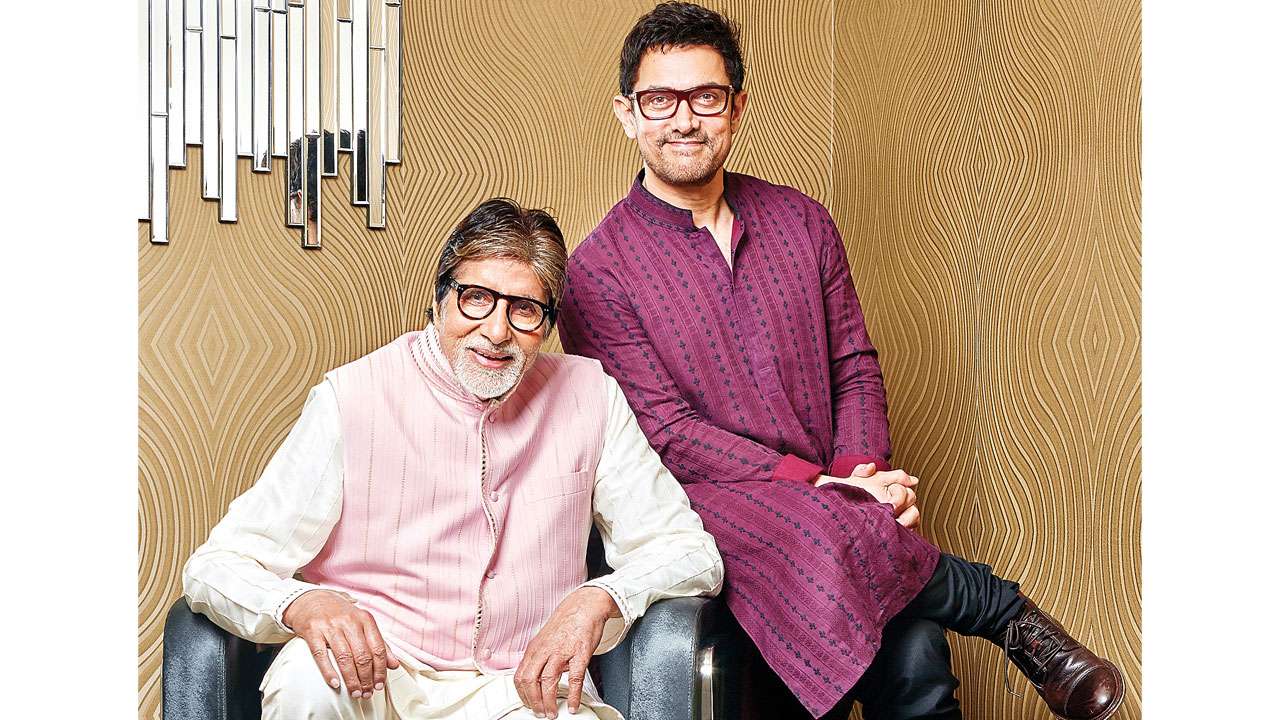
The icon of Indian cinema, Amitabh Bachchan and Bollywood superstar Aamir Khan, who are coming together for the first time ever in Thugs Of Hindostan (TOH), gave DNA After Hrs readers a special surprise by coming together to wish them a Happy Diwali.
This year, the festival of lights is synonymous with the action-adventure TOH. The film, which promises to break opening-day records, releases worldwide tomorrow! After Hrs caught up with these two thugs, who spoke to us exclusively on what they love about this auspicious fest that is celebrated with great fervour globally.
BIG B: MY FATHER WOULD READ A PORTION OF THE RAMAYAN TO US EVERY DIWALI
Diwali has two meanings for me because I am 76-years-old. I will have to describe those moments when I was younger and what is happening now, so there are different outlooks, interpretations and celebrations. When we were younger, almost a month before the actual event, we would go to the storeroom in the house and pick out all the mitti (clay) diyas. We would wash them a night prior and next morning put them out in the sun to dry.
Then, we would make cotton battis that would go inside the diya and then add oil. The evening or night before, we would start placing them on the steps, at the gate and in the lawn. We would keep a diya in every room of the house and then do the same on the day of puja. Nowadays, you have electricity. We never did it with electricity because that was the true form of Diwali.
My father would read a portion of the Ramayan, which is synonymous with the festival. It talks about Ramji’s return from Vanwas and the celebrations. After the puja was over, we would light the diyas and then burst firecrackers. Lots of fresh sweets were made in the house, all the children wore new clothes and guests would come over to wish. I used to be with my friends till late in the night. Next morning, we would pick all the diyas, clean them and put them away for next Diwali.
Now, it’s different. You start off by preparing how to light up the house using electricity, which is not the same thing as a diya. Now, we do some rehearsals to check how is it looking, if everything is in sync, whether all the bulbs light up and ensure that there are no fused bulbs. We discuss how to decorate the trees, what kind of lamps to put up and invite friends over to the house and serve them delicacies.
Also, playing cards is a symbolic gesture as you invite Goddess Laxmi into the house. The prettier your home looks and is lit up, it is said the more the Goddess will be generous with you. Later, we start playing cards. I know that many people in the other parts of the country take it seriously and start playing cards weeks before, but in our house, we do so only on the day of Diwali. It is considered as good shagun.
AAMIR: THIS DIWALI IS EVEN MORE SPECIAL AS IT’S KIRAN’S BIRTHDAY
What I like most about this festival is the gambling (laughs)! I’m a reckless gambler. I love it, but do it only once during this time of the year. I like poker and I’m looking forward to playing it. It’s a great game. What I also enjoy about Deepawali is being with my family. This year, it’s even more special as it’s my wife, Kiran’s, birthday. I hope this Diwali will be special, joyous and safe for everyone.
Revealed: Here's why Aamir Khan quit smoking cigarettes
8:53 AM

Charting his battle with the cigarette, Aamir Khan reveals he has been puffing on a pipe for the past few months
Upala KBR (MID-DAY; November 6, 2018)
Aamir Khan had famously said that he would give up smoking cigarettes after the release of Dangal (2016). Two years down the line, the superstar has got rid of the habit — well, only partly. Talking to mid-day, Khan revealed that while he kicked the butt three months ago, he has been puffing on a pipe since. Turns out, it was one of his friends from outside the industry who introduced him to the gentleman's vice.
"One of my friends said that if I wanted to smoke, I should smoke a pipe. I liked it so much that I can't go back to a cigarette now. I tried one sometime back, but the moment I took a puff, I found the taste horrible," laughs Khan, who recently made a road trip from Lake Como to Milan especially to buy over a dozen pieces from a reputed pipe shop there. In fact, not too long ago, his Thugs Of Hindostan co-star Katrina Kaif had shared a picture of the actor puffing on a pipe, which went viral.
Having been a fairly heavy smoker in the past, Khan says he would find himself reaching for a cigarette every time his film was gearing up for release. "I quit smoking for two-three years when I was training for Dhoom 3 (2013). But then, I went back to it again. I tend to smoke more when my movie releases. Kiran [Rao, wife] would be affected by the cigarette smoke, but she isn't averse to the pipe. I even tried my hand at cigars, but did not find the experience satisfying."
The actor also reveals that ahead of the Thugs Of Hindostan shoot, he was worried that Amitabh Bachchan might be offended by his smoking. He apparently turned to good friend and Bachchan's frequent co-star Shah Rukh Khan for advice. "Shah Rukh told me, 'Amit ji is cool, you can smoke in front of him. If he scolds you, just run away.' Next thing you know, Amit ji and I are watching Wonder Woman during the shoot in Malta and he tells me, 'I heard you asked Shah Rukh if you can smoke in front of me.' I didn't know how to react," laughs Khan, adding, "But Amit ji was cool."

Maharashtra has 358 talukas, and we are working with 75 of them-Aamir Khan
8:13 AM

Meena Iyer (DNA; April 23, 2018)
When Aamir Khan takes on anything, rest assured he will give it his 100 per cent. His work in the drought-hit talukas of Maharashtra has now taken on gargantuan proportions. Slowly but surely, the actor-filmmaker has solidified his own efforts and those of like-minded people to bring a sea change in the area of rainwater harvesting. Over to him...
Your initiative Paani Foundation seems to have caught on in the short time since you started it.
Most of Paani’s work happens in the villages during these two months of April and May. It’s been like this over the last three years. In 2016, we started with three talukas; 116 villages. Then in 2017, we had grown to 30 talukas; 1,300 villages. This is the third year, and we’ve reached 75 talukas; about 4,030-odd villages. That’s the kind of progress this initiative has witnessed. Maharashtra has 358 talukas, and we are working with 75 of them. What is noteworthy is that we are working with every village in every taluka.
It has to be demand-driven, the village has to solve the problem. We conduct a five-day training session on how to do watershed management work. After that, the villagers do all the work by themselves; they chalk out how to do it and execute their plans. Whenever they need any advice or help, our experts are there. This has become a big social movement. On an average, over a lakh of people are working every day on their own. Shramdaan is voluntary work.
Are you happy with the progress?
I’m very happy. Firstly, villages are getting sufficient water and secondly, now the people have more self-belief. Water is the biggest problem. Once they understand this issue can be solved, they will realise they can do anything. We must also remember that around 150 talukas come under Tushkar area; i.e. the drought area. Today, we have 75 talukas and hopefully, we will be able to cover the drought-prone parts, too. The Konkan belt gets good rainfall. However, the region also has steep slopes. So, a lot of rainwater gets wasted along with topsoil.
So, you’re like the Bill Gates of Paani foundation, if one were to draw parallels between his and Melinda Gates’ work for AIDS and now TB (Tuberculosis). You identify something and work for it.
Bill Gates! No, no, yaar... During the first two years, people would often ask me how could they help the cause. Now, we’ve found a solution. They can join our initiative as JalMitra and donate money to the villages, help with the machine work and volunteer. On May 1, we’re organising Maha Shramdaan, wherein we’re inviting people from cities to travel to these villages and work for three hours.
Where will you be on that day?
I’m not sure which village I will be in on that day. If you join as JalMitra, you have the option of choosing from 75 talukas. Based on that, you get the options of villages. When you reach the chosen village, you will be told what you have to do. There will be a pit marked out, or loose boulders to be kept. Whatever the 16 structures of watershed management are, you will be allotted one and will have to work for three hours.
This is a great opportunity for people to get involved. The last day for enrolling as JalMitra is April 25, midnight. Over a lakh of people have signed up for it.
Recently, even Akshay Kumar participated in a water-saving initiative in a village.
I believe he is shooting somewhere in Satara and the village where he is doing Shramdaan is participating in our Water Cup. I don’t know if he knows about this...
You’ve managed to involve a lot of people in your initiative. Last time, even farmers came and the Chief Minister gave away prizes for the Satyamev Jayate Water Cup.
With 75 talukas participating, about 100 villages will win prizes. Shah Rukh (Khan) attended the function last year. As Kiran (Rao) and I had swine flu, we couldn’t make it. I asked him if he could go. Ten thousand farmers were at the event that went on for five hours. Shah Rukh waited till the end and gave a beautiful speech. It was sweet of him.
Do you see the industry also participating in this cause?
Yes. When we started, we had a presentation for our colleagues from the Hindi and Marathi film industries and told them what was being planned. They were encouraging. Today, Marathi film celebrities are actively involved. They call up saying, ‘I have three days free, where can I go and do Shramdaan?’ As for my colleagues in the Hindi film industry, I haven’t tapped them into it yet. When I take a celebrity there, it cannot be a distraction. I can’t let work stop.
If they come, are you looking at physical participation from their end?
When you go to a village and work with 300-400 people collectively and participate in contributing something specific to their solution, it feels great. Seeing the CCT (Continuous Contour Trench, which is used to treat barren undulated land) collect over 20,000 cubic litres of water makes you happy that you have done something.
CM's office ensured that they will take care of the logistics and facilitate smoother travel-Aamir Khan
8:10 AM

Upala KBR (MID-DAY; April 23, 2018)
Currently in its third year, Aamir Khan’s Paani Foundation is striving towards making Maharashtra drought-free. Starting this year, the state government led by chief minister Devendra Fadnavis has taken the onus of arranging the transport facilities for the 20,000 trainers who are part of Khan’s not-for-profit organisation.
Speaking to mid-day, Khan explains that every year, about 20,000 individuals are selected from villages across the state. These individuals are then trained in watershed management at various centres before they head back to their respective villages to teach the locals about water conservation.
He says, “These trainers have to travel to the training centres. While Paani Foundation bears the expenses for their travel, we use Maharashtra State Transport for the conveyance. It’s a big logistical effort — when do we book the tickets for? Which buses are to be booked? How many seats do we book? So, we requested the government to assist us. ”
The superstar says that the response was prompt. “The CM’s office got immediately in touch with the Maharashtra State Transport head and he ensured that they will take care of the logistics and facilitate smoother travel. We gave them a lump sum — they keep deducting the necessary amount as and when we book seats on their buses. We’ve got tremendous support from the CM’s office.”
I hope Amitabh Bachchan is the first to wish me on my birthday-Aamir Khan
8:21 AM

Meena Iyer (DNA; March 14, 2018)
Aamir Khan is a superstar to whom accolades have always come easy. His 30-year-old career has had several acting milestones. But the Aamir of the last decade (from 2009-2018) is not content just to rest on his laurels. Modesty stops him from screaming from the rooftop about money matters. However, if you follow Hindi mainstream cinema, you will notice that he is indeed a box-office lion. His last few films — 3 Idiots, PK, Dangal and Secret Superstar — have set enviable records in India, China, the Silicon Valley, Australia and more global destinations. On his 53rd birthday, the actor-filmmaker is not in a mood to discuss the obvious. Instead, he’s game to answering innocuous questions.
Who do you think will be the first to wish you on your birthday?
I’m shooting during the night in Jodhpur for Thugs Of Hindostan. So, I’m guessing it will be someone from the unit. However, I hope Amitabh Bachchan is the first to wish me.
Any specific birthday plan?
My birthday plan is always to try and spend time with my mother. This year, as I’m away from home, I’ve requested my director, Victor (Vijay Krishna Acharya), to relieve me for a day. If that happens, I’ll travel to Mumbai to be with my mother. But if it’s not possible then she will come to Jodhpur. She’s the person because of whom I’m in this world, so I want to spend this day with her.
You have the most enviable box-office record in India, China and the Silicon Valley. So are you the most invincible Khan?
I’m not in a war. So, I don’t have to be invincible. I’m a storyteller. I have to tell stories, entertain people and give them a good time. I’m trying to be inclusive in my work, so I entertain everyone including those from my fraternity. An actor-filmmaker is someone who has to be able to take the audience on a joyride. And that’s what I’m trying to do.
When you become a part of a film or any project, it suddenly becomes more exciting. The trade calls it the Aamir effect. Are you scared of this or are you challenged by it?
Thankfully, I’m totally unaware of any effect that I have on people around me. Since I am oblivious to it, I have no idea that it even exists. I do believe that all creative people bring a certain energy to the work that they do. It excites me to work with other talented people and feed off their energy when all of us come together to make a film.
Thugs of Hindostan looks interesting. Can you tell us about your experience of working with the Indian cinema icon, Amitabh Bachchan in it?
Working with Mr Bachchan was my dream and I’m really happy that I’m living it right now. I’m like a child in a toy shop and he is a complete joy to work with. His ability as an actor, his concentration, the effort that he puts in, his focus towards his work and above all, the kind of person he is, all this makes it a very enriching and memorable experience for me. So, it’s a dream come true.
THE MARATHON MAN
3 IDIOTS (2009)
India Net: Rs 201.37 Cr
Worldwide Gross: Rs 350 Cr
TALAASH (2012)
India Net: Rs 91.23 Cr
Worldwide Gross: Rs 175 Cr
DHOOM 3 (2013)
India Net: Rs 260.63 Cr; (with Tamil & Telugu dubbed versions: Rs 275 Cr)
Worldwide Gross: Rs 550 Cr
PK (2014)
India Net: Rs 337.72 Cr
Worldwide Gross: Rs 620 Cr
DANGAL (2016)
India Net: Rs 374.53 Cr; Hindi (with Tamil & Telugu dubbed versions: Rs 391 Cr)
Worldwide Gross: Rs 730 Cr
SECRET SUPERSTAR (2017)
India Net: Rs 62.63 Cr
Worldwide Gross: Rs 126 Cr
*** Approximate box-office figures from trade sources; All overseas gross figures are from traditional India markets only, not China, etc.
Cinema is more important to me - huge screen, Atmos sound, a richer, larger experience, than a laptop-Aamir Khan
8:13 AM

Aamir Khan kicks off mid-day's unique conversation series, where Mumbai's most popular and sharp creative minds dig deep and decode their art and craft, before a select live audience
Mayank Shekhar (MID-DAY; October 27, 2017)
Aamir Khan came over, rather under-slept, stressing over the release of his latest film 'Secret Superstar'. He spoke in-depth on the economics and craft of filmmaking. And only two days later, he conquered the box-office yet again with 'Secret Superstar', maintaining an unrivalled cent per cent hit-rate as a Bollywood producer
Superstar, filmmaker Aamir Khan kicked off the first edition of Sit with Hitlist - a conversation series with India's top creative minds, before a select audience. We intended to host this freewheeling chat in an auditorium. Date and technical issues did not permit it this time. This was a budget version of 'Sit with Hitlist', held at the mid-day office. But as goes with low-budget ventures, with Aamir in it, we knew the word-of-mouth would ensure mid-day's brand-new property would be a huge hit! It was.
Excerpts from the conversation
The big news of 2017 was of course Dangal, and China. Producer Siddharth Roy Kapur's reason for the film's unprecedented success is the Chinese audiences sensed a common Eastern sensibility in the film's father-daughter relationship. Do you agree?
When I visited China and Turkey recently, I realised that their emotional key is very similar to ours. I carefully noticed the reaction that Dangal got in theatres in China. It was the same as for an Indian audience - they were laughing, crying, and clapping at the same points. There was no difference at all.
Is that true for Indians watching Chinese films? I am not sure I get that sensibility the same way.
Well, I saw Crouching Tiger Hidden Dragon [2000], and loved it. I was clapping and whistling throughout. I didn't come with any pre-conceived notions. I love Jackie Chan movies. I was in college, when I first saw Police Story [1985] - the action was unbelievable. And it's so humorous. I have connected with these films.

Aamir Khan in conversation with Mayank Shekhar at the first edition of Sit with HITLIST, before a live audience, at the mid-day office
Another theory is that the way the kids
get treated in Dangal, and how the father is determined to turn them
into champions, is similar to China - except the father is the communist
state, attempting to turn them into Olympic gold-medalists from a young
age. Do you see a connection?
I never thought of it like that. I've read reactions from Chinese audiences. They apparently watched the film, and desperately wanted to talk to their parents, right after. It is a personal, human connect.
I never thought of it like that. I've read reactions from Chinese audiences. They apparently watched the film, and desperately wanted to talk to their parents, right after. It is a personal, human connect.
Your personal global reach as an actor really began, thanks to the Internet. Is that right?
My assumption is that it happened with 3 Idiots [2009], which became a huge hit on the Internet. Rajkumar [Hirani] and Vinod [Chopra] got to know about it. Someone from China contacted us, and we released the film there a year later, by when most people had already watched it. They started looking for my other films, and now many of them have watched Taare Zameen Par [2007], Lagaan [2001] and Rang De Basanti [2006].

Considering the strong role of Internet, it was a surprise when I read somewhere that you are such a "big screen guy". Would you bypass something like Netflix?
I was talking about myself as a consumer, and not the creator, of content. As an audience, cinema is more important to me - huge screen, Atmos sound, a richer, larger experience, than a laptop. This doesn't mean I wouldn't want to do a Netflix, or TV series, when the quality is equally cinema-like. I have been asked by them [Netflix] to create something. Content for every platform is different. For Netflix, the content cannot be delivered in one session. The narrative needs to be episodic. I would be keen if something like that comes my way. I have watched Breaking Bad. It's my favourite. I like Game Of Thrones and House of Cards.
One of the central themes of your latest release, Secret Superstar, is how Internet can turn you into an overnight star. How do you compare that kind of stardom with yours, at a time when anything can go viral?
Some of the videos which go viral are one-offs, like a cat doing something funny. But then there are talents that people discover on the Internet - it offers great opportunities. The small-town girl in Secret Superstar has no access, but she is full of passion. She doesn't have to break into the limited distribution network anymore.

Back in the '90s when there wasn't so much talk about box-office numbers, how could you tell someone is finally a star?
From the time I was seven, I remember reading Trade Guide, and other box-office journals. We would check out the figures of dad's films, and there would be a circuit-wise break up. Within the industry, the [box-office] knowledge was always there, since cinema has always been around as a business. Today, mainstream media is picking up box-office figures, and that's a choice you're making.
In small towns, for instance, when people didn't know box-office numbers, one way to gauge stardom was if people had begun copying an actor's haircut. True?
There are many yardsticks for measuring how popular a star is. Copying style is one of them. I remember when Mr Bachchan became a huge star, I wanted to get bell-bottoms made like his. For me, it is essentially about how many seats one fills. It means that people love you and your work, and now they want to go and experience it. That's important. We often measure stardom by how big an actor's commercial successes have been. That is a faulty method. PK's or Dangal's business has to do with how great those films and their scripts were. It's incorrect to attribute that to my stardom. My stardom comes into play when I make a bad film that people don't want to watch. They still come because of my name. So if you want to measure an actor's stardom, you should check out how well his flop does.

Aamir Khan signs on a memorabilia, the original poster of his 1994 release, Andaz Apna Apna
In that sense, the Khans have dominated Bollywood for over 25 years. My question to you is: Do you remember the first time you met Salman and Shah Rukh?
The first time I met Salman was at Babla's [director Aditya Bhattacharya's] house, who made Raakh [1989]. Incidentally, Salman and I were in the same class for a year in the second standard [at St Anne's, in Pali Hill]. And we didn't know each other then! I was at Babla's house to discuss a short film called Paranoia, where I was the actor, spot-boy, production head, first AD - all rolled into one. We shot that film for a month. I was 15, and this is the first time I ever acted. Salman was cycling around in Carter Road. He knew Babla too. We stood in the balcony and talked. He told me about how he also wanted to become an actor. I thought of him as a sweet chap. Shah Rukh, I remember meeting briefly, when I was shooting with Juhi [Chawla], somewhere on the road. He had begun shooting a film with her [Raju Ban Gaya Gentleman]. Deewana [his debut, 1992]
hadn't released yet. He was sweet, and it was a warm meeting.
Clearly nothing momentous. Now one of the reasons 2017 has been considered a sub-par year in Bollywood is because the two top stars' films didn't do well - let alone break records. Do you think the film industry has been relying on the Khans for too long to bail them out every year?
There are other hugely successful stars - Akshay [Kumar], Hrithik [Roshan], Ajay [Devgn]…. The three of us [Khans] have been successful for quite a while; it's natural for the trade to bank [on us]. Sometimes films work, sometimes they don't. At one time, Mr Bachchan was huge. None of us will ever see the stardom he has. He once had eight films simultaneously doing really well in theatres. Trade would bank on him for seats and popcorns. Ideally, there should be more stars. But it's a natural process. Becoming a star is an intangible thing. What is it that people connect with me so strongly over? I have absolutely no idea.

Over a conversation in 2011, you'd told us about a bubble in the film industry, referring to studios that paid money assuming the highest possible returns. Effectively in 2016, most studios went bust. Did you predict this?
Who am I to predict? But it's bad business. Say, Dangal has done Rs 385 crore business, and I come with the next film that gets sold at Rs 400 crore, because a studio is willing to pay that much. They assume that my next will be as big or bigger than Dangal, which was huge to begin with. That's not sound business. A studio can't pay on hope. You have to invest on surety. If the lifetime of the last film is Rs 380 crore, then you know that the next will definitely make Rs 200 crore. The upside is then there for everyone to share. This is why I don't load my film with my fee. My model is that I don't charge any money. All the money goes into filmmaking, and fees, of everyone else. And then the first money [coming in] goes towards recovering the P&A [cost of print and advertising]. Eventually if the film tanks, I get zero. That's a risk I am willing to take. I'd rather lose.
And then if the film [Dangal] does Rs 1,300 crore [in China], means you get a good bulk!
Sure, and I bring that value to the table. Investors are completely secure. I take a sizeable chunk. When the film does Rs 1,300 crore, first the government takes a certain tax amount, and a major chunk goes to theatre chains, and the exhibition sector. It's the same with India, except in China, there are also rules on how much people from outside the country can take as share [revenues from a film]. It finally boils down to 12.5 per cent, which is still good.
Did you pick up a mansion from 12.5 per cent of Chinese box-office?
I am not good with money. I don't do investments and I have very few properties. Basically, my mind doesn't work in that direction. I am not a business savvy person.
You're certainly good at film business, with a 100 per cent track record as producer.
Creatively I don't want to mess with what I want to do. So, say, I want to do a Dhobi Ghat [2011], I'll make sure it's made in Rs 5 crore. For the investor, I know this [amount] will come back, and we'll make a little profit. Films will be profitable if you make them economically viable, and this gives me the freedom to make what I want.
Here's how you get it right each time: budgeting, great script-sense, making sure casting, locations are spot-on. The new thing I've learnt is how much emphasis you give to the audience testing the first-cut of your film. Unknown people repeatedly watch it in focus groups, whose responses eventually determine the final cut/edit. Isn't that losing creative control, almost like filmmaking by public consensus? Odd, no?
No. It's not [by] public consensus. I'm not going around asking people what I should do with my film - and they say cut this or that - and I make the changes. The whole basis of testing a film is that we have a story in mind that we're trying to narrate to you. I just want to make sure that what I'm narrating to you, is coming through. Or are you receiving something else? We become so close to our material that while making a film, we're not able to be objective enough to understand how it's being received.
Can you give concrete examples from your films where there was disconnect between what you were saying, and what was being received?
Let me give you two examples. Take Sarfarosh [1999] first, which was a cop film, about policing. At the test screenings, the consistent response was, "Where's the policing? We don't see any. He [the cop] is constantly listening to ghazals!" We were like, "How's that possible - there's the Khera Naka scene, with the entire action, his leg gets broken, he's in the hospital, where he dives, despite the injury - all those scenes were there." While we were befuddled, we knew this was a problem. So we added three scenes to the film. One, in the beginning, we raid a corrupt cop in the tribal belt of Maharashtra, where ACP Rathore [his character] goes through the phonebook, to get whereabouts of Sultan, which he gets after delivering a tight slap to the corrupt cop. Again, while searching for Sultan, we reach his mother's house, where I stop my colleagues from being rough with her. The third scene was about a raid, where we caught two guys, who we interrogated, but we were getting nothing out of them. This is when I fire at one of the guys, just so the bullet misses him. He spills the beans.
Wasn't that guy Nawazuddin Siddiqui [in a split second role, much before he became popular]?
That was Nawaz, which I didn't know! When I was working on Talaash [2012] with Nawaz, is when he told me, "Sir, I've already worked with you!" "Kab?" "Sarfarosh mein. Main wahi tha!" (laughs). So, after inserting those scenes, the problem [over showing policing in the picture] that we were constantly facing, disappeared overnight. Suddenly the film changed.
Another example?
Now the whole thought behind Taare Zameen Par was that one has to be inclusive. Every child has a problem, and you can't segregate them from other kids. What we were arguing for is that special schools should actually not be necessary. All kids should study in the same school. The reaction we would get is: "So, you're saying, Ishan is a special child, so he should study in a special school!" And we were clearly saying the opposite. As were all our lines. We realised there's some miscommunication here, and for the life of me, I couldn't understand why. Now if you remember, the film's title track is shot in a school for special children, where I teach. The school's annual day is going on. The kids are dancing in slow-motion, parents are hugging their kids, I've got tears in my eyes. This is when the song begins. From my face, the screen dissolves to Ishan's face, sitting all alone, lonely and low, in a [regular] boarding school. His parents can't come to meet him, because his brother has a tennis match. We then cut to the brother playing tennis, while his father is upset etc. A friend of mine, Amin Hajee, who played the mute in Lagaan, told me he thinks the problem is in the song: "You're looking at children getting so much love in the special school, and the image dissolves to Ishan alone. It seems you're saying he should be here, and not in a regular school." First I didn't agree with him, because that's not what I was trying to communicate. But, heck, let me try. So instead of dissolving from my face to Ishan's, we cut to the brother, who's not playing tennis well, and then brought in Ishan. We literally changed one thing over 30 seconds. That problem got solved. Nobody made the same point [about the film's intention] anymore. Now with dissolving my face with Ishan's, I wanted to communicate, sub-consciously, that he [Nikumbh, the teacher] actually sees himself in Ishan [he went through the same problems as a kid dealing with Dyslexia]. But I was failing in communicating that anyway. And I've been doing test screenings right since QSQT [Qayamat Se Qayamat Tak, 1989].
Showing the first cut to regular junta, from your first major film onwards?
Yes. Some of the reactions make sense, some don't. Many of which I already have answers to, since the film still has to go through post-production. Again, I'll give you a broad example. Often people say that from a particular point, a film becomes very boring: "The moment the song comes in second half, the film dips." Now most people will feel that they should cut the song. But that won't be the solution. You're feeling the weight over here [in the film's timeline], but the reason for that is somewhere earlier [in the film]. There's something wrong in your structure. You need to figure that out. It's like going to a doctor and telling him your symptoms. Can he treat that? No. He can treat your problem. Likewise, there is a dip in the second half, but the problem is somewhere in the first half, you need to treat that - either you haven't built up the plot properly, or the sub-plot is too weak. You need to understand where the correction lies. So it's not filmmaking by consensus. With Raja Hindustani [1996], we had a very bad reaction [from test audiences]. Dharmesh [Darshan] was like, "Oh God, we're finished!" I told him, according to me, you shouldn't change a single thing about the film. So it's a science: you have to know what to take, or correct.
But who did you show Raja Hindustani to? Can't be a Malabar Hill audience, they'll reject it anyway, it's too massy and hardcore.
Well, we showed it to a hardcore Hindi heartland audience. There was a wedding happening in Dharmesh's family, so people had come in from Punjab, Allahabad, and other places.
Another thing I learnt about you, from my childhood [guitarist] friend, who spent over 10 days in your Panchgani house, scoring music with Amit Trivedi, is that you're seriously hands-on. How important is it for a Hindi filmmaker to know his music?
I am not formally trained in music, and I am not involved in the music of every film, unless the producer/director invites me to be part of the process. When I was working with Mansoor [Khan] on Jo Jeeta Wahi Sikander or QSQT, I was very closely involved. As I am with the films I produce.
What do you mean by involved, do you make suggestions?
I react to the piece and convey to the composer what I feel. I might act out something to tell him what I want. Sometimes I do get technical. I have basic knowledge to make a few suggestions. In Secret Superstar, for instance, the song Main Kaun Hoon (sings it) was at one point going on falsetto. It wasn't sounding right. I requested Amit to change it. He obliged. We already had another track, Main Nachdi Phira, going into falsetto. We couldn't do it for two important songs.
You've spoken at length here about the science of filmmaking. How do you merge that with art? (Mohar Basu in the audience asks)
Let me fine-tune your question. It's not the science of filmmaking, but mass communication, because filmmaking may choose not to be mass communication, and then it won't follow these laws that you're talking about. You are trying to communicate to a whole mass, so you try and reach the common point among all these people. But that's not how I begin. While listening to a script, I become the audience. It's like you watching a film. And at that time, I'm just reacting emotionally to it. For example, when I heard the script of Delhi Belly, I was on the floor, laughing. At that time, I'm not thinking of the science. That happens when I start work on the script, with the director and writer, and say, I check: Have we locked our goal early enough? What is the premise of Delhi Belly? 'Shit happens'.
You keep a one-liner, always?
Yes. The premise and what the film is trying to say are important. A film may not be socially relevant, but it has to say something. So yes, do we have a clear enough premise? Do we want to sharpen it? Is my goal locked, well in advance? There are times when the film is going on and on, and you don't know where it is going, so you start losing interest.
Let's look at Lagaan. The premise is, "Rains aren't happening. You can't pay tax." Gora says, "Lagaan maaf kar denge, if you beat us in cricket." My character says, "Sharat manjoor hai." The moment he says that, my goal is locked. Now, as an audience, I know that cricket main harane wale hain. Now, that journey from goal-locking to the goal has to be exciting, difficult, with a lot of obstacles, which makes it even more exciting. At times, the main plot becomes too boring. Are the subplots getting over, before the main plot? Because if that's not the case, I'm not interested; having reached the goal. The end fizzles out. So these are the basic rules of mass communication in entertainment.
You emphasize strongly on emotional connect, is that something you seek in all your films? (Sonil Dedhia in the audience asks)
All. When I say emotional connect, I don't mean crying, because that's what people often associate with that word - "Oh matlab rona dhona hai." What I mean is some emotion is being tapped into - it's making you feel thrilled, giving you lots of stress, because suspense is an emotion being tapped into, in a thriller. Or it could be fear, because it's a horror film. So, the film connecting at an emotional level is important to me.
A distinction between art-house and mainstream, according to a filmmaking wit I once interviewed, is that with the latter, the audience knows exactly what's going to happen (they like that), while with the former, they don't. In fact, they don't even know if anything will happen in an art-house film at all.
I feel that in mainstream cinema, you should have a sense of where the film is headed. But at each stage, if you know what is going to happen, then the film becomes too predictable, and doesn't engage you enough. So it's important to surprise the audience.
Final question: Honestly, decode your character Shakti Kumarr in Secret Superstar. He's a sleazoid called Shakti, clearly named after Shakti Kapoor. He talks a lot like Anu Malik and Anil Kapoor, both of whom I saw at your film's private screening.
I've taken a lot from various people and built this personality. I've used Anil's style of talking a few times-like in the awards' night scene, where I say, "Awards lete lete thak gaya hoon main." When Anil says bye to you on the phone, for instance, he never says one 'bye'. He goes, "Okay, bye bye bye bye bye bye…". There are some things that stay with me. Jeetu ji [Jeetendra] once came to meet my uncle [Nasir Hussain]. I used to be his assistant at the time. And Jeetu ji is a fab guy, with a great sense of humour. He told my uncle, "Nasir saab, mujhe double role offer hua hai. Mujhse ek role theek se hota nahin, mujhe do role de rahe hain!" But he used a phrase then, "Dekhte hain. Buck up India!" Now whenever I meet Jeetu ji, he says, "Buck up India." He'd ask me, when is your movie releasing? I'd say, December. "Haan, buck up India!" I used that in the film! (laughs).
There's no Anu Malik in it, come on?
Now, don't ask me who all are in it. Okay, there's a little bit of Anu Malik. But I'm not mimicking anybody, because I can't do that.
I have had to work harder to move away from my superstar image-Aamir Khan
7:48 AM

Sonil Dedhia (MID-DAY; October 11, 2017)
Although the domestic box office has witnessed more misses than hits in the last few years, Aamir Khan has managed to draw in the crowds to theatres with every film. His last three releases — Dangal (2016), PK (2014) and Dhoom 3 (2013) — crossed the Rs 250 crore mark, giving credence to his image of a bankable superstar.
But, Khan tells mid-day that he isn’t convinced of his fame. “I don’t feel like a superstar,” he says during an interview. Khan refers to himself as a “regular person” who simply enjoys executing his art. “I don’t take superstardom seriously. In fact, at times, I have had to work harder to move away from it, so that I can concentrate on doing my job.”
Khan remembers an incident from when he was shooting for wife Kiran Rao’s 2011 film, Dhobi Ghat. “Kiran was reluctant to cast me, because she feared that my presence would create disorder when we would shoot at public locations across Mumbai. I find it difficult to work while having to carry the image of a star.” That the Internet has made celebrities easily accessible to fans and viewers has also changed the way stardom is perceived. Khan agrees. “In the ’60s,” he says, “when there was no television, the only way for fans to see a star was at a film’s premiere, or by standing outside his home. Else, they could read the actor’s interview in magazines. It was much later that people began following stars on television, by catching their interviews. Today, multiple platforms have made actors available to everyone. In fact, the mobile phone has put the star into people’s pockets.”
Khan’s upcoming film, Secret Superstar, will see him mentor a teenage girl, who aspires to become a singer. While his previous outing, Dangal, a biopic on wrestler Mahavir Singh Phogat, also hinged on women empowerment, Khan says this film deals with women finding their identity at a deeper level. “In Dangal, the lead character was a man. Secret Superstar’s protagonist is a small-town girl, who chases her dreams.”
Subscribe to:
Posts (Atom)