Showing posts with label A R Rahman interview. Show all posts
Showing posts with label A R Rahman interview. Show all posts
We were hoping Asha Bhosle would live another eight years and reach a hundred-A R Rahman
2:14 PM

In a conversation around Asha Forever, his tribute to Asha Bhosle, A R Rahman reflects on grief, legacy, and why India must celebrate its artistes while they are still alive
Niharika Lal (BOMBAY TIMES; June 22, 2026)
When Lata Mangeshkar passed away, A R Rahman was devastated. Her death also brought another thought into focus: one of India’s last living legends, Asha Bhosle, was ageing and, too often, the country waits until its icons are gone before celebrating them. Here was an artiste whose career stretched across eight decades, who had sung Indian classical, semi-classical and pop, who had helped define every era of modern Indian film music, and who, even in her ’90s, was singing.
That realisation led to Asha Forever, a collaboration between Rahman and Bhosle – a tribute to her life, work and legacy. The project brought together Rahman, students from Trinity Laban Conservatoire of Music and Dance in London, and Asha Bhosle, who listened to the young musicians over video calls.
“Everything happened beautifully,” Rahman recalls. But the song’s journey took an unexpected turn. It was delayed by logistical hurdles and pending approvals. Rahman assumed there would be time.
Rahman says, “We were hoping she would live another eight years and reach a hundred.” Asha Bhosle passed away before the song could be completed. “I was pretty shaken. I was constantly following her health. Last year she had a serious issue, but she survived. She became okay. She was walking. She was joking. I thought she had a few more years,” recalls Rahman.
Unable to immediately return to the project, he put it aside. Months later, on World Music Day on June 21, Rahman chose to release the first glimpse of Asha Forever.
‘I DECIDED TO MAKE A SONG WITH HER TO CELEBRATE HER LEGACY’
For Rahman, the song is also an attempt to change the way India remembers its artists. Rahman shares, “Asha ji – we all know what a legend she is. But in India, we celebrate people only after they’re gone, not when they’re alive. In the West, you see great artistes being celebrated. Everybody comes together and shows appreciation. Here, we give someone a lifetime achievement award and move on. So I thought, why don’t we do something more? She was alive last year and still singing beautifully. I decided to make a song with her to celebrate her legacy and everything she had achieved in life.”
He adds, “We recorded the song last year. Even though she wasn’t keeping well, she came to the studio. We shot the video too. Everything was in place, but unfortunately it got delayed. We were hoping she would live another eight years and reach a hundred. Sadly, that didn’t happen.”
‘I’M A HUGE FAN OF BOTH SISTERS – LATA JI AND ASHA JI’
When asked what he thinks the legacy of someone as legendary as Asha Bhosle, Rahman says, “The proof of the pudding is when people come on stage and sing, or when they give interviews and talk. All of that is artistry, not just hearing somebody on a music streaming app. Then people know who’s the real deal, and who’s been produced, or made into an artiste. In this case, I’m a huge fan of both the sisters – Lata Mangeshkar and Asha Bhosle – and, in fact, all three, Hridaynath Mangeshkar, too. Through this song, we are not only celebrating Asha ji, but the entire family. We adore people like them – who are relentless, who form a very strong foundation. They’re embedded in the veins of India, in the motion. Both sisters have such strong personalities that they don’t overlap. They were not in competition with each other, and that’s fantastic.”
Grief has to be beautified in music: Rahman
Can music help cope with grief? For Rahman, “Grief is part of the true self.” He explains, “If somebody has empathy, they have love. And if they have love, they have empathy. Music is all about that. Every chord, every melodic counterpoint – if it doesn’t affect you, if it doesn’t stir a feeling within you, it’s not music at all. I come from both the old school and the new school, so for me, all of that becomes notes — notes through which to express something.”
“And grief is not...” he pauses. “Grief has to be beautified in music. It has to be coloured in a way that people can experience that grief and still find beauty in it. You know, like ghazals are. It’s beautiful.”
----------------------------------------
‘An artiste’s true legacy is not just the songs’
There is often much discussion about an artiste’s legacy after they pass away. For Rahman, that legacy is far beyond the songs. “For me, it’s not just the songs. It’s the way they’ve handled life, the way they’ve navigated musical complexities, the way they’ve remained relentless in pursuing excellence.”
Discussing Asha Bhosle’s attention to detail and her commitment to excellence, Rahman says that even when she was unwell last year, she never compromised.
“Even then, she would say, ‘Use the right voice, okay? Use the right takes.’ She was very, very particular about it. She’d say, ‘I know you’ll do it, but I still have to tell you.’ She cared deeply about how she sounded. All of that is part of the legacy. The whole 360 degrees of who they are.”
Bad people want the country to stop. We don’t want the country to stop. The country is unstoppable-A R Rahman
3:59 PM
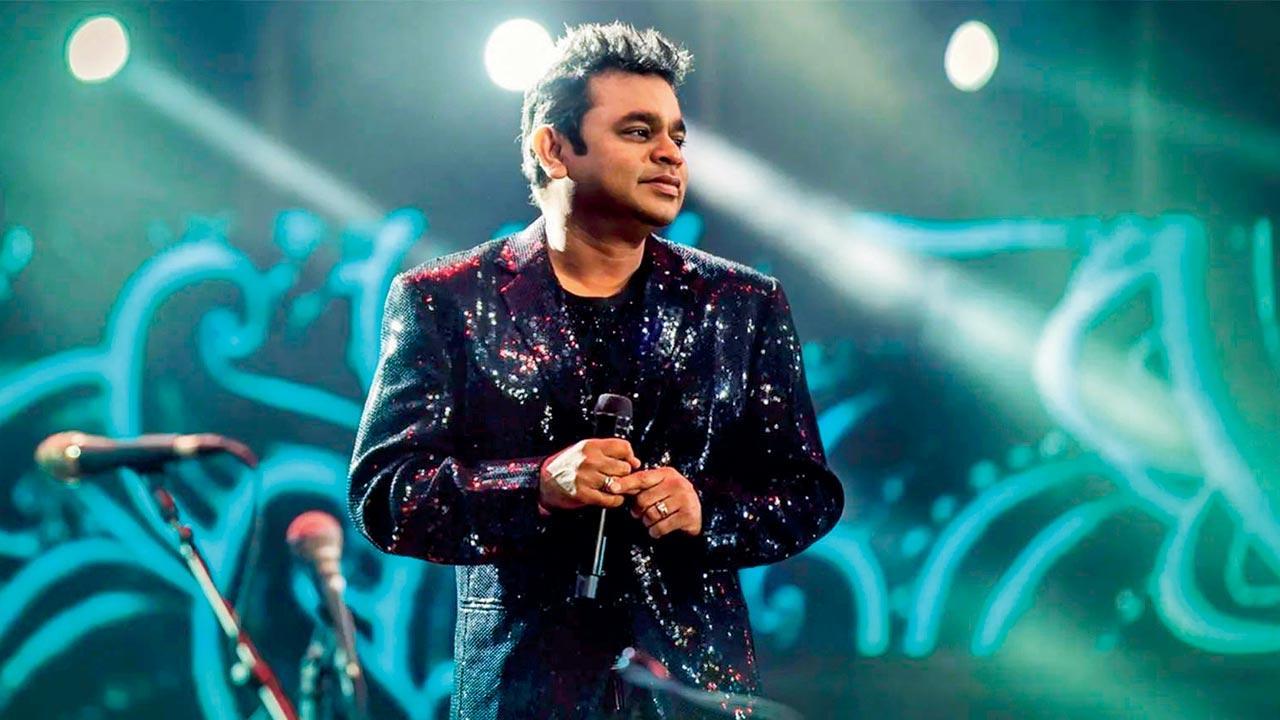
While many artistes have called off their concerts in the wake of the Pahalgam attack, A R Rahman on going ahead with his tour to show that the country is ‘unstoppable’
Komal RJ Panchal (MID-DAY; May 1, 2025)
A music studio is probably where A R Rahman feels most at home, and the stage, a close second. The Mozart of Madras is preparing to take to the stage again with his highly anticipated The Wonderment Tour, which kicks off at DY Patil Stadium in Navi Mumbai on May 3. Even for someone as shy and quiet as him, the composer and singer’s excitement is palpable, when we meet him days ahead of the concert.
We begin by asking him if he follows any dos and don’ts before getting on stage. “You need to save energy. You need to save your voice. I shut off. I meditate or try to be silent,” smiles the Oscar winner.
Tension, planning, rehearsals, sound check — all of that happens before. When it’s time to perform, the maestro turns inward, seeking stillness. But outside, it hasn’t been quiet. The country is mourning the loss of innocent lives in the recent Pahalgam attack. While many artistes, including Shreya Ghoshal and Arijit Singh, called off their concerts in the wake of the tragedy, Rahman remains resolute: the music must continue.
“Bad people want the country to stop. We don’t want the country to stop. The country is unstoppable. God willing, we will make this a success for WAVES [World Audio Visual and Entertainment Summit], for the government of India, the government of Maharashtra, and for all the people buying tickets,” he states.
But there is much noise on the work front too. Last week, the Delhi High Court ordered Rahman and filmmaker Mani Ratnam to pay Rs 2 crore for copyright infringement after their Ponniyin Selvan - Part 2 (2023) song, Veera Raja Veera, was deemed ‘identical’ to the classical composition, Shiva stuti, by the Junior Dagar Brothers. When releasing the song, Rahman and his team had attributed it to a “traditional composition created by Narayana Panditacharya in the 13th century”.
“Even at the risk of getting sued, we gave the credit, and we [got] in trouble for that. But it was worth it. It gave a new vibe to the movie,” he says, before adding, “Ultimately, we don’t want to deny any credits. If you fear everything, you can’t do good things. You need courage.”
Courage and grace underpin Rahman’s professional life. He displayed grace last year, too, as his personal life came under scrutiny when his now-estranged wife Saira Banu and he announced their separation. Did the attention on his personal life over his work get to him?
He reflects, “We are all human. Everybody goes through [difficult phases]. I went through my mother’s death, and my father’s death. It’s all part of life, and everybody has the right to express their views — but be respectful. That’s it.”
Does he ever get angry? The musician breaks into a smile at that, before saying, “Getting angry and not showing it is the art I’m learning slowly. Peace is a choice you make every morning. I want to be peaceful. I don’t want to be angry today.”
After the first National award, I felt I must go higher-A R Rahman
8:08 AM
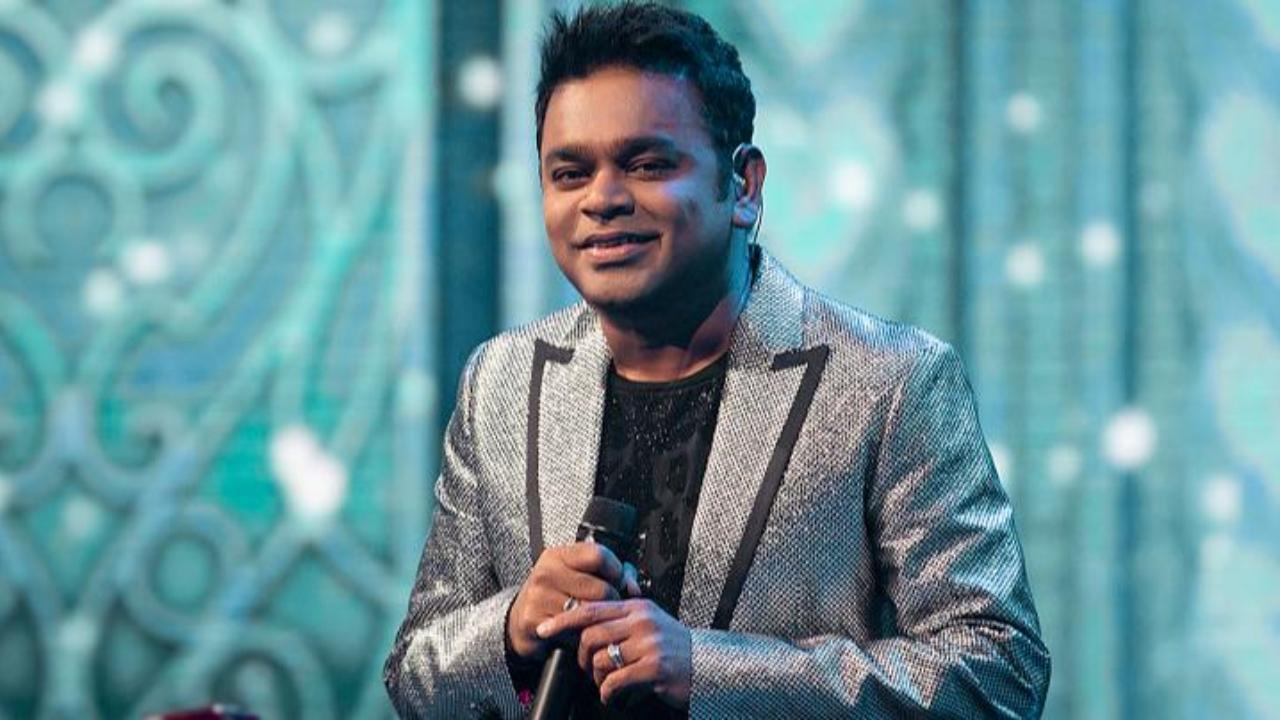
Niharika Lal (BOMBAY TIMES; October 15, 2024)
A R Rahman received his seventh National Film Award on Tuesday, and he says it definitely feels like a first all over again. “As an artist, you always feel like you're shedding your skin, evolving into a new person. The artist who has evolved is the one getting the recognition,” he shares. Interestingly, Rahman won his very first National Award for Mani Ratnam's Roja, and now, over three decades later, he's being awarded again for a Mani Ratnam film.
Music lovers say that the music of Roja still feels as fresh today as it did back then. Talking about what he does as a musician to create timeless music, Rahman shares, "From the very beginning, I had all these tick marks - the music should be recorded well, produced well, and the intention of creating the music has always been very pure. There is a big hero so I should do better music for this and there us a small hero so I should just...no! My music was never like that, the music has to be timeless. Whether it's a small hero or a big hero, the music has to be timeless. What I do should reach the full potential of what I can do. Sometimes, when you're working on a movie, a great tune comes for a small movie, and everyone says, 'Why are you putting this tune in a small movie? Use it for a Rajinikanth movie.' And I say, 'No, this tune came to me for this person, and I can't cheat. I can't take it out and put it somewhere else.' So that is the route I always took."
Excerpts from a conversation -
'After the first National Award, I felt like we have to go higher because the National Award is the highest recognition for any Indian musician'
Remembering how he felt when he received his first National Award, Rahman says, "I remember after I got my first National Award (for Roja), one of the reporters asked me, 'Do you think it is too early in your career to get a National Award for your first movie?' (laughs). After the first National Award, I felt like we have to go higher because the National Award is the highest recognition for any Indian musician. Even now, the National Award is something the whole nation acknowledges. As an artist, you always feel like you're shedding your skin, evolving into a new person. The artist who has evolved is the one getting the recognition. It's not the same thing - you've moved on from a lot of things, you're reinventing yourself, sometimes keeping what is good, sometimes letting go. So, this definitely feels like a first."
'I studied at Mani Ratnam university'
When the award was announced Rahman told us that it's a full circle, a National Award 32 years later, again for a Mani Ratnam movie. He says, "It is," and elaborates, "I think I was sitting with Mithun da and Mani Ratnam, and the minister Ashwini Vaishnaw asked something like, 'Where did you study?' I pointed at Mani Ratnam and said, 'Mani Ratnam university.' I think when you work with certain people, they bring out the best in you. And even without them asking, you understand. It's a telepathy that happens; after a while, they don't have to ask you. What they're asking comes as a mind impression, like, 'Okay, this is what he's thinking.' Then you go much further than what he's thinking, and he comes back and says, 'Oh! I like that. Why did you take so much time? Because you gave something far ahead of what I was thinking.' I'm like, 'Well, I had to take time.' So, we have a nice, interesting relationship."
Rahman says that because he had worked with so many traditional composers when he was young, he had to fight himself to break free from those influences. He says, "I had to take a 180-degree turn and say, 'I don't want to do what they did because I need to have a new experience.' So if they used one raga, I'd go and find another raga that was very unusual. Even in Roja, we used several ragas that were rarely used in Tamil. It was more of a North Indian raga, and when Tamil people heard it, it made North Indian people feel closer because they knew the ragas. Usually, Bhairavi, Yaman, and Todi are more common in South Indian compositions. So, I've consciously tried to move away from what is expected. Sometimes, some movies need a traditional score, and sometimes the director is ready to explore and gamble, and is ready for an adventure and then we have fun, which is what Mani Ratnam does."
'We can go into anthropology-driven details, but the ultimate goal is to create an experience'
Rahman says that a lot of research actually happened for the music of Ponniyin Selvan and he also had research material about what kind of equipment they had at that time, and then decided how to bring that sound from modern equipment and add it to the score.
He says, "Some of the instruments we got sound similar, and for others, we took some liberties and hid them in the score, which just adds to the musicality. We can go into anthropology-driven details, but the ultimate goal is to create an experience. It's about how truthful you are while giving people that experience because you're taking them to that era, and that era itself is a mystery because nobody really knows what happened. You imagine that, and imagination can be small or wild - most of the time, it's a wild imagination."
In Bond films, whether its composer Thomas Newman or John Barry - the theme is same
As Ponniyin Selvan has a sequel, so when he creates music for films which have sequels, how important is continuity? Sharing examples, Rahman says, "When it's a sequel, sometimes you have to continue with the score for continuity. Take the Bond movies. They have one theme that recurs. Different composers have done it too. Thomas Newman (Skyfall, Spectre) did it. John Barry (From Russia with Love, Goldfinger, On Her Majesty’s Secret Service, etc.) used to do it, and they all became the same theme.
It depends on the movie. If it's a continuation story, then it's better to have the same theme, like John Williams did for some of his work." (John Williams composed for many film series such as the Star Wars series, Harry Potter series, and Indiana Jones series.)
'I always feel like money comes as a blessing, but your work is more important'
Whether it's a big-budget film or a small-budget film, Rahman says it does not matter to him. Because his name is associated with the movie, when films don't have the budget, he has often paid from his own pocket.
He shares, "Sometimes, even for a big movie, a small score works, and it doesn't have to have 200 instruments every time. And sometimes, for a small movie, you need a big score. The film might not have the budget, but I say, 'It's fine, it's my movie, my name,' and I go ahead and book the orchestra. For instance, there is a movie Gandhi Godse - Ek Yudh (2023) that Rajkumar Santoshi directed, and it had a small budget. It required a very, very big sound, so we went ahead and did some of the score. He said, 'I don't have the budget for this,' and I said, 'No worries, I'm paying for this.' (Laughs)
How often does he have to do that?
Rahman says that he had these very strict standards from the beginning, and says, "See, for me, there is a truth, an honesty and that's important. I have to look at the music. To give an example - the first jingle that got me noticed, I was paid Rs. 2,000 bucks, and I used to charge Rs. 20,000 at that time. If I'd thought about money then, I wouldn't have worked very well on that. I always feel like money comes as a blessing, but your work is more important. How you work, what you give, should stand the test of time. I should feel proud of all my films and work."
Patriotism in some places today is about jingoism-A R Rahman
8:09 AM

Chandrima Pal (BOMBAY TIMES; August 12, 2024)
A R Rahman was in Kolkata on Saturday, the city that hosted his first live gig in India in 2003. The Grammy and Academy Award-winner was at his charming best, as he interacted with veteran and young artistes, authors, actors and fans gathered to celebrate his musical and cultural legacy. In a conversation with us, the maestro spoke about his idea of patriotism and more. Excerpts:
What does it mean to be one of the most well-known cultural ambassadors in a country as diverse as India?
I don’t think being India’s cultural ambassador to the world is an entitlement. For the past 32 years India has always been in my heart, in my head, wherever I go.
Even though I had the option to settle in the USA, the UK or the UAE, my choice has always been nurturing young children and giving back to the community in a way as music and education. (Smiles) But all this stuff (referring to the felicitation and a book documenting his impact on the global arena) helps you try to do bigger things.
On this day, 27 years ago, your album Vande Mataram, released. Maa Tujhe Salaam remains as popular today as it was back then. What was your inspiration for the song?
I think we as a team (with director Bharat Bala) realized that there is a void somewhere and a need to modernize the patriotic songs for younger people. There was a strong sense of dissatisfaction among younger people at that time. They were rebellious and just wanted to get out of this country. The idea was to sell India back to India. How do you make young people feel proud about India – that was our thought. And though it was a great success at that time, it has matured like old wine, fermented, and now three generations of Indians have celebrated that song.
When you say the song resonates with three generations of Indians, why do you think that happens?
I think there is an honesty in what we did. Also the presentation, the reinventing of the arrangement of the music, the tune, the lyrics and everyone’s contribution that went into it. But also, it was the first time that a song like this appealed to people across religions. It broke the political and religious barriers that are often injected into such ideas. It brought people together as a celebration of inclusivity that is India.
If you were to reimagine the album and the song for the India that is today, how would you approach it?
Patriotism in some places today – not everywhere – is about jingoism. Not everywhere. And my approach or path has always been like this – you improve your own house, your street, and your city, and your nation is going to improve. And that is how you counter the polarization that happens. Each one of us first has to look after our own families. Our children. Empower them and turn them into nation builders of tomorrow.
------------------------------------------------
‘Sufism has a unity beyond religion’
When my father passed away we went through a healing process. Nobody told us to become this or that. Embracing Sufism was a conscious choice. There is unity there that is beyond religion, which is also there in music. You don’t really know where music is coming from, it just resonates with your heart and soul.
I don’t put out any material that is anti government-A R Rahman
8:34 AM
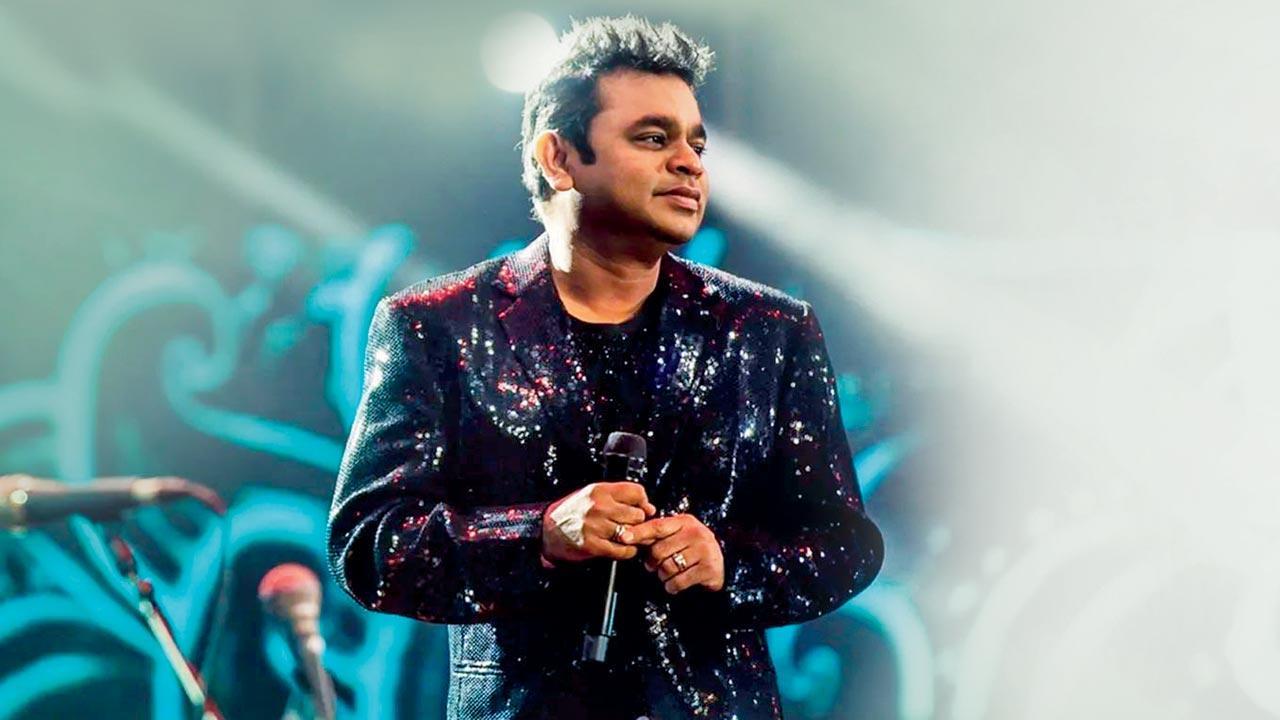
In a candid chat with mid-day to discuss his upcoming release, Headhunting To Beatboxing, A R Rahman discloses why he stays away from political banter, and the pain points in the Indian music industry
Priyanka Sharma (MID-DAY; June 10, 2024)
Touted as an offering that “exemplifies the energy, ambition and new-found confidence of Naga youth”, A R Rahman’s feature documentary, Headhunting To Beatboxing was unveiled at the 77th Cannes Film Festival in France. “From the ancient traditions of headhunting tribes to the musical renaissance in the state, the documentary promises to take audiences on an immersive and enlightening musical anthropological odyssey,” read a statement released by the Nagaland government.
In this interview, Rahman—who has also produced the film—chronicles how the artistes of the north-eastern state became the muse of his next piece of work. Edited excerpts of the interview:
What drew you to the story of Headhunting To Beatboxing?
It was a discovery. I was invited to Nagaland. I went with apprehension, because there are rumours relating to the history of Nagaland, [especially the practice of] head-hunting. I discovered this film organically and called Rohit [Gupta, director]. I told him that he should see the Hornbill festival that was taking place in Nagaland, where young people were also turning up. He came, and started shooting. The government was friendly because they wanted this to happen. They have a minister for music! It was fascinating to see the initiatives they have taken. I felt something needed to be done.
When you watch it, you will realize that two things stand out—one is that this [film depicts] India, and the other is that it is a reflection of the inclusivity that we should aim to inculcate in society. I see a section of the country that is completely ignored. That’s not good. It’s like, we have a family, but three people aren’t fed properly. It is odd.
You unveiled the film’s teaser at the recently concluded Cannes Film Festival. When you are present on an international platform, do you carry the pressure of being the Indian icon, A R Rahman?
I don’t try to be anybody else. On social media, and on our website, we are transparent about what we stand for. I don’t put out any [material that is] anti-government, because, as a musician, I should maintain a neutral stance. My music should be the haven that people seek solace in. I don’t have time for negative things. My music needs peace and healing.
But, while creating any piece of music, does the pressure to cater to your global audience play on your mind?
When Roja [1992] won a National Award, people said, ‘Isn’t it too early for you to get a National Award for your first film?’ The bar was set high. I felt I had nothing left to give, as I had given everything to my first film. But then, you meet a new team on a new film, and it gives you hope. You can create something new. For me, with the first film itself, that pressure has existed. That’s the reason I began to slow down. While others were producing songs in seven hours, I would take weeks or months to create [the soundtrack]. I slowed down intentionally, and the industry took note. They realized that we could move towards quality and be responsible instead of [urging musicians] to finish five songs in a day. Song-writing is an art that should be nurtured. Give it the spiritual energy that people can access.
At that time, my intention was to charge more and do less. It was also important to focus on the life happening around you. When you work, you become a slave, and you don’t derive anything from life. You are just cannibalizing what has come before. Unless you learn new things, how can you give people something novel? And to learn new things, you need to meet people, see what’s happening in the world, and spend time with your family.
How do you look at the music culture of today’s India?
It’s great that non-film music is becoming popular. If that didn’t happen, people would shell out a lot of money into [making] music that the masses don’t even like. They may say that the song has crossed many million views, but people won’t even know what the hook line is. The game of paid views is over. People are listening to different kinds of songs. But, there are certain lyricists who are bringing back the golden age of the ’50s and ’60s. Artistes like Irshad Kamil and Amitabh Bhattacharya have brought worthiness into lyricism. They bring a new kind of beauty to the words that they write. I feel, there could be more progress in lyric writing, especially in its ability to convey the philosophies of life, rather than simply stating, ‘I love you. Love me.’ I like lyrics that are symbolic. There’s scope for a revolution there.
We're winning Grammys, our documentaries are winning, fiction is where we're lacking-A R Rahman
10:36 AM

Niharika Lal (BOMBAY TIMES; May 23, 2024)
A R Rahman was recently at the Bharat Pavilion in Cannes to support an upcoming music documentary, Headhunting to Beatboxing, that follows the Naga tribe as they go through a musical renaissance in Nagaland. A regular at the Cannes for several years now, Rahman spoke to us about his many learnings at the film festival.
‘WE NEED TO TELL OUR STORIES IN A WAY THAT THE WHOLE WORLD CAN ENJOY’
Cannes has seen a lot of Indian representation, and this year, an Indian film is also in competition for the Palme d’Or.
Rahman explains that finding a spot on the global stage is crucial. “Already our documentaries are winning, we’re winning Grammys. I think in movies, fiction is where we are lacking. This year, India has one movie (in competition) at Cannes after 30 years – it’s great progress and I hope it wins.”
Rahman adds that Indian filmmakers need to look at their work through a global lens. “I think Indian filmmakers should look at India through western glasses. And then we will understand how to gaze at our talent, and how to tell our stories in a way that the whole world can enjoy. I’m seeing that change happening. I see a lot of young (Indian) directors at film festivals. I’m sure that they know how to make a movie from India to (be presented to) the world. What intrigues me is the magic of cinema – what it does to you.”
‘AT CANNES, EVERYBODY IS COMING WITH A DREAM’
Rahman, who has been visiting Cannes for years, shares, “At Cannes, you meet like-minded people, and you get a sense of brotherhood and sisterhood here because everybody is coming with a dream in their mind.”
What does he think the challenges are for Indian filmmakers? “I think we have money, we have equipment, we have talent. It’s just that we need focus; smart work is important. Hard work is not enough (laughs). Smart scriptwriting, knowing where our place is intellectually and culturally – understanding what aspects of our culture are great for the world to see. What does it take to be at the core of world cinema? It is not just content or talent; it’s geopolitics, psychology, art. It’s about telling the right stories to reach there and using the right tools. We are in an interesting space, a renaissance that is almost coming.”
‘I want my (production) space to be non-intrusive in my music-making process’
The documentary Rahman supported at the Cannes, Headhunting To Beatboxing, traces the journey of the Naga community, which moved away from violence to create music. Rahman says that he decided to tell this story because it’s not just about Naga music but also about independent singer-songwriters, and could inspire the world. After 99 Songs (2021), this is the second project that he is backing and discussing at Cannes.
He says, “I want my (production) space to be non-intrusive in my music-making process. Because getting into production is a whole ball game altogether. It’s very exhaustive and sometimes humiliating. So, I just want to do certain things in my capacity.”
Films should have rich classical music, why dumb things down?-A R Rahman
8:29 AM

Niharika Lal (BOMBAY TIMES; December 4, 2023)
Wrapped in their jackets and shawls, Delhiites turned up to hear AR Rahman talk about storytelling, films and music at the Kathakar festival in Sunder Nursery on Friday evening. Rahman received so much love from the Delhi audience that they didn’t want to let him go, with Rahman saying, “I love you guys so much. I will come back again.” Rahman shared some insightful and straightforward comments on the music scenario in India.
‘WHY DO YOU WANT TO DUMB IT DOWN FOR THE AUDIENCE?’
Rahman shared that these days, filmmakers often want to oversimplify things. In reference to Gulzar’s comment that Rahman and Mani Ratnam didn’t interfere with excessive Urdu usage in songs in Dil Se.., he said, “That’s how it should be. It happens a lot these days – you dumb things down. ‘No, no, people are not going to understand that. Make it simple. Don’t do this and don’t do that.’ A poet or lyricist has a responsibility to the audience. Why do you want to dumb it down? Okay, you can dumb down one song, but not all songs. I feel like film music should have rich classical music – thumris, khayals. If you want one item song, it’s fine, do it. But for the rest of the stuff, let it live and breathe. Why can’t you figure out a way that the screenplay doesn’t make it boring? That’s the question I keep asking people.”
‘HATRED COMES WHEN ONE FAILS TO UNDERSTAND THE HUMANITY BEHIND ANY CULTURE’
Speaking about the films he wrote and directed, such as Le Musk and 99 Songs, Rahman said, “I’m slowly getting into storytelling. If people don’t have their own narratives, their narratives are just taken over. It is important to tell beautiful stories so that people can understand each other and different cultures. Hatred comes when you don’t understand the humanity behind any culture.”
When the host of the evening Mohit Chauhan asked Rahman how he identifies himself with music, Rahman responded, “That’s the question I’m asking myself. I’m still discovering myself. Long ago, my agent asked me, ‘How do I pitch you to people? You’re like a supermarket – you’re doing classical, Indian folk, film songs.’ But I love all kinds of music. I respect all cultures and people, and I never make fun of anything. I go deeper, and I find the truth in it.”
Recently, Rahman’s rendition of a poem by Bengali poet Kazi Nazrul Islam for the film Pippa was in the news after the poet’s family said that the new version distorted the original tune and rhythm. Without mentioning the song, Rahman said at the event, “Sometimes I get it, and sometimes I get caught in embarrassing situations, like the one last month. There are no bad intentions; there is no disrespect to anyone.”
‘YOU CAN’T MISS NIZAMUDDIN DARGAH IN DELHI’
“In Delhi, you can’t miss Nizamuddin sahab Dargah. For the song Kun Faya Kun (from Rockstar), Imtiaz Ali ji called me and asked ‘Can you add the word Nizamuddin in it?’ And I was like of course! It was not there initially; it was not meant to be there. It’s beyond religion and beyond everything. The President of Berklee (College of Music) told me, ‘One song of yours that I love is Kun Faya Kun.’ I don’t know what he understood about that song. Inherently, there is something in it.”
People who watch content on OTT keep the sound so low-A R Rahman
8:02 AM

Amid the Covid-19 crisis, Oscar and Grammy winner A R Rahman feels people need to stick together, move towards healing
Sugandha Rawal (HINDUSTAN TIMES; May 16, 2021)
It might be getting tougher, with each passing day, to handle the agony amid the ongoing Coronavirus crisis, but music maestro A R Rahman feels the days of healing are not far away. The Oscar-winning music composer says that it’s important to clutch on to hope to get through the rough tides of time.
“We always need hope, just like we need food, air, music and inspiration. Today, we’re all suffering and struggling together, and soon we’ll rise together,” he asserts.
He feels that, today, people are better prepared to face the adversities, unlike last year when the pandemic hit humanity all of a sudden. “People have learnt how to struggle, and how to emerge alive from the crisis. We need to support each other and we need to march on,” he adds, praying for things to get better, and using social media to urge people to raise funds to aid the healthcare battle.
Just when the second wave of the pandemic began showing its rage, and hit theatres again, Rahman released his long-pending film, 99 Songs, on the big screen in some parts of the country, instead of opting for the OTT route. The Grammy-winning composer says it was meant to send out a big statement that “we’ll fight and be the hope”. “We’ve to show resilience, that, against all odds, we will survive,” says the 54-year-old, who was associated with the film as a composer, writer and producer.
Ask why he didn’t opt for a digital release and avoid the uncertainties, and he reasons, “It’s a movie made for theatre experience. I didn’t want to take away the sound and music... People who watch content on OTT keep the sound so low.”
Talking about the industry, Rahman feels the musical narrative is missing from storytelling now. He says, “Half the people are avoiding songs. They’re not investing time in composers and just doing remixes. While there are some who’re committed to the craft, some just aren’t. They want to put in money, make a movie, and drop it on the OTT.”
Our film 99 songs is from India to the world-A R Rahman
8:09 AM

Treating his debut production, 99 Songs, as India’s gift to the world, A R Rahman on crafting it such that viewers across the globe be eager to catch a glimpse
Sonia Lulla (MID-DAY; March 30, 2021)
A R Rahman barely utters a sentence without crediting yet another music producer, designer, or engineer who helped breathe life into his 99 Songs. The maestro, always eager to put the work of his team on a pedestal, evidently held his dear ones close when presenting what is arguably his most ambitious project. In an interview, he discusses juggling duties as producer, writer and composer of his upcoming release.
Edited excerpts from the interview:
There is evidently anticipation around a film coming out from your stable. But what drew you to this one, which you have also co-written?
Because I have worked with the top guys in Hollywood, and being a member of the Academy, I had the idea that India should reach out to the world with a film [that matched the] sensibilities of all. We wanted to create a new voice that [represented] the Indian film industry. This movie is from India to the world.
In a previous interaction, you had stated that musicals in India fail because they are not tested, like they should be. What campaigns did you run to address this for 99 Songs?
We did a previs [visualising a film in 2D or 3D before creating it], following which we changed many things. I tried to be true to the script. I didn’t just create five songs and use them. We thought of the mindset of the [protagonist]; the things he would compose in the beginning [of his career], and how his music would evolve and become deeper. Like the film, the music too has an arc that comes full circle. We sent him [Ehan Bhat, leading man] to the K M Music Conservatory [Rahman’s music school in Chennai] for a year-long training, and subsequently to Hollywood for a four-week acting workshop, where my friends [taught him].
Having worked in Hollywood films, what were the learnings that you directly applied?
Most of these films [Hollywood films] are poverty oriented. I wondered what were the things that could obstruct people [from around the world] from watching [an Indian] movie. So, everything, including the casting, was done such that it could be easier for them to transition and watch it.
While a lot of the singers are those you have worked with, did anyone particularly excel?
For each voice, my supervisor Dilshad [Shabbir Shaikh] and I heard 20 to 25 singers, before we arrived at one that sounded right. The surprising [pieces of work] were by Arijit [Singh] who sang Jwalamukhi, and Armaan Malik, who rendered Humnawaa. With their voice, it felt like a new cast was being backed by new voices. So the whole [creation] felt fresh. They created an identity that resonated with the characters, and helped build a sense of credibility.
Everything with regard to the music was carefully created. There’s a lullaby, and a godh bharai song, and several songs that people can use in real life, as part of our Indian culture. I decided to create cool versions so that the songs could live beyond the life of the movie. [Creating the soundtrack] in three languages was torture. We finished composing it in Hindi, and then had to [do it again] in [my] mother-tongue [Tamil], without making it seem like a dubbed piece. We went back and forth at least 11 to 12 times on each song. But, I have seen the Tamil [version] and, to an extent of 99 percent, it is aligned with the native language.
Is there something about film composing that you now see differently, after taking on duties as producer-writer as well?
Sometimes you make a song, and then wonder if it can hold in the screenplay. I had to cut my own songs, sometimes, as much as 15 bars, or one minute. The decision to truncate it was needed. A movie, like food, is an emotional ride. If you have too much, [you are uncomfortable]. With films, sometimes you must cut out the most favourite scene if they obstruct the flow [of the story]. A consulting editor added a lot of beauty to it.
I never look at music as the second option-A R Rahman
8:26 AM

The maestro says that today he works with young minds as much as possible because they help him learn and grow
Juhi Chakraborty (HINDUSTAN TIMES; March 7, 2021)
A R Rahman’s almost 30-year long career which started with Roja in 1992 has been exemplary. And six National Film Awards, two Academy Awards, two Grammy Awards, a BAFTA Award, a Golden Globe Award later, the quest to do better still remains as strong as his first project. “I never look at music as the second option. For me, it is the only option I keep talking about how my mother made the choice for me to be a composer. Every three years people come and say music is going to end with other things coming up. There is a fear that something will come and destroy your livelihood. It has always been there,” he shares.
But Rahman is confident that music is always going to be there. “It is going to evolve. It is something beautiful, it goes from hand to hand and traditions. Things are getting updated and same ragas are being played by younger people and they bring in their own flavour,” he explains.
Another reason why the 54-year-old believes that music is irreplaceable and will also live on is because of the young talents that are coming up. “We have extraordinary musicians now and sometimes an eight-year-old goes to a level of expertise that even a 50-year-old can’t match up to. And I have seen those talented kids. Music can’t be stopped and nobody owns it. It can go to anybody and that is fascinating. That also keeps you open minded and you keep looking at things which are evolving and you embrace it. Sometimes, you just have to appreciate it. You see so many extraordinary talents and they reaffirm the faith in music for all of us,” says the maestro.
On if there is any advice that he would like to share with young and upcoming musicians, Rahman says it is he who needs it from them.
“I like to talk to younger musicians because they are the ones who listen to new music. My team is young and I look at the enthusiasm in their faces and their actions. They inspire me. That’s the mutual respect that we need. I respect what they do and they respect me. All older and younger musicians should practice this taking and giving back,” he concludes.
I didn’t care to accept many offers because you need to concentrate on quality-A R Rahman
8:19 AM

A R Rahman says he is content working on a limited number of projects
Juhi Chakraborty (HINDUSTAN TIMES; February 2, 2021)
Music maestro A R Rahman’s contribution to Hindi film music is enormous, yet over the past few years, he appears to have cut back on work in Bollywood films. The Oscar-winning composer says he is rather content with the kind of work that he associates himself with now.
“I think I am pretty happy with the amount of movies I am doing now. I work with people from whom I get a good vibe. That is why I keep working with the same people again and again. I didn’t care to accept many offers because you need to concentrate on quality,” shares Rahman, whose recent Hindi film albums include Shikara and Dil Bechara, both last year.
Along with a rich discography, the musician also has a number of awards to his name — six National Film Awards, two Academy Awards, two Grammy Awards, a BAFTA Award, a Golden Globe Award. Talking about whether such laurels spell doom for someone’s career, he says, “As long as somebody has a neutral mind and you don’t get carried away by awards… The quest for learning keeps going on. My first film (Roja, 1992) won a National Award and, people said, ‘You won the National Award, do you need to continue? You can stop now’.”
The 54-year-old, who recently adapted one of his old songs for a web series, says he has never been driven b y awards. “Awards are important but it is not the only destination. Music cannot be judged in one hearing and the intention of the music is much more than the creator. It is about how people take it. The joy of composing and performing is only limited by your physical health, nothing else,” he adds.
Almost 30 years old in the industry now, Rahman is one of the most successful music composers in the country today. So what does he attribute this long successful ever growing career to?
“Everything, all my success is a blessing for me. I am always a learner. At every stage of your life when you feel you have done enough, every three to four years there is a shift that happens. There are new needs, new sound, the society changes and you need to embrace and not complain that ‘Oh those days we did this’. One needs to get rid of that. We have to respect everybody’s needs,” he concludes.
I don’t say no to good movies, but there is a gang spreading rumours about me-A R Rahman
8:28 AM

TNN | BOMBAY TIMES (July 25, 2020)
The music maestro talks about why there have been fewer collaborations with Bollywood as compared to the film industry down South
In the last decade, the Mozart Of Madras, as A R Rahman is fondly known, has done multiple Tamil films but in comparison, fewer Hindi movies. During an interaction with RJ Suren for Radio Mirchi’s weekly Top 20 Celeb Special show, Rahman spoke about the music he has composed for Bollywood films, like Dil Se, Swades, Guru, Rockstar, Tamasha and OK Jaanu, among others. On that note, when asked why he doesn’t compose more music for Bollywood films, he said, “I don’t say no to good movies, but I think there is a gang, which, due to misunderstandings, is spreading some false rumours.”
The music maestro went on to narrate an incident which happened recently. He said, “When Mukesh Chhabra came to me (for Dil Bechara), I gave him four songs in two days. He told me, ‘Sir, how many people said don’t go, don’t go to him (A R Rahman) and they told me stories after stories.’ I heard that, and I realised, yeah okay, now I understand why I am doing less (work in Hindi films) and why the good movies are not coming to me. I am doing dark movies, because there is a whole gang working against me, without them knowing that they are doing harm.”
He further added, “People are expecting me to do stuff, but there is another gang of people preventing that from happening. It is fine, because I believe in destiny, and I believe that everything comes from God. So, I am taking my movies and doing my other stuff. But all of you are welcome to come to me. Make beautiful movies, and you are welcome to come to me.”
I am proud of the diverse talent in India, the bar is being set very high now-A R Rahman
8:28 AM

Debarati Sen (BOMBAY TIMES; June 14, 2020)
Over the past few months, A R Rahman has been collaborating with artistes across the globe, raising funds for those affected by the Coronavirus pandemic. In a chat with BT, he talks about his recent single penned by Prasoon Joshi, which released last month, how his music stems from his spirituality and how he is spellbound by the talent in India. Excerpts...
Anyone listening to your music, even without a deep knowledge of music, can identify with it. What do you think makes it so distinct?
The most important thing is to develop a character (in your music), and that depends on the choices we make. However, these choices are not deliberate — they come from within, from a person’s intellectual and spiritual self.
Tell us what inspired you to make your recent single, Hum Haar Nahi Maanenge…
Working on the track, Hum Haar Nahi Maanenge, made all of us feel positive. Even the making of the song was very therapeutic. These days, a lot of people are feeling low. And you know, they say that when we give goodness, we receive it, too. When we try to do something, we might fail or succeed — that’s subjective, but the process is great and it benefits a lot of people. I believe in constantly aiming for goodness, kindness and giving people a reason to be hopeful.
There’s always so much to talk to you about your music, but you rarely talk about the other side of your life, which you fiercely guard — your personal life. Tell us something about AR Rahman the son, the husband, the father...
My family — my sisters, my mom, my wife and my kids — has guarded me from everything, so that I could concentrate on my music. To me, all those working with me are also like my family, because I spend more time with them. Their joy is my joy and their pain is my pain. As a father, I never had enough time for my children. It is only in the last 10 years (after winning the Oscars in 2009) that I have had the luxury of spending time with my kids. I did less work intentionally, so that I could study for the next phase of my life — learn new things, and also try and be a good father.
Almost every musician wants to collaborate with you. Who are you excited to collaborate with?
I am proud of the diverse talent in India. There are nine-year-olds singing very complex harkats in classical music. There are also exceptional talents like Lydian Nadhaswaram (piano prodigy), who surprised the world. There is so much talent in our villages as well, sometimes you get to see it on social media. Gone are the days when we waited for a chance to come on a platform. Things have become democratised now. People are taking initiative on their own now. The dedication and passion among budding talents is impressive. It’s not about the number of views, but your unconditional dedication to music. So, the bar is being set very high now. And it’s important to recognise the people, who are raising the bar. Having said that, there’s also junk coming out, which confuses people and they wonder, ‘Is this music?’ So, it is our duty to pull out the real gems and showcase the real beauty of music.
Today, the country is coming out of the lockdown mode. How did you spend the past couple of months?
It was mostly spent eating and sleeping (laughs!). I also worked on a few songs, including Hum Haar Nahi Maanenge, Hands Around The World project, the digital concert, I For India, and the Shikara OST.
Music can subliminally plant the seeds for change-A R Rahman
8:22 AM

Neil Morgan, Ken Kragen and AR Rahman. Pic/hands around the world
Composer A R Rahman gets together with We Are The World’s Ken Kragen to create an anthem for a post COVID-19, climate-change empathetic world
Aastha Atray Banan (MID-DAY; April 26, 2020)
“Every great thing, balances at all times, at the razor edge of disaster,” says Ken Kragen at the beginning of the trailer of the Hands Around The World Project, which launched on Earth Day. Kragen is the man who organised We Are the World — the ’90s anthem, which was a coup of sorts with the presence of Michael Jackson and other legends, Lionel Richie, Stevie Wonder, Paul Simon, Kenny Rogers, James Ingram, Tina Turner, Billy Joel and Diana Ross.
Now, Kragen and our own Oscar-winning composer A R Rahman, along with other notable musicians, visionaries and philanthropists, have joined hands for a global project titled, Hands Around The World. Also, a big part of the project will be Neil Morgan, an immersive entertainment entrepreneur, who is the brains behind a unique app that will use hologram and augmented reality technology to link one billion people holding hands around the world in a virtual reality selfie- chain for the benefit of climate change. This new project includes an anthemic song, and an album of songs showcasing different genres is also in the making.
We spoke to Rahman, Kragen and Morgan about the project.
Edited excerpts from an interview.
How did the Hands Around The World project materialise?
Rahman: It’s a unique project that brings together music and technology to create awareness about climate change. There’s a lot spoken about climate change, but I feel this is the time for all of us to come together and take action. Ravi Velhal from Intel, who is one of the technical advisors for my Le Musk project, pitched my name to Neil and Ken, saying A R will be the right person for this project. So, they did their research, watched my show Harmony on Amazon Prime and after that, asked me to compose a song for Hands Around The World.
It comes at an unfortunate, but relevant, time.
Rahman: In times like these, one is forced to think about the future, about our children’s children. We don’t want to mess up this planet for them. We need to understand that if we take care of nature, nature will take care of us too. I feel we can do a lot with the power of music and I try to do whatever little I can. I’m trying to connect people and, in the process, I’m learning a lot. I think opportunities like these force us to think differently. And this gives us a chance to say something, and also subliminally plant the seeds for change in society. Music, lyrics and narrative stories can play a critical part in unifying people.
Kragen: People have come to me every month or so wanting to do a new Hands Across America, where I got over six million people to hold hands in a continuous line from New York to Los Angeles. They see it as a way to bring people together. I explain that it has already been done and, unless there was some new twist that made it unique, it would not succeed. Neil and I were in a meeting where ‘Hands’ kept coming up and he held up his cellphone and said, “Look, you couldn’t get people to hold hands in a continuous line these days because they would be using their phone in one hand to take a selfie.” We all laughed but then he said, “I have been developing the technology with a brilliant group of tech folks so we can let people take selfies on their phone with holographic celebrities and send it to us for Hands Around the World.”
How did the collaborations take shape?
Rahman: We had a very kind letter from Quincy Jones supporting the project and endorsing me. And that got circulated just around the Grammys in January. A lot of artistes were, in fact, returning home from the Grammys but Natasha Bedingfield, Cody Simpson and Mary Mary, all of them were kind enough to come and record. Akon has also confirmed, and many other artistes will be joining us for the second line of sessions, which are going to take place after we emerge from the pandemic.
Morgan: Ken and I have been fortunate to travel the globe several times and have formed some amazing celebrity friendships. On the technology side, I was working with award-winning global leaders in the field of Volumetric Video and Photogrammetry. One of those key people is Velhal, who made a very powerful introduction to Rahman who he has worked closely with. This was a game changer for us. When A R told us that Michael Jackson himself had suggested A R write a new ‘We are the World’- type song, we felt it was destiny. I brought in two other composers to broaden the global influence.
And what do you think of the current situation we find ourselves in?
Rahman: The whole world is locked down at the moment. There seems to be a hidden message, which is trying to cry out loud to us. And we need to find what the message is. The unique thing is that Hands Around The World is not just a song, it’s not just an idea— it is a seed you’re planting. We are hoping that many beautiful things will happen, when people hold hands around the world with the help of augmented reality.
Morgan: The great thing about this project is that it is all virtual reality. Coronavirus has opened a whole new way for musicians to relate to their audience, but we believe audiences will tire of seeing musicians stream just from their homes. Utilising new technologies will create interactivity with the audience like never before.
In this lockdown, there seems to be a hidden message that’s crying out loud-A R Rahman
8:18 AM

The Oscar and Grammy award-winning composer talks about Hands Around The World, a first-of-its-kind music project, where he has collaborated with musicians from around the world, including Ken Kragen, the man behind the historic anthem, We Are The World
Debarati Sen (BOMBAY TIMES; April 26, 2020)
A R Rahman has joined hands with musicians, visionaries and philanthropists for Hands Around The World, a first-of-its-kind music and technology initiative. In a bid to raise awareness about the dangers of climate change, the global project was announced on the 50th year of Earth Day (April 22). It includes the use of an app, which will link one billion people holding hands around the world in a virtual reality selfie-chain through hologram and augmented reality technology (brainchild of entertainment entrepreneur, Neil Morgan). In an interview with Bombay Times, Rahman gives an insight into his initiative. Excerpts...
What makes the Hands Around The World project unique from your other musical collaborations?
It is not just a song or an idea — it is planting of a seed. We hope that many beautiful things will take place, when people hold hands around the world with the help of augmented reality.
Why did you choose Earth Day to launch this project?
The day seemed perfect for the launch as through this project, we are talking about the welfare of the Earth and that it must come above everything. We don’t want our children’s children to complain about the mess our generation has made with the forests and the oceans.
The project also features Ken Kragen, creator of the charity single, We Are The World, in 1985. What was your first impression of the timeless track?
I was doing ad jingles when the song released. After that, every agency wanted to do a song like We Are The World. It was a powerful song and an idea loaded with so many lessons. The beautiful thing about doing something for a greater cause is that unlikely people come together. When you’re working on a greater cause, you deplete your egos and mingle with everyone as equals.
The album is a year-long venture and will have global music styles. How did you manage to rope in so many artistes from around the world for it?
We had a very kind letter from musician Quincy Jones supporting the project and endorsing me. His letter got circulated just around the Grammys and artistes like Natasha Bedingfield, Cody Simpson and Mary Mary were kind enough to come on board. Akon has also confirmed. Many other artistes will be joining us for the second line of sessions, which are going to take place after we emerge from the pandemic.
Coronavirus has affected everyone. How are you coping with the lockdown?
In this lockdown, there seems to be a hidden message crying out loud. It could be subjective, but we need to find what that message is for each one of us.
Whenever we think that we know something new, that ‘something new’ stagnates-A R Rahman
7:44 AM

Onkar Kulkarni (BOMBAY TIMES; March 13, 2020)
Bombay Times caught up with music maestro A R Rahman at a recent event where he spoke about the need to keep reinventing oneself, his new fashion choices, the popularity of Korean music and his daughters, Khatija and Raheema, who have stepped into the music industry.
Bidding adieu to his all-black attire, Rahman has been upping his fashion game. His latest music video saw him making an entry on the screen in shimmery silver shoes. The ace musician and composer credits his wife, Saira Banu, for his styling. He said, “She would complain a lot about my outfits and styling. So, these days, I just accept whatever she picks because it makes her happy. She has friends in New York and Los Angeles and suitcases full of clothes keep coming home (laughs!).”
The Oscar-winning composer recently worked on a project where he had to mentor other musicians. Talking about the time when he was being mentored, Rahman told us, “I have been mentored a thousand times. First, it was my Carnatic music teachers and my father (R K Shekhar). Then, there were people like Mani Ratnam and Shekhar Kapur. Also, there was Andrew Lloyd Webber (English composer), who believed that I could write music. The idea is to always keep learning. Whenever we think that we know something new, that ‘something new’ stagnates. Inquisitiveness and the constant search for knowledge are what keep you going; without that nothing exists.”
Rahman says that since he started his training in music early in his life, he had a hard time as a student in school. “I was a bad student, because I was also working when I was studying in school. I would often get scolded for my poor attendance. I would work through the night, and in the morning, I would be at the studio,” he recalled.
Rahman, who has won two Grammy Awards for Slumdog Millionaire (2008), said that the prestigious international music award is just the roof, and one should aim for the sky. Citing the example of the Korean music industry, he said, “There is this famous saying, ‘Aim for the sky and you will reach the ceiling. Aim for the ceiling, and you will stay on the floor.’ One should always have high aspirations and ambitions. Look at the way Koreans are spending millions on marketing their music. Today, their music is almost mainstream. Everybody is talking about BTS — the South Korean boy band! I don’t even understand that music, but it’s so popular. Now, they seem to have taken over the movies, too, what with Parasite winning big at the Oscars.”
Like his son, A R Ameen, Rahman’s daughters, Khatija and Raheema, are also musically inclined. Last year, they performed on the stage for the first time with their father at the U2 concert in Mumbai. “They are taking music more seriously now. They never expected to be on stage along with me at the U2 concert. We are a musical family, and I believe that their musical education is very important. So, after me, they can take forward what I began,” he signed off.

Some remixes are disastrous, very annoying-A R Rahman
8:22 AM

The musician feels ‘recreations’ are fading as people realise one can’t take the fast food route for music
Nishad Neelambaran (HINDUSTAN TIMES; February 15, 2020)
With two Academy Awards, one BAFTA, one Golden Globe, one Grammy and six National Awards, musician AR Rahman is a global icon. Known for the way he blends western and Indian instruments, Rahman has gifted us an unending playlist of soulful melodies — Roja (1992), Bombay (1995), Dil Se… (1998), Rang De Basanti (2006), Rockstar (2011) — in a career spanning over two decades. In an interview, the Mozart of Madras talks about Bollywood music, the trend of remixes, future projects, and more. Excerpts:
In recent years, we haven’t seen much of you in the Hindi film industry. Was it a conscious decision to stay away?
I was concentrating on my movie, 99 Songs, which is yet to release and Dil Bechara, which is supposed to come out. I was also doing Tamil movies. My time was divided between my productions, building a studio, and spending time with my kids and nurturing them into musicians. That required a lot of attention and a lot of time. And now, they are almost on track (laughs). You have to play all the roles. I am satisfied with the time I have spent with them.
How has the digital wave changed the rules of the music industry?
There are no gatekeepers anymore. Any kid who is doing well can be discovered now. No one can say, ‘Oh, He is performing well but nobody is promoting him’. But of course, big players limit the scale of content into very small categories. If something works, they think this is what we need. For instance, if you think a dish is very good and let’s have this for breakfast, lunch and dinner, it becomes boring (laughs).
Remixes are ruling Bollywood. A few of your compositions were also recreated. Are you happy with any of them?
The one which I was happy with was The Humma Song (OK Jaanu; 2017) as it helped the movie. However, after that I didn’t like any of them. Some of them are really disastrous and very annoying. In fact, I told the company who made the remix, ‘You are forcing me to support this but I hate this one, and people are going to troll me if I support this’. As far as the trend is concerned, it’s over. I think people are realising that music needs love and finding a song for the movie, rather than taking the fast food route.
Do you think Bollywood music has overshadowed other forms?
I won’t say that, as Bollywood has a lot of marketing money. Where there is money, there is exposure. You hear something beautiful but there are only 30,000 views and then you hear something not so impressive, and it has more than 500 million views. It is the marketing money and there are paid views, people do that.
Looking at the music industry in India, how do you think things have changed over the years?
The fear of failure is more. It’s all-or-nothing. So the ease of doing something beautiful is gone.
Would we see more of Rahman’s compositions this year?
I am doing an Aanand L Rai movie, Atrangi Re, and two more films which you will come to know, hopefully! Then you might hear good news about 99 Songs, too.
I hate telling a contestant you are bad-A R Rahman
8:28 AM
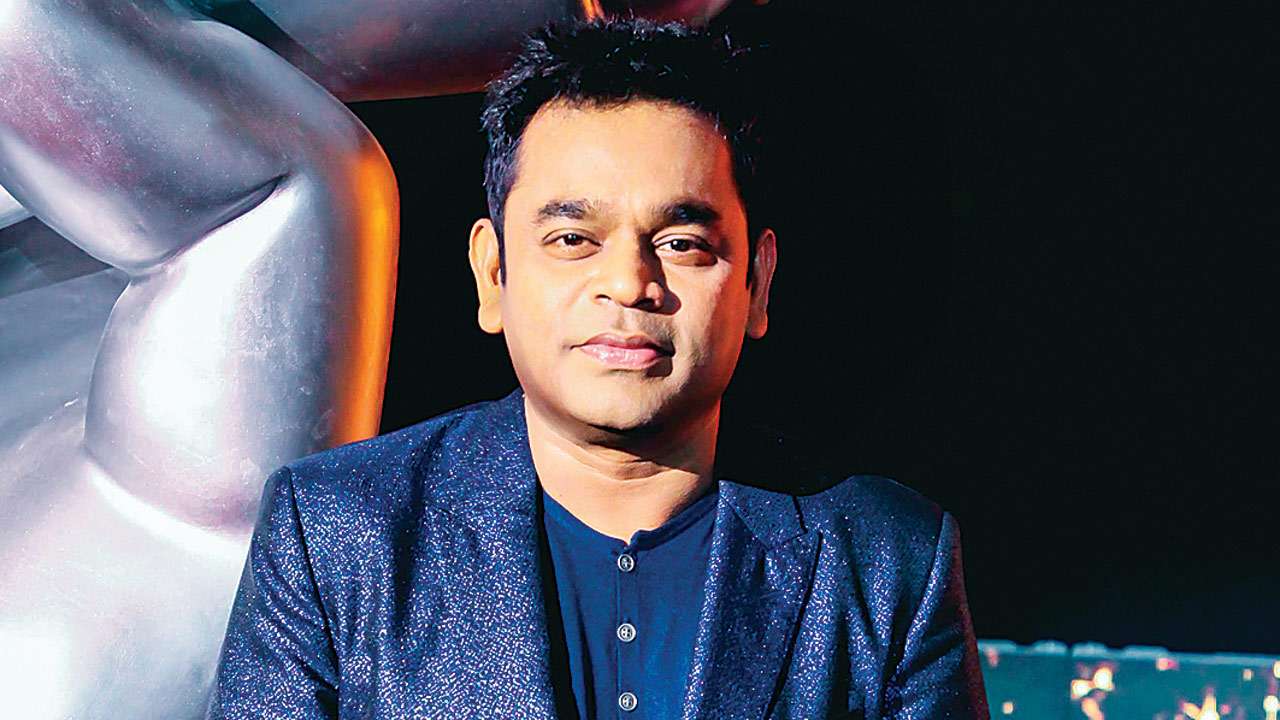
Chaya Unnikrishnan (DNA; January 15, 2019)
After exploring the digital platform with his shows ARRived, a singing talent hunt and Harmony, which has him travelling across the country and getting into the roots of our musical heritage, AR Rahman is now moving to TV. The music maestro will be judging The Voice that is adapted from the hit international format by the same name. Here, the Oscar-winning composer tells us why he has taken up the show, what he is looking for in the contestants and his take on remixes.
You have your own music talent hunt show ARRived on YouTube. So, what prompted you to move to TV?
The YouTube show is done by my company, so I had to judge the show (laughs). But, in a way, it kind of opened up a new platform as it was beautifully received. However, there are people who are not YouTubers yet, and for them, TV is an accessible medium as it has a wider reach. The Voice is an international concept where you hear the voice and don’t need to see how the person (who is singing) looks, though it adds something extra. This is what I believe in and I was surprised to see that the show is also like that.
Moreover, they are giving me a special role where I don’t have to eliminate contestants -- I hate saying you are bad, or that you should get out. Here I will only be a mentor (smiles).
What will you look for in the contestants?
I am open to watching all the contestants, I get inspired by a couple of people. I don’t have any formulas, the heart does not have any formula. It could be the way they pronounce certain words or the way they emote or express. Each of us has something special and the personality comes out. Many singers have probably sung just one song and gone, but they are popular. With that one song, they have created their identity and become immortalised. So, as I said, it could be the way somebody is singing or interpreting a song.
Will you be giving a break to any of contestants?
Yes, it is inevitable, as I am always looking our for new talent.
Recently, you celebrated your birthday, what is it that you are planning to achieve this year?
My biggest test will be the films 99 Songs that I am producing and Le Musk, which I am directing. It’s a little step but huge, so I want to do it right. I have written, produced and scored the music for 99 Songs, but it doesn’t have 99 songs (laughs). It should release in a couple of months. Le Musk is a a virtual reality film. It’s a very tough movie, but very rewarding. Those who have seen it have been kind and encouraging. This won’t release in theatres, it will be an installation and a viewing experience.
Of late you haven’t been composing the music for Bollywood films. What is the reason?
I was not doing the music for Bollywood films because I was concentrating on my movies. Also, the directors like Rakeysh (Omprakash Mehra) and Imtiaz (Ali) whom I am comfortable working with probably didn’t do any movies... though Imtiaz did one with Shah Rukh Khan (Jab Harry Met Sejal). Some of the movies I was to do the music for didn’t take off like Rhea Kapoor’s film. But yes, I am doing the music of Kizie Aur Manny. I did one song for The Fakir Of Venice which was out recently. I saw the movie two years back and was bowled over, and decided I want to do the music.
These days every other movie has a couple of remixes. What is your take on the trend?
Anybody who has the patience, the love and the time will definitely do a soundtrack, which is completely new and have a sense of pride. It is they don’t have the time and want a hit song, they do a remix. Either they don’t believe in the composer or maybe are superstitious that this is how the trend is and by having it the movie will be a hit!
The last time I felt good about a soundtrack was Rockstar-A R Rahman
8:06 AM

A R Rahman says soulful music can be created only when composer, director work in tandem
Sonia Lulla (MID-DAY; December 19, 2018)
With rehashed tunes emerging as unchallenged club-bangers this year, music aficionados haven’t failed to notice that it’s been a while since the industry delivered a promising film soundtrack. “The last [time] i felt good about a soundtrack was [when working on] Rockstar,” says A R Rahman, who has been vocal about the need for musicians and filmmakers to approach any project as one unit.
Talking to mid-day at the launch of the recently released anthem of the Men’s Hockey World Cup, the maestro admits that musicians are under “pressure” when delivering a soundtrack. “There are many challenges [that filmmakers face to get] people to watch movies. So much so, that we have forgotten to catch up with the soul. Sometimes, we need to go back and create something beautiful. For Rockstar, there was a lot of time, commitment and love put into the script, by the actor, director, lyricists and [me]. Then, the concept of content came into existence. Somewhere, the passion of creating a movie is lost; [filmmaking] has become about content creation, not art creation.”
For an industry that banks heavily on its musical heritage, Bollywood has also grappled to deliver a successful film in that genre. “If you do it properly, it will [turn out] well. [Filmmakers] must work harder, and do their homework before approaching it. I’ve worked in the West, so [I’ve learnt] how musicals should be done. It requires workshops before it is created. Every frame matters.”
You have to constantly strive to forget who you are-A R Rahman
8:16 AM

Set to collaborate with digital artistes for the upcoming show Jammin’ Rahman on how he continues to churn out novel sounds
Sonia Lulla (MID-DAY; November 26, 2018)
Tucked away in an Andheri by-lane, M&T Manoranjan Studio is being brought to life by voices that are anything but ordinary. Taking centre-stage against a live band that comprises a mix of musicians from the industry and those belonging to A R Rahman’s fold is Indian cappella group RaggaTrippin’, rendering a recreated version of Rahman’s Vande Mataram.
A hint of urgency makes itself evident as this crew of 100-odd people prepares for a crucial shoot that’s set to take place this evening. Following in for her set, Jonita Gandhi holds the attention of bystanders with her honeyed voice that punctuates the band’s musical play-off, every now and then. Consumed as she is with this celebration of art that we all find ourselves in, she breaks into a three-step Pas De Bourree as the band prepares for her set. Before he is summoned on stage to croon Ghanan Ghanan (Lagaan), an ongoing music reality show’s coveted participant, Salman Ali, strolls in and out, unassisted. If destiny charts his career in the same way that his mentors visualise, such an unmonitored movement might soon become a freedom that his upcoming fame may not afford.
Eager to join this lot is the man who has inspired the goings-on. Rahman, as part of Sony Entertainment Television’s upcoming show, Jammin’ 2 is set to collaborate with the digital artistes for one episode of the series, that sees industry folk join hands with the web world’s singers. For anyone belonging to a profession distanced from the arts, this ambience is one to instantly inspire envy. It’s only fitting then that we ask the man who spent his life consumed in this magic, how “being objective” towards his work was vital in defining his success. Objectivity, he now tells us, is an aspect that comes into play after he finishes his composition. “While composing it, you’ve got to believe in it,” Rahman tells mid-day.
Crediting the digital platform for encouraging a “free trade of sorts” of artistes, he says there’s little scope for discrepancy when choosing talent now. “If you [digital artiste] are talented, you can work with someone who has composed [music] for 20 years, and we can learn from you too. These artistes are independent, and self-taught. Knowledge is no longer limited by what you learn in college. You can learn from artistes [across the globe]. So, these are global Indians. They’ve come up the hard way. Here is an opportunity for them to feel free.”
Not one to underplay the importance of toil, the Oscar-winner doesn’t miss a breath before acknowledging the sacrifices made by the women in his life, that went behind his making. “When I got married, I told my wife [Saira Banu], ‘I’m a musician, this is my life. We’re married spiritually, but there are certain things all couples do [that we can’t].”
Even to this day, should a project consume his time at the eleventh hour ahead of an outing, they will seamlessly defer their plans. “When your family is involved in your career, that’s beautiful. My wife is a home-maker and my costume designer, who also handles my finances.”
If a discussion on sacrifice is breached, the composer wouldn’t let it pass without pointing to the toil put in by mother Kareema Beegam into making him as successful as he is. “She gave up everything. The interest of my life was always more important. She would mortgage the house to get my equipment.”
While the women in his family constantly strive to drive him further, Rahman, on his part, finds his peace in prayers. “When you are standing to pray, you have to imagine that you don’t exist. If you exist, there is no prayer. You have to be non-existent to culminate with the divine.”
Turning to music to ensure he brings out novel tunes, he says, is akin to approaching prayers. “You have to forget yourself, or [that you are] a legend. You must throw away every damn award and start from square one. You don’t want to bring the old stuff back. You have to constantly strive [to] forget who you are.”
It is probably this desire of finding ‘something new’ that has him speak of his production house, Y M Movies, with childlike enthusiasm. With his first offering, 99 Songs, gearing up for release, he throws his fist up in victory before stating, “I’m learning so many new things about filmmaking, [like] distribution, colour correction and CG.”
And as he explores new waters, his children are familiarizing themselves with the art he dedicated his life to. “My kids always wanted me as their guide. They would push everyone else way. When I noticed legendary musicians in the West, I looked at the kids and [realised they] were not interested [in music]. That’s because their fathers never spent time with them, even when the kids were expecting their dads [to do so]. I’m trying to [be there for my children]. My son [recently] joined my college, K M Music Conservatory. I tell him, ‘You have to be a winner from the school ( laughs). I keep asking his teachers [about him]. He’s interested [in music],” Rahman signs-off with a sigh of relief.
Subscribe to:
Posts (Atom)