Showing posts with label A Death In The Gunj. Show all posts
Showing posts with label A Death In The Gunj. Show all posts
Aditi Rao Hydari, Barun Sobti are my new favourite people-Konkona Sen Sharma
8:16 AM

Onkar Kulkarni (MUMBAI MIRROR; April 14, 2026)
Actor-director Konkona Sen Sharma is stepping into long-format storytelling with her first web series, describing the experience as significantly more demanding than filmmaking. “It takes a lot to direct a web series. The scale is large, it’s like making three films,” she says.
The series, Welcome To Khoya Mahal, co-directed with Jaydeep Sarkar, is set in South Delhi and stars Aditi Rao Hydari and Barun Sobti. Konkona, who has previously directed A Death In The Gunj and acted in series such as Mumbai Diaries 26/11 and Killer Soup, shares that the project required extended schedules and time away from home.
“It’s a lot of work and I had to be away from home for a long time. But I loved working with both Barun and Aditi. They’re complete sweethearts and my new favourite people.”
Away from work, Konkona was recently seen at Mumbai’s Wankhede Stadium with ex husband Ranvir Shorey and their son Haroon, attending an Indian Premier League match between Mumbai Indians and Kolkata Knight Riders. Ranvir later shared a selfie from the outing on Instagram, captioning his joy over Mumbai Indians’ win. The moment drew praise for their “cool co-parenting”.
Ask Konkona about that and she says, “I wanted Haroon to have that experience of watching a match at the stadium. Haroon likes to watch cricket and I enjoy a match once in a while too. He also enjoys football.”
I don’t think I have looked this nice ever. It was Sudhanshu Saria’s idea to get me a beard-Gulshan Devaiah
7:58 AM

Terming Kapoor as the ‘whole orchestra’ of Ulajh, Gulshan Devaiah says he took up the thriller for its intriguing script rather than his character’s scope
Mohar Basu (MID-DAY; July 23, 2024)
During our chat with Gulshan Devaiah, we are seated in front of a large poster of Ulajh. Looking at that, the first thing he tells us is, “It’s Janhvi’s [Kapoor] film. Her face is front and centre. She is the whole orchestra.” What then drove Devaiah to star in Sudhanshu Saria’s directorial venture?
“It’s a great story and an interesting character. Ulajh [is the film equivalent of] going to your favourite restaurant and ordering the same dish. But within that same parameter, this film offers something new. I had so many moments where I went, ‘Oh, I did not see that coming.’ Also, I don’t think I have looked this nice ever. It was Sudhanshu’s idea to get me a beard.”
Set in the world of Indian Foreign Services, the thriller boasts an impressive cast of Adil Hussain, Rajesh Tailang and Roshan Mathew. The coming together of so many powerful actors indicates a meritorious story. It’s natural to ask Devaiah if he will ever star in a movie where the story is great, but his character, relatively weak.
“It’s different for different movies. My favourite work is A Death In The Gunj [2017]. I was approached for the part that Ranvir Shorey played eventually. But when they insisted that I be in the film, I did the role [of Nandu]. The part should excite me and the film should be good for my career.”
Considering the actor has grown up on a diet of James Bond, the Kingsman and the Don franchises, being a part of a spy thriller was a tempting offer. Ulajh, he says, is more about smarts than style.
“My approach for this film was reading the script again and again. Also, in each character, I add something that is away from who I am. I discussed my ideas with Sudhanshu; Janhvi had some ideas for my character, and we put it all together.”
How does he feel about starring in a movie that still needs a star to front it? “Janhvi is the film’s protagonist. It’s there in the script. I don’t want to say, ‘I am very confident about my role, I am not insecure’. That’s stupid. I was intrigued to see what I can do here.”
With Kapoor at the forefront, Ulajh also busts the myth that spy movies are a male bastion. He agrees, saying, “Female stars are capable of kicking ass and drawing audiences [to theatres]. Action is not a male-dominated genre anymore.”
We don’t consider ourselves celebrities. Ours was a regular middle class wedding-Vikrant Massey
8:09 AM
Renuka Vyavahare (BOMBAY TIMES; March 26, 2022)
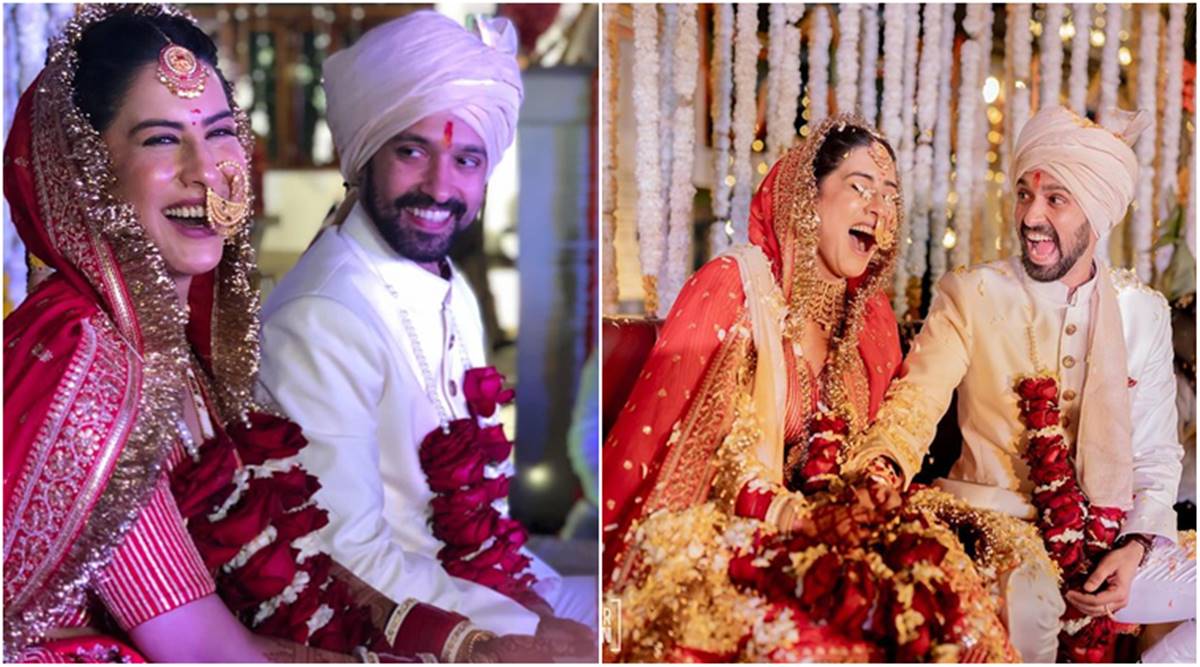
Vikrant Massey speaks about his recent hush-hush wedding with actress and long-time girlfriend Sheetal Thakur in Himachal Pradesh, their prior live-in relationship and his career. Excerpts…
You had an intimate wedding in Himachal Pradesh last month. It is a beautiful choice of destination for a wedding, but any particular reason why you chose that place?
I was born and raised in Mumbai. We got married in Himachal as Sheetal’s maika is there and my father was born in Shimla. My paternal side is from Shimla, too. We got married in Sheetal’s ancestral village called Jhabola, in Bilaspur district in HP.
Closely guarded celeb weddings have been following a certain pattern lately — similar designers picked for the outfits, candid photography, social media announcements, phone ban for the guests present and the works. You didn’t resort to it though.
We don’t consider ourselves as celebrities, so I didn’t even think on those lines. I feel very awkward when someone calls me a celebrity. I know my reality. I know of these massive celebrity weddings, but ours was a regular middle-class wedding. Last minute tak tayari chal rahi thi. Our families took all the decisions aur humne shaadi karli. Shaadi mein kaafi faltu kharche hote hai. Hum woh sab cut karke ghar jaisi shaadi hi chahte the.
An intimate wedding in the mountains, minus all the fancy stuff and elaborate planning. Recently, Yami Gautam and Aditya Dhar, also tied the knot in a simple low-key style. So, is this what you always desired your wedding to be?
The idea was always to have only people who are really important to us present on our wedding day. It was a complete family affair. Yami (Gautam) also hails from Bilaspur district of Himachal. She got married there as well. Humara bhi wohi idea tha. We had decided a couple of years ago itself that shaadi jabhi hogi, toh ghar jaisi hi hogi. Both of us wanted it that way and we both chose her ancestral house for a reason. Sheetal’s grandmother is 108 years old and she cannot travel. Hum amma ke yaha hi shaadi karna chahte the, hence, the ancestral house. And it’s always good to take a break from the city.
Did you and Yami exchange notes on your respective weddings?
Yami is a dear friend. She knew about my wedding pehle se. Unko sab pata tha. Unhone tips bhi diye the. She was happy that shaadi Himachal mein hone wali hai, aur ghar mein hone wali hai. Now there are two Himachali brides around me. One is Yami and the other is my wife Sheetal.
Sheetal and you have been together for seven years before you decided to tie the knot. What binds you both the most and what makes this relationship tick?
I think it’s the common value system and worldviews that bring two people closer. This is in the beginning. Of course, later on, other factors also come in. She is someone I can talk to; she is down to earth and also keeps me grounded. She has been my biggest support system, the light of my family and my life. I can go on and on about it. Above all, the love we feel for each other draws us closer. Love supersedes everything, but I strongly believe that our value system binds us together. She makes the world a better place.
Did living in together help the relationship and the process that eventually led to marriage?
Yes! That was one of the best decisions we’ve taken. We decided to live in to get to know each other better. We decided to spend time together and that led us to marriage. We lived in for six years before tying the knot. It makes you responsible towards yourself, your actions as well as the other person who is sharing that space and life with you. There’s so much of personality growth that happens. Companionship is a constant roller-coaster going to be good and bad days.
After living in for six years, what made the two of you feel that now it is time to take the pheras?
Yehi cheez saal do saal pehle bhi ho jaati. But my priorities were different back then. Why not now? Our life is going great and we wanted to build our life together. Both of us and our families always wanted us to spend our lives together, so why not? There is no such thing as the right time. Aisa tha ki ab karni hai toh kar hi lete hai. There was no point in delaying it because not once did we ever have together. So, we decided chalo shaadi kar lete hai.
Moving on to your professional life, are you content with the roles coming your way?
I couldn’t be happier. I am living my dream. I always wanted to work in cinema, tell good stories and work with like-minded people. Woh ho raha hai. Results are not in your control. The stupidest thing one can do is set out on a journey hoping iska result yeh hoga. All you can do is set targets and work towards them. Whatever comes out of it is a blessing. I hope to challenge myself as an actor as there is this innate fear of being typecast. There is an effort to swim against the tide and chart new territories. Every film changes something for you, but A Death In The Gunj changed a lot for me. My TV shows have also contributed immensely to my growth. Be it Balika Vadhu or Baba Aiso Varr Dhoondo, had I not done those TV shows, I wouldn’t be here. Platform or medium is not important, content is. One thing always leads to another.
2021 will be jam-packed with work, but I can take a week out for my shaadi-Vikrant Massey
8:16 AM

Onkar Kulkarni (BOMBAY TIMES; February 21, 2021)
He fits into the category of those who successfully forayed into Bollywood after winning popularity in the television industry. But what’s striking about Vikrant Massey is that unlike television where he played supporting roles, on the big screen, he took it a notch higher. Last year, he was seen in a lead role opposite Deepika Padukone in Chhapaak, a film that won him immense attention. In 2021, with his upcoming films he will be seen playing significant parts.
About the prominence he received thanks to Meghna Gulzar’s directorial, Chhapaak, he says, “I can say that post that film, the world around me has definitely changed. Suddenly logon ko aisa lagne laga hai ki… Yaar, yeh toh ab bada actor ban gaya hai.”
Vikrant says, “In fact, I started to see this change steadily post my projects like A Death In The Gunj (2017), Chhapaak and a web show that I did. Thanks to projects like these, now people have started taking me a little seriously. I am getting interesting scripts now.”
This year, Vikrant is looking forward to Haseen Dillruba and 14 Phere where he plays a protagonist opposite Taapsee Pannu and Kriti Kharbanda, respectively. There is a huge responsibility that comes with shouldering a project as the male lead, but that doesn’t scare him. He explains, “I am someone who has always believed that one works better under pressure. So, when the stakes are higher with bigger names attached to the project, there is a sense of responsibility which I want to believe brings out the best in me.”
While things are moving at a smooth pace for him on the professional front, and he’s loving the space that he is currently in, on the personal front, there is exciting development, too. The actor took to social media to reveal his brand-new house in Mumbai where he’s moving in with his fiancée, actor Sheetal Thakur. If it wasn’t for the lockdown that delayed plans for many, the positive changes in his personal life, too, would have happened sooner. He shares, “Agar lockdown nahi hota toh meri shaadi ho chuki hoti (sighs!). That’s one thing that pushed me back by a few months. I was supposed to get married to Sheetal last year, but the good thing is that I have this year to look forward to now. I am back to work in full swing and 2021 looks quite jam-packed, but come on, shaadi ke liye ek hafta toh nikaal hi sakta hoon, yaar. Hopefully, God willingly, 2021 is the year I am getting married!”
Ask him if his parents are eagerly waiting to see him tie the knot and he is quick to add, “Mere parents toh apni hi life mein bahut busy hai. Woh kehte hai ki beta shaadi pe kab aana hai buss bata dena (laughs!).”

It's only now that writers, producers and directors finally see me as capable of shouldering a film-Vikrant Massey
7:55 AM

Champion of indie movies, Vikrant Massey on breaking into the league of mainstream B-Town heroes with Ginny Weds Sunny
Mohar Basu (MID-DAY; October 8, 2020)
Despite a long day of virtual promotions for Ginny Weds Sunny, Vikrant Massey sounds upbeat when we get on a call with him. The feel-good energy of the Netflix film is presumably rubbing off on him. Known for intense dramas like Chhapaak or the more recent sci-fi Cargo, the actor is now aiming for a shift in his image with the rom-com.
"I am doing this for the first time, and it feels as if I'm starting off all over again. Finally, people are realising I can dance too. Ginny Weds Sunny is the kind of movie that takes your troubles away, even if it's for a few hours. With the advent of streaming platforms, the content consumption landscape has changed. But deep down, romance, heartbreaks, shaadi sequences and naach-gaana are too rooted in our movie-viewing culture to go out of style. Each of us looks for our happy ending in rom-coms," says Massey, who features opposite Yami Gautam in the film.
As he shoulders his first mainstream movie, the actor doesn't deny that the Puneet Khanna-directed venture is a litmus test. "It will be premature to say I have made the shift. I am venturing into uncharted territory with the movie. If it works, there will be more of these, over and above the independent movies that tug at my heartstrings. When I started off as a TV actor, I wanted to be a Hindi film hero. I focussed on giving my best shot, but it's only now that writers, producers and directors finally see me as capable of shouldering a film. I am often told that I broke out with A Death In The Gunj (2017), but the credit for helping me break into the 'leading man' space goes to the producers who have risked taking me in their films as the lead."
It won't be wrong to say that the leading parts are coming his way more frequently now. Even as he has Haseen Dillruba and 14 Phere in the pipeline, Massey was announced as the leading man of Santosh Sivan's remake of the Tamil hit, Maanagaram (2017), last week. For the actor, collaborating with Sivan is a dream come true. "When I got the first call, for a day, I didn't believe it was happening at all. I had a wide smile on my face for a week because Asoka [2001] is one of those films that I watch every time it airs on the television. Shouldering his dream project evokes so much excitement in me. Now, it's my responsibility to deliver; an actor's job today is to be worth his audience's time and money, regardless of the screen size they are watching him on. The budgets of my films have changed and so, the stakes have risen. But I won't change my approach of surrendering completely to my character and director."
Even if I had two three scenes, I would want to be part of a film like Chhapaak-Vikrant Massey
8:33 AM

Onkar Kulkarni (BOMBAY TIMES; January 5, 2020)
 From being a part of successful television shows like Balika Vadhu (2010) and Qubool Hai (2013) to doing commercial Bollywood films like Dil Dhadakne Do (2015) and Half Girlfriend (2017) among others, Vikrant Massey has come a long way. The actor, who made his Bollywood debut with Lootera (2013), has also been part of award-winning films like A Death In The Gunj (2017) and the controversial movie, Lipstick Under My Burkha (2017). His next — Chhapaak, directed by Meghna Gulzar — focuses on acid attack survivors. In a chat with BT, ahead of the film’s release, Vikrant speaks about his co-star and co-producer Deepika Padukone and his role in the film. Excerpts...
Chhapaak is probably the first film in Bollywood, which is based on an acid attack survivor. What were your first thoughts when you were approached for the project?
Just like every other individual associated with the film, I, too, wanted to be a part of it, immediately. When I heard the narration, I was shaken up. I was also looking forward to collaborating with someone like Meghna Gulzar, irrespective of what the length of my role would be.
I had made up my mind that even if I had just two-three scenes, I would want to be a part of it, as I had read the story of Laxmi Agarwal (an acid attack survivor on whom the film is based). As a crime, acid attack has been ignored for the longest time, though it has seen an alarming rise. It’s high time we reached out to as many people as possible and spread awareness about it. And, it could have been possible only with someone of Deepika’s stature; she will help us reach out to a much wider audience across the world. Films like these should be made. Yes, at the end of it all, everyone wants to make money. Unfortunately, today, a certain section in the industry has started evaluating the success and impact of a film, based on its box-office numbers. This entire practice, I strongly feel, is corrupt.
When you are making a film on an issue like acid attack, the environment on the set could be intense. And, one of the biggest challenges for the team is to ease that out...
(Cuts in…) It is not a depressing tale, as ultimately, the person facing an acid attack is not a victim, but a survivor. They are fighters. Despite facing all of this, they have the will power and the strength to stand up on their own and face the world. It’s a journey from being a victim to being victorious.
In Chhapaak, you play the partner of an acid attack survivor (played by Deepika). Given that this is your first film together, how did you break the ice with her?
I have met Deepika socially prior to this film. We interacted during the shoot of Dil Dhadakne Do, which also featured Ranveer Singh. She was on the ship (on which major portions of the film was shot) with us for a couple of days. We generally chatted and had a few conversations. She was on a holiday, but we were working (laughs!). Whatever little time I spent with her was wonderful. I am glad that I got an opportunity to work with her, especially on this project. In terms of our on-screen chemistry, this film brought out all the possible vulnerabilities within each one of us. As people, we were emotionally pure and naked in front of each other. Also, when your director is Meghna Gulzar, half of your job is taken care of. I think we have done a fair job.
Was it Deepika’s idea to cast you in this project?
Well, Meghna ji wanted to work with me ever since she saw A Death In The Gunj. Personally, I have always wanted to work with her, too. Her directorial, Talvar (2015), happens to be one of my favourite films. I have been an ardent admirer of her work and wanted to get a glimpse into her process of filmmaking.
On one hand, Deepika was playing an intense character like Malti and on the other, she was also the co-producer of the film. As a co-actor, how do you think she juggled both roles?
During the course of the shoot, I never felt that she was the producer, she was always my co-actor. When we were together, our only focus was to get the shot right. I don’t think at that time she was thinking what the balance sheets were looking like.

Working with Deepika Padukone was an incredible experience-Vikrant Massey
7:42 AM
Smita Poojary (DNA; October 1, 2019)
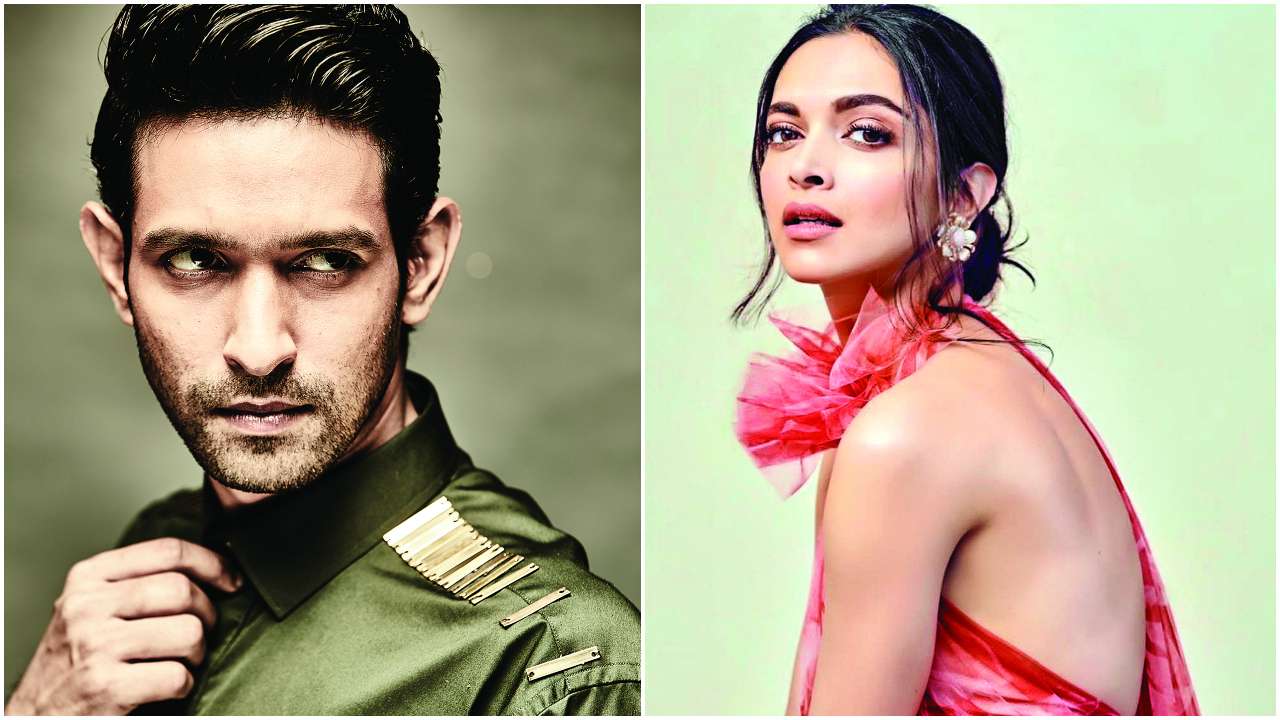
Whether Balika Vadhu on television, Broken But Beautiful on the web or A Death In The Gunj on the big screen, Vikrant Massey is known for portraying powerful roles. The actor who began his career in Bollywood with a supporting act in Lootera (2013), is now all set to star opposite Deepika Padukone in Meghna Gulzar’s Chhapaak. He describes the experience of working with the two women as heartwarming. “Few get the opportunity to fulfill their wish list and they both were definitely on mine. I never knew that this would happen so early in my career. I’m just six years old in the industry. It was an incredible experience working with Deepika and Meghna both.”
Here, Vikrant also speaks about his upcoming movie Ginny Weds Sunny, playing a lead role in a commercial movie for the first time and the reason he has mostly been part of women-centric movies so far. Over to him...
Were you aware of Laxmi Agarwal’s story when you signed Chhapaak?
Yes, I was but I’d rather not say anything but wait for the film to come out. I can just tell you I’m proud to be associated with the incredible team and subject.
After Chhapaak, you have Ginny Weds Sunny — your first commercial movie as a lead...
I’ve been fortunate to play central parts. But commercially, this is the first time I’m playing the lead. I have grown up watching movies and have been a dancer but I’ve never shaken a leg in front of the camera. I also wanted to try different things that would challenge me. People tell me that I only do serious cinema but that’s not the case. I have an alternate personality. I wanted to tap into it. Then this came along.
How is your character in this movie different?
He is impulsive and sort of having adulting issues. It’s a sweet love story between Ginny and Sunny; they share wonderful dynamics. The film is set in Delhi and I had never got a chance to play someone from there. I really look forward to doing this completely classic Bollywood film.
You started with small roles in movies. What do you consider the turning point?
Every single thing I have done has led to something significant. I started off at the age of 16 and I’m 32 today, so, I have been working literally half my life. It would be unfair if I sat back and said there was one particular thing that was the turning point. Yes, you can zero in on A Death In The Gunj because my collaboration with Konkona Sen Sharma did play a huge part, but Balika Vadhu was equally responsible for me getting the film.
You have mostly been part of women-centric movies like Lipstick Under My Burkha, Chhapaak and Dolly Kitty Aur Woh Chamakte Sitare)...
There’s little space for subjects related to women not just in our movies but also society. It’s a patriarchal world with highly toxic masculinity that we live in. Bahut si auroton ki awaz dabaai jaati hai. So, I feel fortunate about whatever little way I can contribute to reflect the society through my work. This is the least I can do as an artiste and I will continue to do stories that need to be heard. That’s primarily the reason why I love associating with women directors and the length of the part has never been a dominating factor in my career so far. Even though I have supporting parts in the films I’ve done, I’m proud to be speaking for the larger cause.
I don’t have any illusions about the box office-Abhishek Chaubey
7:13 AM

Abhishek Chaubey on his upcoming dacoit-drama, future of the Ishqiya franchise, after-effects of the Udta Punjab row and life after marriage
Himesh Mankad (MUMBAI MIRROR; January 11, 2019)
Over the years, Abhishek Chaubey has carved a niche for himself in mainstream Bollywood cinema with characters drawn from the heartland of India. After Ishqiya, Dedh Ishqiya and Udta Punjab, the director is all set to take his brand forward with Sonchiriya, an upcoming dacoit drama set in the1970s.
Excerpts from an interview:
 What takes you back to small town characters?
Primarily my small-town heritage. Before we went there for the shoot, I hadn’t visited Chambal in a while, but I’ve seen life in the heartland and believe it’s not well represented in our films. That’s why I’m drawn to cinema that’s true to the real India and entertaining.
But how do you define entertainment?
I don’t really understand the term, if it means humor, song and dance, then I don’t subscribe to it. For me, entertainment is derived from a story. So, it’s important to tell an engaging story.
How tough was the casting?
It was a long process. For me, it’s a film with five primary characters and fortunately, all the actors came on board because of the script. My team flew to various parts of North India and picked out actors from local theatre.
Why do the characters need to speak in Bundeli? Won’t it alienate the audience?
People in Mumbai believe the entire country speaks one language, but the dialect changes every 200 kilometers. That’s why I create characters who speak different dialects, I don’t see it as alienating the audience because Bundeli is very similar to Hindi. But everyone in the cast, apart from Manoj Bajpayee and Ashutosh Rana, struggled to get it right when we started the workshops. Language aside, all actors also had to learn how to handle a gun as it is a battle film with a lot of action.
Was there any threat from the local dacoits in Chambal?
The dacoit culture died some time ago. You don’t see them roaming openly now. Yes, we were warned by the officials to avoid shooting in certain places.
Critical acclaim or box office collection – what’s important?
I would be lying if I said numbers don’t matter but I can’t make a film with the singular agenda of making money. I’ve to stay true to the script without compromising on my vision. I can’t let anyone force me into adding an item number just to lure the masses and make some extra bucks. I’d prefer to convince the audience through my promos that the story has ample scope for entertainment.
 Many believe it was the censor controversy that brought an audience for Udta Punjab…
This is a high-profile profession and one of its curses is that people will say whatever they feel like. If you take such things seriously, you end up depressed. The controversy wasn’t my doing nor my intention. I suffered a lot during that phase. There was nothing to take back except plain suffering. Irrespective of whether anybody believes me or not, I didn’t want the film to be controversial. We couldn’t stick to our marketing plan as everyone was busy fighting with the CBFC.
Were you satisfied with the audience reaction?
Some loved it, some hated it, but one thing I can say, the film was effective in creating awareness about substance abuse in Punjab. So, the purpose was served.
What did you learn from it?
As a filmmaker, I don’t dissect my previous work. If I get too satisfied, I will lose the will to grow. My goal is to learn from my mistakes and try not to repeat them.
Were you disheartened when your first production, A Death In The Gunj, failed at the BO?
I don’t have any illusions about the box office. I have an idea of what will work and what won’t. I knew my target audience and they responded exactly the way we expected. The film was applauded at international film festivals which helped us crack a good deal with the digital platform as well the overseas market. It’s a beautiful little gem for us and no one lost money on the film.
What’s happening with the Ishqiya franchise?
It’s difficult to comment at this point because the last film came out five years ago. Given an opportunity, I’d love to take the franchise forward, but someone needs to come to me with an interesting idea.
Anything you learnt from Vishal Bhardwaj?
He advised me to develop an understanding of screenplay writing before moving to direction. That’s why I worked with him as a writer and associate director in early 2000’s. Without his guidance, I wouldn’t have been the filmmaker I am today. A lot of people tell me that my films have a flavor similar to Vishal Bhardwaj’s films, that’s because I have grown up working with him. Apart from films, I learnt how to interact with the team on the sets, deal with problems and stay calm.
Any plans to team up again?
He scored the music of Sonchiriya, but there is nothing in the pipeline as far as films are concerned.
How’s life after marriage?
Chetana Kowshik and I got married two years ago, but we have been together since a long time. We were college sweethearts, and the most interesting part of our relationship is our friendship. I am less anxious as a person today because of her.
Do you discuss films with her?
Yes, we discuss work all the time.
What next?
I am doing a digital show with Junglee Pictures. It will happen sometime this year.
Deepika Padukone has always been kind to me-Vikrant Massey
8:08 AM

Vikrant on collaborating with Deepika, director Meghna in Chhapaak
Mohar Basu (MID-DAY; December 20, 2018)
In what is the perfect way to round off a successful year, Vikrant Massey has been signed on for Meghna Gulzar’s Chhapaak. The film — based on the story of acid attack survivor Laxmi Agarwal — has the actor play the love interest of leading lady Deepika Padukone.
“Meghna ji never shies from commenting on social issues. This will be an altering film because it stands up against acid attack as a crime, and she has critiqued it with gumption,” begins Massey, excited to be part of Gulzar’s vision.
He also points out that his notable works — be it Dil Dhadakne Do (2015) or A Death In The Gunj (2017) — have been helmed by women. “The power women I have worked with have been instrumental in changing the course of my career.”
Talking of women power, Chhapaak will mark his first collaboration with Padukone. “Deepika has always been kind to me. She had called to congratulate me after watching A Death In The Gunj. I am looking forward to working with her.”
I have never given producers a chance to manipulate me-Vishal Bhardwaj
8:48 AM

As part of the 49th edition of IFFI, Bollywood filmmakers Vishal Bhardwaj, Abhishek Chaubey and Ramesh Sippy talk about how times have changed with corporates entering the film industry, the need for creative freedom and how artistes need to be objective about their craft
Rachana Dubey (BOMBAY TIMES; November 25, 2018)
 The ongoing NFDC Film Bazaar in Goa, which is part of the 49th edition of International Film Festival of India (IFFI), had an interesting panel of guests yesterday, to discuss the contributions made by individuals in cinema, who have broken away from routine formulas of filmmaking. Filmmakers Vishal Bhardwaj, Abhishek Chaubey and Ramesh Sippy participated in a moderated discussion that covered topics like censorship, taking over the reins of a film as a director and producer, and all the responsibility that comes along with that.
About his initial experiences and what coaxed him to take up production, though he was only a writer and a director, Vishal told the audience, “When I made Makdee (2002) and Maqbool (2003), it was difficult to release them because there were no multiplexes that could play those movies. Post Maqbool, things became easier, but it’s now that the fruit has ripened. Times have changed. Corporates entered and that changed the scenario to a great deal. But there was a time when we had individual producers and that was a tricky space to be in. I remember how Gulzar saab was angry about Hu Tu Tu (1999) being cut by the producers. The version of the film that he had in mind didn’t reach the theatres. I became a producer by default because CFSI (Children’s Film Society India) had rejected Makdee, but I wanted to release it. So I had to step forth. I have never been manipulated by a producer and I have never given them a chance to do that, because I saw Gulzar saab go through it. The final cut of my film is always mine.”
Abhishek Chaubey, who has helmed films like Ishqiya, Dedh Ishqiya and Udta Punjab, and has also written movies, took the plunge as a producer with A Death In The Gunj a year ago. When asked about taking that path, he said, “It’s important for creative people to take control of their work. When you turn producer, you become more responsible for putting the money where the mouth is. You know how much has been spent and where, and you control the resources. Today, I have better access to funds when I direct a film or produce a film. Vishal (Bhardwaj) sir mentored me and now, I just think it is important that I do what he did for me.”
The filmmakers on the panel have all been producers and directors on their individual projects, so the pertinent question asked to them was whether they ever lost objectivity over their films, given that they were close to the subject. Vishal said, “You know, you need more hands that can slap you. You need friends who can show you better and disagree with you, otherwise you can’t be objective about your craft.”
 Ramesh Sippy added, “Be as self-critical as possible. When you complete a film, be brave to see where you started and where you have reached, and whether you have been lopsided in your approach. Having friends who can give you advice is helpful, but you have to be your own critic. Raj Kapoor would see his films, show them to others and even if it needed to be reshot, he retained his original thought. Producers must understand this and allow a filmmaker that liberty to do so.”
Creative arenas, particularly films, have been braving censorship all along, more stringently so in the last couple of years. Bring up the subject and Abhishek, whose film Udta Punjab (2016) had to fight to find its way to cinemas, said, “Powers that be don’t take art seriously. They don’t see films or arts as cultural documents of a time.”
Vishal summed up, “What is the point of saying anything? Do they listen? They do what they want. We are the only nation that puts a ‘smoking kills’ disclaimer on a running visual, which is just ridiculous.”
I have been typecast in the role of the earnest and morally upright woman-Konkona Sen Sharma
8:24 AM

Lasyapriya Sundaram (BOMBAY TIMES; November 27, 2017)
This year, Konkona Sen Sharma made her directorial debut with the much-acclaimed film, A Death In The Gunj. The National Award-winning actress also impressed with her role in one of the most controversial films of the year, Lipstick Under My Burkha. Her advent into films can be best described as accidental, but she doesn’t shy away from calling a spade a spade when she says, “Once I was in my 30s, I realised that the roles were not that many and that they were not interesting.” In a candid chat with BT, she talks about how even in mainstream films, she has always chosen - to essay unconventional roles and how she doesn’t believe in making happy films, but chooses to tell stories which have a deep impact on people. Excerpts…
You have seamlessly straddled the worlds of both Hindi and Bengali cinema, but in the recent past, your work has been more prolific there. Is it because you are getting more performance-oriented roles in Bengali films?
Once I was in my 30s, I realised that the roles were not that many and that they were not interesting. I don’t know whether it was because people were bored of seeing the same face or because I had become a mother. In fact, I wasn’t even being offered Bengali films. The makers in Kolkata perhaps were under the impression that I was busy working in Mumbai. The kind of roles I played in Goynar Baksho and Kadambari (her Bengali releases) have become rare now. A lot depends on the imagination of the director and the kind of risk the producer wants to take. Many a time, you need an A-list star, otherwise you are not going to get the money to make the film.
Your mother (actor-filmmaker Aparna Sen) once said, “In mainstream cinema, the way you look precedes everything and that’s a terrible thing to happen. I didn’t have the kind of choices that the current generation has.” She also said that she had acted in some terrible films. Well, do you think mainstream cinema has changed since the days your mother acted in them? What’s your take?
The idiom of mainstream films was very set when my mother was acting in them. By the time I started acting, we had improved technically and Hindi cinema had also evolved. I think I got films, which were more realistic than what my mother did. I had more of a choice in the way my characters were written and the heroines were depicted. Also, everybody acts in some terrible films. If you have a long-lasting career, then all your films are not going to be great. As far as looks taking precedence over everything else is concerned, I wasn’t seeking these films (Wake Up Sid and Luck By Chance), they came to me. I have always played unconventional roles. When I did Ek Thi Daayan, I was very happy to be offered a negative role because I feel I have been typecast in the role of the earnest and morally upright woman.
Your character in Lipstick Under My Burkha was of a woman who has survived marital rape. It’s considered to be a taboo topic even today in our society...
The experiences that my character goes through in the film are very common, but it’s rarely depicted with honesty in cinema. We tend to depict safe ideas in our mainstream films. Nobody has ever said that you are not allowed to make a film on marital rape, but it’s a subject that almost never appears in our films, not even in passing.
You made your directorial debut with A Death In The Gunj. The film’s protagonist, Shutu, is a marginalised character. Were you apprehensive about projecting a dark universe?
I don’t think the endless pursuit of happiness is a very desirable quality. Also, I didn’t think about it so much when I was developing and making it. In retrospect, I can say that I am hungry for experiences that move me. I am not scared of watching a film that will depress me; neither am I scared of reading a book that talks about loss or grief. I want to make films which touch me and make me think; they are not necessarily happy films.
So, did turning director happen by chance or did the lack of good roles propel you into it?
I didn’t get into direction because I was not getting that much work in front of the camera. I wasn’t working as much. I had gone through some transformative experiences myself. This film was inside me and it was taking over me in some way. Having seen my mother’s experiences, I didn’t want to direct a film. Executing content which is alternative is like walking on a hard and difficult path. In fact, when I was writing the script, I wasn’t sure if anybody would fund it. It was a passion project.
Would you ever make a film that makes a political statement?
I don’t want to make a political statement for the sake of making one through my films. I can always do that on social media or write an article. However, the political is also personal. And that’s governed by your own choices. But if I can make a film which can move people, is authentic and can also make a political statement, that would be an ideal combination.
As a working woman and mother, often, you must have been asked how you manage to strike a balance. However, working men are never asked this question. Why does only one gender have to shoulder the responsibility of being a superhuman?
The perception can only be changed collectively. These questions must be asked to fathers as well. I remember being asked this question at the Melbourne Film Festival. Seated right next to me was Shoojit Sircar, who is a wonderful filmmaker and a father to two daughters, but nobody asked him about striking a balance. Having said that, the balancing act can get overwhelming at times. I take inspiration from so many women who are doing it every day, including my mother. Even my domestic help inspires me.
The Harvey Weinstein sexual harassment scandal opened a can of worms that has led to many women coming forward and saying #MeToo. Do you think talking about it will lead to many survivors taking the legal route?
I think protest is important, but unfortunately, what happens is that we leave it at that. We don’t examine our lives and the choices we make. Protest provides a voice and solidarity to the survivors, but we need to follow it up with policy change and that’s tedious. We can’t just protest and forget about it.

Climate change is not going to be the way they show it in Hollywood disaster movies-Ranvir Shorey
8:01 AM

In a lead role in Kadvi Hawa, actor Ranvir Shorey on surviving climate change, and Bollywood in the sun
Benita Fernando (MID-DAY; November 5, 2017)
Apocalypses are not Ranvir Shorey’s cup of tea. Instead, he keeps it casual. Wearing a white tee — his retort to a hot November morning — he clambers down a staircase leading to the basement library of one of his favourite haunts in Versova, a comics café called Leaping Windows. Later, he tells us about his vast collection of comics, now lost to adulthood, and offhandedly recalls how his friends once called him Suppandi, after the popular simple- minded character by the same name. “I had an extended head just like his as a child," he says, showing us a side profile for good measure.
This, however, shouldn’t throw you off the exacting standards that Shorey keeps. With equal earnestness, he says, “We have always been warned about an impending environmental disaster. But, I don’t want to be a doomsayer and talk about it in apocalyptic terms.”
You have to watch Shorey segue back and forth between the serious and the playful. It comes naturally to the 45-year-old actor, who awaits the release of his new film, Kadvi Hawa on November 24. The film, directed by Nila Madhab Panda, who also made the National Award-winning I Am Kalam, is touted as the Bollywood’s first feature film on climate change.
Shorey clarifies that Kadvi Hawa is a human story, not an “issue based” film. Neither is it Hollywood, he adds. Commenting on how Mumbai’s winters have turned into milder summers, Shorey says, “Climate change is not going to be the way they show it in Hollywood disaster movies. They use it to show hurricanes, volcanoes and tsunamis. There is no big wave that is going to wipe out a country India’s size. It’s not going to be dramatic; it will be a slow, painful death. And, the people who are going to be affected are the masses and not the one percent.”
The human story that Shorey is referring to in Kadvi Hawa is essentially an interplay between three characters — a loan recovery agent, a blind farmer and climate change. Shorey portrays the character of Gunnu Babu, the relentless Odiya loan recovery agent who is thrown into the hinterlands of India, Chambal in Rajasthan in this case, on a mission to deal with farmers in debt. Gunnu, who has a reputation of driving farmers to suicidal ends, meets an aged blind farmer, played by Sanjay Mishra, who is hit by the famine like many others. Soon, both farmer and agent, who are caught in a predatory shark and prey scenario, realise that the very pool they inhabit is under threat from a common enemy in the form of floods and famines.
Survival instincts
If you have followed Shorey’s filmography, you would have caught that his acting is nuanced, right down to the idiosyncrasies, and his characters often have a good portion of oddities attached to them. In A Death In The Gunj (2017), even in the role of Vikram, who continuously harasses his younger friend Shutu, you cannot help but relish the menace that Shorey is. “What you are talking about is vulnerabilities,” Shorey says, holding his gaze steady. “No matter how dark or negative the character is, it is important to let those vulnerabilities come to the surface.”
When we ask him to try his Odiya-influenced Hindi, one he had imbibed for Kadvi Hawa, with us, Shorey refuses. “I don’t carry my roles with me. Only later do I recall my lines when I see the film onscreen.” It’s obvious. Closer to the film’s release date, Shorey looks nothing like the pot-bellied and balding Gunnu that he has portrayed; his face is now heavy with a salt-and-pepper beard and he looks more like a prophet who will herald a disastrous flood or two.
In a lead role in Kadvi Hawa, Shorey candidly shares that he has not been the go-to actor for mainstream Bollywood. “It is almost as if they have forgotten I exist; they see me as someone who doesn’t toe the line. But, that’s a conscious decision I have made,” he says.
Having skinned his heart and his knees in Bollywood, Shorey talks about In The Shadows by Dipesh J ain, screened at the MAMI Film Festival recently. “I worked with Manoj Bajpayee, Neeraj Kabi and Shahana Goswami on the film. I didn’t have a central part but I had an important part. The script was fabulous. Sometimes, as you are digging for the big diamonds, you can’t let the little ones slip through your fingers,” he says. Then, he adds, “It’s just survival.” He is laughing, but you know he is deadly serious.

Kalki Koechlin and Konkona Sen Sharma's resume work on their stuck film Scholarship
7:45 AM

The duo resumes work on their upcoming film that was stuck for lack of funds
Natasha Coutinho (MUMBAI MIRROR; September 13, 2017)
Mirror had earlier reported (July 27) that Kalki Koechlin and Konkona Sen Sharma’s film, Scholarship, directed by Raman Bharadwaj, had found itself in a lurch for lack of financial backers. The film had kicked off in Jharkhand in January but was stalled indefinitely when investors expressed their reluctance to come on-board the film that has no popular male lead.
 Kalki now informs Mirror that the team is looking to resume shooting
soon. “You can’t predict these things. Yes, we had invested some amount
of time on the shooting and had got into character so it was tough on
us. But, as actors, we’re lucky to have other work and are preoccupied.
It was heartbreaking for the director, who lives with the film till its
complete. The good news is I got a call a few days ago that we’re back
on track and will resume shoot soon,” Kalki says.
Does this mean that it’s still a tough world for women in Hindi cinema despite a recent spate of female-oriented films? “It’s a tough industry and sometimes things don’t work out according to plan but at the same time, it’s a great time for women-oriented films, more than ever before. After the success of Kangana Ranaut’s Queen and Deepika Padukone’s Piku, such films are more commercially viable,” the actress explains.
Kalki, who has previously featured in Konkona’s directorial debut, A Death In The Gunj, reveals that the actress-filmmaker can be quite quirky. “I got to know her better during Gunj. Before that we appeared in Ek Thi Daayan but didn’t have any scenes together. Her quest for perfectionist can border on OCD. She will want to repeat one thing over 100 times, but that reflects in everything she does,” she says.
Fenil's Bollywood Talk # 467
9:25 AM

EXTREME DELUGE OF RELEASES TOMORROW
It’s that time of the year again when multiple small films will try their luck at the box office. What’s unique about tomorrow is that these Hindi films not only have to contend with themselves, they also have to face competition from Hollywood biggies like Baywatch and Wonder Woman and a big Marathi film (FU, starring Sairat actor Akash Thosar). My analysis of these films:
DOBAARA: It is the official remake of the well-loved Hollywood horror film Oculus. It stars real-life siblings Huma Qureshi and Saqib Saleem. The trailer looks good and if it’s as good as the remake, then it can make a mark in the metros at least. The hype however is limited and looks quite niche. Hence, the reach will be limited despite good response.
A DEATH IN THE GUNJ: It marks the directorial debut of Konkona Sen Sharma and stars Vikrant Massey, Konkona Sen Sharma, Ranvir Shorey, late Om Puri and many others. It is a period film based in 1979 in a small gunj. The film has been screened at various festivals and response has been highly positive. Sadly, it’s a very niche film and such films never succeed commercially.
DEAR MAYA: It marks the return of Manisha Koirala after a hiatus. The trailer promises an interesting fare. Again, the excitement is zero and this will surely lead to very poor collections.
HANUMAN DA DAMDAAR: It is an animated film and based on Lord Hanuman with a difference. That’s because the gods here are seen in talking in contemporary Hindi. Salman Khan himself has voiced Lord Hanuman. However, this casting coup hasn’t yielded any results and the film is all set for a poor opening.
SWEETIEE WEDS NRI: It stars Yaariyan actor Himansh Kohli along with The Expose heroine Zoya Afroz. The trailer is decent and the songs are eye catching. But the hype isn’t much that will pull audiences to theatres. The collections in fact can be disastrous.
MIRROR GAME: Getting audiences to see a psychological thriller is always difficult. And when the star cast is weak (but talented) like Parvin Dabas, Pooja Batra and Omi Vaidya, the chances of its success are even weak. Mirror Game can have the poorest collections of all these films sadly though it can be a thrilling fare.
WOULD YOU LIKE TO SEE ANY OF THESE FILMS AND WHY? DO LET ME KNOW!
I wanted to do films I believed in, and not dictated by terms and conditions-Aparna Sen
3:15 PM

Aparna Sen, who is ready with her next English film, Sonata, on why she continues making films she believes in
Shaheen Parkar (MID-DAY; January 15, 2017)
Enroute to the ongoing Pune International Film Festival (which runs till January 19) Aparna Sen stopped by in Mumbai. The Kolkata-based veteran actress-filmmaker is chairperson of the jury. She was looking forward to soaking in some world cinema and enjoying Pune's cool climes. "A shawl and a pair of socks should do fine, right?" she asks when we meet her at a coffee house in Juhu. "Mumbai and Kolkata are not exactly cold," she intones.
Whenever possible, Sen visits Mumbai to catch up on what's latest in her five-year-old grandson Haroon's (daughter Konkona's tot) life. "He has picked up Bengali, Hindi, English and Punjabi. But he prefers to talk to me in English. He refers to me as "mummum" - that's what Konkona calls me," she says endearingly.
Known for films like 36 Chowringhee Lane (1981), Paroma (1984), Mr and Mrs Iyer (2001) and The Japanese Wife (2010), Sen is currently in the midst of post-production of her next English film, Sonata, which stars Shabana Azmi, Lillete Dubey and herself. Adapted from Marathi litterateur Mahesh Elkunchwar's play of the same name, the film revolves around three unmarried women facing a mid-life crisis. Sen plays a professor, Azmi's a banker and Dubey essays the role of a scribe.
Ask Sen about dealing with two powerhouse actresses (Shabana and Lillete) and she laughs, "You mean were there catfights and ego tussles? Did they give me a tough time during the shoot? Not at all, we are far from that. We completed the film in 20 days in Kolkata. We were all so into the character that there was no time to do anything else."
Sen's association with Azmi goes back decades. "She calls me Rina. That's my pet name; only those close to me refer to me by that name. This explains my rapport with Shabana. And I call her Munni; that's what her folks have called her at home since childhood. She tells me when she shoots with me; it's difficult for her to shoot with someone else. Shooting with Shabana is pure joy. We discuss, dissect and she just dives into the role."
Ironically in the film, Azmi plays a Bengali character while Sen plays a woman from Uttar Pradesh. "That's the novelty as we stepped outside our zones. It would be given that I play a Bengali and she from UP, but our role reversal has just added to the film."
Azmi has also rendered two tracks in Sonata. "It's Rabindra Sangeet and when I told her she should take a shot at singing as well, she took it upon as a challenge. She coached herself and hit the high notes without taking recourse to a background score."
On the other hand, Sen has collaborated with Lillete for the first time. "Now I wonder why I did not work with her earlier. I would insist that her straight hair have that curly look to go with her characterization; now she's hoping to work with me again some day."
Sen's name is synonymous with arthouse and slice-of-life cinema. "I began as an actress in Bengali films, but when I decided to turn director, I clearly knew what kind of films I would make. I did not want to direct the same type of films I had acted in. I wanted to do meaningful films as a director. Films, I believed in, and not dictated by terms and conditions. It's my choice. This is what makes me happy, this is what I am comfortable doing. Or I would have continued to act in commercial films. I direct in English and Bengali as these are the languages I am comfortable in." At the same time, she does not consider Hindi films an alien territory. Sen did try fitting into Bollywood, but something or the other would happen and the project would not take off.
Sen points outs, "I think most Bollywood stars are wary of taking role decisions for themselves. There are too many people around guiding them and telling them about their image. When you relate a story to a Bollywood star they don't know whether they should commit or not." She is well aware that Bollywood is dictated by economics, rather than art.
Her last Hindi venture was Saari Raat with Konkona, Anjan Dutt and Ritwick Chakraborty. "It was part of the Zeal for Unity project and I hope the makers release it."
Like other Bengali filmmakers like Mrinal Sen, Buddhadeb Dasgupta and the late Rituparno Ghosh, she feels regional filmmakers are also known and have got their due. "Our projects are appreciated, have won awards, do the festival rounds. That is what matters to me. I love attending film festivals and travelling or take off to my Santiniketan home when I want to get away or pen a script."
Sen has yet to see daughter Konkana's directoral debut, A Death In The Gunj, on the big screen. "I have watched it on a CD on TV, but the real essence is when you view it in a cinema hall. She refrained from going on the sets or providing inputs to Konkona. "It is her project, but I know how Konkana functions; she had visually imagined each and every scene in her head."
Does she watch Bollywood flicks? "I have heard a lot about Dangal, I think I should watch it. The last Hindi film I saw was Ae Dil Hai Mushkil. I really don't know why I saw it. I think because of Aishwarya Rai as she was back after a while. But I enjoyed watching Masaan and Aligarh. Both were exceptionally good with performances to watch." A clear reflection of the kind of cinema Sen subscribes to.

Shabana Azmi, Lillete Dubey and Aparna Sen in the upcoming English film, Sonata
Movie Review: A DEATH IN THE GUNJ by FENIL SETA
7:36 AM

As kids, we all have gone for our summer or winter holidays to our native places. Those were fun times – the extended families coming together in a remote place and making merry. A Death In The Gunj also tells a similar story but the mood is somber and as the title of the film suggests, things don’t go the right way as a death takes place. Directed by the talented actress Konkona Sen Sharma, A Death In The Gunj moves slowly, but packs in a lot and impresses with its superior writing and performances.
The story of the movie: The year is 1978. Shutu (Vikrant Massey) is socially awkward and shy and he joins his cousin Nandu (Gulshan Devaiah) to McCluskieganj for a family holiday to the residence of O P Bakshi (Om Puri) and Anupama (Tanuja). Nandu is accompanied by his wife Bonnie (Tillotama Shome) and daughter Arya Sharma (Tani). Mimi (Kalki Koechlin) is also a part of this holiday. They are joined by Vikram (Ranvir Shorey) and Brian (Jim Sarbh), who are local residents. Things don’t go as planned especially for Shutu – he’s troubled by the other members in the house, he falls for Mimi and a lot more.
A Death In The Gunj transports you into another world altogether from the very first scene. Kudos to the makers for the detailing – despite being a low budget fare, everything is so spot on. The characters are neatly introduced and within no time, one gets totally familiar about them and their names. One of the best sequences of first half is when the youngsters try to call a spirit. Shutu is in a way the ‘main character’ of sorts and his predicament is beautifully captured. One can feel the pain and anguish that he goes through. The narrative takes place over seven days and although the pace is slow, there’s lot happening in the film. And it’s so neatly executed that one doesn’t mind. Yet, at places, one does wish that the pace is not so sluggish. However, things get better towards the last part of the film. There’s a thrill element that is brilliantly executed. And the final 5 minutes of the film are just terrific!
A Death In The Gunj is embellished with some bravura performances. Vikrant Massey has always been first-rate, be it in Lootera or Dil Dhadakne Do. But he goes many notches higher with A Death In The Gunj. He has worked very hard in getting Shutu’s anguish right and it shows. And his dialogue delivery is impeccable. Kalki Koechlin initially doesn’t make that much of an impact but later on, she stands out. She delivers a splendid performance – the way she behaves in the party scene and later on is damn good. Hats off to this actress who never disappoints! Ranvir Shorey is impressive and plays the part of the troublemaker very well. He has a crucial part in the climax and does very well. Tillotama Shome manages to make a strong mark in the midst of so many talented people. Again, here’s an actress who has been consistently doing great job and here’s hoping A Death In The Gunj gives her the much needed widespread fame! Gulshan Devaiah as always is very dependable. He rocks in two scenes – one where is trying to teach driving and the other when he fights with Bonnie. And his look is damn good – he looks every inch a Bengali babu of the 70s! Jim Sarbh, who rocked as the terrorist in Neerja, is very good in a supporting role. Tanuja is very nice while Om Puri leaves a huge mark. The way he infuses humour in the pre-climax unexpectedly is a masterstroke!
Sagar Desai’s music is minimal but very impactful. Sirsha Ray’s cinematography is simple and very effective. The way the eeriness of the house and the outdoor locations are captured is praiseworthy. Siddharth Sirohi’s production design and Rohit Chaturvedi’s costumes deserve maximum praise – both are hugely responsible for bringing alive the authenticity. Arif Shaikh’s editing is fine but one wishes that at places, it was a bit faster.
The film is based on a short story by Konkona’s father Mukul Sharma and inspired by true events. This particular story is damn good – in fact, Mr Mukul in fact even inspired Ek Thi Daayan. Must say here’s a person who seems to have some great stories! Konkona Sen Sharma’s writing is superior – especially for a debutant writer. Her direction is also amazing and it’s difficult to say that it’s by a first timer. The detailing, the character sketch, the way the bygone era is brought alive – everything is just so right and nicely done! The only glitch is that the film gets very slow at places and for a few moments, the attention does wander. But otherwise, this is an amazing debut!
Some of the best scenes:
1. The youngsters try to call a spirit
2. The youngsters play kabaddi
3. Nandu and Vikram go on a motorbike ride
4. Shutu sketches a tortoise
5. Nandu tries to teach driving
6 The party on Dec 31
7. Shutu and Mimi go on a ride and the drama later on
8. The climax
On the whole, A Death In The Gunj is a great effort by debutant writer-director Konkona Sen Sharma. Moreover, she brings a talented cast together and all of them deliver fabulous performances. The way she brings alive a bygone era and manages to show it in the most authentic manner is praiseworthy. The film sadly is for niche audiences but here’s hoping, it manages to attract audiences in hordes, especially in multiplexes, when it’ll see a theatrical release. The movie gradually grows on viewers and hence, it’s not a film that will be easily forgotten!
P.S.: Don’t miss the beginning of the film at any cost! You miss the beginning and you’ll miss a vital element of the plot!
My rating - **** out of 5!

Shabana Azmi turns singer with Aparna Sen's Sonata
7:43 AM

Roshmila Bhattacharya (MUMBAI MIRROR; September 13, 2016)
It's not often that Shabana Azmi confesses to being terrified. But the actress admitted to Mirror on Monday that she was recording two Tagore songs for Aparna Sen's Sonata in the evening and "I am terrified".
The English film which also features Aparna and Lilette Dubey and is based on Mahesh Eklunchwar's play of the same name, starts shooting from September 20 in a start-to-finish schedule. Shabana and Aparna had earlier collaborated for the latter's Sati, Picnic, and 15 Park Avenue.
"Rina (Aparna Sen) called me in Kashmir in June when I was shooting there for Idgaah. I agreed to do the film without even hearing the script. She is a dear friend and I enjoy her company a lot. I tend to behave a bit retarded in front of her—I don't know why she brings that out in me—and she scolds me but we love each other. We can be frivolous, funny, serious, political and totally supportive of each other," she asserted.
They have been doing workshops with Sohag Sen, a theatre actress and acting coach, so she can get the nuances of the character right. "My character Dolon is funny, warm, demonstrative and volatile while Aruna, played by Rina, is serious and restrained," she informed.
Aparna has bullied Shabana into singing two Rabindrasangeets, "Aaji jharer raate" and "Sokhi andhare" and even got her a coach, Sharoni Sen. "Sharoni has been encouraging and extremely patient. Also, Javed (husband Javed Akhtar) pushed me. When I'm terrified, I feel challenged, but it was because of Rina, Sharoni and Javed's confidence that I was able to pull it off, that made me dare to attempt singing," she admitted, happy that after the recording her director told her "You've sung with feeling".
Shabana is delighted that Aparna's daughter Konkona Sen Sharma's debut directorial, A Death In The Gunj, which will have its world premiere at the Toronto International Film Festival, is getting so much appreciation. "I've read Coco's script. I gave Konkona the name Coco when she was eight, played my daughter in Rina's tele film, Picnic," she reminded.
How this casting director helped put together Konkona Sen Sharma's A Death In The Gunj
7:54 AM
MUMBAI MIRROR (August 18, 2016)
 Honey Trehan and Abhishek Chaubey have collaborated to produce Konkona
Sen Sharma's debut directorial, A Death In The Gunj, which will premiere
at the Toronto International Film Festival, and have its Asian premiere
at the Busan Film Festival. It's expected to release in India early next
year.
Trehan reveals that he had approached Konkona with another script and
she wondered who was producing it. On learning that he would produce it
himself, she wondered why he couldn't produce her film and last October,
during Talvar, gave him the script. “I loved it and asked for six
months to put the project together before handing it to Abhishek who was
just as gung-ho about it,“ he reveals, admitting that it wasn't easy
getting funding for such an off-beat project.
The problem was solved when he ran into an old associate from iDream Productions who admitted that after a seven-year hibernation, the company wanted to get back into action but with limited funds. Trehan promised to make three films in the money they offered, but the first would be Konkona's directorial. “She wanted to make it with newcomers, I put my foot down. We approached some known names; everyone liked the script, including Om Puri and Tanuja who are working together for the first time,“ he signs off.
Honey Trehan and Abhishek Chaubey have collaborated to produce Konkona
Sen Sharma's debut directorial, A Death In The Gunj, which will premiere
at the Toronto International Film Festival, and have its Asian premiere
at the Busan Film Festival. It's expected to release in India early next
year.
Trehan reveals that he had approached Konkona with another script and
she wondered who was producing it. On learning that he would produce it
himself, she wondered why he couldn't produce her film and last October,
during Talvar, gave him the script. “I loved it and asked for six
months to put the project together before handing it to Abhishek who was
just as gung-ho about it,“ he reveals, admitting that it wasn't easy
getting funding for such an off-beat project.The problem was solved when he ran into an old associate from iDream Productions who admitted that after a seven-year hibernation, the company wanted to get back into action but with limited funds. Trehan promised to make three films in the money they offered, but the first would be Konkona's directorial. “She wanted to make it with newcomers, I put my foot down. We approached some known names; everyone liked the script, including Om Puri and Tanuja who are working together for the first time,“ he signs off.
Konkona Sen Sharma's A Death In The Gunj to have its world premiere at Toronto Film Festival
8:39 AM

Roshmilla Bhattacharya (MUMBAI MIRROR; July 28, 2016)
Konkona Sen Sharma's directorial debut, A Death In The Gunj, will have its world premiere at the Toronto International Film Festival in the Special Presentation Section. "It's a great honour and I'm really excited. I was thrilled to get this beautiful email from Cameron Bailey (artistic director of the festival). It was like 'OMG! Somebody understands my film.' When I was writing it, I was so nervous and apprehensive, convinced that nobody would give me the money to make it," laughs Konkona who debuted as a director in 2006 at the Kala Ghoda Film Festival with her short film Naamkoron.
The script, penned by the two-time National Award-winning actress (Mr & Mrs Iyer, Omkara) herself, was one of the nine shortlisted by the National Film Development Corporation of India for their Script Lab and mentored by creative director Marten Rabarts. Konkona who is hard put to categorise her first feature as a director, says, "It's a human drama, a story of a family from Kolkata visiting retired parents settled in McCluskiegunj over a span of seven days," she says.
It revolves around Shyamal Chatterjee (Vikrant Massey), aka Shutu, a shy student who uses a road trip to the old Anglo-Indian town now in Jharkhand as an escape from his failed semester. In the week that follows, his quiet unravelling is initially overlooked by the family revellers, until the holiday ends with an implosion. "There's a lot of me in the film which is an amalgamation of personal experiences. It's a world I have grown up in. I spent a lot of my childhood in McCluskiegunj and there was a strong feeling of nostalgia while making the film," she admits.
McCluskiegunj, the Anglo-Indian Utopia that took birth with 300 families in the 1930s, began to fade by the late '70s with only 30 of the families remaining while others, post Independence, migrated to bigger cities, and some abroad, in search of better prospects, leaving the town to its original tribal inhabitants. Like the two marginalised groups— the Anglo-Indians and the Adivasis—who struggle to integrate with mainland India, the protagonist Shutu too, while belonging to neither, finds himself increasingly alienated from his own world.
Produced by Honey Trehan and Abhishek Chaubey who are making their debut as producers, and presented by Ashish Bhatnagar and Vijay T Swami, the film was wrapped up in just 31 days, an impossible task for most Bollywood filmmakers. "But this is not a fullfledged mainstream film so we didn't have the luxury of time or money. You get big budgets only when you have stars and this being my first film, I opted for brilliant actors. All the performers were extremely talented without me having to worry about any of them. We had workshops prior to the shoot when we got to know each other well and when in Ranchi we all lived together for a month," she reminisces. Besides Massey, the film features Ranvir Shorey, Tanuja, Om Puri, Kalki Koechlin, Tillotama Shome, Jim Saarbh and Gulshan Devaiah.
The shoot turned out to be a family holiday of sorts. Since his father Ranvir is also acting in the film, Konkona took her fiveyear-old son Haroon and his nanny along. And what was it like directing Ranvir? "He's a fine actor," smiles the actress who faced the camera for the first time at the age four and has done over 40 films in Hindi, Bengali and English since. She is the granddaughter of Chidananda Dasgupta, film historian, critic and cofounder of the Calcutta Film Society along with Satyajit Ray, and daughter of National Award winning actress-filmmaker Aparna Sen. Has her mother seen the film, "Yes, and she liked it apparently," smiles Konkona.
So what's the best thing about being a director? "I guess the fact that you can create your own world. Right now though I'm struggling to finish the post production in time for the September unveiling in Toronto," she says.

Check out Jim Sarbh on sets of Konkona Sen Sharma's A Death In The Gunj
7:31 AM

MUMBAI MIRROR (March 14, 2016)
Jim Sarbh, last seen as the
terrorist in Neerja, will soon return in Konkona Sen Sharma's
directorial debut, A Death In The Gunj. A far cry from his debut turn,
Jim plays a fun-loving guy who makes everyone in his group laugh,
including Kalki Koechlin, Vikrant Massey, Gulshan Devaiah and Tillotama
Shome. He says, “I'm the guy who gets Vikrant's character integrated
into the group. My character enjoys pulling pranks.“
Subscribe to:
Posts (Atom)