Showing posts with label 77th Cannes Film Festival. Show all posts
Showing posts with label 77th Cannes Film Festival. Show all posts
CBFC is meant to certify, not censor-Shahana Goswami
8:32 AM
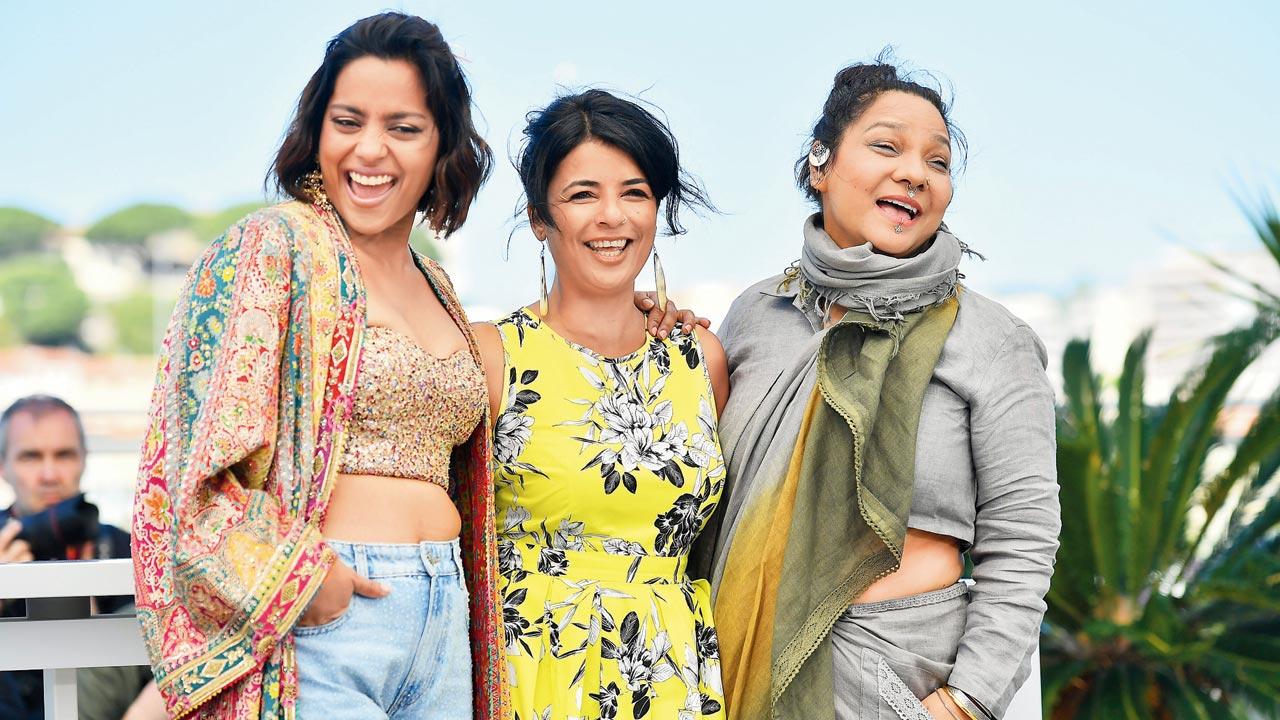
Shahana Goswami, director Sandhya Suri, Sunita Rajwar at Cannes 2024 where Santosh premièred
Shahana Goswami expresses disappointment as Santosh’s release remains stalled after the CBFC objects to depiction of police violence and Islamophobia, and demands cuts
Letty Mariam Abraham (MID-DAY; July 9, 2025)
Cannes, Oscars shortlist, BAFTA — Shahana Goswami’s Santosh has made its presence felt on several prestigious film platforms. Ironically, the one place the Indian co-production hasn’t reached is Indian theatres, courtesy the Central Board of Film Certification (CBFC). As we get on a call with Goswami, she is disillusioned by the cuts demanded by the CBFC. “It is the systemic reality right now. Is it right? I don’t think so. The CBFC is meant to be a board of certification, not of censorship,” she states.
Director Sandhya Suri’s Santosh tells the story of Goswami’s protagonist, a widow who steps into her late husband’s role of a police constable and becomes entangled in the investigation of a Dalit teenager’s rape and murder. After premièring at the 77th Cannes Film Festival in May 2024, it became Britain’s official entry for the 2025 Oscars and made it to the shortlist for the Best International Feature Film.
Its global acclaim was in sharp contrast to its fate in India. The drama’s January 10 release was held up after it didn’t receive the CBFC’s clearance. In March, the release was stalled after the board reportedly expressed concerns over its depiction of Islamophobia, caste discrimination, and police violence, and demanded many cuts — a move that the makers disagreed with.
Goswami is disturbed by the censorship meted out to the film. “[The board] is only meant to dictate who should have access to the film or not; they should leave the choice to people to engage with [a film] based on its certification. So, in [its absence], there is a sense of disappointment.”
She adds that those who have seen the movie, haven’t found it controversial. “It’s nothing that we haven’t known or seen before. So, we don’t know why it was problematic for the board. If there is more dissent on the matter, there may be a shift.”
The actor, who is looking forward to the India release of her Lionsgate Play show, Four Years Later, understands that in the current climate, it’s hard to tell stories that reflect today’s reality. But the self-confessed eternal optimist believes the tide will turn.
“We live in a world right now where the sensitivities are very high. People take [matters] forward by filing FIRs and creating trouble for those who are making such shows or films. But I believe everything is cyclical. Moments like these will come to a head, and at some point, something will shift.”
I was surprised that Sandhya Suri trusted me for the role in Santosh after Panchayat-Sunita Rajwar
8:21 AM

Niharika Lal (BOMBAY TIMES; December 20, 2024)
Sandhya Suri’s critically acclaimed crime thriller Santosh, a cop drama about the investigation of a rape and murder case, has been shortlisted for the Oscars’ International Feature Film category. The British Academy has officially selected Santosh as the U.K.’s submission for this prestigious category.
The film stars Shahana Goswami and Sunita Rajwar as police officers. Following its success at Cannes, the Oscar selection marks a dream run for the film, according to its cast.
We caught up with Sunita Rajwar, who has received widespread acclaim for her roles in Gullak and Panchayat.
Did she ever imagine something like this would happen? She explains, "Aapka kya status hai, industry mein aapka kya wajood hai uss hisaab se aap sapne dekhoge na! Aapko bas ye lagta hai kaam milta rahe. Humko toh isse bhi fark nahi padta ki koi pehchan raha hai ya nahi pehchan raha. Aisa lagta tha jo main role kar rahe hain log unhi ko pehchante hain. Hamare sang koi kyun photo khinchayega? Everything changed after Gullak and Panchayat for me." Excerpts -
'First of all, it was a surprise that after watching Panchayat, Sandhya trusted me for this role'
Talking about her role in Santosh, Sunita says,"I have been doing very light-hearted roles - Bittu ki mummy (in Gullak) and Kranti Devi (in Panchayat). People see me in those roles and think I can only do those kinds of roles. First of all, it was a surprise that after watching Panchayat, Sandhya trusted me for this role. And this is very different for me because it’s a serious role. I'm playing the role of a SHO."
She shares that before this, she had only seen SHOs and police thanas in films. She shares, "I had this image that they must be talking to their juniors arrogantly, but after meeting real-life women police officers, I realized they are just like any other person or office worker - visiting the canteen, sitting with tea, chatting with coworkers."
Talking about the brief Sandhya Suri gave her for the role, she says, “The thing she told me was to not at all play loud and not at all try to be what I have been doing. She wanted me to change my body language and speak in lower tones. Sandhya said, ‘I don’t want any smiling either with your eyes or expressions, nothing.This lady will not smile."
'There was no special treatment for anyone on the set of Santosh'
Sunita Rajwar has worked in a number of TV serials, films and web series, and now this foreign project. So how was the shoot different compared to her experience on the sets of Indian productions?
She says, "Kaam to same hi hota hai. Itna bada toh socha hi nahi tha ki aisa koi project bhi milega. When we were shooting for Santosh, it was so normal. Our team was all from other countries, mostly France and British. But they are a little more disciplined. Shahana was doing the main role, and I was doing the secondary part. Shahana is also very down-to-earth. Jo star wala ek feel hota hai set pe - jo hierarchy hoti hai ki star ke aane ke hisaab se shoot hota hai, unka shoot pehle ho raha hai aur aapka baad mein - woh saari cheez nahi hoti thi. There was no special treatment for anyone. It was very schedule-oriented that we will do this scene and that scene after this. There were no demands on set as such, even from the cameraman and the director. It used to start and end on time. They work very properly, do set-up quickly, gappe maarne mein nahi baithe rehte hain. Kisi ko please karna nahi hota hai."
She adds, "Now I wish that I get more such projects, more characters, thoda respect mile aur achha kaam mile. Aisa lagta hai - ab to achha kaam de do. Though, at this age, after seeing life, I'm not getting carried away by anything. Life is very unpredictable. Aisi film hazaron mein ek banti hai aur aisi film ka aap hissa ho zaroori nahi hai."
'Kabhi main kisi ka award dekhti thi aur unke aankhon mein aansu aate thay, mujhe lagta tha pata nahi kaise hota hai. Then it happened with me at Cannes'
The movie recently won Best Screenplay and Best Breakthrough Producer at the BIFAs after making its global premiere in Un Certain Regard at this year’s Cannes Film Festival.
She shares, "Cannes was weird because even in my dreams, I never ever thought this would happen. When I became an actor, I only wanted to do theatre. I never had any big dreams - making it big or doing films. Mere liye rozi-roti ka kaam tha, so everything life is giving me - it is surprising me. Even getting film selected for the Un Certain Regard at Cannes was a big thing for me. Ek hota hai na ki aapko pata hi nahi ki ye kitni badi baat hai, for me, it was like that."
She recalls, "Kabhi main kisi ka award dekhti thi aur unke aankhon mein aansu aate thay, mujhe lagta tha pata nahi kaise hota hai. At Cannes, after the screening, when we got a standing ovation for 5-6 minutes, taaliyan band hi nahi ho rahi thi. I was no one for them, and still, they were appreciating my work and the character we had created. I had tears in my eyes - I'm getting so much love and admiration for my work. I never ever thought of this. Ye toh sapnon mein bhi nahi sochte ho. And now, this Oscars shortlist - it is beyond my dreams. Kahan kaise likha hai mere naseeb mein, I’m so shocked. There are goosebumps - I'm this close to the Oscars."
Why are distributors and OTT platforms not enthusiastic about festival films?
3:16 PM
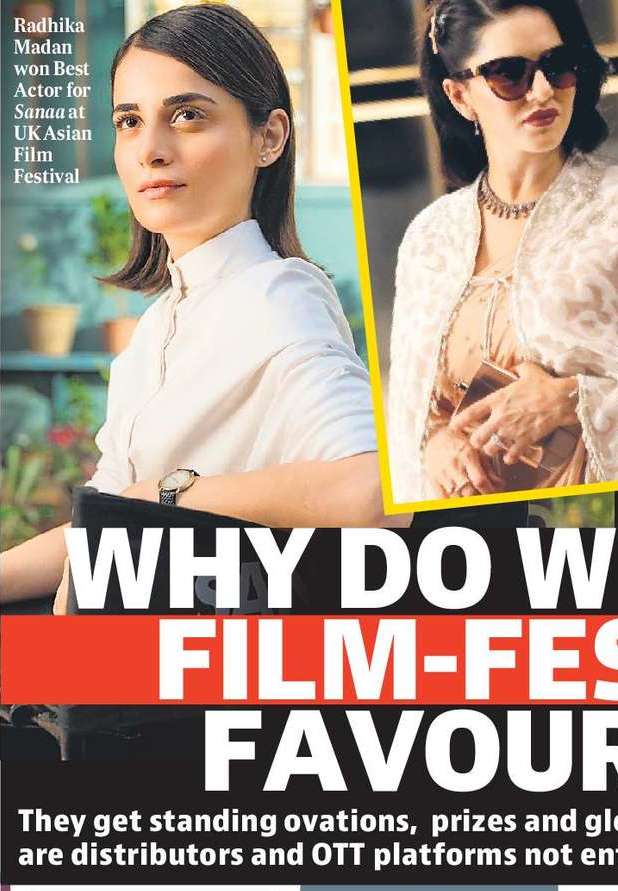
They get standing ovations, prizes and glowing critical acclaim. But why are distributors and OTT platforms not enthusiastic about smaller films?
Mugdha Kapoor (HINDUSTAN TIMES; June 30, 2024)
If you’ve been waiting to watch All We Imagine As Light, which won the Grand Prix at the 77th Cannes Film Festival last month, you might have to wait a bit longer. For several critically acclaimed film festival, AWIAL’s fate depends on if OTT platforms or theatrical distributors deem it potentially profitable.
While the Payal Kapadia directorial might still get a release due to it bagging the prestigious honour, of late films such as Gajendra Ahire’s The Signature, Anurag Kashyap’s Kennedy and Karan Tejpal’s Stolen — all of which have travelled to global film festivals, drawn rave reviews and even bagged awards, are yet to release in theatres in India or find a home on OTT.
Distribution distress
The Indian distribution system “is heavily lopsided in favour of mainstream films” over independent, smaller festival entries, notes film critic Murtaza Ali Khan. The general uncertainty around the return on investment, too, dissuades takers.
National Award-winning filmmaker Sudhanshu Saria, who directed the much-raved-about Sanaa, points out that for middlemen “whose job it is to figure out which film should get to viewers, it seems less risky to go with [films] that feature known faces”.
Actor Adil Hussain, whose Footprints On Water recently won the Audience Choice Award at the Indie Meme Film Festival, says, “How do decision makers on OTTs know a film won’t work, if they haven’t gone all the way, like they would, for a commercial film?”
An expensive market
Actor Shahana Goswami, whose film Santosh had its world premiere in the Un Certain Regard section at the 77th Cannes Film Festival last month, notes that since smaller films are made on modest budgets, they can’t compete with blockbuster releases.
“These films are made independently and there’s very little money to market them well enough, especially since you don’t have big stars. That’s where we fail — because mostly only a small section of people who follow the prestige of it going to an international film festival, know about a film,” she elaborates.
Last year, Stolen, directed by debutant Karan Tejpal, was the only Indian film selected for a World Premiere at the Venice Film Festival. This selection came after a notable three-year absence of Indian films from the festival’s lineup. The film has since travelled to more than 30 film festivals but still it struggles to get a release in India.
“We wanted to go directly to OTT, since we don’t have access to the kind of funding that is required to market and release a film in India. But the pandemic changed it all and the market has suddenly dried up. Maybe we’ll partner with a bigger production house to present the film,” says Tejpal.
They get standing ovations, prizes and glowing critical acclaim. But why are distributors and OTT platforms not enthusiastic about smaller films?
15 months and counting
Nandita Das-directed Zwigato travelled to multiple film festivals over the world before releasing in India in March 2023, to a positive response. But the film has struggled to find a home on a streaming platform.
“We got an amazing response [for Zwigato] not only at A-list festivals like the ones in Toronto and Busan but also from Indian media and the few who saw it in theatres. Yet, we wait for an OTT release. The perception is that films with a unique voice and no mainstream tropes do not have an audience. Barring very few passionate individual producers, hardly anyone supports them.
Censorship woes
Censorship remains another significant hurdle, with outdated regulations under The Cinematograph Act (1952) posing challenges to films that defy conventional narratives. In the past, Fire (1996), Hawa Aaney De (2004) Water (2005), Firaaq (2008) and S Durga (2017) have either struggled to secure a wide release in India or faced obstacles due to their them es, content or controversies surrounding them.
Despite these challenges, Sanaa director Sudhanshu Saria hopes that India’s fantastic run at international festivals — especially in the past few years, with movies such as The Shameless (2024), Sister Midnight (2024), Nirvana Inn (2023), Pebbles (2021) and The Disciple (2020) — “inspires a wave of filmmakers, who were going to give up or not going to work on their passion project, to step out and take that shot”. “I hope it also inspires entrepreneurial distributors to understand that we have a massive audience that is looking for different things,” says Saria.
Nandita Das, who has also helmed critically acclaimed films such as Firaaq (2008) and Manto (2018), remains hopeful of a shift. “We need producers, distributors and platform heads who will have faith and commitment towards diverse stories and ways in which they need to be told. Otherwise, we will keep celebrating the few and far between wins and yet not give the same films the space and respect they deserve in our own country,” she says.
---------------------------------------
The market needs to be tapped by advertising these films, to tell people, ‘Hey, you are missing out on these amazing films’. That’s the job of the business people, not makers or actors.
- Adil Hussain, Actor
I'm grateful to Kiran Rao and Aamir Khan that they thought I could do this character of Manju Mai-Chhaya Kadam
8:12 AM

Niharika Lal (BOMBAY TIMES; June 26, 2024)
When Chhaya Kadam attended Cannes this year, she debuted with a double punch: All We Imagine As Light in the main competition and Sister Midnight in the Directors’ Fortnight. While Payal Kapadia’s debut became the first Indian film to be awarded a Grand Prix, the films at Cannes are not the only ones that have captured Kadam’s versatility so far. With small roles in hits like Jawan, Andhadhun and Sairat, Kadam often leaves audiences scratching their heads, trying to recognize her from one film to the next.
She recalled an incident where, upon exiting one of her screenings, she was asked, “How was the film?” because the questioner didn’t recognize her.
However, her recent role as Manju Mai in Laapataa Ladies and her dialogues became so viral that now she’s even stopped at grocery stores by fans eager to recite her lines from the film. In a chat at the MIFF closing ceremony, Chhaya spoke to us about her Cannes debut, Laapataa Ladies, and how she picks her roles.
'Everybody who is working in films must attend Cannes'
The cast of All We Imagine As Light didn't just attend the screening - they broke into a celebratory dance on the red carpet. Later, at the award ceremony, Payal Kapadia brought her three leading actors on stage to accept the historic award.
Recalling her Cannes visit, Chhhaya says, "As an actor, after attending Cannes, I feel that everybody who is working in films must attend Cannes. Film ho toh bohot hi badi baat hai, film na bhi ho toh bhi jana chahiye. Jo filmon se pyaar karne wale log wahan ikattha hote hain na toh woh filmon ka shehar ban jata hai. When the film was selected then itself it was decided for us that we will go to Cannes. It was our producers who took us there, otherwise not all producers take their actors to Cannes. Ye log hi kamaal thay. Even stage pe agar Payal humein nahi leke jati..."
After the Grand Prix was announced, Chhaya said at the press conference that she knew they would win. She had even booked her tickets for after the ceremony and decided on clothes for the award ceremony. How did she have that confidence?
Chhaya says, "I don't know where I got that confidence from. But I had that confidence in our film. Ab main jab apne aap ko dekhti hoon, toh Cannes jane ke pehle itna (dar) tha - Main pehli baar out of India itni door gayi. Toh mujhe ye bahut doubt tha ki yaar mujhe samajh aayega na? Language problem bhi. Par doston ne kaha - kuch nahi, tu ja. Then I had to look for a house there, so I went a little early. Ab to mera confidence itna badh gaya hai."
Talking about her role, she says, "All We Imagine As Light is a story of three women. Usually, in films, women are shown at loggerheads, but in this film, it is about three different women and their friendship. The film is about Mumbai. Mumbai ek aisa shehar hai jahan kahan-kahan se log aate hain aur bas jate hain Mumbai mein. Ye film unki kahani hai. I played the role of Parvati in the film, who is from Konkan and is staying in Mumbai. When I heard about Parvati's role, I realized that I had Parvati in me. When I heard about that role, I felt that it was written for me. Ye sirf main hi karungi. We filmed in Mumbai and Ratnagiri."
'During Laapataa Ladies audition I kept saying - Marathi actress ko kyu lenge?'
Her recent role as Manju Mai in Laapata Ladies and her dialogues became so viral that now she's even stopped at grocery stores by fans.
Talking about the film, she says, "Kiran ji had done a lot of work on that film. We had a dialect trainer, Sonu Anand, who worked really hard with us on getting the dialect right. I would call him at midnight so that he could check whether I was getting the dialect right. Mujhe khud alag-alag language aur har language mein ek lehja hota hai - woh karne mein bahut maza aata hai. Lekin Laapataa Ladies ke waqt mujhe thoda darr tha. Tab tak maine jo Hindi filmein ki thi - film Hindi thi lekin mera character usmein Maharashtrian hota tha. Bolti thi Hindi lekin thi woh Marathi aurat. But this character was from UP, so I was like I don't want to get caught. My friend Romil Modi, who was the casting director of the film - I used to keep saying to him, 'Romil, nahi hoga. Ye log audition lenge aur kisi Hindi wale ko lenge, Marathi actress ko kyu lenge?' But I'm grateful to Kiran Rao and Aamir Khan that they thought I could do this character of Manju Mai."
"For me, the most important thing is my character; the director or production house comes later. I want to do different characters, and I want to get a chance to learn with every film. Otherwise, it will be like picking the same character and pasting it in every film. Kiran Rao kamaal ki director hai aur kamaal ki insaan hai. She did Dhobi Ghat; even at that time, I was offered a small role, but I couldn't do it because of my operation."
Recalling an encounter, she said, "If I'm asked, I will not remember the dialogues of Manju Mai instantly, but I keep meeting people who know the dialogue by heart. A few days back, I went to a shop and met a family from Gujarat. Aur woh log sab mujhe mere dialogue suna rahe hain. One of them told me that she tells her daughter, 'Boorbak hona sharm ki baat nahi hai, boorbak hone pe garv karna sharam ki baat hai.' (laughs)."
'I'll never say - maine kya bakwas film ki thi. Nahi. Uss waqt mere liye woh bahut important film thi isliye maine ki'
Kadam played roles of strong women such as Naani in Fandry, Suman Akka in Sairat, and Chandrakka in Nude. Talking about how she chooses scripts, she says, "Jab kuch alag karne ko milta hai toh main karti hoon. Lekin hamesha aise nahi hota. Sometimes, there is a good script, sometimes there are good people, and sometimes it’s about the bank balance - that also happens. Sometimes, I also feel like - why did I do this film? But one thing I want to say is that at present, people are talking about my good films. But what the audience thinks are my good films, I was able to do these good films because I also did some other films. Un filmon ne mujhe uss waqt ek support diya financially. Un filmon ki badaulat hi aaj main achhi film kar rahi hoon. I'll also not say - maine kya bakwas film ki thi. Nahi. Uss waqt mere liye woh bahut important thi. Uss waqt uss kaam ke liye bhi maine utni hi koshish ki thi."
How Chhaya Kadam started acting
Her acting career started when she took part in former NSD director Waman Kendre's workshop. Recalling how it all started, she said, "Mere bade bhai aur pitaji dono chhor ke chale gaye, main dono se bahut connected thi. Jab woh chale gaye toh mujhe aisa laga jaise life mein ab kuch nahi hai. Kuch karna nahi hai, aisa lagta tha sab khatm hai. Bas aisa hi hua tha mere saath. I never used to leave home and I was the youngest one. I felt like I have to get out of this, and then one day I saw Prof. Waman Kendre's acting workshop ad in the newspaper and I thought I will get out of my home and will get to meet people who will have no idea what's happening in my life. Kisi cheez mein khud ko dhaalna tha, khud ko bhool jana tha. That's what I had in my mind and that's how I ended up doing the workshop. I really enjoyed doing the workshop and he also showed me what I had and what I was lacking."
"Just yesterday, when I did an interview for Doordarshan, I remembered that someone had told me that an actor was needed in Doordarshan, and I went there and the director told me that the casting was over, but he needed an assistant. Mujhe aisa laga - yaar, main actress lag hi nahi rahi hoon kya? (laughs).
Later, she joined as an assistant and acted in the short film when the lead actress didn't turn up. She has done several films that have not been released yet. Doesn't it hurt to work in films that were not even released?
She says, "Dukh to bahut hota hai. Par woh dukh mera akele ka nahi hota. When we start discussing a project, from that time we start discussing that character. Whether the film is released or not, the preparation that one does for playing characters, it somewhere adds."
Chhaya Kadam has turned producer with her upcoming film Bardovi. She says, "It was a good subject with such good people associated with the film that I felt my name should be associated with it. Bardovi means the place between death and rebirth. It was quite challenging for me to play that role. When working with people who love their work, even if they are few in number—let's say just 50—their energy feels like that of 100. That's how I worked on that film."
Not a single producer backs small films-Nawazuddin Siddiqui
10:58 AM
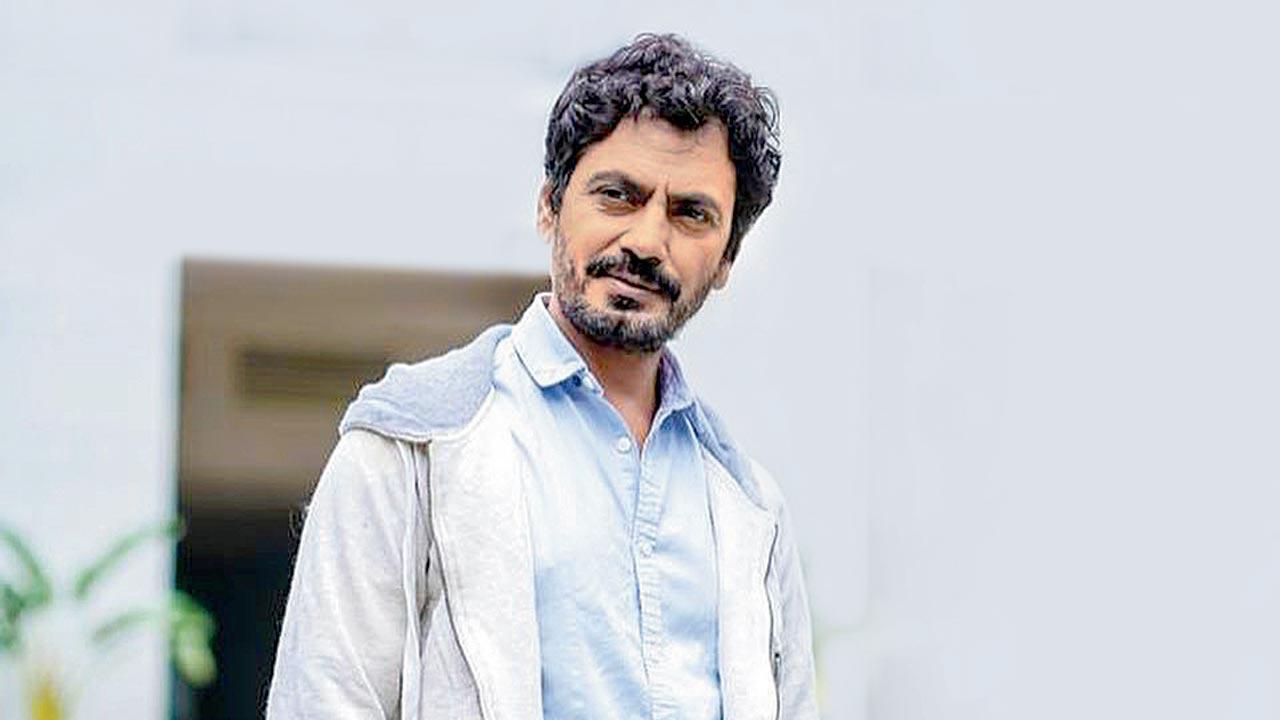
Nawaz, who fronts the small-sized Rautu Ka Raaz, calls out industry’s hypocrisy as it celebrates Payal Kapadia’s Cannes win while not supporting indie filmmakers
Priyanka Sharma (MID-DAY; June 14, 2024)
Only a few years ago, Nawazuddin Siddiqui played a cop investigating a murder in Raat Akeli Hai (2020). For Rautu Ka Raaz, the actor dons the khaki uniform again and probes a murder case. What drew him to a cop character again? His character’s inner world. “This man suffers from PTSD [post-traumatic stress disorder] after he loses the woman he loves. But the investigation helps him fill the void in his life,” he elaborates.
Teaming up with director Anand Surapur, who previously directed The Fakir Of Venice (2019), was another incentive to front the upcoming ZEE5 film. In his 25-year career, Siddiqui has repeatedly worked with filmmakers who tell unconventional stories—from Anurag Kashyap to Ritesh Batra, from Honey Trehan to Nandita Das. What ties them together, he says, is the desire to make honest films.
“If an honest film is made, we will be honoured across the world like Payal Kapadia was. She made a film about what spoke to her. There is hope for cinema till there are people like Anurag Kashyap and her.”
While the industry cheered Kapadia’s Grand Prix win at the 77th Cannes Film Festival for All We Imagine As Light, Kashyap recently remarked that the victory is entirely her own because India doesn’t support independent filmmakers. As an actor who often headlines small-size movies, Siddiqui seconds Kashyap’s opinion.
“This is a huge irony. Not a single producer backs small films. There are many filmmakers who are capable of doing some great work, but they never get support. Our country is running after fake cinema. We show people blowing up ships and planes. Kids should be entertained by this. Why are [adults] enjoying it? Small filmmakers come to me [for support], and I do as much as I can. Nobody puts money on these films. If these films get made, I know they will get accolades around the world. But producers say, ‘Sir, this doesn’t have drama or songs.’”
Lately, small-budget offerings like Madgaon Express and Munjya have made noise at the box office. The actor makes a strong case for them, stating, “What do you get from big-budget films? If we support smaller films, even the biggest movies will pale in front of them.”
India didn’t have any moment at Cannes-Anurag Kashyap
8:11 AM

BOMBAY TIMES (June 12, 2024)
“India didn’t have any moment at Cannes,” says filmmaker Anurag Kashyap, stressing that the victory of independent filmmakers at the European gala is theirs alone and the country doesn’t support that kind of award winning cinema.
India won three awards at the 77th edition of the Cannes Film Festival last month – Payal Kapadia became the first-ever director from India to win the Grand Prix for her movie All We Imagine As Light, Anasuya Sengupta was awarded best actress in the Un Certain Regard strand for The Shameless, and FTII student Chidananda S Naik earned the best short film award at the La Cinef section for Sunflowers Were the First Ones to Know.
“I get very upset when it’s said ‘India@Cannes’. This is a boost... a shot in the arm for a lot of independent filmmakers but their victory is their own,” Anurag Kashyap told PTI in an interview.
‘No funding support’
He said Kapadia’s All We Imagine As Light, which was also the first film from India in 30 years to feature in the main competition at Cannes, received funding from a French company. The Malayalam-Hindi feature, which earned the second highest award at Cannes after Palme d’Or, is an Indo-French co-production between Petit Chaos from France and Chalk and Cheese Films from India.
There were several films at Cannes with either India-set stories or Indian talent, but most were co-productions with banners from other countries. Indian-British filmmaker Sandhya Suri’s Santosh and Karan Kandhari’s Sister Midnight were funded by the UK, while Konstantin Bojanov’s The Shameless was almost self-funded. However, Chidanand’s Sunflowers... is a production of the TV Wing one-year programme under the FTII. “India just likes to take credit for a lot of things, they do not support these films, and they don’t even support these films to have a release in cinema,” he said.
‘STOP TAKING CREDIT FOR CANNES SUCCESSES’
In 2021, Kapadia had won an award at Cannes for the documentary A Night of Knowing Nothing but is yet to be released in India. “Stop taking credit for it. Even if the film is released, no one will go to watch it in the theatre,” the 51-year-old said.
Kashyap, whose films such as Gangs Of Wasseypur, Ugly, and Kennedy have screened at Cannes, said he was surprised when former FTII chairperson Gajendra Chauhan took credit for Kapadia’s win. In 2015, Kapadia was one of the students who protested against the appointment of Mahabharat actor-politician Chauhan as the FTII chief. Kapadia was among the 35 students charged under Indian Penal Code sections for offences related to unlawful assembly and rioting. The chargesheet was filed in 2016, and the next hearing is scheduled for June 26.
“The worst part is the man who put the case against her, and sent some students to jail, is the first man who took the credit and said, ‘I’m proud I was the FTII (chairperson)’. What is his name? Yudhishthir ji (his ‘Mahabharat’ role), Gajendra Chauhan said, ‘I’m so proud that she was the student when I was the head’. You are the one who put the case against her,” Kashyap added.
----------------------------------
Payal Kapadia’s film (All We Imagine As Light) happened because of the French fund, India did not even give the rebate promised to that film. Sandhya Suri’s film (Santosh) was funded by the UK film lottery fund. Karan Kandhari’s film (Sister Midnight) was funded from the UK. Konstantin’s film (The Shameless) was almost self funded and the company that funded it got no support from India.
I don’t put out any material that is anti government-A R Rahman
8:34 AM
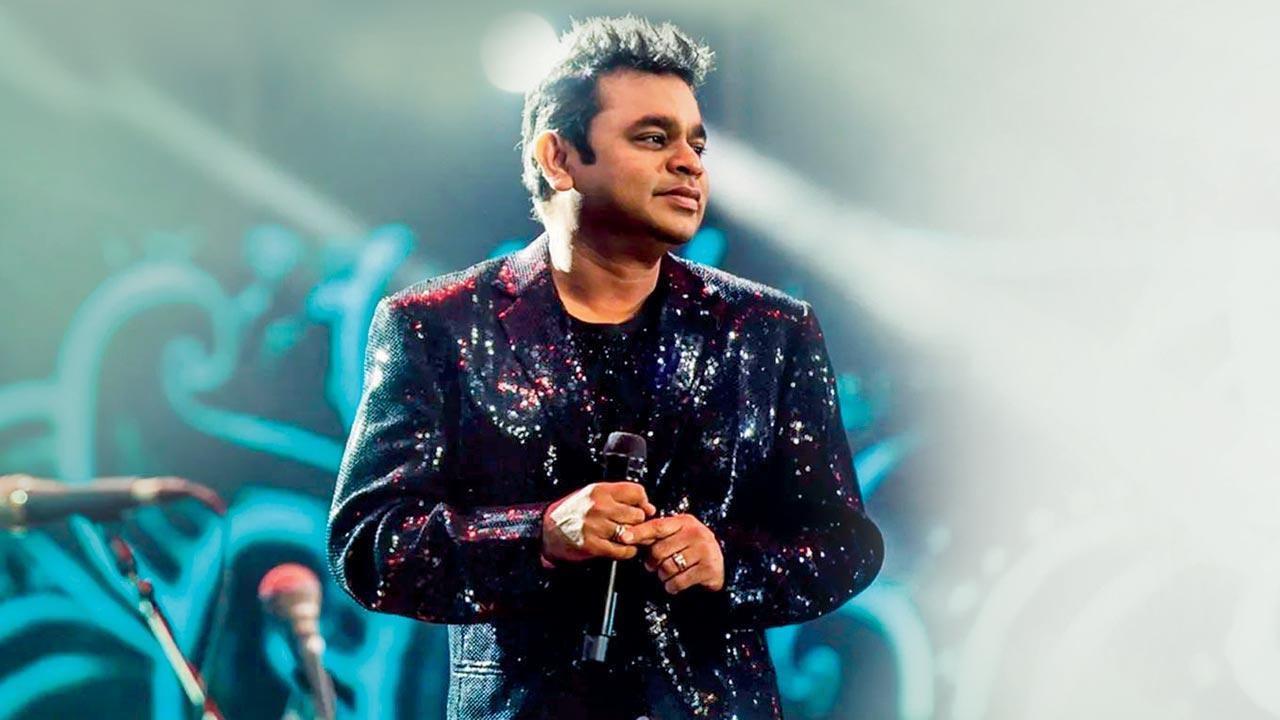
In a candid chat with mid-day to discuss his upcoming release, Headhunting To Beatboxing, A R Rahman discloses why he stays away from political banter, and the pain points in the Indian music industry
Priyanka Sharma (MID-DAY; June 10, 2024)
Touted as an offering that “exemplifies the energy, ambition and new-found confidence of Naga youth”, A R Rahman’s feature documentary, Headhunting To Beatboxing was unveiled at the 77th Cannes Film Festival in France. “From the ancient traditions of headhunting tribes to the musical renaissance in the state, the documentary promises to take audiences on an immersive and enlightening musical anthropological odyssey,” read a statement released by the Nagaland government.
In this interview, Rahman—who has also produced the film—chronicles how the artistes of the north-eastern state became the muse of his next piece of work. Edited excerpts of the interview:
What drew you to the story of Headhunting To Beatboxing?
It was a discovery. I was invited to Nagaland. I went with apprehension, because there are rumours relating to the history of Nagaland, [especially the practice of] head-hunting. I discovered this film organically and called Rohit [Gupta, director]. I told him that he should see the Hornbill festival that was taking place in Nagaland, where young people were also turning up. He came, and started shooting. The government was friendly because they wanted this to happen. They have a minister for music! It was fascinating to see the initiatives they have taken. I felt something needed to be done.
When you watch it, you will realize that two things stand out—one is that this [film depicts] India, and the other is that it is a reflection of the inclusivity that we should aim to inculcate in society. I see a section of the country that is completely ignored. That’s not good. It’s like, we have a family, but three people aren’t fed properly. It is odd.
You unveiled the film’s teaser at the recently concluded Cannes Film Festival. When you are present on an international platform, do you carry the pressure of being the Indian icon, A R Rahman?
I don’t try to be anybody else. On social media, and on our website, we are transparent about what we stand for. I don’t put out any [material that is] anti-government, because, as a musician, I should maintain a neutral stance. My music should be the haven that people seek solace in. I don’t have time for negative things. My music needs peace and healing.
But, while creating any piece of music, does the pressure to cater to your global audience play on your mind?
When Roja [1992] won a National Award, people said, ‘Isn’t it too early for you to get a National Award for your first film?’ The bar was set high. I felt I had nothing left to give, as I had given everything to my first film. But then, you meet a new team on a new film, and it gives you hope. You can create something new. For me, with the first film itself, that pressure has existed. That’s the reason I began to slow down. While others were producing songs in seven hours, I would take weeks or months to create [the soundtrack]. I slowed down intentionally, and the industry took note. They realized that we could move towards quality and be responsible instead of [urging musicians] to finish five songs in a day. Song-writing is an art that should be nurtured. Give it the spiritual energy that people can access.
At that time, my intention was to charge more and do less. It was also important to focus on the life happening around you. When you work, you become a slave, and you don’t derive anything from life. You are just cannibalizing what has come before. Unless you learn new things, how can you give people something novel? And to learn new things, you need to meet people, see what’s happening in the world, and spend time with your family.
How do you look at the music culture of today’s India?
It’s great that non-film music is becoming popular. If that didn’t happen, people would shell out a lot of money into [making] music that the masses don’t even like. They may say that the song has crossed many million views, but people won’t even know what the hook line is. The game of paid views is over. People are listening to different kinds of songs. But, there are certain lyricists who are bringing back the golden age of the ’50s and ’60s. Artistes like Irshad Kamil and Amitabh Bhattacharya have brought worthiness into lyricism. They bring a new kind of beauty to the words that they write. I feel, there could be more progress in lyric writing, especially in its ability to convey the philosophies of life, rather than simply stating, ‘I love you. Love me.’ I like lyrics that are symbolic. There’s scope for a revolution there.
Film industry has never been unkind to me; I am good friends with Varun Dhawan and Ananya Panday-Avneet Kaur
8:22 AM

Transitioning from television to films, Avneet discusses working with Supriya Pathak in Luv Ki Arrange Marriage and announcing her Indo-Vietnamese film at Cannes
Priyanka Sharma (MID-DAY; June 9, 2024)
For Avneet Kaur, Luv Ki Arrange Marriage ticked all the right boxes—from the story to her character to an eclectic and experienced cast. The film revolves around her mother, played by Supriya Pathak and Annu Kapoor, who happens to be her partner’s father, falling in love when the young couple decide to get married.
Thrilled to be part of the ZEE5 film, she shares, “I used to be quite alert, observing Supriya ma’am’s every expression while shooting. It has been a learning experience for me to watch her effortless acting. I love her [career] graph [and the films] she has done. I remember being blown away by her performance in Goliyon Ki Raasleela Ram-leela [2013].”
Days before kicking off promotions for Luv Ki Arrange Marriage, Kaur was at the 77th Cannes Film Festival to announce her upcoming Indo-Vietnamese film, Love In Vietnam, based on the novel Madonna in a Fur Coat. Reflecting on the event, she says, “Being at Cannes felt unreal. For the first time in my life, I was nervous as it was a huge responsibility to represent your country on an international platform. But it was wonderful that India performed so well at the festival.”
She beams with pride, recalling an interaction with a French woman who congratulated her on Payal Kapadia winning top honours for All We Imagine As Light and actor Ansuya Sengupta bagging the best actor award at Cannes. “When I asked her the reason, she said, ‘Your film won a big award.’ That made me so proud as an Indian.”
In her 14-year career, Kaur has transitioned to films after starting with the small screen. Starting with a significant role in Rani Mukerji’s Mardaani (2014), she acknowledges the challenges TV actors face breaking into Bollywood.
“When I was trying to get into films, so many people told me that it was impossible. But the perception has changed so much. I see a camaraderie between actors on TV and in films. The film industry has never been unkind to me for working in television. I am good friends with Varun [Dhawan] and Ananya [Panday]. They have been very nice to me,” says the actor.
We need indie film fund like the French one that made Cannes win possible-Payal Kapadia
9:22 AM

Basking in the afterglow of bagging a historic Cannes Grand Prix, ‘All We Imagine As Light’ director Payal Kapadia speaks to Ardhra Nair about what made it possible, the various influences that have inspired her, and why filmmaking is like stitching a quilt
Ardhra Nair (THE TIMES OF INDIA; June 2, 2024)
Can you share your experience of making an independent film without the support of big banners?
The reason I was able to make this film is because of the French public funding system, and I would like to take a moment to talk about this system. In France, a small tax is levied on every film ticket sale and a tax is levied on TV channels as well. From this, a fund is created that allows independent producers and directors to apply for funding. Distributors and exhibitors also get funding to distribute these films once they are complete. In our country, charging audiences a tax would be rather unfair. However, a tax on the profits made on blockbuster films can surely help in funding an independent film fund. If such a system was made in our country with an autonomous body to run the fund, it would only encourage more independent filmmaking. For a democracy to thrive, voices need to remain independent from big studios that are run by rich industrialists.
Looking back, how do you feel about the FTII protests? Do you stand by what you all stood up for?
The protest at FTII was one of the early student protests that took place. It was followed by many others. I am happy that we could be part of the larger discourse of the relevance of public institutions in India. Being a student of FTII was very important to me. It was a space where we could not only formulate our thoughts about filmmaking, but also about the world we inhabit. Filmmaking does not exist in a vacuum. It is through debates and discussions, questions and self-reflection that we move closer to the films we choose to make. FTII was a place that encouraged independent thought. One reason this was possible was because of affordable public education. Unfortunately, public institutes are becoming more and more expensive nowadays. These spaces can only remain relevant and encourage discourse if they remain accessible to all. If they become elitist spaces like various public universities have over many years, it will be useless to the nation. There are many private institutions that are made only to give opportunities to the elite. A space like FTII is somewhere in between at this point in time. We should strive for it to be even more accessible than the direction in which it is headed.
One of your professors, Sandeep Chatterjee, mentioned that you are grounded in poetry, and this is reflected in your filmmaking. Can you tell us more about how poetry influences your work and your approach to filmmaking?
I am influenced by many different forms of art — poetry, painting, music, animation — all find their way into my work. I think of filmmaking like stitching a quilt with many small fragments that come together to give us a whole new feeling.
What kind of cinema do you like?
I am a huge cinephile and I love watching all kinds of films. However, the cinema that excites me the most is one that mixes forms of fiction and nonfiction, and sometimes even fantasy. I like when all these forms merge into one another. For some reason in India, we have a strong urge to compartmentalize each of these types of films. But I love to mix them all up and see where it takes me.
You’ve spoken before about the importance of sisterhood in your film. Can you elaborate on how sisterhood shapes the narratives you create and why this theme is so significant to you?
I have been thinking a lot about friendship in this film. It is a very open relationship that is defined only by you and your friend. In our society, women are made to feel as if they are being pitted against one another. That is very unfortunate. I think friendship can lead to greater inclusivity and solidarity. Perhaps my time at FTII has taught me that.
What do you think about the current state of the Indian film industry, and where do you see it heading?
We don’t have just one film industry in India! We have so many different industries. Especially remarkable to me is the cinema from Tamil Nadu, Kerala, Karnataka and Maharashtra. In these states, there is a range of films that are really taking on a lot of important questions. Recently, Kerala govt started a fund that supports female filmmakers as well as filmmakers from under-represented castes. I think this is the need of the hour. I hope more states start doing the same.
What stories are you looking forward to telling next?
I am interested in seeing how I can incorporate more nonfiction into my films. I am planning on doing some short experiments as a learning exercise. Let’s see where it takes me.
How do you think winning at Cannes will impact your career?
I don’t know yet! I am hoping that the next film won’t take five years to fund like the previous one did.
If your life were a movie, what genre would it be?
If my life were a movie, it would be a tragic comedy!
----------------------------------
BOMBAY TIMES (June 2, 2024)
Payal Kapadia’s All We Imagine As Light recently won the Grand Prix, the second-highest honour at Cannes Film Festival. The filmmaker, who has been showered with congratulatory messages since the win, has released a statement and shared what steps can be taken to make such accolades more common for the Indian film industry.
Addressing how the selection for Cannes made the team both “excited and nervous”, she said, “We were in the middle of completing the postproduction when we found out that it was selected for competition at Cannes. This was beyond what we had expected. It made us both excited and nervous. Just one year ago we had started preparation on the film and now exactly one year later we were all together again but in a completely different context and a completely different world. It’s always a pleasure when a unit can be like a family of friends. And this is an extension of what our film is about.”
‘WHY CAN WE NOT SUPPORT MORE INDEPENDENT FILMMAKERS?’
Reflecting on why it took 30 years for an Indian film to be selected in Cannes’ main competition section, she said, “People at Cannes asked me why it is taking 30 years for a film to be selected. While I did ask the selection committee this question, we should also ask ourselves this as well. Why can we not support more independent filmmakers? One of the reasons I was able to make this film is because of the French Public funding system – a small tax is levied on each and every ticket sale of a film as well as a tax levied on TV channels... In our country, charging audiences a tax would be rather unfair. However, a tax on the profits made on blockbuster films can surely help in funding an independent film fund. If such a system was made in our country with an autonomous body to run the fund, & would only encourage more and more independent filmmaking. For a democracy to thrive, voices need to remain independent from big studios that are run by rich industrialists.” Payal also lauded the Kerala government’s initiative of starting “a fund that supports female filmmaker’s as well as filmmaker’s from under-represented castes. I think this is the need of the hour... I’m thankful to people in the Kerala film industry. So many well established actors and producers were very supportive to our team.”
I used to tell myself that if acting has to happen, it will. Didn’t know it will take 15 years-Anasuya Sengupta
9:13 AM

Niharika Lal (BOMBAY TIMES; June 1, 2024)
Around 15 years ago, when Anasuya Sengupta moved from Kolkata to Mumbai to become an actress, she had never imagined it would take her so long to make her mark in cinema. “I used to tell myself that if it has to happen, it will happen one day. I didn’t know it would take 15 years,” she tells us. Anasuya plays the protagonist Renuka in The Shameless, for which she won the Best Actress award at Cannes in the Un Certain Regard section – a first for an Indian actor
About working in the film, she says, “When you see everyone bring in their A-game, you give it your best. You can’t give the best actress award to a crew, but just one person can’t do it alone.” The actress, who is currently in Delhi where her husband, Lt Cdr Yashdeep Sharma is posted, speaks to us about her journey from Kolkata to Cannes.
‘The environment I created for myself has been very artistic’
For Anasuya, acting took a back seat when she became an assistant director. Thereafter, she worked in the art department, eventually becoming a production designer and then HOD of the production design department at 26. As a production designer, Anasuya has worked on projects such as Ray and Chippa, and she believes that it was her love for storytelling that led her down this path.
She said, “So, cinema, writing, storytelling, and repeatedly working with some wonderful people have been constants in my life. I think the environment I created for myself has always been very artistic. I worked on developing a strong instinct, so when Konstantin (Bojanov, The Shameless director) offered me the film, I knew I had to take it.”
‘I used to tell myself that if it has to happen, it will’
In conversation with us, Bojanov said that it was not an immediate decision for Anasuya to accept the role; she took a while before making a decision. What was she hesitant about? “I wanted to act, and I used to tell myself that if it has to happen, it will happen one day. I didn’t know it would happen 15 years later, and I wasn’t actively thinking about it. When Konstantin approached me, it caught me off guard. I may be a first-time actor in a way, but I’ve been in the industry for so long. I kept wondering, ‘Are you sure? I don’t have a whole body of work. Will you be able to mount this with me? Will the producers agree? I was almost worried about the film,’ and he kept saying, ‘Just read the script’.”
‘My character is almost like a feminist icon in her own unsung way’
Anasuya says that The Shameless’s story touched her so much that she wanted to give it her very best. She said, “If people are connecting with her (the character), I felt the exact same thing when I read the script. I mean, she’s almost like a feminist icon in her own unsung way. Those are not the heroes we sing about, and why don’t we? It bore right into my heart. I wanted to stand up for her more than anything else, and that’s what steered me to just do a deep dive.”
‘There is no Renuka without Devika’
“There is no Renuka without Devika,” says Anasuya as she talks about her co-star Omara Shetty, who played Devika in the film.
“Renuka’s character was a bit of a lone wolf, a nightcrawler type. A lot of my mental work for the character involved spending a lot of time by myself, walking the streets alone, and listening to music. Much of my preparation was focused on that. Except for this light in Renuka’s life, which is Devika, portrayed by Omara. We kept having discussions about how in this dark world, the love between these two unlikely odd characters is the light. It’s that love, this is the light for both characters,” she adds.
William Dalrymple is thrilled that his book Nine Lives inspired The Shameless
9:08 AM

Published in 2009, Dalrymple’s Nine Lives (left) explores India’s diverse religious traditions through the lives of nine Indians: a Buddhist monk, a Jain nun, a lady from a middleclass family, a prison warden from Kerala, an illiterate goatherd from Rajasthan, and a devadasi among others. It seeded the idea for The Shameless
Chandrima Pal (BOMBAY TIMES; May 28, 2024)
Bulgarian filmmaker Konstantin Bojanov, director of The Shameless starring Cannes winner Anasuya Sengupta, (in an interview to TOI) credited William Dalrymple’s Nine Lives: In Search Of The Sacred In Modern India, for seeding the idea of making a documentary set in modern India. Speaking to us, Dalrymple shared his joy at having inspired the talked-about film.
“I haven’t seen The Shameless. But I’m thrilled Nine Lives inspired this wonderful movie,” said the historian, broadcaster, curator and critic.
Bojanov has spoken about how in spite of working on the documentary he eventually moved on to make the feature. Dalrymple said, “Reading the book gave Konstantin the idea of this subject. I am delighted that Nine Lives has been the inspiration for this project.”
Dalrymple also praised the lead actor who won the Best Performance award at Cannes. “I am thrilled about Anasuya receiving such incredible acclaim for what is her first (full-fledged) film role. From the clips that I have seen, she is astonishing, even though she is not actually an actor,” he said, adding, “So all credit to her, all credit to Konstantin. I think my role in it is very small, but it definitely provided the start. I would urge everybody to go watch the film and read the book.”
Without Nine Lives, the movie would never have existed, says Bojanov
“I was in Brooklyn and I picked up William Dalrymple’s Nine Lives in a local bookstore. I became fascinated by the themes it tackled – from art, tradition, modernity to sexuality and friendship in the complex and dynamic India of today. Without Nine Lives, the movie would never have existed,” Konstantin Bojanov said in an interview with TOI.

Wearing my mom Smita Patil’s scarf at Cannes was a tribute to her-Prateik Babbar
9:06 AM

Vinay MR Mishra (BOMBAY TIMES; May 27, 2024)
It was an extremely proud moment for actor Prateik Patil Babbar to represent his mother, late actress Smita Patil, at the Cannes Film Festival this year. For the unversed, the restored version of the Manthan (1976), directed by Shyam Benegal, was screened at the 77th edition of the film festival. “This trip is now one of my most precious core memories. It’s been 37 years after her demise, this will remain one of the most symbolic and iconic celebrations of her legacy,” says Prateik.
The highlight of his red-carpet look was a scarf that belonged to his mother. Talking about the sentiment behind it, he says, “She is always with and around me. That is the privilege I have, being her son. She can hold me and hug me whenever I want. Her scarf was a symbolic addition to my custom outfit. It was a special tribute to her.”
The actor adds, “I have many of her scarves preserved in my cupboard. It occurred to me to carry something that belonged to her on her special day. During the fittings for my tuxedo, my stylist and I decided to add the scarf as a tribute to her. The scarf completed the entire look and was a perfect emotional touch for the occasion. I was glad people loved it because it belonged to my mom. I sure did.”
Reflecting on the reaction from people after the film was screened, Prateik shares, “One of the things that people keep saying about her is that there’s nobody who can get into the skin of a character like her. She is the greatest actress in the history of Indian cinema.” He also reveals that Naseeruddin Shah, who was present at the screening, got teary-eyed after the standing ovation.
“He got a well-deserved, standing ovation for his masterful performance and that brought tears to his eyes. I was fortunate enough to witness it first-hand. I hugged him tight and told him how much I was in awe of him.”
Cannes was beyond my dreams. For a long time, I was numb, wondering, ‘Is this really happening?’-Sunita Rajwar
8:44 AM
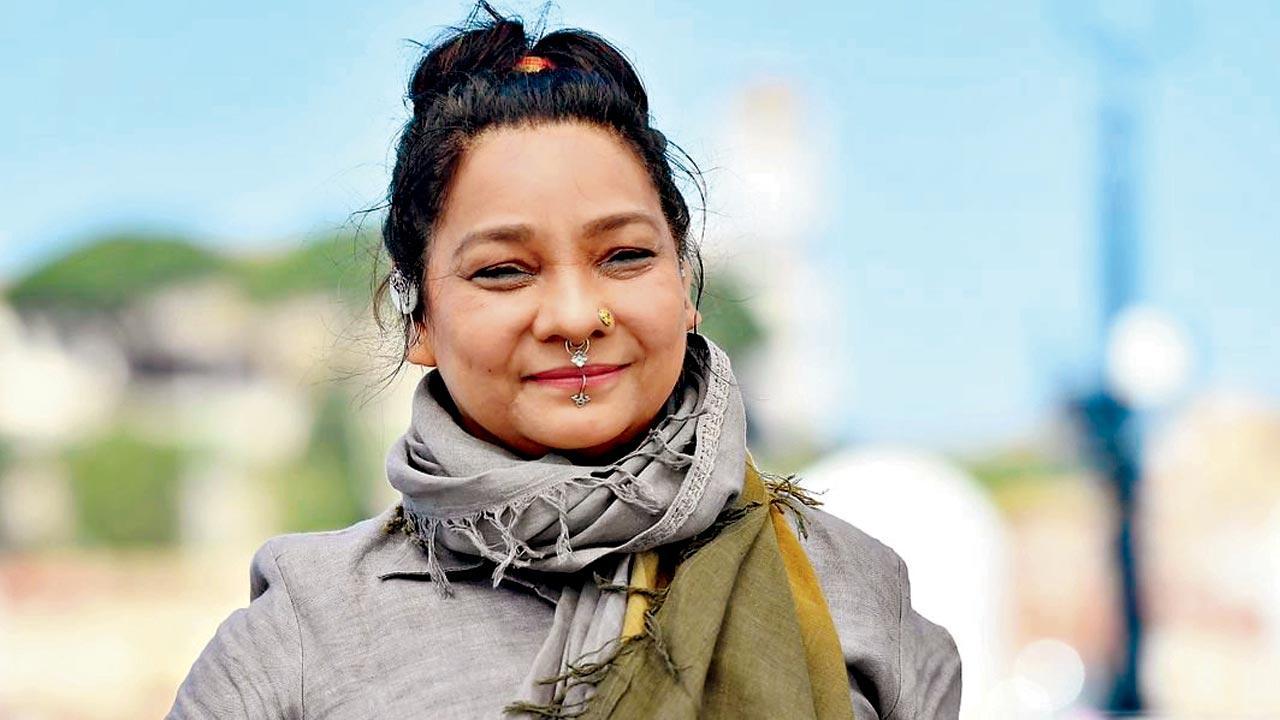
From her film premièring at Cannes to reprising her role of nosy neighbour in Gullak 4, Sunita says now is the best time for female actors
Priyanka Sharma (MID-DAY; June 1, 2024)
To Sunita Rajwar, shooting for Gullak doesn’t feel like work. Instead, she describes it as a vacation to one’s grandmother’s house. The analogy, though unusual, fits quite right. After all, the series—starring Jameel Khan, Geetanjali Kulkarni, Vaibhav Raj Gupta and Harsh Mayar—evokes that fuzzy feeling as it tells the everyday stories of the Mishra family.
“It’s refreshing every time we start Gullak’s shoot. We all are very well-connected and there are no ego hassles. It’s like going on a vacation to your dadi or nani’s house. During the reading of season four, I once told Geetanjali that her role was so good, I wished I had got it. Gullak feels that personal to all of us,” says Rajwar, who plays the Mishras’ nosy and fast-talking neighbour.
Over the past 20 years, Rajwar has been a frequent face in television shows and films, but she has felt the spotlight more firmly on her in the last few years. The actor thanks OTT for the diverse roles coming her way.
“Featuring as one of the primary characters is an achievement. We are blessed right now that we have so many good roles for women across age groups. This is the best time for actors on OTT.”
It’s inarguably the best time for the actor. Only a fortnight ago, Rajwar’s movie, Santosh, co-starring Shahana Goswami, premièred at the Cannes Film Festival.
Reflecting on it, she says, “Cannes was beyond my dreams. For a long time, I was numb, wondering, ‘Is this really happening?’ It’s when people came up to congratulate me that it hit me that something big was happening. It was wonderful to see Indian films and talent doing so well there.”
Greta Gerwig hugged me at the after party for Cannes Film Festival award ceremony-Kani Kusruti
8:36 AM

Gopika IS (BOMBAY TIMES; May 31, 2024)
Kani Kusruti, who returned to Kochi after the prestigious win at the Cannes Film Festival for Payal Kapadia directorial All We Imagine As Light, says what she loved the most about Cannes was “how it celebrated the directors, and rightfully so”. “A film is ultimately the director’s baby and the director deserves to be the main star. I was very happy with that,” says the actress. Excerpts from an interview:
‘It was a message to the entire world that we’ve arrived’
The best thing for me about being there on the world stage was that I was there with my co-actors and crew, most of whom were women. It was a message to the entire world that we have arrived, that we see you and that you all can do it, too. I thought of all the amazing female actors and directors, and this was for all of us. I genuinely loved the audience of our film there. That mattered a lot and most of the people who saw our film loved it.
Director Greta Gerwig, who was the president of the Cannes jury, hugged me at the after-party for the award ceremony. All the artistes there had a warmth and love towards us.
‘Want to do more things that resonate with my beliefs’
I don’t see roles as big and small. All roles are equally important. If it’s an interesting part, then great. Unfortunately, I am not in a place where I can pick and choose my films as I want. My first priority, for now, is to be financially independent. Step by step, I am trying to be part of the right stories. The sort of films I want to be part of need to have an amazing story to tell, a good director and crew. In future, I’d like to do more things that resonate with my beliefs.
‘The Malayalam industry is creating diverse movies’
Malayalam cinema has always been amazing, except for the dip from the late ’90s to 2010. In the ’70s, ’80s and ’90s, Malayalam has had great actors, directors and films. There was the issue of patriarchal outlook and views in some cases, but many had great stories to tell. Then, in the late ’90s, the stories were underwhelming. From the end of 2010 to now, I feel, Malayalam cinema has diverse stories to showcase once again. We are also more aware of having better stories with more diversity. I am very proud of most of the directors, actors and scriptwriters in the industry.
‘If I am offered similar characters, I see it as a challenge’
I don’t think I’m being offered only a certain kind of role. I did OK Computer, Killer Soup and Girls Will Be Girls, which are all different from the other. But, like every actor, I would like more variety. That said, even when some characters are similar, I see it as a challenge. I try and make these similar roles different each time. Most times, I feel I have failed. I sometimes wonder what I will do if all the roles I am offered in future are that of a police officer. How will I play them?
On why she chose Kusruti as her last name
My parents didn’t want to state my caste or religion when they enrolled me at school. The teachers and administration found it a bit difficult to accept. They said I should at least have a last name. My mother had to give in and gave my initial as K. When I grew up, I asked my parents, what the K was for? My parents would answer with random Malayalam words, such as Kusruti or Kundamandi (both meaning mischievous). And I thought Kusruti works. I feel it suits me, because I am still mischievous. If I am alive at 90, it will be very funny.
About the Palestinian solidarity gesture
Many people were happy about the Palestinian solidarity gesture. Artistes there were representing other causes, too. A lot of people came over to me and expressed their solidarity.
'Red carpet dance was spontaneous'
The dance on the red carpet was spontaneous. They asked us which song should be played when we walked the red carpet. I think Payal requested a very old film song, which we had used in the film as well. It gave us a chance to express our joy and we ended up dancing.

I’m a male director dealing with a female subject. I’m prepared to get attacked, left, right, center-Konstantin Bojanov
11:04 PM

Konstantin Bojanov, director of The Shameless, talks about the Cannes effect and more
Niharika Lal and Raima Ganguly (BOMBAY TIMES; May 30, 2024)
Bulgarian filmmaker Konstantin Bojanov’s The Shameless, for which Anasuya Sengupta won the Best Actress award in the Un Certain Regard segment at Cannes – a first for any Indian actor – took a dozen years and many challenges to come to fruition. “It’s like 12 years of bordering on insanity. In the meantime, I made one more film, wrote scripts for three more, produced one, and pulled my name out of it. So, a lot has been happening in these 12 years,” he said. Excerpts from an interview with us:
‘Do you have the right to tell this story?’
When the film was selected for Un Certain Regard, Bojanov said in an interview, “I’m a male director dealing with a female subject. I’m prepared to get attacked, left, right, and center.” But, he was surprised. “Almost no one asked me the dumb question: ‘Do you have the right to tell this story?’ We all have the right to tell stories. It’s freedom of speech. But some people on the extreme right and left lay down boundaries of what we can say and what is acceptable,” he tells us.
‘Loved Anasuya’s art’
“I met hundreds of talented actresses, and all so very well-known. I had a shortlist of very strong performers as well. But I kept looking at pictures of Anasuya (Sengupta) on social media, especially her drawings (left). That’s actually how I got curious and reached out to her. There was something in her attitude that went with my gut reaction, and I always trust the latter.”
‘India’s watershed year at Cannes’
“This was a watershed year for India at Cannes,” says Bojanov, citing the official selections and Payal Kapadia’s historic Grand Prix win. “I also watched Santosh which has an extremely powerful story and performances,” he says. Hopeful about a resurgence in India’s independent films, he adds: “It just might be a new page in Indian cinema. There are some very talented actors also working in Bollywood, but they tend to play vastly idealized roles and themselves fit the stereotype. Anasuya herself doesn’t fit into the mould at all. Most of the films shown at Cannes this year had a female cast and none of them are stereotypical characters.”
‘Was not possible to shoot the film in India’
The Shameless is set in Delhi, but the film was shot entirely in Nepal. The decision to shoot the film in Nepal was not what he would have preferred, but the film’s team had its reasons, says Bojanov. “We could have shot the film on our shoestring budget in India before the pandemic, but after the pandemic, the price of everything had gone up. Also, for foreign productions, any script needs to be cleared by the Ministry of External Affairs. The majority of the line producers were very sceptical about being able to obtain the necessary permits, so we didn’t even see the point of applying for permission,” he tells us.
‘It will be disappointing if my film faces cuts in India’
Bojanov hopes that the audience in India will get to watch the film sooner rather than later, but he has concerns. “As much as I’m informed about the censor board (in India) and what passes through and what doesn’t pass through, the film will have great difficulties at the moment.”
However, he hopes they will find a distributor. “I was exchanging text messages with Anasuya just after Cannes and she said how everything about this project has been unusual. So maybe the rest of the journey will be unusual as well. I would very much like the film to be seen in India, I see people really interested in seeing the film here. If chunks of the film need to be cut out (for certification), it’ll destroy the film. I will not be okay with that,” he says.
Quotes:
- "It’s ironic, given Indian cinema’s history, not just in Hindi but in other languages, the first time an Indian actor has received an award at Cannes, is for a Bulgarian director’s Hindi film"
- "The parallel filmmaking scene in India was marginalized after the 70s, except in a few regions. It has seen a huge revival in past 20 years"
I do pull my director’s leg about not taking us to Cannes-Anupria Goenka
9:34 AM
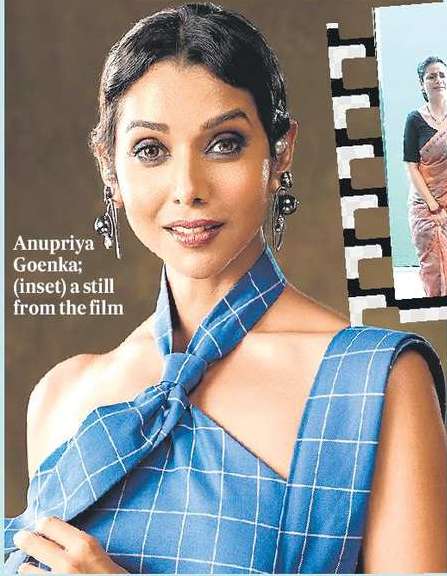
Akash Bhatnagar (HINDUSTAN TIMES; May 28, 2024)
Anupria Goenka’s short film, Break The Silence, was screened at the Cannes Film Festival this year, and the actor is quite ecstatic about this milestone. Directed by Hemant Chauhan, the film is a crime- thriller about kids with special needs.
“Break The Silence was made with the intention of bringing to light how providers and caretakers of special kids can be dangerous too. With the film going to Cannes, there is a certain credibility around it now, and the message could reach a wider audience,” the actor says.
While she couldn’t be present at the festival, Goenka doesn’t regret it. “I am happy that our film went there... I do pull my director’s leg, though, about not taking us there! (laughs),” she quips, adding that, as an actor, such prestigious platforms do add to her repertoire.
“Everybody dreams of having their films screened at such prestigious festivals because only the best of world cinema goes there. It does make one feel proud and helps one get more work that aligns with one’s sensibilities,” she says.
People in Cannes also recognised me as Manju Mai-Chhaya Kadam
9:32 AM
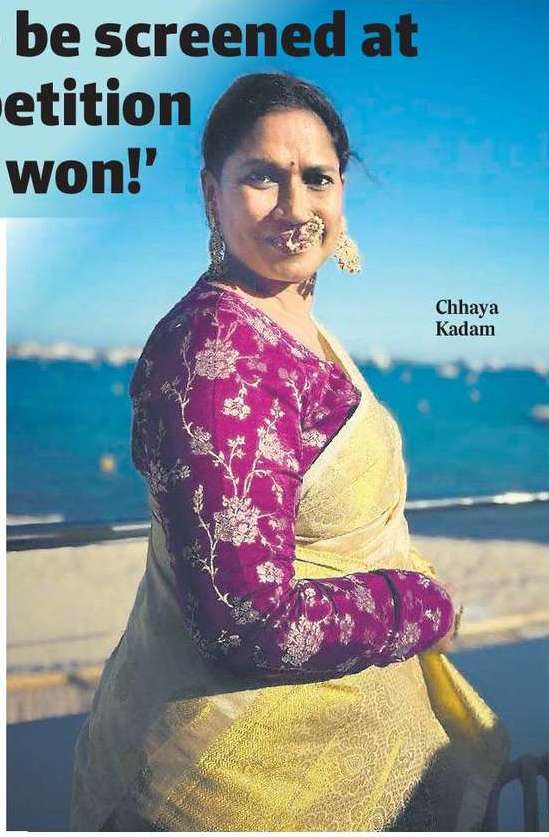
Rishabh Suri (HINDUSTAN TIMES; May 28, 2024)
This is clearly the year of Chhaya Kadam! After a great run with the actor’s earlier releases, Laapataa Ladies and Madgaon Express, her film All That We Imagine As Light became the first Indian film to win the Grand Prix at the recently concluded 77th Cannes Film Festival. One of her other films, Sister Midnight, was also screened at Directors Fortnight.
Talking to us after the Grand Prix ceremony, Kadam exclaims, “It was the first Indian film to be screened at the main competition in 30 years, and we directly won an award! We had a story rooted in our motherland about women like us. For a subject like that to get selected here... I have no words.”
Acknowledging her great run this year, she says, “People in Cannes also recognized me as Manju Mai (from Laapataa Ladies); they would say, ‘hey Manju Mai, Chhaya Kadam’.”
Kadam’s tryst with acting began in 2006, then she went on to star in Marathi films such as Fandry (2013), Sairat (2016) and Nude (2018). “Earlier, my struggle was to get work; now it is for good work,” she shares, adding that it doesn’t end there. While she’s enjoying the fame now, there was a time when the actor’s work wasn’t recognized.
“Earlier, film reviews would miss out on mentioning my name, even if my character was important. Bura toh bahut lagta tha. But then I thought I should work so hard that people are compelled to mention my name in their reviews,” she ends with a chuckle.
I shakily walked to the stage, says Anasuya Sengupta on being first Indian actor to win a Best Actress Award at Cannes
9:27 AM
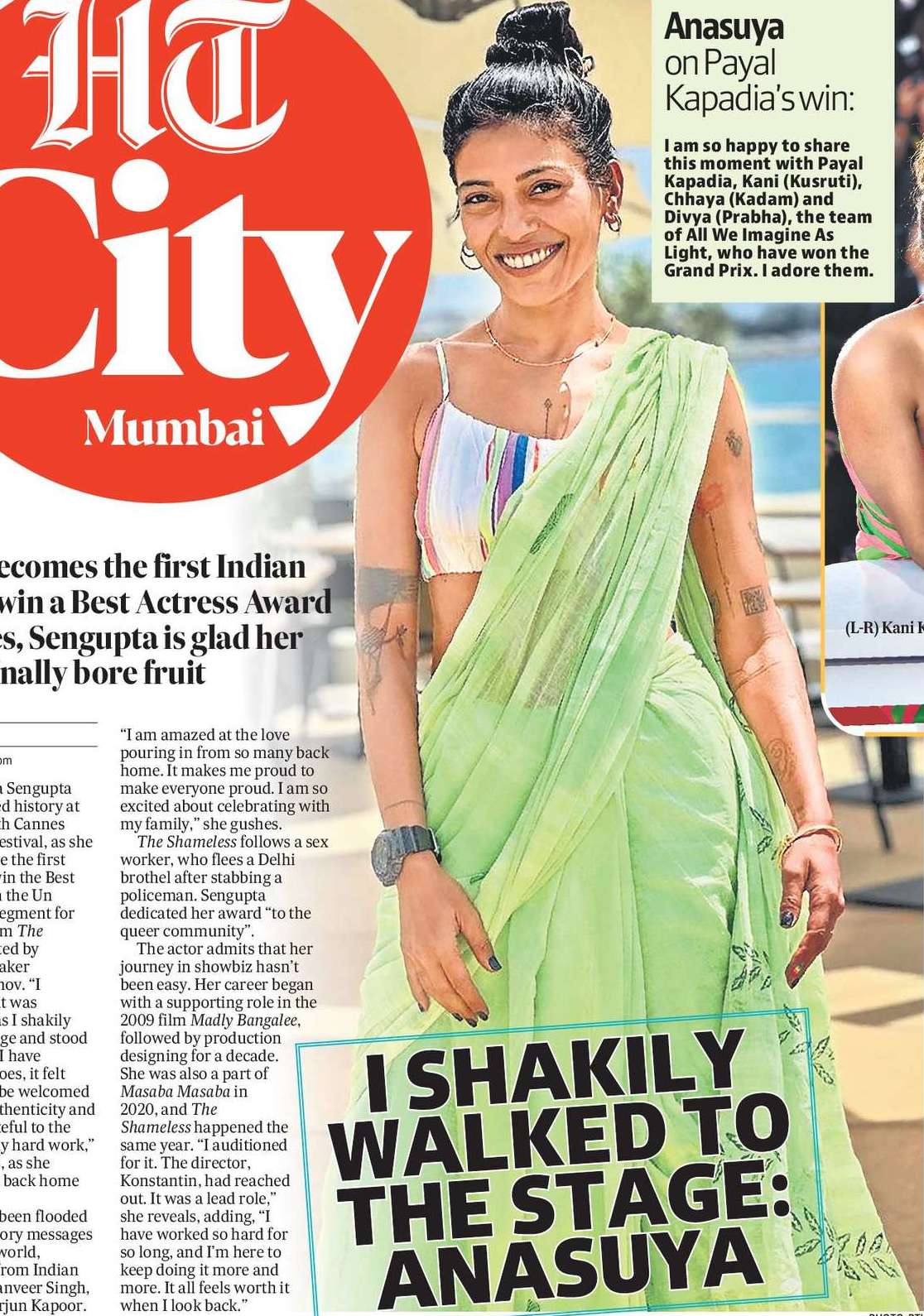
As she becomes the first Indian actor to win a Best Actress Award at Cannes, Sengupta is glad her efforts finally bore fruit
Rishabh Suri (HINDUSTAN TIMES; May 27, 2024)
Anasuya Sengupta scripted history at the 77th Cannes Film Festival, as she became the first Indian actor to win the Best Actress Award in the Un Certain Regard segment for her role in the film The Shameless, directed by Bulgarian filmmaker Konstantin Bojanov.
“I couldn’t believe it was happening! But as I shakily walked to the stage and stood with the artistes I have admired, my heroes, it felt oddly natural to be welcomed with so much authenticity and love. I am so grateful to the jury for seeing my hard work,” Sengupta tells us, as she boards her flight back home to India.
The actor has been flooded with congratulatory messages from across the world, including those from Indian actors such as Ranveer Singh, Alia Bhatt and Arjun Kapoor. “I am amazed at the love pouring in from so many back home. It makes me proud to make everyone proud. I am so excited about celebrating with my family,” she gushes.
The Shameless follows a sex worker, who flees a Delhi brothel after stabbing a policeman. Sengupta dedicated her award “to the queer community”.
The actor admits that her journey in showbiz hasn’t been easy. Her career began with a supporting role in the 2009 film Madly Bangalee, followed by production designing for a decade. She was also a part of Masaba Masaba in 2020, and The Shameless happened the same year. “I auditioned for it. The director, Konstantin, had reached out. It was a lead role,” she reveals, adding, “I have worked so hard for so long, and I’m here to keep doing it more and more. It all feels worth it when I look back.”
Anasuya on Payal Kapadia’s win:
I am so happy to share this moment with Payal Kapadia, Kani (Kusruti), Chhaya (Kadam) and Divya (Prabha), the team of All We Imagine As Light, who have won the Grand Prix. I adore them.
Please don’t wait 30 years to bring another Indian film to Cannes-Payal Kapadia
8:58 AM

The film’s stars Kani Kusruti, Chhaya Kadam and Divya Prabha, who joined Payal Kapadia onstage at the ceremony. Following the ceremony, Kapadia said, “We really had a very strong friendship and connection. I think when you have that in real life, that camaraderie, it shows in the film”
Niharika Lal (BOMBAY TIMES; May 27, 2024)
Payal Kapadia scripted history on Saturday by becoming the first Indian filmmaker to win the prestigious Grand Prix at the Cannes Film Festival. The competition jury, led by Greta Gerwig, awarded the festival’s second highest honour to Kapadia’s All That We Imagine As Light. At Cannes, Payal was asked for the nth time why it took India 30 years to be selected for the competition section.
She asserted, “There are interesting films being made in India, and I’m only a product of that. There are a lot of films, a lot of interesting filmmakers, and a variety of work that is taking place in all languages and not just Bollywood. Every state has a strong film industry. We (the Indian film industry) have been around for a long time, but for some reason, it took 30 years to be selected. There is just amazing work going on in our country, and I’m really glad that we see the cinema that we do from India.”
Indian director Payal Kapadia celebrates with her cast after she was awarded with the Grand Prix for the film "All We Imagine as Light" during the Closing Ceremony at the 77th edition of the Cannes Film Festival in Cannes, southern France, on May 25, 2024.
AMAZING WORK BEING DONE IN INDIA: PAYAL
Kapadia added, “I think we have our own vocabulary in cinema, and it’s very self-contained in India. We understand the gestures in our communities, and there is not always a need to send a film to a festival because we have our own (film) festivals. Lots of people go out to watch films. This is just one film amongst thousands of films, and it’s good that we have all kinds of films – some festival films and some not-so-festival films (laughs). So, everything should exist together. That’s what’s wonderful about cinema.”
Talking about Indian films, she said, “Everything is changing. Even what Bollywood is, is changing all the time. So, there is no one kind of cinema, especially cinema from Kerala has an immense amount of range of the films that are being made.”
‘THE JOY OF CO-PRODUCTION IS WE LEARN FROM EACH OTHER’
In response to a question on the sound design of the film, Kapadia said, “Sound is a very important element of my work. In Mumbai, if you’re from there, you know that it is never silent. Even the sound of silence is specific — there is always the distant sound of trains or construction. Of course, this was torture for our sound recordist from France, who just could not understand why there was so much sound. I think this is the joy of co-production that we learn from each other.”
‘HOPE FOR MORE FILMS FROM FEMALE FILMMAKERS IN CANNES’
When asked if she thinks that female solidarity and more films by women are happening across the world, Kapadia said that she would like to believe that’s true. “It’s wonderful that there are more films being made by female filmmakers, female technicians, female sound recordists. We need many more, but change is happening gradually but surely. I think it only makes things more inclusive. And I hope that we could have more films from female filmmakers in Cannes.”
-------------------------------------------------------
Thank you very much, Cannes Film Festival, for having our film here. Please don't wait another 30 years to have another Indian film. This film is about friendship between three women, and oftentimes women are pitted against each other. This is the way society is designed, and it is very unfortunate. But for me, friendship is a very important relationship because it can lead to gender solidarity, inclusivity and empathy towards each other.
- Payal Kapadia in her acceptance speech.
-------------------------------------------------------
Who is Payal Kapadia
While this is Kapadia’s first feature film, she is not a newcomer at Cannes. In 2021, her documentary A Night of Knowing Nothing won the Golden Eye for the best documentary film. It was also part of the Directors’ Fortnight section. In 2017, when she was at FTII, her short film Afternoon Clouds was shortlisted for the Cinéfondation section (for student films).
All We Imagine As Light: Called anti-national 9 years ago, Payal Kapadia is now nation’s toast
8:57 AM

Ardhra Nair (THE TIMES OF INDIA; May 27, 2024)
Nine years are all it took for FTII graduate Payal Kapadia to go from "anti-national" to toast of the nation. The young filmmaker, whose 'All We Imagine As Light' clinched the Grand Prix at Cannes Saturday, was a student at the country's cradle of cinema and TV when she braved chants of "go to Pakistan" for participating in a 139-day protest in 2015 against the appointment of actor Gajendra Chauhan as the institute's chairperson.
She, along with 34 other former students, continue to wage a legal battle over a case filed by the then institute's director, Prashant Pathrabe, alleging their involvement in gheraoing him and vandalizing his office that year.
But a day after conquering Cannes, there was not a trace of rancour in Payal's words. All she reflected was the afterglow of an unprecedented triumph that she gracefully shared with fellow filmmakers from India.
"It's a great feeling to receive this prize because there are so many good films from India alongside ours, and we feel a part of the larger family of filmmakers. We have three films from FTII directors this time. My FTII batchmate Maisam Ali's film 'In Retreat' is the first Indian entry to Cannes' ACID sidebar (Association for the Diffusion of Independent Cinema)," she told TOI from the French Riviera.
Payal’s film on 2015 FTII stir had also won Cannes laurel
Also, an FTII student’s (Chidananda Naik) film, titled ‘Sunflowers Were The First To Know’, won the main prize in La Cinef section. “It’s fantastic for us and FTII.” Payal’s batchmates and other alumni recall that the 2015 protest was “against the appointment of people who had no achievement in filmmaking” but were allegedly included in FTII’s governing council for political reasons.
Harishankar Nachimuthu, ex-president of FTII Students’ Association and spearhead of the agitation, said Payal always had a vision about where she wanted to go and was willing to fight it out. “She was denied a scholarship and a foreign exchange opportunity for participating in the four-month protest. But even she would agree that FTII made us better filmmakers, better human beings, and responsible citizens,” he said.
Payal credited her teachers and students at FTII for her success, saying that while not everyone needed to go to a film school, the institute benefited her with a structure that facilitates the dissemination of different cinematic ideas. “It is also a great place to meet people who share a love for cinema. My batchmates were instrumental in shaping my ideas. At FTII, we got to see films from all over the world and this exposure helped me make my film.”
Payal’s peers and seniors see her as a film aficionado perpetually behind the camera, documenting various subjects, and relentlessly pursuing any project she takes up to fruition.
Ajayan Adat, winner of the 53rd Kerala State Film Awards for best sound design, was Payal’s senior by two years in college. He said her big qualities were patience and diligence. “She was pained by the then govt’s attitude against the students’ protest. So she took out a camera and started filming everything. She made hours of footage into a documentary titled ‘Night Of Knowing Nothing’. It won the L’Oeil d’Or at Cannes in 2021.”
Subscribe to:
Posts (Atom)