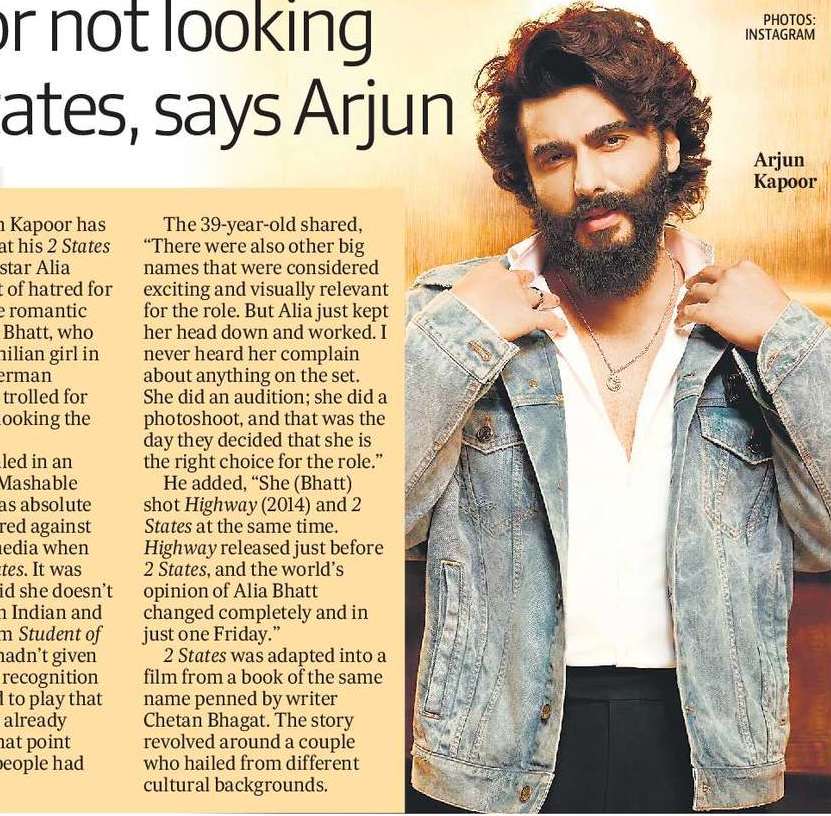
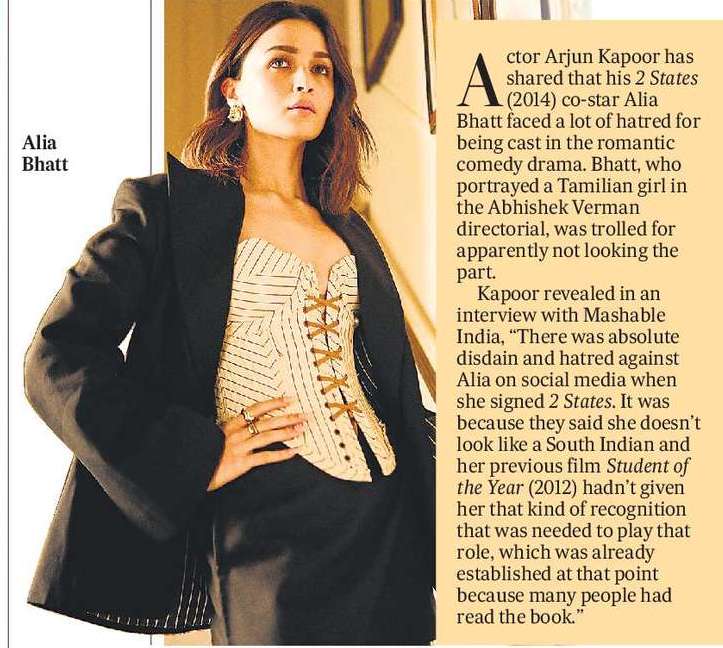
Alia Bhatt faced hatred for not looking South Indian in 2 States-Arjun Kapoor
8:49 AM
Fenil's Bollywood Talk # 828
7:19 PM

DO AUDIENCE STAY AWAY FROM THEATRES DURING ELECTIONS?
Traditionally, the period of April and May has been lucrative for the movie business. This is a time when exams are over and vacations are going on for students. The hot weather also makes it favourable for the aam junta to spend their time in air-conditioned theatres rather than in the open. However, it has been observed that in the last year, the industry is not making good use of the summer months. Earlier, the reason for having fewer releases was the holy month of Ramzan, when a section of the audience stayed away. Meanwhile, IPL was also given as an excuse to not release films when the fact is so many films have overperformed right from the first season of the cricket tournament.
And this year, filmmakers have brought a new excuse to avoid releasing films in April and May – the elections! The voting for the Lok Sabha Elections began on April 19 and will end on June 1. As it’s common knowledge, the election is being held in seven phases. It doesn’t take more than an hour for a voter to cast his/her vote. Most offices will give an off on the day of voting. As a result, the citizen is free after exercising his/her right and can go to catch a film in a theatre. This shows that this is a great time to release films.
On the flipside, due to election rallies, certain towns might come to a standstill. Also, as per local laws, a few towns might ask cinema owners to remain shut until 6:00 pm on the day of voting. Yet, this is not a big issue. The effect of the election might hamper the collections for a day or two at the maximum, that too in very few places in the country. The rest of the country will function normally. And if the film is enticing enough, the moviegoer will anyhow watch it in the evening show once cinemas resume operations or on some other day.
Hence, it’s quite logical that the election effect on the box office is the bare minimum. Yet, the industry collectively has decided to stay away from the theatres until the end of the voting season.
This is the first time this has happened.
If one goes back in time, one realizes that many films did wonders at the box office despite the election fever. During the previous Lok Sabha Elections in 2019, Avengers: Endgame did record business. Kalank flopped but had a fine opening. De De Pyaar De was also a decent success while Student Of The Year 2, too, drew the audience, at least in the first weekend.
In 2014, The Amazing Spider-Man 2 and 2 States proved to be successful. There was a multiplex strike going on during the 2009 elections and hence, there were no releases. But Main Hoon Na came in the middle of the 2004 Lok Sabha Elections and it was a huge hit.
It thus proves that elections are just an excuse. There are hardly any releases this month and from June, there will be overcrowding and clashes. So many films are ready and had they been released in May, they would have been bigger hits.
Every time Shah Rukh Khan and I meet, he repeats, we have to do a film together-Vishal Bhardwaj
9:02 AM
Months after son’s death, Hazaaron Khwaishein Aisi writer Shiv Subrahmanyam passes away
8:14 AM

Choosing vulnerable characters is embedded in my personality-Arjun Kapoor
8:07 AM

Writers and directors are making family entertainer genre younger and cooler, without any cliches-Arjun Kapoor
8:00 AM

I am closer to my mother. She’s my whole world. I can’t function without her-Sara Ali Khan
8:41 AM

Sara Ali Khan on inheriting her mother’s kind heart, her father’s sharp mind, and what she means to achieve as an actor
Ashwini Deshmukh (DNA; May 12, 2019)
 When was the moment when you realised you wanted to be an actor?
Honestly, there wasn’t any moment of epiphany as such. I remember singing and dancing to Bollywood music when I was around four or five. I used to mimic ads at home. When we went for admission in a school, mom said: Ab aap adab se, tameez se kuchh boliye. I went ahead and sang, Dama dam mast kalandar. Everyone understood that I was a crack child. As far as I can remember, this is what I always wanted to do.
Your parents separated when you were a kid. Do you carry any scars?
No.
How was it for you as a kid?
I was a kid, who understood that her mother and father were happier that way. I can’t change how they are when they’re together. But you must know the option. I could have been brought up in an extremely unhappy, unstable and toxic household. But today, I live with the world’s best mother in the most secure, happiest and healthiest space ever. People even used to ask me, ‘Don’t you miss the idea of a Sunday family lunch?’ Every day after the gym it’s like a girl’s day out for mom and me. Every night is like a pajama party. I love it.
And as far as my father is concerned, he’s never ever let me feel that we don’t live together. He’s always a phone call away. He’s always available for dinner, for coffee. So why would I feel like that? I have two happy homes with two happy parents. That’s a win-win situation as opposed to a massive loss for everyone.
Q. Who are you closer to – your mother or father?
Mom. She’s my whole world. I can’t function without her. From should I wear this, how did you like the trailer to is this boy good enough...? Her opinion matters in everything. I’m a homely mother’s girl. Mom and I are hysterical together. We’re just a riot at home. People have a blast looking at us.
Which of your father’s films do you like the most?
Hum Tum is a film that I enjoy. A touch of the urbane, suave and finesse… that’s what dad brought on the screen. Objectively, no actor since has been able to do that.
What about your mother Amrita Singh?
I didn’t watch mom’s films while growing up because she wasn’t shooting then. But recently, I’ve watched a lot of her films. I’ve watched her songs as well. She was never a dancer but if you see Mere Pyaar Ki Umar (Waris), she’s so cute. She’s as spontaneous as a human being too. From Betaab to 2 States, there’s a consistent spontaneity and innocence. That’s because she’s a child at heart. She’s the most genuine and most compassionate person. And she’s real. So much so that be it her anger or her irritation… it’s all out in the open.
The best you have inherited from your parents...
I have my father’s mind and my mother’s heart. That makes me a cool chick. What I don’t have, I will cultivate. If I can conduct myself with the intelligence, the worldliness and the knowledge that my father has, and if I can sleep the way mom sleeps, I’ll be good to go. She doesn’t have a single blob on her conscience. While I already have a couple of them. So I’ll have to work hard to be the way she is.
 What do you have to say about your stepmom Kareena Kapoor Khan?
I’ve been an avid Kareena Kapoor fan. So even today there’s an element of surprise that Poo from Kabhi Khushi Kabhie Gham (K3G) is my stepmother. People say I willed it to happen. I must have. After Sridevi, I’m a Kareena Kapoor fan. As far as our personal equation is concerned, I was clear from the beginning that anyone who makes my father happy — not specifically Kareena — makes me happy. Anyone he loves, I love.
I don’t need to know who that person is. It’s about my father. Having said that, Kareena and I became friends and have a healthy equation. It’s also easy for me to love and accept Kareena because I have a mom, who makes me feel everything’s fine. She got me ready for my father’s wedding with Kareena. So when you have a mother saying, ‘Yeh earrings mat peheno, doosri chandbali peheno’... and if that’s the vibe at home, then you’re comfortable enough to take anything on.
From 96 kilos to the svelte star you are…
Yes. I’m 55 kilos now. I don’t relate to that girl anymore. I look at my past pictures and go, ‘What the hell was I thinking?’ I’m a foodie. So, it wasn’t a joke to lose weight.
I don’t think I would be as good as my mom, in the same roles-Sara Ali Khan
8:14 AM

Rachana Dubey (BOMBAY TIMES; February 2, 2019)

Her screen presence and demeanour seems reminiscent of her mother Amrita and the roles she played back in the 80s. When we met Sara recently, we asked her if she’d like to reprise any of her mother’s roles, if the films were to be remade. She said, “I don’t think I would be as good as my mom, in the same roles. But, if I ever have a chance to revisit a role that she played, I would love to play her character in Chameli Ki Shaadi (1986). Her spontaneity and timing were brilliant. She was phenomenal in that role. I love the innocence that she brought to Betaab (1983), too. I also love the fact that she held her own when she worked recently in 2 States (2014). It was after a long gap that she was acting in a film, but her commitment and skill set were still evident; I guess… since an actor, always an actor.”
Meet these amazing writers who are also talented actors
8:12 AM

The parallel universes of writing and acting have rarely intersected in Bollywood. But now, a new breed of Hindi hyphenates — actors who write and writers who act, are coming into their own
Nishit Tiwari (MUMBAI MIRROR; September 23, 2018)
Talking to Hussain Dalal is like watching a stand-up routine. Every train of thought is punctuated with pauses and culminates in a punchline which, more often than not, lands where it is intended to. It wouldn’t surprise anyone who has been at the movies regularly for the last five years. Since Ayan Mukerji’s 2013 directorial, Yeh Jawani Hai Deewani (YJHD), for which he wrote the dialogue, Hussain has worked in 25 films, some as an actor and others as a dialogue writer.
The 29-year-old Mazgaon boy — he describes himself and his co-writer brother Abbas as boys from streets nobody knows the names of — is an eminent member of Bollywood’s actor-writer community. While the two parallel universes have intersected more consistently through generations in Hollywood, its Bollywood journey has been woefully sporadic. The few people who come to mind are Guru Dutt, Kader Khan, Neena Gupta, Saurabh Shukla and Neeraj Vora.
However, the advent of storytelling platforms, predominantly streaming websites, and, as veteran actor-writer Saurabh Shukla puts it, the human tendency to seek newness, have given an opportunity to the Hindi hyphenates to come into their own.
Like most of his contemporaries, Hussain comes from a theatre background but he wears the duality of his aesthetic on his sleeve. “My default setting as a writer is commercial, while as an actor, my sensibilities match with art-house cinema,” he says. And the statement checks out, if you look at his work. After YJHD, he did Abhishek Varman’s directorial debut, 2 States (2014), and has reunited with Ayan on his third film, the Ranbir Kapoor and Alia Bhatt-starrer Brahmastra. Then there’s Varman’s Kalank, and Baahubali star Prabhas’s upcoming bilingual Saaho, for which he has co-written dialogues with his brother, among his upcoming projects. As an actor, he will be seen with Rajkummar Rao and Kangana Ranaut in Prakash Kovelamudi’s Mental Hai Kya, “a more story-oriented, fun film.”
“People ask me for the secret of my success but I am just trying not to be poor,” he confides, almost annoyed with the tone of the queries. “I am extremely scared of self-importance, as I have seen many talented people drown in that ocean,” he reasons. Elitism is another trigger word for him, but point out that YJHD was elitist too, and pat comes the reply, “But it was consumed by the non elite. The idea is to create content that doesn’t require 10 years of education and a degree to understand.”
Unlike Hussain, Ashrut Jain’s tryst with writing was set off by the stifling stillness of small town life in Jabalpur. “I was a good orator and used to write my own speeches. You won’t believe it, but even before Gadar came out and its dialogue, ‘Doodh maangoge toh kheer denge, Kashmir maangoge toh cheer denge,’ became famous, I had used it in an Independence Day speech,” he claims, and thus establishes early on that his patriotism fuels all his creative endeavours.
The actor in him took longer to surface. “That’s the difference exposure makes when you are born in a small town and not between Borivali and Bandra,” he notes. Ashrut discovered theatre in college and subsequently, his true calling. Afterwards, he took up a job in the casting department of Yash Raj Films. Brief turns in films like Goliyon Ki Raas Leela Ram-Leela and M S Dhoni - The Untold Story and a lead part in the 2016 dramedy, Sunshine Music Tours and Travels, followed in quick succession. But his most notable turns have come with Anubhav Sinha’s Mulk this July and Shree Narayan Singh’s Friday release, Batti Gul Meter Chalu.
He is now gearing up to make his first film as a writer, A Road Trip To Pakistan, in which he also plays the protagonist. “My first love is acting. I want the next generation to talk about me the way we talk about Anil Kapoor, Madhuri Dixit, Ranbir Kapoor,” he asserts with wide-eyed optimism. What happens to writing, then? “I still write and have two scripts ready. Besides, I approach writing as either a creative outlet or a tool to become a better actor,” he says.
Amitosh Nagpal, a 33-year-old National School of Drama alumnus from Hisar, Haryana, tells people that he is ‘an actor who writes, not a writer who acts.’ “But I am writing more than I am acting,” he laughs.
After making a name for himself in Delhi theatre circles as an actor, he came to Mumbai in 2006 to do films. Instead, he ended up making ad jingles and wrote, directed and acted in plays before he landed a break as lyricist in Dibakar Banerjee’s National Award-winning dark comedy, Oye Lucky Lucky Oye (2008). He’d delivered two of the year’s biggest earworms, Superchor and Jugni, with the former even earning him a National Award nomination. “The songs were written in an hour or two,” he recalls, and is low-key dismissive of praise for producing something in a very short span of time. “It’s amusing when people give gyaan and cite rulebooks instead of just getting down to work,” he shrugs.
Brief roles in Dabangg, Aarakshan and Besharam, among others, haven’t done enough to satisfy the actor in him and Amitosh, whose most well-known work now is as an actor and translator of a widely-travelled and well regarded play called Piya Behrupiya, is ready to take matters into his own hands. “I have written the dialogue for Amole Gupte’s Saina Nehwal biopic and a film called Aadhar for Drishyam Films. Now, I have four scripts ready and I will play the lead in all of them,” he states.
 Zeishan Quadri (left)
who shot to fame as the actor-writer of Gangs Of Wasseypur, had come to
Mumbai to become an actor. But Anurag Kashyap pointed out that he had
all the makings of a good writer. Soon enough, an eight-page concept
note turned into a 200-page ‘upanyas’ (novel), and subsequently led to
the two films, in which Zeishan, who is now 35, played the character of
Definite with quiet intensity.
“Going by the praise I received for my character, I figured I’d be inundated with acting offers. But the industry accepted me more as a writer,” he says, the reason being that “there are more actors in Maximum City than writers.” Quadri is now foraying into the romcom genre. “My stories usually start with a pistol but in this one, it will start with a rose,” he says. The film in question is one of the most anticipated films of next year, but Zeishan is tight-lipped about the details. On the acting front, he says that he has accepted a role in a new film to be directed by Ashwini Chaudhary, whose Dhoop he had loved.
At 47, Manu Rishi Chadha is of a different vintage, but his sensibilities are as contemporary as they come. Born and brought up in Chandni Chowk, he was raised by a Punjabi mother who hailed from Bihar and subscribed to the Hindi magazine, Dharma Yug, which was then edited by renowned author Dharamvir Bharti. “My subconscious mind was crammed with anecdotes, stories and the way they were narrated. My old Delhi upbringing taught me a lot without taking a fee,” he philosophises.
“When I arrived in Mumbai, I didn’t get dialogues to speak, I got them to write. It was fun because an actor lives a character but when I am writing dialogue, it is for an entire set of them,” Incidentally, Manurishi wrote the dialogue for Oye Lucky... and played Abhay Deol’s friend in the film....
More recently he wrote Nanu Ki Jaanu, and is making sure to get as much writing in as he can. “I act when I can, comfortably, as writing is priority. I feel a responsibility towards it. Besides, professional writing is all about meeting the deadline. I probably don’t get acting offers because I don’t have a good rapport with casting directors,” he chuckles, adding that in Mumbai, his friends Piyush Mishra and Deepak Dobriyal encouraged him to write.
Why is this tribe finding a footing in the Hindi film industry now? Saurabh Shukla, who featured in and served as a screenwriter on Satya (1999), Ram Gopal Varma’s most seminal work in the gangster-drama genre, among others, quotes French writer Jean-Baptiste Alphonse Karr. “The more things change, the more they stay the same. Every generation gets sad, happy, gets into fights and falls in love. The difference is, a young couple probably fights over the internet now. That said, our quest for newness has brought us to the realm of realism.”

I am very proud that I hail from the film fraternity. I am never apologetic about it-Arjun Kapoor
8:06 AM

Lasyapriya Sundaram (BOMBAY TIMES; July 24, 2017)

I auditioned for my first film and that's how I got it. After my first film, I was just happy that I had been accepted. I wanted to dabble in all genres, so I chose a Gunday, which was a larger-than-life film. I then chose to do 2 States because the conflict that the character went through appealed to me as it was quintessentially Indian in nature. I did a film like Aurangzeb as it was a non-song film, which at that time was attracting the audience to the multiplexes. I did a Finding Fanny because I love Homi Adajania's madness. Also, I wanted to share screen space with Naseeruddin Shah and Pankaj Kapur and learn from them. I didn't say yes to everything that came my way, but I did give my nod to exciting projects. When Ki & Ka came my way, I realised no boy will say yes to this role. The film's director, R Balki, narrated one line and said that he had not even thought about it. I jumped at it because I felt it was tailor-made for somebody with my physicality. I took a chance with the film and consciously worked towards it as it went against the grain and it also paid off. Half Girlfriend was exciting because the texture of the storytelling was again Indian. There are certain things that pique an actor's interest, and that's why you veer towards certain subjects.
While you are a creative person, you also understand how it is to produce a film. Do these two viewpoints - one artistic and the other commercial - create a conflict in your mind?
Well, what I do take into account is that, I don't want anybody losing money on my film. Even if I am experimenting and pushing the envelope, the film should be safeguarded, so that the risk taken doesn't cost somebody their job. Besides, no human being can predict how a film will perform at the box office. The one responsibility that every actor should shoulder is to secure the producer to whatever degree they can. With every film performing well at the box office, your saleability as an actor improves. That doesn't mean you are becoming a better actor. When I signed Finding Fanny, I knew it was an experimental film. I did it intentionally. It was a film made in English for a certain audience, it still earned close to Rs 30 crore at the box office. But when you compare it with 2 States, which released earlier, it won't make sense. If you look at it in isolation, my responsibility was to attract the audience into theatres and ensure that my presence didn't lead to the budget going overboard, and I think I achieved that. Being part of a film like that gave me creative satisfaction and it's one of my best-reviewed films as well. Commercial success of a film is different from making a film commercially viable.
After Anees Bazmee's Mubarakan, you have been roped in by Dibakar Banerjee for Sandeep Aur Pinky Faraar. How does an actor straddle these two diametrically opposite worlds that these filmmakers represent?
The excitement lies in the fact that I will be going from one world to another. That's exactly how every actor wants to be challenged. As an actor, I should have the ability to navigate these different spaces and be well-rounded. In a calendar year, I have Mohit Suri, Anees Bazmee and Dibakar Banerjee as filmmakers to work with, this only helps me showcase my range as a performer. I will be dedicating a month to prep up for Dibakar's film. The reasons for doing Mubarakan and Sandeep And Pinky Faraar are for its makers and the material they have to offer. I get to live vicariously through directors, who create diametrically opposite worlds; how lucky am I!
Tiger Shroff recently said that he is happy that he has a fan following among the audience in the B and C centres. Since films like 2 States and Ki & Ka have worked more than say a Tevar, do you fear that you will be tagged as a hero appealing to the multiplexes and not the masses? Like we often say, a metrosexual hero...
I don't think I have been tagged as a metrosexual hero. Half Girlfriend did well in UP, Bihar, Rajasthan and Indore. Gunday also did well in those regions. Ishaqzaade was a pan-India success at that point. It wasn't massy in its texture, but people from across the country saw it. I am not looking at whether the film will work in the A, B or C centres, and I think that reflects in my selection of films. I am always trying to meander my way into every household in India. I want to be a pan India hero. That's how you can survive. When you have survived for four or five years and have a body of work, you should only look towards making more inroads. You cannot be stuck in personas of being massy, urban, classy, sophisticated or rustic. These are tags that you can break.
While most actors are image conscious, you are conscious about not creating any image. So, in a way, you are not yet completely Bollywoodised...
I am very proud that I hail from the film fraternity. I am never apologetic about it. That doesn't mean that there aren't other facets to my personality. I am a well-rounded person, not just physically (laughs). I am a huge Bollywood fan, but that's not all that there is to me. There is enough time for various facets of my persona to come to the forefront.
From your interviews and your public persona, you come across as a feminist. If a film that you are offered portrays women derogatorily, would you voice your objection to it?
Films mirror society. When you read about a character, if it's not written with a particular agenda, say where they not purposely trying to malign the opposite sex and the journey brings about a catharsis, then it makes sense. Take for example my first film - if I was doing Zoya's role and reading about Parma, it's not my job to question the director about the boy's behaviour with the girl. He is doing that because that is what happens in society, sadly. The second half then goes on to say what the boy stands to lose for behaving the way he does with women. If a film is derogatory towards women, I won't affiliate myself with it. That is not the reality I would like to put out in the world.
But what's your response when people say that films and film stars influence the masses?
If we, as filmmakers and creative people, start becoming the do-gooders and the cleansers of society, it means that the infrastructure of our government has let us down drastically. Do you mean to say that we are the only cause for everything bad that happens in the country? If that is the case, then there is a fundamental flaw in the system.

Chetan Bhagat has cracked the code, making him saleable as well as relatable-Arjun Kapoor
8:00 AM

Turning hero twice over with a film on Bhagat’s work, Arjun defends the much trolled writer, says he knows how to connect with average reader
Mohar Basu (MID-DAY; May 10, 2017)
Ever since the IIM graduate began penning stories inspired by the middle-class, literature lovers have criticized the growth of Chetan Bhagat into a writer, whose arguably average books make for easy sales. That four of his books, the latest being the young adult-romance, Half Girlfriend, have been recreated for the big screen, is reason enough to cut him some slack, feels Arjun Kapoor, who headlines the upcoming adaptation.
“Chetan is an intelligent writer, one who knows how to tap into the mindset of Indian readers. People must acknowledge he has cracked the code, making him saleable as well as relatable,” Kapoor says, adding that the Indian tapestry is obsessed with education and romance, both of which usually find place in Bhagat’s novels. “Love happens in colleges, life hits you at that age too. So, anyone who hears the synopsis of a quintessential Chetan Bhagat novel will say this has happened to him or someone he knows. That’s where he wins and establishes a relationship with his fans,” Kapoor says about the writer, who was recently trolled on social media after reports of his book, Five Point Someone (2004) making it into the Delhi University syllabus, hit headlines.
Kapoor, it seems, fits the part of Bhagat’s urbane middle-class protagonist perfectly, given that this film marks his second outing in a Bhagat adaptation. The actor’s 2014 Indian drama, 2 States, featuring Alia Bhatt, was also recreated from Bhagat’s 2009 book by the same name. Kapoor admits he’s never read the novels, given that he goes “by the director’s vision”, but adds that multiple adaptations of his writing to film are testimony to the fact that Bhagat has done something right. “People want to see these characters take shape. His characters are everyday Joes, and I have been fortunate to play these roles. I bring fun and frivolity to the parts. He is a pan-India phenomenon, and I am happy to be his hero for the second time.”
From Kal Ho Naa Ho to 2 States, here's how Bollywood has been stereotyping communities
8:32 AM

Stereotyping of communities in Bollywood was more prevalent several decades ago than now
Lisa Antao (DNA; March 12, 2017)
Last month, the Supreme Court refused to pass any order on a writ petition seeking a ban on jokes on Sikhs by advocate Harvinder Choudhary. Choudhary argued that the Sikh community needed a “vigorous” law to protect themselves from being the butt of jokes and asked the court to prosecute websites that carry ‘Sardar jokes’. The court questioned, “Why should the Supreme Court issue guidelines on how people should conduct themselves when they hear jokes?” and also argued that even if any order is passed, it’s impossible to implement it, asking, “Even if we issue guidelines, who will control it?”
If counted as a crime, then Bollywood has long been guilty of portraying and in the process, propagating community stereotypes. Sardar jokes and the stereotype of the goofy dim-wit Sardarji are found aplenty in countless Bollywood movies. However, in Bollywood, it’s not only the Sikh community, but also many other communities, which have been stereotyped galore. For example, the loud over-the-top
Punjabis, all South Indians are shown as idli-dosa eating Madrasis, mad- hatter Parsis, alcohol-swigging and plunging neckline-wearing Catholics to serious, argumentative rasgolla-gulping Bengalis.
Stereotyping of communities in Bollywood was more prevalent several decades ago than now. However, Bollywood doesn’t seem to be entirely purged off it. In recent years, stereotyping of communities has been done in movies like Kal Ho Naa Ho (2013), Finding Fanny (2014), 2 States (2014), Shaandaar (2015). We won’t state the obvious by naming the communities, you can do the math! We asked trade experts for their take on the subject.
A purpose for stereotyping
Amul Vikas Mohan, Editor Super Cinema says that stereotypes in Bollywood have always been there and are not limited to communities. The reason for them being there is to cater to the larger Pan-India audiences, and that they work for the movies. He explains, “Stereotyping works and it’s the reason filmmakers connect with the masses. If it’s an inside joke, everyone won’t get it. It’s never the intention of a filmmaker to hurt a particular community. Certain jokes are made about mannerisms about a particular community. For example, besides being known to be cheap, Sindhis are also known to be loud, rich, flashy and wearing lots of gold. And in the movie Shandaar, director Vikas Bahl has shown this. It made sense because everyone knows this.”
No exclusive targeting
Film critic, Raja Sen adds that there is stereotyping of communities in Bollywood movies, there are various cultural biases that tilt towards the North, which are inevitable. “However, Bollywood being an equal opportunity offender, has stereotyped various communities be it Punjabis, Bengalis or South Indians across the country. It’s not like only a particular community is being targeted. It’s nothing personal and doesn’t need to be taken so seriously,” he says.

Taking offence at the drop of a hat
Amul points out that nowadays people get offended too easily. “If a villain from a movie belongs to a particular community, it doesn’t mean that everyone has begun hating that community. Targeting a particular community is not the motive here. If there aren’t stereotypical jokes in movies, it won’t be funny for the masses,” he says.
Sen says that stereotyping has been going on for a long time now in Bollywood. However, the bigger sin is making bad jokes in movies. Being unfunny is worse than being politically incorrect. “Today, people are taking offence for anything and everything and filing PILs. In that case, even we film critics should file PILs against filmmakers for making bad jokes, bad movies and incompetence. In this quest to please everyone, freedom of speech and creativity is being curbed,” he laments.
Purely for entertainment purposes
Akshaye Rathi, film exhibitor and distributor minces no words and opines that movies are made for entertainment and not for spreading social messages. “Let’s be absolutely clear that movies are not meant for education or to urge people to not to smoke, not to consume alcohol and so on. Movies are purely meant for entertainment. Take the example of displaying those ‘No Smoking’ health warnings before the screening of movies. Has anybody actually quit smoking because of those disclaimers?” he questions.
“Movies are a form of entertainment for the masses. It’s a route for escapism from reality. And let’s just leave it at that. Even these No Smoking health warnings is just tokenism. It has no impact on people. It’s unfair to microanalyse movies like that,” says Rathi. He goes on to cite examples of stereotyping of communities in movies like Kal Ho Naa Ho, of the Gujarati community and in Shandaar, of the Sindhi community in a light-hearted manner. He further adds, “In a comic scene, there’s a joke on a character and that character belongs to some community or the other. Nobody wishes to make a movie to target any community in a negative light. People need to take this with a pinch of salt! It’s entertainment after all!”
Need intelligent humour
Amul does acknowledge that filmmakers and the audience too, need to grow a sense of humour. “Having said that stereotyping does work in Bollywood, personally, I feel that it’s not the right way to go. Filmmakers today need to do away with stereotyping. They need to raise the standard of humour by cracking intelligent, smart, witty jokes,” he says, adding that today’s younger audience is into intelligent humour.
Arjun Kapoor to reunite with 2 States director Abhishek Varman for a big-budget drama
8:08 AM

Sanyukta Iyer (MUMBAI MIRROR; November 25, 2016)
Arjun Kapoor’s dates diary is choc-a-bloc. The 31-year-old actor who has been shooting for Mohit Suri’s Half Girlfriend for most of this year, playing lover boy to Shraddha Kapoor recently kicked off Anees Bazmee’s Mubarakan in Chandigarh in which he will be seen in a double role as Karanveer Singh and Charanveer Singh with chachu Anil Kapoor in another lead role. Opposite him is Ileana D’Cruz. And now, buzz is, he is all set to score a hat-trick with a third big budget entertainer.
Mirror has learnt that Arjun has given his nod to buddy and 2 States director Abhishek Varman’s next, a slice-of-life drama with romance at its core, which had been in the scripting stage for the last two years.
The writer-director who started out as an assistant on Jodhaa Akbar, My Name is Khan and Student of the Year, made his directorial debut in 2014 with the film adaptation of the Chetan Bhagat novel, 2 States, which featured Arjun opposite Alia Bhatt.
“Abhishek’s mentor-producer, Karan Johar, has green-lit the project with some minor changes. It is a two-hero drama and casting for the parallel male lead and a leading lady is presently underway. The makers want young, established faces for all the parts,” reveals a source close to the development.
Reportedly, talks are on with KJo’s student, Varun Dhawan, who along with Arjun was one of the guests on the filmmaker’s popular chat show, Koffee With Karan, recently, for the role of the other hero.
Arjun’s spokesperson responded to our query with a “no comment”. However, in an earlier interview to Mirror (April 16) when asked if Tevar director Amit Sharma, Abhishek Varman and his filmmaker father Boney Kapoor were all working on scripts with only him in mind, Arjun had laughed, saying, “I am close friends with all the directors I have worked with and if something comes along, never say never!”
I'd like to host a show like Ellen DeGeneres-Chetan Bhagat
7:51 AM

Chetan Bhagat gears up to conquer new frontiers with a docu-reality series
Sanyukta Iyer (MUMBAI MIRROR; July 19, 2016)
By the time Bhagat's third book, The 3 Mistakes of My Life, hit the stands in 2008, the New York Times had hailed him as “the biggest selling English language novelist in India's history“, which has provided insurmountable fodder for debate between literary purists and his fans, the burgeoning Indian middle class for whom his novels have served as a rite of passage into the English language. By 2015, his books - six works of fiction and two anthologies of his columns - had sold over 15 million copies.
While the sun seems to be setting on his writing stint (his last novel, Half Girlfriend, didn't do too well), three of his earlier works were turned into celluloid money-spinners - Five Point Someone into 3 Idiots, Kai Po Che from 3 Mistakes of My Life and 2 States into a Rs 100-crore grosser. Today, a screen retelling of Half Girlfriend is under production with Arjun Kapoor and Shraddha Kapoor.
Now, the 42-year-old author who made his TV debut as judge on Nach Baliye 7 last year, is taking it to the next level. August 1 will see him make his acting debut on TV with a docu-reality series, Real 2 States Couples. “I play a narrator, a sutradhar,“ he says. “A new TV channel called FYI TV18 was being launched when the makers approached me saying they'd like to do a reality show based on the 2 States theme. It is fascinating how my book's title has become a common term.“
This isn't the first time the 2009 book has inspired an idea. “There was a Sikh whose daughter was marrying a Keralite. Bang in the middle of the grand wedding stood a stall packed with copies of 2 States. The book had helped him come to terms with the alliance,“ Bhagat reveals. “It has been distributed to patients in recovery wards who're not allowed any form of entertainment. The light reading format, fun content makes it a great read,“ Bhagat adds proudly.
The show's first season traces India's present-day social landscape, where youngsters are constantly moving from small towns to cities for higher education and jobs. Universities are now breeding grounds for cross-cultural romances. “But we aren't facilitating such lovers, just documenting their relationships. The show is a social experiment which will have the couples living in each other's homes for three days,“ Bhagat informs.
Apart from acclimatising to a new household, the couples will be a part of a major family event, like a festival or a gathering. The first episode features a Tamil girl taking off to Punjab to spend three days with her beau's family. The series will feature five couples over 10 episodes of one hour. “I study the footage and make comments,“ says Bhagat of his work on the show, adding, “The idea is to add a perspective to the narrative and encourage inter-caste marriages. Marriage takes a lot of patience, empathy and hard work.“
Queries about whether it puts immense pressure on him to be the quintessential happily married man invoke laughter, followed by a “Yes!“ Bhagat who married his IIM-A batch mate Anusha Suryanarayanan in 1998, has drawn extensively from his real-life relationships for his writing. His columns on holy matrimony led him to the brand ambassadorship of popular website Shaadi.com. “The pressure is real. My own wedding was full of conflicts. Any marriage takes a lot of work. But I have to say, there is equal pressure on me for my next book, my next blockbuster film and my next career move,“ he sighs, adding that despite all that, his ambition knows no bounds. “I would love to host a talk show next, like Ellen DeGeneres. The kind of holistic, entertaining shows David Letterman or Conan O'Brien host,“ he shares.
But, he is quick to point out that he is buried neck-deep in the final edits of his upcoming book, written from the female perspective. “A grand launch is being planned this August. We've carried out a test reading with 15-20 people and the responses have been overwhelming. I am really excited,“ he signs off.
I will ensure I have a Diwali 2017 release too-Karan Johar
8:06 AM

On the eve of his b’day, Karan Johar spoke to us about his party with close friends in the English capital and how things have drastically changed for him in his 40s
Shubha Shetty Saha (MID-DAY; May 25, 2016)
Karan Johar brought in his 44th birthday party last night in London in the company of his close friends including Shah Rukh Khan, Gauri Khan, Alia Bhatt and Sidharth Malhotra.
Speaking to hitlist from London, hours before the big celebrations, KJo says “I was in Austria and then came to London. Birthdays are occasions when I make sure that I am away from work. I am lucky some of my friends are here; I will have about 15-20 of them attending the party.”
The filmmaker says he has already made a birthday resolution for this year. “The day after my 45th birthday party, I would be on the sets of my film; a film that I will direct,” he adds. He goes on to elaborate, “Writing is my primary passion. In my 40s, my fear of failure has reduced considerably. Often, we give ourselves too much importance and start worrying. A film is a film; sometimes you go right, sometimes you may not. I have decided to go ahead with what I want, without worrying about the results. This year, I have a Diwali release (Ae Dil Hai Mushkil) and I will ensure I have a Diwali 2017 release too — a film directed by me. Most of us filmmakers have such a sense of self importance that we think the world is waiting for our films with bated breath. That’s so not true — unless you are the director of Star Wars. The whole universe is not waiting for us to break out on celluloid,” he says with a loud laughter.
Continuing with the explanation, he adds, “We are such masters of delusion. With social media and so much else happening around us, it’s time we realised that we are just one important but tiny dot in the whole scheme of things. My 40s have made me much more open about my personal headspace and where I stand. I want to do so much more now than when I was 34. In my 30s, I was bogged down by work. At 32, I lost my father and had to carry his legacy emotionally and professionally forward. Through my 30s, I conformed to societal norms, but now, I am at a point where I am doing things that make me happier and give me personal equity. I am living for myself, not doing what people expect of me. I am not afraid of conflicts or people’s opinions; only what my mother says matters to me.”
He says he is not limiting his banner to ‘just our brand’. “I am excited about various collaborations that we are doing now. I have no issues going to people and asking to collaborate if I think they are interesting, like I did with 2 States and then Baahubali. I think we are beyond that time,” he says.
Coming back to his big day, he says he plans to hit stores in London and shop to his heart’s content. “We think if we eat chocolate cake on our birthday, calories won’t count. Or if we shop a lot, it won’t make a dent to our bank account. That’s the only day I think you deserve whatever you buy and I am going to make the most of it,” he says with a chuckle.
I am here to stay-Arjun Kapoor
8:00 AM

Arjun Kapoor on growing in confidence over a span of four years and making his mark
Sarita A Tanwar (DNA; May 23, 2016)
How many years has it been now? Six?
What since I became an actor?
Yes.
Four! What six!? You have turned me into an old hag. Six is too much. It’s been four years, exactly four years. You probably feel I am around because I have been around maybe a year before the shooting, the announcement had come that I have signed the YRF film.
Found your comfort zone? In terms of professional work?
Yes. Yes, I definitely feel I have... A lot depends on your audience feedback also. You know, in the beginning, you’re still finding yourself. You are wondering if the films are working because the films are good or even because you have that acceptance from the audiences. Are they coming to see you in a particular film or they’re coming to see a film and you happen to be in it? You need to solve that jigsaw puzzle on your own and connect with your audience when you interact with the audience. When you travel, you to get a sense that nahi yaar, you don’t know what it is, but they are liking something about you and you need to embrace that. You don’t need to fight it, you don’t need to doubt yourself, you need to say okay to whatever it is. Out of 1 billion people, there are about 10-12 people who get this opportunity and I happen to be one of them. There is plausible enough reason to believe the audience likes you. So don’t let any negativity or any confusion hold you back from that. So the first two three years go in figuring that out. I won’t say actors kaan ke kacche hote hai but there are lot of influencing factors when you are starting out, there are lot of people saying a lot of things. So you have to kind of take a step back, put things into perspective.
And actors live in a bubble, without interacting with the audience directly, so they don’t know their perspective.
Correct. I think the one good part about promoting films is that you get to meet audiences. That’s one advantage of going out to promote a film across the country. You get to see the country and the audience and you get to see what they react to. So like the audience in a Delhi reacts to a different film of yours that they’ve liked. The UP audience will react more to a Gunday. Gujarat, you’ll have people talking about 2 States. Every state has a different reaction...so you get a sense. So yes, you need to take a step back in the first one or two years, figure yourself out, enjoy the attention and then kind of... Now, I feel chaar saal is a good enough time for me to accept I’m here to stay. I think also the last film Ki & Ka doing the kind of business it did, kind of consolidated the fact that the audience is interested to watch me as an actor which is important. In the bigger picture, producers are putting their money on me. The kind of film it was, the number that it started with on the first day, was a pretty nice feeling as an actor to do a niche multiplex film and have Rs 7 crore-plus on the first day.
You’ve done so many different kinds of films. What is your comfort space in terms of genre?
I don’t have a comfort space in terms of genre. That’s one thing that no actor should ever find. You should be comfortable being an actor but you should not be comfortable ki main uss type ya iss type ki kar sakta hoon. I want to discover it all...
But for actors some things comes easier.. Be it, action, drama...
I am dying to do a comedy but nobody is offering me one. So I don’t know. Everybody said action is Arjun’s go-to, but my biggest success is 2 States, which has no action. I loved doing Ki & Ka and 2 States and Finding Fanny. Everybody says I’m intense but my sense of humour actually is one of my biggest assets. If you interact with me, you will find that it is one of my saving graces of my personality. I can make a person laugh or smile and cut the tension in the room. It’s just that I come across as a very serious person on face value. As an actor I can be funny, I can be charming, I can be serious, I have all the facets, it’s all about how a director sees me. And I never want to feel that this is my groove and I will stick to it. The fact that I did Ki & Ka because I wanted to again re-emphasises the fact that I don’t live in a groove. Even Half Girlfriend for that matter.
Two choices of yours Ki & Ka as well as Finding Fanny I don’t see any of the boys of your generation taking up a film like that.
Thank you.
What gives you the confidence to say yes to a film like that? Isn’t there that insecurity that will this be accepted?
You don’t think so deeply about not being accepted. You kind of believe that if the film is good, it will be accepted but yes thank you for appreciating the different choices that I’ve made. Finding Fanny was more about, yaar I think not enough ensemble films are made, not enough quirky experimental films are made with enough face value to get attention. My reason for doing Finding Fanny was if I don’t do this now when will I do this? Take chances, I was still young, I didn’t have to think about the consequences. Because the bigger you get, the harder it gets to experiment...
I would say that it’s easier to experiment when you are bigger because by then you know you have your fan base. So intially actors should aim for really safe films.
What is safe today? Ishaqzaade was not a safe debut and it did well. My first film kind of made me realise pushing the envelope is more exciting for the audience today than sticking to conventional films. My reason for doing Ki & Ka was it seemed like a risky film. I liked the fact that we were taking a risk, in terms of that a mainstream commercial Hindi film hero who is so macho in his perception is going to play a home maker. I think the film worked because Balki cast me in that role. I think if it was anybody else from my contemporaries it would have seemed a bit generic. It added a fun twist to it was to see this big burly guy who is like a giant taking care of the house and taking care of a woman and cooking and cleaning and playing house husband. I found that visual exciting. I found that story very relatable, so I went with the emotion of the film.
Having directors like Balki and Homi must have the big driving factor, right?
100 per cent. I think if it was somebody else coming with an idea about a me playing a home maker, I wouldn’t have done it. And of course to do a Finding Fanny you need somebody as out there as Homi. He was the main reason for me to jump in because you got to work with all kinds of people. You cannot always do films for the monetary reasons. You cannot always do it for box-office especially when you are starting out because you really don’t know what’s going to work. Like I said, you know once you keep working then you become even more serious about “no, I don’t want to do this because this will become my positioning’. When I was starting out, I was doing Finding Fanny along with Gunday and 2 States, so if you look at it as a spectrum they were three very different films. I didn’t know which one is going to work and which one isn’t.
A lot of your contemporaries in the same position are not experimenting. Where do you get the inspiration?
The thing is, I never wanted to be an actor. I am not competitive to a point where I want to outdo others and I don’t want to get into that rat race. I want to be a part of this turnaround that has happened in these last two to three years. I feel very proud that we have all kind of survived that wave and we are doing well. There is no sense of out positioning each other because we all have enough going on for us. We have allowed more films to be made, we have allowed more directors to dream, We have allowed more writers to make choices of writing extreme stuff like a Finding Fanny or a Badlapur.
You have always said that ‘I’m limited in a way the roles that I can do because people see me in a certain way because of the way I look.’ But you’ve played the most diverse characters. I don’t see any of your contemporaries doing a Fanny, or a Ki & Ka.
I think that’s primarily because I have made those choices before them so you’ll always think of me first.
I don’t see it.
I do believe I can do action better than all my contemporaries also because I just have the backdrop now with the kind of films that I have done so I’ll always be convincing in an action film. I do see Ranveer being able to do action well. I think we all are finding our grooves. What I said was that people see me in certain kind of roles. I don’t see myself that way. Not even the audience does. It’s the people making films, who are casting you, who always see you in one dimension or in a stereotypical or a way that. ‘oh iski pichli action chali toh...’ I am sure even Varun faces that, when he’s offered those teenybopper films all the time. I’m sure even Tiger would want to do other kind of genres but he’ll always be the go-to guy for masala action films. He’ll also have to find his groove. That’s a constant battle for young actors. But you should take chances I think that’s what I have learnt by doing a Ki & Ka, 2 States and Finding Fanny or even by doing television. You just have to keep working, you never know what’s going to work and you don’t have answers. Like Gunday was supposed to be the sure shot film eventually 2 States did better than Gunday.
How much of divide is there in the kind of films the older guys are doing and the kind of films that younger heroes are doing?
I think there is a divide because the appetite of the audience is a certain way for certain actors. I do believe that they have been moulded into a certain pattern. Because the audience diktat says that when they go to see films of Khans, Akshay, Ajay, even a Hrithik for that matter, he has to play the star. So all of them have to play to their audience, their fan base — and their fan bases are huge — so they have to appease them before anybody else, so their choices are dictated by...log kyu aate hai paisa kharch karne? There is a lot of money riding on them, they would love to take risks I’m sure.
Like Shah Rukh did with Fan.
Which I think is commendable. I think they all take risks. I do believe even a Bajrangi was a risk in that sense. It was not a typical action Eid kind of film. It was an emotional tale of a man and a child. Even for like Aamir doing a Talaash, and Ajay did a Drishyam. Nobody speaks about those films because they all think about Action Jackson first unfortunately. So they all attempt different films but we tend to remember the bigger, flashier, commercial, pot boilers more. So I think the senior stars don’t get their due enough. Look at Akshay, he has done Airlift, and Baby last year.
They are limited because their audiences don’t want to see that.
But the audience has seen them in different films. But there are certain limitations. They cannot make song less films with superstars. You can’t suddenly go dry. The films have to have enough to appease the masses also because the masses do come out to watch them. So they will have that extra song maybe they’ll have that one action sequence or little more dialogue baazi but the material is still getting more relevant and more young.
None of the Gen Next actors don’t really fit into the kind of films that the older guys do...
Correct. We don’t.
Except for Tiger, you all have the multiplex audience on your side and Tiger has — because of the kind of films that the single screen audience.
Correct. He has done two films that played to the gallery. Yes, I have done my Tevar and Gunday. I have enjoyed that side of performing also, and I will never shy away from them. But yes, to the multiplex audience, our films have appealed more to their sensibility. Which I think will change over a course of the next couple of years I might do a massy film and I might discover that even I want to do more of that.
I think those kind of films are dying.
Yes, because now they have become like junk food. Once every six months you get a film like that you’ll enjoy it. Earlier it used to be staple and the multiplex film used to do be once in a while you saw an interesting unique film. Now the interesting unique films are every month.
Multiplex audiences is still essentially the cities right? While single screens are everywhere. So which audience would you rather woo?
Yes, it’s still the cities. But the money in cities is much more. Today four cities can allow you to do Rs 70-80 crores. Between Pune, Bengaluru, Delhi, Mumbai, little bit of Gujarat. Look at Neerja, Kapoor and Sons, Ki & Ka these are multiplex dominated areas where these films have done very good numbers. At the same time, a single screen film like Baaghi can do Rs 70 crores because it’s appealing to the rest of the country. So the numbers on both sides. But single screen films are becoming little obsolete now because the audience is now watching Hollywood films all the time. They have the internet and they are aware of what’s happening around the world. Now filmmakers know they are making films for an intelligent mindset and they want to see everything new. They want to see a Neerja and an Airlift and a Kapoor and Sons to discover a family drama of a different kind rather than the song dance routine one. They want to see a macho hero play a typically female oriented character and pull it off. These are the kinds of things that have worked along with a Baaghi, I’m not denying that. But I think Baaghi worked because it is the exception this year. I think because it came at the right time also. There is a certain enjoyment about watching a commercial masala film once in a while. So I think if he is the go-to guy for that then I am very happy for Tiger, I think everybody should have their groove and everybody should appeal to all kind of audiences. I have always believed that an actor should be able to appeal to every audience member eventually. You cannot be like ki yaar main multiplex...
Yes, but sometimes audience slots you. They decide what they like you in best.
I have been very lucky. I have a lot of decent goodwill in the mass thought process also. When I have interacted with people the younger boys, the men... they have enjoyed Gunday, Ishaqzaade, and Tevar. So I feel maybe I just need a correct film to kind of reconnect with them and take it to that level. Sometimes you just need the correct film. You might have the potency, you might have a connect, but to really see the volume of numbers you need a correct film also. But it’s going to be I think once a year you’ll see a Baaghi doing well, once or twice a year you’ll see that kind of a film doing well more than the Neerja’s and Kapoor and Sons and all.