When Vivah was released in, Bombay, Delhi, Bangalore, I got quite a bit of flak-Sooraj Barjatya
10:25 AM
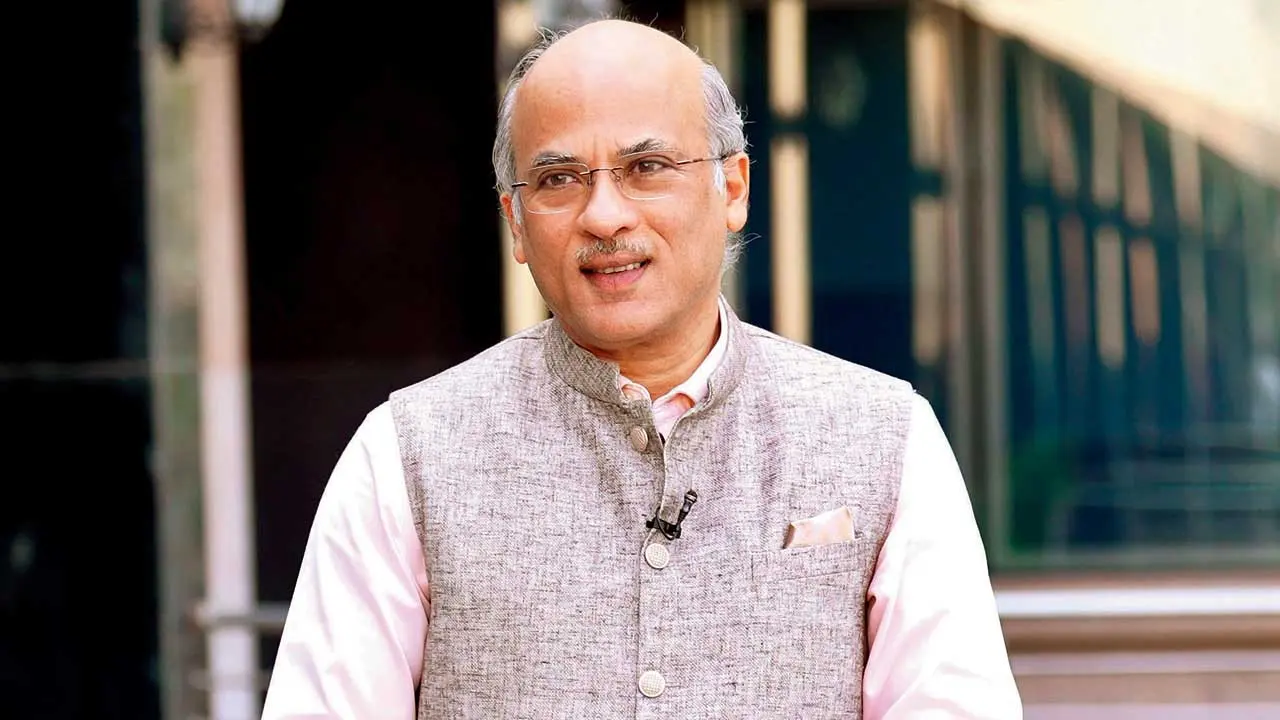
Mohar Basu (MID-DAY; November 20, 2026)
Families, togetherness, songs – the usual ingredients of a Sooraj Barjatya film are present in Yeh Prem Mol Liya. But one can also notice a few shifts. Prem has changed, as has the filmmaker’s usual depiction of the female lead. Perhaps it all stems from a shift in the filmmaker himself. While Salman Khan became synonymous with the character through their early collaborations, the filmmaker says he has never approached casting with the actor in mind. The script, he insists, determines who plays Prem. In Yeh Prem Mol Liya, that person is Ayushmann Khurrana, who stars opposite Sharvari in a story that retains Barjatya's familiar family setting but places a contemporary question at its centre: why should a woman always be expected to leave her home after marriage?
“There is no one better than Ayushmann for this film,” says Barjatya, ahead of the film's November 27 release. “The script or the subject itself tells what face it is asking for. If you see any of the films I have made, it has never been that I have to cast a particular actor. Initially, Salman bhai and I did a team and went ahead, but over the years, you realize that you have to make character films which are much more relevant to families today. Those characters, the Prem, evolve a bit here and there. We both realised that we must do justice to the script first.”
The Prem in his latest film is a man who is willing to challenge convention for the woman he loves. When his fiancée Purva cannot leave her family because of her responsibilities towards them, he decides that his own family will move into her home.
“This is one film where I have a chance to speak something very progressive in my own world. There is a boy in this film who wants to give the correct importance to the priorities that his fiancée seeks. If she cannot shift from her house because of her responsibilities, he decides his family will shift in. When his traditional people question him, he asks, ‘Which Ved Purana, which Constitution states that only the girl has to shift and we can't?’”
It is a departure from the traditional arrangement often seen in Indian marriages, but Barjatya believes the character remains rooted in the world he has created. He credits Ayushmann with making the idea accessible rather than preachy. “The way Ayushmann has played it, with such effortlessness, he has made it so relatable, keeping my world intact. I give him a lot of credit. He is so good at such roles. He also is naturally that guy. He believes in such things.”
For a filmmaker whose romances have often been associated with a certain innocence and optimism, the changing nature of relationships is something he is acutely aware of. Asked whether he still sees hope for romance in an increasingly sceptical world, Barjatya says he misses the optimism that surrounded the genre when he began making films with Maine Pyar Kiya.
“I crave for the hope that used to be there when I started off, and I can sense that everyone yet craves for it. But there is so much one sees in life. One mistrusts, one is more careful, one is more judgmental. That is how I see people around me. But the craving is there, you know, for everyone to feel wanted, to be wanted, to be respected, to be cared for. Whatever you see, you cannot take out femininity from any lady. I think the emotions are very much there.”
He believes the difference lies in how today's young people communicate their expectations. “If you see Yeh Prem Mol Liya, the emotions are the same, but today a boy and a girl are much clearer about what they want. When I started off, there used to be a lot of questions about what would be correct, what should not be, what someone will feel and what someone will not feel. Today, I think people are much more vocal, and that's a good sign.”
That shift is reflected in Purva, played by Sharvari, whom Barjatya describes as one of the most opinionated female characters he has written. A reporter, she lives with the women in her family and is fiercely protective of the house that holds their shared memories. She is not looking for a man to complete her life, nor is she willing to compromise on her priorities for romance.
“Honestly, this is a very fascinating character and one of its kind. I've never had such an opinionated character, a girl of today. She plays a girl who's a reporter who stays with her dadi, nani, bua, chachi, all the ladies in her house. She is a very hyper child. She is very clear she will not sell her house because it belongs to my dadi ka pyaar hai, nani ki godh hai. And she has no time for love. Even when Ayushmann is in love with her, she's very clear on her priorities. No way does she allow her heart to rule.”
Barjatya says he wanted a character who could be independent and assertive without being disconnected from her family or her cultural roots. “From that, to give in to a man and also seek the validation of the family. Otherwise, it is so easy to be alone. You know, no, that's not me. I want my separate space, but yet want to be included. And that is my kind of Indianness along with this kind of mentality. I was hunting for a difference. I was looking at a lot of options.”
The filmmaker recalls watching Sharvari in Vedaa, particularly a long boxing sequence, before deciding she could play Purva. “I saw it a couple of times, and I just found that, oh, this is Purva, Sharvari can fit in.”
However, he had reservations about whether an actor in her mid-twenties could bring the maturity required for the part. “My biggest question was, at 26, 27, will she be able to play this kind of maturity? And is she ready for this kind of Indianness? Because I'm going to put her down right down to a middle-class Indian girl. Of course, the glamour will be there. But she gave in totally. She surrendered. It's to her credit. Everyone will see. She surprised me in and out.”
For Barjatya, making a contemporary film does not mean abandoning the values that have defined his cinema. He acknowledges that maintaining the sanctity of his filmmaking requires him to look inward rather than follow what is currently working. “It takes a little effort to go inside yourself because if I look at the outside world, if I come out of my office, I find what works is what is being spoken about. But then finally, I look at myself and say what I would like to make, because I've spent the next two years of my life doing something. So it better be what I want, what I really like to do.”
He adds, “I really would like the world to be better. I want the world to be united because I always end up with people wanting to be together as a unit. At my age, after having done so much, I really want to do more of it.”
The filmmaker says his relationship with box-office success has changed considerably. “I honestly don't have this craving for these many crores or this and that. It's the appreciation. As a unit, people come as a family. They bring their children, their grandparents, their fathers. I really love this visual. I want to make a little difference for those little children because I have granddaughters of my own.”
He cites the effort families make to pass on traditions to the next generation as one of the reasons he feels responsible about the stories he tells. “Today, at Diwali, how much effort their mothers took to light the diyas for them to learn. And then now they've learnt to take aarti themselves. So when you look at it, you feel so responsible. You have a medium, and you can really, really influence people in which way.”
Explaining how he protects his filmmaking from commercial pressures, he says, “I go back into myself, I sit by myself, and then ask Sooraj, what would you like to make as a director? Not as a producer, then it all goes lost. Look back and say, as a director, what would you like to say? Everything comes down to one centering.”
While the filmmaker says he has not changed fundamentally as a storyteller, he acknowledges that he is less consumed by the need to prove himself commercially. “I have not shifted from what I was. I still want to make the same kind of movies. The only shift that I've done, honestly, is that I've stopped bothering so much about the commercial viability of a film. When I was young, it was all about numbers. It was trying to be number one and number two, breaking records and getting this kind of glamour and this kind of dancers. Today, I am happy where I am. But I want to really tell these lovely stories of families and love and simplicity. I think the biggest shift is now I'm a little azaad, liberated. I'm happy being in this space.”
He is, however, conscious that the technical language of filmmaking has moved ahead. “Where the technical part is concerned, I'm very happy that I've moved ahead. I have a younger team who give me what I want in today's kind of filmmaking. So the shift has been more as a mindset and as with technicality. Now, if you see Yeh Prem Mol Liya, when you see it visually, you'll find nowhere less than anything in the world today. But I think, at the core, as a filmmaker, I've remained where I am.”
Barjatya is also not particularly interested in convincing an entire generation to believe in romance. He believes audiences who may initially be sceptical often discover his films through older members of their families. “I believe that if I were to show pure love or whatever I show, there would be a generation and people who will not come to see. But you'll be surprised, they get their elders to come and see it. So when they come with the elders, something magic happens where they start liking it.”
He recalls the initial response to Vivah, which faced criticism when it released in 2006. “When Vivah was released at that time, in 2006, Bombay, Delhi, Bangalore, I got quite a bit of flak. People asked, who says this? But over the years, if you see, I don't know how this popularity has maintained. It's 20 years now. I watch it on television almost every two weeks.”
With Yeh Prem Mol Liya, he hopes to retain that emotional connection while making the romance more contemporary. “There will be a shift. It will be romance which is actually today's, but in my world. Somehow the magic has happened. It is there on screen. A lot of credit goes to Ayushmann, Sharvari and my writers for having given my vision a very contemporary feel and yet keeping my world.”
That world continues to have its familiar relationships and forms of address. “Our characters are yet saying chachi. They are not calling them by their names. The chachi remains, the bua remains, the chacha remains, the dadaji remains. We are not crossing any boundaries which are alien in my films. But I think that's how we all are.”
The film's larger message, however, is directed at the men within these families. Barjatya says he hopes audiences take away a greater understanding of women's priorities, particularly outside metropolitan India. “I hope and I pray that with this film, anyone who comes learns that a lady's priorities need to be given importance to much more than what is happening in today's society. See, I'm not talking of metros, I'm talking of Bharat. That would be every lady of every generation, every age group. I really feel there is a very big statement we would try to make.”
The idea, he says, is also personal. “When I look back at 61, when I look back at what my mother, my wife, my daughter... then I look back and feel it could have been done a lot of things differently. So that is one thing I want people to take away besides all the entertainment, hasi-mazaak, songs and fun. That is one message I would like every man to take back.”

Subscribe to:
Post Comments (Atom)
Post a Comment