Hamari koshish hai ki Jammu and Kashmir mein dobara filmein bane-Omar Abdullah
8:06 AM
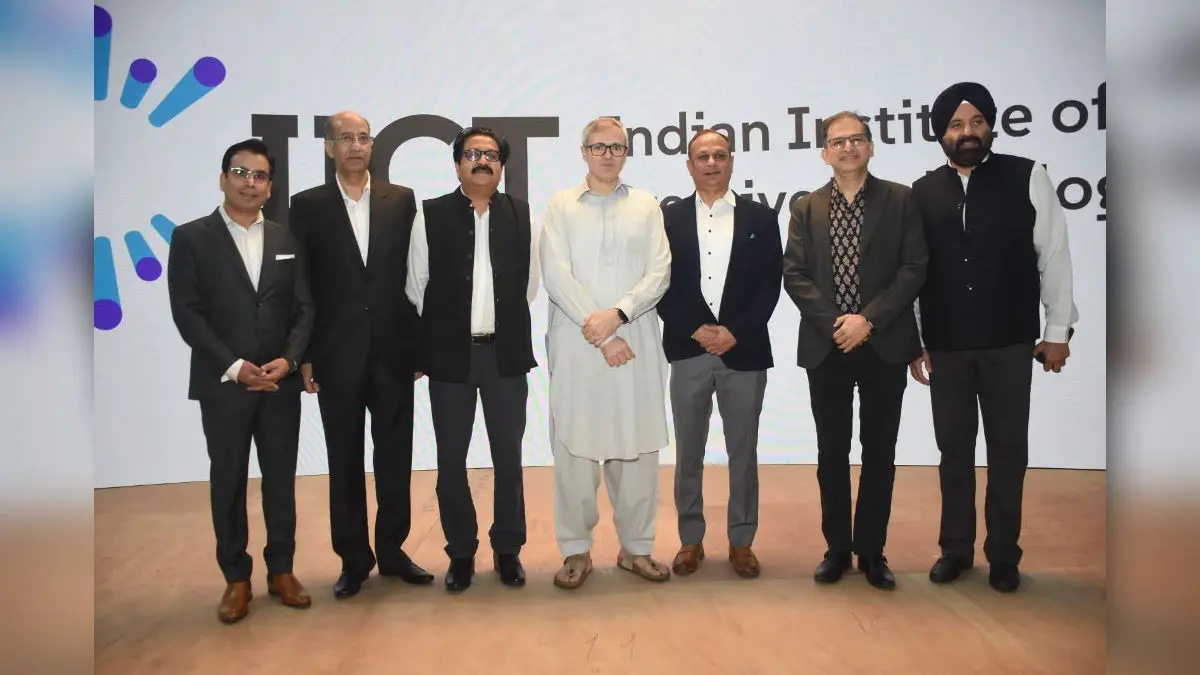
During his recent visit to NFDC campus in Mumbai, J&K Chief Minister Omar Abdullah spoke about reclaiming the Valley’s place as Bollywood’s one of the most-loved backdrop
Niharika Lal (BOMBAY TIMES; January 29, 2026)
For Hindi cinema, Kashmir has long been synonymous with snowy peaks, chinar trees and shikaras . Recently, when Jammu and Kashmir Chief Minister Omar Abdullah visited the National Film Development Corporation of India (NFDC) campus in Mumbai, he reminisced about a time when almost all Bollywood films shot at least one song sequence in Kashmir. “Uske bina film ko film nahi mana jata tha ,” he recalled.
Over the decades, films – especially song sequences – have been shot at scenic locations such as Pahalgam, Sonamarg, Gulmarg and the Baisaran Valley, a long-time favourite among filmmakers. However, last year, following the Pahalgam terror attack, film shoots came to a halt and now efforts are on to revive shoots and create infrastructure for film production in J&K.
Addressing the change, Abdullah said, “Pehle song sequences ki shooting zaroor Kashmir mein hua karti thi. Lekin haalat badal gaye. Aise halaat aaye ki wahan pe film banana hi naamumkin hua.”
‘To make J&K an attractive film destination, we need to develop infrastructure, human capital’
Talking about the plan ahead, he said, “Badalte haalat ke saath hamari koshish hai ki filmon ka jo Jammu Kashmir ke saath rishta tha, uss rishte ko hum dobara se bahaal karein. Lekin iss 20-30 saal ke arse mein film banane mein bhi bahut tabdili aayi hai. If you have to make a film where absolutely everything has to come from Mumbai, it becomes cost-wise prohibitive,” he added. “Therefore, if we want to make Jammu and Kashmir an attractive destination for film shoots, a certain amount of infrastructure and human capital has to be developed within the state.”
‘J&K ki film industry dobara kaayam ho aur apni kahaniyaan hum hi dohra sake, yeh koshish hai’
Emphasising on the revival of local cinema, Abdullah said, “Hamari koshish hai ki Jammu and Kashmir mein dobara filmein bane. Doosra, Jammu-Kashmir ka apna film industry dobara kaayam ho, kyunki hamari apni kahaniyaan jo hain, woh hum hi dohra sakte hain. Mumbai se koi aaye aur hamari kahani batana shuru kar de, woh utna hi galat hoga jitna main Mumbai ki kahani batana shuru kar doon.”
Post-2024 boost for film shoots in J&K
In recent years, films such as Ground Zero (2025) , Sam Bahadur (2023) and Laila Majnu (2018) have been shot in Pahalgam. The Jammu and Kashmir Film Policy 2024 aims to give filmmakers easier access to the region, opening up scenic areas closer to the Line of Control (LoC), including Gurez, Machil and Tangdhar, for the first time in several decades.
“A well-nurtured film industry can be a major source of wealth creation, employment generation, and an effective tool and platform for the preservation of culture and the expression of the people of Jammu & Kashmir,” the policy states.
‘Over 80% of Ground Zero was shot in Kashmir, boosting its authenticity’
The beauty of Kashmir has served as the backdrop for classics such as Kashmir Ki Kali (1964) and Kabhi Kabhie (1976), as well as more recent films like Laila Majnu (2018).
Arhan Bagati, co-producer of Ground Zero, said during the film’s release, “Initially, many locations were being discussed for the movie. My reaction was, ‘Why not Kashmir?’ – because it is a film set in Kashmir. I thought the authentic way to do the film was by shooting in Kashmir and going to actual locations. We went to the locations where the encounter happened, for instance. That authenticity can’t be created with CGI. More than 80% of Ground Zero was shot in Kashmir. The administration was extremely helpful, the LG supported it, and the J&K Police was indispensable through the entire process – not just showing us where the actual encounter happened, but also in giving us access to the locations. All that together made it an authentic film.”

Subscribe to:
Post Comments (Atom)
Post a Comment