Where are the lovely scripts? Please show me-Saumya Tandon
2:48 PM
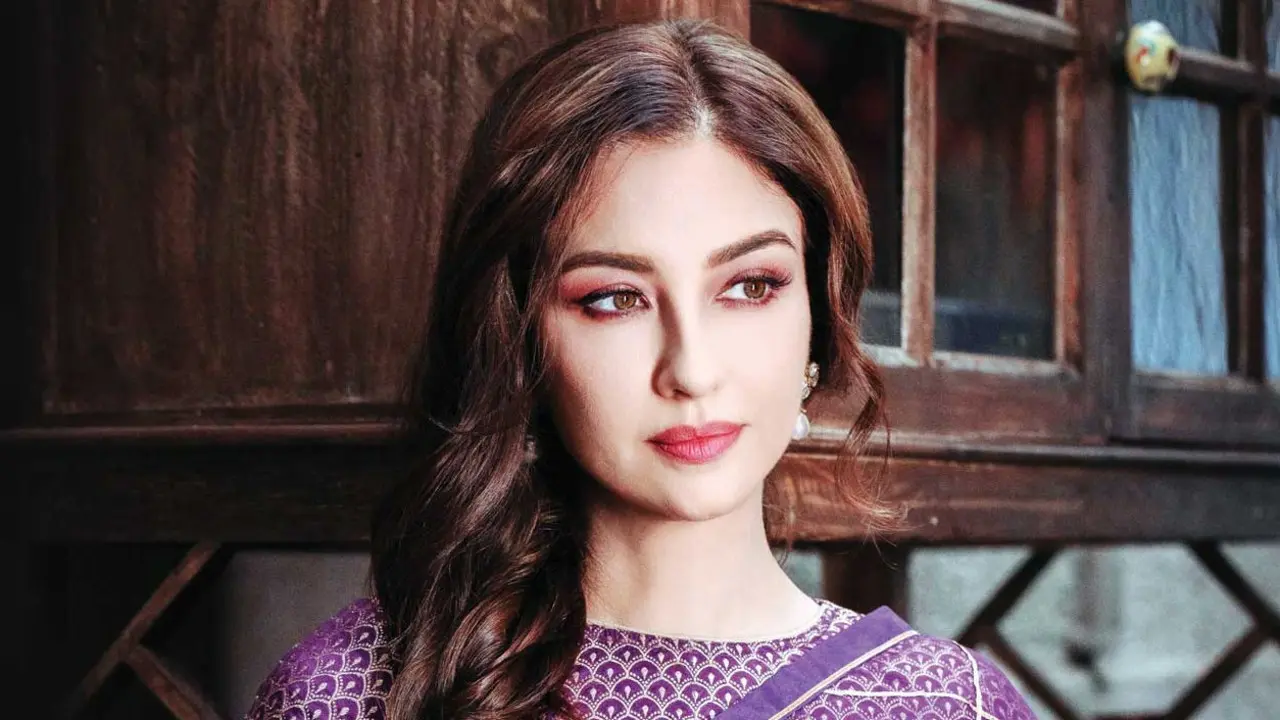
Priyanka Sharma (MID-DAY; November 25, 2026)
In the past few months, Saumya Tandon has noticed a change that she is all praise for: more actors from television are making big-screen appearances. While Aditya Dhar’s Dhurandhar franchise gave her and veteran actor Rakesh Bedi a wider audience, Nitesh Tiwari’s Ramayana: Rise Of A Legend is doing it for Ravie Dubey. Championing the prioritisation of talent over medium, Tandon noted that the class hierarchy exists only in the industry, not in the audience.
“I don’t understand this system [where people are differentiated on the basis of] being from Nalasopara or Malabar Hill. Talent does not have a location, surname, or bank balance,” she asserted, before elaborating, “I haven’t seen Ramayana, but in the trailer itself, Ravie looks so fantastic. He looks the part. Big screen doesn’t belong to only one kind of actor; it belongs to talent. Just the way India doesn’t belong to Bandra, but to every person, from the one who lives in Nalasopara to those who live in Malabar Hill. This industry has created the class [hierarchy].”
The best way to bust these notions is by paving your own road to success. And Tandon’s done that with Dhurandhar. Given the Ranveer Singh-led franchise’s wild success, it must have led to brighter opportunities for Tandon. “Where are the lovely scripts? Please show me. It’s a struggle to land a good script with a good character,” she said.
Aamir Khan moves to Colaba with Gauri Spratt as he begins training for Lalkaara
2:45 PM
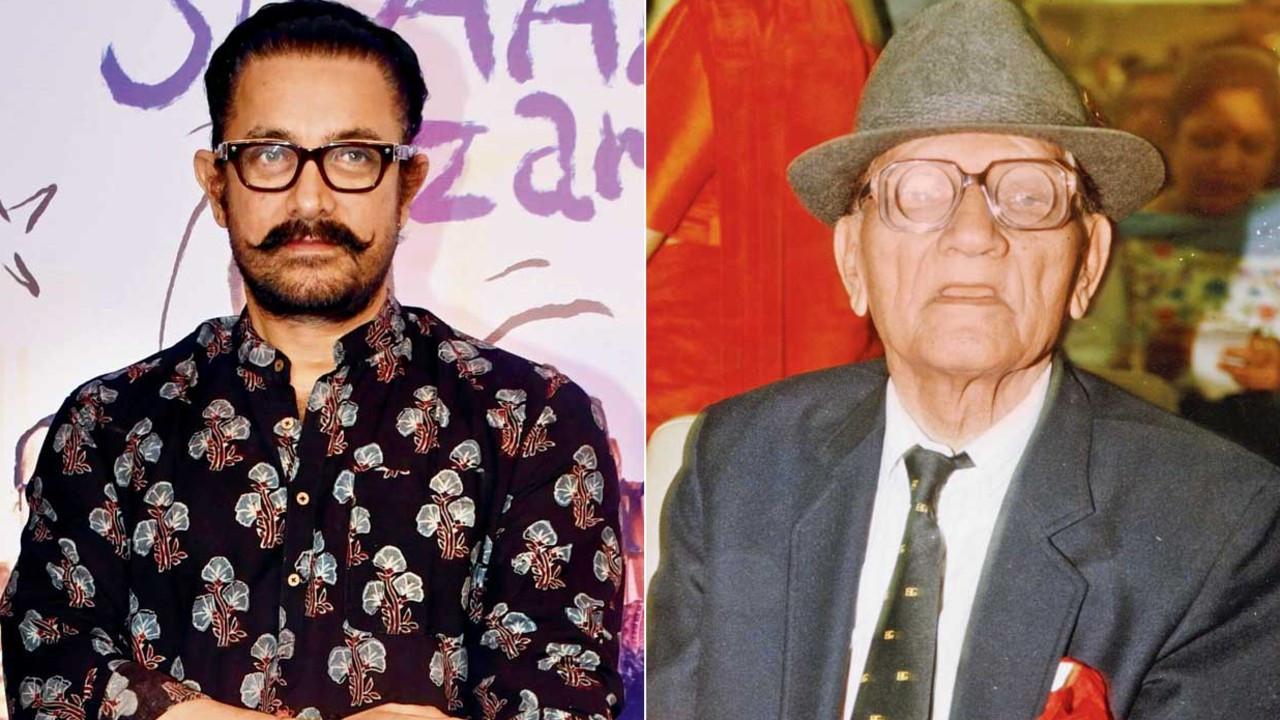
Upala KBR (MID-DAY; November 25, 2026)
Aamir Khan lives a film twice — first, when he is prepping for it, then while facing the camera. These days, the superstar is living in the world of Lalkaara. mid-day has learnt that the actor has begun prepping for director Ashutosh Gowariker’s sports drama, which sees Khan step into the shoes of cricketer Lala Amarnath and chronicles the 1952 India-Pakistan Test series, the first between the two countries after the 1947 Partition.
Those in the know have told us that Khan, along with co-actors Vikrant Massey, Jitendra Kumar, and Dhairya Karwa, is training at a legacy club in South Mumbai. They are being trained by two former Indian cricketers, who also coached the actors for Kabir Khan’s 83 (2021).
A source revealed, “Aamir and Gauri Spratt have shifted to a luxury apartment in Colaba as the actor’s Bandra home is being renovated. He chose Colaba as he can conveniently practise the sport at the cricket ground nearby. Besides following a training routine, Aamir is on a strict vegetarian diet planned by a dietician. Ashutosh and his team have done look tests with the actors, and they feel that Aamir looks perfect for Lala Amarnath’s role. Vikrant plays Abdul Hafeez Kardar.”
With training running throughout November and December, the unit will kick off Lalkaara’s shoot on January 4, 2027. It is significant for Khan and Gowariker, as they had begun filming Lagaan (2001) on the same date in 2000.
Physical training is only a part of the prep. Since mid-October, the actors have also begun their reading sessions.
The source added, “Aamir has had several sittings with Piyush Mishra and Neeraj Singh, who have written the story, screenplay, and dialogues. It’s a story that Aamir loved the moment the writers completed their narration.”
A chapter of history on screen
The 1952 India–Pakistan Tour was the first Test series played between the two countries after the 1947 Partition. It marked Pakistan’s debut in Test cricket. Lala Amarnath, the first cricket captain of independent India, led his team to a 2-1 victory.
After Happy Patel, Vir Das developing 5 small-budget, high-concept films under his banner
2:43 PM
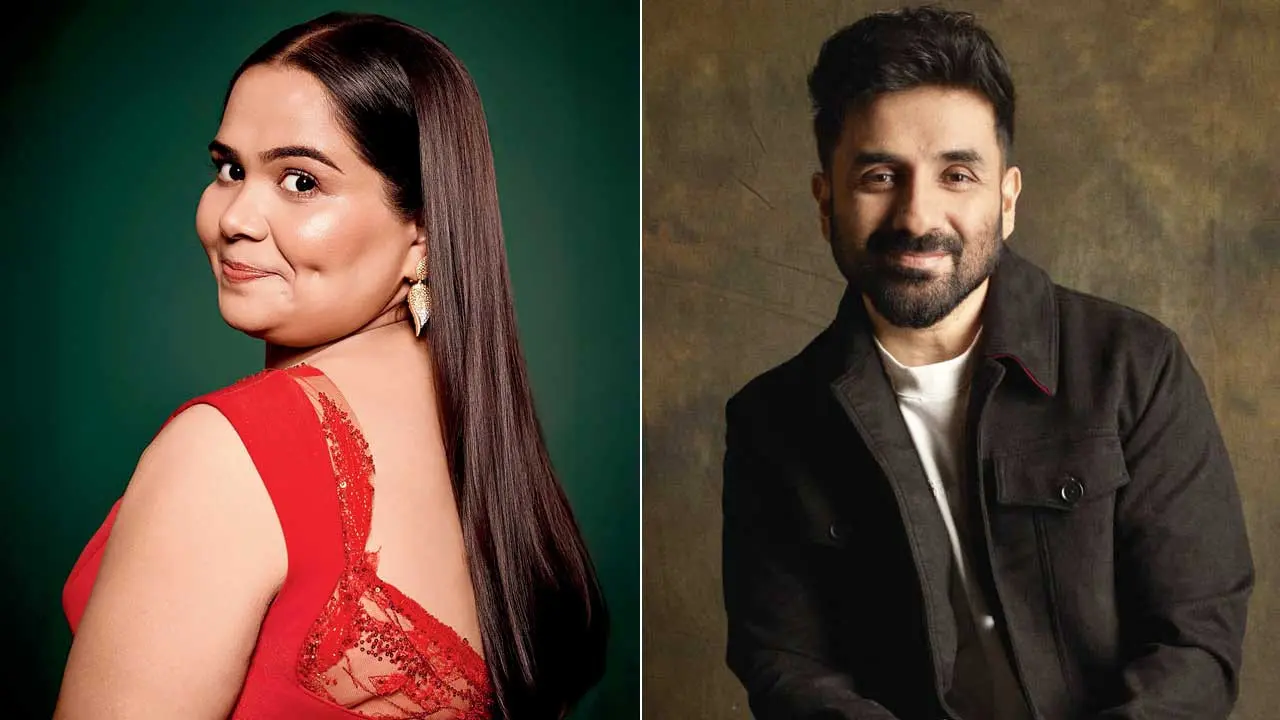
Mohar Basu (MID-DAY; November 26, 2026)
Vir Das began 2026 with Happy Patel Khatarnaak Jasoos, and even at the year-end, his directorial debut and its lessons are guiding him. While the spy comedy didn’t work wonders at the box office, it prompted a series of conversations with artistes who wanted to work with the actor-comedian. It showed Das that there is a market for unconventional stories. The result? The International Emmy-winning artiste is developing a slate of five movies, including a found-footage horror offering, under his banner, Niche Films.
“Happy Patel was for some people, and wasn’t for others. I stand by that film. We went for it with no qualms and it opened a gamut of possibilities,” began Das, saying that he was flooded with DMs after the movie’s release. “All of a sudden, actors started reaching out, saying, ‘Whatever you’re doing next, I’m in’. Then writers started sending us offbeat ideas.”
That encouraged Das to build a production slate with stories that don’t necessarily fit the mainstream template. He shared, “I am currently writing a film with Sumukhi Suresh. [At the banner] we thought, what if we made small-budget, high-concept movies and started having fun with it? In indie cinema, nobody’s having fun. It’s all pathos and sorrow.”
With work on projects underway, Das is approaching actors. He is certain his productions will offer novelty to actors. “We have two rules: we’ll offer actors things they’ve not been offered before. You’ll be surprised by the number of guys with big biceps who are dying to do comedy, or women trapped in vanity roles who are eager to do violence. [Second], we will make the films high on concept and on such small budgets that we can be creatively free.”
After Dhurandhar, Sara Arjun to star in Maneesh Sharma's love story
2:41 PM

Priyanka Sharma (MID-DAY; November 24, 2026)
When you’ve forayed into movies with a blockbuster like the ‘Dhurandhar’ franchise, your next moves are bound to be keenly watched. And it looks like Sara Arjun is not making any missteps. Sources have told mid-day that the actor has bagged her maiden Yash Raj Films project. It’s learnt that the yet-untitled film will be helmed by Maneesh Sharma, who last directed ‘Tiger 3’ (2023).
A source revealed, “Sara’s next is a love story with YRF. Pre-production is underway and she will begin shooting for the film in Punjab in January.”
Actor Ambrish Verma, who has been seen in ‘Sapne vs Everyone’, is said to also feature in the offering.
The project marks Sharma’s return to his roots: romance. Another insider said, “Maneesh is known for modern-age romances like ‘Band Baaja Baaraat’ [2010] and ‘Shuddh Desi Romance’ [2013]. As he is collaborating with a young cast again, it will be exciting to see what he comes up with.”
The musical love story apparently has eight songs.
Shah Rukh Khan doesn't start talking about himself. He listens to you-Saurabh Shukla
11:10 AM

Toshiro Agarwal (BOMBAY TIMES; November 26, 2026)
For Saurabh Shukla, even a play that has been performed hundreds of times can still spring a surprise. Much like life itself, he believes, a story reveals something new with every retelling, as the experiences we gather along the way change the way we see it. It is this restless curiosity about storytelling that has taken him across cinema, theatre and writing. And soon, he will be bringing that perspective back to Pune, where he returns on Sunday, November 29, with his theatrical production Barff. Shukla's association with the city dates back to the 1990s, when its old-world charm first caught his attention.
Over the years, he has taught acting students at the Film and Television Institute of India (FTII), conducted a workshop at Pune University and staged plays here, including Two to Tango and Barff. But ask him what he remembers most about Pune, and it isn't just the stages or the institutions. “I could never forget the audience. So receptive, such a decent audience,” he says, before adding that the city's food is another reason to look forward to a visit.
Saurabh Shukla on similarities between theatricals and life
His play Barff, which has travelled across cities and found audiences beyond India, continues to offer him new discoveries with every performance. Shukla sees this as an extension of how people experience life itself. “On the surface, it seems that the same thing is going on. You're a human being, you wake up the next day and move on. It's the same pattern. But every day is a new day. The experiences are unique and always different.”
The same, he believes, applies to a play that has been performed repeatedly. “It's not that you've understood everything. As you keep growing in life, new experiences change your way of thinking. You start seeing the story, the situation and the theme of the play differently. These are discoveries you encounter on a show-to-show basis.”
“In theatre, you have time; in cinema, you need to deliver”
For someone who has spent considerable time working across different mediums, Shukla is also clear that theatre, cinema and OTT should not be measured against one another. They are, after all, different forms of storytelling, each with its own possibilities and limitations. Theatre's biggest distinction is the presence of a live audience and the immediacy of its response. But there is another advantage that he believes is often overlooked: the freedom to experiment.
“Theatre has more chances of experimentation. And it's not because it's some divine form of art. It's for the simple reason that cinema is a much bigger economic activity,” he explains, “When there is a heavy investment, you have to be responsible towards getting back the money.”
That difference also influences the creative process. In theatre, a production can spend two or three months rehearsing, trying out ideas and discarding what does not work. Cinema, on the other hand, demands that an actor deliver on the day of the shoot.
“In theatre, you always have time on your side. Whereas in cinema, you need to deliver. The day you are at the shoot, you need to deliver at that point.”
“Shakespeare did not have a camera”
Shukla's understanding of storytelling extends beyond acting. As a writer and director, he believes that constructing a story is only the beginning. It must also be translated effectively into the medium in which it is being told. He recalls the frequent friction between writers and filmmakers, particularly when writers become too attached to their lines and resist changes during the adaptation process. To explain why that approach can be limiting, he recalls an anecdote about a filmmaker adapting Shakespeare for the screen.
The filmmaker was criticized for cutting a substantial portion of the original text, prompting the question: how could anyone edit Shakespeare? His response, as Shukla remembers it, was simple, “Shakespeare did not have a camera.”
If a character describes a gloomy day and clouds that look as though they are carrying blood, a filmmaker does not necessarily need to retain every word. “I will just tilt up and see that. And that's more than enough for me,” Shukla says.
For him, the anecdote illustrates why writers, directors and actors must understand the medium they are working in. “If you say that I'm just a writer, then you're definitely not made for this medium. You have to think like a director. You have to think in that particular medium, and it goes for actors also.”
On working with SRK
This belief in collaboration is also evident in his recollection of working with Shah Rukh Khan, with whom he shares screen space in the upcoming film King. While he has known SRK through their professional association, what has stayed with him is less about the actor's stardom and more about his ability to connect with people.
“The way he connects, the way he engages himself with you in a conversation is is something which he's really gifted with,” he says. What particularly impresses Shukla is SRK's ability to make the person across from him feel important.
“Normally, there is a tendency of talking about yourself, your achievements, your fears, your happiness. But there are people like Shah Rukh, who make you feel that you're so important that he wants to know what you have done. Shah Rukh doesn't start talking about himself. He listens to you, and he listens like a child.”
Saurabh Shukla on violence and crass language in films
It is this distinction between telling a story and simply responding to what sells that informs his views on violence and language in cinema. Shukla says that violence and abusive language should not be included merely because they attract attention. The more important question for a filmmaker is whether these elements genuinely belong to the world being depicted.
“If we talk about Satya, then he can't speak in the language of Premchand or Rabindranath Tagore,” he says, referring to the social and economic realities that shape a character's language and behaviour.
“If violence and abusive language are part of that world, then they may be needed to bring authenticity to the story. That's the right approach. But simply saying that films with a certain kind of violence are successful, so let's keep increasing that streak, is not storytelling. That is making a project. That's not telling a story.”
-------------------------------------------
“A star cannot save a bad film; but a great film can save a substandard performance”~Saurabh Shukla on importance of story-driven cinema.
Aryan Khan is intelligent and determined; Shah Rukh Khan is going to be number one forever-Larissa Bonesi
10:27 AM

Onkar Kulkarni (BOMBAY TIMES; November 26, 2026)
For Brazilian model and actress Larissa Bonesi, Mumbai is no longer a city she moved to for work; it is home. Having arrived in India 16 years ago, she says she has found a life and a family here. While her association with Aryan Khan has often been the subject of speculation, Larissa speaks warmly about her bond with him and the Khan family.
Bombay Times caught up with Larissa as she arrived for the showcase of Sternhagen Germany's latest collection at Ajio Luxe Wk-nd in Mumbai. She told us, “The Khans are like family. When you admire people for what they have achieved in life, have respect for them, and how they are as human beings, you kind of feel that they are family. Their support means a lot. Friendship is everything, and it is something that goes a long way.”
‘I am doing a horror film, a genre I love watching’
Professionally, Larissa is looking forward to her upcoming horror film, 1920: Cold Winter. A fan of the genre, she says the project is particularly special because it is the kind of role she had been waiting for. “I am doing a horror film, and I am very excited about it. 1920: Cold Winter was the kind of role I was looking for. Horror is something I love watching. I have seen the entire 1920 franchise, and I actually got scared while watching those films,” she says.
She is equally effusive about Shah Rukh Khan, whom she describes as a legend. “He is the King. He is a legend, and he is going to be number one forever. There is so much to learn from him. It is not just about being famous or what you have achieved, but also about how you did it. He is someone you look up to,” she says.
‘Aryan is intelligent and determined’
Larissa also has plenty of praise for Aryan, who made his directorial debut with The Ba***ds Of Bollywood.
“Aryan is a great person. He is intelligent and determined. Sometimes people say, ‘But he has everything.’ However, he doesn’t care about that. He is fighting for what he wants, he is fighting for his future and for the things he believes in. He will get there because he is a very determined guy,” she says.
Having visited the sets of the show once, she adds that she would love to be directed by him someday. “I went to the set once, and I would love to be directed by him. I think everyone would want to be directed by someone like him who is so good at what he does.”
While her friendships have helped her find a sense of belonging in Mumbai, Larissa says navigating Bollywood as someone from another country has not always been easy.
“There are always ups and downs, especially for those coming from outside. It is a little difficult to enter the industry, but slowly, we adapt to circumstances, which make you feel accepted by the public and the people around you,” she says.
‘I learnt Hindi by speaking to the rickshawalas’
Learning Hindi was an important part of that journey, but Larissa didn’t choose the formal training route. “When I started learning Hindi, I didn’t want to learn it in a class, I wanted to learn it from people who I interacted with daily. So, I learnt it by speaking to rickshawalas! My Hindi has that influence. Now I can do dialogues in Telugu and Hindi, and I speak six languages. When I speak Hindi naturally, I sound like the rickshawala,” she laughs.
State-run OTTs face a blurry future in India's crowded streaming market
9:55 AM

They may struggle to match established streaming cos’ reach & financial muscle; a single platform may make sense: Experts
Rajesh N Naidu (THE ECONOMIC TIMES; November 24, 2026)
Mumbai: Plans by states such as Tamil Nadu, Assam, West Bengal and Karnataka to launch their own streaming platforms have drawn a lukewarm response from India’s entertainment industry, with filmmakers questioning their ability to match the reach and financial muscle of established OTT players at a time when audiences are increasingly reluctant to pay for multiple subscriptions in an already crowded market of 50-60 platforms.
Industry consultants and legal experts told ET that state-backed streaming platforms are unlikely to make a significant dent in the existing OTT market and could struggle to survive in the long run. Kerala and Meghalaya have already launched their own platforms, while the Centre operates Waves.
One argument in favour of state-run streaming platforms is that they could give regional filmmakers greater freedom to tell stories without being constrained by the commercial priorities of larger OTT players. “State-run OTT platforms could change how regional stories are told and seen in India,” said Priyanka Sinha, co-founder and partner at A&P Partners, adding that regional creators have long had to tailor their work to what national platforms consider commercially viable.
Industry veterans said state-run platforms could help expand the OTT market by providing regional creators a dedicated outlet for their work and a repository for local content, while generating opportunities for producers and other creative professionals. “National private streamers may turn to this pool of talent for future collaborations once they prove their mettle on these platforms,” said Sinha of A&P Partners.
However, some industry veterans remain sceptical about the long-term viability of state-run OTT platforms, arguing that they are unlikely to make much of an impact on the existing market and could eventually go the way of state-owned television channels, many of which struggled to attract audiences and gradually lost relevance.
“From the perspective of both business and audiences, it makes little sense to expect people to pay for multiple state-run platforms,” explained Shrirang Nargund, a veteran and independent consultant on streaming business. “Also, global and national OTTs provide wider distribution reach, deeper pockets and better financial deals to regional makers than states,” he added.
Industry veterans broadly agree that the government would be better served by building a single, competitive streaming platform with a strong content library and viewing experience rather than multiple state-run services. The Centre’s Waves platform currently has over 1 crore registered users and 24,000 titles, comprising more than 15,000 hours of content.
Another challenge for state-run OTT platforms is the lack of a competitive advantage that can sustain viewership over time, particularly in a market where audiences tend to follow content rather than remain loyal to a platform. “Streamers, whether global or national, do not have an economic moat. Audiences are more loyal to content than to an OTT brand, and state-owned platforms will face the same challenge,” said the managing director of a leading consulting firm, requesting anonymity.
Lights, camera... microdrama; Big showmen hooked on new gig in town
9:28 AM

Segment seeing increased investor interest, but monetization & audience retention a challenge
Javed Farooqui (THE ECONOMIC TIMES; November 12, 2026)
Mumbai: India’s fast-growing microdrama industry is attracting investments from established entertainment companies as consumption of vertical, short-form video content continues to rise, with Aamir Khan Productions and Excel Entertainment emerging as the latest entrants in the segment.
The two production houses, promoted by actor Aamir Khan and filmmakers Farhan Akhtar and Ritesh Sidhwani, respectively, are joining hands to launch a microdrama venture, according to people familiar with the development. The companies will jointly produce content by combining their existing intellectual property, original stories and exclusive partnerships with creators.
The venture has also secured a partnership with a prominent telecom player and is in the process of signing exclusive partnerships with several established digital and YouTube creators, the people said. The platform is expected to focus on premium, professionally produced microdramas, with an emphasis on storytelling and production quality.
According to Redseer Strategy Consultants, India’s microdrama market is projected to expand to Rs. 25,000 crore by FY32 from Rs. 2,300 crore in FY26.
The investment momentum comes amid growing interest from domestic and global investors. Bengaluru-based EloElo Group, parent company of microdrama platform Story TV, recently raised $80 million in a Series C funding round led by Hornbill Capital and NBCUniversal at a valuation of $500 million. In June, Yash Raj Films invested in digital-first entertainment company Rusk Media, marking the film studio’s first strategic investment in India’s emerging vertical entertainment market. Broadcasters such as JioStar, Zee Entertainment and Sun TV have also entered the category.
Saurabh Pandey, founder and CEO of EloElo, said microdrama will become a large competitive category, where the top two or three players will hold the largest share. He also said that the next large media and entertainment will be from microdrama segment.
Artificial intelligence is emerging as a key enabler of the sector, helping production houses reduce costs and accelerate content creation through automated scripting, visual effects, dubbing and virtual sets. Azim Lalani, CBO, Bullet, which is backed by Zee, sees significant export potential for India in this space. “I feel that India will become the biggest export market for AI content creation because we have the talent and creativity,” he said during a recent interaction.
Lalani said audiences were increasingly willing to embrace AI-generated entertainment as long as the storytelling remained engaging.
However, monetization and audience retention remain key challenges. A media analyst said consumption was growing faster than revenues, as platforms continued to spend heavily on customer acquisition without necessarily securing long-term engagement.
The opportunity, nevertheless, is expanding. Microdrama-related content on YouTube generated more than 6.5 billion views in the first half of 2026, while watch time rose over 50% year-on-year. Views across APAC markets increased by more than 70%, highlighting the growing global appetite for bite-sized storytelling.
Chunky Panday reacts to the most expensive donkey being named after him at Chitrakoot fair
9:26 AM

Amarjeet Singh (THE TIMES OF INDIA; November 10, 2026)
Bhopal: Amitabh Bachchan, Shah Rukh Khan and Mithun Chakraborty had their names in lights. But when it came to drawing the biggest bid, this year’s top star had four legs, a black coat and a price tag of Rs 72,000. Chunky Panday—not the actor—stole the limelight on Monday at Chitrakoot’s centuries-old donkey fair along the banks of Mandakini.
Held annually during Diwali, the fair drew around 350 donkeys and mules from Madhya Pradesh, Chhattisgarh, Punjab and Rajasthan. Nearly 80 animals changed hands this year, said Chitrakoot municipal council chief municipal officer Ankit Soni.
Bollywood has long been part of this unusual rural marketplace. Traders christen their animals after film stars to catch buyers’ attention and inject some glamour into the trade. The celebrity identities, however, last only as long as the fair; the animals have no permanent connection with their famous namesakes.
“Traders give the animals names after film stars during the fair to make things more interesting. This year, a donkey named after a film star was sold for Rs 72,000,” Soni said.
Celebrity appeal may draw the crowds, but buyers keep their eyes on more practical considerations. Breed, height, build and strength determine an animal’s worth. Traders and buyers also travel from neighbouring districts of UP and MP to strike deals. Chitrakoot municipal council provides basic amenities, including water, during the fair.
Believed to date back to the Mughal era, the fair is rooted in a local account of animals in the Mughal army falling ill during a military campaign in the region. This is said to have led to the creation of a marketplace for buying and selling animals. The tradition has endured for centuries, but its fortunes are less certain. Organisers believe the fair is gradually losing its appeal as younger generations drift away from it.
Its old-world charm may be fading, but its Bollywood billing remains intact.
-------------------------------------------
Rishabh Suri (HINDUSTAN TIMES; November 11, 2026)
A donkey named Chunky has given actor Chunky Panday, 64, a reason to laugh after fetching ₹72,000 at the annual donkey fair in Chitrakoot, Madhya Pradesh. Traders also named donkeys after Amitabh Bachchan, Shah Rukh Khan and Mithun Chakraborty to attract buyers, but Chunky reportedly fetched the highest price, leaving the actor amused.
"This is such an honor that people did this. My friends have been sending the news clipping to me, and any news is good news!" he laughs as he speaks to HT City. Taking the unusual tribute in his stride, the actor adds, "I have been seeing this happen for 30 years now. In fact, it is done in barber shops as well, where stars and their hairstyles are advertised. There's even a burger named Chunky Paneer Panday at a burger joint."
Chunky has been in the movie business for over four decades now, having begun his acting career in 1987 with the Hindi film Aag Hi Aag. He was last seen in the film Baby Do Die Do this year.
Earlier, we used to have a lot of Diwali parties at home-Aayush Sharma
9:23 AM

Onkar Kulkarni (MID-DAY; November 10, 2026)
Actor Aayush Sharma, who made his Bollywood debut with Loveyatri (2018), went on to feature in films such as Antim: The Final Truth and Ruslaan. The actor, who is married to Salman Khan’s sister Arpita Khan, says that while their Ganpati celebrations are grand, Diwali is rather quite an intimate affair. The actor says the family has consciously moved away from hosting elaborate parties, choosing instead to keep the festival personal.
“Earlier, we used to have a lot of Diwali parties at home. Then we slowly realized that in Mumbai, especially in our industry, there are so many Diwali parties happening. Every night, you’re going from one party to another, and most of the time, it’s the same crowd. You’re meeting someone and saying, ‘Hey, how are you? Long time!’ when you’ve just met them yesterday,” he says.
The family now prefers a quieter celebration, usually spending the evening at Arbaaz Khan’s home. “It’s a very, very intimate family setup. Nobody dresses up; it’s just very casual, and that’s how we celebrate Diwali. For me personally, on the day of Diwali, I like to spend time with my kids and my wife. After days and days of partying, we make sure that we don’t do anything but spend time with our children,” he says.
Subscribe to:
Posts (Atom)