We didn’t want the actors to imitate an exaggerated Parsi accent-Shahrukh Irani
10:09 PM

They met in college, came into acting by accident in the 1980s, then took very different paths. Now Shahrukh and Pervien Irani are reunited on screen in a film steeped in Parsi life, a world they know best
Nisrin Saria (MUMBAI MIRROR; November 8, 2026)
For Shahrukh and Pervien Irani, a film set feels a lot like home. The couple, who stumbled into acting in the early 1980s, share the screen again in Zindagi Phir Bhi Khoobsurat Hai, a Hindi slice-of-life romantic comedy written, directed and produced by Kapil Kaustubh Sharma, who also plays the lead. The title is borrowed from a song in Khatta Meetha, the 1978 film about a Parsi family, and the new film follows a Parsi household too.
The story spans three decades, from the 1990s to 2025, and centres on the Daruwalas, a middle-class family in Grant Road. Shahrukh, 61, plays the patriarch Rustom Daruwala, all bushy eyebrows and generous moustache, with Sushmita Mukherjee as his wife, Mehru. Their sons, Jehangir and Percy, are played by Sharma and Vicky Adnani.
Pervien, 60, plays Firoza, from a far wealthier Parsi family. Her father has made her inheritance conditional on her daughter, Sheenaz (Tara Sharma), marrying a Parsi man, so Firoza sets her sights on Jehangir. He, inevitably, falls for Maria, a Christian girl played by Tanishaa Mukerji. It is a plot many Parsi families will recognize: in a shrinking community, who marries whom is rarely a private matter.
Parsipanu, not pantomime
Shahrukh, grew up in Grant Road, and Pervien’s childhood played out in Colaba’s Cusrow Baug, but the setting hit pretty close to home for both. The production scouted real Parsi homes for months, and shot in his friend’s home in Khetwadi, in Dadar Parsi Colony and in Shahrukh’s own family home in Grant Road, now occupied by his elder sister, Simeen.
Sharma brought the couple in to help with the film’s Parsipanu, its Parsi-ness, especially the way the characters speak. Shahrukh sprinkled Gujarati through the Hindi dialogue, swapping “What are you doing?” for “Su kare chho?” He also introduced greetings such as “Sebji”, derived from “Sahib ji”, and phrases like “rava devi”, meaning “let it go”, before slipping back into Hindi.
Just as important was knowing what to leave out. “We didn’t want to turn the characters into caricatures. We didn’t want the actors to imitate an exaggerated Parsi accent,” he says. That meant no dagli, the white crossover coat, and no topi in every scene just to signal who’s who. Bollywood has long reduced the community to comic uncles and eccentric aunties. The aim here was people who happen to be Parsi, as different from one another as any family gathered around a Sunday dhansak.
Sitting on the college steps
The couple’s own story began on a flight of steps in Churchgate. Pervien was at KC College and Shahrukh at HR College, and the two would sit on the steps between the campuses. To earn pocket money, they signed up for advertisement shoots. “Like most college students, we were always broke,” Pervien says.
Production teams would round up about 100 young people for background shots, paying Rs 50 and breakfast. Pervien did a few; Shahrukh did many more, graduating to solo campaigns for Kawasaki Bajaj and Thums Up before Lintas spotted him for Raymond’s Park Avenue.
It was another shoot, for Johnson Tiles, that changed Pervien’s life. Director Janak Toprani noticed her and invited her to audition for a play. She had never acted, not even at school, but said yes, and landed a small part in Not Now, Darling, a 1967 farce written by English playwrights John Chapman and Ray Cooney.
Her boyfriend dropped her at rehearsals at Girton High School in Tardeo and waited around to take her home. Soon the theatre crowd had plans for him too.
Toprani needed someone imposing and muscular for a role modelled on Stanley Kowalski, Marlon Brando’s brute in A Streetcar Named Desire, and someone suggested Shahrukh. Between 1983 and 1986, he attended workshops and worked on his voice. In 1986, actor Naseeruddin Shah invited him to audition for The Caine Mutiny Court-Martial. He got the part, and theatre became a serious pursuit.
Three boats, a cab, a train and a rickshaw ride
Pervien, meanwhile, was rising fast in the world of English theatre here. She played the maid Toinette in Molière’s The Imaginary Invalid alongside Naseeruddin Shah, and worked with Pearl and Raell Padamsee, Vikram Kapadia and Dinyar Contractor. Then Sooraj Barjatya saw one of her plays and cast her — then Pervien Dastur — as Seema in Maine Pyar Kiya.
The 1989 hit brought recognition and a flood of offers, few of them appealing. She was about to sign Hum Hain Rahi Pyar Ke when Air India called. Flying had been a childhood dream, along with hairstyling. In 1991, she chose the skies.
Shahrukh was crestfallen. “I really didn’t want her to give up acting at that point,” he says. But Pervien wanted a secure profession she had always pictured for herself. With the airline’s permission, she still took the odd television or film role, but the Maharaja came first.
Shahrukh stuck with the stage, with modelling paying the bills. He remembers once travelling from Alibaug to Prithvi Theatre in Juhu — jumping across three boats, and taking a cab, a train and a rickshaw during the commute — to make it for a performance, for which he was paid Rs 35. He took on production, light design and backstage work to keep going. “Once I got into acting, I realized it was what I wanted to do. I never looked back. I didn’t want to do anything else,” he says.
Life at the baug
Marriage in 1992, two daughters and the rhythms of Parsi family life took over. The Iranis made their home in Cusrow Baug, the Colaba colony where Pervien grew up, a world of shared courtyards, Saturday-night music and neighbours who know your business. As Shahrukh once said, whatever you do there will probably be discussed at the gate.
Shahrukh kept a foot in the business through occasional theatre, advertisements and voice-overs. Pervien flew, and for nearly a decade alongside flying, worked as a hairstylist and make-up artist. Only once their daughters had grown up and moved to Dublin for their master’s degrees did the couple return to screen work in earnest.
That return came through Sharma’s murder-mystery series Margao Files – The Unsolved Case, centred on a Catholic family. Pervien took his call while out on a walk and briefly mistook him for comedian Kapil Sharma, before realizing it was a different Kapil. She signed on, and their 25-year-old daughter, Genevieve, was also cast as Rachel, the niece of Rose Briganza (Kitu Gidwani), after the director spotted her on Pervien’s Instagram.
The shoot was at a palace in Chhota Udaipur, near Vadodara. Pervien asked if Shahrukh could come along as chaperone, and the makers agreed. Three or four days before they left, Sharma called again: the actor playing the love interest of Zeenat Aman’s character had dropped out. Would Shahrukh step in? He did, and the chaperone became Thomas. Now, four decades after those college steps, the Iranis are working side by side again. They don’t interfere with each other’s performances, they say, but offer feedback when asked. On a film about a Parsi family navigating love, money and the question of who marries whom, they bring something no script can: a lifetime of living it.
With marriage, the family has grown and so have our celebrations-Kritika Kamra
10:05 PM

Kritika Kamra on celebrating her first Diwali after marriage and creating new traditions with Gaurav Kapur
Renuka Vyavahare (BOMBAY TIMES; November 7, 2026)
This Diwali is special for more than one reason for Kritika Kamra. Celebrating the festival for the first time after her wedding to Gaurav Kapur, the actress looks forward to bringing both families together and creating new memories as a couple. Having spent much of her life away from her parents, the annual Diwali gathering has become a cherished tradition.
“Food is always the focus of all celebrations in our house. I don’t play cards. For me, Diwali is about eating, dancing and socialising. It’s the best time of the year.”
She continues, “I look forward to reconnecting with family during this time. I left home quite early, went to boarding school, then to college in Delhi and eventually, I moved to Mumbai for work. I have been away from my parents for many years. They visit me during Diwali, so getting together has become an annual ritual. My parents, my brother and now our respective spouses, we all meet up and celebrate the festival.”
‘DRESSING UP AND COOKING HAVE ALWAYS BEEN A BIG PART OF OUR CELEBRATIONS’
Looking back, the actress says she grew up in a nuclear family, so festive celebrations were always intimate. Kritika recalls, “I was raised in a small town in Madhya Pradesh, where neighbours were like family. It was a close-knit community that loved celebrating festivals together, so there was always a lovely sense of togetherness. Friends would drop in, and I loved decorating the house with my mother. The entire week felt festive.”
She adds, “My mother is very creative, so even today, I discuss my outfits with her, including which saree to wear. She would design our clothes when we were children. We are a Punjabi family, so dressing up and cooking have always been a big part of our celebrations.”
‘IT WAS LOVELY DECORATING OUR NEW HOUSE TOGETHER’
This Diwali is extra special for Kritika as it’s her first after marriage. She shares, “It was lovely decorating our new house and preparing for the festivities together as a couple. With marriage, your family expands. So, we are spending time together as one big family and video-calling all those who couldn’t be here. As the family has grown, our celebrations have grown too. I don’t buy gold myself, but both my mother and mother-in-law love gifting me gold jewellery.”
‘OUR CELEBRATIONS ARE MORE INTIMATE THAN ELABORATE’
Always the one to keep it minimalistic, Kritika says, “We don’t have too many elaborate plans, especially since Gaurav is working. The India-New Zealand series is on. On the day he isn’t working, we plan to spend some quality time at home. My husband loves to laze around in the house. We are a very relaxed couple and like creating our own rituals. We do things our way, with a lot of love and intention. We aren’t particularly traditional, so we don’t stress about getting every aspect of the house or celebrations perfect. We believe festivals are about bringing people together. If something isn’t perfect, that’s absolutely fine. We focus on the bigger picture and cherish the time we get to spend together. Our celebrations are more intimate than elaborate.”
As you can see in my cough, Bombay is going through the worst phase right now-Divyenndu
9:58 PM

Vishakha Pandit (HINDUSTAN TIMES; November 6, 2026)
For actor Divyenndu, Dhanteras means bringing home something auspicious and keeping family traditions alive. One ritual he continues to follow is buying silver coins, which are also part of the family’s Diwali pooja. “Those silver coins, I think. We have a tradition of using them as part of our Diwali pooja. My mom always made sure we brought them home every year,” he says.
While he believes in making an auspicious purchase, his wife, Akanksha Dahiya, takes charge of the planning. “I am so busy shooting, I don’t know what to do. But my wife takes all of these decisions. She tells me what to do. So, Akanksha is the best judge. But yeah, I am a firm believer that we should do something auspicious and we make it a point to follow those traditions every year,” he says.
Dhanteras also reminds him of the first big gift he bought for his mother after he started earning: a fully automatic washing machine.
“I gifted them a swanky new washing machine, fully automatic. When I started earning, I was like, this is one thing, you know, every woman deserves.” The family had earlier used a semi-automatic, two-tub machine. “I remember gifting them the front-loading thing was the big thing back in the day. That was my gift to them, I was like now you chill,” he recalls.
Now based in Mumbai, the 43-year-old says his childhood Diwalis in Delhi remain special. “I think somewhere deep down inside, I am still that Delhi boy. Because Diwali and all these days like Dhanteras, Choti Diwali, they are very big in Delhi.”
Growing up near North Campus, he remembers the festive shopping, family outings and food. “All those childhood memories, how we used to go out, eat a lot of food, sweet food. We used to shop a lot. How we used to get money separately for Diwali, as our shopping money. Everyone coming together, celebrating; all this combined brings back happy memories for me.”
Food was central to those celebrations, with his mother insisting that the family eat out instead of cooking at home. “In our house, my mom used to say that for the five-six days of Diwali, we have a challenge that we never cook. She said that there will be no cooking at home, rather we will all go out and eat. Delhi being very big on street food, during Diwali, it became even more,” he says.
He also remembers Kamla Nagar lighting up for the festival. “I mean, it all gets decked up with all the lights and everything. So, yeah, every day is such a joy. All those memories are so special.”
Despite his shooting schedule, Divyenndu makes time for festive preparations at home. “I’m 100% hands-on. But me and my partner Akanksha Dahiya, we make sure that both of us are there to do every small little detail,” he says, adding that his wife ensures he stays involved in everything.
This year, however, work is likely to leave him with little time to celebrate. “It’s going to be a full-on working festival. And this actually is a very busy time for the Hindi film industry every year. So Diwali ke liye hardly I take out like two days if I’m very lucky. And otherwise, it’s all work, work, work here,” he says.
He prefers spending time with family and close friends over attending large industry parties. “I don’t really go out for parties. But yeah, like two, three places where, you know, I really know the people. But otherwise, I tend to avoid the big gatherings where, you know, it’s just not my thing.”
His wish this festive season is for cleaner air, particularly with Mumbai struggling with poor AQI. “As you can see in my cough, Bombay is going through the worst phase right now. It’s got such a bad AQI. I really want some goodness, some godly power to come and, you know, just save us from this dystopian world we see right now. It’s really sad,” he says.
My dad gifted me a number plate bearing 1920, the title of my debut film-Adah Sharma
9:57 PM

Onkar Kulkarni (BOMBAY TIMES; November 6, 2026)
For Adah Sharma, the number 1920 has a special significance. It is not just the title of her 2008 debut film, the horror drama 1920, but also her car number plate. The story behind it is as personal as it is serendipitous. When Adah wanted to buy a car with her first earnings, her father, who preferred that she walk or use public transport rather than own a car, eventually agreed on one condition — she would have to buy it with her own money. He took care of the bookings, but reserved a surprise gift for her: a number plate bearing the digits 1920.
‘My dad never wanted me to have a car’
Adah recalls, “Initially, my dad didn’t want me to have a car. He said it’s club culture and we should travel by rickshaw or walk. I tried to explain to him that I’m an actress and I need to go for auditions, so I cannot go around walking everywhere. So with my first earnings, I bought a car, which he booked for me.”
Her father had a surprise planned for her. She shares, “With his money, he booked the number plate for me, which cost him about Rs 11,000. He said it is a gift for me and the number plate was 1920, the title of my debut film.”
‘Driving is basically teleportation’
The Commando 2 actress says that getting behind the wheel is akin to teleportation, albeit at a much slower pace. “I love driving! It’s basically teleportation, just in slow motion, with traffic, potholes and the occasional existential crisis,” she says.
She finds the experience philosophical, too, particularly when traffic leaves her with little else to do but reflect on life. “It’s also a great reminder that life is a journey, not a destination… mostly because you’re stuck behind a truck and have no choice but to reflect on your life choices. I think driving is beautiful. It’s just you, the road, and the constant awareness that one wrong turn can change your life forever... very philosophical and very cinematic, right?”
‘There’s something lovely about a vintage car’
If she could pick any car for a long, scenic drive, Adah would choose an Ambassador and head to the countryside. “There’s something lovely about a car that looks like it has witnessed three generations of family secrets and possibly a murder (laughs),” she says, adding, “I’d drive slowly, enjoy the scenery, and let the car make all those nostalgic noises that make you wonder if it’s running on petrol or memories. And if it breaks down, I’ll just sit there and admire the view. After all, the car is vintage, I’m vintage in spirit, and we’ve got nowhere urgent to be.”
‘I wouldn’t say driving is therapeutic’
Driving is often described as therapeutic, but Adah has a different view on it. “Honestly, I wouldn’t call driving therapeutic. My idea of freedom isn’t sitting inside a metal box, holding a circular object and hoping everyone around me has basic survival instincts! But it is a lot of fun. It’s a good way to run away from your problems temporarily, especially if you don’t tell anyone where you’re going,” she laughs and concludes.
‘I’m a very slow driver’
Despite her enthusiasm for driving, speed is not her priority. Adah prefers a smooth ride, even if it means taking longer to reach her destination.
“I’m a very slow driver. My philosophy is that you shouldn’t feel a single speed breaker or pothole. It might take me two hours longer to reach the destination, but when we get there, your spine and I will still be friends (laughs). I’m not in a race against time, so why speed up? I believe in a smooth drive, gentle acceleration and treating every pothole like it’s a sleeping baby you don’t want to wake up.”
Even today, probably someone like Shah Rukh Khan is navigating his way through difficulties-Meezaan Jafri
9:55 PM

Vinay MR Mishra (BOMBAY TIMES; November 6, 2026)
Meezaan Jafri is gearing up for a busy year, with two web series lined up, followed by a film. The actor, who was last seen in De De Pyaar De 2 (November 2025), says he has been taking his time to choose the right projects rather than taking up work for the sake of staying visible.
When asked how difficult it has been to navigate the industry after a slow start, he says, “It’s difficult and it will always be difficult. Even today, probably someone like Shah Rukh Khan is navigating his way through difficulties. Everyone, at every stage, is evolving and fighting their own battles. I never compare my journey to anyone else’s. I always believe that if something doesn’t work out, it’s for my betterment and there is something better in store for me.”
Did he get bogged down when his movies didn’t work? “Absolutely yes. It’s human nature. You spend so much time on a film and want it to do well, but that’s not in your control. As an actor, your job is to come and perform. There are hundreds of people working on it, a director whose vision is there, and an editor who can completely change the film on the edit table. I believe in trying to give my 100 per cent and not be bothered by the end result,” he says.
Meezaan credits his parents (Jaaved and Habiba Jaaferi) for helping him stay grounded when impatience creeps in. “You’re young, you’re hyper, you’re impatient, and you want to do so much. Sometimes, when you come home, you think you should be doing a web series, an ad or something else. My parents bring me down to the ground, they calm me and tell me not to undervalue myself, ” he concludes.
Stunt artist Geeta Tandon calls out mistreatment on show set after 9-hour ordeal with son
9:53 PM
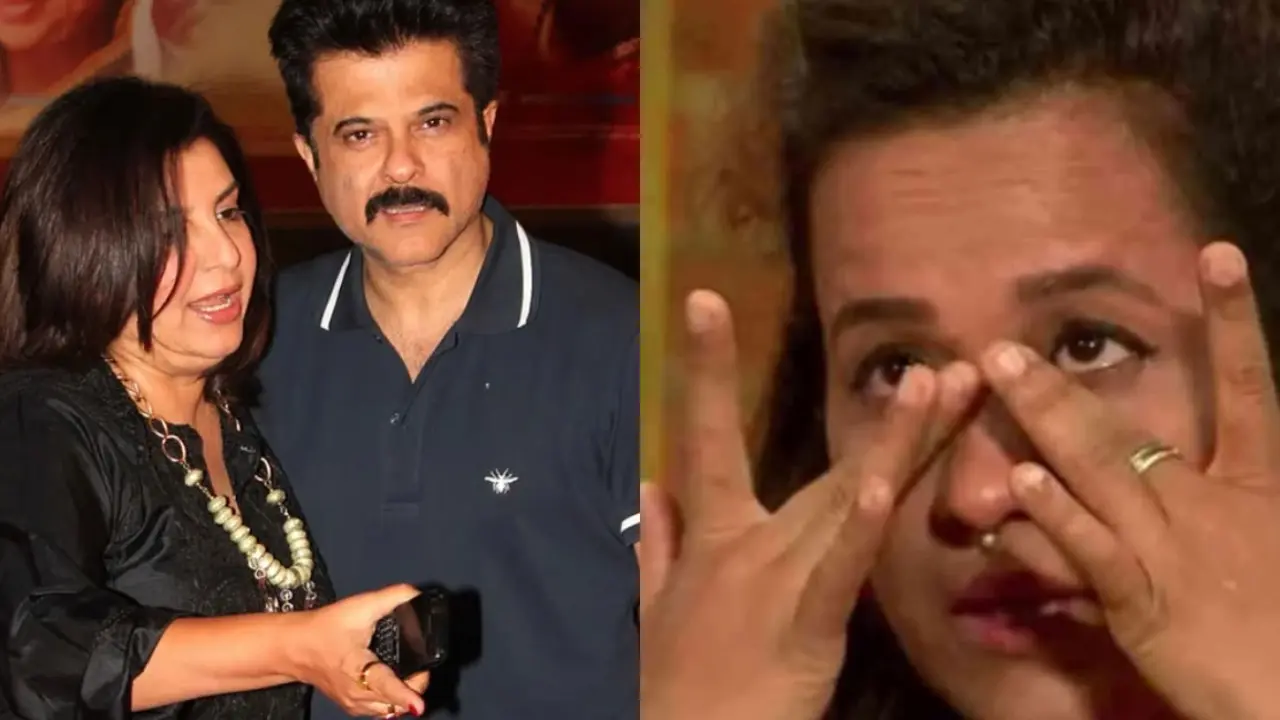
Renuka Vyavahare (BOMBAY TIMES; November 6, 2026)
Female stunt coordinator Geeta Tandon, who has been part of the film industry for over two decades, had an unpleasant experience on Tuesday night, which she later shared on Instagram. Geeta, a single mother, had been invited along with her son Peer Pratap, also a stunt coordinator, as a guest on the gaming show India Ke Top 1%, hosted by Anil Kapoor.
Narrating what unfolded on that day, she told us, “Some days ago, the production company reached out to me and I agreed to appear as a guest on the show, as I thought it would give my son and me some visibility on television. This was supposed to be for the finale episode and we were told that we’d be introduced well as it’s rare for a mother-son to work together as stunt coordinators. Our call time was noon, we reached at around 12.30 pm and the shoot didn’t start till 7 pm. At 2 pm, we were asked to submit our phones. I have worked in the industry for 20 years and I am aware that we can’t share on-set pictures on social media until the episode airs or film releases. Also, since I had taken a day off for the show, I was constantly getting calls for my other shoots. My son and I were made to sit in a tent for seven-eight hours where no one even offered us tea or coffee, or properly communicated anything with us. Is this how you treat guests on your show? They weren’t paying me, so why didn’t they call us directly in the evening?”
‘I’VE WORKED WITH NOTED ARTISTES FOR DECADES & NO ONE HAS TREATED ME BADLY’
Both Anil Kapoor and Farah Khan were also present on the set that day, but she believes that they were unaware about how badly she was treated.
Geeta says, “From Sanjay Dutt and Anil Kapoor to Farah Khan, I have worked with noted artistes for decades and none of them have ever treated me badly or looked down upon stunt artistes. They treat us with immense respect. Both Anil Kapoor and Farah Khan have launched my book. Had they known about all this, they would have called out this nonsense, but I was not even allowed to see them. It’s the middlemen on these reality shows and sets, who think it’s okay to mistreat someone if they aren’t known faces or stars. I wasn’t asking for an expensive cup of coffee or a vanity van, but basic respect is non-negotiable. At least talk to us nicely. My son was watching me being treated this way and that was most disheartening. I have been fiercely outspoken all my life.”
When shooting resumed, Geeta and her son discovered they were merely contestants on the show. “There was no introduction for us. When we were eliminated, I wanted to leave as I had wasted a lot of time. However, I was told that I couldn’t leave and if I did that, I would have to sign out. The fact is, I never signed any contract to begin with, nor was a part of the paid audience, so why would I sign anything?”
We have tremendous respect for you: Anil Kapoor
After Geeta’s post went viral, Anil Kapoor and Farah Khan rendered an apology to Geeta on social media.
Kapoor wrote, “Geeta ji, it genuinely saddens me to hear this. You and your son came as our guests. I’m sorry that your experience left you’ll feeling otherwise. I’ve been in this industry long enough to know how much dignity and respect matter, and I would never want anyone to feel that they were treated with anything less.”
Farah added, “Geeta ji apologies... I had no idea you were there as I was shooting for the 2nd episode in the evening... otherwise I would have made you sit in my van. As would Anil if he knew. We have tremendous respect for you and your hard work.”
--------------------------------------------
S Farah Rizvi (HINDUSTAN TIMES; November 6, 2026)
Stunt artist and action director Geeta Tandon took to social media to call out the unprofessional treatment she and her son faced on the sets of a reality show. What was meant to be a special moment turned into a frustrating ordeal after the mother-son stunt duo was allegedly ‘left waiting for nearly nine hours without basic hospitality or clear communication.’
In a follow-up chat with us, Geeta opened up about the experience, revealing that while the coordinator who invited her reached out and called to apologise, the rest of the management remains silent. "Co-ordinator ka sorry lekar kya karna. The management person on the set is the person who is responsible for ill-behaviour, anyway ab vapas toh mein nahi jaaungi waha phir kabhi,” Geeta tells us.
“This was my first such outing with my son, who is also a stunt artist. In all these 20 years, I have worked hard to reach here, and when you face such mistreatment, you feel really sad. We actually left an ongoing film shoot just to appear as guests on the show, only to be treated like this.”
Talking about the mismanagement, Geeta shares, “The basic courtesy was entirely missing throughout our long wait. The management provided nothing — not even a cup of tea. We had to order food and tea from outside for ourselves,” she says. “To make matters worse, our communication was completely cut off for hours as they took away my phone from 5 PM to 9 PM, saying it was part of their protocol before the shoot. So we were left waiting for hours without even knowing what was happening,” she adds.
Earlier, Geeta had posted a detailed note on Instagram calling out the treatment meted out to behind-the-scenes artists and guest contributors. Highlighted in her post was the lack of dignity accorded to technicians, stunt performers, and junior artists, stating that agreeing to appear as a guest or without commercial terms does not give production teams the license to disrespect an individual's time and self-respect.
Reportedly, following her viral post, show host Anil Kapoor and filmmaker Farah Khan publicly expressed regret and extended apologies on her post, clarifying that they were unaware of the situation taking place off-camera while shooting.
However, Geeta maintains, “The structural change and basic respect on set matter far more than belated apologies once a post goes public. Meri post pe hazaro comment aa rahe technicians aur chote artists ke who too had faced such instances elsewhere. The person standing behind the camera deserves the exact same dignity as the person standing in front of it,” Geeta reiterates, adding that such experiences only highlight, “how much the industry still needs to improve its treatment of technicians and guest artists.”
I never imagined I’d sing a Michael Jackson song on stage-Shaan
9:37 PM

Debarati S Sen (BOMBAY TIMES; November 4, 2026)
For singer Shaan, paying tribute to a musical legend like Michael Jackson meant stepping out of his comfort zone. The singer recently surprised audiences by not just performing one of the King of Pop’s iconic numbers but also attempting his signature dance moves on stage. The crowd applaued to his performance of Michael Jackson's Billie Jean from Thriller (1983).
‘I NEVER IMAGINED I'D SING A MICHAEL JACKSON SONG ON STAGE’
While Shaan admits, in an exclusive conversation to us, that he may not have quite done justice to MJ’s legendary style, the enthusiastic audience response has encouraged him to take the act further.
“Honestly, in my wildest dreams, I never imagined I'd sing a Michael Jackson song on stage. Doing that was one thing I could have toyed with, but actually attempting his iconic dance steps and stuff like that was something else altogether,” he says, adding that he wanted to experiment with something different and give audiences something they would not normally expect from him.
'I THINK PEOPLE WERE NOT EXPECTING THIS FROM ME'
The singer, however, is candid about his performance and believes there is considerable room for improvement.
“I probably may have done not even halfway there. I must have not really justified it in any which way. But I think people were not expecting this from me. So whatever little they saw me shake a leg, move and sing like MJ, I think they loved it. I'm sure I can only get better from here,” he says.
‘THE NEWER GENERATION HAVE CAUGHT ON WITH MICHAEL JACKSON’
For Shaan, the tribute also came at an opportune moment, with Michael Jackson's music finding renewed attention among younger listeners.
“At the same time, of course, Michael Jackson has always been an icon. And all of us through the 70s and 80s, we've absolutely been fascinated and crazy about him. And now, I think with the new movie on him, even the newer generation have caught on with Michael Jackson, his music and his aura. So the timing was correct to put up something like this in one of my shows,” he says.
‘I CAN AND I SHOULD DO MUCH BETTER THAN THAT’
The response has been encouraging, with the act bringing him considerable attention. However, Shaan is not one to rest on audience appreciation alone. “So I went for it, and I think it got me a lot of attention, hopefully a lot of positive reactions also. But I know, to be honest with myself, I can and I should do much better than that. And it will get better as I keep doing this act more often,” he signs off.
Kashmir was one of the best places I have ever shot in-Mahesh Mathai
9:36 PM

Showrunner Mahesh Mathai on how Real Kashmir Football Club, a drama series about a Pandit and a Muslim building a football club after the floods, went from near-collapse in 2023 to an International Emmy nomination for Drama Series
Soumya Vajpayee (MUMBAI MIRROR; November 3, 2026)
Every genuine underdog chronicle begins with flat incredulity. Mahesh Mathai initially assumed an acquaintance was pulling his leg. A producer friend had phoned with ecstatic congratulations. “For what?” he asked.
She directed him to Instagram, where news had broken that Real Kashmir Football Club (RKFC) had earned an International Emmy nomination. Blindsided, Mathai called his producer Kilian Kerwin. Kerwin was equally unaware. The International Academy had yet to update its official website. Then, mid-conversation, congratulatory alerts began pinging from Mumbai to London.
“Yes, indeed. RKFC is nominated for an International Emmy in the drama category,” Mathai says now, still testing the reality of the phrase.
The eight-part drama finds itself shortlisted for the International Emmys in the Drama Series bracket, alongside Britain’s A Thousand Blows, France’s Carême, and Argentina’s Menem. For an independently financed production, it marks an improbable journey from the snow-capped turf of Srinagar to the awards gala in New York on 23 November.
The opening formation
On screen, Manav Kaul and Mohammed Zeeshan Ayyub lead the ensemble as Shirish Kemmu and Sohail Mir. Yet Mathai, who shares directorial duties with Rajesh Mapuskar, knew the authentic story went far deeper than a simple pitch line. The narrative draws from the real foundation of Real Kashmir FC in 2016, following the disastrous 2014 floods, through a partnership between Kashmiri Pandit hotelier Sandeep Chattoo and Kashmiri Muslim publisher Shamim Meraj.
“What fascinated me about the partnership between the two founders of RKFC, besides the fact that one was a Kashmiri Pandit Hindu and the other was a Kashmiri Muslim, was that one was a football fanatic and the other was a successful businessman who thought he could use football to get young boys off the streets of Srinagar,” Mathai recalls.
“Both were approaching this with completely different ideas and it was the combination that worked. In my opinion neither could have done it alone.”
Both lead actors initially approached the project with caution, aware that any story set in the region invites fierce scrutiny. Mathai clarifies their reservations: “I do not think either Manav or Zeeshan were reluctant; they wanted to make sure of our aim in making this show, that it was not going to be one more view of Kashmir the way it is usually portrayed on our screens. It only took a couple of meetings with them and they embraced the story.”
Off the bench
Sustaining the production demanded sheer grit. Mathai assembled a room with writers Simaab Hashmi, Dhruv Narang, Danish Renzu, Umang Vyas, Adhir Bhat, and Chintan Gandhi, refining the story from 2019 onward. Just a fortnight before the cameras were due to roll in 2023, the main financial backers abruptly walked away.
“I believe the credit goes to the producers, Kilian Kerwin and Vishakha Singh, for having the tenacity and the vision to keep going even though finances were a problem,” Mathai says. “Also to all of the crew for coming in and working on a project for less than their usual fee and for also seeing the vision behind this project. This one actually belongs to all of them.”
When production finally proceeded, the crew completed the shoot in an intense 55 days across the Valley. “Kashmir was one of the best places I have ever shot in, especially in and around Srinagar,” Mathai observes. “The people get behind you once they know the kind of story you are telling.”
A poignant presence hangs over the project. Sandeep Chattoo passed away on December 31, 2023, before the series reached the screen. “His death before our shoot had an impact on all of us and he stayed as an inspiration in our hearts,” Mathai says, noting a prescient exchange in the script between Chattoo and his wife.
“She says, ‘This is what you will be remembered for, not all your business successes. You know you need to do this, for the boys, for the club, for Kashmir, for India. This will be your legacy.’ And how true that has turned out to be.”
With Season 1 ending around the club’s early milestones, Mathai is already looking ahead to a potential second run now. “There is so much of the story left to tell, including how the team travelled to Scotland and played with club sides there with the coach.”
For Mathai, the global nod offers profound validation. “This is the India that I grew up in and that I am proud of: a multicultural and multi-ethnic land where stories from all over are part of a shared culture,” he says. “I would like to take these stories to the world.”
The real craze for cinema - Ramayana vs Mard
10:18 AM

Box Office India Trade Network
There is a disappointment within the film industry for the initial weekend figures of RAMAYANA though there should not be as expectations get built too high because basically the thought is that the craze of a film will beat the circumstances of Pre Diwali. The problem is the craze thought to be there is not actually there or at least not to the level thought. This is not just for RAMAYANA but practically every film as today its word of mouth which takes them to the optimum levels and not the craze. Its the same thing for DHURANDHAR THE REVENGE which had a craze which is higher than most in recent times but still the film got stronger on word of mouth.
The craze, as it was, has been dying due to various factors be it alternate entertainment for the public and stardom levels slowly slowly eroding over the years. The stardom factor is important as films in India have generally been star driven. The South sees stardom remain at higher levels as they cater to one state while in Hindi its so many states and stardom differs in each state.
This has slowly happened over the years but there was a time when there was what what you would call a REAL CRAZE for films which superceded over things like Pre diwali and the public was just desperate to watch a film no matter what. In 1985 the Amitabh Bachchan starrer MARD was released Pre Diwali. It released on Friday and Diwali Puja was on Tuesday. The film took a HISTORIC opening on the first day smashing all records despite it being a pre Diwali release with practically every center going housefull.
Bachchan was the biggest star of that time but generally in his bigger films, he played the Bombay orphan or the films were city set rather than being rural set films which outperformed in Mumbai circuit whether they were HIT or FLOP. But MARD was that huge rural mass film where North, Central, and Bihar led the way and these are the areas where films take the biggest hit pre Diwali. For MARD, it was like there is no Pre Diwali as the film could not collect any better.
It is always tough to compare films from today and forty years ago and it cant be done with collections as today RAMAYANA has an average ticket price of over Rs. 400 for the first weekend while in 1985 it was around Rs. 5. Even footfalls, its tough as films today release far wider . So, initial footfalls are far higher but like for like centre comparisons can tell the story.
In Patiala, for instance, RAMAYANA was released in 4 cinemas and it had 1915 people come to see the film on Sunday which was Diwali Puja. MARD (1986) released in one cinema where Diwali Puja fell on Tuesday and had 5361 people coming to see the film. The theatres in 2026 for RAMAYANA are PVR, MovieMax, Miraj and Phul while for MARD, in 1985, it was Malwa. This is when the population was much lower and daily footfalls of films were also much less due to films releasing on lesser screens.
MARD in 1985 had almost 3500 more people coming to cinemas on Diwali Puja to watch the big Diwali release in Patiala compared with RAMAYANA in 2026. In those days the centres in East Punjab were allowed to go over capacity and the extra 400-500 people allowed over the day in are not counted as they were not reported in the collections. So in reality it maybe roughly 5800 against 1915.
In Delhi city, RAMAYANA has released on around 50 cinemas and MARD was released in 11 cinemas. Although we have not done the number crunching it will be no surprise if the admits here for MARD are also higher and this is the biggest centre there is today for most films.
It could actually be that most center to center contributions will show these type of results but as there were prints costs which created restrictions to releases in the older days, the daily footfalls were less compared to now. However, if those restrictions were not there, then its unthinkable what sort of footfalls a film like MARD could get on day one. It will not be just MARD showing these sort of admits in pre Diwali but other films as well. Basically the craze for cinema, films and stars today is overstated which leads to initial expectations which cant be matched. The expectations have to be matched through content and eventually even a film like RAMAYANA its come down to that.
Ramayana collects 159 cr in 4 days in Hindi
10:12 AM

Box Office India Trade Network
RAMAYANA (Hindi) recorded an excellent extended four day first weekend of 159 crore nett though the film could have done a little better on Sunday even though it was Diwali Pooja. The collections came to a standstill in the evening but before that, they were running at Saturday pace and there was potential for them to better than Saturday here.
Taking out all the talk pre release which was always a joke, the realistic expectations for the film was to pick up around 175 crore nett over this extended weekend. It has not done that much but when you release in this period, there is a good chance you will not meet expectations. For RAMAYANA, to get almost 160 crore nett up on the board is still an excellent result.
The business of the film is considerably lower across North and Central India as well as Bihar and Gujarat while other circuits are a little better but basically its about how much each area gets affected by pre Diwali. The disappointment is probably is the Hindi version in Nizam/Andhra as the Telugu version is doing very well but you would have wanted higher collections in Hindi as pre Diwali does not affect collections here. The Hindi version is fantastic in Mysore despite the release not being as strong as it should be.
This 160 crore nett apprx over the first four days is a bonus and today, which is a national holiday, will work like the first day but it will be about how high it can go. The record for the highest single day in history is DHURANDHAR THE REVENGE when it picked up 100 crore nett on Sunday which was the fourth day of release plus paid previews. Here with RAMAYANA, its the fifth day and normally it would not matter much if it challenged the highest day. But the expectations and costs of RAMAYANA are huge and on top its the biggest day of the year for collections. So, it has to challenge the Sunday of DHURANDHAR THE REVENGE.
Its not a big deal whether it beats or not but it has to be somewhere around the figure of DHURANDHAR THE REVENGE that picked up on Sunday just because how huge this national holiday is. The film has fantastic in regional versions with 60 crore nett apprx over the first four days. This gives the film a total of 219 crore nett on all versions over the first four days.
The collections of RAMAYANA (Hindi) till date are as follows.
Thursday - 43,00,00,000 apprx
Friday - 33,25,00,000 apprx
Saturday - 48,75,00,000 apprx
Sunday - 34,00,00,000 apprx
TOTAL - 1,59,00,00,00,000 apprx
Subscribe to:
Posts (Atom)