Showing posts with label YouTube. Show all posts
Showing posts with label YouTube. Show all posts
YouTube pushes India’s content industry towards owning IP
9:37 AM

Tighter margins in commissioning push producers toward YouTube to build & own IP
Javed Farooqui (THE ECONOMIC TIMES; September 7, 2026)
Mumbai: India's content business is entering a new phase as tightening margins across television and streaming push creators and production houses to look beyond traditional commissioning models and build and monetize their own intellectual property, with YouTube emerging as a key destination for premium, long-form originals.
Ekta Kapoor's Balaji Telefilms partnered with YouTube to launch five long-form fiction shows, following the video-sharing platform's collaboration with Aamir Khan on the 2025 film Sitaare Zameen Par. YouTube is also in talks with other production houses for exclusive programming. Producers see the model as a way to experiment with formats while retaining IP and monetization rights, signalling a broader shift in India's content economy. Applause Entertainment and Swastik Productions also launched YouTube-led offerings.
Balaji Telefilms' tieup with YouTube is an early example of this shift. The companies are launching five premium original shows spanning 200 episodes, including Haq Se Season 2, Phir Pyar Ki Yeh Kahani Suno and Kehne Ko Humsafar Hai Season 4, with other projects under development.
Addressing a Gap
The slate will be produced in 4K and made available globally. Kapoor will lead the creative vision and retain ownership of the IP, while YouTube will provide global distribution and monetization pathways through advertising and brand deals.
The partnership comes as producers increasingly look to own and build IPs rather than produce shows purely on a commissioned basis. Kapoor said the move addresses a gap between linear television and premium subscription platforms.
"Television is now catering to the older, immobile family viewer and the subscription-led apps cater to a very niche audience and a very high-paying audience which young Indians maybe sometimes can't afford," Kapoor told ET. Building fiction while owning the IP is the "need of the hour" and gives her greater risk-taking ability in storytelling, she said.
YouTube's growing presence on connected television is central to that opportunity. The platform has more than 75 million adults watching YouTube on connected TV in India, according to YouTube India managing director Gunjan Soni. The scale of connected TV is creating opportunities well beyond a single content category, Soni said.
"Connected TVs themselves have scale. When you already have 75 million-plus adults watching on the larger screen, it is creating opportunities for different players across different verticals," Soni said.
Audiences increasingly want the "best of both worlds" - on-demand viewing and premium content on larger screens, she said. Her comments point to connected TV becoming an increasingly important distribution layer for premium, long-form content.
The shift is also visible among established television personalities. Shekhar Suman, who previously hosted the talk show Movers and Shakers, has taken his new show, Shekhar Tonite, to YouTube.
"YouTube allowed us to speak directly to the audience without being restricted by time slots, programming formulas or the pressure to shape every conversation around conventional ratings," Suman said.

Paid music streaming hits the right note as free users fade
9:50 AM

After a sluggish phase, the number of paid subscribers rise 37% to 14 m in 2025: Report
Rajesh N Naidu (THE ECONOMIC TIMES; April 13, 2026)
Mumbai: After a prolonged slowdown triggered by the shutdown of two audio streaming platforms and consumer reluctance to pay for music, India's music streaming industry is seeing a revival, with the number of paid subscribers rising 37% to 14 million in 2025 from 10.5 million in 2024, according to the latest FICCI-EY media and entertainment report.
Affordable subscription plans, bundling deals with telecom operators, closure of some radio stations and rising investments in live events are expected to accelerate growth further. Streamers, music labels, industry experts and independent consultants told ET the paid subscriber base could expand to 50 million to 75 million in the coming years.
Removing free features on their platforms has boosted the paid subscriber base of streamers, sector experts said. Features such as rewinding songs, downloading songs for offline listening, unlimited skipping and selecting a song of one's choice are no longer free on streaming platforms.
"Cutting down on free features has boosted the paid subscriber base of music audio streamers," said Ashish Pherwani, leader, media and entertainment sector, EY.
Multi-format listener journeys and technology have lifted streamers' paid subscriber base, executives said.
"The growth in paid subscriber base is fuelled by a unique multi-format journey. Fans discover artists through Shorts. Then, they engage with long-form videos, ultimately transitioning to YouTube Music for dedicated listening. This evolution is further accelerated by AI-driven personalization," said Gunjan Soni, managing director, India, YouTube.
Highly affordable subscription packages have added to the growing paid subscriber base, streamers said.
"Indian listeners have realised the value of ad-free music at a reasonable price," a JioSaavn spokesperson said. In October 2025, JioSaavn launched an annual subscription plan of Rs. 399, providing access to its full catalogue, ad-free music and unlimited downloads.
In recent years, streamers have also been following a hyper-localized strategy by offering discounted subscription packages, similar to mobile recharge plans, targeting listeners of regional language songs.
"There is a rising demand for high-quality regional content. To support this demand, we have prioritized affordability with the launch of YouTube Premium Lite (Rs. 89 per month) in India. By offering this lower-priced tier, we are making the ad-free experience more accessible," said Soni of YouTube India.
Increasing acceptance of digital payments has also boosted paid subscriber growth, music labels said.
"Improved payment ecosystems have significantly boosted the paid subscriber base. This drives better monetization and provides deeper engagement with audiences across diverse markets," said Sujal Parekh, business head, Zee Music Company.
Superior audio quality-high fidelity (24-bit lossless) and immersive sound (Dolby Atmos)-as well as support for artists have increased the paid subscriber base, independent music business professionals said.
"Today, listeners pay for superior audio quality. They also show artist loyalty by buying subscriptions," said Aditya Kalia, an independent music consultant.
Lastly, sector experts believe live events will be a crucial differentiator for streamers in the long run, given the limited scope for growth in subscription and advertising revenue.
I am loyal to cinema first, and then to theatres-Aamir Khan
9:20 AM

Madhureeta Mukherjee (BOMBAY TIMES; August 11, 2025)
Breaking the mould is second nature to him. Now, in a bold move that challenges the norms of a largely risk-averse industry, Aamir Khan has chosen the pay-per-view model on his YouTube channel for his latest film, Sitaare Zameen Par (SZP), which had released in theatres in June. This aligns with his decades-long pattern of being a disruptor – as an actor and filmmaker. In this freewheeling conversation with us, the superstar talks about access, affordability and the future of cinema beyond theatres. Aamir also confesses that he’s not fearless, unlike what most would assume, and tells us why, at 60, comfort is not an option — “ab comfort hai hi nahi, toh kuch karna padega.” Read on...
How do you think the pay-per-view model gives more power and choice to both the audience and the producer?
You are aware that we are able to reach only 2-3% of our population in the theatrical business, and this is for the biggest hit. For a film like Sitaare Zameen Par, around one crore people would have watched it by the end of its theatrical run. In the absence of enough theatres being built, this model is perhaps the only way to reach the vast majority of India, especially with rising internet penetration. In one stroke, this solves that problem for everyone. It’s great for filmmakers because it strengthens them and empowers them to make better films.
To be able to watch a movie, access and affordability are key. Was this model born out of that philosophy – to make both these points a reality?
Today, cinemas in India, and here I am talking about the multiplexes, are trying to give a unique experience, but that costs money. So, over the years, theatres have evolved from the time when I started out with Qayamat Se Qayamat Tak (QSQT). Back then, the average ticket price was Rs 10. Today, the ticket prices are not affordable for a large section of society. And multiplexes, because of the high cost and heavy investment (in terms of rent, etc), have also started catering to an audience who can afford to come there. So, who will cater to the masses? This model caters straight to the masses.
Continue…
In every press conference prior to my film’s release in the past 10 years, I would be asked, ‘Aap filmbana rahe ho, jo masses hai woh kaise dekhenge?’ The answer to this and the pricing of tickets is not in my hands. I can’t tell theatre owners who have invested a lot of money to go into a loss. If this model works, it will dramatically change the way we distribute films. From an economical point of view, I had strong OTT offers for SZP, if I were to accept that, it would have been a safe bet. I chose not to. I would rather earn Rs 100 from each Indian who watches my movie. Also, this is a great opportunity for younger filmmakers who are trying to break in and don’t get a chance to showcase their work. It will give creative voices more freedom. It will give them the freedom to price their content the way they want to.
You are a theatre loyalist and have spoken about ‘protecting our theatres’. What are some ways exhibitors and filmmakers can work together to reimagine cinema-going as a more inclusive, feasible experience?
Let me clarify, my loyalty is to cinema. Cinemas came first, then theatres came to serve cinema. Earlier, there was no theatre. Cinema dikhaneke liye pardah laga dete the, and it would be shown through a projector. Phir tent aaya, wahan dikhate the. Then permanent theatres came about. Cinema is what I am protecting, and emotionally, I am very tied to theatres. I believe that the theatrical experience cannot be replaced by anything else. When you are sitting in that dark space with 300 people around you, it’s a group experience where you laugh and cheer together. Imagine watching Lagaan, where the whole theatre is cheering...abhi woh experience aapko ghar pe baithke apne family ke saath bhi nahin milega. I am loyal to cinema first, and then to theatres, clearly in that order. To answer your question, I think first of all, we need more theatres. In districts where there is no single screen, not even a single theatre, we should at least have one theatre. India needs many more theatres, but they should be economical theatres.
Do you believe that, at some point, the theatrical business will start thriving again?
Yes, of course. I really hope so.
Do you think that, as makers, focusing on tier-2 and tier-3 cities is key, as therein lies the scope for theatrical recovery in India?
Absolutely! I believe that we need theatres in tier-2 and tier-3 cities. The tier-2 cities have theatres, but as we go deeper, we don’t. I also feel that it’s not that people want to watch only action films in theatres – that was the feeling for some time. If that were the case, SZP wouldn’t have done well, and Saiyaara wouldn’t have been such a success. These are phases that keep coming and going. When I did Ghajini, everyone told me that you are doing an action film at a time when this genre was not working. It worked. I think audiences are interested in watching films irrespective of the genre.
So, the genre of your film and how it fits with current trends and mood doesn’t concern you?
No, it doesn’t. Stories that inspire me and affect me the most are what I gravitate towards.
You’ve consistently been a disruptor — as an actor and a filmmaker. In an industry that often plays it safe, where does this creative fearlessness come from?
No, no, there is a lot of fear. There is fear every time I am doing a film, and unfortunately, my choices are also unusual, but I can’t help but make them. When I was doing Dangal, I felt that dus saal baad karte hain, abhi mein itna mota, buddha dikh raha hoon. Just before that, I had done PK and Dhoom 3. People thought I am 30-35, they didn’t know I am 55. I thought yeh film karoonga toh meri asliyat saamne aa jayegi (laughs). It was in my blood; I had to do it. I am not a fearless person. Before the release, you can’t assume the film will work, at least my films. There were exceptions like Ghajini and Dhoom 3, where you could say yeh kuch toh karegi. But with the unusual ones, it’s difficult to tell. I go with my instinct and my heart. So, I am not thinking about what the audience wants to see. I am thinking mujhe kya banana hai.
There’s still this restless energy about you. Does that fuel your creativity?
I suppose so. If the status quo is comfortable, I have no problem with it. But when it’s not, then I want to do something to correct it. I am comfortable about being comfortable, but ab comfort hai hi nahi, toh kuch karna padega, haath pair marna padega, because in today’s times it is difficult for creative people to make what they want to make. Unless you have a subscription model pre-sale, you can’t greenlight a project. That’s not a comfortable situation to be in for creative people.
Knowing the kind of connection and influence you have with audiences across generations, do you feel a certain sense of responsibility when you take on a film?
I do feel a sense of responsibility, so I don’t do films that propagate any thoughts, views or ethos which are not mine. At the same time, I also believe in having my freedom as an artiste, as that’s how I always operated from the beginning. I have selected films that I wanted to do. Some of them worked, some didn’t. Fortunately, most of them did. I have tried not to take the unnecessary load, ki meri har film 300, 500 ya 600 crore banayegi. I am not chasing that. Mujhe Talaash ki script pasand aayi aur mujhe pata tha yeh 500 crore ki film nahin hai, yeh 200 crore ki bhi nahin hai. In fact, I remember telling the team that I believe the film will do about 70 crores. It went on to do 95 crores. I did the film as I loved the story. Just because I knew it wouldn’t break my Ghajini record, didn’t mean I wouldn’t do it. I can’t think like that. This comes from my excitement as an artiste, and also because I can’t keep doing the same kind of films again and again; I don’t know how to do that.
You said that you feel a sense of fear every time you embark on something new. Can you recall what you felt on the first day first show of QSQT?
I still remember that moment – I remember the premiere show of the film. My uncle (Nasir Hussain) had booked the balcony, and the stall was for the paid audience for the first day, 6 pm show. And Shammi (Kapoor) uncle had come, in fact, he was the only star my uncle had called from the film industry. I remember walking into the film with no one recognizing me, and when the film got over and I walked out, I was mobbed.
Aamir Khan's YouTube release for Sitare Zameen Par receives mixed reactions from exhibitors and audience
8:07 AM
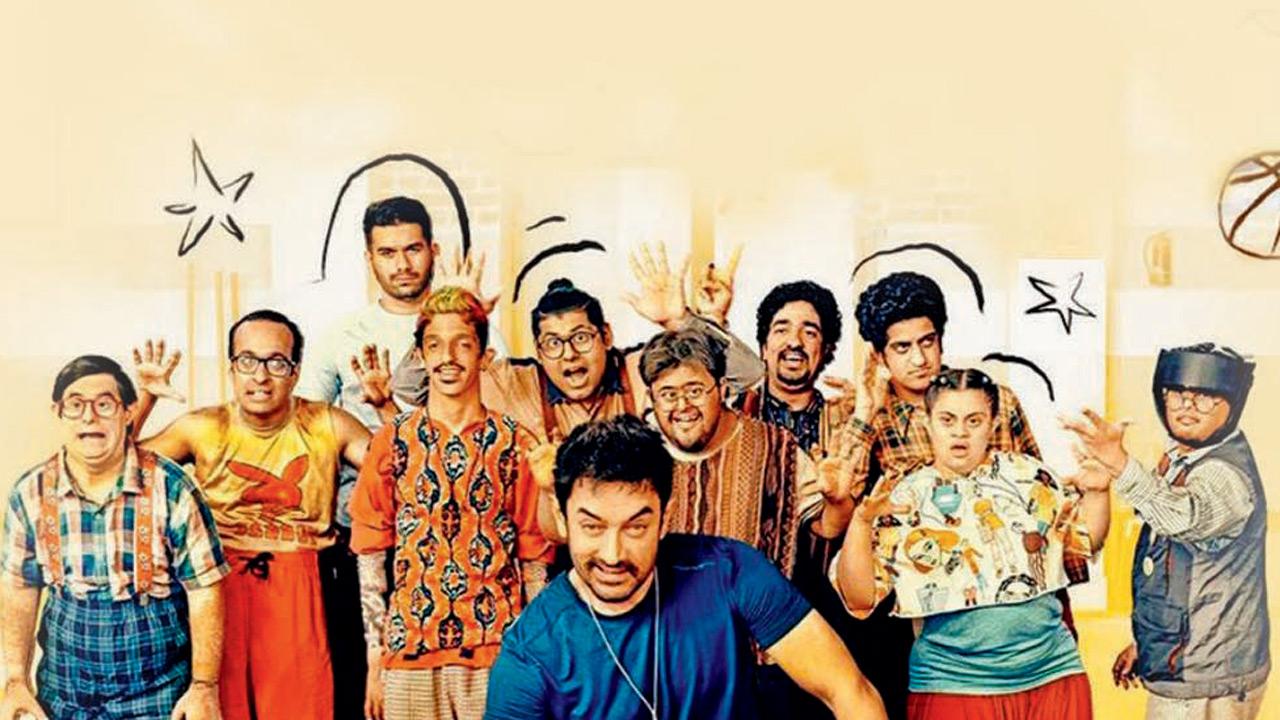
Bypassing the industry’s eight-week digital release norm and backtracking on his ‘theatre-exclusive’ stand, evoked mixed reactions from audiences and industry insiders alike
Priyanka Sharma, Komal RJ Panchal (MID-DAY; August 3, 2025)
Aamir Khan dominated the news cycle last week by announcing that Sitaare Zameen Par would be available on YouTube from August 1 for Rs 100 per view — just six weeks after its theatrical release. Bypassing the industry’s eight-week digital release norm and backtracking on his ‘theatre-exclusive’ stand, evoked mixed reactions from audiences and industry insiders alike.
Now, two days after the film’s YouTube premiere, mid-day speaks to audience members, trade analysts, and exhibitors to understand whether Khan’s decision has the potential to become a game-changer in film exhibition and revenue generation for Indian producers.
Trade analyst Taran Adarsh believes the actor-producer’s decision undermines a film’s theatrical business, which he had earlier claimed to safeguard
“This is a debatable issue. At one point, he said that he was looking out for the theatre people by refusing a digital release. Then suddenly, he is releasing it on YouTube in six weeks. He even made a statement, saying, ‘I’m protecting the cinema. I want the theatres to survive.’ How do you expect theatres to survive if people are going to watch it in six weeks in their home for Rs 100? It’s a bold move, but it doesn’t benefit theatres,” he says, before adding that perhaps the superstar’s logic is to reach areas with minimal or no theatre access, given YouTube’s wider reach thanks to the growing digital penetration in India.
“Maybe his logic is that at smaller centres where there are no theatres, people still have access to YouTube. That is understandable,” adds Adarsh.
Bihar-based exhibitor and trade observer Vishek Chauhan begs to differ, as he views film exhibitors as the “opening batsmen.” “Most people watch films at home. Theatres serve only two to three per cent of the population. As exhibitors, if our only value is the exclusivity window, we’re in the wrong business. Our job is to launch films, discover price, and create visibility. We’re like the opening batsmen.”
The pay-per-view model differs from selling the film to an OTT platform because it allows the star to build a direct relationship with his viewers. It also gives him greater control and flexibility over pricing and release on his channel, unlike OTT premieres, where streamers set the price, release plan, and enforce a stringent eight-week window.
To release a film on YouTube, a creator doesn’t need to pay the platform. Gunjan Soni, managing head of YouTube India, mentioned earlier this week that the platform works on revenue revenue-sharing model with the concerned creator/filmmaker. Reportedly, YouTube and Khan have struck a 45/55 deal, with the larger share reserved for the star.
In contrast, once a filmmaker sells a film to an OTT platform, they cannot earn any additional revenue from new subscribers the platform may earn. “The pay-per-view model isn’t strong in India, where subscription platforms dominate. What Aamir is doing is risky and idealistic, not pragmatic. He’s bypassing giants like Netflix and Prime Video. It may backfire, but it’s also courageous. I wouldn’t advise producers to skip OTT deals. But it’s his film, his choice,” says Chauhan.
But shouldn’t Khan have waited eight weeks to release the film digitally, considering he had earlier advocated a longer gap? “Aamir hasn’t made the film free. Two weeks ago, Housefull 5, which was on rent at Rs 279, is now streaming on Prime Video. Tamil films have long followed a four-week window. We need a flexible model — not every film can wait eight or 12 weeks. What if a film doesn’t do well theatrically? Why hold it back? Pirated prints are available within a day. If the theatrical run is exhausted, let the producer monetize it elsewhere,” Chauhan argues.
We ask an audience member who watched the film in theatres whether they would watch it again on YouTube. “Given its emotional appeal, Sitaare Zameen Par is likely to be watched repeatedly, especially among family audiences. Its availability at Rs 100 rental makes it an accessible weekend entertainer, particularly for viewers who don’t subscribe to OTT platforms — a segment that still forms a considerable share of India’s digital audience. Strategically, this move not only widens the film’s reach but also aligns with Aamir’s track record of pioneering unconventional distribution methods in Indian cinema. This model could further cement the film’s place as a contemporary Bollywood classic,” says Yash Pandit, a Mumbai-based PR executive.
Soumil Kamat, content consultant, who consumes films and shows on OTT, believes Khan’s earlier statement about not releasing the film digitally created a sense of urgency among theatregoers. “But now, since it is available so early at Rs. 100, I am thrilled because I missed it in theatres. However, many who spent a lot of money in theatres might feel cheated by Aamir’s previous misleading statement about not releasing it online.”
Aamir Khan's YouTube release for Sitare Zameen Par sparks rage among exhibitors: "No one will trust him next time"
9:28 AM
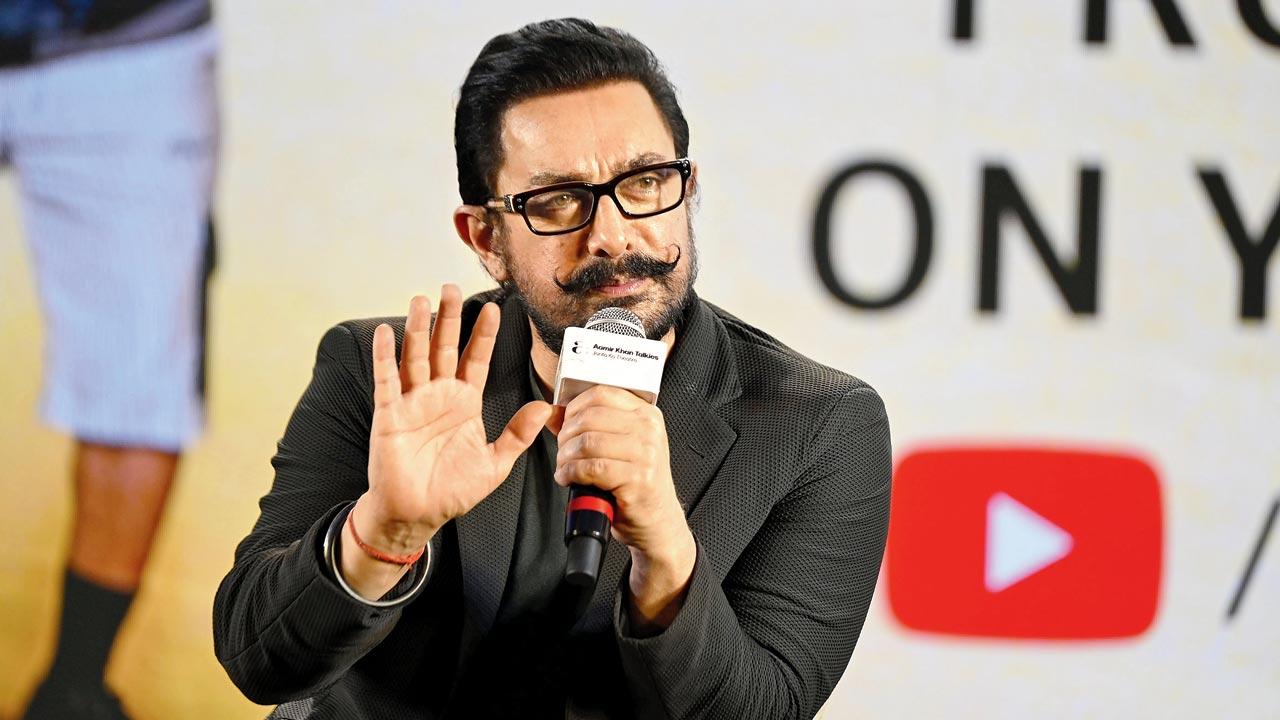
As Aamir Khan announces YouTube pay-per-view release of ‘Sitaare Zameen Par’, trade disappointed that the superstar’s decision reduces the theatrical-OTT window to 42 days; says the model will work only in urban centres
Priyanka Sharma (MID-DAY; July 31, 2025)
In June, Aamir Khan had announced that Sitaare Zameen Par would be a theatrical-only offering, categorically denying taking it to YouTube after its big-screen run (Amitji backed me to take the film only to theatres, June 7). But after the dramedy has collected Rs 167 crore in its six weeks of release, the superstar appears to have done a volte-face. On July 29, he announced that beginning August 1, the R S Prasanna-directed venture would be available on YouTube for Rs 100 per view.
The decision hasn’t gone down well with exhibitors, especially since the film is running in many theatres and a YouTube release would bring a premature end to its business.
Rajasthan-based exhibitor Raj Bansal tells mid-day, “The Multiplex Association of India honoured Aamir for his [theatres-only] stand. Now, we are disappointed with this decision. By bringing the film on YouTube less than eight weeks after release, he is going back on what he had promised. The film’s theatrical run hasn’t ended yet. It’s running in my theatre in Jaipur. Aamir’s credibility has been put at stake. No one will trust him next time,” he says.
In bringing Sitaare Zameen Par to his own YouTube channel, Khan is showing that there can be an alternative to the streaming giants. Whether the film industry adopts this new model will depend on the superstar’s success with his plan.
But exhibitor Akkshay Rathie, while appreciating the business move, believes the actor has made one misstep. “Strategically, it is the right decision. With digital penetration at its peak, now is a good time to experiment with transactional video-on-demand. But [he should have] kept a bigger window — an eight-week gap — between the theatrical and YouTube release,” assesses Rathie.
Bansal believes the model will only work among the urban demographic, which has disposable income. He decodes, “One viewing is for R100. If I [subscribe] to Netflix [at a competitive price], I will have a month to watch a wider variety of programmes.”
He believes Khan’s decision was also motivated by the movie’s box-office performance. “Maybe, the film didn’t perform according to his hopes. So, he thought of taking this route.”
Aamir Khan to release Sitaare Zameen Par on his YouTube channel for Rs. 100
9:33 AM
Vishakha Pandit (HINDUSTAN TIMES; July 30, 2025)
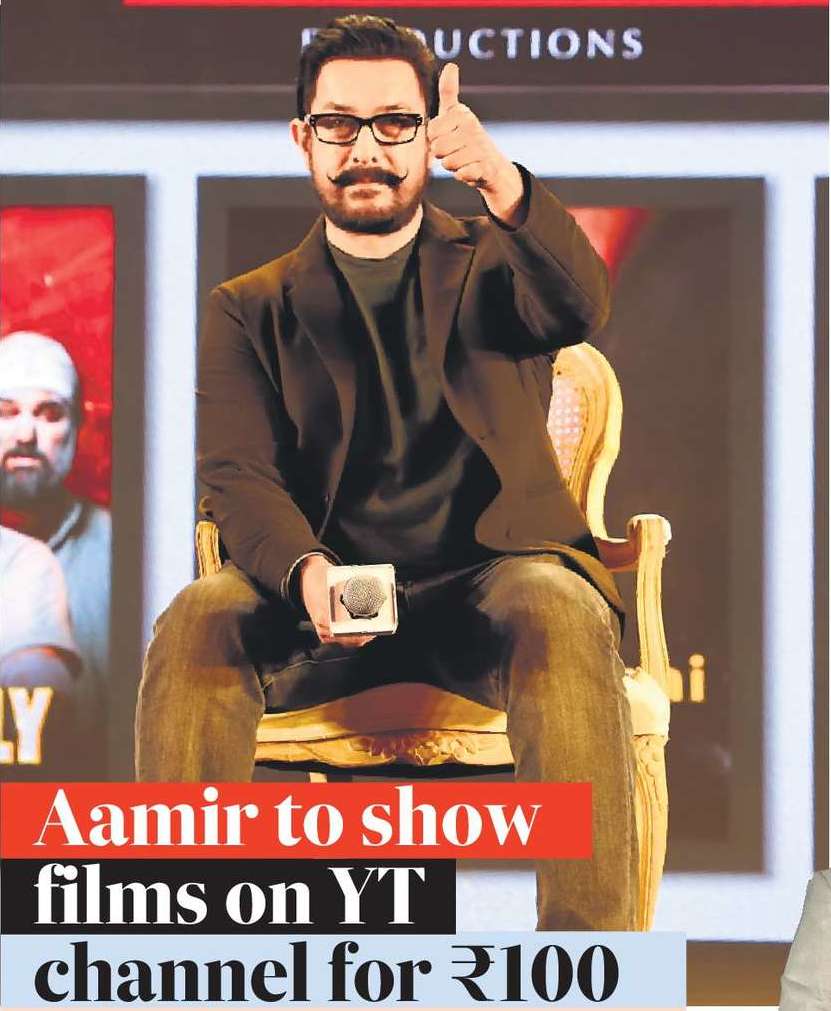
Aamir Khan, who launched his YouTube channel, Aamir Khan Talkies, in March, has decided to release his films on the platform. He made the announcement at an event in Mumbai on Tuesday. “This was the reason why I did not give away the rights of my film Sitaare Zameen Par as this was in motion. Our plan is to release every film under the Aamir Khan Productions banner on YouTube, after they complete the theatrical run. Each movie will be available at a minimal cost of Rs. 100,” said Aamir, as he spoke about his channel that already has over three lakh subscribers. The content on the channel would be ad-free.
The actor added, “After Sitaare Zameen Par, films like Lagaan (2001), Taare Zameen Par (2007) and Peepli Live (2010) will also be available on the channel. Some timeless classics produced or associated with my father (late filmmaker Tahir Hussain) such as Caravan (1971) and Hum Hain Rahi Pyar Ke (1993) will also be available, to offer a rare blend of nostalgia and cinematic heritage.”
The 60-year-old says that he also wants to use the space to promote young and independent filmmakers who struggle to find a theatrical release. “By showcasing their films on the channel, I wish to provide visibility and opportunity to emerging talent. While we will take a nominal fee from the earnings, the idea is to ensure creators benefit directly from their own work,” said Aamir.
Aamir Khan's film goes pay-per-view on YouTube, gives OTT giants a miss
10:43 AM

Javed Farooqui & Rajesh Naidu (THE ECONOMIC TIMES; July 28, 2025)
Mumbai: Aamir Khan Productions has partnered with YouTube to release Sitaare Zameen Par on a pay-per-view basis in a potentially significant move, said people familiar with the development.
This marks the first time in recent memory a Hindi film featuring a major star has not been licensed to a dominant subscription video-on-demand (SVOD) platform such as Netflix, Prime Video or JioHotstar, opting instead for a pay-per-view strategy via the world's largest video platform.
Industry sources say Aamir Khan is tapping into the pay-per-view window, which has been a phenomenon globally but remains underutilized in India. However, they noted that it's still unclear how long he will delay the SVOD release following the pay-per-view window.
Aamir Khan Productions and YouTube declined to comment.
The film is likely to move to YouTube early next month. While the industry typically follows an eight-week window for streaming on SVOD platforms, Khan recently said that all his films will follow a six-month theatrical run to protect box office revenues. The film was released on June 20 in theatres.
"It's a bold move by an A-list star, and all eyes will be on how much the film can earn from pay-per-view, as well as how long Aamir Khan plans to keep it there before releasing it on an SVOD platform," said Shariq Patel, former CEO of Zee Studios.
Film is expected to be priced at Rs. 99.
Netflix and Prime Video continue to dominate India's post-theatrical streaming market. According to Media Partners Asia, producers' streaming revenues have grown to 1.5 times their net theatrical share, making it a critical monetisation channel.
However, the FICCI-EY 2025 report shows that streaming rights revenue in India fell to Rs. 3,100 crore, down from Rs. 3,500 crore in 2023 and Rs. 3,300 crore in 2022, as platforms cut back on content spending in pursuit of profitability.
Still, not everyone sees this as a replicable model. Abundantia Entertainment CEO Vikram Malhotra noted that such an approach may work better for mid-budget films than big-budget ones, which often depend on upfront OTT deals for financial recovery. "Therefore, it's unlikely to serve as a viable financial model across the board, especially for films with higher break-even points. That said, it's an interesting and important experiment whose impact and sustainability will become clearer over time," he said.
Suniel Wadhwa, a veteran distributor, cofounder and director of Karmic Films, said: "Film distribution through YouTube may not be remunerative for all actors or producers. It is a long-gestation affair. It will work only for well-established or A-list actors who have a huge or unique following. Besides this, it will be a practical alternative only for producers who have capacity to wait and earn revenues in the long-term."
Sitaare Zameen Par is said to have been made on a budget of under Rs. 100 crore. As an in-house production, Khan has reportedly waived his fee, potentially making the model more viable. The film has collected Rs. 166.2 crore in India and Rs. 263.7 crore worldwide, according to box office tracker Sacnilk.
Malhotra added that while the pay-per-view model has been tried before, it hasn't gained traction, largely because audiences favour subscription platforms offering a wider content library.
Ajay Phutane, a veteran of film distribution and marketing, said digital distribution is becoming increasingly important as theatre footfalls decline post-pandemic.
"The fall in theatrical viewership is directly tied to the rise in digital subscribers," he said. "A Rs. 99 pay-per-view release on YouTube is a significant step, especially given its vast reach. With many single screens shut and limited theatres in tier 2 and tier 3 cities, YouTube offers a more economical and convenient alternative as viewers can watch at their own time, place, and pace."
When a person like Amitabh Bachchan backed me to do it, I became confident-Aamir Khan
8:34 AM
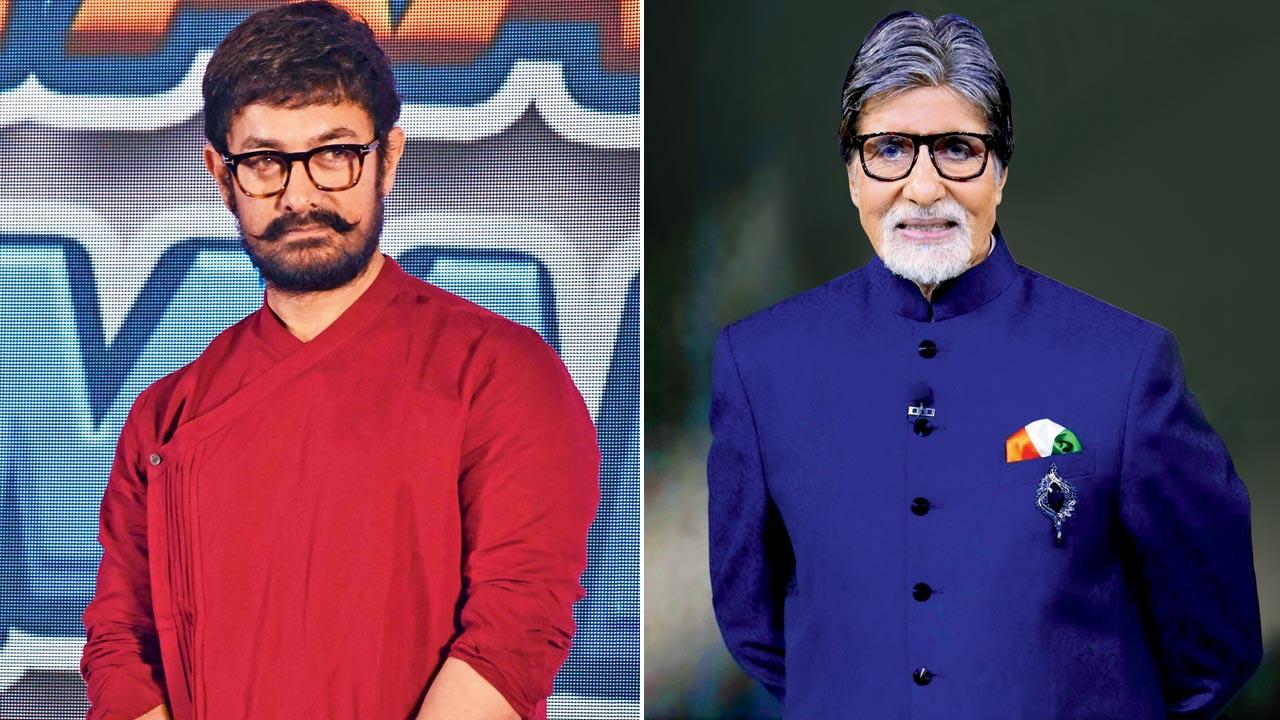
As Aamir Khan bypasses OTT giants to release Sitaare Zameen Par only in theatres, he opens up on how Amitabh Bachchan gave him confidence when no one else supported his decision
Priyanka Sharma, Upala KBR (MID-DAY; June 7, 2025)
At one point in our interview, Aamir Khan candidly says, “I’m not known for my practicality.” We’d disagree. After all, the actor and producer is one of the sharpest business minds in the Indian film industry. That explains why the industry is looking to him as he tries what could well be a gamble with his upcoming release, Sitaare Zameen Par.
Khan has announced that the slice-of-life film, directed by R S Prasanna, won’t be available on OTT after its theatrical release, defying the current business model of the industry.
To some, it’s a risky move. To him, it’s a matter of loyalty. “I’m a loyalist of cinema. I have reached here because of theatres, and I won’t turn my back on them. Secondly, I have faith in my audience. We keep saying that the audience doesn’t come to theatres. It’s common sense that I cannot sell the same thing twice. That’s why I am coming only in theatres,” explains Khan, while also refuting rumours that he is opting for a pay-per-view model on YouTube for the film.
Making the unusual decision was admittedly scary. Scarier even was that no one in the industry endorsed the move. The superstar recalls, “Some of my friends said that I was taking too big a risk. I was in a dilemma because, of course, I also get scared.”
But one person showed faith in him, when nobody else did. “One person put me on the track — Mr [Amitabh] Bachchan. During a dinner at his house, I told him my problem. He said, ‘You always take risks. You are known to be a risk taker. You should do it.’ When a person like Amit ji backed me to do it, I became confident. The next day, I told my team, ‘Amit ji has told us. We are not releasing anywhere, only in theatres.’”
The superstar knows that with Sitaare Zameen Par — which also stars Genelia Deshmukh, and tells a heartfelt story of how 10 neuro-divergent kids inspire an ill-mannered basketball coach to change for the better — he is changing the norms of the industry. But he insists he is doing what feels right to him.
Khan says, “No production house is green-lighting a film until you pre-sell it digitally. So, you’ve shown that you won’t make a film without OTT. I’ve made it clear that I won’t make a film with OTT. I have no problem with streamers, but I don’t think it’s logical that a film streams so soon after its release. Show my film on OTT after six months, I won’t mind it. But OTT platforms told me, ‘If you are not streaming it within eight weeks of release, then we don’t want it.’ I said no to that. I’m losing a lot of money. If a film of mine without presale from OTT doesn’t do well in theatres, I’m finished.”
The question then is: How did streamers become so powerful to dictate the business in Bollywood? “We’ve taken the wrong step. We are responsible,” admits Khan.
Now, as he is hoping to undo the practice, the actor believes he couldn’t have asked for a better film. He remembers being touched by the story — an adaptation of the Spanish film, Campeones (2018) — when Prasanna approached him with it in 2022. The actor’s only hesitation was that the character of Gulshan, a politically incorrect guy, was far from him.
“I told R S Prasanna that the character is politically incorrect, rude, and arrogant. There are a lot of people in the industry who will suit him. Why don’t we go to them? I even suggested the name,” he laughs. But the director was clear that he wanted Khan in the role, and the superstar agreed.
Khan’s excitement regarding the film, however, turned into desolation after Laal Singh Chaddha (2022) tanked at the box office within days of its release. “When Laal Singh didn’t do well, I was heartbroken. We were to start Sitaare… I called Prasanna and said, ‘I am in depression. How will I work in depression? I won’t be able to do it. I don’t want to leave the house right now. My crying hasn’t ended yet.’ I told him to make it with someone else,” recounts the actor. Prasanna respected his wishes, and chose two actors to lead the film that was to be made in two languages, at that time.
Khan reveals, “We finalised Farhan Akhtar for Hindi and Sivakarthikeyan for the Tamil version. Dates were locked.” However, just before going into prep, the superstar started having a change of heart. “In that one week [of fine-tuning the script], as Divy Nidhi Sharma [writer] was reading it, I suddenly felt, ‘Why am I not doing this film? It’s such a good script.’ As the week ended, I told them how I was feeling. I said that of course, nothing could be done as the bullet had left the gun.”
While Prasanna was happy to know that Khan, his first choice, wished to lead the film, he requested the superstar to talk to Akhtar and Sivakarthikeyan. After much pressure from his collaborators, when Khan spoke to the two actors, they were graceful about the turn of events. He remembers, “Farhan was disappointed. He really loved the role, but he understood. Sivakarthikeyan said, ‘Why are you saying sorry, sir? Please do the film. It’s yours.’”
Did you know?
Aamir Khan’s mother Zeenat Hussain and sister Nikhat Hegde have cameos in Sitaare Zameen Par. When Hussain visited the movie set one day, director R S Prasanna decided to cast her in the title song that plays at the end of the film. Hegde features in another scene.
Sitaare Zameen Par attempts to be a game change through PVOD strategy
9:23 AM

Box Office India Trade Network
SITAARE ZAMEEN PAR will attempt to be the biggest game changer for the industry in recent times and if it works it can change the fortunes of the industry for the better. At present, the industry is in this hole where main aspects are being dictated by the digital giants Netflix and Amazon and this sometimes can hinder the theatrical results of a film.
The studio system, where the studio took all the rights is redundant, and there are no distributors left to take theatrical rights in each of the circuits like it happened in the past. Hence, the digital revenue is that fixed revenue which allows a film to go forward and with just two players in the game, it is their call which decides whether the film can be made.
SITAARE ZAMEEN PAR will be a first where the makers are keeping the digital rights and post theatrical, will try and monetize with a PVOD (premium video on demand) on YouTube. The system does not have a history of working even in the West as its SVOD (subscription video on demand) which is basically what what Netflix and Amazon do which sees the better revenue for makers.
The difference is here is that its not been tried on YouTube before with such a product and in reality, YouTube is the biggest digital channel by a distance. The problem is that the audience consumes content here for free while SITAARE ZAMEEN PAR will ask for a payment. The rate that will be charged is an unknown but the reach of YouTube across the world is huge as content gets billions of views. On paper 50 lakh views across the world at an average of 100 rupees will be 50 cr GROSS revenue and on paper this does not look tough as 50 lakh (considering the audience for Hindi content) is not a big number and nor is Rs. 100 but its all an unknown.
The biggest issue will be piracy as this is what has killed satellite and even when content comes to digital, it is consumed more on pirated platforms than on the actual platforms. The theatrical numbers are less today, digital views are not huge and then there is hardly a satellite audience barring a few films and this has a lot to do with piracy. As soon as movies hit digital then piracy is rampant but in terms of SVOD, the makers have the money. But here with SITAARE ZAMEEN PAR's PVOD, it remains to be seen how will they get people to pay when piracy will make it free.
It does look a long shot but if it can somehow work it will be game changer as it can make the major decisions the producers call without the interference of the digital giants. At the moment, whether the industry likes or not it is the digital giants calling the shots and good results for SITAARE ZAMEEN PAR can start to change that. Its going to be very difficult, if not impossible, but the industry should be hoping that somehow it works and generates enough revenue that it can be seen as an alternate to the traditional SVOD route.
Movie Saints’ founder Kanada Rishiraj on Sitaare Zameen Par's pay-per-view model: "On YouTube, it’s easy for films to be pirated"
8:55 AM

Amid buzz that Aamir Khan will explore YouTube’s pay-per-view model with Sitaare Zameen Par, founder Kanada Rishiraj pitches Movie Saints to host the film; says his platform is equipped against online leak
Mohar Basu (MID-DAY; May 26, 2025)
There is increased attention on Sitaare Zameen Par, and for good reason. Aamir Khan’s upcoming offering could determine a new revenue model for films. Earlier this month, reports emerged that two months after the R S Prasanna-directed dramedy’s big-screen release on June 20, Khan would skip the OTT route and make it available on YouTube in a pay-per-view format. While industry insiders are eager to see how the new business model fares, pay-per-view platform Movie Saints’ founder Kanada Rishiraj has expressed interest in hosting the movie. He believes his platform, which launched in 2019, has a big advantage over YouTube — robust safeguarding against piracy.
While Khan has yet to officially announce Sitaare Zameen Par’s post-release plans, Rishiraj hopes that the actor and producer will consider Movie Saints as an option. The founder makes a case for his platform with a simple question.
“When was the last time you watched a full-length film on YouTube? It’s not the right platform to host Sitaare Zameen Par. YouTube is for 10–15 minute videos.”
Rishiraj then points to what has become among the biggest problems of the movie industry today — piracy. “On YouTube, it’s very easy for films to be pirated,” he says, before sharing that Movie Saints employs encryption, digital watermarking, and device-level authentication to ensure a safe pay-per-view experience.
He explains, “We use advanced DRM [Digital Rights Management] to make sure content can’t be downloaded easily. Still, someone might record using a phone. To prevent this, every viewer gets a digitally watermarked unique copy of the film. If they record and leak it, we can track who it came from. We also require user data; so, if someone leaks a film, we have legal recourse.”
Movie Saints gained recognition in 2024 with the release of Jhini Bini Chadariya, an indie gem that was made accessible to movie buffs by the platform. Now, Rishiraj wants to tap into a wider audience. He has pitched the proposition to Khan, but has yet to hear back from the superstar’s team.
He says, “We didn’t think of reaching out to Aamir before because the problem didn’t exist for stars back then. Now that the subscription model is a problem for them and if someone like Aamir is taking that leap, I want him to know all the available options.”
Small beginnings
Movie Saints was launched in 2019 with the acclaimed Assamese film, Aamis. The platform follows a pay-per-view model sustained by cinephiles across the globe, offering a space where indie filmmakers can recover costs, and film buffs can access rare movies.
JioStar likely to remove entertainment content from YouTube from May 1
9:46 AM

Javed Farooqui (THE ECONOMIC TIMES; March 15, 2025)
JioStar is likely to remove its entertainment content from the Google-owned video streaming platform YouTube as part of its strategy to curb subscriber migration from linear TV to free digital streaming, sources familiar with the matter told ET.
The company may implement this from May 1 but it has not yet taken a final decision, they added.
This will be the second significant decision by the company, which was formed through the merger of Disney's Star India with Reliance Industries' Viacom18.
The move follows the company's decision to place content behind a paywall on JioHotstar after offering premium content, including sports, for free for two years prior to the merger—a strategy that had impacted both pay-TV and subscription video-on-demand (SVOD) services.
Pay-TV distribution platforms such as Tata Play, Airtel Digital TV and GTPL Hathway have been urging pay-channel broadcasters like JioStar, Zee Entertainment and Sony Pictures Networks India to remove their content from advertising-supported video-on-demand (AVOD) platforms, including YouTube, which are drawing subscribers away from pay-TV.
With pay-TV subscriptions declining to 84 million paying homes, the broadcasting industry has been exploring ways to reduce churn and grow its paid subscriber base. The TV subscription market is estimated at Rs 40,000 crore, according to a Ficci-EY report.
"We have been actively pushing for the removal of pay content from AVOD platforms. Broadcasters have now recognized that supplying premium content to these platforms ultimately harms the pay-TV industry," said a senior executive from a leading TV distribution platform, adding that other broadcasters may follow suit.
However, a top executive from a rival network said the company has yet to make a decision on removing content from AVOD platforms. "Putting pay content on YouTube, which is a free platform, is a big mistake on the part of pay-TV channels," he added.
JioStar’s free-to-air (FTA) Hindi GECs, Colors Rishtey and Star Utsav, which are set to launch on DD Free Dish in April, will also implement a one-year content windowing policy. This means that fresh content from Star Plus or Colors will only become available to Star Utsav and Colors Rishtey audiences a year after its premiere.
Additionally, the company will launch a campaign on its FTA channels to encourage DD Free Dish users to switch to pay-TV. With 40-50 million households relying on DD Free Dish, the platform has significantly impacted the pay-TV subscriber base.
In an interview with ET last year, JioStar vice-chairman Uday Shankar stated that when an industry leader takes bold steps that resonate with consumers, others tend to follow—highlighting JioStar's influential position.
"With 90 million pay-TV homes and 125-135 million families watching TV daily, it’s clear that TV is far from dead. On the other side, the streaming business offers immense growth potential, with 700-750 million people using mobile phones and consuming data in some form," he had said.
JioStar recently organized a closed-door event attended by top CEOs of pay-TV platforms, along with the company's senior management. The primary focus of the discussion was revitalizing the pay-TV industry and expanding the subscription base to ensure benefits for all stakeholders in the value chain.
--------------------------------------
Ahead of IPL season, JioStar wants Jio, Airtel, and Vodafone Idea to bundle its subscription with data plans
Javed Farooqui (THE ECONOMIC TIMES; March 15, 2025)
JioStar is in talks with Reliance Jio, Bharti Airtel, and Vodafone Idea (Vi) for bundling the streaming platform’s subscriptions with the telecom operators’ data plans ahead of the high-stakes Indian Premier League (IPL) 2025 season, said people familiar with the matter.
With live sports now behind a paywall, the partnerships will be key to JioStar’s goal of reaching over 1 billion viewers across television and digital platforms for the upcoming IPL. In 2024, IPL viewership touched 620 million on JioCinema and 541 million on the Star Sports network.
These tie-ups will allow users to access premium JioHotstar content without having separate subscriptions, the people said.
Experts say bundling OTT (over-the-top) subscriptions with prepaid and postpaid plans will drive telecom data consumption. Free live cricket on JioCinema and Disney+ Hotstar fuelled a surge in data usage in the past two years.
“These telecom partnerships will help JioHotstar reach a large internet audience base, especially now that it’s behind a paywall,” said an executive familiar with the talks, adding that the discussions include deals for both mobile and home broadband.
Another person noted that JioHotstar’s content deal with Airtel expired last month, making its renewal crucial for sustaining momentum, especially after the ICC Champions Trophy 2025, the first major tournament behind a paywall since JioHotstar’s launch on February 14.
The tournament garnered more than 5.4 billion views, with the India vs. New Zealand final drawing 1.24 billion and reaching a peak concurrency of 61.2 million.
As of December, Jio had 476.58 million broadband subscribers, followed by Airtel at 289.31 million and Vi at 126.38 million), according to Telecom Regulatory Authority of India data.
Jio offers JioHotstar access with three prepaid plans—₹100, ₹195, and ₹949—each including a three-month subscription.
The people cited above suggest Airtel and Vi will soon launch similar JioHotstar plans, providing seamless access to IPL and other content once they finalize the deals.
JioStar, Jio, Airtel, and Vi declined to comment.
JioHotstar is owned by JioStar, a joint venture of Reliance Industries, Disney, and Bodhi Tree Systems. Jio, on the other hand, is a wholly owned subsidiary of Reliance Industries.
Currently, JioHotstar offers a few free hours of content for sampling before requiring a subscription. It has three subscription plans: Mobile (Rs. 499/year), Super (Rs. 899/year), and Premium (Rs. 1,499/year). The Premium plan is ad-free, except for live events, including sports.
IPL 2025 is a pivotal event for JioStar, formed through the merger of Disney’s Star India and Reliance’s Viacom18. The media giant is targeting Rs. 4,500 crore in advertising revenue and has secured 20 sponsors, as advertisers look to leverage IPL’s vast reach.
Until recently, live cricket was available for free on Disney+ Hotstar and JioCinema, which have now merged to form JioHotstar. The platform currently has over 50 million paid subscribers and 500 million users in total.
The shift to paid streaming is expected to drive growth in the subscription video-on-demand (SVOD) segment. According to Media Partners Asia, India's SVOD subscriptions rebounded to 125 million in 2024 after dipping to 110 million in 2023 and are expected to grow further in 2025 and beyond.
New visitors to OTT drop in January, first since 2020
8:31 AM

YouTube, Hotstar and JioCinema top in viewership: Comscore
Javed Farooqui (THE ECONOMIC TIMES; March 30, 2024)
Mumbai: Comscore's recent report indicates a decline in over-the-top (OTT) unique visitors (UVs) to 460 million in January 2024, marking the first decline since 2020, with OTT penetration of the digital universe reaching 87.8%.
In January 2023, the number of unique OTT visitors peaked at 466 million.
The number of unique OTT visitors increased significantly from 395 million in January 2020 to 448 million in the following year due to increased adoption during the Covid-19 pandemic.
Between January 2021 and 2022, the number of unique OTT visitors increased by four million to reach 452 million.
The report said YouTube is India's largest video streaming platform, with 456 million unique visitors. The platform also has the highest engagement rate, with an average of 864 minutes per visitor.
OTT content aggregator YuppTV had the highest engagement after YouTube, with 2.7 times the engagement of the next closest competitor MX Player (179.4 minutes).
YouTube is followed by Disney+ Hotstar with 114 million UVs, Jio Cinema (101 million), and MX Player (93 million). Disney+ Hotstar had an average of 177.8 minutes per visitor, while Jio Cinema had 69.7 minutes.
Zee5 ranked fifth with 57 million UVs, followed by Amazon Prime Video with 45 million and Netflix with 42 million, while Jio TV and SonyLIV had 29 million and 26 million, respectively.
Zee5 outperformed Netflix in terms of average minutes spent per visitor at 90 minutes, compared to the latter's 83.9 minutes.
Comscore said the competition between Hotstar and Jio Cinema was being fought using live sports as the primary hook. It added that the 2023 IPL helped Jio Cinema reach a peak of 151 million UVs, while the ICC CWC helped Hotstar reach a peak of 191 million UVs in November 2023.
The Comscore report noted that the potential merger between Star India and Viacom18 will lead to a one-stop-shop for most sporting events for Indian viewers. Disney+ Hotstar and JioCinema will have a consolidated reach of 160 million UVs.
Anuradha Paudwal asks YouTube to pull down fake profile impersonating her
8:39 AM

After Anuradha Paudwal asks video-sharing platform YouTube to pull down fake profile impersonating her, singer’s daughter Kavita says appropriate action can assure other artistes of timely help in the future
Sonia Lulla (MID-DAY; October 5, 2023)
Veteran singer Anuradha Paudwal took to social media to reveal that she had been a victim of identity theft. Addressing her post to YouTube, she shared, “I’ve been a victim of identity theft on your platform for over a year now. Someone else has claimed my YouTube verification without my consent, and is operating a verified account under my name. I’ve have been in contact [with] YouTube India, but [there has been] no resolution yet. Please, YouTube, help me regain control of my identity (sic)!”
Paudwal’s musician-daughter Kavita tells mid-day that while the unauthorised account had been active for a while, they hadn’t previously addressed the matter because such incidents are not unusual in the industry.
“This happens with all celebrities. But, it got to a point where an email address had been put up asking people to contact them for business. Then it obviously became problematic,” shares Kavita, adding that she has been in touch with the video-sharing platform that has been offering help.
“[YouTube] has a process to address this matter. If I want a profile [verified] on one [platform], they ask for [details of] another verified profile. It’s like a vicious circle. But, they are looking into it. We are hoping that they expedite the process. Basically, it can also [serve as] an example. If one person has received help, everybody else can be assured that if there’s an issue, things will be addressed.”
Amid reports of the growing number of cases of the illegal use of artificial intelligence, Kavita asserts that such matters should be dealt with, thoughtfully.
“This becomes the responsibility of the platform. The platform can’t simply say, ‘Okay, we made a platform, now it is your responsibility to take care of your profile.’ That doesn’t happen if the platform is also making money off people’s work. They need to have guidelines in place. I’m sure they’re also learning. They are taking [action].”
Mumbai cops file FIR against Google’s Sundar Pichai for copyright violation of Suneel Darshan's film
8:24 AM

V Narayan (THE TIMES OF INDIA; January 28, 2022)
Mumbai: A First Information Report (FIR) has been registered on court orders against Google, its CEO Sunder Pichai and five other employees of the company in an alleged copyright violation case on January 25. The MIDC police said the case was registered for allegedly uploading the movie “Ek Haseena Thi Ek Deewana Tha” on YouTube without a contract or consent from the movie’s producer and director.
The complainant has said he was following up with officials of Google and YouTube since 2017 but no action was taken to remove the movie from the platform. Producer-director Suneel Darshan has alleged that he incurred losses in crores as the film was streamed on a digital platform with lakhs of viewers.
Mumbai police spokesperson DCP Sanjay Latkar said the case has been registered based on the court order under the Criminal Procedure Code section 156 (3). Darshan said he filed a complaint before the court as Google did not abide by notices. MIDC police now plans to issue summons to Sundar Pichai (CEO of Google), Gautam Anand (Head of YouTube), Joe Grier (Grievance officer), and three Google employees Namrata Rajkumar, Pawan Agarwal, and Chaitanya Prabhu whose names are in the FIR. TOI is in possession of the FIR.
A Google spokesperson in India told news agency PTI that the company relies on copyright owners to notify it of unauthorized uploads and offers them “rights management tools, such as YouTube’s Content ID system that gives rights holders an automated way to identify, block, promote, and even make money from uploads of their content.”
“When a copyright holder notifies us of a video that infringes their copyright, we remove the content promptly in accordance with the law, and terminate the accounts of users with multiple copyright strikes,” the spokesperson added.
Andheri's additional chief metropolitan magistrate (22nd court) in its order on January 20 said the complainant has recorded illegal use of their film on YouTube for generating hundreds of millions of dollars towards advertising revenue earned through advertisements streamed before, during and after the film.
The complainant had made a CD of the alleged infringement which was produced in court in a pen drive. The court viewed it on a laptop and found a prima facie case of infringement of copyright. The magistrate noted that the complainant had also filed a civil suit before the District Court in Gurgaon.
Despite Dhindora being a success, I wouldn’t want 2021 to exist in my life-Bhuvan Bam
8:03 AM

Sugandha Rawal (HINDUSTAN TIMES; December 20, 2021)
For comedian Bhuvan Bam, 2021 has been a year of loss (he lost both his parents to Coronavirus) and gain (his acting debut project has been a huge success). But the YouTube sensation admits that he is still trying to piece his life together. “Despite Dhindora being a success, I wouldn’t want 2021 to exist in my life. And it is not just me; it’d hold true for so many people. But abhi theek hai, you can’t change or do anything about it,” Bam says, adding, “All you can do is focus on the present and move ahead.”
Opening up about the response he got for his passion project, Dhindora, which he has been conceptualising since 2017, the 27-year-old says, “We never expected it to blow up like this. We knew that our audience who are used to BB Ki Vines will watch and have fun. But witnessing the response from people who weren’t our target audience is a great feeling.”
The eight-episode show has got over 300 million views collectively. Ask Bam why he released the show on YouTube, and not on any OTT platform, and he says, “First, it would have been unfair to go to my audience, who have watched all my content for free till now, and ask for money. Also, it was a conscious effort to tell people that YouTube isn’t only for sketches, music or roast videos,” says Bam.
He wanted to send a message to the people who are sitting at the top of the hierarchy, “people who distribute finances for making a series, that no creator is dependent on any platform”. Bam goes on, “Aisa nahin hai ki jab mujhe koi OTT platform movie banane dega, tabhi I will make a film”.
Mid-day Exclusive: Karan Oberoi, Twitter, Facebook and YouTube hauled before court for defamation
8:21 AM

While legal action against people for slander on social media is fairly common, the Bombay High Court has now admitted a petition seeking to hold the very platforms responsible
Diwakar Sharma (MID-DAY; December 23, 2020)
A 35-Year-old astrologer filed a civil defamation suit last week in the Bombay High Court against microblogging site Twitter, social media platform Facebook, Yahoo.com/Yahoo India Pvt Ltd and YouTube.com owned by Google, actor Karan Oberoi and multiple media houses. She has claimed damages to the tune of Rs 650 crore from Oberoi, whom she has accused of rape, and 25 others. It is apparently the first time that social media and microblogging sites have been made parties in a defamation suit.
She plans to file a criminal defamation suit next, said her advocate. In May 2019, the astrologer had filed a rape case against Oberoi at Oshiwara police station, following which he was arrested. A month later, the Mumbai police arrested the complainant and her advocate, Ali Kaashif Khan Deshmukh, for allegedly orchestrating an attack on herself in Oshiwara.
The astrologer's current counsel, advocate Mansha Bhatia, told mid-day that 'her client's identity was revealed and her mobile number was disclosed in public platforms'. Bhatia said she sent legal notices to Twitter and Facebook, asking for the derogatory and libelous content against the astrologer to be removed. She said Facebook never responded to the legal notice till date.
"Twitter responded and pulled down some tweets but some defamatory posts are still live," Bhatia told mid-day. "Twitter and Facebook are accessible worldwide. Some of the deleted content is still reflected on Google. Our prayer is to suspend the accounts of the defendants."
'Friends Revealed Identity'
Bhatia claimed that immediately after Oberoi's arrest, his friend termed the rape case as fake on Twitter and criticised the police and the judiciary. She added, "There are various tweets where his female friend tried to influence the investigation by giving out case details including my client's photographs, which were unlawfully clicked in court."
Bhatia further told mid-day that Oberoi's friends also posted defamatory content against her client on Facebook. "The suit has been filed to seek permanent injunction against Oberoi ad others and damages for publishing, circulating and broadcasting defamatory materials including videos, newspaper articles, statement on social media as well as revealing the identity of a rape victim on public domain," the petition said.
"Making irresponsible and derogatory comments on a subjudice matter interferes with the fair administration of justice, influences the pending investigations, judiciary, the witness and the eventual decision of the courts," reads the suit, whose copy is available with mid-day.
"The defendants (including Oberoi) have further criticized the judiciary severely and without any cause or reason which amounts to contempt and attracts criminal liability. Oberoi has further misused his bail to generate public sympathy, conduct a media trial and propagate innocence in the rape case by maligning and defaming the plaintiff," reads the suit.
"The civil defamation suit has been filed to remove all the existing defamatory content including all articles/videos revealing my client's identity, published and circulated on public domain and further to restrain the defendants from publishing such similar defamatory and derogatory content against my client," Bhatia said.
"My client has further claimed damages from the defendants to the tune of Rs 650 crore for loss of reputation, maligning her image, character and dignity, and causing business losses. We are also in the process of filing criminal proceedings seeking registration of FIRs against those involved," she added.
Experts Speak
A social media expert said it is difficult to keep track of defamatory posts. "Portals like Facebook, Twitter and YouTube have huge number of postings every hour, so technically it becomes very difficult to keep a track of every such defamatory post and further take it down. There are times where such posts remain live for a long time. This not only leads to severe trauma for the victims, but also there are a lot of scams happening, and such phishy posts never go down even after they are reported. Acts like impersonation and cheating have been on a rise because portals do not act swiftly. They need time to evaluate the libellous contents which have been reported," said Govind Ray, a social media expert.
A cyber and privacy law expert feels making these websites parties to the defamation suit now is of no use. "FB and Twitter are intermediaries as per the IT Act, 2000 and they are protected by safe harbour provision i.e. as per Section 79 of the IT Act, an intermediary cannot be held liable for any third party information made available or hosted by it. So making them parties is of no use. They can be made parties when a court orders them to remove a content and they fail to remove the same," said advocate (Dr.) Prashant Mali, Cyber & Privacy Law Expert.

We didn't need a music company to push us-Manoj Muntashir
8:14 AM

After releasing the single on YouTube, lyricist Manoj Muntashir says platform more artiste-friendly than music labels
Upala KBR (MID-DAY; April 4, 2020)
Commercial success was the last thing on Manoj Muntashir's mind when he, along with music composer Rochak Kohli, released Sambhal Lena on YouTube and other streaming platforms directly. However, the success of the single, which revolves around the pandemic, has helped the lyricist realise that the platform offers more lucrative opportunities to artistes than the big music labels in the market. "Rochak and I handled the song's distribution and put it up on my YouTube channel. We didn't need a music company to push us," he shares enthusiastically.
The success of the track has encouraged the lyricist to release more solos on his YouTube channel. "If the song is a hit, I get money from YouTube from the word go, once I get it monetised. Besides that, the other streaming platforms are also paying me. When I create a track for a producer, I get paid for penning the lyrics, but I don't own the number. Here, the rights rest with me. Hypothetically, if I release 10 songs of which two become popular, the royalties I earn off them will cover 20 more songs."
Anupam Kher attacks YouTube stating The Accidental Prime Minister’s trailer isn’t easily available
4:08 AM

MID-DAY (January 3, 2019)
Anupam Kher, who has impersonated former Prime Minister Manmohan Singh in The Accidental Prime Minister, says the trailer of the film is not easily available on YouTube. “Dear YouTube, I am getting messages and calls that in parts of our country if you type, trailer of ‘The Accidental prime Minister’, it is either not appearing or at 50th position. We were trending at No. 1 yesterday. please help, (sic),” kher tweeted.
If one searches for the trailer of The Accidental Prime Minister on the video-streaming platform, the user ends up getting Kher’s interviews regarding the film. However, if one types ‘The Accidental prime Minister official trailer’, the trailer does emerge at the top.
Ever since the release of the film’s trailer, the project has been dogged by controversies. The president of the Maharashtra State Youth Congress sent a letter to the producer of the film demanding a special screening before it is released.
Befikre song Nashe Si Chadh Gayi becomes first Hindi song to cross 300 Million views on YouTube
7:56 AM

DNA (September 23, 2017)
The 2016 and 2017 smash hit Nashe Si Chadh Gayi from Ranveer Singh and Vaani Kapoor starrer Befikre has gone on to become the first ever Hindi song to cross 300 million views on YouTube.
The popular dance track released by YRF Music, sung by Arijit Singh and composed by Vishal-Shekhar, continues to enjoy unbeatable views online.
It has been breaking records ever since it released on the official YRF YouTube channel — first shattering the record for most views for a Hindi film song in a 24-hour time span.
The song reigned playlists and had an unprecedented run across leading music streaming platforms and music charts. Earlier this summer, it was the first Hindi song to rack up 250 and 275 million views, within a year of its release.
Subscribe to:
Posts (Atom)