Showing posts with label Yeh Saali Zindagi. Show all posts
Showing posts with label Yeh Saali Zindagi. Show all posts
We've stopped fighting for the other's right to exist regardless of differences of opinions-Sudhir Mishra
9:12 AM

Filmmaker Sudhir Mishra has adapted his grandfather DP Mishra's memoir for his eight-part series Summer Of '76. He talks to us about how it is absolutely possible for different viewpoints and polarising opinions to peacefully coexist in a healthy democracy
Mohar Basu (MID-DAY; July 13, 2025)
On Samvidhaan Hatya Diwas, June 25, a reminder of the Indian Constitution’s suspension during the Emergency, we sat down with filmmaker Sudhir Mishra at his Versova bungalow to discuss his Sony Liv series, Summer Of '76. It’s supposed to be an adaptation of a political memoir by his grandfather Dwarka Prasad Mishra, former CM of Madhya Pradesh — Living an Era.
He clears the air right away saying “it’s not just based on my grandfather’s book”. Then what is it? For Mishra, it’s a retelling of a time that’s never studied with the clarity it deserves. “I have an intimate understanding of the power politics of the Congress and in a very odd way, the politics of India in general. My grandfather had been active since 1939. I’m not totally in agreement with his politics. I’m also my father’s son. My father’s a mathematician. For me, you know, there’s a hypothesis, and it has to be proved. DP Mishra may have been opposed to or followed another kind of politics, like the socialist movement. There was someone called Ramesh Dixit, one of the students who was arrested. So, we took the rights to his life. He’s very close to me, almost like an elder brother. There’s this person called Pushpesh, who is a writer. He was a professor. So he’s also an activist,” he says.
The series is a work of imagination based on the lives they have studied. As Mishra says, “It is roughly based on memories. I was 15 when the Emergency happened. We also have the benefit of hindsight. The Emergency, for me, becomes a metaphor. It’s when the powerful stop listening. What happened during the Emergency was that the connection to the ground was lost. There’s a whole generation of people who did not agree with the idea of India that was being handed down to them by their parents. They thought it was problematic. Summer Of '76 is a bit of everything. It’s a rebellion. It’s a rebellious time, which confronts people in power.”
The eight-part series for Sony LIV begins in a university in Delhi. That’s where the confluence of varied ideologies starts. Mishra says, “Everyone is from different backgrounds. There are characters from Dalit backgrounds for whom political commitment is not a choice — it’s a necessity. There are also Muslims whose parents chose to remain in India, and they wanted to participate in this development. It’s a flux of people who accidentally meet and then it becomes their story — a story of passion, of youth, of young people, and excitement..”
A common dialogue about Emergency is the blatant unconstitutional censorship. Censorship has been a constant in India regardless of the party in power. Mishra tells us, “Artistes find a way to tell their stories. Many times, we are censoring ourselves. There’s also market censorship. ‘You can’t make this film because people say it won’t run’. Or, ‘You can’t make a film with a woman protagonist because it won’t work’. When I was making Yeh Saali Zindagi, the head of the CBFC asked why the title should have ‘Saali’. Even when I was making Hazaaron Khwaishein Aisi, they said, ‘Take out the name of the Congress party’. But if you’re not a sensationalist, and if you have facts behind you, you can make it work. I’m not saying I want censorship, I’ve always opposed it. But sometimes it forces you to avoid the obvious and do something else. There’s a line I use all the time, ‘The shortest distance between two points is a straight line, but the shortest real distance between two points, taking obstacles into account, is never a straight line’. There are always obstacles. So, you have to mark that path and navigate it.”
But censorship in cinema in 2025 has been alarming. A few days ago, mid-day reported how the CBFC’s e-cinema website, which listed all the cuts made to films, went down due to a technical issue. And now it’s clear that people will no longer be able to access what cuts or changes are being requested by the body. Films like Punjab 95, Santosh, Monkey Man, L2 Empuraan, have faced the ire of the CBFC, most not even making it to the release. Mishra says filmmakers need to fight for each others’ rights regardless of their own beliefs.
“We’ve all retreated into our own rooms and platforms. We don’t meet each other like we used to. Something changed after the pandemic. The lockdown disconnected people. That community feeling is gone, which is sad. We have stopped fighting for each others’ right to exist regardless of differences of opinions! Politics has become quite polarizing. But contrast that with the 1970s during the Emergency. People were still taking stands, even if they were ideologically opposed. Everyone should have views, but we must also support the right to another view. Now, obviously, there are extremes — like supporting rape or genocide. I cannot support that. But if we disagree on how the world should be better, and we’re both coming from good faith, then that’s a healthy disagreement. I had a very good friend, we used to have massive fights. We’d yell and scream at night, but in the morning, it was fine again.”
Even at 66, Mishra constantly wants to be challenged. “I’ve had people come up to me and say, 'That’s the crappiest film I’ve ever seen'. And I didn’t agree, but they had their reasons. I remember one boy once told me, ‘Your film was like the binding on a canteen’s menu—it’s ugly.’ It’s the best criticism I’ve ever heard! It’s about having a view, engaging with the film. Now everything is about 'likes'. That word has become a four-letter word. Instead of provoking thought, we want likes. Even among left-leaning or liberal artistes—there’s a kind of toxicity that mirrors the right. I’m not into constant negativity either. A lot of critics sound like there’s nothing to celebrate in India. But I want to celebrate India more. And I have issues with nepotism too—especially the kind of liberal nepotism where people believe genius comes from genes. Nobody owns cinema. It belongs to all who love it. There are kids in Darbhanga making films now.”
One of the prototypes that came out of the ’70s was the Angry Young Man, which everyone says was born out of the rage the common man was feeling at the time. Was there an antithesis to the Angry Young Man?
“The angry young man broke the established monopoly and turned everything on its head. He broke the rules because that was the only way in. That’s why he was called a fixer — because there was no other way for him to enter the system. Not everybody was angry, but a lot of people were. They were not being heard. That’s what the Congress didn’t get at the time. The anger wasn’t directed at a specific figure — it was because people weren’t getting justice. They weren’t receiving what was promised. That’s what the Angry Young Man represented — especially in the Salim-Javed films, right? There were people before that too — like Guru Dutt and Bimal Roy — who had already begun questioning society. Popular filmmakers back then were very connected to the people. They came from among them. That’s not the case now. And that’s the criminal act of nepotism — today, cinema has been handed over to people who have no real connection to the audience. How will you make popular cinema if you’re not connected? Cinema needs healthy popular storytelling. For a while, it happened — with people like Vishal Bhardwaj, Anurag Kashyap, and Imtiaz Ali. They all came from small towns and had that connection. But then those doors shut again. Every few years, the industry needs a correction. Back in the day, the state supported cinema. Pather Panchali wouldn’t have been released without government support. That support made Indian cinema what it was.”
Imagine Chameli without Kareena Kapoor's face; A R Rahman was a co writer in Lagaan-Sudhir Mishra
7:49 AM
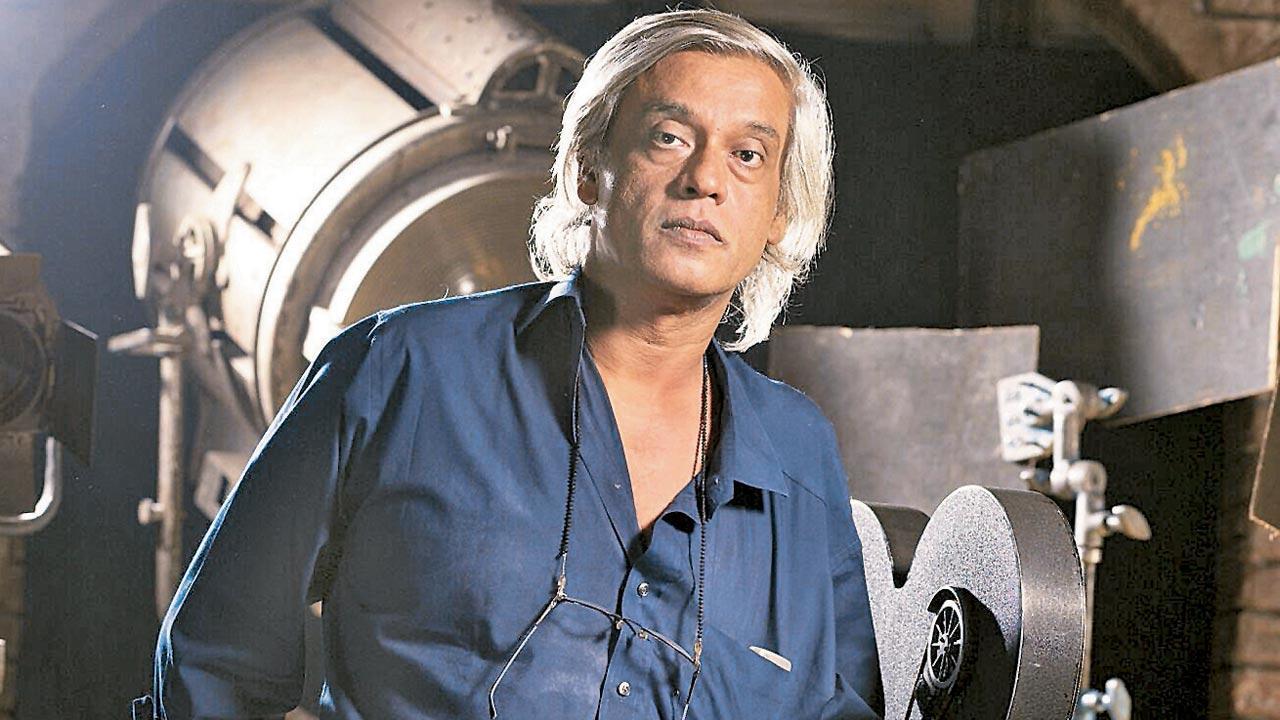
Niharika Lal (BANGALORE TIMES; November 8, 2024)
Sudhir Mishra sees filmmaking as a constant process of rewriting. But, he insists that filmmaking is not only a director’s medium. “Actors are co-writers of the film. Every actor has a different process, and the director’s job is to follow their process,” he says. In a recent interview, the filmmaker opened up about the making of Tanaav Season 2, his love for long-form storytelling, how he connected with Kashmir, and what it’s been like working with actors throughout his career.
‘WHAT’S THE POINT OF ACTORS IF EVERYTHING IS PRE-WRITTEN’
Sudhir Mishra tells us, “I consider cinema a constant process of rewriting. You rewrite with locations and with the actors, otherwise, what’s the point of actors when everything is pre-written? Imagine Hazaaron Khwaishein Aisi without Chitrangda Singh’s face, or Chameli without Kareena Kapoor, or Serious Men without Nawazuddin Siddiqui, Yeh Saali Zindagi without Irrfan Jhan, or Dharavi without Om Puri and Shabana Azmi. You can’t – they’re co-writers.”
He adds, “Then, the camera takes its position, the location speaks, and you gather all that material and sit with the editor. The film you imagined may not be there, so you try to find it. You add music – take A R Rahman’s score in Lagaan. Put another piece and the film changes. So, for me, Rahman is a co-writer of Lagaan.”
‘THE FILM I MAKE SHOULD IMPACT ME’
For Mishra, discovering the film is the aim of making a film. He says, “When I make a film, I should learn something I didn’t know before. The film should impact me – that’s the fun, the excitement, the therapy.”
Sudhir Mishra says all his films have surprised him – sometimes for the better, sometimes for the worse. “You can’t say it’s not the cinematographer’s medium – then why do you hire him? The director is a bit like an architect or a designer of the overall film. A director is like a conductor of an orchestra. Sometimes he writes the score and also conducts it,” he adds.
‘After making Tanaav, I understand Kashmir better’
About making Tanaav and shooting in Kashmir, he says, “I just love Kashmiris. They are really compassionate, warm, but also very sad. So, you have to work with that rhythm. I tried to bring out the human aspect (in the show). After making Tanaav, I understand Kashmir better.”
Talking about films on Kashmir and how he managed to avoid any controversies, Mishra says, “Most films about Kashmir are made by outsiders, and many of them don’t have a deep enough connection to the place. If your purpose is not to offend, and you approach things without bias – seeing them as they are – no one gets offended. If you’re not a sensationalist, not pretending to be the final word on anything, not strutting around like someone who thinks they know everything, there’s no issue.”
--------------------------------------------
About working with Rajat Kapoor, the filmmaker says, “You just have to indicate the character to Rajat and he will bring himself to it”
--------------------------------------------
Talking about Irrfan, Sudhir Mishra says, “He knew the character and was more interested in ensuring the entire scene works, because if the scene worked, he worked”
I love being called a pan India actor-Aditi Rao Hydari
8:19 AM

Onkar Kulkarni (BOMBAY TIMES; January 17, 2021)

Talking about the balancing act, the Padmaavat actress, says, “I’m finally doing things that I dreamt of. In these last few years, I’ve been lucky to work with some of the best directors, who offered me roles that have been challenging. The work has been tough, but fun. There are days when I forget which city I’m in, but I get excited when filmmakers I respect choose me to embody their vision in their films. I’m happy with the love and acceptance I get from all the industries, and I love being called a pan-India actor because that’s what I want to be.”
While she is now adept at managing her time and schedule between projects that span across these industries, it also requires her to take tough calls. She elaborates, “I push myself to make sure I give my 100 per cent. Sometimes when I can’t, I have to let go of films that I want to do. But in the end, I feel it works out for the best, or at least that’s what I tell myself. If I’m dying to do a certain film, I find a way.”

She further adds, “Working with Mani sir led me on to more movies in Tamil, then Telugu, and now, I am doing Malayalam films as well. I understand both Tamil and Telugu. I’ve dubbed for my Telugu films, and hopefully, I will soon be able to do the same for my Tamil films, too. I find it hard to speak and understand Malayalam, but I am working on it,” she says. Amidst all this, Aditi is looking forward to her next Hindi projects. Post the lockdown, she also shot with John Abraham for a cross-border love story.
I don’t think I know how to date-Aditi Rao Hydari
7:50 AM

MUMBAI MIRROR (May 20, 2019)
Aditi Rao Hydari says that she had to get intimate with a stranger during an audition once. Making an appearance on a talk show, the actress revealed, “I don’t have any whacked-out stories from auditions, except Yeh Saali Zindagi, where I had to literally make out with someone I didn’t know.”
She was referring to Arunoday Singh, who was cast opposite her in the film, and was, by her own admission, polite. “But at that point, I didn’t know him, and he was a huge hulk of a guy and I was just like, ‘Uh...what’s going on here?’” she added.
Aditi also spoke about other aspects of her life, including how Mani Ratnam’s Bombay is what attracted her to the world of films. She was especially enamoured by the song “Kehna hi kya”.
The actress also opened up on her personal life, admitting that she had received her first love letter when she was just in the fifth standard. “It was really long. It was like, two pages. All I know is that it was from a senior. Very soon after that, I was packed off to boarding school,” she said with a laugh. Aditi remembers showing the letter to her mother. “I was nine at the time. It basically said that I was the most beautiful girl and blah blah. Now when I think about it, I’m like, ‘I was nine! How does that even work?’” she said.
Opening up on her “dating game”, Aditi, who tied the knot with actor Satyadeep Mishra when she was 21 and later separated, said: “If I got into a relationship like that at 21, my dating game would be zero, right? I don’t think I know how to date. After that, I joined the movies. What dating am I going to do?”
Gabbar Is Back gets U/A certificate; 'saala' muted
9:08 AM

Subhash K Jha (DNA; April 26, 2015)
The new Akshay Kumar starrer Gabbar Is Back was given a
censor clearance in record time this week. The film was given a ‘UA’
certification with five verbal cuts. Says a source from the CBFC, “The
film came to us very late for certification. In fact Piku, which is to
be released a week after Gabbar Is Back, came to us earlier. The movie
had to be certified out of turn to ensure the release didn’t get
affected.”
The five verbal cuts, all mildly abusive terms, have been asked to be beeped out. These include the oft-used word ‘saala’ which is no longer permissible in films open to kids. Not too long ago multiple award-winning director Sudhir Mishra even made a film titled Yeh Saali Zindagi.
Says the Censor Board chief Pahlaj Nihalani, “I am aware that earlier the word saala was allowed. But random use of unparliamentary language will now be discouraged in films open to children specially those starring iconic role models like Akshay Kumar. As for submitting films late for certification we are now in the process of starting a formal on-priority certification service for filmmakers in a hurry.”
Nargis Fakhri-Ileana DCruz are already in relationships-Arunoday Singh
9:52 AM

Priya Gupta (BOMBAY TIMES; April 6, 2014)
Arunoday Singh, 31, is quite a gypsy, who loves to travel. He has eclectic interests and is freespirited and intelligent. He is hard-working when he needs to be, but is lazy otherwise and constantly needs someone to crack the whip on him. Over an hour-long conversation just before the release of his film Main Tera Hero, he spoke to Bombay Times about his evolved parents, the insightful Sudhir Mishra and why he would never marry an actress. Excerpts:
Being a senior Congress leader Arjun Singh’s grandson, why did you choose acting as a career choice?
I called my grandfather baba. My parents live in a village near Bhopal called Mendora. It is in the middle of nothing, where even the TV barely works and they like it that way. They have a dairy farm out there and my father has been into real estate. They have lived there from the time I was born. My dad used to manage my grandfather’s political campaigns and was naturally interested. After my grandfather passed away, my father took up the MLA seat for the area from where they are. My grandfather lived in Delhi but whenever he came to Bhopal, home was always sanctuary, the politics didn’t kind of make it past the gate. He went to office and all the meetings were there. He was very intelligent, watchful, quiet, thoughtful, committed, sweet and funny in almost a juvenile kind of way. I was amongst the few people who could make him giggle. I went to a boarding school, Kodaikanal International, from where I got a scholarship to do my graduation from Boston. Since I lived in a hostel, I was not that exposed to politics from the beginning. I was nine when my favourite English teacher was organising a screening of Marlon Brando’s On The Waterfront. It was not life-changing, but it was a really cool thing to see. I had never seen or paid attention to a film before that so much I was pathologically shy, but she threw me on stage and I realised that I could do what I wanted and yet not feel shy, even though there were 500 people, because I couldn’t see them. So my major extracurricular activity became theatre. I continued doing it in college and I realised that I could actually get paid for it and felt why not convert something you love so much into your profession. I also did quite a few odd jobs while I lived in New York like bouncing at a night club and voiceover work to sustain myself. I lived abroad till the age of 27 when I came back to India as visas got tougher to get. I am a bit of a gypsy and had lived in many countries till then. I didn’t think I would get work in India as I was not used to Bollywood. Also, I didn’t think they would have that much to do with me as my mental bent was western and my English doesn’t make people believe that I can speak Hindi. But I am comfortable with who I am and fortunately met Sudhir Mishra. He liked how I looked and got me my first break in Sikandar, after which I did Aisha, then Yeh Saali Zindagi, Jism 2 and now Main Tera Hero.
Were your parents supportive of your decision to join films versus politics?
They loved it as they know it makes me happy. And that is their only benchmark for success. They are wise enough to know that everything else will come and go, be it money or job satisfaction, but that the true measure of success in life is if you are genuinely, quietly happy in life. They are both very evolved as parents who believe that so long as you are doing what makes you happy and so long as it continues to make you happy and you are applying and growing your mind, they are fine. My parents both came from homes that were conservative which is why they are both not conservative. My father is the buffer for me and my two sisters. They were raised conservatively so they didn’t allow us to be. They told us, ‘Go and do whatever you want to. If it doesn’t work out come back home. Rethink it and go back again.’ They wanted us to have whatever opportunities we were interested in. My dad had got a full scholarship at California, being a gold medalist in Economics, but he was not allowed to take it up. He doesn’t regret it, but, of course, there is a part of him that wonders where life would have taken him had he gone there. Which is also why he always says, ‘Whenever you get the chance to be something, you owe it to yourself and to the person giving you the opportunity to take it.’ My parents like it that I am very eclectic as I like music, poetry, writing, acting and travelling. My mother is also very artistic. But since she came from a conservative household it was tolerated till she got married after which she did not get a chance to show her talent to the world. So she does it all in her home be it painting or sculpture and made her world as aesthetically beautiful as possible. But she too supported us to pursue our dreams.
What would your parents like to change about you?
I overthink things. My dad is a very capable man and will always tell me, ‘Why do you think so much? Why don’t you just do it?’ I keep evaluating the pros and cons and doing it to the point that I don’t start it and if I start, I don’t finish it. But I am nicely contradictory. Normally I think I do the overthinking but when it comes to a lot of things that really matter, I am delightfully impulsive. But I also know that if I don’t instantly jump in, then I can take a month to think and may finally not do it. The good thing is that I balance my overthinking with a dose of impulsiveness.
Are you dependent on your parents financially?
They are wealthy, but I have been independent for a while. I know if I need to take from them I can, but I don’t need to. Also I am very basic with my needs. I wear the same shoes for years and a white T-shirt and jeans is all I need. Now I have to invest in suits and all the rest, but I like eating at home. I am a really large, badly trained dog. I am actually quite basic and affectionate, but all my responses are very visceral and immediate. If I am angry I am angry, if I am sad I am sad, I have no layers and my mother says that I never got entirely civilised. I can play the part very well, I can cross my legs well, sit with my jacket just right.
Does marriage feature in your life?
It will, in the future. No one has the faith to see beyond what they see right now. Currently, nobody will have me, I am trouble and am woefully single even though in Mumbai I have this reputation of being a ladies’ man which I find amusing for the 10,000 lonely nights I have spent alone. I have had relationships, but there has been no life changing relationship so far, no great breakup either. I move a lot, travel a lot, so my girlfriends also have been travellers. I haven’t dated any actresses. I kind of find dating an actress trouble, as you can’t have two self-absorbed people in a relationship. Somebody needs to be normal and bring you back to earth. Somebody needs to take you out of your bubble. I have met some really lovely ones, but there is an instinct that says this will be fun, but I also know that there will inherently be too much competition in such a relationship. Also, all the lovely girls I know are already in relationships, be it Nargis Fakhri, Ileana D’Cruz and so many others.
Talk about Sudhir Mishra?
He is very intelligent, the kind of person you can talk to about anything under the sun. He can argue any side of the case, is a very good writer and encourages me to write as well. He is a rum character. The kind of person that is interestingly outspoken and brazen. They are the kind of people who don’t get angry when they are drunk, but become more fun. He is like that except that he doesn’t drink. He is one of the most insightful people I have met.
Do you get affected by a low period?
I don’t cry, but I brood. I write really bad poetry, stare at the beach and take long walks and get angry. I am very emotionally volcanic. My lowest point was the time between Yeh Saali Zindagi and Jism 2, as I just didn’t know where I fit in and didn’t know my place. It’s really tough when you are surrounded by people, who have already decided who and what you are. And the terrible thing is that you start to agree with their assessment of yourself. It’s a crime to do that to yourself, but it’s an easy trap to fall into Bollywood. You go through so many insecurities. It was good to go through that period and come out of it, as I didn’t realise till then that I was weak in that area. I am quite insular and self-sufficient otherwise. My parents are firm believers that you can ask for help and can talk it out as much as you want, but you finally have to help yourself. I spoke to my parents and it’s not that they said that you are best, but they will tell you things that you are potentially good at. They help you find your groove. They told me that there are success stories that happen overnight, but it’s not meant to happen to you. You need to work hard and work your way up and you should. I had to come out of it by facing the city and the industry and do your work and keep at it. Every parent is always concerned and they will never stop being concerned even when I am happy. I too am insecure. You are always wondering, watching gauging and that’s where the craft and magic comes from. But that is also the demon you have to keep the lid on. Part of the reason I got drawn into being an actor is because I was unsure of myself. The unsurety and insecurity is where you store your best work and that is why you can play other people. If you thought you were the greatest, then how would you play others?

Subscribe to:
Posts (Atom)