Showing posts with label Yeh Jawaani Hai Deewani. Show all posts
Showing posts with label Yeh Jawaani Hai Deewani. Show all posts
From Ranbir Kapoor’s screen-worn jacket to Mogambo’s uniform, the afterlife of Bollywood’s material history
10:37 AM

In the absence of a formal museum, iconic artifacts — from Ranbir Kapoor’s screen-worn jacket to Mogambo’s uniform — are recirculated and stored across an unofficial ecosystem of godowns, trunks, and prop houses
Nisrin Saria (MUMBAI MIRROR; July 12, 2026)
A yellow Ambassador glides onto the red carpet. Flashbulbs erupt as Shanti Priya (Deepika Padukone) steps out in blush pink silk, her wave choreographed for stardom. Moments later, the fabric catches Om’s sleeve, setting in motion one of Hindi cinema’s most cherished meet-cutes. Years earlier, audiences had travelled to an altogether different world, where Helen danced to Mehbooba Mehbooba inside a cave lit by flickering torches. One film recreated the glamour of 1970s Bombay. The other conjured a ravine that never existed. Both persuaded millions that these worlds were real.
If you’ve ever visited the Harry Potter studio outside London, wandered through Warner Bros’ archives in Hollywood or admired K-pop exhibitions in Seoul, you know some entertainment industries preserve their history behind glass. Bollywood, for some reason, has never done so. Here, the cave comes apart plank by plank, the palace becomes plywood again, costumes disappear into garment bags and props are counted, labelled and packed into trucks. Still almost nothing is truly discarded.
“Most costumes and many props are hired,” says veteran filmmaker Prahlad Kakkar. “You use them for the shoot, return them afterwards and pay the rental.” Furniture, crockery, chandeliers, doors, windows and architectural fragments all begin another journey once the cameras stop rolling. Every item is checked against an inventory, packed away and stored until another script calls it back into service.
Ad filmmaker and photographer Sunhil Sippy says production designers often become collectors by default. “Many own prop houses themselves, or they’ve spent years building collections from Chor Bazaar and antique markets.” It’s not unusual for things from their own homes and studios to even find a way into frames. “For close-ups, I’d often bring something from my own house, an object I lived with every day because I knew I wouldn’t find it in a rental house. The right object gives a frame its truth.”
Cement brains and books
Not every prop returns to a rental house. Some end up at Many Many Things, a Versova prop studio run by production designers Shaira Kapoor and Dhara Jain, whose work covers Gully Boy, Bombay Velvet and The Archies. Over the years, productions have left behind what many would see as a museum-worthy collection of collectibles: a miniature red vintage car sourced for a Lays commercial featuring Ranbir Kapoor, gold bricks made for a smuggling sequence in Bombay Velvet, even two cement brains created as paperweights for a radio station set in Tumhari Sulu.
“We never planned to start a prop house,” says Kapoor. “Some pieces stayed back after productions, others came from family, and many were simply too special to let go.” Every object is catalogued, barcoded and tracked before heading out to its next assignment.
That, they insist, is how Bollywood has always worked. Doors, windows, plywood, lights, furniture and fabrics are dismantled, stored and reinvented. “We pride ourselves on making the same object look completely different,” Kapoor says.
“A new lampshade, fresh upholstery or different artwork can transform it.” Nothing illustrates that better than Zoya Akhtar’s The Archies. The pair sourced nearly 10,000 vintage books, along with vintage cookware and utensils, for Betty’s (Khushi Kapoor) home from Mumbai, Bengaluru, Ooty, Bangkok, and international Etsy sellers. Once filming ended, most were sold on. “We don’t know exactly where they went,” Jain says. “But they’re still in the ecosystem. They’ve simply moved to another shelf.”
History in mulmul
While a handful of props are preserved, Kakkar says that remains the exception. “Commercials work on rentals. Keeping elaborate sets after a shoot isn’t practical. The economics just don’t support preserving every unique creation.”
Costumes have had an even more uncertain fate. Academy Award-winning costume designer Bhanu Athaiya treated preservation as second nature, says her daughter, Radhika Gupta. “She never folded old saris or fabrics. She rolled them, wrapped them in mulmul cloth and stored them in steel trunks.”
Even that could not protect them from the weather and termites that infested them. Athaiya began designing in 1953, long before climate-controlled storage. Studio lights generated intense heat, makeup stained fabrics and colours faded under harsh lamps. “The costumes didn’t survive very well,” Gupta says, “More importantly, they belonged to the production houses, not to her.”
Until the 1970s, few studios archived costumes. Raj Kapoor was among the exceptions, though many garments, including costumes from Mera Naam Joker, were later lost in the RK Studios fire. Gupta still remembers actors arriving at their home to try on costumes as tailors and embroiderers worked around them. “My mother was a director’s designer,” she says. Directors described the character and mood of a scene, and Athaiya translated them into attire, even using colours in the black-and-white era to create tonal contrasts on screen.
Not quite Narnia
Looking back, Gupta believes preserving costumes is about far more than saving clothes. “As Indians, we don’t really have a strong culture of preservation,” she says. “We tend to discard things and take them for granted.” Conservation, she adds, requires time, expertise and sustained funding.
Some of Athaiya’s surviving work has reached the public through the People of Mumbai exhibition at CSMVS, where costumes, sketches and archival material traced both her career and the city’s cinematic journey. “Bhanu Athaiya became a natural choice because her journey from the Sir JJ School of Art to costume design reflects that evolution,” says the exhibition’s architect, Nandini Somaya.
Displaying the collection required a careful process. Costumes were protected under acrylic sheets, while larger garments—including the landmark sari worn in Gandhi—were mounted on custom plastic supports and enclosed in protective cases to prevent stress on the fragile fabric. But such examples remain rare.
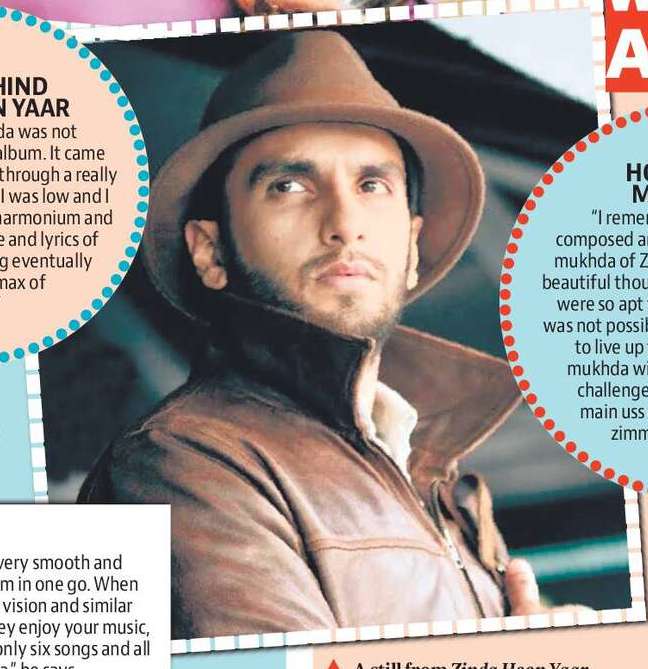
Madhav Agasti, who tailored costumes for more than 350 films, including Mr India and Andaz Apna Apna, says costumes usually remained with producers once filming ended. Mogambo’s military-inspired uniform, he believes, is still with Boney Kapoor. Lead costumes are never really reused, Kakkar explains. Designed for one actor and one character, they often end up with producers, collectors or members of the crew. Sometimes they become personal keepsakes. Shivam Hingorani, an assistant director on Yeh Jawaani Hai Deewani, still treasures the brown AllSaints jacket worn by Ranbir Kapoor. “The moment I saw it, I knew I wanted it.” And once production wrapped up director Ayan Mukerji handed it to him.
And, thus, Bollywood’s best stories survive in fragments: a sari wrapped in mulmul, a villain’s uniform in a producer’s cupboard, or a prop on someone’s shelf. They may never draw museum crowds, but for the person who recognizes one from the screen, those ordinary objects still possess the power to collapse time, carrying them back to the moment the story first came alive.
Balam Pichkari was not going to be a Holi song-Pritam Chakraborty
10:18 AM

Samarth Goyal (HINDUSTAN TIMES; March 4, 2026)
It features on every Holi playlist, blaring from speakers around festivities. But composer Pritam has revealed that Balam Pichkari from Yeh Jawaani Hai Deewani (2013) was not originally conceived as a Holi track.
“Initially, it was not going to be a Holi song,” the 54-year-old says, adding that the change happened after director Ayan Mukerji attended a Holi celebration in 2012. “(Ayan) told us, ‘We have to set this song during Holi. It’ll take the vibe to another level’,” he says.
Over a decade later, Pritam is grateful for the love the song has received. “Balam Pichkari trends at the top almost every Holi,” he says, adding, “If I knew exactly what made it cut across generations, I would probably try to recreate it every time. But honestly, it’s impossible to predict these things.”
Nowadays, he feels that there is a seeming lull in iconic festival tracks. But Pritam insists, “There is always space for a good song. Platforms may change, listening habits may evolve, but emotions don’t.”
Had even 1 song worked, Tu Meri Main Tera Main Tera Tu Meri's opening would not have been so bad-Raj Bansal
9:15 AM

Priyanka Sharma (MID-DAY; December 29, 2025)
This Christmas, romance arrived on the big screen in a quintessential Dharma-esque manner, but audiences have refused to reciprocate love for the story. The Kartik Aaryan-Ananya Panday-starrer Tu Meri Main Tera Main Tera Tu Meri collected only Rs 8.46 crore on opening day, with a four-day total of around Rs 28 crore.
Bihar-based exhibitor Vishek Chauhan isn’t surprised. He told mid-day, “I don’t think the film had any chance from day one. It looks like a stale product, which people have seen umpteen times throughout the previous decade. It is basically the genre that came into being with Ranbir Kapoor and Deepika Padukone-starrer Yeh Jawaani Hai Deewani (2013). And then Ranbir milked it to great effect with many films. He even managed to get some kind of success with Tu Jhoothi Main Makkaar (2023). The audience has seen enough of this genre. Theatrical entertainment works on the basic principle of the ability of the content to create the fear of missing out (FOMO). If your content is not able to do that, the audience will not come to the theatres. If you feel that you will make anything random, then don’t expect numbers.”
Chauhan added lessons for Karan Johar, the co-producer of the film: “Two of his productions this year — Tu Meri Main Tera and Sunny Sanskari Ki Tulsi Kumari — were stale products. We need intense romantic love stories on the big screen, that’s what people are watching right now. People want dark, intense lovers. No matter how good a film you make, the public will not come to see a romantic comedy. People are saturated with it.”
Timing also worked against the release. Rajasthan-based exhibitor Raj Bansal told mid-day, “The film has terribly low collections so far. The opening day (Dec 25) was low. Then a Friday (Dec 26) drop was natural. But Saturday’s (Dec 27) collections showed that it would trend poorly. The movie got sandwiched between Dhurandhar and Avatar: Fire And Ash, which is doing well at my theatre. Its lifetime looks like around Rs. 40 crore. What the film lacked was hit music. Had even one or two songs worked, the opening would not have been so bad. The movie’s star cast is also not a big draw.”
Fenil's Bollywood Talk # 865
10:34 AM

WILL CINEMA LOVERS DAY OFFER BENEFIT AZAAD, EMERGENCY AND HOLDOVER RELEASES?
Due to the dry period at the box office, the theatres have decided to once again have a Cinema Lovers Day on Friday, January 17. Usually, on this day, all cinemas sell tickets for Rs. 99. But this time, PVR Inox, Maxus and Miraj have priced tickets at Rs. 112 while MovieMax and MovieTime will sell tickets for Rs. 99. Nevertheless, Rs. 112 is also dirt cheap, considering the insane ticket prices nowadays and hence, the move will benefit.
The biggest beneficiary of this offer is usually the new releases. The Hindi films that will be released tomorrow are Emergency and Azaad. Emergency stars Kangana Ranaut and also features her as a director. She plays the role of the ex-Prime Minister of India, Indira Gandhi. The film was all set to be released on September 6, 2024. But during the promotions of the film in August last year, Kangana made certain comments that led to controversy. The film was then minutely viewed by the Central Board of Film Certification (CBFC) and they raised objections to certain scenes. The matter even reached the Court after which the film was cleared but with a few deletions.
The Court case ended around October but the makers decided to release in January as probably there were no other release dates. The film’s awareness levels are high but the excitement levels are not. As a result, the film’s opening will be minimal. The Cinema Lovers Day will hopefully benefit Emergency and it’ll open around Rs. 3-4 crores.
Azaad, meanwhile, marks the debut of Ajay Devgn’s nephew Aaman Devgan and Raveena Tandon’s daughter Rasha Thadani. It is directed by Abhishek Kapoor of Rock On and Kedarnath fame. Ajay Devgn also stars in the film in a dynamic role. The trailer and songs have failed to make a mark although the debutants have gone all out to promote the film. It is expected to open at Rs. 1-2 crores.
Last week’s releases, Game Changer and Fateh, have failed. Game Changer’s first week collections will be around Rs. 27 crores while that of Fateh would be Rs. 8 crores approx. They will get little benefit from the offer, especially Fateh since its tickets were priced at Rs. 99 and it also gave the audience the offer of Buy One Ticket Get One Free. A Gujarati film, Mom Tane Nai Samjay, was released last week and it’s doing huge business. Its shows have been increased and it’ll hugely benefit from this offer, compared to Game Changer and Fateh.
On the other hand, Yeh Jawaani Hai Deewani, which continues to be strong, will get considerable footfalls tomorrow. Right now, its ticket prices are around Rs. 149. With ticket rates slashed to Rs. 99 and Rs. 112, there’ll be even more motivation for the audience to turn up. Another re-release this Friday is Satya. The cheaper tickets might help the film emerge as a surprise success.
Two Hollywood films will also be released on January 17 - A Real Pain and Wolf Man. The awareness is limited and if other shows are full on Friday, the audience might buy its tickets.
Lastly, Pushpa 2 - The Rule will be released with an additional 20 minutes. It has done most of its business and it remains to be seen if people turn up to watch the extended cut.
Due to the dry period at the box office, the theatres have decided to once again have a Cinema Lovers Day on Friday, January 17. Usually, on this day, all cinemas sell tickets for Rs. 99. But this time, PVR Inox, Maxus and Miraj have priced tickets at Rs. 112 while MovieMax and MovieTime will sell tickets for Rs. 99. Nevertheless, Rs. 112 is also dirt cheap, considering the insane ticket prices nowadays and hence, the move will benefit.
The biggest beneficiary of this offer is usually the new releases. The Hindi films that will be released tomorrow are Emergency and Azaad. Emergency stars Kangana Ranaut and also features her as a director. She plays the role of the ex-Prime Minister of India, Indira Gandhi. The film was all set to be released on September 6, 2024. But during the promotions of the film in August last year, Kangana made certain comments that led to controversy. The film was then minutely viewed by the Central Board of Film Certification (CBFC) and they raised objections to certain scenes. The matter even reached the Court after which the film was cleared but with a few deletions.
The Court case ended around October but the makers decided to release in January as probably there were no other release dates. The film’s awareness levels are high but the excitement levels are not. As a result, the film’s opening will be minimal. The Cinema Lovers Day will hopefully benefit Emergency and it’ll open around Rs. 3-4 crores.
Azaad, meanwhile, marks the debut of Ajay Devgn’s nephew Aaman Devgan and Raveena Tandon’s daughter Rasha Thadani. It is directed by Abhishek Kapoor of Rock On and Kedarnath fame. Ajay Devgn also stars in the film in a dynamic role. The trailer and songs have failed to make a mark although the debutants have gone all out to promote the film. It is expected to open at Rs. 1-2 crores.
Last week’s releases, Game Changer and Fateh, have failed. Game Changer’s first week collections will be around Rs. 27 crores while that of Fateh would be Rs. 8 crores approx. They will get little benefit from the offer, especially Fateh since its tickets were priced at Rs. 99 and it also gave the audience the offer of Buy One Ticket Get One Free. A Gujarati film, Mom Tane Nai Samjay, was released last week and it’s doing huge business. Its shows have been increased and it’ll hugely benefit from this offer, compared to Game Changer and Fateh.
On the other hand, Yeh Jawaani Hai Deewani, which continues to be strong, will get considerable footfalls tomorrow. Right now, its ticket prices are around Rs. 149. With ticket rates slashed to Rs. 99 and Rs. 112, there’ll be even more motivation for the audience to turn up. Another re-release this Friday is Satya. The cheaper tickets might help the film emerge as a surprise success.
Two Hollywood films will also be released on January 17 - A Real Pain and Wolf Man. The awareness is limited and if other shows are full on Friday, the audience might buy its tickets.
Lastly, Pushpa 2 - The Rule will be released with an additional 20 minutes. It has done most of its business and it remains to be seen if people turn up to watch the extended cut.
My husband has seen Yeh Jawaani Hai Deewani and he says I’m as hot today as I was back then-Kalki Koechlin
9:28 AM
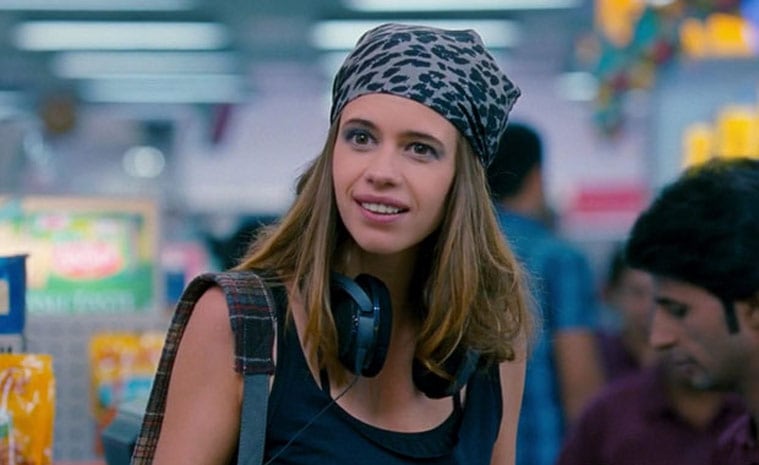
Onkar Kulkarni (BOMBAY TIMES; January 7, 2024)
Ayan Mukerji’s romantic comedy, Yeh Jawaani Hai Deewani (YJHD), starring Ranbir Kapoor, Deepika Padukone, Aditya Roy Kapur and Kalki Koechlin re-released last week. Kalki, who played the role of Aditi, is excited that a new generation is enjoying the movie, which originally released in 2013.
She says, “To see people dancing to the film’s songs in theatres is so heart-warming. I guess the film belongs to a new generation of people now. My Instagram blew up quite a bit after I posted the announcement video in true Aditi style, so that was fun.”
While her daughter, Sappho, hasn’t seen the film, Kalki is happy with her musician husband, Guy Hershberg’s reaction after seeing the film. She shares, “My husband has seen YJHD and he says I’m as hot today as I was back then (laughs).”
The film became popular, especially among the youth, for the realistic way it portrayed life and friendships on screen. She says, “The film taught me how some friendships last a lifetime. That’s true; I’m still in touch with some of my boarding school friends, who I grew up with. Somehow, they know you best, they’ve seen you become the person you are before you started your career and became a public figure. They know your real personality.”
Recounting the days when they were shooting for the film, Kalki says, “I think I bonded best with Ranbir. We aren’t much in touch now. We do meet occasionally at parties or events, but yes, we had a great time while shooting YJHD.”
She adds, “We used to gang up against the boys. Deepika and I would put snow in the boys’ T-shirts. And Ranbir and Aditya got their revenge during the haldi ceremony shoot - they were supposed to put a dot of haldi on me, but Ranbir ended up putting a whole bowl of it on my face, which I think remained in the final edit (laughs).”
I have my days when I feel unattractive-Aditya Roy Kapur
3:46 PM
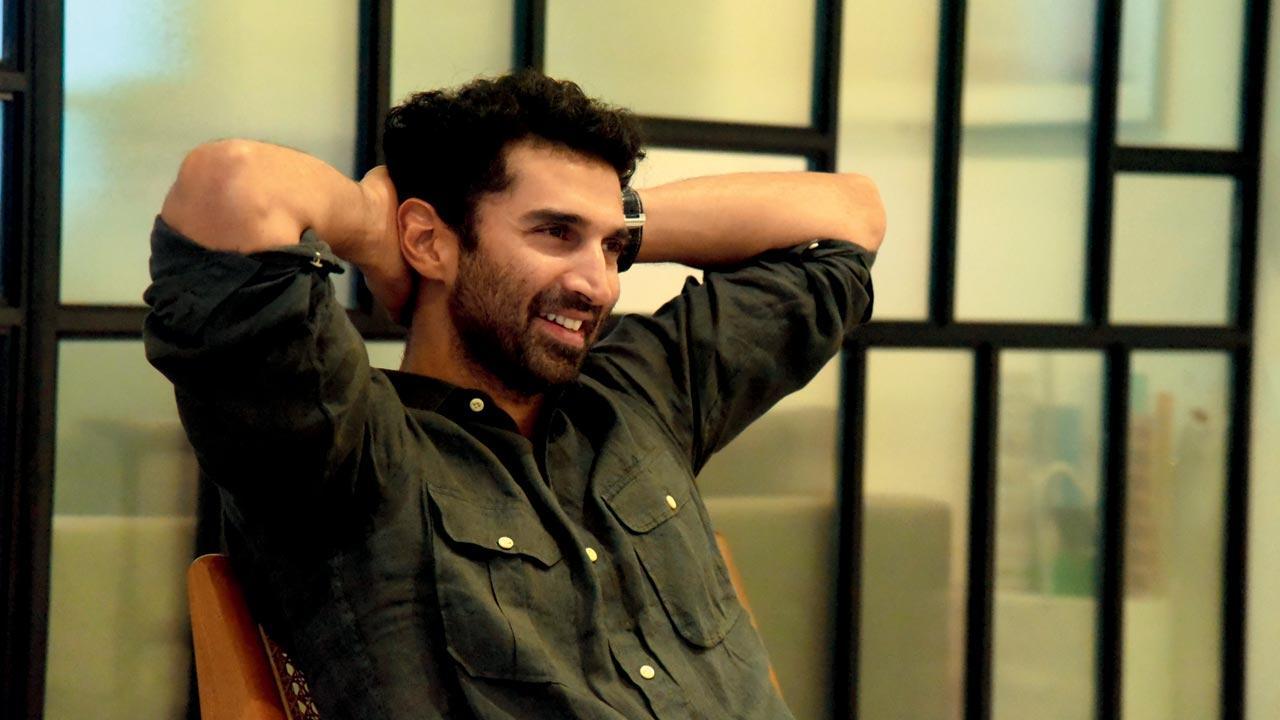
Onkar Kulkarni (BOMBAY TIMES; September 9, 2023)
Considered one of Bollywood’s most eligible bachelors, Aditya Roy Kapur is among the fittest actors of his generation. And while he enjoys all the attention he gets from the ladies, he admits that it isn’t easy to maintain that level of fitness, what we’d call ‘hotness quotient’. In a quick tête-à-tête, the actor reveals what goes into looking the way he does, the appreciation he got for his OTT debut and more. Excerpts...
‘I don’t have a six-pack all the time!’
While he’s undeniably good-looking and loves the compliments coming his way from fans, Aditya confesses that he’s quite critical about his own self. “We are all so critical of ourselves and we constantly feel... oh, I am fat, oh, I am this, I am that, when actually others feel that you are looking just fine. So, it is all about perspective, right? I am like anybody else. I have my days when I don’t feel good about myself or feel unattractive. I don’t have a six-pack all the time! Also, because I am tall, everything else gets distributed (on my body). I might appear very fit, but I am not that fit all the time. I am constantly feeling like I need to lose weight. I have self-doubts like anyone else has. Having said that, the compliments I get are flattering. At least all the hard work and the dieting has some upside to it (laughs)!”
‘It is tough to stay in shape, especially if you are a foodie’
Ask Aditya, if there’s anything he would like to change about his body and pat comes his reply, “I want to change my metabolism. There are some people who are blessed where they can eat whatever they want, and they don’t put on weight. Unfortunately, that’s not the case with me. If I eat, I put on weight instantly. It is tough to stay in shape, especially for someone who’s a foodie. I have to be extremely disciplined if I have to be in shape. If I lose track and cheat for 3-4 days in a row, I try and get back in shape in the next 10 days. Earlier, I used to put on 15 kilos and then get busy losing those 15 kilos. But as you get older, more than physically, it is mentally taxing to be that extreme. So, it’s better to keep a watch on my food intake.”
‘I will get bored if I have to look a certain type all the time’
As an actor, you are always under pressure to look good, but if a character demands that I have to look overweight or not flaunt a chiselled body, I am absolutely okay with it. In fact, in my repertoire of movies, I have done films that did not focus on my physical attributes like Kalank, Ludo, Daawat-e-Ishq and I definitely want to continue to do that, otherwise, I will get bored looking a certain type all the time.”
‘I have had such special projects in my career at various junctures’
The actor won a lot of praise for his OTT debut, The Night Manager, in fact, with the series he has grabbed more eyeballs than ever before. “I don’t know if it’s ‘the most’ (I’ve been appreciated), but I definitely feel appreciated. The appreciation and acclaim have been heartwarming. I feel at various junctures in your career a project comes along which cuts across and crosses over. Back in the day, a project that changed things for me was Aashiqui 2. I won a lot of love and appreciation for that film. I feel Yeh Jawaani Hai Deewani was quite special too. So yes, I have had such special projects in my career, and it is really nice to savour these as an actor,” he says.
10 Years of Lootera: Amit Trivedi, Amitabh Bhattacharya share fascinating trivia
8:36 AM
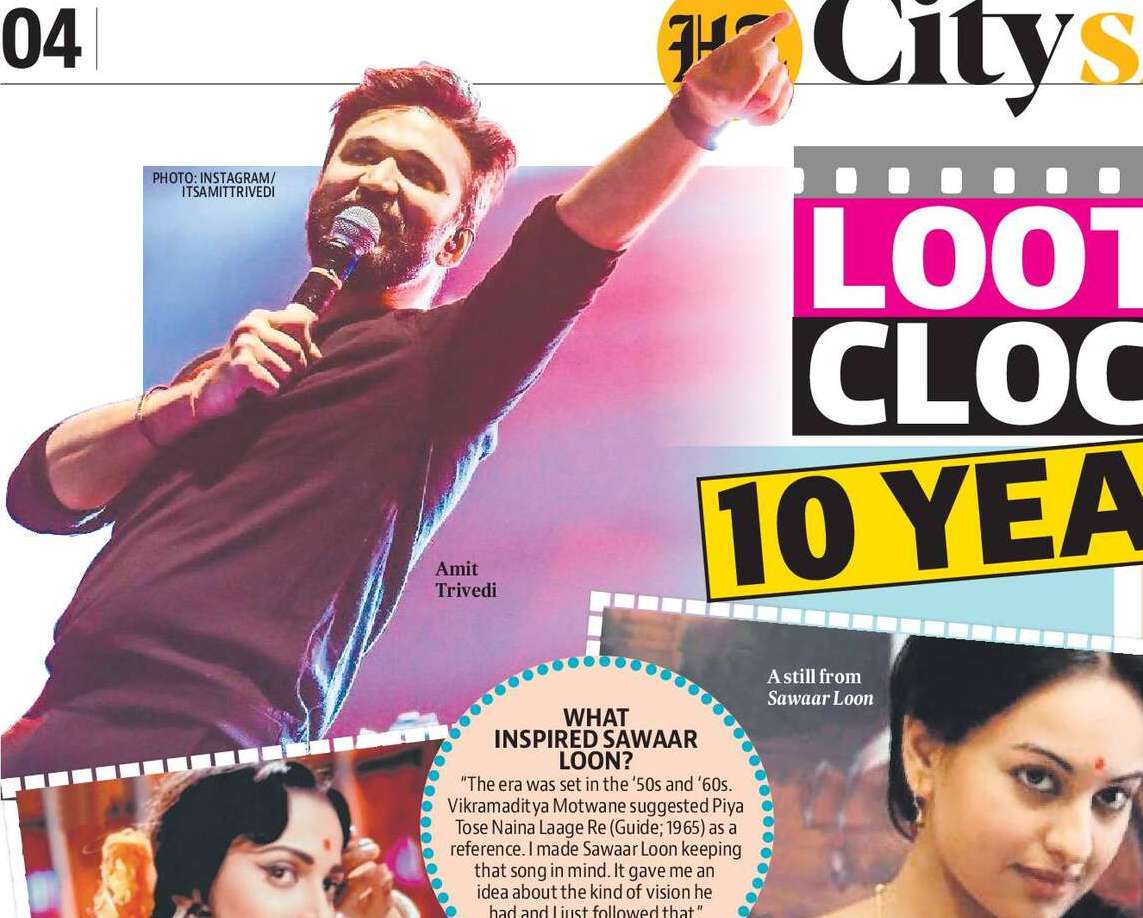
Soumya Vajpayee (HINDUSTAN TIMES; July 5, 2023)
Besides winning awards, the music of Lootera (2013) also earned a lot of respect from music aficionados. So much so that the six-track album continues to feature on their playlists. For composer Amit Trivedi, the experience of working on the songs of the Ranveer Singh and Sonakshi Sinha-starrer “was amazing”.
He shares, “I always enjoy working with Vikramaditya Motwane (director), as he always has clarity on the music he wants in his films. He gave me the script of Lootera and there was so much clarity in the way things were described that I knew exactly how to go about it. Working with Amitabh Bhattacharya as the lyricist and some amazing singers was a great experience too.”
WHAT INSPIRED SAWAAR LOON?
“The era was set in the ‘50s and ‘60s. Vikramaditya Motwane suggested Piya Tose Naina Laage Re (Guide; 1965) as a reference. I made Sawaar Loon keeping that song in mind. It gave me an idea about the kind of vision he had and I just followed that,” says Trivedi.
WHAT A SMOOTH RIDE!
“Working on the songs of Lootera was very smooth and we managed to come up with all of them in one go. When you work with people who have a clear vision and similar wavelengths, things get easy. When they enjoy your music, you get the freedom to create. I made only six songs and all of them made it to the album of Lootera,” he says.
THE STORY BEHIND ZINDA HOON YAAR
Trivedi recalls, “Zinda was not supposed to be in the album. It came to me when I was going through a really tough time, personally. I was low and I just sat down with the harmonium and came up with the tune and lyrics of the mukhda. The song eventually became the climax of the film.”
-------------------------------------
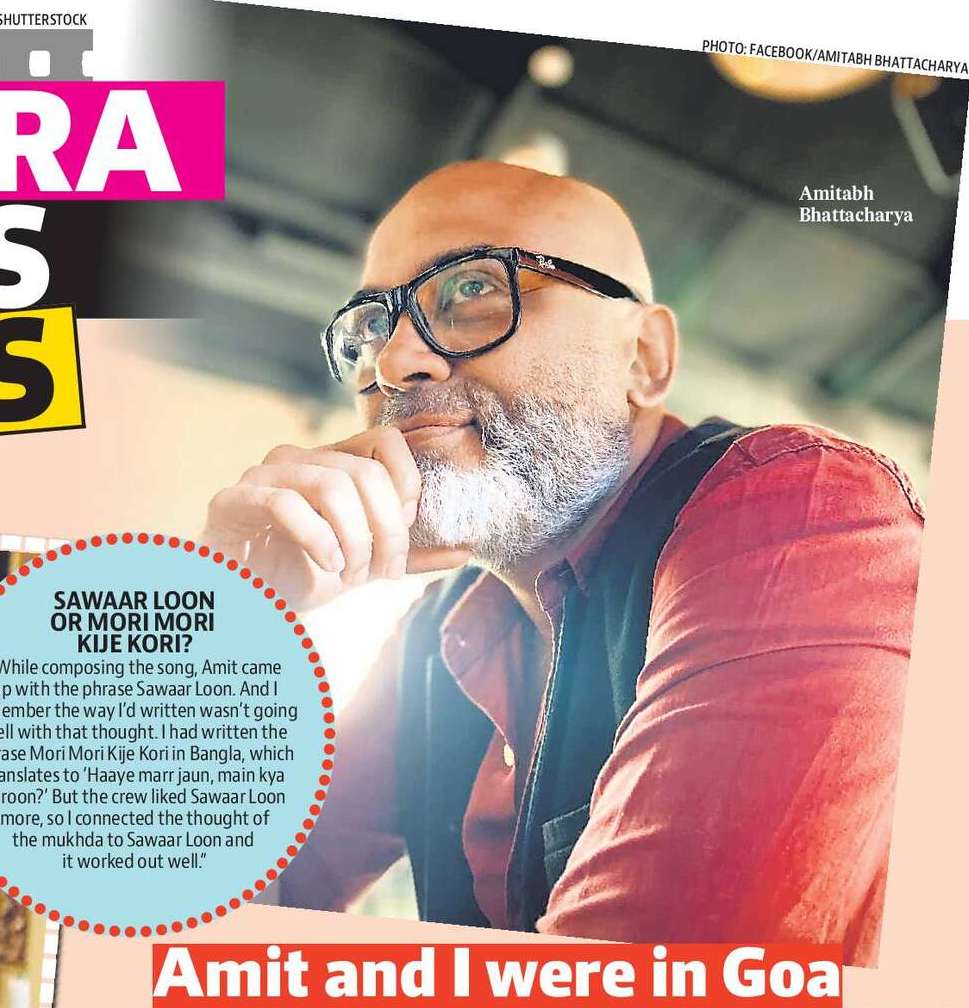
Soumya Vajpayee (HINDUSTAN TIMES; July 5, 2023)
I had come to Mumbai with the vision of becoming a singer and I became a lyricist by chance. I had just found a footing as a lyricist in the industry around the time Lootera happened, so it was a special project,” says lyricist Amitabh Bhattacharya, who penned all the songs of the film. Teaming up with composer Amit Trivedi, his collaborator on many projects even before Lootera, was a memorable experience for the writer.
“Amit and I make a good team. Since we had worked on projects like Aamir (2008), Dev D (2009) and Udaan (2010) by then, we had a great tuning. He would share the melody with me and I would write the lyrics after listening to the track. All the songs in the film were the first drafts I wrote,” he says, adding, “Working on a classic like Lootera while I was also writing songs for a commercial masala film like Yeh Jawaani Hai Deewani (2013) was interesting. As an artiste, I enjoyed the variety.”
ZINDA HOON YAAR IS MEMORABLE
“I remember Amit had already composed and written the lyrics for the mukhda of Zinda Hoon Yaar and it was a beautiful thought. I realized that the words were so apt that rewriting the mukhda was not possible. For me, the responsibility to live up to the benchmark of the mukhda with impactful antras was a challenge. But mujhe khushi hai ki main uss gaane ko accha likhne ki zimmedari nibha paaya,” he recalls.
SHIKAYATEIN FOREVER
Bhattacharya reminisces, “My favourite track from the album is Shikayatein. There’s something in the melody. Amit and I were in Goa when he shared the melody with me and I wrote the song. There are some songs that you write and feel a sense of relief and catharsis. Shikayatein is that song for me. With (singer) Mohan Kannan’s voice, the song went to another level.”
SAWAAR LOON OR MORI MORI KIJE KORI?
“While composing the song, Amit came up with the phrase Sawaar Loon. And I remember the way I’d written wasn’t going well with that thought. I had written the phrase Mori Mori Kije Kori in Bangla, which translates to ‘Haaye marr jaun, main kya karoon?’ But the crew liked Sawaar Loon more, so I connected the thought of the mukhda to Sawaar Loon and it worked out well.”
The topic of Yeh Jawaani Hai Deewani's sequel came up-Aditya Roy Kapur
8:24 AM
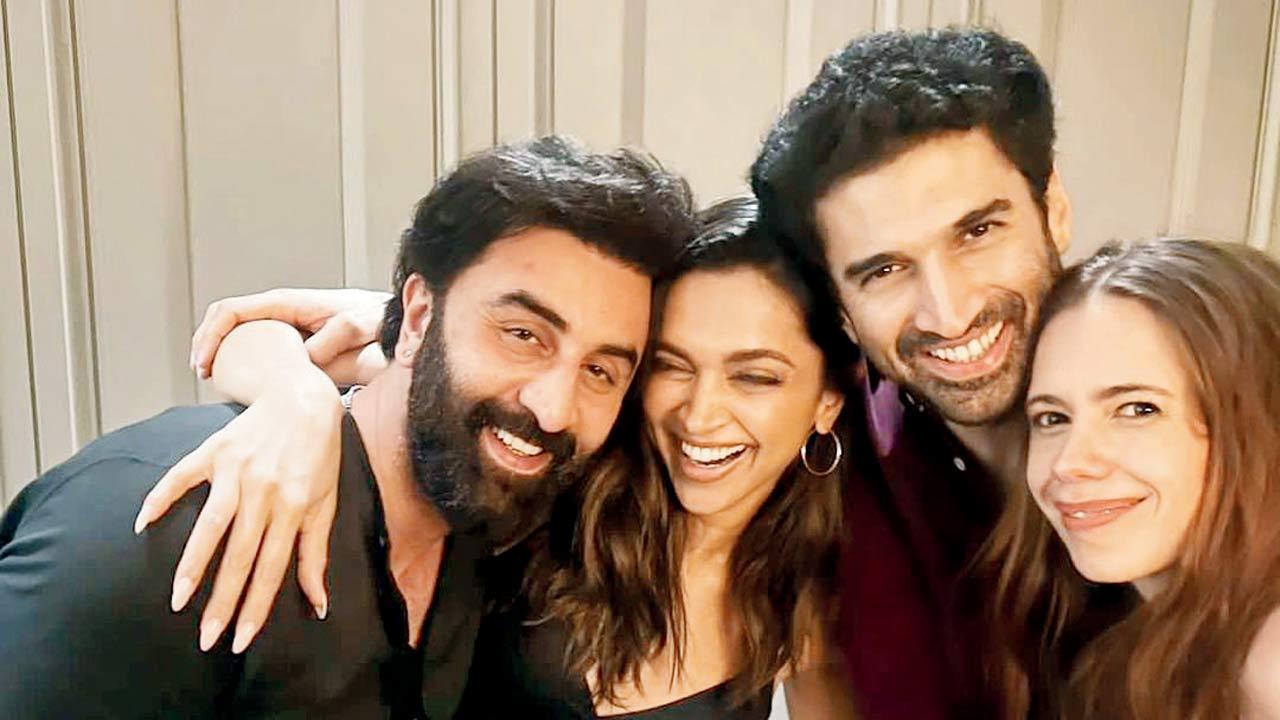
Weeks after their reunion pictures went viral online, Aditya says Yeh Jawaani Hai Deewani team discussed possibility of a sequel
Priyanka Sharma (MID-DAY; June 28, 2023)
Remember how Kalki Koechlin’s character in Yeh Jawaani Hai Deewani (2013) said, “Kya jaldi jaldi bade ho gaye na hum”? The sentiment was shared by Ranbir Kapoor, Deepika Padukone, Aditya Roy Kapur and Koechlin as they met up last month to celebrate the tenth anniversary of Ayan Mukerji’s directorial venture. Kapur, who played one of the four primary characters in the coming-of-age film, says the reunion was laced with nostalgia.
“We picked up where we left off. Ranbir and I stay in touch, but when we [all] met, it felt like time does fly,” he smiles.
It wasn’t surprising that as soon as Padukone posted the celebration pictures on Instagram, they broke the internet. Fans have since expressed their wish for a sequel to Yeh Jawaani Hai Deewani. Did the team discuss its possibility?
“The topic of a sequel came up. But this is a question best posed for Ayan. It’s something the audiences will love, and as actors, we are always there to do good work. So, put this pressure on Ayan,” laughs Kapur.
The Karan Johar production has been one of the most defining mainstream films on young relationships and ambitions. The actor believes the team’s mutual admiration reflected on screen. “We had a great time shooting it, and people can see that on screen. It was nice to sit around and reminisce about all the fun stories from the set.”
10 Years of Yeh Jawaani Hai Deewani: My character acted as a catalyst for Bunny’s change of heart-Kunaal Roy Kapur
11:05 AM
Navya Kharbanda (HINDUSTAN TIMES; May 31, 2023)
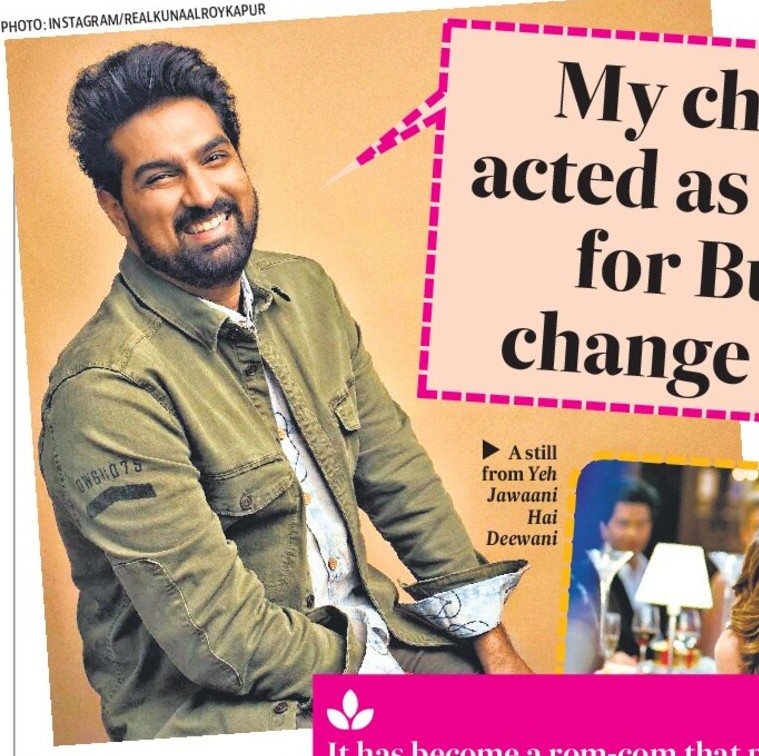
It’s been a decade since the rom-com Yeh Jawaani Hai Deewani (2013) was released. Actor Kunaal Roy Kapur, who played a small yet pivotal role in the Ayan Mukerji-directed film, waxes nostalgic while reminiscing about the fun he had while shooting.
“Its success was one thing, but what you really carry forward are the great memories of making it and spending time with other actors,” he shares.
Talking about his character Taran, the NRI who gets married to Aditi (Kalki Koechlin), the 44-year-old reveals that it wasn’t just a funny cameo. “Taran is a loved character in the sense that Bunny (Ranbir Kapoor) sees something in Taran and Aditi as a couple, and that somehow changes his attitude towards love and his priorities in life. Ayan and I had discussed this at length as to how Taran, sort of, acts as a catalyst for Bunny’s change of heart towards Naina (Deepika Padukone). Perhaps that’s why the character still resonates and is remembered by people,” says the actor.
Among all the iconic scenes, Kapur’s dance sequence with actor Evelyn Sharma is a favourite for the actor. “Evelyn and I had a great time putting that dance together. We were just trying to come up with crazy steps,” he shares. He recounts one of the most difficult scenes — the one where he jumps into a swimming pool to fetch his engagement ring: “It was not easy; the water was really cold, and we shot for that scene at night.”
Ask if he anticipated YJHD to become a cult film, and Kapur admits that no one expected the film to have this kind of longevity. “It has become one of those rom-coms that people like to revisit. Nobody thought that it would connect with the audience, even after so many years. So yes, it definitely took everyone by surprise,” he concludes.

Acting is not as easy or difficult as people make it out to be-Kalki Koechlin
8:12 AM

Actor Kalki Koechlin says a good actor will add layers to any character
Rishabh Suri (HINDUSTAN TIMES; December 22, 2022)
When people look at actors and film industry, they only see the glitz and glamour of the profession and may believe that acting comes easy. However, actor Kalki Koechlin believes that acting can be as easy or as hard you want to make it. She explains, “Acting is not as easy or difficult as people make it out to be.”
She adds, “I think certain characters require more than others. There are characters I didn’t prep for at all. For example, Yeh Jawaani Hai Deewani (2013), I just jumped in and had a great time shooting. But characters like Laila in Margarita With A Straw (2015), I had to prepare for six months. I did nothing else but that (method acting) completely,” says the 38-year-old. The actor will be seen next in the film Goldfish, with actor Deepti Naval, who plays her mother suffering from dementia.
A question that is posed to the actor regularly is one about her method of acting. And she says, she never knows how to respond to it. Regardless of the type of character, a good actor, Koechlin feels will “always try and add layers to it.”
Talking about late actor Irrfan’s method of acting, she says, “I remember the stylist for The Namesake (2007) told me about Irrfan’s character where he played a father — a pretty regular character. But, he told the stylist to add a heel to one of his shoes so that he would walk with a limp.”
It is roles like these, where an actor is allowed to prove their mettle and allows them to not be stereotyped into a certain role or character but the Zindagi Na Milegi Dobara (2011) actor says one has be patient and “wait as these roles don’t come by very often”.
“You have to detach yourself and be able to say ‘I do want to work, but can I wait for the right thing to come, which will shake myself up and challenge me as an actor’,” she ends.
I always think one has to be an actor and an athlete at the same time-Ranbir Kapoor
8:19 AM

Actor Ranbir Kapoor says people might not easily accept him in the period film genre, but is hopeful that Shamshera will find its audience
Monika Rawal Kukreja (HINDUSTAN TIMES; July 18, 2022)
You have seen him mostly play the conventional romantic hero, some outright fun characters and some serious ones, too. But, actor Ranbir Kapoor is looking forward to shattering all stereotypes with his next film, Shamshera, a period action drama. In a candid chat with us, Kapoor talks about the risk involved in doing a period film and the physical transformation he underwent for this project.
Shamshera and Brahmastra, two back-to-back films after four years. A lot has changed in this period, especially with the pandemic making us used to a new normal. How have you adapted to all this?
Human beings are born to adapt. Movie-making is a business, but people’s lives are far greater than just thinking about movies. So, there are a lot of life values that people have understood. But, I’m very excited that I’ve got these two films that I’ve been making for the past four years. Both are big-ticket, big-screen entertainment films, and I’m very excited and anxious to see how the audience will accept, react to them.
Shamshera is unlike any of your past movies. Does it get difficult to give a nod to such challenging roles and projects?
When you first hear the story of a film, you instinctively decide if you want to do it, if it excites you or not. A film like Yeh Jawaani Hai Deewani (2013), which was more than a modern film, also required a lot of work. In fact, it was harder, as you don’t really have a character to latch on to because you’re feeding off your own personality. But when a film like Shamshera comes, it comes with a lot of responsibility, and you have to make it look believable. Since people have seen me in a certain image for so long, this is probably a genre that people won’t necessarily easily accept me in, but it’s my job to put in the hard work so as to make the audience watching the film forget what my past work was, and believe in the character and the story they’re watching at the current moment.
When it comes to period films, people either love or hate them. So, a lot is at stake, even for the actor. Is this a risk that you also took while in Shamshera?
Yes, period films are harder, as you really have to make that world believable. The audience needs to know the place and time, and they can’t be alienated from that. So, it’s quite tricky when you’re doing a period piece. A movie, on the other hand, is about a good story told in the future, present or past. As long as the story is engaging, entertaining, and the characters are moving you, making you emotional, I think that’s what matters, irrespective of the period the film is based in.
How hard was the physical transformation for Shamshera?
I always think one has to be an actor and an athlete at the same time. It’s always hard when a role demands physical change. Shamshera is about a tribal leader who stands up for the freedom of his tribe. The fight for freedom is a legacy left behind by one kind, and it is now your destiny to restore it to its former glory. And to really make this storyline work, there are a lot of things that went behind it.

It was my destiny to do Brahmastra-Ayan Mukerji
8:33 AM
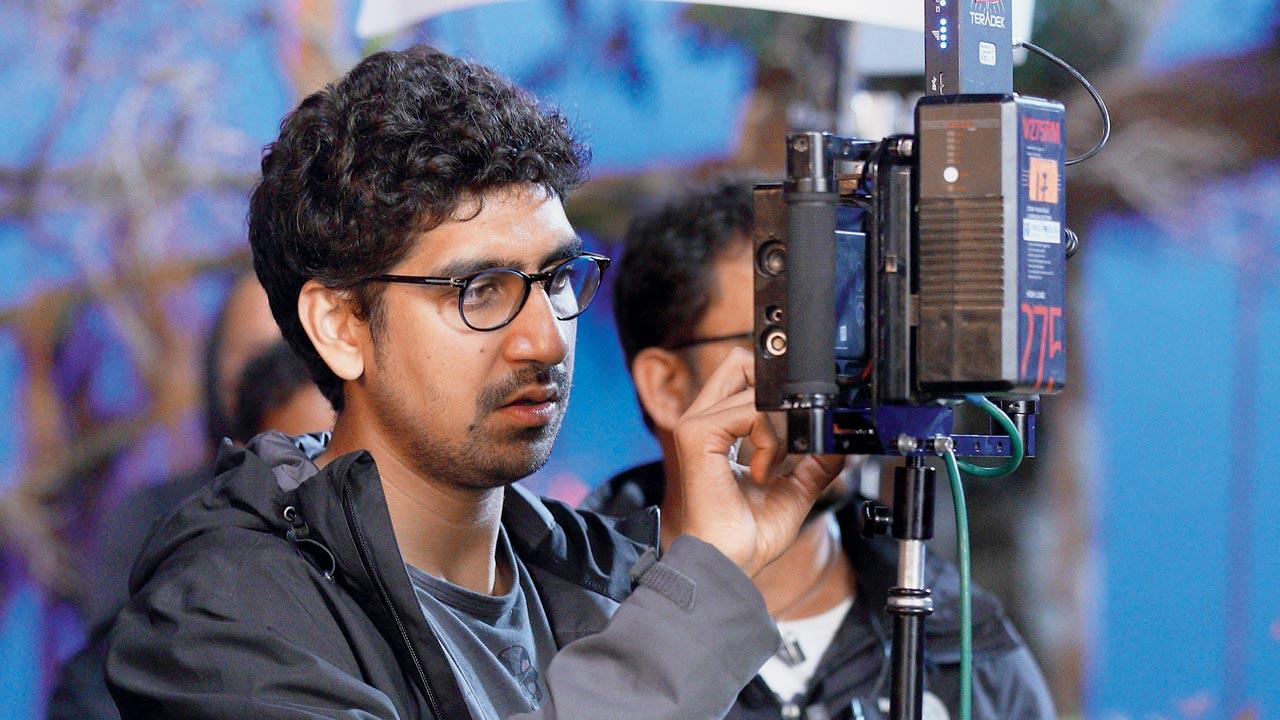
Nine years since the idea, Ayan Mukerji discusses weaving mythology and technology in the making of Ranbir-Alia’s 'Brahmastra'
Mohar Basu (MID-DAY; July 17, 2022)
Nestled in a remote corner of the old Dharma Productions’ office in Khar is Ayan Mukerji’s workstation—the birthing ground for Brahmāstra. One quick look around and you find props, books, research material, and everything else that is required to create what is touted to be one of the most awaited films of the last few years. We sit down to chat with the filmmaker, who returns nine years after the blockbuster 'Yeh Jawaani Hai Deewani' (2013), to discuss a film that no one expected him to make and one that everyone cautioned him against.
Birth Of Brahmastra
“We jumped into the ocean without a float,” starts Mukerji with a laugh, when we asked him where he began. For a homegrown, first of its kind, superhero movie - he had no reference point. “Some of these big things, if you know too much when you begin, it’s so daunting that you’ll never start. It was my destiny to do this movie. Someone walked into my office and saw the trishul, and realised the amount of shiva energy in this project. She said that anything with Shiva’s name is difficult but when the results come, it will be heartening. It threw up odd challenges. Karan (Johar, producer) had announced a release date of 2018. With every passing phase of this film, I believed even more that we are on to make a film that’s unique, incredible and special. If we get this right, we make an impact that’s beyond a mere successful run of the box-office. The impact of Star Wars, Avatar or Baahubali. We were walking with the giant movies in our mind. We knew we were not a regular film. Building something of this nature was bound to take time…”
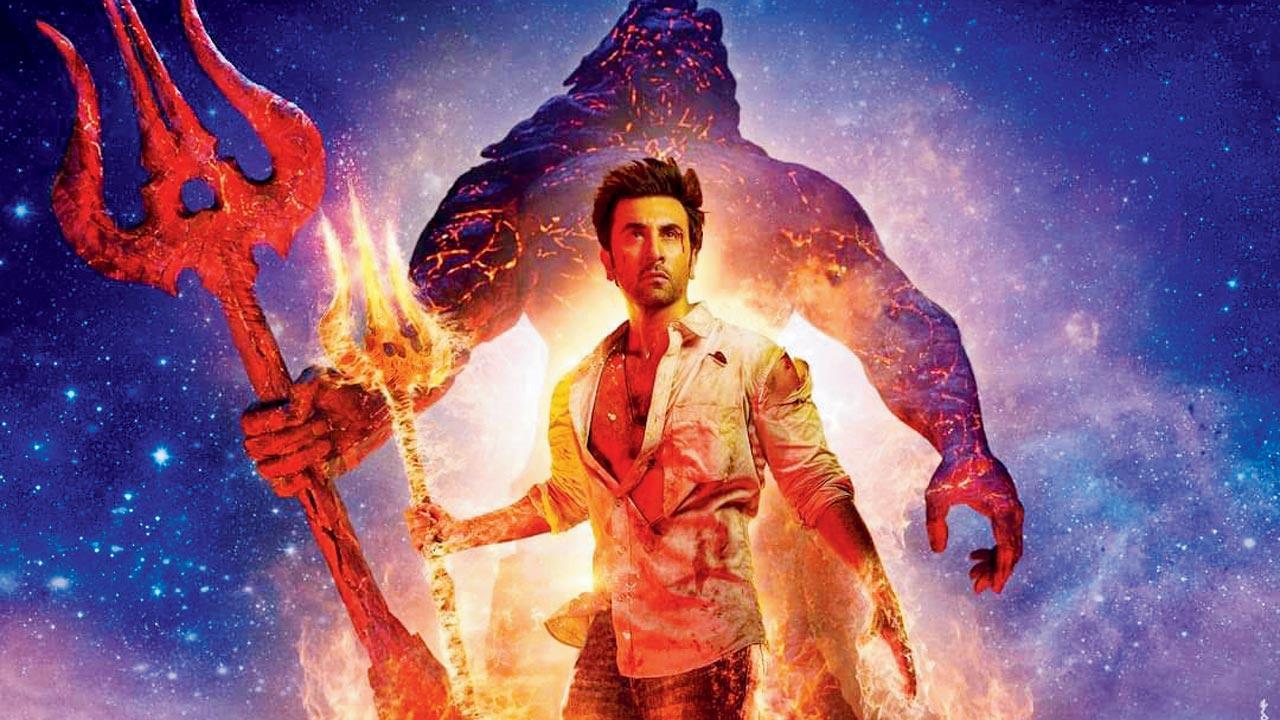
Genesis of the Astraverse
Borrowing the motifs from mythology, Mukerji knew early on that his film is a blend of modern age philosophy blended with the stories of Gods and Goddesses we’ve grown up with. He explains, “The elements came over the years. I am connected with Hinduism. I am inspired by Lord Shiva because my family feels spiritually connected with Maa Durga, Ma Kali and Shiva Puranas. It was always a part of my life. I was obsessed with stories of Gods and Goddesses as a kid. My favourite film as a kid was - Har Har Mahadev, which is a film with Dara Singh as Shiva. I used to watch the movie and it spoke to me. When we were starting, the reference in my mind was of Ra.One, which Shah Rukh Khan made. That film was drawn from technology, robotics. I got to draw from mythology and was looking at a film on technology. It was so abstract that it was years before we could craft a story.”
In Mukerji, we found a fellow Potter head too, which he credits as inspiration. Not only did that nudge him to rake up the courage to build a universe from scratch, but he also believes Brahmastra has a similar fantasy spirit. “After my teenage years, I realised the Harry Potter series were one of my favourite creations of all time. I was lost in those books. That degree of entertainment and stimulation had not happened in our movies. The genre attracts me. When the idea came to me, I was in the Himalayas. There is a primal feeling you get in the mountains where you feel connected to the roots of this nation. If we get into the heart of the story of Brahmastra, one must remember that it is a modern film. It unfolds in India today. A part of my natural filmmaking wrote about modern characters and modern relationships. I have kept that alive in the film. We have discussed spirituality in a relatable fashion that connects with today’s generation. Through action, fantasy, the VFX, all the masala, love story, at its core there is a spiritual depth which we were trying to achieve. I was chasing what spirituality means to me and translated that celluloid. I had followed that essence in Wake up Sid and Yeh Jawaani… as well.”
A lot of our technical research followed thereon. From reading Devdutt Patnaik’s works to bring in interesting motifs, to researching on the unspoken truths about Shiva, Mukerji amassed it all into the screenplay. “You know there is this word people throw around a lot - energy! We are all chasing positive energy. I have tried to marry my modern philosophies with stories that run deep in our country and bring it together in Brahmastra. Bit by bit we created the astraverse - Vanarastra, Nandiastra, Prabhastra, Jalastra, Pawanastra and Brahmastra. It starts with a visual of rishi-munis meditating in the Himalayas and is bestowed with a vardan of brahmshakti. These astras are manifestations of different energies that exist around us.''
Finding his support system in Alia-Ranbir
The filmmaker has no bones in admitting that he and his leading man Ranbir Kapoor have a vast gamut to cover with the franchise. “It is a vast subject and if anyone would have understood my abstract notions, it would be Ranbir. We are close as people. I can say anything to him in the most vulnerable state. It has always been our equation which is why we could make a Wake up Sid together. He can hear me out deeply. He allows directors to share vision, no matter how abstract, how vague it is. He internalizes this character. He and Alia had to carry the film with me. It is a pregnancy that is in you. Every dinner conversation, every chill session, has always been about this movie.”
He sheepishly admits that he has been a vibe disruptor in far too many hangout sessions. “Since 2011, Ranbir has been hearing about Brahmastra. The prep was different. He has the fire connection in him so there were people who helped him understand how that element will work at a screen level.”
In an industry designed to churn movie after movie every Friday, was there never any pressure from his actors or producers or the Star Studios (rebranded name of the studio) to make it fast? “I have been bullish through the making of this film. I found myself through this movie. But people allowed me to make the movie I am making. Even when they didn’t allow me, I was forceful in asserting my vision. But I have never been egotistical about the fact that it is my creation. I knew my thinking was in a good direction. But I am still making a commercial mainstream movie. So it needed to have the artistic finesse, like Harry Potter, Lord of the Rings, Baahubali - which is great storytelling, palatable to everyone. People around responded to me with kindness. The film has it in itself to be bigger. No one will come to the theatres to watch an ordinary film. If you want people’s time, you have to make it special. I hope Brahmastra does well so storytellers chase out of the ordinary ideas in mainstream space. We need to reduce the amount of churn. James Cameron took so many years to make Avatar. K Asif took a decade to make Mughal E Azam. I find time itself a silly conversation. If you want people to invest in you, you have to take the time and do good work.”
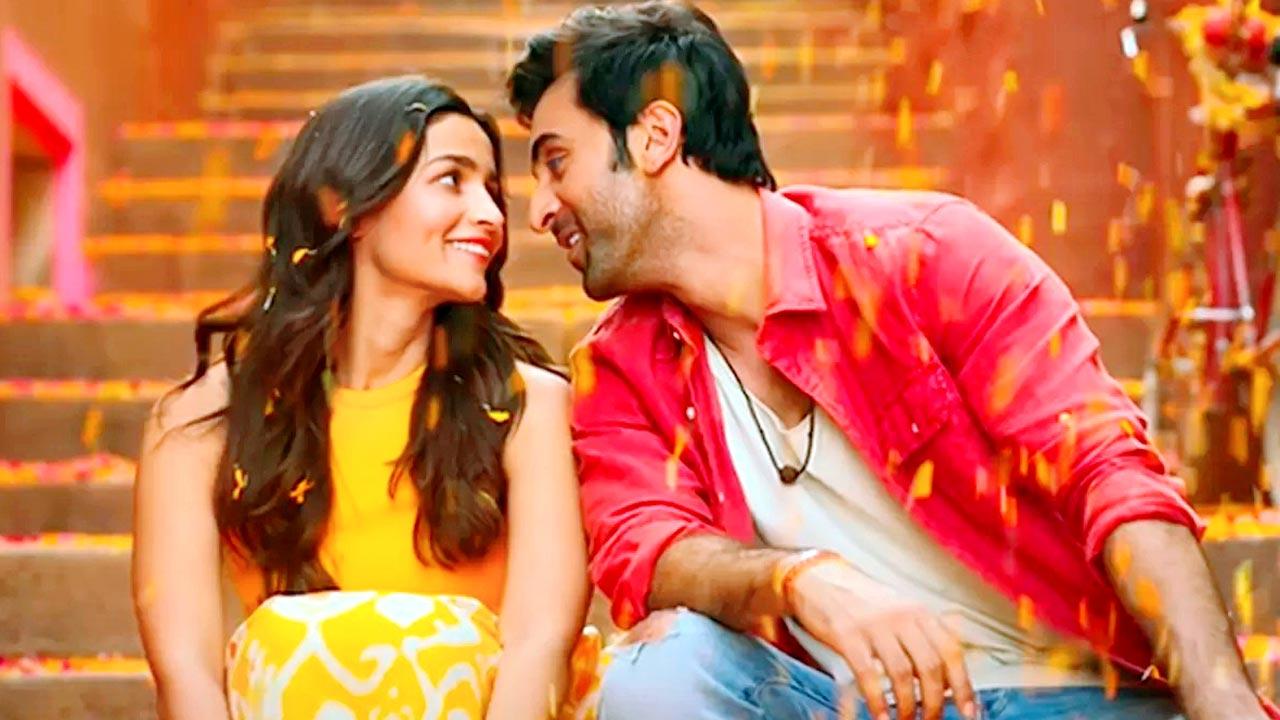
Future of the franchise
Somewhere between 2014 and 2022, during the film’s making, OTT space in India grew abundantly. One might believe that the web could be the next direction for Mukerji’s astraverse. Does he agree? “As we started to build our fantasy derived from Indian inspirations, we were caught up in the filmmaking process of how to translate it on celluloid. The subject we have is a blackhole and while I had a basic story for part 2 and 3, the thinking has shifted drastically from our end. The main astra is the Brahmastra and then there are other astras protected by the group. These astras exist in modern India, which is a dynamic space for stories. Ideas upon ideas came. For instance, Vanarastra is an astra which whoever controls has the power of a super-vanar, something inspired from Lord Hanuman. The spirit is different from Lord Shiva’s energy, which is the driving force for part one. We feel we could take these ideas and make another film.”
He and his core team, Mukerji says, has only worked on this project since 2015. “There is a different fun in making a movie like this. That you are completely consumed by. Remember the frenzy around Game Of Thrones? I feel we can create something like that on the back of Brahmastra. My emphasis right now is on the film’s trilogy and to make it high quality. It is not about making a hit film with ten sequels. We have to maintain quality.”
What Brahmastra means for India?
Opportunities and investments to create such homegrown projects are rare. In such a scenario, one always feels the pressure of doing it right. As the creator of the universe that releases soon for the world to see, Ayan feels this is the foot in the door for more of such storytelling to follow. “Brahmastra is an original film and it is only coming together now with the VFX work done. I hope there will be fan theories and conspiracy theories once the film releases. As a studio, Disney has been tied with the film through the making. It is listed as one of their major international releases. I did a talk at the Disney Studio Summit, which was the first time an international film had gone there. We were amongst Avatar and Marvel presentations and I was talking about Lord Shiva and Kali Ma. The concept of Shakti. I realised people responded to it and everyone enjoyed it. Brahmastra is means to a larger end in terms of storytelling. We must allow this storytelling to seep in outside India. Slowly people will watch the film and understand the imagery of Shiva, what it means. There is an interest in local subcultures. With Disney on board, not only are we hopeful of a big global release but an international access on streaming.”
As he nears close to release, he is coming up for air finally. “My core team and I have been too caught up in doing this project. 11 years since the idea, nine years since Yeh Jawaani released and seven years since I got into the office with the script of the film. A part of me is looking forward to the day that the film is released, and I can go to a cute bistro and eat lunch with friends…” Well earned, one would say.

The Vanarastra
For Beqaaboo in Gehraiyaan, I didn’t know that it would be picturized on Deepika Padukone-Shalmali Kholgade
8:18 AM

Juhi Chakraborty (HINDUSTAN TIMES; May 2, 2022)
Shalmali Kholgade may have built a discography of hits — Balam Pichkari (Yeh Jawaani Hai Deewani; 2013), Lat Lag Gayee (Race 2; 2013) and Kheench Te Nach (Chandigarh Kare Aashiqui; 2021), but the singer reveals that she does not really get choice of taking up songs in films. “As far as Bollywood is concerned, singers don’t choose the songs,” she says.
Elaborating, she adds, “We can turn down a song if we are not comfortable with the lyrics, but we can’t equate it to actors choosing to take up a role. When you get the call to sing a song for a film, you have to understand what the film and music is saying to you.”
Kholgade also adds that, more often than not, singers nowadays don’t even know who they are singing playback for. “For Beqaaboo (Gehraiyaan), I knew nothing about who is going to be in the song. I didn’t know that it would be picturized on actor Deepika Padukone. I just knew that I needed to have fun and sound sexy. For this song, I didn’t have to ask where it is going to be placed or who is going to be a part of it,” she reveals.
However, the singer says that for some tracks, it helps to know who the song would be picturised on. “For a more deeper song, you need to ask what is the context, who is going to be there, etc. For me, songs like Pareshaan (Ishaqzaade; 2012) or Tera Naam Doon (Entertainment; 2014), I had to be told why I had to sing a certain way, but a song like Lat Lag Gayee or Balam Pichkari, it is pretty much about me having fun,” she ends.
Holi means colour, joy and lots of cheer-Deepika Padukone
8:28 AM

For Deepika Padukone, what’s great about a festival like Holi, is that it brings together people, families and communities; says the main idea of festivals for her is to ‘spend quality time’ with her loved ones
Prashant Singh (HINDUSTAN TIMES; March 9, 2020)
She grew up in Bengaluru, Karnataka, where — as she puts it — the Holi fervour isn’t as much as in other parts of the country. But that never stopped Deepika Padukone from adding her share of colours to the festival along with her friends and family. Even now, she seems visibly delighted about “spending quality time” with her near-and-dear ones on such special days. “The mythology part of our festivals is obvious but what’s amazing is that festivals — be it Holi, Diwali or Ganesh Chaturthi — bring together people, families and communities. Also, I really appreciate the fact that these festivals have been going on for generations, and we still continue that tradition,” she says. Excerpts from an exclusive interview:
To start with, would you call yourself a Holi person?
The culture in south India has been slightly different. So, I remember while I was growing up, it wasn’t celebrated as much as it’s celebrated in other parts of India, especially the North. In the South, it [the celebrations] was never that much but I don’t know if things have changed now. In other parts of the country, even walking on the streets can be dangerous on Holi as anyone can randomly throw colours and eggs at you (smiles).
For you, what’s the most fascinating thing about the festival of colours?
It is the festival of colour but for me, in a way, it’s also a festival of light as my memory of it has been that it’s a ‘day time festival’. So, in my mind, the Holi day is always very bright and sunny along with a lot of colour, joy and cheer. That’s what I really appreciate a lot about the Indian culture that every few months, there’s a festival which sort of brings the entire community together, irrespective of what’s going on in the world. In that particular moment, you just forget about everything else and celebrate.
Do you have any special memories of Holi from your childhood?
For starters, it calls for great family time. One of the things we all always got [on Holi] was a public holiday. So, there was no school, and since I grew up in an apartment [in Bengaluru], I had a lot of friends. I remember all of us getting together to play Holi. Since I am someone who has always been particular about being ‘clean’, I had to be prepared much in advance that, ‘Holi aa rahi hai, so I’ve to keep aside an old set of clothes etc’. At that time, there were no organic colours; so it was all about hard colours which didn’t come off for weeks.
So, you would have unstinted fun?
Yes, but since I was in school, I would also be worried as to how much Holi I can play as schools had their strict rules. In that moment though, you don’t think about those things. But I remember my parents telling me to apply a lot of oil on my face, hair and skin so that colours don’t get into the skin a lot, and could come off easily later. And there was no way we could roam around after playing Holi, as we were supposed to head straight into the shower so as to not mess up the house.
Now, that you are married [to actor Ranveer Singh], have things changed vis-à-vis Holi celebrations in particular, or festivals in general?
Not really! We both have always celebrated festivals. So, as much as possible, we try and be in the city, with family. We did the same even before marriage. So, nothing has changed as such, apart from the fact that earlier, the main celebration would take place in my house. Now, we [Ranveer and I] do a small pooja in our house and then we go to our in-laws’ home where everyone is together. So, it’s a bigger celebration. If our respective parents can be together [on that day], then that’s the best thing. Otherwise, my in-laws are here so a part of the family is always around (smiles). We don’t do anything very elaborate. For us, the main idea of festivals or holidays is to spend quality time together.
What’s your idea of Holi? Has it changed over the years?
For me, Holi stands for a celebration of happiness, togetherness, and good food (smiles). And it’s great that such festivals are a really intrinsic as well as rich part of our culture. I feel that’s the beauty of our Indian culture and tradition. When we [actors] are [shooting] outdoors and miss out on celebrating a festival with the family, we, of course, try and celebrate in our own way with the unit but from the inside, you miss being in your city and with your family.
For you, what’s the best thing about the festival of colours?
I think it’s the feeling of sheer abandon. The other Indian festivals are more ritualistic, whereas Holi, according to me, is one festival where there’s a lot of abandon. And that’s what sets it apart from all the other festivals.
Is there anything that you don’t like much about it?
Eggs, I feel, is a bit too much (smiles). And I’ve an interesting story about eggs, my mum and Holi. She will be very upset that I have revealed the story but I have to (laughs). This is from before I had moved to Mumbai, and I was just about starting my modelling career. I had come to the city for a day with mum for an audition for a soap brand. After I finished my audition in the morning, we decided to go to meet my granddad, who lives at Peddar Road. From suburbs, we took a taxi and once we reached, mum said, ‘since it is Holi, let’s not take a chance. Let’s not get down [across the road from the building] and walk on foot to cross the road. Instead, we can take a U-turn’.
Then, what happened?
I was like, ‘mum, it doesn’t make any sense. The roads are empty, and so we can cross it walking’. And while we were crossing the road, a group of boys threw eggs at us, which hit my mum. Later, she said, ‘I think they were trying to aim at you but eggs hit me instead’. Since that day, my favourite Holi memory is that (laughs). We didn’t even have a spare set of clothes as it was just a day trip. The whole day, she smelt of eggs as it went into her hair also. I think she will never forgive me for that. But I guess it’s all in the spirit of Holi. I do not see people letting go of so much during any other festival.
Do you have any special plan for this year’s Holi?
It’s the same; nothing special. Ranveer [Singh; husband] called me up a couple of days back in the evening, and the first thing he asked me was if I am working [on the Holi day]. Sometimes, it’s [working on Holi] really unavoidable. But as much as possible, we try and be with each other on festivals. Since no one else works on that day, it’s a great day to spend time with one another. Also, I’ll leave for my outdoors [for director Shakun Batra’s yet-untitled next] soon, for about a month or month-and-a-half, to Sri Lanka. So, Holi gives me an opportunity to spend quality time with my family before I go.
Work-wise, how are things looking?
I am starting Shakun’s [Batra] film next. In fact, I will leave for its Sri Lanka schedule next week itself. That’s why I am looking forward to Holi a little more because it’s that day when I will get to spend some time with everyone before all the hectic travelling, shooting etc. starts. My other film, The Intern adaptation, in all likelihood, will go into production in the beginning of 2021, around January. However, I am looking at doing something else too, in the second half of this year.
-----------------
A colourful, reel stint with Holi!
“It started with Balam Pichkari (from Yeh Jawaani Hai Deewani; 2013) and, of course, there’s also Lahoo Mooh Lag Gaya (from Goliyon Ki Raasleela Ram-Leela; 2013). If I may say, Balam Pichkari is like Rang Barse (Silsila; 1981) of our generation. Nowadays, every Holi party starts with Rang Barse, and the second song has to be Balam Pichkari. So, it’s become a new-age Holi anthem. It feels nice to have been part of such an iconic song. On the other hand, Lahoo Mooh Lag Gaya is a very different kind of Holi song — very Sanjay Leela Bhansali-ish and extremely sensual. For me, the fascination was that though we see Holi in it with a full-on celebration, his interpretation and the way he showed Holi was in stark contrast to the way we know the festival, or the way we play it.”

Shakun Batra’s film is kind of in the Cocktail and Yeh Jawaani Hai Deewani space-Deepika Padukone
8:27 AM

Deepika Padukone informs that her Shakun Batra directorial opposite Siddhant Chaturvedi rolls in March; the actor opposite Ananya Panday yet to be finalised
Himesh Mankad (MUMBAI MIRROR; January 25, 2020)
 Mirror was the first to report (December 7) that Deepika Padukone has signed Shakun Batra’s next directorial, about relationships in the modern world. In the yet-untitled film, the actress is paired alongside Siddhant Chaturvedi, MC Sher to Ranveer Singh’s protagonist Murad in Zoya Akhtar’s Gully Boy, and the first-time co-stars have several intense romantic scenes in the film. Soon after, it was revealed that the Karan Johar production will also feature Ananya Panday in a pivotal role, however the leading man alongside the actress is yet to be finalised.
Deepika had recently informed Mirror that the film will go on the floors in March. Ask her what made her take up the film after serious characters in Ram-Leela, Bajirao Mastani and Padmaavat and the actress says, “I am a big fan of Shakun’s work. He is beautiful when it comes to dealing with interpersonal relationships. This is a story about two couples and creatively, I was looking forward to doing something in this space.”
A source close to the development reveals that before taking the film on the floors, the cast will attend reading sessions and workshops to get a hang of their characters and to develop a comfort level with each other. “It’s a first-time pairing for the entire ensemble, and the cast will have multiple meetings before kicking off the shoot,” adds the source.
A self-confessed fan of the romcom genre, Deepika is quick to add that it is difficult to slot her upcoming film. “I don’t like to box the films that I do. Shakun’s film is kind of in the Cocktail and Yeh Jawaani Hai Deewani space but also new in many ways. It belongs to a genre that we haven’t attempted in Indian cinema before,” she says.
I have a boisterous side, which in all of my so called elegance, people missed seeing-Deepika Padukone
8:11 AM

Roshni Olivera (BOMBAY TIMES; January 8, 2020)
It’s been an eventful decade for Deepika Padukone. She has had a number of successful films to her credit, made her foray into Hollywood opposite Vin Diesel in xXx: Return of Xander Cage (2017) and turned producer. On the personal front, too, she is in a happy space and seems a lot more comfortable revealing her quirky side to the world. The new year has begun on a busy note for the actress with her film, Chhapaak, directed by Meghna Gulzar, set to release in a couple of days. In a chat with BT, she talks about playing Malti, her most emotionally challenging role till date, how she has evolved as a person over the years and why she wants to do a contemporary, light-hearted film with husband Ranveer Singh. Excerpts...
You have experienced a range of emotions from the time you started shooting for Chhapaak, to the promotions recently, when you broke down on stage. How would you describe this emotional roller-coaster ride?
This has been my most challenging film, emotionally. There was a lot of preparation before we began shooting — look tests, working on the prosthetics, costumes and readings with co-actors and Meghna. I also spent time with Laxmi (Agarwal, the acid attack survivor, who is the inspiration behind her character). But, for a film of this nature, you can never be fully prepared. How do I prepare myself for that moment when acid is thrown on my face? I can imagine that it happened in a certain way, but I can only live it between ‘action’ and ‘cut’. I have had many of those moments of highs and lows, which took a toll on my mental health as well.
How did you cope with that?
I remember on the second day of shoot, I had a panic attack. We were doing the prosthetics when I had the attack because I’m claustrophobic. I broke into a sweat and could feel the blood rushing through my feet, and I remember saying to myself, ‘I can’t do this’. Throughout the film, I was breathing through one nostril because of the prosthetics. I couldn’t eat properly because I couldn’t open my mouth completely. And then, there was the emotional journey. Having said that, I was willing to go through it all because this was a story we had to tell. That was more important than what I had to live with for a few hours every day. Whenever I felt low or vulnerable, I would think about Laxmi and the other survivors, who have been through so much, and that would help me pull through the day.
Meghna has said that you were her only choice for this role...
When a director says that he/she would not have made a film without a particular actor, there is no bigger compliment for that actor. Often in Indian cinema, we make films with roles that are replaceable. Isko nahin toh usko lo, usko nahin to kisi aur ko lo. I’m glad that today, we are getting to a point where films are written in a certain way, where characters are so special that either you make it with a cast that you have in mind or you don’t make it at all. When Meghna narrated this script to to me, I was instantly drawn to the subject. What I was also drawn to was her honesty. I could see her sincerity, sensitivity and a great sense of responsibility. I had seen all of these things in her movie, Talvar (2015). It was incredible the way that movie was made — it was such a fragile topic and it was made at a time when the people on whom the film was based were still in custody. Films like these engage you, make a point, and at the same time, are entertaining. It’s difficult to find a director who can strike that balance.
What is your biggest takeaway from your interaction with Laxmi?
I admire her spirit. Also, her ability to articulate her thoughts and feelings. She is honest, candid, confident and has a great sense of humour. She has beautiful hair, too.
Often, the punishment given in an acid attack case is far less compared to the gravity of the crime. Procuring acid is also easy in our country. Do you hope that your film will initiate a major debate that will address these issues?
I hope the film resonates with people at multiple levels, whether it’s pertaining to the legal system, the sale of acid or how we look at women who’ve suffered an acid attack. We tend to treat the survivors as disabled; they don’t have any disability and it’s important for us as a society to recognise that.
Now that you have turned producer with this film, do you look at things differently? As an actor, you must have had a different perspective...
Actually, I have had a couple of people tell me in the past that I would make a good producer. Dinesh Vijan (filmmaker) was the first person to tell me that. He would say, ‘Deepu, one day we will become partners and I’ll make a cabin for you in my office’. At that point, I didn’t think I would produce a film someday. But now when I look back, I remember how during Yeh Jawaani Hai Deewani (2013), I would ask Karan Johar (producer) why he was giving Ayan Mukerji (director) so much liberty with the budget and why he was allowing him to do recce at different places. I think somewhere, I was always interested in what goes on behind the scenes as much as what happens in front of the camera.
Would you agree that when actresses start doing author-backed roles, they end up getting slotted, and are not offered other kind of roles?
Yes, it’s totally possible, so it all depends on the choices one makes. Like the next film I’m doing is a romantic thriller, which is very different from what I have done so far. I have been offered many sports biopics, too, but I haven’t decided on that, yet.
It has been a year since Ranveer and you tied the knot. What are the changes that you see in Ranveer and in yourself? In fact, he recently said that he has become a good boy now, he wakes up early and gets back home on time...
He’s not there yet, but he does try! We have both rubbed off on each other in different ways. I’d like to believe that I have brought in a little more professionalism and discipline into his life. I think he would like to believe that he has brought out the quirky side of me, though I think I have always been like that, it’s just that people saw it in spurts. There is an extremely goofy and funny side to me, which only close friends got to see earlier. Now, when I sometimes show that side of my personality to others, people feel that he has rubbed off on me, which is also a great thing. Ranveer and I support and encourage each other... especially his dressing sense! In a way, there are not many changes from the time we were dating, except that now, we come home to each other. Professionally, we make our own decisions and personally, we decide everything together. For us, it’s been important from the beginning that we retain our own identities. People around us often forget that we are married, which I think is a good thing. Ranveer and I are together and at the same time, we are our own people.
You probably always had that quirky side to you, but the general perception is that you have opened up more post marriage...
Maybe I’m showing it a lot more now. If you ever speak to my school friends, they will tell you that I was a brat. My mother will tell you how, as a child, I was never at ground level; I was always jumping or climbing somewhere. There is a boisterous side to me, which, in all of my so-called elegance, people missed seeing.
Like some of your contemporaries who got married, do you also face questions about when you plan to start a family?
No! I have not been asked this question ever, which is refreshing.
What about doing more movies with Ranveer? There was buzz that you’ve turned down three films together..
There is no truth to that at all.
The reports said that the two of you didn’t want to get over-exposed as a couple...
We don’t think like that at all. We would rather think whether a film warrants the two of us to come together. Again, that’s not a decision for us to make, it’s for the director to decide. We have not been offered anything like that together, though it was refreshing to work with him in ‘83 after having worked in three films, where we die in the end! I hope we get to do more films, maybe something more contemporary and lighter. It’ll be nice for someone to explore our on-screen combination in a different way from what everyone has seen so far.
We’ve just entered a new decade. How do you look back at the decade that’s gone by, a period which was fabulous for you professionally?
I feel gratitude. Nothing fell into my lap, I have worked hard to reach where I am, and to be a part of the kind of films that I get to do today. I want to constantly learn, grow and evolve. I also used the criticism that came my way, constructively. And, I am thankful for the goodwill and support that I got.
Do you feel that you have grown as a person, too?
Yes. I don’t think I was the same person even seven years ago. Every film, every experience, every success, failure, criticism and praise has led me to where I am today. It allows me to grow further, think, express and take risks.
On the personal front, we recently saw a beautiful picture that you posted of Ranveer and you with your Christmas tree. Did you decorate it yourself?
Absolutely. I love doing up my house and if there’s one thing that Ranveer loves about me, it is that I am house-proud. He is always trying to wrap his head around how I manage to multitask at work and I’m still able to put up a Christmas tree, set up the table and put up the wreath. I have always been like this. My mother says that she doesn’t entertain guests anymore because I am not around to help her.

I take up films which unsettle me-Deepika Padukone
7:57 AM

The actor says that if she doesn’t feel butterflies in her stomach after hearing a narration, she doesn’t do the project
Juhi Chakraborty (HINDUSTAN TIMES; December 4, 2019)
She got a dream launch in Bollywood in 2007 with Farah Khan’s Om Shanti Om in which she had Shah Rukh Khan as her co-star. And from then on, Deepika Padukone has been making all the right noises with her film choices.
With films such as Bachna Ae Haseeno (2008), Housefull (2010), Desi Boyz (2011), Race 2 (2013), Finding Fanny (2014), Piku (2015), Bajirao Mastani (2015), Padmaavat (2018), her filmography is clearly a mix of potboilers, slice-of-life films, and historical dramas. She has even starred in a Hollywood film xXx: Return of Xander Cage (2017).
Has there been any change in the way she picks a film now? “No, not at all. I am choosing my projects the same way I did 10 years ago. I am following my gut and heart. I am only doing films which have the ability to push me beyond my comfort zone. When the narration finishes, I have to feel butterflies in my stomach otherwise I don’t take up the film. The film has to unsettle me,” shares Deepika.
But the actor clarifies that this does not mean that the films she does have to always be hard-hitting. Even a feel-good buddy drama can be intriguing enough for her to take it up.
“It does not have to be an extremely intense film. Even when I chose a film like Yeh Jawaani Hai Deewani (2013), I had the same level of excitement because I had never played a character like Naina before. I have to feel challenged. I have always listened to that voice in my head,” she says.
And Deepika is taking that forward with her next film, Chaapaak, which sees her play an acid attack survivor. The Meghna Gulzar-directed project is based on the life of acid attack survivor Laxmi Agarwal. With Chaapaak, Deepika is also making her debut as a producer.
“Again, my choices as a producer will be similar to my choices as an actor. They will be driven by my creative juices and not box office and commercial viability. I will tell stories that I feel an emotional connect with. I’ve always relied on that and will continue to do so,” she says.
So, as a producer would she only back issue-based films? “I rather let that unfold slowly than saying it. It is always nice if it unfolds in front of the audiences as and when it happens,” she replies.
To be identified as an alcoholic is quite charming. A lot of bartenders greet me with open arms-Aditya Roy Kapur
8:00 AM

Renuka Vyavahare (BOMBAY TIMES; April 16, 2019)
Aditya Roy Kapur is strikingly lean when we meet him at a suburban five star. He mentions that he has shrunk himself for an upcoming film, and given the fact that he’s a foodie, it has been a challenge. The actor took a hiatus of sorts after OK Jaanu (2017) and as fate would have it, is now swamped with work. He has four films lined up. Unlike a Varun Dhawan or Ranveer Singh, who are forever charged up, Aditya is calmer and quieter. He sits back, introspects and talks about his upcoming film Kalank, his self-imposed sabbatical, what failure at the box office taught him as an actor, why he is unlike his contemporaries and more. Excerpts...
 Aditya, we haven’t seen you around for over a year after OK Jaanu. What have you been up to?
I went completely off the radar, and was on a self-imposed sabbatical. I didn’t find what was coming my way to be interesting. So, I didn’t do those films and it ended up being a sabbatical of sorts. I didn’t plan it that way, but I feel that’s how an actor’s life is.
Did the box-office failure of some of your films (Daawat-e-Ishq, Fitoor and OK Jaanu), followed by the sabbatical, offer you a fresh perspective on life and career?
Some amount of learning comes with everything. I have realised that I love being on a movie set, and because of that, I am working more now and not taking as many breaks as I did earlier. My approach towards work has changed. I am happy to be in a place where I have work to think about. Lately, I have been lucky to find work that interests me as well, but I am not overthinking things now. The movies business is unpredictable and you have to take that leap of faith. What is meant to happen, will happen.
You started off with multi-starrers (like London Dreams, Action Replayy and Guzaarish),without fearing that you might get lost in the crowd. Kalank, too, has a stellar ensemble cast. You clearly don’t seem to be an actor, who wants to restrict himself to solo hero films...
The confidence comes with the director and the script. Like Kalank, multi-starrers need a script that offers everyone their place to shine. After that, you need a director who has conviction and clarity of thought. Abhishek Varman was wonderful at portraying how he was looking at this film. He made me feel comfortable and confident about how he perceived my role. In fact, he was passionate and clear about each and every character in the film. Everyone has their moment and a distinct character. Even as an audience, I enjoy watching films with multiple narratives. So, why not work in these films?
One part of an actor’s life is to make movies. The second part is to promote them, be seen, meet people, and stay active on social media. While you are good at the former, being social isn’t your thing, right?
I am still trying to gauge how important the other part is (smiles). Yes, my favourite part as an actor is to make movies. It’s definitely far above the other things that come with the job. It’s not like I hate socialising. If I thought that the rest was important, I would probably be more outgoing. Many well-meaning people around me are giving me this advice as well — ‘do more’ (laughs!).
Varun Dhawan and you are buddies, but at the same time, you have contrasting personalities. How was it working with him?
Varun and I had long sequences in Kalank. I think everyone has a personality. You can’t help but be yourself. If you are at peace with who you are, you won’t end up looking over your shoulder. Varun enjoys his stardom. He has great energy, connects with people, and is passionate about his work. He is also good with his fans. It’s lovely to see him enjoying what he has achieved. I love chilling out with him. We have common friends and we share some common interests like watching the fighting league, etc. We were joined at the hip when we worked together.
You played an alcoholic in two of your successful films — Aashiqui 2 and Yeh Jawaani Hai Deewani (both released in 2013). Did you ever wonder why such roles keep coming your way?
I am thankful that those roles came my way, and I am remembered for them. To be identified as an alcoholic is quite charming (laughs!). A lot of bartenders greet me with open arms. Sometimes, when I am into fitness, I don’t drink and they seem very disappointed. They don’t take my word for it and say, ‘Sir, ek toh pilo’.
It was funny how many people actually believed that Aashiqui 2 inspired the Bradley Cooper and Lady Gaga-starrer, A Star Is Born (2018)...
A lot of people messaged me saying how the Hollywood film was inspired by Aashiqui 2 (smiles) and how a lot of scenes were similar. I found it really funny. I loved that film, though. It was amazing how Bradley Cooper acted, sang in it and directed a new actor (Gaga). It’s a huge achievement.
You have your hands full with a slate of projects — Sadak 2, Malang and the sequel to Life In A Metro. After that brief lull, you are totally out there now...
When it rains, it pours. It’s a stark contrast to the phase that I was in before. Those were free days when I could do what I wanted, and now, I have no time to breathe. But I am happy and enjoying this hectic phase. I am excited about these films. I am getting a chance to try something different and challenge myself. I feel that as an actor, it’s scary to have found your zone…to think that you know what works for you. That’s dangerous, because you would then want to replicate it and that’s not what I am looking for. I am looking for subjects that pull me out of my comfort zone.
You are finally on Instagram, quite a late bloomer!
Varun, Alia, Shahid Kapoor, Shraddha Kapoor and all my other friends kept telling me that I need to be on it. I was told that it is important today. I tried to stay away for the longest time, but finally, I succumbed, and now I am enjoying it. I don’t have a team who handles it. If it’s my account, I might as well keep it real and do it myself.
Parineeti Chopra questioned your single status on social media, recently. Are you single?
I have to call Pari and even Arjun Kapoor and ask them why they said that. The T-shirt I was wearing in the Instagram photograph (with the word ‘Single’ printed on it) was self-explanatory. I am single.

We are caterers of mediocrity-Rekha Bhardwaj
8:28 AM

Rekha Bharadwaj breaks down why the finesse in the independent music industry isn't arguably translating to Bollywood
Sonia Lulla (MID-DAY; February 18, 2019)
Ashe chronicles the goings-on in the Bollywood music industry, Rekha Bhardwaj sprinkles this conversation by drawing examples of artistes and films, spanning decades. Her fine observation skills and deep understanding of cinema trends are made evident, even though she isn't one to go to town when critiquing the industry. Set to serenade fans on an upcoming episode of MTV Unplugged, Bharadwaj talks to mid-day about the reason behind the increasing gap in the quality of music being churned out in and out of the film industry.
Edited excerpts from the interview:
There is a lot of talent in the independent music scene. Why do you think that quality arguably isn't translating to Bollywood music?
[Independent music] platforms still have a long way to go [before they can become popular]. Abroad, an artiste first releases an album, then the song is picked up for a film. But, songs are an integral part of our films, [and hence] we have incorporated film songs [on this platform too], to meet the demand. We are, primarily, a melodramatic society, and caterers of mediocrity. A majority of our population appreciates mediocrity, and that's why it exists in films and fine arts. Also, since crores are invested in films, certain requirements must be met. Today, the film business is a three-day affair, governed by collections from Friday through Sunday. Few are [driven] by a creative pursuit. The independent music genre has come to the fore after 20 years. I struggled for 11 years to release the album that was to launch me. There's a lot that we have to do to put up the quality [of music] that we desire. Rural audience won't appreciate sophisticated music. They would prefer folk music, while the youngsters would, maybe, choose noisy tunes. Remixes too are horribly executed. They are derogatory to the original classic.
How do you suggest that can change?
Artistes should be more concerned about content, [which comprises] language, diction and musicality. The younger musicians must educate themselves about our musical heritage. Also, [a lot depends on] aesthetics. I've sung many item songs, and am proud of all of them, including Namak Ishq Ka, and Ghagra. When Gulzar sa'ab writes a naughty, raunchy song, you will still find it aesthetically appealing. Aesthetics must be maintained in the lyrics, composition and rendition.
Is the industry receptive of singers with unique voices, like your own?
After Namak Ishq Ka, a lot has changed. The younger lot of composers have a background in Western music, and are hence open to experimenting with all sort of voices. Jagga Jasoos, for instance, had so many new voices, and a beautiful range of singing. Also, pronunciation must be paid heed to. For example, in Bombay Velvet, all the songs were nice. Some singers, like Neeti Mohan, paid attention to diction. When singing in Urdu, one should be certain to pronounce correctly. Neeti was, while a few others weren't. When the diction is correct, 60 per cent of your job as a singer is done. Unfortunately, even lyricist don't care if their words are being pronounced right. We pay heed to accents and pronunciation when singing English numbers. But, Hindi songs are tackled with carelessness.
You've often spoken positively about the influence of Western music in India. Why is that so?
This is something that was even evident in old music. In fact, earlier, Catholic musicians from Goa formed a major part of our industry. If you listen to older melodies, like Madan Mohan's Khelo Na Mere Dil Se, you'll notice that the introductory music will not reveal the melody that comes in later. The music arrangers then were classically trained in Western music, and also understood Indian nuances. The young generation is talented since they are exposed to all genres. But, there's a thin line between good and bad influences.
How does a platform like MTV Unplugged benefit the industry?
When a song is composed for a film, it's based on situations. Here, we're not bound by demands. I've recreated Darling [for the show], and used a brass section. There are two originals too, one of them being an Amrita Pritam poem.
Subscribe to:
Posts (Atom)