Showing posts with label Yashica Dutt. Show all posts
Showing posts with label Yashica Dutt. Show all posts
Forget actors, I’m the only one in the Hindi film industry who acknowledged his Dalit identity-Neeraj Ghaywan
8:30 AM
Renuka Vyavahare (BOMBAY TIMES; August 28, 2023)
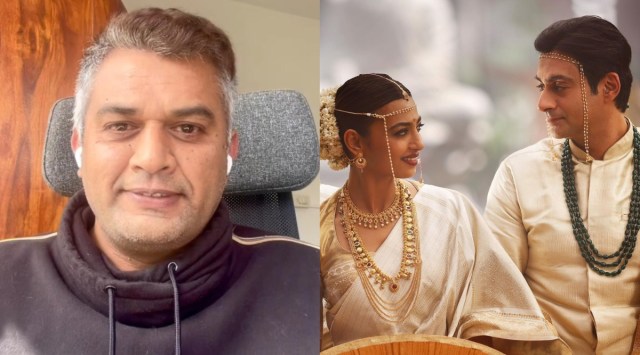
Directed by Neeraj Ghaywan, one of the episodes of Made In Heaven (MIH) season 2, titled 'The Heart Skipped A Beat', featuring a Buddhist wedding, went on to become the series’ most acclaimed short. However, along with the appreciation came the credit crisis. While Neeraj thanked various people who inspired his episode in an Instagram post including activist and author Yashica Dutt, soon after, the latter questioned why she wasn’t given a formal credit on the show. She claimed the episode’s central character Pallavi Menke (played by Radhika Apte) was based on her life. Neeraj, known for his courageous vision and acclaimed films like Masaan, Geeli Pucchi (a short film where Konkona Sen Sharma plays a Dalit queer character) and Juice (a short on patriarchy starring Shefali Shah), for the first time, addresses the controversy, representation of Dalit characters in mainstream cinema and why pushing this narrative is so important. Excerpts...
Yashica has appreciated your work even before, and in a recent interview with us (after the series dropped) she said, “Neeraj Ghaywan’s work is important, but this is my life. I wasn’t acknowledged.” What is your reaction to that?
I have also championed Yashica’s work earlier. In the story, Pallavi Menke is a Maharashtrian Dalit from the Vidarbha region. She then goes to Columbia University (USA) and becomes an Ivy League professor. The episode is about her getting married to a man belonging to another caste, and how his family has issues with her (Buddhist) wedding ceremony. They are not in complete acceptance of her. They like her academic accolades but want to erase her caste identity. The episode handles this conflict. I don’t know how this is a homage to any one person. Even if you claim ownership to the term ‘coming out’, can you claim ownership to the act? So many people have hidden and then finally proclaimed their identities due to the fear of being judged. I hid my identity for 35 years, then suddenly spoke about it. People who never shied away from their identity and took the hate head on, their struggles were bigger. Look at (filmmaker) Nagraj Manjule, he inspires me. A part of me is Yashica, Nagraj, Bezwada… and so many people who don’t want to be named. Pallavi Menke is a sum of all of us, our pain and anguish. She is a symbol of the cumulative experience of all of us, so no one person can claim to be her.
So, your personal experiences and struggle with your identity is what translates on to your work?
Making this episode (MIH) for me has been a very personal journey. Zoya Akhtar, Reema Kagti and Alankrita Shrivastava are the writers of the show. They had this idea. Someone who’s accomplished from the Dalit community realizes that they may have come a long way, but it doesn’t insulate them from the ugly face of casteism. We chatted the whole day and I talked about how I proclaimed my Dalit identity on Twitter, and you had broken that story. (A story by the same author featured in BOMBAY TIMES; January 7, 2018, titled, Neeraj Ghaywan: There was always this fear of my work being attributed to my identity as a Dalit).
Before that happened, I hid my own identity in school, during my Engineering college, MBA days and even in my corporate life, because I have seen how people treat you when you come from a quota. My name was Neeraj Kumar and it’s still that on my passport. Now it’s become my middle name. (Pallavi Menke in the episode refers to caste neutral surnames like these). If you tell people your full name, they will scrutinize your last name, where are you from, which region, where are your parents from, etc. We know what they are getting at, and this kind of scrutiny scars you. I reclaimed my identity by going back to my surname and so does Pallavi.
What were your own battles after you proclaimed your Dalit identity?
After I spoke to Bombay Times in 2018, my extended family who hadn’t proclaimed their identity and were earlier proud of my work as a director, were also exposed. It was a bit complex for me because they weren’t happy about it. We used this track in the story, where Pallavi’s brother isn’t happy about her coming out. I opened up a lot about myself through this episode. I touched upon manual scavenging. Every achiever from the caste will have a story where their previous generations cleaned the toilets. I have heard these experiences from so many people including activist Bezwada Wilson, who is a pioneer in abolishing this practice. At some places, it has still not changed.
Go on…
I must tell you this. When my house help of ten years saw your piece in Bombay Times (2018), she picked up the newspaper and asked me, Dada, hey kaay aahe? (What has been written?) I was scared to tell her what it meant. It took me 2-3 days to muster up the courage to tell her that I am a Dalit. She reacted, “Aap Jai Bhim wale ho? Mujhe fark nahi padta.” Same with my driver. It’s scary because you have been putting up a different picture for the world for years. Since the time you broke that piece, I haven’t spoken to anyone. Not even my school or office friends. I stopped going to my college reunion because no one reached out to me after knowing what I have been through. All this fear and trepidation came out when I spoke to the show creators, and all of this went into that episode.
Your decision to choose Konkona, a straight woman to essay gay character and Radhika Apte, a Brahmin woman to play a Dalit character was a topic of discussion. There's an argument that on one hand you push for representation and on the other, actors from the community don’t find a place in these stories. What would you say to that?
My responsibility as a filmmaker is not just to be inclusive. The inclusion needs to make drama sense. The character must resonate with people and that needs a solid performance. I knew no one could play Konkona’s character in Geeli Pucchi better than her or Radhika’s character in MIH. Should I tell my stories efficiently or compromise on the casting to sound right and make a middling drama that no one will watch? Forget actors, I am the only artiste in the Hindi film industry who has acknowledged his Dalit identity. A lot of people don’t want to proclaim their identities. It’s their choice. If I do find newcomers who are open about their sexuality or caste, do they fit the part? You also need great actors to pull it off as these are complex characters.
You never shy away from making a political statement, through your feisty Dalit characters, who seek equality and not sympathy...
We all are political beings, especially the ones belonging to the marginalized communities. It could be Dalits, women, LGBTQIA+, specially abled people or minorities, I am not talking about electoral politics but our relationship with the world and society and how it’s all connected. Their rights which have been denied are linked to the state. Their mere existence is a political statement.
‘The film industry is not casteist. They are caste ignorant’
The way it is structured, it is very local centric. Caste is not what is shown in Hindi movies of the 80’s, where someone says, “Tu paani waha se pina.” It is way different than that. It is a reality that exists even today in Mumbai, where all of us get public holidays, but not the safaai karmacharis (sweepers and garbage collectors). Have you ever seen your building trash not being taken? They don’t have a choice. There are filmmakers who are now addressing this, but there is a problem with the gaze. It exudes a saviour complex. When filmmakers who are not from the community tell (Dalit) stories, they have a patronizing undertone. “Humne tumhara uddhar kar diya tum pe film banake. Praise me.” These films are not about the Dalit point of view. Dalit people become subjects here and not full-bodied characters with assertion, who can do other things beyond their caste markers. Patriarchy also exists in our community which needs to be called out. This conscience is slowly changing.
‘Calling it a Dalit wedding was wrong. It should have been called a ‘Buddhist wedding’’
When the response to MIH came in, something inside me changed. I got heartfelt reactions from people who thought they were finally seen and heard. Their trauma was acknowledged. The one thing that I want to humbly acknowledge is that we called it a Dalit wedding. That was wrong. It should have been called a ‘Buddhist wedding’.
‘I don’t want people to appreciate my work because it’s about a social cause’
People welcomed me with open arms once I revealed my identity. No one saw me differently, but this happened after Masaan. When I was making it, I didn’t tell anyone about it. I couldn’t even confide in Varun Grover, who was the film’s writer, I only told him later. Once I came through, people did not change their opinion of me. They only see my work and that’s how I want it to be. I don’t want people to appreciate my work because it’s about a social cause. I shouldn’t have to rely on the crutches of something political or marginalized characters to win brownie points. “Isne important topic pe picture banaya, so appreciate karo.” I don’t want that. A film should be judged solely for its art, clear narrative, and great storytelling. I don’t want any tokenism.
There has never been a Dalit wedding representation in mainstream cinema-Radhika Apte
8:17 AM

Amid growing belief that marginalized communities must represent themselves on screen, Radhika on playing a Dalit character in Made In Heaven 2
Mohar Basu (MID-DAY; August 22, 2023)
When you’re featuring in a single episode that only takes a few days to be shot, you hardly expect an overwhelming response. But Radhika Apte’s episode in the second season of Made In Heaven has become a dialogue-starter, and for good reason. The Neeraj Ghaywan-helmed episode showcases a Dalit-Buddhist wedding, a rare depiction in mainstream Indian cinema. While the episode is being hailed, the larger discourse of late has been about casting actors with lived-in experience. Where does Apte stand on it?
She starts with, “It’s called acting, isn’t it? We don’t cast Muslim actors for Muslim parts, and Christian for Christian parts. There are [two] subjects here —one is casting the right actor. [The other is that] people need representation, highlighting how people of different castes need equal opportunities at work. It’s not fair to mix it up. Who you are cannot be the only part you get, then the experience of an actor is gone. I will only get upper-middle class, Hindu women parts. The character is not confined to its religion, caste or geography alone. We are talking about the emotional liberation of a person on screen.”
The episode tells the story of Apte’s Pallavi Menke, a Columbia alumnus who came out as a Dalit through her book, pushing for a Dalit-Buddhist wedding. Gender is equally crucial here, a two-fold marginalizing force at work.
“I am a woman who has experienced discrimination, humiliation and disrespect. I acknowledge how it varies in degrees,” says Apte, adding that she modelled her character on Ghaywan.
“I based Pallavi on Neeraj. His experiences made their way into the performance. I can call myself woke, but when the episode came out, I realized from the responses how large the issue is. There has never been a [Dalit wedding] representation in mainstream cinema.”
Which brings us to Yashica Dutt and Sumit Baudh, the latter credited by the makers in a social media post for using the term ‘coming out’ in the Indian caste-identity context. After the episode streamed, Dutt called out the makers on social media for not crediting her while allegedly appropriating her life story. In a recent interview to mid-day, director Ghaywan said that he had woven his life experiences into creating the protagonist (Pallavi Menke is me, Aug 20).
Apte adds, “There are a lot of people Neeraj and I discussed. Of course, Yashica was one of the inspirations Neeraj had, and her book [Coming Out as a Dalit] was phenomenal. But the only person we discussed for the character’s emotional journey is Neeraj. His stories about his time in Pune are scary and horrific.”
Zoya Akhtar on Apte:
“I’ve wanted to collaborate with Radhika for a while. So when the character of Pallavi Menke came up, we approached her. We felt she’d be perfect because she is a talented actor, who also has the knowledge and sensitivity to understand how important Pallavi’s narrative is. Radhika had the right blend of strength and vulnerability that was required to make an impact. Also, she has a million-dollar smile.”
Tarun Tahiliani calls out Made In Heaven 2 makers; says it is a ‘breach of faith’
3:28 PM

HINDUSTAN TIMES (August 19, 2023)
Tarun Tahiliani is miffed with the makers of Made in Heaven 2 (MIH 2) after his designs that were lent out to the styling team of the OTT show were presented in the second episode under a fictitious label name.
Taking to Instagram, the fashion designer wrote: “It is most unfortunate when a popular OTT series violates the understanding behind the provision of clothing in the first place… This is a shocking breach of faith. If this is what the production house intended, they should have engaged a costume designer, had costumes designed and proceeded as they saw fit.”
Interestingly, the makers featured couturier Sabyasachi and his designs in the first episode and gave him due credit. However, this courtesy wasn’t extended to Tahiliani.
Despite repeated attempts, Tahiliani; Bhawna Sharma, the show’s stylist; Alankrita Shrivastava, the director of the episode in question and the show’s creators and producers, couldn’t be reached for a comment.
A dramatic turn
Earlier this week, the web show made headlines when Dalit author Yashica Dutt claimed that an episode directed by Neeraj Ghaywan showed a version of her life on screen “without permission or credit”. The makers have released a statement, dismissing the allegations: “We are deeply disturbed with the misleading reports… We will continue to platform stories and voices that are bigger than us.”

Neeraj Ghaywan’s work is important, but this is my life-Yashica Dutt
8:28 AM

Dalit author Yashica Dutt on the Made In Heaven episode supposedly based on her
Chandrima Pal (BOMBAY TIMES; August 18, 2023)
Ever since the second season of Made In Heaven arrived with band, baaja and designer lehngas, audiences have been busy picking their favourite moments, weddings and dialogues from the show. The most talked-about episode at the moment features the compelling story of a Dalit writer and activist, who is feted globally for embracing her caste identity and 'coming out', but faces predictable prejudices back home when she wishes to marry in a Buddhist inter-caste ceremony.
While showrunner Neeraj Ghaywan has received a fair bit of appreciation for his presentation of the feisty Pallavi Menke (played by Radhika Apte), he has also come under heavy criticism from Dalit writer, activist Yashica Dutt, whose life and work has been at the heart of the story.
In a post that went viral earlier this week, Yashica expresses her dismay at how Neeraj and the production house used her words and her book 'Coming out as a Dalit', her experiences (studied in Columbia and embraced her Dalit identity, grandmother was engaged with manual cleaning) to create a powerful narrative, and yet did not acknowledge her or seek her permission before doing so.
Though Neeraj later doffed a hat to Yashica in a social media post, he has not responded to the author's call for credits and declined to comment on the controversy when we reached out to him.
Meanwhile, in a conversation with this publication, Yashica spoke at length about why she feels it is important to call out the Hindi TV/film tradition of "taking anything from anywhere to create its narratives" without due credits and why she wants show creators
Excerpts...
In 2021, you praised Neeraj Ghaywan for his depiction of a Dalit woman in Geeli Pucchi as part of the Ajeeb Daastans anthology. You wrote how watching Konkona Sen's character Bharti Mandal acknowledge that she is a Dalit, was a "cathartic" experience for you. Now we have the same filmmaker, whose depiction of another Dalit woman, Pallavi Menke, has caused you "heartbreak" since it strips you of your identity and your voice by not acknowledging you as the inspiration behind the protagonist. What changed between the two shows you think, and why?
That is for the makers of Made In Heaven to answer. All I can say is, the difference between the two characters is that Bharti Mandal was a composite of a queer and Dalit character. Perhaps many. Pallavi is identifiably a single person - me. Ever since that episode went on air, I have been receiving hundreds of messages and calls from those who know me, or have followed my work and read my book, saying that Pallavi Menke walks like me, talks like me. But I am never acknowledged.
I support Neeraj's work - it is important. The Dalit discourse is important and the Dalit women characters he portrays, is important. But it is a separate issue. Here, everybody can see, Pallavi is a living person. Since I live in the public eye, and have some works published to my name, people assume I have access to wealth and power. But I am a journalist and writer who has had to walk the talk. I have lived the shame and talked about it in the public space - from a family involved in manual cleaning to talking about it, owning my identity on an international platform - that's my leap.
Did the makers of the show reach out to you before or after the show, or respond to your social media post seeking acknowledgement?
No. Neeraj had posted on his IG before I posted about it. So, no formal communication from the production house or the streaming platform so far.
Were you ever approached by any other production house for TV or film rights of your book?
In the past four years since the book was published in India, it has had a huge impact. I was approached by a few fairly big production houses to adapt the book into a show. Especially after I was conferred the Sahitya Akademi Yuva Puraskar. But I was still not ready to relive the trauma of having lived through my experiences and telling my story. It is still very fresh and I am not ready for it. Besides, the book is yet to be published in the US and other regions and I did not wish to undermine the chances of readers discovering my work by putting it out there right now. But regardless of what happens to the book, it is important to understand that while there are many who see me in Pallavi Menke, there are millions watching the show, who will not know that this is me, my life's work, because the show runners have not acknowledged me. I still have the TV and digital licensing rights, and I am still trying to figure out what to do next.
But you also write in your post that the work Neeraj has been doing is important.
Absolutely. I am not cancelling or calling out, but calling in with respect and empathy. The book is still fresh, alive, breathing. What they have done is created a likeness of a person who is very much present. I may not have got married in the Buddhist tradition as depicted in the episode or married to an Indian, but everything else about Pallavi is me. This episode is an homage without any acknowledgement. And that is not acceptable.
You have written in your book, and also in your social media posts, about how much the cinematic representation of Dalit characters has changed over the years.
Yes, if you look at Dukhi (Sadgati, Satyajit Ray) or Kachra (Lagaan, Ashutosh Gowariker), these are characters without a voice, or agency. They suffer in silence and accept their destiny, surrender to the system. And while Tamil cinema has had a longer history with unapologetically Dalit characters, Bollywood is now at a powerful moment as far as Dalit representation is concerned. When was the last time you had a Dalit character say "Personal is political," on screen? That merits a celebration, even as we must continue to have these conversations.
Till the time of going to press, neither Amazon or the show creators were willing to comment.
Subscribe to:
Posts (Atom)