Showing posts with label Writers Guild of America. Show all posts
Showing posts with label Writers Guild of America. Show all posts
Whose script is it, Anyway? Writers question credit and compensation
2:57 PM
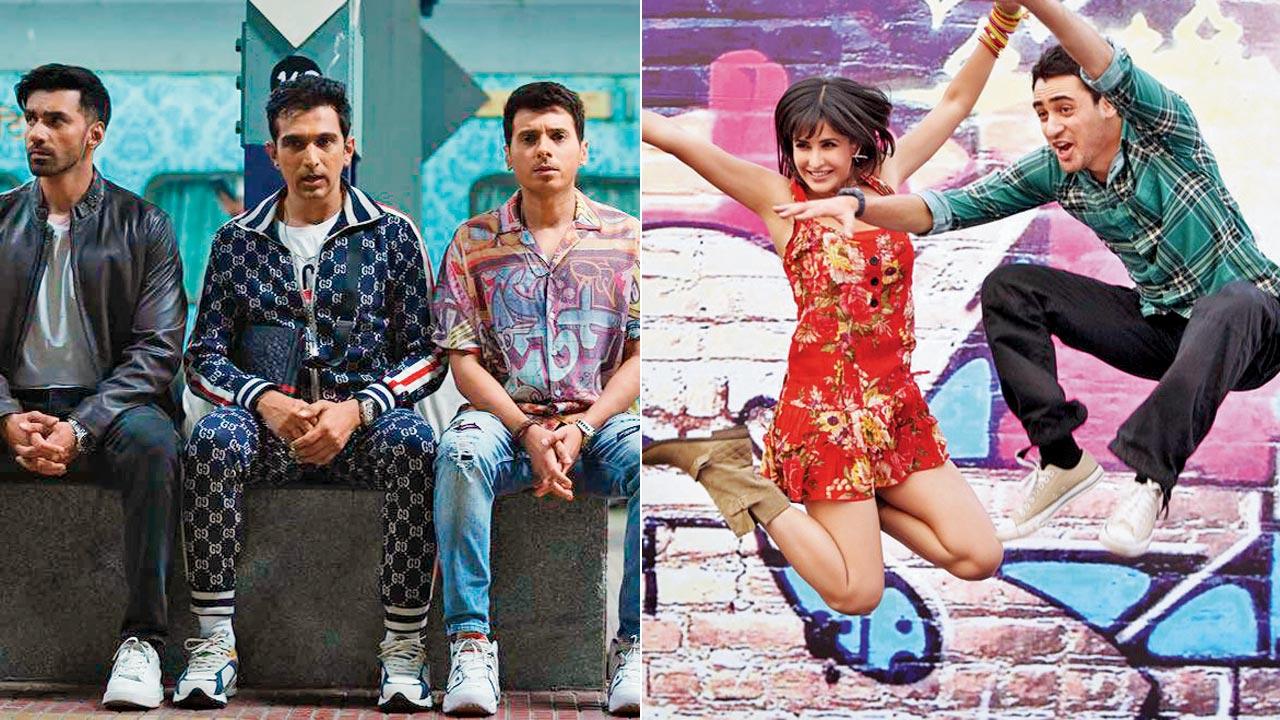
A still from Madgaon Express, which was Kunal Khemu’s first writing credit for screenplay; (right) YRF’s Mere Brother Ki Dulhan launched writer Ali Abbas Zafar
A film production house posted a call for submissions recently, but an eyebrow-raising clause has brought up the question of screenwriters’ credit and payment. It’s an age-old battle, but how should new writers navigate the system?
Junisha Dama (MID-DAY; October 19, 2025)
It was an announcement from Yash Raj Films, asking writers to send in scripts to their submission portal. Innocuous enough, until a clause screenshot from the YRF website found its way to social media, with a post titled “This is wrong on so many levels.” Soon enough, WhatsApp groups were buzzing, setting off alarm bells among film enthusiasts.
The clause reads as if it was from a dystopian contract: “Any submission, solicited or unsolicited, shall become the property of the production house unless there’s a prior written agreement, and may be exploited in any way at YRF’s sole discretion.” The fine print went on to state that those submitting their work would not be entitled to “any compensation, credit, or notice”.
What made the post blow up was its reference to YRF’s announcement just days earlier of the submission portal, “Script Cell”.
We reached out to YRF for a clarification; however, they only issued a public statement claiming that the viral clause was not part of its Script Cell terms but from a separate disclaimer (now removed) on their website.
However, screenwriters say such clauses are not unheard of. Contracts often support producers more than the writers. Independent screenwriter Sailesh Ramaswamy lists some examples, including the credit clause, which gives credit as per the producer’s or platform’s (in the case of OTTs) discretion. “Earlier, we used to be able to push back. Back in 2019, 2018, and 2020, I signed contracts where I had put in clauses that my name would be on the poster. We have regressed from there,” he says.
The second big thing, Ramaswamy says, is the shift in the payment structure. Contracts are now being structured to pay writers only 40 to 50 per cent for the final draft, and the rest in parts. Ramaswamy adds, “At times, if the writer has insisted on a buyback clause, successful producers want writers to buy it back at 40-50 per cent more than the price that they paid you for writing it.” In many contracts, payments are also tied to draft approvals: 20 per cent on the first draft, another 20 per cent on the second, and so on.
While Ramaswamy has more examples that even established writers struggle with, we wonder if it is even logical to submit scripts via a portal.
How do new writers, looking to get their foot in the door, even navigate this system? “I feel that script submissions done without knowing the person to whom you are submitting are not that useful,” says Sudeep Nigam, screenwriter and creator.
Instead, Nigam recommends pitch festivals, like the one organized by the Screenwriters Association (SWA), as better platforms to bring new scripts forward.
In the real world, where young writers have little to no bargaining power, you can’t depend only on luck. “Over the last five years there has been a lot of chatter around writers’ rights, and we want to push that discourse forward. The Writers Guild of America (WGA) strike in 2023 gave us a lot of momentum. It’s still not equitable, it’s still not great bargaining power. But at least there is chatter and there is fight,” says Nigam.
But why is credit and compensation even a question? Anu Singh Choudhary, a screenwriter who has recently transitioned to being a director and producer, says that the Copyright Act in India is strong, but it gets murky as “filmmaking is such a collaborative idea”. “At what point is a director’s voice or a producer’s voice giving input? When you have submitted your script and then they come back with feedback or “notes” and they are making it supposedly their own, does that make the material theirs? Therefore, I feel a basic minimum contract is important to have. We are only fighting for that,” she says.
The SWA, for some time now, has been working on standardizing writers’ contracts that cover fair compensation and credit with a Minimum Basic Contract (MBC). “The ecosystem is changing, and there is pushback now. Therefore, my advice to young writers is that before they sit at the negotiating table, they should be ready to walk away,” says Anjum Rajabali, a veteran screenwriter and senior activist of the Screenwriters Association.
Despite tug-and-pull, the MBC has made progress, but as Rajabali says, the contract will ensure “more vulnerable writers are protected.”
In the meantime, what can writers do at an individual level? Riya Rajkumar Sharma, counsel at AM Sports Law and Management Co, who handles gaming, media, and entertainment law, explains: “When writers submit a script on a portal, they often consent to its exploitation in line with the portal’s terms and conditions. If they’re not careful, they may inadvertently surrender all ownership and rights, including derivative rights [ie, the right to create new works based on their original material]. Moreover, when writers share their ideas through such portals, they usually have little to no bargaining power. It is therefore crucial to understand the implications of any submission. Everyone should carefully read all terms and conditions before uploading or sharing their original work on any platform.”
Sharma further clarifies that there is no intellectual property in an idea itself. “What I mean is that an idea, by itself, is merely a concept. It gains protection only when expressed in a tangible form, for example, as a written script or a painting. The intellectual property rights lie in that expression, not in the idea alone,” she adds.
Nigam also emphasizes the need for writers to speak up, instead of simply complaining about it on social media. “The more they speak up, the better it is for the entire ecosystem to not allow for this to happen. Most writers are fearful, and that’s where the problem lies. At SWA, we have a dispute settlement committee, which is specially designed just to do this. We handle over 500 cases in a year, and we have the capacity to handle even more,” he says.
Would it then help if copyright and IP law were taught as a module in film schools? It would, says Anu, adding, “Also, the art of negotiation. We can all benefit from this and learn not just our rights, but also a producer or studio’s perspective.”
Naturally, coming together as a community is crucial to this cause. Anu says that young writers should constantly check with each other on what kinds of terms and conditions one is agreeing upon. She says that trusted whisper networks do exist, and writers usually compare notes and red flags before signing projects. There is a flipside, though.
“Unfortunately, there is such tough competition and such little work that we end up taking these exploitative contracts only because everybody needs work,” she says, adding that “the responsibility of advocacy at various levels then falls on senior writers, which means constantly talking and creating awareness. And if there are red flags, let the community know. Be, in that sense, champion of the other writers. All this while, this ecosystem has really thrived on a lack of unity between the writers.”
Rajabali echoes this, “If writers stand united… collective bargaining is very strong.”
The Raanjhanaa AI re-edit tangle: Are we in an ‘ethical abyss’?
8:52 AM
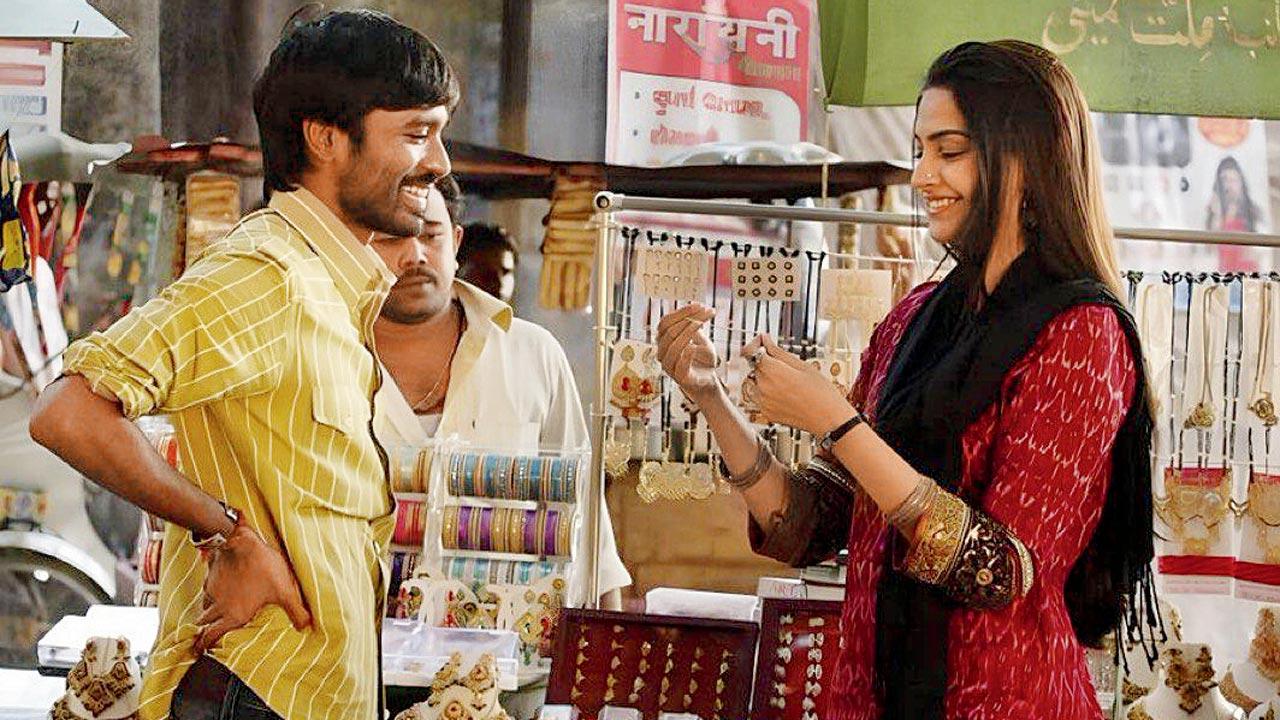
As a top studio rewrites the climax of a beloved film using AI, without the director’s consent, Bollywood is now reckoning with the grim reality that even the soul of a story can be reshaped without its storyteller, a decade after its creation
Mohar Basu (MID-DAY; July 27, 2025)
Artificial intelligence is not at the place where it can manipulate writers and creators yet. This is what we heard in February, during an interview with the acclaimed American writer Chris Keyser about the dangers of AI for screenwriters, when he was in the city for a conference. Keyser was the co-chair of the Writers Guild of America’s (WGA) negotiating committee during the 2023 strike by over 11,000 Hollywood film and television writers for better wages and conditions.
During our conversation, he had said, “We assumed that the studios were so protective of their own work that they would be scared of AI in the same way that writers were. They didn’t behave that way initially. By the end of the negotiation of the contract, (we) negotiated terms that protected writers’ core rights, their right to compensation and credit, and all their additional contractual rights for their material. It said that they can’t be forced to rewrite AI, nor can AI rewrite them, that AI can’t get credit.”
Back then, even we couldn’t have pre-empted what unfolded in India last week. Filmmaker Aanand L Rai’s 2013 hit Raanjhanaa is being re-released, but with an ending rewritten. And Rai doesn’t approve of it. The new version, scheduled for theatrical release in Tamil Nadu under its dubbed title Ambikapathy, has been altered using artificial intelligence. Without the director’s involvement or consent, the studio behind Raanjhanaa, Eros International, has digitally fabricated an alternate “happy ending” that, in Rai’s own words, vandalizes the soul of the film.
Unlike in Hollywood, where writers’ guilds have fought — and won — major protections against AI-led rewrites, Indian creators remain bound by contracts that often strip them of all future rights the moment a project is greenlit. Directors and screenwriters may shape the soul of a film, but legally, they seldom own it, as the norm is for the IP of a movie or show to transfer to the studio upon signing of agreements. With studios embracing AI for commercial “enhancements,” that legal void is turning into an ethical abyss, like in Rai’s case.
Entertainment lawyer Priyanka Khimani says while studios may assert ownership over a film’s copyright, the use of AI to fundamentally alter a creator’s original vision, especially without their consent, sits in a legally grey and ethically troubling zone.
She explains, “Studios often control 100% of the rights, although under the moral rights clause a director or author retain certain moral rights under Indian law — like the right to be identified as the author of the work, and to object to any distortion or mutilation that could harm their reputation.”
Another crucial issue relates to the Copyright Act’s 2012 amendment, which states that rights can only be assigned for formats and uses that exist at the time of the agreement. “In the case of technologies like AI, which wasn’t in existence or even foreseeable when the film was made, there’s a strong argument that the creator never assigned rights for those future uses,” Khimani tells us, adding, “The law is meant to protect authors and performers from losing control over their work in precisely these scenarios, where new technology enables uses that were never imagined at the time of creation.”
Khimani goes on to say, “In the case of Raanjhanaa, I believe the writers and actors may be on firmer legal ground if they were to challenge the AI-modified version. They can argue that the alteration compromises the integrity of their work, infringes on their personality rights, and constitutes unauthorized distortion. For the director, however, this becomes more of an ethical and moral objection rather than a strictly legal one.”
Khimani says this moment is important as “it’s opening a Pandora’s box” because if we normalize the ability to reshape existing works using AI, the long-term consequences for literature, cinema, and performance could be disastrous.
Clearly, Eros is not in agreement with this stand. Eros Group CEO Pradeep Dwivedi has been quoted saying, “We categorically reject Mr Rai’s allegations... The re-release is a respectful reinterpretation and not a ‘tampering’ of the original.”
Meanwhile, Rai is taking the matter to producer bodies. Though the matter is yet to be heard officially, a senior member of the Guild tells Sunday mid-day, “The Guild is made up of filmmakers. We’re in this industry because we’re passionate about storytelling. So when a writer or director feels their voice has been overwritten or erased, it strikes at the heart of why we do what we do. This is about respect. About honouring the soul of the work. We owe it to ourselves, and to the future of filmmaking, to have this conversation with honesty and courage.”
Dipankar Mukherjee, co-founder of Studio Blo, a new-age startup, has a sharp take here. Mukherjee tells us, “AI should be like a cinematographer — extending the vision of the creator, not replacing it. The moment it starts rewriting the emotional spine of a story without the writer or director’s approval, you’ve crossed the line. What happened with Raanjhanaa is revisionism. It’s like saying Devdas should have ended up with Paro to test better with audiences. Then it stops being Devdas. Even before AI, these lines were being crossed. AI just makes that overstep faster, cheaper, and invisible. We’re beginning to see requests to 'freshen up' past content — whether that’s to de-age characters, tweak endings, or reframe performances for newer markets. We are built from ground-up with anti-plagiarism systems integrated into our workflow. The red flag is when AI starts doing what studio executives tried doing in the ’80s, like the Harrison Ford voiceover in Blade Runner, against the wishes of Ridley Scott; or the Justice League producers’ edit after Zack Snyder stepped down. Except now, without needing a reshoot or a script change. The temptation to erase dissent, discomfort, or ambiguity is high. And in a country where creators often don’t own their IP, that temptation becomes unchecked power.”
The human cost at the end of the day when something like this happens is borne by the creator and writer — in this case, Rai and writer Himanshu Sharma. A well-known screenwriter, who was previously a part of the Screenwriters Association General Body, tells us, “We spend months, sometimes years building characters, shaping arcs, constructing emotional payoffs that mean something. And then, one day, a studio decides to rewrite the ending using a machine, without even informing the people who created it. It’s insulting. What happened with Raanjhanaa sends a very dangerous message that any writer’s vision is disposable.”
The terms
In a series of writer/creator contracts reviewed by Sunday mid-day, the terminology of the contract reads, “The Producer ... shall have the sole and exclusive right to exercise all rights ... in accordance with the Copyright Act, 1957. The Service Provider further acknowledges that the Producer shall be the sole and exclusive owner of Derivative Rights and shall have the sole and exclusive right to produce Derivative Works based on the Works and on all Modes, Media and Formats, for the entire Territory and in perpetuity.”
This year has turned out to be quite extraordinary for me, despite the global writers’ strike-Ali Fazal
9:53 AM

Ali says he benefited from WGA strike as his free schedule helped him do several Indian films, including Metro In Dino
Mohar Basu (MID-DAY; June 20, 2024)
The bad news is that the Writers Guild of America strike, which took place between May and September 2023, halted Ali Fazal’s productions in Hollywood. The good news is that it opened up his schedule and gave him the opportunity to be part of many Bollywood projects. The actor is now looking forward to the release of his offerings that include the third season of Mirzapur, Metro...In Dino, Thug Life alongside Kamal Hassan, and Lahore 1947.
Only days after the trailer of Mirzapur 3 was released, Fazal says that following last year’s setback, 2024 has become one of the best years of his career. “This year has turned out to be quite extraordinary for me, despite the global writers’ strike. I had to take a break from international work. But I’m thrilled to be part of Anurag sir’s film, Mani Ratnam sir’s Thug Life, as well as Lahore 1947. It gave me a chance to explore a variety of roles in a short time,” shares the actor.
While Metro...In Dino has an ensemble cast that includes Sara Ali Khan, Aditya Roy Kapur and Fatima Sana Shaikh, Rajkumar Santoshi’s film will see him share screen space with Sunny Deol and Preity Zinta.
Fazal’s pursuit for novel stories was also rewarded earlier this year when his maiden production Girls Will Be Girls bagged two awards at the Sundance Film Festival.
“We’ve also announced five other projects. Our idea is to nurture new talents and ourselves. This is also a time where we are nurturing our personal lives,” beams the actor, who is expecting his first child with actor-wife Richa Chadha.
If content is called king then why are you not paying kingmakers, ask writers
8:14 AM
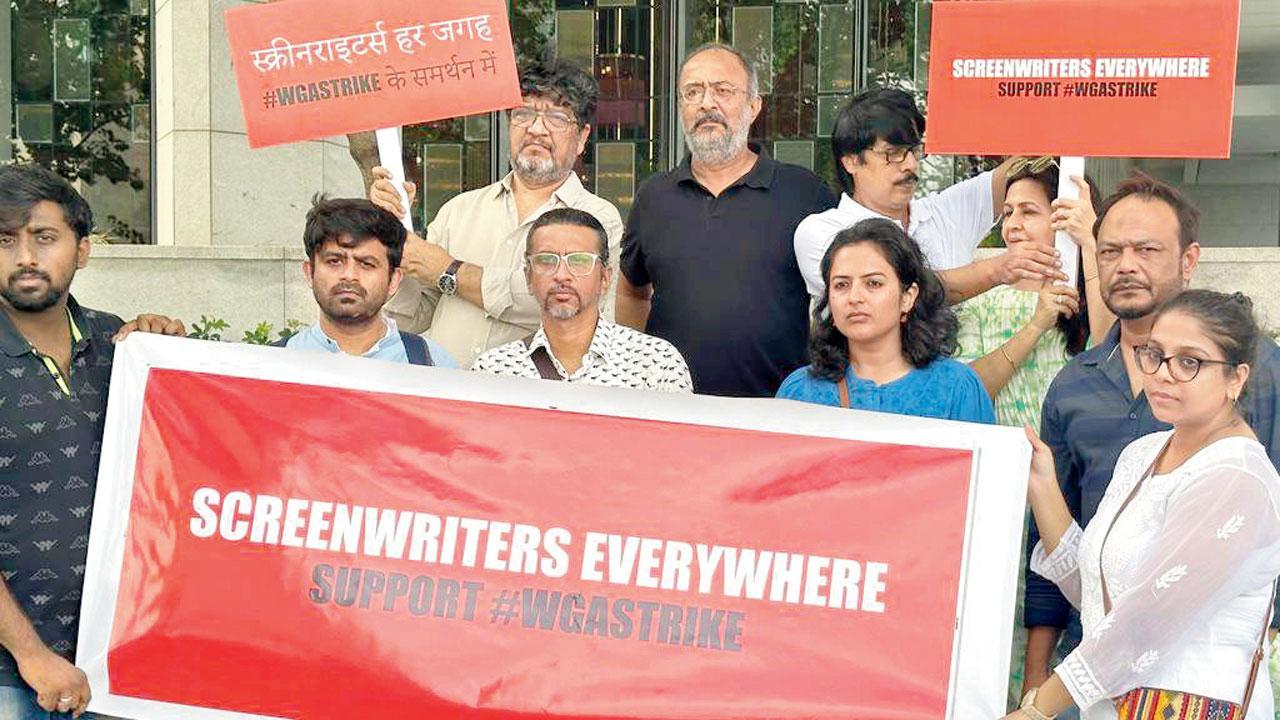
While writers in Hollywood are on strike demanding better pay from studios, screenwriters in India say that their condition is much worse compared to their US counterparts
Niharika Lal (BOMBAY TIMES; June 14, 2023)
The Writers Guild of America (WGA) strike, which kicked off in early May, is a result of a clash between writers, who see themselves working more but earning less in the streaming era, and studios attempting to rein in costs. Back in India too, writers of films and TV shows have demands that are quite similar – credit, compensation and fair contracts. However, many writers here feel that the situation is much worse compared to US.
Many writers point out, “Jinki stories pe taaliyan aur seetiyan bajti hain unko aksar screening pe bulana bhool jaate hai.” While the scenario has been slowly changing, writers feel it will take years for them to be at par with their US counterparts.
‘INDIAN WRITERS’ FEE MUCH LOWER THAN U.S. WRITERS’
In solidarity with the strike, India’s Screenwriters Association (SWA), asked all members working on US projects to stop working. SWA is fighting several battles on behalf of Indian writers. Anjum Rajabali, screenwriter and senior activist of SWA, shared his thoughts on the issues that Indian writers are facing:
‘CONTRACTS ARE ONE-SIDED’
Those who work on US projects are much better paid. In India, screenwriters, especially the new ones, receive fees far lower than the value of their work. Moreover, the contracts are one sided and protect their (producers and studios) rights, while the writer is left vulnerable. Credit is not guaranteed, termination can be at the whim of the producer, impossible indemnity is demanded from the writer.
‘OTT TREATS INDIAN WRITERS DIFFERENTLY COMPARED TO THEIR U.S. COUNTERPARTS’
More writers are now gainfully employed because of OTT. However, platforms brought in their own contract culture, with clauses that writers find unreasonable. OTT platforms treat Indian writers differently than their US counterparts. While US writers are striving to increase writers’ fees to fair levels, even their existing fees are still much higher than what Indian writers receive. Moreover, in the US, every time a show is aired anywhere outside of a cinema hall, the writer receives an additional remuneration.
‘SWA WILL NEGOTIATE FOR CREDIT’
Credit has to be given based on the work that the writer has done and not at the producer’s discretion. In case of a dispute between writers, SWA’s experts should arbitrate the issue by examining the respective written contribution of the writers to the final script and decide. Credit, dignified fees, regulation of the termination clause, indemnity, freedom to seek redress from the union are some of the clauses that need discussion with producers.
‘WHAT INDIAN WRITERS ARE SEEKING IS A SYSTEM CHANGE’
Screenwriter Mitesh Shah says, “What writers are seeking is a system change – equitable contracts, better compensation, credit guarantees, royalties. Streaming has given a lot of opportunities to writers. Things are certainly getting better but it’s still a long way to go. Be it a film or a web-series, everything starts with a blank page, and writers need to be accorded their due for filling up that page.”
Most writers say that they usually work on four-five projects at a time. Akshat Ghildial, who has written films like Badhaai Do and Badhaai Ho, shares, “From the initial idea to the dubbing, writers are paid in chunks. Kabhi kabhi chaar saal tak film ki total payment nahi aati. Agar aapne blockbuster likha hai toh aapki fees thodi zyada ho jayegi. Agar actor ki ek film blockbuster ho jaye to uski fees skyrocket ho jati hai, aisa writers ke saath nahi hota,” adding, “If content is called king then why are you not paying kingmakers?”
HOLLYWOOD STARS BACK U.S. WRITERS
The ongoing strike in US also saw many celebs step forward to stand in solidarity with screenwriters. Julia Louis-Dreyfus, Tina Fey, Rob Lowe and Modern Family stars Nolan Gould, Sarah Hyland and Jesse Tyler Ferguson, were among stars who protested with writers
WHAT INDIAN WRITERS HAVE TO SAY:
"A director doesn't ask for design credit when sharing his vision with a costume designer. But when it comes to writing credit, I have heard of many instances where directors have demanded their name be included. Sabko lagta hai writing sabko aati hai. Koi bhi aake suggest karta hai yeh dialogue work nahin kar raha"
- Akshat Ghildial, who has written films like Badhaai Do and Badhaai Ho
"It is quite common for some producers and directors to demand writing credit even for a minor input. It happened once with me when a producer wanted writer credit for giving feedback on the screenplay (that project never got made). In the last couple of years, writers have openly criticized these demands, which has changed things. Giving feedback is not the same as writing."
- Pooja Tolani, who has written Sacred Games
"The Indian screenwriting ecosystem is still learning how to read and execute a fair contract, negotiate good remuneration and deliver a good script"
- Hiteh Kewalya, who has written Shubh Mangal Zyada Saavdhan
"Because a lot of work is being done, the incremental value of writers have gone up in the last few years. But has it changed anything for writers and their rights in India? I'd say not much"
- Trishant Srivastava, who has written Jamtara
WHAT DO WRITERS DEMAND?
> Fixed minimum basic compensation
> Contract clauses like payment linked to approval, producer’s discretion if credit needs to be given
> Royalties – profit share in remakes and reruns
To express solidarity with WGA, Screenwriters Association holds symbolic protest in Mumbai
4:44 PM
Priyanka Sharma (MID-DAY; June 15, 2023)
It has been over a month since the Writers Guild of America (WGA) went on strike, following the breakdown of their negotiations with the Alliance of Motion Picture and Television Producers (AMPTP). The WGA union criticized the studios for not providing fair employment conditions to writers.
On Wednesday, 20 members of the Screenwriters Association (SWA) observed a silent protest outside the Netflix India office in Bandra Kurla Complex, Mumbai to express support for its US counterpart. The development came as a part of the decision taken by the International Affiliation of Writers Guild (IAWG) to mark World Solidarity Day.
Screenwriter Anjum Rajabali, executive committee member of the SWA, says, “Whenever any guild faces any obstacles, IAWG ensures the rest of us stand by them. This time, it was decided that writers’ guilds across the world, including India, parts of Europe, and Australia will hold a symbolic protest on the same day.”
Besides Rajabali, SWA chief operating officer Suhael Anwar, Shubh Mangal Zyada Saavdhan writer-director Hitesh Kewalya, Mohenjo Daro dialogue writer Priti Mamgain and Comicstaan writer Adhiraj Singh constituted the group.
Rajabali explains that the protest was motivated by the fact that most streaming platforms are members of the AMPTP that was in negotiations with the WGA. “This is not against [a specific streamer]. It is to boost the morale of the WGA members,” he emphasizes.
After WGA strike rocks Hollywood, Screenwriters Association in India drafts Minimum Basic Contract
8:29 AM
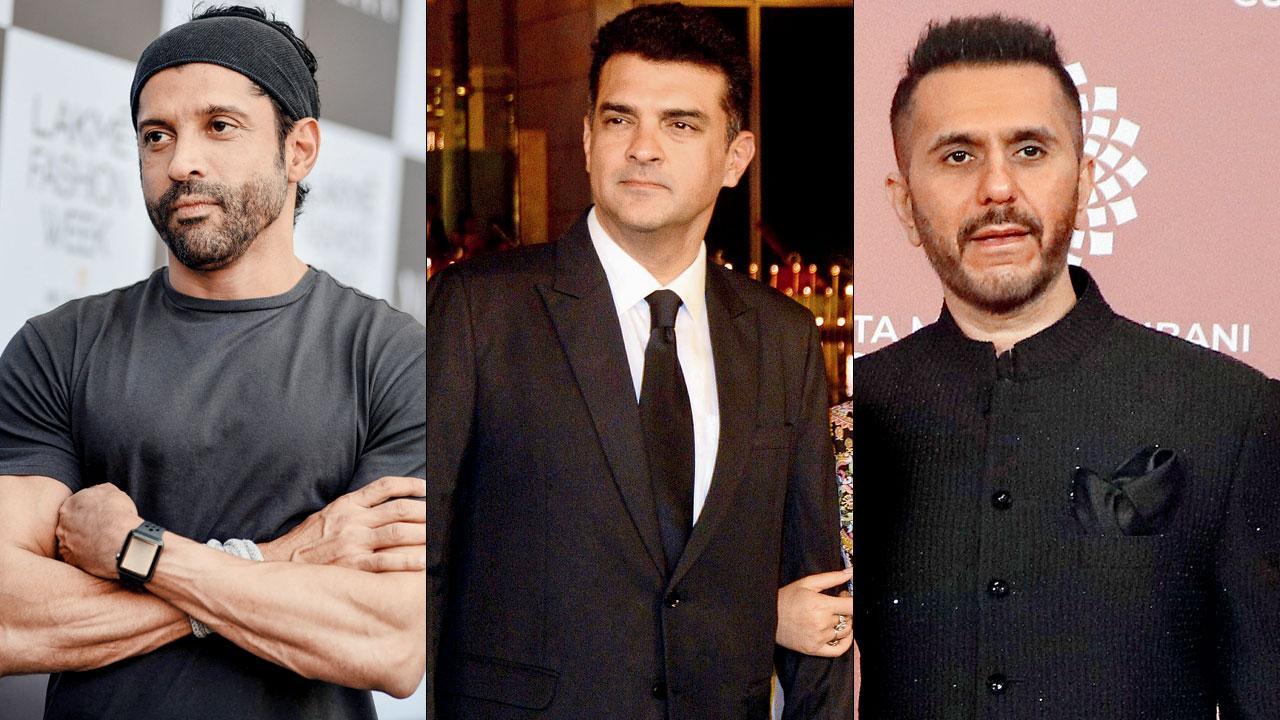
After WGA strike rocks Hollywood, Screenwriters Association in India drafts Minimum Basic Contract that seeks credit, higher remuneration for writers; lines up meeting with producers for next week
Mohar Basu, Priyanka Sharma (MID-DAY; May 8, 2023)
More than 11,000 members of the Writers Guild of America (WGA) went on strike last Tuesday, following the breakdown of their negotiations with the Alliance of Motion Picture and Television Producers (AMPTP). The WGA union criticized the studios for treating writing as a freelance profession rather than providing fair employment conditions to writers.
Closer home, the Screenwriters Association (SWA) has expressed its solidarity with the WGA. The episode has reignited the conversation about writers’ rights. Taking a cue from its American counterpart, the SWA is formulating a Minimum Basic Contract (MBC). Suhail Anwar, chief operating officer, SWA, says, “We need fairer contracts for writers. Credits are not guaranteed, neither are fees despite having a pay scale.”
The contract will focus on two key areas — credit, and remuneration. Zaman Habib, general secretary, SWA, rues that the fight in India begins from the fact that writers are often not acknowledged.
“When a writer is successful, they can negotiate, but new writers are exploited. The MBC will assure them credit and remuneration. We have seen cases where a writer has delivered a screenplay for [as low as] Rs 50,000.”
In 2018, a minimum-pay scale was set up. Among other things, it stated that for a film mounted on a budget of Rs 5 crore to Rs 15 crore, the writer should be paid Rs 24 lakh for the complete script. Habib notes that while these rules exist on paper, they are often not applied by producers and studios.
“This pay scale has to be agreed upon by unions and guilds so that there is no discrepancy or manipulation. It will be fair to both producers and writers in the industry. A basic respectable amount has to be assured. In films, a writer’s total remuneration is often priced at Rs 5 lakh. The tranches are spread out over nine months to two years, depending on the benevolence of a producer.”
Habib rues, “Many producers believe in keeping writers happy, but many others are repeatedly in the habit of not paying or delaying payments.”
To address the issue, the SWA will conduct a meeting with Producers’ Guild, Indian Film and Television Producers Council (IFTPC), Indian Motion Picture Producers Association (IMPPA), and individual producers next week. He adds, “Producers like Siddharth Roy Kapur, Ritesh Sidhwani and Farhan Akhtar are encouraging [of the MBC].”
The MBC is being formulated by a team of experienced writers and lyricists, headed by Anjum Rajabali, who has long been a champion of writers’ rights in India. He highlights that a new “offensive” clause has been introduced by some producers.
“The contract has a clause, which states that the final credit of the writer will be at the discretion of the producer. This has naturally outraged all writers. Credit indicates the writer’s contribution to the film. It is an inalienable right — legally and morally. If there are multiple writers and there is a dispute among them concerning credits, then experts, who understand screenwriting, should assess their individual contribution to the film and determine their credits,” Rajabali explains.
The SWA has set up a credit arbitration committee to resolve this issue, and Rajabali says it will be a key point of discussion in the upcoming meeting.
“In the credit arbitration committee, the drafts submitted by the writers are read and the extent of their inclusion in the final script is assessed by senior writers anonymously. We now seek that all credit disputes be handled by this process, and not at the producer’s discretion,” he asserts.
Habib adds, “Credits on a film or a series will be explained in this contract. Also, credits can’t be measured on industry seniority. It will be measured by the amount of work put in. Despite being a junior writer, if someone has put in more work, his name should come first.”
Royalty is another issue. By and large, in Bollywood, the norm is that the creator/writer transfers the Intellectual Property Rights (IPR) to the production house, studio, or platform. With the MBC, Habib says they are seeking royalty that would be over and above the remuneration. Rajabali is optimistic of arriving at an understanding with the producers regarding the MBC.
“We’re fully cognisant of their points of view, and their anxieties. The changes that we’re proposing are fair to both sides.”
SWA recommends
Consideration: Make sure that the amount of consideration is given in the draft and broken down into tranches. Avoid the one-time bulk payment that shall be made once the work is completed.
Credit: Ensure you receive your due credit. Make sure that the credit clause survives the termination of your agreement. Even if the agreement is terminated by either party, you shall still be credited for your work.
Subscribe to:
Posts (Atom)