Showing posts with label Vivek Narayan Sharma. Show all posts
Showing posts with label Vivek Narayan Sharma. Show all posts
No drugs, but still in custody: Decoding the Aryan Khan case
8:29 AM
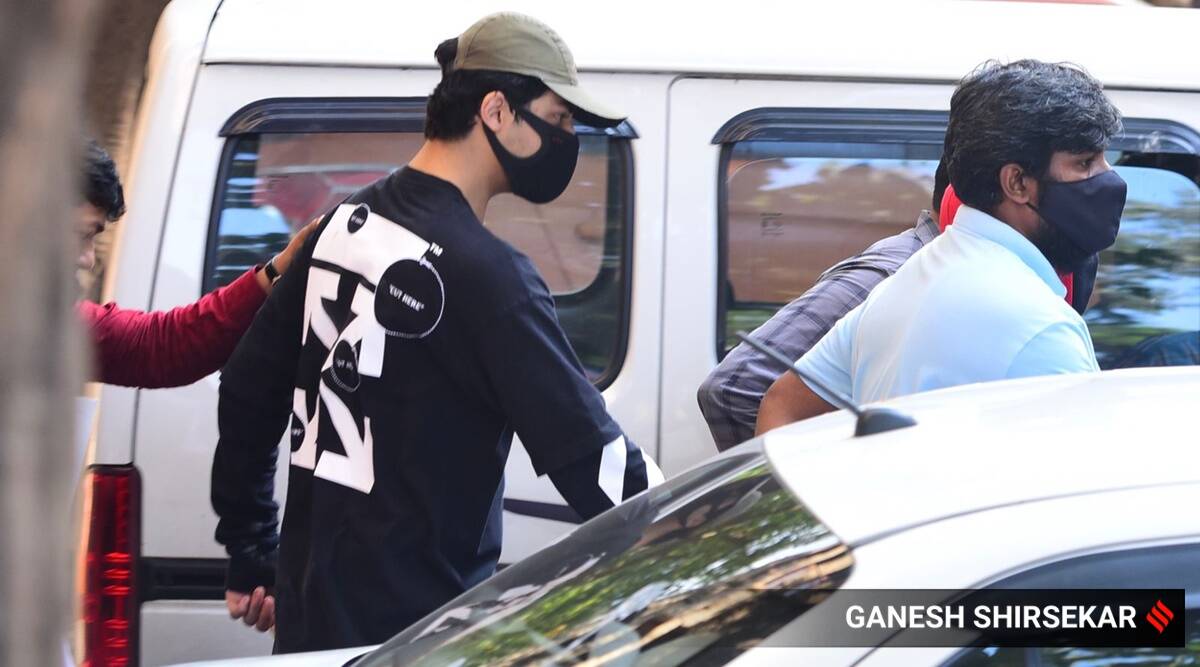
BOMBAY TIMES (October 6, 2021)
The Narcotics Control Bureau (NCB) clearly stated that no drugs were recovered from the possession of Aryan Khan, while only 6 grams of charas was found in the possession of Arbaaz Merchant. So why was their custody sought? And if someone were to be found in possession, what is the legal position on the possession of small quantities of ‘soft’ drugs? Legal experts decode the rulebooks
‘THE LAW DISTINGUISHES BETWEEN SMALL QUANTITY FOR CONSUMPTION VS COMMERCIAL QUANTITY FOR TRAFFICKING’
Vivek Sood, senior lawyer, Delhi High Court, who has been a defence lawyer in many cases related to narcotics, says: “In 2001, the NDPS Act was amended to distinguish quantities of drugs. Prior to 2001, there was no classification regarding the amount of drugs. Let’s say before 2001, if I had 1 gram drugs I would be equated with someone who had 1000 kg of drugs. There was no classification between the quantity which was found in possession of a person and it created a lot of difficulty. Consumers would be equated with traffickers. Now you have classification of quantities (as per NDPS Act), and punishment varies depending upon the quantities – whether it is small quantity for consumption or commercial quantity for trafficking. The law differentiates between consumers and traffickers. The argument that consumers of drugs should only be treated as victims and should not be punished is about legalisation of drug consumption. In my view, they should be seen as quasi-victims, and should be punished, otherwise youngsters will go berserk with consumption.”
‘ARYAN KHAN WAS NOT GRANTED BAIL BECAUSE THE PROSECUTION CLAIMED THEY FOUND SOME INCRIMINATING EVIDENCE FROM HIS PHONE’
Vivek Narayan Sharma, a lawyer of the Supreme Court says: “Aryan Khan was sent for further NCB custody because they claimed in the court that they got incriminating evidence which points toward an international link, procuring drugs in bulk. The prosecution has a right to seek custody in such a case, and there can be three or maximum seven days in which he can be granted bail. In this case, the possession of drugs from his friend is also of small quantity (6 gms), hence it will be considered under small quantity in the court.”
“From the arguments, in the court we know that Aryan Khan was not in possession of any drugs. As per law, consumption of drugs is prohibited, and the punishment is according to the quantity. Drug consumption is an act against yourself while drug trafficking is an act against society. For self consumption, action is taken under Section 27 while for drug trafficking it is under Section 27 A of the NDPS Act. A drug addict is seen as a victim, but we don’t know yet if he is an addict or not. There is no information yet if any drugs were found in his medical results or not. Hence he has not been granted bail because the angle of international drug trafficking links inflated by the prosecution.”
TIMES VIEW: DE-STIGMATISING SOFT DRUG ABUSE IS ESSENTIAL
If we were to treat all soft drug users in the country as criminals, there would not be enough jails to house them. As families that deal with substance abuse know so well, addicts need to be treated as victims and not criminals. And it is empathy and care – and not being put in prison – that often helps them come out of the addiction and find a new purpose in life. Our laws that deal with narcotics charges are decades old and do not reflect the present-day realities of drug addiction. There is an urgent need to stop criminalizing soft drug abuse in order to create a healthy atmosphere where the problem is addressed as a social ill. For that, the first step should be to treat possession of a small quantity of narcotics for personal consumption as a civil offence, as opposed to a criminal one. This would be an important step towards de-stigmatising drug abuse. Peddling can, and should, be treated as a crime, but a substance abuse victim needs our helping hand and not a police baton.
Another important step would be to delink cannabis products – ganja and charas – from other ‘hard drugs’ like opiates and cocaine. There is growing medical evidence that cannabis derivatives can be beneficial in treating many ailments. India also has a long history of socially sanctioned cannabis use, as can be seen in many of our festivals. In fact, it was not till the 1980s that cannabis was clubbed with other drugs in the same bracket legally. While this pushed the cannabis trade underground, it also aided the booming market for narcotics like heroin and brown sugar. The western world has already recognised this and taken remedial measures, which is why cannabis products are gradually getting legalised in different countries, including in 19 US states. Ironically, it was pressure from the US back in the ’80s that forced India to criminalise cannabis use. It is high time India seriously examined the possibility of legalising cannabis, especially since we voted only last year at the UN Commission on Narcotic Drugs to remove cannabis from Schedule IV of the 1961 convention, where it was listed with other drugs like heroin.
— With inputs from Niharika Lal
SC stays order asking YRF to pay moviegoer Rs. 15,000 for not including Jabra Fan promo song in Fan
8:35 AM

Niharika Lal (BOMBAY TIMES; September 22, 2021)
The Supreme Court on Monday stayed a February 2020 order of the National Consumer Disputes Redressal Commission (NCDRC) which directed Yash Raj Films (YRF) to pay Rs. 15,000 compensation to a consumer aggrieved by exclusion of the song Jabra Fan in the Shah Rukh Khan-starrer Fan, which released on April 15, 2016. However, the court did question the production house over why it marketed the film with the song, but edited it out of the final movie.
FELT ‘CHEATED AND DECEIVED’ AFTER SONG WASN’T PART OF THE MOVIE: COMPLAINANT
Afreen Fatima Zaidi, a teacher from Aurangabad, on watching the film’s promos – which included the song Jabra Fan – decided to see the film in cinema with her family members. However, the song was missing from the film, which made her feel ‘cheated and deceived’. Zaidi approached the concerned District Forum by way of a consumer complaint seeking compensation, along with a direction to the petitioners to air the promos and song with a caveat that the said song was not included in the film.
UNLESS THERE’S A DISCLAIMER, ANY PERSON WOULD BELIEVE THE SONG IS PART OF THE MOVIE: NCDRC
The NCDRC had held that inclusion of a song in the promo of the movie when it is not actually a part of the movie, amounted to deceiving viewers and was consequently an unfair trade practice, under Section 2(1)(r) of the Consumer Protection Act. It specified the need for a disclaimer in such cases, stating that “if a person likes the song shown in the promo, and based upon such liking decides to visit a cinema hall for watching the said movie for a consideration, he is bound to feel deceived, disappointed and dejected if the song shown in the promo is not found in the film.”
It added, “The obvious purpose behind such an unfair trade practice is to draw the potential viewers to the cinema hall by luring them with the song which forms part of the promo and thereby making gain at the cost of the viewer.”
‘FROM A LEGAL PERSPECTIVE, THE CONSUMER’S EXPECTATION IS LEGITIMATE’
Vivek Narayan Sharma, a Supreme Court advocate, says, “A film is a product. A promise was shown in a glimpse in the promo. If the consumer was mesmerised by a glimpse of that promise, and when the consumer sees it missing from the product then they can claim compensation. From a legal perspective, it was a legitimate expectation by a moviegoer to see the song in the film. It can be argued in the court by the consumer that their legitimate expectations were not fulfiled, hence, it caused them mental agony and they have incurred losses — movie tickets, time spent in the cinema hall and money spent in hiring a vehicle and so on.”
THE DIRECTOR, NOT PUBLIC, SHOULD CHOOSE WHAT SONG/SCENES SHOULD BE RETAINED IN FILM: YRF
YRF argued,“The song Jabra Fan was only meant for the promotion of the movie and the same was not to be a part of the movie and this fact was also well publicised by the Petitioner, the star-cast of the movie as well as by the director on multiple occasions.”
YRF also added that it is a common industry practice to release certain songs for promotional purposes and not include them in the movie. It submitted, “What scenes/songs/portions that the producer and the director finally choose to retain as part of the film, after editing, and what they finally present to the public, is their prerogative. Members of public cannot demand the story to be presented in a specific manner, suitable to their sensibilities.”
Piracy is at an all time high in the age of OTT releases
8:18 AM

Black Widow to Shershaah, this year’s most-awaited films were pirated soon after their digital release. What makes OTT platforms so vulnerable?
Niharika Lal (BOMBAY TIMES; August 29, 2021)
Ahead of their digital release in India, Black Widow and Cruella have both been available on pirated films’ websites here for months, following their international streaming release. Not just Hollywood, even the latest Bollywood flicks like Shershaah, AK vs AK, Mimi, Toofaan, Sardar Ka Grandson, and Roohi were immediately available on such sites post their digital release in India. Pirated versions of most films released on digital platforms are made available before or on the same day through links on WhatsApp and Telegram groups. In some cases — like Salman Khan-starrer Radhe, which released in May this year — pirates have been daring enough to even announce the sale of the movie on Facebook after its release and three persons were arrested under relevant sections of the Information Technology Act and the Copyright Act in this particular case.
People from the industry find piracy with regard to OTT releases especially worrying, as not only can the films be pirated easily after they release digitally, but also because illegally downloadable versions of the films are just as good in quality as the originals.
‘UNLIKE BEFORE, NOW QUALITY OF PIRATED FILMS AT PAR WITH ORIGINAL’
Yogesh Raizada, an exhibitor, says, “Easy availability of high quality downloads of latest releases is worrisome. Earlier, pirates would record in cinemas and only poor quality versions were available on pirated films’ websites. People used to also avoid watching pirated films because of bad quality.”
Many avid streamers tell us they watch pirated content because it’s free and high definition versions are easily available. One user says, “I’m already paying for broadband. Now, if I start paying for every service that I use online, then what’s the point? Also, I don’t download pirated films. My friends send links.”
Another user says, “I don’t download Japanese, Spanish or Korean films, as in most cases the subtitle file is missing, and it is impossible to understand these without them. I only watch Hindi and English films on websites with pirated films.”
WHY DON’T FILMMAKERS COMPLAIN AGAINST OTT PIRACY?
Few arrests have been made related to OTT piracy, as according to Anyesh Roy, DCP, Cyber Cell, Delhi Police, they haven’t received any complaints yet. So, what is stopping the producers from taking collective action? Lawyers say that while streaming content and pirates have moved on to far better technologies, the law has not caught up yet and that’s why enforcement of the Copyright Act is difficult.
There are several steps that can be taken to stop piracy. Vivek Narayan Sharma, a Supreme Court lawyer, says, “Producers should contact the police if their film is pirated and ensure that an FIR is registered, so investigations can follow. The reason why producers stay away from any legal action is because of the long procedure, but film piracy is a mass violation of copyright. Platforms where these films are circulated should also be made a party to it and it is the liability of these platforms to remove the content. Last year, newspapers went to the Delhi High Court stating how their PDF copies were shared through chats and the court ordered that unauthorised dissemination be stopped. If producers or film bodies will contact the court or the government will step in to create a mechanism then it can be stopped. The court can give an injunction to stop its circulation on unlicensed platforms if it is pirated.”
Vivek Sood, a senior advocate of Delhi High Court says, “Piracy of content from streaming platforms can be stopped by three methods. First, better security of content which can’t be bypassed (and if they get to know about software which assists in piracy, they can contact the court). Two, make content easily accessible and cheaper. Third, take action against organised piracy rackets i.e. go to court to get websites blocked or complain against pirates, as any action taken sends out a message to others.”
On the other hand, an official from an OTT platform points out that when titles are released all at once around the world on streaming services, it instead helps address piracy and protects the creative community’s hard work. They add, “Platforms like ours have economical subscription plans which cost less than `200 a month, which also has helped in fighting piracy as people can watch content on their own terms without any hassles rather than resorting to piracy.”
---------------------
‘IT’S NOT DIFFICULT FOR PEOPLE WITH SOFTWARE KNOW-HOW TO COPY FILMS FROM STREAMING WEBSITES’
As per an international publication, Black Widow star Scarlett Johansson’s recent lawsuit against Disney listed “piracy” as one of the reasons she was against the makers releasing the superhero film simultaneously in theatres and on digital platforms. The National Association of Theatre Owners, Los Angeles, in its statement issued in July, said, “Piracy no doubt further affected Black Widow’s performance, and will affect its future performance in international markets where it has yet to open. Pristine digital copies became available within minutes of release on Disney+. Black Widow was the most torrented movie for the week ending July 12. It is also available on myriad illegal streaming sites all over the internet. This was also the case for all simultaneous releases (Wonder Woman 1984, Godzilla vs Kong, Cruella, Mortal Kombat, etc).”
Sunny Nehra, a cyber expert, says, “Most streaming platforms use DRM protection. Pirates use screen recording and other tools specially developed to crack DRM. It is not that difficult to crack for software developers or those who work in this field.”
---------------------
CAN YOU BE ARRESTED FOR WATCHING A PIRATED FILM?
Let’s say your friend forwarded you the link to a movie downloaded from a pirated website or which was shared on an unlicensed platform. Or suppose you go on a pirated website to watch a film. Can either of these actions land you or your friend in jail? Vivek Sood, a senior advocate of Delhi High Court, says, “Downloading a film/web series/documentary from an unlicensed platform is a violation of intellectual property rights. But you can’t be arrested. Under Section 51 of the Copyright Act ‘reproduction of a literary, dramatic, musical or artistic work in the form of a cinematograph film shall be deemed to be an infringing copy.’ However, Section 52 clearly states that private viewing is not an infringement. What does that mean? It means if you forward it to others or sell it, then it is an infringement and you can be arrested.”
However, Sood adds, “While you can’t be arrested, for watching pirated content, you can still be hauled up, restrained and the OTT platform which has the original content can even ask you to pay for the damage (fine) if you watch their content from an unlicensed platform.”

FCAT abolished; filmmakers to appeal to high court now in case of grievances
8:15 AM

Lipstick Under My Burkha and (right) Haraamkhor were denied certification by the CBFC, after which the FCAT stepped in and gave both the films an ‘A’ certificate and some cuts
Niharika Lal (BOMBAY TIMES; April 8, 2021)

Now, a film that isn’t being granted a CBFC certificate or has any other grievances with the board, can approach the high court. Several film personalities, such as Hansal Mehta, Vishal Bhardwaj, Guneet Monga and Richa Chadha took to Twitter to express their views on this ruling. Mehta wrote, “Do the high courts have a lot of time to address film certification grievances? How many film producers will have the means to approach the courts? The FCAT discontinuation feels arbitrary and is definitely restrictive. Why this unfortunate timing? Why take this decision at all? (sic),” while Bhardwaj tweeted, “Such a sad day for cinema. FILM CERTIFICATION APPELLATE TRIBUNAL ABOLISHED | 6 April, 2021 (sic).” Monga and Chadha reacted to Bhardwaj’s tweet, expressing their displeasure.
A SPECIAL BENCH NEEDS TO BE CREATED TO DEAL WITH FILM CASES: VIVEK NARAYAN SHARMA, LAWYER
Lawyers say that this move would help filmmakers, provided there is a separate bench to deal with such cases. Vivek Narayan Sharma, an advocate and ex-Joint Secretary of Supreme Court Advocates on Record Association, says, “This is a good decision, provided some measures are taken simultaneously. The number of judges has to be increased in the high court, and a separate bench should be created to deal with these matters exclusively so that there is no delay. The tribunals are quasi-judicial in nature and they have a limited approach. Filmmakers can’t push much in a tribunal, but in the high court, they can reason.”
GOING TO THE COURT IS A LONG PROCEDURE. IF A FILMMAKER IS STUCK AT THE HIGH COURT, A FILM CAN SUFFER: POONAM DHILLON, FORMER FCAT MEMBER
FCAT is one of the fastest working tribunals and the cost incurred by the body is minimal. None of the members are drawing any salary, and the expenditure is also limited. The FCAT was something necessary to give relief to filmmakers if they had any problems with the CBFC, as going to the court is a long procedure. If a filmmaker is stuck at the high court, it becomes a big burden and the film can suffer. We, at FCAT, would try to have a screening as soon as we could once we got a request from a producer or filmmaker about the problems they were facing with the release. Based on the screening, the members would try and come to a decision as soon as possible. During the screening, members go back to the scenes and dialogues that the CBFC objected to. Sometimes we’ve seen a film twice and even thrice. Giving that much time to each film would not be a fair thing to expect from a judge. Sometimes, we even have to refer to old films which were passed or objected to. The tribunal was being fair to the filmmakers and adhering to the guidelines, and the decision to abolish it should be reconsidered.
It would be a bit of a problem for filmmakers to get relief against the CBFC’s decisions, considering how overburdened courts are. The film industry is huge, and it is not just the Hindi film industry, but films from across the country come to the tribunal.

- Overturning the CBFC’s decision to reject a certification to Great Grand Masti, FCAT cleared the film with an ‘A’ certification and 22 voluntary cuts.
- Babumoshai Bandookbaaz (left) was cleared by the FCAT with an ‘A’ certificate and eight minor cuts, after the CBFC ordered 48 cuts.
- After the CBFC denied Lipstick Under My Burkha a certification, the film was cleared by the FCAT with an ‘A’ certificate and voluntary cuts reducing the length of sex scenes.
- After the CBFC refused to certify Haraamkhor, the FCAT cleared it and suggested to reduce the length of lovemaking scenes between the teacher and student by 50%. It also asked makers to add a disclaimer at the beginning and a warning during three lovemaking scenes between the characters.
- Last year,the FCAT refused to clear Joker (2019) for telecast with a U/A certificate, saying the movie glorifies violence. The film has been given an ‘A’ certificate by the CBFC.
------------------------

FCAT had cleared Lipstick Under My Burkha with a few cuts and an ‘A’ certificate
As government does away with Film Certification Appellate Tribunal, former member says the five-member body was sensitive to filmmakers
Mohar Basu (MID-DAY; April 8, 2021)
The entertainment industry, which is reeling under the new OTT guidelines formulated by the Information & Broadcasting Ministry and trying to find a way to tell its unconventional stories in a country that is quick to take offence, has suffered another blow. Filmmakers across the country woke up on Wednesday morning to the news that the Film Certification Appellate Tribunal (FCAT) was abolished with immediate effect.
The move comes after the Ministry of Law and Justice reportedly dissolved nine appellate authorities, following the Tribunal Reforms Ordinance 2021.
With the body that was constituted in 1983 now dissolved, filmmakers in disagreement with the decision of the Central Board of Film Certification (CBFC) will have to approach the high courts. Poonam Dhillon — who was a part of the five-member FCAT along with retired Justice S K Mahajan, journalist Shekhar Iyer, advocate Bina Gupta and Shazia Ilmi — says that the decision spells more distress for aggrieved producers and directors. “Filmmakers need a platform where they can get fast relief. Long drawn-out court procedures can be time-consuming and monetarily draining for them. In some cases, the CBFC may object to something minor, say a scene or a dialogue. Now, a filmmaker will have to get a court date, arrange for a two-hour viewing of the movie. I am not sure the court will have the time to watch two-hour films every week; they have other pressing cases. The Tribunal was expeditious in resolving issues, dispensing decisions within a week — whether it’s reversing the CBFC’s decision or suggesting a cut. Additionally, the Tribunal kept the CBFC in check. The film industry needs a body like that,” she asserts.
Considering the body had representative of the entertainment industry, it was sensitive to filmmakers’ grievances. “We have sat down with [directors] and understood their perspective. Often we’ve watched the same film over and over again to be certain that the makers don’t get a raw deal.”
Dhillon notes that while several Tribunals have been done away with because they are not cost-effective, the same doesn’t stand true for the FCAT. “None of the members were drawing a salary. If one weighs in on the work we did vis-a-vis the expenses incurred [of screening], it was a win-win situation,” she says, urging the government to reconsider the matter.
Ilmi, who is currently in the Sundarbans campaigning for the ongoing West Bengal elections, did not respond to our detailed text.

Subscribe to:
Posts (Atom)