Showing posts with label Vivek Gomber. Show all posts
Showing posts with label Vivek Gomber. Show all posts
A unit hand came running to warn me to lock the door, or I could risk getting kidnapped-Amruta Khanvilkar
8:20 AM

Amruta Khanvilkar on shooting for Hansal and Jai Mehta’s series, Lootere, during pandemic in crime-infested South Africa
Letty Mariam Abraham (MID-DAY; March 19, 2024)
Amruta Khanvilkar considers it a stroke of luck that she chanced upon Hansal and Jai Mehta’s series Lootere while they were scouting for actors. The pirate thriller not only gave her the opportunity to work with South African actors, but also offered her a strong female character in the male-dominated show. In conversation with mid-day, the actor—who is primarily seen in Marathi projects—talks about the challenges of working in South Africa during the Coronavirus pandemic, and the long wait for the show’s release. Edited excerpts from the interview.
What was the brief given to you?
I was auditioning for a role at the casting director’s office in Andheri, when I learnt that Hansal Mehta is making a series that is being shot internationally with foreign actors. I begged for the audition script. When I read the script, I found it powerful. Later, I met Jai [Mehta, director], who is a young and enthusiastic chap. Lootere is a male-dominated show and he wanted Avika to be someone who wouldn’t spare anyone. She gets married to Vikrant [Vivek Gomber], and hopes that he will help her escape from Somalia. Avika was mentally and physically trapped; that was to reflect in my body language, clothes, even in my eyes.
What was the first day on the set like?
On my first day [of shoot] in South Africa, I was in a vanity van and the door was left open [to combat] the heat. A unit hand came running to warn me to lock the door, or I could risk getting kidnapped. Sometimes, we’d be ready to head to the location, but something would disrupt the shoot. The language was difficult to comprehend, plus this was amid the pandemic. For almost two-and-a-half months, I’d leave my hotel, go for the shoot and come right back to the hotel. I’d go out only when the entire cast and crew did.
Did you manage to do sightseeing?
I remember going out with my DoP [Jall Coswasji] and trying paragliding. By the end of the shoot, we had all become a little homesick. The unit was shooting for over seven months, which is long. It felt longer because we were far, in between COVID waves, and it was trying our patience.
Was it tough to portray a character who feels suffocated?
It gets to you because you are already in a [restricted atmosphere]. We all felt trapped during COVID. Plus, in South Africa, if I had to go somewhere, someone had to be sent with me. So, I took inspiration from that and my surroundings, especially from my first day when I was told I could be kidnapped.
Does the long wait between shoot and release bother you?
The waiting period is the most testing time. I shot about three to four web series two years ago. I shot for a Vishal Furia crime thriller series after I returned from South Africa. [For this interview], I had to call up Jai to give me a recap about it because it has been a while since we shot for this. There is anxiety around a show’s final outcome. As actors, I feel we are paid for the patience we have, not only in terms of money, but also future offers.
Had you heard about the pirate world before doing this series?
We’ve seen this world in international shows; this is the first time it’s being tackled in an Indian series. It was a daring move to shoot such a subject and bring two cultures together. Half the time, they shot on a ship where it’d often get extremely cold, so much so that one couldn’t even touch the metal railings. The people shooting aboard had seen dolphins and whales; they sustained injuries. It wasn’t an easy shoot. I’m glad the boys pulled it off.
How was it interacting with actors from a different culture?
There is a South African officer in the series. He is about six feet in height with a heavy build, but he was gentle and soft-spoken. He is the sweetest person I’ve met. Jai also enjoyed talking to South African actors. Their school of acting is so different; it was a learning opportunity.
Calling them technicians makes them seem non creative-Jim Sarbh, Zoya Hussain
8:35 AM
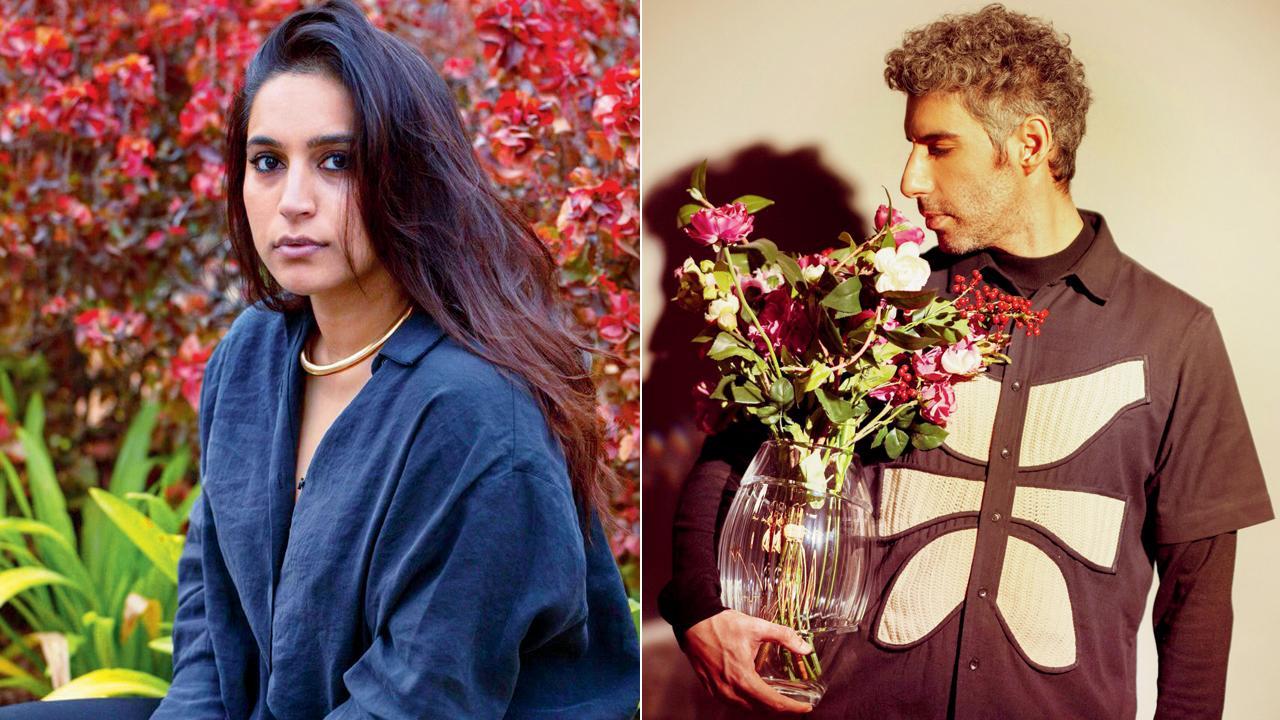
Actors Zoya Hussain and Jim Sarbh’s new talk show turns the tables, putting actors in the interviewer’s seat to speak to composers, editors and make-up artists
Mitali Parekh (MID-DAY; January 14, 2024)
There is a certain perverse delight in hearing actor-producer-director, SoBo boy-gone-movies Jim Sarbh talk about how much research he had to do as preparation and how he had to learn to not interrupt people when they were speaking. And assess what kind of questions made for interesting answers and which did not.
This has been in preparation for Crew Cut, co-actor Zoya Hussain and his new endeavour on YouTube that takes the audience into conversation with technicians in the business. “I like the term crew better than technicians, because it makes their contribution seem, well, technical and not creative,” says Sarbh, whom we saw most recently as Adil Khanna in Made In Heaven and in Rocket Boys as Dr Homi J Bhabha. “Often, they are the ones with a sense of entirety about the project, a sense of visual storytelling matched only by, perhaps, the director. As actors, we only know a section of the project.”
Sarbh confesses to be “endlessly curious” about filmmaking and is constantly speaking to music composers, sound artistes, cinematographers about their craft, or wondering how the set designers on Gangubai [Kathiawadi] gave the walls that patina so evocative of age and decay. “If a costume designer has put two pens in the pocket of the character (as for Rocket Boys), I need to know why,” he says. “Are they different coloured? Which colour would Dr Homi Bhabha use for what? Is it because he has many documents to sign and doesn’t want to run out of ink.”
Hussain, also, has been “fascinated by what film [the actual reels] look like, shadows, lights, the nostalgia. I romanticised light and how long takes made you feel. As I gained a better understanding of things, I gravitated towards how cinematographers make the visual language of a film. The intake while we watch a movie, way more than we realise, is thanks to them.”
Fascinated as much as both were by these aspects, they knew the general populace may not be drawn to these conversations, so they reeled in more recognisable friends to spotlight these heroes with their fame. So, actor Vidya Balan speaks to long-time collaborator, costume designer Niharika Bhasin who won the National award for Costume Design for The Dirty Picture. Rasika Duggal quizzes editor Namrata Rao (Fan, Mrs Chatterjee VS Norway, Made In Heaven), Hussain speaks with make-up artist Ayesha Seth (Queen, Slumdog Millionaire), and Sarbh himself chats with cinematographer Harshvir Oberoi (Rocket Boys, Kathal) and music composers Naren Chandravarkar and Benedict Taylor (Udta Punjab, Nil Battey Sannata).
In waiting are sound designer Resul Pokutty (Slumdog Millionaire, Highway), make-up and prosthetic artist Preetisheel Singh (Padmavat, Bajirao Mastani), costume designer Maxima Basu, music composers Dub Sharma (Gully Boy, Made In Heaven) and Achint Thakkar (Rocket Boys, Scam 1992), editor Sanjukta Kaza (Tumbbad, Bhediya, Paatal Lok) in the wings with actors Kalki Koechlin, Ali Fazal, Arjun Mathur, Vivek Gomber and Tillotama Shome.
“We just reached out to people we know first, and then kind-of-know, and then don’t-know-but-want-to-know,” says Hussain about the process of pairing actors and technical experts. “And almost everyone was thrilled to participate,” says Sarbh. “There was the matter of getting dates, but that’s just technical.” Balan, for instance, was so immersed that she had memorized the three sheets of questions handed to her to conduct the interview seamlessly.
While Hussain says “there wasn’t much prep” as an interviewer, Sarbh admits at first getting into the technicalities of the craft such as the type of lens used, etc and then realising as he saw the episode, that it didn’t make for engaging conversation for everyone. “What was interesting was the minutea of the vision. For example, for Rocket Boys, two timelines converge and I asked Oberoi what was the overriding emotion he was trying to evoke at this point of conversion. He said ‘death of the utopian ideal’. Two decades into independent India, which was built on non-violence and a dream of a great country, the country was besieged. We had lost a war with China, things weren’t great with [East and West] Pakistan, and Bhabha and Sarabhai had to now build a bomb.”
Besides these technicalities, Hussain wanted to know the human elements: Why they picked the profession, what inspires them, what they like outside of work, who they are, some jokes, lots of advice, and how their brains just cook up things. “It’s been lovely to see what technical aspects of film viewers are fascinated by. It’s also just lovely to be a silent participant to watch and listen to energies come together,” she says.
In my 20s, all my auditions were for a best friend-Vivek Gomber
8:13 AM
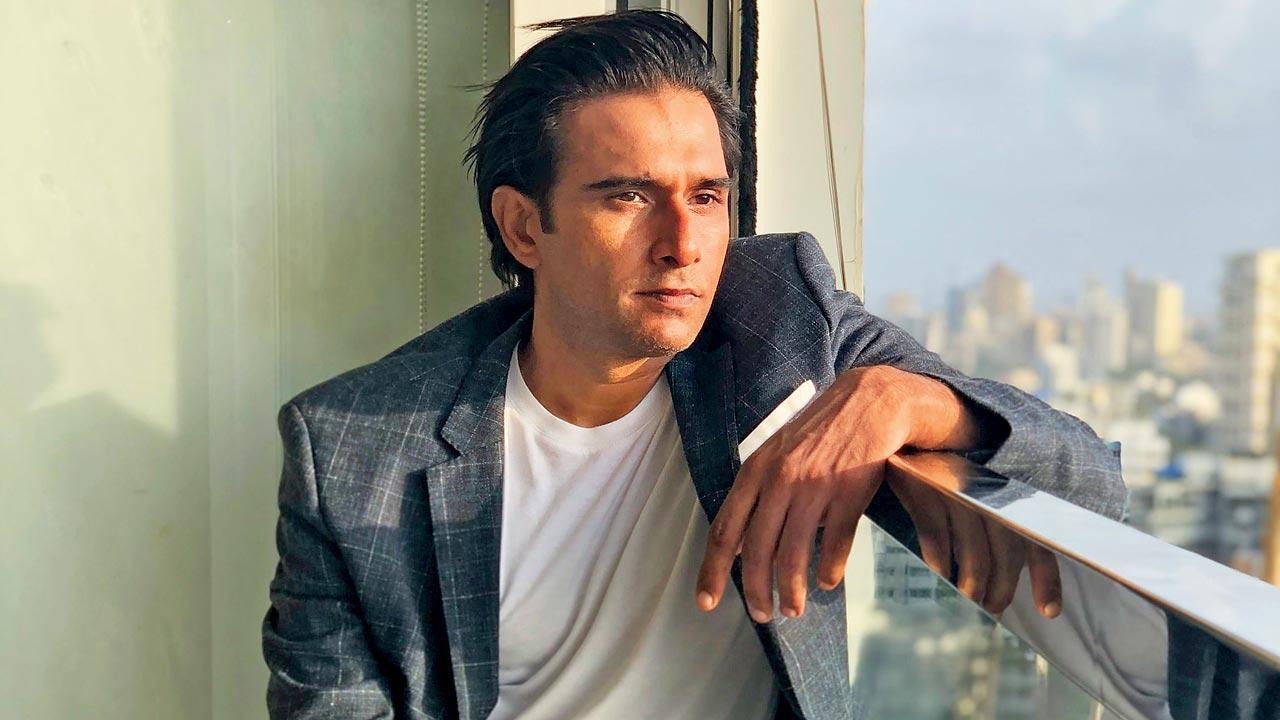
Vivek Gomber, who set hearts aflutter in Sir, and is producer of the recent toast of critics The Disciple, tells us why he is happy being a “working actor”
Aastha Atray Banan (MID-DAY; May 9, 2021)
“I think it was only because the character was written in a certain way that women found him attractive. He was a good guy,” says actor-producer Vivek Gomber of Ashwin, the character he played in Rohena Gera’s Is Love Enough - Sir, which pitted him opposite Tilotama Shome. The quiet and sweet film is about a man of privilege, who after breaking up with his would-be wife, who cheats on him, falls in love with his househelp, Ratna. It could be his soft portrayal of a man who sees a woman beyond her circumstances, or just that he comes across as a genuine and good looking catch, but he has left most female viewers say, “He’s dreamy”.
Gomber says, “I think it was because of how the character showed his vulnerabilities.” It could also be the nice shirts he wears, we tell him, and he laughs, “Yes, I want to thank everyone who made that role such a hit. And my parents!”
Ever since, it seems as if the 41-year-old is everywhere. We first noticed him in 2014 in the award-winning indie film Court, where he first worked with director Chaitanya Tamhane. In the past few months, he has entered our lives repeatedly, in Mira Nair’s A Suitable Boy, Pooja Bhatt-fronted Bombay Begums, and now of course as producer of Tamhane’s critical success, The Disciple.
But he has been at it since 2004. Gomber studied acting in Boston, but came to India to be a “working actor”. “I have always just wanted to be part of a conversation. There are many reasons you make it when you make it—you first have to arrive here, and hope to God, that the city is kind to you.”
The actor says like so many others in India, he grew up watching Amitabh Bachchan movies in Jaipur, where he spent his childhood with his banker father. His mother worked in the judiciary. He clarifies that when he says he wanted to be a working actor, he doesn’t mean that he needed a release every year. “It just means you have to be acting, and going for auditions, and meeting people in the know—like directors and casting agents, they need to know who you are. I am just grateful to be part of the conversation. And to be working with someone like Tamhane. Because you can’t work alone.”
Gomber, who started his journey in theatre, went on to act in television, including the popular Zee TV show Astitva - Ek Prem Kahani. “Maybe I didn’t do auditions as well before. I got offered too many best friend roles. In my 20s, all my auditions were for a best friend! How long can you do it?”
It’s finally his time. He says, “When I read Court, I thought it was a great film to engage with. It was very relevant then, and it is even more relevant now. I had thought of nothing except that it could be a way we could learn. And he [Tamhane] is a great director; I wanted to help him,” he says of the film that picked up a National Award and another at the 71st Venice International Film Festival. For now, he is happy that The Disciple is out there for viewers to see, because he thinks that the film is addressing an important issue—celebrating our own music, and showing people the nitty gritties of Indian classical tradition. “I didn’t know much about our music, and now I do. The worlds and the themes Tamhane explores are endless. It’s very important that the movie exists.”
He almost sounds relieved that it’s going to be a while before the audiences see him again. The entertainment industry is on pause, and wants to be safe and take care of its people, Gomber thinks. “We need to recover health-wise, focus on the lockdown, and just get out of the pandemic. But I hope there will be more work. And of course, maybe another Tamhane film, if he will have me.”
You can never get used to such acclaim-Chaitanya Tamhane
8:27 AM

Chaitanya Tamhane opens up about his historic double win at the 77th Venice Intl Film Fest & reminisces about his directorial debut, Court
Roshmila Bhattacharya (MUMBAI MIRROR; September 14, 2020)
In 2014, his directorial debut, Court, was adjudged Best Film (Horizons) at the Venice Film Festival. He had also bagged the Lion of the Future Award. Six years later, The Disciple was honoured with the prestigious International Critics’ Prize, awarded by Federation Internationale de la Presse Cinematographique (FIPRESCA) jury. A day later, Chaitanya Tamhane also won the Best Screenplay Award for his Marathi feature film at the closing ceremony of the Venice Fest that was live-streamed globally. And that prompts the first question to the 33-year-old director who has done India proud…
How different were your reactions to the dual honours, given that six years later, you are no stranger to acclaim?
It was a big moment for us because even if your previous film has won some awards, every film is a new battle. So, there was a lot of curiosity and suspense over how The Disciple would be received, and it was nice to know that the FIPRESCA jury thought it was the best film for them in the competition. Also, to win the Best Screenplay Award given by the official jury with such stalwarts in the mix made it very special given that this time it was the main competition. You can never get used to such acclaim.
The last Indian to win the FIPRESCA in Venice was Adoor Gopalakrishnan for Mathilukal 20 years ago...
Yes, we are honoured and humbled because my generation is standing on the shoulders of such giants as Adoor Gopalakrishnan, Satyajit Ray, and so many Indian filmmakers who have had a great history with Venice.
And what was it like being a part of a festival during the Coronavirus pandemic?
Well, we were curious to see how a festival would be organised this year and were pleasantly surprised to see the energy and vibe were intact despite the safety protocols. It was heartening to see cinema lovers watch films together, even though everyone was wearing masks and practicing social distancing.
Has the lockdown brought about any changes in you as a person and a filmmaker?
The lockdown has made everybody pause and reflect. It’s the most apt time to watch a film like The Disciple. It will definitely have a direct or an indirect impact on not just me but what everyone does in the world.
Your mentor and executive producer, Alfonso Cuaron, won the Best Screenplay Award for Y Tu Mamá También in 2001. Would you say you are a disciple too?
Alfonso is very chilled out and modern in his mindset. So, the equation between us is like a dialogue between two artistes. He generously calls me his friend and collaborator. For me, he will always be one of my mentors who helped me grow as a filmmaker and expand my vocabulary. I hope to retain the values and lessons learnt from him in the last five years and will continue to be a good student in that sense.
You’ve said that The Disciple is influenced by the play, The Grey Elephants in Denmark, that you wrote in 2008. Any plans to revisit it on stage?
It’s a spiritual successor, a grownup adaption. The setting and mediums are very different but the core conflict and theme comes from there. Vivek Gomber, my producer, was the lead actor of the play. But now, I am done with that story. I will tell others.
How difficult was it for you to enter the closed world of Hindustani classical music? Will The Disciple revive interest in a dying art?
I see it as a dynamic, thriving art form and sub-culture, with many affordable concerts, music schools and brilliant artistes. Maybe it’s not as dominant in the mainstream as it was in the 19th century, but there’s still an audience that appreciates this music. And online platforms give you unlimited access to all music recorded, officially and unofficially. With all the material available, I was like a kid in a candy store, I just had to decide what to retain and what to let go. The intention wasn’t to revive it, but if that happens, great.
Venice, Toronto, New York, three big festivals are showcasing your film…
Yes, we couldn’t have asked for a better Fall festival launch. We feel incredibly grateful that in such an uncertain year, we could put our film out there for people to watch. The idea is to take it to a wider audience now.
With theatres in India still shut, what is the plan?
We will definitely bring it to India, be it a theatrical or an online release. We are talking to different players but nobody has an answer yet.
Court was India’s official entry for the Academy Awards. If The Disciple is picked, are you confident of bringing the Oscar home this time?
So far, we were only focused on the world premiere in Venice. If we do get picked, it would be a massive honour and we will do our best not just to promote our fim, but represent Indian cinema on a global stage.
Looking back, what do you recall about Court, and what will you remember The Disciple by?
I remember Vivek and my naivety, the innocent energy with which we got a crew together, convinced them to believe in our vision and with no film background or reference, just made Court. We were lucky that it turned out well, and proud that it was accepted. The Disciple is more ambitious in its scope, scale and budget. And I will always remember the time, patience, sweat and blood that has gone into its making. A two-year writing process, one year of prep and shoot and then, one more year on the post production.
You had mentioned that you were working on another subject when you were hooked by The Disciple. Will that be your next?
That was back in 2015-2016, when one was in a certain frame of mind. That project has been abandoned and I’m curious to know what I will give so many years of my life to next. It will be something new and totally different. But yes, maybe some ideas from that project will return in some form in a future one.
Both Court and The Disciple are about singers…
That’s a coincidence. In Court, the singer was just a catalyst, a springboard for us to get into the lives of people who are a part of some institutions. The Disciple is really about a singer, his inner struggle and survival, his artistic journey in the city of Mumbai.
So, are you a singer yourself now?
(Laughs) No, I’m not a singer, I’ve never even learnt music.

Chaitanya Tamhane's Marathi film The Disciple selected for Venice Film Festival
7:52 AM

Big moment for India as Chaitanya Tamhane's The Disciple selected in the competition section of Venice Film Festival, 20 years after Mira Nair's Monsoon Wedding bagged top honour
Shaheen Parkar (MID-DAY; July 30, 2020)
 Almost two decades after Mira Nair's Monsoon Wedding (2001) bagged the Golden Lion at the Venice Film Festival, Chaitanya Tamhane's Marathi film, The Disciple, has been selected in the competition section of the 77th edition of the prestigious gala. Scheduled from September 2 to September 12, it is one of the first film festivals to be held in the wake of the pandemic with strict social distancing guidelines and screenings in outdoor venues.
Tamhane is overwhelmed that his sophomore directorial venture is set to compete with Majid Majidi's Sun Children and Andrei Konchalovsky's Dear Comrades, among others. "The competition section has showcased some of the best films in cinema history. The selection of The Disciple is a milestone in the Indian independent cinema movement. I am relieved that it has found such a great start even in these tough times," says the director. The Disciple, which is set in the world of Indian classical music, chronicles the journey of a vocalist, who has to balance life in contemporary Mumbai with his chosen vocation. "We have poured every ounce of energy and effort into the film over the last four years," adds the filmmaker.
Counted among the finest storytellers in Indian cinema, Tamhane will return to the festival after six years. His directorial debut, Court (2015), had premiered at the gala, where it bagged the Best Film in the Orizzonti section and the Lion of the Future award. Back home too, the film — a commentary on the Indian judicial system — bagged the National Award and was India's official entry to the 2016 Oscars.
Producer Vivek Gomber, who has teamed up with Tamhane after the 2015 outing, says, "I hope this makes it easier for new voices in our country to follow their paths."
Ram Kapoor and Shahana Goswami join the cast of Mira Nair’s next
7:51 AM

Rishabh Suri (HINDUSTAN TIMES; November 6, 2019)
 Joining the growing list of Indian actors who are finding good work abroad is actor Ram Kapoor. He has been roped in for Mira Nair’s six-part series adaptation of Vikram Seth’s novel, A Suitable Boy.
Ram, we have learnt, has a meaty role, and plays the character of Mahesh Kapoor. He is the father of the lead character Maan Kapoor (which is played by Ishaan Khatter). Ecstatic at collaborating with Mira for the third time, the 46-year old tells us, “I’ve worked with Mira on two films — Monsoon Wedding (2001) and Words With Gods (2014), both of which are masterpieces. Working with her has been a delight and I cannot wait to see how beautifully she paints the picture of A Suitable Boy. I play a politician who is not only a patriot, but also a reformist. He’s a character with multiple shades and layers, and I’m looking forward to getting under his skin.”
Not just Ram, other Indian actors including Vivek Gomber and Shahana Goswami, have also been signed for the project.
On playing Meenakshi Chatterji in the series, Shahana Goswami says, “It’s been a dream to work with Mira since I was a kid and there couldn’t be a better project to collaborate with her on. The ensemble cast and crew are an extremely talented bunch, handpicked by Mira to create her vision of that era, and of Vikram’s characters.”
I may not have the same power and networking Aamir Khan did-Court producer Vivek Gomber
7:50 AM

Sanyukta Iyer (MUMBAI MIRROR; September 24, 2015)
Actor-producer Vivek Gomber and debutante director Chaitanya Tamhane decided to go sightseeing after their film, Court, screened at the Asia Fukuoka Film Festival, in Japan, on Wednesday, when their phone began to ring and congratulatory messages started pouring in. Their debut production was India's official selection to the 88th Academy Awards, 2016 in the Best Foreign Language Film Category.
Their Japanese translator, jumped in, borrowing chargers from a local restaurant, to help them answer all their calls. "This is as unexpected as our selection to the National Awards. I have no idea what kind of paperwork is required. It will now be two months of research, prep and planning. We've put our all into this film, monetarily, creatively, emotionally. It was this time last year, that the film had premiered at the Venice International Film Festival. The journey continues," Vivek told Mirror from Fukuoka.
Equally surprised by the news, Chaitanya added, "At every juncture of its journey, the film has given us more than we could ever imagine. Since, we started, we have kept our expectations low and we are truly thankful to the jury."
Court was adjudged Best Feature Film at the 62nd National Film Awards and went on to win 18 other awards at festivals in Mumbai, Vienna, Antalya, and Singapore.
Chaitanya met Vivek in 2011 with the script of the courtroom drama. The 36-year-old-actor decided to come on board as first-time producer-presenter, also playing Vinay Vora, a lawyer in the film.
The Marathi-Hindi drama follows the life of a radical poet who is accused of waging war against the state. Vivek whose English has a hint of an American accent owing to his schooling in Singapore and college in Boston where he studied acting, laughs, "Maybe now someone will give me an acting job. I put all my savings on the line for this one, but the true goal is to be an actor."
Recalling Aamir Khan's Lagaan nominated in the same category for the Academy Awards in 2002, he adds, "I may not have the same power and networking Mr Khan had, but I will raise the money for campaigning. I have a unit of over 100 talented people depending on me to make it happen. I cannot let them down."
Is he is aware that jury member of the committee, Rahul Rawail, resigned, alleging manipulations? "I haven't been able to get through to my mom, let alone anyone else. I'll back on October 5 and better equipped to comment," Vivek says.
I RESIGNED BECAUSE OF AMOL PALEKAR NOT COURT
Filmmaker Rahul Rawail who resigned today after the selection of Court as India's official entry for the Oscars, says that his leaving the jury has nothing to do with the film.
"Court is a fabulous film. I have not quit because of the film, but because of the obnoxious behaviour by Amol Palekar," Rawail told Mirror.
Claiming that Palekar had hated the film which was only selected because of the efforts by the other 16 members on the panel, Rawail added. "I am in Hyderabad right now and will be visiting the Indian Film Director's Association tomorrow to release an official statement on this matter."
I didn't think I had an audience-Chaitanya Tamhane, director of Court
8:49 AM

Chaitanya Tamhane, the director of the award-winning Court, talks about his film which is finally gearing up for an Indian release
Ankur Pathak (MUMBAI MIRROR; March 23, 2015)
 For Chaitanya Tamhane, a
literature grad from Mumbai's Mithibai College, Bollywood's courtroom
dramas with gravel-tapping judges and over-the-top lawyers always
rang false. Also, they jumped directly to the High Court or the Supreme
Court. “One day, I visited one of the city's lower courts and was
surprised by the lack of drama there,“ says the 28-year-old director of
Court, a film that looks at the flaws of the Indian judicial system with
an unsparing eye. “The lawyers spoke softly, the judges weren't
dramatic and on occasions, those in the courtroom didn't quite
understand the technical lingo
being spoken. It was like time had come to a grinding halt there.“
Having discovered a court which was a far cry from theatrical histrionics, Chaitanya was inspired to make a film set there and started talking to activists, lawyers, academicians. “And came upon a case that baffled me like nothing had,“ he says.
Jiten Marandi, a tribal activist from Jharkhand, was given the death sentence in 2011 in the Chilkari massacre case. In a frightening turn of events, the cops had been looking for another Jiten Marandi, a Maoist who was believed to be involved in the case, but since they couldn't track him, they jailed the activist instead. After protests by intellectuals, poets and other activists, Marandi was eventually released and his story is one of the muses for Court, a fictional story about a protest singer being charged for abetting a sewage worker's suicide.
“Marandi's case told me that ordinary people in positions of authority take life-and-death decisions daily and power can delude them,“ he says. “I wanted to make a film that explores the layman's engagement with institutions, especially legal, as there's a lot of irony and humor to be found there.“
Vivek Gomber who'd acted in his play Grey Elephants of Denmark came on board as producer and the film went on to bag the Lion of the Future award at the 2014 Venice Film Fest. “Since the film is rooted in Mumbai, I didn't expect the international audience to relate to it. I didn't think I had an audience at all, and that was scary,“ Chaitanya confides. But he was encouraged when filmgoers in Italy, Hong Kong, Turkey and Siberia responded to the film saying it was a familiar situation back home. “An Italian told me that their judicial system is similar to India's. Other countries we took the film to happened to be politically charged with lots of protests happening, so they could see a connect“ (referring to the 2014 Umbrella Revolution in Hong Kong and the Gezi Park protest in Turkey) How does he think the Indian audience will respond to the film when it opens on April 17? “After we won at MAMI I believe people are really curious to watch it,“ he says.
In the current censorship-driven environment, is he expecting any trouble? “We don't know who will be offended by the film as it's a strong commentary against censorship itself.We're just hoping we won't get pulled into any lawsuits,“ he smiles.
Subscribe to:
Posts (Atom)