Showing posts with label Vishal Dadlani interview. Show all posts
Showing posts with label Vishal Dadlani interview. Show all posts
Some of our best work has come from creative clashes - Vishal-Sheykhar
4:29 PM

Debarati S Sen (BOMBAY TIMES; March 25, 2026)
From Dil Diyan Gallan, Aankhon Mein Teri, Sheila Ki Jawani to Besharam Rang, composer duo Vishal–Sheykhar have shaped the sound of Bollywood for 25 years.
Known for their instinct-driven partnership and genre-bending hits, the two continue to reinvent themselves while keeping the fun, and the music, at the heart of their collaboration. In this conversation with Bombay Times, they look back on their journey, the trust that binds them, and the madness behind their melodies. Excerpts...
After so many years, do you finish each other’s musical sentences, or argue over commas?
Vishal: Absolutely. We do finish each other’s musical sentences. That’s uncannily true about us. But yes, we also have those “commas” you mention. We argue, we debate, we break things down—where a song can go, where it should go, what it should sound like, the beat, the energy—everything is discussed to the bone. And yet, somehow, we always end up on the same page.
Sheykhar: At this point, we know each other so well musically that one of us can easily complete a thought that begins in the other’s head.
Twenty-five years is a long time in any profession. What has been the glue that’s kept you both together all this while?
Vishal: Honestly, it doesn’t even feel like 25 years. We still have fun doing what we do, we love the process, and we’re always laughing—whether we’re working or just hanging out. There’s a deep respect for each other, and just as importantly, we give each other space. Every person needs an individual identity, even within a partnership, and I think holding on to that individuality has kept us strong all these years.
Sheykhar: At the heart of it, it’s always been about the music—the joy of creating something bigger than either of us. That singular purpose has been the driving force of our collaboration from day one.
When you both hit a deadlock in opinions, how do you break it?
Sheykhar: Taking a break usually works best. Stepping away gives us distance and helps us regain perspective. Sometimes, even a really long break has done the trick. As our friend, lyricist Irshad Kamil, once wrote, “Kuch rishton ka namak hi doori hota hai, na milna bhi bahut zaroori hota hai.” That thought has stayed with us. At the end of the day, it’s always about the music, and whatever makes the song better is what wins.
Vishal: Honestly, we don’t really have deadlocks. We don’t see them as conflicts, just as strong opinions. Both of us are secure enough in our partnership to voice what we feel without ego getting in the way. But if ever there was a deadlock, we’d just step away for a couple of days, come back refreshed, and move on.
Do you have unspoken rules at work, or do you still surprise each other?
Vishal: In many long-term partnerships, roles get fixed. Thankfully, that’s never happened with us. Sheykhar is a far more qualified musician, he’s taught me a lot, but our process is symbiotic. Anyone can do anything. If he sings me a tune and I tweak it, he runs with it. If I sing him an idea and he adds a line, that becomes part of it. It’s fluid.
Sheykhar: Life would be boring without surprises. Over time, we’ve both grown individually, and those experiences naturally shape how we collaborate. The ‘rules’ keep rewriting themselves as we go.
Looking back, is there one moment in the studio or on stage that perfectly sums up your equation as collaborators?
Sheykhar: Honestly, every day in the studio or on stage asks something different of us. Each director is unique, every audience responds differently, so our collaboration keeps shifting too. We’ve learned to recalibrate pretty organically—whether it’s composing for a film or performing live. That ability to adapt has kept things seamless for us all these years.
Vishal: If I had to pick one defining moment, it would be the composition of Jo Bheji Thi Dua (Shanghai). That song was pure instinct. I’d been carrying the hook melody in my head for a couple of days, and when I walked into the studio, Sheykhar already had the mukhda. The hook just slipped in there like they were meant to be together.
If your 25-year journey as a duo were to be described as a track, what genre would it fall into—rock, pop, EDM, or a mashup? Or name a song.
Sheykhar: I’d definitely describe it as a Mashup.
Vishal: For me, it’s Dus Bahane Karke Le Gaye Dil (Dus). By hook or by crook, you’ll end up loving our music, we’ll draw you in. Our songs are meant to become part of people’s lives, and we want everyone to feel included in that experience. I still remember the first time a car drove past playing Woh Pehli Baar from Pyaar Mein Kabhi Kabhi. It blew my mind! I’ve been hooked to that feeling ever since.
Take us inside a Vishal–Sheykhar jam session—how does a melody or beat usually find its way from your minds into a finished track?
Vishal: And these sessions don’t always happen in a studio. It could be in the car, at a coffee shop, or even on the phone when we’re in different countries. Wherever we are, once we’re in the zone, it becomes a session. It’s unstructured, but it has its own rhythm, a method to madness. Sometimes we begin with a melody, sometimes with words, sometimes by just sitting with a script or listening to a director’s narration. Ideas can spark from anywhere.
Sheykhar: The seed of an idea or melody can come from either of us, but it’s our different perspectives that merge to create something we’re both proud of. Sometimes, even the occasional casual jam has turned into a hit unexpectedly.
You’ve often been described as having very different temperaments. How has this contrast been a superpower, and how has it sometimes been a stumbling block?
Sheykhar: Disagreements and differences are inevitable in any partnership. In fact, some of our best compositions have come out of creative clashes. Even when we don’t see eye to eye, the key is trusting each other’s instincts. If one of us feels strongly about an idea, the other gives it room to breathe. Over the years, we’ve learned when to push, when to pull back, and when to simply listen.
Vishal Dadlani is a malang kind of a person and I love his vibe-Sonu Nigam
8:43 AM
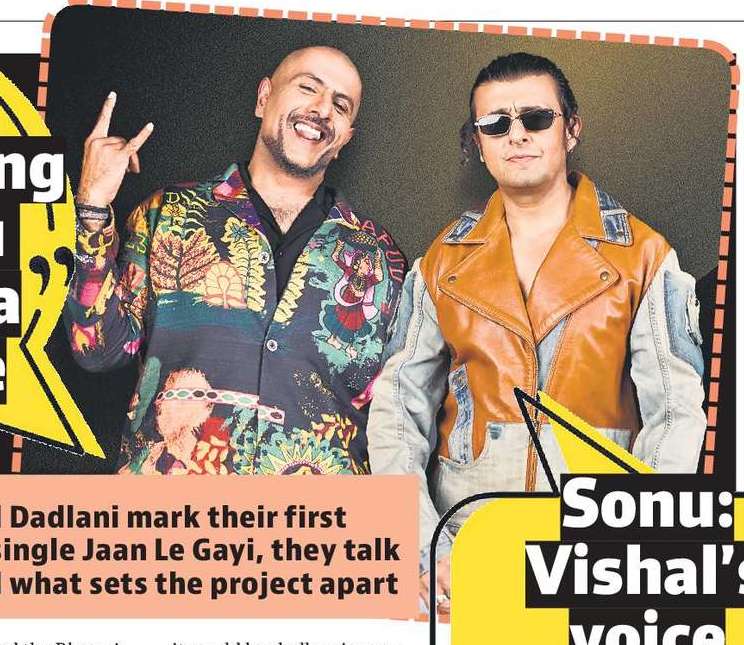
As Sonu Nigam and Vishal Dadlani mark their first non-film collab with the single Jaan Le Gayi, they talk about the experience and what sets the project apart
Soumya Vajpayee (HINDUSTAN TIMES; January 14, 2025)
While they have worked together on several Hindi film songs, musicians Sonu Nigam and Vishal Dadlani marked their debut collab for a single, Jaan Le Gayi, last month. The song, which is part of the album Bhoomi 2024 — a brainchild of composer duo Salim-Sulaiman, has been penned by Shraddha Pandit and has almost two million views on YouTube.
Nigam says working on the song and singing alongside Dadlani was a breeze. “Jaan Le Gayi was the first song that we recorded for the album. But everyone loved it so much that it was decided to end the Bhoomi season with the track. I am a sound person and I get very touched by voices. Vishal ki awaaz mujhe bahut touch karti hai. Despite his rock background, he has a soul for Indian melodies, which is quite rare. I was so happy that we collaborated for our first non-film song. Vishal is a malang kind of a person and I love his vibe,” he says.
For Dadlani, coming on board for the song was a yes at the very outset. “I was on a paragliding trip in France when Salim (Merchant; composer) called me and said he wanted to do this song and that I’d have to sing alongside Sonu Nigam. My brain broke a little, because it’s not easy to sing with Sonu. It was something I had never done before. So, I knew it would be challenging as a singer to even go behind the mic. I don’t consider myself a singer at all, although Sonu and Salim always say kind things about my vocal performances,” he says.
Dadlani adds that shooting the music video was even more fun: “It was a concert-like setting. Both Sonu and I are energetic performers on stage and we are also seen dancing in this one. Projects like these become a way of reinventing yourself, especially when you have people like Salim and Sulaiman at the helm of it. This song has me singing sargams that I am really not fluent in, but these guys encouraged me to do it. I would love to work with Sonu again.”
For Nigam, who is seen pulling off some impressive moves in the music video, shooting the track was a special experience. “The last time I shot at a Bhoomi set was in 2022 for the single Ruk Ja. So, returning to the same space after two years felt great. I love working with Salim-Sulaiman, because I enjoy that space. That’s why the kind of work that we’ve been doing, including the Kannada song Mayavi (it has close to 30 million views on YouTube) from the same album that has received so much love globally, is very divine and genuine,” he ends.
The participants of the past five editions of Idol have vast YouTube and Instagram followings-Vishal Dadlani
4:08 PM
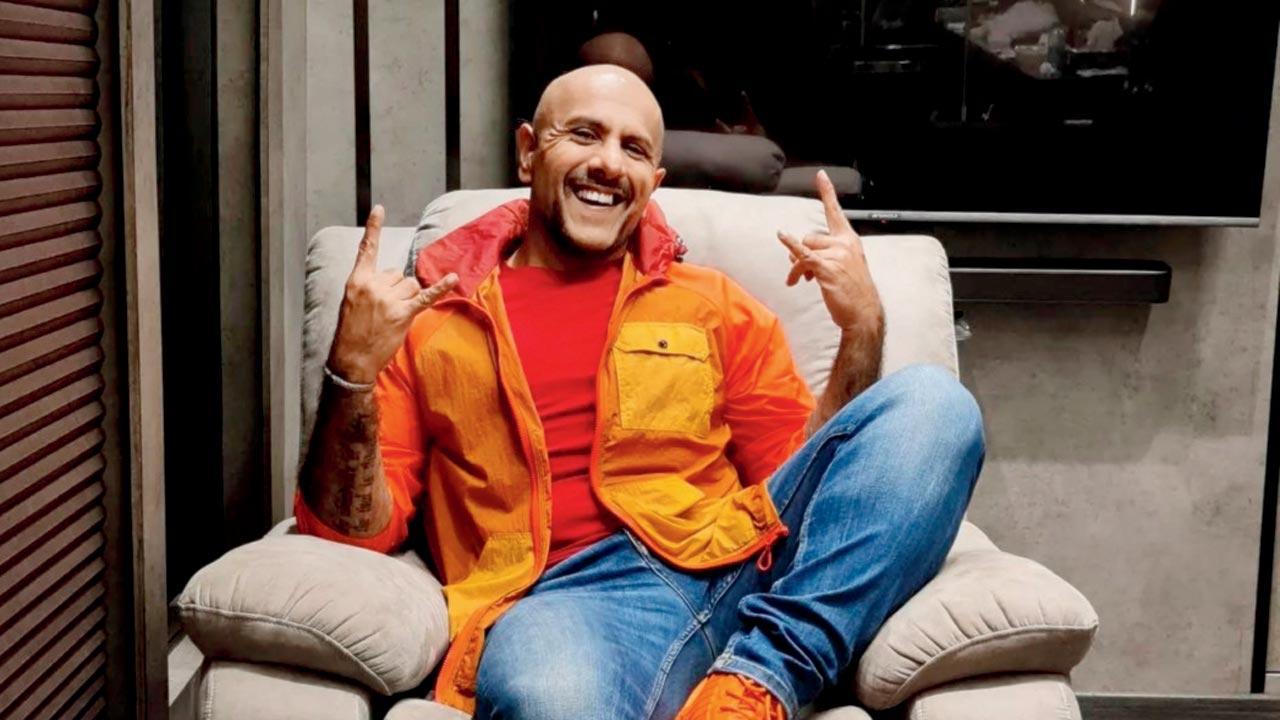
Skilled musicians may come and go, and it is one’s ability to leverage social media and market themselves that will decide their fate, says Indian Idol judge Vishal Dadlani
Sonia Lulla (MID-DAY; September 2, 2023)
Ahead of the upcoming season of Indian Idol that sees Kumar Sanu, Vishal Dadlani, and Shreya Ghoshal on the judges’ panel, Dadlani addresses the question that’s on the lips of every audience member: ‘Where do the popular singers go after the show ends?’ His answer makes it evident that in 2023, an entrepreneurial spirit is just as important as one’s skill to enjoy a lasting career. Edited excerpts from the interview.
We see reality shows coming out year after year. And often, months after they are over, the most common question that is asked is, where did the popular singers go? What are the opportunities for this influx of talent?
The music business has come to a place where a singer is his own opportunity. In the past, a singer’s career was dependent on the composer. It was dependent on the films he was singing for. That is no longer the case. [The participants of] the past five editions of Idol have vast YouTube and Instagram followings. Their shows on tours are [booked out] and they perform all over the world. A singer’s career depends on the legwork that they are willing to put in—whether that’s about meeting composers or creating and releasing their own music. Now, every singer understands that they also need to be a composer, just like, [until] a few years ago, every composer understood that they also needed to sing. You need to be an artiste and promote your own artistry. And if someone follows them, they usually enjoy the [work of the] artiste for life. A platform like Indian Idol gives these kids that head start, which is [significant] right now. The number of eyeballs that you command is your currency in 2023.
The importance of building a personal brand cuts across all industries. But, it’s not the easiest thing to do because one needs to have a fine sense of marketing as well. Are there any skilled participants who you believe didn’t get the kind of attention they demanded only because they were unable to market themselves?
Many of them. Right from season one, you could see that there were some people who promoted themselves, and who are, today, doing far better, economically, than the others who didn’t. They may not have even been the winners. That is the reality of life. You have to understand that music, art and entertainment are in the public sphere. You can’t [achieve anything] without the public. Your equity is how many people love you or the work you put out. Take [A R] Rahman as an example. He has never marketed himself. But, his first few soundtracks were so ground-breaking that people automatically began to admire him. Another example is Neha Kakkar, who is one of the most popular people on Instagram in the world. She’s built that following by actually constantly treating her Instagram followers as her friends and family. She puts her life out there. It’s something that I couldn’t do, but I admire that she can. And people connect with her on that basis.
Do you believe singers must stick to their niche? And what kind of training do participants receive on the show?
Most artistes today are known for their style of singing. In the past, either Sanu da [Kumar Sanu] or Udit ji [Udit Narayan] would sing every song in an album. That [approach] doesn’t work anymore. Now, it’s about specialists. Every singer has, and is known for one style. That’s also a more organic way of [approaching music]. Before, there was one voice for the hero; now a hero can have six voices. Songs don’t matter, what matters is how the singer serves the song. In Idol, they go through all sorts of training. To begin with, they are very accomplished. To get through the auditions, you have to be pretty good. Once they are among the top 15 contestants, they go through grooming sessions. There are [classes on] voice culture. For instance, if they have been trained in classical music, they are also taught to have an understanding of playback singing. They also need to learn how to pull back while singing. Grooming sessions help them add a certain subtlety and nuance to their delivery.
Come Fall In Love changed our sensibilities; We got 60 standing ovations-Vishal Dadlani
8:23 PM
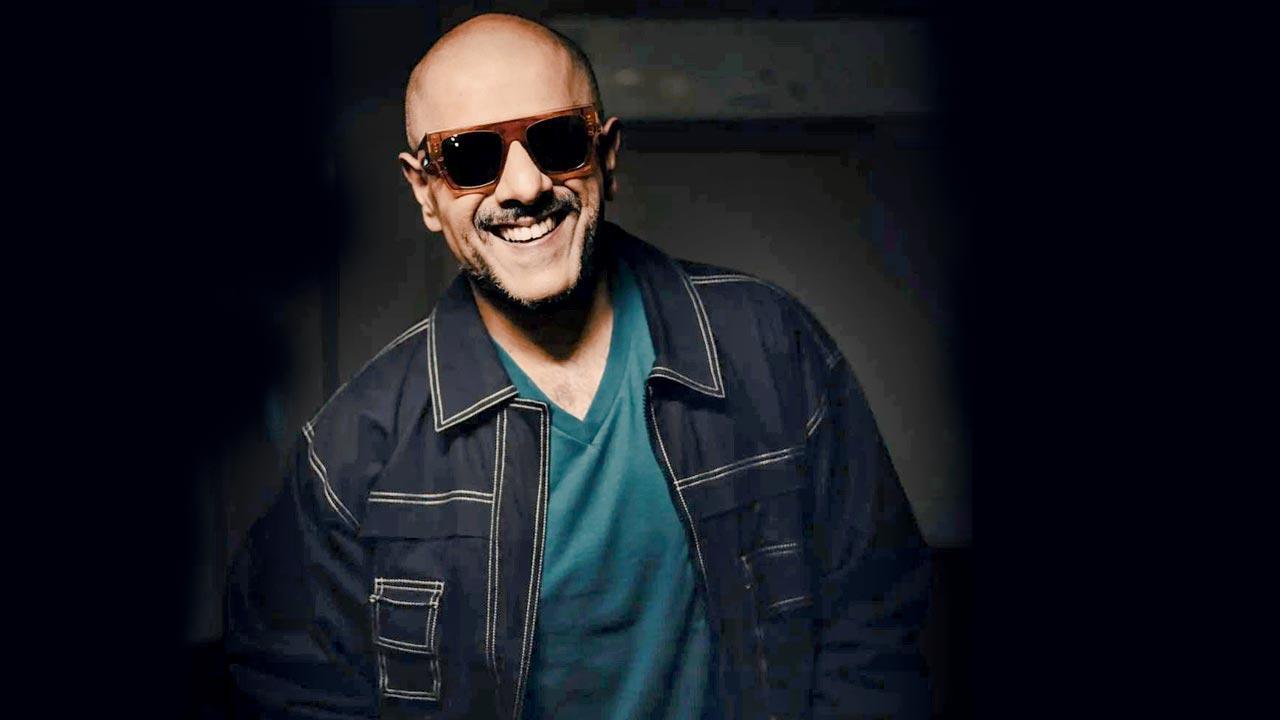
Having rendered Sachin-Jigar’s composition Paisa Hain Toh for Farzi, Vishal on reigning in his music sensibilities as composer to serve the song
Sonia Lulla (MID-DAY; January 23, 2023)
There are some matters that Vishal Dadlani won’t talk about, like the Pathaan track, Besharam Rang, which emerged to be among the best performing songs of 2022, but was mired in controversy with fans stating that it resembled a bunch of old numbers. Then, there are matters on which he pours his heart out, like his work on the recently concluded Dilwale Dulhania Le Jayenge musical, Come Fall In Love, an international production that offered Dadlani, along with his long-time collaborator Sheykhar Ravjiani, a once-in-a-lifetime opportunity.
Considering the fact that musical adaptations of Bollywood films are a rarity, we are eager to know what transpired behind the scenes as the cult classic found a theatrical adaptation in San Deigo. Stating that the project “changed our sensibilities”, Dadlani says, “Dilwale is the fabric for modern pop culture. We worked with Nell Benjamin, who is a multi-Tony Award-winning [composer], and we learnt a lot about approaching music [from a place of] joy. [We were told to] let the lyrics speak to us, and by the end of each page, we [usually] had the song [conceived]. We got 60 standing ovations, and our crowd comprised both American viewers, and individuals who had flown from Mumbai to see it,” he relives the experience, as though it occurred yesterday.
Given that it marks the amalgamation of story-telling techniques and live music, a musical, Dadlani says, is a powerful medium to express emotions. “Sheykhar and I usually get to head on [tours], but we never get to perform the same set on the same stage, over and over again. This experience provided that. We had people coming back to watch it [twice over]. It was challenging, but was one of the best experiences of our lives.”
Dadlani’s recent work is an upcoming track from Amazon Prime’s Farzi, and one that brings him under the familiar wings of composer duo Sachin-Jigar. “They are friends. When they call me for a song, I don’t even ask them about it, I simply show up. By now, they know my range, texture, and the things that I like to do [as a singer],” says Dadlani, who rendered Paisa Hai Toh, along with Mellow D for Shahid Kapoor’s project.
We would assume that his success as a composer would influence his renditions while working for other composers, in the capacity of a singer. But Dadlani disagrees. He adheres to one principle — “I come in knowing nothing,” he says.
“I only bring my heart. I treat each song as an opportunity to learn something. When a composer calls me, he/she is giving me a chance to improve myself as a musician. You have to put your faith in the composer, because the composer chooses your voice as the instrument for the song.”
Our duty is to not criticize contestants, but give them suggestions on what is wrong and what is right-Vishal Dadlani
6:25 PM

Tanvi Trivedi (BOMBAY TIMES; November 30, 2021)
Music composer and singer Vishal Dadlani, who is currently judging Sa Re Ga Ma Pa 2021, opens up about how people feel that judges on music reality shows only praise contestants. In an exclusive chat, he speaks about this, tear-jerking episodes on reality shows, and life in the pandemic.
Many people from the industry feel that celeb judges shower praises on the contestant and never point out any mistakes because they have been instructed to do so by the makers...
Everyone is entitled to their opinion. Young contestants are putting out their best and it is fair for people to judge them. As a judge myself, I know how fair and uncompromising I can be. Beyond that, as someone who is a music composer, I have tremendous love for these young singers who have hopes and aspirations. Our duty is to not criticize them, but give them suggestions on what is wrong and what is right. Our duty is to give them a platform and present them in a fair light to the world. People are free to judge them. I enjoy watching them perform and I don’t see it as an assignment where I need to point out mistakes all the time. As for people who feel that we are only showering praises, I have respect and love for all, but I can’t answer all their questions. I am just being myself and enjoying the performances of the contestants.
Singers like Sonu Nigam and some others from the industry have commented on how sob stories seem to be working for reality shows. What do you feel about teary episodes?
Sonu Nigam is a singer and far too big an entity for me to question him about this. I respect him a lot. But, all of us need to understand that there are kids on that stage who are starting out very young. They wake up at 5 am and start practising for a weekend episode, many days in advance. During such times, we need to be compassionate and take a positive step towards their journey. Also, there is a difference between a singer and a music composer and their perspective towards things. The industry can’t be bitter, we are just trying to provide opportunities to contestants for whom the journey is never easy. People might have several opinions on tear jerking episodes bringing viewership, but I plan to continue doing what I feel is best on a show.
On the personal front, you are single now, are you looking for a companion? How have the last few months of pandemic been for you?
I have had the glory of music with me for so many years now that I don’t feel I am single. Everyone needs a companion but I am happy enjoying my life with my parents, especially during the pandemic. I also participate in adventure sports like paragliding, so the fact that I am single, does does not bother me as I constantly keep myself occupied.
Before Mask Kho Gaya song, I had personally never used music as a tool for change-Vishal Dadlani
8:04 AM

Filmmaker-composer Vishal Bhardwaj and composer-singer Vishal Dadlani collaborated on a song that gives a satirical view of the pandemic situation
Rachana Dubey (BOMBAY TIMES; November 28, 2020)
Filmmaker-composer Vishal Bhardwaj and composer-singer Vishal Dadlani recently collaborated on the single, Mask Kho Gaya. They released an interesting animated video for the song, which is written and composed by Bhardwaj and sung by Dadlani.
Talking about the idea behind the track, the filmmaker says, “When the lockdown started, we had a whole lot of songs that were about beating the virus, jeetna, harana, yudh jeetenge... it irritates me that whenever we are faced with a crisis, we start exploiting that instead of sharing what we really feel inside. The Coronavirus pandemic has forced us into leading a confined life. For some of us, the issues were that we were not getting our vegetables and essentials easily. On the other hand, the migrant labourers, who walked long miles to reach home faced bigger issues. That’s when we had thought of coming up with a satirical view on the situation. When I thought about the song, I felt that Vishal would be perfect for it.” In August, Bhardwaj had released the track Dhoop Aane Do, penned by veteran lyricist Gulzar, which was about being hopeful even during grim times.
Dadlani recalls recording the song from a village near Kamshet on the outskirts between Pune and Mumbai. “Recording the song took me only a few hours, but sending it out became an issue due to technical reasons. I would make trips to Lonavala just to try and send it to Vishal sir,” he says.
Vishal Dadlani says, “I had friends from different independent bodies working to help people facing a crisis during the lockdown, and I was trying to help them in some way, too. It’s a limitless task. It was getting depressing to see so much pain around us. This medium of satire and being able to say things with a unique perspective helped me break away from that. Before this song, I had personally never used music as a tool for change, but I am glad that I am a part of a song like this that addresses so many issues without being bleak.”
Bhardwaj adds, “This song has given me a different perspective and a new way forward. I have realised that anger ka kya faayda... It doesn’t help. I would rather use satire, use the language we know best as artistes and take things forward to express emotions aptly. I didn’t know it could give an artiste so much joy and comfort.”
Dadlani has previously collaborated with Bhardwaj for compositions like Dhan Te Nan (Kaminey) and Aao Na (Haider). When asked how it was to work on a single this time, the filmmaker says, “I love what Vishal does in films and independently, too. Some singers do a great job with their vocals, and then there are singers like Vishal, who grasp the soul of a song.”
Dadlani sums up saying, “I always come into our collaboration as a fan, straight up. It all started in 1994 or 95 when Pentagram (Vishal Dadlani’s band) was competing in a college competition. A crowd that had gathered to listen to English rock bands swayed and cheered for Chappa Chappa Charkha Chale from Maachis. This is the beauty of music that transcends language and genre. He’s the perfect example of a composer who maintains authenticity in music.”

The original is the original, and honestly, Dus Bahane didn't need to be revamped - Vishal-Shekhar
8:19 AM

Vishal Dadlani and Shekhar Ravjiani -- who made Dus Bahane a hit, not once but twice -- on changing tastes in Bollywood
Sonia Lulla (MID-DAY; February 17, 2020)
For an artiste who has been rather vociferous about his displeasure with the ongoing trend of rehashing old ditties, Vishal Dadlani took us by surprise when, along with co-composer Shekhar Ravjiani, he agreed to remix Dus bahane [Dus]. On probing, we learnt that the duo would have preferred if the track wasn't meddled with. Their decision to intervene was taken to merely "save" their celebrated chart-buster. In an interview with mid-day, they reveal how they got the makers of Baaghi 3 to let them helm their composition.
When did you learn of the remix and what was the discussion you had with Bhushan Kumar and Ahmed Khan [Baaghi 3 director] about it?
Vishal: We heard about it over a month ago. After I tweeted [discouraging] musicians from relying on old songs, Ahmed, an old friend, called and said they [team of Baaghi 3] had used Dus bahane for his film. We spoke to Sajid Nadiadwala [producer], and both of them were gracious enough to say that they had shot it, but we could change it if we didn't like it. They even said that if we wanted it to be deleted, they would do so. After that, of course we wouldn't do anything that could cause them losses. Bhushan came by our studio, and asked us to help them out. So, we did what we could, given that it had already been shot to a very generic 'remix' track. We had two options; we could either take the legal route, and cause everyone pain and losses, or try and salvage an unfortunate situation. We chose the latter, because we have worked with, and are friends with everyone concerned. We only wish that they had come to us first.
What were the instructions you gave Meghdeep [Bose, producer] for the remix?
Shekhar: Unfortunately, we were stuck with the tempo and the verse of the version that had already been shot. So, we told Meghdeep to try to [make] it as close to the original as is possible, especially the [vocals] and the groove.
Are you happy with the final result? Would you say you enjoyed the process?
Vishal: The original is the original, and honestly, it didn't need [to be] revamped. It wasn't [created] that long ago anyway. Also, we would have probably [approached it] differently if we hadn't been brought on-board at such a late stage. Still, we're glad that this one will certainly send a lot of new people searching for the original.
Twenty years into the industry, what according to you is the biggest change you have seen in film music trends?
Shekhar: The film music-business used to set trends. Now, it seems to follow them. Filmmakers seem to have forgotten the value that a unique tonal quality [brings] to the entire film, and of songs that tell stories alongside dialogues. Songs now are mostly meant to promote films, and are not necessarily part of the narrative. The tragedy is that songs like those from Jhankaar Beats, Om Shanti Om, Tashan or Tiger Zinda Hai have become rare. Those are the songs that people remember films by, even after the films have left theatres. Movies may make more money today, and songs may stream in millions, but, now [we rarely see] audiences re-living the emotions of a film through the songs. Thankfully, the few true filmmakers left, value this.
At this stage, what can you tell us about the compositions of your future projects?
Vishal: We're doing two films right now, one for YRF and the other [Khaali Peeli] for Ali Abbas Zafar [producer]. We are also writing music for two international projects based out of the UK.
A hit song becoming a hit song again is not an achievement. It’s a given; a no brainer-Vishal Dadlani
7:49 AM

Vishal Dadlani, following his Twitter warning, on why composers must not touch his repertoire when remixing songs
Sonia Lulla (MID-DAY; November 4, 2019)
In an industry where filmmakers are arguably discounting the need for creativity among music composers, choosing instead to make a fortune off rehashed songs of the decades gone by, Vishal Dadlani makes it amply clear that his repertoire is not to be messed with. “What should be the legacy of the composer becomes something anyone can toy with, without approval or permission, sometimes even without mentioning the original composer’s [name]. That’s disgraceful and unacceptable,” Dadlani tells mid-day when prodded about his recent tweet in which he warned composers meddling with his compositions with legal consequences.
Dadlani and co-composer Shekhar Ravjiani’s 2004 song Saki, was rehashed for Batla House, and — as has been with the recent remixes — topped several music charts, especially during the festive season.
Referring to the recent slate of remixes, Dadlani adds, “Remixes are succeeding despite being weak rehashes because people are making them succeed. Labels are paying money to push them. Let’s not forget that all these songs were already successful to begin with. A hit song becoming a hit song again is not an achievement. It’s a given; a no-brainer. There’s no effort or creativity. This can’t work as a system. A creator and the creation must be perpetually linked, and the creator must have a say on how, when and why his/her work is [being] used.”
Even though in an Instagram post, Dadlani had warned composers against using his creations without permission and remuneration, he alludes that monetary benefits are only one part of the issue. “I’d compare the emotional pain [of this situation] to telling a parent that if someone makes their child sing in trains, the parent will earn money. Most parents would be horrified at the thought because that’s not the dream they had for their child.”
It is time, says Vishal Dadlani and calls out 'industry's vultures'
8:46 AM

Singer-composer Vishal Dadlani speaks up on how some have made careers by ‘stealing’ music
Radhika Bhirani (HINDUSTAN TIMES; November 2, 2019)
Serving old wine in a new bottle is something that Bollywood filmmakers have been practising in abundance in recent times by cashing in on the popularity of old chartbusters and dishing out their remixed versions. Composer Vishal Dadlani of the Vishal-Shekhar duo has taken a hard stand against it. In a recent social media post, Vishal issued a “warning”, saying, “I will sue anyone making remixes of Vishal-Shekhar songs. I’ll even move court against the films and musicians... Make your own songs, vultures!”.
He also urged people not to remix the duo’s songs without their “permission, due credit and remuneration”. “Especially the musicians doing it. This will become very, very personal, even if you are a friend,” wrote Vishal, who has learned that after O Saki, Saki reworked versions of Dus Bahaane, Deedaar De, Sajnaaji Vaari Vaari and Desi Girl are in the pipeline. Vishal expresses his concerns to us in an interview. Excerpts:
What irked you to put out this warning?
It is time.
Was your post directed towards a specific person?
No, it is directed towards a system of disrespect and misappropriation.
You mentioned that remixing songs is not the problem, but giving due credit was.
Credit, creative approval and remuneration must go to the original composers. Creative approval, above all.
Who is to be blamed?
People who want a quick, cheap, low-grade solution for songs to promote their films.
Shouldn’t music labels take the onus of following due process even if they wish to remix old numbers?
Musicians need to respect each other first, only then will anyone else do so. If you are asked to remix one of our songs, shouldn’t you at least clear it with us first?
As a composer, do you feel there are enough legal rights to support you in your fight?
It’s the agreements that are forcibly made with every composer. Virtually, every single one is signed under duress, in the guise of best-practice. Thankfully, even those are very specific that the song(s) are being created for a specific film or project, and hopefully therefore, they can’t just be attached to any film or project. I guess we’ll find out in court the next time a Vishal and Shekhar song is remixed.
It has almost become formulaic to have one remixed number in today’s films. Your thoughts?
At a time where formulaic films aren’t working, perhaps a formulaic approach to music should stop too?
Even you have brought out reworked versions of Bachna Ae Haseeno, Humein Tumse Pyaar Kitna and Disco Deewane. What’s your defence?
I don’t need a defence. Yes, we too have reworked songs — perhaps, five times, in a career of 350 songs. But each time, the original composer has been credited first, and where possible, spoken to personally. We have paid tribute. We also started this really unfortunate trend, which is perhaps why we must also finish it, if possible. Sadly, some people have made careers out of stealing other people’s work.
--------------------------------
Who is Vishal Dadlani to stop any musician?
When contacted for a comment, Bhushan Kumar, whose music label has recreated O Saki Saki, clarifies: “Music labels, not the original composers, own the copyright. So we are doing it rightfully under the law. Who is Vishal Dadlani to stop any musician to do it or music label to remix a song which is owned by them? They have the right to royalty, which they are getting for any remix that we do.”

I love singing for Akshay Kumar-Vishal Dadlani
8:37 AM

Pooja Sharma (HINDUSTAN TIMES; October 22, 2019)
Vishal Dadlani, over the years, has crooned many hit numbers. His latest track, Bala (Housefull 4), too, has become a chartbuster. The singer-composer, who’s currently judging a singing reality show, says he enjoys different creative aspects of his job. Excerpts from an interview.
Bala has become a rage. Was it expected?
I’m happy that people liked the song. Also, working with Akshay Kumar is always fun and I love singing for him.
While singing for other music directors, do you let the music composer within you experiment with the song?
I just follow the instructions when I am singing for someone else. I keep myself in that composer’s place and think what I’d do if someone tried to change my song. I’ve been lucky that all the composers I’ve worked with were very nice and allowed me to tweak the song.
Along with singing and composing, do you enjoy judging singing reality shows just as much?
With every passing year, the talent we get on these singing reality shows keeps getting better. There are a variety of singers on the show this time, such as Rishabh Chaturvedi and Chetana Bharadwaj that make judging worthwhile. Anyone, who wants to make their name in the music industry, should have a voice that touches everyone’s heart and sincerity for their craft.
You’ve mainly sung high tempo songs, though they have all been quite different. Does your style depend on the situation of a song or the actor you’re singing for?
It’s a combination of different factors. Though, obviously, the actor and the situation the song is based on plays an important part. It also depends on your mood while signing, and of course, the team involved. It’s important to have a positive atmosphere around you while you are recording.
We have a duty to elevate each film that we do, both emotionally as well as at the box office - Vishal-Shekhar
8:26 AM
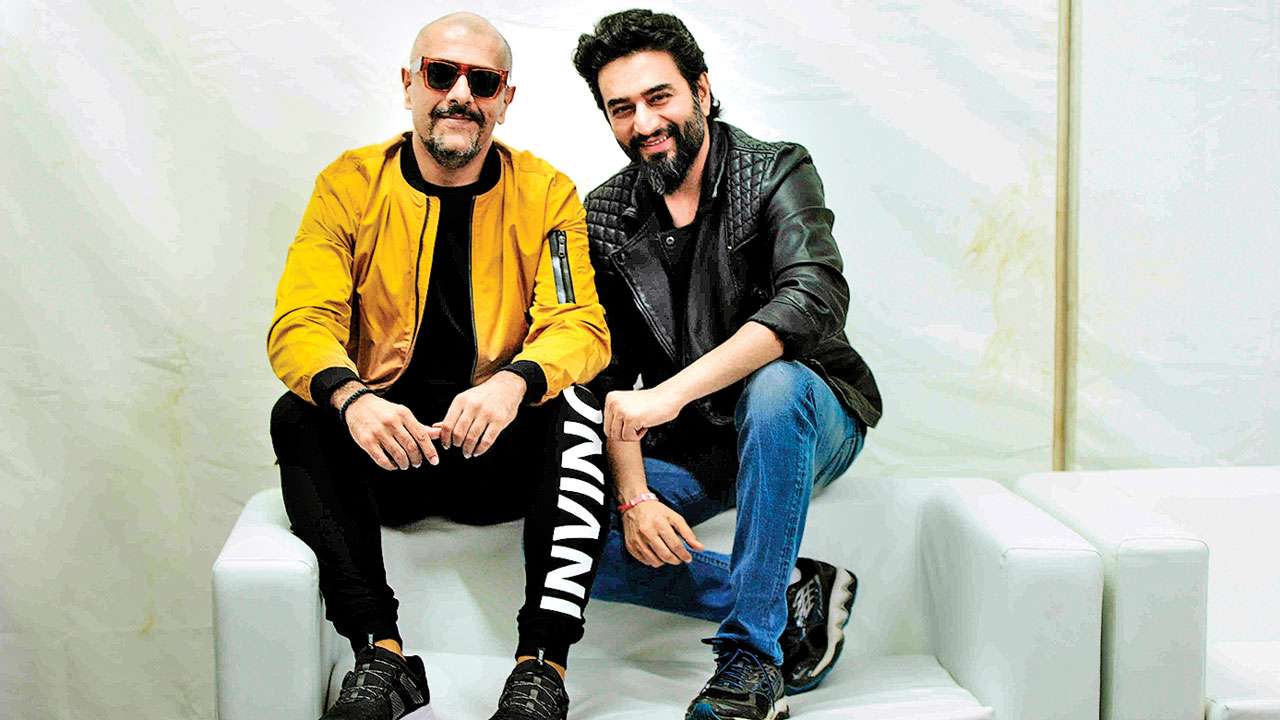
Dhaval Roy (DNA; November 18, 2018)
Vishal Dadlani and Shekhar Ravjiani (better known as Vishal-Shekhar) have had just one release in 2017 (Tiger Zinda Hai, TZH) as well as in 2018 (Telugu film Naa Peru Surya, Naa Illu India), but 2019 looks big for the duo. Apart from Salman Khan’s Bharat, they have Karan Johar’s Student Of The Year 2 (SOTY2) and YRF’s as-yet-untitled film starring Hrithik Roshan and Tiger Shroff. Right now, they can be seen as judges of music reality shows Indian Idol and Zee TV’s Sa Re Ga Ma Pa, respectively. They spoke to After Hrs about their upcoming movies, their partnership, creative differences and solo works.
THREE BIGGIES NEXT YEAR
Even though TZH was their only movie album last year, Dil Diyan Gallan and Swag Se Swagat were both chartbusters, with the latter being the first Hindi track to cross 600 million views on YouTube. Quiz the composers why they have been missing in action of late and Vishal replies, “SOTY 2 was supposed to come out sooner, so we spent a lot of time working on it. On a few occasions, release schedules go for a bit of a toss. We normally do two films a year, but next year will be three.”
Shekhar reminds us that they composed for Fan, Befikre, Sultan, and TZH back to back. “So, it might look like just a couple of films a year but suddenly for us it was a lot of work,” he says. Having fewer films does not bother them. In fact, the former states that it works well for the two. “We like to focus on what we’re doing, and give it the time and love it deserves,” he avers.
Describing the three projects, he says, “SOTY 2 is young and hip while keeping its soul intact. The Hrithik-Tiger film is a dance-action flick, so there are just a few songs, but they are quite cool. Bharat is rooted and large in terms of the number of songs as well as the scale of the sound. So, what we are trying to do is like leading three different lives simultaneously.”
GOING STRONG SINCE TWO DECADES
Remind the duo that it’s been almost two decades since they debuted in Bollywood, with Pyaar Mein Kabhi Kabhi (1999) and he exclaims, “Is it? Damn! Time flies!” Shekhar beams with pride and says, “We have done about 450 songs and been together on stage, television as well as in the studio having a blast. It feels like we’ve just got started.” The Chennai Express composers say that they have stayed on top of the game by never treating their work as a contest. “We have a duty to elevate each film that we do, both emotionally as well as at the box office, and that’s what we focus on,” Vishal emphasises.
CONFLICTS GALORE
Though they dish out crackerjack tunes together, differences between them are inevitable. Shekhar explains, “I have my views and he has his, but that’s how music is created. It’s all about jamming. Sometimes, I sing the first line and he nails the next one and vice versa.” At other times, one dislikes what the other has created and he adds, “We have creative differences in almost every single song, but that makes the number bigger and better.” These days, however, their greatest fights are about nuts and coffee! “I keep stealing almonds and walnuts that Shekhar stows away to snack on in a hunger emergency,” Vishal states. “And I slink his coffee,” the latter laughs. Their last explosive fight was back in 2009-10, when Vishal was going through a bad personal phase and it percolated into work. “Thankfully, Shekhar kept a cool head and was patient with me. That was the last big one,” he recalls.
SOLO WORKS
Vishal frontlines one of the biggest Indian bands Pentagram while Shekhar has a solo career, too. However, in the indie space, they haven’t collaborated yet. “That’s going to happen soon,” reveals the soft-spoken singer-composer, adding, “There will be an announcement of something big.” The musicians have co-judged Sa Re Ga Ma Pa Challenge in 2007 and Indian Idol Junior in 2013 among others, but now they stick to separate shows. “There is no one else I’d rather judge a show with. But, production houses or channels always try to get us as a ‘package deal’,” Vishal reasons candidly. Shekhar adds, “He is my best and the most ideal co-judge. If someone pays us a fat cheque, we will do a show together.”
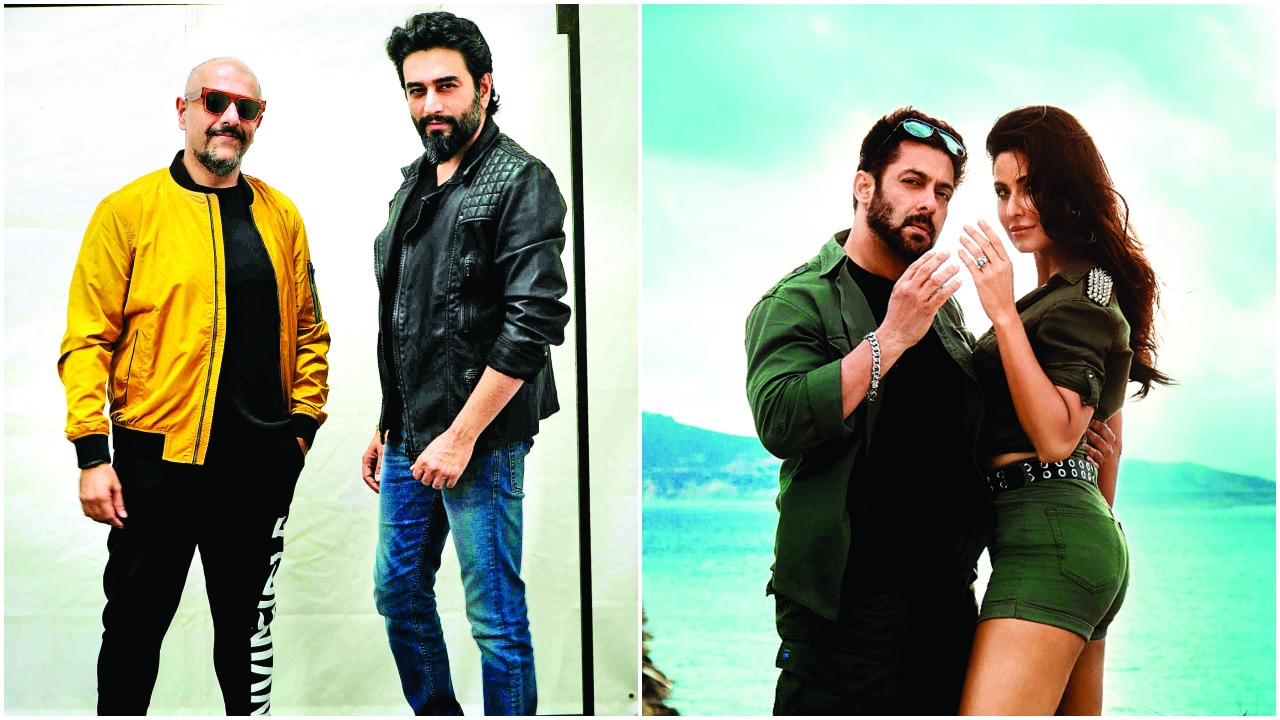
Vishal Dadlani and Shekhar Ravjiani (left); and Salman Khan and Katrina Kaif in a still from the song Swag Se Karenge
We can’t breathe money-Vishal Dadlani lashes out against the Delhi-Mumbai Freight Corridor project
8:04 AM

Vishal Dadlani is dead against the Delhi-Mumbai Freight Corridor project. He tells us why development cannot be disconnected from the environment
Upala KBR (DNA; March 7, 2016)
The Mumbai Metropolitan Region is set to lose 58
hectares of forest land, including 10 hectares of the Sanjay Gandhi
National Park, to the Delhi-Mumbai Freight Corridor project. While
issuing the final order, the forest department has not only set aside
its own reservations but also ignored the objections raised by the
Sanjay Gandhi National Park and the officials of the two forest
divisions that will lose land. Singer, music record producer and music
composer Vishal Dadlani speaks about how he feels about giving away
natural land for developmental purposes...
Aspire to good progress
He says, “They are ripping out Mumbai’s lungs and filling them with concrete. If the city chooses to meekly accept this, we will have failed as responsible citizens and human beings. ‘Development’ cannot be disconnected from the environment. I hope the government realises that while progress is good, good progress is what we must aspire to. To simplify it, so even they can comprehend it....We can’t breathe money!”
Burning questions
He adds, “Yes, it’s true that development is also required for civilisation to move forward, but it can’t be random and inconsiderate. There’s no point having all the bridges, bullet trains, expressways in the world, if you don’t have air to breathe. The project will ensure jobs for many, sure! But it’s a small number compared to those working on all the land it will acquire, mostly arable farmland, ranging from Delhi to Mumbai. What happens to all those farmers? What happens to India’s food production? Are those figures in the public domain? And if not, why not? To bridge the gap between development and civilisation and the environment, environmental concerns have to be the FIRST concern, even during the planning stages, of any project. Not a bureaucratic afterthought, as they have traditionally been.”
Climate change is real!
He concludes, “Please understand that I’m a capitalist by upbringing. I believe that people should be rewarded for work they put in, and that everyone should have equal opportunity. However, that doesn’t mean that we fly off the handle and start doing ill-conceived things, out of a sense of desperation. The whole world knows that climate change is real. Perhaps our government is playing ostrich, but climate change is the most urgent, impending catastrophe facing mankind. Either we course-correct now, or we may not be around as a race, to enjoy all that we are building. Straight up.”
Shah Rukh Khan is one of the most under-rated actors in this country even now-Vishal Dadlani
7:41 AM

Vishal Dadlani talks about the idea and emotions behind the Fan anthem…
Nayandeep Rakshit (DNA; February 22, 2016)
 After Hrs was the first to report that Shah Rukh
Khan’s Fan will be a songless film and will just have one promotional
song (No songs for Fan, July 8). The Fan anthem, titled Jabra Fan has
been launched and is picking up on social networks. Composer duo
Vishal-Shekhar were behind the creation of the track, an anthem that
caters to all fans, and not just Shah Rukh’s. Here’s what Vishal had to
say...
After Hrs was the first to report that Shah Rukh
Khan’s Fan will be a songless film and will just have one promotional
song (No songs for Fan, July 8). The Fan anthem, titled Jabra Fan has
been launched and is picking up on social networks. Composer duo
Vishal-Shekhar were behind the creation of the track, an anthem that
caters to all fans, and not just Shah Rukh’s. Here’s what Vishal had to
say...What was the brief given for Jabra?
Whoever was involved on the song — director Maneesh Sharma, Shekhar or me — there was only one thing we thought about. How would you express yourself if you were enamoured by a superstar? We put ourselves in Gaurav’s place; it was not an engineered thing. The emotions in the song are very genuine, which is why I think everyone is feeling that as well.
Fan was supposed to have no songs at all. How did this one fall in place?
The idea for the song originated from Maneesh. And we were fortunate enough to be able to see bits of the film before we composed the song. He basically showed us Gaurav’s character and told us that this character is obsessed with Aryan Khanna. He wanted a song which expresses his joy, the euphoria that happens when he watches a film or sees his star. The absolute freedom and happiness is what he wanted us to express. And about the language, he was very clear. He wanted us to make it sound more like an ode from a boy from outer Delhi, which is where Varun Grover, who’s written the lyrics, plays a massive part. Without those lyrics, the flavour of Gaurav’s life would go missing.
The best part about the song is you don’t need to be a SRK fan to connect to it. It’s a universal anthem…
I am glad you understood this. It’s a song about being a fan. It can be anyone in this world who you are connected to, as a fan. When we were making the song, it wasn’t an intellectual process. Everyone’s been someone’s fan. Maneesh himself has been a huge fan of Shah Rukh... even before he was in the film business. In effect, all of us have at some point or the other, felt that kind of an emotion to an icon or an idol we look up to. Without trying to attach it to a particular person, the whole process was effortless because it was genuine.
How many days did you take to compose the song?
We always thought Fan was going to be a songless film. Then we were told that Adi and Maneesh want to do a song for Fan. They asked us and we said we would love to do it. But there was a catch. They said they have Shah Rukh’s dates in five days. So they needed to shoot. We were in the middle of recording for Sultan when we took a five-day break and quickly pulled this one off.
How is Fan different from other SRK films you have given music to?
For any composer, composing for a Shah Rukh film is always a special thing. He carries music in a very natural way. He makes people connect to songs in a way that they believe they own the songs. And that’s the way he performs them. So every composer makes songs for Shah Rukh Khan when he is in the film. But for Fan — this is our fifth film with him — for the first time, we didn’t compose for SRK. We composed for Gaurav, who is the hero for us. If you watch him in the video, the character is not SRK at all. The body language is of a different person... In terms of sheer acting ability, I think SRK is one of the most under-rated actors in this country even now. And from what I have seen in this film — and in fact when I met him on the sets of the song — I told him that Gaurav is a better actor than Shah Rukh. We have watched about 10 minutes of the film, all were essentially the portions featuring the fan.
What was SRK’s reaction?
I wasn’t there when he first heard it. I met him on the sets when he was shooting. He was like, ‘Yeh bahut achcha hai’ and he was dancing his heart out. I assume he liked it. We had a long chat, a cup of coffee, and I even watched him climb that pole. He did all this with a busted left ankle! My admiration for him goes through the roof. He was having trouble walking but you will never see that in the video.
Indie music must lose its snob value-Vishal Dadlani
8:26 AM

It’s for everyone, says music director Vishal Dadlani, ready to launch a record label to promote independent talent
Aastha Atray Banan (MID-DAY; September 27 2015)
Vishal Dadlani’s record label promises to be different. For starters, VLT (Vishal Likes This) is not going to own an artiste’s music and that’s a first. A musician will be expected to sign a contract with the rock head and Bollywood music director, but the copyright will remain with him.
At his Bandra studio, Dadlani seems relaxed, despite his manager dropping in to appraise him of a packed week ahead. That record label owner has been added to his list of duties is hardly worrying. “I will be looking into every demo. I want to do that,” he says.
The thought has been with him for long, but when he chanced upon percussive guitarist Dhruv Visvanath’s work, he decided it was time to launch. Visvanath has been named one of the world’s 30 Great Guitarists Under 30 by acoustic Guitar Magazine, USa. “The [music] scene needs this. There aren’t enough avenues, and most artistes end up putting their albums out themselves. But I know so many people who can deal with visual aspects, and those who handle promotions well. And there is sufficient talent. So it seemed natural to do this. That I know people in the business, and have earned a bit of respect, allows me to sort of pull in these favours. That’s my currency,” says Dadlani, sole investor in the project.
His kind of musician, Dadlani describes as someone who has found their sound; someone aware of market forces but able to ignore them when making music. And because he is an artiste himself, he is keen to take care of the musician. along with owning copyright, those who collaborate with Dadlani will also be free to move on after an album. “Whatever I invest in the artiste will be accounted for and later deducted from their revenue. After that, they are free. I plan to launch five artistes a year, and do my best for them. Revenue generated will be used as investment for the following year. It’s not about making money; it’s really about putting out working artistes. There is a slew of talent, and it’s only getting better.” He is clear he won’t “poke his nose” into the creative process. No one will be asking them to change their sound to make it saleable, for instance.
It helps that he is not judgmental about the kind of music he wants to promote. One half of film music producing duo, Vishal-Shekhar, Dadlani used to front Pentagram, a four-piece rock electronica band started in 1993. “I grew up listening to all kinds of music, so it was never about good or bad. All music is a good music.” Dadlani’s label will also help a musician produce videos that will be up on a YouTube channel that curates all content without owning it. “What we need is for indie music to drop its snob value. Only a niche audience likes this music — that’s not true, and some music festivals have helped prove that. People want to hear new things. We musicians must talk to listeners in a language that doesn’t alienate them; that’s key for an indie artiste to succeed.”
The best part about Shekhar is that he has tolerated me for 15 years-Vishal Dadlani
7:59 AM

Priya Gupta (BOMBAY TIMES; October 20, 2014)
Vishal Dadlani, 41, is
self-made, forthright and extremely sensitive. His eclectic taste in
music comes from his parents and his feeling of liberation from being a
part of Pentagram. He is committed to nonviolence and is hugely
patriotic. Ahead of the release of Happy New Year, the music of
which he has given along with his best friend and partner Shekhar
Ravjiani, he talks to Bombay Times about his love for his parents, the
caring Farah Khan and what made him quit smoking overnight. Excerpts:
How did you come into films?
I guess it is a kind of a privilege to be born in Mumbai as all the influences of music, be it of the world or India, are all here. I have never been schooled musically, but my parents have a great love for music. I was allowed to listen to whatever music I wanted, which is why I am able to do such severely contrasting forms of music. We are originally from Sind and my dad was a builder, so, we were sort of well off. Everything we needed was there, but I was a very angry kid for what I don't know. I guess hormonally you need to have something to rebel against as a teenager. I had a very freakish early college life where I was like a goonda. But somewhere along the way, I found playing basic guitar soulful and it made me happy. That led to Pentagram. The band's drummer Shiraz led me to Raj Kaushal, who was making this film Pyaar Mein Kabhi Kabhi. I had met Shekhar Ravjiani before and found ourselves working on the same film and decided to work together and have since been together past 15 years.
You are the lead singer for the rock band Pentagram. Did your being an angry person lead you to rock music?
Rock is not angry, it's outspoken. The fundamental of rock-and-roll has always been to speak your mind. It's about expression and not being limited to restricting yourself to what you have been conditioned to be, so, it's liberating. And that's the reason I love it.
Do you have to charge yourself with energy before you perform?
I don't need extra energy. I have my coffee. At my lowest on a worst day, I will have my Snickers bar of chocolate.
Who are you most attached to?
My parents, who I love as one entity. They have given me everything, from life to everything I know to everything I think. The reason I am a musician, enjoying different kinds of music, is due to their eclectic taste. I would be listening to the Woodstock album right next to Hum Kisise Kum Naheen to Jagjit Singh to disco music to funk and Afro pop. Anything I know about music and love about music comes from them to start with. Then Pentagram taught me so much and now Shekhar has been an unending source of musical education. He is an extremely trained musician and I have learnt from him. My mother would always be singing and that too, in tune. In school, we would be made to sing Marathi songs. I assumed that just like my mother, everyone could sing. My teacher asked me to stand up and sing and I realised that I was in tune, unlike many classmates and that is the first time I realised that I could sing unlike others. Despite my father being a businessman, I remember my first conversation with him, when I told him that I wanted to be a musician. He only asked me, 'Tell me, do you think you are any good?' I said, 'Ya, I think so.' He said, 'Go for it.'
Talk about Shekhar Ravjiani?
The best part I like about Shekhar is that he has tolerated me for 15 years. It is no easy task. He has taught me so much, both in music as well as how to behave as a person. He is a wonderfully evolved guy. He is very caring and you can count on him as a friend more than most people can count on their families. If at any point you need him, he will drop everything and be there for you.
What do you like about yourself?
Everything. I truly love me. Some people may feel that I am arrogant, but actually I am just forthright. I say what I believe and believe what I say. I don't hide anything. If I have a deep grudge against someone, it won't burn me inside as I will have a chat and sort it and once it is done, I will never think about it again. I am very emotional and sensitive. Of late, I have been crying at the movies, which is a bit bizarre. I have great love for my country. When Suniel Shetty was rolling in the mud in Border and saying, 'I am in my mother's arms,' I felt that. I place humanism above patriotism, but they are close first and second. So much of what I am comes from being an Indian and from Mumbai. I am nearly not a good son as my parents deserve. I was a rowdy kid and gave them a lot of grief, but today I am committed to non-violence. You can hit me on my face and I can guarantee that I will not hit you back. I was dangerously and stupidly messed up in college. I used to be a great kid in school till class IX till when I got bored of being the good kid and a model student. Post that, I remember willfully not submitting my exam paper after writing it. I have always had this abiding love for Physics. As a kid, if I got a toy rather than play with it, I would open it and see how it worked. That's what got me excited and if I could put it back together, I was thrilled. I really grew to love it and still love it with a passion. I was in class X and really good at Science and was selected for this special class in the morning for extra classes for the brightest students in Science. I was also going for tuition classes. As a result, I was studying the same syllabus at three different places at the same time. So, it got to me and just three months before my board exams, I decided to quit. Fortunately, my teachers and my parents realised that they had overdone it and they just let me be. But until then, I held the highest score in Science from my school. I had decided to be myself. I was always a loner, but music saved my life.
Are you stubborn?
I am severely stubborn. Actually, both my dad and I are very stubborn. I love to hug my dad even though he is awkward with it. My dad was not getting himself operated for cataract, but I made a deal with him that if he would get himself operated, I would quit smoking and I have. Once I decide it, nothing can change that. Grudgingly, my dad too likes the fact that I have always been independent. Even in my early days, I would not ask for help and would choose to take the bus or train as against the car when I started. But I am khuddar and was clear that if you start with a launch pad, then how would you know that you made it on your own. I am not a modest person and don't believe in fake humility.
Have you made friends in the industry?
Our relationship with the directors we have worked go beyond work, be it with Sujoy Ghosh, with whom we talk nonsense on a daily basis both on Twitter and on phone, with Farah Khan who is just lovely or with Karan Johar, Tarun Mansukhani, Siddharth Anand or Punit Malhotra. They are our genuine friends and wonderful people who have not only stood by us, but for us, our relationship goes far beyond our working relationships.
Talk about Farah Khan?
Farah is magic. I say this as a mother, as a caring human being and of course, she is one of the biggest directors in the business, but that is completely secondary to what she is as a person. About 19 years ago, Pentagram was the backing band in an ad. We needed money to buy equipment and would take any gig we got. Farah was the choreographer on this ad that Mukul Anand was directing. Nobody really gave a shit about us, except Farah, who was the only person who for no ulterior motive not only made sure that we were taken care of, but she was the only person who praised us. She was the only person who made us feel that we mattered. I remember her from that time. She was stick thin then but there was a kindness she exuded and still does.
You displayed your displeasure last year when Yo Yo Honey Singh was taken to compose Lungi Dance for Chennai Express. Are you against the idea of multiple music directors for a film?
No. We started like that, both Shekhar and I. I am perhaps the only person who has gone out of my way to sing with everyone. I don't have a sense of competition. All I have is a sense of right or wrong and I stand by that. I don't really care about public perception. Shah Rukh and I have a four-film relationship. At that point in time, it was just a misunderstanding. In any relationship there will always be moments of elation and disappointment. To tell the truth, you can only fight with the people you love. When you are close to somebody, you have the right to let your heart known.
Talk about Shah Rukh Khan?
He is self-made and I know how that feels. But that sort of strength is very evident in him. He is loved for his portrayal of romance. He is almost the Darcy of India. When the music release poster for Ra One came out, the design person somehow managed to omit Shekhar and my name. So, of course, we were quite affected by it. I remember it was heavily pouring that night and it was 11 at night. I was sitting on the sofa right at the entrance of my studio when I saw a silhouette of a person standing outside. The glass is frosted, so, I could not see who it was and this man kept standing for 10 minutes. I was wondering who would be standing like that outside in such heavy rain. I opened the door and found Shah Rukh standing there. I asked, 'Why didn't you come in?' He said, `I couldn't come in without saying sorry.' The man has grace.
How did you come into films?
I guess it is a kind of a privilege to be born in Mumbai as all the influences of music, be it of the world or India, are all here. I have never been schooled musically, but my parents have a great love for music. I was allowed to listen to whatever music I wanted, which is why I am able to do such severely contrasting forms of music. We are originally from Sind and my dad was a builder, so, we were sort of well off. Everything we needed was there, but I was a very angry kid for what I don't know. I guess hormonally you need to have something to rebel against as a teenager. I had a very freakish early college life where I was like a goonda. But somewhere along the way, I found playing basic guitar soulful and it made me happy. That led to Pentagram. The band's drummer Shiraz led me to Raj Kaushal, who was making this film Pyaar Mein Kabhi Kabhi. I had met Shekhar Ravjiani before and found ourselves working on the same film and decided to work together and have since been together past 15 years.
You are the lead singer for the rock band Pentagram. Did your being an angry person lead you to rock music?
Rock is not angry, it's outspoken. The fundamental of rock-and-roll has always been to speak your mind. It's about expression and not being limited to restricting yourself to what you have been conditioned to be, so, it's liberating. And that's the reason I love it.
Do you have to charge yourself with energy before you perform?
I don't need extra energy. I have my coffee. At my lowest on a worst day, I will have my Snickers bar of chocolate.
Who are you most attached to?
My parents, who I love as one entity. They have given me everything, from life to everything I know to everything I think. The reason I am a musician, enjoying different kinds of music, is due to their eclectic taste. I would be listening to the Woodstock album right next to Hum Kisise Kum Naheen to Jagjit Singh to disco music to funk and Afro pop. Anything I know about music and love about music comes from them to start with. Then Pentagram taught me so much and now Shekhar has been an unending source of musical education. He is an extremely trained musician and I have learnt from him. My mother would always be singing and that too, in tune. In school, we would be made to sing Marathi songs. I assumed that just like my mother, everyone could sing. My teacher asked me to stand up and sing and I realised that I was in tune, unlike many classmates and that is the first time I realised that I could sing unlike others. Despite my father being a businessman, I remember my first conversation with him, when I told him that I wanted to be a musician. He only asked me, 'Tell me, do you think you are any good?' I said, 'Ya, I think so.' He said, 'Go for it.'
Talk about Shekhar Ravjiani?
The best part I like about Shekhar is that he has tolerated me for 15 years. It is no easy task. He has taught me so much, both in music as well as how to behave as a person. He is a wonderfully evolved guy. He is very caring and you can count on him as a friend more than most people can count on their families. If at any point you need him, he will drop everything and be there for you.
What do you like about yourself?
Everything. I truly love me. Some people may feel that I am arrogant, but actually I am just forthright. I say what I believe and believe what I say. I don't hide anything. If I have a deep grudge against someone, it won't burn me inside as I will have a chat and sort it and once it is done, I will never think about it again. I am very emotional and sensitive. Of late, I have been crying at the movies, which is a bit bizarre. I have great love for my country. When Suniel Shetty was rolling in the mud in Border and saying, 'I am in my mother's arms,' I felt that. I place humanism above patriotism, but they are close first and second. So much of what I am comes from being an Indian and from Mumbai. I am nearly not a good son as my parents deserve. I was a rowdy kid and gave them a lot of grief, but today I am committed to non-violence. You can hit me on my face and I can guarantee that I will not hit you back. I was dangerously and stupidly messed up in college. I used to be a great kid in school till class IX till when I got bored of being the good kid and a model student. Post that, I remember willfully not submitting my exam paper after writing it. I have always had this abiding love for Physics. As a kid, if I got a toy rather than play with it, I would open it and see how it worked. That's what got me excited and if I could put it back together, I was thrilled. I really grew to love it and still love it with a passion. I was in class X and really good at Science and was selected for this special class in the morning for extra classes for the brightest students in Science. I was also going for tuition classes. As a result, I was studying the same syllabus at three different places at the same time. So, it got to me and just three months before my board exams, I decided to quit. Fortunately, my teachers and my parents realised that they had overdone it and they just let me be. But until then, I held the highest score in Science from my school. I had decided to be myself. I was always a loner, but music saved my life.
Are you stubborn?
I am severely stubborn. Actually, both my dad and I are very stubborn. I love to hug my dad even though he is awkward with it. My dad was not getting himself operated for cataract, but I made a deal with him that if he would get himself operated, I would quit smoking and I have. Once I decide it, nothing can change that. Grudgingly, my dad too likes the fact that I have always been independent. Even in my early days, I would not ask for help and would choose to take the bus or train as against the car when I started. But I am khuddar and was clear that if you start with a launch pad, then how would you know that you made it on your own. I am not a modest person and don't believe in fake humility.
Have you made friends in the industry?
Our relationship with the directors we have worked go beyond work, be it with Sujoy Ghosh, with whom we talk nonsense on a daily basis both on Twitter and on phone, with Farah Khan who is just lovely or with Karan Johar, Tarun Mansukhani, Siddharth Anand or Punit Malhotra. They are our genuine friends and wonderful people who have not only stood by us, but for us, our relationship goes far beyond our working relationships.
Talk about Farah Khan?
Farah is magic. I say this as a mother, as a caring human being and of course, she is one of the biggest directors in the business, but that is completely secondary to what she is as a person. About 19 years ago, Pentagram was the backing band in an ad. We needed money to buy equipment and would take any gig we got. Farah was the choreographer on this ad that Mukul Anand was directing. Nobody really gave a shit about us, except Farah, who was the only person who for no ulterior motive not only made sure that we were taken care of, but she was the only person who praised us. She was the only person who made us feel that we mattered. I remember her from that time. She was stick thin then but there was a kindness she exuded and still does.
You displayed your displeasure last year when Yo Yo Honey Singh was taken to compose Lungi Dance for Chennai Express. Are you against the idea of multiple music directors for a film?
No. We started like that, both Shekhar and I. I am perhaps the only person who has gone out of my way to sing with everyone. I don't have a sense of competition. All I have is a sense of right or wrong and I stand by that. I don't really care about public perception. Shah Rukh and I have a four-film relationship. At that point in time, it was just a misunderstanding. In any relationship there will always be moments of elation and disappointment. To tell the truth, you can only fight with the people you love. When you are close to somebody, you have the right to let your heart known.
Talk about Shah Rukh Khan?
He is self-made and I know how that feels. But that sort of strength is very evident in him. He is loved for his portrayal of romance. He is almost the Darcy of India. When the music release poster for Ra One came out, the design person somehow managed to omit Shekhar and my name. So, of course, we were quite affected by it. I remember it was heavily pouring that night and it was 11 at night. I was sitting on the sofa right at the entrance of my studio when I saw a silhouette of a person standing outside. The glass is frosted, so, I could not see who it was and this man kept standing for 10 minutes. I was wondering who would be standing like that outside in such heavy rain. I opened the door and found Shah Rukh standing there. I asked, 'Why didn't you come in?' He said, `I couldn't come in without saying sorry.' The man has grace.

Subscribe to:
Posts (Atom)