Showing posts with label Vishal Bhardwaj. Show all posts
Showing posts with label Vishal Bhardwaj. Show all posts
7 Khoon Maaf is a punk rock feminist film-Vivaan Shah
2:43 PM

Neha Maheshwri (MUMBAI MIRROR; February 18, 2026)
As 7 Khoon Maaf completes 15 years on February 18, actor Vivaan Shah, who made his debut with 7 Khoon Maaf, looks back at the film that shaped his understanding of cinema and confirmed his decision to become an actor.
With the distance of time, Vivaan places the film within a wider literary and cinematic tradition. He says, “I see 7 Khoon Maaf as part of a kind of Gothic trilogy by Vishal ji, which includes Maqbool and Haider. All three films contain elements of the Gothic and the macabre in the architecture, the aesthetics, and the emotional landscapes of the stories.”
He says, “Even Omkara and Kaminey carry shades of rural and urban Gothic respectively. 7 Khoon Maaf, Maqbool and Haider also hint at earlier classical literary influences such as Dante and Marlowe, who must have influenced Shakespeare himself. There is even a touch of Indian Gothic of the kind associated with Ismat Chughtai and Saadat Hasan Manto.”
Joining director Vishal Bhardwaj’s set at 19 proved to be a turning point. He says, “Working with Vishal ji was a dream come true. I had been a fan of his from a very early age. I never wanted to be a professional actor, but when this opportunity came my way, I plunged into it even before I had made up my mind.”
The experience led to an epiphany. He says, “On the sets of 7 Khoon Maaf, I decided that I was going to dedicate myself full-time to this profession. I learned an extraordinary amount, including language, speech, diction, tone, cinematic vocabulary, and the art of acting itself. Working with Vishal ji was like a masterclass, almost like film school. He is our Stanley Kubrick. The more you watch his films, the more you learn.”
The film demanded that Vivaan portray the passage of time, a challenge that went beyond prosthetics. He says, “We had an extraordinary prosthetics team from America, which helped immensely, but it was still a challenge from an acting standpoint. Watching Priyanka Chopra do this was one of the most illuminating experiences of my life.”
He says, “I have immense gratitude towards Priyanka for how kind, patient, and helpful she was. I was young, lost, and a novice, but she guided me through an extraordinarily complex character and story. She is one of the greatest actresses and human beings I know.”
Reflecting on her performance, he says, “She gave one of the most mind-blowing performances ever. It was almost like a Sunset Boulevard, Greta Garbo kind of performance. She has the grandeur of cinema icons like Bette Davis and Joan Crawford.”
Fifteen years on, Vivaan believes the film’s politics remain relevant. He says, “Great works of art remain immutable with time. 7 Khoon Maaf is extraordinarily progressive and forward-thinking. It is a punk-rock feminist film.”
In O'Romeo, I was the heroine. Triptii Dimri used to take just 2 minutes to get ready-Shahid Kapoor
3:25 PM

Shahid Kapoor has defined the conflicted hero. Now, he talks creative honesty, family validation and bridging the gap between mass and meaningful cinema
Sonal Kalra (HINDUSTAN TIMES; February 13, 2024)
Actor Shahid Kapoor has played brooding men before, but as O'Romeo releases today, he appears surprisingly at ease. Calm, measured, almost detached from the chaos his character brings to screen. Excerpts...
O'Romeo is your fourth outing with filmmaker Vishal Bhardwaj. Does the script even matter now, or when he calls, is it an immediate yes?
In spirit, I would say yes to the latter! But from a professional POV, no. I don’t think any artist can give themselves to something unless they connect with it. When the connection is not there, there is always something missing in the product. In O'Romeo, of course it’s the titular part; I play Ustraa. And with Vishal Bhardwaj, it’s always a world that he creates. Ustraa’s attitude is that of Romeo. If, as creative people, you don’t connect, it is wrong for you to do the film. If you won’t be honest, it is unfair for everybody else. I very much connected with this film. I had one preset in my head before I met him, and I was very clear that at this stage in my career, I don’t want to do a film that is too experimental or a film meant for a smaller, intellectual audience and not for a wider audience, who have a simpler mindset and whose approach to filmmaking is that they go to theatres to get entertained. There’s the cinema you love and the cinema that people love. The whole endeavour has been for years to find a Ganga-Jamuna moment between them, to meet a middle ground. This film is an attempt at achieving that; it’s meant for an intelligent audience but also very much like a typical, mass audience.
In terms of intensity, where would you rank Ustraa, alongside Haider and Kabir Singh?
I wouldn’t place him in the same space as Haider and Kabir. Ustraa is a very entertaining character. What’s unique about him is that he is dark yet soft, and can also be very funny. He is a complete laundiyabaaz, yet falls in love to a degree that he loses himself. He’s a gangster but scared of his grandmother, played by Farida Jalal ji.
You want to be thrown into something that challenges you. My scenes with Nana Patekar sir are also special.
Which sequence in O'Romeo was the toughest or made you feel proud?
The toughest real estate in this film was actually my body! It was covered in tattoos; it would take two and a half hours to put them on before I got on set. Triptii Dimri, my co-star, had a no-makeup look. I told her, “In this film, I am the heroine. Tu toh do minute mein ready ho kar aa jaati hai set pe!”
O'Romeo isn’t like a superhero film where 75% of the work is done by costume and VFX. Then we had action sequences at night. I had undergone major hip surgery during one such sequence. That was very challenging.
Whose approval matters the most once they see your film?
First, I need to be happy with what I have done, which is always a challenge. Even above me, it’s the filmmaker. If they are not satisfied, there’s no point to the entire experience. I should be able to add more value than they expected. For me, the filmmaker comes first.
Beyond that, I have a very talented family, whether it’s my mother Neliima Azim, father Pankaj Kapur, brother Ishaan Khatter, or wife Mira Kapoor. They support me unconditionally, and I am always curious to know their views. They’re all very different from each other.
How affected are you by social media today?
Anybody who says they’re not affected, I don’t know... I wonder if they’re living under a rock. But anybody who says it deeply affects them is putting themselves in a dangerous place.
When you go on social media, you don’t know who is writing, under what name, or under what circumstances. It’s important not to live in a bubble. People around you will praise you. You live a privileged life. But you don’t know what the wider audience feels. It’s a difficult journey. Open up, but be mindful of how much you allow to sit in your system.
Main hamesha yeh kehta hoon – aapke bolne ki aukaat honi chahiye, tabhi mooh kholna chahiye. Yeh maine bachpan mein seekha tha.
What trait angers you?
In this profession, people can be very dual-faced with stars. Saamne kuchh, peeche kuchh. I don’t like that. I respect people who disagree and have a reason for it. There are rebels without a cause. Then there are those who stand by what they believe. Honesty and authenticity are very important.
Do your kids know they’re children of a star? Do they watch your movies?
The minute their dad stops doing adult films, I guess! When he decides to do frothy stuff. The next one is Cocktail 2. I did Teri Baaton Mein Aisa Uljha Jiya (2024). What ignites me as an actor are shades that aren’t just white.
I think social media is destroying potential actors-Shahid Kapoor
10:37 AM

Madhureeta Mukherjee (BOMBAY TIMES; February 5, 2026)
He has never chased trends, only trusted his own timing. From romance to rage, from comedy to drama, he has built a career on instinct and reinvention. Now in his 40s, he is calmer, more centred, shaped by fatherhood and a sharper understanding of self and cinema.
On the next episode of Rustomjee presents Bombay Times Lounge, Shahid Kapoor speaks with depth and candour – mapping his own journey, his relationship with self-critique, the curveballs life throws at us and what it means to be ahead of the curve. As he reunites with Vishal Bhardwaj for the fourth time in O'Romeo – a partnership that has always created magic – Shahid steps into a gangster’s world on screen, even as off-screen, he seems more at ease with himself than ever before. Here’s a sneak peek into the conversation – with the full episode coming soon on the Bombay Times YouTube channel. The promo drops today.
‘You can’t get affected by what other people have achieved’
Talking about why he never compared his journey in films with his contemporaries, Shahid says, “Everyone’s journey is different; someone starts right next to the finish line because that’s what destiny gave them, and somebody starts like 200 meters before the start line. You start counting your meters from the place you started. You see your own journey and merit yourself with that. You can’t get so affected by what other people have achieved.”
‘I think social media is destroying potential actors’
Speaking about how social media is impacting actors’ skill set, he shares, “We used to learn acting in a film theatre, now people are learning acting by looking at their phones. You know there’s a fundamental difference in the way you view a movie on your phone and on the big screen. Sitting in a theatre, seeing a story being told and having a social experience with so many people around you – there is a huge difference. I think a lot of new-age actors need to go to the theatres; they need to watch purana cinema. They need to go to smaller towns to understand our country. What happens is, globalisation ke saath... duniya ka sab kuch pata hai, lekin rootedness nahin hai, and rooted emotions come from these experiences. Actors really need to think about that… get off social media, go discover the world, experience reality and then get back on it.”
'Vishal and I have always had an unsaid creative understanding'
Speaking about his creative bonding with Bhardwaj, the actor shares, "The funniest thing is that, even though Vishal (Bhardwaj) and I are collaborating after seven or eight years, for O'Romeo, it didn’t feel any different than it was before. It felt like a very natural flow of things. Of course, I can sense that he has also evolved, and I am also at a different stage of my career, but we’ve always had an unsaid creative understanding."
‘I’m pretty obsessed with my kids’
Reflecting on how fatherhood had shaped his perspective, on life and career, Shahid says, “Parenthood has changed me completely. I was just dying to be a papa. I wanted it so badly, and I was consumed by it. Now that my daughter’s nine and my son is seven, I’ve started thinking about myself much more. Till about a year back, I was just very absorbed with them. I am turning 45 very soon, and these are very important years in my career. This is a young person’s job, and to stay relevant for the newer generation, you have to really grow, evolve and adapt. Sometimes these roles that life gives you are so much bigger than any of these things. As a parent, you want to be the best version of yourself. I’m pretty obsessed with my kids, and it’s been amazing.”
'We have to learn to define our own pace'
On charting his own path, Shahid says, "There are three places you can be in your career: You can be ahead of the curve, you can be right at the curve, or you can be behind the curve. The one place I don’t want to be is behind the curve. And if you’re trying to do something that has already been done because it was successful, rest assured, you’re behind the curve. We have to learn to define our own pace. Puri zindagi nikaal doge sochne mein ki yeh trend hai, woh trend hai, toh maza nahin aayega. You can fail, but be original."
'To get better at what you do, you have to be critical'
The Haider actor says if one wants to hone their craft, they have to be critical of their work. He adds, "I’ve learnt not to let negative chatter affect me in my head. I’ve worked very hard on myself to differentiate between what is critical and what is objective. And what is getting over critical and negative – there is a thin line there. To get better at what you do, you have to be critical, and if you get so affected by self-critique, then you’re not strong enough and you won’t progress."
Watch out for the full episode of the Rustomjee presents Bombay Times Lounge with Shahid Kapoor, coming soon on the Bombay Times YouTube channel
Title Sponsor: Rustomjee
Shot at Parishram by Rustomjee, Pali Hill, Bandra, Mumbai
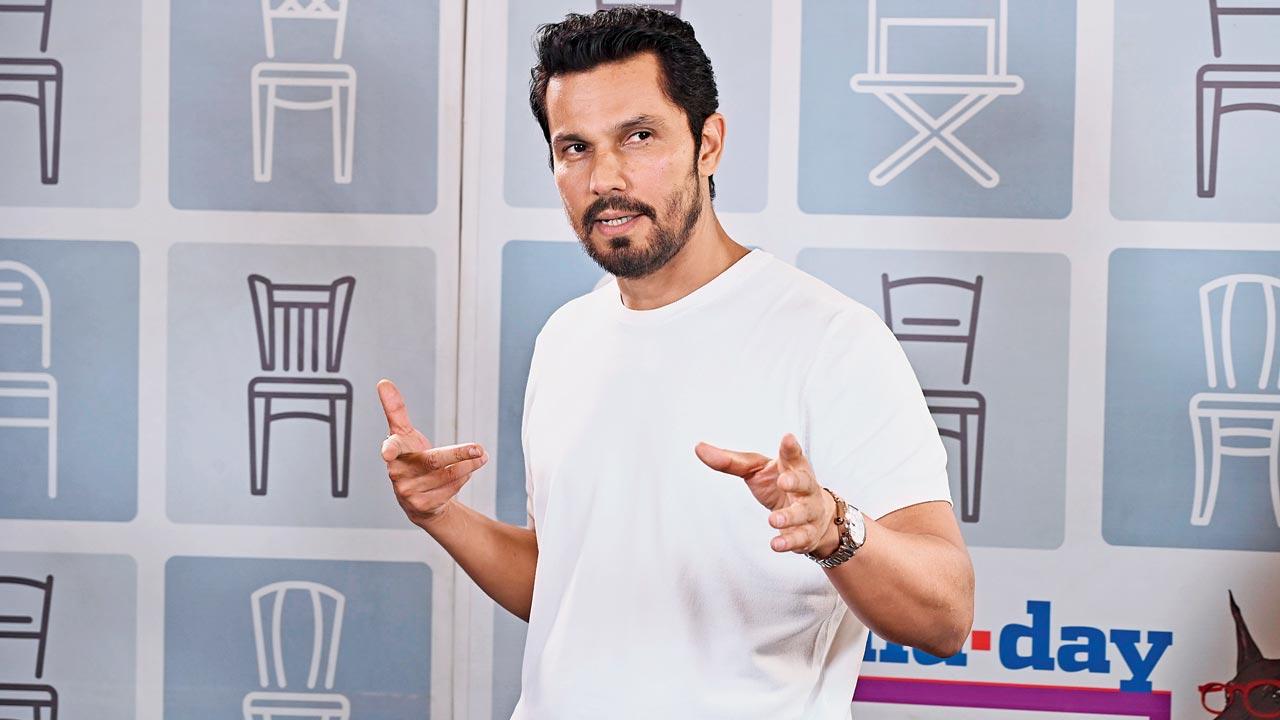
Randeep Hooda, who was to play antagonist in O'Romeo, stepped away from the film just days before shoot
9:20 AM
Mohar Basu (MID-DAY; January 13, 2026)
With the teaser of O’Romeo, filmmaker Vishal Bhardwaj gave us a peek into his action thriller’s world that is populated by Shahid Kapoor, Triptii Dimri, Tamannaah Bhatia, Avinash Tiwary, Disha Patani, and Nana Patekar. But an actor was missing from the teaser — Randeep Hooda. A bit of digging revealed that though he was supposed to play the antagonist in the February 13 offering, he backed out of the film days before his scheduled shoot.
According to sources, the actor exited the project due to personal reasons. A source from the production told mid-day, “Randeep had begun preliminary prep for the role. Unfortunately, a personal crisis emerged right before he was to shoot his portions. This was around the time of Jaat’s [2025] release last April; he was navigating important developments in his personal life and Lin’s [Laishram, his wife] health. Understandably, giving time to his personal commitments took precedence.”
It’s heard that Bhardwaj and producer Sajid Nadiadwala were supportive of Hooda’s decision to exit the project, and the parting was amicable.
With O’Romeo running on a tight schedule, the makers moved swiftly to cast another actor. They zeroed in on Tiwary, marking the actor’s first collaboration with Bhardwaj.
The source added, “The production couldn’t afford a major delay. Avinash fit the brief, and was available to step into the role at a short notice.”
I hope Vishal Bhardwaj continues making films for children like The Blue Umbrella-Gulzar
10:22 AM

The lyricist-poet talks about why his connection with young audiences endures and how their world still moves him to create with heartfelt passion
Natasha Coutinho (HINDUSTAN TIMES; January 12, 2026)
Veteran lyricist-poet Gulzar, who at 91 remains discerning about the projects he chooses, is set to return to writing lyrics for a children’s film titled Masab Tank. Speaking at his Bandra bungalow, Gulzar reflects on why writing for children continues to matter deeply to him. “It’s not just a desire or an ambition, it is an obligation. Unfortunately, it is treated in a very left-handed way by writers.”
Explaining what drew him to Masab Tank, Gulzar shares, “Masab Tank is an area in Hyderabad where children’s playgrounds have been taken away and replaced by buildings. This project really touched my heart,” he says.
Having penned some of the most memorable children’s songs in Indian cinema — from Lakdi Ki Kaathi (Masoom, 1983) to Jungle Jungle Pata Chala Hai from the iconic 1990s television series The Jungle Book — Gulzar says his engagement with children’s writing is far from over. “Writing for children will continue till I grow up enough to be a child again,” he smiles.
He hopes his protégé, filmmaker-composer Vishal Bhardwaj, will carry the baton forward. “I hope Vishal continues making films for children like The Blue Umbrella (2007). He has that rare sensitivity required to create songs that truly connect with children,” Gulzar says.
The concern for children, Gulzar adds, runs through his family as well. His son-in-law, businessman Govind Sandhu has written a book inspired by the plight of children affected by war in Gaza and Ukraine, while his daughter, filmmaker Meghna Gulzar, has authored a book focusing on differently-abled children.
Gulzar also speaks passionately about his long association with Arushi, an institute for specially-abled children. “I came across the institute while making my film Koshish (1972). Every year, these children come to the city to participate in a marathon, and I have been walking alongside them for almost two decades,” he says.
As for future collaborations, when asked whether audiences will see him working with Meghna on her upcoming film Daayra, starring Kareena Kapoor Khan and Prithviraj Sukumaran, Gulzar reveals that it may have to wait. “She said that her script doesn’t allow for any songs. So that collaboration will have to wait,” he ends.
Let’s not call an item song a ghazal-Rekha Bhardwaj
10:13 AM

Debarati S Sen (BOMBAY TIMES; July 28, 2025)
“Youngsters want instant success,” shares Rekha Bhardwaj, emphasising how even if a film includes a ghazal today, it’s often just to create an instant hit. At the recently concluded ghazal festival Khazana in the city, the singer spoke about the power of live performances, how ghazals have evolved and why they must be treated with reverence. Excerpts:
‘Youngsters want instant gratification and success, toh focus change hota hai’
Rekha, who has lent her voice to songs like Phir Le Aaya Dil, Kabira and Genda Phool, among others, points out how the pursuit of virality creates pressure. She elaborates, “Youngsters want instant gratification, instant success and instant appreciation... toh focus change hota hai. Even if they include ghazals in a film, they will only do so to ensure it becomes a hit. Ek ajeeb sa pressure hai ki gaana hit hona chahiye. Phir toh mushkil hai. There are filmmakers who have used a certain Sufi ghazal in their film, but it’s actually an item song. Why don’t they call it what it is? If you are making an actress do belly dance on a ghazal, then you should call it an item song.”
While she dislikes the idea of using the term ‘ghazal’ loosely, she doesn’t entirely condemn item songs. She explains, “It’s not wrong to have an item song because it’s part of our culture — nautanki, kothe pe gaana bajana, it’s all part of our culture. Let’s take pride in that. There’s nothing wrong with having such songs if the situation calls for it in the film.”
‘Ghazal is a facet of love, romance and longing’
Rekha feels that what sets ghazals apart is their emotional core. “Ghazal ek poetry hai jise hum melody ke through express kartein hain. It’s a facet of love, romance, longing and shringaar ras. Ghazals are eternal. The best thing is that youngsters are taking up this form, more in the interiors than the metros. But this genre needs more exposure.”
‘Aaj ke ghazalon ka, qawaaliyon ka, rang badal raha hai’
The singer believes that there has been a generational shift in creative focus in movies and music. She says, “Yes, there aren’t many ghazals in film albums, but there are composers like Pritam, Vishal (Bhardwaj), who do include ghazals in their films. The only thing is that aaj kal ghazalon ka, qawaaliyon ka, rang badal raha hai, and ab aesthetics ke hisab se hota hai.”
She adds, “Youngsters apne exposure ke hisab se hi ghazal banayenge. If you take Urdu words from Google and put them in a ghazal, woh toh kam hi padega na.”
As outsiders, if you go wrong twice with your films, you are gone-Triptii Dimri
9:39 AM

Dhadak 2 star Triptii Dimri on saying yes only to the movies that inspire complete faith in her
Mohar Basu (MID-DAY; July 26, 2025)
Animal (2023) might have catapulted Triptii Dimri to mainstream popularity, but it is in films like Dhadak 2 that she feels at ease. Through the story of two lovers, portrayed by Siddhant Chaturvedi and Dimri, Shazia Iqbal’s directorial venture takes a hard look at casteism prevalent in the country. In a way, it is along the lines of Dimri’s early movies Bulbbul (2020) and Qala (2022) — each a piece of art that also has a social message. Does she find it hard to strike a balance between these and mainstream films, especially since she hails from a non-industry background?
“You have to not think about it too much because then you will take away from the story,” she starts. “There is always a reason behind saying yes to a project. Most of the time the reason is not that the film will have a good box-office run, or that it will get a lot of eyeballs. It is because the character excites you. As outsiders, you don’t get opportunities again and again. Today we have this film, tomorrow we’ll have another, but after that, you have to work hard for the next because if you go wrong twice with your films, you are gone. That is the reality. So, you have to have full faith in the story and your characters, and keep the peripheral noise out of the window.”
What made her say yes to Dhadak 2 was her character and the film’s messaging. Working with Iqbal turned out to be the cherry on the top. “For me, she is Vidhi [her character]. She is not afraid to speak her truth. There is so much to learn from her because she makes you feel empowered,” says Dimri.
The actor believes that knowing Iqbal has changed her perspective. “I have been an introvert. I have seen and faced things, and not raised my voice against them. For 30 years of my life, I have kept quiet about so many things. I never had the guts to tell people that it’s wrong. I told Shazia that I want to be like Vidhi; that by the end of this film, I should have the courage to speak my truth without being scared of anyone or the outcome. Now, I do stand up for the right things. This film made me open up a lot more,” she shares.
Up next
In her kitty, Triptii Dimri has highly anticipated films, including Vishal Bhardwaj’s next with Shahid Kapoor, and Sandeep Reddy Vanga’s Spirit opposite Prabhas. Working with Bhardwaj has been “life-changing”. She says, “There are movies that push you to grow. This has been one such experience that helped me re-mould myself.”
Shahid Kapoor and Triptii Dimri’s Arjun Ustara shoot on track despite song delay rumours
10:22 AM
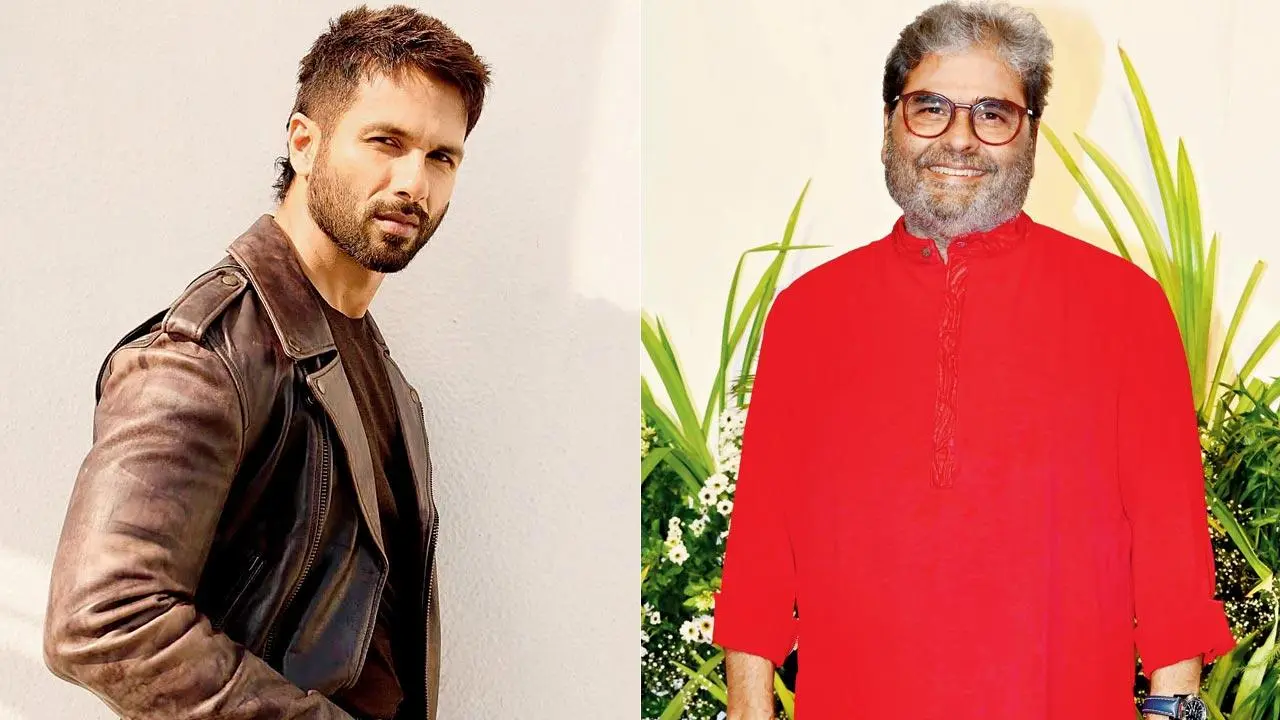
Amid buzz that Arjun Ustara is stalled, Vishal Bhardwaj continues filming the Shahid Kapoor-led gangster drama; sources say deferral of a song’s shoot sparked the rumours
Mohar Basu (MID-DAY; May 5, 2025)
Over the past few weeks, rumours have been rife that the shoot of Vishal Bhardwaj’s Arjun Ustara has halted, sparking speculation about the fate of the project. However, a bit of digging has revealed that the chatter is baseless. mid-day has learnt that work on the Shahid Kapoor and Triptii Dimri-starrer is progressing as per schedule, with the shoot underway in Bandra, Mumbai.
“The cast and crew are filming daily. There is absolutely no question of the shoot being stalled,” says a source from the unit.
So, what exactly sparked rumours that the gangster film’s shoot had ground to a halt? The postponement of a special song perhaps, indicate insiders. It turns out a special dance number was to be shot in early April.
“The shoot was deferred as the dancers we wanted weren’t available, and the song’s look and vibe weren’t working out at that point. That shoot has been rescheduled,” adds the source.
Bhardwaj took Arjun Ustara, also starring Randeep Hooda, on floors in January 2025. Since then, the actioner has been constantly in production, barring a two-week gap that preceded the ongoing schedule.
Another insider notes, “There was a two-week break before the latest schedule began in the last week of April. The song was supposed to be shot during that time, but had to be held up. That may have led to these rumours. But everything else is moving as planned. In June, we have a long schedule in Europe, starting with Georgia.”
The project is expected to be wrapped up by June-end.
This is my first film with Nana Patekar; I’ve been thinking, ‘Why did I not work with him before?’-Vishal Bhardwaj
11:10 AM
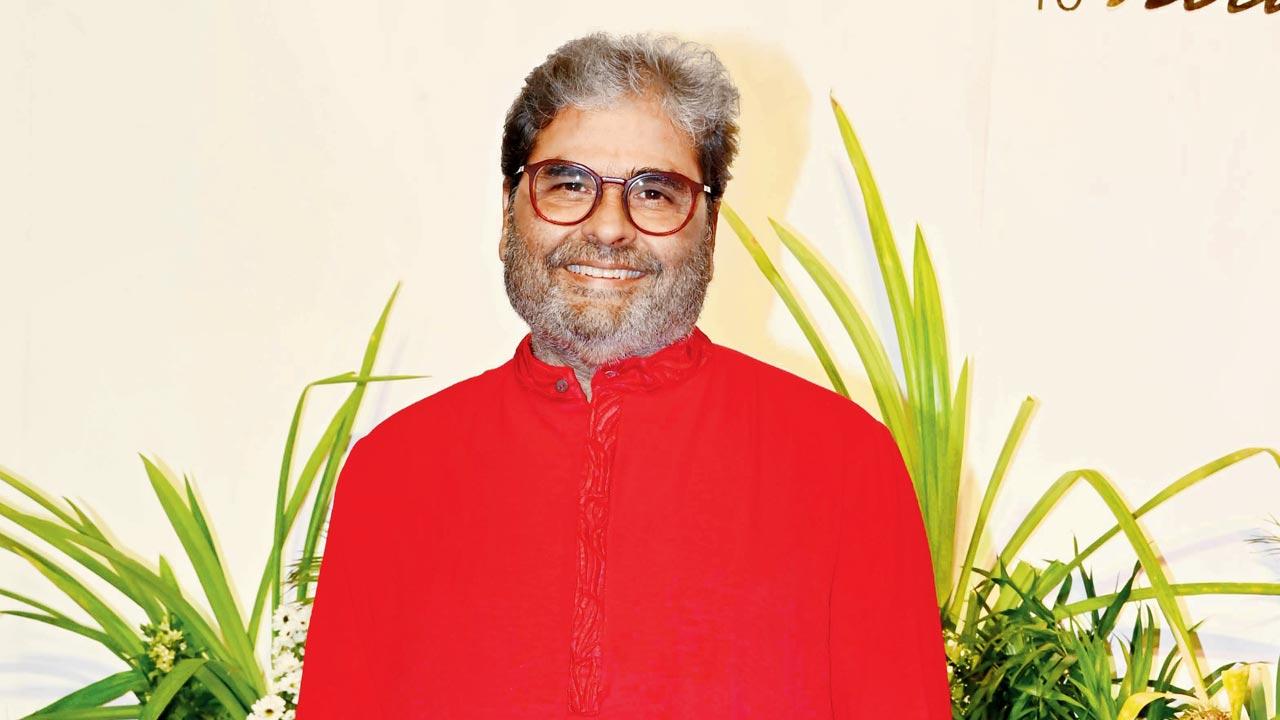
Ace Bollywood filmmaker Vishal Bhardwaj says upcoming movie Arjun Ustara, besides reuniting him with Shahid Kapoor, has introduced him to Triptii Dimri’s talent
Priyanka Sharma (MID-DAY; March 11, 2025)
Filmmaker Vishal Bhardwaj's eyes light up at the mention of Arjun Ustara, the period drama he is currently shooting. While he had initially planned the movie with the late Irrfan Khan, Shahid Kapoor has now stepped into the role, marking the actor-director’s fourth collaboration after Kaminey (2009), Haider (2014) and Rangoon (2017).
“Both of us are excited to come back together. The shooting has been terrific,” says Bhardwaj. The director is equally impressed by Triptii Dimri in their maiden collaboration. “Triptii is so lovely, and such a fine actor. This is the first time I’m working with Nana Patekar and I’ve been thinking, ‘Why did I not work with him before?’”
Bhardwaj is also the composer on his films. He notes a renewed interest in the value that music brings to a movie today, saying, “There was a time when a film became a hit with a hit song. Then no matter how hit the songs were, a film didn’t work if it wasn’t good. Now, again, a film will work if the songs are a hit. Tauba Tauba [Bad Newz , 2024] is cited as an example where the song and step worked, so the film worked. I don’t know if that’s true.”
We unite to make songs. Why not unite to fight?-Vishal Bhardwaj
8:46 AM
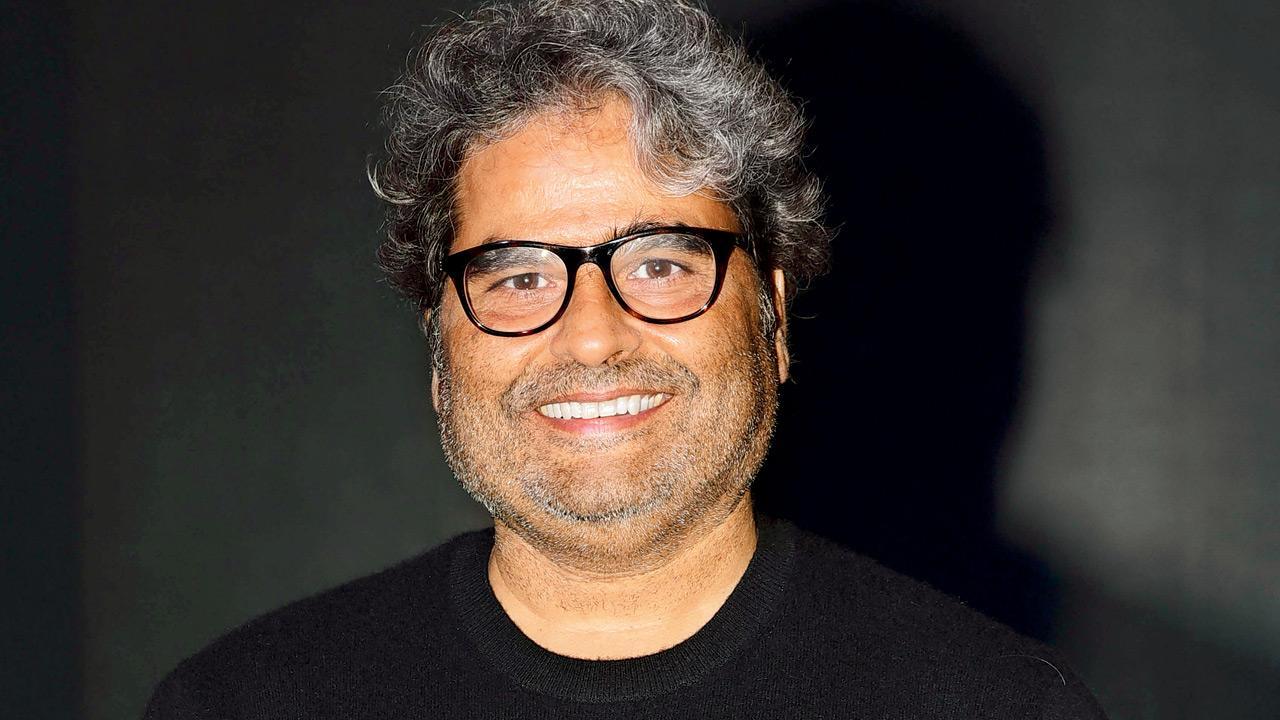
Music Composers Association of India, led by Vishal Bhardwaj, and Screenwriters Association sign MoU that make music directors and lyricists equal authors of songs; agreement mandates credit on promo material and streaming apps
Priyanka Sharma (MID-DAY; March 1, 2025)
“This should’ve been thought of earlier,” says filmmaker-composer Vishal Bhardwaj. But it’s never too late for positive change. On February 27, Bhardwaj, president of the Music Composers Association of India (MCAI), led the change as he signed a Memorandum of Understanding (MoU) with Screenwriters Association (SWA) that represents lyricists. The landmark agreement establishes composers and lyricists as equal authors of songs, and is designed to ensure fair credit and contracts for both parties.
The MoU proposes that lyricists and composers will be deemed “primary artistes”. This will serve as the artistes’ foundation for negotiations with producers and music labels. Bhardwaj tells mid-day that over the past year, the MCAI and SWA have been formulating the MoU, keeping in mind the challenges of composers and lyricists.
He hails the move, stating, “It’s a commendable development. Both parties are progressive. It took almost one year, as they brainstormed so that the point of view and challenges of both parties could be captured. Seventy years passed, and we hadn’t thought that we should come together for this. We unite to make songs. So, why not come together to fight? Each is incomplete without the other. If a song is a hit, it’s never only because of the tune or only for the words.”
A crucial consequence of equal authorship is fair credit. While lyricists are often not credited on a film’s publicity material or audio-streaming platforms, the MoU mandates fair creative practices.
Lyricist Raj Shekhar, who has penned songs for Deva and Animal (2023), states, “The MoU is the first step in ensuring fair credit. If on the publicity material of a film, HoDs are mentioned, composers and lyricists’ names will be mentioned as well. We’ve been talking to streaming platforms, and there are missing credits of a lot of artistes. I can reach out to [them] regarding the lack of my credit, but who will talk on behalf of Shailendra and Sahir Ludhianvi, who are no more? Their credits are missing, as are those of SD Burman and Madan Mohan. This needs to be changed.”
The agreement also mentions that a composer and lyricist will have separate contracts with a film’s producer to establish independence of the artistes. With the exception of certain leading lyricists, the practice so far was that a film’s composer would choose a lyricist, and act as the intermediary between the producer and them.
Shekhar elaborates, “Now, there will be no middle-men. Lyricists and composers will be treated as individual entities. A lot of composers are happy with this because they would feel an unnecessary doubt [looming] on them regarding transparency of fee.”
Looking ahead, Bhardwaj wants the two associations to fight for their moral rights. “Our derivatives are stolen from us; our composition or words are mutilated later. For instance, Goli maar bheje mein has been remixed [for Crazxy], and I couldn’t do anything about it. We aren’t even consulted on our song. We need to raise this issue so that the moral rights [rest with us],” he urges.
More say, more freedom
Hussain Haidry, who has penned songs for Sherni (2021), says lyricists are feeling “a sense of relief” with the MoU. He is happy that composers and lyricists, as primary artistes, will have ownership over their creations, and hence, greater freedom.
He explains, “The ownership of lyrics will reside with the lyricist, and that of the tune with the composer. But the ownership of the song recording would rest with the producer, who facilitated the recording. So, if a music director doesn’t like my lyrics, he can sell his tune to someone else. Similarly, I can sell my lyrics to someone else after getting consent from him/her. But the composite of the two, which has been produced by someone, cannot be sold by the lyricist or music director alone.”
There were date issues with Triptii Dimri; she is still my best friend-Anurag Basu
8:38 AM

Rishabh Suri (HINDUSTAN TIMES; February 4, 2025)
Filmmaker Anurag Basu’s battle with blood cancer started in 2004, when he was told he only has a few weeks left to live.
On World Cancer Day today, the 54-year-old shares how he gave himself ‘targets’ to achieve on his way to recovery: “It started with me wanting to see my unborn daughter’s face when my wife Tani was pregnant. Then it was to walk and touch a stool in the room.”
Anurag emphasizes that awareness is of utmost importance. “Even today, when someone in the family is diagnosed with it, we try to hide it, and not tell others. Jab tak aware nahin karenge, tab tak early diagnosis bhi nahin hoga,” he says, adding, “Life doesn’t get over if you are diagnosed with cancer. You should treat it like common cold... Isiliye main apne cancer ke baare mein khulke bolta hoon.”
’THERE WERE DATE ISSUES WITH TRIPTII’
Anurag Basu’s next starring Kartik Aaryan found itself in the middle of drama recently as rumours suggested that Triptii Dimri was removed from the film. There were reports that this was because ‘her image’ didn’t suit the role, after a string of bold roles.
Anurag clarifies to us, “Image was not the reason. I’m the last person to judge an actor on the basis of characters they play onscreen. Aashiqui was not even the story anymore... I don’t know the source of these stories.”
He cited dates as being the issue. “Triptii is shooting for a film with Vishal Bhardwaj, and my film goes on floors this month, too. Triptii is still my best friend,” he says, adding, “I don’t know what the film is called right now, the shoot starts this month. We haven’t finalized the female lead, it’ll be announced in a week.”
---------------------------------------------------------------
Rishabh Suri (HINDUSTAN TIMES; February 4, 2025)
Dance, drama and stories — filmmaker Anurag Basu enthralled his audience at the Kathakar International Storytellers Festival. From the story behind his cult hit Murder (2004)to the fate of Ranbir Kapoor-starrer Jagga Jasoos (2017), Anurag didn’t shy away from answering any questions.
‘I didn’t think it was the right story’
Murder, starring Emraan Hashmi and Mallika Sherawat, was a raging success. When asked about how he came on board to direct this film, the 54-year-old shared, “Mahesh Bhatt (director) sahab met me at the Delhi airport once, and I told him how I had left my first film as a director because of a fight. So, he gave me a chance to direct this film. Then I met Mukesh Bhatt (film producer and actor) sahab, and got to know about the plot. In response, I remember I said, ‘I don’t think it’s the right story’.”
He continued, “But Mukesh ji asked me, ‘Unfaithful (2002) film dekhi hai? [That is the idea]. Aur uss zamane mein yeh poocha jata tha ki ‘Kaunsi DVD bana rahe ho?’ So, I asked him, ‘Can I write the story myself, based on what I have heard and without necessarily watching Unfaithful?’ Now, I hope humari film alag bani.”
‘RANBIR WAS THE FIRST CHOICE FOR BARFI!’
Anurag’s collaboration, the 2012 film Barfi!, starring Ranbir Kapoor, received both critical acclaim and box office numbers. But fate wasn’t as kind to their next, Jagga Jasoos, as it didn’t notch up the desired box office collections.
But Anurag revealed that he was prepared for things to go south. “Hum banate banate darr rahe the. Ranbir even asked me, ‘Dadu, Ae Dil Hai Mushkil (2016) aur Jagga ke beech mein pehle kaunsi release karein?’ So, I told him, ‘Ae Dil... is a sure-shot hit. But I don’t know about Jagga’.”
He continued, “I am from the small town Bhilai (Chhattisgarh) and I know what people like watching. However, that doesn’t mean we’d stop making different content. Bahut pange the Jagga mein. Though the way you all applauded after hearing the film’s name now, it means a re-release could also be a good idea.”
I focus on box office as little as I can-Triptii Dimri
10:25 PM

From going mainstream this year with three entertainers to bagging Vishal Bhardwaj’s next, Triptii Dimri on reaching the career high by instinct, not strategy
Mohar Basu (MID-DAY; December 20, 2024)
When we get on a call with Triptii Dimri, she is finishing her look test for her next, a film on Hussain Ustara. A collaboration with director Vishal Bhardwaj seems like the perfect way to round off the successful year she has had. Following Animal’s (2023) wild success, the actor sealed her place in mainstream cinema in 2024 with Bad Newz, Bhool Bhulaiyaa 3 and Vicky Vidya Ka Woh Wala Video. It’s a change of pace for an actor who shone in Bulbbul (2020), but she asserts that one cannot undermine the love that mainstream films bring to an artiste.
“I’ve never planned a day in my career. If I go into a narration and connect with the story and character, I say yes. I never think twice if it is a big or small film. I never think, ‘I have done enough commercial films. Now, let me do a Qala [2022] or a Bulbbul.’ For instance, while shooting Bad Newz, we were enjoying ourselves so much that we never thought about whether it would make money,” Dimri says of the comedy that will première on Star Gold this week.
The one thing she cherishes about her success is that it allows her the freedom to fail. That’s something she doesn’t ever want to lose. She elaborates, “I want to do characters that freak me out. No one can predict what will work because the audience’s taste is changing. The biggest example is Laila Majnu [2018]. Six years after no one saw it in theatres, it re-released to packed halls this year. So, all I have is my instinct, and I go into a film with that. I consciously don’t attach a lot of worth to failure or success. I focus on box office as little as I can. Years later, what will stay with me is the experience. I want to be surrounded by passionate people.”
This search for passionate collaborators has landed the actor straight on the sets of a Bhardwaj film. “He was a director on my bucket list. I am fortunate I’ve always had directors who want to know what I am thinking, how I want to approach a character. Vishal sir is clear that he has written the story, but he wants to hear how I will bring it to life. I am a director’s actor,” she states, equally excited about teaming up with Shahid Kapoor for the first time.
“I’ve been a big admirer of his work. He has such a great command over his material. I’m so grateful for the film, this year and for all the good that has come!”
I was asked to replace the word chaddi from Jungle Jungle Baat Chali Hai-Gulzar
11:26 PM

Natasha Coutinho (BOMBAY TIMES; November 14, 2024)
Celebrated Indian poet, lyricist, author, screenwriter and film director Gulzar has penned iconic children’s songs like Lakdi Ki Kaathi from Masoom (1983), Jungle Jungle Baat Chali Hai from The Jungle Book (1989) and Panga from Makdee (2002), the latter two composed by Vishal Bhardwaj. Not many know that even the popular prayer Humko Mann Ki Shakti Dena from Guddi (1971) was written by him. On the occasion of Children’s Day, in a chat at his Bandra bungalow, Gulzar spoke to us about some of his favourite works for children.
‘Many are not aware that the lyrics of Humko Mann Ki Shakti Dena were written by me’
Gulzar explains that the idea behind the song was to portray what a young schoolgirl prays for and how she expresses her thoughts. He says, “Humko Mann Ki Shakti Dena went on to become the morning prayer at many schools. Many people don’t know the lyrics were written by me. I was recently working with Shaad Ali (director) at the recording studio, and he mentioned that they used to sing Humko Mann Ki Shakti Dena in school. He was taken by surprise when Shankar Mahadevan mentioned that the lyrics were written by me. If you speak from your heart, it reaches children. Back then, the great Indian poet Kedarnath Singh had told me, ‘Your work has gone beyond your name, which is a great thing.’”
‘Writing for children isn’t about getting the grammar right’
Talking about how he develops the idea that connects with children, he cites the example of Lakdi Ki Kathi (Masoom), a song that has resonated with children across generations. “The idea came from the thought that if you make a child sit on a walking stick and call it a horse, they know it isn’t real, but they still enjoy the experience because of their imagination. It’s also important to use places that they are familiar with, for example, they have heard their parents speaking about visiting the sabzi mandi (vegetable market) or Mehrauli and so on. So, the song must have a familiar environment. Writing for children isn’t about getting the grammar right, it’s about throwing grammar out of the window and connecting with the child’s thought process. Children enjoy tongue twisters, what we give them in textbooks is boring.”
‘I was asked to replace the word chaddi from the song Jungle Jungle Baat Chali Hai’
Recalling a controversy over the lyrics of another popular song, he shares, “NFDC had some objection to the lines, Jungle Jungle baat chali hai, pata chala hai, arre chaddi pehen ke phool khila hai (The Jungle Book, 1989).
“I was told, ‘Gulzar saab ab aap poetry mein chaddi bhi le aayenge.’ There was a silly suggestion to replace the word chaddi with lungi. I asked them if Mowgli in The Jungle Book had put on anything else throughout the film? Ab chaddi ko kuch aur bolenge? Vishal Bhardwaj (music composer for The Jungle Book) has a knack for understanding children, he made films like Makdee and The Blue Umbrella, but didn’t find encouragement from the trade. Vishal himself is a little child for me.”
‘I have been working with physically challenged children since 1972’
Gulzar shares, “Since the time I made Koshish in 1972, I have been working with physically challenged children. Every year these children come down from Bhopal and I walk with them at the Mumbai Marathon. These children feel so happy when they appear on television and that gives me immense joy, too. I wish to continue working with children till I’m alive.”
'Inspired to write poems during Covid'
He says, "I wrote a poem on a crow during COVID-19, when death was surrounding us, ambulances were constantly passing by, people were wearing masks but this crow near my house, was busy building it’s nest. Hearing the little crows caw was so inspiring. I ended up writing 14 children’s poems that were published by my friend Sushil Shukla with illustrations by Allen Shaw."
Photo: Prathamesh Bandekar
Shahid Kapoor, Triptii Dimri begn prep for Vishal Bhardwaj’s next
8:13 AM
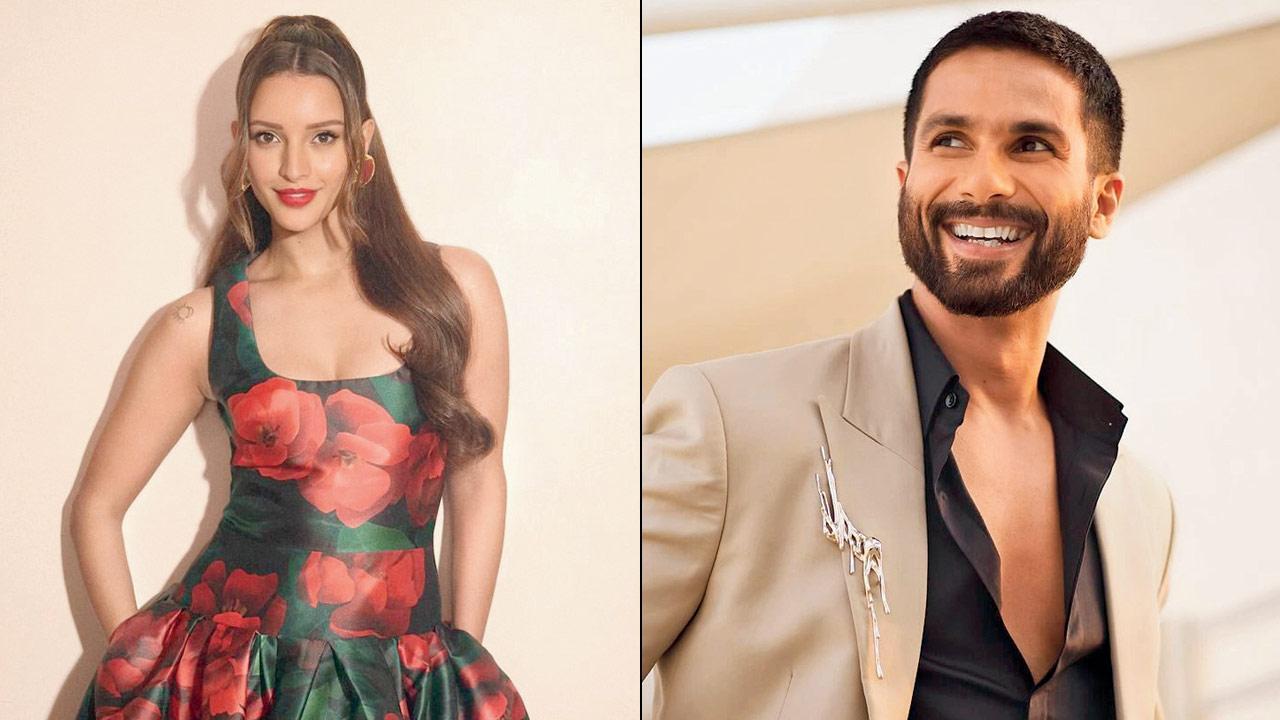
Sources say Shahid and Triptii have begun prep for Bhardwaj’s next; leading man training in combat to play don modelled on Hussain Ustara
Mohar Basu (MID-DAY; October 21, 2024)
Filmmaker Vishal Bhardwaj is looking forward to December when his yet-untitled next with Shahid Kapoor will go on floors. Sources tell us that Kapoor and leading lady Triptii Dimri have begun their prep for the action thriller that will apparently see the male lead portray a gangster modelled on Hussain Ustara, the don who had a fierce rivalry with Dawood Ibrahim.
A source reveals, “Shahid is undergoing intense combat training to match the demands of the action sequences. Equally important is understanding the mental make-up of a character like Ustara. Vishal sir, who is reuniting with the actor seven years after Rangoon [2017], has been guiding him as he delves deep into Ustara’s motivations, emotions, and mental battles. The gangster was a layered personality, defined by his ruthless exterior but driven by personal codes of loyalty and honour. Triptii, whose role hinges on revenge, has also begun her workshops. The two actors are prepping individually, and will kick off joint prep closer to the shoot.”
For years, Bhardwaj has been eager to bring Ustara’s life on celluloid. He had originally envisioned a biopic on Sapna Didi that would see the late Irrfan play Ustara to Deepika Padukone’s titular character. While that did not materialize, rumours earlier this year suggested that Kartik Aaryan was in talks with the director for the same subject. However, it looks like Bhardwaj has found his on-screen gangster in his Kaminey (2009) and Haider (2014) actor.

When I look back, I feel so fortunate that I could register my time with Haider-Vishal Bhardwaj
8:08 AM

Niharika Lal (BOMBAY TIMES; October 3, 2024)
Haider, based on Hamlet and set in 1995 during the peak of militancy in Kashmir, narrates the story of a family against the backdrop of politics. Talking about filming it in Kashmir, Vishal Bhardwaj says, “At that time, the average Kashmiri youth felt that Bollywood had cheated them, always portraying them as terrorists in phirans with AK-47s. So, they weren’t very cooperative. But later, when they saw the film, they called me.”
As the film completes 10 years, Vishal feels it was destined to be made. He says, “Now, when I look back, I feel so fortunate that I could register my time with Haider.”
As the film completes 10 years, we spoke to co-writer, director, composer, and producer Vishal Bhardwaj about the making of Haider, which has inspired numerous dissertations and research papers.
How Haider came into being
Vishal says, "I had been planning a Shakespeare trilogy and was working on Hamlet. Earlier, I had a different setting in mind for Hamlet. It was set in an espionage background. But when Gulzar Sahab read it, he mentioned that it felt like just another CIA movie with the tragedy of Hamlet in it. He was absolutely right. Then, simultaneously, things happened. I remember Rekha (Bhardwaj) reading Basharat’s book (Bashrat Peer's Curfewed Night) and her reaction to it. After that, I read the book and realized that, for a long time, I had also wanted to make a film about Kashmir. All these things came together. The structure became clear, we knew our characters, and of course, the history was there. It didn't take much time because there was so much clarity in our thoughts and in what we wanted to create."
Vishal Bhardwaj says that there are multiple scenes in the film that are not just memorable from the film, but from his entire career. He says, "And I'm not just talking about Shahid's monologue, which is very obvious. It was written for the gallery. But there are also 2-3 scenes between Tabu and Shahid, where they're in the Chinar Bagh before the interval, when they confront each other. Then there's a moment in the film when Shahid finally finds his father’s grave, and he breaks down. That scene was really... I had prepped Shahid, and we wanted to shoot with a telephoto lens, so the camera was really far. I told Shahid, 'Don't feel insecure because it's not a close-up. It's actually a very big close-up, and creatively, we want to shoot it with the tele-lens from very far'. He performed that scene so beautifully. He started crying, and we had two cameras capturing it. The way he was crying, I didn’t have the heart to shout cut. The camera was 400 meters away, and in the snow, I walked up to him, let him cry, and then hugged him, saying, 'It's cut, Shahid. It's done'."
Recalling another moment, he says, "We were shooting in the basement of a bungalow. So, -5°C felt like -15°C. Just as we were about to take the shot, Irrfan came to me and said, 'These lines are too few. Earlier, there were just 1-2 lines. I feel like saying more. I wish there was a poem written here'. I said, 'Okay, give me an hour, and I'll write a poem'. Everybody waited, and I wrote the poem right then and there. And then Irrfan performed it. My God, the way he performed it! When Shahid is leaving, and he recites that Faiz line, - Gulon mein rang bhare, baad-e-naubahaar chale, chale bhi aao ke gulshan ka karobaar chale. The way he says it - such a beautiful romantic couplet - and the way he performs it like a coded message in an espionage film. Irrfan ki kami na, every day in some way or the other, I feel the void of him not being here."
'I told Tabu that such parts are rarely written and that I'd be in pain all my life if she didn't play the role'
For casting, Vishal says, Tabu and Irrfan were both in his and Basharat's mind when they were writing those parts. He says, "But it took a long time to woo Tabu into that. She was very reluctant to play the mother. She rejected it twice, saying, 'No, I’m not going to play this. Why do you keep coming back to me? ' When I wrote the first draft and we started casting, after the rest of the cast was finalized, I went to her again, and she said, 'No, I’m not playing the mother.' The third time I went to her, I said, 'I'm coming to you because you're my friend; otherwise, I would have taken it on my ego. But you're my friend, and I want you to know that you're being blinded by the fact that you're playing a mother. Why don't you see it as Gertrude? See it as Gertrude's role, not Hamlet's mother'. I think that struck her. When she realized that, I told her that such parts are rarely written and that I'd be in pain all my life if she didn't play the role. And then she agreed to do it."
As for Irrfan, he says,"Uska toh jawab hi nahi tha. When he read the script, he said, 'This is such an important film to be made'."
One of the scenes in Haider was shot at a location where no film was shot in 30-35 years
The film was shot by cinematographer Pankaj Kumar, who was also the cinematographer for Ship of Theseus and Tumbbad. Vishal recalls, "At that time, Tumbbad hadn’t been released yet, and I was very impressed with the work on Ship Of Theseus. I then requested Anand Gandhi to show me some parts of Tumbbad, and when I saw it, I knew Pankaj was going to be my cameraman. I decided to shoot on location."
Haider’s ‘Hum hai, ya hum nahi’ monologue at Lal Chowk reminded people of Hamlet’s ‘To be or not to be’ and introduced the Indian audience to ‘chutzpah’.
About the scene’s shoot, Vishal says, “At that time, Lal Chowk was a different zone, and we were shooting behind Lal Chowk in the Press Club. And we shot it! It was destined. This film was destined to be made.”
Vishal recalls that there were multiple such locations. He says, “We went and shot at the Zaina Kadal Bridge, and nobody had shot there in the last 30-35 years since militancy started. And we went there and shot with mainstream stars like Tabu, Shahid, and Irrfan.”'
Jhelum hai ya Khul Kabhi, uss tarah ke gaane - that's the pace of my soul. It’s actually a texture of me'
Vishal Bhardwaj says that music was very close to the script of the film. He says,"Uss tarah ke deep romantic gaane banana, ya uss pace ka gaana banana jis tarah ka gaana Jhelum hai ya Khul Kabhi, uss tarah ke gaane - that's the pace of my soul. My real self is songs like Khul Kabhi Toh or Paani Paani Re (from Maachis) - those kinds of songs. It’s actually a texture of me."
Jhelum
"Jhelum gaana mera bahut purana composition hai. It had such a deep connection. The day my father died, I had composed the song that morning. I was sitting with him, and in the afternoon, he passed away. That song had such an emotional bond with me that I didn’t have the courage to use that composition for 30 years. Then Haider, being a father-son story, felt like the right place to use it. I never told this to anyone. That’s why Jhelum remains a very, very special song to me."
Bismil Bismil
"We created this song like a mousetrap where Shahid performs a play within a play. I wanted to create our own Ek Hasina Thi, Ek Deewana Tha moment in my way for Hamlet (laughs). Karz had a similar situation where Rishi Kapoor performs in front of Simi Garewal about the murder. Sukhwinder ko bahut khula gaane ki aadat hai - he's used to improvising a lot - but I told him, 'Is gaane mein track pe gaana padega, this is like an opera. We are telling a story in it'. Itna khoobsurat Gulzar sahab ne likha hai. I had only given him the phrase Bismil bismil bulbule bismil, and from that, he wrote an entire epic. He’s a master."
'Bismil is so un-Bollywood like'
The song was choreographed by Sudesh Adhana, who is a professor of contemporary dance in Norway at Oslo University. Vishal Bhardwaj met him when he was directing an opera in Paris at the Châtelet Theatre called The Flowering Tree.
Vishal says, "In that opera, I used long, oversized puppets by Dadi Pudumjee, a great puppeteer, and he introduced me to Sudesh. I worked with them for two months continuously in Paris, and right after that, I started shooting Haider. I brought all the sensibilities I learned during the opera, working with Dadi Pudumjee and Sudesh. It was so unconventional, so un-Bollywood-like. I'm saying this and I belong to Bollywood. And Sudesh won a National Award for that choreography."
Vishal shares, "There was a guy who was president of (student union) Kashmir University. When we were shooting in the university, a lot of problems occurred - there was a lathi charge, bottles were thrown, pata nahi kya-kya hua. The CRPF had to take us out and safeguard us. It felt like a battle between students and cops. The next day, we were shooting at another location, and that guy was there. We were showing the court chamber, and there was a character of a stenographer, and he was playing that role. After the shoot, he came to me and said, 'I was in disguise and wanted to check what you were shooting! (laughs). I think we made a mistake. You're not making the kind of film people usually come here to make'. When the film released, he somehow found my number and apologized to me for half an hour."
Did You Know?
-In July, when Vishal attended a tourism conference in Kashmir, he was told that after the film, the Martand Sun Temple where Bismil was shot became a popular tourist attraction, which prompted the ASI (Archaeological Survey of India) to remove encroachments from the site.
- Gulzar shot the song Tere Bina Zindagi Se Koi Shikwa Toh Nahi; at the same Martand Temple where Bismil was filmed.
- Khul Kabhi song from the film was Arijit Singh's first collaboration with Vishal Bhardwaj
After meeting Pankaj Udhas, aapko shaq hone lagta tha ki koi aadmi itna accha kaise ho sakta hai-Vishal Bhardwaj
8:37 AM

(L-R) Vishal Bhardwaj, Sudeep Banerji, Talat Aziz, Papon, Rekha Bhardwaj and Anup Jalota
Renowned singers who are a part of Pankaj Udhas’s musical dream, the annual two-day concert Khazana Festival in the city, remember the legend and talk about taking his legacy ahead
Debarati S Sen (BOMBAY TIMES; July 26, 2024)
It’s been around five months since Pankaj Udhas’s demise, and while his friends miss him deeply, they are eager to carry forward his musical legacy. The ghazal singer’s initiative, the annual two-day concert Khazana Festival, which helps raise funds for cancer and thalassemia patients, will take place on July 26 and 27 in Mumbai. For the last four months, the team, including Udhas’s daughters Nayaab and Reva, have been gearing up for the 23rd edition of this event.
On Wednesday afternoon, BT got an exclusive preview of the show, as we captured the musicians - Vishal Bhardwaj, Sudeep Banerji, Talat Aziz, Papon, Rekha Bhardwaj, Anup Jalota and Kavita Seth jamming during their rehearsal.
The concert this year is a tribute to our friend: Talat Aziz
Talat reminisced, “Back in 2001, we (Pankaj, Anup Jalota and I) were sitting in his study, and that’s where it all began. There are so many fond memories. We toured and did concerts in India and abroad for years. We would conclude most of our shows together. Pankaj would call Anup and me on stage after his performance, and together, we would sing Ghungroo Toot Gaye. The concert this year is a tribute to our friend.”
We will miss him tremendously on the stage: Anup Jalota
Another founding member, Anup Jalota, also Udhas’s close friend, says that the void Pankaj has left cannot be described. “Khazana without Pankaj Udhas is going to be like a soulless body because his vision and total involvement were unparalleled. We will sing some of his most beautiful ghazals, including Deewaron Se Milkar Rona, Dard Ki Barish Sahi Maddham Zara Aahista Chal, Chitthi Aai Hai, Chandi Jaisa Rang Hai Tera and others,” said Jalota.
Koi aadmi itna accha kaise ho sakta hai: Vishal Bhardwaj
Vishal Bhardwaj says, “I used to be an A&R (artists and repertoire) Manager at a recording company, and Pankaj’s brother Manhar Udhas used to sing there. I would go to his home in the capacity of an A&R Manager. Unko itni zyada tehzeeb thi, itni zyada humanity and humility thi, woh kamaal ki thi. He’d treat me as if I was the owner of the company. He was such a good human being ki aapko shaq hone lagta tha ki koi aadmi itna accha kaise ho sakta hai. But after two or three meetings, I realized he was genuinely like that.”
He adds, “All of us came together got this festival just for one person - Pankaj Udhas. Aisa lag raha hai ki woh ab bhi yahan par hain.”
We are celebrating his music, legacy and dreams: Rekha Bhardwaj
Rekha, who knew Udhas for a very long time, remembers, “Every year, the festival would go on until the wee hours, and once, he went on stage at around 2.45 a.m. He noticed that I had stayed back to just listen to him. He mentioned that and recited one sher, especially for me. That was such an honour, and that’s how he would make people feel special. I will always carry this memory in my heart.”
Pankaj ji had asked me to compose the theme song for Khazana: Sudeep Banerji
Sudeep Banerji, who has been an integral part of the festival for almost a decade, shared, “We were in the 15th year when Pankaj ji asked me to compose the theme song for Khazana. He gave me the entire responsibility, and it was a huge thing for me. I used to compose a lot for him, and not many people know that I also composed Pankaj ji’s last song, which is still unreleased. It was his dream to take the legacy of ghazals forward, and this year will be one of the biggest Khazana festivals ever.”
He began a fantastic legacy that has kept ghazal singing alive all these years: Kavita Seth
“Artiste toh bahut log hotein hain, but Pankaj ji kamaal ke insaan thhe. He began a fantastic legacy that has kept ghazal singing alive all these years. Few artistes are able to achieve this kind of love and devotion," said Kavita Seth.
It’s not even six months that he is gone, and everyone has come together for the festival with so much love: Papon
“We always do a medley in Khazana and last year we paid a tribute to Bhupinder Singh ji. I sat next to Pankaj Ji that evening and sang ‘Ek Akela Iss Shahar Mein’. This year’s medley will be for him and I’ll miss sitting next to him. Its not even six months that he is gone, and everyone has come together for the festival with so much love. This is the first year without him and we all want to take his legacy further ahead.”
----------------------------------
Soumya Vajpayee (HINDUSTAN TIMES; July 26, 2024)
Khazana - a Festival of Ghazals has been celebrating the genre for 23 years. A brainchild of music legends Talat Aziz, Anup Jalota and late Pankaj Udhas, the festival, alongside offering a platform to new talent, also works towards charitable causes such as raising funds for thalassemia and cancer survivors. This year, the theme of the two-day event is to celebrate the legacy of Udhas, who passed away in February.
While the artiste lineup for day one (today) features Aziz, Rekha Bhardwaj and Vishal Bhardwaj, Sudeep Banerji and Ananya Wadkar, day two will see Hariharan, Papon, Anup Jalota and Kavita Seth take the stage.
Aziz says, “This Khazana would be different because one of the main founders (Udhas) is no longer with us. But, as they say, the show must go on. I will perform my popular ghazals, including one of Pankaj’s favourites, Kaise Sukoon Paoon.”
Jalota adds, “Many of Pankaj’s ghazals will be sung by the singers, who have performed at the festival over the last 23 years. I don’t know which song to sing. I will plan when I get on stage. But, I’ll surely sing Chitthi Ayi Hai (Udhas’s ghazal from the 1993 film Naam) as a tribute to Pankaj.”
Banerji says it will be tough for him, “emotionally”. He explains, “Pankaj ji was the pillar and guiding force of the festival. He always treated me like a younger brother and always encouraged and appreciated by work. As he always wanted original compositions to be performed at the event, I would be singing some of my own compositions.”
Catch it live
What: Khazana - A Festival Of Ghazals
When: July 26 and 27
Where: Trident Hotel, Nariman Point
Timing: 7 pm onwards
We’re an insensitive society, giving trash to our kids as entertainment-Vishal and Rekha Bhardwaj
8:22 AM

Chandrima Pal (BOMBAY TIMES; June 28, 2024)
For the World Music Day concert in Kolkata, multi-hyphenate power couple Rekha and Vishal Bhardwaj took time off from their hectic schedule and many interactions with fellow artistes and filmmakers to speak to us. In a cosy room with a piano, family portraits and antiques, the duo shared their views on cinema, poetry, music and more.
There is considerable excitement around music and musicians being discovered on digital platforms. You have collaborated with some of them as well. Some argue that social media has no scope for a deeper engagement with music. What is your take on it?
Vishal Bhardwaj: I don’t mind using any means to reach out to as many people as possible with my work. That’s how you sell profound and aesthetic ideas like literature and music. It is like meethi dawai.
‘OTT broke the myth that everything has to be in English to be successful’
Rekha Bhardwaj: Besides, there are so many Instagram handles that are sharing good poetry, actors are reading from scripts, reciting couplets. I have discovered some very good music and talent in the process. Our film work gets a wider audience anyway. I see an opportunity in using the apps and various social media platforms to get people to discover the more serious and niche aspects of our craft.
The two of you met at Delhi University. Music and poetry brought you together and defines your relationship even today. Now when you visit college campuses or interact with young students, do you see the same passion and commitment towards music or poetry among them?
RB: It’s a bit of a mixed bag, really. You meet some people who are still very rooted and there are those who are not seriously invested into music. There are purists and there are people who have ‘jawani ka josh.’ There are very few who are taking up music and poetry seriously. Like the Kabir Cafe in Delhi, who seem to have some potential.
So if an aspiring musician comes to you, seeking your advice, would you encourage them to pursue music as a career? Or give them a sense of reality?
RB: I would first hear him or her out to see if there is talent and the inclination to do the hard work that is required to be successful. You see, if your definition of success is being liked by everyone, you are likely to be unhappy with whatever you do or achieve. If you get 100 followers, you will crave for a thousand more. And even then you will sulk. We have never craved numbers. But focussed on our art and people just came along, connected with our work. Like Gulzar Saab has always told us, “Success on your terms.”
VB: When we came up, they were very dark times. Now there are so many platforms to showcase your work. At that time there were only recording companies and they were advocating only popular music. Perhaps rightfully so. For them it was commerce. For us it is art. There’s a huge difference. But if you are really talented you can defy the odds with your perseverance and hard work. There is no room for arrogance or shortcuts here.
My question to you Vishal is why have Indian filmmakers stopped making films and music for children? Your composition Jungle Jungle Baat Chali Hai (lyrics by Gulzar) for Jungle Book still resonates. And after your Ruskin Bond adaptations, you did not return to the genre. Why is that?
(Smiles) I started this movement with Makdee and The Blue Umbrella and somewhere went on to do different kinds of work. We are a very insensitive adult society. We do nothing for our children, and in the name of entertainment we give them the trash of Bollywood, the really bad dubbed versions of foreign shows. But yes, we are planning a sequel of Makdee, and Shweta Prasad (played a double role) will be involved in the making of the film.
Isn’t there better scope for children’s movies and shows on the OTT platforms?
It is worse. OTT is not interested because they say they work on subscriptions and children are not their subscribers. They’ll never make any investments for Indian content for that age group. I tried working with Ruskin Bond’s Mr Oliver’s Diary (a gun-toting, violin playing headmaster, a leopard and other creatures). My long-time associate Aditya Nimbalkar and I had a script. I went to everyone. Trust me, no one was interested.
There is a lot of interesting work happening with languages on OTT though. We see productions with multilingual casts and stories that reflect the plurality that is India. Does this excite you as a filmmaker and composer?
I have been using various dialects and actors from the time I made Kaminey. There was a Bengali gangster, and a Nigerian one. I love all languages and dialects and the authenticity that they bring to any film. The biggest positive of OTT is this, they broke this myth that everything has to be done in English to be commercially successful. And I had a big problem with it. I had an issue with Richard Attenborough’s Gandhi. Because it was made in English by a Hollywood studio to appease the world market. In the film, beggars are begging in English in Indian streets. I felt so disconnected with it even though it was a beautiful cinematic experience. It just did not have that authenticity.
RB: Even in Slumdog Millionnaire…
VB: That’s right. In slums we do not speak in English or read Three Musketeers. I had a problem with that.
Vishal on his version of Patta Patta Buta Buta
I have been trying to work with this song for four decades. The lyrics are universal; you can put it in any context. It could be political or personal. Patta patta buta buta haal hamara jaane je…(hums) every leaf, every plant knows my state of mind except the flower…We are happy that we finally managed to give this classic our own touch, and released it on World Music Day.
------------------------------
"It was a beautiful concert in Kolkata. Vishal and Shubha Mudgal, Papon and I blended Kabir and Lalan Fakir, Amrita Pritam and Sahir Ludhianvi respectively" - Rekha Bhardwaj.
"Meera and Kabir, it is good in a way. Chalo shuruwat toh ki hai!"- Vishal Bharadwaj
Vishal Bhardwaj, Vikramaditya Motwane, Rohan Sippy talk about changing landscape of Indian cinema
10:59 PM

Vishal Bhardwaj, Vikramaditya Motwane and Rohan Sippy talk about the changing landscape of Indian cinema and how filmmakers are dealing with it
Renuka Vyavahare (BOMBAY TIMES; May 29, 2024)
Cinema is considered as a medium of change and diverse new voices only contribute to elevating the artform. As part of MAMI Mumbai Film Festival’s initiative, five emerging filmmakers Archana Atul Phadke, Faraz Ali, Prateek Vats, Saumyananda Sahi, and Saurav Rai were mentored by Vishal Bhardwaj, Vikramaditya Motwane and Rohan Sippy, to help them redefine cinematic norms.In an exclusive interview with Bombay Times, the celebrated trio addressed some raging issues like stifling of creative freedom, censorship, corporate interference and more. Excerpts…
‘Private sector censorship has become more drastic than the CBFC’
Always the one to challenge the status quo, Vishal Bhardwaj confessed that times are volatile for filmmakers. “It is totally strangulating. You can’t say anything. Do you know what has happened? As filmmakers, we are self-censoring ourselves. Whenever a thought arises, you first wonder what the money men will think. Will they finance us to get this idea across? This is what the system wanted. Before going to CBFC we self-censor.”
Vikramaditya Motwane nodded in affirmative and stated, “You start second guessing everything and that’s bad. Lawyers run the studios in a way.”
Rohan Sippy added, “It happens at a corporate level. You are not independently distributing anymore so you are always dealing with large companies that are sensitive to anything that is deemed controversial. Private sector censorship has become more drastic than the CBFC. You don’t know what lies ahead so you feel it’s safer to not go down that path.
‘In filmmaking, the filmmaker becomes naked on screen, actors hide behind their characters’
The mentors ranked honesty high as a trait for filmmaking. “As a filmmaker, you must follow your heart and be completely honest with your feelings. In filmmaking, the filmmaker becomes naked on screen, actors hide behind their characters. Be it his political views or world views, you can see through the filmmaker. It is he who is seen. You can fake it as an actor. You cannot fake it as a filmmaker. Parda faash ho jata hai”, said Vishal.
Rohan begged to differ. He countered, “It’s also okay to do the opposite of what Vishal said. Author Hunter S Thompson modelled himself on Ernest Hemingway early in his career. In the beginning, it’s okay to look at others’ work and figure out what you want to do but don’t delay that start.”
Vikram explained, “There are no set rules. If you want to be a filmmaker, be a filmmaker. Go out and shoot 100 bad shorts until you make that one great short film. That’s what I did. I was lucky to get a video camera for my wedding when I couldn’t afford one. I used that to shoot everything. Be it a friend’s wedding, car racing. Read a lot and explore life, that shapes you into a good filmmaker.”
‘You can’t fight technology’
Film vs digital has been an ongoing debate. Christopher Nolan has been a champion of traditional techniques known for shooting on film. However, not everyone gets the budget he does, believes Vishal. “We can’t fight technology. When the sound became digital, we used to say the warmth of tape is not there. I don’t think that’s the case at all. Likewise, smartphones have revolutionized filmmaking. I shot a (short) film called ‘Fursat’ (starring Ishaan Khatter and Wamiqa Gabbi) on an iPhone and I was happy. In fact, whenever we do guerrilla shoots, for instance shooting in a train without permission, we use phones. Steven Soderbergh has shot his entire feature films like ‘Unsane’ and ‘High Flying Bird’ on a smartphone and he did it years ago. Nolan gets such huge budgets, he can afford to say anything (smiles).”
‘Not all filmmakers have the privilege of huge budgets like Nolan’
Agreeing with Vishal, Vikram explains, “Nolan can afford to have Imax cameras. Kodak created a completely new format of its black-and-white film for scenes in 'Oppenheimer'. Yaha pe you can’t afford to ask for extra film from the producer. Kaha se milega?”
There is a certain romance associated with shooting on film but whether it is better than digital is no longer relevant, he feels. “Digital is cost effective and easier to work on. I’d love to shoot something on film if it makes sense financially. I don’t see anything wrong with the digital format”, he says.
Rohan Sippy believes film and digital can co-exist instead of an either-or situation. “It’s great to have different religions in filmmaking and people like Nolan championing ‘film’. Francis Ford Coppola said this 40 years ago, that ‘people who normally wouldn't make movies are going to be making them and for once this whole professionalism about movies will be destroyed and it will become an art form’. That’s the beauty of digital technology. It makes filmmaking handy. How people consume it is up to them. At the same time, we are happy to see some are keeping the tradition alive and looking into conservation of film. You cannot deny the change though. You must embrace it.”
‘Cinema needs new voices’
There has been a generational shift, believe the makers. Vishal concluded by saying, “Cinema ko hamesha se hi new voices ki zaroorat hai. Every ten years ek nayi soch aa jaati hai and if we can give them a platform, why not?” Vikram pointed out, “The kind of realism the new generation is bringing to storytelling and performances is admirable.”
Rohan summed up, “The whole landscape is so different today. I remember we didn’t have multiplexes back then and Nagesh Kukunoor’s Hyderabad Blues (1998) turned out to be a game changer. It created new ways of thinking.”
Vishal Bhardwaj’s next with Kartik Aaryan is a reimagination of his old script, Sapna Didi
8:09 AM
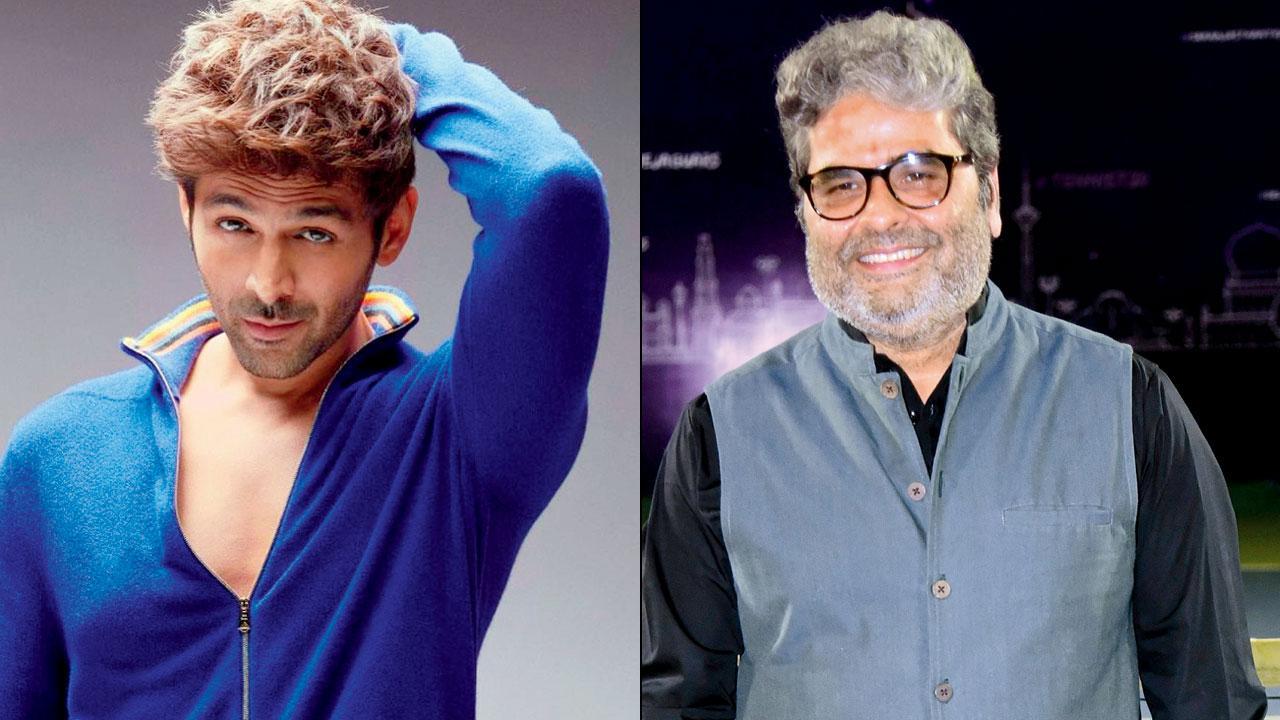
Sources say Vishal’s next with Kartik is a reimagination of his old script, Sapna Didi; thriller to be now told from male gangster’s perspective
Priyanka Sharma (MID-DAY; April 1, 2024)
Only a few days ago, mid-day reported that Kartik Aaryan and Vishal Bhardwaj were in talks for a gritty thriller, which would mark their maiden collaboration (Talking thrillers, March 22). Now, we’ve dug deeper and learnt that the film is apparently a reimagination of a thriller that the filmmaker was planning with the late Irrfan, and Deepika Padukone.
In 2018, Bhardwaj had announced a film on Sapna Didi, which was to be an adaptation of a chapter from S Hussain Zaidi’s book, Mafia Queens Of Mumbai. Padukone was set to play Ashraf Khan, also known as Sapna Didi, who vowed to bring down underworld don Dawood Ibrahim with the help of Hussain Ustara. The film did not get off the ground as Irrfan, who was to play Hussain Ustara, was diagnosed with cancer.
Now, sources say that Bhardwaj is taking another stab at the story. “Vishal and Kartik are working on the Sapna Didi story. But unlike the earlier version, this will be told from the perspective of Hussain Ustara. The script is ready. The makers are yet to lock the female lead,” says a source close to the development.
If things go as planned, the Sajid Nadiadwala production will roll sometime in September or October.
Aadha lagta hai Irrfan Khan ke bina-Vishal Bhardwaj
10:07 AM

At an event titled Irrfan: A Retrospective, Vishal Bhardwaj and Naseeruddin Shah came together to talk about Irrfan’s unforgettable performance in Maqbool and share other anecdotes about the actor
Harshada Rege (BOMBAY TIMES; February 1, 2024)
It’s impossible to think of Maqbool without Irrfan, but few know that the actor was not the first or even the second choice for the role. Filmmaker Vishal Bhardwaj shared, “Ek actor ke liye toh Naseer bhai ne bola tha ke tumhe goli maar doonga (laughs).”
After the recent screening of Maqbool at an event titled ‘Irrfan: A Retrospective’, filmmaker Vishal Bhardwaj and Naseeruddin Shah shared many such anecdotes from the making of the film, which clocked in 20 years on January 30, and spoke about their association with the actor, who passed away in April 2020.
The first thing that struck me about Irrfan was his eyes: Naseer
Remembering his first meeting with Irrfan, Naseer said, “I met him for the first time when he was rehearsing for a play with Ratna (Pathak Shah). People had told me that he liked me a great deal. When I was introduced to him, he was very matter of fact, there was no fawning. Like everybody, the first thing that struck me about him was his eyes. He had absolutely amazing eyes. I had no idea of the depth of his range. There couldn’t have been a better choice to play Maqbool than Irrfan. Personally, he was very affectionate towards me, and I was very fond of him, but we didn’t meet very often. So, I can’t say that we were close friends, which is something I missed out on, but I continuously admired his work and his attitude towards it.”
Irrfan understood the silences in the script: Vishal
Vishal said, “During Maqbool, we were all discovering ourselves. Naseer bhai supported me a lot and did many workshops. The thing about Irrfan was that he was so effortless that at times, you would feel he hadn’t prepared for the scene at all. He understood the silences in the script so well. Dosti, dosti mein saara kaam ho raha tha, aur lag raha tha ke kuch special ho raha hai. We were grappling with many things, jaise ke paise kam the. Film release hone ke baad jo reaction aaya tab realize hua ke bahut extraordinary kaam hua hai.”

I wasn’t being modest when I said that I envied Irrfan as an actor: Naseer
Talking about Irrfan’s brilliance as an actor, Naseer had once said that he envied him. Elaborating on that, the actor said, “He always seemed to be performing so effortlessly, never did I feel, while watching him perform, that he was straining for an effect or trying to make an impact. My feelings about his movies are uneven. I haven’t liked them all, but there has never been any moment of falseness that I have detected in Irrfan’s work anytime. I wasn’t being modest or anything; I genuinely meant it when I said that I envied him because I know that at his age, I certainly was not that capable or had that much of an understanding of the craft of acting.”
No box-office success can match the pride that Maqbool gives me: Vishal
During the evening, Vishal played a song that Irrfan had sung and sent him during his cancer treatment that brought everyone to tears. The filmmaker said, “Irrfan had a great sense of humour. Even when he was unwell, he would make fun of the doctor. He had caught the doctor’s gestures and would mimic them. Sutapa would keep scolding him ke tameez se baat karo, tumhara ilaaj kar raha hai. Har baat mein Irrfan ka… Main toh andar se toot gaya hoon, kyunki aadha lagta hai Irrfan ke bina. Jab bimar the, tab mujhe messages bahut bhejte the aur gaane bhi gaake bhejte the…”
When asked if he would make any changes for better performance at the box office, Vishal said, “This reminds me of an actor who, after reading the script, said that the hero is a loser (laughs). No box-office success can match the pride that it gives me now.” Is there is anything he would change if the film were made today, Vishal said, “The only thing I would change is bring Irrfan back, but that isn’t possible.”
Vishal and Irrfan’s nok-jhok
Reflecting on the relationship they shared over their many collaborations, Vishal said, “Abhishek Chaubey ki ek film thi Ishqiya, uske pehle Anurag Kashyap ki ek film thi No Smoking. Both the producer and the director wanted me to be associated with it, toh maina apna naam de dediya. That movie flopped badly. After that, when we started shooting Ishqiya, Irrfan told me that he had given away all the dates meant for Ishqiya. He said, ‘Aapki film toh flop ho gayi, toh mujhe laga aap toh aage banaoge nahi.’ Toh mein bahut gussa hua, aur hum dono ki do-teen saal baat bandh hui thi.
Phir main jab 7 Khoon Maaf bana raha tha, I was unable to cast for the part that he eventually played. When I called him for it, I told him that I had a small role for him. He said, “Aap jo bhi bolenge main karunga, mujhe toh aapko manana hai.” Par jab editing ka time aaya, toh woh role kaatna pada. He got angry.”
He added, “For Haider, when I spoke to him, tab unhone kaha ke pehli shart yeh hai ki jo part kaata tha 7 Khoon Maaf mein usse YouTube pe release karo. Maine kaha theek hai, par aaj tak woh nahi mila. Haider ke waqt unhone kaha ke main paise bahut loonga tumse, kyunki tumne mere saath yeh gadbad ki thi. I said the role is yours and the money is also yours because I knew nobody could play the Ghost. After the trial of the show, he said, ‘Agar aisi entry deni thi toh paise kyun diye?’”
Sutapa's memory of Maqbool
Irrfan’s wife, Sutapa Sikdar, and son Babil were also present at the event. Sharing her memory of Maqbool, Sutapa said, “They were shooting the film in Bhopal, and I was pregnant with our younger son Ayaan. Suddenly, the doctor said that I might have the child. So, Irrfan rushed back, once he reached here, he started speaking to Ayaan, ke bahut nuksaan ho jayega Vishal ka, tu aisa mat kar. And the child actually seemed to have heard him. He was born two months later.”

Subscribe to:
Comments (Atom)