Showing posts with label Vir Das interview. Show all posts
Showing posts with label Vir Das interview. Show all posts
Aamir Khan gives you money to shoot five scenes first-Vir Das
9:36 AM
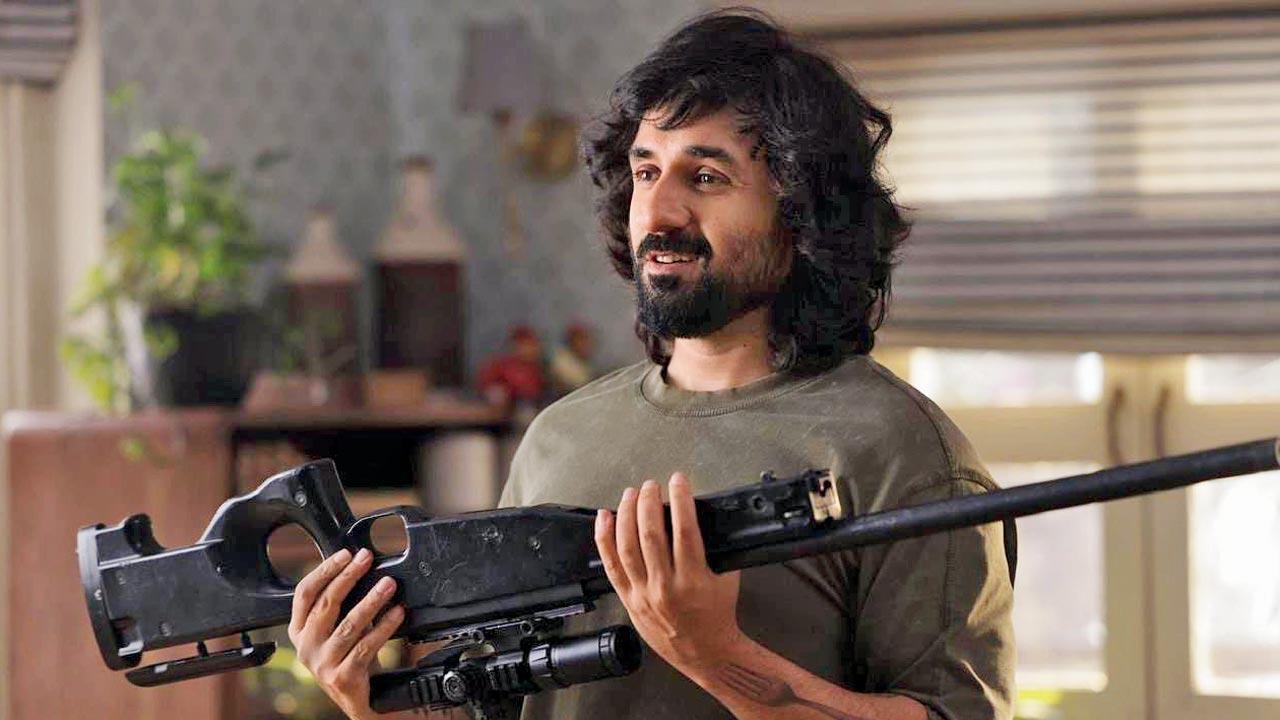
Turning director with the spy comedy ‘Happy Patel’, International Emmy winner Vir Das breaks down producer Aamir Khan’s rigorous process of sharpening a film with mock shoots and 30 test screenings
Priyanka Sharma (MID-DAY; January 16, 2026)
‘What the hell have you made?’ That is a question Vir Das admittedly heard frequently at a recent screening of Happy Patel Khatarnak Jasoos. “That is good feedback. Everybody seemed to be laughing,” said the actor and International Emmy-winning comedian, who has turned director with the spy comedy.
The idea of Happy Patel lurked in Das’s mind for almost 15 years. It needed the right time and the right producer. The actor got lucky on the second count. “After writing the script, I called Aamir [Khan] sir and said, ‘I’ve got this mad movie. You might be the only person who will produce it.’ He called me in. Keep in mind, I hadn’t spoken to him since Delhi Belly [2011].”
The superstar liked the script, but he needed Das and co-director Kavi Shastri to follow a process. First came a series of narrations. “There are five-six narrations with Aamir sir, during which he asks questions like ‘What is the story? What are the characters? What do they want?’ Once you’ve done that, he gives you a bit of money and makes you shoot five scenes of the movie. When we showed those scenes — graded, colour corrected, edited — to him, he greenlit the film,” recalled Das.
Khan’s involvement as a producer didn’t end there. He held around 30 test screenings. “After the second cut, he held screenings for people of different age groups and demographics. He told them, ‘Tell us what’s wrong with the movie. No praise allowed.’ [Based on that], we did our third and fourth cut.”
Even though the process was extensive, it was rewarding for Das. The actor and director shared, “The win is learning how to make a film from Aamir Khan. I wish every bhatkoing artiste finds the creative lighthouse that is Aamir.”
What’s ‘Pathaan’ got to do with it?
The idea of ‘Happy Patel’ struck Das, a fan of spy comedies like ‘Johnny English’, in 2009. But he had to wait as the Indian audience hadn’t woken up to spy films then.
“Culture has to be mainstream for comedy to counter it. So, I had to wait for ‘Tiger’, ‘Pathaan’ [2023], and ‘Dhurandhar’ [2025] to happen. Amogh Ranadive [co-writer] and I wrote the script in the month ‘Pathaan’ released,” said Das.
I faked appendicitis to get out of boarding school; my most convincing performance so far-Vir Das
8:51 AM

Vir Das mines a lifetime of comic survival in his new memoir—a wry manifesto on the art of standing just outside any room he walks into
Nisrin Saria (MID-DAY; November 16, 2025)
It was 7.45 pm when I clicked on the Zoom link. Then ping — “Vir’s iPhone” popped up, streaming in from New York City. It was surreal. My parents are massive Vir Das fans; my mother once set an alarm to snag tickets to his show in Worli, where he filmed Fool Volume. She hit “book” just seconds before the stadium sold out—this was a first for her. Das, meanwhile, has made a habit of firsts.
He’s the first Indian to win an International Emmy for comedy (Vir Das: Landing) and the first to headline a residency at Lincoln Center with Hey Stranger. “It’s like being back in drama school in my 40s,” he laughs. The show, he says, sits “halfway between a stand-up and a one-man show” — characters, arcs, even moments of silence sneaking between the laughs.
Now he’s also turned that restless outsider energy to the page with The Outsider: A Memoir for Misfits (HarperCollins). After his Emmy win, publishers came calling, but he hesitated. “I didn’t feel I had done enough yet,” he says simply. He agreed only if the book could be about “cluelessness and failure.” The result, he says, is “about a feeling most people share. Success isn’t that interesting — it’s boring. Struggling with it, complaining about it — that’s where the story is.”
The accidental author
Writing, he admits, was hard. “I’m dyslexic, so I talk first and then write it down,” he says. “It’s tough, but my favourite chapter is about my dog, Watson.” He’s spoken before about how dyslexia shapes his rhythm — a performer’s ear guiding his prose.
The trickiest part, though, was “leaving out arrogance and entitlement and making it connect with people who may not know me, who feel mid-journey rather than on top of the mountain.”
His Emmy, by the way, isn’t displayed on a shelf. “It’s wrapped with the sweaters, in the cupboard where we keep the garam kapda,” he grins. “It hasn’t changed my life, and it shouldn’t. I’m a comedian; if I went on stage with an Emmy in my hand, the show would be harder.” He admits he’s proud of it, “but in the end, it’s just something that belongs on a shelf.”
When he won it though, in 2023, he dedicated that Emmy — the first ever for an Indian comedian — to India, calling it a win for “every artist who dares to speak their truth.”
That ability to deflate grandeur with a joke isn’t new; it’s a reflex that’s been with him since childhood, a time that also makes an appearance in his memoir. “I faked appendicitis to get out of boarding school,” he laughs, calling it his “most convincing performance so far.”
He and his sister, author-filmmaker Trisha Das, were together at The Lawrence School, Sanawar. “Trisha was the first to read my book. We’re brutally honest; there’s no sugarcoating.” The award-winning writer, known for feminist retellings Ms Draupadi Kuru and The Misters Kuru, surprised him by being “quite complimentary.”
The education of a misfit
His time at Knox College in Illinois, Das says, “changed everything.” He’d gone there to study economics and left as a theatre student. “In India, education is thought-based; in the US, it was about emotion and expression. That suited me.”
It’s also where he first tried comedy. “For my graduation, I did a stand-up show called Brown Men Can’t Hump. It went really well, and I thought, maybe this is for me.” Years later, Knox would honour him with its Young Alumni Award, a full circle moment for the student who switched majors and never looked back.
What followed was a hustle: acting, theatre, late-night TV, even a rock-comedy band called Alien Chutney. Then came global visibility through his OTT specials and tours that sold out across continents. His Two Indias monologue, performed at the Kennedy Center in 2021, earned both standing ovations and backlash — he became the accidental face of the free-speech debate in Indian comedy, a flashpoint that made him, for better or worse, one of India’s most internationally recognizable comics.
Lost (and found) in translation
If Knox shaped his craft, the years that followed tested his resilience . Six weeks before filming Fool Volume, Das lost his voice. “It was like losing your life force,” he says. The recovery taught him to take himself less seriously. “I wouldn’t wish it on my worst enemy, but I’m grateful it happened.” The episode softened his delivery and lent his quick-fire humour a disarming warmth.
“I’m five foot eight and a half, from Delhi Public School,” he laughs. “So the fact that I get to play Carnegie Hall or star in a movie — it’s statistically insane.” Bollywood, stand-up, writing, music — he’s tried them all. “That cluelessness comes with gratitude,” he says. “I just feel like I’ve been invited to the coolest party in the world. Now my job is to make people laugh.”
The line he keeps walking
Yet, he also says, “Comedians aren’t the life of the party. We’re the ones sitting in the corner making fun of the life of the party. We’re losers, socially anxious — and that’s what makes us comics.” It’s a strange job, he says, getting on stage to talk about your problems to strangers. “Best-case scenario, they see something of themselves in you.”
Clearly, many do. Das now tours sold-out venues from Melbourne to Montreal, Edinburgh to New York. “The audience keeps changing,” he says. “And so does the line [where creative liberty starts to feel like provocation]. My job’s just to keep walking it.”
I think people connected with the idea of being a ‘weird ass’-Vir Das
9:45 AM

A picture of the DVD that Vir Das had made
International Emmy Award winner Vir Das takes us back to his first self-produced ‘comedy special’ that led to his Bollywood break in Delhi Belly and his early shows
Mohar Basu (MID-DAY; July 25, 2025)
Trust Vir Das to pull off the quirkiest audition hustle. No standing in queues outside casting offices, no e-mails, no agents. Circa 2007 — it was just Das and a DVD of his ‘comedy special’, as he pitched the idea of stand-up comedy to a country that had yet to wake up to the phenomenon. Armed with three cameras and his own savings, he shot his first stand-up special in the heart of Mumbai. The show was called Viragra — the starting point of a career that would lead him to an International Emmy Award in 2023.
“I shot it with three technicians. Vidyun Singh, the programming head at the India Habitat Centre, gave me the go-ahead to do a live show. I had a lakh in my account and spent Rs. 50–60,000 shooting it. There was a guy called Kapil, who ran Media Pro in Lokhandwala Market that made DVDs. My friend Kabir Singh designed the sound. I directed it, but ‘directing’ is a high compliment to pay for what that was,” smiled Das. It took him six months to write the special, another three months to ready the DVD, and only a day to supply it to all the video libraries from Mahim to Andheri.
“The first place I went to was a video library called Sarvodaya on Ambedkar Road in Bandra because all the directors would get their DVDs from there. I went to three libraries in Juhu, about five in Andheri, and three in Bandra.”
The plan was unusual, but effective. “I went to audition for Mumbai Salsa [2007]. On the way out, I left a DVD on Vikram Bhatt’s desk asking him to watch it. By the time I got to Bandra, he called and said, ‘You’re the hero’.” The DVDs also made it to casting directors, and in 2010, he got an audition call for Aamir Khan’s Delhi Belly (2011). “Somebody had sent a DVD to Ado Mukherjee, who was a casting director on Delhi Belly. I think people connected with the idea of being a ‘weird ass’, and then I formed a company with that name,” he said.
Between 2009 and 2011, as he bagged roles in movies, Das also led the growth of stand-up comedy in India. He has a special connection with The Habitat in Khar, where he would perform a lot of his early material. To date, he performs there every time he is testing new material. “Every comic needs to be sharpened by a crowd who won’t lie. The Habitat is my crowd that never lies. When I was starting out, there was hardly a stable scene for comedy. The comics and the audience have together built the scene from scratch. The early audience there gave me confidence.”
Two decades on stage, sold-out shows, and six Netflix specials later, Das still has one particular moment as his favourite. “When the lights go down before I go on stage, you hear the crowd shuffle. You hear them put their phones away, adjust in their seats. That moment scares the daylights out of you because you realize 12,000 people are shuffling with expectations.”
My jokes at Emmys will be a mix of US election, world events-Vir Das
8:21 AM
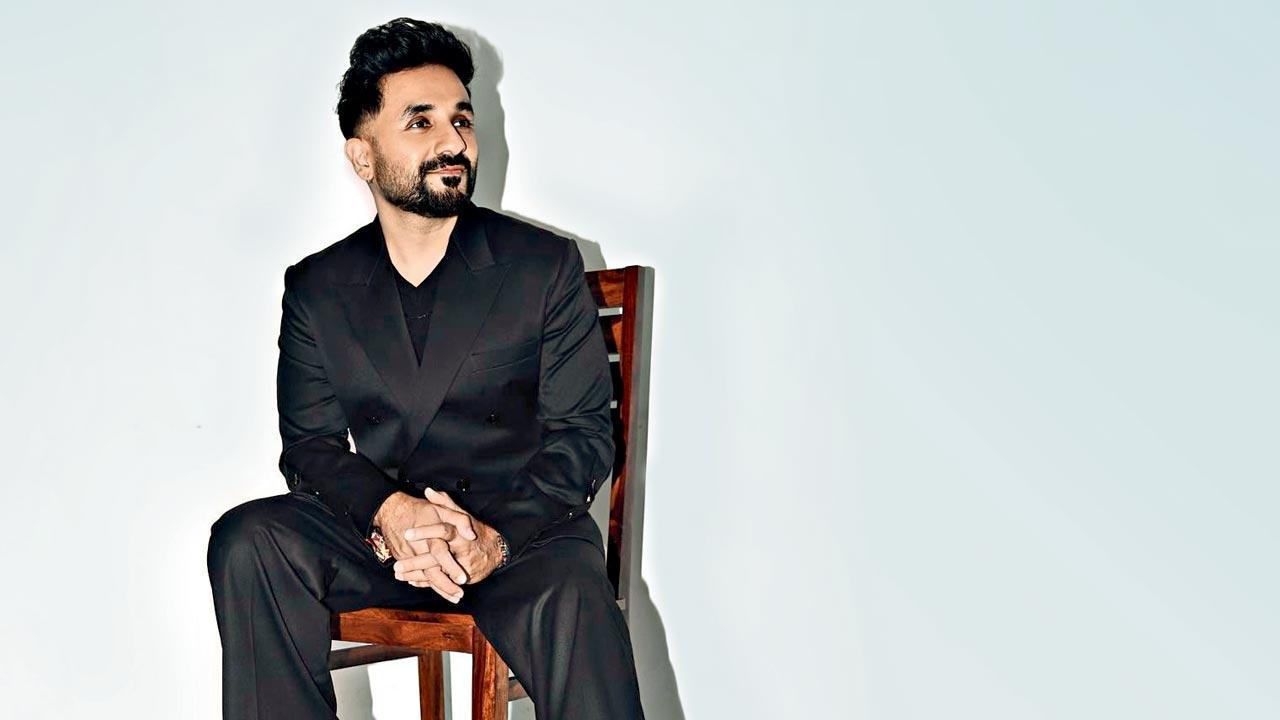
Becoming first Indian to host International Emmys, actor-comic Vir Das on how he’ll soon begin writing the material and the pressure of getting it right
Mohar Basu (MID-DAY; September 16, 2024)
Last year, Vir Das bagged the International Emmy for Best Comedy for his special, Vir Das: Landing. Come November 25, the actor-comic will head back to the prestigious gala in New York—this time as the host. With this, he becomes the first Indian to achieve the feat. It’s quite an honour, but Das says he is “pretty chill” about it.
“We just announced it, but I’ve known about it for a few months. The expectations are high and I’ll celebrate if I get it right. I’m now starting to put pressure on myself. I’ll write it myself. The jokes will be a mix of things—it will be a few weeks after the American elections, enough things would’ve happened in the world. Plus, there will be many nominees and content makers in the audience whom I want to talk about. I want to get something like this absolutely right,” he shares.
It has been an eventful month for Das, who also featured in Call Me Bae, led by Ananya Panday. Creating the character of TRP-hungry news anchor for the Collin D’Cunha-directed series was deeply satisfying.
“I’m not the first person you think of when you think of a Dharma show. I didn’t want to make my character a YouTube sketch version of a journalist. So, Collin and I decided to make him a badass when he is in front of the camera; he can deliver lines. But we made him an idiot off camera. I played it with authenticity and a little bit of menace.”
Tell him the references for his news anchor act are obvious, and he says, “My first job was at CNBC. So, I’ve been in the newsroom long enough to know how journalists operate. At the core, he idolizes and resents privilege at the same time. He wants to wear Prada, but he also hates people in Prada.”
His next is a yet-untitled film that he has directed with Kavi Shastri for Aamir Khan Productions. Did he enjoy direction? “This project is the toughest and the most fun thing I’ve ever done. I fell in love with it, like I did with stand-up comedy. Now, I want to try and write the next five things I star in. I want to start doing what an Adam Sandler or a Ben Stiller does, which is creating projects. Also, I want to play a dark villain in a movie.”
---------------------------------------------------
Set to host the upcoming International Emmy Awards, becoming the first Indian to do so, Vir Das just hopes to do his ‘thing and be authentic’
Rishabh Suri (HINDUSTAN TIMES; September 16, 2024)
Vir Das is making a grand return to the International Emmys. Last year, he won the Comedy award for his special Landing, but this time, the comedian-actor is set to make history as the first Indian to host the event on November 25.
“I won the Emmy last year, and after about four months, the team got in touch and said they wanted me to do this (host the event). I have known about it for a while, they just did the announcement now. It is a ridiculous privilege, to go from being a nominee, to becoming a category winner, to now hosting it. It is not something I expected. I didn’t even expect a nomination for my work last year. But, I am letting the people around me rejoice for now. I will only celebrate once the job is done,” Das tells us.
The 45-year-old is known for his tongue-in-cheek humour. But while hosting an event like the International Emmys, will he think twice before saying anything on stage, given some instances at such dos when jokes by stand-up artistes weren’t taken well? For instance, actor Will Smith slapping comedian Chris Rock during the Academy Awards in 2022.
Das says, “I am yet to start working on my script. But what’s funny is funny, no matter where you are in the world. Sensibilities might change. Anybody who got into trouble never thought they would. You can just do your thing and be authentic. Whatever happens then, happens,” quips Das.
He adds, “Let alone think twice before saying something on stage, I don’t even think once.”
I think you have to give us comedians the audacity to be imperfect-Vir Das
8:27 AM

From Noida to Nigeria to the stage in New York where he became the first Indian comedian to win an Emmy award, it’s been quite a journey for Vir Das. In an interview to Kritika Sharma, the 44-year-old talks about the early days of DIY standup, and his brush with controversy
Kritika Sharma (THE TIMES OF INDIA' November 26, 2023)
Congratulations on winning the Emmy. How’s the experience been?
I haven’t slept in about six days as I have seven shows lined up. But it has been a tremendous amount of love and nothing like I have ever experienced in my career. No one thought that we were going to be nominated for an Emmy and win the award, I wasn’t even supposed to be in America. I was supposed to be in Bengaluru and in other Indian cities. I went there to cheer for Shefali (Shah).
This was your second nomination. You must’ve had a hope that you would win this time?
I did not think I was going to win, because the last time I was there I lost to a massive show called ‘Call My Agent’. Even this time, I was against the massive Netflix show ‘Derry Girls’. I was kind of an underdog who got thrown in there.
Why do you think your special ‘Landing’ won?
The last show that I did ‘Vir Das: For India’ was very much like a comfort show — I like to think of it as rajma chawal. People thought that he is talking about all the things that we love, and it makes us feel like home. However, I realised that I had not let my audience into my personal life. I kind of went for it and let my audience know me with ‘Landing’. I think that resonated with the audience, as well as the idea of carrying the idea of home with us wherever we go. As we become more global, this is something that we can relate to.
Is there a difference between your audience in India and abroad?
Pretty much wherever I go it’s about 50-50 (Indians and locals). All of them expect an authentic Indian story. They already have a local, palatable version of the Indian diaspora from successful Indian American and British Indian comics, so they expect me to come up with something that they haven’t already heard of. That is kind of what I like doing, taking stories from Noida to Norway and stuff from DPS to Dublin.
Tell us a little about your initial journey as a stand-up.
I was quite young when I started, and looking for other people to collaborate with. Being a comedian is like being the only one in the room who sees the ghost, and you’re just kind of looking around to see if anybody else sees the ghost too. When you find that person, you kind of gravitate towards each other. That’s kind of how we started the comedy scene in India. In the early days, we used to do amateur nights and pretty much every senior comic in India came out of it. We had to do the ticketing, marketing and then do the headlining and ring the bell to let each other know that we were out of time. It was all DIY at that time, and it was a lot of fun. There was no context for what was good or bad comedy; we were just trying things.
Your Noida school teacher says you were interested in theatre as a child. How did the shift to comedy happen?
Ever since I was five years old, if you put me on the stage, I would be very comfortable. I did a bachelors in theatre minor from Knox college, Illinois. I had done some 25-30 plays and after that I needed an art form which was a little more organic and a little more rebellious. But the theatre training did help because it lets you be comfortable on stage.
Who are your inspirations in comedy?
Johny Lever. I think everyone should watch Johny Lever perform live, at least once in their lifetime. The others who inspire me are George Carlin and Richard Pryor.
Your 2021 monologue in Washington DC titled ‘I come from two Indias’ sparked a lot of outrage. How did you deal with it and what do you think about comedians being targeted in India?
I think you have to give us comedians the audacity to be imperfect. As for the trolls on social media, if you are going to take the freedom and traction that comes with social media to promote your art, then you have to take the flip side too. If I’ve ever been in the spotlight for any kind of reason, the first thing I’ve done is write a joke about it.
Do these things make you worry about how your audience is going to react to some jokes?
My audience is too diverse to predict what they are going to like and what they will not like. I just have to go with gut instinct, and hopefully they realize that it all comes from the same heart. The audience ranges from 18 to 60-year-olds with varying ideologies and religions. If I try and second guess myself, I will drive myself insane. I hope that they realize that this comedy is coming from a place of love.
Vir Das breaks silence on 'Two Indias' video; says "I come from a pure place"
7:55 AM

In his first press interaction since his comedy clip fired up India’s outrage industry, Vir Das says ‘he’s just a guy with a mic, making jokes’
Mayank Shekhar (MID-DAY; November 23, 2021)
Stand-up comedian Vir Das is currently in New York City. A big night awaits him at the Big Apple, as we speak. The International Emmy Awards is 24 hours away, where Das is nominated for Best Comedy, for his Netflix stand-up special, Vir Das: For India.
Which also means he’s single-handedly competing with full-on shows, such as Call My Agent (Season 4), in the same global category. Also making him the first Indian stand-up comedian to be honoured thus.
While this should make India proud, as it certainly does, Das’s big moment is also sort of eclipsed by anxiety over the massive outrage directed against him, in both social media and television news, ever since he shared a short stand-up comedy clip last week on his personal YouTube channel.
The routine was from his performance in Washington DC, during an ongoing US tour. Along with virtual threats, there has also been vocal support for his freedom of expression in the same platforms. On his part, he has posted a clarification on the intent of his video.
The monologue was an attempt at satire, expressing dichotomy of two Indias, both bright and dark, that reside within one country. Das sounds understandably guarded, as we meet him at a New York City hotel — as part of the press interview for his Netflix special’s Emmy nomination. Also understandable that the quick conversation we have is centred on that clip instead.
One day, one (five-odd minutes’) video. Just take us through what has happened since.
I put [the video] up. And there has been a response. It has been humbling to receive love from everywhere in the world.
Did you foresee the consequences, or likely impact — from ministers in government to leaders from the opposition, everyone’s had their say on it since.
Look, laughter is a celebration. And I think any Indian, with a sense of humour, who understands satire, and who watched my entire video — which is a large group of people — knows that’s what happened in that room. That’s what I’m focusing on.
When you say, watched the entire video, you mean the larger act, of which the clip you put out was only a part?
I mean the video that ends with a gigantic round of applause, for our country — people celebrating our country. That’s a beautiful thing.
Not just with you, but do you think the community of (stand-up) comedians are taken more seriously, than even journalists — when it comes to speaking truth, and not just to power?
Our only job is to make people laugh. You’re a journalist — you tell me if we [stand-up comedians] are being taken more seriously, or not. You have a very important job. Mine is just to tell jokes. That’s it. I’m just a guy with a mic.
Did the reactions freak you out though, with stuff that happened after the video was out?
Define ‘freak me out’?
As in something you hadn’t imagined. Or, actually, just tell me what went through your head.
I think as an artiste, you have to humbly accept every kind of feedback. And I humbly do. Because that’s everybody’s right. All you can do [thereafter] is continue to focus on being an artiste. And know that you come from a pure place. I think that’s pretty evident in my work — that I come from a pure place.
Do you also believe that as an artiste, it is your job to express what you feel, and say it the way you see it?
Every artiste does that at some level — whether a musician, or author — you just express your experience of day, or month, etc. Comedy is just about things.
Your refrain from the clip, “I come from an India…” has gone beyond a meme — turned into something larger (either way).
Man, if I made some people laugh or smile, I’m happy.
What about those you made angry?
There are two responses to a joke — if you laugh, you keep watching. If not, you stop. And if you didn’t laugh, I hope you find something else that gives you joy.
There was self-referencing in that act itself. Which is the bit where you talk about how a lot of people would think that what you’re telling is not a joke. Do you feel the stand-up comedy scene, globally, is becoming more and more about Op-Ed commentary, rather than cracking jokes for the heck of it?
I don’t think any comedian goes up on stage with that intention. We just write jokes. Which creates conversation. Then people have that conversation. But you create the art with the intention of making people happy.
Sure, but there are all kinds of comedy — observational, situational, commentary...
But over a couple of hours of a show — you see all of the other types of comedy as well. No comedian does only one thing.
Do you think though — that mess, being the message — a more confessional kinda comedy is what you’d do?
I just go ahead and do what I think is funny. I don’t think we give ourselves any self-importance, whatsoever. My job is to make fun of myself, to make you feel better — to send you home on a cloud, that’s it.
Do you think the idea of people constantly taking offence to everything hurts comedy badly?
No. Any joke will have the ‘laughter’ and ‘no laughter’. And there’s the third kind of response as well. But if there are enough people laughing at your joke, feeling good for what you’re doing — keep going.
What’s the third kind of response?
You get angry, etc — in which case, you [should] find something that you wanna laugh with. And focus on that. Focus on what you love, or makes you happy. That’s it.
Do you notice a culture of people constantly getting all heated up about one thing, and swiftly moving on to the next thing to get heated up about?
I think so. There will be something else, and someone else, and something else, and someone else…. And for the ‘something else’ and ‘someone else’ — I [just] hope that they’re okay.
Are you okay?
I hope to be, some day.
People blessed with a large social media following should weaponise their platform and art forms for raising funds-Vir Das
8:07 AM

Sugandha Rawal (HINDUSTAN TIMES; May 23, 2021)
There’s no way to escape the gloominess of the present reality, and Vir Das doesn’t even want to try and run away from it. The actor-comedian is, instead, trying to weaponise his art form to raise funds and support the country in its fight against Coronavirus.
Cooped up indoors, Das is utilising his time to make people “laugh and reflect” on the hard truth and find ways to contribute to the healthcare battle.
“I’ve lost people in the second wave, everybody I know has lost someone. [But] we need laughter. It doesn’t stop us from laughing or trying to make each other laugh,” he continues, “I’m just one man, and all I have is jokes. I’m doing the most I can with that.”
From deaths to the government’s failure, Das is touching upon various facets of the crisis through his comedy, and says it “felt irresponsible to talk about anything else”.
Earlier this month, the actor-comedian raised Rs. 7 lakh through his show, Vir Das At Home, but he doesn’t like to talk much about it. “The only thing I can say is that people who are blessed with a large social media following like I am, should weaponise their platform and art forms for raising awareness and funds,” emphasises Das, who is actively working on his TenOnTen series.
Last year, too, he used his craft for the society’s welfare and managed to raise over Rs. 37 lakh by doing virtual gigs during the lockdown. “I’m just trying to acknowledge the responsibility that I have, which is to do my job. I feel blessed and fortunate that I can do it all from my house,” he says, adding, “If people who come from a place of privilege won’t do their job at this moment, then who will? Almost 98% of the population in different professions aren’t going to work or, have their jobs in jeopardy. And if I can sell 2,000 tickets sitting at my desk, I owe it to pay forward all the proceeds.”
For Das, comedy isn’t just a laughing matter, it is also his coping mechanism. “I’m part of the 2% who are getting to do their job right now; I want to make sure it counts for something,” he shares.
According to him, baby steps have the power to lead to big things.
“Helping one person is better than helping none. Look at how people have used social media for the good. In an environment where they could not count on the government, they have counted on each other. It happens one by one,” the 41-year-old signs off.
Social media is a very minute reflection of the real world-Vir Das
8:35 AM

The actor-comedian feels that the negativity on these platforms are “understandable, as people at home are not putting up with your sh**”
Nishad Neelambaran (HINDUSTAN TIMES; September 3, 2020)
“I have spent so much time shooting and touring, I didn’t really get the time for writing and development and this [Coronavirus lockdown] was like nice four months to write,” says Vir Das. Ask the actor-comedian what is the first thing he wants to do after the lockdown ends, and he says, “I want to go surfing. Over the past five years, I have taken up surfing seriously. Once the monsoon ends, I want to go to a beach for about 20 to 30 days and surf from morning to night.”
Does this lockdown period put an added pressure on comedians to deliver better on their social media platforms? “No, I don’t think so. It is your platform and you choose the content you want to put up. How much pressure you want to undergo is entirely upto you. I realised a long time ago that social media is a very minute reflection of the real world,” he opines.
Das, 41, feels that “because of how much my [show] tickets costs, expectations are always high”. “The last time I was allowed to have a bad show was about 10 years ago. Front row costs too much. If you spend ₹5,000, I better be bloody good,” he laughs. Das, who has done countless shows till date, says that he gets his motivation by “scaring” himself. “For me, it’s always like, ‘am I scared of this?’ then let’s go for it. And then it motivates me,” he concludes.
You'd assume it's tough to be funny in a grim world. But in my experience, it was far easier-Vir Das
8:23 AM

Designing a lockdown special for charity, Vir Das on finding humour in a world upended by the pandemic and rising intolerance
Mohar Basu (MID-DAY; August 25, 2020)
Six months after his Netflix special For India wowed the world, Vir Das has returned with Inside Out. Besides being a venture to collect funds for charity, the special — pieced together from 30 virtual live shows he did during the lockdown — is arguably the comedian's most intimate work. Das agrees it is difficult to pull this off without the muscle of an OTT giant. "It is twice harder to do this on our own. But it's a charity special that is an experiment. There are many around the globe who will gladly pay a dollar or Rs 30 for charity. I believe there is kindness in the world, more so now. I have a sizeable fan base and am personally monitoring the bookings," he begins over a phone call.
The actor-comedian was scheduled to take his shows to 36 countries when the lockdown was announced. But an artiste can never be stopped. "I was feeling my most creative, and there was no chance I would get rusty because of a damn virus. You'd assume it's tough to be funny in a grim world. But in my experience, it was far easier. People are craving a good laugh, and making jokes is the best therapy," he says, adding that the special also focuses on how the Coronavirus pandemic has upended people's lives. He cites the example of Pranav E, who has secured 90 per cent scholarship to an engineering college in the US, but is unable to get his visa appointment. "There is an old man waiting to have dinner with his daughters. Their stories made me put myself out there for the first time."
A lockdown gig isn't without its share of difficulties — there are family members knocking on the door, babies babbling, toilets flushing, etc. "I began with a simple question — what will you do when the world opens up again? There are people from Wuhan, Africa, Poland, Costa Rica, Spain , all of them talking of their dreams that have been put on pause. When I am in front of a live audience, I feed off their energy. On a Zoom call, it's different. When you can see the posters on their walls and their parents dropping by to say hello, it's heartwarming."
Hasan Minhaj's Patriot Act was cancelled by Netflix last week. In the wake of comedy being scrutinised and rape threats issued to female comics, Das believes the world needs to turn down its desire to censor. "The basis of [Patriot Act's] cancellation is unknown, but Hasan is a great artiste. Threatening someone's safety is unacceptable, but the solution is to develop more comedy until people understand it's just a joke. There are voices drowning out comedy; that leaves us with a battleground that is democratic and allows us to comment on everything that matters to us. Fight with your art is my mantra. Does intolerance bother me? Yes. But it's futile to dwell on it. I have conditioned myself such that I don't let these people get to me. If they do, I spend a moment, then get up and write a joke about it."
Don't over intellectualise me, I am a joker-Vir Das
8:17 AM

Vir Das on his second Netflix show winning acclaim and comparisons with comic Hasan Minhaj
Mohar Basu (MID-DAY; December 18, 2018)
In showbiz parlance, you know you've arrived when your face is splashed across a billboard on Times Square. But Vir Das chooses to play it cool when we meet him at his Bandra office. "What star? I am perpetually jet lagged, and I have to take Watson [his bull dog] to the vet. Stars don't do these things," he quips. And just like that, his self-deprecating brand of humour comes to the fore.
After Abroad Understanding (2017), his second Netflix original, Losing It, has opened to a thunderous response. The stand-up comic is currently working on his third collaboration with the streaming giant. It's no mean feat, but Das gives himself little credit for how his career shaped up.
"It was a stroke of luck; an agency saw my work, flew me down and I had to do an improv at a Hollywood club. Netflix officials saw me there and offered me a show. ABC Studios spotted me during my appearance on Late Night With Conan O' Brien. That's how I came on board for Whiskey Cavalier [an upcoming series]. I see my career as a collective act of kindness. Indian fans tagged their US friends; it is because of them that my appearance on Conan's series was amongst the most watched videos of his show."
Das is probably the only Indian comic who has made his presence felt internationally. Ask him if there's a method to the madness, and he says, "I can't wear that introspective look and talk about my craft. I am focussed on what I have to do right now - I cannot be bad at all, and being good requires a great deal of work. Only artistes who take themselves seriously talk about their process. Don't over-intellectualise me, I am a joker!"
Comparisons with Netflix's blue-eyed boy, comic Hasan Minhaj, are inevitable. But Das shrugs it off, saying, "Hasan and I have deep respect for each other, and we have conveyed it warmly. But our work is drastically different. His is a classic American story, a first-generation immigrant take. It's assumed that people are pigeonholed in America, but that's not true. People want to know who you are and what your story is."
By Das' own admission, Priyanka Chopra has been instrumental in paving the path for more Indian artistes in the US. "Population statistics also come into play because American network shows are now on digital platforms. I try to make my writing personal to make sure that there is more than mere laughs. I wrote Losing It as a show questioning religion, masculinity and world views. When I go on stage, I walk out as a proud Indian. I make fun of my country and take immense pride even in the jokes. I don't care who is left or right in my audience. I don't endorse tribalism and that's what I maintain through my acts."
I have worked very hard to be this exhausted-Vir Das
7:08 AM

Deepali Singh (DNA; December 10, 2018)
“It’s cold!” are the first words Vir Das utters when he comes on the line to speak to us. The stand-up comedian, actor and musician, is stationed in Prague to shoot for the American TV show Whiskey Cavalier and it’s minus five degrees there. It might be freezing cold, but Vir is enjoying being the new guy on the sets. He tells us. “I’ve never done a mainstream network American show. It’s an action comedy about four people who are part of a team that saves the world every week. We get to wear suits and fire guns,” he says.
For someone whose phone had stopped ringing after the debacle called Mastizaade in 2016, Vir seems to be juggling a lot of balls in the air. Apart from the TV show, he’s writing and acting in a Hindi web series, and has three films including the sequel of Go Goa Gone. Moreover, his second Netflix special, Losing It, is all set to release tomorrow. “I’m always happiest when I’m over-busy,” he exclaims. “I have worked very hard to be this exhausted in life,” he adds.
Why are you ‘losing it’ and what exactly are you losing?
The show’s about losing who you were as an individual and questioning all of your beliefs in life. It’s about waking up and realising that you don’t believe 90 per cent of the sh*t you used to believe — so re-questioning your perspective, religion, your politics, relationships, friendships, career, masculinity, feminism — all of it. I think it’s a point in life a lot of people can relate to, specially when they enter their 30s. It’s also a show where I, in a certain sense, lost my nationality as well because I took a year off to travel across the globe. I went to 33 different countries to write this show and it’s also about that — your Indian identity in the world today.
So it’s a lot more personal than your earlier show, Abroad Understanding?
I think so. In the first one, I was trying to introduce myself to people and I had to talk about what they wanted to talk about. Now, it’s like a second date and I will say things I want to talk about. So, there are stories about me going bankrupt, falling sick, about being a dishonest child, being a compulsive liar etc.
Do you think now, more than ever, a stand-up comedian is also required to be a social commentator?
No, I think a stand-up comedian is required to be a storyteller. There’s no point going there and making social statements you cannot weave within the quilt of a story, otherwise you’re just making a speech and not doing comedy.
You have also written your first Hindi web series, Hasmukh and you’re acting in it as well...
(Cuts in) Yes, but I should clarify that I have only written the story with Nikkhil Advani. There’s a writer’s room of eight talented writers who have done the screenplay and dialogue. I took the idea of the show to Nikkhil two years ago and he’s directing it. I play Hasmukh, the title character. He’s a serial killer and it’s a nice range for me to go that way — the opposite of who I am.
In movies, you have mostly been the funny guy. Do you want to move away from those kind of roles and try something totally different?
With movies or acting, initially, you’re just trying to get your foot in the door, so you just do what is given to you. I don’t think you get to start experimenting till you have a fan base that is so sizeable that people can’t ignore it. There is an artistic intention to do these things, but it needs business viability.
What’s happening on the music front and your band, Alien Chutney?
It’s been about three or four months since I made any music. The plan is to make another Alien Chutney album by the middle of next year.
Do your roles as an actor, stand-up comedian and musician overlap?
It’s natural to have them all together and the audiences overlap as well. We’ve always been overkeen to compartmentalise. What we are realising is that audiences are looking for variety from the same artiste. The same guy who is going to watch a Rohit Shetty film, will watch a Neerja and the same guy will watch a good series online. So, it’s possible to do different things and entertain viewers through the year.
Vir Das to co-produce a black comedy with Nikkhil Advani
7:57 AM

The actor-comedian to co-produce a black comedy with filmmaker Nikkhil Advani that goes on the floors shortly and features him in the titular role of a serial killer
Natasha Coutinho (MUMBAI MIRROR; January 30, 2018)
Vir Das is set to foray into film production with a dark comedy titled Hasmukh. Co-produced by Nikkhil Advani, the film will feature the actor-comedian in the titular role of a serial killer. “There haven’t been many Hindi films that tackle dark humour. Nikkhil and I had been discussing this idea since the last two-and-a-half years. Now, we are developing the film and it should roll soon,” Vir told Mirror.
He goes on to joke that it will be a detour for him of sorts as his character in the film is struggling with several things. “Maybe I’ll flashback to my first two-three years in comedy, when none of my shows were working, to play the part. We will shoot the film all over India,” Vir informed, adding that he is also working on two other projects, the first of which, a madcap comedy titled Happy Patel Khatarnaak Jasoos, is also being produced by him. “India needs a bumbling spy comedy in the Austin Powers and You Don’t Mess with Zohan zone. I’m also doing another film by the year-end, which is in the Delhi Belly zone. It’s a two-boy story about one night in Gujarat. It’s backed by an A-list production house but I can’t reveal names as yet.”
Vir, who was last seen in Ajay Devgn’s Shivaay in 2016, said he is glad that the audience has become more receptive to offbeat content. “The mindset has changed. People aren’t just looking at actors as stars but as content creators. I really admire (American actor-comedian) Kevin Hart, who is a standup comedian as well as an A-list Hollywood star. That’s because he had a large fan base that was spending money on his shows and he just brought them over to films,” he signs off.
Thanks to Raakh, in the last 5 days, I've been offered 7 villainous roles-Vir Das
7:45 AM

Purvaja Sawant (BOMBAY TIMES; November 17, 2016)
Very few actors in the
country can boast of a comic timing as good as his. He's witty,
multi-talented and unlike most celebrities, not always politically
correct. On a good day, you might even catch him trolling his
detractors online (and how!), with Yo Mamma jokes and puns. For Vir Das,
comedy is serious business. Whether it's films or stand-up, he has
proved his mettle in comedy. But now he wants to widen his repertoire.
In a conversation with BT, the actor talks about being pigeonholed as a
comedian and why he is trying to break the mould.
In 31st October and your short film Raakh, you've experimented with serious as well as negative shades. Are you trying to break the stereotype of a funny guy?
Yes, it's a conscious effort. But the comedy isn't going to stop anytime soon. I want to try things that I'm not an expert at. I'll stumble but learn something new. I also want to show people that I'm a diverse artiste, who can make unpredictable choices. I took the decision to break out of my comfort zone and do different kinds of roles, a year ago. In fact, in the last five days, I've been offered seven villainous roles! I'm definitely going to choose one.
Do you think the audience will accept you in such roles?
I don't concern myself too much with my reputation because it isn't in my control. I have learned this the hard way - my talent belongs to me but my reputation belongs to other people. If I want to increase my arsenal as an actor, I have to keep experimenting. Luckily, I've got a good response for Raakh. 31st October didn't do well at the box office because it was stuck for a year-and-a-half and about 30 per cent of the film was butchered by the Censor Board. But I got the best acting reviews for it. It's going to be many more years till people completely accept me in different kinds of roles. But it's a good start. Having said that, whenever a high-concept comedy is written in India, I am one of the first five actors to read it. It's a privilege that I don't want to give up.
How do you juggle your stand-up shows and films?
In 2017, I will probably do six months of films and six months of stand-up. Thankfully, I enjoy both. Stand-up is humbling. No matter how big a star you are, when you go on a stage, you better be funny. The audience will give you only two minutes and then judge you.
Given the current scenario, do you restrict yourself while writing for your shows?
I don't believe in censorship. I trust my judgement. I am an intelligent, patriotic guy and have a decent moral compass. I assume whatever I write will fall within the boundaries of what is acceptable. I don't make fun of sick people or the elderly. I think the worst thing that can happen to a comedian is when the audience doesn't laugh at his jokes. You don't need the government or the Censor Board to punish us for bad jokes.
Do you think we've become too sensitive as a society?
You could put a picture of two roses on stage, and even that will offend someone. You can't censor comedy; it will find its way out. The only solution is to do more comedy. You have to keep doing it till people understand that you are not supposed to take it seriously. So, I'm not afraid of the consequences.
You're the first Indian to have his own comedy special on Netflix...
I'm nervous. I just want to say the right things because I don't think such a large audience across the world will have ever seen Indian comedy before. This is the first time 120 countries will be watching humour from the Indian perspective. I want to get that right, so I'm rewriting and rehearsing. This has been the best year of my career as it has allowed me to make unpredictable choices.
Unlike most celebrities, you don't take kindly to trolls on social media and often get back at them.
Once every three months, I take a day off and have a nice fight on Twitter! If people can have fun at my expense, I can also have fun at theirs. It's the only free stand-up show I will ever do. I reject the notion of being a celebrity. I'm an artiste. So, I will say what I want to say on social media.
In 31st October and your short film Raakh, you've experimented with serious as well as negative shades. Are you trying to break the stereotype of a funny guy?
Yes, it's a conscious effort. But the comedy isn't going to stop anytime soon. I want to try things that I'm not an expert at. I'll stumble but learn something new. I also want to show people that I'm a diverse artiste, who can make unpredictable choices. I took the decision to break out of my comfort zone and do different kinds of roles, a year ago. In fact, in the last five days, I've been offered seven villainous roles! I'm definitely going to choose one.
Do you think the audience will accept you in such roles?
I don't concern myself too much with my reputation because it isn't in my control. I have learned this the hard way - my talent belongs to me but my reputation belongs to other people. If I want to increase my arsenal as an actor, I have to keep experimenting. Luckily, I've got a good response for Raakh. 31st October didn't do well at the box office because it was stuck for a year-and-a-half and about 30 per cent of the film was butchered by the Censor Board. But I got the best acting reviews for it. It's going to be many more years till people completely accept me in different kinds of roles. But it's a good start. Having said that, whenever a high-concept comedy is written in India, I am one of the first five actors to read it. It's a privilege that I don't want to give up.
How do you juggle your stand-up shows and films?
In 2017, I will probably do six months of films and six months of stand-up. Thankfully, I enjoy both. Stand-up is humbling. No matter how big a star you are, when you go on a stage, you better be funny. The audience will give you only two minutes and then judge you.
Given the current scenario, do you restrict yourself while writing for your shows?
I don't believe in censorship. I trust my judgement. I am an intelligent, patriotic guy and have a decent moral compass. I assume whatever I write will fall within the boundaries of what is acceptable. I don't make fun of sick people or the elderly. I think the worst thing that can happen to a comedian is when the audience doesn't laugh at his jokes. You don't need the government or the Censor Board to punish us for bad jokes.
Do you think we've become too sensitive as a society?
You could put a picture of two roses on stage, and even that will offend someone. You can't censor comedy; it will find its way out. The only solution is to do more comedy. You have to keep doing it till people understand that you are not supposed to take it seriously. So, I'm not afraid of the consequences.
You're the first Indian to have his own comedy special on Netflix...
I'm nervous. I just want to say the right things because I don't think such a large audience across the world will have ever seen Indian comedy before. This is the first time 120 countries will be watching humour from the Indian perspective. I want to get that right, so I'm rewriting and rehearsing. This has been the best year of my career as it has allowed me to make unpredictable choices.
Unlike most celebrities, you don't take kindly to trolls on social media and often get back at them.
Once every three months, I take a day off and have a nice fight on Twitter! If people can have fun at my expense, I can also have fun at theirs. It's the only free stand-up show I will ever do. I reject the notion of being a celebrity. I'm an artiste. So, I will say what I want to say on social media.

Next step for me will be an out-and-out negative role - Vir Das
8:12 AM

Mohar Basu (MID-DAY; October 29, 2016)
Actor-comedian Vir Das took a hiatus from his rib-tickling characters to essay the role of Davinder Singh, the head of a Sikh family trapped in riot-affected parts of Delhi, in 31st October. Given his latest outing in Milap Zaveri’s upcoming short film, Raakh, the actor appears to be in no mood to return to his comic roles any time soon.
Das’ character, a psychotic husband looking to avenge the death of his wife, is a far cry from the positive turns that he has explored in the past. “That’s precisely why [I chose to play the part]. It is an unpredictable terrain and I am certain that I will scare the sh* t out of people,” he says, adding that when Milap and he were working on the director’s adult-comedy Mastizaade, which released earlier this year, they never imagined that their next collaboration will be set in a parallel universe.
“I had to explore the dark side of my psyche and a chatter box like me was silent for most part of the shoot.
Milap is such a strong writer that he managed to give a gritty thriller emotional depth. I am sure the next step for me will be an out-and-out negative role,” says Das, who is currently hosting a stand- up comedy show in London.
Prod him on whether his different avatars are an effort to change his ‘Mr Funnyguy’ image, and he says, “Different is an overused term but that’s what I am trying to do. No matter where I go in Bollywood, comedy happens. My office will be full of young comics. We will be brainstorming with similar enthusiasm, and mentoring kids. But when it comes to acting, I am certain I want to show a side of me that isn’t expected.” Das, who has come a long way since his first outing in 2007's Namastey London, says that once you become an actor, the industry compels you to take the art seriously. “If you don’t do a certain role there will be fifty others willing to play your part. Lackadaisical is not even an option. You have to be driven.”
I was just worried that Vir was only eating cereal for lunch and dinner-Trisha Das
7:56 AM

Actor Vir Das and author Trisha are siblings living in different worlds, whose love for the movies keeps bringing them back together
Jane Borges (MID-DAY; September 25, 2016)
In the midst of a photo shoot with actor-comedian Vir Das and his sister Trisha at the former's Santacruz (W) office, we hear the self-proclaimed camera-shy siblings engage in amusing banter. "Say something funny Vir… make me laugh," Trisha tells him, in between awkward smiles. "No way!" Vir says. "I only crack jokes if I am paid for it." With no help coming from the little brother, Trisha nudges him in jest, and they both burst out laughing.
When they are done with the shoot, the 37-year-old actor tells us how he "hates being photographed", while Trisha — a National Award-winning documentarian — who has mostly worked behind the lens, reveals how she enjoys clicking and shooting away. "We are poles apart," she says, to drive the point home.
Now, based in Singapore, Delhi girl Trisha is in town to release her new novel Ms Draupadi Kuru, published by HarperCollins India. But, most importantly, this is another excuse to visit the brother, she says. "Vir is a very busy guy. But, he won't spare an opportunity to come visit his nephews and me. So, we end up seeing each other a lot…almost three or four times every year," says Trisha, who moved to Singapore 12 years ago.
It's a significant year for the creatively tuned sibling duo. The release of Trisha's book comes close on the heels of Vir's film release, 31st October — based on a true story set in the aftermath of Indira Gandhi's assassination — where he will be seen playing a serious character for the first time. The credit for his movie career, he says, goes to his sister.
"She's the first one in the family to show professional artistic inclination, and that's something that definitely inspired all of us," says Vir of Trisha, who started making documentaries in the early 2000s. "The money earned through her documentaries helped send me to drama school as well, and this, in the most literal way possible, enabled me to become an artiste," he adds.
Trisha, sitting right beside him, suddenly reminds him of how she filmed "his hand" for one of her documentaries. "That was the first shoot he ever did," she says. Vir looks at her, slightly embarrassed, recalling the many times he was unwittingly dragged into his sister's films. He enjoyed it nonetheless.
"But, I feel that it's only when Trisha started putting pen to paper that she really found complete creative liberation," he says, speaking of Trisha's transition to books from filmmaking, which saw her previously author The Mahabharata Re-imagined and 'How to Write a Documentary Script'.
Trisha won her first National Award for the documentary Fiddlers On The Thatch (2005), when she was 27. "At that point, I was still studying in the US and did not understand the magnitude of this win," says Vir. "It's only now that I realise what a big deal that was."
Trisha, on the other hand, doesn't "see Vir through the lens of his career". "He's still my little brother. When he came into the comedy scene, what he was doing was very new. So, obviously I was worried for him and tried to help as much as possible," says Trisha, who is older to Vir by three years. She, however, clarifies that she wasn't nervous about the path he had chosen. "I was confident that he'd do well. I was just worried that he wasn't sleeping enough and only eating cereal for lunch and dinner," says Trisha, a mother of two boys. "Yes, that way, she is fiercely protective of me," Vir admits.
Trisha recounts how Vir was always the family rebel. "I didn't go through the rebellious phase, I went through a revolution," Vir corrects his sister. "I gave my parents way more sleepless nights than Trisha could ever do. I failed exams, had bad company, did the opposite of what was good for me and was never academically inclined," says Vir. "I was the good kid," Trisha adds. "And even if I made mischief, I did it discreetly."
Gone past their crazy childhood days, the successful siblings now egg each other to do better. "We even collaborated on a script two years ago, and it will hopefully be produced soon," says Vir. And the brother can't stop harping about Trisha's new fiction, Ms Draupadi Kuru, where the most famous female characters from the Mahabharata — Draupadi, Amba, Kunti and Gandhari — give up the comforts of heaven for a holiday in Delhi's chaos. "I want her to make it into a film. I've been telling her that ever since I read the book," he says. "In fact, I would like to see Trisha direct a film at some point."
Trisha, too, is incredibly proud that her brother is taking up challenging roles with films like 31st October. "I am glad he's exploring newer territories. But, I think he will make a better director… I see that happening for him." "Wait, wait! Let me make the shift from comedy to drama first," Vir tells his sister. "You're getting there," she says, winking at him. He looks smugly. "Okay! Mother."
I beheaded Trisha's Barbie once-Vir Das
7:53 AM

Vir Das (37), Trisha Das (40)
A comedian and a documentary filmmaker-turned-author give a risible twist to the concept of sibling rivalry
Kunal Guha (MID-DAY; September 25, 2016)
Vir Das introduces his sister Trisha Das as the "older and more talented one" when we meet them at his Santacruz office. The comic, actor and singer-songwriter's praise for his sister refers to her recently-published book Mrs Draupadi Kuru: After the Pandavas, which is a "contemporary novel with a mythological twist". The sociology graduate from Sophia's College has also worked in more documentaries than she can remember and even won a National Award in 2005 for Fiddlers on the Thatch. "It was about a group of children in Kalimpong, hailing from impoverished families, who started a western classical orchestra. They were trained in music by a priest who founded a charitable school called Gandhi Ashram. He would offer the kids a free meal a day, which was enough to draw them to school. The kids performed so well that they got scholarships and even a chance to tour the world," says Trisha, who has also assisted Kabir Khan on several documentaries. "I made a film on the 2002 riots in Gujarat, went to Banda in Madhya Pradesh and shot in 51 degrees with Dalit women from the region and also visited the first village in India to become 100 per cent literate."
While Trisha was always determined to pursue a career in non-fiction cinema, Vir kept his options open. "I have three jobs — films, comedy and music. I can quietly work in all three without getting sucked in either. As a kid, I even wanted to be a naval aviator after I watched Top Gun," he says with his patented smirk.
The brother and sister spent their childhood shuttling between boarding school at The Lawrence School, Sanawar, and Lagos in Nigeria, where their parents lived. "We shared a room until I was 12 and I hated that. I got a separate room on my 13th birthday. It was the best thing to ever happen to me," she says, before Vir interrupts, "Nigeria wasn't a very safe place, so you lived in gated compounds with armed guards. We couldn't really go out much so we ended up spending a lot of time together." A routine Trisha remembers from her childhood is going cycling with Vir. "We played with dolls — he had his action man, I had my Barbie." "I beheaded her Barbie once," says Vir, before she adds with a chuckle, "And I gave his action man a bath." The siblings admit that they were both "terrible in academics" but their initiation into the arts and Indian culture happened early. "When you're living in an NRI colony, your parents try hard to imbibe Indian culture. So Trisha learnt the harmonium, I learnt the tabla," says Vir, before Trisha adds, "My mom also taught Indian culture to expat children."
Following school, Vir felt his active participation in debates justified his choice of picking political science. Following a year in Delhi's Sri Venkateswara College, he moved to the US for university. "I had gone on a heavy scholarship, so when I called the family to inform them that I had changed my major to theatre, I began with, 'You should sit down before I tell you what I have to say'," says Vir, who began by performing at open mics in Chicago. "My friends would constantly warn me, saying, 'You are not funny'," says Vir, who finds himself to be an "observational comic who trusts his own moral compass". "I don't make fun of people who are unwell or the elderly. If a joke is bad, the audience will teach you a lesson which no government or censor board can. That's the worst thing to happen to a comedian."
Vir's most self-assuring gig was also his thesis at drama school at Knox College in Illinois. "It was a show called Brown Men Can't Hump. Usually comedians did two minutes but I debuted with a 90-minutes-long stand-up comedy. When I returned to India, I performed the same show at Delhi's India Habitat Centre, which was frequented by the Capital's elite. Suddenly, there was this kid who was saying the 'F' word and talking about his balls," remember Vir. The show was a success as most hadn't seen anything like it. "I was his stage manager, graphic designer, and have even written some of his material when he was starting out," says Trisha, who admits that she can write, but not perform.
At a time when English stand-up was still emerging in India, Vir played safe in drafting his material. "In the first few years of your career, you write stuff that you think people will like. So you write lots of Bollywood and cricket jokes. You write about your Gujarati uncle and Punjabi chacha. Then, at some point, you start writing what you like. I am drawn to history, so I wrote History of India," he says of his career-defining moment. But breaking into films wasn't easy and Vir's first role was a bite-sized role in Katrina Kaif-starrer Namastey London. "I don't think my character had a name. I played 'prospective groom number 2' and that's how I was credited, much like 'henchman no 5'," says the actor who later starred in films like Badmaash Company, Delhi Belly and Go Goa Gone.
Vir and Trisha have also collaborated on a screenplay for a feature film that they wrote last year, braving several conflicts. "We fought like cats and dogs. I wanted to take the action forward faster and she wanted to delve into the characters," says Vir, before his sister interrupts him, "I was pregnant at that time and I hated everyone. I keep asking him to slow down...he was moving too fast." Vir is also working on his next — a feature on the Sikh riots of 1984, a Netflix comedy special, three other film projects and a music album by the end of the year. That's quite a plateful. "I am happiest when I'm writing. When I don't have anything to write, that is when I write my best," he signs off.
Playing Mehmood in a biopic would be my dream role-Vir Das
8:39 AM

Vir Das comments on actor Kiku’s Sharda’s arrest and lamenting over the lack of slapstick comedy in India
Melissa D’Costa D’Silva (DNA; January 30, 2016)
Vir Das recently took to Twitter to express solidarity
with fellow comedian Kiku Sharda, post his arrest. When we got a chance
to chat with Vir recently, we quizzed him about his stand, his
observations on the kind of comedy we have and its future as an
industry.
You tweeted in support of Kiku during his arrest. What’s your take on it?
What’s more upsetting with what happened with Kiku was not the getting upset bit. India is a country of 1.3 billion people. You put a picture of a bumble bee and a flower and 1,000 people will get upset with that too. What scared me was the legality of it. Fine be offended, but how quickly the police backed them and arrested him without any official inquiry. I wish we could be that efficient for domestic abuse or sexual abuse or assault or actual crime. Having said that I do believe that a majority of India understands that comedy is not to be taken seriously. When situations like these happen the only solution is more comedy. You have to keep making fun of the situation. You have to keep making light of the situation, until people understand that this is okay.
So you would not be wary of the acts or material you choose to perform with?
My understanding of the history of India is that it has the Mahabharata and the Ramayana and all the great religions in it. If you come from a place of intelligence, if your context is intelligent, you can pretty much say what you want. Even if your vulgarity is intelligent, you can say it.
Have you considered doing TV?
I don’t really get the time to do television. I am too busy shooting for films and touring for stand-up. Television would be a full six-month commitment. It’s like having a 9-to-5 job. I don’t have time for that right now.
What about the kind of comedy that we have? We have a lot of slapstick comedy...
(Interrupts) No, we don’t have a lot of slapstick comedy. I think Indians misunderstand what slapstick is. Humko kharab laga toh slapstick bol diya. Slapstick matlab Charlie Chaplin. Slapstick matlab Laurel & Hardy. Slapstick matlab The Three Stooges. I wish we had more slapstick in India. That’s tough comedy to actually accomplish. We have over-the-top-comedy but not slapstick. Slapstick is a cool genre of comedy. Humne over-the-top-comedy ko slapstick comedy bol diya. Lekin woh hai nahin. The greatest physical comedian in India is Johnny Lever and that’s amazing comedy, but outside of that, I don’t think we have very good physical comedians.
Do you think the digital space is the future?
I do a podcast where I sit on the pot and read the paper and we get a million views per episode. Digital is a very good supplement to the other things you are doing, but it’s not a living. There are YouTube stars with two-three million subscribers, who don’t have very large incomes and you have to do other things like live gigs. At the end of the day, comedy is going to boil down to two things: either you do films, television or live gigs. That’s how a comedian makes money. Whether in films or in any other industry the largest chunk of income comes from live acts. That’s where the real money is. Film stars make more money doing live performances than they do from actual films on an annual calendar.
So, digital space can’t take up a chunk of your life. You have got to have money coming from elsewhere. I think the digital space is a good tool to get other people to notice you, to market yourself so that people will buy your tickets or watch your films, but it can’t be the only thing you do.
Who would you like to play in a biopic?
Mehmood, it would be my dream role. I do a comedy festival and we paid a tribute to him in the first year. And his whole family came and spoke about him. Within 30 seconds, 3,000 people were crying after laughing for two hours. It was beautiful. Everybody from his family to Ameen Sayani spoke about him. We do this festival every year where comedy comes together and gives comedy an award. The first year was Mehmood because you have to begin with him. Followed by Johnny Lever.
I cringed before doing 2 uncomfortable scenes in Mastizaade-Sunny Leone
7:58 AM

Sunny Leone on ‘uncomfortable’ scenes in her next as co-star Vir Das and director Milap Zaveri join the chat on all things fun and awkward
MID-DAY (January 21, 2016)
Massive support has poured in for you from various quarters following a sexist, demeaning interview with a TV journalist…
Sunny: I have been doing interviews for about 15 years. There have been not too many uncomfortable experiences. It’s rare that I get extremely uncomfortable. Over the years, I have trained myself to get out of tricky situations. When you first enter the entertainment industry, you don’t know how to talk, stand or do anything, but now, I am trained. You learn from your mistakes. I call it a process of refinement.
What are the mistakes that you used to make and avoid repeating now?
Sunny: I try not to say umm (laughs). When I hear radio shows or watch TV, I find people using umm and uhh frequently.
Vir, what was the most uncomfortable part of working in Mastizaade?
Vir: Running naked on Worli Sea-Face for one of the scenes at 4.30 pm. My character gets thrown out of the house naked. He runs onto the road and nuns, hawkers and a bunch of people show up. That’s something I don’t want to do again. It was terrifying. People who looked at me were also terrified.
Sunny, any of Milap’s lines that you were umcomfortable saying in front of the camera?
Milap: I think the entire script!
Vir: The second half.
Sunny: Mine was more in the first half. I have two uncomfortable scenes. I cringed before doing it and also thinking that I did it and after watching it on the monitor. I was like, ‘Oh, my gosh. What am I doing?’ (laughs). But, it was part of the character, something that I had said yes to long ago.
Will you tell us one of those awkward lines?
Sunny: Well, no, because I am still embarrassed (laughs).
Given the content of the film, were you skeptical about Censor Board’s reaction?
Vir: I think Milap knew that some things would be cut so we had shot 150 per cent so we could retain 100 per cent in the film. The (certification) process took a while, but they have been kind to us. Luckily, our plot is intact.
Sunny: Yes, adult comedies do have plots (laughs).
The Censor Board has been receiving flak for playing prude. What’s your view on the way it deals with films?
Vir: The good thing is that they are forming a panel to revise the way a film is approached. The role of the board should be to dictate who will see a film and not what should be shown in a film.
Sunny, what do you like and dislike about the industry?
Sunny: The thing that I like is the interest level that filmmakers have shown to work with me. It was unexpected and not something that I thought when I lived in USA. I have found acceptance in India. It shows that people are willing to bring me into their homes on their TV screens, or buy the tickets of my films. What I don’t like is when I came to India, I found it hard to adjust to how business is done here. Everyone is so emotional here. In the US, you are told this is what you are going to do and this is what you will get. But here, it is different in terms of business offers, payments and dates.
Milap: For example, if you are friends with a producer, you will be expected to do his/her film. It is more emotional.
Are you comfortable speaking Hindi?
Sunny: Yes, but it depends who is sitting across the table. If I feel uncomfortable then I switch back to English. But if someone talks to me nicely, I can go on talking in Hindi without issues.
In an earlier interview with us, you had mentioned that you are worried about being stuck in the same image due to your past. But, given the kind of films you are associating with, how do you plan to change your image?
Sunny: It is not going to happen overnight; it won’t happen after one sees the trailer of Mastizaade. But I do believe that when my next three films come out, things will change. Over the years, it (image) has changed.
Vir, in your case, you seem to be doing only comedies. Do you think you have been bracketed?
Vir: By the end of 2014, I actually thought of doing things I am not known for. So I signed Mastizaade, which is an adult comedy, a first for me. My next is a drama, followed by an actioner and a family film.
Milap, many people attack you on social media. Does that affect your confidence?
Milap: I have seen success and failure. There was a phase when nothing right was happening for me. Then a few films came my way as a writer. But, many people say that I do the same kind of writing. Many have criticised that I write only commercial films. Everyone likes good reviews, but I have learnt that people, who put in money, should make money. If a film fails and one household might have to go without food, or someone who might not find work after that, I feel responsible. So, it is my priority to try and ensure that the film is a box office success. When one of my films flopped, I wept in my car like a child and the producer was trying to console me.
Vir: Yes, Milap cries a lot ( laughs).
The film industry is finally thinking outside the six-pack box - Vir Das
9:07 AM

Debarati Sen (BOMBAY TIMES; July 21, 2014)
Vir Das, whose Amit Sahni Ki
List hit the screens recently, talks about the film and his upcoming
projects.
Your performance is being appreciated...
The response to my performance has been incredibly kind across the board. Honestly, a lot of people didn't know when the film was coming out. This is the only non-studio Indie piece I've ever done and there wasn't a lot of marketing for it. So, for it to be on people's radar is more than one can ask for. This was always going to be an underdog film.
Was playing the character of a confused guy like Amit, a learning experience for you?
I really enjoyed Amit's quirkiness and honesty. It's good to do a film where you play to your strengths.
The big challenge with Amit was to put some quirkiness into an otherwise romantic script, to handle the drama and still keep you smiling through the really mushy parts.
Have guy flicks finally arrived in Bollywood?
I think the space for comedic leading men is opening up. The film industry is finally thinking outside the six-pack box. High concept comedies are growing.
Finally, what's next in the pipeline?
Next up is Jaane Kyun based on the 1984 riots. It's the toughest transformation I've ever gone through - be it dialect, body or persona. After that, there is Khanna Patel (reportedly now called Patel Ki Punjabi Shaadi) with Rishi Kapoor, Santa Banta The Movie and Golu Aur Pappu.
Your performance is being appreciated...
The response to my performance has been incredibly kind across the board. Honestly, a lot of people didn't know when the film was coming out. This is the only non-studio Indie piece I've ever done and there wasn't a lot of marketing for it. So, for it to be on people's radar is more than one can ask for. This was always going to be an underdog film.
Was playing the character of a confused guy like Amit, a learning experience for you?
I really enjoyed Amit's quirkiness and honesty. It's good to do a film where you play to your strengths.
The big challenge with Amit was to put some quirkiness into an otherwise romantic script, to handle the drama and still keep you smiling through the really mushy parts.
Have guy flicks finally arrived in Bollywood?
I think the space for comedic leading men is opening up. The film industry is finally thinking outside the six-pack box. High concept comedies are growing.
Finally, what's next in the pipeline?
Next up is Jaane Kyun based on the 1984 riots. It's the toughest transformation I've ever gone through - be it dialect, body or persona. After that, there is Khanna Patel (reportedly now called Patel Ki Punjabi Shaadi) with Rishi Kapoor, Santa Banta The Movie and Golu Aur Pappu.
I am not very keen on getting married; that’s why I do characters like these-Kangana Ranaut
9:29 AM

Aanchal Tuli & Kashika Saxena (BOMBAY TIMES; April 21, 2014)
Kangana Ranaut and Vir Das on their outrageous characters in Revolver Rani, the ephemeral love of the audience and the tussle between critical acclaim and mass popularity. Excerpts:
Queen attracted a lot of family audiences and made you a household name. Are you worried that that crowd is going to go for Revolver Rani and come out quite surprised?
Kangana: I am. It feels nice to be in a place where you have nothing to lose and you can just keep saying yes to films. After Queen, it’s been overwhelming, how people would call me from the theatre and say, ‘This theatre is full of people over 60. We can only see grey hair or no hair. And they’re laughing, cheering, crying.’It was overwhelming how these people connected with me. With Revolver Rani, I didn’t think like that. It’s an outrageous film, and you can’t relate to this character. It’s a completely dark character, and the film is darker than that. But I think they might just like this too.
You had also said that no one is going to marry you after they watch Revolver Rani? Do you really feel that way?
Kangana: See, I myself am not very keen on getting married and that’s why I do characters like these (laughs), and also, I was asked if I would like to get married at the Taj Mahal and that’s where this came from. But I do believe that our country is not as evolved as the audience in the West. There is a lot of vyakti pooja in this country. And they really think you’re that character. After Queen, girls used to come and hug me, and I was like, ‘No, you can’t touch me like that’, and they would be like, ‘No, but we love you’, and I was like so what! So, you can’t be like Anthony Hopkins and play a baby meat eater and still be loved for that, for doing those courageous roles or like Nicholas Cage, be a real baddie and be loved. I do understand that and I really don’t care. It’s all right.
A lot of actors use the words warmth and love. There’s this perception that the people who come to see them in droves actually love them. But then, when Yuvraj Singh comes back from surgery, the world loves him. And then he can’t score in a match and people throw stones at his house. Actors tend to use the word love, when sometimes people are just the flavour of the season. Actors don’t owe it to their fans, that just because they love me I should do it. Fans outgrow you in two days.
Kangana: It’s very hard to come to terms with that. I never felt like this before Queen, but once in a while such films come, when people connect to the actor on a higher level, and that is overwhelming. And that is, in a way, a spiritual sort of experience. You can get addicted to that experience. For it to slowly dissolve is one thing, but for you to lose it, that’s a difficult thing to deal with. As opposed to when everyone just says bad things about you, so then you also make these cool statements and be the b***h. It’s easier to be like that, as opposed to when you’re loved.
Is love opposed to critical acclaim? The National Awards list came out recently, and the five movies that made the least money in the whole year were all there. If tomorrow you get a film offer from those directors, they are unlikely to get you too much love because no one sees those films. So, public acclaim versus critical appreciation?
Vir: I learnt something very cool from Aamir (Khan) once. He said that it’s more important for your fans to trust you than to flatter you. It’s about a relationship of credibility with the audience, that’s the only thing that leads to longevity. You know an Aamir film comes once a year. You are going to go see that film because there is a trust. You may not want to know what he’s wearing, where he lives, but you’re going to go see the film because of his immense credibility. Actors like Rajkummar (Rao), films like Shahid or Ship Of Theseus — I think credibility has more longevity than flattery. Queen is one of those films that got both.
Will you sign a movie like Ship Of Theseus, Kangana, which might not run for too long?
Kangana: Yes. This is how I see it. Everyone values that human being who is more concerned about others than his own personal goals. That person is more valuable to everyone.I think few makers go beyond just entertainment and pleasing people by sensual pleasures. Films like Ship Of Theseus are so great and one must watch them. I know no one would like to sit through them again and again but they must be watched. Cinema should have that sort of responsibility. If these people aren’t thinking about money and commercials, how difficult it must have been for them.They should be respected and felicitated. If tomorrow I get such an opportunity, and I am in my senses, I should definitely be doing such work. As individuals, there are things that we do as our personal goals, but if one can go beyond that, it’s a nice thing to do. I have done Revolver Rani. I mean, that’s such an act of selflessness (laughs). I mean,who could have done Revolver Rani? Kabir (the director) was going crazy. Every actress who was hearing the script was like, ‘What?!’ So, they finally decided that they should take Irrfan Khan, make him a woman and then make this film.
Vir: No chance I would have done the film then. I am a good actor but I am not that good an actor.
Kangana: Tishu sir (Tigmanshu Dhulia) knew me, so he said, ‘Let me talk to Kangana’. Kabir said, ‘Why are you bothering’. When I heard this narration with my sister and came out, her face was pale, because she knew I was going to do it. She told me, ‘You are not doing it’. I said I will. She said, ‘How will you play a chaalis saal ki baanjh who has a toyboy and who throws money to sleep around? You can’t do this!’ I was like, yes!
Vir, you play a toyboy in the film, so how was that experience?
Vir: The first time I heard this script, I instantly looked at Kabir, and said, ‘I am not your guy. I am wrong for this, please, why me’. My character is this alpha male, always had his way with women, morally vacant, used people and left them, doesn’t take his eyes of the ball, power, fame, success, money, willing to sleep with anybody, kill anybody, be violent, abuse anybody to get what he wants. My reference for him was a Roadies contestant. You know those Roadies candidates, ‘Main kar ke dikhaunga, kuch bhi’, they have that. I think, in my head, he’s a cross between a Roadies contestant and a victim of 80s Bollywood. He’s very like, ‘Main kar ke dikhaunga and baba ka sandwich kahan hai?’ He’s that guy where if you had a conversation with him, in under two minutes, the muscle he worked up that day would be part of the conversation. If a girl sent him an SMS, he would show it to six other testosterone-filled boys. The strange thing with him is that he is very filmi and is very wannabe and he overacts. I am acting like somebody who is overacting. The dichotomy here was, and I was telling Kabir also, how do I play a bad actor without acting badly? How do you overact without overacting? How do you play filmi without being filmi yourself?
In the promos, there are so many scenes where Kangana or someone else is directly talking about your masculinity or the lack of it. Did that bother you?
Vir: It bothered the hell out of me, but it helped with the role. This character has a certain arch and a certain frustration that explodes, and Kabir shot it in a way where I genuinely felt that way to get into the character. It was one of those films where I put too much pressure on myself because I was with these amazing actors. So, I felt as genuinely frustrated as I could feel so that it could help with the film.
When you’re acting as a team, how important is it that you personally like your co-star? Like, if you look at his face and you hate him, can you still do the scene together?
Kangana: That’s how it’s been for me, most of the times, but not with him (laughs). But that’s all right. It shouldn’t change anything. For me, somehow, I really do envy the older actors who say, ‘We used to have a party on the sets. There were no vanities, no phones,a nd we used to share books and meals and have picnics under the trees and all of that. That’s not how it is. These days, people don’t talk to each other and it’s just like who will say hi first. No one talks to each other, especially me. And that’s also because I do these very intense characters where I can’t afford to be exercising my sense of humour. So, I have to stick to business. But I don’t know about him. He must be one of those jolly, happy-go-lucky kinds.
Vir: Ya. This film was tough because everybody in this film is so gritty; even the caterer is gritty in this film. I showed up with my guitar, you know, happy and enthu. But like I said, this is a different university of cinema where you know not to be boisterous, and to give actors their space is something that I’ve also learned on this film.
There are so many crazy accessories in Revolver Rani, Kangana, if you get a chance to take back something from the sets, what will you take?
Kangana: Honestly, her style is not something that I aspire for because everything she wears is so crazy — those vintage shades or those metallic bras.
Vir: I’ve taken those.
Kangana: What?
Vir: The metallic bras.
Kangana: (laughs) Now those are gone too. I think I’ll take the combat boots, those were really cool.

Subscribe to:
Posts (Atom)