Showing posts with label Vinay Pathak interview. Show all posts
Showing posts with label Vinay Pathak interview. Show all posts
Vinay Pathak and I are theatre actors, so we usually do everything in one take only-Kay Kay Menon
10:51 AM
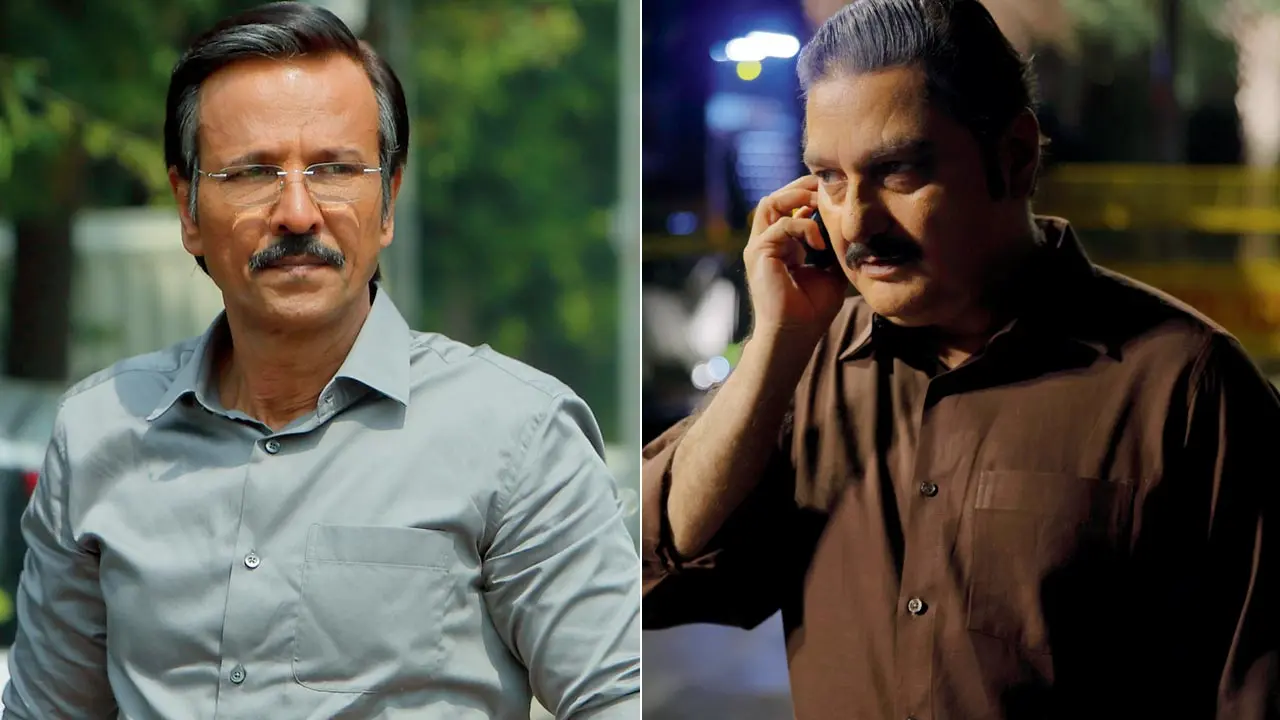
Kay Kay Menon and Vinay Pathak on returning to Neeraj Pandey’s Special Ops universe, evolution of OTT, and emotional check-ins
Letty Mariam Abraham (MID-DAY; July 1, 2025)
You know they are ageing in reverse when you see Kay Kay Menon and Vinay Pathak looking dapper in their chic attires, as they sit down with mid-day to chat about the upcoming show, Special Ops 2, helmed by Neeraj Pandey. Calling them versatile is an understatement, considering their vast body of work and how they seamlessly become their characters — Himmat Singh and Abbas Sheikh, respectively. While they are yet to watch the show, the two actors confidently tell us that they are already blown away by the filmmaker’s expertise in “weaving fiction and making it almost seem real.” Excerpts from the interview:
Were you as impatient as the viewers for Special Ops 2?
Kay Kay Menon: It was ready six months back. We were just waiting for the JioHotstar merger to happen. Almost two-and-a-half years ago, we had finished season 1.5. So, this bit of wait time is expected, especially for a show of this massive scale.
Artificial intelligence and cybercrimes are on the rise. Have you ever personally been victims of it? Does that worry you?
Vinay Pathak: Not really. You get calls selling insurance or credit cards every now and then, but we know now [to be careful]. We haven’t been a victim yet. It makes you wary, but you cannot be panic-stricken about it all the time.
KKM: It’s as worrisome as your house getting burgled on one fine day. The aura around the risk depends on how much you amplify it. The lock was invented to keep thieves away, but they found a way out, so we moved to digital locks. It’s the same thing here — anything that is technology-oriented, it’s always possible for someone to break through. You eventually find devices to curtail it.
How big is Special Ops this season?
VP: It feels fantastic to be a part of [something] this big and exciting. The best is that it is really thrilling. Sometimes, I can’t believe that I am an integral part of that madness.
KKM: When I saw the trailer, I was blown away by it.
Was any part of the story inspired by real-life incidents?
VP: I think that is best answered by Neeraj Pandey. But I think he is very good at weaving fiction and making it almost seem real.
How easy or difficult was it to go back into the world of Himmat Singh and Abbas Sheikh, and what new did you learn about your characters?
KKM: The new thing came with the script, of course, which I cannot reveal. Ultimately, it all depends on the writing, and Neeraj is brilliant in that department. So that was taken care of. Each time I come for a new season, the only thing I look forward to is to see what he has done now. That’s the most exciting part for me as an actor. As for Himmat Singh, I know him now quite well, since we’ve also done his backstory.
VP: I know that I am going to read a new story with the references of what has already been established. It’s always exciting to read how and what story we are telling this time.
Pandey is known for taking single and long shots and keeping his action real. How easy is it to manage that?
KKM: We are both theatre actors, so we usually do everything in one take only. It is not a threat to us. It is, in fact, very good because a certain continuity is maintained that you need not induce later for a different cut. So, I don’t think that is a problem. It is all well-rehearsed.
When OTT newly emerged, there was a latent fear that it could overtake theatres and TV. Now, after so much time, do you think that fear was justified?
VP: Hasn’t it spoken for itself? OTT has been around for a while and it’s settled now. I think we love to keep these theories of theatres being affected afloat.
KKM: I believe there’s always a correction that happens. You have an inflation and then a correction. When television came in, everybody thought that cinema was done because no one was going to go to the theatres, but nothing happened. For some time, everyone had that fear, but it settled. I don’t think theatrical releases are going anywhere. Yes, the format and the way people view it might be different, but it will correct itself to cater to that audience. You will have to up the ante a bit while making [content], understanding that there are two different kinds of people who watch it. The same person becomes a different individual when he is watching something on OTT, and I can guarantee that person will not stand up and dance to Sheila Ki Jawani after watching it on OTT. [In theatres], it’s a mass psychology that happens. It is a party syndrome, so even if you don’t know how to dance, you will also shake your leg. As long as makers understand that and cater to it, [it will work].
While there are algorithms to check if a show is doing well, how do you gauge if your performance has landed with the audience?
VP: Hum jo kaam karte hain, woh accha hi hota hain. We don’t sit and wonder, ki woh jo kharaab kaam kiya hain, uske baarein mein log humse kya kahenge [laughs]. Our intentions are always good; we want to do a decent and honest job. That is how we look at all the jobs that one has been a part of. It’s an honest approach to how we go about our work.
Do you criticize your own performance? And did you have any for this show?
KKM: Oh, that I won’t reveal — why should I?
VP: All the time, that is the excitement. We do discuss it a lot with our shrink.
After winning three National Awards if a filmmaker has to struggle, it needs to be debated-Vinay Pathak
7:55 AM

Debarati S Sen (BOMBAY TIMES; September 4, 2024)
Rajat Kapoor and Vinay Pathak have been friends for over 30 years and have worked together in various projects, including films such as Bheja Fry, Khoya Khoya Chand and Mixed Doubles. More recently, they came together for the Hindi play Karamjale Brothers, an adaptation of the 19th century Russian classic The Brothers Karamazov by Fyodor Dostoevsky. The play, written and directed by Rajat, has Vinay in the lead and it was recently staged in Mumbai.
In a chat with us, the two spoke about returning to Hindi theatre after many years and their camaraderie. Excerpts...
I’m doing a Hindi play after 25 years: Rajat
Vinay, who returned to the stage after a long time, says, “Mind you, hamare Rajat sahab aasaan kaam nahi kartein hain kabhi bhi. He decided to adapt a Russian novel to Hindi. Both of us haven’t dabbled in Hindi stage production for a while now. My last play was around eight years ago.”
Rajat adds, “I am doing a Hindi play after 25 years! This one is closer to the real world, unlike my previous plays Macbeth: What’s Done is Done and Hamlet The Clown Prince, which belonged to a very different space. This play has a specificity of a place, a moment in time and characters you can identify with.”
30 years sounds a lot, it doesn’t seem long enough for me: Vinay
Going down memory lane, Vinay shares, “Rajat and I became friends first, and four years later, we worked together for the first time in the play C For Clown. Everything that we do together, despite its challenges, is always fun and I have only good memories. While 30 years sounds a lot, it doesn’t seem long enough for me.”
Rajat quips, “It has been twenty nine-and-a-half to be precise. That is longer than a lot of relationships! I am lucky to have somebody like Vinay as a friend and a collaborator. I think when you work together, the bond tends to get stronger. And the best thing about doing theatre is the process of creation itself, which is made possible because of the immense trust between the director and the actor. Be it a film or a play, we have a blast when we work together.”
Theatre has a bigger audience now: Rajat
They may have branched into other mediums, but theatre will always remain special. Talking about the changes in recent years, Rajat says, “There is definitely a bigger audience now than earlier. People have more money and are more willing to spend it on things like a theatrical experience. That is really heartening. However, we still don’t make many good plays. I mean 10-12 good plays a year may not be an optimum output. Hopefully, that will change soon.”
Vinay adds, “The fraternity is growing, especially in the big cities. However, this needs to spread to smaller towns too. People, especially the younger generation, need to watch and get into theatre more.”
I think makers should get more freedom to create original content: Vinay
The two have been through their shares of ups and downs, but their passion for the craft has kept them going.
Vinay says, “In this job, there are always challenges, both physical and mental. But without that things can get boring. I think makers should get more freedom to create original content. It gets difficult when the industry we work in becomes too commerce-driven and less tolerant of experimental stuff. I’ve seen Rajat struggle every time he had to make a film. After winning three National Awards and making such good films, if a filmmaker has to struggle, then something like this needs to be debated.”
Talking about the difficulties a maker has to go through, Rajat says, “The struggle to make a film, release it, find an audience and the disappointment every time we get a bad release, all this is part of the game. But what keeps us going is the creative challenge. Every script, film, play is a new puzzle. It never gets easy. One has to go through the grind to come up with something valuable. And that is the real challenge.”
Even before I moved to Mumbai, mujhe yahan ki galiyan jaani pehchani lagti thi-Vinay Pathak
8:00 AM

Reza Noorani (BOMBAY TIMES; May 12, 2018)
Vinay Pathak loves Mumbai, and there are no two ways about it. Even a 10-year-stint in New York doesn’t compare to the life that he has made for himself here. The actor, who got to know Mumbai through Bollywood films says, “I knew the difference between Dadar Chowpatty and Juhu Chowpatty even before I came to Mumbai.” As a Mumbaikar, Vinay has seen several shades of the city including a visit to a dance bar. In his latest film, Khajoor Pe Atke, where he plays a quintessential penny-pinching, middle-class guy, the actor talks about where he drew inspiration for his role. He also shares his experiences of visiting Pakistan to promote Indian cinema.
Khajoor Pe Atke is about a dysfunctional family. Were there any characters in your own family that you drew from?
The only dysfunction that I remember from my childhood was that I never lived with my family. My father was a Deputy Superintendent of police and a controversial figure. He was honest and diligent, which was a problem, because an honest police officer in Bihar is a casualty. He sent me to a boarding school at a very young age so I could get proper education. I would see my family once a year during vacations, but I have a huge extended family. My father was the oldest of eight brothers and five sisters. My mother was the oldest among three sisters and four brothers. You can imagine how many aunts, uncles and cousins I have. Today, if I bump into my first cousin, I would not even recognise him because there are so many and they’re still being born as we speak! Whenever I am in an ensemble film with a family, I don’t have to look outside for a reference. I have all the characters in my life already.
In the film, your character comes to Mumbai along with his family and is wowed by the city. Do you recall any similar experiences from the time when you freshly relocated to the city?
I came to Mumbai for the first time after living for 10 years in New York, but my wow factor never dipped because I grew up on Hindi cinema. Even though I lived in Ranchi, Allahabad and Dhanbad, I knew every nook and corner of the city and I could name every film, song or sequence that was shot here. Mujhe yahan ki galiyaan jaani pehchani lagti thi. Footpath jaane pehchane lagtey the. I knew the difference between Juhu Chowpatty and Dadar Chowpatty even before coming to the city! I knew about Madh Island from scenes where the narcotics shipments were shown docking at the Madh jetty! Honestly, I am still fascinated when I see a shoot happening on the street. I always stop to see what it’s about. Even though I am more often on the other side of the camera, my fascination of watching a shoot has not waned. Mumbai has adopted me so warmly. My children were born here. So, for me, it is my city. I am a Mumbaikar. I think Mumbaikars are the most wonderful bunch of people in the whole world. I used to think that New York is cool. But I now know that Mumbai is the coolest.
The people of Mumbai transcend the divisions of caste, creed, colour and ethnicity or even nationality. I feel very fortunate that I found my home here.
In an earlier interview, you mentioned that there wasn’t a lot of interesting work for you in Bollywood.
I was asked why I was not seen more often on screen. To which I replied that I read scripts and take up only those which excite me the most. It’s not that I look down upon any script, but I can do only one movie at a time and I like to work that way. I have never said that I wanted to work in art cinema or in mainstream movies. For me, a wonderful script transcends boundaries of art, parallel or commercial cinema. For example, how would you categorise Bheja Fry? It made a huge amount of money for its producer and people call it a commercially successful film. It was made in 54 lakhs and it made over 25 crores; a ratio that’s unheard of. But I have always been associated with films like that, be it Khosla Ka Ghosla, Dasvidaniya, Chalo Dilli or Gour Hari Daastan. These are the films that I am proud of. But I got those films after reading 50 scripts. I said no to other films, not because they were bad, but just that I cannot do all of them. For some, I felt I wasn’t qualified enough and didn’t have the talent. I believe the most wonderful and essential thing you can do as an artiste is to learn about your limitations. I think I would look ridiculous doing a song and dance film. I have a great regard for those who can pull it off with panache though.
A few characters in Khajoor Pe Atke visit a dance bar in Mumbai. Have you ever visited one during your time in the city?
When I came to Mumbai, the dance bars were still around. My friends told me, ‘We will show you something in Mumbai that you won’t find anywhere else in the world’. I said, ‘What are you talking about, man? I’m from New York and nothing can surprise me’. So, I visited a dance bar on a friend’s birthday in South Mumbai and I was truly astonished. It was all so civil inside, including the people and dancers. Some of the girls were actually very good dancers. Nobody was crossing anyone else’s boundaries. I realised then, that Mumbai is a place where you are respected for your work. Nobody looks down upon you. My regard for those dancers never dipped. I mean, you are in a city that hosts the film industry. If you talk about other cities, like New York or LA, there are strip clubs where women are butt-naked. But here, we didn’t need to do that. The song and dance of seduction doesn’t have to be crude or lewd. They danced so well that some of them were celebrities in their own right.
You recently went to Pakistan for a film festival. Tell us about your experience there.
It was a great experience. I have said this before and I will say it again, our friend Subhash Kapoor (filmmaker) was also there, and he said a wonderful thing at one of the functions. He said, ‘Pakistan is the only country in the world where you get treated specially because you are an Indian.’ Nowhere do you get special treatment because you are an Indian. There is something in the warped history that we share. I think that people’s love for each other is still prevalent. I did not feel like I was in a foreign country when I went there for the first time. Karachi is like Mumbai and Lahore like Delhi. The Lahoris speak in Punjabi very much like people in Delhi or Chandigarh. So, I did not feel alienated at all. Plus, cinema is a bridge. I saw huge hoardings of Kapil Sharma’s show in Lahore and I wondered if I was in Mumbai.

I don’t want to get bored of my job-Vinay Pathak
8:06 AM

With his movie Island City up for release, actor Vinay Pathak tells us about his process of selecting a role
Deepali Singh (DNA; September 2, 2016)
Vinay Pathak is a journalist’s delight. Conversations
run into long, interesting discussions and observations on everything
from Hindi literature to the state of politics in the country. After Hrs
recently met the articulate actor at his Andheri residence and over
cups of adrak wali chai and biscuits sprinkled with sugar, Pathak
chatted with us about his role in the movie Island City, playing Manto
in Ketan Mehta’s next and his passion for his job.
How did Island City happen? What appealed to you about the script?
The movie happened by fluke. I met Ruchika Oberoi, the director and writer of the film at Film Bazaar at IFFI in Goa, and we got talking about this script that she had written for Screenwriter’s Lab. I pestered her to let me read the script and when I did, I flipped! It was such a crisp, intricately-woven satire, yet, so simple and beautiful. I called her right away and told her I’m on. Then NFDC came on board and the project got underway. It’s a fantastic script with a high entertainment quotient. The audience is going to experience all the navrasas when they watch this movie. It will open a pandora’s box in their head.
The title obviously refers to Mumbai. Do you think there has been a Mumbai overdose in our movies?
All his life, Woody Allen did nothing but make movies on New York. The city has always been one of the strongest characters in his movies and most of them are classics. Overdose? Mumbai city? No way!
How do you choose a movie? Is your role important or the script?
The script has to work. There are so many scripts I have said no to where I’m the protagonist. For me, the story is very important, followed by how it’s written in the screenplay format and who’s the director. When you speak to somebody, you gauge their sensibilities. Island City is Ruchika’s first film, but what a brave director she is! Her core team is full of cinema enthusiasts and within a week, I realised these people mean business. It was such a joy to be a part of a pure, cinematic experience.
In Ketan Mehta’s film Toba Tek Singh, you play the writer Sadat Hasan Manto’s role. Tell us a bit about the movie.
I have been a Manto fan all my life and Ketan has done a brilliant job with the story. He has created Manto as a character, as the supervisor of the mental asylum who comes in contact with all the inmates. Pankaj Kapur is in the main role and I also got the opportunity to work with some really talented actors. We shot in a village called Bassi Pathana, which is a few hours away from Chandigarh, while Toba Tek Singh is a village near Lahore.
There is a tendency to box people in categories and Hindi cinema has tried to put you in the ‘playing-the-fool’ box. But we have seen your serious side in movies such as Dasvidaniya and Gour Hari Dastaan. Is there a deliberate attempt to break out of the mould?
Nothing like that. The only deliberate move is to not repeat myself. People keep bringing me Bheja Fry kind of films. They want me to play the protagonist, shoot in one bungalow for 20 days in a limited budget and expect the film to be a success, just like Bheja Fry. But my question is, where is the story or the characterisation? I don’t want to get bored of my job. I love my work with utmost respect, passion and stubbornness. Cinema is in my veins, in the way I look at people and the way I look at life. And if I claim to love it so much, I can’t do work that sucks the joy out of it.
Subscribe to:
Posts (Atom)