Showing posts with label Vikramaditya Motwane interview. Show all posts
Showing posts with label Vikramaditya Motwane interview. Show all posts
Korean actors in Lust Stories 3 are actually from Korea. One of them is in Bombay right now-Vikramaditya Motwane
4:49 PM
Mayank Shekhar (MID-DAY; September 23, 2026)
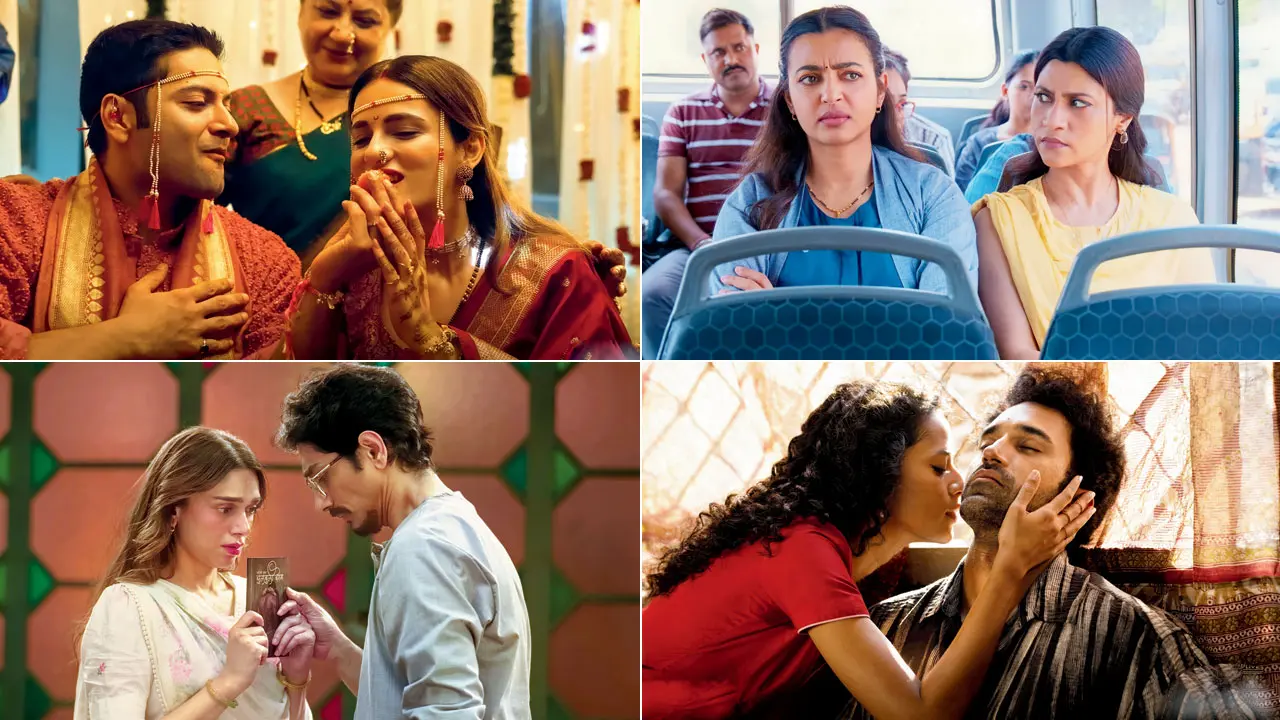
As with Shakun Batra, director Kiran Rao made her first short film, in her early 20s, at film school (Jamia, in Delhi) that, she recalls, was about a 31-year-old’s birthday gone south, because of a husband, who doesn’t care. Her short film debut in Netflix’s Lust Stories 3 — as with most shorts — would be hard to describe, without a spoiler, though.
Suffice it to state that it’s a play on Shakespeare’s Comedy of Errors, but rather serious. Shakun’s, on the other hand, with Ali Fazal, Radhikka Madan, felt to me as a running narrative on the addictive nature of ‘break-up sex’. Shakun disagrees, but adds, that could make for a fine elevator pitch!
Three of the four directors on the threequel of the Emmy-nominated Netflix franchise, competently produced by Ashi Dua, are men — while the anthology, looking at relationships through the prism of sex alone, for the most part, seems entirely from the women’s PoV.
Take Vikramaditya Motwane’s opening comedy (starring Radhika Apte, Konkona Sen Sharma) on couple-swap. The best bit that actor Vijay Varma gets in it is that his character experiences trauma from whisky + ghazal, because they remind him of his alcoholic dad. Hilarious!
The filmmakers, on the other roster, direct features, otherwise. Vishal Bhardwaj, who’s filmed several shorts in the past, says he finds the medium hugely liberating: “The commitment involved isn’t as long. And you have the opportunity to say something crisply, with design and craft.”
Which is precisely what Vishal does, transporting his plot to 1980s Hyderabad — about an anonymous, Urdu writer of smut (Aditi Rao Hydari), whose fantasies, chiefly imagining her husband (Siddharth) soar over her everyday married life.
What did you think of the said short films? My favourite was Vishal’s, while enough people have told me they loved Vikramaditya’s or Kiran’s more. An online survey on my social media handle rates Shakun’s, by far, the best. The comparisons are immaterial. What matters is, if the anthology works as a whole. It sure does.
Lust legacy
In ‘Lust Stories’ (2018), filmmakers Anurag Kashyap, Zoya Akhtar, Dibakar Banerjee, and Karan Johar came together to tell four distinct stories exploring desire and relationships. In ‘Lust Stories 2’ (2023), R Balki, Konkona Sen Sharma, Sujoy Ghosh, and Amit Ravindernath Sharma gave their takes on desire
Quick bytes with the directors...
Personally, how do you make a distinction between love and lust?
Kiran Rao: When you see someone, you’re attracted to, is that lust? The curiosity about a person you want to be with, or know more about, does that start from love, or something chemical? Lust can be the starting point. Could it be the ending point too?
Absolutely. Also, what makes a person sensually attractive, often, is the conversation, their humour. You [could] find a person sexy, because of their smile; not necessarily for how they look with their shirt off. It’s hard to distinguish. But I do think love comes after knowing a person, including their flaws.
Everyone must watch (Belgian psychotherapist) Esther Perel, when she talks about how to keep the spark in a marriage alive. One of the things missing, once you’ve been married for long, is you know the person too well.
Mystery’s gone. There’s no chase. Why is it that people are interested in extramarital affairs? Because there’s something unknown. There’s potential of knowing someone. Therefore, to keep lust alive in a marriage is always work.
Your film gets funnier, once you introduce Korean drama into the story, with the imaginary characters Jin and Min — did you dive deep into the popular TV genre to understand it better?
Vikramaditya Motwane: I didn’t do a deep-dive. My research was, I asked my ADs (assistant directors), do you follow K-dramas? Yes. So as long as they are K-drama fans, I’m gonna trust them to surprise me, and let me be.
Netflix did get me in touch with people in Korea. We had a couple of conversations, where I said this is what we are trying to do, and if it’s kosher. They kinda told me, where it would land in the Korean landscape, and what my title [sequence] should be. The actors are [actually] from Korea. One of them is in Bombay right now. The other is a professional actor living in Delhi!
Of all the lust stories, why are you looking at marriage, when you’ve never been married yourself, or is that the reason?
Shakun Batra: I was [actually] going through a relationship, when we weren’t able to communicate, and sex was filling up the gap. I started reading about how bodies tend to communicate. They’re very primitive. The body needs closure too.
Without giving away spoilers, these two people [in the film, Ali, Radhikka] haven’t addressed some of the grief part of their marriage. The sex then is still trying to keep them together, right? It happens with most relationships. Your heart and mind may say this relationship’s over. But bodies still, sometimes, tend to continue. And why’s that? For me, that is very exciting.
[Let alone Lust Stories] you’ve done Zubaan Pe Laga… Namak Ishq Ka (from Omkara) — the world’s lustiest song, ever; was that the intention?
Vishal Bhardwaj: Gulzar Saab is a master. Even Beedi Jalai Le, if you read minutely, is about adultery. When he says, Itni Sardi Hai Kisi Ka Lihaaf Lele, Ja Padosi Ke Chulhe Se Aag Lele — he means the neighbour’s wife. That was the theme for Omkara, so lusty; and that’s how involved he gets in the script. Namak Ishq Ka was originally written as the antara of Beedi Jalai Le.
I drifted from that metre, while composing the tune. But I usually have 50-60 chhilke (shells), or rejected lines of Gulzar Saab, lying around, which I saw in my notebook, when making the new song. I picked up this line, where he writes, Zubaan Pe Lage Namak Ishq Ka Toh Duniya Savaadi Lage… which became Balam Se Maanga Maanga Re, Namak Ishq Ka… and then the final version.
I’m also interested in knowing about my favourite actors, what they do, what’s in their bag-Ananya Panday
2:56 PM

Vikramaditya Motwane and Ananya Panday discuss their upcoming film CTRL, which explores the increasingly probable perils of a tech takeover
Sucheta Chakraborty (MID-DAY; September 29, 2024)
“He's one of my favourite filmmakers,” insists Ananya Panday, alluding to director Vikramaditya Motwane when we ask her about what drew her to CTRL, their new film that will premiere on Netflix on October 4. Panday counts Jubilee, Motwane’s tribute to the Hindi film industry of the 1940s and 1950s, the self-reflexive AK vs AK and Udaan among her favourites. “Udaan is my mom’s [Bhavana Pandey’s] favourite film and we used to watch it a lot when I was growing up. I must have seen it close to 20 times with her.”
The other reason for being part of CTRL was Screenlife, a form of visual storytelling in which events are shown entirely on a computer, tablet or smartphone screen. “Eighty-ninety per cent of the story [of CTRL] takes place on a computer screen and all the storytelling is through mediums that we use on our computers, like searches, video calls or Instagram—things we spend a lot of our time on,” Motwane shares.
Though films such as Her and Terminator have explored human dependency on and relinquishing of control to technology and influenced science fiction culture, the Screenlife format influenced Motwane specifically as it is “essentially [about] peeping into somebody’s life”. The offer, he says, came from Timur Bekmambetov, the Russian-Kazakh director, producer, screenwriter and tech entrepreneur who pioneered Screenlife films such as Unfriended (2015), Searching (2018), Profile (2018) and Missing (2023).
“Everyone on set was discovering how to shoot this film because we didn’t really have a template to follow. Everyone was making mistakes together and learning together,”
Panday says, recalling a fluid and immersive experience where Motwane would let the takes run on for long. “I also felt very responsible because there were parts where the camera was in my hand and I was shooting. There were many things I had to figure out, but it was a nice, happy and safe environment.”
Panday plays Nella Awasthi, a social media influencer from Delhi who runs the channel NJOY with her boyfriend Joe. Reluctant to pursue the path her parents laid out for her, Nella moves to Mumbai and forms a professional and personal relationship with Joe, both of which crumble with adultery. “It was interesting to see how a person would deal with a situation differently as a result of being in the spotlight [as a influencer] with different factors addressing them,” Panday observes.
The actor may be a part of the social media generation but is not an influencer, and hence, had to immerse herself into the life of a vlogger and influencer to understand the implications of the job, its stakes and demands.
“As an actor, the content I put out on my Instagram is related to movies, personal life or brands. I don’t know what it’s like if that were my job and if that was the way I was making money. Then the stakes would be [higher]. Understanding that part of it was prep,” she shares.
Panday’s character lives a life, specifically a romantic life, in front of millions of people. Kho Gaye Hum Kahan (2023) too saw her as part of a group of characters grappling with the ironies of the digital age where private lives are lived very publicly. “I think my opinion on [the private-public paradox] is constantly evolving,” says the 25-year-old.
“I don’t have any hard and fast rule. Sometimes I feel like protecting things and keeping things private because I feel so much of my life is any way out there. If there’s something that I can keep for myself, then I would love to do that, but I’m also not ashamed of anything or trying to hide anything. I understand that it’s a part and parcel of our job. There will be interest from people because we are public figures and I’m also interested in knowing about my favourite actors, what they do, what’s in their bag, what their house looks like, etc. So I don’t blame other people [for being interested], but if I can protect things, I do try to.”
Motwane’s interest lay in exploring the workings of AI and social media through the life of someone brought up on the internet, from the perspective of “what I think is a love story”. He believes that diversification of content on streaming platforms has primed the audience for high concept films, content that is more cerebral and challenging, and yet fun and accessible.
“When you go to any service now, there’s everything on offer—comedy, drama, crime, true crime, and that’s what’s also made the audience more open, learned and experienced about things to watch.”
For creators, streaming services mean that one doesn’t have to stick to a one-size-fits-all projects. “Ten or 15 years ago, cinema meant you had to make a movie of a certain length for an audience that’s going to be a kind of mass-y. Old, young, rich, poor—all were going to come and watch your film together… [But] there was also a necessity, once upon a time, to go to a movie theatre to catch something [niche] and that necessity is gone, which is not always good. It’s affected indie films more than it’s affected mainstream movies because the urgency of going to watch a movie in the theatre is gone. Streaming services are convenient, but is it really the best thing for the movies?”
Vishal Bhardwaj, Vikramaditya Motwane, Rohan Sippy talk about changing landscape of Indian cinema
10:59 PM

Vishal Bhardwaj, Vikramaditya Motwane and Rohan Sippy talk about the changing landscape of Indian cinema and how filmmakers are dealing with it
Renuka Vyavahare (BOMBAY TIMES; May 29, 2024)
Cinema is considered as a medium of change and diverse new voices only contribute to elevating the artform. As part of MAMI Mumbai Film Festival’s initiative, five emerging filmmakers Archana Atul Phadke, Faraz Ali, Prateek Vats, Saumyananda Sahi, and Saurav Rai were mentored by Vishal Bhardwaj, Vikramaditya Motwane and Rohan Sippy, to help them redefine cinematic norms.In an exclusive interview with Bombay Times, the celebrated trio addressed some raging issues like stifling of creative freedom, censorship, corporate interference and more. Excerpts…
‘Private sector censorship has become more drastic than the CBFC’
Always the one to challenge the status quo, Vishal Bhardwaj confessed that times are volatile for filmmakers. “It is totally strangulating. You can’t say anything. Do you know what has happened? As filmmakers, we are self-censoring ourselves. Whenever a thought arises, you first wonder what the money men will think. Will they finance us to get this idea across? This is what the system wanted. Before going to CBFC we self-censor.”
Vikramaditya Motwane nodded in affirmative and stated, “You start second guessing everything and that’s bad. Lawyers run the studios in a way.”
Rohan Sippy added, “It happens at a corporate level. You are not independently distributing anymore so you are always dealing with large companies that are sensitive to anything that is deemed controversial. Private sector censorship has become more drastic than the CBFC. You don’t know what lies ahead so you feel it’s safer to not go down that path.
‘In filmmaking, the filmmaker becomes naked on screen, actors hide behind their characters’
The mentors ranked honesty high as a trait for filmmaking. “As a filmmaker, you must follow your heart and be completely honest with your feelings. In filmmaking, the filmmaker becomes naked on screen, actors hide behind their characters. Be it his political views or world views, you can see through the filmmaker. It is he who is seen. You can fake it as an actor. You cannot fake it as a filmmaker. Parda faash ho jata hai”, said Vishal.
Rohan begged to differ. He countered, “It’s also okay to do the opposite of what Vishal said. Author Hunter S Thompson modelled himself on Ernest Hemingway early in his career. In the beginning, it’s okay to look at others’ work and figure out what you want to do but don’t delay that start.”
Vikram explained, “There are no set rules. If you want to be a filmmaker, be a filmmaker. Go out and shoot 100 bad shorts until you make that one great short film. That’s what I did. I was lucky to get a video camera for my wedding when I couldn’t afford one. I used that to shoot everything. Be it a friend’s wedding, car racing. Read a lot and explore life, that shapes you into a good filmmaker.”
‘You can’t fight technology’
Film vs digital has been an ongoing debate. Christopher Nolan has been a champion of traditional techniques known for shooting on film. However, not everyone gets the budget he does, believes Vishal. “We can’t fight technology. When the sound became digital, we used to say the warmth of tape is not there. I don’t think that’s the case at all. Likewise, smartphones have revolutionized filmmaking. I shot a (short) film called ‘Fursat’ (starring Ishaan Khatter and Wamiqa Gabbi) on an iPhone and I was happy. In fact, whenever we do guerrilla shoots, for instance shooting in a train without permission, we use phones. Steven Soderbergh has shot his entire feature films like ‘Unsane’ and ‘High Flying Bird’ on a smartphone and he did it years ago. Nolan gets such huge budgets, he can afford to say anything (smiles).”
‘Not all filmmakers have the privilege of huge budgets like Nolan’
Agreeing with Vishal, Vikram explains, “Nolan can afford to have Imax cameras. Kodak created a completely new format of its black-and-white film for scenes in 'Oppenheimer'. Yaha pe you can’t afford to ask for extra film from the producer. Kaha se milega?”
There is a certain romance associated with shooting on film but whether it is better than digital is no longer relevant, he feels. “Digital is cost effective and easier to work on. I’d love to shoot something on film if it makes sense financially. I don’t see anything wrong with the digital format”, he says.
Rohan Sippy believes film and digital can co-exist instead of an either-or situation. “It’s great to have different religions in filmmaking and people like Nolan championing ‘film’. Francis Ford Coppola said this 40 years ago, that ‘people who normally wouldn't make movies are going to be making them and for once this whole professionalism about movies will be destroyed and it will become an art form’. That’s the beauty of digital technology. It makes filmmaking handy. How people consume it is up to them. At the same time, we are happy to see some are keeping the tradition alive and looking into conservation of film. You cannot deny the change though. You must embrace it.”
‘Cinema needs new voices’
There has been a generational shift, believe the makers. Vishal concluded by saying, “Cinema ko hamesha se hi new voices ki zaroorat hai. Every ten years ek nayi soch aa jaati hai and if we can give them a platform, why not?” Vikram pointed out, “The kind of realism the new generation is bringing to storytelling and performances is admirable.”
Rohan summed up, “The whole landscape is so different today. I remember we didn’t have multiplexes back then and Nagesh Kukunoor’s Hyderabad Blues (1998) turned out to be a game changer. It created new ways of thinking.”
I learned from Sanjay Leela Bhansali that a director never ever stops thinking about his movie-Vikramaditya Motwane
8:24 AM

Niharika Lal (BOMBAY TIMES; October 8, 2023)
Before his feature film debut with Udaan in 2009, Vikramaditya Motwane had five years of informal experience in the field. From making wedding videos for friends, to shooting a cousin’s trip to an F1 race, the filmmaker says it was the process of learning and the ability to make a film that has kept him going. Excerpts from a session that the director had with aspiring filmmakers at The Himalayan Film Festival in Leh recently.
‘KOI DIRECTOR PAIDAISHI BRILLIANT NAHI HOTA HAI’
“Most of the directors I know are instinctive, but that instinct also comes from years of honing your skills,” says Motwane, adding, “I don’t think filmmakers are born with talent. It’s ability. There is a marginal difference between the two. My ability to direct comes from me being an assistant director or learning things from when I was 18. So, when I was 32 and made my first film, I had 14 years of experience of understanding. You write, shoot and edit to know what you want. Then it comes to instincts. Paidaishi brilliant koi nahi hota hai.”
‘SPIELBERG AND SCORSESE ARE PHENOMENAL DIRECTORS BECAUSE THEY HAVE THE WEALTH OF KNOWLEDGE’
“Steven Spielberg was given his first film camera when he was 8-10 years old. Martin Scorsese was an asthmatic child and only had movies (to watch at home). Take Anurag (Kashyap) for example, who is so lost in his books and movies. He came to the film industry to be a writer in the first place. After he wrote Satya, where he was an assistant director, and assisted Vidhu Vinod Chopra on Mission Kashmir, he made his first film. There is always a backstory with wealth of knowledge giving filmmakers the ability to do what they did. It’s either that or you work your way up and figure it out along the way.”
‘A DIRECTOR NEVER EVER STOPS THINKING ABOUT HIS MOVIE’
Motwane adds, “I also learned from Sanjay Leela Bhansali that a director never ever stops thinking about his movie. In that entire process of making a movie, you wake up every morning thinking about how you can make it better. If something is bothering you, how do you change it. If there is a moment that you don’t like, how do you execute it? It’s an obsession that becomes unhealthy after a point. So, you also need to know when to switch off.”
ON MAKING WEDDING DVDS OF HIS FRIENDS’ WEDDINGS...
“When I got married in 2005, I asked for a video camera as a gift from my in-laws. At first, they looked at me (as if to say), ‘Who asks for a video camera?’ Yet, that turned out to be the best gift ever because during the four to five years between when I thought I was ready to make a film and when I actually made my film in 2009, all I did was shoot. I used to film friends’ weddings, and if a cousin was going to F1 racing, I would follow them with my camera. I shot the weddings, added music, edited it, and even designed DVD covers for those videos. It’s like the full process of making a movie,” he says.
I’ve never said this publicly, but I think Bhavesh Joshi Superhero should have been a woman-Vikramaditya Motwane
8:17 AM
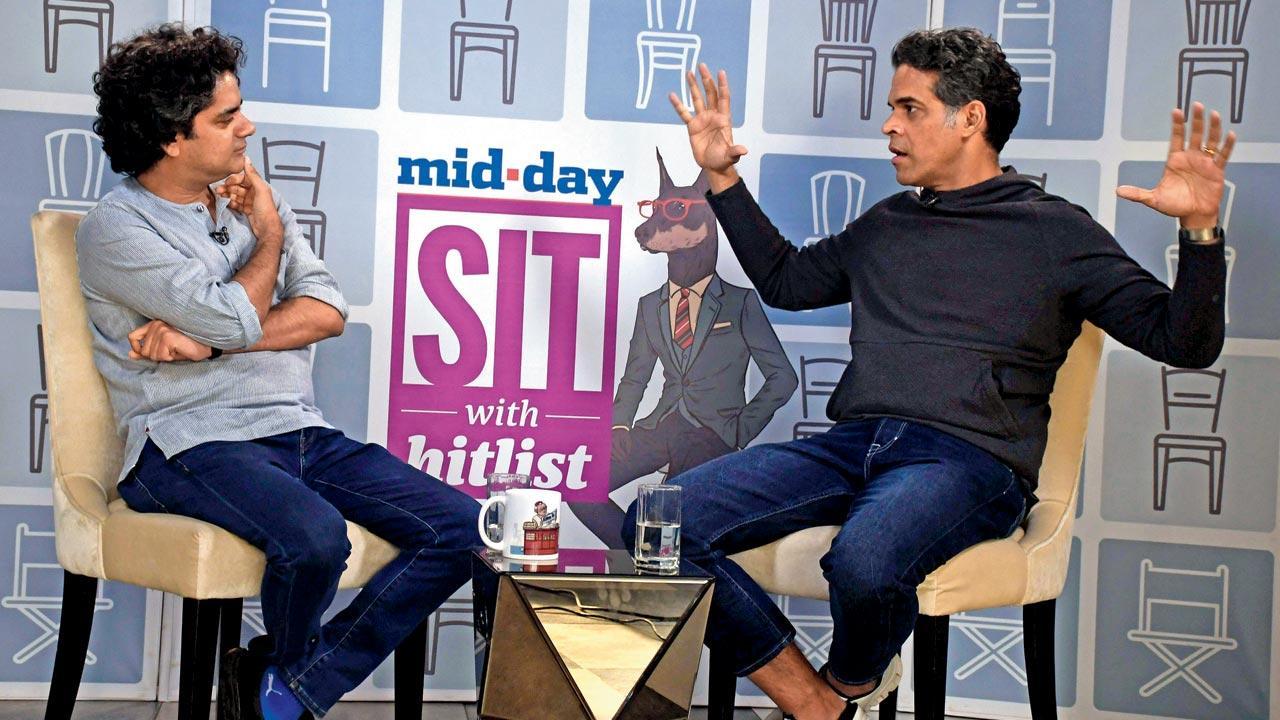
Vikramaditya Motwane joins Hitlist editor Mayank Shekhar for the latest edition of Sit with Hitlist. Pics/Ashish Raje
Motwane, on the movies — from Udaan (2010) to Jubilee (2023), both near-masterpieces!
Mayank Shekhar (MID-DAY; April 27, 2023)
At age 25, Vikramaditya Motwane was set to direct Amitabh Bachchan for his debut film, Bombay Talkies. It’s about a great filmmaker making his return to the sets after years. And what all had changed about Hindi cinema, including stardom, in the interim. Bachchan was going to play this aged director — think of him as Hrishikesh Mukherjee, who was alive then, he says.
The star in the movie, I’m guessing, would have been an arrogant, prick type. Motwane found it impossible to cast a lead actor for this part. Which is why the film never got made. Until then, Motwane had extensively assisted Sanjay Leela Bhansali. Which, firstly, explains the access to Bachchan.
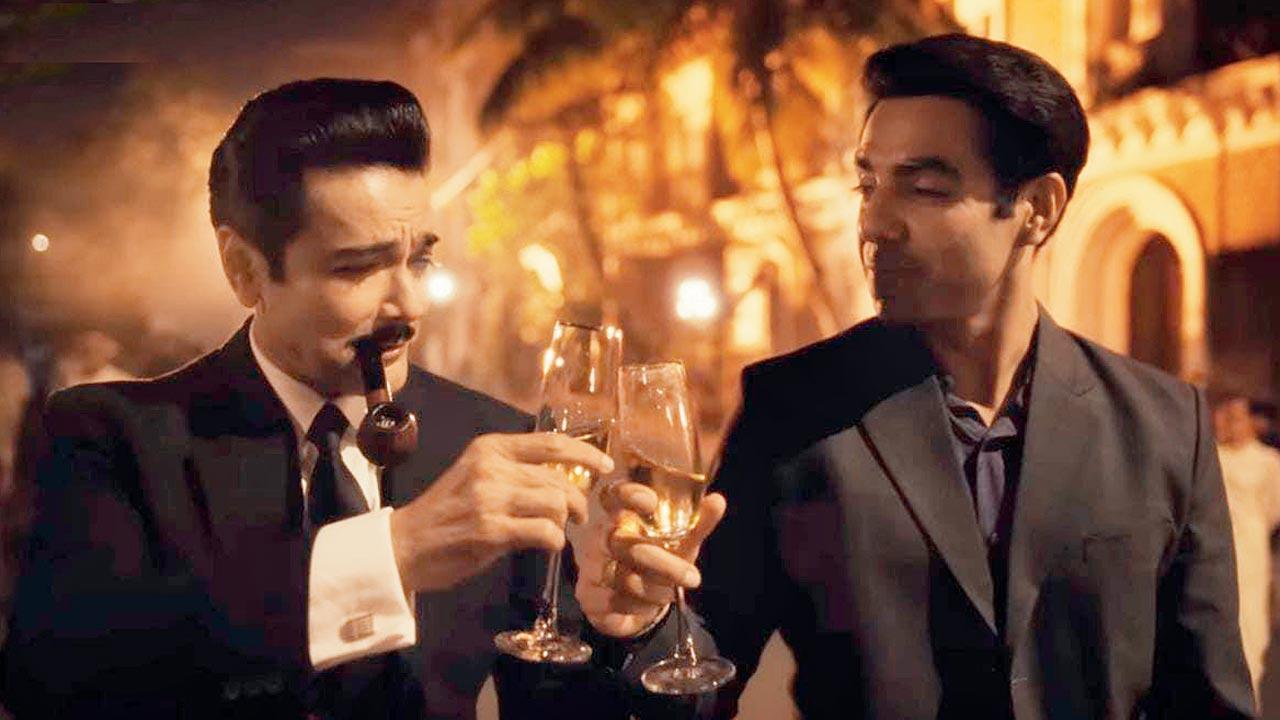
We only wondered about it because of the title, Bombay Talkies. Which is what his latest series, on Amazon Prime Video, Jubilee, is modelled on. Namely, Himanshu Rai’s (Prosenjit Chatterjee) state-of-the-art film studio in the 1940s, along with Devika Rani (Aditi Rao Hydari), down in Malad, in Bombay.
And which once had in its payroll stars like Ashok Kumar (Aparshakti Khurana), Raj Kapoor (Sidhant Gupta), Dilip Kumar, Madhubala… All these characters have been heavily fictionalized, of course. And Jubilee itself has no relation to that Bachchan script.
It’s actually a mammoth exercise in world-building, without the filmmaker getting overawed by it — sticking to drama and storytelling still. While so classical in its production design and shot-taking, it isn’t placed wholly inside a filmy bubble either. So many such films/series consciously tend to be — including the best ones, like The Offer (on the making of The Godfather), or Mank (on Citizen Kane).
It isn’t full of the usual exaggerations that naturally come with surveying showbiz either — take the best film on contemporary Bollywood, Luck By Chance, for instance.
Jubilee captures the real world around it, equally. Whether that be the bloody Partition, or the Cold War. Once you buy into this world — and it takes a while, perhaps fourth episode onwards — we know no other Indian series that progressively gets better with every minute. It may even age better with time!
Also, it’s to do with the dialogue. Compare it to Mira Nair’s A Suitable Boy, from the same time-setting. It sounds so coy, because they’re too obsessed with the period. Motwane says, “We wanted the language to be accessible. The language may not be completely correct to the period. But it’s not incorrect.”
“No one can point out and say, people needn’t speak like that. In fact, somebody’s criticism, which was actually funny was, ‘Gaaliyaan uss waqt kab hoti thi (When did people use expletives so much?)’ Gaaliyaan picture mein nahi hoti thi (Actors didn’t abuse on screen). That doesn’t mean people in real life weren’t abusing. Of course, they were.” For all its grandiose scale and sharp, layered storytelling, you come off Jubilee, exhaling, “Madan Kumar, behn****!” Isn’t it?
Motwane recalls the idea really took off in 2016: “What if we did our own definitive story of the Indian film industry, from the ’40s and ’50s onwards — the behind-the-scenes, the producers, directors, actors, press, all that sort of stuff coming together. This could be a season, or multiple seasons. Atul [Sabharwal] wrote a cracking pilot, Amazon loved it, and suddenly we were off in the races.”
It took seven years to see the light, because Motwane got busy with Sacred Games for Netflix, shortly thereafter.
If Jubilee does go through multiple seasons, leading up to Bombay cinema, late ’90s onwards as well, there will be few filmmakers more qualified to relive the times than Motwane.
On one end is Bhansali, who he was the chief handyman for, on Hum Dil De Chuke Sanam (1999), and Devdas (2002), that he represented at Cannes, along with the director. At the other end is filmmaker Anurag Kashyap, who he’s partnered with since the unreleased Paanch. There aren’t more separate filmy worlds that you could belong to simultaneously in Bombay!
Bhansali and Motwane’s mother once ran an advertising production house together. He first met Kashyap on the sets of Deepa Mehta’s Water, where his job as the “wrangler” was to ensure the procrastinator Kashyap, as all writers are, delivers dialogues on time — not an easy task!
“Anurag’s wife, [editor] Aarti [Bajaj], his ex-wife now, was with me at XIC [Xavier Institute of Communications], when we were doing a film production course in 1994-95. Anurag had done the same course a year before that. He says I met him then. I have no recollection of this.”
Also, few directors own a CV as varied as Motwane’s — so far as filmmaking departments go. What all has he been credited for? Let’s start: Sound design? “Yes, for Devdas, and Paanch.”
Choreography? “Directed songs for Paanch. For Water as well. Well, choreography is a broad term. Because there was no dancing in Water. Deepa wanted me to help her with songs, because she felt I had a better music sense.” Acquired from Bhansali, one’s guessing.
Okay, cinematography? “Short films: Shaanu Taxi, Midnight Lost And Found.” How about acting? “Acting in cameos in certain places, which I am not very proud of.” Like, Kashyap’s No Smoking (2007)? “Yeah, everybody sees me in No Smoking!” What’s left, production design? “No, I don’t like that part.”
Yet, in terms of capturing the fuller gamut of Bollywood, his most uncanny credit might well be as the writer of a film by director Vivek Agnihotri, titled Dhan Dhana Dhan Goal (2007).
No, seriously, how did that happen? “So, UTV was producing this film. Vivek had approached them. He said he had this story idea about football. He wanted a really good writer. They called up Anurag, who said he doesn’t know anything about football. But he knows this guy, who knows everything about football. So, they approached me. I have loved this game since I was eight years old. I said, let me write you an original script instead.” What, they gave him a DVD to rip? “Something like that!” Something like that, as in?
“So, well, I wrote the script. But the film that got made was not exactly the way that Anurag and me, to put it mildly, kind of wanted. I liked the time though. Beggars can’t be choosers. We got paid for the work, and that was more important than anything else. I still believe the original script of mine is one of the best things I have written.”
Motwane’s first script to be made into a film, after Bombay Talkies got aborted, of course, was the near-masterpiece, coming-of-age, Udaan (2010), that went straight to Cannes in the prestigious Un Certain Regard section, where he was competing against, among others, Jean Luc Goddard: “That was really trippy!”
It’s set in Jamshedpur (now in Jharkhand), about a boy who finishes school with ambitions in arts and poetry, but is forced into the mundane, by a disciplinarian father, who brooks no dissent.
It’s almost the opposite of Motwane’s own life, since he was actually driven into the media world, because his mother needed help with a TV show she was producing for teenagers. He was a teenager then, chilling all day in the Mithibai College canteen.
What did he even know of a strict boarding-school or small-town life, let alone the Tata Steel township, Jamshedpur, to get it so right with Udaan, we wonder. Motwane says Udaan was originally set in Nashik, in his head, because that’s a similarly industrial, small-town he knew, since his father owns an audio-equipment factory there.
“They live in nice little bungalows. The town is very organized. So, I wrote it as a generic place, in fact. Because I knew that world. I could not write in Nashik. It’d be too close to home. And I didn’t want it to be that. So, I wrote it like a Ghaziabad or Faridabad kinda set-up — outskirts of Delhi, where the family lives. The boy sneaks out, comes into Delhi-proper, to party and stuff.”
And then he handed the script to director Imtiaz Ali: “Imtiaz read the script and he’s like, ‘You know what, just take a train, go stay with my family in Jamshedpur. Have a look. I am reading this, and I can see those streets.’ I was going to cast Imtiaz’s younger brother, Sajid, in the lead, at that time. This was 2005.”
“Sajid and I hopped on to a train, went to Jamshedpur, spent four to five days with his family, saw the place — this was perfect! I moved the film to Jamshedpur. The film finally got made in 2009, which is also great, because by then, the viewership had changed; audiences had changed. In 2005, multiplexes were still not what they were by 2010, when we did the film with UTV, with a 225-screen release, which is a big deal for a small film.”
Kashyap produced Udaan, post the commercial success of Dev D (2009). This also means the original lead actor, Imtiaz’s brother Sajid, would have passed his teenage by then. Young Rajat Barmecha was brought in for the Holden Caulfied type protagonist. The homework Motwane gave him was “the literature I’d read growing up, movies I’d watched — 400 Blows, Richard Price’s books, and a lot of things that come into Catcher in the Rye…”
The directorial career that Motwane scripted for himself after Udaan is indisputably marked by a range that’s hard to match — going from a period piece (Lootera) to super-hero (Bhavesh Joshi Superhero), a one-man survivor drama, set in a building, suggesting the dystopia of cities (Trapped), to the ultimate Mumbai-mafia sweeping-epic (Sacred Games), that he was the showrunner for — first Indian to hold that title (in case Limca Book of Records is interested in listing!).
The leaps are so wide that it piques your interest to know what inspired each film, since none suggest self-expression alone. Firstly, where the heck did AK vs AK (2020) come from — a meta movie that firstly defies genre, about a director and actor playing themselves. The director turns rogue, kidnaps the actor’s daughter, to film in real-time, what happens next! Wut?
“It’s just such a great one-line idea. Which is what excites you most. As a young filmmaker, you fight the fact that the idea of your film should be encapsulated into one, single line. As you grow older, you realise that one, single line is what drives you forward. Writer Avinash Sampath, who’s now become a good friend of mine, sent the script to us. He’d written it for Aamir [Khan] first. I was sure Aamir is never gonna do it, so let’s not even try!
“There is Akshay Kumar, who we did approach, and it was a very interesting meeting — I mean, he didn’t sort of outrightly say, ‘Get out of my office,’ but it was close enough! For a while, I was making it with Shahid [Kapoor], which kind of happened, and then it didn’t. The [actor] AKs kept changing. The [director] AK, that is Anurag Kashyap, was a constant. He’s a fantastic actor.”
Well, Kashyap says he sucks at acting! “I think he is fab. In fact, everybody on the AK set was talking about Anil Kapoor. I think Anurag, especially in the last scene, is incredible. You actually tear up, when shit happens to him.”
Okay, how about Lootera? It’s practically a Bengali film! “Practically. And that [part is all Satyajit] Ray. I wanted to do a thriller, with a love story in it, as opposed to a tragic love story. Our first trailer got it right. And then there became a problem with the pitching to the audience. People were expecting to watch this epic love story. And they probably went, ‘Hang on a second, this is not that!’”
Maybe because he plays with such diverse subjects —you sense that probably puts Motwane in a more objective position to judge his own work in hindsight — most think of their films as so much like their heart’s outpouring, that it’s hard to discuss it with them, without fawning over with delight. Consider Motwane’s take on Bhavesh Joshi Superhero (2018).
While he loves the film the way it is, immensely, he says, “I’ve never said this publicly, but I think Bhavesh should have been a woman. As in, Siku’s character should have been female. [Firstly] the world thinks there’s a guy, who turns out to be a girl. When she unmasks, you go, ‘What the f***’.
“Also, then the film is not about a friend, saving a friend, in terms of the Ashish Verma character. He is actually deeply in love [with the female superhero], but has never been able to tell [her that]. The conflict is way deeper. The layers get more interesting too.”
As for reasons for smoothly jumping styles and genres, where each Motwane movie is unrecognizable from the other — unlike a subtle or strong voice/style that laces through most auteurs; think Bhansali, Kashyap — the impetus is quite simple.
“It’s the excitement of trying something new. So, Jubilee is exciting, because it is something I have never done before — a classical style of storytelling, 10 playback songs, and all that stuff — the fact of telling a specific story, in the form that is most suited to it. I feel that the film is always the boss. I am not.”
Motwane says his forthcoming film is titled Control. It’s a ‘computer-generated’ movie, flitting between screens, centred on an Instagram influencer: “Again, it is a cyber thriller, it is new. I get excited by it. And you learn. Every film is an audition for the next one, having learnt from the last one!” That said, surely, if one looks deep enough, they’ll be able to spot a personal thread.
Take Jubilee, for that matter. Consider a character called Jotwani, a film businessman, who shows up in it. It’s unclear exactly what he does in the movies. Maybe there is some association with working with sound or audio equipment. That’s precisely what his paternal family dealt with.
If you go through any archival footage of public rallies of politicians from the ’50s, or pre-independence vintage, the most common brand-name you’ll notice is Chicago Radio, that’s attached to the microphone.
That company was started by Motwane’s great grandfather. His grandfather thereafter also once produced a film: “It was called Andolan, in 1949, with young Kishore Kumar in the lead. It was a film about the freedom struggle. It didn’t do well, which is why nobody in the family talks about it. Because I think the family lost a lot of money on it.”
You also see the Sindhi refugee camp in Jubilee. Given his own Sindhi lineage, we wonder if there is a personal history to it as well? “So, my family didn’t have to make their way during Partition. We were already here from the 1930s. The business was already set up. But for a while, my family house in Khar was a refugee camp. I have seen photographs. People were also demarcated into tents in garden-area or permanent structures, depending on the social status of the refugees.”
Motwane says he learnt of his family’s film lineage, only much after he became a filmmaker: “Nobody tells me anything! Now, I’m the family archivist.” He’s named his production company, Andolan, after his grandfather’s maiden and only production.
AK vs AK and Jubilee are Andolan productions. Of course, the more famous production company he’s been associated with is Phantom Films, which shut down, following allegations of negligence, dealing with a sexual harassment case against one of the partners, Vikas Bahl, in 2017. Prior to that, it was a company rolling out quality films after another.
We recall an interview about Phantom, where Motwane compared it to Pixar, in terms of credibility and ambition: “Very ambitious! Peak-Phantom was something else. Eventually, we would have all perhaps gone our own ways, anyway. Maybe running our own companies under the umbrella of Phantom as the larger studio. It was an unfortunate end to what was a good journey.”
“Interestingly enough, I actually met Tanmay Bhat and Rohan [Joshi] and we were talking about how peak-AIB and peak-Phantom happened at the same time. Some great stuff went down.” The comedy collective, All India Bakchod, similar to Phantom, folded up, following a #MeToo storm.
Is there anything that Motwane thinks they could have done differently over the workplace sexual harassment issue? “Externally, we could have [handled it better]. But again, this is in hindsight. If you’re going through something you haven’t before, you may not know how to handle it. From a professional, empathetic and personal point of view — I am saying all three — we could have done better.”
While this is obviously the first time Motwane has been on Sit with Hitlist, our long-form conversational series, it does occur to me that he’s regularly mentioned in chats with other guests. With Kashyap, of course.
The last one was with actor Abhay Deol. As it turns out, Motwane and Deol were buddies in school: “He used to invite us over to his house to watch movies.” Isn’t that a close enough Bollywood connection for someone who claims to have grown up far removed from showbiz in general, with no practical understanding or ambition to enter films as such?
“But it’s a movie star’s house, ya. That way, Abhishek Bachchan used to be in my school [Jamnabai Narsee] for a couple of years. His cousin Namrata is a close friend. I have been to Abhishek’s birthday parties in Madh Island, where [Amitabh] Bachchan made an appearance. This is peak-Bachchan, in 1984. You are seeing the hero of your dreams, standing in front of you! He’d come off the set, wearing boots. We hero-worshipped him, and I’d gone to Dharmendra’s house to watch movies. There used to be a badminton court. Maybe it’s still there. We were like, wow, Dharmendra plays baddy here!”
As for Abhay: “It’s when he returned from LA that we became close. Because when he came back, we shared an interest in the same kind of music and movies. We were hanging together, and writing some stuff together.
“We worked together on [the script of] Dev D, and on a couple of things before that. I was actually in the room, when Imtiaz [Ali] narrated to him Socha Na Tha [his debut film]. So, yeah, that historical moment happened in my presence! We have tried a couple of times [to work together] and then it just has never happened, and then we have sort of given up.”
The other time Motwane figured similarly, in conversation, was with Saif Ali Khan, who was rather salty, we have to say. He wholly trashed the second season of Sacred Games altogether — speaking about how a friend and him had popped a champagne to catch it together at home. A little later, they just shut off the frickin’ TV. Rather harsh!
“But that’s Saif. You can’t hold a grudge against things he says. He speaks his mind. That is exactly the way he is. I totally love him for that. You can say things back to him, and he will take it. He respects that. We respect him.”
That said, Sacred Games season one (S01), that Motwane put together for Netflix, based on Vikram Chandra’s tome of the same name, was incredibly received. While Netflix seldom shares its viewership numbers, they were quick to point out that two out of three viewers of Sacred Games came from outside India — making it truly the first Indian global show.
What one noticed was the sheer audacity of the characters. Again, the world-building. And just the use of uninhibited, uncensored visuals, language, grime, grit, and the madness of Nawazuddin Siddiqui’s Gaitonde, opposite the vulnerability of Saif’s Ali Khan’s Sartaj.
And then, whatever happened to Sacred Games in the second season — the thriller lost its sheen, veering into spaces so separate from the first. For all the criticism its way, it was hardly the ghastly season it was made out to be. Just not close enough to the first.
Motwane admits, “I think what happened with Sacred Games is that on S01, we had the luxury of time. Once Netflix said, okay, fine, we are going to do it — we got about a year to write the stuff, before starting shoot. I just wanted to do it without any assistance. I wanted to create a writers’ room, come together, make it without having to say, ‘Oh let’s get some firangi to come in and guide us on how to do this, because we’ve never done it before!’”
“What happened on S02 was that we had to turn it around in 12 months! So, while I was almost in the middle of shooting [S01], there is already the idea [that you have to start to work] on what to do with S02. While I was on post-production, the writing was actually happening. By the time I’m free to be able to get far deeper into [the writing of] S02, it’s too late for me to make my presence felt.”
“In the way that I wanted to make it felt. Which is not to say [there’s] anything wrong with the writing. It’s just that, okay, it’s not mine. It has gone in a different way from what I would have done.”
Time, Motwane says, is what he had the luxury of, with Jubilee (2023; seven years). As with Udaan, of course (2010; five years).
For a while, I didn’t know what I was doing as an actor. You can lose faith in Mumbai-Sidhant Gupta
8:53 AM

Star-maker Vikramaditya Motwane’s latest find is television’s blue-eyed boy Sidhant Gupta, whose intense role as Jay in Jubilee has helped the actor get back on track
Aastha Atray Banan (MID-DAY; April 23, 2023)
In the web series Jubilee, the character of Jamshed Khan, an upcoming actor, is touted as the next big thing. Everyone wants to get a piece of him, because talent like this doesn’t come by too often. In real life, actor Sidhant Gupta who plays theatre director Jay Khanna in the show, is drawing similar curiosity ever since the show released on Amazon Prime last week.
Directed by Vikramaditya Motwane, Jubilee is set in the Hindi film industry of the 1940s and ’50s (it starts in 1947), and is about a bunch of people trying to find their destiny in tinsel town. It also stars Bengali actor Prosenjit Chatterjee as big-shot producer Srikant Roy, Aparshakti Khurana as his Man Friday, and Aditi Rao Hydari as Roy’s wife and a top actress.
At a time where loud crime dramas are getting eyeballs, Jubilee is quiet, but charming. Especially Gupta as the intense, yet light-in-manner Jay. Gupta last grabbed eyeballs as Kunj Sarna from Zee TV’s romantic-drama Tashan-e-Ishq. The director has a knack for giving young actors a role that sheds a completely new light on what they could do with their craft—think Abhay Deol in Dev D, Rajat Barmecha in Udaan, Harshvardhan Kapoor in Bhavesh Joshi Superhero and Ranveer Singh in Lootera. As Jubilee gathers steam, Motwane and Gupta speak to us about process and progress.
Edited excerpts from the interview.
Vikram, when did you first see Siddhant in action—was it his show or an audition?
Vikramaditya Motwane: It was an audition! I haven’t seen this show.
Sidhant Gupta: Don’t see it!
VM: Is it bad? Anyway, now, it’s too late. I saw him audition with my casting director. Jay was a very crucial bit of the puzzle. He had to be likeable, and intense. He had to be a good dancer, and very charming. I think Siddhant kind of grew into it. We could see the intensity, and he did serious scenes very well. The rest of it was a tossup—we had faith and went ahead. We knew he was a good actor and that he would pull it off... he has done better than I thought.
Siddhant, you grew up in Jammu where you played basketball and did professional swimming. How did Bollywood happen?
SG: All I wanted to do was play. I wanted to be outside, not be contained. I think I became an actor because it allowed me to do everything. I had no plans—I just landed up in Mumbai. I sailed through life, and it brought me here.
What kind of research went into the show. Was Jay’s character inspired from things you had heard all these years, Vikram?
VM: It’s a mix of many things. The research was in stages—the emotional stage, which was hearing about these stories for 20 years, more like urban legends. Then it was about the geopolitics—independence, refugee camps, etc. The last bit was production research—art, costumes, set, newspapers. With the actors, there wasn’t much research really. We worked out the style we wanted to give each one, and then started shooting. We did work on their language. There were no specific instruction. For Sidhant, it was all in the page, and he had to get it. We sort of found the character, and we both worked on it.
Is Jay an intense guy who hides his emotions by being extremely charming and happy?
VM: That’s Sidhant you are talking about, not Jay!
SG: (Laughs) Jay likes to share, because he values emotions a lot—that’s all there is! For a while, I didn’t know what I was doing as an actor. You can lose faith in this city, because there is so much insecurity. It’s like a chase. This script made me believe again. I had decided I won’t do any more of this, till I know why I am doing this. And the answer came to me with Jubilee. This work chose me, and I chose it. I didn’t give up, and I got this character, who doesn’t know how to give up.
Vikram, all your work has been very different from each other. What has making this show taught you?
VM: I had reached a turning point before Jubilee, maybe with AK vs AK (2020). I started enjoying the material. I had a great time doing Jubilee too. Every film you do, becomes a new challenge, and I like that... it’s like enjoying going from one relationship to another. And you find yourself in that journey.
Sidhant, has this role changed your life?
SG: It changed my life right from the moment I became part of it. It’s given me a lot... that’s the kind of give and take you have with a role like this. Right now, I like this feeling of putting your heart into something, and it’s connecting with others. This is the magic of cinema!

Anil Kapoor & Anurag Kashyap are secure enough to make fun of themselves-Vikramaditya Motwane
8:12 AM

AK vs AK director commends Anil, Anurag for headlining mockumentary that takes digs at them
Uma Ramasubramanian (MID-DAY; December 22, 2020)
You can't bracket Vikramaditya Motwane — just when you think he has a knack for telling tender love stories like Lootera (2013), he surprises you with the gritty Trapped (2016). This time around, the filmmaker has shifted gears to a mockumentary with AK vs AK that sees Anil Kapoor and Anurag Kashyap playing themselves.
Motwane says that he had been toying with the premise of the Netflix film over the past seven years. "One of my writer friends from Amsterdam, Avinash Sampath sent this concept to me seven years ago. The idea was fantastic — a film director making a movie on a real-life kidnapping. Casting Anil and Anurag was a blessing; the movie works purely because of my access to them and their lives."
The December 24 release sees Kapoor and Kashyap have an ugly fight, after which the latter abducts his daughter Sonam K Ahuja. Kapoor's desperate search for Sonam forms the crux of the story. According to Motwane, the premise holds water because of his protagonists' strong off-screen personalities — Kapoor, the flamboyant actor, and Kashyap, the "full-of-himself" director. "That makes it juicy to pit them against each other. While there is some truth in the things that we are saying, we're exaggerating them [to add the drama to] the movie."
Considering the film thrives on the central characters taking digs at each other, did he have to handle bruised egos on the set? "The characters of Anil and Anurag are willing to make fun of themselves because off screen, they are extremely secure artistes. I never felt that any scene was out of bounds. They gave me the comfort to write scenes as I wanted," states the director.

I will continue to collaborate with Anurag Kashyap-Vikramaditya Motwane
7:35 AM

Debacle of their production house Phantom can’t hamper his 25-year friendship with filmmaker Kashyap, says Sacred Games 2 show-runner Vikramaditya Motwane
Shaheen Parkar (MID-DAY; August 2, 2019)
Whether or not the # MeToo movement in Bollywood aptly penalised those accused of sexual harassment is debatable, but it did cripple Phantom Films after Vikas Bahl, one of the production house’s four pillars, found himself in the infamous list. Yet, the debacle of the company couldn’t hamper the equation that co-founders Vikramaditya Motwane and Anurag Kashyap share, as the former tells us while discussing his forthcoming offering, Sacred Games 2.
“I have known him for 25 years and he is my closest friend. We are absolutely comfortable [working together]. At the same time, we can even kill each other. We have our creative differences. The Phantom story may be over, but I will continue to collaborate with Anurag,” says Motwane, who is the show-runner of Kashyap-directed Sacred Games 2, after co-directing the first season of Netflix’s project with him.
Pick out any list that chronicles noteworthy digital originals cropping out of India, and it’s hard to miss the mention of the Saif Ali Khan and Nawazuddin Siddiqui starrer. Evidently then, we aren’t surprised when Motewane says he is often prodded by eager fans, even in washrooms, on the fate of the cherished characters. Given the secrecy attached with the production, all that he can do to assuage them is promise that “All loose ends will tie up.”
Even before it set the bar for other web shows from the country, Sacred Games was a front-runner in the fact that it featured Khan as the first Bollywood bigwig to take the digital plunge. It’s possibly the responsibility that attaches itself with this feat that had Khan up his act. “Saif gets so caught up in the zone that [sometimes], fours hours after the shoot is over, he will remember a certain close-up shot and [mull over it]. He’ll then ask if it could be shot again. I would have to tell him it is [late at] night and that he must go back to sleep. Saif can be really funny. He gets extremely excited, like a child.”

We’ve been working on an adaptation of Chakra and it’s sad that Stan Lee won’t be able to see it-Vikramaditya Motwane
8:07 AM

Renuka Vyavahare (BOMBAY TIMES; November 15, 2018)
 The passing away of Marvel legend Stan Lee has left a deep void in the hearts of those who lived his vivid imagination. Lee’s first Indian superhero character was launched as a comic book — Chakra the Invincible — back in 2011. The comic revolved around an Indian teenager, Raju Rai, a tech genius living in Mumbai, who is determined to use science to unlock the secrets of human potential.
In 2016, it was reported that a live-action movie on the comic book will be directed by Vikramaditya Motwane.
We spoke to Vikramaditya about this and he said, “Stan Lee has been an inspiration to every comic lover in the world and I’m no exception. I met him four years ago in LA, and he was energetic, humourous and totally lovable. We’ve been working on an adaptation of Chakra and it’s sad that he won’t be able to see it come to life.”
Speaking of his favourite superhero character created by Lee, Vikram said, “My favourite character is Spider-Man because he is believable. He had problems and was an everyday hero. Spider-Man set the template for a whole generation of comics, and also for the subsequent mega-successful film adaptations.”
The director added, “It goes without saying that he has had an influence on my work, especially in Bhavesh Joshi. I will definitely miss his creations, humour and cameos.”

Vikas Bahl is a sexual offender. He’s preyed on a young woman, ruined her life-Vikramaditya Motwane
8:29 AM

Vikramaditya Motwane opens up on Twitter on the #MeToo controversy and his erstwhile producer-partner
MUMBAI MIRROR (October 8, 2018)
I didn’t hear about the incident between Vikas and the girl when it happened in 2015. The first time I heard of it was in March 2017, when Anurag called me and told me about it. Madhu (Mantena), me and Anurag sat with the girl and she told us the whole story, in the same detail as in the article. It was hard to hear and it horrified us.
We immediately began to take action. We offered suspending Vikas from the company for a long period of time, not letting him produce or direct, taking away his signatory rights as well as sending him to rehabilitation. She agreed. So did Vikas, who had no memory of the incident. We also worked towards formalising this and even taking steps towards documenting these terms.
However, I was informed by Anurag that the girl was unwilling to pursue this matter any further because her boyfriend didn’t want her to make her name public.
Anurag and Shubhra (Shetty) tried very hard to convince her not to back away but the boyfriend was firm. He said that “they will find their own method to make Vikas pay”. (All of the above is something that Anurag and Shubhra told the writer of the article but it’s not in there.)
Of all the various remedies offered then to the girl and us, which included suspending him (Vikas) from the office, stripping him of any signing authority and not allowing him to produce films — we did all of it.
For those of you accusing me of being complicit, creating a boys club, and protecting Vikas — I was silent in the press because I felt I was trying to make things right in a manner that, at all times, sought to protect the identity of the girl in question, without assigning any doubt whatsoever to her version of what had transpired, and most importantly, on terms that she wanted and expressly agreed to then.
I’m truly sorry about what happened to the girl. Vikas Bahl is a sexual offender. He’s preyed on a young woman, abused her trust, ruined her life. The scars are going to stay and that just isn’t right.
The only thing I can offer now is an apology. And the only thing I can say is that this will never happen again on my watch.
Mumbai has no one to care for it. The need to make Bhavesh Joshi Superhero came from this feeling-Vikramaditya Motwane
7:56 AM

Rachit Gupta (BOMBAY TIMES; May 30, 2018)
Filmmaker Vikramaditya Motwane’s new film Bhavesh Joshi Superhero, which releases on June 1, is an actionpacked thriller and perhaps his most challenging film yet. In a chat with BT, the acclaimed director talks about the thrills and spills of making a superhero movie and the anticipation around Harshvardhan Kapoor’s second film in Bollywood.
Like Gotham needs Batman, does Mumbai need a figure like Bhavesh Joshi to save the day?
I don’t think we’re there yet. I’ve seen the city transition from Bombay to Mumbai over the years. It seems like Mumbai has no one to care for it. The need to make Bhavesh Joshi Superhero came from this feeling. The over-construction, the overpopulation, the pollution and the corruption are all so rampant. You feel ki koi toh ho aisa jo iss city ka khayal rakh sake. So, the idea of the film stems from a boyhood fantasy of wearing a mask, picking up a stick and going to do something about the city. What that something is, turns out to be a violent fantasy sort of situation in Bhavesh Joshi... I’m a superhero and comic book fan, so you could say that this was my one chance to go out and make the film of my dreams. It’s a movie where I can do all these cool action sequences, martial arts fights and chase sequences. It’s like a mixture of all those things coming together and making a story.
You have stacks of Batman comics, loads of superhero posters and memorabilia. Was the idea of making a superhero film always on the cards?
One of my all-time favourite action films is Die Hard (1988). Since then, I’ve been an action buff. Superhero films always have a great deal of action, so you have to deliver on that promise. When you walk into a theatre to watch a superhero film, you go expecting to see a story that has good action. In that sense, making Bhavesh Joshi Superhero was like killing two birds with one stone.
Lately, Bollywood action films like Baaghi 2 (2018) have managed to up the ante, especially when it comes to the quality of stunts. Is it due to the influence of the West and the fact that foreign technicians are now working in our movies as well?
We called for two choreographers from France, Cyril Raffaelli and Sebastian Seveau. Cyril has worked on the Die Hard movies; he played Captain Tomasso in the District 13 films. He’s a parkour and combat expert. Sebastian has been part of the Bourne series. The value that they’ve added to the film has literally taken it to the next level. The action looks all natural; it’s not what you see in a typical Hindi film. It’s real and gritty and can literally blow you away.
So will the action in Bhavesh Joshi... be a complete departure from the usual high-flying stuff in Hindi movies, where we see people catapulted several feet into the air?
Just look at the greatest action films of all time, you don’t even need to look at Hollywood. The action in Sholay (1975) is so intense and charged with emotion that it’s integral to the film. It’s just a question of designing the action scenes in a way that they don’t become over the top. Even the Marvel movies have OTT action, but there’s always a good reason for it. You don’t get up and say, ‘Chalo abb action karte hain.’ In Bhavesh Joshi..., the action blends into the narrative seamlessly. Action never works if you don’t feel for the person who’s at the centre of it. If you don’t want them to escape, fight or get out of a tight spot, then you’re not going to feel anything.
How much of the film is about crime fighting and how much of it is about social change?
I won’t call it a film about social change; it’s not preachy as such. It’s about a scam and how somebody gets involved and then someone tries to change all that. There is an idea of social change, but basically, it’s just about a hero, a villain, a scam, action and stunts.
There’s no real benchmark for superhero movies in Hindi cinema. Yes, we’ve seen commercial success with the few entries into the genre, but nothing has really hit bullseye. Typically, Hindi superhero films tend to mimic what Hollywood does in the genre. Do you agree?
I’m trying to make a cottage industry superhero. He’s a guy with no resources. He’s not Bruce Wayne with unlimited money that he can use to become Batman. This guy has bare minimum funds. Woh apni gaadi bechke, jo paise milte hai, uss se superhero banta hai. Homemade mask, homemade costume, homemade batons, homemade training… he’s like a product of a small-scale industry. Thanks to this approach, my film has got its own ethos, one that we have built from scratch. We’re not borrowing from anywhere. Every superhero movie has its own set of tropes. You need the hero to have a conflict, before he can become the superhero. So we’ve done that, but the rest of the way Bhavesh Joshi... is a whole new film.
Why did you choose Harshvardhan Kapoor for this role?
Initially, I was working with Imran Khan and then later, we tried Sidharth Malhotra as well. But things didn’t work out. After the 2014 elections, I changed the script. While I was changing it, I found out that the character had also changed from being someone very angry and upfront, to someone who’s a little lost and is trying to find his way in life. Harsh fit into that mould very well. The character wants to go out there and do the right thing, but does he have the strength to pull it off? Harsh lent himself to the uncertainty of the character.
This year, superhero films like Avengers: Infinity War and Deadpool 2 have done fantastic business at the Indian box office. Does that give you hope for your homemade superhero?
I hope so. At this point in time, we can’t really compete with Hollywood and the kind of films they make. I feel we’re still finding an audience when it comes to comic book culture and superhero stories. From the Indian perspective, you either follow DC or Marvel and if you’re a local fanboy, then you have stuff like Raj Comics’ Doga. But Bhavesh Joshi... has no such references at all. He comes with a clean slate. For the first time, we are making the movie first, and maybe, the comic or graphic novel will come later on. I know there’s a bit of a risk involved, but I feel it’s a good risk. The superhero bit is just one perspective; the other side of the film is inspired by Hindi films of the ’70s and ’80s that featured the angry young man. That’s the real source of the film.

Mumbai is treated like a b****** child, which no one cares about-Vikramaditya Motwane
7:47 AM

Bhavesh Joshi Superhero is about a man who wants to transform his city, much like its maker Vikramaditya Motwane
Aastha Atray Banan (MID-DAY; May 27, 2018)
Vikramaditya Motwane, who is readying for the release of his upcoming film Bhavesh Joshi Superhero, says the movie is about a b***** d child. Except, the protagonist is not a person, but a city. This city.
With star kid Harshvardhan Kapoor playing Bhavesh, the film uses a superhero premise to discuss the water mafia, and what happens when vigilantes take matters in their own hands. The story started off as one film about a man, keen to take care of his street, but changed gears somewhere. “I have been here 40 years, but my love for the city faded away when Bombay became Mumbai. I have mixed feelings about it now, although I can't live anywhere else. It's treated like a b****** child, which no one cares about. Everyone just wants to leech off it. People around the world take pride in where they live. Not us,” says the director before he gets into the studio for a morning edit.
At 41, Motwane is old enough to know that a superhero cannot solve a megalopolis’ crises. But Batman and Superman arrived on the scene, he argues, because justice failed. “It takes one brave person to change society. Come watch my movie, and have fun, and if you walk away with being inspired to do the right thing, great. Make a change, and be a hero yourself," he smiles.
Like Bhavesh then, Motwane is grappling with ills that threaten to destroy his city. Midday discusses what gets Motwane’s goat, over a cup of morning coffee.
Traffic
Traffic management is a nationwide problem. Cars are weapons; how can you let anyone and everyone drive? We all know how easy it is to get a license. I read somewhere that around 382 people die every day on our roads. Anywhere else, there would be a suit filed against the RTO for murder. And, we don’t have pavements. Pedestrians have first right of way, but if they don’t have anywhere to walk, they will walk the road and it’s up to motorists to avoid them. This often leads to traffic snarls and accidents.
Bombay has a phenomenal public transport system, but it’s ageing. And so, people like myself drive. But traffic makes it stressful.
Garbage disposal
My apartment in Juhu started a waste management programme six months ago. It’s 2018 and we are talking about segregation now! An incident, actually one of many, that led me to make Bhavesh Joshi was watching a mother and son eat pizza in heir car, and then fling the box and remains on the street. The other side to this conundrum is that the city doesn’t have enough dustbins, and those that are there get stolen. But how do you blame a scavenger for wanting to make money off scrap metal?
Water harvesting
My father owns a building in Juhu. A few years ago, he got a waste water harvesting system installed there. Through it, dirty water is cleaned up and goes back into loos for flushing. It cost him only two-and-half lakh rupees. Every housing society can do it. We suffer floods every year in low lying areas because we get sufficient rain and our drains are clogged, but we waste that water.
Pollution
I have a three-year-old daughter and she gets a cold every other day. It’s nothing but the polluted air that we breathe that’s causing it. No one is working towards stopping it. We use too many cars, especially older cars. We don’t have an incentive to use public transport anymore. I love walking — I walk to my mixing studio, which is one kilometre from home. I don’t mind the heat, but just give me a pavement to walk. Because if you can’t walk comfortably, you will end up using transport.

Shahid Kapoor and I will revisit our film AK v/s SK in the near future-Vikramaditya Motwane
7:50 AM

Filmmaker Vikramaditya Motwane on his upcoming films
Sanyukta Iyer (MUMBAI MIRROR; July 29, 2017)
 Vikramaditya Motwane would be happy to shoot for 100 days a year, every
year for the rest of his life. Right now, he’s busy filming his
vigilante-drama, Bhavesh Joshi, with Harshvardhan Kapoor in the titular
role and Nishikant Kamath as the baddie. The film, which was stalled
three times, before the filmmaker got rolling last year, will launch
debutante Shreyah Sabharwal as the leading lady.
“Over the years, I’ve learnt that there are actors like Rajkummar Rao, whom I recently directed in Trapped, who give the best shot only in the first take. If you ask for a retake, it loses its effect. But if you ask him to do the same scene with a completely different emotion, he’ll surprise you. Then there’s Sonakshi Sinha, my Lootera heroine, who aces the second shot, using the first take as a prep,” he informs.
So, is Harsh a first or a second-take actor? “He has a lot of magic!” exclaims Vikramaditya. “You don’t know when it’s going to come and I just keep throwing Harsh against a wall. Once he sticks, he’s brilliant!”
Next up, he plans to revive another project. “I want to revisit AK v/s SK with Shahid Kapoor too. The two of us have decided to work on it in the near future, just don’t know when,” he reveals. The film is an urban-thriller set in Mumbai and features Anurag Kashyap as ‘AK’. The two had even shot for it for a few days in September 2015.
Don't call me a festival film director-Vikramaditya Motwane
3:22 PM

Vikramaditya Motwane, on why he will make fringe festival films, but doesn’t want to be identified as a director who does
Aastha Atray Banan (MID-DAY; October 12, 2015)
When Vikramaditya Motwane, a man who got recognised and hailed for the slim-budgeted indie film, Udaan — which went onto pique curiosity at international film fests, and even swept trophies at one of India’s biggest mainstream film awards — says he doesn’t want to be called a “festival film director”, we think that odd. It’s odder still because of the timing. The 38-year-old’s last film as producer was another indie — the 2015 release, Masaan (Crematorium), which received a rare standing ovation at Cannes.
Let’s add another irony. His last commercial, non-festival film, Lootera, starring marquee names Ranveer Singh and Sonakshi Sinha, was a visual treat but declared one of 2013’s biggest flops.
“A ‘festival’ tag, sometimes, alienates your audience. It’s hard for smaller, indie movies. They not only have to be good, but very good. That’s the only way word of mouth will work, and draw people into the halls,” he explains.
It’s a little while before indie movies do well at the box office, if they ever do. It’s a game of “should” vs “would”, he thinks. “Of course, multiplexes should play more of the smaller films, and for longer, but will they? Most probably not,” he says.
But festivals like Mumbai Academy of Moving Image (MAMI) have been ambassadors for small budget cinema. Motwane has directed this year’s MAMI campaign film, which sees film personalities from the industry narrate their connection with the city of dreams. At Phantom’s Oshiwara office, we are discussing why we need film fests to showcase a niche film like Masaan.
Masaan (directed by Neeraj Ghyawan, who assisted Kashyap on Gangs of Wasseypur), although critically acclaimed and a poignant love story played out against the ghats of Benaras, was released in theatres immediately after the success at Cannes, it barely managed to recover costs.
Motwane chooses to laugh in self-deprecation. “We released it in France and Belgium too, but they were having a ‘good’ summer, and so, no one went to the movies. Everyone was at the beach.”
Behind the humour is a lesson learnt and filed away. A sharper budget, a better name could’ve helped. “How do you sustain a marketing campaign for less? How do we distribute better? How can we go bigger internationally?” These are the questions that Motwane and his partners, Vikas Bahl, Anurag Kashyap and Madhu Mantena, of Phantom are asking. Even the cult-classic, Bombay Velvet, made on a budget of Rs 84 crore, proved teacher.
“Research said that people didn't come for the movie because they didn’t like Ranbir’s hair! The trailer was all wrong, too,” says Motwane, bluntly. “And once again, it’s about spending less, always spending less.”
Phantom’s next release, Shaandaar is a masala film with popular names — Shahid Kapoor and Alia Bhatt — set against the big fat Indian wedding. Its over-the-top song picturisation and larger-than-life romance is a fry cry from Masaan’s middle-class setting. It’s a film that the trio hopes will rake in the money to help them continue to “make movies we love to make.” He is aware that what they need is a robust business model. “Of course, you want to make profits, you want to grow with every film. We have realised we don’t want to restrict ourselves to one kind of movie. We want to make movies for everyone.”
And so, Phantom’s indie spirit will continue to glow in Abhishek Chaubey’s next story about the drugs business in Punjab. Anurag Kashyap’s directorial next is, says Motwane, a small film, as is his own, AK vs SK starring Shahid Kapoor.
“With these [indie] movies, you don’t think let's-make-money. Neeraj Ghaywan’s career has taken off post it, and Phantom has grown. Sometimes, the investment return is not about money but brand equity,” he explains.
Motwane is optimistic about the independent film scene. In the last year, Marathi film Killa, Bengali film Labour of Love and Tamil movie Kaaka Muttai have all seen critical success. “It’s been a good year, won’t you say? It will only grow from here,” he says. “You can’t compare them to the big movies like Bajrangi Bhaijaan. But once in a decade, an indie film comes and breaks through that ceiling.” Let’s hope that’s coming soon.
Subscribe to:
Posts (Atom)