Showing posts with label Vijeta. Show all posts
Showing posts with label Vijeta. Show all posts
I took Fighter's story to Siddharth Anand in 2016; he aid it wasn’t massy enough-Ramon Chibb
10:38 AM
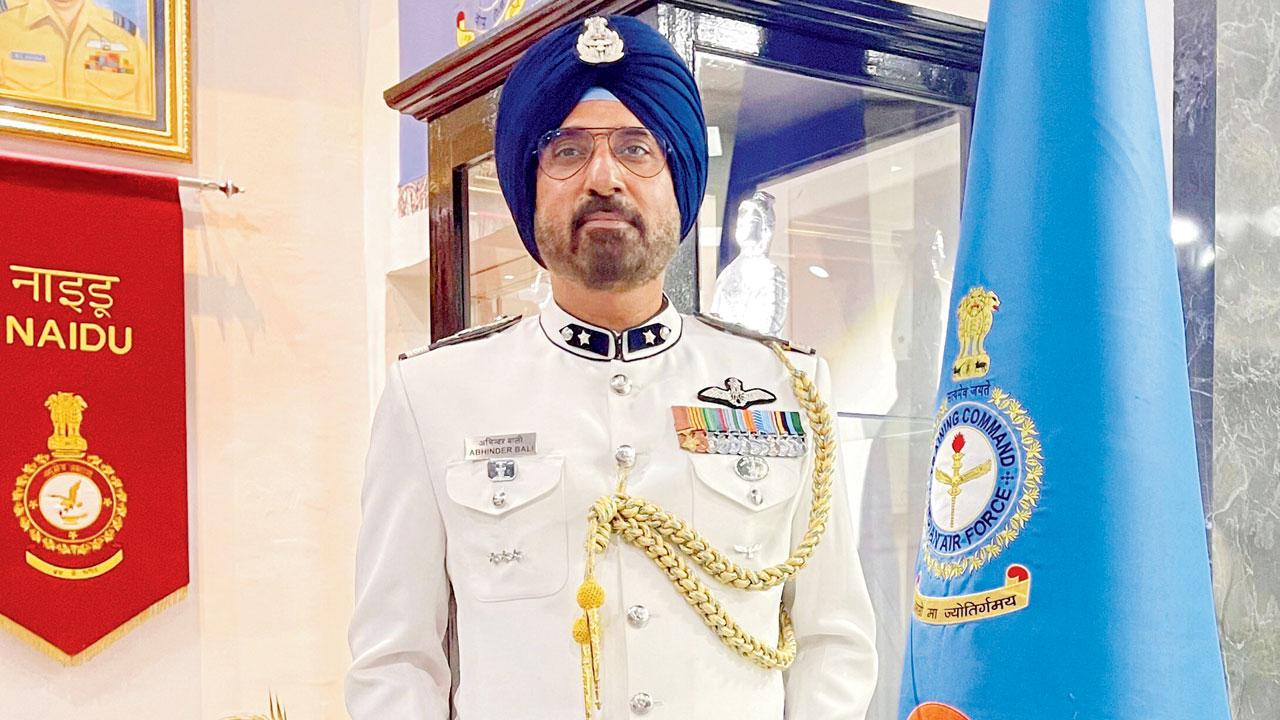
Fighter was so authentic that its screening got a standing ovation from the real heroes. Its co-producer, second unit director and writer, a former fauji, made it happen
Mitali Parekh (MID-DAY; February 11, 2024)
What the audience may not see, but any personnel from the Indian Air Force would is how the left shoulder of the uniform is the fun shoulder: “You can wear any badge you like there, with the permission of your Commanding Officer,” Ramon Chibb tells us over a video call from Goa where he is holidaying. “The right shoulder is for patches of the crafts you fly and the India patch.”
Minni [Squadron Leader Minal Rathore played by Deepika Padukone] wears a fun ‘Don’t Bug Me’ one as opposed to Patty’s [Hrithik Roshan as Squadron Leader Shamsher Pathania] and Bash’s [Basheer Khan, Akshay Oberoi] ‘Fighter Forever’. The lay audience may not register these details of authenticity, “but the Air Force did,” says Chibb gleefully, and you can tell that validation is enough. The screening of the movie for the armed forces ended with a standing applause.
Chibb co-produced the movie, wrote the screenplay and served as second unit director for Fighter. He also makes an appearance as Air Commodore Abhinder Bali, Chief Instructor at the Dundigal Air Force Academy in Hyderabad where Patty is transferred. Chibb served in the Infantry for five years, after being unable to follow his father into the IAF due to compromised eyesight. But he was, incidentally, at the commando training facility in Belgaum around the time Nana Patekar was preparing for his role in 1991 film Prahaar: The Final Attack. That movie, and 1982’s Vijeta are the two movies he credits with diving deep into research and firm marriage to authenticity. “It’s what Hollywood gets right,” he says, “When I see Gregory Peck in The Guns Of Navarone, I can see that they got the weapons he used right.”
Chibb, who later became a pilot and has a home next to the flight school in Hadapsar, Pune, wrote the story in 2015 and took it to director Siddharth Anand in 2016. “He said it wasn’t mass-y enough, ‘but let’s work on it together to make it into a film that could be understood by the audience’. Siddharth is a true cinema guy, he has a large vision.”
Pulwama and Balakot were added later, as was Minni, because women were allowed to serve as fighter pilots only in 2015. Chibb drew up a career sheet for each character: The posts they held, the medals they would have won, the crafts they would have flown and the wars they would have fought in to become the best air fighters in the country to be included into the Air Dragon team. It couldn’t be just because they were box office superstars.
So, Minni would be an all-weather pilot, a member of Sarang Aerobatic Display team, and be decorated with the Vayu Sena medal for an act of courage to be included into Group Captain Rakesh Jaisingh’s (Anil Kapoor’s Rocky) dream team. She would have been commissioned in 2010, have 1,500 hours of flying under her belt and served in Bikaner, Leh, Siachen, Ambala, and Hakimpet. Similarly,
“Fighters are split into two categories,” explains Chibb, fuelled evidently by enthusiasm, “into those who fly Russian and non-Russian aircrafts since we have a huge inventory of the former. Patty would have flown the Kiran, Pilatus PC 7, Mig 21 and 29, before coming to the Sukhoi 30—the first with a two-crew cockpit. It’s telling of his personality as a lone ranger and only child,” say Chibb, and it is also integral to the plot to have both protagonists—Roshan and Kapoor—in the climax.
“We had the blessing of the IAF from the beginning and shot at Tezpur, Dundidal and Pune air bases. Kudos to Siddharth that he let me run away with the details. ‘This is your world,’ he said, ‘Keep it real’. So even the walls of the houses are typically fauji—decorated with every photograph of the characters’ journey from being cadets to officers, with medals, emblems, swords of honour” of which we catch a glimpse in Bash and Patty’s homes.
Then there was the internalization of fauji codes: That there is a hierarchy that you obey without questioning; and manner of speech. Patty obeys his father’s orders to get tea for his friends more easily than he does his superiors. He asks for permission to speak from his superiors. “Hrithik bought into these nuances impeccably. He wanted to know all these things; he’ll make a great filmmaker,” says Chibb.
They also drop in easily into a peer’s place, as they do at Patty’s Jammu home, when a training gets cancelled. There are impromptu picnics and gatherings. “This is what I saw when growing up. People would land up at any time and say, ‘Ma’am khana khila do’. There is always the fear that one of them might not come back; so they party harder. We wanted to build all this into the film, and not just go, thak-thak-thak from one action scene to another.”
So, if you pay close attention to when we first hear Group Captain Jaisingh speak to his team, it’s in staccato. “That’s how officers brief. Anil sir would say to me, ‘Tu bol ke dikha’ and then repeat the dialogue, ‘Ab main bolta hoon’. He shadowed the Squadron Leader at Tezpur to get the mannerisms right,” he says. Squadron Leader Rathore’s character was based on all the women at flight school who were better than Chibb and “never let us hear the end of it. I always thought they made good pilots. They were more focussed, learned faster and of course, were not bogged down by us clowns.”
Chibb may not have realized his childhood dream, but it’s evident when we speak to him that he has been happy to do the next best thing: “I flew in those planes, shot them, and even rigged the camera on to them for some shots.”

Films often focus on the character rather than getting military details right, say experts
8:14 AM

The film Rustom (2016) got the Navy uniform wrong in many ways. Though it was set in the 1950s, Akshay Kumar’s character, naval officer Cdr K M Nanavati, wore the Kargil Star (1999) as well as other medals from recent decades. The name tag was also introduced in the 1970s
Niharika Lal (BOMBAY TIMES; October 22, 2021)
Soon after the release of the first poster of Akshay Kumar’s film Gorkha – where the actor is seen holding a khukri – former Army officer Major Manik M Jolly tweeted to Kumar, pointing out that a traditional khukri is different. He wrote, “Dear Akshay Kumar ji, as an ex Gorkha officer, my thanks to you for making this movie. However, details matter. Kindly get the Khukri right.(sic)” Kumar responded, “We’ll take utmost care while filming. I’m very proud and honoured to be making Gorkha. Any suggestions to get it closest to reality would be most appreciated.”
This isn’t the first time an officer has pointed out a mistake in Bollywood films. We spoke to a few officers from the armed forces and experts to understand why they often don’t get it right.
‘FILMMAKERS OFTEN DON’T DISCUSS DETAILS WITH MILITARY HISTORIANS, SO THEY GET THEM WRONG’
Experts say that most films can’t survive the test of accuracy because filmmakers don’t understand the nuances of the uniform, dialogues or weapons. A serving Army officer on condition of anonymity says, “The reason they don’t get it right is that they take shortcuts and do not want to get into details. While a war movie still has some nuances, if it’s a general movie where a character happens to be a military officer, it seems like they just randomly pick whatever uniform is available. Be it unit, core or colours – they get nothing right. Peace uniforms and combat gear is entirely different, but filmmakers do not differentiate.”
“Ribbons signify a lot in the military uniform, but they are used as an embellishment in Bollywood films, and so are caps. What usually happens is that filmmakers do not discuss this with military historians, and that’s why they don’t get those details right. I remember in the film Tirangaa (1993), there is a clip that introduces Raaj Kumar and it says that the Major was promoted to Brigadier. It is preposterous. But the focus for them was on Raaj Kumar’s character and not the wrong ranks they were using in dialogues. Similarly, in Jab Tak Hai Jaan, SRK’s character is so filmy, but then it is also the USP of the film,” says Gautam Chintamani, a film historian.

‘IN RECENT TIMES, URI AND SHERSHAAH HAVE GOTTEN IT RIGHT,THANKS TO ADVICE FROM MILITARY EXPERTS’
Film historian Gautam Chintamani points out that there are films like Govind Nihlani’s Vijeta (1982) or Prahaar: The Final Attack (1991), starring Nana Patekar, that have gotten it right. He says, “Even the war scenes in Chetan Anand’s Hindustan Ki Kasam (1973) were so good because they consulted the retired officers. In recent years, Uri (2019) and Shershaah (2021) were both bang-on in their depictions of the military. Right now there is a keen interest of the audience to see these characters, and even military officers are watching and responding, which is great.”
Uri, too, had former Army officers on board as advisors. Major General (Retired) A K Siwach, who was the Defence advisor for Uri, told us earlier, “I had asked for changes in the first draft of Uri and for them to revise the script again. I also told them to give the background of the operations and characters. Getting the nuances right is the most important thing for such films. For example, for the surgical strike scene, they wanted there to be a tunnel. I told them there are no tunnels there, make it caves. I have asked for changes several times.”

In Main Hoon Na (2004), Shah Rukh Khan’s character is of a Para Commando but the cap he wears is ceremonial
We are waiting for the cinemas to re-open; we will release Vijeta again-Subhash Ghai
8:18 AM

Even as he rues losses incurred during the lockdown, Subhash Ghai hopes to re-release Marathi film Vijeta that enjoyed only a day of theatrical run
Uma Ramasubramanian (MID-DAY; May 2, 2020)
 If Bollywood has suffered a severe blow due to the Coronavirus lockdown, smaller regional films have met harsher fate. Filmmaker Subhash Ghai laments that his Marathi production, Vijeta, was among the worst affected by the theatre shutdown that came into effect from March 14. "We had a premiere for the film on March 12, a day before its release. But on March 13, the theatre shutdown was announced, and we had to pull the film down. It was unfortunate that it enjoyed only a day of theatrical run," rues the producer.
The two rounds of lockdown extension have made matters worse as the losses are piling up with every passing day. Even as he refuses to put a number to the damages, Ghai admits, "I can't deny that the [lockdown] has affected us financially. It was a major setback for us, but we will fight this out together. We are waiting for the cinemas to re-open; we will release the film again."
Not one to be bogged down by the current scenario, the director is instead channelling his energy into developing his next. "I am writing a futuristic film that is set in 2024. Making such a movie is challenging because it is entirely based on one's imagination. We intend to roll by the year-end."
Marathi films feeling the Coronavirus fever
8:37 AM

With 20 movies including AB Aani CD lined up for release, regional cinema hit by lockdown; to clash with Bollywood biggies when theatres re-open
Upala KBR (MID-DAY; March 27, 2020)
 If Bollywood has been hit hard by the shutdown of theatres from March 14 and the subsequent lockdown, its Marathi counterpart has met harsher fate. While AB Ani CD — featuring Amitabh Bachchan in a special appearance — was one of the three releases that opened just for a day over the March 13 weekend, almost 20 Marathi movies were slated to release between April and June. Trade analysts believe the industry will suffer huge losses if the cloud of uncertainty doesn't disappear by June.
AB Ani CD producer Akshay Bardapurkar intends to release his project again if theatres re-open, as per plan, on April 14. "Amazon Prime, which owns the film's digital rights, asked me to release it now on their platform. But we refused as we want the film to get a theatrical release. We can pursue a theatrical release till May 6; post which it will drop on Amazon Prime."
 Bardapurkar warns that whenever the cinemas re-open, a battle for screen space will ensue. AB Ani CD, Vijeta (left; above) and Ibhrat (right) that are eyeing a re-release will jostle for space alongside new Marathi offerings. "These movies will also face competition from Bollywood films that are waiting in the wings. So, they may get comparatively lesser screens. Marathi cinema may incur losses to the tune of Rs 100 crore."
Trade analyst Taran Adarsh agrees that Hindi cinema's poorer cousin may have a tough road ahead. "Even if Bollywood filmmakers try to work on the dates [for the backlog of releases], how will they fit in regional movies? In Maharashtra, a Hindi film will get preference over a Marathi one."
However, all is not lost for regional films, argues trade watcher Atul Mohan. "Thanks to government support, each theatre has to allot a specific number of shows to them."
Marathi releases postponed after govt directs Maharashtra cinema halls to stay shut till March 30
8:14 AM

Mihir Bhanage (BOMBAY TIMES; March 16, 2020)
 Following the state government’s directive asking cinema halls to remain shut at least till March 30, the film industry has either pulled out films already in theatres or postponed those that were supposed to release this month. In Bollywood, the makers of Sooryavanshi pushed its release. On the other hand, Angrezi Medium, which released on Friday, has been pulled out and, as per a statement by director Homi Adajania, will be re-released when ‘it is safe to do so.’ With no option left, Marathi releases, too, have followed suit. The screenings of three Marathi films that released this Friday — Vijeta, AB Aani CD and Ibhrat — have been stopped, and the releases of at least three films have been postponed.
The makers of AB Aani CD posted a statement on their social media pages announcing that they were postponing the shows of the film to a further date when the situation is better. Speaking to us, the film’s producer Akshay Bardapurkar shares, “Public safety is of prime importance and that’s why we have no problem in pulling out the shows of our film. At the same time, we are prepared to re-release the film on any Friday after the govt deems it fit to reopen cinema halls. I am sure the audience will shower love on the film even then.”
Amol Shetge, the director of Vijeta, which too released on Friday, shared similar sentiments, saying prevention is better than cure. “It’s not just about the safety of moviegoers, but precautionary measures are important for everyone to control the spread of COVID-19. Yes, a lot of planning and monetary expenses go into the release of a film, but no business is more important than someone’s health, especially when we are talking about public health amidst the Coronavirus outbreak,” said Amol.
 While these two films had to bear the brunt just a day after their release, the other films that were to release later this month have also willingly backed out. Niraj Anand, producer of Ajinkya, which was to release next Friday, shared, “We were expecting a decision like this, but our promotion was ongoing and pre-planned. However, as soon as we were informed of the government’s decision, we put plan B in place and ceased further activity. Our film’s release was also pushed because the cinemas will be shut till March 30 at least.” The film’s director A Kadir added, “We hope the situation comes under control soon. Even after that, we will need to evaluate the market situation and plan our release accordingly, because all postponed films will be looking for releases as soon as possible.”
The makers of Neighbours, too, released an official statement announcing the postponement of its release. On his part, Subhash Ghai, who has produced Vijeta, said, “The entertainment industry has and will stand with the citizens in times of crisis. My loss in withdrawing the film is nothing compared to the health of my audience. It’s time we all exercise caution and follow the preventive measures laid out by the World Health Organisation (WHO). When we all are out of danger, I am sure movies will be there to provide entertainment.”
Makers agree that they will incur monetary losses but reiterate the public safety concern. Akshay shared, “Our promotion budget for the next 8-10 days will see a considerable addition for activities before the re-release of AB Aani CD, but it’s something we can’t shy away from.” Amol added, “The effect of coronavirus has already slowed the economy. Businesses will suffer, but what needs to be done, needs to be done. The better option is to unite and find a way out.”


Finding religion in Bollywood: An analysis by Devdutt Pattnaik
6:11 AM

Stereotyping in the film industry is a well-known fact and a part of its vocabulary
Devdutt Pattanaik (MUMBAI MIRROR; December 8, 2019)
A few years ago, a friend of mine told me about how Bollywood films stereotyped the Catholic community. They would show Catholic girls who wore short skirts as god-fearing, and their fathers were often portrayed as drunkards, mouthing English phrases. It was once a cunning trick used by Bollywood to show the legs and knees of women, which Hindu girls couldn’t show as they wore salwar kameezes and saris. The only way to show the knees was via a village belle with a flaring skirt. In the city it would be a Christian girl, who would most often portray a secretary.
That stereotyping goes on in the film industry is a well-known fact; it is part of the Bollywood vocabulary. Some argue that any attempt to show Christians in an alternate way, confuses people and they are not able to identify such characters. A classic case of this is a film called Vijeta (1982), where the religion of the characters is not very obvious; therefore, the audience is not able to figure it out as much as in Julie (1975).
How do you visualise Muslims on television? They have to wear skullcaps. The women have to wear headscarves or long dangly earrings. They have to be associated with namaz. In the same way, to show a Hindu family, we will typically show the Ekta Kapoor-style of aarti, to a marble statue of Krishna or Ram or Ganesha or Hanuman. Rituals can be shown on camera, and so the love for festivals, like Holi and Diwali, and whirling dervishes for Islam.
People have often pointed out how Shah Rukh and Salman Khan, like Amjad Khan earlier, have been made to sing and dance to songs about Ganesha — this is part of the right-wing agenda to mainstream Hinduism and dominate the film industry. The sudden rush of movies being done by Akshay Kumar is a way of overshadowing the Khan legacy, say conspiracy theorists.
The Left has also used the film industry to create its own propaganda. Art films were left-wing. Quite a few showed the truth of poverty; but in those films the villain would invariably be a Baniya or a Brahmin. They were exploiters and lecherous men. Truth or stereotype?
The camera demands a particular vocabulary in order to present religion or politics. You see this across films, in both mainstream and the artistic genre. Religious politics is being played constantly by different people. There are ‘sanskaari’ films that subjugate women by showing good women as being obedient and bad women as those who smoke. Gay men tend to be effeminate, because a non-effeminate gay man is not identifiable to the public. Likewise, lesbian movies become difficult for people to understand because there is no visual vocabulary. Two girls dancing around the trees could be friends. Two men dancing around the trees could be just a parody, depicting friends acting mischievously.
But regular folks do not live Bollywood lives. It is quite possible to be a Hindu without having a puja room, or a photograph of a deity in the house. The ‘Hindu’ need not wear a dhoti or sari, or be overly religious. His marriage can take place in court. His religion may be private reflections on the Gita or Upanishads. His religion may be an occasional pilgrimage.
This does not bode well for Bollywood. A name like Rahul does not necessarily mean Hindu. It could be Rahul Gonsalves. This makes it difficult for filmmakers who seek to portray religion on screen. We need vibrant visual codes that people can make sense of. A starched white cotton garment remains the code of politicians, good or bad. And the code for an aggressive Hindutva-asserting Hindu is now anchored on the colour saffron, and a vertical red tilak.
When will Bollywood gets its blockbuster war film?
7:47 AM

Aarushi Nigam (BOMBAY TIMES; December 8, 2017)
We love our movies. And we love our armed forces. But the powers of association alone are not enough to make us love our movies on the armed forces. While almost every major actor has played a soldier at least once, and a few others have made it a career regular, only a small percentage of those films is actually about the forces (and not a plot device to complicate a love story), and even a smaller percentage has clicked with audiences. Where is our blockbuster war film? Or one that swept away the National Awards and the box office? While tributes pour in for our men and women in uniform from all quarters including the film industry today, the best kind of tribute to our forces from the film industry – a defining, universally-appreciated war drama – is still missing. And as an audience, while the service and sacrifice of our uniformed forces might ignite our collective passions, the same can’t be said of consuming that topic on the big screen.
THE POST-WAR YEARS AND CINEMA
The conflicts of 1962, 1965 and 1971 inspired several films that rode the wave of nationalistic sentiment sweeping through the country at the time. Haqeeqat (1964) and Border (1997), based on the Sino-Indian conflict and the 1971 war with Pakistan respectively, are perhaps our only two war films that can be unquestionably called successful, in terms of winning over both critics and audiences. Many others, like Hindustan Ki Kasam (1973) and Vijeta (1982), will find mention among the better films on the forces to be made, and are remembered till today even though they failed to pull in audiences at the time. The 2017 film The Ghazi Attack, about the mysterious sinking of the PNS Ghazi in the 1971 war, suffered its own mysterious sinking — it earned positive reviews, but not box office numbers. 1971 (2007) might have won the National Award for Best Hindi Feature Film, but mention it to most and you wouldn’t get an immediate recollection.
The Kargil War, the first to be fought in the 24-hour news cycle that brought the war to our living rooms and nationalistic fervour out on our streets, failed to inspire the same zeal on the silver screen. The long-winding and multi-heroed L.O.C. Kargil could keep neither the viewers nor the critics glued, even as real-life accounts from the war, retold in countless Facebook posts, news articles and books,continue to find takers till today.
FICTIONAL CONFLICTS ON THE SILVER SCREEN
There have been other films with fictional stories set in the backdrop of real conflicts, but most haven’t come even close to being successful. The most enduring image from the 2011 Mausam might be of Shahid Kapoor in his Air Force uniform, but the image is all that still remains in audience memory. Others, including Param Vir Chakra (1995), Agnipankh (2004), Deewaar – Let’s Bring Our Heroes Home (2004) and Ab Tumhare Hawale Watan Saathiyo (2004), haven’t survived the test of time barely gone by since they released.
With a history like this, Pakistan will ban anything based on reality
8:13 AM

The Pakistani establishment didn't need to watch Phantom before banning it. The film is based on 2611, after all, and which narrative of the terror strike will gel well with powers that side of the border? Given our history, it's no wonder that the real-life topics Bollywood explores -from war to terror -leave our neighbour jittery, irrespective of the movies' actual content
Anshul Chaturvedi & Aarushi Nigam (BOMBAY TIMES; September 1, 2015)
It's a globally-wanted
terrorist wanting Phantom to be banned today, it was a government agency
which didn't like Agent Vinod yesterday, it, it could be an outraged TV
host wanting to stop Indian movies altogether, or a pressure group
demanding a ban on another Bollywood release tomorrow. Whichever the
aggrieved party be, there is bound to be 'something' in every other
Bollywood film that has a Pakistan context which will irk someone in
that country. And perhaps that can't be helped. Think of the most
high visibility points which a filmmaker will have for reference if he
wants a real
life peg in Indo-Pak relations, and you think of Partition, the Kashmir
conflict, the 1965 war, the 1971 war, the 1999 Kargil conflict, and then
the 26/11 terror attacks. While the past few years have seen a far
higher proportion of cinema which does away with the anti-Pakistan pitch,
portrays the people (if not the government) in a friendly light, and
doesn't pander to hysteria or jingoism, there's an interesting footnote:
Almost all the films with a nicer, sweeter storyline to them are based
on fictitious stories, while almost all the ones that have an edgier,
likely-to-be-banned storyline are based in one way or another on the
half-a-dozen flashpoints in the not-so-friendly history that India and
Pakistan share. Since Phantom is,
post-ban, part of the latter group, here's a quick recap of how that
script has played out in Bollywood over the years:
THE JINGOISTIC POST-WAR YEARS, AND THE FULL-TIME BAN
Anti-Pakistan sentiment ran high after the wars of 1947-48, 1965 and 1971, and the prevailing distrust between the two countries in those years was mirrored by cinema. Hindustan Ki Kasam (1973), which was based on Operation Cactus Lily in the 1971 war, opens with the Pakistan Air Force raiding an IAF airbase and Raj Kumar swearing on the body of a dead crewman, “Jawaab dene aaunga, is jawan ki kasam, Hindustan ki kasam“.
The 'we will show them' sentiment continued through films like Aakraman (1975) and later in films like Vijeta (1982) and Border (1997). The multi-starrer Border which did pretty well at the box office, zoomed in on the Battle of Longewala, from the romantic back-stories of its leading officers to their detailed, gory deaths, to the final moments leading to India's victory. The Indian Army itself questioned some of the specifics, but for the public, the emotion was enough. And given that Pakistan had banned the screening of 'all' Indian movies after the 1965 war, no filmmaker had an incentive to paint a wider canvas that could appeal to audiences on both sides of the border. Even if you had a Pakistan-friendly tone to your movie, the neighbouring country wasn't going to let you screen it there anyway.

POST KARGIL: SUNNY PAAJI'S HANDPUMP AND THE L.O.C
India's first modern war, fought in the 24-hour news cycle, “rejuvenated nationalism“ in the words of one news anchor, and spawned several films on the war itself and on the Indo-Pak relationship - or, rather, the lack of one. Pictures and tales of bravery of young, martyred war heroes fired collective passions (who can forget Captain Vikram Batra and his war cry of 'yeh dil maange more'?), and also gave Bollywood a fail-safe formula. Gadar: Ek Prem Katha (2001) came when war wounds were fresh and though it was based not on Kargil but on the painful subject of the Partition, Sunny Deol single-handedly pummeling those Pakistanis who tried to keep away his wife from him and her from their son was irresistible, and a massive hit. LOC Kargil (2003) had a multi-star cast playing the real men who led the Kargil effort, bringing the dashing and the daredevilry of the likes of Captain Batra, Captain Vijayant Thapar, Captain Manoj Kumar Pandey, and Captain Anuj Nayyar alive to tug at thousands of heartstrings. It played wholeheartedly to the post-war gallery with its detailed scenes of major battles and main characters' deaths, copious exchanges of insults between the two sides during gunbattles, and showing Pakistani troops as complete villains - remember the apparently-true tale of one enemy soldier asking for Madhuri Dixit to end the war, and Abhishek Bachchan dousing the lot of them in bullets before responding with, 'from Madhuri, with love'?
It didn't end there. There was much Pak-bashing that followed the theme of Pakistan as a terrorist factory. Gadar director Anil Sharma's Ab Tumhare Hawale Watan Saathiyo (2004) was a mishmash of everything wrong that Pakistan could do, from war to capturing and torturing Indian soldiers to sponsoring a terror plot to bomb Amarnath, but perhaps as a sign of the gradually changing times, the film did an abrupt U-turn in the end as India and Pakistan shake hands and agree to fight terrorism together. Deewaar: Lets Bring Our Heroes Home (2004) was about a bunch of Indian POWs forgotten in a Pak jail for 33 years and their bid to escape, as was 1971, the movie for which Manoj Bajpayee got a National Award as best actor, but apparently, no one other than the jury actually watched the film. Zameen (2003) was based on the attack on the Indian Parliament and the IC 814 hijack. Neither Deewaar nor Zameen was exactly praised for being true-to-life, but both rode the jingoistic horse high. Sunny Deol's roaring act continued with Maa Tujhe Salaam (2002), and the film ended up being banned even in Britain as it offended the Pakistani diaspora.
BEYOND THE WAR ZONE, THE BAN REVERSAL, AND THE AGENTS
In more recent years, two things happened. One, the blanket ban on the screening of Indian movies in theatres was lifted by Pervez Musharraf in 2006, and so Indian filmmakers began to find a new market to tap, one that would perhaps subtly influence how films were structured. It may be a coincidence, but no further movies around an Indo-Pak military conflict have been made since then. Two, as the battle itself shifted from the borders to the more rarified world of intelligence and covert operations, we had a shift of scene: Instead of posters of soldiers with guns at the border, we now had a surplus of movies about intelligence agents. Now, while the RAW vs ISI game was as 'real' as Kargil, we don't really have live TV coverage of intelligence operations, and so the line between fact and fiction is difficult to place, giving filmmakers far greater creative licence than earlier movies on the more visible conflicts had. Given the popularity that the RAW enjoys in Pakistan, though, it is little surprise that movies like Agent Vinod and Ek Tha Tiger did not find a loving welcome and the Pakistani regime predictably opted to not have tales of flamboyant Indian agents getting the better of Pak intelligence played out on cinema screens. And so, given that tradition, Phantom now joins the illustrious list of movies that Pakistani authorities feel are better off not crossing the border, even though it's made by the same director who recently made Bajrangi Bhaijaan, a movie that some felt was the most Pakistan-friendly mainstream production to come out of India in decades.
Not that it means these 'banned' films have not been 'watched' in Pakistan, or that Phantom won't be. As the judge hearing the case filed by Hafiz Saeed in the Lahore High Court asked the counsel for the government, even if the movie is banned in cinemas, what can the government do to stop its CDs from being available in the market? What, indeed? Now that's one form of cross-border infiltration nobody's been able to check in all these years.
FOR DOSTI, THERE'S ALWAYS FICTION
"How could I make Bajrangi Bhaijaan if I was anti-Pakistan?“ was Kabir Khan's aggrieved response after Phantom got banned there. Perhaps he thought Bajrangi's saccharine-loaded tale was enough to buy him the trust of handling everything Pak-related with 'sensitivity' (this is the same guy who made Bajrangi, so this too must be coming from the same place. Never mind that it brands Pakistan as the brains behind a real-life terror plot and sends Indian agents on an assassin's quest). Umm, no. Sensitivity got nothing to do with it.
Bajrangi's goodwill isn't enough to make Phantom accepted in Pakistan, simply because its basic plot is the single most acrimonious point (okay, maybe not single) of difference between the two nations. So, it can be completely based on facts and not cooked-up lies about Pakistan, and may not demonise its entire population, but if the subject is enough to derail high-level talks between the neighbours several times, what chance does a mere film stand? Khan places too much faith in the power of reason.
If most Bollywood films based on the flashpoints of the Indo-Pak relationship aren't too loved by 'sarhad paar' headquarters no matter how nuanced, it's because those flashpoints are all of conflict. So what's a film got to do when it wants to be all about 'mulk, mohabbat and and dosti', aka Bajrangi? It needs to not draw inspiration from fact and reality (well, lots of Munnis emerged after BB so we don't know about that now). But an Indian smuggling a 'human' into Pakistan with no documents and at the mercy of strangers, and emerging not just in one piece but also much-loved - just how many planets would have to align to make even a fraction of this true? Fiction, when it comes to us and Pakistan, is what makes us realise how much we can love each other, because the newspapers can't. And makes us cry buckets at the cinema.
Whether it was Refugee's stateless baby born at (on?) the border that gave the message of peace, or Welcome 2 Karachi's bumbling idiots inadvertently exposing the futility of terrorism and war, Bollywood has had to be pretty creative to push its 'two-nations-ek-jaan' theory , because reality is no help at all. We exchange plenty of fire, insults and allegations but get equally misty-eyed when a Hindu Qaidi No 786 in Veer-Zaara asks, “Woh kehta hai yeh tera des nahi, phir kyun mere des jaisa lagta hai. Woh kehta hai main uss jaisa nahin, phir kyun mujh jaisa woh lagta hai?“ or when a Pakistani lawyer fights tooth and nail to reunite him with his long-lost Pakistani lover who has made India her home in his memory. We might watch most of Ek Tha Tiger's 'sleeping with the enemy' saga with bemusement, but still root for the agents-turned-lovers as their secret services try to gun them down. Tere Bin Laden satirises the mess that became America's war on terror in Pakistan and then gifts a happy ending to the protagonist who faked Osama's interview and precipitated an international crisis.
Fake or real, slowly, taali and seeti moments in cinema about Pakistan-bashing have been replaced by equivalent taali and seeti moments of loving thy neighbour. For the paisa-vasool brand of films, uprooting hand pumps and shouting death to Pakistan stopped being a formula for cheers years ago, only, whenever a film has to shout 'we love you Pakistan', it needs to create a story from scratch. But in this genre at least, masala Bollywood has shown it is capable of nuance Pakistan isn't the devil, people both sides of the border are, and aren't. And finally , who can hate such pretty faces as Katrina's and Munni's?
THE JINGOISTIC POST-WAR YEARS, AND THE FULL-TIME BAN
Anti-Pakistan sentiment ran high after the wars of 1947-48, 1965 and 1971, and the prevailing distrust between the two countries in those years was mirrored by cinema. Hindustan Ki Kasam (1973), which was based on Operation Cactus Lily in the 1971 war, opens with the Pakistan Air Force raiding an IAF airbase and Raj Kumar swearing on the body of a dead crewman, “Jawaab dene aaunga, is jawan ki kasam, Hindustan ki kasam“.
The 'we will show them' sentiment continued through films like Aakraman (1975) and later in films like Vijeta (1982) and Border (1997). The multi-starrer Border which did pretty well at the box office, zoomed in on the Battle of Longewala, from the romantic back-stories of its leading officers to their detailed, gory deaths, to the final moments leading to India's victory. The Indian Army itself questioned some of the specifics, but for the public, the emotion was enough. And given that Pakistan had banned the screening of 'all' Indian movies after the 1965 war, no filmmaker had an incentive to paint a wider canvas that could appeal to audiences on both sides of the border. Even if you had a Pakistan-friendly tone to your movie, the neighbouring country wasn't going to let you screen it there anyway.
POST KARGIL: SUNNY PAAJI'S HANDPUMP AND THE L.O.C
India's first modern war, fought in the 24-hour news cycle, “rejuvenated nationalism“ in the words of one news anchor, and spawned several films on the war itself and on the Indo-Pak relationship - or, rather, the lack of one. Pictures and tales of bravery of young, martyred war heroes fired collective passions (who can forget Captain Vikram Batra and his war cry of 'yeh dil maange more'?), and also gave Bollywood a fail-safe formula. Gadar: Ek Prem Katha (2001) came when war wounds were fresh and though it was based not on Kargil but on the painful subject of the Partition, Sunny Deol single-handedly pummeling those Pakistanis who tried to keep away his wife from him and her from their son was irresistible, and a massive hit. LOC Kargil (2003) had a multi-star cast playing the real men who led the Kargil effort, bringing the dashing and the daredevilry of the likes of Captain Batra, Captain Vijayant Thapar, Captain Manoj Kumar Pandey, and Captain Anuj Nayyar alive to tug at thousands of heartstrings. It played wholeheartedly to the post-war gallery with its detailed scenes of major battles and main characters' deaths, copious exchanges of insults between the two sides during gunbattles, and showing Pakistani troops as complete villains - remember the apparently-true tale of one enemy soldier asking for Madhuri Dixit to end the war, and Abhishek Bachchan dousing the lot of them in bullets before responding with, 'from Madhuri, with love'?
It didn't end there. There was much Pak-bashing that followed the theme of Pakistan as a terrorist factory. Gadar director Anil Sharma's Ab Tumhare Hawale Watan Saathiyo (2004) was a mishmash of everything wrong that Pakistan could do, from war to capturing and torturing Indian soldiers to sponsoring a terror plot to bomb Amarnath, but perhaps as a sign of the gradually changing times, the film did an abrupt U-turn in the end as India and Pakistan shake hands and agree to fight terrorism together. Deewaar: Lets Bring Our Heroes Home (2004) was about a bunch of Indian POWs forgotten in a Pak jail for 33 years and their bid to escape, as was 1971, the movie for which Manoj Bajpayee got a National Award as best actor, but apparently, no one other than the jury actually watched the film. Zameen (2003) was based on the attack on the Indian Parliament and the IC 814 hijack. Neither Deewaar nor Zameen was exactly praised for being true-to-life, but both rode the jingoistic horse high. Sunny Deol's roaring act continued with Maa Tujhe Salaam (2002), and the film ended up being banned even in Britain as it offended the Pakistani diaspora.
BEYOND THE WAR ZONE, THE BAN REVERSAL, AND THE AGENTS
In more recent years, two things happened. One, the blanket ban on the screening of Indian movies in theatres was lifted by Pervez Musharraf in 2006, and so Indian filmmakers began to find a new market to tap, one that would perhaps subtly influence how films were structured. It may be a coincidence, but no further movies around an Indo-Pak military conflict have been made since then. Two, as the battle itself shifted from the borders to the more rarified world of intelligence and covert operations, we had a shift of scene: Instead of posters of soldiers with guns at the border, we now had a surplus of movies about intelligence agents. Now, while the RAW vs ISI game was as 'real' as Kargil, we don't really have live TV coverage of intelligence operations, and so the line between fact and fiction is difficult to place, giving filmmakers far greater creative licence than earlier movies on the more visible conflicts had. Given the popularity that the RAW enjoys in Pakistan, though, it is little surprise that movies like Agent Vinod and Ek Tha Tiger did not find a loving welcome and the Pakistani regime predictably opted to not have tales of flamboyant Indian agents getting the better of Pak intelligence played out on cinema screens. And so, given that tradition, Phantom now joins the illustrious list of movies that Pakistani authorities feel are better off not crossing the border, even though it's made by the same director who recently made Bajrangi Bhaijaan, a movie that some felt was the most Pakistan-friendly mainstream production to come out of India in decades.
Not that it means these 'banned' films have not been 'watched' in Pakistan, or that Phantom won't be. As the judge hearing the case filed by Hafiz Saeed in the Lahore High Court asked the counsel for the government, even if the movie is banned in cinemas, what can the government do to stop its CDs from being available in the market? What, indeed? Now that's one form of cross-border infiltration nobody's been able to check in all these years.
FOR DOSTI, THERE'S ALWAYS FICTION
"How could I make Bajrangi Bhaijaan if I was anti-Pakistan?“ was Kabir Khan's aggrieved response after Phantom got banned there. Perhaps he thought Bajrangi's saccharine-loaded tale was enough to buy him the trust of handling everything Pak-related with 'sensitivity' (this is the same guy who made Bajrangi, so this too must be coming from the same place. Never mind that it brands Pakistan as the brains behind a real-life terror plot and sends Indian agents on an assassin's quest). Umm, no. Sensitivity got nothing to do with it.
Bajrangi's goodwill isn't enough to make Phantom accepted in Pakistan, simply because its basic plot is the single most acrimonious point (okay, maybe not single) of difference between the two nations. So, it can be completely based on facts and not cooked-up lies about Pakistan, and may not demonise its entire population, but if the subject is enough to derail high-level talks between the neighbours several times, what chance does a mere film stand? Khan places too much faith in the power of reason.
If most Bollywood films based on the flashpoints of the Indo-Pak relationship aren't too loved by 'sarhad paar' headquarters no matter how nuanced, it's because those flashpoints are all of conflict. So what's a film got to do when it wants to be all about 'mulk, mohabbat and and dosti', aka Bajrangi? It needs to not draw inspiration from fact and reality (well, lots of Munnis emerged after BB so we don't know about that now). But an Indian smuggling a 'human' into Pakistan with no documents and at the mercy of strangers, and emerging not just in one piece but also much-loved - just how many planets would have to align to make even a fraction of this true? Fiction, when it comes to us and Pakistan, is what makes us realise how much we can love each other, because the newspapers can't. And makes us cry buckets at the cinema.
Whether it was Refugee's stateless baby born at (on?) the border that gave the message of peace, or Welcome 2 Karachi's bumbling idiots inadvertently exposing the futility of terrorism and war, Bollywood has had to be pretty creative to push its 'two-nations-ek-jaan' theory , because reality is no help at all. We exchange plenty of fire, insults and allegations but get equally misty-eyed when a Hindu Qaidi No 786 in Veer-Zaara asks, “Woh kehta hai yeh tera des nahi, phir kyun mere des jaisa lagta hai. Woh kehta hai main uss jaisa nahin, phir kyun mujh jaisa woh lagta hai?“ or when a Pakistani lawyer fights tooth and nail to reunite him with his long-lost Pakistani lover who has made India her home in his memory. We might watch most of Ek Tha Tiger's 'sleeping with the enemy' saga with bemusement, but still root for the agents-turned-lovers as their secret services try to gun them down. Tere Bin Laden satirises the mess that became America's war on terror in Pakistan and then gifts a happy ending to the protagonist who faked Osama's interview and precipitated an international crisis.
Fake or real, slowly, taali and seeti moments in cinema about Pakistan-bashing have been replaced by equivalent taali and seeti moments of loving thy neighbour. For the paisa-vasool brand of films, uprooting hand pumps and shouting death to Pakistan stopped being a formula for cheers years ago, only, whenever a film has to shout 'we love you Pakistan', it needs to create a story from scratch. But in this genre at least, masala Bollywood has shown it is capable of nuance Pakistan isn't the devil, people both sides of the border are, and aren't. And finally , who can hate such pretty faces as Katrina's and Munni's?


Shashi Kapoor's son Kunal returns to the screen after 30 years with Singh Is Bliing
8:04 AM

He was last seen in Trikal in '85, has agreed to play Amy Jackson's doting dad in Akshay Kumar's upcoming comedy
Roshmila Bhattacharya (MUMBAI MIRROR; June 25, 2015)
Kunal Kapoor who was last seen on screen in 1985 as Kapitan Ribeiro/Governor in Shyam Benegal's Trikal (Past, Present, Future) has been cajoled by Ashvini Yardi to face the camera again, in her upcoming Akshay Kumar starrer, Singh Is Bliing. He will play Amy Jackson's dashing and doting dad based in Europe.
Ashvini succeeded where Salman Khan had failed. While they were shooting Jai Ho! in Romania last year, Salman tried to convince Kunal, who was line producing the film in Europe for him, to return to acting. Like he'd done with others before him, Shashi Kapoor's suave son laughed off Salman's bullying saying, "Come on, I can't go back to acting after 30 years!"
However, Ashvini who's an old friend and has done a commercial with him earlier, refused to take 'no' for an answer. Kunal was the first choice for the role and since he'd not been seen on screen for three decades, would add to the fresh cast. "She convinced me by using her charm and twisting my arm," he guffaws.
Kunal admits that while there have been plenty of offers earlier too, it was easy for him to shrug them off because he was always more interested in editing and directing. "Direction, in particular, I did not miss acting at all," he asserts.
He was launched as an actor in '82 in Vijeta produced by his father Shashi Kapoor and directed by Govind Nihalani. It also featured Shashi, Rekha, Amrish Puri and Supriya Pathak.
Vijeta is the coming-of-age story of Angad who, confused like any other teenager, is trying to find himself. Also, caught between the marital problems of his Maharashtrian mother and Punjabi father, he has to decide decide what he wants to do with his life. He chooses to become a fighter pilot with the Indian Air Force. What follows is his struggle to become a victor both in his own eyes and that of the world.
"Vijeta took a lot from me. It was a difficult shoot. I had to undergo intense training and be very fit since I played an Air Force cadet. But it was a special film and I enjoyed it, just as much as I enjoyed Utsav and Trikal for different reasons," he reminisces.
His daughter, Shaira is going to the UK to get a diploma in production designing. She was in Sri Lanka for a year working on Anurag Kashyap's Bombay Velvet.
His son, Zahan, has been assisting, also editing and directing his own films. And now is beginning to show some interest in acting too. Will he produce a film to launch Zahan as an actor and Shaira as a production designer? ""No, I won't do it to launch them. But If I do make a film and they fit the part, I might cast them," says Kunal.
So, there are plans of making a movie. "I have a few ideas," he admits. When will it roll? "I could roll tomorrow if someone gives me a cheque," he chuckles.
Woudn't he want to produce it under his father's banner? "I'm not sure, Filmwallas is dad's banner. I could do it under his banner or create a banner of my own," he muses.
For now though, the focus is on Singh is Bliing which starts shooting in 10 days. Kunal is flying off to London today on some personal work. "I believe they will be shooting in Europe. If they do, I will fly out from London directly. Or else I will come back to Mumbai and join the team where ever they are," he says.
Prod him on the role, and he admits that he's clueless. "We haven't started shooting yet. So I have no idea what my scenes are like. All I know is that the film is a comedy and I'm not playing a sardar. So, in that way it's different from Vijeta," he says.
But isn't a comedy easier than an intense film like Vijeta? "No both give me sleepless night," he quips.

Shashi Kapoor honoured with Dadasaheb Phalke Award; Kunal Kapoor, Shabana Azmi speak up
7:58 AM

As Shashi Kapoor is honoured with the Dadasaheb Phalke Award, we bring you the man and the filmmaker loved by all.
Roshmilla Bhattacharya (MUMBAI MIRROR; March 24, 2015)
Gentleman actor
When the name of the next Dadasaheb Phalke awardee was announced on Monday, the news was met with cheers as it was none other than Bollywood's evergreen charmer Shashi Kapoor.
The reigning heartthrob of the '70s, a pioneering crossover star, a leading patron of theatre and a producer of good cinema, the 77-year-old star of iconic films like Deewar, Satyam Shivam Sundaram, Trishul, Kabhi Kabhie and Junoon, has held sway over audiences for many decades now.
The veteran actor-producer is the 46th winner of the honour conferred by the Indian government for outstanding contribution to the growth and development of Indian Cinema. He joins father Prithviraj Kapoor and brother Raj Kapoor in the haloed halls of Phalke winners.
Shashi began his tryst with acting at the age of four, with plays directed and produced by his father. He made his debut as a leading man in the 1961 film Dharmputra, and went on to do over 100 Hindi films.
He was also one of India's first actors to go international, collaborating with Ismail Merchant and James Ivory on films like The Householder (1963), Shakespeare Wallah (1965) and Bombay Talkie.
Even as he juggled acting, he produced critically acclaimed films like 36 Chowringhee Lane, Junoon, Kalyug and Vijeyta and turned director with Ajooba. He also revived his father's Prithvi Theatre, along with his late wife Jennifer Kendal.

'I was a crazy fan'
Shabana Azmi talks about her first co-star who never had a kind word to say to her but was rock solid in a crisis.
I would save my pocket money to buy Shashi Kapoor's posters from Grant Road which I would get him to autograph when he came to Prithvi Theatre on Sunday. I was a crazy fan and to suddenly land a role opposite my childhood idol in Shabana Azmi was unbelievable!
On the first day, we were shooting the song Dil mein tujhe bitha ke. During rehearsals when the dance director, Satyanarayan, demonstrated the moves, I was aghast! I couldn't get so intimate with Shashi Kapoor, I told my hairdresser, and burst into tears in my make-up room.
Minutes later, my hero was banging on the door wanting to know what the problem was. When I tearfully explained, he mocked, "Mummy, mummy mujhe actor banna hai!" Calling me a silly girl, he told me to come out when the shot was ready. When I arrived on the set, I found that he had changed all the moves so I'd be more comfortable.
He never had a kind word to say to me. He always scolded, bullied or made fun of me. But in a crisis, he was rock solid. In '86 I had taken up the cause of slum dwellers in Colaba whose homes had been demolished to make way for an MLA hostel. We knocked on several doors, demanding alternate housing for them, before Anand Patwardhan and I, along with three slum dwellers, went on a hunger strike.
No actor had gone on a hunger strike before and our fraternity was confused about whether to express support for me. On the fifth day, my blood pressure started falling and my mother was worried. Shashi Kapoor turned up wanting to know our demands. He left soon after and went straight to the Chief Minister, Shankarrao Chavan, telling him that the film industry had always supported the government in a crisis and he couldn't let the demands of one of its members go unheard. The Housing Minister conceded to them on the CM's instructions and urged me to have a glass of juice.
I was on stage, about to thank Shashi Kapoor for negotiating the deal for us, when I saw him step away from the media glare, slip away into an alley and disappear. He didn't want any accolades and never spoke about it, ever. That's the kind of person he is.
He was the only mainstream actor at the time who put his money, not into real estate or any other speculative business, but into theatre and cinema that wasn't commercially safe. Films like 36 Chowringhee Lane, Junoon, Kalyug and Vijeta. Aparna Sen, whose 36 Chowringhee Lane he produced, admits she's never known a more generous producer. I can attest to that. During Junoon which featured many theatre actors, moving away from the norm, he refused to segregate his cast into 'small' and 'big' actors and insisted everyone be put up in the same good hotel.
When we went for the Moscow Film Festival, with just eight dollars in foreign exchange, we were all strapped for cash. But despite the presence of bigwigs like FC Mehra and Raj Kapoor, Shashi Kapoor footed every bill.
I'm over the moon to know that he's the recipient of this year's Dadasaheb Phalke Award. He has been a trailblazer in so many ways. He was the first actor to have worked in Hollywood.... The first mainstream actor who on turning producer made art cinema.... He built an institution like Prithvi Theatre which has given the city a vibrant cultural space. All that he earned he gave back to the world of art.
I would save my pocket money to buy Shashi Kapoor's posters from Grant Road which I would get him to autograph when he came to Prithvi Theatre on Sunday. I was a crazy fan and to suddenly land a role opposite my childhood idol in Shabana Azmi was unbelievable!
On the first day, we were shooting the song Dil mein tujhe bitha ke. During rehearsals when the dance director, Satyanarayan, demonstrated the moves, I was aghast! I couldn't get so intimate with Shashi Kapoor, I told my hairdresser, and burst into tears in my make-up room.
Minutes later, my hero was banging on the door wanting to know what the problem was. When I tearfully explained, he mocked, "Mummy, mummy mujhe actor banna hai!" Calling me a silly girl, he told me to come out when the shot was ready. When I arrived on the set, I found that he had changed all the moves so I'd be more comfortable.
He never had a kind word to say to me. He always scolded, bullied or made fun of me. But in a crisis, he was rock solid. In '86 I had taken up the cause of slum dwellers in Colaba whose homes had been demolished to make way for an MLA hostel. We knocked on several doors, demanding alternate housing for them, before Anand Patwardhan and I, along with three slum dwellers, went on a hunger strike.
No actor had gone on a hunger strike before and our fraternity was confused about whether to express support for me. On the fifth day, my blood pressure started falling and my mother was worried. Shashi Kapoor turned up wanting to know our demands. He left soon after and went straight to the Chief Minister, Shankarrao Chavan, telling him that the film industry had always supported the government in a crisis and he couldn't let the demands of one of its members go unheard. The Housing Minister conceded to them on the CM's instructions and urged me to have a glass of juice.
I was on stage, about to thank Shashi Kapoor for negotiating the deal for us, when I saw him step away from the media glare, slip away into an alley and disappear. He didn't want any accolades and never spoke about it, ever. That's the kind of person he is.
He was the only mainstream actor at the time who put his money, not into real estate or any other speculative business, but into theatre and cinema that wasn't commercially safe. Films like 36 Chowringhee Lane, Junoon, Kalyug and Vijeta. Aparna Sen, whose 36 Chowringhee Lane he produced, admits she's never known a more generous producer. I can attest to that. During Junoon which featured many theatre actors, moving away from the norm, he refused to segregate his cast into 'small' and 'big' actors and insisted everyone be put up in the same good hotel.
When we went for the Moscow Film Festival, with just eight dollars in foreign exchange, we were all strapped for cash. But despite the presence of bigwigs like FC Mehra and Raj Kapoor, Shashi Kapoor footed every bill.
I'm over the moon to know that he's the recipient of this year's Dadasaheb Phalke Award. He has been a trailblazer in so many ways. He was the first actor to have worked in Hollywood.... The first mainstream actor who on turning producer made art cinema.... He built an institution like Prithvi Theatre which has given the city a vibrant cultural space. All that he earned he gave back to the world of art.

'When he heard the news, dad smiled, laughed a little'
 Kunal Kapoor, Shashi Kapoor's son, goes back in time to remember his father who never brought work home.
 Dad never gave much importance to awards. For him the only two serious recognitions were the President's Golden Medal and the Dadasaheb Phalke Award which he's just received. When he heard the news he smiled, laughed a little.
Dad never brought his work home but he'd try to schedule his outdoor schedules to coincide with our school holidays. Since most of the films then were shot in Kashmir, we went to the valley often. If he packed up early, we'd go out for lunches, long walks, shikara rides and even picnics.
One of my earliest memories are of Jab Jab Phool Khile, though I was too young then to even know the name of the film.
Dad plays a poor Kashmiri boatman who falls in love with a rich tourist. He dressed like a local in pathani salwar and a cap. His co-star, Nanda, was a top star. I met her during my first mainstream film, Ahista Ahista. She played Padmini Kolhapure's mother and we spoke fondly of dad.
My last trip to Kashmir was for Kabhie Kabhie. Yashji (Chopra) unit was like one big happy family. After pack-up every evening, there'd be badminton matches. Neetu (Singh) was there, it was just before she married Rishi (Kapoor), and Raakheeji who cooked her prawn curry.
After I became an actor and a producer, we often discussed cinema and theatre, but more of other people's work than our own. He admired his older brother Raj Kapoor and respected Satyajit Ray. I recall meeting Sohrab Modi whose Sikander he was impressed by, a couple of times.
We played father and son in Vijeta which he produced. I was really nervous but he made it easy for me, never saying, "Don't do this." On the contrary he'd say that if you don't fall down, how'd you learn to pick yourself up.
I visited the Junoon sets. When director Shyam Benegal learnt that I could ride a horse, he put me int a shot. The film released in '79, but when I was restoring it recently, I realised that over three decades later, it's still a good film, not at all dated.

Subscribe to:
Posts (Atom)