Showing posts with label Vijaya Mehta. Show all posts
Showing posts with label Vijaya Mehta. Show all posts
In spite of her towering talent as an actor, Vijaya Mehta was a poor narrator of jokes-Shabana Azmi
9:05 AM

Upala KBR (MID-DAY; July 2, 2026)
It’s almost impossible to condense Vijaya Mehta’s illustrious career and her rich personality into a few words. Many of the theatre doyen’s colleagues used the term “trailblazer” to describe her, following her demise on June 30 after battling a prolonged illness. But to Shabana Azmi, Mehta will always be that director who had a unique way of making her actors feel relaxed.
“In spite of her towering talent as an actor, she was a poor narrator of jokes. She inevitably messed up the punch line,” Azmi told mid-day, remembering her Pestonjee (1988) director. “Her son Deven would wring his hands in despair, but she would carry on undaunted, till she confessed, ‘Arre, mee main line visrun geli!’ It was her way of making her intimidated actors relax.”
Before Mehta began her screen journey with Shyam Benegal’s Kalyug in 1981, she had carved her space in theatre. One of the most active participants of the Marathi experimental theatre in the 1960s, she co-founded the theatre group, Rangayan, with Vijay Tendulkar, Shriram Lagoo, and Arvind Deshpande. In films too, she shone bright — be it as an actor in Govind Nihalani’s Party (1984) or a director of the acclaimed Rao Saheb (1985).
An admirer of Mehta’s works, Azmi would always ask the filmmaker to sign her for one of her movies. Her wish was fulfilled with Pestonjee. “I pestered her to cast me in her [plays] or films. Finally she succumbed to the pressure and gave me Jeru in Pestonjee, a role unlike any other that I had done,” marvelled Azmi.
I was tired of being the glam girl; OTT has redefined me-Ayesha Jhulka
7:53 AM
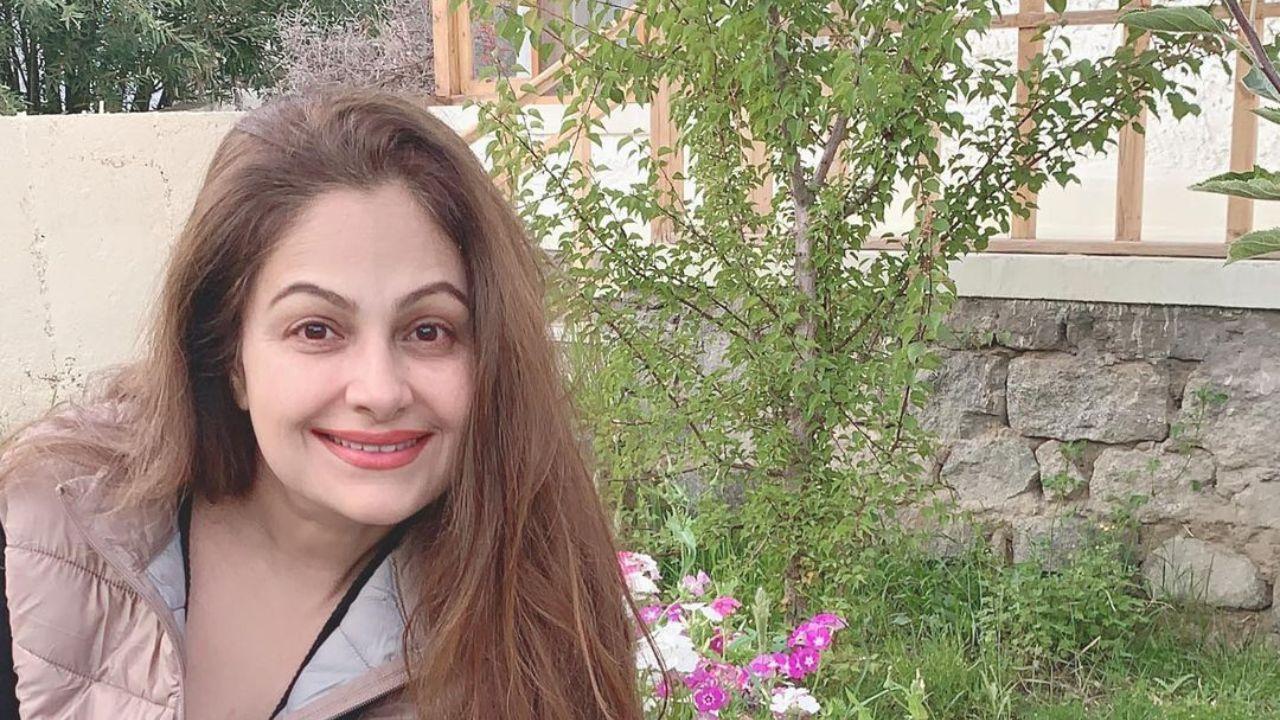
Kanksha Vasavada (BOMBAY TIMES; May 11, 2023)
After almost a decade, Ayesha Jhulka has taken the OTT route for her comeback to showbiz. The ’90s actress, who’s best remembered as Jo Jeeta Wohi Sikandar’s Anjali, played the proverbial girl next door in most of her cine outings like Khiladi, Balma, Sangam, Rang, back then. In a chat with us, Ayesha spoke about how the break she took from movies made her discover another side of her as an actor and the kind of roles she hopes to do more now. Excerpts:
‘EVERY ACTRESS WANTS TO BE KNOWN FOR HER ACTING SKILLS’
Ayesha was on an eight-year sabbatical before she acted in Genius (2018), which was her last big screen outing. On asking if the break was a conscious choice, Ayesha says, “It was a conscious choice. I felt that if I associate myself with a project, I should be able to add value to it. But that can only happen if I am given a chance to perform. If that was not happening and I was being treated as a prop in a project, then it was not really worth my time. So I had to put an end to those roles. Every actress wants an upgrade, wants to be known for her acting skills and not just as a glam girl. I wanted that too.”
Like most ’90s leading ladies, Ayesha was also stereotyped as a glam girl. Did that worry her? She says, “I had nothing against what was being offered to me, but I felt I was doing the same kind of films, I had to be a clothes horse, do the typical song-dance routine, get romanced by the hero and look beautiful. Being a glam girl is fine when you are a newcomer, but as you grow in the profession, you also want to be known for your acting chops. The cinema I was doing no longer satisfied me, I was hungry for work that tapped my potential and that wasn’t happening. Taking a break from acting and devoting my energies else-where made sense.”
‘THEATRE MADE ME REALISE WHAT ACTING IS ALL ABOUT’
At a time when she was playing mainstream female characters, Ayesha’s learning experience as an actress came from a play. She travelled across India for the drama Purush, starring Nana Patekar. She says, “While the characters that I played in films had different names, they were almost similar. The first time I did something really challenging was in 1999, when I did a play called Purush, directed by Vijaya Mehta, where I played the role of a rape survivor. During that process, the way Vijaya ji took me through the character’s journey, made me realise what acting is all about. I felt that everything that I had been doing till then, was nothing compared to this character. That’s when my choice of projects changed before I eventually took a break.”
And now that she is back, what is going to be Ayesha’s choice of roles? “I don’t want to limit myself by listing my choices. I am open to playing any role, provided it has something for me. It’s simple, when I have the ability to portray a character, and such roles are offered, I would give it my all.”
‘I AM A FUN-LOVING PERSON IN REAL LIFE, DOING COMEDY MADE SENSE’
Ayesha’s OTT debut was in an all-women production, Hush Hush (2022), costarring another ’90s heroine Juhi Chawla, besides Kritika Kamra and Soha Ali Khan. She considers Meera Yadav, the character she played in the show as “complex, dark but satisfying” and a welcome change after her “good girl roles” on screen.
She says “OTT has been the game changer for us, especially for female actors. It is a boon for us. If we didn’t have OTT, it would have been the same. It’s only here that we get to showcase our acting skills and play interesting characters; age is not a bar on OTT.”
Recently, Ayesha’s tried her hand at comedy with Happy Family: Conditions Apply. She says getting into comedy was “an amazing process”. She adds, “Aatish Kapadia and Jamnadas Majethia had such clarity of thought, each character and scene were written really well.”
Ayesha, who plays a Gujarati bahu in the series, is also one in real life. She says, “Pallavi was an interesting character and a lot like me. I am actually quite a fun-loving person and laugh a lot in real life. She resonated with me on many levels and also because she’s a Gujarati bahu, like me!”
I wanted to write about women, who are not looking for men to marry, who are not somebody's wives-Renuka Shahane
9:45 AM

Being a filmmaker is about telling stories of all kinds, even those you will never live through. Renuka Shahane's Hindi directorial debut, Tribhanga - Tedhi Medhi Crazy, is a study in familial estrangement
Jane Borges (MID-DAY; January 17, 2021)
If not for filmmaker Sooraj R Barjatya, Renuka Shahane would possibly have given up acting nearly three decades ago. At least, that, she recalls, had been the plan. After playing Pooja in the 1994 blockbuster, Hum Aapke Hain Koun…!, Shahane had almost made up her mind to quit being in front of the camera. She wanted to pursue a filmmaking course at the Film and Television Institute of India in Pune. "I told Sooraji about my plans. And he said, 'Are you crazy, you just can't leave [acting]'." Barjatya instead suggested that she learn on the job. "He said, 'Look at me, I don't have technical training. If you get a good team [to work with you], and have a vision and story to tell, nothing should stop you.' That seemed to make a lot of sense, because I was getting a lot of [acting] offers at that time," recounts Shahane, when we speak to her days ahead of the release of her Hindi directorial debut on Netflix, Tribhanga—Tedhi Medhi Crazy.
Starring Kajol, Tanvi Azmi, and Mithila Palkar, it's a dream that took an eternity to realise, but patience has been second nature to her. "I have always been passionate about direction. I began by assisting Dr Vijaya Mehta in the serial Lifeline [it aired on Doordarshan]. I was the fourth assistant there. Vijayabai was like an institution. She was so thorough and such a great guru to have. At that point, I thought I am going to do this forever. After my MA in Psychology, I was planning to do a PhD and then go to film school. Basically, I wanted to take the proper route and get trained. But life happened, and I became a professional actor."
She, however, kept waiting for an opportunity to come to her. In the late 1990s, she directed an episode for Zee Television's Rishtey, a drama series that focused on human relationships. "I took a sabbatical when my kids were born. At that time, it was my husband [Ashutosh Rana], who reminded me of my dream. He said, 'Listen you have some time at home, so why don't you work on a screenplay?'" Shahane turned homewards for inspiration, directing the Marathi film Rita (2009), based on her mother, veteran writer-translator Shanta Gokhale's book, Rita Welingkar. "I absolutely loved that novel, and because it was my mom's work, I didn't have to worry with permissions," she laughs. "When the screenplay turned out well, mom said, 'You have a writer in you'."
It's around that time that the two worlds of writing and direction collided. This is the first time that Shahane is bringing an original story of hers to life, and it hasn't come easy. "These characters first formed in my head in 2013, when I had participated in Mumbai Mantra's Sundance Institute Screenwriters Lab. Though, I had done a film, I had wanted some mentoring, in order to understand how stories are constructed," she says.
The idea for the plot, Shahane says, had come to her many years ago, when she was shooting for the show, Surabhi (1990-2001) with Siddharth Kak. "I had met a woman who was recently married. She told me that she was finally happy to be free from the clutches of her mother, whom she hated. I was stunned by the fact. I have such an excellent relationship with mine; she is my core. That was really the starting point. I wanted to write about women, who are not looking for men to marry, who are not somebody's wives. It was also about the choices they made, how those choices passed down from generation to generation. That is at the crux of the story."
When an estranged mother (Azmi) slips into coma, her daughter played by Kajol, a self-made single mom grapples with regret and resentment, while reflecting on their strained relationship.
The script, she says, was mentored at the lab with writers like Bill Wheeler, Anjum Rajabali and Asif Kapadia giving her direction and suggestions. But, it took another three years to develop it, before director Siddharth Malhotra agreed to produce it along with Ajay Devgn.
During this time, it was Gokhale, who was her sounding board. "It's just so nice to have her around. Writing can be a very lonely process, and you require a support system that truly understands what you go through, and mom understands that beautifully. She has also written scripts. There are these tricks of the trade that she shares with me, or some perspective that she comes up with, which helps break the writer's block that I experience very often," says Shahane, adding, "I must admit that I am not a prolific writer. If it flows, it really flows. Sometimes, I am interrupted by everyday duties, and there can be months, when I am absolutely blank in the head. That's when my mother's tricks help me."
Gokhale, she says, is not just a gifted storyteller, but also her biggest inspiration. "I think mom's writing and thought process has influenced me a lot. She is such a committed writer, and there is so much that I need to learn from her—the discipline, the craft. And these you cannot just pass down. But, whenever she reads my writing, she says that I have a quirkiness, which she would love to have in her own. That, I think, is a big compliment."
Shahane now hopes to continue writing and direction, even more seriously. "Everyone in my team is telling me that I better not take another 10 years to make the next film," she says, breaking into giggles. "To be honest, I really like the process of writing. I am not fond of being in the public eye. That's a journey that I am very uncomfortable with. Although, I am on social media, and I am a very social person, I love my solitude.
Writing allows me that," she says. "I might, though, look out for scripts by other writers [that I can direct], because writing for me is very slow. I am also overcritical about my work. So, if it takes time, it does."
Given the prep that I put in for Neerja, I won’t lie and say that it didn’t hurt to not get it-Neena Kulkarni
7:44 AM

Model, theatre artiste, film and TV actor, Neena Kulkarni discusses her career spanning 40 years...
Yogesh Pawar (DNA; September 23, 2017)
As a model, theatre person, film and TV actor, filmmaker and columnist, Neena Kulkarni wears several hats and brings the sincerity of her craft to every frame making each character she portrays, real and imbuing even similar ones with an edge that make them different. To do this once in a while is itself worthy of admiration so what does one say to someone, who has done this for four decades. On the completion of 40 years in the industry, the seasoned actor opened up on her exceptional work, her life and her hopes from the future...
It’s been four decades of acting. Does it still thrill you like when you started in the mid-70s?
Of course, it does. Nothing gives me the same high as acting. Acting will always be my biggest love. I think that’s happened because I’ve enjoyed and made the most of every part, however, big or small. I’ve almost never taken up a part that I didn’t like under compulsion.
Do you feel the Padma awards have taken their time to find you? After the National award for Shevri (2006) and state awards for theatre and films, not many have come your way?
What is recognition after all? Recognition and love I get from people when I step out? The way someone recalls/praises a play/serial/ad I did even from the early 80s? Or the respect and warmth I receive from people in the fraternity? Isn’t that more important and satisfying? Having said that, I haven’t stopped hungering. Who knows, a better, more challenging role and the recognition it will bring in its wake may still be ahead. After all, we live in really interesting times when filmmakers are pushing the envelope, both with subjects and genres.
How does that affect you?
You know how this plays out. An actress is assumed to have a certain shelf life after which she’s thrust into a ‘character role.’ I’m 62. There was a time when someone my age would be just another glorified prop, but not so anymore. One of the nicest things about contemporary takes on gender and sexuality have meant assertive women. And filmmaking has had to make space for that. That is why films are being written for a Meryl Streep, a Judi Dench or a Sridevi here. Even if one has to etch a mother she isn’t simply filling the frame. Look at how wonderfully Shabana ji (Azmi)’s character stood out in Neerja.
Didn’t you too audition for that part?
Well, I did. And given the prep that I put in, I won’t lie and say that it didn’t hurt to not get it. But when I saw the film, I was floored with what Shabana ji brought to the role. We come from really different schools of acting so obviously her take on the character is very different from mine.
You did not grow up in a filmi family.
Not at all. I was always the upper middle-class Mahim girl. My parents were both doctors and really well-respected names in the medical fraternity and I schooled at Canossa Convent and then pursued my BA from Elphinstone College. So acting happened as a matter of chance.
Really?
You can blame that on our short college hours and lack of diversions like social media. (Laughs) We’d have a lot of time on our hands. I’d begun doing fashion shows and modelling for a lark even doing the odd experimental play. My progressive parents were quite supportive and never resisted. And so I carried on.
And then you met Pt Satyadev Dubey?
Satyadevji is known as a director, actor, playwright and screenwriter. But his greatest contribution has been his mentoring of an entire generation of actors helping them discover their own strengths. Imagine my luck that I met this walking encyclopedia of theatre and went on to be part of several productions under him. Though extremely moody and temperamental, he was a very generous teacher. I was young and all of this was totally new, so I’d be excited about everything. I hadn’t had any formal training in acting. It all began with Satyadev ji. He’d make us learn the whole play, all dialogues for all parts. And anyone could be called to play anyone if that person didn’t turn up. It trained and opened up doors for me to act in other plays like Mohan Rakesh’s Adhe Adhure, Shankar Shesh’s Mayavi Sarovar and Willie Russell’s Educating Rita.
You were to shortly meet your second mentor Vijaya Mehta...
All of us call her 'Bai' respectfully. She was already quite a big name and I was quite chuffed she chose me to play Shabbo in Anil Barve's Hamidabai chi Kothi (1978). The grammar, craft and technique of her theatre work is at a complete variance from Satyadev ji. She wants you to find your character yourself. Given my enthusiasm, I adapted and picked up soon. It set the stage for me to do iconic plays like Mahasagar and Savitri with her. Later I did other plays like DhyaaniMani, Prem Patra and Vatvat Savitri. A few years ago in a hugely emotional development, I got to step into Bai's shoes and play Hamidabai's character which she played when the play was revived. At her behest, I have joined her to conduct workshops for young actors.
You also did a play with autobiographical shades of the dynamics between Medha Patkar and her ex over her career and cause choices.
Yes, a lot of people saw resonances of her life in a play I did with my late husband Dilip, Aaicha Ghar Unhaat. I only met her much later personally when she was asking many of us to join her in the Narmada Movement.
And did you?
No, I didn’t. I felt it should be something one does full-fledged and not as occasional photo-ops. I was by then faced with the prospect of running a home by myself and couldn’t make time.
Are you talking about the passing away of your husband Dilip Kulkarni?
Yes, till it happened very suddenly in 2002, I’d thought of what I do as only a passion. True, I contributed to the family kitty, but he was the man of the house in my head. You know, he acted as a part-time thing, but worked in a cooperative bank full time. With his passing away, once I was past the sorrow what stared at me was providing for my two children and running the house.
Do you still miss him?
I know it’s been 15 years. I’ve reconciled to the idea of his passing away, but how can one not miss a partner one loved and shared a life with? You know when we first met during rehearsals for a play, he’d maintain a shy distance. That drew me to him and made me fall in love. We came from really different backgrounds. He came from a working class background in Deolali and was settled here in a bank job. On my insistence, he agreed to buy a flat in the same housing society I grew up in from early childhood and set home here. Even now when I’m by myself I feel like talking to him.
Your children are both in the entertainment industry now.
Yes, but both have decided to be behind the scenes. My daughter is into TV production and my son is into advertising.
Speaking of the latter, you are an Indian model with one of the longest innings. Aren’t you?
Well, I began early. I was the Clearasil girl when I was barely 16. I have played everything from young girl, wife, mother, elderly old age home inmate selling everything from hair oil, insurance and what have you. I have never sought work. But over the years, people have always approached me and I feel lucky to have done campaigns like Bisleri, Sprite, Mother Diary, Cadbury and Life Insurance Corporation and others. Besides, ads don’t tie you down to a project for long.
You mean daily soaps like Yeh Hai Mohabbatein where you are Madhavi Vishwanathan Iyer since 2013?
TV is no longer the poor cousin of the big screen. With its wide reach, it has pulled actors towards it. Actors of my seniority too get a lot of different characters without getting stereotyped. Many big actors are coming to the small screen since it gives them a direct connect with fans. But I must mention here that sometimes TV can be a blur. Some people think as long as they look good and say their lines properly, it’s fine. This is unfair to other actors really working on their craft. But given the rush, even a not-so-good take is canned and often makes it on air too. That hurts because I come from a culture of worshipping my work.
Will you continue to do plays?
I’ll continue to do theatre till I breathe. I only feel the work should challenge me. Wedding Album or a Mahatma versus Gandhi with Naseeruddin Shah was quite fulfilling and I want more of that kind of work. The last play I was doing was Chaapa Kaata. After I point, I was unhappy about turning up at work. The idea of travelling long distances for a three-hour-show, which is not doing anything for me got to me and I stopped doing that play.
And you’re equally selective about films?
The medium seems to love me. I’ve worked with greats like Mani Ratnam, Amol Palekar, Priyadarshan and Shankar. I even played a cameo opposite Amitabh Bachchan (Bhoothnath) because it was a BR Films project. Also, many new indie filmmakers are doing fascinating stuff. It will be great to work with them. Unlike TV, here it matters who the director is and what the set-up is.
You have to talk about working with Judi Dench.
The modesty and humility of a legend like Judi Dench can only be seen to be believed. For a scene in The Best Exotic Marigold Hotel where she was not even in the frame, just to cue me she came and stood in front. Here if an actor realised that s/he was not in the frame a spot boy would replace her/him.
You've done a French TV series Raani which ran to great acclaim on channel France Deux and a French film Noces. Did you learn especially learn French?
French was what I majored in while graduating from Elphinstone College. I did occasional translation jobs till I got drawn to fashion, modelling and acting. Of course, my French is quite rusty but in both these projects, it suited the context of my characters. I haven't quite gotten over the fun we had while shooting for Noces in Luxembourg last year.
Who are your favourite young actors among the current lot?
I think almost all of them bring such energy and drive to what they are doing that its almost inspiring. When we began we were just looking for work. These guys come looking careers.
Any advice for the younger actors?
Who am I to advise anyone anything when I learn so much from them? I have learnt to lighten up, live the moment and have fun. They help me stay young. Who would have thought, but it’s also kept me busy on social media.
Who are you closest to in the industry?
Given my innings, I get along with almost everyone. But in the passing away of Reema Lagoo, I have lost a soulmate. A fellow acolyte of Vijaya Bai, I’d discuss anything personal/professional with her with complete ease. I’ve now reached a stage where I prefer being a loner.
Subscribe to:
Posts (Atom)