Showing posts with label Vijay Ganguly interview. Show all posts
Showing posts with label Vijay Ganguly interview. Show all posts
Without Tamannaah Bhatia, Aaj Ki Raat wouldn’t have reached where it has-Vijay Ganguly
2:43 PM

Tanvi Trivedi (MUMBAI MIRROR; August 17, 2026)
Winning the National Award for choreographing Aaj Ki Raat from Stree 2 is a milestone Vijay Ganguly says he never expected. While he hoped the song would connect with audiences, he did not anticipate it becoming one of the year’s biggest party anthems.
“When we choreograph, we always hope our work reaches the maximum number of people. But every song has its own fate. Sometimes you’ve done great work, but the song gets cut from the film or never reaches people. For instance, we had shot for a very beautiful song in Chhaava with Vicky (Kaushal) but in the end it got edited. With Aaj Ki Raat, we knew we had done a good job, but we had no idea it would connect with so many people. We just did our job and hoped it worked. And it did.”
He believes the song’s appeal came from its music and the way the choreography carried the same energy visually. “The audio was so good that everyone — from children to older people — connected with it. Once kids connect with a song, it becomes huge because they keep playing it everywhere.”
Ganguly also credits Tamannaah Bhatia for the song’s success. “Tamannaah definitely played a huge role because what people ultimately see is the performer. If she hadn’t performed the way she did, the song wouldn’t have reached where it has today. The biggest credit goes to her.”
A national award that adds to the family legacy
Vijay’s father, filmmaker Anil Ganguly, had won two National Awards. “My father had won two National Awards Best Story for Kora Kagaz (1975) and Best Feature Film in Hindi for Tapasya (1976). This is the third one coming into the house, but my first. It’s the biggest honour in the country.”
Vijay Ganguly on his National Award win: "I was just numb for five minutes"
9:25 AM

Tanvi J Trivedi (BOMBAY TIMES; July 24, 2026)
Vijay Ganguly says he never saw coming. The choreographer, who once had no interest in dancing, admits he is still processing the honour.
“I was just numb for five minutes. I couldn’t believe it. When messages started pouring, I realized, okay, this is really happening. I’m still processing it,” he says.
The award is especially meaningful for Vijay as it continues a family legacy. “My father had won two National Awards (Anil Ganguly received Best Story for Kora Kagaz and Best Feature Film in Hindi for Tapasya). This is the third National Award coming into our home. It’s a fantastic feeling,” he adds.
Ironically, Vijay’s journey into dance began almost by accident. “Growing up, I was never interested in dancing. I would only perform during Durga Puja celebrations. In 1999, just for fun, I enrolled in a Shiamak Davar dance class. I realized I really enjoyed it, and the rest is history,” he shares.
Looking back at Aaj Ki Raat, Vijay says he had hoped the song would connect with audiences but never imagined it would become one of the year’s biggest party anthems. “We knew we had done a good job, but had no idea it would connect with so many people. We simply did our job and hoped it worked. Everyone, from children to older people, connected with it.”
He is also quick to credit Tamannaah Bhatia for bringing the choreography to life. “Tamannaah definitely played a huge role because, ultimately, what people see is the performer.”
It’s just love: Vijay on his mother Rajani Ganguly’s viral dance reel
His mother, Rajani Ganguly’s dance reel on his song Shararat from Dhurandhar recently won hearts online. Vijay says the family never expected it to go viral. “I don’t share too many reels, but this one was special. Mumma loves dancing and she’s a very good dancer. We always feel people should see her dance. Whenever one of my songs becomes a hit or excites her, we ask her to dance and we post it. It’s just for fun. It’s not social media content that we expect will go viral. It’s just love.”
My school teacher rejected me and told me I didn’t have it in me to be a dancer-Vijay Ganguly
10:00 AM

Once told by a teacher that he didn’t have what it takes, Vijay A Ganguly has just bagged a top award—more importantly, his choreography has colonised dance floors around the world
Nisrin Saria (MUMBAI MIRROR; February 22, 2026)
On the way to the Super Star Hall in Andheri on the metro, I noticed the person in front of me absently scrolling through reels — until one made her stop. It featured two girls dancing to the viral hook step of Shararat from the film Dhurandhar. She watched it on a loop, as though mesmerized. That is the thing about a truly great piece of choreography: it cuts through. The man behind those moves, Vijay A Ganguly, just won The Iconic Gold Awards 2026 for the same dance on February 18.
Ganguly, 45, walks into the second-floor of the dance studio dressed in a black sweatshirt, denim jeans, and black-and-white sneakers. He greets his team with enthusiasm, and immediately joins a brainstorming session for a patriotic track in an upcoming film. “When creating the choreography for this song, I want to do something that even soldiers stationed at the border in freezing temperatures could dance to,” says the Worli resident.
A meticulous process guides how each song eventually unfolds on screen. “There is always a plan before hitting the set,” Ganguly says, noting the importance of research and alignment with the director and actors. Yet, he remains open to the occasional lightning strike of spontaneity.
He points to a viral moment in Dhurandhar, where Akshaye Khanna’s Rehman Dakait character dances to Sher-e-Baloch. “That wasn’t planned. He just started dancing, and we kept the camera rolling.”
Inside the hook step
For Shararat, the creative groundwork began eight months before the first day of shooting, he says. Director Aditya Dhar provided a steady stream of reference videos to help Ganguly deconstruct the specific nuances of Balochistani wedding celebrations. Typically, at festive gatherings, these celebrations include folk dances like Chaap and Do-Chapi, which are performed in circles with rhythmic clapping and coordinated steps, often to the beat of dohol and sorna. What the film captured, Ganguly says, represents only a fraction of the energy festive Balochi dances can generate.
“What we have filmed represents only about 30 per cent of the energy that goes into it,” Ganguly says. He recalls footage of women jumping off stages, falling, then springing back up, an atmosphere he describes as “pumping with energy.” The task was to translate that raw, communal intensity into something cinematic without losing its force.
The resulting video has since amassed over 200 million views on YouTube, with the hook step being recreated globally—a clear metric of success. The impact, however, didn’t end at the steps; it was in the utility of the design. “The costumes couldn’t be revealing, but a sharara would have restricted the choreography, so we added a slit for mobility,” Ganguly reveals.
This was a relatively easy assignment, he says of Shararat, noting the final step was a mix of two options chosen by Aditya Dhar. In contrast, he designed 32 versions for Stree 2’s Aaj Ki Raat. Despite his fame in dance, editing remains his true passion: “I edit all my songs myself; Shararat was 90 per cent cut by me on my little laptop.”
Growing up near the camera
Being on set comes naturally to him, as he grew up watching his father, filmmaker Anil Ganguly, at work. “My sister Rupali and I would accompany my father and seeing how everyone listened to him on set made me want to do the same or at least something similar,” he admits. He appeared in several of his father’s films, including Saaheb, Dushman Devta, and Sadak Chap, absorbing the rhythms of production long before he understood them.
Performance, however, did not begin with easy validation. “When I was ten and wanted to take part in my school play, I auditioned to Everybody Dance with Pa Pa Pa by Mithun uncle, but my teacher rejected me and told me I didn’t have it in me to be a dancer.” The verdict lingered. For years, performance slipped into the background, returning later by chance.
A wrong that made a right
In 1999, he walked into Shiamak Davar’s academy to submit the fee cheque for his sister’s class. The receptionist assumed it was for him and enrolled him instead. Persuaded to try one session, he started at the back of a beginner’s batch, caught Davar’s attention and stayed on, eventually teaching there for 13 years.
In 2013, he left to pursue films. “That’s when my struggle started again — my father had told me at 18, ‘Find yourself; I won’t make calls for you.’”
He waited outside offices for any job he may land. Jagga Jasoos, a four-year musical, shifted his trajectory. Close to quitting in 2016, he held on after his father reminded him, “Time se pehle kisi ko kuch nahi milta.” Galti Se Mistake became his breakthrough and won him the 2018 Filmfare Award.
Ganguly is clear that he does not believe in a formula. “One of my favourite works remains Main Parwaana from Pippa because it blended jazz with Bollywood.” It did not go viral. Not everything does.
Craft without pronouns
In an industry where dance is often linked to names like Farah Khan or the late Saroj Khan, Ganguly maintains, “When it comes to dance, there is no gender.” He points to Chaka Chak from Atrangi Re as proof. As COVID restrictions thinned his team, assistant Abhishek Pai became the reference for the entire routine. “We had to set the song immediately and Abhishek became the blueprint for it,” he says. The result became one of the film’s most recognizable numbers.
Now, Ganguly champions what he calls expression-led dancing, inspired by Govinda, where a fleeting facial reaction can outshine an elaborate step. His guiding principle comes from his father: treat the crew with respect. “People leave their families and work long hours for you. If they are there for you, that day should feel worth it.” should feel worth it and you must treat them with respect.”
Once closed off to anything beyond choreography, he is now open to whatever cinema offers, be it acting, producing, directing, or simply learning the art of lighting a scene. “After all,” he says, “choreography was never the plan, yet it became my calling.”
Vijay Ganguly on Akshaye Khanna’s dance in FA9LA: "He entered the scene and performed spontaneously"
8:30 AM
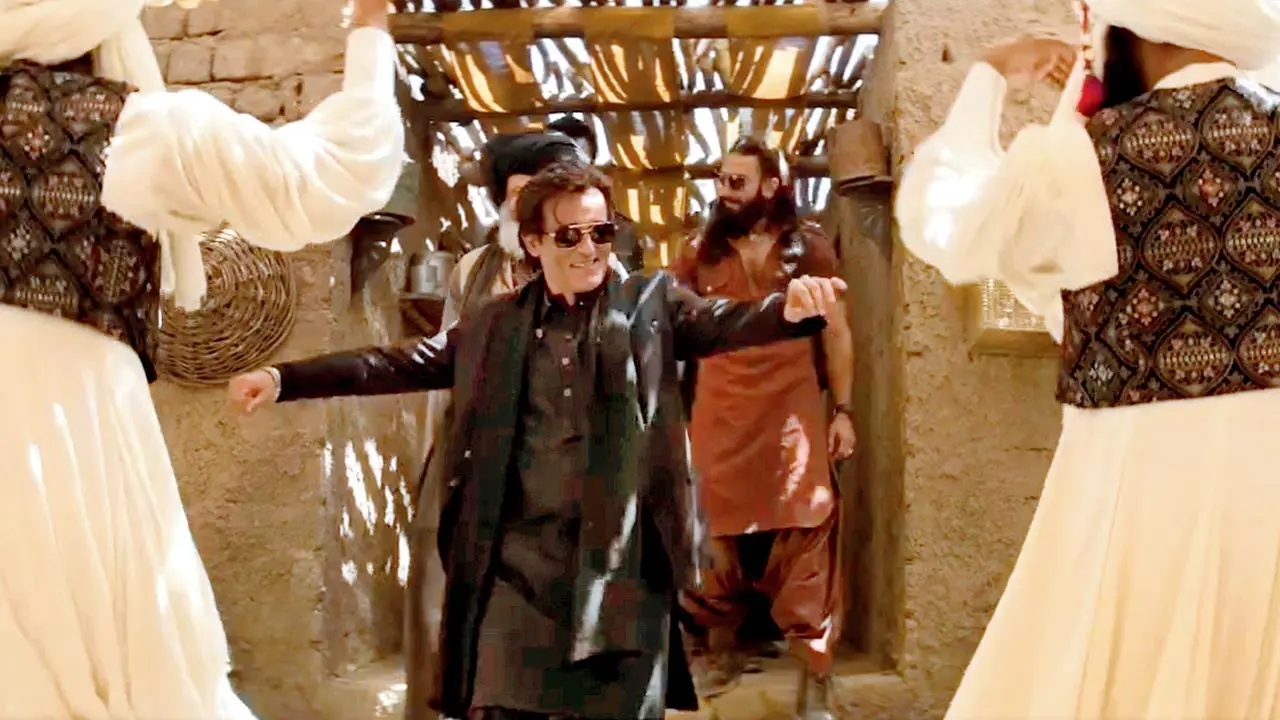
With the internet tripping over Akshaye Khanna in ‘Dhurandhar’ track ‘FA9LA’, choreographer Vijay Ganguly reveals the actor was originally supposed to sit throughout the song but changed his mind
Upala KBR (MID-DAY; December 9, 2025)
Open your Instagram account, and chances are your feed is filled with reels of Akshaye Khanna’s entry sequence in Dhurandhar. Since the Aditya Dhar-directed actioner released on December 5, the actor has been unanimously praised for his intense performance as Rehman Dakait, standing out in the all-star cast of Ranveer Singh, Sanjay Dutt, R Madhavan, and Arjun Rampal. Now, his entry song, FA9LA, created by Bahraini hip-hop star Flipperachi, has gone viral. And here’s the kicker — it was an impromptu dance by Khanna.
Vijay Ganguly, who choreographed the number, tells mid-day, “The song is a celebration of Akshaye’s character being crowned as the Sher-E-Baloch. Originally, he was supposed to enter, walk through the dancers, and sit on the throne. Seeing the scene’s mood and the dancers’ performance, the fantastic actor that Akshaye is, he said he would dance a bit when he walks in. None of us knew what he was going to do. Akshaye entered the scene, took it from that point, and spontaneously performed.”
Even as he looks back on it, the choreographer is amazed that FA9LA was shot in barely two hours in Ladakh. For that, he credits Khanna’s precision.
“It was the first shot we took that day, and it was perfect. Then we did a close-up, and we were done. Akshaye knows exactly what he has to do in a scene and plays with it,” shares Ganguly.
Shooting in the high altitude of Ladakh is tricky, dancing more so. The choreographer shares that Khanna was suffering from high-altitude sickness during filming.
“Akshaye would carry a small oxygen cylinder with him. When we were shooting this song, his oxygen level had dropped. So, after every shot, he would put the oxygen mask on. He did the sequence unflinchingly, and then went home.”
Before Dhurandhar, Ganguly worked on Chhaava that featured the actor as Aurangzeb. Even though their interaction was limited on the historical drama’s set, it was enough for the choreographer to understand the actor’s undivided attention to his craft.
“Akshaye didn’t have any dancing to do in Chhaava. When he is on set, there is not much interaction outside of work. He is completely immersed in his character, thinking and trying to see what more he can do to enhance his scene.”
Subscribe to:
Posts (Atom)