Showing posts with label Vidya Balan interview. Show all posts
Showing posts with label Vidya Balan interview. Show all posts
I feel sad seeing kids spend more time on their gadgets today-Vidya Balan
9:17 AM

Onkar Kulkarni (BOMBAY TIMES; November 15, 2025)
On the occasion of Children's Day yesterday, Vidya Balan opened up about the urgent need to prioritise children’s safety, the lack of film content made specifically for young audiences, and the nostalgia she carries from her own carefree childhood. The actress is the face and voice of the #POCSOPakadLega campaign, part of Arpan NGO’s 7th Edition of Child Safety Week 2025, dedicated to the elimination of Child Sexual Abuse (CSA).
Stressing the need for open conversations around child protection, Vidya said, “I think what we are hoping to do is transform the way society talks about child protection. You know, from hushed whispers and helplessness to more collective dialogue. And I think talking about child safety should no longer be treated as a taboo, but as a shared responsibility woven into everyday conversations – whether it’s at home, schools or within communities. So, through this campaign, we want to make child safety a visible, urgent and actionable issue.”
‘I feel sad seeing kids spend more time on their gadgets today’
Recalling the innocence and beauty of her growing-up days, on a nostalgic note, she recalls, “When I think of cherished childhood memories, I think of how we would all go out to play every evening with our friends in the compound of our building. I was born and brought up in Chembur, and it was a very safe environment. We would be loitering on the streets. It didn’t matter that we were girls. You just felt safe. Everyone was looking out for you. I feel so sad to see kids spending more time on their gadgets today, and also parents being so anal when they send their kids out for physical play.”
‘When you see the kind of things happening, you feel grateful for the childhood you’ve had’
Taking a nostalgic turn, Vidya reflected on the simplicity and freedom of her childhood. She shares, “I had a happy, secure and protected childhood, thankfully. And you realize this more in retrospect, because when you see the kind of things happening around us, you feel grateful for the childhood you’ve had, because that really forms the base for who you end up becoming. My upbringing was very simple and we were content. While certain traditional values were ingrained in my sister and me, we were also given the freedom to fly. I had absolutely no pressure on me to get a certain grade or marks. I did my best, and that’s what mattered to my parents. Today, when I see the kind of pressure that kids face, I’m like… wow, they’re constantly doing something. We had so much free time, and I really value and cherish that.”
‘I’ve wanted to do a children’s film forever’
Reflecting on the glaring absence of children’s films in mainstream Bollywood, she says, “I’ve wanted to do a children’s film forever. I’ve always wondered why I don’t really get offered children’s films or why children’s films don’t get made that much. I remember going for a film a few months ago, the content of which seemed fairly adult, but there were lots of kids in the audience who were having a great time. So, I think they invariably end up consuming adult content because of the dearth of children’s films here.”
She noted that OTT platforms have partly filled this gap by giving Indian children access to diverse global content. “Thanks to OTT platforms today, so much of children’s content produced all over the world is accessible to our children here, which is a wonderful thing.”
I got my big movie break at Enrique’s concert-Vidya Balan
8:41 AM

Renuka Vyavahare (BOMBAY TIMES; October 28, 2025)
Spanish pop sensation Enrique Iglesias has been to India twice before in 2004 and 2012 but has performed in Mumbai only during his first visit to the country. So, the Latino sensation will be returning to the maximum city on October 29 and 30 after 21 years.
Interestingly, not many know that Vidya Balan, who is also a diehard Enrique fan, shares a heartfelt connection with his return to Mumbai after two decades. In an exclusive interaction with Bombay Times, the noted actress went down the memory lane and shared some precious trivia and why she’s looking forward to his Mumbai show on Wednesday.
Beaming with excitement, Vidya recalled, “My friend and I, we were at Enrique’s concert in Mumbai in 2004, when Pradeep Sarkar called me to offer Parineeta. We were trying to inch closer to the stage, my phone was off and Enrique had gone off the stage between the songs. We were hoping to get to the front by the time he comes back to perform. I was hoping he waves at me and pulls me on stage (smiles)… all these were young girl fantasies. Around this time, Pradeep dada (Sarkar) must have called me but he couldn’t get through so he called Pavitra my friend, the two of us had gone to the concert. He asked her ‘Vidya kaha hai’? Pavitra said she is right here and handed the phone to me. Dada told me Vidhu Vinod Chopra wants to talk to you. I told him I am at a concert and can talk to him once I get out. By then Mr Chopra came on the line. I wondered if he wanted to say, you are really good but it’s not going to work out because I had gone through a series of tests and auditions before that. I didn’t know what to expect. VVC told me, “Vidya Balan you need to get out of that venue and reach a quieter place where you can speak.” Grudgingly I dragged Pavitra along and we reached the gate. VVC told me then that, ‘you are my Parineeta’ and by then Enrique had come back on stage and sang Hero. While the song was always special to me, this moment sealed the deal for me. For me to receive this news when that song played, I couldn’t stop crying. I don’t remember what happened after that. My hands and legs were trembling. It is undoubtedly one of the most special moments in my life and it was quite cinematic.”
The actress confesses to crushing on the singer like every girl her age did. She expressed, “Enrique embodied what every young girl my age wanted and hoped for in their boyfriend. There was something raw about him. He was cool and effortlessly sexy. He seemed like a passionate lover. He embodied the pain that love brings along, one romanticizes this feeling at that age. You see glimpses of the feeling when someone is madly in love with you in ‘Addicted’ and ‘love to see you cry’. He’s just too sexy. I was definitely crushing on him. I won’t say obsession but he was a rage… bad boy played to the hilt. I remember back then everyone wanted to be at his concert.”
Vidya believes nostalgia plays a huge role in making the singer relevant even today. “MMRDA is going to be filled with people my age who are nostalgic about him. People who have grown up dreaming of him and fantasizing about him. He’s so unapologetically private about his life which I deeply admire. He is true to who he is. His voice resonates the pain of youthful love, where you feel everything intensely.”
On a parting note, the actress shared, “I got my big movie break at Enrique’s concert and that was my first concert experience as a young girl. Not many concerts happened in those days. Michael Jackson happened but I was younger then. So when people ask me are you going to his concert, which I am, I joke around and say, I complete 20 years in the movies. No wonder he’s come back to celebrate that. It almost felt like the birth of me as a heroine happened at his show while he sang Hero. You feel these moments happen only in the movies but it happened to me in real life. I am looking forward to reliving that moment and time hence watching him live again will be special. I am so grateful to what has happened since. If I were to dedicate one of my songs to Enrique, it would be Piyu Bole from Parineeta. That would be poetic justice.”
I always thought the boys were my real competition-Vidya Balan
4:00 PM

Madhureeta Mukherjee (BOMBAY TIMES; June 10, 2025)
The world may hail her as a game-changer, a sherni who roared her way through Bollywood’s rulebook — but Vidya Balan doesn’t see it that way. Twenty years in Hindi cinema, and she is still dancing to her own rhythm. The actor, who defied norms, wants to be free of those tags and labels – free of that baggage. There’s a newfound lightness about her, yet she’s just as fiercely passionate about her craft as she was two decades ago. In this deeply personal interview with us, she talks about her inner battles, her evolution shaped by heartbreak and healing – and all the joy that went into it.
If you could relive one moment from your 20-year journey in Hindi cinema, which one would it be?
The premiere of Parineeta in Amsterdam. I don’t remember watching the film, as that memory is a blur. It’s like your wedding day (laughs). What I remember is standing up on that stage along with the cast and looking at the world. It was a full house. It was something about that moment – this is what I had always wanted. I didn’t know if there was a road ahead, but I felt I had reached the summit. That moment has stayed with me. It’s like I walked up with my back to the audience, and when I turned to the world, my world had changed.
In your early days, how did you deal with stereotypes and industry expectations of how an actress should be? You’ve never been apologetic about the characters you’ve played – whether it was flawed, sensual, loud or silent. How did you stay so true to your choices?
I don’t think I did anything consciously. It’s just the way I am made. I am shamelessly accepting of my dreams and aspirations. I don’t think anything was stopping me from being a conventional heroine. Also, I never thought of myself as unconventional and different – these were the tags given to me. I wanted to be like all the actresses I had admired over the years. With every opportunity I got, I made the most of it – whether it was Guru with Mani Ratnam, Halla Bol with Rajkumar Santoshi or Salaam-E-Ishq with Nikkhil Advani. I played the lead in these films, but they were all different. That is who I am and that began to find expression. When there is success, you are okay being seen for who you are. There are two films where I feel I didn’t do my best – Heyy Babyy and Kismat Konnection. People enjoyed those films, but I got a lot of criticism for it.
It must have been shattering at that point. Would you say there were many such breaking points in your career, from where you had to rebuild your confidence, renew your spirit and rise again?
It happened at various points. After The Dirty Picture and Kahaani, many of my films didn’t work and I was going through a persecution complex. I felt everyone was out to get me. I began to assume a certain kind of self-importance thinking everyone was talking about me. Everyone is not talking about you, but you feel that because you are only looking at yourself. I thought, why is my dressing such a problem? Today, when I look back, yes, it was a huge problem, as I was not doing anything that I liked doing. I am so grateful for that period, those films, the criticism, the nasty things that people said and the humiliating experiences – it made me realize what is the kind of work I want to do. Who am I really? I slowly started embracing myself. It was tough and it came with a lot of heartbreak. I feel my father has given me a certain fearlessness to be myself and my mom has given me faith and that has taken me a long way.
When did the feeling of being comfortable with who you are — your work, your body — finally come in?
After The Dirty Picture, I was going through some health issues and the weight kept going up. I had also got married, so people thought that I was taking it easy. Every few months, there’d be a rumour that I was pregnant. I wanted to be invisible in those days, and that is a horrible place to be in. I was at my lowest professionally and personally because of the way I was viewing myself. I’ve been with a healer for the past 14 years, and that has been a huge help. It is a lifelong process. I feel now everyone goes through it and a lot more. At that point, I felt that I was being singled out and judged for everything. Today, I am more in touch with who I am.
If you met the Vidya of 2005 today, the Vidya who was on the cusp of becoming a star, what would you tell her?
I would say don’t try too hard. I’ve spent a lot of time trying too hard. Be yourself and go with the flow. Don’t think of where, what, when and how it will happen. It will all happen. Deep down, even I knew that, yet I needed life to teach me that through my journey.
In 2012, when your career was soaring, you married Siddharth (Roy Kapur) — despite having once said that marriage wasn’t really on the cards. Thirteen years in, has the experience changed your perspective?
Yes, I didn’t want to get married at all. Even today I don’t think partnerships are easy and I don’t think marriage is easy. But the fact that we both are from the industry is a blessing, because if anyone can understand our work and life, it is people from the same business. Now I’ve come to understand that marriage is always work in progress, it’s learning, unlearning, relearning and growing together. Siddharth and I never give each other advice, but we are fully supportive of each other and respect how passionate we are about what we do. I feel blessed to have a partner who lets me be. He is my anchor.
Your perspective on marriage has changed, but what were the beliefs or fears that made you resist it initially?
Earlier, I could never see myself getting married because I felt marriage was about domestication. I often wondered who my mother would have been if she hadn’t been married. I don’t know if she wondered that though. I always felt ki mujhe shaadi nahin karni hai. Also, I have always wanted to be better than the boys, so a long partnership with a boy seemed impossible. Come to think of it, maybe I never competed with the girls because I always thought the boys were my real competition. At the gym, I would lift heavier weights than the boys. We are two sisters, and I do think that my mom subconsciously wanted a boy, as she already had a girl. In our extended family, there were mostly girls, so the ones with boys were given that much more importance. These are very subconscious things, and I picked up on all those cues and I thought I will be better than the boys. Maybe that explains my career, too, in a way… don’t you think?
Perhaps, a lot of my hormonal issues were an outcome of this rejection of the feminine part of me and I fought it, as I wanted to constantly prove that I was better than the boys. But marriage has allowed me to accept that side of me. Maybe, it has made me realize that I’m not lesser and don’t need to be better than the boys to be good enough. I’m good enough just being me…wholly me!
We were like schoolgirls on the set, say Vidya Balan and Ila Arun
8:17 AM

Debarati S Sen (BOMBAY TIMES; November 19, 2024)
At the recently concluded Literature Live! The Mumbai LitFest 2024, held at the National Centre for Performing Arts (NCPA), the audience was treated to a heartwarming exchange between Bollywood star Vidya Balan and the actor-singer-thespian Ila Arun. The event marked the unveiling of Ila Arun’s autobiography, Parde Ke Peeche.
The story behind the curtains
“After my song Choli Ke Peeche (Khalnayak, 1993) became popular, it became my signature,” explained Ila. “Koi yeh nahi janta tha ki Ila Arun kaun hai, parde ke peeche kya hai. And that’s how I named my autobiography. Logon ko aana padega parde ke peeche mujhe jaanne ke liye,” said Ila Arun, revealing the inspiration behind the title.
A friendship beyond generations
Vidya Balan expressed her deep affection for Ila Arun, highlighting the unique qualities that have endeared Ila to her over the years. “My favorite thing about Ila ji is her child-like quality, that immense enthusiasm she has in everything she does,” Vidya said.
“What is so amazing about her is that I never felt that there was any sort of age difference between us, from the moment we first met. I love her! She genuinely is one of my most favourite people. She has always been the youngest person in any cast, and I don’t mean this in an ageist way. Ila ji is just so much fun to have around! I’ve also had the opportunity to watch her on stage and she is magic. I’ve met Ishita, (her daughter), who was my junior in college, and she is great fun, but I feel Ila ji is the child! It’s just so easy to talk to her about anything. She levels with you so beautifully.”
Their camaraderie was evident as Vidya recalled their collaborations in films like Shaadi Ke Side Effects (2014), Begum Jaan (2017), and Sherni (2021). “We would be yapping away between takes, like schoolgirls! Yet, when the camera came on, she would just transform,” Vidya remarked.
The mischievous side of Vidya and Ila’s playful recollections
The stage was alive with laughter as both shared amusing anecdotes from their time on set. Ila Arun, tearing up at Vidya’s heartfelt praise, recounted a mischievous moment: “Vidya would crack a joke on set and make everyone laugh while she kept a straight face. Once, when I was preparing for a serious scene in Begum Jaan, she asked someone to play the song DJ Wale Babu! She knew that if I heard music like that my feet would tap to the music. When the shot was ready, she played the song and I couldn’t help moving! The director asked me to be still and Vidya stood there seriously for action!”
Vidya, laughing, added her version of events, “Ila ji was in a white sari, and we were doing a Holi scene. She kept asking the director, ‘Main nai Holi khel rahi? Rang mujhpe nahi lagayenge?’ The director explained the historical context, and Ila ji was heartbroken. She stood sulking in a corner. To lift her spirits, I said, let’s play DJ Wale Babu. It was her childlike spirit shining through!”
Adventures in Shantiniketan and Jharkhand
Vidya also reminisced about their shared adventures while shooting in Shantiniketan and Jharkhand. “On Saturdays, Shantiniketan would have a Boul Mela where folk artistes gathered to perform. Imagine having Ila Arun perform live with them! It was incredible.”
In another memory, Vidya spoke about their encounters with snakes and scorpions in the wild. “The director once chased us with a bottle containing snakes, and I hid behind Ila ji. But she was always such a sport, playing along!”
The blessing of Ritwik Ghatak
Vidya reflected on the opening chapter of Ila Arun’s autobiography, which recounts a blessing from legendary filmmaker Ritwik Ghatak. “He told her in Bengali, ‘You will die on stage.’ He saw in Ila ji what perhaps she couldn’t see in herself at the time. You’ve been on the stage in various avatars, on various stages, in various stages of your life. It’s so beautiful and inspiring."
Ila Arun, with her characteristic humor, responded, “That’s what I really want for me to happen. But Kunal pe taras aata hai (Kunal Kapoor, Trustee, Prithvi Theatre.) I want my last breath to be at Prithvi but aap itna arrangement kaise karenge. Meri iccha hai (to die on stage) but main location dhoondh rahi hoon, yahan (NCPA) nahi toh wahan.”
If marrying Javed Akhtar would make me Shabana Azmi, I would marry him-Vidya Balan
8:16 AM

Neha Maheshwri (BOMBAY TIMES; October 22, 2024)
The masterclass with veteran actress Shabana Azmi moderated by Vidya Balan, at the MAMI Mumbai Film Festival 2024, left the audience inspired. The two acclaimed actresses shared their journeys, offering insightful perspectives on the craft of acting, the evolving landscape of Indian cinema, and the key to staying relevant.
‘Theatre isn’t my first medium, I find it incredibly challenging’
During their conversation about the diverse mediums in today’s entertainment landscape, Vidya asked Shabana about her love for theatre, given her unforgettable performances in plays like Tumhari Amrita and Broken Images.
“I still see myself as a film actor,” Shabana responded, elaborating, “I’m trained in cinema and understand the medium much better. However, I believe the ideal situation for an actor is to work in both mediums.”
Shabana said, “While theatre isn’t my first medium, I find it incredibly challenging. The thrill of performing live on stage is unmatched. However, I wouldn’t say it’s the most satisfying because a film performance lasts forever, whereas theatre is ephemeral.”
Vidya added, “I’ve been offered a few plays, but I haven’t had the courage to say yes. The idea of performing in front of a live audience is extremely intimidating.”
‘Hindi cinema used to operate in an alternative reality’
Vidya brought up the fact that Shabana has starred in a diverse range of films, from arthouse cinema to mainstream escapist hits. When asked about the contrasting impact and reception of her vast body of work, she replied, “I just have a ball. I surrender myself to the director. For example, if I were to ask someone like Manmohan Desai, ‘What does this mean?’ He’d reply, ‘Iska kuchh matlab nahi hai. Main bol raha hoon yeh hai iska matlab. Yeh Satyajit Ray ki picture nahi hai’(laughs!). And you are happy to surrender to someone who directs with such conviction.”
‘The lack of attention to detail in mainstream cinema drove me crazy’
Elaborating on her experience of working in mainstream and offbeat cinema, she said, “It’s actually easier for actors to perform in arthouse cinema because it is realistic. Hindi cinema used to operate in an alternative reality; it didn’t matter if you were playing a policeman or a businessman – their homes looked no different from one another. The lack of attention to detail drove me crazy. It was left to art films to capture those finer nuances. I feel there was a design behind it though – Hindi cinema aimed to cater to the lowest common denominator and wanted to be all India. This focus on mass appeal made it more challenging to create credibility in such a stereotypical world.”
‘I lament the loss of songs & lip-syncing in our films’
Shabana expressed her disappointment over the decline of lip-synced songs in Hindi cinema, saying, “I lament the loss of songs being sung in sync because, in Hindi films, we tell our stories through songs. These songs were like little philosophies that captured life’s moments. We had a song for every situation, creating a nostalgic connection. However, in the effort to be modern, we’re replacing the song with something no one is paying attention to.”
Vidya agreed, adding, “I absolutely miss lip-syncing to songs; they have now been relegated to the background. I also feel that the urge to be universal is robbing the Hindi film industry of its unique essence.”
‘Actors who start playing meaningful roles have a longer career span’
When asked how she has managed to stay relevant over the decades, Shabana shared, “I’ve never been someone to rest on past achievements because I constantly seek new challenges. So, staying relevant is important to me. Even after 50 years, I am still learning. I adapt to changes, like working with green screens (chroma) where I react to nothing.”
On the topic of ageing and the kind of roles that women get offered, Shabana concluded, “Ageing has never been a problem for me, I embrace it as a natural part of life. I don’t try to look younger than I am because there’s nothing more beautiful than ageing gracefully. Even in my 30s, I wasn’t doing only naachne-gaane ke roles; I was playing substantial characters. Actors who start playing meaningful roles have a longer career span. There’s always more space for characters than just leading men and women.”
‘My entire family supported my decision to do Fire’
When I was working with women living in slums, I was concerned that if I accepted the role (in Fire), it could be used against me, making it difficult for those women to continue working with me. Zoya (Akhtar), who was only 18 then, asked, ‘If you like the script, what’s the big deal?’ Farhan, even younger, liked the script but was concerned about the ending — my character was meant to die in the fire. He argued it would suggest the character did something wrong, insisting she needed to survive. I shared his feedback with Deepa (Mehta). Ultimately, my entire family supported my decision
---------------------------------------------------
If marrying Javed Akhtar would make me Shabana Azmi, I would marry him – Vidya Balan
---------------------------------------------------
I really enjoyed working on Rocky Aur Rani Kii Prem Kahaani. In the very first scene, I had my hair down on one side, wearing a silk sari while cooking macchi curry. I asked Karan (Johar), ‘Which Bengali woman cooks in a silk sari with her hair open?’ He said, ‘In a Karan Johar film, she does, just go with it’. I’m glad I trusted his vision because it turned out beautifully – Shabana Azmi
There’s something about the Bengali culture that just feels very familiar-Vidya Balan
2:30 PM

Onkar Kulkarni (BOMBAY TIMES; October 11, 2024)
Dressed in a red Banarasi sari, Vidya Balan enthusiastically soaked in the Durga Puja festivities at the Chembur Durga Puja Association. The actress, who believes, “Ami mon theke Bengali (I am a Bengali at heart)”, immersed herself into the celebrations – from blowing the conch, playing the dhak to gorging on some irresistible Bengali mishti. She talks to us about her connect with Durga Puja, her Bengaliness and how Satyajit Ray has a role to play in her love for Bengali culture.
‘My first visit to a Durga Pujo pandal was in my early 20s’
While growing up, Vidya was more familiar with Navratri than Durga Pujo. She tells us, “We celebrated Navratri every year in the South Indian way. For us, Navratri meant ‘girl time’. My mom would call her female friends and their girls over for haldi kumkum and we would visit others too. My first visit to a Durga Pujo pandal was only in my early 20s. I’d done a music video, Kabhi Aana Tu Meri Gali, with Euphoria and Pradeep Sarkar (director of Parineeta). Since I lived in Chembur, dada’s then assistant Paula, invited me to this pandal because she was going to be singing here.”
‘Fortunate to explore various facets of Durga Maa through my work’
As she revisits this pandal after 20 years, Vidya gets nostalgic. She says, “The image of Durga Maa instantly called out to me. What Durga Maa stands for resonated with me at a very deep level, even before I could articulate it or understand it. I’ve been fortunate to explore various facets of Durga Maa in some of my most popular films.”
‘Bengalis are known for their beautiful women and their beautiful weaves’
The Kahaani actress loves the khichuri along with begun bhaja (brinjal fry) bhog served during pujo. One of the other highlights is, of course, dressing up in gorgeous saris. “I love wearing saris with the red bindi, and hair left loose, and now I also have my own shakha pola (the traditional Bengali white and red bangles). Bengalis are known for their beautiful women and their beautiful weaves. I wear all kinds of saris, but I love Bengali saris, the Dhakai, Baluchari and even the simple Bengal cotton saris. I remember on one of my early trips to Kolkata, I had gone to Punjabi House at Gariahat and bought my mom a sari for Rs. 135, and she still has it.”
‘I see Navratri and Durga Puja as a celebration of the divine feminine’
Apart from the grand celebrations, the festival is also a tribute to the divine feminine, Maa Durga. Vidya shares, “I see Navratri and Durga Pujo as a celebration of the divine feminine and the power of Shakti. I guess my sister and I have imbibed that from my mother. Growing up, I had examples of a lot of strong women in my life, including my mother, aunts, neighbours and sister, who I’ve always said is my hero. They are all delicate, simple women, but women with a lot of strength. So, when you grow up with such role models, you believe that you can do whatever you want to do in life and that femininity is not an appendage, it is powerful.”
‘The first time I visited Kolkata, it felt like this was also home’
Vidya has had a strong association with Bengal and its culture. In one of her most outstanding performances, Kahaani, she was called Vidya Bagchi, and the final moment in the film culminated in a Dashami scene. She made her acting debut with a Bengali film, Bhalo Theko, and then her Bollywood debut with Parineeta, which was set in Bengal.
She says, “There’s something about the Bengali culture that just feels very familiar. You know, I visited Kolkata for the first time only in 2003, but the moment I went there, it felt like this was also home. I’ve also shot a lot of important films in my career, including Bhalo Theko (2003), Parineeta (2005), Kahaani (2012), Kahaani 2 (2016) and Te3n (2016) in Kolkata.”
‘Satyajit Ray has a role to play in my love for Bengali culture’
“I think Satyajit Ray also has a role to play in my love for Bengali culture. I’ve watched a lot of Bengali films, and I know some songs and rhymes (like aabol-taabol) too. I couldn’t have imagined that my film debut would be in the land of Ray. I didn’t get an opportunity to work with him, but I’ve had a lot of people tell me that I look like one of his favourites, Madhabi Mukherjee (laughs)!”

Cinema is burdened with being the moral compass of society-Vidya Balan
3:19 PM

Devika V Menon (BOMBAY TIMES; August 27, 2024)
At a recent event in Bengaluru, Vidya Balan had audiences in stitches with her comedic anecdotes. “Lately, I’ve been doing a lot of comedy on social media, and people talk about it wherever I go. Even when I took a break for a year, I was surprised people were praising my reels on Instagram,” she said.
Speaking further about her love for comedy, the actress added, “I love comedy – whether it is watching it or doing it. In cinema, there used to be a time when women were offered comedy roles, like Sridevi in Mr. India. Honestly, I'd jump at the chance to do a comedy film. But nowadays, there just aren’t enough comedic roles written for actresses.” Excerpts from the session:
‘Acting allows me to step into the shoes of women from all walks of lives’
I’m incredibly curious about people. I think that’s why I was destined to be an actor. Plus, I get bored with being myself a lot. Acting allows me to create excitement by living the lives of other people as authentically as possible, at least for the duration of a film. It’s so amazing, as I get to step into the shoes of women from different walks of life; women with different stories.
‘I love the prep I do for every character I play’
Every role I do is different, and I feel the need to let go of who I am to get into the skin of the character. I enjoy that process. It helps me understand their motivations, feelings, sensitivities, vulnerabilities, and their angst. I get to understand them just as people, because I think all of us are the same and yet each one of us is unique. That’s the beauty of human life.
‘Body size has nothing to do with the way you feel about yourself’
Something that we all grapple with all the time is that feeling of never being good enough for ourselves. I’ve always had body image issues. I’ve always been a fat girl growing up. But, The Dirty Picture just made me realize that body size has nothing to do with the way you feel about yourself. I think that was liberating. Not only did it change my image as an actor, but, as an individual, it made me realize that this is the body that’s keeping me alive and I need to appreciate it.
‘As women, we are constantly playing multiple roles all the time’
I sometimes feel that women make better actors than men because we are constantly taking on different roles — of a mother, sister, wife, etc — daily. So, you just tap into a certain aspect of yourself — as an actor — and then, just go with the flow, tell that story that the director wants you to.
‘Movies are inspired by real life events, not the other way round’
Javed Akhtar Saab once said that it is actually society that corrupts films; and films don’t corrupt society. I believe that movies take inspiration from what happens in real life, and not vice versa. Cinema has always been burdened with the onus of being the moral conscience of society, but it isn’t. If you see the number of people who consume films, it’s a small fraction, the biggest blockbusters are only watched by three per cent of India’s population.
-------------------------------------------------
I always knew I wanted to be an actor and just put it out there into the universe. I believe the universe truly made my wish come true
-------------------------------------------------
My sister, Priya, is truly my role model. She’s someone I look up to and confide in. She’s always been so comfortable in her own skin; so articulate and so confident
If people learn smoking, vulgarity from films, then why don’t they learn when a film is telling good things?-Vidya Balan
2:24 PM

Niharika Lal (BOMBAY TIMES; December 4, 2023)
During a recent discussion on initiating change and becoming the poster girl for substantial films with women in lead roles, Vidya Balan said that it was never a conscious choice to play certain kinds of characters. “I didn’t see the glass ceiling, I saw the sky,” she said.
‘WOMEN ARE NO LONGER DEFINED BY THEIR RELATIONSHIPS WITH MEN, SO THAT’S WHAT WE ARE SEEING IN CINEMA ALSO’
Discussing how films like Bandini (1963) and Sujata (1959) had women in lead roles, and why female-led movies suddenly disappeared from the big screen, Vidya said, “Because women were not seen in society. It is as simple as that, so they were not visible in films. Society is not a mirror of films, but our films mirror society. It is as simple as that.”
Vidya added that now that women are taking centre stage in their lives, they want to see that reflected on screen. “We don’t want to see women (on screen) as sacrificial mothers, the wife who puts up with everything for her husband or a daughter who is pious. We are not defined by relationships with the men in our lives anymore. We are our own people and because we are our own people that’s what we are seeing in cinema. That’s why we are willing to go and buy tickets and watch those films,” she said.
‘I USED TO WONDER WHY CAN’T WOMEN DOING LEAD ROLES BE THE MAINSTAY’
“For me, it was never a conscious decision to break the glass ceiling. I didn’t see the glass ceiling; I just saw the sky. We had Meena Kumari, Rekha, Jaya Bahaduri, Sridevi, Hema Malini, Smita Patil, Tabu – Invariably, every female actor had one or two of those (lead) films in their entire career, spanning decades. I wondered, ‘Why can’t it be the mainstay? Why can’t women be just doing substantial films? Why can’t women be doing not just serious and intense but comedy roles too?’… I think maybe the world was moving in that direction, and that’s why I had the desire in me too. It all aligned. The universe responded with great opportunities. And today, we have a situation that is far better for women.”
‘FILMS DON’T HAVE THE POWER TO INFLUENCE SOCIETY, SOCIETY INFLUENCES FILMS’
Responding to a question on doing films with a social message, Vidya said, “Sandesh dene ka kaam politicians ka hai aur hum yahaan keval manoranjan karne baithe hain. If along with that we can compel you to think about any particular issue, then that’s a win for us. Like audience, we are also a part of the society. Yes it’s said that people learn smoking, drinking, vulgarity from the films, but then why don’t they learn when a film is telling good things? I don’t think films have the power to influence society; society influences films.”
There have been thrillers after Kahaani, but it continues to be a benchmark-Vidya Balan
8:18 AM
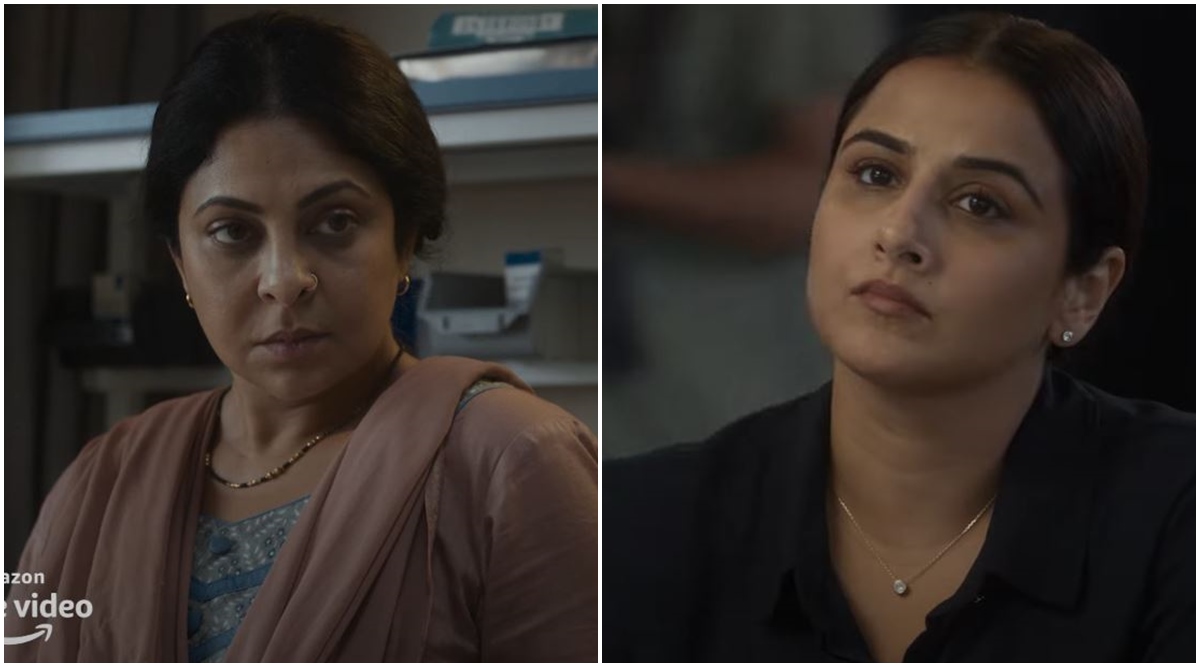
Madhureeta Mukherjee (BOMBAY TIMES; March 16, 2022)
She says she is a greedy actor. The fierceness with which she bites into every role, bringing alive every character she portrays and owning it wholly, we couldn’t agree more with Vidya Balan. It’s her greed for great roles, and the audiences’ hunger to see more of her on any platform that maybe, results in the making of some unforgettable cinema. Vidya leads the show, along with Shefali Shah, in the upcoming, Jalsa, a thriller drama that releases on Amazon Prime Video on March 18. In a conversation with us, she shares her views on women in cinema, in the OTT space, in society, and how the concept of stardom is changing. Here’s a Vidya-view on all these subjects that matter…
This year marks 10 years of Kahaani, a landmark film of your career, and for our cinema. It came at a time when thrillers were far and few in Bollywood, leave alone a woman leading the show with such a compelling story. Ever since, we have had several more, and some of those featuring you. It is indicative of the changing narratives in our cinema, and of course, how you continue to do roles that defy stereotypes and redefine trends.
I was a bit taken aback when you said 10 years of Kahaani. I didn’t realise that, wow! It just seems like yesterday. You are right when you say that there weren’t many thrillers being made back then. And with Kahaani, you had a thriller with a woman at the centre of the story, and not just that, a pregnant woman. People just didn’t know what to expect from it. For Sujoy Ghosh (director), it was a challenge to put the film together. A lot has changed since… now there is a wide range of women’s stories being told. It is so exciting, though I have to say that I hope that the tag of the ‘woman-centric film’ is done away with at some stage. In Jalsa, you have two women leading the story, but it’s a kind of story that could happen to anyone. It is about one incident that just changes your life. Maya (my character) is a journalist. She is self-righteous, and here she is thrown into a sudden situation. It is easy to pronounce judgements on others, but now she is at the receiving end. Every character in this film is under the stress of being judged or judging themselves. Talking about Kahaani, yes, there have been other thrillers, but I think even today Kahaani is a benchmark.
A lot of female actors don’t subscribe to the term ‘woman-centric’ role/movie. In many of your finest films, while you were leading the show, it was the subject and story that took center stage. To put it simply, the subject was the hero, and hence, the films drew the kind of audience they did. Subjects have no gender, so here, the actresses are right in having a problem with the term ‘woman-oriented’. Your view?
I totally agree, and I love the way you have articulated it; I have never been able to articulate it like that. Yes, subjects have no gender and I think universal subjects appeal to me. When the story is not restricted to a gender, and it is about people and humans, it draws me. Like when I first heard the story of Jalsa, I said, ‘This could happen to anyone.’ That’s what hits you hard — the story.
You play a journalist in Jalsa. Over the years, your journey with the media has been interesting. For this part, did you draw any references from your interactions and relationship with the media that you have shared all these years?
Maya is not an entertainment journalist, so there was no exact reference point for me there. A lot of journalists we see around us, and credible names who you think are beyond blemish, are also human. When the camera turns towards them, and they are confronted with certain situations in their life, it would be interesting to see how they would deal with it. Maybe a better way of putting it would be, when the lens of judgement is on them, what happens? Will they crumble? It is easy to put others on the stand, but what happens when you are on the stand, what are the calls that you will take, and what are the choices you will make? Everyone has secrets, and everyone knows their truth — this is the crux of the story and the narrative of every character in the film.
You have worked with director Suresh Triveni in Tumhari Sulu, which was in a very different zone. Jalsa seems to be an intense drama. Is he trying to make a social commentary through this film?
I stay away from any sort of commentaries, but different people will have a different take away from the film and story. At times, people will find layers in everything, and yet, sometimes, they will find nothing at all, so it is subjective. Jalsa is a gripping story, with oodles of drama. I don’t think it is trying to make a commentary. I think it will leave you feeling, ‘Oh, my god, this could be me.’
Currently, there is a lot of conversation around how the digital space has given female actors ample opportunity to play diverse roles, a chance to break the mould, take risks et al . In this case, would you agree that you were ahead of the game, as what we are talking about today — the chances and variety of roles, you took that leap for the big screen long before we were rejoicing in this new wave of content on OTT?
May I say that it is very easy for everyone to now say that. ‘Oh, the OTT space has opened up opportunities for women’. They are basically mitigating the value of the journey that the Hindi film heroine’s arc has gone through. I don’t think the OTT wave has changed anything for women alone, I think it changed the way we view content, and therefore, it has changed content. Obviously, because of that, there is a wider variety of stories being told, and different genres being explored. I think what the OTT space does is that it offers you an intimate, personal experience. When you go into the theatre today, the difference is very stark. You go into the theatre to get the big-screen, heroic, larger-than-life experience. On OTT, you have the luxury of when and what you want to watch. It troubles me when people talk about the OTT space being a game-changer for female actors or female story writers. I don’t think that’s true at all. I am credited with being at the helm of things, but even that, I believe, is about timing and being at the right place, at the right time. And I am not the only actor who has been doing that. Most importantly, there have been others who have followed it up, and we are all in it together.
So, the choices of films that you are making now are irrespective of the medium?
Absolutely! I am medium agnostic. I am a very greedy actor. The platform depends on the content and what sort of film will appeal to what audience. I believe that Jalsa will appeal to a universal audience, it is not just for the Indian audience.
In Jalsa, we have two actors (who happen to be women) who are superb at their craft — Shefali Shah and you — leading the show. It again points to the steady and positive change that we are seeing around us and in our cinema.
Yes, it is because of changing mindsets and evolving audiences, but most importantly, it is reflective of the change happening in society where women are taking centre stage. Today, women are in charge of their own life stories, which is why we are seeing much more of those stories in our cinema.
Do you feel that the concept of stardom has changed, or has been redefined in the current times? And the audience is willing to watch the actors they admire on any medium, as long as they have a great story to tell?
Yes, I think the concept of stardom has changed. The larger-than-life quality of stars has changed over time because of their accessibility on social media. The OTT platform has also created a new breed of stars. If you like an artiste, you will watch what they have to offer on any platform. I don’t think the previous success of a film of an actor has actually mattered ever for their fans. Also, today, I think it’s how exciting your trailer is and what it makes the audience feel is what determines whether they will watch the film or won’t.
Two of your big films released on OTT in the last two years, Shakuntala Devi and Sherni. While releasing a film on a digital platform could be a new experience, do you miss the excitement around a theatrical release, where the box-office numbers keep coming in on a Friday, and there is all that hysteria around it?
Not really. Honestly, it’s the best thing to have happened to Shakuntala Devi and Sherni. Our films were ready, and we had a platform. Both were loved and were very different films, and so is Jalsa. Whether a film is releasing in theatres or OTT, I still feel butterflies in my stomach until I know how the audience is responding to the film. It’s the same nervousness. It’s like you are showing your Simba to the world. The first time you hold your baby out to the world, it will always make you nervous, no matter where and how you show it.
Channelling your inner goddess is about using your voice and spelling out your choices-Vidya Balan
8:09 AM
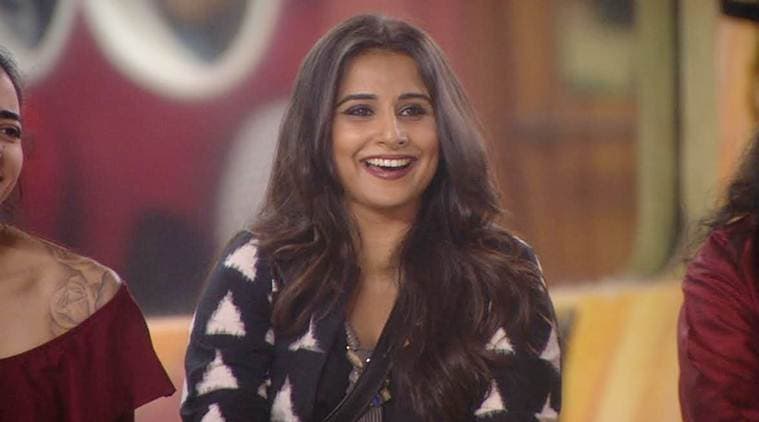
Rachana Dubey (BOMBAY TIMES; October 13, 2021)
While actresses across film industries, age groups and nationalities have played strong characters on screen, Vidya Balan set a standard that few could match. She chose to play mothers who were unlike the sacrificial kind that Hindi cinema was accustomed to. She played love interests, but not the damsels in distress. She essayed women who were not afraid to make choices, who didn’t always tick the socially acceptable boxes. On the occasion of Navratri and Durga Puja, Vidya speaks exclusively to BT about not just the powerful characters that she has portrayed on screen, but also how every woman should channelise the inner goddess within her. Excerpts:
When we talk about channelling one’s inner goddess or harnessing the power within, how do you interpret and explain the concept?
It’s about so many things… It’s about drawing healthy boundaries, learning to say no, valuing yourself more, using your voice and being authentic and unapologetic, or at least, working towards it. It’s also about valuing and spelling out your choices and what you want in life. The thing is, we have been trained to put ourselves after everyone else around us. Channelling your inner goddess means learning to prioritise ourselves without feeling selfish. We have been taught that everyone else should be our priority, but it is for us to realise that our needs, desires and wants can be placed alongside what we do for others. Channelling your inner goddess means acknowledging that you have the right to a life of your choice and dreams, focussing on your own health and taking that break when you are bogged down, asking for help and support instead of trying to be a superwoman.
In recent times, the audience that consumes Hindi cinema is more than willing to embrace strong female characters on screen who live by their own ideals, morals and rules. What inspires you to pick such characters?
I guess I try to practice what I just said, and so, I get drawn to these stories naturally. I have often spoken about how I came to accept myself the way I am and what it took me to do that. You have to be in allowance of your dreams that are beyond you or doing something that no one in your family has done before. You have to know and accept that there will be days when you will be more acceptable to people and some days when you won’t be, and that it’s okay. There will be days when I am angry, or badly behaved or something like that; there will be days when I am intolerant, and days when I am kind, compassionate and giving. All of that is a part of me and should be first accepted by me.
About a decade ago, my mother had put me in touch with a healer. I was going through some health issues at that time. From then till now, I speak to my healer from wherever I am in the world and express what I am feeling. That’s the most transparent space for me as an individual whose life and work is in public glare. It has helped me understand what I am feeling, spell it out and follow what I want to do in most situations.
It’s not about what anyone else wants, but what you want. It’s about choosing that. Doing that has helped me be authentic, live the life I want. Also, that is a gift from my parents to my sister and me - they have allowed us the space to be who we want to be. The fact that I am a woman of a certain size or maybe someone who does not necessarily possess certain skills that are thought of as prerequisites didn’t stop me from wanting to do things my way. I feel most women feel this very restlessness, this unwillingness to settle, and it’s this what is happening in the world around us that has found its way into films because it always does.
Is that why the women, especially the mothers that you have played on screen, have seldom followed a rule book or settled for the shorter end of the stick?
In 2015, during a panel discussion, I remember talking about the change we need to see in cinema, and one of the things I spoke strongly against was the glorification of the sacrificial mother. I have always disliked the idea. Maybe the universe heard me that day. The films that came my way in the subsequent years, including the ones where I play a mother, like in Shakuntala Devi and Mission Mangal, had me essaying characters who wanted things for themselves; they had flaws, and they were thinking, feeling women. Mind you, that did not make them lesser mothers. We see women like that around us all the time. They have been punished and judged for having feelings, desires, which didn’t revolve around others and for not putting themselves behind everyone else. But it’s these women who have inspired other women to make choices irrespective of the repercussions. I remember everyone that I spoke to told me how Shakuntala Devi wanted the most out of life. The point where she says, ‘Agar main amazing ho sakti hoon, to main normal kyun banoon?’ sums it up.
We often set unreal standards for women to meet in every walk of life. Do you think cinema can steer a conversation on accepting women as individuals before being identified by their professions and relationships?
Cinema is already trying to bring about a change in the way we perceive women around us through stories and characters. We see and worship the goddess in so many forms. What we also need to realise is that the goddess is you and me. She is not an otherworldly creature who is perfect. For instance, Maa Kaali symbolises the angry side of the woman, the kind that can wreak havoc. Nothing can really calm her rage when she’s pushed to the brink. But do we let women in real life express their anger amply? The purpose of our mythological and religious scriptures is also to make us understand human behaviour. I think Mahabharata is the most in-depth study of human behaviour and how nothing is right or wrong. It’s about how you see things. Today, we need to look into the nuances and subtle messages that these books actually hold for us. We need to go past our limited views of things. When a woman channels her inner goddess, she leaves no option for the world, but to accept her for who she is. We have to remember that the goddess is not outside; she is within each woman around you, and more importantly, within you.
I have faced sexism from men, women and myself-Vidya Balan
8:11 AM
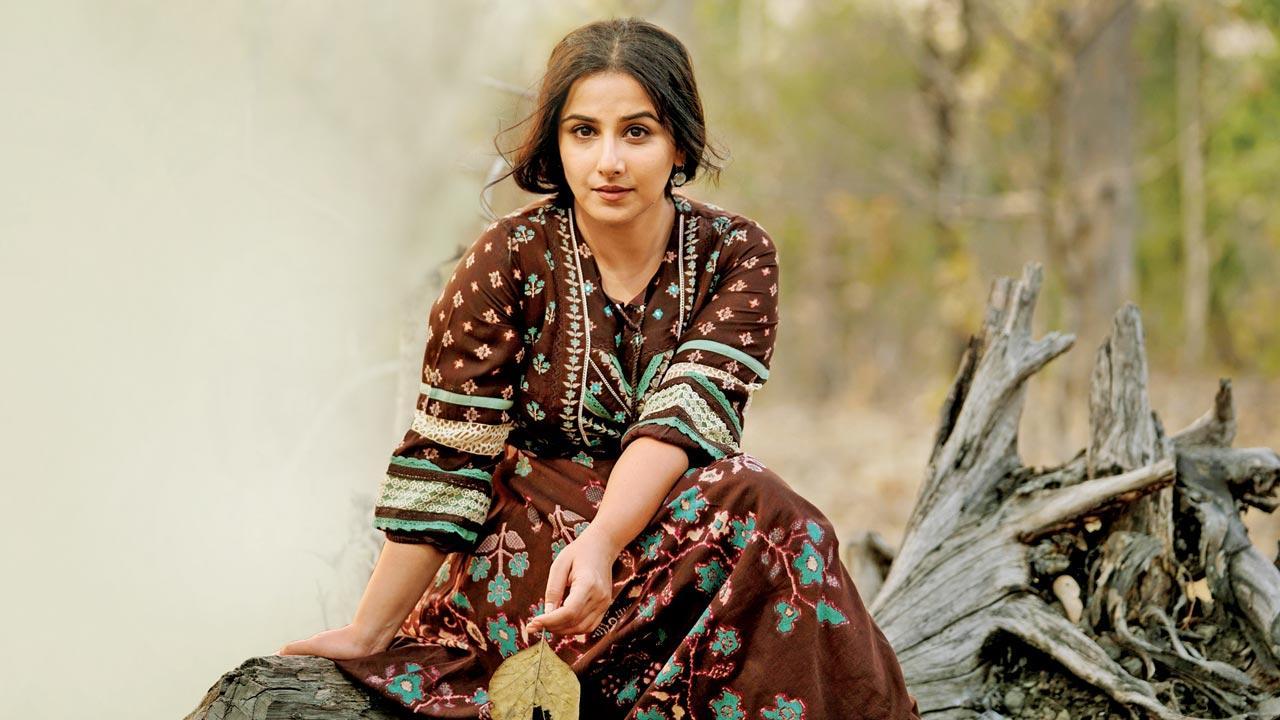
With 'Sherni' highlighting patriarchy besides its central theme, Vidya Balan on how society’s gender bias made her underestimate herself
Uma Ramasubramanian (MID-DAY; June 22, 2021)
With 'Sherni', Vidya Balan has done again what she does best — highlight a larger story through the journey of a commonplace character. While at it, she has also delivered a compelling performance. “It’s overwhelming to receive so many messages. I make films for people to watch; the more people watch it, the happier it makes me. That said, it is not about validation. I choose the stories I want to tell. My decision is not based on what [subjects] the audience will like. When they do like what I am putting out, it’s a form of gratification. It encourages me as an actor. I think anyone who says they are making films for themselves and don’t care about box-office is bullshi**ing,” says Balan, flushed from the praise for her latest release.
In showcasing divisional forest officer Vidya Vincent’s efforts to save a tigress from hunters and release her into the national park, director Amit Masurkar has highlighted the man-animal conflict. The director, while staying true to the central theme, has also tackled patriarchy, depicting how men are reluctant to take orders from a woman forest officer. Balan says the track resonated deeply with her. “Sexism is not only about how men treat women; it is as much a mindset that women have, as a result of their deep-rooted conditioning. I have faced sexism from men, women and myself. Sometimes I have underestimated myself because I am a woman. But over time, I’ve realised that there is a way out. I don’t have to hold myself back because [of my gender].”
The actor acknowledges that the Amazon Prime Video offering has impacted her, making her realise how humans have been taking the environment for granted. “We have all read about global warming and climate change. But I don’t think any of that has impacted me as much as being part of this story has. I don’t retain anything that’s taught to me in theory, but the moment you infuse a story into it, I connect with the subject.”
Women have had to navigate their way through the dense jungle of patriarchy-Vidya Balan
11:27 AM

Madhureeta Mukherjee (BOMBAY TIMES; June 17, 2021)
A decade ago, even in our wildest imagination, we wouldn’t have thought that a top actress would play the titillating Silk Smitha in The Dirty Picture. Vidya Balan did — with guts and gumption, she unleashed herself on the big screen for a film that went on to roar for the right reasons, and we mean, beyond the glory of box-office numbers. It paved the way for more power-induced roles for actresses in an industry where the natural habitat is hero-dominated. After a variety of films which include Kahaani 2, Tumhari Sulu, Mission Mangal and Shakuntala Devi in recent times, Vidya is now stepping into the wild territory, as she plays a forest officer in Amit Masurkar’s (of Newton fame) Sherni, which will premiere globally on Amazon Prime Video, on June 18. In a conversation with us, Vidya talks about women who battle the deep-rooted problem of patriarchy in our society and the sherni that lives within all of them. Read on…
With Sherni, we will be seeing you in another seemingly challenging and rare role, and this time you have crossed the boundaries and stepped into the wild, literally. How was it treading on that path?
It was quite refreshing, and like you said, I have stepped into the wild and it was really unfamiliar territory for me. I had been on jungle safaris and that was my only experience of being in the wild. I have watched documentaries on wildlife to understand that world, but I have never been a part of anything like this before. So, the experience of working on this film has definitely altered my relationship with nature.
Apart from focusing on the man-animal conflict, the film tackles another issue as old as the forest trees — patriarchy. As part of your prep, did you interact with women forest officers to understand the challenges that they face on ground, in a territory that’s largely male-dominated?
Yes, I interacted with the female forest officers, and I was surprised to see quite a few of them. Of course, it is still a male-dominated bastion. I wanted to understand what their job entails, what kind of training they go through and how passionate they are about conservation. It’s a tough job, which often requires them to stay away from their families for long periods of time. In the trailer of the film, you get a whiff of the patriarchal mindset of our society, where we are constantly underestimating women. And no one is to blame here, it stems from lack of awareness. The female forest officers see themselves as someone doing their job and not as ‘female’ forest officers. Yes, it is considered a male-dominated profession as it is physically arduous and dangerous — and we don’t typically associate women with such jobs. Women have had to navigate their way through the dense jungle of patriarchy.
Your character, Vidya Vincent, seems to be restrained, dignified, a woman of few words, but deep down there is a lot simmering. The sherni inside her is waiting to roar. Did you at any point identify with it? Were there situations in life where you were calm on the exterior, but the tigress within was waiting to come alive?
Of course, many times, however, as individuals, Vidya Vincent and I are very different. She is reserved, rarely smiles and feels that the forest is her safe haven. She is someone who would rather not engage with the world. She is not what you call a stereotypical sherni, and you won’t see the obvious manifestation of the sherni within her. When you define someone as a sherni, they are strong, but in an obvious kind of way; Vidya is not like that, and yet, she is a woman of great integrity, is strong-willed and uses her voice where it matters. It’s not like by the end of it, she roars. It is not her personality. She is an everyday hero.
You don’t have to roar to show your might. Power and will can be demonstrated in other ways, too, is what you are saying?
Yes, absolutely! You don’t need to roar to prove you are a tigress. For me, the line in the teaser encapsulates what a sherni is, ‘Jungle kitna bhi ghana kyun na ho, sherni apna raasta dhoondh hi leti hai.’ This line speaks for every woman and this film is also an ode to the faceless, innumerable individuals who go about doing the right thing without expecting glory at the end of it. Every woman might not be standing on the world stage, making a difference politically, climbing the corporate ladder, or facing the camera — she doesn’t have to do something that’s celebrated, yet she can be a sherni. If we are being able to do what we are doing today, it is because of all those shernis in our lives who sacrificed their dreams, but gave us the strength and courage to move on fearlessly. There are women who have navigated their way through families where they literally had no rights and were disrespected, but they endured it all so that their children didn’t have to go through similar experiences. Are these women any less shernis? No! Sometimes you don’t have the tools to break the shackles, but you have the will. That will is what sees you through. For me, this film has redefined what a strong woman and a real hero is.
Last year, your film Shakuntala Devi was slated for a theatrical release, but due to the Coronavirus pandemic, it released on an OTT platform. Likewise, Sherni had to change course and is now seeing a digital release. How do you think the landscape of our cinema is changing, evolving in the new normal, with so many external factors impacting the usual, traditional ways of the film business?
We couldn’t have done anything about it, as this is not a situation that’s been created by the film industry. It is not like the video revolution that happened in the 80s that affected the industry, it’s a pandemic that has impacted all humans and industries, and the film industry is no different. I think OTT platforms offer you a great alternative to showcase your content, especially content that’s ready. At the time of Shakuntala Devi, we didn’t know what it even meant to release a film on OTT. By the time we shot the second schedule of Sherni, we had thought it would get a theatrical release as things were better, but the scenario changed. It’s finally releasing on OTT, and I am so glad we have avenues like these that allow us to take our films to people across 240 countries and earn us new audiences. When theatres reopen, I believe that OTT platforms will continue to thrive and so will theatres. They will always be two different experiences.
Smashing stereotypes, bending norms is what we have seen you do through a lot of your work — The Dirty Picture, Kahaani, Tumhari Sulu, Shakuntala Devi. Do you set out to seek such roles, or do such roles attract you? It is like… this is what we expect Vidya to do — from an audience’s point of view. We call such movies women-centric films, in your case, I think the audience looks at the movie and says that this is ‘Vidya-centric’ cinema.
(Laughs!) I am really humbled by that. But I don’t think on my part it’s a conscious call at all, as I do films that resonate with me. The films that I choose are a reflection of my current state of mind. I was ready to embrace the wild, and therefore, Sherni happened. So, I don’t think that through my films I have made a conscious attempt to smash patriarchy or challenge the status quo, it happened along the way. I am glad and thankful that people are writing such stories and making the films that I believe in. You can’t step out to do these films specifically. In Sherni, you will get to see a new kind of strong woman — the one who goes about doing the right thing. The silent, invisible strong woman. My film choices are a two-way street — where people are writing and offering me some of these stories and I am steering towards it. We meet mid-way, somewhere. Am I seeking such roles? I guess I don’t know the answer to it, and I think it’s a good thing that I don’t.

There were times I wanted to react, but Amit Masurkar would say, lesser is better. I actually felt challenged-Vidya Balan
8:02 AM
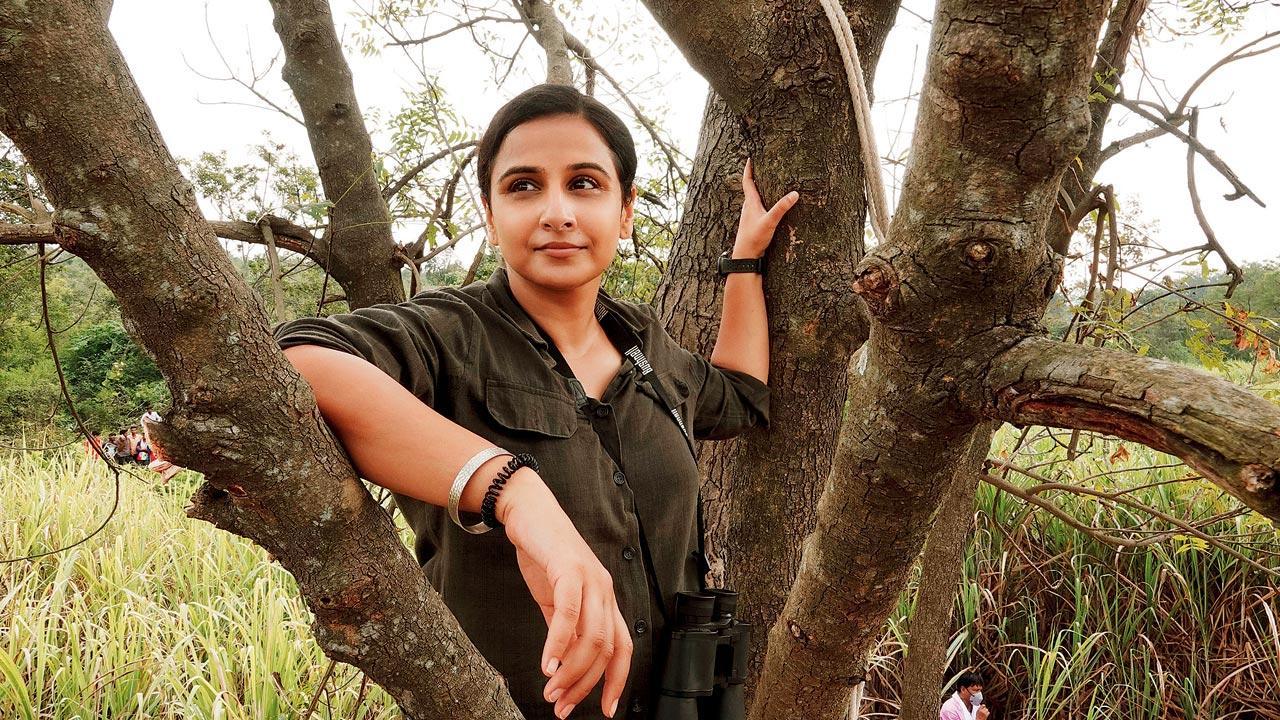
Award-winning writer-director Amit Masurkar and stellar performer Vidya Balan come together to address a theme not many Hindi films have dared to tackle
Aastha Atray Banan (MID-DAY; June 13, 2021)
When director Amit Masurkar and team began researching for Sherni, they learnt that in conservation circles, the tiger is the flagship species. If you conserve the tiger, the ecosystem and other minor species that inhabit it, are safeguarded. It’s how the focus on conserving the tiger became the thrust of the movie.
The film directed by Masurkar, written by Aastha Tiku, stars Vidya Balan in the lead role, and releases on Amazon Prime Video this week. It tackles the complex human-animal conflict. Balan plays an Indian Forest Services officer, who is assigned with the job of finding a solution to a man-eating tigress, who has caused havoc among the villagers and forest officials alike.
Masurkar, best known for directing the National award-winning film Newton, says there was a four-pronged process behind making the movie. “Firstly, we wanted to set the philosophy in place. Conservation is a community activity that needs effort by a team. It’s what Vidya’s character is assigned to manage,” he says.
Addressing the issue of underlying patriarchy that Balan’s character fights while doing her job, the film looks at how she puts systems in place when she realises that a transfer may be imminent. “Second, we had to create the character, which we did after detailed meetings with forest officials. Third was about getting the plot right, which was the easiest bit. And last was to address the little details, which we took care of as we filmed and the actors brought their own little something to their roles.”
It is here that Masurkar says Balan’s character, whom he chose to name Vidya, was shaped greatly by the actor herself. “She is the strong and silent type, who reacts less, and acts more,” Balan says of Vidya, “I met a lot of officers who offered me an insight into their life, how they manage to survive in the jungle for years at a stretch. The hard bit about playing her was that here was a character who is a woman of few words. She is self-assured without making a show of it. There were times I wanted to react, but Amit would say, lesser is better. I actually felt challenged.”
To challenge Balan, who has taken on every possible role in her career like a chameleon, is hard. Her last movie was Shakuntala Devi, where she played the famed mathematician known as the “human computer” pat down to the finest detail. “I think the character emerged from her organically. Vidya lives by the sea, and is connected to nature in some way. She dug deep into herself to find that love. And as we lived in the jungle while filming, she would take off on long walks. When you are in the forest, you start listening more, start smelling, using all your senses—you have to be more aware of everything. So, she used all of that.”
On the face of it, the movie is about conservation, but the film also addresses the subtle and overt misogyny that women in senior positions face at work. Though Balan says the movie is not trying to preach, she does say that the tag line “Jungle kitna bhi ghana kyun na ho, sherni apna raasta dhoond hi leti hai” speaks to all women. “They could be CEOs, journalists, actors—I think we are all navigating our way through our professions, one step at a time, in this jungle of patriarchy, of which we are perpetrators too. We don’t realise it. I think people will take away various things from the movie, and this could be one of them,” Balan explains.
Unlike stars who have expressed disappointment at their films not being able to release in theatres during the pandemic, this team is happy that Sherni is getting an OTT release. “It’s going to release in 240 countries, and because the issue of conservation is universal, it will find an audience everywhere,” hopes Balan. They also say they don’t want to saddle the watcher with the hope that the film will change circumstances and their point of view dramatically. “We just want people to watch it, get entertained. It’s a layered film; you can watch it a couple of times,” says Masurkar.
Balan says that if she had to give audiences a reason to watch Sherni, she would tell them how her mother reacted to it. “My mother said it was a breath of fresh air; it made her feel like she was out in the open again. And that’s a plus.”
When one gets a wildlife posting, they are cut off from civilization, living in a parallel reality-Vidya Balan
8:14 AM
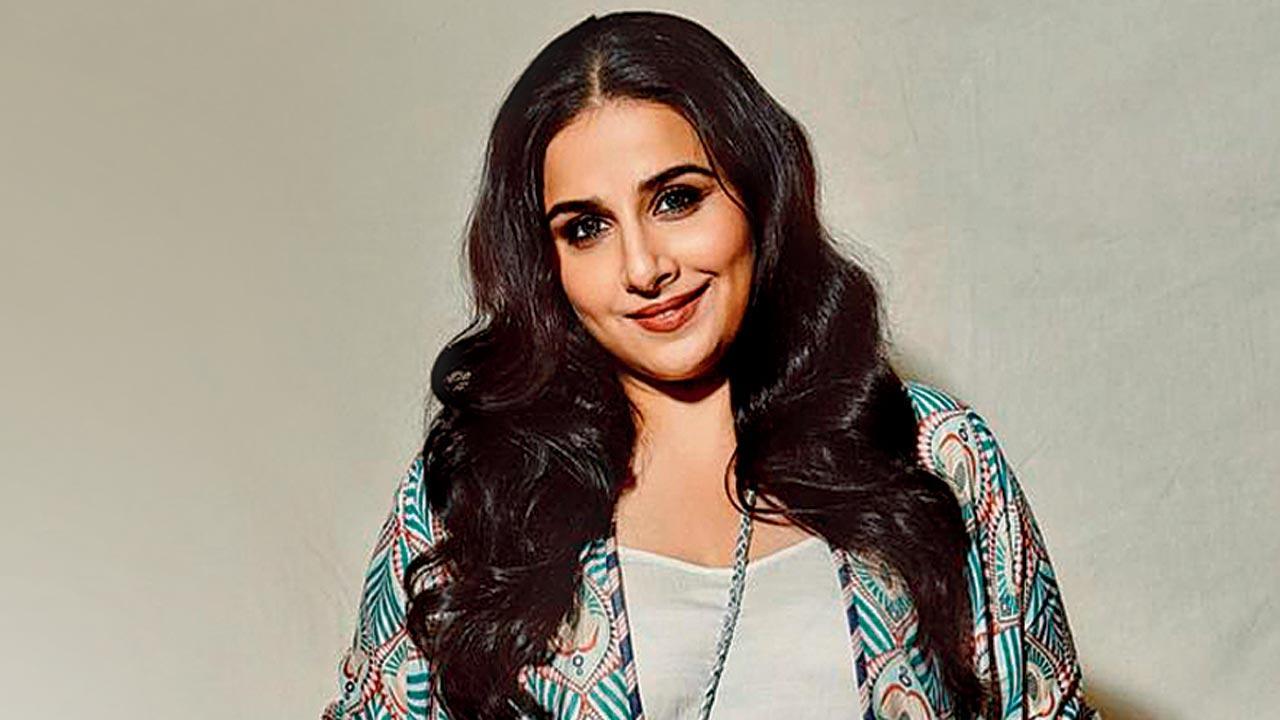
Admitting that her knowledge of wildlife was earlier limited to safaris and NatGeo shows, Vidya Balan charts out how she prepped to play forest officer in Sherni
Uma Ramasubramanian (MID-DAY; June 10, 2021)
Our last brush with Vidya Balan was the joyful Shakuntala Devi (2020), where she played the gregarious math genius with aplomb. Almost a year on, the exuberance has been replaced with an air of reticence, the teasing tone, by measured words, as Balan transforms into Vidya Vincent, the quiet forest officer in Sherni. For the actor, the world of the Amit Masurkar-directed film comes as a breath of fresh air.
“Playing a forest officer was refreshing because it’s a world I am not familiar with. My interaction with this world [was through] a few safaris, and watching Animal Planet and NatGeo,” she shares.
The more she read up on forest officers, the more she understood the demanding nature of the job. “I met a few forest officers to understand what their job entails. It was an eye-opener. They have to undergo an intense three-year course before they make the cut. When one gets a wildlife posting, they are cut off from civilization, living in a parallel reality and are most probably away from their families. The job can be physically arduous and dangerous at times, so [the field] was traditionally male-dominated. But the women officers shared how they negotiated their way around the patriarchal mindset.”
While the Amazon Prime Video offering puts the focus squarely on the man-animal conflict, it also studies how a woman has to fight harder to survive in what is considered a male domain. “I like that Vidya Vincent is a woman of few words and yet has the courage to stand up for what she believes in. You don’t have to be aggressive or be a man in a man’s world; you can be a woman and still find your way.”
The drama was largely shot in Balaghat, Madhya Pradesh. Filming in the dense jungles was an experience of a lifetime for Balan. “I have been on safaris in the past, but the wild would always intimidate me. But this time around, I stayed in a tent, which was fun. I would go for long walks in the summer when it was safe. It was heartening to see how the unit was conscious not to litter around as we were shooting in a forest.”
OTT has been a life saver for a lot of us-Vidya Balan
8:30 AM

Juhi Chakraborty (HINDUSTAN TIMES; January 24, 2021)
The realm of entertainment changed in the last 10 months with OTTs coming to the fore with a lot of force in the event of shutdown of theatres owing to the pandemic. Something that has now made a lot of actors, who have so far stayed away from dabbling with the digital platforms, rethink their career options. Vidya Balan admits that this has indeed brought about a change in the mindset of many actors including herself.
“We were watching a lot of content globally. A lot of the actors were feeling that the content here was not up to the mark, and therefore, we were shying away from doing any direct to OTT stuff. I don’t think the boom has now happened because of the Coronavirus pandemic. I think it has taken it’s time to come to become itself, and we have actually enjoyed the fruits of that during the pandemic,” shares Balan.
The actor says that she is now sure that she would be open to be part of an original OTT project like a series. “I was always sure that I wanted to do something in the OTT space. I was looking for the right thing, and hopefully I will find it soon,” says the 42-year-old.
The actor, whose film Shakuntala Devi, which was originally slated to release in theatres, made its way online because of the situation last year, says that the OTT platforms have been a boon in more ways than one.
“Not just actors but everyone is looking at and considering OTTs positively. Plus, the variety of content that is being made, curated, produced and consumed, means there is something for everyone. It has generated employment because there is that much work for people in the industry,” shares Balan.
She adds, “OTT been a life saver for a lot of us, who could not have afforded to keep our ready films on hold. We got an avenue to release our films and they were widely watched. We don’t know when people will be going back to theatres. Let’s hope it is soon, but OTT has opened up a completely new horizon, and that can only mean good news.”
I hope 2021 is going to be the lull after the storm-Vidya Balan
8:33 AM

Juhi Chakraborty (HINDUSTAN TIMES; January 1, 2021)
January 1 is not just the start of a brand new year for Vidya Balan but also her birthday. However, this time around, it’ll be a different kind of celebration for the actor on her special day, as she rightfully notes how the world itself has changed amid the pandemic.
“This year, obviously we won’t have a party, it’ll just be family because no one feels safe stepping out,” shares Balan, who turns 42.
There may not be a grand celebration but that does stop the actor from having a birthday wish. “It’s going to be a different start to the year but there’s hope that the year is going to be kinder. I feel the new year will be gentler,” she adds.
And Balan is not giving up hope. “Normally, they say there is a lull before the storm but I hope 2021 is going to be the lull after the storm. It’s all going to be sunshine and happiness again,” she says.
While the actor is looking forward to the new year, she says there are important takeaways for her from the year gone by. “Who knows what’s going to happen tomorrow, that’s what the pandemic made us realise that we must live in the moment. There has been a recalibration of life in general. Facets of our lives have changed. We’re all trying to go back to what used to be normal to us but we are still not there,” she explains.
Balan also feels that there has been a change in priorities in our lives. “We’re capable of so much more than what we thought we were, and that’s a huge realisation. Despite everything, we’ve seen the spirit of human resilience rise and shine.”
Last year, Balan had an OTT release with Shakuntala Devi, a short film Natkhat and she also shot for her film, Sherni amid the pandemic.
“We were trying to do all that we could to normalise the situation. I shot for Sherni. I started the film before the pandemic and finished it when things opened up and I’m very proud to say that we didn’t have a single Coronavirus case. That wasn’t easy, to follow so many protocols. Ab kaam ho raha hai toh hum kaam karenge, whatever it takes,” she concludes.
Vidya Balan offers to auction a special saree for a cause
8:17 AM

Harshada Rege (BOMBAY TIMES; December 6, 2020)

Among the many challenges posed by the pandemic, has been a shortage of funds for the free public library. When the actress got to know of this, she pitched in to do her bit. When she was approached to give any personal item that could be auctioned, she opened up her wardrobe to give away one of her special sarees.
Vidya says, “I think by now everyone knows about my love for sarees, especially handlooms. And yes, I do cherish my saree collection immensely, but from time to time I give them away, too, it just feels right to do that.”
Talking about the saree she has put up for the auction that is on till December 20, the actress says, “This is a pure tussar saree, which is a traditional ikkat. I love traditional weaves, but this one also has a contemporary edge to it.”
More B-Town celebs are expected to join in for the first edition of this initiative. Vidya, who has an affinity for reading and books, says, “I have always been around books and found a lot of comfort in them. I have a high regard for books and value education. What you learn from classrooms is great, but what you get to learn outside the classroom, through interactions with colleagues and peers and from immersing yourself in books… these life experiences are invaluable.”
The Tumhari Sulu actress further shares, “Personally, I love the comfort of a library, where you can get lost in the world of books. It sparks your imagination and makes you think, which is why I wish there were many free libraries in our country where everyone is welcome. But it requires funds to run a library, and participating in this auction is a small step to help achieve that.”
We are all victims and perpetrators of patriarchy-Vidya Balan
8:05 AM

As Natkhat's win at Best of India Short Film Festival makes it eligible for Oscars 2021, Vidya on how the film challenges age-old patriarchy
Mohar Basu (MID-DAY; November 15, 2020)
Off the radar of cellular networks, Vidya Balan was shooting for Sherni in the jungles of Balaghat when she heard that her short film Natkhat won the top honour at the third edition of the Best of India Short Film Festival (BISFF) 2020. The win makes it eligible for a nomination at the Academy Awards next year. The actor starts off with her full-throated laugh, "I was gloating at merely getting shortlisted, but the next thing I knew, we'd won. I first read the film because Annukampa Harsh [writer] is my junior from St Xavier's College. The story was so powerful that I had to meet the director [and co-writer] Shaan Vyas."
Playing a mother who instills the values of gender equality in her son from a tender age, Balan says the 33-minute film powerfully drives home the message of removing misogyny from its roots. "People are connecting to this troubled mother who wants to teach her child by example. People should understand we are all children of the same God, falling into the trappings of society of class, religion and caste divide. A film can only make people contemplate, it can't change them. Our idea was to make everyone realise that we are all as much victims of patriarchy as we are perpetrators, including women."
Given how attached she is to the story, why did she not contemplate making a full-length feature film? "It was complete in itself. I am not sure people want to be uncomfortable for two hours. As an actor, I was deeply angered and disturbed through the process. The dinner table scene was the hardest for me. The ghunghat over my face was making me physically uncomfortable. The scene entailed a child saying, '[Ladki ko] uthwa lete hain.' It was a horrific realisation that rape culture is so normalised."
After Period. End of Sentence won at the 2019 Oscars, it was evident that authentic stories from diverse cultures have a shot at winning big. Ask her how they plan to go about lobbying, and she says, "I will know the details once I am back in Mumbai. Ronnie [Screwvala, co-producer] has a great team in place. I am hoping for the best."

At one time, my body was my life's biggest problem-Vidya Balan
8:14 AM

In a candid chat with mid-day, Vidya Balan discusses how her long-lasting battle with a stubborn bulge almost became part of her identity as a Bollywood actor
Uma Ramasubramanian (MID-DAY; September 16, 2020)
Cinephiles who look beneath the superficial can perhaps find common ground between Vidya Balan's off-screen demeanour, and the strong-headed characters portrayed by her in films. But Balan's ebullience can be deceptive, egging one on to believe that she can't be fazed by opinions in an industry that's always willing to provide one. How hard could it be for an actor like her to survive in an industry that's defined by lithe frames and picture-perfect figures? Balan's calibre is established in the fact that she delivers successes, successively, and is among the female actors who have the maximum number of films that have been headlined by them. And yet, even this powerhouse of talent is rendered as vulnerable as every other woman who does not, quite literally, fit into a mould. "For the longest time, I hated my body, because I have always been a 'fat girl'. When I was a child, people called me cute, and I enjoyed the attention. As I grew older, people started asking me why I wasn't losing weight when I had a pretty face," says Balan, who attributed her string of flops from 2012 to 2017, to her figure. "I felt, if my films weren't working, it had [something] to do with my body. At one point, it seemed like my body was my life's biggest problem."
Not all efforts pay off?
Have you come across fitness professionals who criticise the celebration of voluptuous figures in magazines and on social media, accusing them of 'promoting obesity', and alluding that the women in question could shed the excessive weight, if they 'tried'. For those professionals, Balan can be a case in point. "I would work out like a beast, and deprive myself of the food I loved. I did that for several years, and yet, continued to gain weight. If and when I did lose weight, I would feel it was alright to be fat. But, then, the weight would come back on, and it was always a nightmare, again. When I was 17, somebody told me that if I would drink 10 litres of water a day, I would lose weight. I started to do so, and, almost each night, I would puke. My family worried for me, and when I told them what I was doing, they took me to a doctor, who fired me. When I stopped doing that, I gained the weight back. I have a body type that I couldn't change. My hormonal issues had [escalated] because I was rejecting my body."
At first sight, Balan's aptly flamboyant act in The Dirty Picture almost seemed like her answer to cinephiles who would carp about a figure she fought hard to tweak. But for the actor, it was the film that served as a catharsis of sorts, enabling her to realise that "even if I was big, I could be sexy". But it wasn't until eight years later in 2019, when she began to work with a healer, that true change was brought about. "The phase between 2012 and 2019 was very difficult. Before each film, the director would tell me to lose weight. I was desperately trying to do so, giving a shot at everything in the [health-care] books — diets, sleeping patterns, everything. Finally, I started telling them that it won't happen. I began to work with a healer, who made me realise that I was blaming my body for everything. We communicate over phone calls. The sessions have made me realise that I can heal myself, and that, in turn, made me realise the power of the self. I practice finger-holds, which is a Japanese healing technique. I have realised that my body is the best machine; one that has answers to all my problems."
Appeasing the heart
The experience had a tremendous effect on Balan, who began to reintroduce those meals into her diet that she had unwillingly eliminated. "In 2019, I realised that I was still living the dream of being an actor; nothing else mattered. The body that is keeping me alive is the subject of my conscience. I stopped exercising like a beast, and I started eating whatever I wanted to. Guess what, my hormones began to balance. I began to eat gajar ka halwa whenever I desired, [and] for the first time in a long time, I dropped two kilos."
Directors approaching her with films on the condition that she work on pleasing the scale are now politely turned down. Balan is certain that "if the role requires a different physicality, it requires a different actor". With a renewed faith in her body's intelligence, she says she is "now happier in my body than I have ever been".
Balan On Her Current Regimen
Balan's willingness to accept her body shouldn't be mistaken for indiscipline. The actor, who took to yoga in 2012, continued to practice it until the lockdown hindered her routine. Not one to find meaning in virtual classes, she turned to taking long walks instead. "I walk for an hour each day. On the days that I don't feel like walking, I don't exert myself. This way, I find exercising more enjoyable. I pay heed to my body." She has also learnt that not every piece of information from the barrage of health-related content available, is likely to benefit everyone. Case in point being the nutritionist who would cater to both, her and husband Siddharth Roy Kapur. "Siddharth would lose weight with the nutritionist's advice, but I would not."
Subscribe to:
Posts (Atom)