Showing posts with label Vidhu Vinod Chopra father. Show all posts
Showing posts with label Vidhu Vinod Chopra father. Show all posts
I didn’t make Munna Bhai 3, and instead decided to make 12th Fail-Vidhu Vinod Chopra
2:49 PM
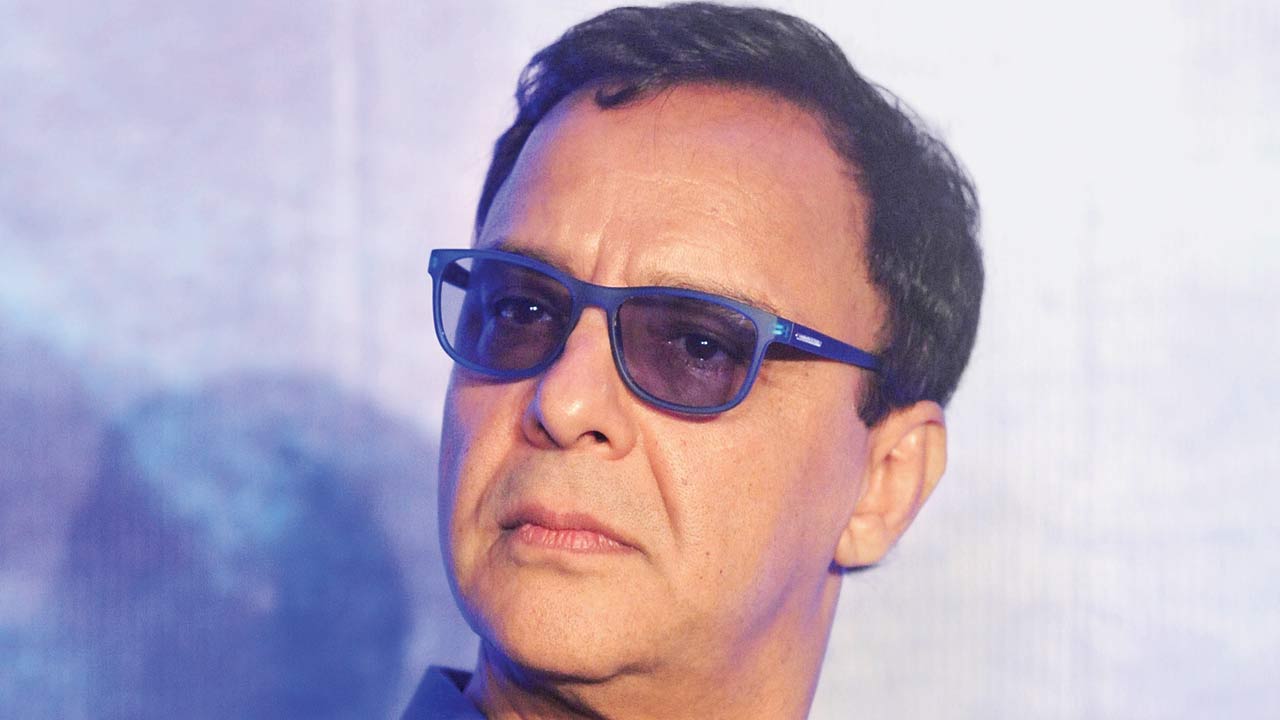
Vidhu Vinod Chopra on how he followed his heart and made 12th Fail over four years, forgoing an assured BO hit and a $10-million cheque
Mohar Basu (MID-DAY; October 28, 2023)
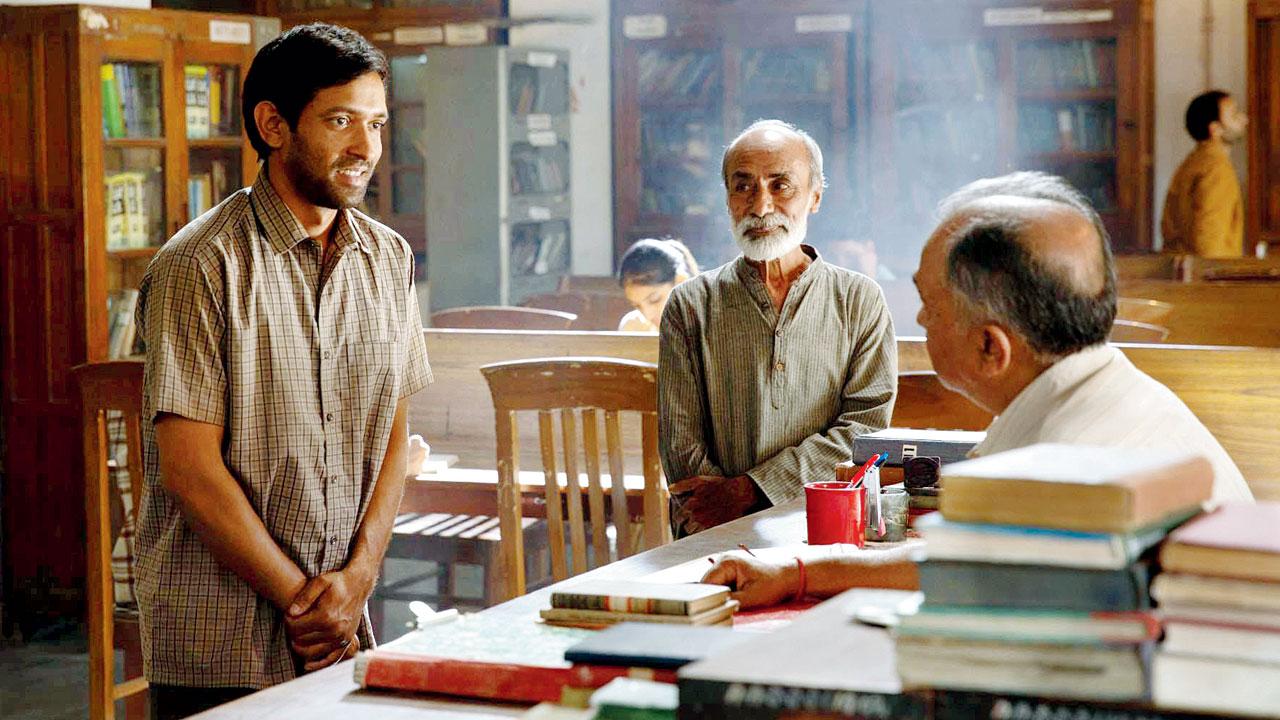
Vidhu Vinod Chopra spent the past four-and-a-half years making 12th Fail. What kept him going? His resolve to tell a story that is close to his heart. “I didn’t make Munna Bhai 3, and instead decided to make this film, which is yet to be picked up by a streamer. It’s my movie, my money. I believe you don’t have to sell your soul to make a film,” begins Chopra, who has written, directed and produced the Vikrant Massey-starrer.
Right at the conception stage, Chopra’s drive was to tell the story of those in the crowd who don’t have opportunities handed to them on a platter, those who fight the odds and make it on merit. “A line in the film goes, ‘Agar ek bhi bhed bakri ki jeet hoti hai, laakhon ki jeet hoti hai.’ It’s the story of every common man. It’s my own story in some ways. I came to Mumbai at 15 with no money. I developed anxiety neurosis when I first came here. My father told me that I would die hungry in the big city, but he instilled in me values that didn’t let me go astray.”
Almost 56 years later, the maker of iconic movies like Parinda (1989), 1942: A Love Story (1994) and 3 Idiots (2009) still lives by those values. “There have been such temptations. A few years ago, before this film, a studio head offered me $10 million to make a series. But my heart wasn’t in it. I have a life chart—I was born in 1952, I have only a decade or so left. If I have done fine for so long, do I need to be corrupt now?”
It is this trait of honesty that he wants to highlight with 12th Fail. The film is based on Anurag Pathak’s book of the same name, which is based on the real-life story of IPS officer Manoj Kumar Sharma. Through the cop’s life story, Chopra wants to show there is hope in the world as long as there is integrity.
The director states, “There are a handful of honest people in the world, and this world is running because of them. The goodness in the world needs to be represented more. When I was an FTII [Film and Television Institute of India] graduate and had little money, I found farishtas who helped me out. The then I&B minister knew I was poor, so he put me on the Governing Council of film bodies. I used to get Rs 880 as airfare, and my then-wife Renu [Saluja] and I used to live on that money all month. I’d insist they put me on more committees, so that I could make more money. Once, a secretary told me, ‘Kya Vinod, paanch saal corrupt banke thode paise kama le.’ But I told him that if you turn corrupt even once in life, then it’s forever.”
When you make such a personal story, it is crucial to find an actor who embodies the film’s spirit. To Chopra, Massey represented the integrity he was looking for. Recounting their first meeting, the filmmaker says, “When I asked him how he would play the 19-year-old, he sat on the ground in a child’s pose and started writing. We rehearsed together as a team for one year, and then shot for another year. This story is so important to me and Vikrant understood that.”
15 Years of Munna Bhai MBBS: How Sunil Dutt gave a jadoo ki jhappi despite frozen shoulder
8:20 AM

Roshmila Bhattacharya (MUMBAI MIRROR; December 22, 2018)
 Fifteen years ago, I slipped into a preview theatre after the lights dimmed to watch a film with a weird title, Munna Bhai MBBS, by a first-time director called Rajkumar Hirani which was to open in the theatres on December 19. A print had been rushed across to be screened for the jury of our upcoming film awards. Since this was the last big release of 2003, they did not want to wait till it was officially released to finalise their list of nominees. Few believed then that the Sanjay Dutt-Arshad Warsi comedy stood a chance of making the cut. But going by the rules, it had to be watched.
Since I was on jury duty that evening, I decided I might as well catch the film rather than sit outside twiddling my thumbs. But I had planned to make a quiet getaway after the interval. Less than fifteen minutes into it, I was hooked by the golden-hearted goon who though well past the school-going age, lumbers into the classroom to pursue his father’s dream of becoming a doctor, believing a jadoo ki jhappi is the cure to all ills. By the time the end credits rolled, I knew a director had been born and Sanju reborn. That year, this little big film swept most of the awards, including the 2004 National Film Awards for Best Popular Film on its way to becoming a jubilee hit and acquiring a cult status.
 Today it is hard to imagine anyone but Sanju playing Munna, but the film had initially been planned with Shah Rukh Khan who had even started working out because the character while not a bad guy was a big guy. Producer Vidhu Vinod Chopra in an interview to me had spoken about how he had been trying out different moustaches and giving inputs to the scripts, including the Michael Jackson takeoff in the title track, for which he finds a mention in the credits, when a back injury during a show in Lucknow put him out of action. Realising he couldn’t train anymore, SRK stepped out, and Sanjay Dutt who was already in the film, playing Zaheer, the cancer patient whose death jolts Munna (eventually played by Jimmy Sheirgill), stepped into his shoes since he already had ready-made muscles and was the right age.
The one big change this shuffle in the cast brought in was that Vinod was able to convince Sanju’s dad, Sunil Dutt, to play the role in reel life too and give him a jadoo ki jhappi. The latter turned out to be a painful exercise because Dutt saab was nursing a frozen shoulder and couldn’t raise his left hand. Raju was ready to push the shoot to another day, but the late veteran who kept rotating his shoulder, refused to give up. He finally managed to give his son a hug which came straight from the heart, much like Munna’s jhappis in the script.
When I quizzed Vinod on the genesis of the idea, that industry A-listers, including Sanju and Shah Rukh have embraced over the years, he remembered how Raju had cut some promos of his 1942: A Love Story. “I hated them and screamed at him. Three days later, Raju was back with fresh promos which were so wonderful that I spontaneously gave him a hug and the memory stayed with him. There’s nothing like a good hug!” he asserted. I agreed.
Munna Bhai MBBS came at a time when producers were wary of showing their film even to distributors before release. Vinod and Raju however had trial shows for different audiences, from kids to auto drivers, weeks before the film opened. The first test group was doctors. They loved it and Vinod heaved a sigh of relief, but not just because they were walking the tightrope with the subject. He confided that just like Munna, his own father had wanted him to become a doctor. He was really upset when his brilliant son opted for the movies instead, his brother Veer, putting him through the Film and Television Institute of India.
Vidhu’s first student short, Murder At Monkey Hill, bagged him the National Award for Best Short Experimental Film while his documentary on destitute children, An Encounter with Faces, was nominated for the Oscars. “My elder brother, Ramanand Sagar, would say, ‘Takt ya takiya, you never know which way the scales will tilt.’ My father was convinced it would be takiya for me,” he laughed, happy that though he did not become Dr Chopra, like Munna he brought to life the age-old idiom,‘laughter is the best medicine’.
One is also reminded of Dr Asthana’s laughter therapy in the film. Like Nana Patekar, whom he spotted on stage and cast in Parinda, Vinod discovered Boman Irani, who played the cantankerous dean of the medical college Munna enrols in, in a play. Boman was introduced to theatre by Shaimak Davar at 35. He was 44 when he made his Bollywood debut. But then, as Munna proved with his bhaigiri, age is but a number. Boman today, with Sanju, Raju and Vinod are looking ahead to Munna Bhai 3.
I was arrogant, difficult, volatile & violent. Anupama changed me-Vidhu Vinod Chopra
7:29 AM

Priya Gupta (BOMBAY TIMES; April 9, 2015)
Vidhu Vinod Chopra, 62, is
not just one of India's most respected directors, but is also
one of India's most successful producers. He is emotional, sensitive and
easy to read and is almost incapable of being diplomatic. He has always
made cinema he has believed in and is today more than living his
childhood dream. While we may never know how a Quentin Tarantino may
have made a film like 1942: A Love Story, we can comfortably say that
our own Vidhu Vinod Chopra has made a film Broken Horses that is
authentically Hollywood. Over an hourlong conversation, he talks to
Bombay Times about his violent past, his being a romantic and what made
him make a film like Broken Horses. Excerpts:
How did you come into films?
My parents originally come from Peshawar in Pakistan. I am a Punjabi Kashmiri born and brought up in Srinagar. I went to DAV School in a blue shirt and khakhi shorts and studied only Hindi and Urdu till Class VIII when I first learnt my 'A for Apple' lesson. There was a cinema called Palladium in Lal Chowk, Srinagar. Every time as a kid I passed by it and saw the posters on it, I wanted to be there. My father was a very honest insurance agent and that is why we were very very poor. But he gave me great values. He would say, 'Galli ka mochi banna, but become the best mochi.' And that always stayed with me. He introduced me very young to Khalil Gibran and Mirza Ghalib, so my entire childhood was spent in that. I finished my BA and then went on to join the FTII to follow my passion of becoming a filmmaker. Hrishikesh Mukherjee selected me as he liked the short stories I had written in Hindi. I had not studied English, so did not even know who Shakespeare was. Ritwik Ghatak slapped me when I asked him who Hamlet was, as he thought that I was fooling him. I suddenly realised at FTII how I knew nothing and my time spent there became the biggest learning for me. After graduating from FTII, my struggle was very less. I was on fast track as my diploma film Murder At Monkey Hill had won a National Award and got nominated for an Oscar. Amitabh Bachchan was a huge star even at that time. I remember he came to Natraj Studio, saw my film and said, 'When do we work together?' We got to work together many years later in Eklavya, but that is why I am so grateful to him as he was the first big star n the city who had said that he wanted to work with me. With the support of NFDC, I made my first ilm Sazaaye Maut.
You have been married several times. Are you a romantic person?
I was 19 when I married my first wife Renu Saluja in FTII. I have always loved women and had many women. I have always been a romantic at heart and have had many affairs in Kashmir, but now when I look back, I realise that I must have been crazy get ing married at just 19. I remember Renu and I used to go to this yoga class and one day the yoga teacher asked me, 'Why has didi not come today?' I was so embarrassed that I did not have the courage to tell her, She is my wife.
Who do you love the most in the world today?
My wife Anupama Chopra (she is his third wife). She has changed me. I have been with her for 20 years. I was a very arrogant, difficult, volatile and violent man. I am a much better human now living with her. She has brought out he best in me. She makes me want to be a better person and for her, I am constantly trying to be a better person. Can you imagine at the institute, I used to carry a big knife with me as I was anti ragging. I wasn't showing off. I would have actually killed anyone who would have ragged. Ragging stopped as they all knew how violent I genuinely was.
What was the lowest period in your life?
Surprisingly none. Coming from this small town, there is a strange kind of arrogance and confidence in me. There is a lot of Munna Bhai in me. But I think when Renu parted with me, was a low. We were married for 5-6 years and the reason we parted was that she did not want to have kids. Even after separating, we remained friends and she kept editing my films, but she was clear that she did not want kids.We then formally divorced. I felt very low when she died of cancer. She was a good woman and she didn't have to go so early.
What made you make a Hollywood film like Broken Horses?
The fact that it was a big challenge. It's the first time that an Indian has written, produced and directed a Hollywood film. You like it or not, Hollywood has always looked down upon our cinema as just song, dance and drama. This is my answer to them. I want ed to tell them that we too can do what you do, if not better. We choose not to do it and choose to sing songs as that is our culture, but don't think we are fools. I feel personally, it's a movie that will make every Indian proud. But of course, the only thing Indian in this film is the spelling in my name.
At it's core, Broken Horses is an emotional story about the love between two brothers. Does it have any connection with your real life?
I am very close to one of my older brothers, Veer Chopra, who actually paid my fees at FTII. He used to earn Rs 1,100 out of which Rs 250 went towards my fees. Had he not paid it, I would not have gone to film school. There is a lot of Veer in Broken Horses, just as there was in Parinda. Broken Horses is violent, aggressive and childlike and I feel that I have gone back to my old days of Parinda and Khamosh.
Why is it called Broken Horses?
It's an interesting term of the West, where when they tame a wild horse, they say it's a broken horse. So, in the film, the character of the older brother Buddy is a broken horse.
Do you have friends in the industry?
No, as for me friendship is a big word. It means that I can kill someone for my friendship. By that definition, I don't have any friends in the industry. Friendship in the film industry is like the dialogue I wrote in Parinda, 'Yahan har rishta dhande pe tika hai.'
You have two sides to you, one of a kanjoos and commercially savvy producer and the other of still being a simple small town man with his passion for cinema intact.
The point is that when they say business savvy, imagine in Munna Bhai there was a possibility of Shah Rukh Khan, but I put Sanjay Dutt there. I became business savvy as the film became so big. What if t hadn't? I did the same with Ferrari Ki Sawaari, but it didn't do well so who is business savvy? So, in ret rospect, it's easy to say.
Munna Bhai released and it was a flop. But I called Raju Hirani at that time and told him, 'I have Rs 11,000, let's make another movie. Fortunately, Munna Bhai finally made a lot of money. I had initially paid Sunil Dutt Rs 11,000, then 1 lakh, then 5 lakhs, then 11 lakhs and when I offered to pay him Rs 21 lakhs, he said, 'I am remembering my father, he would give his mooch ka baal in exchange for taking a loan.' He finally did not accept Rs 21 lakhs. I am very clear that I make cinema I feel strongly about. It's a miracle that most of the cinema I have made has become so successful, so people think that my brain works so well, but also see Eklavya that I made, knowing fully well that it could never make money. If I was business savvy, I would not have put my five years, behind making Broken Horses, I would have made 4 Idiots. I am involved in every project and film that I own, be it Munna Bhai, Ferrari Ki Sawaari or 3 Idiots.
How different was it working in Hollywood?
In our system there is a lot of warmth, but a lot of inefficiency. The actor will come late, give me a hug and say he got late in traffic and I will say nothing. In Hollywood, they are very cold but amazingly efficient. There at 4.30 am, I would be sitting in the desert and my actors would be ready with makeup on and their lines knowing exactly what to do. In Broken Horses, I took the warmth of my culture to the efficiency of their culture.
Do you have any regrets in life?
I wish I had gone to UCLA to study cinema. My education before FTII was nothing. I wish I had gone to Harvard. But I also feel that due to a lack of formal education, I am a very free mind. That's what made me make a movie that I didn't know where it would go.
You have had many spats with people in the past. Did that upset you?
No, as I have never done something that I didn't believe in. If you are doing right, then why will you feel shit? Abhijat Joshi said to me while I was shooting Broken Horses, 'Have you realised that in 33 days not once have you screamed or lost your temper?' I told him, `It's because I didn't have to.'
Do you believe in God?
I remember my father used to go to the temple every morning. I was very small once when I told him, 'Tussi mandir jaana chod do (Stop going to the temple).' He said,' Are you mad?' I told him, 'You should not go as you don't believe in God and you are wasting your time. If you believe in him then you must believe that he will look after you and your worries.' He slapped me lovingly and said, 'You have become my guru.' I believe in God and truly believe that I am blessed. He has brought me where I am today. I don't worry. I believe in not only God but in goodness, myself and my cinema. You have to have great belief in being able to write an English film, go to Hollywood, get the monies to produce it, get the actors and put it out there. I could have made a fool of myself and people could have laughed not just at me but at all people from Bollywood.
Will you direct a Hindi film in the future?
Of course, I will if I have a script that interests me. But at this point I have the option to do a big studio film. In India, we talk a lot but compared to world cinema we are nowhere. We have miles before we can sleep. Hum apni wah wahi mein khush ho jate hain. Look at Birdman. Look where we have to go. We are still playing verandah cricket, we still have not reached the stadium to play the world cup. After Broken Horses, I want to make a film in that world stadium. James Cameron is a difficult man to please but he has called it a triumph. I understand that I am somewhere around in the verandah of the stadium now, but I have a long way to go.
How did you come into films?
My parents originally come from Peshawar in Pakistan. I am a Punjabi Kashmiri born and brought up in Srinagar. I went to DAV School in a blue shirt and khakhi shorts and studied only Hindi and Urdu till Class VIII when I first learnt my 'A for Apple' lesson. There was a cinema called Palladium in Lal Chowk, Srinagar. Every time as a kid I passed by it and saw the posters on it, I wanted to be there. My father was a very honest insurance agent and that is why we were very very poor. But he gave me great values. He would say, 'Galli ka mochi banna, but become the best mochi.' And that always stayed with me. He introduced me very young to Khalil Gibran and Mirza Ghalib, so my entire childhood was spent in that. I finished my BA and then went on to join the FTII to follow my passion of becoming a filmmaker. Hrishikesh Mukherjee selected me as he liked the short stories I had written in Hindi. I had not studied English, so did not even know who Shakespeare was. Ritwik Ghatak slapped me when I asked him who Hamlet was, as he thought that I was fooling him. I suddenly realised at FTII how I knew nothing and my time spent there became the biggest learning for me. After graduating from FTII, my struggle was very less. I was on fast track as my diploma film Murder At Monkey Hill had won a National Award and got nominated for an Oscar. Amitabh Bachchan was a huge star even at that time. I remember he came to Natraj Studio, saw my film and said, 'When do we work together?' We got to work together many years later in Eklavya, but that is why I am so grateful to him as he was the first big star n the city who had said that he wanted to work with me. With the support of NFDC, I made my first ilm Sazaaye Maut.
You have been married several times. Are you a romantic person?
I was 19 when I married my first wife Renu Saluja in FTII. I have always loved women and had many women. I have always been a romantic at heart and have had many affairs in Kashmir, but now when I look back, I realise that I must have been crazy get ing married at just 19. I remember Renu and I used to go to this yoga class and one day the yoga teacher asked me, 'Why has didi not come today?' I was so embarrassed that I did not have the courage to tell her, She is my wife.
Who do you love the most in the world today?
My wife Anupama Chopra (she is his third wife). She has changed me. I have been with her for 20 years. I was a very arrogant, difficult, volatile and violent man. I am a much better human now living with her. She has brought out he best in me. She makes me want to be a better person and for her, I am constantly trying to be a better person. Can you imagine at the institute, I used to carry a big knife with me as I was anti ragging. I wasn't showing off. I would have actually killed anyone who would have ragged. Ragging stopped as they all knew how violent I genuinely was.
What was the lowest period in your life?
Surprisingly none. Coming from this small town, there is a strange kind of arrogance and confidence in me. There is a lot of Munna Bhai in me. But I think when Renu parted with me, was a low. We were married for 5-6 years and the reason we parted was that she did not want to have kids. Even after separating, we remained friends and she kept editing my films, but she was clear that she did not want kids.We then formally divorced. I felt very low when she died of cancer. She was a good woman and she didn't have to go so early.
What made you make a Hollywood film like Broken Horses?
The fact that it was a big challenge. It's the first time that an Indian has written, produced and directed a Hollywood film. You like it or not, Hollywood has always looked down upon our cinema as just song, dance and drama. This is my answer to them. I want ed to tell them that we too can do what you do, if not better. We choose not to do it and choose to sing songs as that is our culture, but don't think we are fools. I feel personally, it's a movie that will make every Indian proud. But of course, the only thing Indian in this film is the spelling in my name.
At it's core, Broken Horses is an emotional story about the love between two brothers. Does it have any connection with your real life?
I am very close to one of my older brothers, Veer Chopra, who actually paid my fees at FTII. He used to earn Rs 1,100 out of which Rs 250 went towards my fees. Had he not paid it, I would not have gone to film school. There is a lot of Veer in Broken Horses, just as there was in Parinda. Broken Horses is violent, aggressive and childlike and I feel that I have gone back to my old days of Parinda and Khamosh.
Why is it called Broken Horses?
It's an interesting term of the West, where when they tame a wild horse, they say it's a broken horse. So, in the film, the character of the older brother Buddy is a broken horse.
Do you have friends in the industry?
No, as for me friendship is a big word. It means that I can kill someone for my friendship. By that definition, I don't have any friends in the industry. Friendship in the film industry is like the dialogue I wrote in Parinda, 'Yahan har rishta dhande pe tika hai.'
You have two sides to you, one of a kanjoos and commercially savvy producer and the other of still being a simple small town man with his passion for cinema intact.
The point is that when they say business savvy, imagine in Munna Bhai there was a possibility of Shah Rukh Khan, but I put Sanjay Dutt there. I became business savvy as the film became so big. What if t hadn't? I did the same with Ferrari Ki Sawaari, but it didn't do well so who is business savvy? So, in ret rospect, it's easy to say.
Munna Bhai released and it was a flop. But I called Raju Hirani at that time and told him, 'I have Rs 11,000, let's make another movie. Fortunately, Munna Bhai finally made a lot of money. I had initially paid Sunil Dutt Rs 11,000, then 1 lakh, then 5 lakhs, then 11 lakhs and when I offered to pay him Rs 21 lakhs, he said, 'I am remembering my father, he would give his mooch ka baal in exchange for taking a loan.' He finally did not accept Rs 21 lakhs. I am very clear that I make cinema I feel strongly about. It's a miracle that most of the cinema I have made has become so successful, so people think that my brain works so well, but also see Eklavya that I made, knowing fully well that it could never make money. If I was business savvy, I would not have put my five years, behind making Broken Horses, I would have made 4 Idiots. I am involved in every project and film that I own, be it Munna Bhai, Ferrari Ki Sawaari or 3 Idiots.
How different was it working in Hollywood?
In our system there is a lot of warmth, but a lot of inefficiency. The actor will come late, give me a hug and say he got late in traffic and I will say nothing. In Hollywood, they are very cold but amazingly efficient. There at 4.30 am, I would be sitting in the desert and my actors would be ready with makeup on and their lines knowing exactly what to do. In Broken Horses, I took the warmth of my culture to the efficiency of their culture.
Do you have any regrets in life?
I wish I had gone to UCLA to study cinema. My education before FTII was nothing. I wish I had gone to Harvard. But I also feel that due to a lack of formal education, I am a very free mind. That's what made me make a movie that I didn't know where it would go.
You have had many spats with people in the past. Did that upset you?
No, as I have never done something that I didn't believe in. If you are doing right, then why will you feel shit? Abhijat Joshi said to me while I was shooting Broken Horses, 'Have you realised that in 33 days not once have you screamed or lost your temper?' I told him, `It's because I didn't have to.'
Do you believe in God?
I remember my father used to go to the temple every morning. I was very small once when I told him, 'Tussi mandir jaana chod do (Stop going to the temple).' He said,' Are you mad?' I told him, 'You should not go as you don't believe in God and you are wasting your time. If you believe in him then you must believe that he will look after you and your worries.' He slapped me lovingly and said, 'You have become my guru.' I believe in God and truly believe that I am blessed. He has brought me where I am today. I don't worry. I believe in not only God but in goodness, myself and my cinema. You have to have great belief in being able to write an English film, go to Hollywood, get the monies to produce it, get the actors and put it out there. I could have made a fool of myself and people could have laughed not just at me but at all people from Bollywood.
Will you direct a Hindi film in the future?
Of course, I will if I have a script that interests me. But at this point I have the option to do a big studio film. In India, we talk a lot but compared to world cinema we are nowhere. We have miles before we can sleep. Hum apni wah wahi mein khush ho jate hain. Look at Birdman. Look where we have to go. We are still playing verandah cricket, we still have not reached the stadium to play the world cup. After Broken Horses, I want to make a film in that world stadium. James Cameron is a difficult man to please but he has called it a triumph. I understand that I am somewhere around in the verandah of the stadium now, but I have a long way to go.

Subscribe to:
Posts (Atom)