Showing posts with label Varun Grover. Show all posts
Showing posts with label Varun Grover. Show all posts
I bet people are envious that Martin Scorsese presented Neeraj Ghaywan's film-Richa Chadha
10:08 AM

Renuka Vyavahare (BOMBAY TIMES; October 4, 2025)
In July this year, Masaan celebrated a decade since its release. Richa Chadha reflects on one of her most defining roles and shares insights into what makes the film still so poignant and relevant. Masaan also marked the powerful directorial debut of Neeraj Ghaywan and beyond Richa, featured compelling performances by Shweta Tripathi & Vicky Kaushal. Excerpts from a chat with Richa…
Masaan was a landmark film of your career. What does this film mean to you, personally and professionally?
Even though Gangs Of Wasseypur gave me a breakthrough, it was Masaan that opened my eyes to the world. It gave me credibility. A film is forever. And I am so grateful that I have this in my filmography as early work. Also, it was the time of great innocence because I met Neeraj as the script supervisor on Gangs of Wasseypur. Varun Grover was the lyricist for Oye Lucky! Lucky Oye!. I knew these creators would become conscience keepers of the film business. But so sweet that we all began this way.
Neeraj Ghaywan’s stories often dig deeper and work as a social commentary on societal disparities. What was it like to work with him?
Neeraj is self-aware, conscientious, honest and compassionate. Every day on the film was a new learning. I wish I had the wisdom then that I have today, but even friendship with Neeraj is something that leaves you richer with more meaning, like an education of some kind. Look at Homebound (India’s official entry for the Best International Feature Film category at the Academy Awards). I bet people are envious that Martin Scorsese presented his film! Wow!
Vicky Kaushal started his career in a way with this film, what were your first thoughts on himas a co-actor?
I remember Vicky not just as a co-actor, but also as an assistant director on Gangs Of Wasseypur. He was always charming, very driven and hardworking.
There’s a lot of talk on how AI can be used to alter endings of movies while re-releasing them. It happened with Raanjhanaa. Varun Grover shared a funny video on how some believed the ending of Masaan could be happier. What are your thoughts on this?
I think Masaan was as happy as it could be. We are living in a world where we rush to repress our natural instincts and feelings. So, what if the ending of a film makes you feel sad? Are you hoping to go through life without feeling sad, angry, hopeless or frustrated ever? Sorry, I am not delusional. I think using AI to alter ends or beginnings is how some businesspeople think they are proving that they’ve become savvy with tech.
What makes Masaan so relevant even today?
Masaan is still relevant because it reflects the hypocrisy of a system that seeks to delegitimize and shame the youth for healthy curiosity about coitus, in the most populous country of the world. It showcases the hypocrisy of a society that hates a majority of its own people, based on their assumptions about a belief system from thousands of years ago.
Alia Bhatt is the best working actress at the moment-Varun Grover
8:13 AM
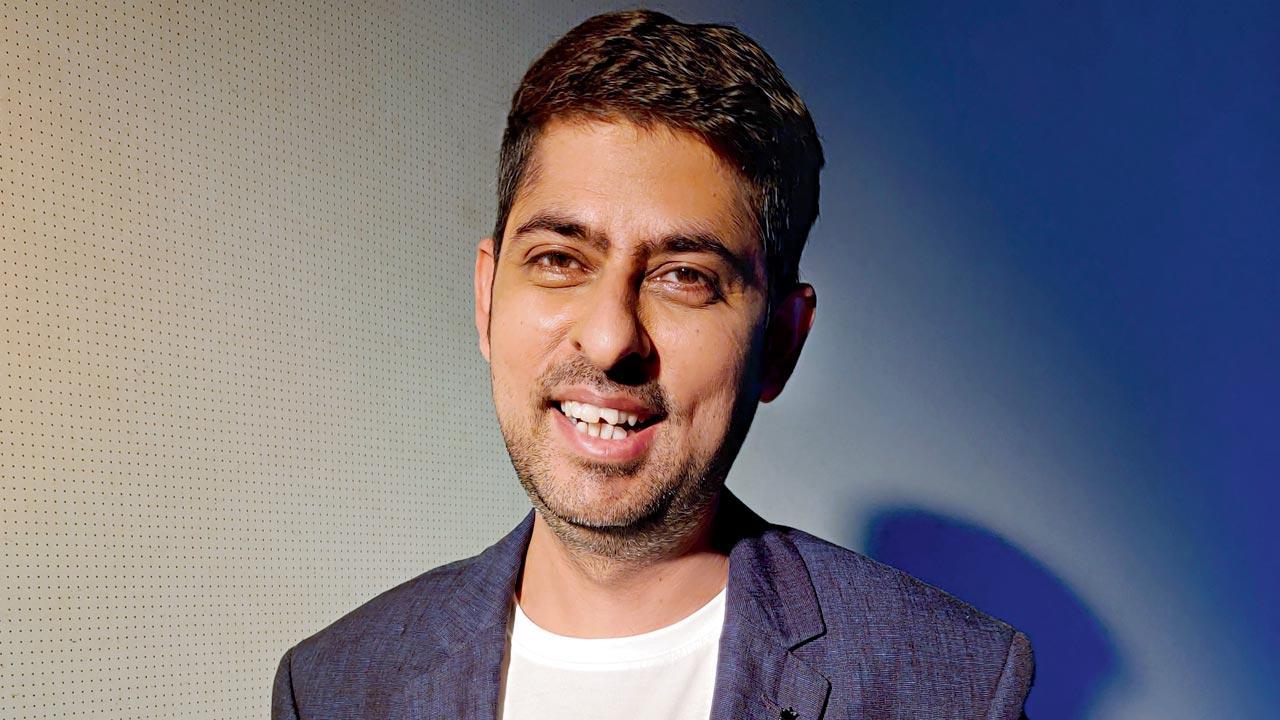
Returning to familiar territory with frequent collaborator Vasan Bala, Jigra lyricist Varun Grover breaks down the process of penning the lyrics for Alia Bhatt’s action drama
Sonia Lulla (MID-DAY; September 30, 2024)
Acclaimed writer Varun Grover’s social media pages serve as abridged collections of his diverse interests, ranging from stand-up comedy to documentaries about pertinent social issues, and his take on filmmaking. Considering the plethora of content he has contributed to, Grover, one would assume, wouldn’t be easily swayed when a new offer comes his way. But Alia Bhatt’s Jigra was different. It brought him back to the studio with director Vasan Bala, with whom Grover has forged a strong bond. It began “many many years ago”, with the film, Peddlers. The 2012 offering made it to the Cannes film festival but did not hit screens in India. Subsequently, they joined hands again for Monica, O My Darling (2022), which also included music by Achint Thakkar.
“That was a very good experience for all three of us. We forged a good bond, [and had similar] musical tastes and world-views. So, when Vasan offered this film to me after that experience, I was very excited.”
In the 12 years since the release of Gangs Of Wasseypur, the lyricist has had limited releases in the Bollywood industry. He cites that he prefers to keep an arm’s length from offers that seem all too similar to his previous projects.
“I want to exclusively work on scripts that I love. After Wasseypur, I got many offers for gangster-action films, or those set in the rural landscape. I refused a lot of work until Ankhon Dekhi [2014] came my way, which was a different film. When Vasan came to me with Jigra, I was excited because I love his work. Also, this one was starkly different from Monica O My Darling, which included fun and quirky music. Jigra is an emotional film, and Vasan wanted something dense when it came to the lyrics. But, he still wanted it to be offbeat; not sappy or sentimental. Because it’s also an action thriller, we didn’t have many pockets for music. The songs are used in the background. So, it adds to the emotional depth of the film.”
The trio’s WhatsApp group called ‘Monica Music’ was renamed ‘Monica Ka Jigra’, and they commenced work on bringing Karan Johar’s production to life.
“Vasan shared some Tamil songs that he liked, to serve as references. I shared what I thought would fit the zone that the film is set in. We had pieces from around the world, including qawwali, Brazilian, English, and Tamil music, being shared here. We worked on the theme song first, which is the title track. Achint sent options for the tune, and I started arriving at identifying the kind of vocabulary that would fit the film. Jigra Ho set the tone for the whole album; that track distilled the theme aptly. Once we were in that space, we knew how to play on. Another song is Tenu Sang Rakhna, and then there is Phulon Ka Taaron Ka, for which I have written additional lyrics. The original song is upbeat. But we tried to make it more emotional; like an acoustic version of that song.”
While it was beneficial to work with colleagues in whose company he could thrive, Grover was also egged on to put forth his best work when seeing the team of the film at play. Watching the makers bring their A-game to their respective processes implied that there was little room for mediocrity.
“You have to really be at the top of your game. I have been a huge fan of Alia’s craft and her choices. She is the best working actress at the moment. She is also the co-producer. So, there was certainly some pressure on me.”
The primary reason for Laapataa Ladies getting picked is Aamir Khan’s previous record with Lagaan-Varun Grover
3:04 PM

Getting nominated for an Oscar is not just about having a universal story, but also about having the funds to campaign for it
Mohar Basu (MID-DAY; September 29, 2024)
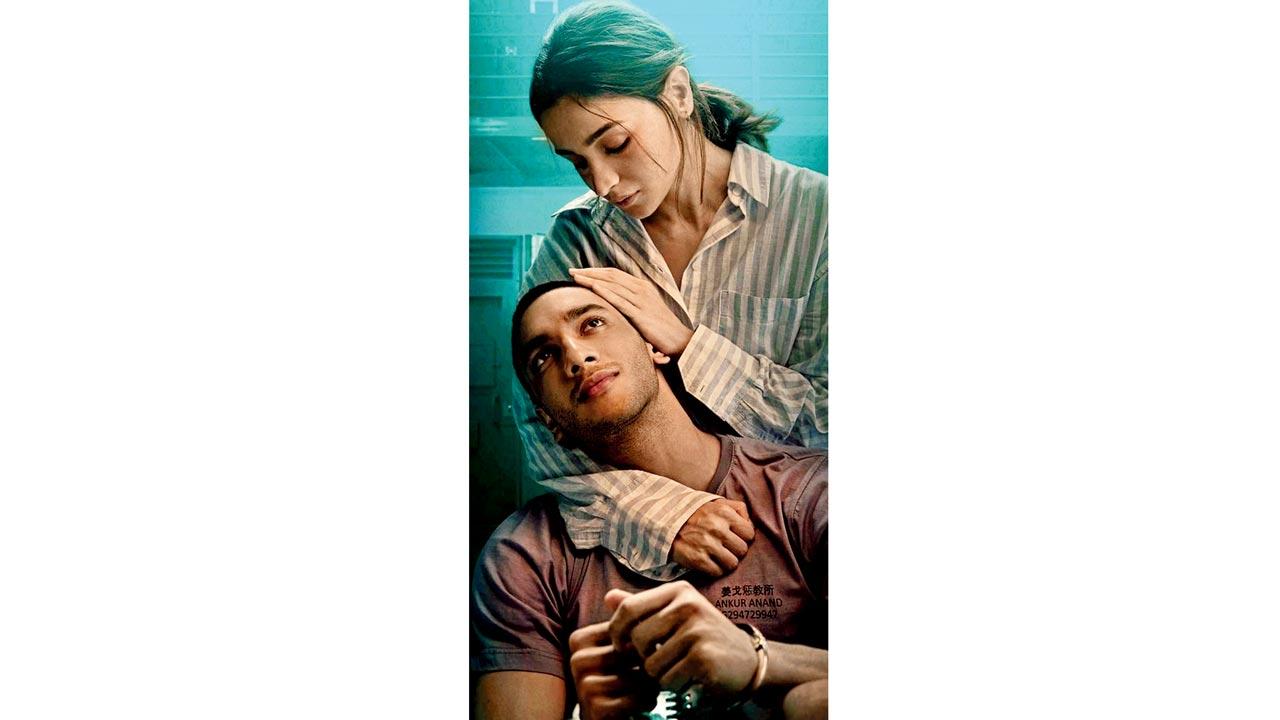
In a year filled with heavyweights, it was Kiran Rao’s Laapataa Ladies that emerged as India’s official entry to the 2025 Oscars. Unfolding in the heart of rural India, this film is a commentary on patriarchy, which juxtaposes humour with deep societal critique. With a backdrop of dusty Madhya Pradesh villages and real-life locales, the film captures the essence of a lost India, where women disappear—figuratively and literally—amid the chaos of cultural expectations.
When the Film Federation Of India revealed that Laapataa Ladies would carry the nation’s hopes at the Academy Awards, cinephiles cheered—but not everyone was convinced. Selected from 29 films, including Animal, Kalki 2898 AD, and All We Imagine As Light (AWIAL), the victory was both sweet and surprising. While many celebrated Rao’s comeback and the film’s understated brilliance, others couldn’t help but voice their discontent over what they saw as missed opportunities. Fans of All We Imagine As Light, a Cannes sensation, took to social media in droves. The Payal Kapadia-starrer is considered to be one that has a real shot at Oscars. Their argument? That Laapataa Ladies, while charming, lacks the international appeal of its more polished competitors.
Celebrated writer Varun Grover tweeted, “I mean it was expected that the chaaploos mandali (who can’t even write a citation with any attention to detail or meaning) will never select a film by someone who has questioned their authority. And, it’s still heartbreaking. We rarely get such a strong contender as AWIAL. At the same time, happy for Kiran Rao and her team. They made a sensitive, progressive, rooted film told beautifully through a new set of actors (and a hate-speecher)—and totally deserve a shot at glory. Best wishes to them. Jai Ho!”
While Grover didn’t wish to elaborate on the subject beyond this tweet, an indie favourite filmmaker tells us: “It’s undeniable that AWIAL was a stronger contender and should have been picked. The primary reason for this getting picked is Aamir Khan’s previous record with Lagaan. His ability to get visibility increases his chances of actually bringing home the Oscar.”
Laapataa Ladies was a unanimous decision, Jahnu Barua, the head of the Federation, told us. He told mid-day, “The film resonated deeply with us because it brings forward global social issues that are rarely explored on screen. As jurors, we want to select a film that has the best chance of making it into the Oscar nominations. The jury did deliberate over the AWIAL. It’s a significant work that deserves attention, especially since there were high expectations surrounding it. However, we felt that there were technical aspects that could have been stronger. When selecting a film for the Oscars, many factors come into play. While the subject was undeniably powerful, and Payal has crafted it beautifully, we ultimately had to make a tough choice. We wish we could have chosen both.”
So what is one looking for while choosing India’s entry to the Oscars? We asked Pan Nalin about his film Last Film Show (also known as Chhello Show) which beat RRR to get chosen as India’s official entry, much to the horror of fans.
Nalin said, “In our case, it was a complete surprise. You know, we were not even sure that we would ever get selected. The buzz in India was of very big, popular films. But when it comes to Oscars, it’s not really about popularity, but the film which will speak to the members of the academy in the US. So, from that point of view, I guess they must have voted for us. And once we become an entry, it’s a big work, you know, we need to do as a producer and director. It’s really huge work. You know, you need to mount a massive campaign in Hollywood. You need to organize quite a lot of screening for the members of the Academy. So, in our time, there were, for example, 102 films from 102 different countries. And the first round of voting leaves 15 film shortlist nominations. So, we were shortlisted. Voting is done purely by the Academy. India has no role to play there. All the academy members have to watch the film in order to vote. When we got shortlisted, you know, it was after a 21-year gap. Before that, the film which got shortlisted was Lagaan and went on to get the nomination. Our journey stopped there. And we also realized a couple of things while we were doing the campaign. Because we had no idea, we were learning as we were running the campaign for India. When the Oscar shortlist is announced, it’s actually the map of each country shown in the Academy screen. So, it’s neither the director nor the film. It’s actually you who is representing a country. You are representing a flag when you go there. The film was luckily very heavily appreciated. We were invited at the Academy to do multiple screenings. But where we lacked is time and money. Because you do need a lot of funds, you know, to mark the campaign. And advertising in international media and the US media is really expensive. The billboards alone are costly and you need to really have a great campaign. In the past five years, the publicity campaign has become aggressive and expensive. It’s very much like an election. You have to really make sure that every vote is earned. And the only way to earn a vote is maximum people have to see your film, who are the members of the academy.”
Nalin says the jury is looking for a universal story. “It is important because we were already acquired by an American distributor called Samuel Goldwyn Films. The fact that it speaks to an international audience is a plus. It is a gamble that must speak to international jury and voting committee members of the academy. The film has to be universal to start with because most of the Academy members are American, you know, I would say almost 85 per cent of them. Since the past 15 years, it has been very inclusive. Lots of foreign country members are being invited who are in the Academy. Now, I am a voting member as well. We know that if we had the right amount of funds and time, we would have gone much further in the campaign. But we had no example to fall upon. We had no master class to learn something from other examples. Because none of the films from India had made it up to that in 20 years, since Lagaan. It makes sense that Aamir Khan has a shot at this again. Laapataa has a chance to make it.”
The one element connecting the two films is Chhaya Kadam—who appears as Manju Mai in Rao’s film and is currently in France for the premiere of AWIAL.
She told us, “I’m absolutely thrilled and overjoyed! It’s such a proud moment for me to see Laapataa Ladies chosen as India’s official Oscar entry. At the same time, I’m in Paris for the premiere of All We Imagine As Light, which has been shortlisted by France as a possible submission for the 2025 Oscars. It’s truly exciting to have both films recognized on an international stage.” Is there a chance for AWIAL still? “I would have wanted to see them both at the Oscars. It might still happen,” she said optimistically.
Nandini Ramnath, film critic, Scroll.in, tells us choosing the best pick is a tough choice regardless, because of the diversity of the films being made.
“A few factors work in the favour of Laapataa Ladies: it has Aamir Khan as one of three producers; he has had previous experience with Lagaan; Laapataa Ladies is easily available to the Academy voters by virtue of already being on Netflix all over the world. I have watched both films. They are very different. Laapataa Ladies is a sweet modern-day fairy tale told in a realistic manner. All We Imagine As Light is a textured exploration of the shades of feminine desire and a quest for meaning. Given the current tendency of the Oscars to be more receptive to all kinds of storytelling styles from around the world, rather than just a certain kind of global-local international film, Payal Kapadia’s feature debut would have been an excellent contender too, especially given its Cannes award. Movies speak differently to different sets of viewers. What works at a film festival often doesn’t work for the Oscar voters. In general, films that can communicate their themes well and have layers in their plotting, performances and filmmaking language can travel to any corner of the world, regardless of the theme.”
When we asked her how she thinks politics and personal biases play into the selection process for India’s Oscar entries, Ramnath has the last word, “I think it fair to say that the Film Federation of India, for all its drawbacks, has been trying to keep away from political choices. If that were the case, the jury would have picked a propaganda film.”
While pandemic may have caused ‘revenge viewing’ over ‘relatable viewing’, things are looking up-Varun Grover
9:42 AM
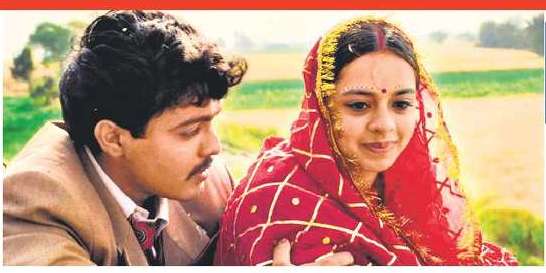
Does the arrival of All India Rank and Laapataa Ladies in quick succession — with the Vikrant Massey-starrer 12th Fail still running in theatres four months after its release — signal a new wave of acceptance for mid-budget films?
Devansh Sharma (HINDUSTNA TIMES; March 1, 2024)
What’s common between the recent releases All India Rank and Laapataa Ladies, and 12th Fail, which released late last year? Besides the depiction of hope and dreams on screen in quotidian milieus and ordinary lives, the three mid-budget films have found takers aplenty among cinema-goers. Kaagaz 2, starring the late Satish Kaushik, too, is slated to release later this month.
Ask why these films are doing well and 12th Fail director Vidhu Vinod Chopra notes, “These days, many get caught up in assembling a project without focussing on its core idea. But if you know your intent well, write a good script and make an honest movie irrespective of the budget, it’ll do well.”
Mid-budget movies and big-budget entertainers have coexisted earlier, too. But in 2015-16, after the mammoth success of the Baahubali franchise and the coincidental advent of global streaming platforms in India, the very subjective appeal of a film started getting determined by objective box-office figures.
Stressing that 12th Fail, made on a budget of Rs. 20 crore, is an exception, Laapataa Ladies director Kiran Rao says, “Honestly, I don’t think there’s much of a shift yet, but individual conviction and risk-taking, like in Vidhu Vinod Chopra’s case. These are all experiments — some will be successful, some won’t,” says Rao.
A time ripe for relatability
“For this generation, I’d call it a ‘middle-of-the-road’ trend with relatable stories, focussing on the lives of the Indian middle class,” says Varun Grover, whose directorial debut All India Rank was made on a budget of (approx) Rs. 5 crore, adding that while the pandemic may have caused ‘revenge viewing’ to take precedence over ‘relatable viewing’, things are looking up.
Raising a pertinent point about personal spending and the future of the mid-budget film, Rao opines: “The audience is interested in different kinds of films, but we have to deliver them at the right price point. They love the trailer but sometimes, the experience of going to the cinemas is so expensive. If we can diminish those challenges, then we’d be able to make any kind of film reach the audience.”
Insiders speak
Good content always finds viewers, irrespective of the budget. [But] in many cases, with all new names in the cast, it’s a challenge to find a studio, a release date and audience.
- Taran Adarsh, trade analyst
When big-budget films aren’t planned for theatres, makers get the opportunity to release these films, thereby gaining confidence.
- Girish Johar, producer-trade expert
We were in a phase where we were making anything and everything. It’s just the course correction of our industry and our audience towards what’s always been critical: the script and the story.
- Akshaye Rathi, distributor
I had to constantly message the music company for 7-8 days to credit me for Merry Christmas songs on YouTube-Varun Grover
8:58 AM
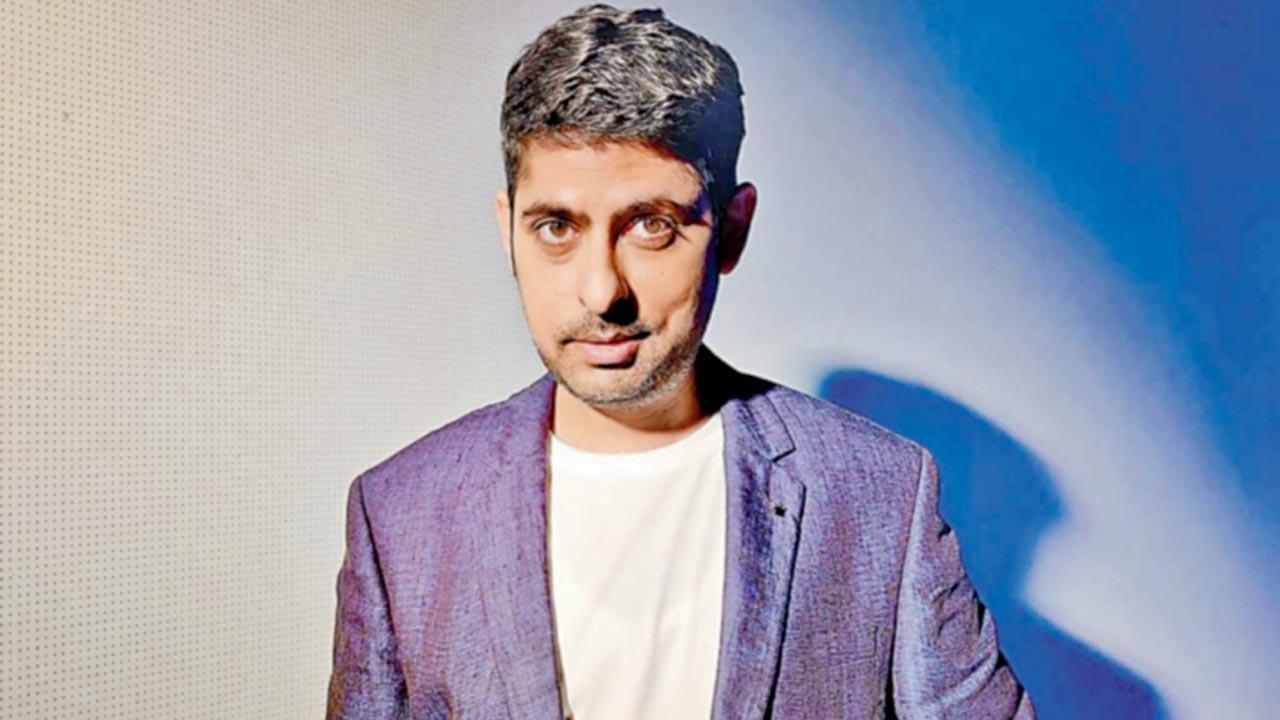
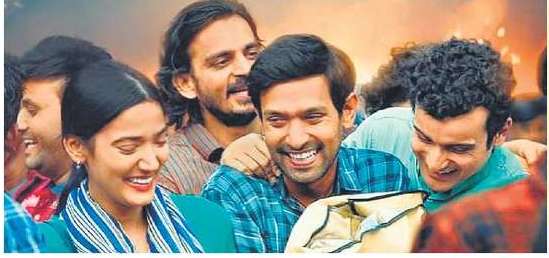
Leading from the front in enabling writers to get their due credit in the music industry, Varun Grover, as part of his association with The Indian Performing Rights Society, urges listeners to support artistes
Sonia Lulla (MID-DAY; February 19, 2024)
Via its nationwide campaign, My Music, My Rights, the Indian Performing Rights Society (IPRS) launched the Raga to Rock event, aimed at initiating dialogue on the need to support creators for the establishment of a sustainable industry. Writer Varun Grover, who addressed questions on the means to create a system that’s viable for artistes, emphasized the need to help individuals who envisage a full-time career in the field. In this interview, he spoke of the importance of creating a future that ensures artistes earn a sustainable livelihood from their craft. Edited excerpts from the interview.
When we speak about just giving authority and ownership of music to its creators, do you believe there is one set of artistes who suffer more than the others?
Yeah, absolutely. I think lyrics writers within the music industry suffer the most because people are made to believe that a song [is created] on its own and only the singers get the love and credit for it, because they sing it across venues. For that reason, they have the same status as actors in a film do. I don’t have a grudge against their success because they have the talent and put in the hard work. But, mostly, a singer is credited for a song; a composer comes in the second [place] and then it is the lyricist. Nowadays, several composers have their own [labels], but writers are seen as dispensable. Also, given the nature of the music industry today, composers are considered the heads of departments, and have more power. So, writers end up getting the least credit.
Why do you think we have reached a situation where writers are not given their due credit?
It has always been like that. There was a time when even All India Radio would only announce the names of the singer and the composer, and wouldn’t name a lyrics writer. Then, Sahir saab [Ludhianvi] had to protest to get them to start including the names of writers. Even when the era of television began, only the singers, and, at times, the composers would be credited. It’s a fight that has been underway, and occurs when a new medium is created. Now, with streaming platforms becoming dominant, this must occur again.
Recently, I wrote the entire album of Merry Christmas, and had to fight, and constantly message the music company for seven to eight days to credit me on the YouTube videos of the songs. In the headline, they would only credit the singer and composer. I had to ask for it, even though I have written the entire album. I don’t know why there is this cultural mindset in India where writers are considered lesser artistes than other musicians. A lot of them, whom I know, are very mild-mannered and not aggressive. That’s why, people take advantage of them.
The fight we are involved in is on two levels—one is the moral rights, which is that credit should be duly given. That [requires] a change in the mindset of the common listener as well. The second is getting fair royalties for fair play.
When I became a writer 20 years ago, I did ghostwriting for a lot of people. They would tell me that they would pay me. But they wouldn’t pay me. In one scenario, I had asked the director of a show whose pilot episode I wrote for the payment, and he asked me how much I would pay to be associated with the project. That’s the unfortunate state of the industry.
Considering how predominant and wealthy this industry is, one would assume that the scope for such exploitation is limited. Why does this grey space exist when we have contracts?
Music is kind of abstract. Words are still solid and real, but music is abstract. Someone can change a couple of instruments and beats and call it different. While writers can still copyright our work, I don’t know if there is a way to copyright a tune, because music is so intricate. So, it’s a difficult scenario to deal with.
What were the measures you’ll discussed when it comes to dealing with this scenario?
I think young musicians must be careful when it comes to deciding who they choose to trust. If you are working in bad faith, that’s a sad scenario. Lots of bodies like the IPRS and SWA [Screen Writers’ Association] are trying to put together a good contract for newcomers and everyone else so that nobody is exploited. They should sign contracts before they submit any work so that they don’t reach a place where they would need to accuse someone of stealing something they submitted.
All the bodies came together to create this after we got inspired by how WGA [Writers’ Guild of America] got together to fight for their rights. I hope we don’t have to go on strike, but, if it comes to that, I’ll be very aggressive.
Who do you believe should have ownership of a song?
The authority, in terms of the intellectual property of the song, should remain with the composer and the author, who are the music director and the lyrics writer. At the third level should be the singer. So, these three people should perpetually retain it. Subsequently, whichever music company comes on board, they should license the song for a stipulated number of years, and then share profits. Anything that [results] from one person’s efforts should stay with them. Being a musician is a lifetime’s effort.
Is there something about this subject that you think we haven’t addressed?
Just that I wish that the public also supports the artistes. There are so many music apps that people listen to, right from the time they wake up. I hope they give thought to the artistes who make the music and support them in their fight to earn their rights. We only ask to be treated with respect. It is only in India that we must fight for these things. There’s no royalty system for writers.
Stories of IITians earning Rs 1 cr trigger other kids-Varun Grover
10:44 AM
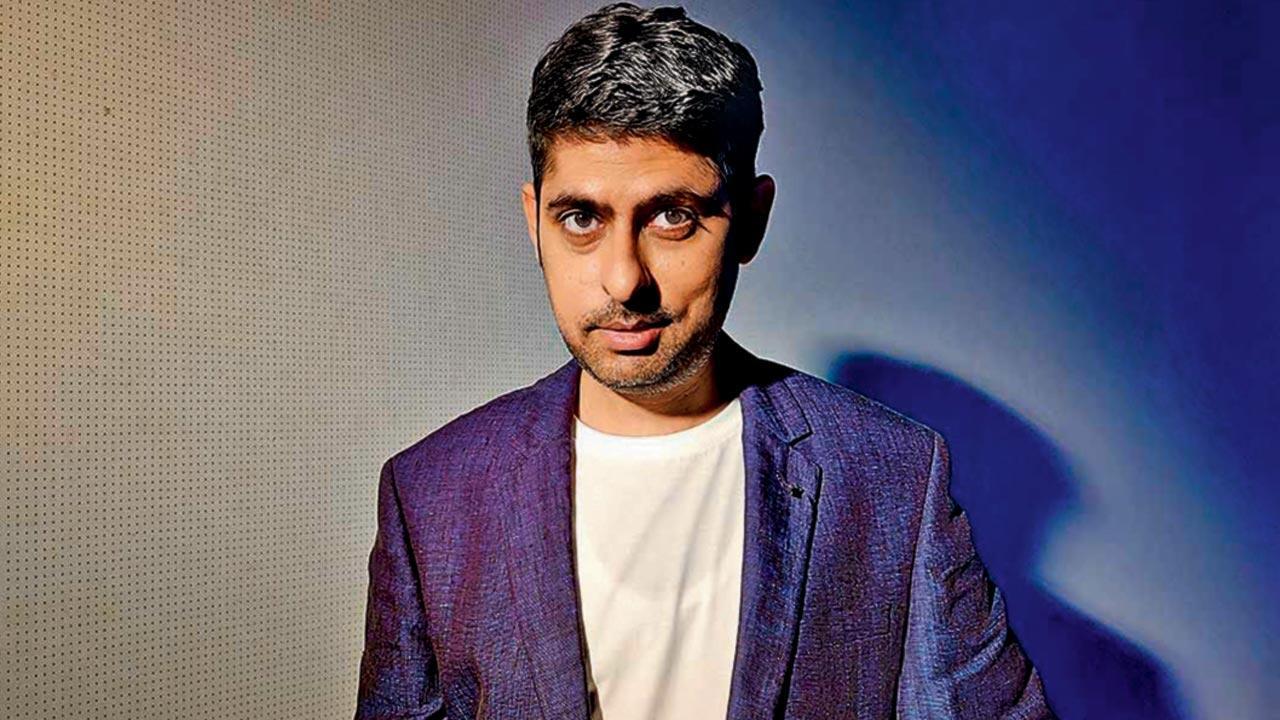
Debutant director Grover says he made All India Rank to show how education system, parents and myopic idea of success pressure teenage students
Mohar Basu (MID-DAY; February 13, 2024)
Two weeks ago, a suicide note by a Joint Entrance Examination (JEE) aspirant went viral online. It was the second suicide in a month in Kota, which is known for its coaching institutes that train students for engineering entrance exams. Incidentally, the next week, the trailer of All India Rank, which marks writer-lyricist-comic Varun Grover’s directorial debut, dropped online. When we sit down with Grover, our conversation naturally begins with the pressure that our education system thrusts on 17-year-olds. Imagine a world where a little girl feels it's easier to kill herself than go through with the JEE prep?
He says, "Kids feeling pushed to harm themselves is a symptom of a much deeper issue. The whole idea that someone who is not even 18 has only two years to decide what they want to be in their lives and if they don't they will be stuck in a tunnel that they are making through a mountain. That mindset has been there since forever. This pressure is created by a whole system. The parents, peers, teachers at school. There is a success industry validated by reports like IIT-ian getting into Google and making a salary of 1 crore. These success stories are actually triggers for other kids because it tells them either be this or be a nobody. This push to be successful in life at 16 is too much when you've just hit puberty and you are still figuring out your body, feelings, surroundings. When you mention that you want to study history or arts, you are seen as a lesser mortal."
The film talks about the sense of middle class mediocrity but for Grover it was an act that took him close to personal closure. "There is a false sense of being persecuted and JEE is seen as a gateway to stepping up and going to the next level. You'll be counted in a whole different bracket of success is what the film lays out for you. For me, what's very personal for me in the film is to try to make sense of who I am, very I come from, people in my locality in Lucknow. I wanted to reconnect with the 16 year old self. I loved physics and science but I didn't understand why it had to be monetized to become something. I wanted to be a writer and growing up in Lucknow, I couldn't have imagined it could be an actual profession for me. I had brushed off hopes of being a writer and as an option worth struggling for. Trying to become an IIT-ian sucked the joy of physics from within me. The confusion of that age is what I channeled into the film. I am stuck in that age emotionally and I am looking for closure. The recurring dreams I have are from that age; of being in that house in Lucknow, in my neighbourhood. I think I am also trying to understand how my life played out the way it did."
AIR in some ways is an exact antithesis of 12th Fail by Vidhu Vinod Chopra that emerged as a surprise hit last year. Grover admits he was wary of the fact that he has ended up making a poorer version of the same story until he watched the trailer of that movie.
"When the Restart song dropped, we were doing festival rounds. No one knew what the film was about. Imagine how stressed I was thinking Vidhu Vinod Chopra had made a movie on the same subject. Until the trailer came out, I was worried. It was an inspirational tale and my film is a counterpoint of the same idea. I was relieved. I loved 12th Fail as a movie. But 12th Fail is celebratory and feeds into the hysteria of success. 12th Fail was a specific real life story about a man who had to succeed; he didn't have a back up option. Like in America, there's a great American dream - a house, car, two kids, neighbourhood all are the metrics of success. In India you are telling a 16 year old to determine their dream. Our education system, families, societal expectations, government approach, educational policies all need to collectively be reassessed."
One of the primary worries of AIR could be its similarity to the Kota Factory. Was he worried about comparisons? "I am glad my film isn't similar to the Kota Factory either. I made my ADs watch that show. That show is about coaching which too is a symptom of a larger problem. I thought if AIR has too many parallels with that series, it is pointless to attempt this movie. Every single one of my ADs thought AIR is a different story entirely. One thing I was recommended to change was to reduce the element of coaching as a culprit. The internal politics of coaching and how students are poached which was a small track - we completely let that go. It was already sparsely added but we reduced it to zero. The film stays with the protagonist and is a story of what his surroundings do to him."
Unfortunately, our world is getting closer to the scenario depicted in Karejwa-Varun Grover
7:59 AM
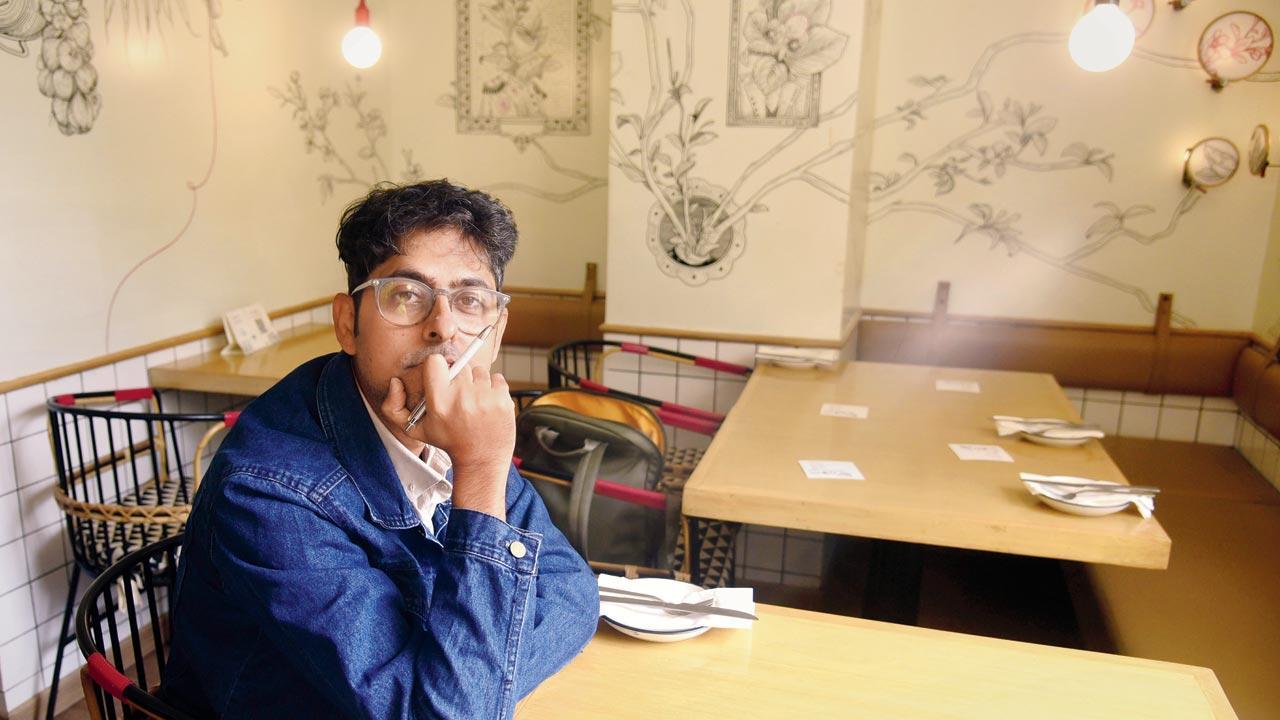
It’s a busy time for Varun Grover. The multi-hyphenate—through stand-up, cinema and books—aims to look at the world through a wry lens, all the while spotting a glimmer of goodness in difficult times
Neerja Deodhar (MID-DAY; December 17, 2023)
For most people, the impending end of the world would cause a state of panic, helplessness, chaos. Their whole lives would flash before their eyes, as city governments and national institutions tried—in vain—to control the situation, perhaps even minimize people’s legitimate fears. In Varun Grover’s story Karejwa, set in a doomsday scenario with exactly 30 minutes left on the clock, the young protagonist Pintoo dreams of only one thing: the titular sweet, more tender than a gulab jamun.
Karejwa has travelled a long road since it was first published in Chakmak, a children’s monthly, in 2015. Five years later, Grover joined hands with Bakarmax, a comics and animation studio, to turn it into a web comic, edited by Sumit Kumar and illustrated by Ankit Kapoor. Last week, the studio and lyricist launched it as a graphic novel.
In the last eight years, Grover has not felt the need to revise the plot or the characters who inhabit the story. Not because of a creative urge, but especially not because of the social and political environment today. “Unfortunately, our world is getting closer to the scenario depicted in Karejwa. In fact, it’s becoming more plausible with every passing year, given people’s prejudices and dogmas, and the bits about how different institutions may react to this fate… The plot looks more real than it did eight years ago,” Grover tells mid-day.
In many ways, Karejwa is emblematic of the lyricist-comic-writer’s creative process. Karejwa’s visuals, the choice of the dish at its core, and its infatuation with certain foods are all seeped in Varanasi, where it is set. All India Rank, Grover’s feature-length film about a young boy enrolled in one of Kota’s many IIT coaching centres, is set in the 1990s. So rooted are the plots of the graphic novel and film that they cannot simply be set anywhere else in India.
“This is the main criteria in my mind because it makes the story original. I think authenticity is its own aesthetic—it’s an aesthetic I try to chase. The other aspects, like the emotional elements, can be subjective based on the viewer’s own experiences, but the time and place are easy to determine. This is why Kumar and Kapoor visited Varanasi before they began their work, to get a real taste and texture of the city,” he explains.
From his stand-up bit titled Padmaavat & the Parrot to his debut short film KISS, about the censorious forces in India’s film certification bodies, Grover does not hold back from being wry and observational—it may be the qualities he is best known for, apart from his lyricism.
Did he sharpen this way of looking at the world during his years as a comic? He says it’s the other way around. “I became a stand-up comedian because of this attitude in life, of being detached while also finding a wry or satirical perspective on things. I think that is the only way to survive… Perhaps the world has always been this way, even a century ago. But I can say with certainty that the world today is difficult to cope with,” he comments.
“Without some degree of attachment and humour, I think I’d fall apart under the weight of anxiety that comes with living in this world.” The school boy Pintoo, with his innocent search for a sweet while the world ends, is Grover’s way of looking for a sense of light-heartedness amid darkness.
As he works across formats and mediums, the lyricist-writer says that sometimes he knows what will work for a particular idea, and sometimes he doesn’t. Over the years, he has developed the practice of journaling and documenting the ideas and leads he gathers—across email chains he maintains with himself, and on WhatsApp groups featuring only him. “Sometimes, I’ll mention that the idea is for stand-up, or a phrase that can be used in a film song, or an idea I like or am deeply fascinated by,” he explains.
“There was a time when I read about a bird called the bar-tailed godwit, which takes a long, non-stop migratory flight across continents. When I came across this bird, I didn’t know what to do with it, but when Rajkumari—my partner—and I were writing Biksu [a Hindi graphic novel], there was an instance where we wanted to talk about resilience and focus. We revisited the bird in my list of ideas.” The page featuring the bar-tailed godwit would go on to become Grover and Rajkumari’s most cherished in the book.
As he looks forward to another tour of his comedy show Nothing Makes Sense in January, Grover ends 2023 on a moving note. At the recently concluded Jashn-e-Rekhta festival in Delhi, singer-writer Swanand Kirkire broke into the song Shauq from the film Qala, only to be drowned out by an eager audience who knew its lyrics in entirety. Grover, who wrote the song two years ago, was left feeling joyful and overwhelmed; he knew the song was a popular one, but watching the attendees sing in tune shifted something inside him.
“This happened at Rekhta, where attendees come out of a love for Urdu poetry and prose, not Swanand and myself. And they knew the words of the antara, at a time when most songs are 30-second Reels and we don’t know if the audience listens to songs beyond this mark. That was what struck me,” he concludes.
Forget actors, I’m the only one in the Hindi film industry who acknowledged his Dalit identity-Neeraj Ghaywan
8:30 AM
Renuka Vyavahare (BOMBAY TIMES; August 28, 2023)
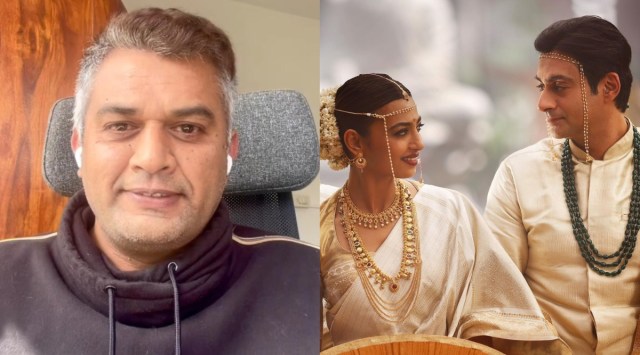
Directed by Neeraj Ghaywan, one of the episodes of Made In Heaven (MIH) season 2, titled 'The Heart Skipped A Beat', featuring a Buddhist wedding, went on to become the series’ most acclaimed short. However, along with the appreciation came the credit crisis. While Neeraj thanked various people who inspired his episode in an Instagram post including activist and author Yashica Dutt, soon after, the latter questioned why she wasn’t given a formal credit on the show. She claimed the episode’s central character Pallavi Menke (played by Radhika Apte) was based on her life. Neeraj, known for his courageous vision and acclaimed films like Masaan, Geeli Pucchi (a short film where Konkona Sen Sharma plays a Dalit queer character) and Juice (a short on patriarchy starring Shefali Shah), for the first time, addresses the controversy, representation of Dalit characters in mainstream cinema and why pushing this narrative is so important. Excerpts...
Yashica has appreciated your work even before, and in a recent interview with us (after the series dropped) she said, “Neeraj Ghaywan’s work is important, but this is my life. I wasn’t acknowledged.” What is your reaction to that?
I have also championed Yashica’s work earlier. In the story, Pallavi Menke is a Maharashtrian Dalit from the Vidarbha region. She then goes to Columbia University (USA) and becomes an Ivy League professor. The episode is about her getting married to a man belonging to another caste, and how his family has issues with her (Buddhist) wedding ceremony. They are not in complete acceptance of her. They like her academic accolades but want to erase her caste identity. The episode handles this conflict. I don’t know how this is a homage to any one person. Even if you claim ownership to the term ‘coming out’, can you claim ownership to the act? So many people have hidden and then finally proclaimed their identities due to the fear of being judged. I hid my identity for 35 years, then suddenly spoke about it. People who never shied away from their identity and took the hate head on, their struggles were bigger. Look at (filmmaker) Nagraj Manjule, he inspires me. A part of me is Yashica, Nagraj, Bezwada… and so many people who don’t want to be named. Pallavi Menke is a sum of all of us, our pain and anguish. She is a symbol of the cumulative experience of all of us, so no one person can claim to be her.
So, your personal experiences and struggle with your identity is what translates on to your work?
Making this episode (MIH) for me has been a very personal journey. Zoya Akhtar, Reema Kagti and Alankrita Shrivastava are the writers of the show. They had this idea. Someone who’s accomplished from the Dalit community realizes that they may have come a long way, but it doesn’t insulate them from the ugly face of casteism. We chatted the whole day and I talked about how I proclaimed my Dalit identity on Twitter, and you had broken that story. (A story by the same author featured in BOMBAY TIMES; January 7, 2018, titled, Neeraj Ghaywan: There was always this fear of my work being attributed to my identity as a Dalit).
Before that happened, I hid my own identity in school, during my Engineering college, MBA days and even in my corporate life, because I have seen how people treat you when you come from a quota. My name was Neeraj Kumar and it’s still that on my passport. Now it’s become my middle name. (Pallavi Menke in the episode refers to caste neutral surnames like these). If you tell people your full name, they will scrutinize your last name, where are you from, which region, where are your parents from, etc. We know what they are getting at, and this kind of scrutiny scars you. I reclaimed my identity by going back to my surname and so does Pallavi.
What were your own battles after you proclaimed your Dalit identity?
After I spoke to Bombay Times in 2018, my extended family who hadn’t proclaimed their identity and were earlier proud of my work as a director, were also exposed. It was a bit complex for me because they weren’t happy about it. We used this track in the story, where Pallavi’s brother isn’t happy about her coming out. I opened up a lot about myself through this episode. I touched upon manual scavenging. Every achiever from the caste will have a story where their previous generations cleaned the toilets. I have heard these experiences from so many people including activist Bezwada Wilson, who is a pioneer in abolishing this practice. At some places, it has still not changed.
Go on…
I must tell you this. When my house help of ten years saw your piece in Bombay Times (2018), she picked up the newspaper and asked me, Dada, hey kaay aahe? (What has been written?) I was scared to tell her what it meant. It took me 2-3 days to muster up the courage to tell her that I am a Dalit. She reacted, “Aap Jai Bhim wale ho? Mujhe fark nahi padta.” Same with my driver. It’s scary because you have been putting up a different picture for the world for years. Since the time you broke that piece, I haven’t spoken to anyone. Not even my school or office friends. I stopped going to my college reunion because no one reached out to me after knowing what I have been through. All this fear and trepidation came out when I spoke to the show creators, and all of this went into that episode.
Your decision to choose Konkona, a straight woman to essay gay character and Radhika Apte, a Brahmin woman to play a Dalit character was a topic of discussion. There's an argument that on one hand you push for representation and on the other, actors from the community don’t find a place in these stories. What would you say to that?
My responsibility as a filmmaker is not just to be inclusive. The inclusion needs to make drama sense. The character must resonate with people and that needs a solid performance. I knew no one could play Konkona’s character in Geeli Pucchi better than her or Radhika’s character in MIH. Should I tell my stories efficiently or compromise on the casting to sound right and make a middling drama that no one will watch? Forget actors, I am the only artiste in the Hindi film industry who has acknowledged his Dalit identity. A lot of people don’t want to proclaim their identities. It’s their choice. If I do find newcomers who are open about their sexuality or caste, do they fit the part? You also need great actors to pull it off as these are complex characters.
You never shy away from making a political statement, through your feisty Dalit characters, who seek equality and not sympathy...
We all are political beings, especially the ones belonging to the marginalized communities. It could be Dalits, women, LGBTQIA+, specially abled people or minorities, I am not talking about electoral politics but our relationship with the world and society and how it’s all connected. Their rights which have been denied are linked to the state. Their mere existence is a political statement.
‘The film industry is not casteist. They are caste ignorant’
The way it is structured, it is very local centric. Caste is not what is shown in Hindi movies of the 80’s, where someone says, “Tu paani waha se pina.” It is way different than that. It is a reality that exists even today in Mumbai, where all of us get public holidays, but not the safaai karmacharis (sweepers and garbage collectors). Have you ever seen your building trash not being taken? They don’t have a choice. There are filmmakers who are now addressing this, but there is a problem with the gaze. It exudes a saviour complex. When filmmakers who are not from the community tell (Dalit) stories, they have a patronizing undertone. “Humne tumhara uddhar kar diya tum pe film banake. Praise me.” These films are not about the Dalit point of view. Dalit people become subjects here and not full-bodied characters with assertion, who can do other things beyond their caste markers. Patriarchy also exists in our community which needs to be called out. This conscience is slowly changing.
‘Calling it a Dalit wedding was wrong. It should have been called a ‘Buddhist wedding’’
When the response to MIH came in, something inside me changed. I got heartfelt reactions from people who thought they were finally seen and heard. Their trauma was acknowledged. The one thing that I want to humbly acknowledge is that we called it a Dalit wedding. That was wrong. It should have been called a ‘Buddhist wedding’.
‘I don’t want people to appreciate my work because it’s about a social cause’
People welcomed me with open arms once I revealed my identity. No one saw me differently, but this happened after Masaan. When I was making it, I didn’t tell anyone about it. I couldn’t even confide in Varun Grover, who was the film’s writer, I only told him later. Once I came through, people did not change their opinion of me. They only see my work and that’s how I want it to be. I don’t want people to appreciate my work because it’s about a social cause. I shouldn’t have to rely on the crutches of something political or marginalized characters to win brownie points. “Isne important topic pe picture banaya, so appreciate karo.” I don’t want that. A film should be judged solely for its art, clear narrative, and great storytelling. I don’t want any tokenism.
Overwhelmed with the response Monica O My Darling has received-Sanjay Routray
8:12 AM

BOMBAY TIMES (December 6, 2022)
Matchbox Shots, the production house that backed the recently released neo-noir crime comedy thriller Monica O My Darling, directed by Vasan Bala, has received a lot of praise. The film follows the National Award-winning film Andhadhun, which was directed by Sriram Raghavan that broke new ground in Indian storytelling. Having set the tone with their unique cinematic sensibilities, partners Sanjay Routray, Sarita Patil and Dikssha Jyote Routray are all set to unveil a stellar lineup of quality stories for OTT platforms and theatres. Their next project is Scoop, which is a dramatic adaptation of a real-life journalistic incident by director Hansal Mehta.
Sanjay Routray said, “We are overwhelmed by the love Monica O My Darling received after Andhadhun. Regardless of the genre, we pull out all stops to support the project. While Matchbox Shots is proud to be working with filmmakers like Hansal Mehta, Anubhav Sinha, Navdeep Singh and Vasan Bala who have made their mark, we are also excited about our new voices like Avinash Arun, Varun Grover, Pankaj Kumar, Smita Singh and Abhijeet Singh Parmar.”
Sarita Patil says, “Good stories have no geographical limitations, which is why we are collaborating internationally with Mammoth Screen, UK, the producers of The Serpent, the hit show on Charles Sobhraj. Dikssha Jyote Routray is creating a limited series based on the 2008 Goa murder case of a young UK teenager Scarlett Keeling with them.”
As for now, the partners are delighted after filmmaker Avinash Arun’s Three Of Us premiered at IFFI, Goa, in the Indian Panorama section, while Varun Grover’s debut feature film All India Rank will soon be screened at an international film festival. Amidst the celebrations, the partners continue working hard to make the production house a perfect home for storytellers.
Lyricists fight for credit on apps, streaming platforms
8:41 AM

Songwriters, long given short shrift in Bollywood, are now up in arms for recognition and royalties
Rishabh Suri (HINDUSTAN TIMES; July 26, 2020)
After nepotism and favouritism, another debate seems to be in the making in Bollywood. Recently, songwriter-singer Swanand Kirkire tweeted, “OTT pe lyricists ka naam na hona sirf credit ka na hona nahin hain balki Lyrics Writer ke Wajood ko na maanana hai”.
Last year, the Indian Performing Rights Society (IPRS) filed an FIR against a production house seeking around ₹100 crore in royalties due to composers and writers since 2012. Danish Javed, of the Screen Writer’s Association, says, “If lyricists get their name on a publishing platform, as a member of the IPRS, they get part of the royalty,” he says. We got in touch with some prominent lyricists on this.

SWANAND KIRKIRE (3 Idiots, Barfi!, Lage Raho Munnabhai)
Music companies and big labels put songs on YouTube, and don’t give proper credits. They don’t get back when we point out. Some platform did get back recently saying ‘thanks for bringing to our notice’. They didn’t even say it was a mistake. Apps don’t credit the lyricists anywhere in their algorithm. You can’t search a song by a lyricist’s name. You can search the music director’s name. I can search for songs I’ve sung as I am a singer too. I get a detailed history what’s happening with my song, how many are streaming it, which state or country they belong to, but lyricists have no way to find that out.

SHELLEE (Shahid, Manmarziyaan, Jawaani Jaaneman)
I wrote a song in 2014, Beparwah, for Shahid. Why is my name missing on YouTube? People comment ‘soulful lyrics’ but my name is missing! There’s a rule: if the name is missing, the royalties from the song won’t come to you, be it YouTube or music apps. Music apps have a different algorithm. If we are given credits, we’ll start getting royalty. But what about the royalties of the past? We don’t do gigs or concerts like singers. We get paid peanuts once, and nothing after that. Even if the spelling of your name is wrong, you won’t get royalty. IPRS controls the domestic royalties, we need more transparency in it too.

VARUN GROVER (Gangs of Wasseypur, Fan, Udta Punjab)
I have been talking about it for years now. Many official channels on YouTube, and music company channels of Eros, Sa Re Ga Ma, Shemaroo, Ultra, don’t credit lyricists or give wrong credit. We have a list of these song credits. Gulzar, Javed Akhtar, Shailendra, these legends have credits missing on YouTube channels. Apps pick data from music companies who provide them their libraries. In their library itself, they don’t have the lyricist’s name! Some apps work on the American mode, where they think composer is the songwriter. They don’t even have space for lyric credits in their software. You can’t search if you want to.
SAMEER ANJAAN (Aashiqui, Kuch Kuch Hota Hai, Dhoom 3)
The Screen Writer’s Association is taking a big step because I think people do this knowingly. They have a huge nexus and intention behind not keeping the writer or composer’s name, because then royalties will not go to the right place. But now we are trying our level best to make them (apps) aware. Then we will take legal action.
Also, about last year’s hit Dilbar Dilbar (Satyameva Jayate), a leading publication said, ‘Music by Tanishk Bagchi, lyrics by Shabbir Ahmed’, when the original song was by Nadeem-Shravan, and lyrics by me. Shabbir wrote one line in the beginning, rest of the song was original.

The curious case of identity theft on IMDb
8:32 AM

How a man, busted for fabricating entries on IMDb, exposes the entertainment industry’s struggle to find a safe home for credits
Jairaj Singh and Arnab Ganguly (MUMBAI MIRROR; July 12, 2020_
 Till a few weeks ago, he was a legend the film industry had failed to acknowledge. On IMDb — the largest and most popular TV and movie database on the internet — his feats were going spectacularly unparalleled, and there for all to see. Even Satyajit Ray — whom Akira Kurosawa hailed as a ‘giant’ — paled in comparison to his filmmaking prowess, if you compared the credits listed on their respective profile pages. The 18-year-old student from Navi Mumbai, who was running the page with his own name, claimed not only to be an actor and director, but also to have experience in animation, costume design, editing, stunts, visual effects and scriptwriting, among other things.
On June 23, screenwriter and poet Varun Grover exposed the IMDb account. He took to social media when he saw an ‘Abhishek Chaudhary’ listed as one of the writers of Sacred Games, the show Grover had developed from Vikram Chandra’s 2006 novel by the same name. Upon inspecting the profile page on the website, he found that this person also claimed to have played the role of a newborn in Good Newwz (2019) and a father in Badhaai Ho (2018), besides other stuff. “The guy is a bit of a credit-vandal. A normal talent would have credits in 4 or 5 different fields (writer, director etc). A genius like Mr Ray has credits under 14 categories. Our maestro ‘Abhishek’ has 30+ varied talents,” Grover wrote in a Twitter thread. He also questioned IMDb’s “strict monitoring and verification process”, which had allowed something like this to pass.
IMDb was quick to follow up as the posts went viral, and instantly wiped out almost all the fake credits on Chaudhary’s page, without acknowledging the oversight. It left behind the entries of two films, one genuine and one fake: Brazen Epiphany, which credits Chaudhary as an actor, and Chosen Few, a TVF short, which credits him as playing the role of a policeman. Within a week of the issue coming to light, a man claiming to be Abhishek Chaudhary messaged Grover on Instagram and confessed that he was behind the IMDb profile — and proved it by making fresh edits on the page. Chaudhary told Grover that IMDb had barred him from creating more fake entries, and then tried to justify himself.
“My initial impression, on discovering the fake credits on IMDb, was that he was misusing the mutual trust platform,” Grover tells Mirror. “But after interacting with him, I figured he has some kind of reasoning behind it. He thinks of himself as some sort of a vigilante, exposing loopholes in a system. Also, the joy of cheap thrills is difficult to resist. So I believe it’s a mix of everything.”
The (con) artist
On his LinkedIn page, Chaudhary introduces himself as a “pseudo-introvert, a web developer and a maker”. He also says he’s the “Chief Executive Officer of The Abbie”, which does not appear to be an organisation, and has only one follower on its page.
A second year student of computer engineering at an institute in Vashi, Chaudhary is not a self-avowed film buff but is “open to making films” once he gets his engineering degree. Last year, he and his friends took part in a contest organised by the India Film Project, where each team was given a theme and 50 hours to make a film. They made Brazen Epiphany, a 5.26-minute audio film about a journalist who is interviewed after winning an award. The film was uploaded on YouTube on April 11, and has had 45 views. “I knew my film was not going to win, but I wanted to promote it. My first step was to create an IMDb page,” Chaudhary tells Mirror. “I had to fill up a long form, which took two days to get approved. This left me wondering whether IMDb was actually verifying all the information that it was being fed.”
At first, Chaudhary claims, he would spend quality time on the crowd-sourced website by contributing genuine entries, like adding missing plot details and fixing the release date of a film. It was only once he discovered the existence of a loophole, and realised how easy it was to fabricate credits, that he started misusing the website. “I was jealous of not being famous,” says Chaudhary, who created his first fake entry in March by calling himself a comic who was a part of Comicstaan, the stand-up comedy reality show. “I was just eager for fame. At the time, Sacred Games was trending. I thought that if I add my name to it as a writer, people might recognise me.”
 While Chaudhary found it easy to create such fake entries, Pooja Tolani (left) — a writer who has actually worked on two episodes in the second season of Sacred Games with Grover — had to struggle to make even a legit entry. She was asked by IMDb to send a screenshot of her name in the end credits, and it took her, in all, almost three months to get the credit.
“At first, I did not pay much attention to adding my name to the show’s credit list. My colleagues had added their names and it had been a very simple process for them,” says Tolani. “I tried in December once, but couldn’t do it. Later, I learnt it had been declined because the information could not be verified. In February, I tried several times, and every time it said it could not be verified. I was then asked to submit evidence. I wrote on the IMDb website that I was one of the co-writers, and mentioned the two episodes that I had worked on, and also provided the links. It was still declined.”
IMDb, on its site, maintains that for users to get credit they “need to have at least one pre-existing credited entry in the database”. It says that it relies on end credits because “these days, end credits are much more comprehensive and most people who contribute eligible work, receive a credit”. Even though it operates as a crowd-sourced website like Wikipedia, on its own Wiki page, IMDb makes a distinction about how it is different by stating that “contributors cannot add, delete, or modify the data or text on impulse, and the manipulation of data is controlled by IMDb technology and salaried staff”.
When Mirror reached out to IMDb to ask how Chaudhary managed to fabricate credits while Tolani had to struggle to get her due, a spokesperson responded by sharing the information that’s already on the website. “The information in IMDb comes from various sources. While we actively gather information from and verify items with studios and filmmakers, the bulk of our information is submitted by people in the industry and visitors to our site,” reads the statement. “Our sources of information include, but are not limited to, on-screen credits, press kits, official bios, autobiographies, and interviews. Given the sheer volume and the nature of the information we list, occasional mistakes are inevitable and, when spotted/reported, they are promptly verified and fixed.” The website evaded all questions pertaining to the specifics of the case.
A flawed system
On July 8, filmmaker Apurva Asrani tweeted how his name, as co-writer of the legal drama Shahid (2013), “miraculously popped back” on IMDb after he wrote a blog, despite three years of chasing the website to include it. “Credits on IMDb should exactly reflect those that appeared on the film, but that’s not always the case,” says Asrani. “In the case of Shahid, Hansal Mehta and I are mentioned as additional screenplay writers in the film’s opening credits. We both even shared a screenwriting award with the film’s main writer, but for the last three years, my name and a mention of the award has been missing from IMDb. After I blogged about it, someone was able to edit the page and attach proof of my name in the opening credits. Now it is there, but I don’t know for how long.”
For most people in the entertainment industry — especially those still trying to establish themselves — IMDb is the go-to site. Filmmaker Bejoy Nambiar says that in recent years, an IMDb profile has become a “calling card”, an online resume, for people to verify and crosscheck credentials. It also helps actors, writers and tech crew to negotiate better deals. The loopholes in the system have, however, given rise to fraudsters, both online and offline. Last year Gaurav P Singh, an assistant director, had to conduct a sting operation to nab a man, his namesake, who was using his IMDb profile to get work. “I had to make him apologize to me on camera and write to all the production houses he had been doing the rounds of, seeking work by posing as me,” he says. “The funny thing is that he knew everything about me and my work and, during the first quarter of the meeting, tried very hard to convince me that he was me.”
Such incidents expose a major faultline in an industry which refuses to be transparent about giving credit to people. Other than the end credits of a film or a TV show, there is no way for people — involved in the larger creative process — to be formally acknowledged for their contribution. If production houses do create an official webpage, including all the credits, it is usually a transient exercise. IMDb is, arguably, the only database that one can refer to for information long after a project is done. So correct and honest representation is crucial.
Grover, like many people in the industry, feels the onus should also lie with production houses to ensure proper credits go on IMDb, but adds, “we are talking about an industry with no structure, no strict labour laws, no unity, and, in most of the cases, [sees] rampant exploitation”. As long as that continues, fraudsters and vandals will also continue to thrive.

The fake credits on the page (before IMDb removed them)
Few days before Emmys, Varun Grover looks back at Sacred Games' extraordinary journey
8:06 AM

As Sacred Games battles it out at International Emmy Awards this weekend, screenwriter pens its journey from book to screen to global acclaim
Varun Grover (MID-DAY; November 23, 2019)
 The Beginning
Every time I sit down to write something, my first feeling is that it won't happen. It will never be complete and nobody will get to see it. The 1000-page novel by Vikram Chandra, Sacred Games, was even scarier. And there were two of us sharing that feeling — me and Smita Singh (my co-writer in Season 1). Our second co-writer, Vasant Nath, was more hopeful and pushed us to get down to work.
Our process began by discussing the broad themes and character arcs, which took six to eight weeks. Then, for the next few weeks, we started chipping away at the individual arcs for every character and the clouds started to part, but only a bit.
At this point, showrunner Vikramaditya Motwane (below) joined us and started giving our wild horses some fodder and some reins. We spent another few weeks refining those arcs and divided the eight episodes among the three of us.

The Netflix Process
Their process is distinctive. It operates within a well-set framework, and is different from filmmaking. Netflix first asks for a "Bible" from the writers, which is a set document that includes the individual character arcs in the context of the larger story as well as episode summaries. When you are writing, you can get carried away. In this context, the Bible becomes useful, by providing a general roadmap.
The Research
A lot of research came from Smita Nair — our research head for both seasons. She had been on the city/crime beat for Indian Express for almost 15 years in Mumbai, and she knows the city like nobody else I know. Her keen eye, rigour, and obsession with details (including the kind of clothes an intelligence officer may or may not wear) made our job a little tougher, but also a lot easier.
Our ground research involved meeting cops, lawyers, police historians (Deepak Rao especially), scientists, intelligence officers, and journalists over a period of two months to get a sense of Mumbai and the world between 1992 and 2018 — our focus years for Gaitonde in Season 2. We got some fascinating stories about India's covert operations in international seas. She gave us some beautiful nuggets including why all Mumbai cop stations have an aquarium, and why the big police operation in Season 2 was called Operation Maqdoom. (Hint: It was named after Maqdoom Ali Mahimi of the Mahim Dargah fame.)
Season 2
In Season 2, there were four of us in the writers' room: Pooja Tolani, Nihit Bhave, Dhruv Narang, and I. Since we didn't have as much time as Season 1 to finish the scripts, we had to hit the ground running. Since Season 1 had blown up way beyond our expectations, the pressure on the entire team was a bit unreal. But for better or worse, we were already done with most of the writing by the time Season 1 dropped (July 2018).
Since the book is darker and more complex in the second half (the all-powerful Gaitonde has to reach a point where he kills himself), our aim for Season 2 was to make things more dense, and the characters more disillusioned. Seeing the kind of world we are living in right now, we arrived at the central theme of 'Is the world even worth saving?' We were lucky to have new character additions played by brilliant actors like Amruta Subhash (K D Yadav), Pankaj Tripathi (Guruji), and Kalki Koechlin (Batya).
The Reception
While Season 1 got a unanimously positive response, the verdict for Season 2 was split. Many critics seemed to love it, but some audiences were vocally disappointed. Both Motwane and I were expecting this split opinion because of a drastic shift in tone from Season 1 as well as our choice to go with an open-ending (no, that's not a cliff-hanger!) as opposed to a clean, happy one. The risk may have backfired a bit, but given the chance, I would do it exactly the same way again.
The Learnings
That is not to say there are no learnings. The biggest one, at the end of two seasons, is that people prioritise character depth over plot twists. A lot of plot twists we were worried about (in both the seasons) didn't get any criticism but characters behaving inconsistently or boringly becomes a huge let-down for viewers.
And there's one more learning on a philosophical level. Writers collaborating is not always a smooth process because writing primarily is a solitary journey, writers have egos, and the writers' room is a product of capitalism more than natural selection. And still, when it works (like it did for the six of us), it's a beautiful experience that makes the world of a writer a little less lonely.
Pankaj Tripathi turns guruji for writers
8:12 AM

Mohar Basu (MID-DAY; September 23, 2019)
Not too long ago, Pankaj Tripathi had told mid-day about his plan to set up a writers' retreat in his village, Gopalgunj. Even as he is giving shape to the creative hub, the actor is doing his bit to mentor writers. Turns out, Tripathi hosts an informal meet-up at his Madh Island address once every week where writers, both aspiring and successful, come together to share ideas and brainstorm over scripts.
A source says, "Even when people are not offering him parts, they sit with Pankaj to narrate their story ideas. Writers — including Varun Grover, Puneet Sharma, Nilotpal Mrinal and Gaurav Solanki — often brainstorm with him. Pankaj is enamoured by literature, and enjoys being introduced to worlds and stories he isn't familiar with."
Confirming the news, Tripathi says, "The process helps me to grow as an artiste because at the end of the day, an actor is a part of the larger process of communicating the same vision. The spirit of any film lies in the script, which is owned firstly by a writer. Actors are merely tools putting out that story in the world. It's a collaborative process of evolving together."
Comedy as dissent keeps dialogue open-Varun Grover
8:37 AM

The comic said the art form can be used to criticize without creating bad blood
Urmi Chanda-Vaz (MUMBAI MIRROR; September 8, 2019)
For anyone who is even vaguely aware of India’s stand-up comedy scene, the name Varun Grover would ring furious bells. His incisive satire, his National Award winning lyrics, or screenwriting, have all planted Grover’s credentials firmly in place.
Last evening, however, the packed house at a ‘Mumbai Local’ event, organised by Junoon Theatre, in Bandra gathered to listen to why he does what he does.
The title of Grover’s talk, ‘Laugh because your Heart if Free’, is a clear take on the famous lines from Faiz Ahmad Faiz’s poem, ‘Bol’. The phrase ‘bol ki lab azaad hain tere’ literally translates to ‘Speak, for your speech is free’. Grover’s spin on it, where speaking is replaced with laughing and speech is replaced with the faculty of feeling, is reflective of his philosophy of work. His anti-government stance is known to all, but his choice of weapon has been laughter instead of critical rhetoric. In Grover’s view, it is the only way left, for freedom of speech no longer truly exists.
The tradition of dissent through comedy is centuries old, with some of the earliest examples being found in ancient Greece. Democritus was known as ‘the laughing philosopher’ because of his penchant for posing tough questions to the authorities but with jolly ease. Grover also reminded his audiences of similar traditions in India where court jesters such as Sheikh Chilli, Birbal or Tenali Raman were common fixtures.
In Uttar Pradesh, where Grover spent his childhood, kavi sammelans were important cultural events, landmarks of public consciousness even. A young Grover was struck by the way in which this medium could be used to express dissent, to criticise without creating bad blood. “One big power of comedy,” he said, “is that it can be rejected.” Those criticized, those in power may choose to let it pass as bad art instead of looking at it as a direct attack. “The good thing about this ‘comical’ tradition of dissent is that it acts as a shield for the dissenter.”
Grover recognises that it is not just his chosen art form, but his privilege as an upper caste Hindu man that shields him. “People call me brave for saying the things I do. But the truth is, I am not required to be brave,” he said. “If I was Muslim or Dalit, and still saying these things, then that would be brave.”
Grover finds solace and courage in the fact that “a bullet is not fitted with a time machine. It cannot erase what has been said. If anything, it makes words even more permanent.”
In one moment of nervous or uncomfortable laughter, that seed of doubt is planted and we are made to confront and challenge many of our ideas. This form of dissent also keeps the doors of dialogue open, believes Grover.
Comedy is empowering in ways few things are. “If most of the media, which is now devoted to the establishment, is not going to document the government’s failures, blindspots and even oppressions, who will?” he asks.
I stalked Pankaj Tripathi; I would follow him, listen to his lectures, watch all his shots-Kalki Koechlin
8:49 AM

Dhaval Roy (DNA; August 25, 2019)
Life seems to have come full circle for Kalki Koechlin with her latest web series. The actress debuted with Anurag Kashyap’s Dev.D in 2009 and a decade later, she has a major role in the show, which the filmmaker has co-directed with Neeraj Ghaywan. “The years have gone by so fast! But I still have lots to do,” she enthuses. At the moment, the actress is in news for her turn of Batya Abelman, a Palestinian-Jewish follower of Guruji essayed by Pankaj Tripathi, in the sophomore season of the Saif Ali Khan and Nawazuddin Siddiqui starrer. She is filming for her upcoming web series, Bhram, in Himachal Pradesh, and hasn’t watched the series seamlessly or followed the feedback to her portrayal. “I’ve been a little out of it because of the network situation here. I watched the episodes while the scenes were still loading. It was frustrating but worth it,” she laughs. A chat with Kalki...
What made you take up the web series?
I’d seen the first part when I was called for an audition. It’s a well-made show that has a rawness and realness. Even the smaller characters stood out even if they weren’t the leads. I found that really cool. The second season is different from the first. It’s a progression that goes into a more intellectual and deeper space, which I liked.
Batya does not figure in Vikram Chandra’s book. How did you prep for it?
Thank God, it’s not in the book otherwise I would have had to read 1,000 pages (laughs)! Varun (Grover) is a fantastic writer and he was hands-on, explaining things to me all the time. He gave me a backstory just so that I could prepare. But I also stalked Pankaj ji. I would follow him – listen to his lectures, watch all his shots.
What was it like working with Saif Ali Khan after Happy Ending (2014)?
It was really fun. We had a great time trying to figure out this creepy yet slightly vulnerable relationship that we have, sharing our insecurities with each other. Neeraj was lovely in terms of directing us.
You’re doing a lot of web series — Shockers, Smoke, Made in Heaven in the past and now Bhram...
It’s just that mediums are changing. I’m trying to keep up with it (laughs). I don’t really plan it like that. I still get 10 film scripts and out of those, nine are bad! It’s just that content is coming from different directions.
Why do you end up rejecting the offers?
Actors get put into a box after a role. There are certain limitations because I look like a foreigner. I won’t be able to take up some kinds of roles.
Do you regret that?
No, it’s my job to consciously find projects that challenge me and make me do something I haven’t done before. Everyone needs to push the boundaries. And I get to act in a project like Yeh Jawaani Hai Deewani (2013) and then I’m also offered Margarita With A Straw (2015), which is completely different. I try to keep that variety in mind.
What about security as an actor?
I’m lucky that there’s enough coming from other fronts. I do theatre, I have my podcast Kalki Presents: My Indian Life and endorsements. There are times when you choose something purely for the platform. I’d always say yes to Farhan and Zoya Akhtar’s production because they’re organised and they usually have a guaranteed good release. There are some practical choices you make but I wouldn’t say that’s my main priority; it’s always interesting work.
In retrospect, how have the 10 years in the industry been?
They have been eclectic. I feel lucky to have worked with such different kinds of directors — really mainstream ones like Ayan Mukerji (Yeh Jawaani Hai Deewani) and Zoya (Gully Boy) and then you have Anurag and Dibakar Banerjee (Shanghai, 2012) apart from completely new directors Konkona Sen Sharma (A Death in the Gunj, 2017) or Rakhee Sandilya (Ribbon, 2017).
Are there films you wish you hadn’t done?
Yeah, but I don’t like to mention them like that. Though, after each movie, I feel I could have done it better and there’s always room for improvement. Then again, that’s the point. If you think you’ve done a role perfectly, you’d retire.
And a movie you are proud of?
Margarita With A Straw. It was not an easy film to shoot but when I look back, it taught me so much. It has made me sensitive to the plight of disability. It made me alert to the amount of rehearsal you can do. I practised for six months and the character became a part of me. So much so that after the film, when I’d go out for a drink, I’d find myself grabbing a straw.
Gully Boy was a smash hit this year. Has it led to more projects in mainstream cinema?
No, nothing that I have signed on yet. I loved that film. Zoya makes really interesting movies and the script was so strong.
What else do you have in the pipeline?
I’m mainly focussing on my podcast — doing research for season two for the next two months. Then, there’s a play coming up end of this year, which is the modernised version of Uncle Vanya by Anton Chekhov.

#MeToo: Netflix global creative boss Ted Sarandos on why he green-lit Sacred Games 2
8:49 AM

Netflix global creative boss, Ted Sarandos, reacts to green- lighting Sacred Games season two, despite co-directors Anurag Kashyap, Vikramaditya Motwane being in the eye of #MeToo storm
Mayank Shekhar (MID-DAY; October 25, 2018)
While the early reviews are already out, Netflix's eighth season of top-series House Of Cards drops November 2, albeit without the lead actor, Kevin Spacey, who was sacked following serious allegations of sexual misconduct.
 Be that as it may, after weeks of speculation, the streaming giant announced the second season of Sacred Games on Tuesday. This, despite the show's co-directors Anurag Kashyap and Vikramaditya Motwane, from the now-dissolved production firm Phantom Films, having also been hit by the #MeToo storm — for their alleged complacency while dealing with a sexual assault case against then-partner, filmmaker Vikas Bahl, which was brought to their notice by the survivor, a female colleague.
Asked to respond to this move, Netflix chief content officer, Ted Sarandos, currently in Mumbai, told mid-day, "It [the decision] has absolutely nothing to do with House Of Cards, or anything else. There are individual cases, with separate circumstances, and different people [involved]. They're all very tough calls. And we take them all very seriously. In the case of Sacred Games, there was an investigation. And we were comfortable with the outcome of going forward with Anurag and Vikram."
Reiterating a zero-tolerance policy on sexual harassment matters at Netflix, Sarandos said, "Our fundamental belief is that people should always feel safe and respected at work. The only thing we can control is those working in our offices, and on our sets." He added, "There is the same sexual-harassment training that happens in our productions anywhere in the world; has always been. The most difficult thing is the 'not knowing part'. And then you find out, and during the process of it [an allegation] coming out, you want to immediately address it."
The second season of India's first Netflix original series, Sacred Games, had first been announced in September, but came under the scanner, also because of an anonymous online sexual harassment charge levelled against Varun Grover, one of the writers of the show. Post a probe, Grover continues to remain associated with the critically acclaimed crime-thriller, based on Vikram Chandra's novel of the same name.

After probing into #MeToo allegations, Netflix retains Anurag Kashyap, Vikramaditya Motwane for Sacred Games 2
8:07 AM
MID-DAY (October 24, 2018)
After conducting an independent probe amid the # MeToo furore, Netflix announced yesterday that it will retain its association with filmmakers Anurag Kashyap and Vikramaditya Motwane for the second season of Sacred Games.
“After an independent investigation, the results helped in forming Netflix’s decision to continue with Vikramaditya Motwane and Anurag Kashyap on season 2 of Sacred Games. We continue to collaborate with our production partners to ensure and maintain a safe and respectful working environment,” read a statement from the streaming giant.
Kashyap and Motwane, who co-directed the show, have been in the news due to their alleged complacency in dealing with sexual assault accusations against their former Phantom Films partner Vikas Bahl by an employee.
Netflix also stated that it will continue to work with writer Varun Grover for the next season. Grover’s name emerged in the #MeToo wave when a woman anonymously alleged that he touched her inappropriately in the Banaras Hindu University in 2001. He denied it by calling it a “baseless fabrication”. The writer has, in the past, worked closely with Phantom Films, which got dissolved last month after allegations resurfaced against Bahl in the wake of the #MeToo movement.
After conducting an independent probe amid the # MeToo furore, Netflix announced yesterday that it will retain its association with filmmakers Anurag Kashyap and Vikramaditya Motwane for the second season of Sacred Games.
“After an independent investigation, the results helped in forming Netflix’s decision to continue with Vikramaditya Motwane and Anurag Kashyap on season 2 of Sacred Games. We continue to collaborate with our production partners to ensure and maintain a safe and respectful working environment,” read a statement from the streaming giant.
Kashyap and Motwane, who co-directed the show, have been in the news due to their alleged complacency in dealing with sexual assault accusations against their former Phantom Films partner Vikas Bahl by an employee.
Netflix also stated that it will continue to work with writer Varun Grover for the next season. Grover’s name emerged in the #MeToo wave when a woman anonymously alleged that he touched her inappropriately in the Banaras Hindu University in 2001. He denied it by calling it a “baseless fabrication”. The writer has, in the past, worked closely with Phantom Films, which got dissolved last month after allegations resurfaced against Bahl in the wake of the #MeToo movement.
I want to be that ‘stop button’ for Kailash Kher and Anu Malik-Sona Mohapatra
8:27 AM

Singer Sona Mohapatra had recently called out music composer Anu Malik as a sexual predator. In a detailed interview with BT, she talks about her ordeal and also highlights why it was important for her to speak up. Excerpts...
Lasyapriya Sundaram (BOMBAY TIMES; October 22, 2018)
 Over the past few days, the #MeToo campaign has gained momentum in India. You were the first to call out music director Anu Malik of sexual harassment...
I chose to be the first to ‘bell the cat’ so that the many others, who he has done much worse to, get the courage to speak up. At the time that I shared my experiences with him, I did so knowing very well that many people and quarters will trivialise it, and they did. I was trolled and people said being called ‘maal’, being called at unearthly hours and being subjected to one-sided and unwanted conversations are not instances of sexual harassment. It is a terrible reflection of the world we live in when others, specifically men, decide as to what constitutes harassment in the first place. That they also legislate on our behalf is another matter. Anu Malik, in fact, denied meeting me ever. But I exposed that lie by presenting the timeline of our meetings and facts, subsequently. The point is, I shared my experiences, because it was my story to share and it is not in my place to share other gory stories that are an open secret in the industry. That would be conjecture, speculation and gossip. When people think that I have a right to speak up only when I’m raped or something equally serious happens to me, I will say, ‘You are the reason why serial predators get away’. That he didn’t do worse with me doesn’t indicate anything. I say this to the naysayers, ‘You are the ones who normalise this abhorrent behaviour and system’. Anu Malik’s behaviour with me was sexual harassment. There are no doubts about it. I blocked his number and chose not to work with the likes of him. I was lucky to find fewer, but good allies in the industry. But that doesn’t mean everyone can and that is not their fault. My speaking up about my experience with him gave the courage to another woman, singer Shweta Pandit, who was harassed as a minor by him, to speak up. Many more are writing in with their own personal horror stories to both of us. Most are scared to come out in the open for fear of being shamed or losing work, but I’m more than willing to do it if this empowers others and helps cleanse a system. As I read somewhere, #MeToo is only the beginning of an equal rights movement that is aiming to press a giant reset of the norms across a spectrum of systemic inequal, dehumanising and violent behaviour that women have been subjected to for times immemorial. This is across all workplaces, and not only in the entertainment industry. This needs to change. This change will not only benefit us women, but the whole country. Currently, India is second to only Saudi Arabia in terms of percentage of women in the organised urban workforce and these numbers have been shrinking over the last decade. This isn’t good for India. Women are 50 % of the population and our participation in all walks of life plays a big role in the country’s progress.
When he denied meeting you, you alleged that he had harassed singer Suman Sridhar as well. However, she says no such thing ever happened...
The movement is called #MeToo for a reason. If and when someone feels comfortable enough to share their story, it’s the right time to talk about it. If she wants to deny it, she might have reasons for that, too. Basically, it’s her prerogative. My partner at OmGrown Music (composer and husband Ram Sampath) and I both have a clear memory of this case and we stand by our story. Again, it did happen to us, it isn’t hearsay. Suman not only called us several times about this to ask for advice, but also met us to discuss it. This was after the release, Luv Ka The End (2011). At one point, Suman mentioned being paranoid about picking up the phone because he was calling her from unknown numbers. She was an upcoming singer in the industry and didn’t want to miss any other singing opportunity by missing a call, but she was being harassed by him. We did the best we could to help her, but lost touch with her eventually. She also had some issue with the song (Muskanein Jhoothi Hain by Ram) that she sang for the film Talaash (2012), after it was released by Excel Entertainment some years later. I was the EP on the film’s soundtrack. She was demanding singing royalty and residuals, which we couldn’t secure for her because forget about a singer, getting the same for composers and writers is impossible to start with in India. The last I remember is telling her that things in our industry don’t work like they do in the US as yet, her home base. She was very upset with me. We lost touch after that.
 After you, Shweta Pandit has now alleged that she was harassed by Anu Malik...
I stand by Shweta Pandit. It takes a lot of guts and integrity to come out and share a deeply traumatic experience, which has no benefit other than being personally cathartic. Those who accuse her of doing it for publicity and saying sick things like — ‘What’s wrong with just a kiss?’ etc. do not have any idea of personal and professional ethics or boundaries. Also, India needs to note that Shweta was a minor and she was 14 years old. That this man judges a reality show year after year, surrounded by vulnerable youngsters and their parents, scares me to no end.
Lyricist Sameer says that Anu Malik didn’t harass Shweta...
He’s entitled to his opinion, but I believe Shweta and stand by her. We all know the industry to be a ‘boys’ club’ and while I’ve met Sameer saab in the past and thought him to be a gentle and kind man, I am not shocked that he would stand up for his colleague of many years, Anu Malik. I guess there is much more to gain if the boys and men stick together and keep the lopsided power structure intact. I do ask him ‘why’, though. After all the success, money and fame, why would you try and dilute this story, Sameer saab? What does Shweta have to gain except for stress and negativity by finally gathering the courage to tell her story? Also, his account with detailed quotes of what he said during the recording, which took place 17 years ago, at a time when he was the busiest lyricist, sounds wrong to me. How can you remember such exact details Sameer saab, I ask? It is different for a child experiencing trauma, because it is not a date or incident one would forget. I know many more women will be coming up with their horrifying accounts and I am sure Sameer saab is unlikely to claim to have been present everywhere to protect Anu Malik.
You have called out Kailash Kher, too...
Calling out someone for their grossly inappropriate behaviour isn’t easy or desirable. I’m not against men, just against predators. They’re an entirely different species. They are men in power who are drunk on that power and use it to abuse vulnerable women and sometimes get so addicted to it that they forget when to press the stop or pause button. I want to be that ‘stop button’ for Kailash Kher and Anu Malik. Even if two go down, it will benefit all of us. We have seen this exploitative behaviour across all strata and it’s just simply wrong to let things be. We have told countless women, who have suffered at the hands of these predators, to shut up, bear with it and carry on. This is inhuman and untenable. If we want an equal society, we must deal with this head on. Kailash’s behaviour with me is just an indication of what he is capable of. Having known me and Ram for years, having gotten his first commercial break with my partner Ram, knowing how aggressive and strong I am, he had no fear and made passes at me, touched me inappropriately in public and called me to his hotel room, despite me avoiding his phone calls during a stressful concert day. Many women have spoken up after I called him out, seven of them in the public domain, including a journalist, and I am sure many more will in the coming days, too. I shudder to think what a person might do to someone more vulnerable than me and this is the only reason I shared my story at this point of time: To give strength to others.
Will calling out perpetrators on social media deter them?
Outing perpetrators is not easy. One can only share one’s own experience. But when there’s a groundswell of accusations against a particular person, as in the case of M J Akbar, Suhel Seth, Sajid Khan, Anu Malik, Kailash Kher and many others in the workspaces, it becomes obvious that the person has a pathological problem. The process of naming and shaming is already yielding positive results in corporate India and it is commendable that the response has been swift, so it has served its purpose. I do believe that this is only the tip of the iceberg.
While I stand for the movement unequivocally, I also ask for due diligence on all our parts. We are not here for a ‘witch hunt’ and cannot become the monster we despise. I have strongly stood in my support of writer Varun Grover because of the shady manner in which he was accused. No facts, contradictory statements and just on hearsay. That kind of thing is unacceptable, but thankfully, Varun has the grace and maturity to understand the bigger cause. He isn’t pressing charges and staying quiet for now. He doesn’t want to dilute a truly important movement where there is more truth than not. I would fight for his good name with just as much conviction as I fight for the #TimesUp #MeToo movement. So, we are all in this together. All the good men and women of India, not just the women. A happier sex-pest free society will benefit all of us.
Do you think after outing them on social media, the survivors should take legal action?
Legal action requires patience, an iron will and deep pockets. Not every survivor will have the stomach for a fight that’s arduous. We must give even the accused a chance to clear their name if the accusations are patently false or malicious, so legal action is an option. I have personally always believed in the system, fought and even won in court and set a precedent. I don’t know how many can do the same though. Cannot blame them either. It isn’t that easy. We all have a life to lead and livelihood to earn. To all the good men out there, I request you to stop being bystanders. We need your voices to speak and stand up for the right thing. This is as much your fight as ours.
BT reached out to both Anu Malik and Kailash Kher for their response to the allegations, but we didn’t receive any clarifications till the time of going to press. Earlier when both Anu and Kailash were ousted on Twitter, they had denied the allegations.
Subscribe to:
Posts (Atom)