Showing posts with label Uttam Singh. Show all posts
Showing posts with label Uttam Singh. Show all posts
Ilaiyaraaja’s legal battle over music rights; musicians react
7:45 AM
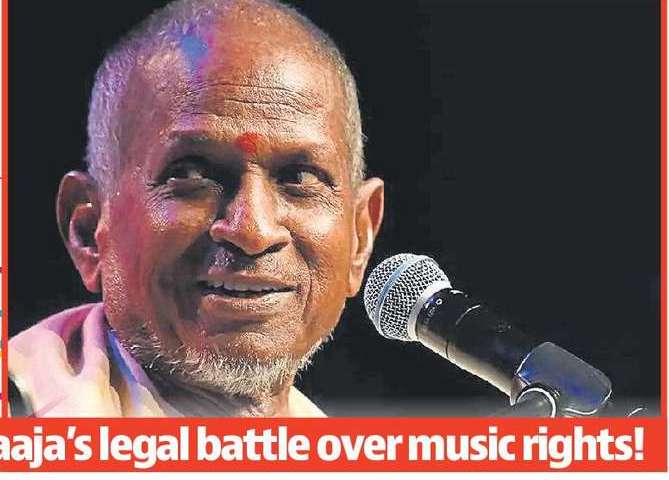
As Ilaiyaraaja’s battle for the rights to his 4,500 songs ends, musicians agree with the court’s decision
Rishabh Suri (HINDUSTAN TIMES; May 2, 2024)
Tamil musician Ilaiyaraaja’s legal battle with Echo Recording Company, that bought the rights to his compositions, has sparked the question — who owns a song? Is it the film producer who pays the music composer, lyricist and singer, the music director who composes a song or the lyricist who writes it? According to the Copyright Act 1957, the producer is the first owner.
On April 24, the Madras High Court came to the conclusion that the musician cannot claim the sole rights to his discography that includes over 4,500 songs, because lyrics are an integral part of a song too. The two-judge bench stated that the 80-year-old only has a right on the melody.
When we speak to composers and lyricists from the Indian music industry, they agree with the court’s decision, stating that a song is a collaborative effort and cannot belong to just one artiste.
SWANAND KIRKIRE, LYRICIST:
I don’t have a take on the case. I also can’t comment on who gives the companies the copyright in this case. I share a good rapport with Ilaiyaraaja. The intellectual property remains with the creator and the producer uses it for their film. What the court has done is reiterating the Copyright Act and stated that everyone needs to follow the law.
UTTAM SINGH, COMPOSER:
I feel everyone involved in creating a song is indispensable. A music director makes the tune for the lyrics that is written by the lyricist and the singers get to sing it. When an award is given, three people are always talked about — the composer, the lyricist and the singer. I feel a song is made by these three together and it’s hard to decide who has more stake in a song.
SAMEER ANJAAN, LYRICIST:
India has a Copyright Act and everything has been written very clearly so that there is no misunderstanding between the author, composer or producer. The rights belong to the producer. If somebody is claiming they have got 100% rights, I don’t think this is the right approach. It’s okay if Ilaiyaraaja is ready to fight, but you have to follow the law. You can’t not obey the law of the land. I always stand by the court’s decision.
EHSAAN NOORANI, COMPOSER:
When you are working on a movie, you’ve been hired to do the music for it. You can, as the composer and lyricist, claim royalties. Unless there is documentation to show your own rights, a producer automatically sells the rights of the song to record companies. So, unfortunately, the complete ownership of a song is not possible when doing a film contract. Whether in India, or the US, it’s the same.
NO STOPPING FOR ILAIYARAAJA
Now, Ilaiyaraaja has sent a legal notice to Sun Pictures, the producers of Rajinikanth-starrer Coolie, over unauthorized use of his song, according to a report by India Today. The notice states that a segment from the song Vaa Vaa Pakkam Vaa from the 1983 Tamil film Thanga Magan has been used without his permission.
War of words over breaks out over Gadar 2’s music
8:39 AM

While Uttam Singh says he was not informed about the usage of tracks composed by him in Gadar 2, director Anil Sharma and composer Mithoon tell us a different story
Debarati S Sen (BOMBAY TIMES; August 27, 2023)
Recently, Uttam Singh, the music composer of Gadar: Ek Prem Katha said that he was not informed by the makers of Gadar 2 that they would be using his compositions Main Nikla Gaddi Leke and Udd Jaa Kaale Kaava.
Talking to Bombay Times, he spoke about why he felt letdown. We also reached out to filmmaker Anil Sharma and Gadar 2 composer Mithoon for their side of the story. Here’s what they had to say:

They should have told me that we are using your songs: Uttam Singh
Composer Uttam Singh says, “Yeh gaane toh aise hain ki aagar koi dholak leke bhi baja dega toh bhi hit honge, because of their melody and lyrics. They may have given me the credit, but credit dena is not all. They should have told me they were using my songs. Not only songs, puri film mein mera likha original background music use hua hai. Maan mariyada bahut badi cheez hoti hai and Hindustan mein iska bahut value hai. Inhone na maan rakha, na mariyada rakkhi. Creative right bahut badi cheez hoti hai, duniya bhar mein, it is a big thing. This was very bad on the part of Anil Sharma. Hum jab kisi ka kaam use kartein hain, toh hamara farz banta hai ki hum usse puchein toh sahi. Kam se kam puchna toh chahiye. Mujhe koi fark nahi pada, log keh rahain hain ki yehi do gaane chal rahein hain. Mujhe badi khushi hoti agar aap naya kaam kartein. I am not saying anything wrong about anybody, I’m just stating facts and truth. When people would come to me for background music, I would ask them to get a letter from the composer allowing me to work on the BG music for that particular film. This was the culture of our Hindi music industry. Bollywood has ended all this.”

I ensured that Uttam ji was given due credit and I was told that he had liked what had been done: Mithoon
Mithoon, who has composed the music of Gadar 2, says, “The rights are with the label and technically, the original music composer’s permission to recreate the songs is not needed. But I had told the makers to talk to the original creator and I ensured that he was given due credit. Anil Sharma ji told me that he had spoken to the original creator and shown him my work. I was told that Uttam ji had liked what had been done. So, I am wondering why this kind of conversation is happening now. I have a legacy of original music and I enjoy doing that. Anil ji had come to me with the concept of Gadar 2, and he wanted these songs to be recreated because the makers said it was the creative requirement of the film. When I heard the script, I understood that the story could not be told without these two melodies. Then, as an artiste I showed respect to fellow artistes by retaining Udit Narayan’s vocals, the poetry of Anand Bakshi saab, as well as the music by Uttam ji. In fact, the film starts with an acknowledgement note for both creators – Uttam ji and Bakshi saab. Before Gadar 2 was released, we had a success meet for Udd Jaa Kaale Kaava. Uttam ji was invited, but he wasn’t present there.”

Mujhe hairani hai ki Uttam ji ne aisa statement diya hai: Anil Sharma
On his part, director Anil Sharma says, “I showed Uttam ji all the songs. Mujhe hairani hai ki unhone ab aisa statement diya hai. Technically, the rights were with the label. Mera aur Uttam ji ka dil ka rishta hai aur yeh sab sunkar mujhe bahut hairani hai. I still can’t believe it. Now that I know about this, I will definitely speak to him.”
Lyricist Dev Kohli Kohli of ‘Yeh Kaali Kaali Aankhen’ fame passes away
8:12 AM
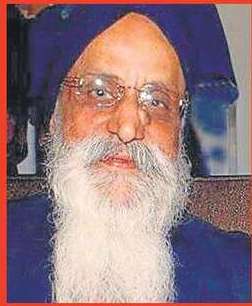
Avijit Ghosh (THE TIMES OF INDIA; August 27, 2023)
Lyricist Dev Kohli, who started his career with the sensitively-penned contemplative track, ‘Geet gaata hoon main, gungunata hoon main’ (film: ‘Lal Patthar’, 1971) but had to wait for nearly two decades before earning bigger fame and recognition with ‘Maine Pyar Kiya’ (1989) and ‘Hum Aapke Hain Koun!’ (1994), passed away at his Andheri residence on Saturday. He was 81.
“He was in Kokilaben Hospital for almost three months and brought back home ten days ago. He passed away at 4 am,” his spokesperson Pritam Sharma told TOI.
Composers Uttam Singh, Anu Malik and Anand Raaj Anand performed his last rites in Oshiwara. Uttam Singh said, “He was a saintly man — my dear friend of 50 years. I tended to him and took him to hospital over eight years when he underwent multiple surgeries. Our winning partnership in ‘Maine Pyar Kiya’ and ‘Hum Aapke..’ created such evergreen hits.” Singh, Kohli and a third friend Shailesh Sawant met regularly over Sunday meals.
Singh said, “I will miss his friendship. Kohli Sahab had no vices. He did not smoke or drink or attend parties. Over the last 8-10 years, he had stopped working. If anyone urged him to write, he would say he will only do so if Uttam Singh composes the tune!”
The 1990s were the high noon of Kohli’s career. He wrote the floorscorcher, ‘Yeh kaali kaali aankhen’ (music: Anu Malik, singer: Kumar Sanu, film: ‘Baazigar’, 1993) that Shah Rukh Khan and Kaajol jived to with verve and zing. The chartbusting track from the Abbas-Mustan film became a nightclub favourite earning Kohli a Filmfare award nomination for best lyricist. Kohli also received nominations for the title tracks of ‘Maine Pyar Kiya’ and ‘Hum Aapke Hain Koun’.
In all three cases, the award went to other nominees. Born in Rawalpindi (Pakistan) and growing up in Dehradun, Kohli had earlier penned two winners in another Abbas-Mustan suspense-thriller, ‘Khiladi’ (1992), an early Akshay Kumar hit. The songs, composed by Jatin-Lalit were, ‘Wada Raha Sanam’ and ‘Kya Khabar Thi Jaana’.
But the blockbuster success of ‘MPK’ and ‘HAHK’, both Rajshri Productions, propelled Kohli’s career to high gear. ‘Didi Tera Devar Deewana’ from HAHK (music: Raam Laxman, singers: Lata-SPB) was mandatory at every ladies sangeet. He would often collaborate with Anu Malik, in his prime then, churning out popular and populist lines such as ‘Oonchi Hai Building Lift Teri Bandh Hai’ (film: ‘Judwaa’, 1997) or ‘Akela Chal Raha Hoon Ek Gaadi Chahiye’ (film: ‘Mr And Mrs Khiladi’, 1997) that a David Dhawan film demanded. In several Dhawan ventures during this period, Kohli had a song or two. ‘Lift Teri Bandh Hai’ was also reprised in ‘Judwaa 2’ (2017).
Kohli had waited for serious success for a long time although ‘Geet Gaata Hoon’ (singer: Kishore Kumar, music: Shankar-Jaikishan), had happened when he was in his early 20s. It was the only song he wrote in director Sushil Majumdar’s ‘Lal Patthar’, a complex requiem to last-gasp feudalism in early 20th century colonial Bengal. Raaj Kumar and Hema Malini played the lead roles, though, the number was lip synced on screen by a young moustachioed Vinod Mehra.
The lyricist told this reporter in 2012, “The song’s success changed my life. I was immediately interviewed by magazines and on radio. From then on I started getting small films.” Those films include ‘Khoon Khoon’ (1973), which had the evocative bhajan, ‘Maati Ke Jalte Deepak’, ‘Kabhie Ajnabi They’ (1985) which had the melancholic 'Dil Ke Is Dehleez Tak' and several others such as ‘Ek Baar Kaho’. All these films flopped. It was only with ‘Maine Pyar Kiya’ that he vaulted to a bigger league.
(With inputs from Bella Jaisinghani)
-------------------------------------
HINDUSTAN TIMES (August 27, 2023)
Veteran lyricist and poet Dev Kohli, who gained popularity for his work in Salman Khan and Bhagyashree’s Maine Pyar Kiya (1989), died in Mumbai on Saturday. The news was confirmed by Kohli’s spokesperson, who shared that the veteran had been admitted to Kokilaben Ambani Hospital for the last few months and passed away in his sleep. Kohli was 81.
He had written over 100 songs for several Hindi films, including Baazigar (1993), Hum Aapke Hain Koun..! (1994), Musafir (2004), etc. While he was active primarily in the ’90s, the lyricist also worked on several recent films, such as Shootout At Lokhandwala (2007) and Judwaa 2 (2017). In a career that spanned from 1969 to 2013, he collaborated with different generations of composers, from Shankar-Jaikishan to Vishal-Shekhar.
Several celebs took to X to share heartfelt tributes to the artiste. Actor Renuka Shahane shared, “Kaisey bhool paaungi mein baba woh bachpan ki kahaniyaan.”
Singer-music director Shekhar Ravjiani wrote, “Had the honour and privilege of working with #devkohli sahab on Musafir and Taxi 9211 … What a wonderful human being and an extraordinary lyricist .. Thank you for the beautiful songs.”
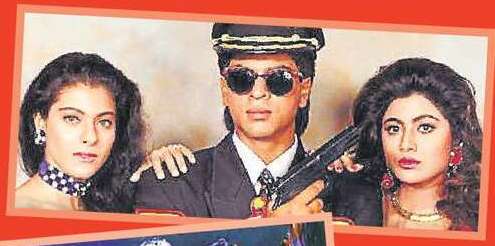
Yash Chopra’s expertise took my music for Dil To Pagal Hai to another level-Uttam Singh
11:36 PM

Soumya Vajpayee (HINDUSTAN TIMES; October 30, 2022)
As Dil To Pagal Hai (1997) clocks 25 years today, composer Uttam Singh talks about the film’s music and why working with the likes of filmmaker Yash Chopra and singer Lata Mangeshkar was special. Excerpts:
How did you come on board for the film?
When I started working on the songs, they were not meant for Dil To Pagal Hai. They were for a TV project by Yash ji’s production house. I made a lot of new tunes and he kept placing them in different parts of the film. It was much later that he told me that the music was for his film.
Were you happy with the way the songs turned out?
Creating new sounds was my passion and this film gave me a platform to deliver. The way the songs were picturised was great. Yash ji’s expertise took my music to another level.
Which is your favourite song from the film?
I would play Are Re Are at the end of every sitting. I did that for six months, but nobody really liked it. One day, Uday (Chopra; actor-Yash Chopra’s son) heard the track and he loved it. That’s when everyone’s perspective about the song changed. When it came to penning the song, Anand Bakshi (lyricist) saab heard the tune and immediately went to the washroom. I thought he didn’t like the tune. But when he came out, he said, ‘Are Re Are Yeh Kya Hua, Maine Na Yeh Jaana’. The song was loved so much that it played throughout the film.
The film’s music was a mix of modern and old-school...
I recorded with 150 live musicians. I could have recorded the flute on a synthesiser, but I called a flautist from Chennai to record it. There was a balance between acoustic and electronic sound.
Why did you have Lata Mangeshkar sing most of the songs?
Lata didi had the prowess to pull off any genre. While most of the songs were sung by her, Asha ji (Bhosle; singer) sang Dil Le Gayi and Hariharan (singer) sang the title track, Ek Duje Ke Vaaste.
Nanak Shah Fakir is not a movie about religion but more about spirituality-Harinder Sikka
7:46 AM

Mohar Basu (BOMBAY TIMES; April 7, 2015)
The upcoming film Nanak Shah
Fakir, presented by Gurbani Media Production, derives from the
monotheistic idea Sikhism bases itself on Ik Onkar (there's only one
God) is the crux of their philosophy. Based on the life and teachings
of Guru Nanak, the film propagates a larger universal message of harmony.
Producer Harinder S Sikka narrates how came upon the idea. “I was in the Indian Navy till 1993. In 1999, during the Kargil war, I went back to the war zone as a journalist. It was at the battlefield that I picked up a story of a Kashmiri Muslim woman. She was a spy for India and married a Pakistani. Her job made her responsible for the elimination of her husband and father-in-law (both in notable positions in the Pakistani army). She was in depression when she was brought back. A noble saint cured her. I wrote a book Calling Sehmat on her. When I went to her to buy rights of this book for a film, she insisted I make it on Guru Nanak. A Muslim lady wanting to make a book on Guru Nanak is not something I was expecting,“ says he.
 Shooting the film was extremely draining for Harinder Sikka, both
monetarily and emotionally. He says, “I was taken to the cleaners by
thugs from my team. They would quote exorbitant amounts, taking
advantage of my lack of expertise in this field. But it was balanced out
by people who unconditionally supported me. When I was facing problems
with my Gujarat schedule of the shoot, Narendra Modi, who was then the
CM, extended his support. In Maharashtra, Uddhav Thackeray
promised me his help. Uttam Singh (music), Resul Pookutty (co-producer
and
sound designer), A R Rahman (score mentor) and Pandit Jasraj came on
board without a single penny. The people who tried to steal our film
and sell it in the black market were unsuccessful.“
Shooting the film was extremely draining for Harinder Sikka, both
monetarily and emotionally. He says, “I was taken to the cleaners by
thugs from my team. They would quote exorbitant amounts, taking
advantage of my lack of expertise in this field. But it was balanced out
by people who unconditionally supported me. When I was facing problems
with my Gujarat schedule of the shoot, Narendra Modi, who was then the
CM, extended his support. In Maharashtra, Uddhav Thackeray
promised me his help. Uttam Singh (music), Resul Pookutty (co-producer
and
sound designer), A R Rahman (score mentor) and Pandit Jasraj came on
board without a single penny. The people who tried to steal our film
and sell it in the black market were unsuccessful.“
In films, songs are usually born out of the story, but in this case, the story was constructed around eight hymns that Guru Nanak wrote 500 years ago. Co-producer Samar Sikka informs us that Singh took the songs to Abbey Road Studios in London for mastering. Rahman was recommended by Pookutty and the Oscar-winning maestro mentored the film's sound. The film's original score is done by Finnish composer Tuomas Kantelinen.
 There were miracles on set while filming. “When we shot in Leh, the sun
was up all along despite low temperatures. In Maharashtra, the set was
intact despite a downpour,“ said Sikka.
There were miracles on set while filming. “When we shot in Leh, the sun
was up all along despite low temperatures. In Maharashtra, the set was
intact despite a downpour,“ said Sikka.
Hardliners might have raised objections, but Sikka's intention is to address communal harmony with the film. “Guruji's story is incomplete without Bhai Mardana who is a Muslim. This isn't a movie about religion but more about spirituality,“ says Sikka.
As for showing Guru Nanak in human form, director of photography A K Bir carefully constructed the face shots digitally. He adds, “Nanak exalted his mental vision to an ethical ideal beyond the conception of Hindu or Mohammedan.“
Actor Arif Zakaria says, “Playing Bhai Mardana was gratifying and daunting. The core simplicity of the man and his blind belief in the message of his 'friend' Nanak compelled Mardana to sacrifice everything.“
Gitanjali Sehgal is the associate prodcuer of the film that also features Puneet Sikka, Anurag Arora and Shraddha Kaul in prominent roles.
Producer Harinder S Sikka narrates how came upon the idea. “I was in the Indian Navy till 1993. In 1999, during the Kargil war, I went back to the war zone as a journalist. It was at the battlefield that I picked up a story of a Kashmiri Muslim woman. She was a spy for India and married a Pakistani. Her job made her responsible for the elimination of her husband and father-in-law (both in notable positions in the Pakistani army). She was in depression when she was brought back. A noble saint cured her. I wrote a book Calling Sehmat on her. When I went to her to buy rights of this book for a film, she insisted I make it on Guru Nanak. A Muslim lady wanting to make a book on Guru Nanak is not something I was expecting,“ says he.
Shooting the film was extremely draining for Harinder Sikka, both
monetarily and emotionally. He says, “I was taken to the cleaners by
thugs from my team. They would quote exorbitant amounts, taking
advantage of my lack of expertise in this field. But it was balanced out
by people who unconditionally supported me. When I was facing problems
with my Gujarat schedule of the shoot, Narendra Modi, who was then the
CM, extended his support. In Maharashtra, Uddhav Thackeray
promised me his help. Uttam Singh (music), Resul Pookutty (co-producer
and
sound designer), A R Rahman (score mentor) and Pandit Jasraj came on
board without a single penny. The people who tried to steal our film
and sell it in the black market were unsuccessful.“In films, songs are usually born out of the story, but in this case, the story was constructed around eight hymns that Guru Nanak wrote 500 years ago. Co-producer Samar Sikka informs us that Singh took the songs to Abbey Road Studios in London for mastering. Rahman was recommended by Pookutty and the Oscar-winning maestro mentored the film's sound. The film's original score is done by Finnish composer Tuomas Kantelinen.
There were miracles on set while filming. “When we shot in Leh, the sun
was up all along despite low temperatures. In Maharashtra, the set was
intact despite a downpour,“ said Sikka.Hardliners might have raised objections, but Sikka's intention is to address communal harmony with the film. “Guruji's story is incomplete without Bhai Mardana who is a Muslim. This isn't a movie about religion but more about spirituality,“ says Sikka.
As for showing Guru Nanak in human form, director of photography A K Bir carefully constructed the face shots digitally. He adds, “Nanak exalted his mental vision to an ethical ideal beyond the conception of Hindu or Mohammedan.“
Actor Arif Zakaria says, “Playing Bhai Mardana was gratifying and daunting. The core simplicity of the man and his blind belief in the message of his 'friend' Nanak compelled Mardana to sacrifice everything.“
Gitanjali Sehgal is the associate prodcuer of the film that also features Puneet Sikka, Anurag Arora and Shraddha Kaul in prominent roles.

Uttam Singh's 40-yr-old son chokes to death
7:53 AM

Bharati Dubey (MID-DAY; April 14, 2014)
Music composer Uttam Singh’s 40-year-old son, Amarjeet Singh, died due to asphyxiation on Friday night.
The composer’s son was following a weight loss diet for nearly four months in a bid to lose weight. Speaking to hitlist, Uttam Singh, who is credited with composing music for hits such as Dil Toh Paagal Hai, Gadar Ek Prem Katha, Baagbaan and Pinjar, said, “My son had been dieting for nearly four months as he wished to shed some kilos. On Friday evening, he decided to give in to temptation and have a burger. After eating it, he had a glass of home-made lassi. His face looked ashen and when asked about it, he said that he was okay. Soon after, he went to the bathroom.”
Singh and his wife then waited for Amarjeet to come out but he didn’t do so. “After some time, we had no option but to push open the door. When we saw him foaming at the mouth, we immediately called for an ambulance. The doctor told us that the food, that was lodged in his windpipe, had choked him. The ambulance took about 45 minutes to arrive at our residence and by the time we rushed him to Ambani hospital, there wasn’t much the doctors could do to save him,” says Singh.
The father adds that his son was a good piano player. “Amarjeet worked with me for a while. Of late, he was working with an orchestra. He weighed 98 kgs and he was starving himself in order to lose weight. We kept advising him not to do so but he wouldn’t listen to us. To add to it, he was suffering from schizophrenia for quite some time now,” says the emotional father.
Subscribe to:
Posts (Atom)