Showing posts with label Usha Khanna. Show all posts
Showing posts with label Usha Khanna. Show all posts
Throwback: When Rajbans Khanna’s Gotama The Buddha left audiences stunned and won at the 10th Cannes Film Festival
9:27 AM
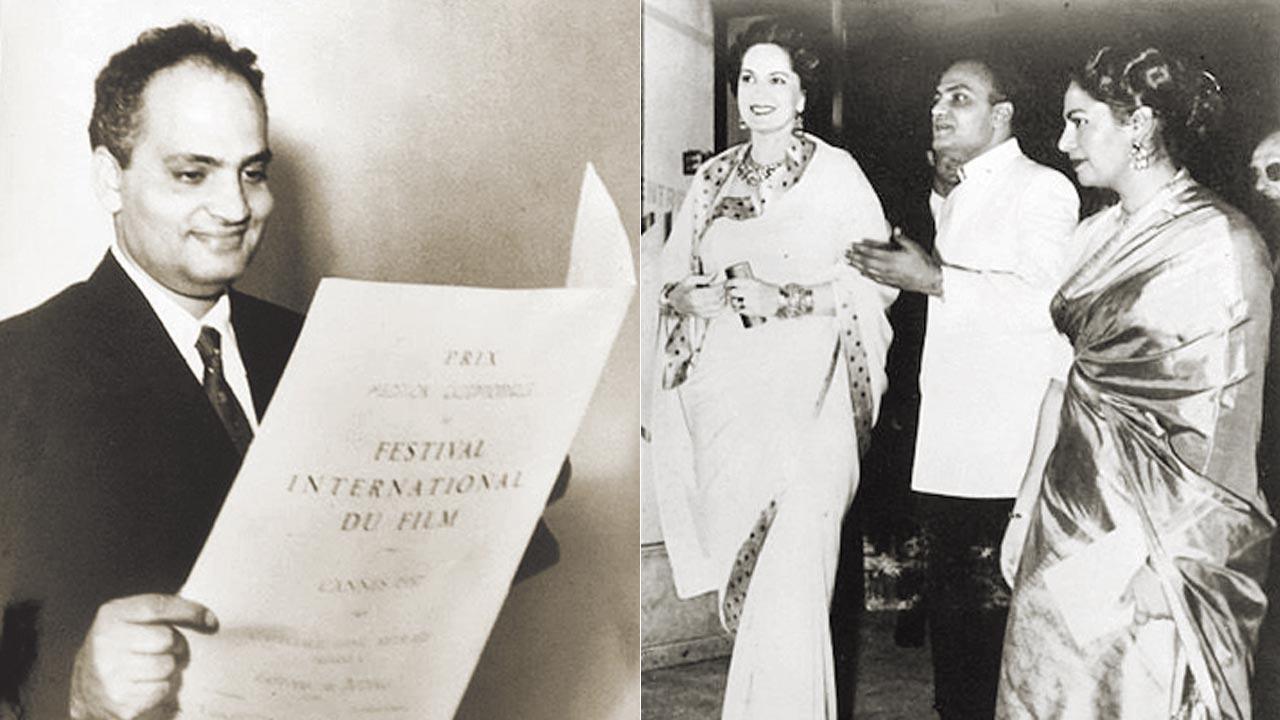
Filmmaker Rajbans Khanna won the award of the Best Director for his film Gotama The Buddha at the 10th Cannes Film festival in 1957; (right) Begum Agha Khan, mother of the present Agha Khan, with filmmaker Rajbans Khanna and wife Usha at the banquet hosted in Cannes, post the screening of his film
With India chosen as the first country of honour at the 75th Cannes Film Festival this year, Sunday mid-day takes a trip down memory lane to the 10th Cannes Film Festival
Nidhi Lodaya (MID-DAY; May 22, 2022)
This year marks 65 years since Rajbans Khanna’s documentary film, Gotama The Buddha, won at the 10th Cannes Film Festival. Born in 1920 in Lahore, Khanna was one of the country’s well known political filmmakers. Sunday mid-day got in touch with Devieka Bhojwani, one of Khanna’s three children and a theatre actor, to talk about their father’s achievements and how he reached the Cannes in the mid-’50s.
Right after school, Khanna plunged into the freedom movement until India gained independence. Post-1947, he dedicated his efforts to Kashmir. “He was a student leader and also part of the militia that protected Kashmir, once he was out of college,” recalls Peddar road-based Bhojwani. The sense of pride in her tone is evident as she speaks about her late father’s political involvement. “He had never made a film before,” she says. “He was a writer, poet, revolutionary, student leader and leftist. He believed in fighting for the cause of national integration.” Khanna only moved to Mumbai after marrying Usha Khanna. His interaction with director Bimal Roy in Mumbai was sparked when he showed him the script for Gotama The Buddha.
In 1956, the then prime minister Jawaharlal Nehru asked Khanna to make a film on the life and teachings of Gautam Buddha in celebration of his 2,500th birth anniversary. That’s how the idea for Gotama… was seeded, and Khanna and Roy began working on this unique idea with Hrishikesh Mukherjee, who was an assistant to Roy at the time and also the editor of the film.
The film is developed through thousands of ancient sculptures, paintings and art relics from India, Tibet, Central Asia, China, Indonesia, Burma, Ceylon and other Asian countries. There are no actors, yet the story has universal appeal. It traces the life—from birth till death, as a humble priest to a religious icon—of the Buddha. Emphasis is placed on Buddha’s relationship with the land, conveyed by lyrical shots of India’s vast and varied terrain.
“It took about a year to finish [the film] and my father travelled to all these countries,” says Bhojwani. “It’s so poetic.” The voiceover was done by renowned names of the day, Uma Anand, a journalist and broadcaster, Zul Vellani, producer, director and narrator of news broadcasts, Ramesh Thaper, a journalist and political commentator, among others.
Gotama The Buddha won a special mention for Best Director and was nominated for Palme d’Or (Golden Palm), considered one of the most prestigious awards in world cinema. It was introduced in 1957 by the festival’s organising committee. “People couldn’t believe that someone could create an expression using stone sculptures. You felt as if they were speaking to you,” says Bhojwani. After the screening, the audience gave a standing ovation. Jean Cocteau, a famous French intellectual wrote a note to Khanna, saying, “O marveille des marveilles Secretement et Coeur a coeur je bous salue’ which translates to “O marvel of marvels, secretly and heart-to-heart, I salute.”
This was also Bhojwani’s parents’ first trip abroad. “When they were awarded the cash prize, they had never seen so much money,” she recalls. “They were newlyweds and had left me in Bombay. I was two or three years old.”
The Khannas fell in love with Paris—the cafes and galleries—and would sit around the city all day. “That’s where my mother got the idea of coming back and starting Café Samovar—something like a little Parisian intellectual café,” she adds. The iconic cafe at the heart of Jehangir Art Gallery in Kala Ghoda shut down in 2015.
When asked about the current hype around Cannes and to run a comparison to what it was 65 years ago, Bhokwani says, “There was a beauty about the simplicity and the emotions. It was eloquent in itself. There were no gimmicks, no cameras.”
This year also marks Khanna’s 100th birth anniversary. His three children–Bhojwani, Siddharth Khanna and Malavika Sangghvi, are hoping to publish their father’s writings. “He has about 50 script ideas and most of them were on national integration, the pride and beauty of India,” concludes Bhojwani.
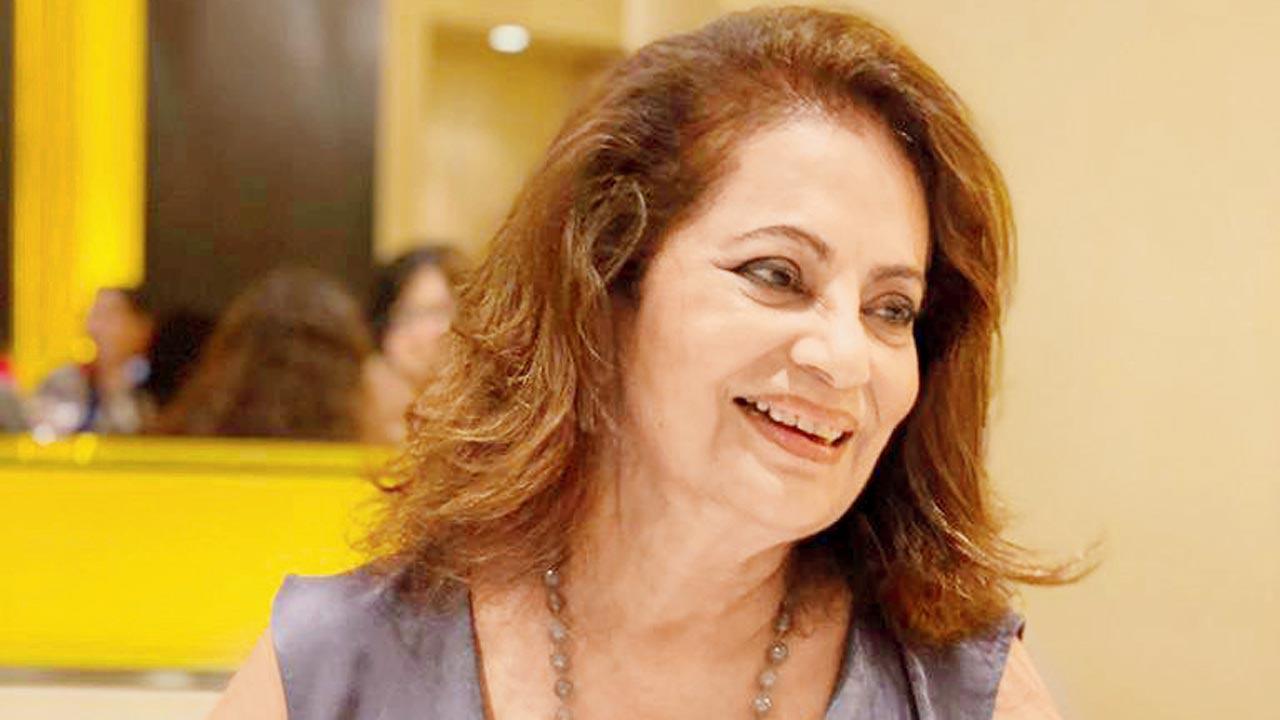
Devieka Bhojwani
Even today, I never get tired of ghazal-Pankaj Udhas
8:27 AM

Singer Pankaj Udhas, who completed 40 years in the industry, reminds us that Ghazals — the genre he pioneered — should go through a revival
Sanskrita Bharadwaj (HINDUSTAN TIMES; March 22, 2020)
 As a young girl growing up in the ’90s, it would be an anomaly if you didn’t gush over John Abraham in Pankaj Udhas’ music video for Chupke Chupke, or if you didn’t empathise with Sameera Reddy’s in Aur Ahista. Udhas, in the Indian context, is a Ghazal singer beyond recognition. Not only a prolific singer, he had a certain flair for coming up with romantic and mushy, yet unusual videos for all his songs.
This year, the maestro has marked 40 years in the industry. A feat, he says, he’s proud of as he never thought he could be “popular”. “My passion for this form of music is absolutely pure. Even today, I never get tired of the genre. I genuinely believe that it is my passion and hard work which has paid off,” he adds.
 Back in the day
The singer, who comes from a family where everyone was into music in some way or the other, says, “My father used to play an instrument called the dilruba. It is closer to a sarangi and he played it like a hobby. I have two elder brothers — Manhar and Nirmal Udhas. They’re both well-known singers. Manhar has sung quite a few popular film songs. I am the youngest of the three, so, I grew up learning a lot from them. I took it up from there, and then, internally decided that I wanted to sing. I completed my school and college education. The point is that I grew up in an era, where there were only two music labels available and to get a deal with them was like winning an Oscar. You had to really prove yourself. I was lucky to be able to record a film song at only 20 years of age, for a film called Kaamna (1972), the music for which was composed by Usha Khanna. I sang a nazam; it was a beautiful one. After that, I struggled hard to get a break.”
He admits that at one point he had plans of “giving up”. “I felt I should look for an alternate vocation in life, because it was not working out. I took a break and went away to Canada for some time. I thought of making a living there. You wouldn’t believe… within three to four days of my arrival in Canada, I ended up singing. I did many concerts there. I realised two things. Firstly, I could hold an audience of 600 to 700 people for three hours by singing Ghazals. Secondly, I gathered tremendous confidence about being able to entertain people,” he elaborates.
The market in Canada, Udhas says, was limited and he knew his future and destiny lay in India. So, he packed his bags and came back.
Udhas grew up in the era of the radio. For him, there were no other means of listening to music. “We had a radio at home that kept playing most of the time. Two singers who really inspired me were Begum Akhtar and Lata Mangeshkar,” he says.
Four decades
The singer, who lent his voice to cult songs like Chitthi Aayi Hai (Naam; 1986), has performed all across the world and has also made an impact in Bollywood and Indie music through his songs. He is witness to the change that music has gone through, especially in India, over the years.
“The business model of music has changed tremendously since I started my career in 1980. Back then, it was a brick and mortar business of CDs and cassettes. Although it was difficult to 'make it big', if you were good, 60,000 cassettes could be sold out within five days of the song being out. The revenue generated also went on in promoting and giving a space to new artistes. But, today, we have reached a point in the music business where not enough revenues are made. If you do a single or an album, you put it on iTunes. But India is still not ready to use a credit card and purchase music online. There are online payment options, but at the grassroots, buyers are still not using it,” Udhas explains.
Will times change?
There is a known concept, Udhas says, that television does not work anymore. “I feel it still does. It is very effective. Television drove my music videos as well. The other important elements are various social media apps, where you create your channel and try to make a base. Bollywood, of course, is still big,” he says.
According to Udhas, YouTube needs to be used more effectively. “I have my own channel and I have more than 1,00,000 subscribers as of now. I was a little late and a little slow on it, but what I have tried to develop is a certain side of my personality. I think there should be informative programmes about Ghazal singers and Ghazals. That could be a way to keep the genre alive,” the singer signs off.
Subscribe to:
Posts (Atom)