Showing posts with label Udaan. Show all posts
Showing posts with label Udaan. Show all posts
I’m also interested in knowing about my favourite actors, what they do, what’s in their bag-Ananya Panday
2:56 PM

Vikramaditya Motwane and Ananya Panday discuss their upcoming film CTRL, which explores the increasingly probable perils of a tech takeover
Sucheta Chakraborty (MID-DAY; September 29, 2024)
“He's one of my favourite filmmakers,” insists Ananya Panday, alluding to director Vikramaditya Motwane when we ask her about what drew her to CTRL, their new film that will premiere on Netflix on October 4. Panday counts Jubilee, Motwane’s tribute to the Hindi film industry of the 1940s and 1950s, the self-reflexive AK vs AK and Udaan among her favourites. “Udaan is my mom’s [Bhavana Pandey’s] favourite film and we used to watch it a lot when I was growing up. I must have seen it close to 20 times with her.”
The other reason for being part of CTRL was Screenlife, a form of visual storytelling in which events are shown entirely on a computer, tablet or smartphone screen. “Eighty-ninety per cent of the story [of CTRL] takes place on a computer screen and all the storytelling is through mediums that we use on our computers, like searches, video calls or Instagram—things we spend a lot of our time on,” Motwane shares.
Though films such as Her and Terminator have explored human dependency on and relinquishing of control to technology and influenced science fiction culture, the Screenlife format influenced Motwane specifically as it is “essentially [about] peeping into somebody’s life”. The offer, he says, came from Timur Bekmambetov, the Russian-Kazakh director, producer, screenwriter and tech entrepreneur who pioneered Screenlife films such as Unfriended (2015), Searching (2018), Profile (2018) and Missing (2023).
“Everyone on set was discovering how to shoot this film because we didn’t really have a template to follow. Everyone was making mistakes together and learning together,”
Panday says, recalling a fluid and immersive experience where Motwane would let the takes run on for long. “I also felt very responsible because there were parts where the camera was in my hand and I was shooting. There were many things I had to figure out, but it was a nice, happy and safe environment.”
Panday plays Nella Awasthi, a social media influencer from Delhi who runs the channel NJOY with her boyfriend Joe. Reluctant to pursue the path her parents laid out for her, Nella moves to Mumbai and forms a professional and personal relationship with Joe, both of which crumble with adultery. “It was interesting to see how a person would deal with a situation differently as a result of being in the spotlight [as a influencer] with different factors addressing them,” Panday observes.
The actor may be a part of the social media generation but is not an influencer, and hence, had to immerse herself into the life of a vlogger and influencer to understand the implications of the job, its stakes and demands.
“As an actor, the content I put out on my Instagram is related to movies, personal life or brands. I don’t know what it’s like if that were my job and if that was the way I was making money. Then the stakes would be [higher]. Understanding that part of it was prep,” she shares.
Panday’s character lives a life, specifically a romantic life, in front of millions of people. Kho Gaye Hum Kahan (2023) too saw her as part of a group of characters grappling with the ironies of the digital age where private lives are lived very publicly. “I think my opinion on [the private-public paradox] is constantly evolving,” says the 25-year-old.
“I don’t have any hard and fast rule. Sometimes I feel like protecting things and keeping things private because I feel so much of my life is any way out there. If there’s something that I can keep for myself, then I would love to do that, but I’m also not ashamed of anything or trying to hide anything. I understand that it’s a part and parcel of our job. There will be interest from people because we are public figures and I’m also interested in knowing about my favourite actors, what they do, what’s in their bag, what their house looks like, etc. So I don’t blame other people [for being interested], but if I can protect things, I do try to.”
Motwane’s interest lay in exploring the workings of AI and social media through the life of someone brought up on the internet, from the perspective of “what I think is a love story”. He believes that diversification of content on streaming platforms has primed the audience for high concept films, content that is more cerebral and challenging, and yet fun and accessible.
“When you go to any service now, there’s everything on offer—comedy, drama, crime, true crime, and that’s what’s also made the audience more open, learned and experienced about things to watch.”
For creators, streaming services mean that one doesn’t have to stick to a one-size-fits-all projects. “Ten or 15 years ago, cinema meant you had to make a movie of a certain length for an audience that’s going to be a kind of mass-y. Old, young, rich, poor—all were going to come and watch your film together… [But] there was also a necessity, once upon a time, to go to a movie theatre to catch something [niche] and that necessity is gone, which is not always good. It’s affected indie films more than it’s affected mainstream movies because the urgency of going to watch a movie in the theatre is gone. Streaming services are convenient, but is it really the best thing for the movies?”
Money used to foster art. Today that relationship is lopsided-Anubhav Sinha
9:40 AM

(L-R) Vikramaditya Motwane, Aanand L Rai, Anubhav Sinha, Raj Nidimoru and Krishna DK
Renuka Vyavahare (BOMBAY TIMES; March 10, 2024)
The directors panel moderated by Mayank Shekhar, for FICCI Frames 2024 comprised acclaimed and diverse voices like Anubhav Sinha, Raj & DK, Aanand L Rai and Vikramaditya Motwane. The process of producing movies along with directing and writing, money dominating art and stifling emerging talent, and the need for diversity in our cinema - the session raised some crucial points.
‘Representation has marginally increased’
The discussion on representation behind the camera evoked interesting reactions. Vikramaditya Motwane, who is known for Udaan and Lootera, pointed out, “The number of female directors today as opposed to when I started out has increased. The number of female HOD’s on my crew have grown exponentially. Even on the set of the series Jubilee, I could see that and it’s not a quota thing. The women were present because they are talented.”
Anubhav Sinha shared a slightly different perspective. He added, “Representation has marginally increased. I hope it gets better. I make a conscious effort with the recruitment teams to ensure this happens. When we wrote scripts earlier, all the important characters were upper caste. Sometimes caste is inconsequential, but I ensure those surnames are there. We need to be mindful of that.”
Talent should be the only deciding factor
Raanjhanaa director Aanand L Rai stated that talent should be the only deciding factor for artists and technicians to get work. “Caste and gender don’t matter,” he claimed. Rai, known for the Tanu Weds Manu films, also took the opportunity to speak about AI. He explained, “Anything artificial can’t touch your heart. Maybe in the coming times, AI attains the intent that humans have. That intent is important. The day it (AI) gets it, I will start using AI.”
We have various regions represented, not just gender.
DK of Raj & DK, who have made The Family Man and Go Goa Gone, shared how writing can lead to representation. He said, “When we write our stories, we look for diversity. We create strong female characters. We have various regions represented, not just gender. This automatically leads to diversity in casting. When we pick our technical crew, most of us tend to choose people who suit the project. It’s a reality that in the DOP department, women are outnumbered by men. But when it comes to costume design or production design, women are in the forefront. We ensure the writer’s room has female representation to ensure the film isn’t a sausage fest..”
‘I don’t think indie films exist in theatres anymore’
Are emerging directors getting platforms to showcase their talent? Do they have the freedom to make the kind of indies that were made 15 years ago? Voicing his opinion on this, Vikramaditya said, “We got a break by making indie movies, but I don’t think indie films exist in theatres anymore. It’s easier to get a romcom made because you get a star, and you get a producer. I got to make Udaan back then, but today I don’t see that happening a lot. There are exciting new directors today like Natesh Hegde, who made Pedro or Karan Gour, who made Fairy Folk, but their work is not seen. I feel there were better opportunities back then.”
‘The flight of a director is terribly curtailed today’
Sinha believes that today “money has all the power” over creativity and that kills the director’s instinct. “Back then, the call rested with the directors. We had the confidence to follow our instincts rather than the data thrown at you as to what works and what doesn’t. Now even the distributor will talk to you about the pacing of the movie. Everyone knows everything! The flight of a director is terribly curtailed today,” he said.
‘Years ago, we had independent producers backing us’
Talking about how money drives the movie business and how that leads to creativity getting stifled, Anubhav Sinha said, “Years ago, we had independent producers backing us. Money used to foster art. Today that relationship is lopsided. Money has all the power. This algorithm is a cage. If you tell me this is what the audience wants, it intimidates and kills your instinct as a director. When a 12th Fail works it is called an aberration. When an action film, works, it’s a trend. I don’t understand why,” questioned Sinha, who has directed films like Mulk, Thappad and Article 15.
‘We became producers to make our films right & make them the way we wanted to’
All the directors present at the session unanimously pointed out that no director becomes a producer by choice. They do it because it gives them control over their own content. Raj Nidimoru elaborated, “We became producers to make our films right and make them the way we wanted to. You direct, write, conceptualize, create it… that’s why we call ourselves filmmakers. My first business card said filmmaker. If you produce your work, you have the final say in marketing, posters and publicity. It’s what any filmmaker would want. This is the time to express yourself. You have so many ways to do it.”
Actor Kavita Choudhry of Udaan fame passes away
9:51 AM

Avijit Ghosh & Yudhvir Rana (THE TIMES OF INDIA; February 17, 2024)
New Delhi/Amritsar: In the summer of 1984, evenings changed in India. Hum Log, India’s first television soap, had arrived. Within weeks the lives of Basesar Ram’s family became a conversation point in drawing rooms. Over the next few years, as the number of sponsored TV shows mushroomed, the idea of a well-spent evening got redefined.
Udaan (Flight) arrived in 1989, the heyday of monopoly Doordarshan. The long-running serial was about a spirited girl who overcomes financial worries and gender barriers to become an upright police officer. Kavita Choudhry, who not only played the protagonist but also wrote and directed the show, passed away following a heart attack in Amritsar on Thursday night. Battling cancer at the city’s Parvati Devi Hospital, she was 67.
Udaan, which ran till 1991, was inspired by the life of Kavita’s sister, Kanchan Choudhry-Bhattacharya, India’s second woman IPS officer and the first woman director-general of police. Judging by the social media posts on Friday, the serial inspired many young women of the time.
Actor-director Shekhar Kapur wrote on X, “So many women now in high positions in Indian Civil Services come to me and say they were inspired by Udaan.” Added Kapur, who played the role of an IAS officer and the central character’s love interest in the series, “She was an amazing director”.
Amritsar-born Kavita had earlier become a familiar face modelling for Surf as the fictional character Lalita-ji. The Lintas campaign was constructed when Hindustan Unilever Limited (HUL)’s lucrative washing powder came under pressure from the less expensive brand, Nirma. Kavita, who belonged to National School of Drama’s acting class of 1978, was selected to deliver the part of a housewife who had to convince the customer to buy a more expensive product.
“Lalita-ji represented the archetype of a woman totally in control, someone who could argue persuasively in the face of male questioning. And Kavita was utterly convincing in that role. Which is why the ad as well as the character became iconic,” says brand consultant Santosh Desai. The ad’s punchline, “Surf ki kharidari mein hi samajdari hai”, became as popular as a Salim-Javed dialogue.
Kavita was introduced to the big screen by producer-director Bhimsain (Gharaonda, Dooriyan) in Tum Laut Aao (1983). The film was based on notable Hindi writer Mridula Garg’s progressive novel, Mera; the protagonist’s husband doesn’t want her to get pregnant because he intends to migrate to the US. “Kavita portrayed the determined, lower middle-class woman quite well,” recalls Garg. But the film was little seen; it was the small screen that earned her fame.
In later years Kavita acted in several other television serials, such as Your Honour and IPS Diaries. She also wrote Satish Kaushik’s Badhaai Ho Badhaai (2002). Kaushik, along with Anupam Kher, was a batchmate at NSD.
The actor-director lived in Amritsar’s Garden Enclave neighbourhood with her nephew Ajay Sayal, an advocate, after the death of her elder sister, Kanchan, in 2019.
Dr Rajnish Salwan of Parvati Devi Hospital, under whose care she was being treated, said Kavita was admitted in critical condition, with multiple organ failure, last Sunday. She was cremated on Friday.
I won’t do film albums that have more than one composer; public will not know ki kiska gaana kya hai-Amit Trivedi
8:54 AM
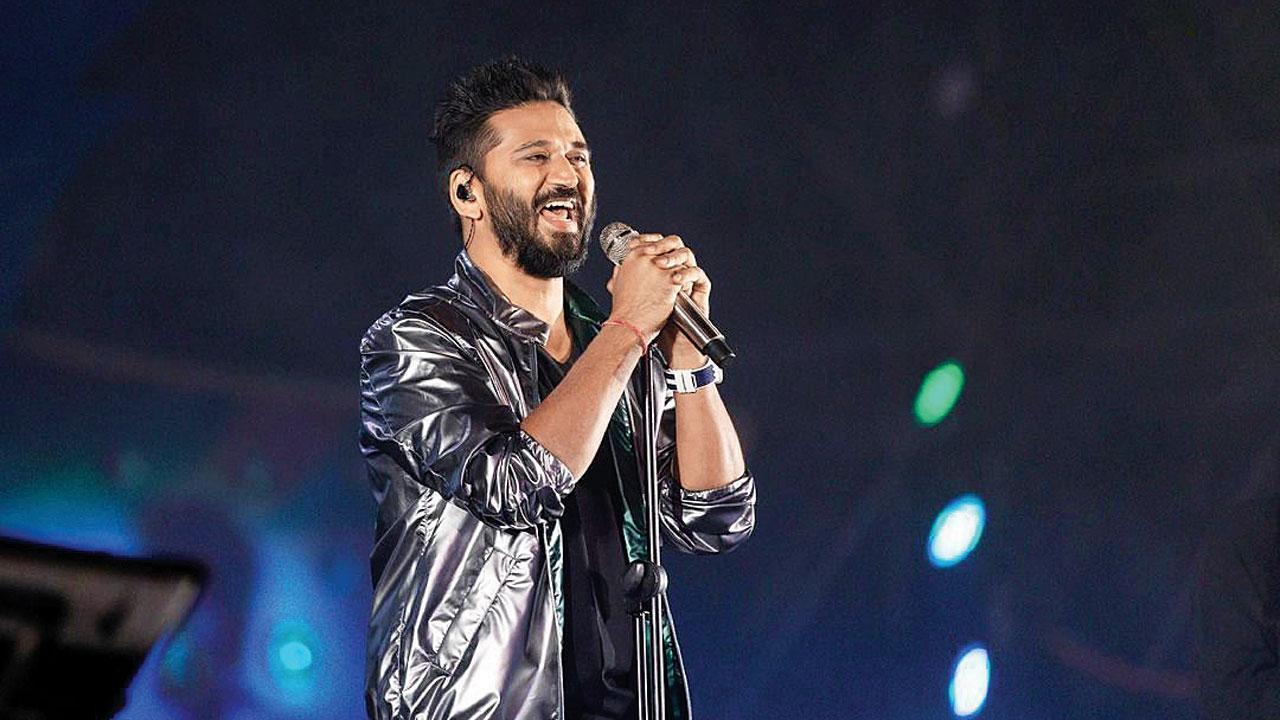
Debarati S Sen (BOMBAY TIMES; October 14, 2023)
In 2009, Amit Trivedi’s soundtrack of Dev D changed the way Hindi film music sounded. Over the years, his willingness to experiment with diverse musical landscapes, blending of traditional elements with contemporary sounds, resonated with music lovers and his songs like Iktara (Wake Up Sid), London Thumakda and Kinare (Queen) to the electrifying beats of tracks from Udta Punjab gave Indian cinema a refreshing musical identity.
In a candid conversation with the musician at his Andheri studio, we discussed his love for freedom as a music composer, how he works multiple mediums whether it's films, OTT or the independent space, and more. Excerpts from our interview…
Mostly, all your film work has been complete albums. But there are many that have three to four composers working on one single film. Did you consciously take a stand against such albums?
Yes, I have said a no to such work. I won’t do film albums that have more than one composer. I feel bad for composers who do that because the public will not know ki kiska gaana kya hai and so your identity will be lost. In the long run, no one will remember. But if it is an individual composer then people would know and recall far more easily. For example, if it's Pathaan, we all know it is Vishal-Shekhar.
Did you ever have to give up your creative freedom for others? For the director or producer of the film?
That keeps happening. I won’t take names but when my fans feel ‘this song isn’t an Amit Trivedi one’, those are the times when I have faced this interference! In those songs mujhe creative freedom nahi diya gaya tha. Curb kartein rahein. Yeh mat karo, woah karo etc. And that is when the result is like that. Whenever I have not had any interference, those tracks and albums have worked extremely well like a Dev D, Udaan, Lootera, Kai Po Che, Queen. In Udta Punjab thoda bahut interference tha, but not much. I did the music for Qala in just three days. I didn’t let anyone interfere at all, kisi ko mauka hi nahi diya! That’s my learning after all these years in this industry!
You’d completed the first six songs of the Dev D album in six months, and it was released without any changes. Has that ever happened in recent years?
It happened with Qala and Jubilee. It is such a pleasure to work with filmmakers like these. They just let you be. They give you that freedom to create. Their ideas and visions are really great. What they want to say in their films is also unique and working on such projects is an experience. To be a part of that vision and getting to create the way you want to and the freedom to bring in what you can in that space, is magic. But if you are chasing a certain parameter of success, whether it is commercial or there is a certain mindset, it is a different ballgame, and I don’t operate from that level.
It’s been 15 years as a composer in the Hindi film music industry. Would you say your journey has been more about ups than downs?
Life is like that – ups and downs toh rehta hi hai. Mostly ups and very little downs so far, and it has been a beautiful journey and I am immensely grateful for that. Jo bhi bura hona hai woh toh hota hi hai. But then, I have a habit of rubbing things off and moving forward constantly. I never look back. Never have. Always aage chalo. Keep working. I never look at the lows in life.
I didn't want people to say, ‘He was good in Udaan but didn’t perform well after that’-Rajat Barmecha
9:26 AM

Rishabh Suri (HINDUSTAN TIMES; June 27, 2023)
Udaan (2010), directed by Vikramaditya Motwane, remains a cult film in Hindi cinema, so much so that it became actor Rajat Barmecha’s calling card too. But a successful debut doesn’t guarantee smooth sailing, he says.
The actor did many projects such as the film Shaitan (2011) and series Girl In The City (2016) after his Bollywood debut, but none of them managed to impress as much as his first outing. He says, “The journey hasn’t been smooth. Every actor has a different journey, whether they start with a successful film or a bad one. I had two journeys after Udaan — professional and personal.”
Elaborating on his work journey, the actor says, “My professional journey had a lot of ups and downs. But I really grew as a person and an actor. I gained so much experience. Udaan was such a landmark film; I didn’t want to choose projects that people would watch and say, ‘He was good in Udaan but didn’t perform well after that’. My choices have been less, but I tried my best to pick good ones.”
The selective approach towards movies exists even now. The 34-year-old was recently seen in the web film Kacchey Limbu (2022) alongside actor Radhika Madan. Since he travels frequently, he almost lost out on this one.
“A couple of people were trying to get in touch with me via social media. I normally try to avoid such queries on that medium and didn’t take it seriously as I was backpacking. But then I got a call from a producer friend who said their team was trying to contact me and asked if I would like to read the script. I fell in love with the character and met with the director after coming back from my trip. He said, ‘I don’t know if I will make a good film, but I will make an honest one. So, I was game,” Barmecha ends.
I’ve never said this publicly, but I think Bhavesh Joshi Superhero should have been a woman-Vikramaditya Motwane
8:17 AM
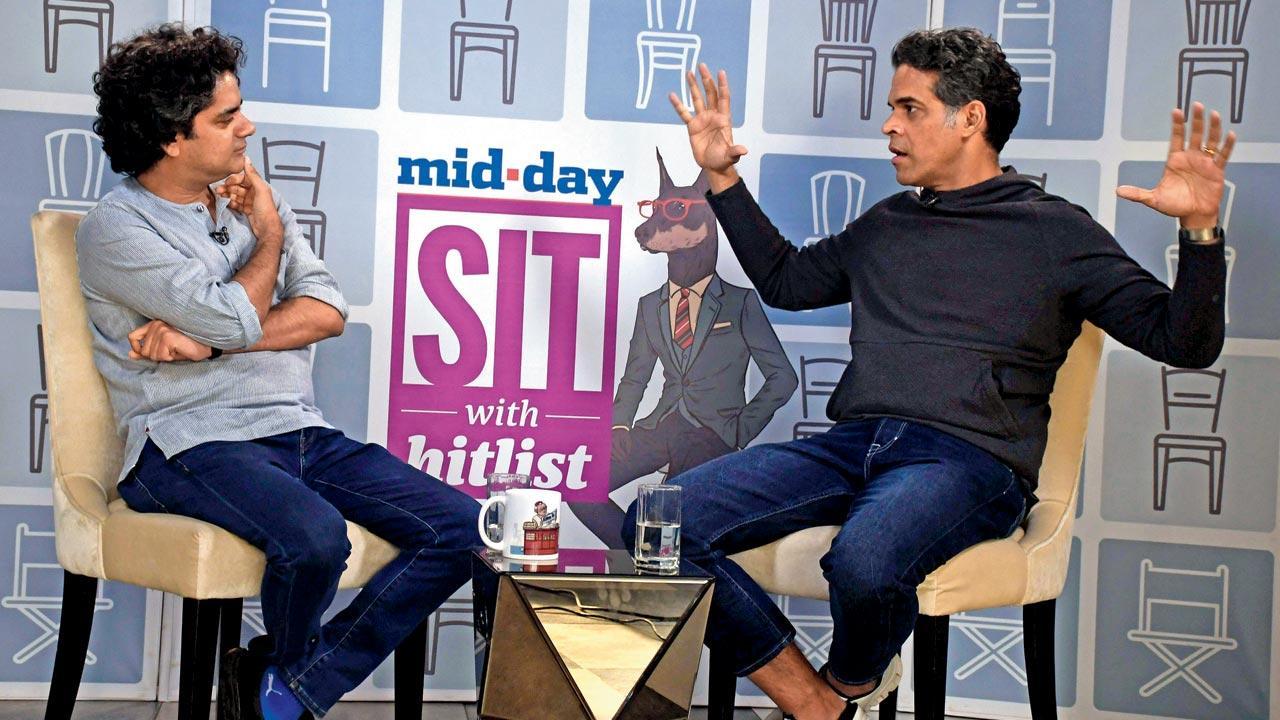
Vikramaditya Motwane joins Hitlist editor Mayank Shekhar for the latest edition of Sit with Hitlist. Pics/Ashish Raje
Motwane, on the movies — from Udaan (2010) to Jubilee (2023), both near-masterpieces!
Mayank Shekhar (MID-DAY; April 27, 2023)
At age 25, Vikramaditya Motwane was set to direct Amitabh Bachchan for his debut film, Bombay Talkies. It’s about a great filmmaker making his return to the sets after years. And what all had changed about Hindi cinema, including stardom, in the interim. Bachchan was going to play this aged director — think of him as Hrishikesh Mukherjee, who was alive then, he says.
The star in the movie, I’m guessing, would have been an arrogant, prick type. Motwane found it impossible to cast a lead actor for this part. Which is why the film never got made. Until then, Motwane had extensively assisted Sanjay Leela Bhansali. Which, firstly, explains the access to Bachchan.
We only wondered about it because of the title, Bombay Talkies. Which is what his latest series, on Amazon Prime Video, Jubilee, is modelled on. Namely, Himanshu Rai’s (Prosenjit Chatterjee) state-of-the-art film studio in the 1940s, along with Devika Rani (Aditi Rao Hydari), down in Malad, in Bombay.
And which once had in its payroll stars like Ashok Kumar (Aparshakti Khurana), Raj Kapoor (Sidhant Gupta), Dilip Kumar, Madhubala… All these characters have been heavily fictionalized, of course. And Jubilee itself has no relation to that Bachchan script.
It’s actually a mammoth exercise in world-building, without the filmmaker getting overawed by it — sticking to drama and storytelling still. While so classical in its production design and shot-taking, it isn’t placed wholly inside a filmy bubble either. So many such films/series consciously tend to be — including the best ones, like The Offer (on the making of The Godfather), or Mank (on Citizen Kane).
It isn’t full of the usual exaggerations that naturally come with surveying showbiz either — take the best film on contemporary Bollywood, Luck By Chance, for instance.
Jubilee captures the real world around it, equally. Whether that be the bloody Partition, or the Cold War. Once you buy into this world — and it takes a while, perhaps fourth episode onwards — we know no other Indian series that progressively gets better with every minute. It may even age better with time!
Also, it’s to do with the dialogue. Compare it to Mira Nair’s A Suitable Boy, from the same time-setting. It sounds so coy, because they’re too obsessed with the period. Motwane says, “We wanted the language to be accessible. The language may not be completely correct to the period. But it’s not incorrect.”
“No one can point out and say, people needn’t speak like that. In fact, somebody’s criticism, which was actually funny was, ‘Gaaliyaan uss waqt kab hoti thi (When did people use expletives so much?)’ Gaaliyaan picture mein nahi hoti thi (Actors didn’t abuse on screen). That doesn’t mean people in real life weren’t abusing. Of course, they were.” For all its grandiose scale and sharp, layered storytelling, you come off Jubilee, exhaling, “Madan Kumar, behn****!” Isn’t it?
Motwane recalls the idea really took off in 2016: “What if we did our own definitive story of the Indian film industry, from the ’40s and ’50s onwards — the behind-the-scenes, the producers, directors, actors, press, all that sort of stuff coming together. This could be a season, or multiple seasons. Atul [Sabharwal] wrote a cracking pilot, Amazon loved it, and suddenly we were off in the races.”
It took seven years to see the light, because Motwane got busy with Sacred Games for Netflix, shortly thereafter.
If Jubilee does go through multiple seasons, leading up to Bombay cinema, late ’90s onwards as well, there will be few filmmakers more qualified to relive the times than Motwane.
On one end is Bhansali, who he was the chief handyman for, on Hum Dil De Chuke Sanam (1999), and Devdas (2002), that he represented at Cannes, along with the director. At the other end is filmmaker Anurag Kashyap, who he’s partnered with since the unreleased Paanch. There aren’t more separate filmy worlds that you could belong to simultaneously in Bombay!
Bhansali and Motwane’s mother once ran an advertising production house together. He first met Kashyap on the sets of Deepa Mehta’s Water, where his job as the “wrangler” was to ensure the procrastinator Kashyap, as all writers are, delivers dialogues on time — not an easy task!
“Anurag’s wife, [editor] Aarti [Bajaj], his ex-wife now, was with me at XIC [Xavier Institute of Communications], when we were doing a film production course in 1994-95. Anurag had done the same course a year before that. He says I met him then. I have no recollection of this.”
Also, few directors own a CV as varied as Motwane’s — so far as filmmaking departments go. What all has he been credited for? Let’s start: Sound design? “Yes, for Devdas, and Paanch.”
Choreography? “Directed songs for Paanch. For Water as well. Well, choreography is a broad term. Because there was no dancing in Water. Deepa wanted me to help her with songs, because she felt I had a better music sense.” Acquired from Bhansali, one’s guessing.
Okay, cinematography? “Short films: Shaanu Taxi, Midnight Lost And Found.” How about acting? “Acting in cameos in certain places, which I am not very proud of.” Like, Kashyap’s No Smoking (2007)? “Yeah, everybody sees me in No Smoking!” What’s left, production design? “No, I don’t like that part.”
Yet, in terms of capturing the fuller gamut of Bollywood, his most uncanny credit might well be as the writer of a film by director Vivek Agnihotri, titled Dhan Dhana Dhan Goal (2007).
No, seriously, how did that happen? “So, UTV was producing this film. Vivek had approached them. He said he had this story idea about football. He wanted a really good writer. They called up Anurag, who said he doesn’t know anything about football. But he knows this guy, who knows everything about football. So, they approached me. I have loved this game since I was eight years old. I said, let me write you an original script instead.” What, they gave him a DVD to rip? “Something like that!” Something like that, as in?
“So, well, I wrote the script. But the film that got made was not exactly the way that Anurag and me, to put it mildly, kind of wanted. I liked the time though. Beggars can’t be choosers. We got paid for the work, and that was more important than anything else. I still believe the original script of mine is one of the best things I have written.”
Motwane’s first script to be made into a film, after Bombay Talkies got aborted, of course, was the near-masterpiece, coming-of-age, Udaan (2010), that went straight to Cannes in the prestigious Un Certain Regard section, where he was competing against, among others, Jean Luc Goddard: “That was really trippy!”
It’s set in Jamshedpur (now in Jharkhand), about a boy who finishes school with ambitions in arts and poetry, but is forced into the mundane, by a disciplinarian father, who brooks no dissent.
It’s almost the opposite of Motwane’s own life, since he was actually driven into the media world, because his mother needed help with a TV show she was producing for teenagers. He was a teenager then, chilling all day in the Mithibai College canteen.
What did he even know of a strict boarding-school or small-town life, let alone the Tata Steel township, Jamshedpur, to get it so right with Udaan, we wonder. Motwane says Udaan was originally set in Nashik, in his head, because that’s a similarly industrial, small-town he knew, since his father owns an audio-equipment factory there.
“They live in nice little bungalows. The town is very organized. So, I wrote it as a generic place, in fact. Because I knew that world. I could not write in Nashik. It’d be too close to home. And I didn’t want it to be that. So, I wrote it like a Ghaziabad or Faridabad kinda set-up — outskirts of Delhi, where the family lives. The boy sneaks out, comes into Delhi-proper, to party and stuff.”
And then he handed the script to director Imtiaz Ali: “Imtiaz read the script and he’s like, ‘You know what, just take a train, go stay with my family in Jamshedpur. Have a look. I am reading this, and I can see those streets.’ I was going to cast Imtiaz’s younger brother, Sajid, in the lead, at that time. This was 2005.”
“Sajid and I hopped on to a train, went to Jamshedpur, spent four to five days with his family, saw the place — this was perfect! I moved the film to Jamshedpur. The film finally got made in 2009, which is also great, because by then, the viewership had changed; audiences had changed. In 2005, multiplexes were still not what they were by 2010, when we did the film with UTV, with a 225-screen release, which is a big deal for a small film.”
Kashyap produced Udaan, post the commercial success of Dev D (2009). This also means the original lead actor, Imtiaz’s brother Sajid, would have passed his teenage by then. Young Rajat Barmecha was brought in for the Holden Caulfied type protagonist. The homework Motwane gave him was “the literature I’d read growing up, movies I’d watched — 400 Blows, Richard Price’s books, and a lot of things that come into Catcher in the Rye…”
The directorial career that Motwane scripted for himself after Udaan is indisputably marked by a range that’s hard to match — going from a period piece (Lootera) to super-hero (Bhavesh Joshi Superhero), a one-man survivor drama, set in a building, suggesting the dystopia of cities (Trapped), to the ultimate Mumbai-mafia sweeping-epic (Sacred Games), that he was the showrunner for — first Indian to hold that title (in case Limca Book of Records is interested in listing!).
The leaps are so wide that it piques your interest to know what inspired each film, since none suggest self-expression alone. Firstly, where the heck did AK vs AK (2020) come from — a meta movie that firstly defies genre, about a director and actor playing themselves. The director turns rogue, kidnaps the actor’s daughter, to film in real-time, what happens next! Wut?
“It’s just such a great one-line idea. Which is what excites you most. As a young filmmaker, you fight the fact that the idea of your film should be encapsulated into one, single line. As you grow older, you realise that one, single line is what drives you forward. Writer Avinash Sampath, who’s now become a good friend of mine, sent the script to us. He’d written it for Aamir [Khan] first. I was sure Aamir is never gonna do it, so let’s not even try!
“There is Akshay Kumar, who we did approach, and it was a very interesting meeting — I mean, he didn’t sort of outrightly say, ‘Get out of my office,’ but it was close enough! For a while, I was making it with Shahid [Kapoor], which kind of happened, and then it didn’t. The [actor] AKs kept changing. The [director] AK, that is Anurag Kashyap, was a constant. He’s a fantastic actor.”
Well, Kashyap says he sucks at acting! “I think he is fab. In fact, everybody on the AK set was talking about Anil Kapoor. I think Anurag, especially in the last scene, is incredible. You actually tear up, when shit happens to him.”
Okay, how about Lootera? It’s practically a Bengali film! “Practically. And that [part is all Satyajit] Ray. I wanted to do a thriller, with a love story in it, as opposed to a tragic love story. Our first trailer got it right. And then there became a problem with the pitching to the audience. People were expecting to watch this epic love story. And they probably went, ‘Hang on a second, this is not that!’”
Maybe because he plays with such diverse subjects —you sense that probably puts Motwane in a more objective position to judge his own work in hindsight — most think of their films as so much like their heart’s outpouring, that it’s hard to discuss it with them, without fawning over with delight. Consider Motwane’s take on Bhavesh Joshi Superhero (2018).
While he loves the film the way it is, immensely, he says, “I’ve never said this publicly, but I think Bhavesh should have been a woman. As in, Siku’s character should have been female. [Firstly] the world thinks there’s a guy, who turns out to be a girl. When she unmasks, you go, ‘What the f***’.
“Also, then the film is not about a friend, saving a friend, in terms of the Ashish Verma character. He is actually deeply in love [with the female superhero], but has never been able to tell [her that]. The conflict is way deeper. The layers get more interesting too.”
As for reasons for smoothly jumping styles and genres, where each Motwane movie is unrecognizable from the other — unlike a subtle or strong voice/style that laces through most auteurs; think Bhansali, Kashyap — the impetus is quite simple.
“It’s the excitement of trying something new. So, Jubilee is exciting, because it is something I have never done before — a classical style of storytelling, 10 playback songs, and all that stuff — the fact of telling a specific story, in the form that is most suited to it. I feel that the film is always the boss. I am not.”
Motwane says his forthcoming film is titled Control. It’s a ‘computer-generated’ movie, flitting between screens, centred on an Instagram influencer: “Again, it is a cyber thriller, it is new. I get excited by it. And you learn. Every film is an audition for the next one, having learnt from the last one!” That said, surely, if one looks deep enough, they’ll be able to spot a personal thread.
Take Jubilee, for that matter. Consider a character called Jotwani, a film businessman, who shows up in it. It’s unclear exactly what he does in the movies. Maybe there is some association with working with sound or audio equipment. That’s precisely what his paternal family dealt with.
If you go through any archival footage of public rallies of politicians from the ’50s, or pre-independence vintage, the most common brand-name you’ll notice is Chicago Radio, that’s attached to the microphone.
That company was started by Motwane’s great grandfather. His grandfather thereafter also once produced a film: “It was called Andolan, in 1949, with young Kishore Kumar in the lead. It was a film about the freedom struggle. It didn’t do well, which is why nobody in the family talks about it. Because I think the family lost a lot of money on it.”
You also see the Sindhi refugee camp in Jubilee. Given his own Sindhi lineage, we wonder if there is a personal history to it as well? “So, my family didn’t have to make their way during Partition. We were already here from the 1930s. The business was already set up. But for a while, my family house in Khar was a refugee camp. I have seen photographs. People were also demarcated into tents in garden-area or permanent structures, depending on the social status of the refugees.”
Motwane says he learnt of his family’s film lineage, only much after he became a filmmaker: “Nobody tells me anything! Now, I’m the family archivist.” He’s named his production company, Andolan, after his grandfather’s maiden and only production.
AK vs AK and Jubilee are Andolan productions. Of course, the more famous production company he’s been associated with is Phantom Films, which shut down, following allegations of negligence, dealing with a sexual harassment case against one of the partners, Vikas Bahl, in 2017. Prior to that, it was a company rolling out quality films after another.
We recall an interview about Phantom, where Motwane compared it to Pixar, in terms of credibility and ambition: “Very ambitious! Peak-Phantom was something else. Eventually, we would have all perhaps gone our own ways, anyway. Maybe running our own companies under the umbrella of Phantom as the larger studio. It was an unfortunate end to what was a good journey.”
“Interestingly enough, I actually met Tanmay Bhat and Rohan [Joshi] and we were talking about how peak-AIB and peak-Phantom happened at the same time. Some great stuff went down.” The comedy collective, All India Bakchod, similar to Phantom, folded up, following a #MeToo storm.
Is there anything that Motwane thinks they could have done differently over the workplace sexual harassment issue? “Externally, we could have [handled it better]. But again, this is in hindsight. If you’re going through something you haven’t before, you may not know how to handle it. From a professional, empathetic and personal point of view — I am saying all three — we could have done better.”
While this is obviously the first time Motwane has been on Sit with Hitlist, our long-form conversational series, it does occur to me that he’s regularly mentioned in chats with other guests. With Kashyap, of course.
The last one was with actor Abhay Deol. As it turns out, Motwane and Deol were buddies in school: “He used to invite us over to his house to watch movies.” Isn’t that a close enough Bollywood connection for someone who claims to have grown up far removed from showbiz in general, with no practical understanding or ambition to enter films as such?
“But it’s a movie star’s house, ya. That way, Abhishek Bachchan used to be in my school [Jamnabai Narsee] for a couple of years. His cousin Namrata is a close friend. I have been to Abhishek’s birthday parties in Madh Island, where [Amitabh] Bachchan made an appearance. This is peak-Bachchan, in 1984. You are seeing the hero of your dreams, standing in front of you! He’d come off the set, wearing boots. We hero-worshipped him, and I’d gone to Dharmendra’s house to watch movies. There used to be a badminton court. Maybe it’s still there. We were like, wow, Dharmendra plays baddy here!”
As for Abhay: “It’s when he returned from LA that we became close. Because when he came back, we shared an interest in the same kind of music and movies. We were hanging together, and writing some stuff together.
“We worked together on [the script of] Dev D, and on a couple of things before that. I was actually in the room, when Imtiaz [Ali] narrated to him Socha Na Tha [his debut film]. So, yeah, that historical moment happened in my presence! We have tried a couple of times [to work together] and then it just has never happened, and then we have sort of given up.”
The other time Motwane figured similarly, in conversation, was with Saif Ali Khan, who was rather salty, we have to say. He wholly trashed the second season of Sacred Games altogether — speaking about how a friend and him had popped a champagne to catch it together at home. A little later, they just shut off the frickin’ TV. Rather harsh!
“But that’s Saif. You can’t hold a grudge against things he says. He speaks his mind. That is exactly the way he is. I totally love him for that. You can say things back to him, and he will take it. He respects that. We respect him.”
That said, Sacred Games season one (S01), that Motwane put together for Netflix, based on Vikram Chandra’s tome of the same name, was incredibly received. While Netflix seldom shares its viewership numbers, they were quick to point out that two out of three viewers of Sacred Games came from outside India — making it truly the first Indian global show.
What one noticed was the sheer audacity of the characters. Again, the world-building. And just the use of uninhibited, uncensored visuals, language, grime, grit, and the madness of Nawazuddin Siddiqui’s Gaitonde, opposite the vulnerability of Saif’s Ali Khan’s Sartaj.
And then, whatever happened to Sacred Games in the second season — the thriller lost its sheen, veering into spaces so separate from the first. For all the criticism its way, it was hardly the ghastly season it was made out to be. Just not close enough to the first.
Motwane admits, “I think what happened with Sacred Games is that on S01, we had the luxury of time. Once Netflix said, okay, fine, we are going to do it — we got about a year to write the stuff, before starting shoot. I just wanted to do it without any assistance. I wanted to create a writers’ room, come together, make it without having to say, ‘Oh let’s get some firangi to come in and guide us on how to do this, because we’ve never done it before!’”
“What happened on S02 was that we had to turn it around in 12 months! So, while I was almost in the middle of shooting [S01], there is already the idea [that you have to start to work] on what to do with S02. While I was on post-production, the writing was actually happening. By the time I’m free to be able to get far deeper into [the writing of] S02, it’s too late for me to make my presence felt.”
“In the way that I wanted to make it felt. Which is not to say [there’s] anything wrong with the writing. It’s just that, okay, it’s not mine. It has gone in a different way from what I would have done.”
Time, Motwane says, is what he had the luxury of, with Jubilee (2023; seven years). As with Udaan, of course (2010; five years).
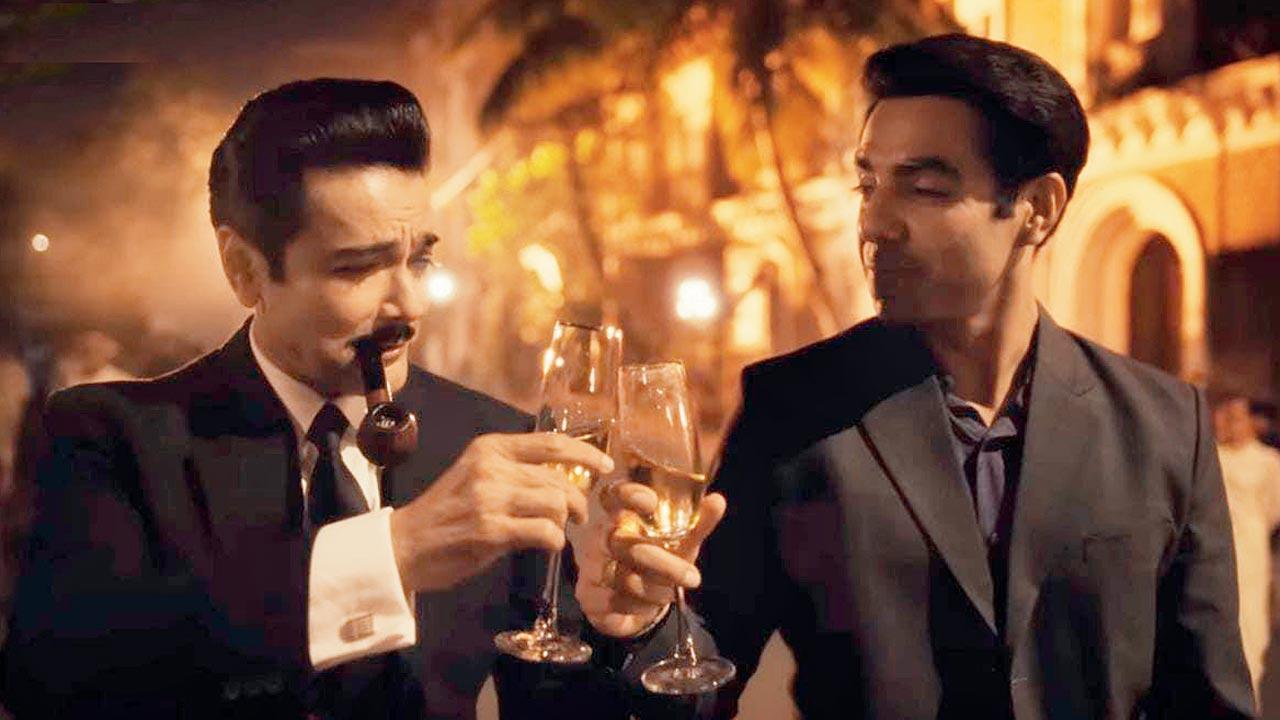
It took me two years after my debut film, Udaan, to even understand how this industry really works-Rajat Barmecha
8:06 AM

Hasti Doshi (BOMBAY TIMES; December 1, 2022)
Actor Rajat Barmecha, who grabbed the spotlight 12 years ago with Vikramaditya Motwane’s Udaan, has today, found a foothold on the digital platform. Bring up the dozen years that have passed since his debut, and he says, “The journey has been productive. I have made two parallel journeys — one was personal and the other was professional. On the work front, I admit I faced several ups and downs; it was like being on a roller coaster. It was a different world when I entered show business. It took me two years after my debut film, Udaan, to even understand how this industry really works. When I look back, I do feel that I could have done things differently. And yet, I wouldn’t like to change anything about what I’ve experienced so far. At a personal level, I have experienced growth and maturity. From the raw energy of absolute youth, when I used to get intimidated by people and things around me to now, I’ve become more confident, composed and self-assured.”
After making a notable debut, the actor’s career took a long pause before the OTT space rebooted it. Rajat, who has been part of web shows such as Love Lust And Confusion, Girl In The City and Hey Prabhu! adds, “The industry is very different now,” reasons the actor, adding, “Earlier, producers were not ready to invest as much money on a newcomer, who was all of 21. It was less about a story and more about the actor. People have now begun to focus on content. Makers want to experiment and work with newer actors. It’s the perfect time to be an actor. In these years, I don’t feel that I’ve lost anything. These years only prepared me better, so I can take on more work and deliver some promising performances. I was offered some work, but I turned it all down because it didn’t work for me. If I had become successful 10 years ago, I probably would have lost myself about five years after that. Things are in an upswing now, probably because I can now handle it. I’m excited about the project I’ve recently completed. I’ve worked on a few web shows and I wanted to get back to films, which is also gradually taking shape. I just hope people like what I deliver.”
----------------------
Udaan actor recalls spending additional hours on cricket ground to nab sport he wasn’t well-versed in, for new role
Hiren Kotwani (MID-DAY; December 1, 2022)
While an opportunity to play a cricket professional is one that most Indian actors would latch onto without apprehensions, Kacchey Limbu actor Rajat Barmecha admits to exercising caution while taking on the film. “I am not a cricket enthusiast, and was not good at the game,” admits the actor whose character is meant to be a superlative cricketer.
“While [co-actors] Radhika Madan and Ayush Mehra also had to learn the game over 45 days, my character had to look technically sound. So, my coaching sessions would begin an hour or two earlier than theirs, and would end later too. Often, I wasn’t afforded the off-days that the others were. Before the training, I didn’t even know what cover drive and square cut were. Today, of course, my game is significantly better.”
Shubham Yogi’s directorial debut, which premiered at the 47th Toronto International Film Festival, is headed to the World Film Festival of Bangkok on December 3. Subsequent screenings will be held at the International Film Festival of Kerala on December 12 and 14. “It is great for a small [budget] film to come out and travel to various festivals. Consequently, the festival round gives the movie a much bigger platform and reach, back home,” points out Barmecha.
He concedes that ahead of the TIFF premiere, he was uncertain about a foreign audience’s reaction to a film about cricket. “But, it was wonderful to see that people were reacting to every [emotion]; they even reacted to a scene that was a commentary about an issue.”
In India, except for Dil Chahta Hai, we have never had an authentic backpacking film-Rajat Barmecha
8:23 AM

Neha Maheshwri (BOMBAY TIMES; September 12, 2020)
Rajat Barmecha, who was noticed for his acting debut in Udaan (2010), is now exploring other creative aspects of filmmaking. He has penned the script of a film, which he claims will be India’s first backpacking movie. In a chat with BT, he talks about the inspiration behind his script. Excerpts...
While you have had outings in the digital space, one has not seen you on the big screen for a long time. And now, you have penned the script for a film. Tell us about it...
It’s a travel film. In India, we have never had an authentic backpacking film. Yes, we have had an iconic movie like Dil Chahta Hai (2001), which is about three friends who travel to Goa, but that’s about it. Anyone, who has heard or done backpacking, will completely relate to this film.
How did this story come about?
For the first year after Udaan, there wasn’t much happening, and things didn’t shape up the way I had expected them to. During that time, I saw a film called Into The Wild. It motivated me so much and made me realise that there is life beyond just cinema, work and money. So, I started backpacking solo. This was in 2015, and since then, most of my trips have been solo. The script comes from personal experiences — the people I have met, and the stories they have told me.
What inspired you to give writing a shot after acting?
The credit for it goes to Vikram’s (Udaan director Vikramaditya Motwane) mom, Deepa aunty. After the film, whenever she would meet me, she would ask me, ‘What’s happening next?’ And I would tell her that while I was getting offers, nothing interesting had come up. So, she told me, ‘If you can’t find the work that you are looking for, create it for yourself’.
Have you finalised the cast for your film? Will you act in it?
At its core, this is a love story. I would like to essay the lead character, because I created it for myself. The girl opposite me has to be a foreigner because that’s the demand of the script. I have a couple of Spanish actors in mind, but I haven’t approached anyone yet. I am in the process of registering the script, which has been delayed because of the pandemic.
People, from distant relatives to the media, wanted to know what I was doing next-Rajat Barmecha
8:26 AM

Rajat Barmecha, the wonder boy of Udaan, reveals that backpacking around the world for five years helped him deal with lack of film offers
Ankita Chaurasia (MUMBAI MIRROR; July 2, 2020)
 Seventeen-year-old Rajat Barmecha came to Mumbai chasing fame, success, and money. Within six months of landing Udaan, filmmaker-mentor Vikramaditya Motwane had him hooked on world cinema and acting. His turn as a boy torn between an angry father’s expectations while still nurturing his dream of writing, fetched him rave reviews, along with invites to every award ceremony and Bollywood party for the next year-and-a-half. “Everywhere I went, I was being complimented for my performance. As a 21-year-old actor, it gave me hope. I read every script that came my way, but they were all mediocre, formulaic films or those in which I was there throughout, but added no value. I couldn’t afford to do a bad film because then, I’d be written off as a one-film wonder,” points out the actor, who eventually stopped attending events. “People, from distant relatives to the media, wanted to know what I was doing next.”
He received high praise from the likes of Amitabh Bachchan, Shah Rukh Khan, Priyanka Chopra, Anushka Sharma and Ranbir Kapoor, along with some A-list filmmakers. “But on the red carpet, those with no project to their name but coming from a film background were clicked more than me, while the producers who had praised my work earlier, did not recognise me,” he grouses.
Desperate for money, Rajat then started taking up offers which he didn’t particularly like and was beginning to feel lost in this jungle, when in 2015, he happened to watch the Emile Hirsche-starrer 2007 Hollywood biographical adventure drama, Into The Wild. He started travelling, too, and slowly got out of the dark phase. After five years of backpacking around the world, he decided to script a film he would be proud to be a part of. “Vikramaditya sir’s mother, Deepa aunty, who was the executive producer of Udaan, had once told me, ‘If you don’t find the kind of projects you want to do, make them.’ Her words had stayed with me, but I didn’t want to make something I wasn’t sure of,” Rajat recounts.
A raw and real travel film finally prompted him to turn writer. “I started scripting last year, but was being lazy. The Coronavirus lockdown gave me ample time to complete it. After I register the script, I will share it with Vikramditya sir and a few other friends,” he reveals, adding that he will play the lead in this love story with a foreigner opposite him.
Love Sonia has been a tough journey but definitely worth it-Tabrez Noorani
8:06 AM
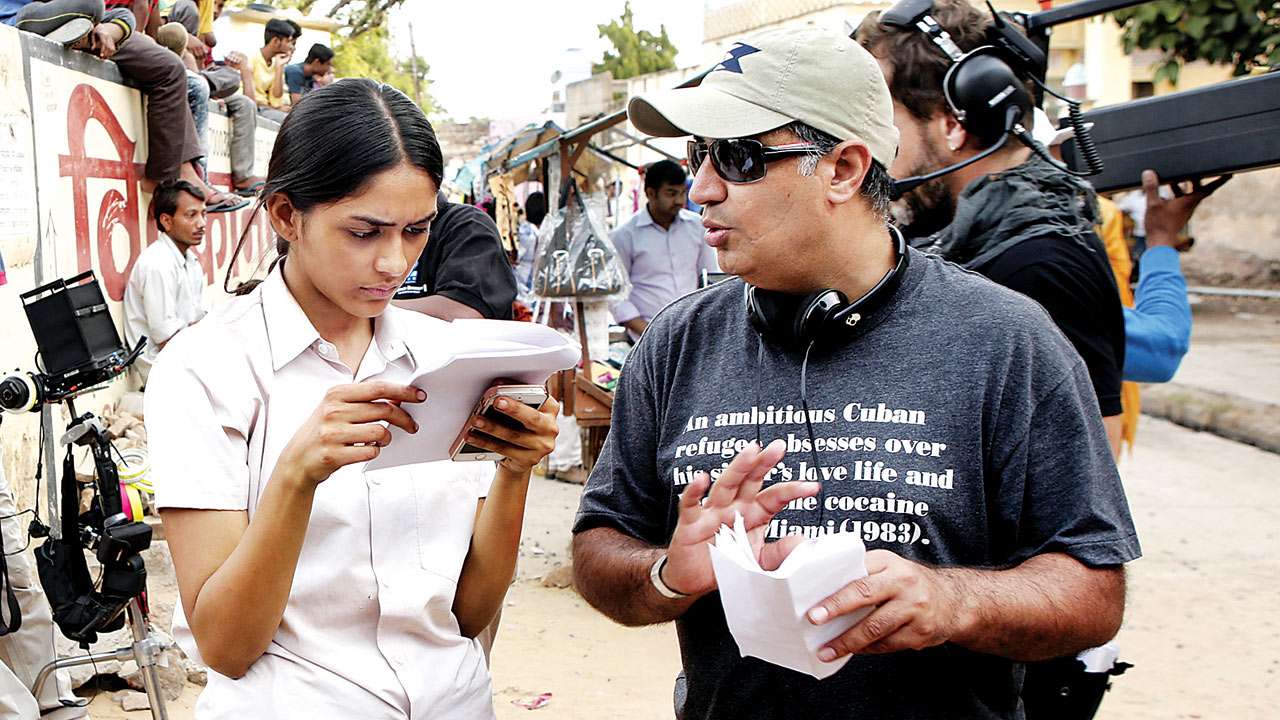
Dhaval Roy (DNA; September 15, 2018)
Love Sonia has just released in India and its director Tabrez Noorani is excited to bring the tale of human trafficking to a wider audience. “It’s like the line from Life of Pi (2012) — ‘The story’s yours now’. This one belongs to the viewers and I am making them a part of the journey that may not be an easy one,” he says. However, the Hollywood producer (Slumdog Millionaire, 2008; Eat Pray Love, 2010 and more) and now debutant director hopes that cinegoers will leave the cinema hall with hope and a ray of light after seeing the courage of the characters and real-life survivors. The filmmaker talks to us about the challenges of making the movie and more.
The idea of Love Sonia believably germinated in 2003 when you worked towards rehabilitating human trafficking victims. What took the film so long to make?
It’s taken a lot of time for various reasons — the tough topic, money, casting and not having stars attached to the project. We ran into a wall because there was no one to fund a movie about human trafficking at that point of time. We wanted to be in the business with the right people and not someone who would exploit the film. So, I refused to compromise and let someone milk the situation. We also had to be extremely careful that we were respectful to the victims and honest to the subject. After all, these were girls I have known and helped rehabilitate. So, it’s been a tough journey but definitely worth it.
Tell us about casting for the film...
I had to chase Richa Chadha and Manoj Bajpayee both. Richa didn’t know me from Adam and I refused to do a script narration because I don’t know what that means. I sent her a draft and she wanted to make sure that the one she read was the same that I would make. But once we started talking, she became more confident about me as a filmmaker and then she took the script to another level. I just got extremely lucky that everyone came on board.
Didn’t you feel the film was getting too delayed?
I’m glad I didn’t make this earlier because the research continued and I kept developing the characters. After the first season of Sense8, I decided to stop producing and focus on this project.
In spite of having produced a number of big Hollywood flicks, why didn’t you venture into direction earlier?
I wanted to debut with this film. I believe for your first outing you need to make something that you feel passionately about. I had other offers, but I felt anyone else could have directed those films but no one could have done this one.
With realistic cinema, filmmakers can often get self-indulgent. How did you ensure that didn’t happen with your movie?
Yeah, self-indulgence was one of the biggest concerns for me. And that’s why I had members of the NGOs as well as trafficked girls on the sets in Los Angeles, Hong Kong, and India. Survivors were also involved in the scripting and editing processes and we made a conscious effort to not exploit the exploited. Once both parties saw the film, it was a validation that we navigated the land very well.
With many so-called parallel films doing well in India these days, do you think it’s a good time for stories like Love Sonia?
Absolutely! I think the audience here has been more open to different kinds of films of late — more than they were, say, three to five years ago. India is making such fantastic cinema, whether it’s a large film like Padmaavat (2018) or a low-budget one like Titli (2014). People here want to go see Stree and a Gali Guleiyan releases at the same time, too.
Which films have impressed you of late?
I thought Titli was an outstanding movie. Udaan (2010), Masaan (2015), Anurag Kashyap’s works, and the Marathi film Fandry (2013) were quite impressive.
What’s next? Would one have to wait too long for another film from you?
Hopefully not. I’m working on two films and they will be very different from this one.
Apart from human trafficking, is there another cause you’d like to make a film on?
That’s an interesting question, but I haven’t thought about it. Anyway, this work won’t end after the release of the project. Trafficking is a massive problem all over the world and I can do anything to help tackle it — even if I have to disguise it in the form of a movie, I would do it because down the line, it will create awareness.
Phantom is working on a horror slate right now-Vikramaditya Motwane
7:46 AM

Director Vikramaditya Motwane on Phantom’s upcoming films and revisiting his debut drama
Sanyukta Iyer (MUMBAI MIRROR; July 20, 2017)
After Mirror ran a story on April 6 about a young woman working at Phantom Films, alleging that she was supposedly molested by Vikas Bahl, director of the highly acclaimed Kangana Ranaut-starrer Queen, the events at Bollywood’s hipster film production company revealed a sordid murkiness. And even though Vikas denied the reports, rumours had been rife that it is only a matter of time before the Phantom quartet — Vikas along with filmmakers Madhu Mantena, Vikramaditya Motwane and Anurag Kashyap — which co-founded their banner in 2011, disbands.
However, Udaan and Lootera director Vikramaditya says that Phantom is very much in the business of making movies, and is looking ahead at multiple upcoming films. “Phantom is working on a horror-specific slate with Blumhouse Productions and Ivanhoe Pictures this year and we have already gone into production with the films. It’s something we are producing at the moment for sure,” he says.
Looking at India’s growing craze for the genre, the multiyear partnership had been struck with Jason Blum, the producer of acclaimed Hollywood horrors, Paranormal Activity, The Purge, Insidious and Sinister, in September 2014, which included at least 10 films over the next five years in local languages. “I’m producing these films for now, and I would love to direct a horror under the banner too. I love horror films because they’re a great challenge with the casting. It’s all about the timing and how to get the scares,” the writer-director says.
This week also marks seven years since the release of Vikram’s debut drama, Udaan, which picked up a whopping seven awards at the 56th Filmfare Awards. Prod him on whether there’s a sequel in the pipeline and Vikram says that he has an idea and will revisit it with a script soon. “It will be a continuation, 10-12 years after the original ended. I always thought I had so much time to start writing Udaan 2, and now I realise that seven years have flown by and I’ll have to get to it,” he smiles.
On July 22, his last release, the critically-acclaimed and box-office success, Trapped, featuring Rajkummar Rao as the claustrophobic hero of the survival-drama, is having its world television premiere on &Pictures. And Vikram, who didn’t have to make any TV friendly cuts to his U/A release, is excited about the responses the film could receive. “At a cinema hall, there’s a claustrophobic vibe but when you’re watching Trapped in your own house, I hope the viewer is able to tap into the familiarity of the situation, looking at the door constantly and checking if it’s got locked. That would be pretty damn scary!” he says, adding that the film has great potential for a franchise and he is eager to receive scripts to develop the film into a series. “Trapped was a challenging project and there’s no extravagance anybody can bring to it. But with more dream sequences, and taking it outside a flat and into an airport or a jungle can take the whole scale of the film to a completely different level. An urban Cast Away-like franchise,” he says.
I told my mom that Ronit was doing sleazy films, wearing just a chaddi-Rohit Roy
7:55 AM

The actor-director siblings have had chequered careers. While Ronit Roy has revived his film career, Rohit is hoping to build a new one behind the camera
Kunal Guha (MUMBAI MIRROR; April 30, 2017)
At present, the Roy brothers are in a “comfortable space”. Apart from being one of the biggest names in the television industry, Ronit has been praised for his performances in critically-acclaimed films such as Udaan, Ugly and Kaabil, while Rohit has refashioned himself as a filmmaker and will helm the next Sanjay Leela Bhansali production.
Growing up in Ahmedabad, Ronit had earned the moniker ‘Kumar Gaurav of Ahmedabad’ but Rohit remembers him as the most flamboyant man in town. “You need money for that. I was only an extrovert,” says Ronit, before he is corrected by Roy junior, “You can be Jackie Shroff from Teen Patti, so you can be flamboyant without money.” He also adds that his elder brother also had the reputation of being a “quintessential naughty boy”. “If I got into a scuffle in Ahmedabad and they came to know I was Ronit’s brother, they’d run away,” he says.
Rohit, who was preparing for his MBA when his brother bagged his feature film debut in Jaan Tere Naam (1992), remembers visiting him during a song shoot at Andheri Sports Complex. “He was in swimming trunks and the actress was in a ridiculous purple bikini and they were jumping in and out of the pool. I returned home to tell my mom that her son was doing sleazy films, wearing just a chaddi.”
Ronit signed 40 films following his debut, “of which, 25 producers never showed up, 15-16 went into production, 13 got made, half didn’t release and the ones that did, flopped.” He continues, “I wanted to be a hero when I came to Mumbai and all the trappings that came with it — big house, big car and girls running after me. I got all that with Jaan Tere Naam and then I lost it too. Now, I want to become an actor, and not a star,” says Ronit, who will be next seen in Sarkar 3. “May be, I signed the wrong films. When you’re 26, you don’t know any better.”
Ronit, who won a Filmfare Award for his performance in Udaan, eventually turned to television as a means of keeping his acting career alive. He began with a show opposite Bhagyashree before Ekta Kapoor cast him in Zee TV’s Kammal in 2000 and later in Kasautii Zindagii Kay and Kyunki Saas Bhi Kabhi Bahu Thi in 2002. “I was initially paid Rs 2,500 a day. I felt that if I could make Rs 50,000 a month, it would pay for food, rent, alcohol and mobile bills.” Instead, Ronit became an overnight primetime success. From 2002 to 2010, he worked on a minimum of three TV shows every year and “couldn’t spare time for films”.
Rohit, who admitted to scoffing at his brother’s profession initially, was left adrift when his US visa was rejected in 1992. Prior to his entrance test at Symbiosis, Pune, a chance meeting with Kunal Kapoor, an advertising maverick then, resulted in a move to agency life and he reluctantly strayed into modeling too. “Anant Balani, who had made Patthar Ke Phool, saw my photographs, which were terrible, and called me for a screen test, which was even worse. But he liked it and that’s how I got my first film with Suchitra Krishnamoorthi called Jazbaat which never released,” says Rohit.
A year later, Rohit shot to fame with his TV debut in Swabhimaan. “I was rejected during my audition by Shobhaa De, who wrote the show. She felt I was ‘too MTV’ to play Rishabh Malhotra. She wanted someone like Mohnish Behl, but younger. Later, Mahesh Bhatt, one of the makers, spotted me while going through the rejected auditions, and because of my red jacket he placed his bets on me,” he says.
The Roy brothers’ up and down relationship with success caused some problems for their mother too. “During Swabhimaan, when Ronit was totally out of work, people would tell my mother, ‘we saw the show, but bada beta kya kar raha hain?’ Then, the same phase came in my life in 2013-2014, and they’d ask her, ‘we watch Adaalat but chota ladka kya kar raha hain?’” Rohit says with a laugh.
These days, Rohit has chosen to get behind the camera because it is something he had “always planned to do” but was also in part due to his stuttering acting career. Rohit says he has made peace with the fact that he is “not a star”.
As it happens, Ronit will be playing the lead in the Bhansali love story that Rohit will direct. The younger Roy shares his first choice for the lead was Naseeruddin Shah. “I hated Ronit’s work in Jaan Tere Naam even though the film made him a star. But when I saw him in Udaan, I cried and then I saw him as the gritty cop in Ugly and I was sure that only he could play the character I had in mind.”
So the next time someone asks their mother what the brothers are doing, the answer will be easy.
Don't call me a festival film director-Vikramaditya Motwane
3:22 PM

Vikramaditya Motwane, on why he will make fringe festival films, but doesn’t want to be identified as a director who does
Aastha Atray Banan (MID-DAY; October 12, 2015)
When Vikramaditya Motwane, a man who got recognised and hailed for the slim-budgeted indie film, Udaan — which went onto pique curiosity at international film fests, and even swept trophies at one of India’s biggest mainstream film awards — says he doesn’t want to be called a “festival film director”, we think that odd. It’s odder still because of the timing. The 38-year-old’s last film as producer was another indie — the 2015 release, Masaan (Crematorium), which received a rare standing ovation at Cannes.
Let’s add another irony. His last commercial, non-festival film, Lootera, starring marquee names Ranveer Singh and Sonakshi Sinha, was a visual treat but declared one of 2013’s biggest flops.
“A ‘festival’ tag, sometimes, alienates your audience. It’s hard for smaller, indie movies. They not only have to be good, but very good. That’s the only way word of mouth will work, and draw people into the halls,” he explains.
It’s a little while before indie movies do well at the box office, if they ever do. It’s a game of “should” vs “would”, he thinks. “Of course, multiplexes should play more of the smaller films, and for longer, but will they? Most probably not,” he says.
But festivals like Mumbai Academy of Moving Image (MAMI) have been ambassadors for small budget cinema. Motwane has directed this year’s MAMI campaign film, which sees film personalities from the industry narrate their connection with the city of dreams. At Phantom’s Oshiwara office, we are discussing why we need film fests to showcase a niche film like Masaan.
Masaan (directed by Neeraj Ghyawan, who assisted Kashyap on Gangs of Wasseypur), although critically acclaimed and a poignant love story played out against the ghats of Benaras, was released in theatres immediately after the success at Cannes, it barely managed to recover costs.
Motwane chooses to laugh in self-deprecation. “We released it in France and Belgium too, but they were having a ‘good’ summer, and so, no one went to the movies. Everyone was at the beach.”
Behind the humour is a lesson learnt and filed away. A sharper budget, a better name could’ve helped. “How do you sustain a marketing campaign for less? How do we distribute better? How can we go bigger internationally?” These are the questions that Motwane and his partners, Vikas Bahl, Anurag Kashyap and Madhu Mantena, of Phantom are asking. Even the cult-classic, Bombay Velvet, made on a budget of Rs 84 crore, proved teacher.
“Research said that people didn't come for the movie because they didn’t like Ranbir’s hair! The trailer was all wrong, too,” says Motwane, bluntly. “And once again, it’s about spending less, always spending less.”
Phantom’s next release, Shaandaar is a masala film with popular names — Shahid Kapoor and Alia Bhatt — set against the big fat Indian wedding. Its over-the-top song picturisation and larger-than-life romance is a fry cry from Masaan’s middle-class setting. It’s a film that the trio hopes will rake in the money to help them continue to “make movies we love to make.” He is aware that what they need is a robust business model. “Of course, you want to make profits, you want to grow with every film. We have realised we don’t want to restrict ourselves to one kind of movie. We want to make movies for everyone.”
And so, Phantom’s indie spirit will continue to glow in Abhishek Chaubey’s next story about the drugs business in Punjab. Anurag Kashyap’s directorial next is, says Motwane, a small film, as is his own, AK vs SK starring Shahid Kapoor.
“With these [indie] movies, you don’t think let's-make-money. Neeraj Ghaywan’s career has taken off post it, and Phantom has grown. Sometimes, the investment return is not about money but brand equity,” he explains.
Motwane is optimistic about the independent film scene. In the last year, Marathi film Killa, Bengali film Labour of Love and Tamil movie Kaaka Muttai have all seen critical success. “It’s been a good year, won’t you say? It will only grow from here,” he says. “You can’t compare them to the big movies like Bajrangi Bhaijaan. But once in a decade, an indie film comes and breaks through that ceiling.” Let’s hope that’s coming soon.
I didn't want to end up as just the poster boy of indie cinema-Rajat Barmecha
7:59 AM

Rajat Barmecha who played a troubled teen in Udaan will now be seen in Warrior Savitri, which he says is a 'commercial film with action and erotica'
Ankur Pathak (MUMBAI MIRROR; April 3, 2015)
 In 2010, the Vikramaditya
Motwane-directed Udaan was unanimously acknowledged as one of the
year's best films. And its 21-year-old protagonist, Rohan, a youngster
who returns home to an authoritarian father after being expelled from
school, played with remarkable maturity by Rajat Barmecha, was
considered one of the most-loved performances.
Four years later, Rajat is back on screen in an unlikely follow-up to his memorable debut that premiered in Cannes. There's no poetry in Param Gill's Warrior Savitri, instead the poster boy of indie cinema has a British topless model, Lucy Pinder, for company. “But I didn't want to end up as just the poster boy of indie cinema,“ protests Rajat, saying that post-Udaan had he accepted all the offers he got, he'd have made a fortune by now. “I've read over 40 scripts in the past four years but none appealed to me.“
 And what about Warrior Savitri appealed
to him? “Param is a friend and he came up with this modern take on the
Satyavaan-Savitri mythological tale. That was what excited me. I play a cool dude from Vegas
and the film has a lot of action, song-and-dance and yes, even erotica!“
he exults.
And what was he doing before Warrior Savitri? Rajat informs that he was doing commercials, short films, reading up and taking vacations. But has he kept in touch with his mentors, Anurag Kashyap and Vikramaditya Motwane? “I don't meet them often but I'm in touch. Anurag once told me to take my own decisions when it came to choosing movies. So I don't consult him before signing a film but he's always there“ he retorts.
However, his brother Vicky has been assisting Anurag on Bombay Velvet and his sister is doing films down South. “My parents will soon shift to Mumbai. I've moved into a bigger apartment. From a family of complete non-actors, we've become a filmy family,“ he smiles.
And what kind of reactions is he anticipating to Warrior Savitri? “I'm doing it after a lot of thought. I have refused films in the past which I felt could damage my career. Good scripts can sometimes make disastrous movies and vice versa. I hope Warrior does good things for my career. Rest is all destiny,“ he says, before adding, “I hope another Udaan comes along soon. If it does I won't refuse it!“
Siblings who wrote Udaan poems direct short film on LGBT community
8:35 AM

Ankur Pathak (MUMBAI MIRROR; June 24, 2014)
"Do ishq ki ijaazat, ilzaam ab hatado... Hum gair hain nahin, Ek baar to jatado..."
(Let love be my right, no longer a crime. Accept us as your own, for cnce atleast)
Satyanshu and Devanshu Singh, the brothers who penned the poems which Rajat Barmecha's character recites in Vikramaditya Motwane's Udaan, are back in the spotlight. But this time with not just a verse in a movie, but a movie.
The duo has directed a five-minute short film, Ishq Ki Ijaazat, which premiered online on Monday.
It revolves around a young lesbian duo, an old gay couple and a transgender with a lover. "We wanted to enter their homes and show the world that they're as normal as the rest of us. My brother had written the poem a while ago which we recently found in his diary. We couldn't get a more relevant topic to underline the discrimination against the LGBT community," says Devanshu.
The duo, being mentored by Vikramaditya Motwane and Anurag Kashyap, approached Huma Qureshi to do the voiceover. "We felt her voice had the right nazakat. We were sure we wanted a female voice for the soulful poem," he explains.
All the artistes and technicians have worked for free. Shekhar Kapur-AR Rahman's company, Qyuki, have produced the film and mobilised support online. "They have given us complete creative freedom as far as the film's content goes," Devanshu added.
What next? "Between Udaan and Ishq Ki Ijaazat, we made a 30-minute short film Tamaash which won the National Award, but nobody had the patience to watch it," he laughs.
"We've now written a script about a couple who despite difficult circumstances, cut a cake on their little boy's birthday. Both Anurag and Vikram have liked it and have asked us to direct. It will be our feature film debut and will be produced under their banner."
Subscribe to:
Posts (Atom)