Showing posts with label USA. Show all posts
Showing posts with label USA. Show all posts
I don’t like this fast food wala concept where love is treated like a hot meal-Kashmera Shah
10:13 AM

Tanvi Trivedi (BOMBAY TIMES; August 26, 2026)
Kashmera Shah recently shared her thoughts on social media about marriages breaking down and young people losing faith in the institution. Coincidentally, this post came at a time when there have been reports of trouble in Govinda and Sunita Ahuja’s marriage. When we asked Kashmera if her post was in reference to the couple, she said, “No, it was not connected with them at all.”
Elaborating on what prompted her post, she said, “I just felt that in today’s world of social media with apps that allow you to fall in love or date people, the idea of love has just faded out.” The biggest change is the growing impatience around love, pointed out Kashmera. “I don’t like this fast food wala concept where love is treated like a hot meal,” she added.
The actress also recalled a recent moment during her trip to the US that touched her. “We were by the pool and saw somebody taking the effort to make a heart in the sky. It was so endearing. Such gestures stand out because they represent the effort and romance that are increasingly missing from modern relationships. Every day, whenever I open any social media platform, I hear about somebody breaking up. It’s disheartening to see youngsters today not believe in the institution of marriage or even in the institution of chasing or wooing someone,” she said.
‘We do not feel the need to share every aspect of our lives online’
Talking about social media, the actress said that she and husband Krushna Abhishek prefer to keep their relationship private. “We do not feel the need to share every aspect of our lives online. We both were in America recently, but did not post a single picture,” she said, adding, “We click pictures for ourselves. We don’t click it for our fans or other people. We feel it’s not important for people to know our every move because it’s our life and our business. We don’t need constant validation from the virtual world.”
Americans say I’m Indian, but Indians think I’m not Indian enough-Raja Kumari
10:11 AM

Sanchita Kalra (HINDUSTAN TIMES; August 10, 2026)
For Grammy-nominated artiste Raja Kumari, India has always held a special place in her heart. In the Capital on Friday for Dhaagon Ki Sargam, a National Handloom Day event by the Ministry of Textiles and the FDCI, the rapper-singer opened up about her roots, craft and her love for local street food.
Dressed in an embroidered silk ensemble with schoolgirl braids and metallic charms, she shared, “You can put a modernist twist on an Indian aesthetic, and it still feels rooted.” For Kumari, handloom isn’t just for sarees. “Seeing it styled with jeans today shows how versatile it is. It cements how incredible our textile history has always been, and I’m so happy to see this renaissance,” she said.
Born in California to a Telugu family, Kumari’s decision to build her career in India was set in motion early on. “My father left India in the ’70s for the US. I’m a result of the American dream, but my dream was always to come back,” she reflected, citing the film Swades (2004) as a turning point. “Living in America, I was upcycling my mother’s old sarees to recreate India,” she said.
The 40-year-old also shared that navigating the two worlds shaped both her perspective and music. “In America, they’d say, ‘You’re not American, you’re Indian’, while in India they say I’m not Indian enough. But the rest of the world only sees an Indian girl. It’s about standing in that power.”
With a decade in the industry behind her, her advice to rising musicians is simple, stop copying the West: “We tend to ‘copy-paste’ whatever works once, but young artists need to tell genuine stories. The West is actually looking to the East to find purpose.”
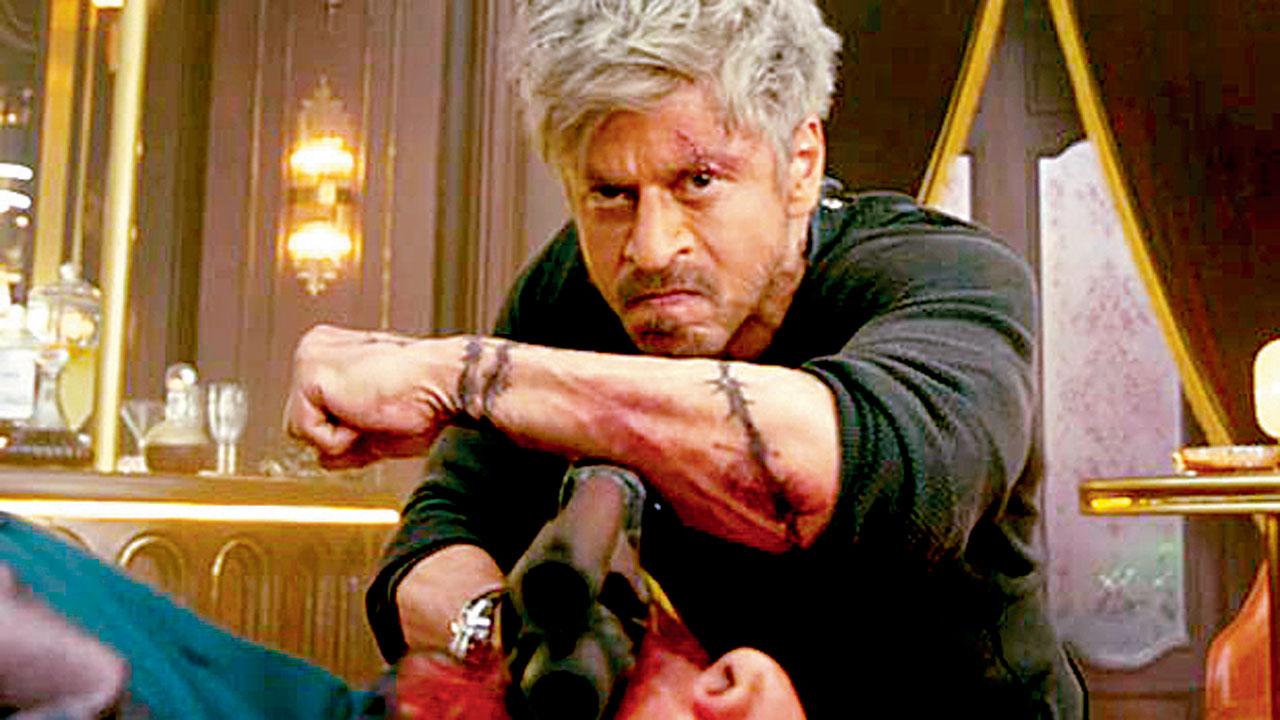
Shah Rukh Khan's King eyes US and South America for final overseas shoot
4:44 PM
Mohar Basu (MID-DAY; July 21, 2026)
With five months to go for its release, is Shah Rukh Khan’s ‘King’ done with its globe-trotting shoots? Well, almost. Sources have told mid-day that discussions are underway for the action thriller’s last overseas shoot that will be held in August. The destination? Either the US or South America.
From what we’ve heard, a team is currently conducting a recce to finalise the locations for the last leg of director Siddharth Anand’s action extravaganza.
A source shared, “Only an international schedule is remaining. Nothing has been officially locked yet, but a team is currently in the US, scouting locations and working out the logistics. They will head to certain countries in South America before zeroing in on the locations. If all goes according to the plan, the unit will head there next month before calling it a wrap.”
The bulk of the film — which marks Suhana Khan’s first big-screen offering — is already complete. The proposed shoot is for a key sequence. The source added, “Shah Rukh and Siddharth wanted an untapped location for the sequence in question.”
Dama Dam Mast Qalandar video crossed 10 million after Narendra Modi's mention-Shibani Kashyap
9:33 AM

Singer Shibani A Kashyap on PM Modi’s shoutout to her old video of making New Zealand PM dance to Dama Dam Mast Qalandar
S Farah Rizvi (HINDUSTAN TIMES; July 16, 2026)
Prime Minister Narendra Modi shared a light-hearted moment with New Zealand Prime Minister Christopher Luxon during his diplomatic trip to Auckland last week. He reminded PM Luxon of his performance with singer Shibani A Kashyap on Dama Dam Mast Qalandar at an event in Auckland in August last year, post which the performance resurfaced online. And Kashyap is ecstatic the video finding a new audience.
The singer made PM Luxon dance with her on stage as she sang during the 2025 Indian Independence Day event in Auckland. “The video, which originally had one million views, is being revisited by everyone, with many calling it Dama Dam 2.0. The view count has crossed 10 million after our PM’s mention,” the 47-year-old singer gushes, adding that she has been bombarded with messages and calls, bringing back the cherished memories of the performance.
“I thought it would be great to invite their PM on stage, and I performed Dama Dam Mast Qalandar, given the song’s universal appeal. It instantly struck a chord, and the rest is history.”
Set to perform in Chicago, USA on August 15, Kashyap reveals that the renewed virality of the performance has increased the song’s demand in her upcoming gigs. “In fact, for my next show, I’ve already received a special request to open the night with this number. Even when my close friends threw a small bash recently, I had to sing a snippet on popular demand,” the singer laughs.
Papa ne bahut dabang upbringing ki hai meri-Guneet Monga
9:35 AM

Anshul Chaturvedi (BOMBAY TIMES; June 21, 2026)
“Ek kahani batati hoon papa ki,” Guneet Monga Kapoor says, and one memory quickly blends into many: A gold kada sold to send her to America, a Maths teacher reprimanded, a crashed car replaced with a shrug. All adding up to a sequence of memories that left her with a simple, unwavering conviction: That she was gifted, special, and capable of anything.
“Tum kuch bhi kar sakte ho”, he told her. She not just believes it, she lives it. He may not be there anymore, and yet she says she feels his presence, the presence of both parents she lost in her twenties, even more intensely, more closely, now. The pampered daughter who was so pampered that she just does not understand a scarcity mindset - “Nahi hain paise? Aa jayenge!” – tells us how papa shaped her heart, her mind, her self-belief, and her professional success.
‘Mann mat maarna kabhi’
Aisi-aisi cheezein sikhayi hain unhone mujhe... Ki kabhi agar paise khatm ho rahe ho na life mein, toh saare kharch dena, bachana mat! Mann nahi maarna. He actually sat me down and told me, ‘Tumhare paas itni education hai, tum kuch bhi kar sakte ho. You’re very empowered. Tum kabhi bhi sadak par nahi soge. Tumhare sar pe hamesha chhat hogi. You will be able to fend for yourself. You will be able to do that much. Toh tum mann mat maarna kabhi.’
That stayed with me. That taught me abundance. My relationship with money was never of scarcity. And that is why I could do whatever I did. My mindset is very different. Main bachane mein believe hi nahi karti hoon. (I spend) every penny on the screen. Producer ka ek mindset hai ki cash de rahe hain toh thoda kam de dete hain — woh hai hi nahi (mera). That mindset took us forward. Kahin na kahin woh bachpan se ek alag mahaul hai mera, which was my dad’s mindset.
‘Life mein peechhe jana hi nahi hai’
Unko second-hand gaadiyon ka bahut shauq tha. Dire needs hain yahan par life mein, par show-off khatm nahi hona chahiye hum sardaron ka. Abundance mindset wahin se aaya hai.
Main jab 18 ki hui toh mujhe aise slow-motion mein aake chaabi laake di, aur bole, ‘Ye teri gaadi hai ab se’.
Suraj Kund mein khaali maidaan tha wahan main gaadi chalati thi. Unka sapna tha ki main Himalayan rally mein jaoon. Toh mujhe bachpan se bahut achhi gaadi chalani aati hai.
When he was teaching me to drive, I asked to learn how to reverse. He said, ‘Kyun? Zaroorat hi nahi nahi hai. Life mein peechhe jana hi nahi hai. Tere ko reverse karne ki zaroorat nahi hai’. He would say, ‘Bahar nikal (from the car), log khade ho jayenge tere liye karne ke liye. Hamesha kisi se karwa liyo. Seekhne ki zaroorat nahi hai.’
Main abhi bhi reverse se pareshan hoon. Thoda bahut aata hai. Abhi bhi jitni confident main gaadi chalane mein hoon utni confident main reverse mein nahi hoon.
‘When the teacher said, call your father, maine kaha done! Mother mat bolna, Papa ko toh main set kar lungi!’
I was a prefect in school, so I used to do a lot of extra co-curricular activities. And I had Commerce with Maths, since my parents thought ki Maths nahi loge toh naukri nahi lagegi. I used to do a lot of cool things in school, but I started failing in Maths in 11-12th. The Maths teacher came to the class and said, ‘Hum aapko Board mein baithne nahi de sakte. You’ll fail in Maths and school ka naam kharab kar doge. Tumhara dhyaan bas ye environmental mein hai’... Main roz Sheila Dikshit ke paas chali jaati thi school uniform mein ki land chahiye, paudhe chahiye – aise kuch-kuch maangti rehti thi. Bahut dabang life jeeyi hai maine apne school mein. I did one project in school that won the first prize in a competition in Hawaii. Woh mera pehla business plan tha.
Anyway, so the teacher told me – ‘Call your father!’ Jaise hi bola father, maine kaha done! Mother mat bolna bas! Papa ko toh main set kar lungi. Hamari chalti rehti thi. Hamara bahut beautiful ek relation tha.
He met my father the next day. When he came to class after that, he said, ‘Guneet Monga, stand up. I like your father!” I wondered ki aisa kya bol diya unhone?
Ghar jaake, I asked my father. Unhone kaha, ‘Woh laga hua tha ki aapki beti ki toh back aa jayegi, isko nahi baithne de sakte. Usko samajh nahi aa raha, woh bahut hi weak hai. Toh maine keh diya – ‘My daughter is very intelligent. You don’t know how to teach. You’re teaching 60 kids, you are not giving her attention. She is very intelligent! You tell me what you need, usko kaun si tution chahiye? You spend extra hours with her.’
Ohohoho! I scored a 70 in that exam!!
Toh ye jo faith se main jeeyi hoon na...
'Meri beti jayegi America!’
In one parents-teachers meeting at my school, it was announced that they are planning a trip to America, and will take six students.
Ab unko (father) akad - meri beti jayegi America. I was 12-13. Paise nahi hai hamare paas bilkul bhi. Lekin school mein bol aaye meri beti jayegi America!
Phir teachers meri jaan khane lag gaye - paise do. Uss time one lakh dena tha. Paise hai nahi, classic overcommitment! Ab nahi hai paise toh kya karein!
So he sold his sone ka kada, which I did not know at the time. Unhone apna kada becha jo unko shaadi mein mila tha mummy se, aur mujhe America bhej diya. Ek mahina extra ruki with extended family, akele wapis aayi. That gave me independence.
Jab college mein gayi aur jab papa ka kaam chalne lag gaya aur unki kuch deals hone lag gayi property mein, he made sone ka kada - one for him and one for me. Tab se pehna hua hai maine.
‘I kept crashing cars, and instead of daant, all he wanted to tell me was that darna nahi hai life mein’
Once in college, when it was raining, my car got stuck. Main race (accelerator) di ja rahi hoon, mujhe pata hi nahi tha reverse karna hota hai aisi situation mein – kyunki he never taught me to reverse. Fir gaadi jump maar ke seedha ped mein. Esteem ban gayi 800.
Toh papa ko phone kiya aur kaha college aa jao, wahan kaand ho gaya bada wala. Pin-drop silence. Aise 50 bachche side pe khade hain ki daant padegi! Sab ka dil baitha hua hai, aur humein laga gaadi phat jayegi. Papa ne mujhe CNG waali gaadi di hui thi.
Papa aaye, ek chakkar lagaya gaadi ka. Mere haath-paon phool rahe thay from shock of the accident. Meri taraf dekha aur kaha, ‘Ye wala ped kyun choose kiya?’
Maine bola, mujhe abhi comedy nahi karni! You have to do better parenting. I used to keep telling him that you have to be a better parent. Kehte hain – ‘galti teri nahi hai. Maine tujhe reverse nahi sikhaya’.
Another time, I had an Indica and Noida wala expressway naya-naya khula tha – eight-lane express highway. Usmein main kar rahi thi racing. I was very overconfident when it came to cars, kyunki main bachpan se chala rahi thi. Bahut dabang upbringing ki hai unhone meri.
Hum 6-7 dost bhare hain gaadi mein – ek ke upar ek – aur hum 120-130 speed pe race laga rahe hain. Maine sharp turn le liya, and usmein gaadi skid hui aur bajti hui, scratch hote-hote, tyre phat gaye, out of control chali gayi. And so that car – that new Indica – was destroyed from one side. A new car!
I was shivering. Phir papa ko phone kiya: ‘10 minute mein aa raha hoon’. Main ro rahi thi ki mujhe gaadi nahi chalani. Toh papa ne kaha – ‘Isse yahin chhor, chal nayi gaadi lekar aayenge’. Nayi gaadi nikali hai unhone agle din!
And what was the point of it? Darr nahi baithna chahiye. Darna nahi hai life mein. Aise kahan milte hain log? No schooling, no screaming. That allowed me to hold my own in many rooms. As a very young person also, I have been in rooms (where there were people who were) very rich, very powerful, very wealthy decision-makers and I’ve been able to hold my own because of my dad.
‘Unhi ko toh dikhana tha sab kuch… Unhi ko toh visibility, validation (deni thi) – ki main Monga sahab ki beti hoon’
He would say, ‘Tujhe pata hi nahi tu kitni special hai. Tu jiske saath kaam karegi, teri wajah se unki dukaan chalegi. Never think that somebody is doing something for you.’ So, ye unhone meri DNA shape ki hui hai – ki sab achha hai, mere paas bahut paise hain, main bahut abundant hoon.
Where does this come from? Jab kuch bhi nahi tha tab bhi mujhe lagta tha ki main sab kuch kar sakti hoon. Ki of course, mujhe koi mana nahi karega. Mujhe koi mana kar hi nahi sakta! Mera kaam ho jayega – ye bachpan se soch hai meri. Of course, main America jaungi. Of course, main email likhungi aur woh reply karenge. Of course, my film will do better. Abhi aapko samajh nahi aa rahi, duniya ko samajh aayegi. Of course, main paise raise kar lungi.
Toh woh maine kabhi doubt hi nahi kiya. That conviction comes from my dad. He made me feel that I am very special and I am gifted, and I am intelligent and I am bright.
So, that was a big hit when he left. Unhi ko toh dikhana tha sab kuch. Unhi ko badi gaadiyan lekar deni thi. Bada ghar lekar dena tha. Unhi ko toh visibility, validation (deni thi) – ki main Monga sahab ki beti hoon.
I’ve never felt like somebody who used to stay in a Rs. 5,000 rent ka ghar. I have always felt like a queen, as a princess – I have everything. Mujhe kabhi scarcity mehsoos nahi hui.
There’s an Italian film – Life Is Beautiful (1997). It won several Oscars. It is my favourite film in the whole world. The backdrop is World War 2, but it is a father-son story. The father tells the son that it’s a game – the way he explains what’s happening – tank aa raha hai and he has to hide from it. My dad is like that in my life. I just relate to it so much. Ki wahan duniya jal rahi hai, lekin I’m wearing rose-tinted glasses and living life.
The only Indian producer to hold an Oscar has certainly held her own in the biggest rooms. But then, papa had said, right, that darna nahi hai life mein, of course, tera kaam ho jayega?
Veteran actors Meenakshi Sheshadri, Anita Kanwal seek second innings
9:57 AM

Natasha Coutinho (HINDUSTAN TIMES; May 26, 2026)
After 30 years in the US, Meenakshi Sheshadri has relocated to Mumbai and is looking for her second innings as an actor. She was part of hit projects including Ghayal (1990), Damini (1993), and Ghatak (1996), before quitting films and marrying investment banker Harish Mysore.
On Monday, the 62-year-old shared a video on Instagram, saying, “After 30 long years, I have relocated to my karmabhoomi, Mumbai, and have stepped once again into the entertainment industry with hope, passion and positivity, I’m really looking forward to meaningful opportunities, whether it’s a lead role, supporting character or even a short show.”
She added that she will continue to spend vacation time with her family in the US.
I’m desperately looking for work: Anita Kanwal
Veteran actor Anita Kanwal, known for films such as Kabhi Haan Kabhi Naa (1994) and TV shows including Yeh Rishta Kya Kehlata Hai and Sasural Genda Phool, says she is looking for opportunities in films and on OTT.
The 70-year-old, who began her career in the ’80s, says she is not keen on returning to TV due to the harsh working conditions, including 10-hour + shifts and no day offs.
“I’m desperately looking for work. For a workaholic like me, life is nothing without work. I have been giving auditions, it does not matter to me whether it is a play on the street or a film, I put in the same effort,” she shares, adding, “Not doing TV is a conscious decision unless it’s something meaningful.”
Huma Qureshi, Rachit Singh to marry in October
9:40 AM

Yashika Mathur (HINDUSTAN TIMES; May 4, 2026)
Actor Huma Qureshi and her beau, actor and acting coach Rachit Singh, who’ve largely kept their relationship private, are now gearing up for the next step. After details of their US engagement, we have exclusively learnt that the couple is reportedly planning a wedding later this year.
A source reveals, “They are planning an intimate October end wedding as of now and the preparations have already begun,” adding, “The wedding will be followed by a big reception for the (film) industry (people). As of now, it’s most probably looking like (it will take place in) Mumbai.”
The couple sparked engagement buzz after appearing together at actor Sonakshi Sinha’s wedding festivities in 2024 and later the screening of Thamma (2025). Back in September 2025, a source had shared, “He (Rachit) proposed to her in an intimate setting in the US and she said yes… they are yet to decide when to make it official.”
Their recent joint appearance at the Mumbai airport has only added to the excitement around what’s coming next.
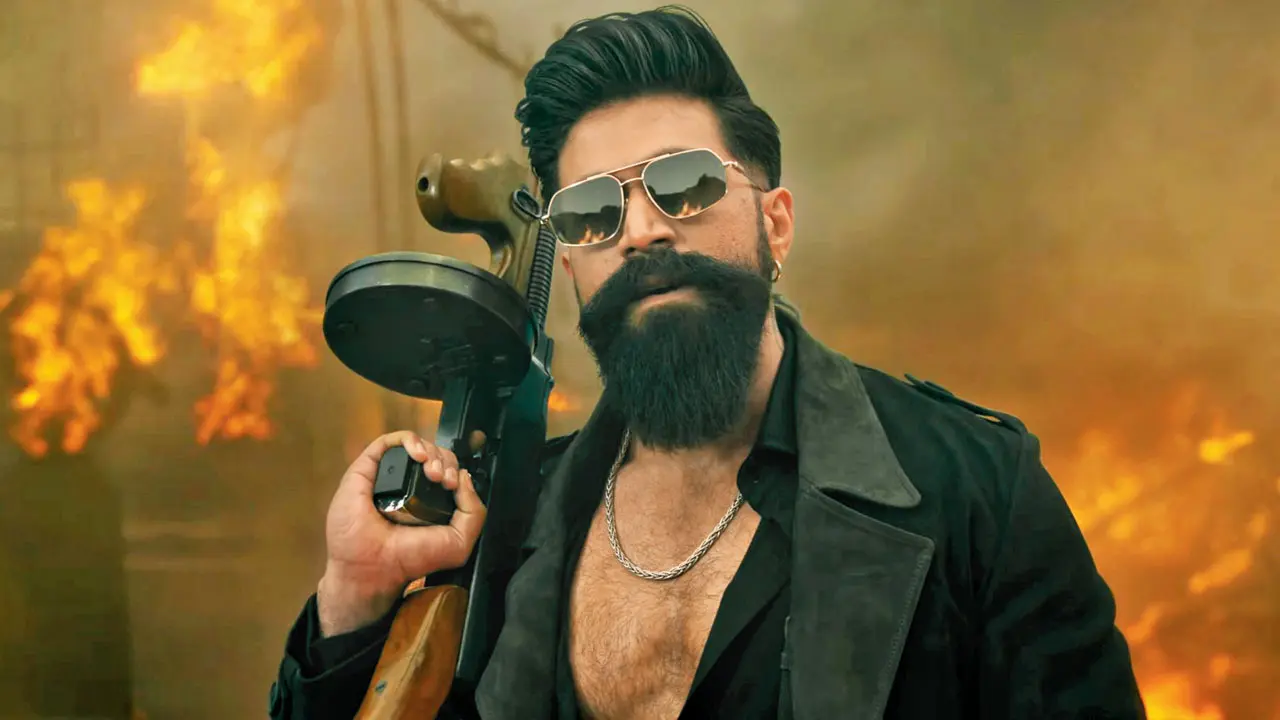
Yash takes Toxic global with CinemaCon 2026
8:26 AM
Mohar Basu (MID-DAY; April 14, 2026)
What will be the international audience’s verdict? That’s what many were wondering as filmmaker Nitesh Tiwari readied to take Ramayana: Part One to CinemaCon 2026. With the latest edition of CinemaCon kicking off yesterday, it turns out the Ranbir Kapoor and Yash-led magnum opus isn’t the only Indian film on the slate. Yash has gone to the Las Vegas exhibition with another of his ambitious movies — Toxic: A Fairy-tale For Grown-ups.
CinemaCon is among the biggest international film exhibitions known for connecting filmmakers and distributors from around the world. Taking director Geetu Mohandas’s movie to the event shows the actor’s ambition for the project.
A source shared, “Yash flew out over the weekend and will be in the US for a week, starting the first round of promotions for Toxic.”
The teams of both movies plan to unveil early footage and promotional material. The source added, “Both Toxic and Ramayana are mounted on a large scale, and CinemaCon provides the right stage to position them internationally.”
Nora Fatehi in talks to perform at the FIFA World Cup 2026; act lined up for June 12
10:56 AM

Upala KBR (MID-DAY; April 7, 2026)
World Cups are usually a quadrennial affair. But in Nora Fatehi’s calendar, they are turning out to be a much more frequent event. In February, the actor and dancer performed at the ICC Men’s T20 World Cup’s opening ceremony in Mumbai. Is another World Cup outing on the cards? That’s what we’ve heard. mid-day has learnt that Fatehi has been approached to perform at the FIFA World Cup 2026.
According to sources, her act will be held at the Toronto Stadium in Canada on June 12, before the host country plays its opening match against Bosnia and Herzegovina. This has been lined up a day after the FIFA World Cup opening ceremony takes place at the iconic Estadio Azteca in Mexico City on June 11.
A source told mid-day, “Nora has been approached to take part in the ceremony before Canada’s first match. As one of the three countries hosting the football World Cup, Canada is planning a grand entertainment launch on June 12. Nora has a busy work schedule in June. So, she is weighing in on the situation. That said, she will most likely perform at FIFA as it’s an extremely prestigious event.”
After she gives her nod, Fatehi will zero in on the songs she will be shaking a leg to.
------------------------------------
If things work out, this will be Nora Fatehi’s second appearance at the FIFA World Cup. The actor and dancer had performed at the closing ceremony of the 2022 edition in Qatar
Deepika Padukone backs out of Louis Vuitton show in Paris due to limited flight operations amid West Asia tensions
9:46 AM

Sources say Deepika Padukone had to pull out of Louis Vuitton show in Paris due to limited flight operations amid the West Asia conflict
Mohar Basu (MID-DAY; March 11, 2026)
As one of the global ambassadors for Louis Vuitton, Deepika Padukone was scheduled to attend the French luxury house’s Fall/Winter show on March 10 in Paris. However, the superstar was a no-show. Sources indicated that the actor had to pull out of the event due to the limited flight operations amid the US and Israel’s war on Iran.
A source told us that the actor was to head to the French capital on March 9, and her team had been in discussion with the fashion house for the past few days about the possibility of her having to cancel the trip.
“Deepika was initially confirmed to attend. She had zeroed in on her outfits and begun fittings for the appearance. But her flight was among the many that were cancelled in the last few days. Also, given that the war has been escalating and affecting several countries across West Asia, she reconsidered whether it was the right time to be travelling,” said the source.
Louis Vuitton, which appointed her as one of its house ambassadors in 2022, was naturally understanding of the situation and respected the actor’s decision.
mid-day contacted Padukone’s team, who didn’t respond till press time.
Nukkad Natak: Here’s how you make an indie movie in 2026
4:56 PM

With no producers, no studios, and no guarantees, two debut filmmakers hustled hard for their first break — one by taking his film to every nukkad, the other by taking his story to the global festival circuit
Junisha Dama (MID-DAY; February 15, 2026)
On a busy street, a young filmmaker walks into traffic. This is a shoot, but for your phone screens. For weeks now, this young crew has been relying on social media and funny content to get the word out about their film. As they criss-cross India in a caravan, their pit stops double up as trailer screenings, NGO visits, and the occasional scenic halt for a quick reel. Months earlier, the same team was detained in Germany for trying to publicize their film without permission.
This is the team of Nukkad Natak, a social drama set to release on February 27 on the big screen. And, they are doing all they can to market and distribute their film from their own pocket.
Another first-time filmmaker, Sriram Emani, is preparing for his film Jam Boy’s world premiere just blocks away from where immigration policies are written in the US. For a film about an Indian immigrant who may never be allowed to leave the country, premiering at the DC Independent Film Festival 2026 in Washington, DC, on February 15, this is no easy feat.
Neither project has a studio or a marketing budget worth the name. Together, Nukkad Natak and Jam Boy offer a sharp snapshot of what making it looks like today.
Directed and produced by Tanmaya Shekhar, Nukkad Natak is an independent Hindi feature. The film follows two college students who are forced to confront life outside their elite campus after being expelled and sent to work with children in a nearby basti. The idea, Shekhar says, came from growing up around an IIT campus and seeing “two Indias existing within a few kilometres of each other, without ever meeting.”
From the start, the film was conceived as independent. “I always knew this would be an indie,” he says. Years of pitching scripts taught him how slow and uncertain the process could be. So, he wrote practically, avoiding scenes he couldn’t afford to shoot. Even then, money ran out more than once. “The day we finished shooting, we didn’t have money to pay all the vendors,” he admits. Fundraising continued long after the camera stopped rolling.
Speaking about the experience, he says casting, especially a 13-year-old girl from the basti, was one of the toughest challenges. The team conducted acting workshops in government schools near their shooting location, slowly building trust. “We didn’t want a preachy film,” Shekhar says. “We wanted something emotional, where people connect to the characters.”
But finishing the film was only half the battle. Releasing it without a producer or distributor meant inventing a new playbook.
That playbook is now playing out on Instagram feeds and city streets. With Architaa Chawla joining as head of marketing and PR in the final months, the team launched a road-trip campaign across India. They are currently visiting cities where the film would screen, meeting audiences directly, performing with children, collaborating with NGOs, and documenting everything online. They have made humorous reels, launched a series called How to Enter Bollywood, created a Hindi alphabet song, and turned their own learning curve into content. “We wanted to connect directly with people,” Chawla explains. “The film itself is called Nukkad Natak. So we went to the nukkad.”
The now-viral Germany arrest happened during an overseas festival run, when the team tried promoting the film on the streets without clearance. Instead of burying the incident, they posted about it. The honesty worked.
Their strategy also leans on data. One key metric: interest numbers on BookMyShow. “If we can show one lakh people are interested,” Shekhar says, “we can tell theatre owners that audiences exist.” For small films competing with star-driven releases, show timings are everything.
Lead actress Molshri says the pressure is constant. “If this doesn’t work, we go home,” she says plainly. “It’s all or nothing.” But the team has also seen something else on the road: Young artists in smaller cities recognising their own futures in this journey. “They tell us, ‘If your film works, maybe we can do this too,’” says Shekhar.
Jam Boy unfolds in a far quieter way. Written, directed, produced, and performed by Sriram Emani, the dystopian short film follows a successful Indian immigrant in the US who begins to realise that freedom, especially the freedom to leave, may be slipping away.
The film draws directly from Emani’s lived experience. “Once I went to the US, I became very hyper aware of all the parts of myself that I was erasing to belong — my name, my food, my accent, my habits. They want your brain, but not your food or your culture. That contradiction felt like something we needed to talk about,” he says. The film asks what happens when the model immigrant story stops feeling like success and becomes a performance.
Emani chose sci-fi because it allows fear to be visualised. In Jam Boy’s world, visas are needed not to enter the US, but to leave it. The anxiety is familiar. “I should not be afraid to get on a flight and see my mom,” he says. “That happens in jail, not in a country you live in.”
Food becomes the film’s emotional anchor, a memory, a resistance, and an identity rolled into one. “They can change how you dress or speak,” Emani says. “But they can’t change how you eat.”
Unlike Nukkad Natak, Jam Boy has taken the festival-first route. The film will premiere in competition at the DC Independent Film Festival on February 15, followed by screenings at the Boston Independent Film Festival and the DisOrient Asian American Film Festival. For Emani, festivals were always a strategy, not an afterthought. “Making the film is only half the work. The other half is figuring out how it enters the world. As a debut filmmaker today, you are not just a storyteller. You are building a community, a distribution strategy, and a conversation.”
He adds that where a film premieres shapes how it is read. DC, he felt, was the right place to frame the story as emotional rather than partisan, as he wants the film to be a conversation about belonging rather than policy alone. “Film festivals were never just about screening the movie for me. They are where the film starts a conversation with audiences, policymakers, other filmmakers. Where a film premieres becomes part of its identity,” he explains.
The response has surprised him. “I underestimated how much it would resonate,” he admits. The film has sparked Q&As, community conversations, and interest from programmers and distributors who scout festivals for new voices. Emani sees this as part of a larger shift. As film equipment is cheaper and barriers to entry are lower, it’s increasingly easier to make a film. But attention, however, is harder to hold. “Indie films grow through communities before they grow through algorithms,” he says. Distribution, he believes, is no longer just a business decision but has become storytelling.
What connects Nukkad Natak and Jam Boy isn’t genre or geography, but the absence of a safety net. One film fights for screen space in Indian theatres. The other fights to start a conversation in policy-heavy rooms. Both are navigating an industry where studios feel distant, money is scarce, and visibility has to be earned inch by inch.
Neither route guarantees success, but both reveal a generation of filmmakers refusing to wait for permission. Could these two films act as case studies into how first-time filmmakers can break into the industry? Quite possibly.
What they do reveal is how independent filmmakers can’t simply rely on their filmmaking skills alone. As Emani puts it, “Independent films today grow through communities before they grow through algorithms. Unless you have very deep pockets for marketing, word of mouth and genuine connection are the only ways forward.”
Like India, Iran was diverse. It was never an Islamic country-Elnaaz Norouzi
4:27 PM

Elnaaz Norouzi shares her Iranian school pic (She is at the bottom right)
Renuka Vyavahare (BOMBAY TIMES; March 2, 2026)
On February 28, the United States and Israel launched a large-scale offensive against Iran after weeks of threats from President Trump. In a Truth Social post, Trump said the goal of the operation is to prevent Iran from obtaining a nuclear weapon and “to defend the American people by eliminating imminent threats from the Iranian regime.” Trump urged Iranians to capitalize on the attack as the “only chance for generations” to take over their government. Israeli officials later confirmed that these Israeli American strikes on Tehran for regime change killed their Supreme Leader Ayatollah Ali Khamenei. Iran has retaliated with strikes on US bases across the middle east.
Actress Elnaaz Norouzi was born in Iran and stayed there for eight years before moving to Germany and eventually India for work. Barring her parents, her other family members still stay in Iran. She last visited the country in 2018. The actress shares her views about the ongoing war, reflecting on the deep emotional toll it has taken on ordinary Iranians and urges the world to distinguish between the country’s people and its political regime.
Majority of Iranians do not support the opperessive Islamic Republic regime
Elnaaz, who was a part of the second season of Apple TV's much acclaimed show Tehran, explains, “The conflict has existed for over 40 years. I was born in Tehran. I spent the first eight years of my life in Iran. Barring my parents, many members of my family still live there. I remember everything. My show Tehran captured the Iran-Israel conflict. Iran is not Iraq. When we speak about Iran, I would like to differentiate between the Islamic Republic, which has occupied the country and the people of Iran. Majority of the Iranian people are smart and educated, and their beliefs are not the same as those of the Islamic Republic. At one point, Iran had a great relationship with Israel. If you see Cyrus the Great, the man who wrote the first human rights in the world ever, he was Persian and he freed the Jews from Babylon. We even had a great relationship with USA during the time of Shah (Mohammad Reza Pahlavi). It is just the Islamic Republic that is constantly saying that they want to wipe Israel off the map. A month ago, many Iranians who protested against this regime were killed.”
She adds, “Iran is complex. What the Islamic Republic has done in Iran is not just create one Nicolás Maduro or Saddam Hussein. There is the supreme leader, (the late Khamenei), there are people and parties under him - Hezbollah, there is the Islamic Revolutionary Guard Corps (IRGC), there is the Basij. They support and back the Houthis, Hamas. They are all intertwined. The Crown Prince Reza Pahlavi, his name is being chanted all over Iran. People want democracy in Iran. The Gen Z knows exactly what's right for them. The older generation, our grandparents say they made a mistake years ago by asking for a regime change. ‘We had it so good during the times of Shah. It was secular and diverse,” they say.
‘I am not allowed to set foot in Iran’
Elnaaz, who is vocal about her opposition to the Islamic Republic, claims that she would be killed if she went back to Iran under their rule. She says, “I can’t set foot in Iran. If I do, I think they will kill me. I couldn’t go to Iran because of what happened during the 2022 movement, where they killed Mahsa Amini (a 22-year-old Iranian Kurdish woman), whose death in police custody in September 2022, ignited widespread protests. Arrested by the morality police for allegedly wearing her hijab improperly, her death became a symbol of resistance against oppression. People went on the roads and said, we don't even want this f****** hijab, this is not ours. Back then, I spoke out against Khamenei and the regime, and my family got really worried for my safety. If people die in this war, I'm going to blame the Ayatollah because people have come out multiple times saying we do not want you and they did not leave. It is dictatorship. There are so many political prisoners who are people like you and me. If you speak up, they just put you in prison.”
‘There was a time when Iran was diverse’
While it would be naïve to believe that actions by the United States and Israel were carried out ‘in the interest of Iranians', the motivations behind these actions deserve critical examination. Elnaaz says, “For the past 40 years, a large population of Iranians go to sleep and wake up hoping that one day they are going to be freed from this regime. Just like in India, Iran had people from different religions, cultures and communities living there. It was diverse. Iran was never an Islamic country, it was largely Zoroastrian. Iran was Persia and Persia was Eurasian. Before the Arabs came in, Christians, Baha'is, and Russian expatriates lived in Iran. It wasn’t just for Muslims. You had the freedom to wear what you want to wear, say what you want to say. Iran needs democracy to go back to those times.”
‘Iranians have used cinema to speak about what is happening to them’
It’s a known fact that filmmakers are not allowed to shoot in Tehran, and Elnaaz hopes this changes. She states, “Of course, we have cinema in Tehran. Cinema has helped bring the truth and the voices of people to all over the world. And that has also been the medium that Iranians have used all over the years to speak about the atrocities that are happening in Iran. If you see there are multiple Iranian movies who have won Oscars, you know, and they are all about the terrible life that people are living in Iran. Look at Jafar Panahi, who was just nominated for an Oscar and the Golden Globes, he's not even allowed to film in Tehran anymore. Even our show Tehran was shot in Athens. Cinema can change the way you think so its considered a threat. Iranian people have no idea what freedom of speech is for the last 47 years. It's terrible. And it's so sad that the world has not taken as much notice as it should.”
'I hope my family is safe'
Elnaaz attributes her life and safety to her parents who chose to migrate to Germany years ago. The rest of her family however still stays in Iran. She says, “It’s a war situation so there’s an internet blackout and I haven't been able to reach my family since yesterday. I hope they are inside their homes and don’t get too excited because of Ayatollah Ali Khamenei’s death. Iranians are getting on roads to celebrate and it risks their life. So I hope they stay indoors.”
To those wondering why didn't they migrate as well, Elnaaz says its not easy. “Leaving your home behind is not easy. Not everyone has the means to move to another country. Filing for asylum is a complex, formal legal process that requires meeting specific criteria. Even the Iranians who have migrated are facing s*** in other countries. So uprooting an entire family from a country is not easy. If you can keep your mouth shut, you can live in Iran. It's still not as retarded as the Taliban. Women can open their businesses. Everyone’s educated but there are no jobs. The inflation is high. Some are taking loans to buy eggs. Survival is an issue unless you have ties with the IRGC or such."
Sadia Khateeb says she is safe in Saudi Arabia: "My duas are for the world"
10:28 AM

S Farah Rizvi (HINDUSTAN TIMES; March 8, 2026)
Actor Sadia Khateeb is among the celebrities currently in the Middle East amid ongoing global tensions linked to the US-Iran conflict. She was in Saudi Arabia with her family when air travel in parts of the region was disrupted.
Sharing an update, she tells us, “I am here and completely safe with my family. Amid what’s happening around the world, prayers are all that I can do. My duas are for the world. May everyone be safe.”
Despite the tensions, the 28-year-old is focused on marking a spiritual milestone: her first Umrah (pilgrimage to the Ka’aba in Makkah). “This year, Eid will be in Medina with my family, and I can’t wait to experience that with them, we are happy and safely placed at the moment,” she says.
For now, Sadia says she is fully immersed in the holy month of Ramzan with her family. “This comes after two physically demanding years... During promotions of The Diplomat (2025), I had to occasionally break my (Ramzan) fasts during interviews. This year, I’m sharing iftar with my mother,” she ends.
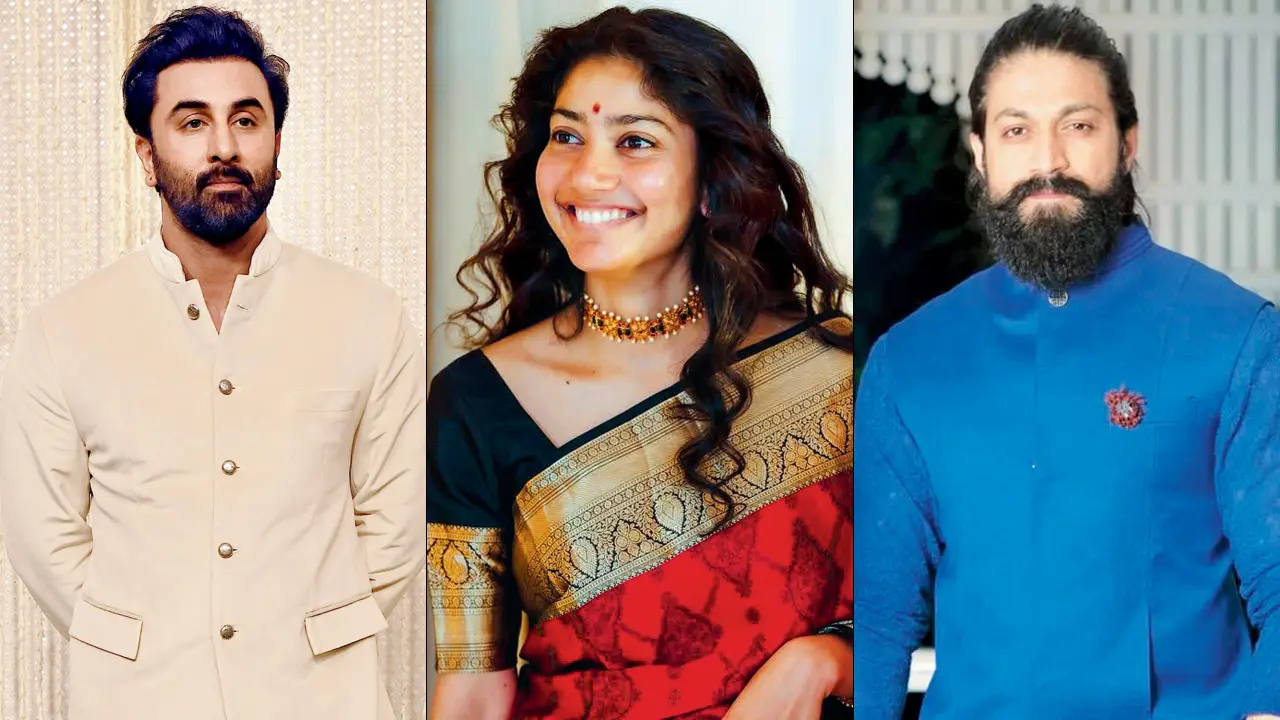
Ramayana: Part One makers postpone the Gateway of India show amid geopolitical concerns
10:14 AM
Mohar Basu (MID-DAY; March 8, 2026)
The plan was in full throttle, the venue had been finalized, and guests had been invited for the much-anticipated showcase of the principal characters of Nitesh Tiwari’s magnum opus, ‘Ramayana: Part One’. But no one expected the event to be postponed.
Sources close to the production inform mid-day that producer Namit Malhotra has decided to postpone the launch of the film’s promotional assets, which were originally scheduled to coincide with the Ram Navami festival on March 26.
The showcase, organised at Gateway of India, was set to unveil the look of the leading cast. However, the makers have opted to defer the unveiling in light of the ongoing US-Israel-Iran conflict that has triggered global tensions. They now plan to roll out promotional activities closer to May.
“The Ram Navami launch was planned as a massive moment for the film, but ‘Ramayana’ is not just a domestic project; it’s an international film with a global audience. The producers felt that the current situation worldwide is not the most conducive environment to unveil such important material,” informs an insider, adding that the makers do not want to rush the launch.
The first instalment of ‘Ramayana’ is slated for release during the Diwali 2026 window.
Iranians want to choose their own leader-Elnaaz Norouzi
4:42 PM
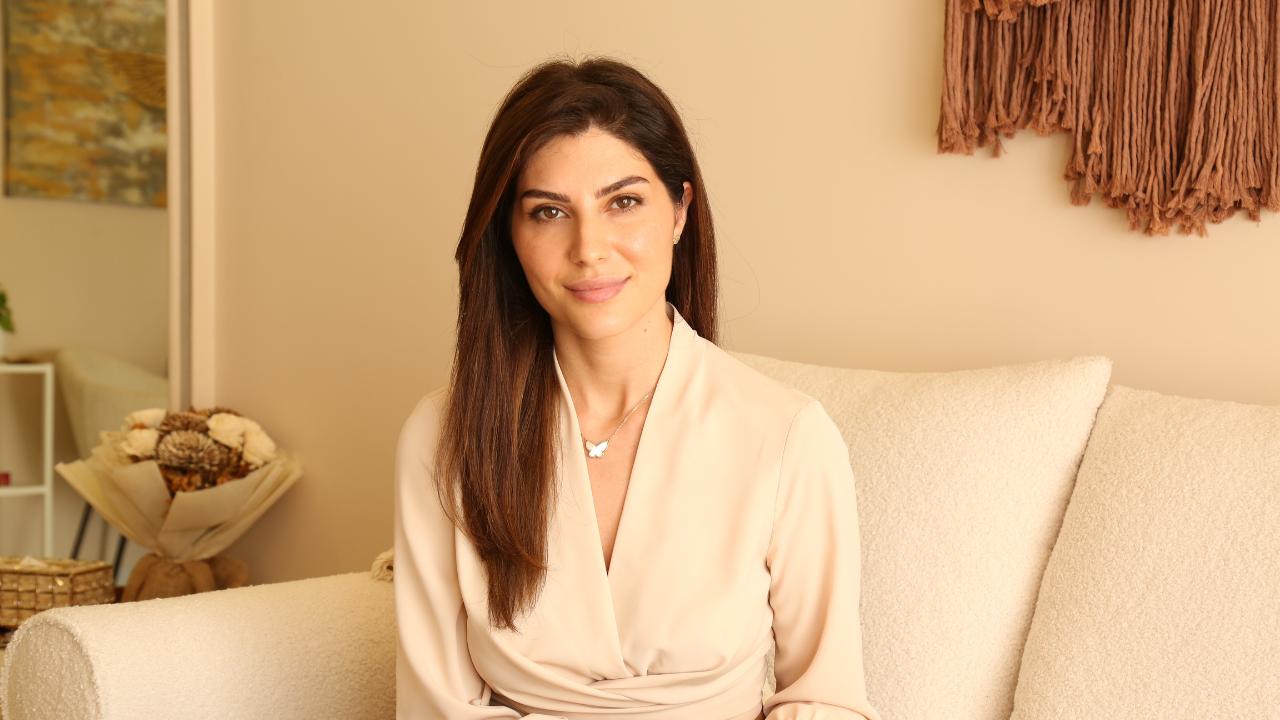
Iranian-German actor Elnaaz Norouzi, known for Sacred Games and Tehran, spoke about the Iran-Israel conflict, Ali Khamenei’s assassination, and decades of suffering under the regime, asserting that Mojtaba taking power would not change conditions for Iranians
Shruti Sampat (MID-DAY; March 5, 2026)
Amid the growing unrest, Iranian-German actor Elnaaz Norouzi speaks exclusively to mid-day about the global turmoil, her stance on assassination, and the deep emotional impact of the conflict. Iran’s Supreme Leader Ali Khamenei was reportedly assassinated on February 28 in a joint strike by the United States and Israel, dramatically escalating tensions across the West Asia. In response, Iran launched retaliatory attacks on US bases in the region, intensifying the crisis.
You recently mentioned how it is unsafe for you to go back, has opposing the leader equivalent to losing the freedom of speech in Iran?
The freedom of speech never really existed in Iran and that is why we have so many political prisoners in Iran as well. There are thousands of innocent people who have been imprisoned, tortured, raped because they have spoken against the government. At this point, it has surpassed the point of women and men but yes if we talk about specifically about women, women have almost no rights in Iran starting from the morality police going after them constantly, starting with the fact that as a woman you're not allowed in stadiums. As a woman in court, your statement is half as worth of what a man says. As a woman, you're not allowed to travel without your husband's permission. As a woman you cannot ask for a divorce easily.
Do you think US-Israel strikes to eliminate Khamenei were fair?
If you ask me as an Iranian, who who was born in Iran, who has lived in Iran, who has lived under his real leadership, who has family who's living under his leadership and who has friends who are living under his leadership, I will tell you that a dictator has been taken out, a terrorist that has taken many many people's lives has been taken out, a person who has chanted and has made millions of Iranians chant 'Death to America' for 47 years has been taken out; a person who's been building nuclear bombs in hiding. To attack the American people and America and the Israelian people in Israel for years and years has been taken out. This is a big win for the whole world; it's just that the world doesn't understand, we understand it because we've lived with it and we know it but unfortunately the people just look at it from one lens and that is 'oh he was a religious leader' but being a religious leader doesn't make you right when you do wrong, right?
Amid the conflict between Iran being an Islamic-state or a Democracy, what is your take?
I receive a lot of death threats and many people disagree with me, but that brings us back to freedom of speech and the idea of live and let live. That’s all the Iranian people are asking for. We want to live the way we choose, and we are okay letting others live as they wish. The problem is that a narrow mindset is forcing everyone to follow one way of life. This is not against religion. I have many Muslim friends whom I love and respect. Iran is home to Muslims, Christians, Baha’is, Zoroastrians and more. Everyone simply wants equal respect and the freedom to decide for themselves.
Mojtaba Khamenei is now the new leader: Do you think women will feel free under new leadership?
He is the son of Ali Khamenei. He is another person that was not elected by the Iranian people. Again, the safety is still at the mark because he has the same views. He supports the same barbaric thoughts that his father had and besides any of that Iranians are saying, we would like to choose our leader ourselves. We don't want supreme leaders. We don't want somebody who we have not chosen. That's the only thing. Since when in a democratic world in 2026 should anybody else decide who rules over 90 million people? The people should be deciding that for themselves and the people have decided they want the crown prince Reza Pahlavi back.
Iran-Israel conflict has been a long war, and the country has lost enough, where do you think is the end to this?
The end of the wars in the West Aisa will come with the end of the Islamic Republic of Iran. This regime has created unrest across the region by funding proxies like Hamas, Hezbollah and the Houthis with billions taken from our oil and tax money. Iranians don’t benefit from our own resources. When people protested high gas prices in 2019, it was because that wealth was being diverted to Hamas. So once you remove the Islamic Republic of Iran, this regime, the Ayatollahs, once you remove the clerics, there will be peace all over the West Asia because all the funding is going to be gone and all of those terrorist groups will crumble right because they'll not have any resource.
Akshay Oberoi sees silver lining in Donald Trump’s film tariff: "Maybe now we’ll return to entertaining the common man"
9:23 AM
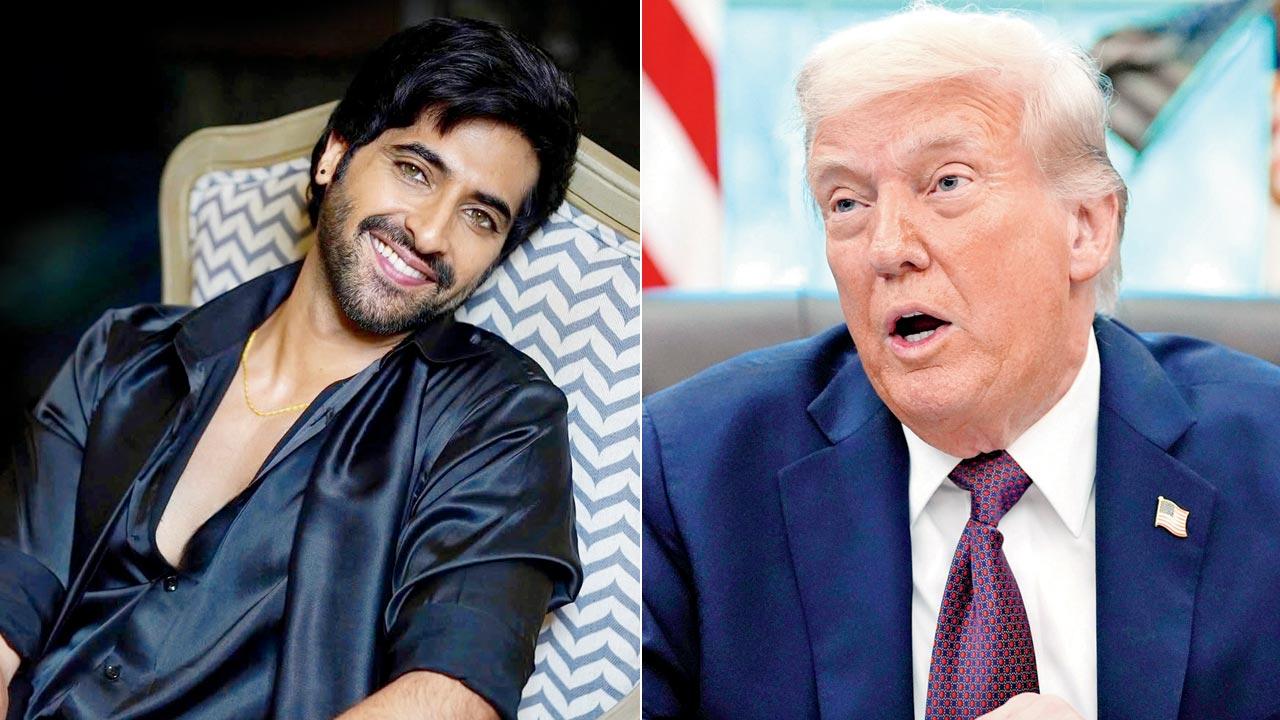
Mohar Basu (MID-DAY; October 14, 2025)
In September, US President Donald Trump reiterated his plan to impose a 100 per cent tariff on all films made outside the US. Even as details about when the tariff will come into effect and how it will impact other film industries remain unclear, Akshay Oberoi — who grew up in the US before moving to India in 2008 to pursue acting — believes there may be a silver lining to it. “It will definitely take a toll, but it may also make us focus on satisfying our own audience instead of chasing global validation,” he says.
The actor, recently seen in Sunny Sanskari Ki Tulsi Kumari, has two projects lined up in Yash’s Toxic: A Fairytale for Grown-ups and Shah Rukh Khan’s King.
Point out that the tariffs may affect the global audience for such big films, and Oberoi analyses, “In Hindi cinema, I think we started losing our core audience. Hindi films were trying too hard to be Hollywood. Characters started feeling like they’d landed from New York instead of being desi. Maybe now we’ll return to entertaining the common man. Trump’s policies are unpredictable, but I’m trying to find a silver lining. Maybe this will push us to create stronger films for our audience.”
Oberoi will soon resume shooting for King. The actor says that director Siddharth Anand was his primary reason to say yes to the action thriller.
“Sid and his team have my loyalty. I didn’t ask any questions, I just showed up. They’ve not only helped my career with Fighter [2024], but are the nicest people in the business.”
These days, the industry has lost freshness in creative work-Meenakshi Seshadri
8:55 AM

Sundas Jawed (BOMBAY TIMES; October 8, 2025)
Graceful and composed, Meenakshi Seshadri, the star of films like Hero & Damini, was in the city on Sunday to perform at the Durga Puja Carnival on Red Road. On her Bengal connect, she said, “I was born in a town near the Bihar-Bengal border, so I grew up with a Bengali influence. Coming here feels like being back home.” The actress spoke to CT about her break, the roles that defined her and more.
‘Damini’s role felt real’
Reflecting on her journey, Meenakshi admitted, “I’ve had a chequered career with more flops than successes.” Yet her role in Damini continues to define her. “People accepted me because, like her, I’ve always stood for what my conscience says is right,” she said.
Her real-life resilience mirrored her character’s: “There was a fallout with the director just as shooting was about to start, and they wanted to replace me, but the situation turned around. Many later echoed what I just said, that Damini was a lot like me by nature. Maybe that’s why the role felt so authentic.”
‘People love drama & dance’
Looking back at the film that made her a star, Meenakshi recalled Hero’s unexpected rise. “Hero (with Jackie Shroff) was my second film after Painter Babu. Its popularity surprised me. The first few weeks were lukewarm, but then it picked up and ran for a year, even in south Indian cities, which was unheard of.”
She credits its success to filmmaker Subhash Ghai and its timeless appeal. “Indians love romance, dance and drama. Hero had all of that, along with a believable story, that connected with the audience,” said the actress, who danced to Odissi dancer Avirup Sengupta’s choreography at the Durga Puja Carnival.
Hope in new platforms
Candidly reflecting on cinema, Meenakshi said, “These days, the industry has lost freshness in creative work. One person makes a supernatural drama and 30 others blatantly copy it.” However, she believes the industry is “more professional and hi-tech now.”
On the portrayal of women, she said, “We’ve always had strong female actors, but in the 80s, defined roles were rare.” Though she finds the use of women in suggestive ways vulgar, she is hopeful: “With OTTs creating stronger characters, I hope to make a mark again after years.”
---------------------------------------------
Leaving the industry to move to the USA and be with the person I love never felt like compromise. It made me embrace my true path
– Meenakshi on her sabbatical
---------------------------------------------
I relate strongly to Damini. I am straightforward, simple-minded, traditional and not overly critical, and I think that also came through in my performance
– Meenakshi on her role in Damini
Will US tariffs turn our silver screen grey or open new doors?
10:38 AM

The US plays an important character in Jaan-E-Mann, Kal Ho Naa Ho, and English Vinglish. PIC/PINTEREST@Sonika Kara; Pic/Dailymotion; Pic/Pinterest@Zofia Dycfeld
US President Donald Trump’s announcement of 100 per cent tariff on movies made outside the country is a wall between America and the rest of the film world. Will this mean roadblocks for Indian cinema, or open new doors?
Akshita Maheshwari (MID-DAY; October 5, 2025)
The American dream has lived as vividly in Indian cinema as it has in Hollywood itself. Bollywood has had its Swiss meadows and London skylines, but the United States has always represented something more aspirational. In Kal Ho Naa Ho (2003), New York’s skyline and lifestyle are inseparable from the storytelling. Kabhi Alvida Naa Kehna (2006) uses the city’s loneliness and urban pace to frame extra-marital relationships. Ta Ra Rum Pum (2007) is perhaps the ultimate representation of the American dream — fame, cars, and money, and what it means to lose it all.
My Name Is Khan (2010), New York (2009), and English Vinglish (2012), are stories that would make no sense if they were not set in the US, these cities almost becoming characters themselves. English Vinglish famously described Manhattan as aadmi, topi, dhoop ki chhaon (man, hat, tan). When he thinks of Times Square, film commentator Pulkit Kochar doesn’t picture the blinding lights or dazzling billboards. Instead, he remembers, “Salman [Khan] in the song Sau Dard [from Jaan-E-Mann (2006)] crying there.”
“My Name Is Khan encapsulates modern US [culture] like no other movie, with dark themes like racism and gun culture in schools,” says Kochar. “But beyond that also what comes to my mind is Rizwan [Shah Rukh Khan] showing a sunrise spot in San Francisco to Mandira [Kajol] and her immediately proposing marriage to him there,” a reminder of how deeply these cities are stitched into Bollywood’s imagination.
“The American dream’s kind of turned into a nightmare now, na?” laughs culture writer Sucheta Chakraborty, as the week brings a stunning new reality: US President Donald Trump has announced a 100 per cent tariff on all films made outside America. “Our movie-making business has been stolen from the United States of America, by other countries, just like stealing candy from a baby,” he wrote on Truth Social.
Every expert we spoke to admitted they are still unsure of how the policy would work in practice. “At this stage, there are more questions than answers. Would the tariff apply to licensing deals? If a US distributor buys rights from an Indian producer, would that distributor then pay tax on the value of the licensing agreement? Or would it be applied on the final product — the DCP, the digital cinema package [the encrypted exhibition copy sent to theatres]?” asks Chakraborty.
The scope is also unclear. Director of Academics at Whistling Woods International Rahul Puri asks, “Does this tariff apply to films shot abroad, or only to films whose production has taken place abroad? If it turns out to be an import tariff — a tariff on films being imported into the US — then yes, it will have a significant impact on Indian films.”
If the first interpretation is to be held true, the move could even hurt Hollywood itself. “About half of the $3.7 billion spent on making 40 of Hollywood’s biggest hits last year was spent outside of America,” says media and entertainment specialist Vanita Kohli-Khandekar. The US is a notoriously expensive shoot location, and recent box office successes like Dune (2021) and its sequel were filmed extensively abroad because of lucrative tax rebates offered by other countries. If the tariff is to take back Hollywood’s stolen candy, how come it hurts Hollywood the most?
“For India, the US is a secondary market. But it’s Hollywood’s primary market. This policy will hurt them more than us,” says Kohli-Khandekar, suggesting that domestic shooting should be incentivized if the goal is to promote the US as a shooting location.
The implications could be serious. Puri, who is also managing director of Mukta Arts, says, “The Hindi market alone makes around $100 to $150 million a year from the US; that’s what is at stake.”
Kalki 2898 AD (2024) earned US $18.57 million in North America, making it the second highest-grossing Indian film in the region, behind only Baahubali 2: The Conclusion (2017), which grossed at approximately US $20 million. Big budget blockbusters like Jawan (2023), Pathaan (2023), RRR (2022), and Pushpa (2021) also shone in American waters.
“Kalki perhaps did not do as well domestically. It relies on the diaspora audience for that extra bang,” says Puri. Big-ticket spectacles are increasingly struggling to resonate with Indian audiences but continue to draw NRIs to theatres, fuelled by nostalgia.
“The average ticket price in India is about Rs 120, whereas in the US it’s $15 to $20 (Rs 1300 to Rs 1700 approximately). So the overseas market offers a much higher bang for the buck,” Puri explains. “For producers, it’s almost pure profit, with costs mainly for marketing and distribution — not production. That profitability will suddenly be eaten away if such a tariff is applied.”
The US is considered the halo market — the one every film aspires to crack. China is the only other territory that compares in scale. “China allows about 32 foreign-language films a year. Around 18 of those slots are for US films; the rest are shared worldwide,” says Puri.
If America closes its doors, India could pivot harder toward China, where stars like Aamir Khan already enjoy massive followings. “The Indian government has already signalled a thaw in certain areas of its relationship with China,” Puri notes, “There’s no doubt we’ll need to push harder there.” According to him, Trump’s move is “yet another way to squeeze the diaspora”.
Culture wars increasingly blur into political ones under the Trump administration. In 2020, when Parasite won the Oscar, Trump mocked the decision: “What the hell was that all about? We got enough problems with South Korea with trade. On top of that they give them best movie of the year? Was it good? I don’t know. Let’s get Gone With the Wind. Can we get Gone With the Wind back please?”
The prestigious EGOTs (Emmy, Grammys, Oscar, and Tony Awards) are all American. If all high honours remain American and Trump remains hell-bent on only letting American art win them, it may spell doom for the Indian Oscar dream.
The policy is especially bad news for Indian indie cinema. These films rarely thrive at home and rely heavily on US screenings to recover costs. In 2023, Kill completed a long festival run before its India release, even premiering in the US first. Mira Nair’s Monsoon Wedding (2001) became a global phenomenon through festivals before gaining distribution. Neeraj Ghaywan’s Homebound (2025) created a name for itself through festival runs.
Without the US festival-to-distribution pipeline, many such projects could struggle to exist. “If we won’t get picked up there, maybe indie films will stop going to Sundance, Tribeca, SXSW,” speculates Chakraborty.
She also points to the deeper cultural loss. “Roger Ebert once called cinema an ‘empathy machine’ — a way to step into someone else’s shoes and see from their perspective. With this tariff, we lose that multiplicity of voices, narratives, and viewpoints. It stems from a move toward economic and cultural nationalism, but it also means perspectives outside the dominant narrative will be erased.”
The films that thrive under this policy, Chakraborty warns, will be the ones with the most “homogenized, myopic, inward-looking ‘American’ perspective.” For Indian filmmakers, this could mark a turning point in their long relationship with America. “People from every walk of life are revisiting their relationship with the US in the current climate.
Young filmmakers will look at the US through a different lens,” says Puri, “The allure of Hollywood may just be dying.” “We may have spent years looking at the US in this wide-eyed manner,” adds Chakraborty, “but that quality is getting shattered.”
The uncertainty spreads across other sectors of filmmaking as well. India’s technical prowess has made it a hub for Hollywood VFX work. Would such collaborations also be hit? What about licensing for streaming platforms? “He’s [Trump] made similar threats before — in May, for instance,” Puri reminds us, “Often, he makes big announcements but later rolls them back. Even if implemented, it usually takes months for the fine print to be worked out. We’ll only know the exact scope when that order comes out.”
Chakraborty wonders whether the way out is collaboration with US-based productions houses, adding, “Even Payal Kapadia’s All We Imagine As Light [2024] was an Indo-French co-production. As they say, it takes a village to make a film, right? Different stages of work in these co-productions can also be outsourced.”
I was told I’d get more budget if I wore a bindi-Raja Kumari
10:05 AM

Samarth Goyal (HINDUSTAN TIMES; October 4, 2025)
Indian-origin American rapper-songwriter Raja Kumari places spirituality at the centre of her music. “I’m bringing it to the forefront and being fearless about it,” says the singer who features on the recently released album Sounds Of Kumbha.
The artiste had signed to a major American label in 2015, but was told she would “get more budget” if she “didn’t drop the bindi”. “Back then, it was about exoticizing who I was, not celebrating it,” the 39-year-old recalls, adding that she felt liberated as an artiste only when she came to India.
“I didn’t want to wear my culture as a costume. I wanted to celebrate it. That’s why, when I came to India, the liberation I felt as an artiste was incredible. Here, I could reference a character like Meera and just name a song after her without over-explaining,” she says.
Raja Kumari believes her “unique” voice gives her an authenticity that sets her apart, and that now drives her projects in India. “My voice is distinct, it pokes through,” she says, insisting that she believes the country today is ready for its sound to travel.
“We do not lack talent. If we build the right infrastructure, Indian music can become an export just like K-pop,” she ends.
A few dollars less for Indian films coming to America: Levies threaten Indian films’ US revenues
3:23 PM

Levies threaten Indian films’ US revenues, forcing hike in ticket rates and a shift to OTTs
Rajesh N Naidu (THE ECONOMIC TIMES; October 1, 2025)
President Donald Trump's decision to impose a 100% tariff on films made outside the United States is set to deal a heavy blow to the US revenues of Indian films and their distributors, industry experts said.
Distributors may be forced to raise ticket prices in the US to pass on part of the tariff, which could dent footfalls and erode their revenue share estimates, they said. "To the best of my knowledge, Hollywood derives 60% of its revenues from the rest of the world. This shows the irony of the situation. I think this tariff is likely to impact the last mile consumer a lot," said Pranab Kapadia, director at overseas distribution firm Moviegoers Entertainment.
"The impact of tariff is high ticket prices, which will lower the revenue share of distributors of Indian films, thereby hurting the overall box office potential of Indian films," he added.
Kapadia is known for distributing films of Karan Johar's production house Dharma Productions in the overseas markets.
According to distributors and producers, Hindi films earn 40-60% of their total overseas collection from the US markets. In fact, this year's biggest Hindi blockbuster Saiyaara collected more than $6 million, or about Rs 53 crore, from the North American market itself, making it the third biggest grosser Indian film in the US.
A key concern among distributors is the short window films have in theatres before they get released on streaming platforms. This may make many viewers wait for the OTT release rather than pay much more for watching the film in a theatre, they said.
"Today, there is such a short window between a film which gets released in theatres and then its showcasing on streaming platforms. In this context, a tariff of 100% makes it even more challenging for distributors to bring footfalls in theatres, especially when they must resort to hiking ticket prices to compensate for the tariff," a veteran distributor said on the condition of anonymity.
Producers of mid-and-small-sized films may choose to release their films only on streaming platforms in the US as it may be economically unviable to release them in theatres with high-ticket prices.
"A 100% tariff could wipe out 40% of Indian films' US revenues, but the deeper worry is the audience fallout. With ticket prices soaring to $20, many diaspora families may abandon theatres," said Suniel Wadhwa, cofounder and director of Karmic Films. "This is not just a tariff. It is a cultural barrier. Cinema is India's strongest soft power export to the world," he added.
Big tent-pole Hindi films may still get released in the US markets with high ticket prices.
The importance of the US market for Indian films can be gauged from the size of the Indian diaspora. According to the data from Pew Research Centre, the population of the Indian diaspora in the US is about 5.2 million, reflecting strong business potential for Indian producers especially when seen in the light of revenues in dollar denomination.
Some producers said they are yet not clear about the implications of the tariff.
"I am not clear about what the tariff announcement means. I will have to see the final order to understand the future implications of this tariff," said Shobu Yarlagadda, who produced Telugu film Baahubali and its sequel, which were a smash hit not only in India but also in the US and elsewhere.
On the whole, producers believe that the tariff has the potential to not only wipe out the box-office potential of Indian films in the US markets but also can force Indian producers to reassess and recalibrate the ways in which they make, distribute and market their films, especially big tentpole ones.
Subscribe to:
Posts (Atom)