Showing posts with label UFO Moviez. Show all posts
Showing posts with label UFO Moviez. Show all posts
Tech glitches hit Dhurandhar The Revenge’s paid previews
9:46 AM
Niharika Lal (BOMBAY TIMES; March 20, 2026)
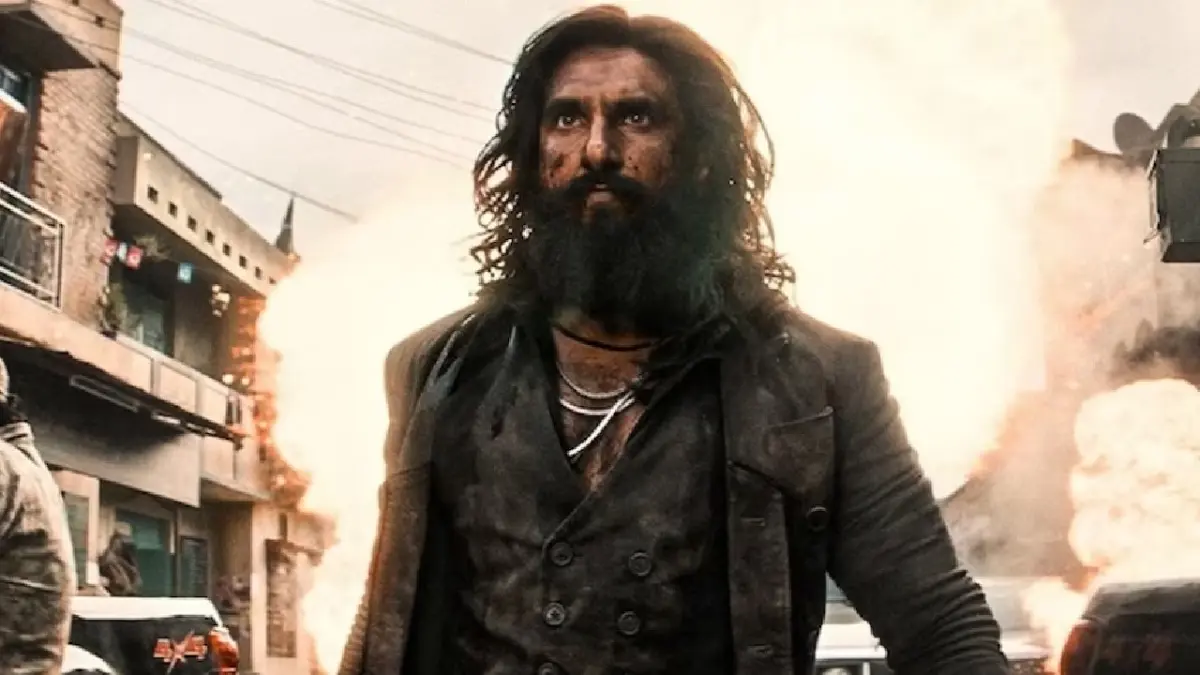
The much-anticipated preview screenings of Dhurandhar The Revenge didn’t go as planned across multiple cities, with shows abruptly halting at interval as the second half failed to reach many cinemas. Disappointed moviegoers, who had booked the film’s previews in advance, had to either wait 1.5-2 hours for the film to start, watch it begin after the interval, or leave as the film failed to resume in most cinemas. “I had booked a 7.30 pm show in Noida, and when we came out during the interval at 8.30 pm, we found that moviegoers who had come for the 5pm show were also waiting for the post-interval version of the film,” a moviegoer shared.
‘It’s not that we don’t want to show a film; it’s just that we don’t have one’
When we spoke to the exhibitors, they refused to comment on the issue and said they had tried their best to ensure that moviegoers could watch the film, but it was not possible in some cases due to technical glitches.
At some screens, the situation turned almost humorous, as moviegoers actually called the police to complain that the film was not being played. Police officials had to intervene to calm down furious fans, telling them, “It’s not the cinema’s fault; they don’t have the film.” Hassled cinema managers claimed, “It’s not that we don’t want to show a film; it’s just that we don’t have one.”
Delays happened due to content-related challenges: PVR
Issuing a statement, PVR clarified, “To everyone who stayed back and watched the film despite the delays – thank you for your patience, warmth, and love for cinema. It truly means a lot to us. To those whose shows were delayed or cancelled, we sincerely apologize. We understand how disappointing it feels when something you were looking forward to doesn’t go as planned. We wanted to share a clearer update with you: Delays happened due to content-related challenges in certain locations beyond our control. Cancellations occurred as regional language versions were not made available by the production side, as also shared on their official platforms.”
Film reaches late, second half missing at many screens
The film didn’t reach most screens in time, leaving audiences angry. The delivery to digital service providers like UFO Moviez happened at the very last minute. Usually, it is done two days before. Insiders say there were multiple instances of things going wrong for the preview content not reaching in time and, in some cases, the second half of the film not reaching cinemas at all. The paid previews were scheduled to start at 5 pm, and digital cinema providers received the content post 1 pm.
An insider says, “Content was delivered somewhere around noon yesterday, and shows were meant to start at 5 pm. The fact that shows could happen at many places at 5 pm itself is a miracle. It speaks volumes about the efforts and hustle that the distribution team and digital cinema providers put in to maximize the number of shows that could at least play.”
Another industry source added, “With just a 4-5 hour lead time between when the content was provided and the release, it had to be distributed across more than 6,000 screens in less than five hours something that can only be described as extremely challenging.”
Moviegoers across cities say that it was chaotic as they had to wait for long hours for the film to start after interval or for the refund. A manager shares, “Fans were not leaving even after being told that we were issuing refunds. Some moviegoers waited for over five hours for the post-interval screening.”
In Mumbai, most Hindi paid preview shows of Dhurandhar 2 at 5 pm on Wednesday were cancelled, and the 5.30 pm ones were delayed by 40 minutes. A source told us, “Most theatres didn’t receive content and Key Delivery Message (KDM), a security file often referred to as a digital ‘passcode’ required to play the digital movie files in theatres on time. The Hindi ones were delivered by 6 pm, after which most shows started.”
Manoj Desai, Executive Director of G7 and Maratha Mandir, said, “It’s strange that they weren’t prepared even though they had opened advanced bookings for paid previews days ago. The south centres will get to see the dubbed versions a day after the film’s worldwide release. How were they not prepared? This inconvenienced the audience a lot. The crowd was angry at our staff because the shows were cancelled, but we had nothing to do with it.”
While there were delays and cancellations, exhibitor Raj Bansal says the paid previews have earned over Rs. 42 crore.
Last-minute cancellations left us confused: Audiences
Confusion and delays were reported across several locations. Jothika M Joshi, a PhD student in Chennai, says, “The show was scheduled for 5 pm, but we waited outside the theatre for nearly 30 minutes. Even after taking our seats, there was another delay before the film began. No one offered any explanation, and we were left waiting without knowing if the film would be screened at all.”
Another moviegoer Divya Reddy says, “We reached the theatre around 5.40 pm only to be told that it was cancelled due to a ‘screening issue.’ By then, a crowd had gathered near the concession area, many having travelled long distances. What made it more confusing was that while booking, the platform carried a disclaimer that even IMAX shows would run in a regular format. Yet at the theatre, we were told only IMAX screenings would go ahead. The lack of clarity and last-minute cancellation left people confused and disappointed.”
Paid preview shows of Tamil, Kannada versions cancelled
The paid preview shows of the film in Tamil Nadu, Andhra Pradesh, and Telangana were cancelled due to the unavailability of dubbed language versions.
Exhibitor Akkshay Rathie said, “The Hindi version is out there now. Every cinema, every property, every screen that was meant to play the Hindi version is now active. The South Indian language versions will hopefully be available in 1-2 days. But as far as Hindi is concerned, every screen meant to play it is now running shows.”
– With inputs from Renuka Vyavahare and Roopa Radhakrishnan
Shakeela set to be among the biggest releases in theatres in the new normal
8:11 AM

BOMBAY TIMES (December 23, 2020)
While we are all getting accustomed to the new normal, movie theatres have also reopened and are following the required safety protocols. Before the Richa Chadha and Pankaj Tripathi-starrer, Shakeela, hits the theatres this Christmas, the makers of the film have decided to take a step ahead in the right direction by giving the film the required marketing and distribution support.
UFO Moviez is planning to release the film across the country in over five languages and close to 1,000 screens, which makes it among the biggest Bollywood releases since the reopening of theatres. With strong promotions around the film and distribution by the banner, one can hope it gives the audiences the required confidence to head to the nearest cinema.
Produced by Sammy Nanwani’s Magic Cinema and distributed by UFO Movies, Shakeela releases across the globe on December 25.

Hello LED: How movie-watching is changing yet again
8:14 AM

Goodbye parda, projection booth, and even PDA in the dark. With a Delhi multiplex switching to an LED screen, it may be the end of another era
Sonam Joshi (THE TIMES OF INDIA; September 2, 2018)
Tikeshwar Nath still remembers the day he started working as a projectionist at Delhi’s Delite Cinema. It was 1994, and celluloid ruled the roost. Hum Aapke Hain Koun was playing in theatres, and was to continue its hit run for another 52-odd weeks. For every show, he would head up to his little booth, power up the “carbon stick projector” and pour out the stuff of dreams — a svelte Madhuri Dixit in flamboyant purple and a charming young Salman Khan.
“When film reels arrived, we had to assemble them from different cans, splice them together with tape, then reverse them after every show. It was hard work,” says Nath, 48, the senior-most projectionist at the 64-year-old theatre, who’s seen the transition from analogue to digital. The screening of a film now means transfer of data from a hard disk to a server, activating it with a code, and letting the projector roll. Those bulky reel canisters have been consigned to the mechanical past, along with the whir of the projectors, the sound of the sprockets locking into their holes, and the beam of golden light overhead.
If the transition from celluloid to digital marked a big shift in how films were screened, winds of change are blowing again. This week, multiplex chain PVR introduced the country’s first LED cinema screen in partnership with Samsung in Delhi. It replaces projectors, which have been central to the movie-watching experience since the birth of cinema over 120 years ago. This LED screen is essentially a giant television screen, which Samsung says has “unmatched visual quality, technical performance and reliability over traditional projectors”. “Content becomes far more enriched and enhanced, which we think will excite the audience,” says Puneet Sethi, vice-president, enterprise business at Samsung India.
Launched in Korea in 2017, this is the 12th Onyx screen in the world. Samsung plans to roll out five more LED screens in India by the end of the year. The LED screen is unaffected by ambient lighting, which means you can now eat your buttered popcorn and nachos in non-darkened theatres.
It’s also curtains for the parda. “A lot has happened as far as sound and projection are concerned, but the humble parda or vinyl screen stayed till this LED came along,” says Sanjeev Kumar Bijli, joint managing director of PVR. He says the new screen has another advantage: Saving prime real estate occupied by the projection booth. But this new tech doesn’t come cheap — PVR said upgrading to an LED screen costs nearly Rs 7 crore.
As online streaming threatens to overtake traditional theatres, can newer technology woo audiences? “Over the decades, the industry has faced competition from cassettes, piracy, and now streaming services, but there is a social need to go out and watch movies,” Bijli says.
While filmmakers have experimented with formats since the Lumière brothers first showed their films in the 1890s, the evolution of projection technology has been comparatively slower. Movies were shot on 35mm film and projectors cast them on white screens in darkened theatres. The shift to digital took place towards the end of the 20th century.
Film theorist and historian Amrit Gangar says that in the last 20 years, projection technology has changed faster than in the century before. “Around 1999, digital projectors began to be installed, first in cities,” he says. A decade ago, 4K digital projectors were launched which had a higher resolution than existing 2K projectors and showed brighter, sharper images. Not everyone is a fan though. For Gangar, the analogue 35mm projector was “more immersive” than digital projection that may be “faultless, but it looks synthetic and, to an extent, false”.
“To sell a new technology, they’ll always claim it’s better and brighter but brightness is not the determining factor,” says Bollywood cinematographer K U Mohanan. “The scientific way to see a film is through a projector. Since the projected image is a reflected image with mixed light, it’s more soothing for the eyes. LED backlit screens will exhaust the eyes,” he adds.
Gangar feels the new viewing technology will also be far less sensual.
If the multiplexes do decide to keep the lights on, it will be far less sensual in other ways as well. After all, a movie theatre has been the favourite place for couples to make out or at least hold hands.
With inputs from Mohua Das

----------------------------------
Pop-up plexes bring theatres back to the small town
Sonam Joshi (THE TIMES OF INDIA; September 2, 2018)
The movie-watching experience is changing beyond the big cities. A few years ago, Sushil Chaudhary realised that most villages had no halls as most single screens had wound up. Chaudhary, an engineer, designed his own travelling, inflatable multiplex, the digiplex. “I was inspired by touring tent or tambu talkies in old Indian trucks in Maharashtra that would do open-air screenings,” Chaudhary says.
 Unlike the tambu talkie, a digiplex is fully air-conditioned, equipped with a 18ftx7ft screen and surround sound, and seats 120 people on chairs. Prices are kept low: tickets cost between Rs 30 and Rs 70, with a bag of popcorn for Rs 8 to Rs 15. These inflatable air-conditioned digiplexes can be packed into trucks and assembled in just 2.5 hours. Chaudhary’s company, PictureTime, runs 37 such trucks with plans to expand to over 100 by next March. His focus is on entertainment dark spots — villages and Tier-3 towns with populations of 50,000 to a lakh. “I want families to come back to theatres.”
Caravan Talkies, started by distribution company UFO Moviez in 2015, works on a similar concept, but in even smaller villages. Its fleet of 114 vans travels to villages with a population of less than 10,000, and it is experimenting with LED screens. “We take content to the audience without investing in brick and mortar cinema screens,” says Siddharth Bharwaj, national sales head, enterprise business, UFO Moviez. “Just like the bioscopewala took cinema to the villages earlier, we thought why can’t we take cinema on wheels to an audience that has never seen a movie on a big screen?”
Subscribe to:
Posts (Atom)