Showing posts with label Twelfth Night. Show all posts
Showing posts with label Twelfth Night. Show all posts
Twelfth Night actor Geetanjali Kulkarni says that it was tricky but fun to play a role that had her switching genders
7:55 AM
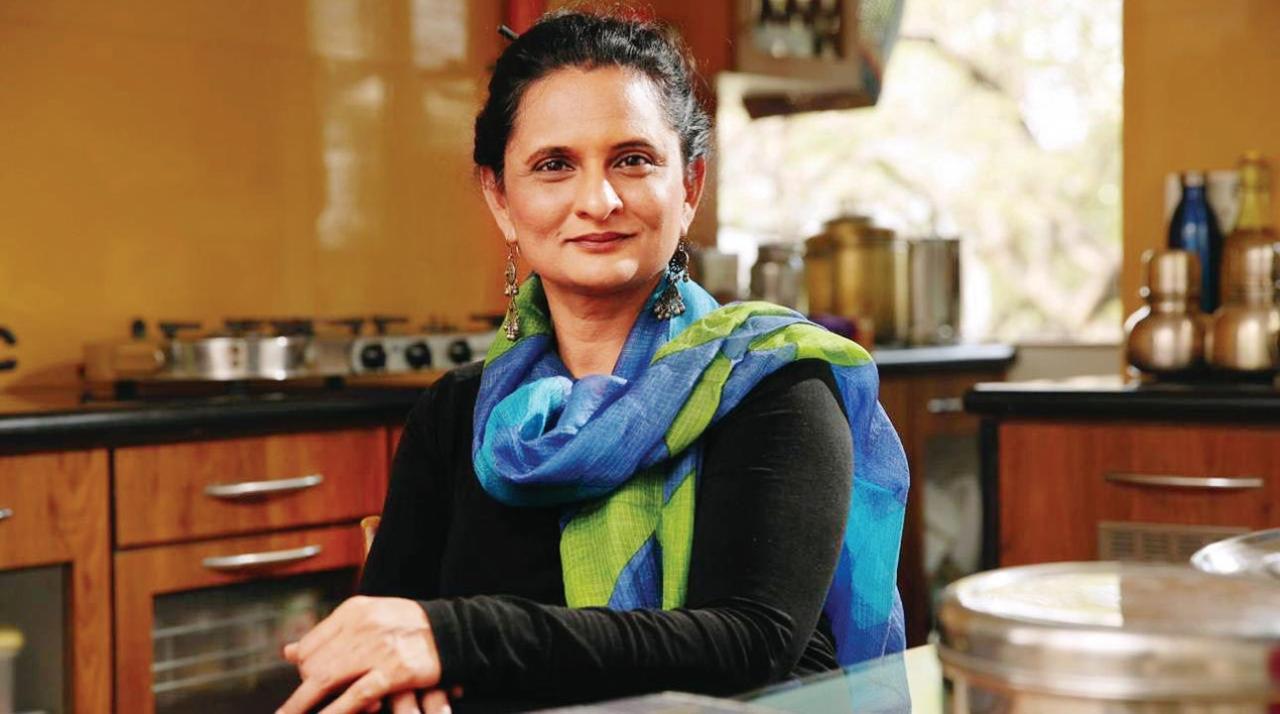
Twelfth Night actor Geetanjali Kulkarni discusses a role that has her switching genders
Mohar Basu (MID-DAY; July 4, 2021)
Following her acts in films like Court (2014), Sir (2018), Photograph (2019) and the recently released series, Gullak, Geetanjali Kulkarni is set to step into the world of Bard. Slipping into the role of Viola in Zee Theatre’s musical adaptation of the Shakespearean comedy, Twelfth Night, the actor will headline the adaptation, Piya Behrupiya, helmed by Atul Kumar.
“This adaptation highlights the time when Viola is shipwrecked on the shores of Illyria, and separated from her twin brother. She dresses up like a man, acquires a different name, and works for the Duke. A complicated love triangle develops between her, the Duke and Olivia. The entire play is about mistaken identities and I am the pivot from where all the fun begins,” she says.
As though showcasing two genders wasn’t challenging enough, Kulkarni was tasked with the job of portraying the confusion of a girl who has to behave like a boy. “It was tricky, but fun.”
That the show will be available in a teleplay format is an exciting development for the actor. “We used the nautanki genre to interpret the play. The audience will enjoy it because it has music, and laughter. Some people have watched the play 10 times over. There is so little positivity around us at the moment that just to be able to feel happiness is a blessing.”
If we resolve Kashmir, we will start fighting over Jhumri Talaiyya-Vishal Bhardwaj
8:12 AM

For anyone who asks, why do the Pataakha sisters fight so much, Vishal Bhardwaj has the question – ‘Why do India-Pakistan fight so much?’ He tells us about the deeper layer in his simple tale of two sisters, and then dives into a vivid recollection of the childhood that made him the filmmaker he is. The Meerut government school with the Rs 1.26 fee, spitting on stones for the deciding toss – all that and more gave him a treasure trove of characters and incidents he can never exhaust
Anshul Chaturvedi and Aarushi Nigam (BOMBAY TIMES; September 26, 2018)
When you adapt Hamlet, you set it in a turbulent Kashmir. When you plan an international film, it’s on Osama bin Laden. When you’re doing Pataakha, something as ostensibly simple as a story of two sisters, you’re giving it an undercurrent of Vajpayee and the Indo-Pak relationship. What is the inherent affinity towards Hindustan-Pakistan, geopolitics?
Because it is so relevant for the times we are living in. Hum logon ki kya, poore South-East Asia ki problem khatam ho jaye agar India-Pakistan ki problem khatam ho jaye. Aur usske jo side effects hain, woh personally humein bhi affect karte hain kahin aake. Aur India-Pakistan ka toh mujhe humesha se laga hai, maybe I was born in Pakistan in my past life (laughs). I feel that there’s no point of us fighting so much. Iss relationship ke upar maine aur kayi kahaani karne ki koshish ki. But when I was exploring this story, toh mujhe yeh andaza aaya... bahut hi khoobsurat kahaani hai, ki these two sisters can’t live with each other or without each other. So when I completed the script, Mira Nair asked me – I was writing this script when I was doing the Broadway musical of Monsoon Wedding with her, and she came and asked me – ‘what are you writing?’ I narrated it to her, and she said, ‘Such a beautiful story. But why do they fight so much?’ I said, I have no answer, because whatever I want to make the reason feels so superficial, aur do behenon ke ladne ka koi reason hi nahi hai. Aur yehi (original) short story mein bhi tha ki woh dono agar ladein na toh unka khana nahi hazam hota tha.
Aur bhi kai logon ne poochha ki bhai yeh ladti kyun hain itna? Toh maine ek din aise hi bola, India-Pakistan kyun ladte hain? Hum log do behenon ki tarah hain, ya do bhaiyon ki tarah. Hum ek thay, ek din ek angrez ne humein kaat ke bol diya ki ab do desh ho gaye. Toh humko itna hate karne ki kya zaroorat hai? Theek hai, Partition mein itna kuch khoon kharaba hua, Hindus killed Muslims, Muslims killed Hindus, in equal measure. Today, even after 70 years, we have not been able to forget it.
Kya reason hai ki hum log itna hate karte hain – koi reason hi nahi hai! Aur hum hate kaise karte hain, we hate each other on the political level, but when we meet as people, we are different. London, Europe, America mein koi Pakistani taxi wala mil jaye, toh woh apne Lahore ki baatein bata deta hai, hum usse apne Bambai ki ghar ki baatein bata dete hain.
And then they don’t charge you money — ‘No, aap toh humare... aap Hindustan se hain, hum aapse paise kaise le sakte hain!’. Wohi aadmi 15 minute baad agar India-Pakistan ka match dekh raha hoga, toh woh bolega India ka harna sabse zyada zaroori hai (smiles). I felt the deeper level of our story, this layer, is the Indo-Pak relationship. And then I weaved that into the whole story.
The India-Pakistan atmosphere keeps changing. So when Pataakha is about to release, Sidhu is being called a Pakistani agent, a BSF jawan has been brutally killed on the border, SPOs have been abducted and killed in Kashmir, talks have been called off — how does a filmmaker balance the contrast between the current prevalent sentiment and his thought process?
India-Pakistan ki hawa toh har saat din mein badalti hai (smiles). Woh kab kahan se kuch ho jaye, pata nahi chalta. Aur humko film banane mein saalon lagte hain, so we can’t depend on ki jab film release hogi tab kya hawa hogi. Aur yeh film kisi ki side nahi le rahi hai. It’s talking about the enmity — the futile, needless, baseless and continuing enmity. Aur ussme kya aadat ho gayi hai — meri film ka character bolta hai, ‘70 saal se upar ho gaye hain, roz ladne ke naye bahaane dhoondh lete hain’. Toh mujhe lagta hai ki agar hum Kashmir resolve bhi kar lenge — jisko main mudda mana jaata hai — toh hum Jhumri Talaiyya pe ladne lagenge. Hum log chain se nahi baith payenge. So we really need to mature as people, because politics is going to remain the same. Politics is not going to change, that’s a given. No matter who comes. Hum log, as people, we can change. Through art we can change – ab usspe bhi asar hone laga hai. Pehle art ko chhora hua tha, ab yeh hai ki wahan ka artist ban kar do... and it’s so baseless. We should behave like mature people now.
Coming to the film, the teasers and especially the song Gali Gali give one the feeling that this has to be made by someone who’s very well acquainted with mud. How much of your own muds plattered childhood has gone into the film?
Dhool mein letne ka jo maza hai, marble pe woh maza nahi hai (laughs). And I think wohi hamara asli heartland, humara India toh wohi hai, ki jahan se hum hain. Aur jaise Gali Gali, jo Holi wala gana hai, kaun sa desh hai jahan iss tareeke se Holi kheli jati hai, ya iss tarah ka tyohar kahin hai? Aur itna khoobsurat tyohar hai, ki jis din aap bilkul kho jayiye, shakl aisi ho ki aapko koi pehchaan na sake. So yeh toh humare culture se hi hai.
The village rabble that you’ve created in Pataakha, or previously in films like Matru Ki Bijlee Ka Mandola or Omkara – where does such bona fide ‘sadakchaap-pan’ come from? Abhishek Chaubey has earlier called you an expert of the Indian street...
(Laughs) Maine apna bachpan Meerut mein guzara hai, bachpan aur jawani dono. Main Delhi University mein aaya for college. Toh mere formative years – Class VI se XII tak – maine ek government inter-college mein padhai ki. Mere parents mujhe ek saal ke baad convent school mein shift karna chahte thay, aur poora hungama karke main ussme nahi gaya, kyunki mere uss waqt dost ban chuke thay. Halaanki usske baad kaafi time tak mujhe uss cheez ka complex raha, DU karne ke baad, that I should have shifted to a convent school. But when I became a filmmaker, I realised what God’s screenplay was for me. Langda Tyagi’s character, I saw because I was in that school. I saw so many gang wars. Government school mein uss waqt humari fees Rs 1 aur 26 paise thi, jabki convent school ki fees hogi kam se kam hazaar ya do hazaar. Toh wahan jo bhi students thay mere around, woh sab uss class se aate thay jo main kabhi apni zindagi mein experience nahi kar pata. I became friends with them, I used to go to their places. And my father was very evolved, he never made me realise that you should not go to ‘their’ houses or not mingle with ‘them’ – he let me be. Main toh Brahmin family se hoon, par main sportsman bana, aur cricket mein hum bahar khelne jaate thay, jab bahar baithte toh vegetarian daal aati thi Rs 10 ki aur unka chicken curry aata tha Rs 25 ka. Toh badi jealousy hoti thi ki yaar, issko pachchees rupaye ka chicken curry mil raha hai, aur mujhe dus rupaye ki daal. I became non-vegetarian for that.
Then I remember, mera ek Muslim dost tha... jahan se maine Muslim culture seekha itna, mere bahut Muslim friends thay, aur mujhe uss culture ka, uss zubaan ka bahut zyada shauk tha. Toh masjid ke saamne ek sheikh saab bahut hi badhiya haleem banate thay, aur wahan pe main ek din khada hoke haleem kha raha tha. Mere father se jaake kisi ne complaint kar di ki aapka beta masjid ke samne haleem kha raha tha (laughs)! When my father asked me, maine bola haan, toh kya burayi ho gayi? Main toh unke ghar roz jaake khata hoon... So wahan se main nikal ke aaya hoon. Aur abhi bhi, jitne characters maine use kar liye hain, usse hazaar-guna characters mere paas hain. Jab bhi main iss tarah ki film banane jaata hoon, mujhe itne incidents bachpan ke yaad aate hain. Jaise Pataakha mein ek sequence hai... bachpan mein jab hum cricket ya gulli danda ya kanche khelte thay, toh toss karne ke liye nahi hota tha, toh pathhar uthake uss par spit karte thay, aur ‘geel-sookh’ karte thay, instead of ‘heads or tails’. Iss poori film mein woh ‘geel-sookh toss’ ka itna bada event hai. This came from my childhood again. So itna sara kuch andar jama hua hai ki ussko jitna kharch karoon, kam hai. Aur isliye mera bada mann karta hai, ki main wapas jaake — although now it becomes very difficult to go and live like a common person, or the common boy I used to be in Meerut.
This is the second time that you have made a comedy, after Matru..., which had got mixed reviews. At that point, had you thought most people didn’t get your film because of its political satire? And had you thought you’d make a comedy again?
Actually woh satire tha, this is not a satire. This is a pure comedy. Aur issme ek layer doosri hai that makes it profound. But Matru... was different, it was against capitalism. Jo bhi capitalism ka haal hai India mein, usske against, land-grabbing ke against, itna zyada gussa tha, ki gusse ko nikaalne ka tareeka hans ke bolna tha. Toh isliye that was a totally different film for me. This is a pure relationship film of two girls, where I could find India-Pakistan.
You’ve also announced your trilogy based on Shakespeare’s comedies. After having done his trilogy of tragedies, do you think it takes a bigger genius to make a great comedy than a great tragedy?
To make a comedy is the most difficult thing. To do humour is a very difficult thing. It’s easy to make a tragedy. But even my tragedy films have a black humour, and I think even Shakespeare’s Macbeth didn’t have that kind of humour — whether it was Pandit-Purohit in Maqbool, or Salman and Salman in Haider, or Langda Tyagi (originally) was not as colourful and humourous as he was in Omkara. So that black humour, I can never leave, but yes, coming to your question, comedy is the most difficult thing to make. And I want to try these three comedies by Shakespeare, starting with Twelfth Night.

Vishal Bhardwaj to adapt Shakespeare’s Twelfth Night for the big screen
8:06 AM

After winning accolades for adapting William Shakespeare’s tragedies on the Indian screen, the filmmaker is now going to make a trilogy inspired by the Bard’s comedies
Lasyapriya Sundaram (BOMBAY TIMES; April 5, 2018)
Vishal Bhardwaj’s trilogy of films based on William Shakespeare’s plays, Maqbool (Macbeth), Omkara (Othello) and Haider (Hamlet) have won plenty of critical acclaim. That’s not all; they have also earned him the tag of being one of the foremost creative minds, adept at making Shakespeare thrive with contemporary India as the backdrop.
 Now, the filmmaker is all set to make the first film in his trilogy of comedies based on the Bard’s plays. In an exclusive conversation with BT, Vishal said, “For a long time now, I have been meaning to start my first film as part of a trilogy based on Shakespearean comedies. My films on his tragedies have received acclaim; they are part of the curriculum in many universities. Recently, a girl from Lucknow completed her doctorate with my trilogy of tragedies as the subject.”
Ask him which play he has zeroed in on and he reveals, “I have had a lot of people come up to me and ask me when am I going to adapt a Shakespearean comedy for the big screen. The first film in the trilogy will be based on Twelfth Night. The film will be called Chaudhvin Ki Raat. This particular play had two titles. One was Twelfth Night and the other was What You Will. The play was called Twelfth Night because it was first performed 12 days after Christmas. The title also refers to the night before Epiphany, the day when the wise men visited infant Jesus. When I wanted adapt it to a more contemporary and Indian setting, I decided to call it Chaudhvin Ki Raat because this night has a huge significance in the Indian context, as the moon is at its most beautiful. There is film an old song titled, ‘Chaudhvin Ka Chand Ho, Ya Aaftaab Ho’ and also a ghazal sung by Ghulam Ali called, ‘Kal Chaudhvin Ki Raat Thi’. The film will be set in contemporary India like all my other films, because I want to tell stories of my country. I want to throw light on the politics, culture and music of contemporary India.”
Who does he have in mind to play the roles of the twins, Viola and Sebastian? He replies, “it will be a big challenge to find an actress who can enact the roles of the twin brother and sister in the play. Cate Blanchett essayed the role of Bob Dylan in the film, I’m Not There. She was very convincing in her role and since then, I have wanted to find an Indian Cate Blanchett. Now, that’s going to be fun. I think that this will be a first in Indian cinema where a girl will play the role of twins, that of a boy and a girl.”
He adds, “Gulzar saab will be collaborating with me on the film. Except a couple of movies, I have done all my films with him. The film will have music as the backdrop. The play’s first line is, ‘If music be the food of love, play on.’ He always helps me bring out the musician in me.”
Subscribe to:
Posts (Atom)