Showing posts with label Tumhari Sulu. Show all posts
Showing posts with label Tumhari Sulu. Show all posts
I experienced the impostor syndrome; wondered how could Shefali Shah come on board within 24 hours-Suresh Triveni
8:05 AM
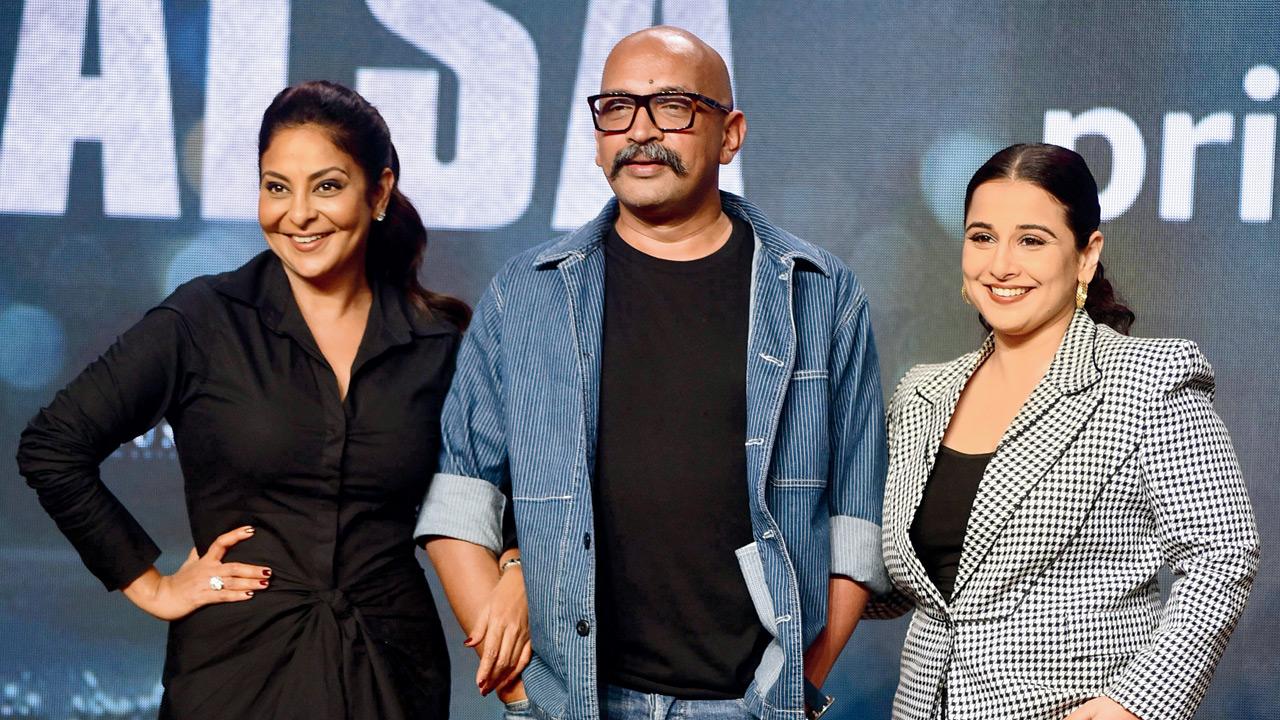
Rachana Dubey (BOMBAY TIMES; March 17, 2022)
It’s taken adman Suresh Triveni a period of five years to put together and craft the thriller Jalsa. The film features Vidya Balan, who also headlined the cast of his directorial debut, Tumhari Sulu, and Shefali Shah, whose work he has closely followed. The film revolves around an incident that impacts the lives of two women from different economic and social strata, which leads to a clash. The film premieres on Amazon Prime Video tomorrow in India and across 240 countries and territories worldwide.
Talking about the driving factors behind Jalsa, Suresh says, “One is the practical side, which comes down to ‘Tumhare paas Vidya aur Shefali ke dates hain, tum abhi shoot karlo!’ The second is that after Tumhari Sulu, there were various labels being attached to me and I had begun to take myself far too seriously. I took a break and got back to advertising for a while. I started working on some scripts; Jalsa was one of them. I realised that if an idea continues to talk to me even six months after I first thought of it, there is something there.”
Jalsa’s trailer, evidently, touches upon victim-blaming, class divide and the perceptions that are formed as a result, apart from several other topics. When asked if that was a conscious call, Suresh says, “Stories are glued together by conflicts, and that comes from some sort of a divide. Otherwise, we’d be in a neutral world with no stories to tell. Yes, victim-blaming is a part of the conversation in this film, but I do not believe in writing anything with an agenda. I’d find myself in another profession if I was doing that. This story has allowed itself to happen a certain way. And I am a huge believer in the term ‘conflict’, which fans so many things in a narrative. What you incur is your own take-away from a film.”
With a powerful combination of female actors in the film, starting with Vidya and Shefali, we wonder what Suresh had in mind as a brief for their roles and how he went about striking a fine balance between their characters and what they eventually get to convey through the film.
Bring this up, and Suresh says, “Shefali came on board after reading a much earlier draft of the film. I experienced the impostor syndrome because I’m a huge fan of her work, and how could she simply say yes to my project within 24 hours. I couldn’t believe it. I had narrated the film to Vidya before she came on board. Both these artistes are gut-oriented, and if they feel something is correct, it is so. Hence, my brief to them was to own the character they’re playing. As a director, I am not one to give micro-directions on what to do in a scene. Telling someone to own their job is a brilliant ploy to make them work at their best. Vidya’s character had to be someone who’s opaque, someone you can’t see through. You don’t know what they are saying, thinking and eventually, writing. I’ve seen such journalists. With Shefali, that brief was to bring a sense of pride in her character. If someone asks her, ‘Tum bai ho?’ She says, ‘Nahi, cook hoon.’ She even dresses up well to work because she’s working at a good place. Both these women have a sense of pride and opacity. You can’t decipher their minds easily.”
Both Tumhari Sulu and Jalsa have a strong female gaze. When asked how he has managed to get it right on both occasions, Suresh says, “I am no authority on gender-based gaze, but I do feel that a situation makes different people react differently — sometimes because of the gender and sometimes because of who they are as people. I don’t look at gender as a lens. In fact, the term ‘woman-centric’ is something I want done away with because when there are two men leading a story, it’s not a man-centric film, is it?”
There have been thrillers after Kahaani, but it continues to be a benchmark-Vidya Balan
8:18 AM
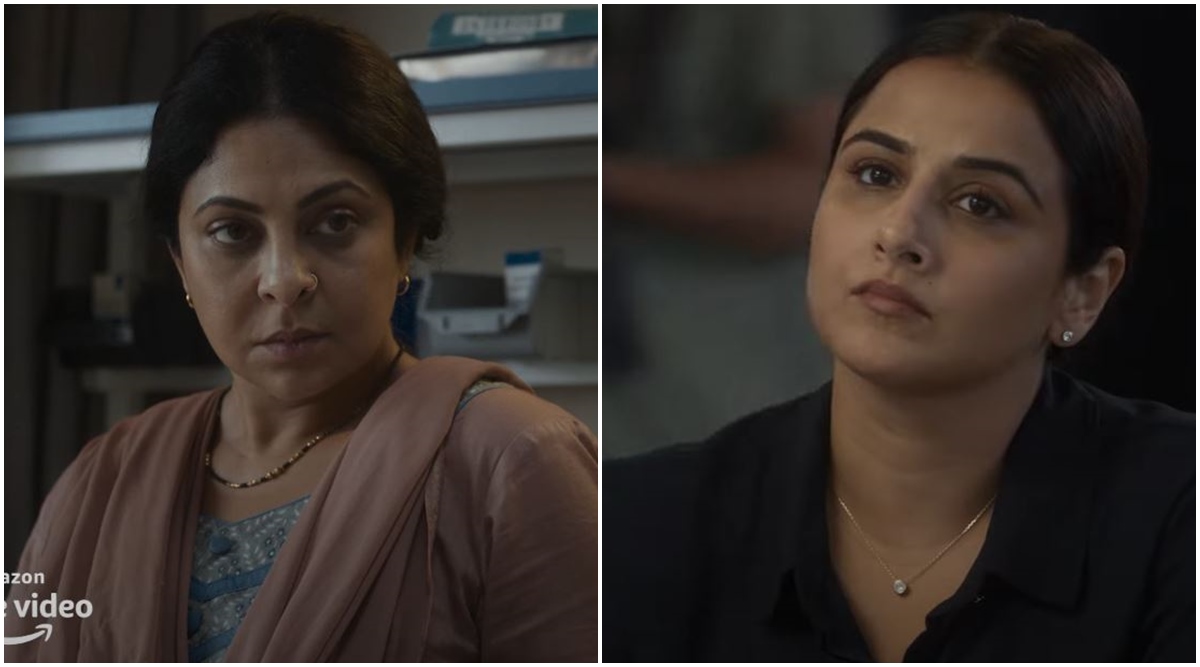
Madhureeta Mukherjee (BOMBAY TIMES; March 16, 2022)
She says she is a greedy actor. The fierceness with which she bites into every role, bringing alive every character she portrays and owning it wholly, we couldn’t agree more with Vidya Balan. It’s her greed for great roles, and the audiences’ hunger to see more of her on any platform that maybe, results in the making of some unforgettable cinema. Vidya leads the show, along with Shefali Shah, in the upcoming, Jalsa, a thriller drama that releases on Amazon Prime Video on March 18. In a conversation with us, she shares her views on women in cinema, in the OTT space, in society, and how the concept of stardom is changing. Here’s a Vidya-view on all these subjects that matter…
This year marks 10 years of Kahaani, a landmark film of your career, and for our cinema. It came at a time when thrillers were far and few in Bollywood, leave alone a woman leading the show with such a compelling story. Ever since, we have had several more, and some of those featuring you. It is indicative of the changing narratives in our cinema, and of course, how you continue to do roles that defy stereotypes and redefine trends.
I was a bit taken aback when you said 10 years of Kahaani. I didn’t realise that, wow! It just seems like yesterday. You are right when you say that there weren’t many thrillers being made back then. And with Kahaani, you had a thriller with a woman at the centre of the story, and not just that, a pregnant woman. People just didn’t know what to expect from it. For Sujoy Ghosh (director), it was a challenge to put the film together. A lot has changed since… now there is a wide range of women’s stories being told. It is so exciting, though I have to say that I hope that the tag of the ‘woman-centric film’ is done away with at some stage. In Jalsa, you have two women leading the story, but it’s a kind of story that could happen to anyone. It is about one incident that just changes your life. Maya (my character) is a journalist. She is self-righteous, and here she is thrown into a sudden situation. It is easy to pronounce judgements on others, but now she is at the receiving end. Every character in this film is under the stress of being judged or judging themselves. Talking about Kahaani, yes, there have been other thrillers, but I think even today Kahaani is a benchmark.
A lot of female actors don’t subscribe to the term ‘woman-centric’ role/movie. In many of your finest films, while you were leading the show, it was the subject and story that took center stage. To put it simply, the subject was the hero, and hence, the films drew the kind of audience they did. Subjects have no gender, so here, the actresses are right in having a problem with the term ‘woman-oriented’. Your view?
I totally agree, and I love the way you have articulated it; I have never been able to articulate it like that. Yes, subjects have no gender and I think universal subjects appeal to me. When the story is not restricted to a gender, and it is about people and humans, it draws me. Like when I first heard the story of Jalsa, I said, ‘This could happen to anyone.’ That’s what hits you hard — the story.
You play a journalist in Jalsa. Over the years, your journey with the media has been interesting. For this part, did you draw any references from your interactions and relationship with the media that you have shared all these years?
Maya is not an entertainment journalist, so there was no exact reference point for me there. A lot of journalists we see around us, and credible names who you think are beyond blemish, are also human. When the camera turns towards them, and they are confronted with certain situations in their life, it would be interesting to see how they would deal with it. Maybe a better way of putting it would be, when the lens of judgement is on them, what happens? Will they crumble? It is easy to put others on the stand, but what happens when you are on the stand, what are the calls that you will take, and what are the choices you will make? Everyone has secrets, and everyone knows their truth — this is the crux of the story and the narrative of every character in the film.
You have worked with director Suresh Triveni in Tumhari Sulu, which was in a very different zone. Jalsa seems to be an intense drama. Is he trying to make a social commentary through this film?
I stay away from any sort of commentaries, but different people will have a different take away from the film and story. At times, people will find layers in everything, and yet, sometimes, they will find nothing at all, so it is subjective. Jalsa is a gripping story, with oodles of drama. I don’t think it is trying to make a commentary. I think it will leave you feeling, ‘Oh, my god, this could be me.’
Currently, there is a lot of conversation around how the digital space has given female actors ample opportunity to play diverse roles, a chance to break the mould, take risks et al . In this case, would you agree that you were ahead of the game, as what we are talking about today — the chances and variety of roles, you took that leap for the big screen long before we were rejoicing in this new wave of content on OTT?
May I say that it is very easy for everyone to now say that. ‘Oh, the OTT space has opened up opportunities for women’. They are basically mitigating the value of the journey that the Hindi film heroine’s arc has gone through. I don’t think the OTT wave has changed anything for women alone, I think it changed the way we view content, and therefore, it has changed content. Obviously, because of that, there is a wider variety of stories being told, and different genres being explored. I think what the OTT space does is that it offers you an intimate, personal experience. When you go into the theatre today, the difference is very stark. You go into the theatre to get the big-screen, heroic, larger-than-life experience. On OTT, you have the luxury of when and what you want to watch. It troubles me when people talk about the OTT space being a game-changer for female actors or female story writers. I don’t think that’s true at all. I am credited with being at the helm of things, but even that, I believe, is about timing and being at the right place, at the right time. And I am not the only actor who has been doing that. Most importantly, there have been others who have followed it up, and we are all in it together.
So, the choices of films that you are making now are irrespective of the medium?
Absolutely! I am medium agnostic. I am a very greedy actor. The platform depends on the content and what sort of film will appeal to what audience. I believe that Jalsa will appeal to a universal audience, it is not just for the Indian audience.
In Jalsa, we have two actors (who happen to be women) who are superb at their craft — Shefali Shah and you — leading the show. It again points to the steady and positive change that we are seeing around us and in our cinema.
Yes, it is because of changing mindsets and evolving audiences, but most importantly, it is reflective of the change happening in society where women are taking centre stage. Today, women are in charge of their own life stories, which is why we are seeing much more of those stories in our cinema.
Do you feel that the concept of stardom has changed, or has been redefined in the current times? And the audience is willing to watch the actors they admire on any medium, as long as they have a great story to tell?
Yes, I think the concept of stardom has changed. The larger-than-life quality of stars has changed over time because of their accessibility on social media. The OTT platform has also created a new breed of stars. If you like an artiste, you will watch what they have to offer on any platform. I don’t think the previous success of a film of an actor has actually mattered ever for their fans. Also, today, I think it’s how exciting your trailer is and what it makes the audience feel is what determines whether they will watch the film or won’t.
Two of your big films released on OTT in the last two years, Shakuntala Devi and Sherni. While releasing a film on a digital platform could be a new experience, do you miss the excitement around a theatrical release, where the box-office numbers keep coming in on a Friday, and there is all that hysteria around it?
Not really. Honestly, it’s the best thing to have happened to Shakuntala Devi and Sherni. Our films were ready, and we had a platform. Both were loved and were very different films, and so is Jalsa. Whether a film is releasing in theatres or OTT, I still feel butterflies in my stomach until I know how the audience is responding to the film. It’s the same nervousness. It’s like you are showing your Simba to the world. The first time you hold your baby out to the world, it will always make you nervous, no matter where and how you show it.
I would have liked to do songs but things are so controlled in the Bollywood music industry...-Karan Kulkarni
8:14 AM

Raat Akeli Hai and Shakuntala Devi's background score composer, Karan Kulkarni says to do what he does, you need to love movies as much as music
Aastha Atray Banan (MID-DAY; August 2, 2020)
 "Making background scores… it all happened by accident," says Karan Kulkarni. A fortunate accident it would seem, because Kulkarni is the man behind the scores for Abhishek Bachchan-starrer Breathe - Into The Shadows, and now, Amazon Prime's upcoming film Shakuntala Devi and Netflix's Raat Akeli Hai. Both released this Friday. The Punekar, who moved to Mumbai to make it as a musician, tells us why he shifted tracks.
"I would have liked to do songs, and I have done many, but things are so controlled in the Bollywood music industry, that only a few directors manage to get their songs into movies. So here, I am, doing background music," he laughs, adding, "I guess, it's best to adapt."
 Since Kulkarni moved to Mumbai nine years ago, he has given music for a short film directed by Vasan Bala. This was after he returned from Australia where he signed up for a music production course. He then started assisting music director Amit Trivedi, but it was with Bala's Peddlers in 2012 that his career truly kicked off. "That movie never released, but it gave me the chance to do something. Then I did Aligarh and Shahid, and it all took off from there."
He also may have been well accustomed to the wily ways of the music industry, and thus, started composing jingles for brands like Amazon and Flipkart. "I did Tumhari Sulu and Mard Ko Dard Nahin Hota, but as I said, it's all very controlled here—how much work a person actually gets [depends on other forces]. Web series have opened up the floor, and the bar is raised high, since you are competing with the best in the world. For example, Stranger Things, which has a great background score, is available to watch on the same platform as my work," says the 34-year-old.
Ask him what makes a music composer different from one who makes background scores, and his answer is deceptively simple. "You need to love movies! Otherwise, how will you know what fits with what? You also need to be able to tell a story through music—and be aware that change is constant, as emotions keep changing. So your music has to based on what's happening on the screen."
Keeping this in mind, Kulkarni's score for Breathe is more "psychological", with character themes for everyone. For Raat Akeli Hai, which is a murder mystery starring Nawazuddin Siddiqui and Radhika Apte, the music had to be darker. "For Shakuntala Devi, everything was more upbeat and positive. There is a certain brightness to it."
Personally, Kulkarni is inspired by music that is technology-driven, so composers like Trent Reznor are high on his listen list. After all, who can forget the brilliant score Reznor gave for Social Network, where the piano melody harbours the power to give rise to an emotion. And Kulkarni has made good use of technology this Coronavirus lockdown. He and his team completed the full score for Shakuntala Devi in four months of lockdown, sometimes going to a studio, but mostly working out of their bedrooms. "It was quite tricky, but we managed. We exchanged samples, and put it all together. It has been a lesson."
Here on, Kulkarni has decided to take on less work. "There are a few projects that have come up, but I am going to take it slow. I am utilising this time to study. I am practising guitar, and also working on the tabla, which is a brand new instrument for me. After a very long time, I am a student again, and I am completely enjoying it."
I hope someday people will talk about the business of films in terms of female actors-Vidya Balan
8:08 AM

Chaya Unnikrishnan (DNA; August 19, 2019)
Dressed in a long kurta with a flared palazzo in magenta and long mane flowing, Vidya Balan looks radiant as we meet for a tête-à-tête. She is receiving rave reviews for her outing as the project director of the Mars Orbiter Mission in her latest release, Mission Mangal, which got an excellent opening at the box office. “From the word go, I had a good feeling about this film. I was sure of it because Balki (writer) narrated the script to me and the moment he finished the narration, I said, I’m doing the film. It’s never happened to me before,” she beams.
Interestingly, after playing a scientist, the Tumhari Sulu star will try her skills in mathematics as she essays the ‘human computer’ Shakuntala Devi in a biopic. “I was good at Maths, but I didn’t like Science, so, I am feeling good I passed this (Mission Mangal) test,” she smiles. Here, the talented actress talks to us about the changing phase of cinema, playing roles with substance and why she took a long gap between Tumhari Sulu and Mission Mangal.
You said you gave your nod to Mission Mangal immediately after R Balki narrated it. What did you like about the script?
Just the fact that everything came together so beautifully. The scale of the mission was big, but the science was simple. There was humour in it and the way personal lives of the characters had been fictionalised, it had drama. Jagan (Shakti, director) inspired faith in me, even though he’s a first-time director. Also, Balki was involved with the project. Then, of course, I was getting to team up with Akshay (Kumar) after Bhool Bhulaiya (2007) and Thank You (2011) — all those factors came later. Once I said yes after the narration, even while filming and promoting, I felt it was a good film.
Tumhari Sulu, which released two years ago, was a hit and you won a lot of acclaim. Still, Mission Mangal came after a long gap...
I didn’t intend it. But I think what happened post Tumhari Sulu is: Firstly, I had a hit after a long time! So, I was just relieved, I think I wanted to enjoy that feeling. Secondly, some of the things I liked were only ideas, like the Shakuntala Devi biopic. The idea was shared with me, but the script was not in place. They were going to start working on it. There were a couple of other things also that I liked and were at different stages of development. So I thought, chalo, let them take time. Anyway, I had worked on three films back-to-back — Kahaani 2, Begum Jaan and Tumhari Sulu. I did a Telugu film in between, but that was not too much work. I enjoyed that time, I think it was just a relief that I had had a hit movie after long (laughs).
People associate you with movies that have substance. Do you choose such roles or do filmmakers approach you with them?
It is my natural inclination and, yes, filmmakers also come to me with such roles. I think that’s because I came in with Parineeta (2005). So, from the beginning, I have always been offered interesting parts. I tried to do different things in between, early on in my career, and I realised I don’t enjoy that kind of stuff (playing the typical glamorous heroine). Since 2008, I decided to only do films that excited me or instinctively felt I must do. So, Paa (2009), Ishqiya (2010), No One Killed Jessica (2011), The Dirty Picture (2011) and Kahaani (2012) happened back-to-back. As these films started seeing success, directors and producers also began to feel, ‘We can go to her with this kind of subject’. It was a choice that I made and I think the success furthered it.
Everyone is talking about how films have become content-driven lately. For you, personally, how has it been?
I think the scope of work that I’ve been offered in the past 11 years, has really widened. Ishqiya was a definitive film in that sense because suddenly, you had a femme fatale who you hadn’t seen in Indian cinema so far. And you know, a rural femme fatale; not a glamorous, cigarette-smoking woman. Slowly, people felt that I was open to doing these kinds of films. They came to me saying, they had a story for long, but didn’t think they could make, but now it’s possible. When these films started seeing success, it encouraged more people to invest in movies like these. Then other actors started doing it. Now, it’s like Pandora’s Box has just been opened. The content is so varied and exciting. Sometimes, it is different for the sake of being different, but that’s okay. At least people are trying. There’s no dearth of exciting content. Even in Mission Mangal, you would have thought that a film that has Akshay Kumar may not have so much for the female leads to do. But this film has.
Right, but it is being touted as Akshay Kumar’s biggest opener...
Yes, but that’s because they still talk about the business of films in terms of the male actors. When people said the poster has Akshay’s face so prominently — it’s not fair because it’s about the women — I said, ‘I’m happy to use his stardom to my advantage’. You have to be practical about these things. He is the biggest star amongst all of us. And if it’s going to help us get more people into the theatre, why not? But now that the film is released, actually, a few people asked me this, not just in interviews, even otherwise. And I’m saying, that will also change, someday they’ll talk about the business of films in terms of female actors.
In this film there are five known actresses, was it necessary to have a mainstream hero in the film?
It was not necessary but faayda hua. Akshay’s a huge superstar, so it makes the film accessible to that many more people. By putting his face prominently on the poster, it will bring more eyeballs. But, I’m saying someday, I hope my face is equally big or bigger (than the male star). Not just mine, but all the girls’. Similarly, I hope the business gets talked about in terms of a Vidya Balan and Akshay Kumar film. That change will happen. I always look at the glass as half-full. What’s extremely heartening for me is the fact that in a film with Akshay Kumar, the roles (his and hers) are of equal importance. That itself is a step forward. Normally in any big hero’s film, the female part is not so strong, but I have played such a prominent role, it gives me great satisfaction and is fulfilling.
Actors don't have a shelf life, stars do-Vidya Balan
8:21 AM

Vidya Balan busting the myths around girl bonding in Bollywood, the shelf life of actresses and why her career isn't a chore for her
Mohar Basu (MID-DAY; August 18, 2019)
We meet Vidya Balan on the last day of Mission Mangal promotions. Dressed in finery after swiftly wrapping up last-minute work, she settles in her sea-facing room at a suburban five-star. "During Kahaani (2012), I made a personal record of 58 interviews in a day. This feels a lot a lighter," she starts off. Feet up, sinking inside a quilt, a visibly exhausted Balan retains her affable smile as we chat about the shifting definition of a female actor, the reason behind her long gaps, the myth of female catfights and the long wait up to her passion project—the Indira Gandhi biopic.
Edited excerpts from the interview.
It's been a year and half since Tumhari Sulu (2017). Why did you take such a long gap?
I did three films back to back [Kahaani 2, Begum Jaan, Tumhari Sulu] and after that I didn't want to jump into another one immediately. I loved Mission Mangal which is why I took it up. I need time to rejuvenate after gruelling work and family time is sacrosanct; I prefer to take things at my own pace. There have been instances in the past when I have gone on set and said, "Pack up kab hai?" That's a red flag for me. My work cannot become a chore. I am not here to churn films, neither am I in any tearing hurry to get anywhere. I am here for a lifetime.
But the common assumption is that actors have a shelf life.
Actors don't have a shelf life, stars do. Being in the public eye and living under constant scrutiny can get daunting and draining after a while. By design, that is changing because the fabric of movies and audience is changing. Hence the concentration is on becoming a better actor [with each film], not a star. My 'care-a-damn' attitude works and it is the only way I know [how to survive], which is why I am here [in Bollywood] for as long as I want to.
In a cast full of women, all stars in their own right, how regular were the catfights?
(Laughs) That's a cliché. People believe when female actors work together, tensions and insecurities run high. However, in my experience, that is hogwash. I did Begum Jaan with an ensemble female cast [and there were no catfights]. It's even more creditable here because each of us—Taapsee (Pannu), Nithya (Menen), Sonakshi (Sinha), Kirti (Kulhari)—are stars in our own right. We were secure and it was a joyous experience to work together. High time we made a girls' road trip film in India. The cliché [about catfights] was probably true in the past, but women stand together today.
Being the primary lead in the film, doesn't it bother you that Akshay Kumar's face is more prominent on the poster?
[The emotion is] far from it. If Mission Mangal does well, we will all gain from it. Having his face [on the poster], guarantees more footfall in the theatres; and I have no qualms using his stardom. In the films I headline, I am prominent on the poster. We all have prominent roles, but when there is a star like Akshay Kumar, it makes sense. I know the film I signed up for and I am okay with whatever they do to market it. My experience helps me see things in perspective.
Last November, filmmaker Radha Bharadwaj reached out to mid-day about a legal suit she filed on you for passing her film idea (similar to Mission Mangal) to R Balki.
And we won the case. Although I never met Radha, her script came to me through my agent, Bling [Entertainment]. I was offered four films on the same subject. One script that Atul Kasbekar wanted to produce was still at the ideation stage; and there was nothing for me to do in it. Ronnie Screwvala had a similar script with two character options—a 22-year-old and a 55-year-old—I declined it because I fit neither. Each of the scripts gave me the feeling of something missing. Mission Mangal scripted beautiful personal lives for each scientist, the science was simplified, the mission was detailed and I loved it. I was on board as soon as I finished reading. Having spent 15 years in the business, I respect everyone who comes to me and I pride myself for my integrity. Not once have I shared another person's idea with another filmmaker. I am happy truth prevailed.
Did you feel targeted because you are a star?
We are definitely scrutinised more. I felt it was unfair to me, considering I never announce my own films. It always comes from a director or producer. I was taken aback when it happened and that too on the first day of our shoot. Last one month, the pressure increased because Radha wanted clarity before our film's release. I can empathise with that, especially for someone who has worked on a script for long. The information is on public domain and there is no limit on how many films can be made on the same subject, like the Bhagat Singh biopics that all happened at the same time.
What is next in the pipeline?
I start prep for the Shakuntala Devi biopic soon. The Indira Gandhi biopic [based on author-journalist Sagarika Ghose's book Indira: India's Most Powerful Prime Minister] will take more time to be structurally drafted and Ritesh Batra is working hard on it. The web series is a mammoth amount of work. It is a passion project.
Are you involved in the writing process of the series?
I don't have the talent, bandwidth or discipline for it [writing]. I respond better to what is being written. May be by year-end, once the material is ready, we could start discussions. It may also take another two years, but it's worth the wait. Sometimes, I worry that it's taking too long, but then, I don't have to go anywhere. Good things require patient brewing.
Any plans to venture into production someday?
No. Ronnie offered me the producer credit [for Natkhat] because there is no money in short films. Siddharth [Roy Kapur, husband] is a producer. Honestly, I am living my only dream of being an actor. Producers have plenty to handle, and I am clear, I want to be on the other side, being handled (laughs).

I am here to stay, so it doesn’t matter how many films I do in a year-Vidya Balan
7:52 AM

Madhureeta Mukherjee (BOMBAY TIMES; August 14, 2019)
In an industry where the power scale continues to tip largely towards the leading male stars, Vidya Balan has held her own; making brave moves and rare choices. The scenario is gradually changing, and mindsets, too. And Vidya, whose upcoming film Mission Mangal is on the verge of release, rightly explains, “It takes a lot to stand up for yourself, and I think women are slowly getting there.” In a conversation with BT, she expresses her opinions on the over-sensitive section of the social media, how women should adeptly use their EQ to make the cut in a man’s world, and how she doesn’t need to clock in more movies to prove a point. Read on...
We have seen you lead the show in most of your films, and then, here is this ambitious mission-to-Mars film, with a new director and a huge star cast. You haven’t really been seen in this space before...
WelI, I had worked with Jagan (Shakti, director) on Paa (2009), as he was assisting R Balki then. He showed me all the videos and presentations he had, and I asked him why he wanted to make this film. For a first-time director, Mission Mangal is quite an ambitious film to attempt. He said that he has been wanting to tell this story for a long time now; also, his sister (Sujatha) is a part of the Indian Space Research Organisation (ISRO), hence, he knew quite a few scientists. He had done hours of research and culled out all the highlights to make it cinematic. I had been offered films on the same subject thrice before, but none of those really interested me. But when Balki narrated this story to me, I instantly said… I am in. That is a rarity for me.
The information and details about MOM (Mars Orbiter Mission) are pretty much in the public domain, but the way the lives of the characters in the film are fictionalised, it gives the film a wholesome feel. What interested me about the story is not just the mission, but what the characters were going through in their personal lives. Thankfully, I believe that in reality, those scientists didn’t go through such conflicts, but cinematically, we needed that. So, here, we juxtapose both — their lives and the mission at hand.
Add to that, a bunch of very talented women sharing screen space, which is a rarity, too...
Akshay was already on board when I heard the story, and then they told me about the rest of the cast. I thought that if this cast comes together, it will be fantastic. I am so glad it did. How often do you get to work in an ensemble cast like this, and in this day and age?
In an interview, Taapsee Pannu said that it is tough to get an A-list male actor to feature in a film where the women have a massive role to play? Having headlined so many films as a ‘hero’ in the typical sense, if I might say so, what do you have to say to that?
I think it is fantastic that Akshay is part of a film (as actor and co-producer) that has so many female actors. That is incredible. I have seen a lot of films that came along, but it didn’t get a so-called superstar. I am talking about the early days of my career, around 2005-2006, when there were quite a few films which the male superstar didn’t consider at all, because they had a woman playing the protagonist. They didn’t end up doing it, the budget didn’t get justified, and finally, the film was shelved. Hence, this project (Mission Mangal) is a fantastic attempt. Having said that, there is still a long way to go. If it was just one woman in this film, then we’d have to see how far it would have gone (laughs!).
When the first poster of the Mission Mangal was released, it became a talking point. People felt that Akshay got more prominence in it than the rest of the actresses. While it is important to have such conversations, the industry’s point of view remains that whoever draws in the audience leads the promotions. In fact, your other co-stars from the film like Tapsee and Sonakshi, too, agreed on it. Your thoughts...
Well, we are in the business of cinema. And finally, if Akshay is going to sell the maximum tickets, it only makes better business sense. Slowly, actresses are gaining in strength, and someday, our faces will be equal, if not bigger than the lead actor. I am saying this in jest, and with no feeling of being slighted or anything. Also, I really feel that we are getting touchy about too many things these days. It is great that today there are conversations about so many things (on social media) that people would not speak about before, but sometimes, I do think that the people who are commenting are not even aware of what they are saying. They want to be part of a herd, and they feel compelled to take on other people’s opinions, just so that they look like they have one, too.
Do you feel pressurised to comment on various issues, give your point of view (POV), react and respond to everything being said and done (in the universe of movies and the world around us).
Yes! People out there want everyone to give their opinion on everything. Many times, I don’t have a POV on a lot of things, and I am okay with admitting that. If someone asks me about some political developments in our country, I say that I can’t comment on it as I am not fully aware of it. I don’t think as actors we need to be aware of everything. In that case, even non-actors should be aware of everything. Why are we actors held to higher standards than everyone else? We are blamed for everything like all the evils in our society, perpetuating stereotypes, not standing up for a cause, not giving an opinion, or not rallying together. It is like we are held responsible for everything, why?
Talking about feats, you have pulled off quite a few on celluloid. A lot of the characters you have portrayed, like Ishqiya (2010), The Dirty Picture (2011) and Begum Jaan (2017), command authority and exude power. In reality, do you feel that women think twice before exercising their power in various areas of life? Is a woman’s show of strength often considered to be arrogance in a man’s world?
Women are emotionally extremely strong, while men are physically strong. The moment a woman enters the left-brain domain, she brings a certain soft power and EQ (emotional quotient) to the table. We use that to bring out the best in people and situations. When we are in a man’s world, we often start thinking that we need to be like men to be successful. And when that happens, you begin to take on their aggression and other traits. I feel that’s not needed. When there is a marriage of our strength and theirs, we can achieve great results. Sometimes, I know that we (women) have had to portray ourselves as being more powerful, more aggressive, only so that we are seen as professionals and not soppy, emotional people. This struggle makes it harder for us. Of course, there are individual differences in all of this. We suppress that power that we naturally have within ourselves. The more we become comfortable with ourselves, the more we won’t feel the need to align with what we see as expressions of power in men. Women can redefine power. Yes, it’s true that women often tend to accept less, because they feel that they can’t ask for more, or ask for what is rightfully theirs — whether it is more responsibility or respect. It takes a lot to stand up for yourself, and I think women are slowly getting there.
The good thing is that today, whether a film is headlined by women, men, or both, or by a huge line-up of stars, beyond a point that does not matter. At least, for a section of the audience, who is looking for good content, great stories and nothing else...
Yes, this means that we will churn better content, and it is a great time to be in the movies. This also means that today, it’s not just the superstars’ films that have chances of getting an audience and doing well. It opens the horizon for all of us and there is an audience for every kind of film. In the past, I remember someone telling me, ‘I don’t know if India is ready for a space film’. The way Mission Mangal is made, whether or not you are ready for it, you will get it. It is simplified, without compromising on what needs to be explained. The parlance is not scientific in that sense. If you ask me, which is my favourite sci-fi film, I have very few, as I get intimidated by science.
Also, today, the audience is looking for heroes in common people. They are keen to see stories about simple heroic deeds that impact their lives. Right?
Now, we are no longer saying that the hero is some other-worldly being. If the hero is one of us, that excites the audience. Hence, we are seeing all kinds of unlikely heroes. Today, the hero does not need to bash up ten people; instead, if that person is able to live his or her life well and realise their dreams, then that is inspiring. It makes the audience feel that they have a chance at being a hero, too. That is what social media is doing, isn’t it? It makes everyone feel that their voice has value and their words have power. I am not sure if that it is a great thing always, in this respect, but that is what is happening.
There was a point earlier when you were trying to fit in, be a certain type and look a certain way. Then you broke those barriers and set yourself free from those trappings. Subsequently, we saw you flourish in roles like The Dirty Picture (2011), Kahaani (2012) and more, but still at that point, you were in the process of gaining a strong foothold in the industry. Now, having made a crack (a big one at that), and settling into a space that truly belongs to you, is life calmer? Are you more in control and has it slowed your pace, work-wise?
I did three intense films back-to-back, Kahaani 2 (2016), Begum Jaan (2017) and Tumhari Sulu (2017). When you are leading films like that, there is prep, shoot, dubbing and promotions. Five months or more are consumed by one film. I had three releases in a span of one-and-a-half-years or less. It got a bit too much. I also need time for myself, spend time with family, read and travel. It was coincidental that the subjects that I had liked were being developed. The only ready project was Mission Mangal, which I agreed to do immediately. I know that I am here to stay, so it doesn’t matter how many films I do in a year. I think that I am an eternal optimist. I always feel that this is the best time of my life. I felt that way even in my worst phase, at a time when my films were not working. I have this attitude and it is a blessing. I feel that I am having the best time of my life and wonder how it can get any better. I am still as passionate about cinema and that has not changed at all. Like I said, I don’t feel the need to clock in a certain number of films. I did a Telugu film in between, which was like doing two films and I ended up shooting more than I thought I would. I am starting the biopic on Shakuntala Devi immediately after Mission Mangal releases. I want to work at my pace. I think after that phase, where I had five hits and then my films flopped one after the other, I kept thinking about what is going wrong. I couldn’t figure what needed fixing, and then, that phase taught me that nothing needed fixing. I realised that this is how it is, and this is how it is always going to be. If that phase (of success) wasn’t permanent, even this wouldn’t be. I guess, it is all about growing up. And the amazing thing is that, the more I grow up, the more I am in touch with the child in me. It is because it frees you. I am not waiting for validation, approval or acceptance anymore, it’s all there (in your head). It is never an absolute, but I am definitely better than I was before.

You need to reinvent yourself with the times-Madhuri Dixit
8:21 AM

Nayandeep Rakshit (DNA; February 16, 2019)
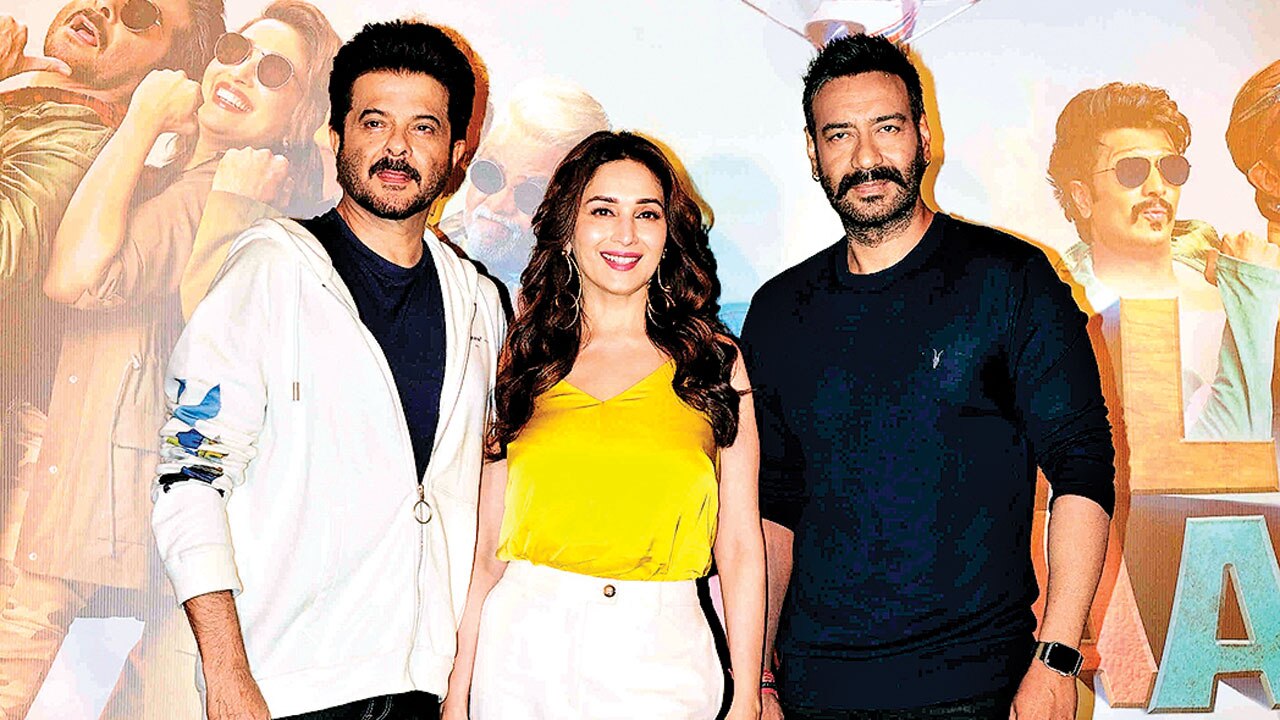
Madhuri Dixit-Nene is amused that every time she has a movie up for release, it’s termed as her comeback. She laughs, “I think people should invent some new word now.” However, after a 35-year-long career (her first film Abodh released in 1984), she does feel that a new innings begins with Total Dhamaal. Whether it’s content or the kinds of roles written for women, the actress feels that there’s more scope to experiment today and she’s not sticking to any formula. She has a madcap comic caper like Total Dhamaal lined up, followed by a more emotional and layered Kalank this year. Apart from this, the 51-year-old is in talks with prominent filmmakers for a few other projects. In a freewheeling chat, the Padma Shri recipient discusses about writers emerging as the true game-changers in Bollywood and sharing screen space with her former co-stars once again. Excerpts...
Today, many of the ’90s actresses are playing prominent parts in movies. This wasn’t the case earlier...
You need to reinvent yourself with the times. Now, we have more opportunities than what women had in the ’70s. There are so many diverse mediums today — whether it’s social media, TV or the digital platform — through which you can keep yourself busy. There’s a lot that an actor can do, other than just working in films. It also gives you opportunities to not just stick to your profession, but also utilise it to do other things that are relevant. Like women and children are subjects I feel strongly about, so I work on that with UNICEF. I have made proper use of the myriad platforms.
The old pairings too are back — Anil Kapoor is working with you, Juhi Chawla and Aishwarya Rai Bachchan. Sanjay Dutt will also share screen space with you and Manisha Koirala...
Everything has changed — from the writing to the audience. They don’t mind seeing married heroines or actors with kids. Nobody cares about all that anymore — they just want to see good films. If you act well and look good, they will appreciate it. Anil ji is working with all his heroines from the ’90s. The audience is more exposed to OTT platforms today, so you are watching eclectic roles, movies and series. Actresses of different ages are playing diverse roles. And people have started accepting that as they have matured.
Male superstars have been traditionally paired opposite younger heroines. But do you think they are no longer hesitant of being paired with actresses they started with?
It’s not the actors who are making it possible for us. I believe it’s the writers who are making all the difference. I would give them the credit because they are creating these roles where women are portrayed in not just the stereotypical mother and sister characters. Whether you’re a mother or not, it doesn’t matter, you can still be a professional. In Tumhari Sulu (2017), Vidya Balan’s character becomes an RJ and does something out of the box for the family. She’s enjoying it and happy with it. Writing these roles have brought in a huge change for sure.
Total Dhamaal brings you with a lot of your former co-stars. Barring Riteish Deshmukh, you’ve worked with almost everyone...
It’s a funny film. I can’t tell you how amazing it was to shoot Total Dhamaal. The team used to crack me up even more in-between shots, than what you’ll see in the film. This is a crazy bunch who is always ready with one-liners. Everyone is so entertaining and they are nice people. I have worked with most of them — Riteish (Deshmukh), Sanjay Mishra ji and Pitobash are the only ones I had not worked with before. It was a blast shooting with everyone. This is one film which I have really enjoyed working on.
Did the reunion prompt you in a way to give your nod to the film?
Yes, of course. I have done three films with Indu ji (Indra Kumar). I’ll be working with Anil ji after Pukar (2000) and Ajay Devgn after Yeh Raaste Hain Pyaar Ke (2001). It’s a multi-starrer and you’re comfortable with the fact. You know it’s not going to be just you on the screen from start to end. But it’s a dhamaal film (laughs). I heard the script, I loved it and I did it.
As compared to Dedh Ishqiya (2014) and Gulaab Gang (2014), Dhamaal is lighter and more commercial. Was it a conscious move?
I did Dedh Ishqiya because it had a nice angle and the story was written cleverly. I did Gulaab Gang as it was about women empowerment. It was about a woman who took matters into her own hands and executed plans. So, it gave me a chance to do a lot of fights and stunts myself. That was wonderful for me. Then, there was the Marathi film Bucket List (2018), which was a sweet film. Now with Total Dhamaal, it’s a homecoming for me as I’ve worked with almost the entire team. Plus, it’s a comedy which I’m doing after a long time. I have done more serious movies in my career, so this gave me a different opportunity. Kalank is again a subdued, nuanced period film. So I thought it would be a nice collage.
Do you think comedy films in Bollywood are still underrated?
Not at all. Look at Badhaai Ho (2018), the sense of comedy in a film which deals about a rather serious topic of a mother getting pregnant in her 50s is outstanding. The way they have dealt with the situation in the film is extremely funny. Even Tumhari Sulu was a lovely script. There was a sense of humour attached to everything that was happening. Yes, Total Dhamaal is more commercial, it’s like an out-and-out comedy entertainer. This genre is also very ’90s — right from the scenes to the music and adventure mixed into one plot.
For me, it’s not about looking but being sexy-Vidya Balan
8:15 AM

Vidya Balan on shattering stereotypes and being fascinated by Indira Gandhi, the person, more than the persona
Roshmila Bhattacharya (MUMBAI MIRROR; January 17, 2018)
Tumhari Sulu has struck a chord with the audience…
Yes, it has. A lady who recently separated from her husband took her two sons to watch the film and thanked me later for helping them realise her worth and the worth of her decision. Such reactions are so satisfying because I gave the nod to the film as soon as the narration ended, and that’s rarely happened. When I told the delighted writer, Suresh Triveni, this, he made me write it on his copy of the script. You may not identify with Sulu all the way, but there are moments that are definitely empathetic.
Yes, I had a moment of empathy too when everyone blames her and her job after her son, Pranav, is suspended from school, and puts pressure on Sulu to quit.
Every woman, no matter how successful, while juggling the roles of wife, mother, daughter, friend and a professional, feels personally responsible for her kids. It’s the kind of script you would expect a woman to write, that it was penned by a man makes it all the more special. There are subtle nuances in the relationship between Sulu and her husband Ashok, between her and her extended family who find it hard to accept that the black sheep has made good and compounds her problems, insisting she quit.
I thought it was important she go back to her job and continue working as a late-night radio jockey because she enjoys it. Eventually it boils down to choices, which often is subtly forced upon us by pointing fingers. Also, even when she wasn’t working, Sulu is the decision maker in the family and Ashok is okay with her taking charge. It’s an equal partnership.
Equal partnership, isn’t that just a myth? How many husbands help out with the chores even if the wife is working?
True. During the film’s promotions, I met lots of women who were raving about their “supportive” husbands but on probing admitted they did all the cooking, cleaning and washing themselves. The fact is that women still feel grateful when allowed to go out and work, so even though they end up sharing household expenses, they don’t make an issue of sharing household chores. I’m not promoting ‘bagawat’ here, but for me Shefali Shah, a conservative houswife, stepping out into the living room to sit with the men in the short film Juice, so she can enjoy the cooler which offers respite from the sveltering kitchen, was a statement in itself.
Sulu redefined the concept of ‘sexy’. From The Dirty Picture to Tumhari Sulu, you’ve come a long way.
Silk in The Dirty Picture used her body as her currency, Sulu uses her spirit. And don’t forget Krishna in Ishqiya who used her seductive powers to get the two men (Naseeruddin Shah and Arshad Warsi) to do what she wanted.
Yes, Sulu shattered the stereotype that a late-night radio jockey has to be overly sexy— short skirt, long legs. It would have been impossible before this film to imagine a middle-class housewife, married for 12 years, with a son, speaking to strangers in such an intimate way. For me, ‘sexy’ is not about looking sexy, it’s about being sexy. Sulu telling her husband with a naughty twinkle that muh lag ke bahut din hue (it’s been a long time since we had sex) in between washing bartan and preparing her son’s dabba, is sexy.
Lots of people tell me that they are surprised by my choices of bold roles given my traditional appearance. My answer to them is I wear the clothes I do because I feel good and comfortable in them, they don’t have anything to do with how progressive I am. Why are people so quick to judge on the basis of appearances?
When you reflect on your last few releases, where do you think you went wrong?
It’s hard to pinpoint as there is no recipe for success. When Hamari Adhuri Kahani released, many felt it was regressive but for me given where Vasudha came from, I thought it was a big step for her to walk away from her husband. Maybe because it wasn’t a song-and-dance film, people weren’t drawn to the theatres, but many have seen it on TV and digital platforms and liked it. Begum Jaan again was too intense and even I go to see a film that makes me feel good about life. Kahaani 2 suffered from being called Kahaani 2. Maybe it didn’t match up to the raised expectations, particularly the end, but given the subject, it did well. The business was almost at par with Tumahri Sulu, yet it was called a flop because it was not another Kahaani.
Where do you go from here?
I’ve never planned my career so I’m waiting for the next script to come and blow my mind. There are a couple of things I’m toying with as I bask in the love for Sulu. Commercial success is important and last year was encouraging. It’s a potent time for cinema. Every kind of story has an audience today.
You’ve bought the rights to Sagarika Ghose’s book, Indira - India’s Most Powerful Prime Minister, and you are turning producer with it. When does it roll?
I’m too consumed as an actress to be a hands-on producer, that could take away focus from what I love doing. But I will be involved in every way. There’s still a long way to go for this one though. I’ve always wanted to play Indira Gandhi, an inspiring and powerful woman. In the book she comes across as a person rather than the persona. I’m not politically driven, so I’m more interested in the woman than India’s Prime Minister. I liked the book’s human approach to the subject.
Aren’t you afraid of the project running into rough weather?
I’m a positive person and I believe the road ahead will be smooth. That’s the only way to do anything.
Cinema must be the common ground between your producer-husband Siddharth Roy Kapur and you.
Yeah, I’m passionate about acting while Siddharth is passionate about movies. You could wake him up at 5 am and ask him to watch a brilliant film and he’ll happily compromise on his sleep. I won’t. He is also a non-judgemental audience.
Will the two of you collaborate on a film?
Unless it’s an unavoidable situation, we’d rather not work together.
Despite this no-no you make a perfect match…
(Laughs) If you said this to Siddharth he’d blush. He’s an intensely private person. I’m the badmash, but I respect that he guards his privacy zealously. Yes, It’s been good for us so far. Touchwood.
I asked myself, ‘is this is the end?’ That was a very scary moment-Neha Dhupia
8:07 AM

Aastha Atray Banan (MID-DAY; December 31, 2017)
A t the end of 2016, Neha Dhupia found herself in a slump. “I saw myself sitting at home with no work, I was beating myself up for no fault of mine, and I saw it reflecting on it my mind and body. I had a flash, where I asked myself, ‘is this is the end?’ That was a very scary moment, and I knew I had to turn it around. I couldn’t let it be the end, I couldn’t go back to where I had come from,” says Dhupia, as we talk on the sets of the chat show she hosts.
Dhupia, dressed in a flowing blue dress, today looks like a woman completely in charge, of her life and career. But even though she won the Miss India title in 2002, the turnaround in career, she says came on January 1, 2017, when she was on holiday in New York with bestie Karan Johar. “Karan and I were having coffee and I said to him ‘you are serving me coffee, and you have the Midas touch. So, just imagine what a year it’s going to be. I am going to make this a tradition,” she laughs.
Since then, Dhupia has hosted a podcast, starred in movies (Tumhari Sulu, Hindi Medium, Qarib Qarib Singlle), hosted Roadies, is the new host of BFF with Vogue, and has been inducted and firmly established as a Bollywood insider, personally and professionally (she is also in Johar’s next movie). “I hate being called a Bollywood insider — I just host a show where I interview people. Karan has been a friend for a long time now — I would describe him like nobody would believe — simple, that’s what he is.”
Her down-to-earth demeanour is only accentuated by her never-say-die attitude. It’s no wonder then that the Army brat, who has starred in the controversial Julie (2004), has managed to stick around for 15 years. “I realised that if I was not satisfied by the work I am getting, I had to create my own work. I am semi famous, I have some contacts — I am going to make the most of it. You’ve got to get up and hustle every day. Some things have done well, but there are also hundred things I did that didn’t work. The beauty of failing is that you have tried.”
The year ended on a bang with her winning a film award for best supporting actress for Tumhari Sulu. “I dedicated the award to every one who was standing on the sidelines. There is no more an outsider in this industry than I am. I have no background ; at one point, my job was to change shoes of models back stage. I have so much gratitude for this — talking to you, the photographer taking my pictures, this AC trailer, I am so thankful for every single thing.”
But, Dhupia is quick to point out that it wouldn’t be possible without her discipline and Army upbringing. “The biggest question on my group chat with my team is ‘when do you sleep?’. I can’t get into bed to sleep — I only pass out when I am exhausted.”
At the end of it, she says, it’s not just about your work, but also your confidence and strength. “Whether it’s the youth who look up to me thanks to Roadies, or women who like the way I dress — You never know how you are impacting people.”
2017: The year when Everywoman dominated
7:54 AM

Mayank Shekhar (MID-DAY; December 30, 2017)
Tanuja Chandra’s Qarib Qarib Singlle, if you recall, was about Irrfan’s rather ‘rangeela’ character taking his online date to meet his past three lovers, just so he can prove to her how women, even when they’re not with him, continue to adore him still.
The second stop on their road trip is in Rishikesh. You sort of have an idea what kinda Girlfriend No 1’ will show up. The girl who emerges instead is a podgy, giggly middle-class woman, brimming with life and realism, and yet so much fun, that that scene/moment/cameo/character remains for me the absolute highlight of 2017. As is the heroine of Qarib — Parvathy — who got introduced to Bollywood with the film (she has over 20 acting credits back in Kerala). And thanks to my interest in her, I got to see another gem (in Malayalam) this year, Mahesh Narayan’s Take Off, which is based on the same incident as Tiger Zinda Hai (abduction of Indian nurses by the IS in Tikrit, Iraq). Parvathy plays the savior, protagonist. She’s a nurse (as against Salman’s Rambo). So you know Take Off is absolutely nothing like Tiger.

But more importantly Parvathy’s Sameera in Take Off looks/behaves nothing like Qarib’s Jaya. Further, I decided to catch Anjali Menon’s Bangalore Days (2014), which has three important female characters. It was impossible for me to figure out which of the three was Parvathy, the reason I’d clicked on the film in the first place (she plays a physically challenged RJ in this strikingly mature romantic film).
Clearly Parvathy exhibits a chameleon like quality to transform herself from one photograph to another, let alone roles — something we often associate with actor Kangana Ranaut in Mumbai. Another feature you could tag her along with Ranaut for is an ability to call out hypocrisy, take on detractors, rather than call a spade a donkey. As the brave Parvathy did late this year, taking on trolls who had problems with the fact that she had a problem with misogyny in one of superstar Mamoothy’s films.

Is this a good way to challenge centuries of insensitivity towards women in general (and therefore in cinema)? Yes. But along with playing parts in pictures that change the scenery just as well. As did Vidya Balan walking on to the screen as an over-weight aunty from Virar, and cracking it as Sulu in Tumhari Sulu. Or Sridevi did as a clever mom in Mom, planning to avenge her daughter’s rape. Or in fact Bhumi Pednekar, perhaps more than others did, stepping out in the open, defecating in the wilds, to shine a torch on the problem of toilets (or lack of them) in India, for a film called Toilet, which earned over Rs 100 crore.
Gauging global/box-office appeal of Priyanka Chopra, Anushka Sharma and Deepika Paukone, we had dubbed 2017 ‘year of the woman’ for Bollywood. It takes generations for society (and hence cinema) to go from appreciating the ‘Hot Woman’ to the Everywoman.
Sometimes it can happen in a year. It did.

It is only now that there are films being made around women-Kajol
2:35 PM

Divya Kaushik (BOMBAY TIMES; December 23, 2017)
Kajol might not be very active on social media, but when she was in Delhi recently at one of the sessions at the CII Big Picture Summit, she spoke about why she felt that some amount of self-censorship was necessary on social media. “As stars, you have to accept the pros and cons of power. What you say might be inferred in different ways by different people. I do believe in self-censorship, there are views that I would probably not want to put out on social media, not because I don’t want to stand up for it, but because I don’t have the right words to make it sound politically correct. Every star has to measure their words and tweets. We do have freedom of expression, but it has to be put out in the most acceptable way,” she said.
‘WHEN A DOCTOR OR A BUSINESSMAN’S CHILD TAKES UP THE SAME PROFESSION AS HIS/HER PARENTS, NO ONE CRIES OVER NEPOTISM’
Kajol, who is the daughter of actress Tanuja and late filmmaker Shomu Mukherjee, was asked about nepotism in the industry. She said, “I know a dentist whose parents are also dentists, likewise, we all know of someone from a business family who decides to take charge of his/her family business. I don’t see anybody crying over nepotism there. People who succeed do not succeed because they are favoured, they succeed because of their hard work and talent. In our film industry, favouring someone doesn’t work — the ratio of failure is higher than the success ratio.”
‘THIS IS THE BEST TIME TO BE IN THE INDUSTRY’
The actress, who was last seen in Dilwale, said that she is fortunate to be a part of this changing phase of cinema where content is rated over else. “It is a fantastic time for actors to be in the film industry, because we are in a time when it doesn’t matter what you look like — where originality is preferred over fitting in a mould. I think that the mad passion to make films that one believes in still exists in Bollywood. I am happy to see that finally that mad passion is economically feasible as well because of the way cinema and audiences have changed, you actually have the ability to make films which are people’s thought put out there and not necessarily a clichéd formula. There are films being made on interesting subjects. I also feel that films reflect society, and as far as influencing someone is concerned, I don’t think that one film can change a person’s opinion or thinking,” she said.
Citing Vidya Balan’s latest release Tumhari Sulu, Kajol added, “Although heroines were always an important part of films, it is only now that there are films being made around women. If you speak to the biggest directors, they will tell you that they need a strong female character in their films and that makes their films stand out.”
‘IT TAKES COURAGE TO SPEAK UP AGAINST HARASSMENT’
When asked about the working condition for women in the industry and how relevant was something like a #MeToo campaign that started from Hollywood to bring to light stories of harassment faced by women, Kajol said, “What’s surprising to me is that it took so long for these stories to come to light. It definitely happens everywhere, but hasn’t happened to me. It takes a lot of courage to come out and speak up, especially when you are successful. Hats off to all those who have spoken up against harassment.”
IT’S ALL IN THE FAMILY
Kajol is often called a strict mother by people who know her, but she says that it was her mother who was actually very strict, she was also the coolest. “I was 17 when I went for Bekhudi outdoors for 40 days with a whole unit of people. I don’t know if I’ll have the guts to send my 17-year-old daughter with people I hardly know. My mom was immensely brave to let me go — she was cool, but super strict. I am a very strict mother and I truly believe that children do need boundaries to grow up to be tall and better human beings, they need to be shown what is right or wrong,” she said, adding that she also believes that today, she is a better actress because of her children. “My kids have told me that I should do more films like Golmaal, they tell me ‘you should do more films like papa.’ They don’t want to see me cry. They don’t like any of my films because I am crying in them,” she said.
-----------------
Without mentioning Sanjay Leela Bhansali’s Padmavati or directly referring to the controversies that surround the release of the film, Kajol spoke about the death threats to Deepika Padukone. She said, “I don’t think it is okay for anybody to stand up on stage and threaten anybody openly, it’s very stupid. The fact that it is done so openly is a cause for concern. I think we need to focus on people for a change. As a society, we need to up our level of being able to understand and soften our viewpoint.”
Tumhari Sulu makers in FDA dock for using cough syrup for promotions
8:13 AM

The FDA to send notice to T-Series for using cough syrup, that could cause adverse health effects, for promotions
Rupsa Chakraborty (MID-DAY; December 3, 2017)
T-Series, the production house that produced the movie Tumhari Sulu, has come under the scanner of the Food And Drug Association (FDA) for collaborating with an over-the-counter (OTC) cough syrup that contains ingredients, which can cause adverse health effects if taken without proper guidance from doctors.
During film promotions, Tumhari Sulu lead Vidya Balan was seen promoting the cough syrup Torex in an advertisement where she is seen coughing while anchoring a show on air at a radio station. The actress says in the advertisement, “Sulu ke har safar mein uska saathi, Torex cough syrup ho, toh alvida khashi.”
Following this, Dr Tushar Jagtap, a medical activist filed a complaint with FDA stating that, “As you are aware that, whenever a drug is prescribed by a qualified doctor he/she takes into account many factors regarding the safety, efficacy and need of that particular molecule. The doctor also takes into account the age of the patient, dosage schedule, drug interactions, history of allergies, its tolerability, efficacy, cost effectiveness, its form and many other aspects which are of vital importance.”
As per the information procured from FDA officials, they have inspected the syrup and will soon send a advisory notice to the production house for promoting the medicine without following proper guidance. “We will send an advisory notice to the production house for promoting the syrup. It is the responsibility of the producers to be careful before sponsoring such medicines. We will ask them to include a statutory warning stating that the syrup shall be taken under the guidance of a doctor only,” said Dr Pallavi Darade, FDA commissioner.
The syrup contains Diphenhydramine Hydrochloride, Terpine Hydrate, Ammonium Chloride and Sodium Citrate, which may cause side effects if consumed improperly. It can also affect people with certain conditions or diseases, such as asthma, trigger mood disorders, hyperthyroidism, cardiovascular diseases, kidney problems, glaucoma, and an enlarged prostate gland. “The information provided by the advertisement is misleading and can endanger the lives of many unsuspecting patients/ victims,” the letter reads.
Vinod Bhanushali, president (marketing, media, publishing and music acquisition), T-Series, said, “We have nothing to do with the product. It was an integration in the film promotion and the brand shall be answerable for any query.”
When asked if the FDA will also send a notice to Vidya Balan, Darade said that primarily, they will send the advisory to the production house. “Later, if we feel the need to send it to the actress, we will think about it. But as the production house is responsible, we will focus on them.”
Padmavati postponed; Firangi and Tera Intezaar to now release on Dec 1
7:45 AM
Mohar Basu (MID-DAY; November 24, 2027)
With the deferral of Padmavati leaving windows open for fresh releases over the December 1 weekend, Bollywood filmmakers have been revising their respective releases. mid-day has learnt that Kapil Sharma’s second Bollywood outing, Firangi, will now clash with Sunny Leone’s Tera Intezaar, also featuring Arbaaz Khan, on the first weekend next month. Both the films were set to hit screens this month.
With the Sharma-starrer yet to procure the CBFC’s nod, the filmmakers have decided to postpone the release. Highlighting the reason behind the December date being profitable, a source says, “By then Vidya Balan’s Tumhari Sulu will be old. The film is amassing viewers due to positive word of mouth, thus, any other release next week will suffer.”
With the deferral of Padmavati leaving windows open for fresh releases over the December 1 weekend, Bollywood filmmakers have been revising their respective releases. mid-day has learnt that Kapil Sharma’s second Bollywood outing, Firangi, will now clash with Sunny Leone’s Tera Intezaar, also featuring Arbaaz Khan, on the first weekend next month. Both the films were set to hit screens this month.
With the Sharma-starrer yet to procure the CBFC’s nod, the filmmakers have decided to postpone the release. Highlighting the reason behind the December date being profitable, a source says, “By then Vidya Balan’s Tumhari Sulu will be old. The film is amassing viewers due to positive word of mouth, thus, any other release next week will suffer.”
Everywhere I go, I get a sari and I shamelessly accept them-Vidya Balan
7:57 AM

Recently, NY Times carried a piece stating how the garment has become “a priority” in India. After Hrs caught up with Vidya Balan, a die-hard sari lover, on the six-yard wonder
Manish D Mishra (DNA; November 18, 2017)
In a piece which appeared in New York Times this week, titled ‘In India, Fashion Has Become a Nationalist Cause’, writer Asgar Qadri observed that, “India’s leaders have always made political use of traditional clothing, from Mohandas K Gandhi’s adoption of the dhoti to Jawaharlal Nehru’s jacket. But active state intervention and patronage of the fashion industry have never before reached this scale.”
Designer David Abraham of label Abraham & Thakore commented in the article, “A subtle current of Indianising the fashion was already there, but now, with the government’s backing, it has gained a new momentum.”
In the wake of this article, After Hrs caught up with B-Town’s veritable clotheshorse, who has worn the sari while keeping its sartorial purity and simplicity intact. The Tumhari Sulu beauty has often been seen sporting handwoven and craft-based saris from textiles-based labels like Anavila, Raw Mango and Eka. She’s smitten with designer Gaurang’s artisanal weaves and counts the iconic Rekha as one of her style inspirations. One’s keen to ask her if it was a conscious decision to promote India’s indigenous crafts. “Gaurang does Kanjeevarams with a contemporary touch, he’s using a lot of animal motifs. I am really exploring the sari space and there’s some amazing work happening,” she says with a smile.
MOM’S MY INSPIRATION
She says, “My mom always wore cotton and Kanjeevaram saris, but I didn’t know what was organic, what was synthetic. When I worked with designer Sabyasachi Mukherjee for a while, he opened my eyes to a lot of things, he helped me understand the story behind the handloom products and also different kinds of weaves from across the country. What I knew instinctively was articulated by him.”
A SARI COLLECTOR
Vidya observes that there’s such a diverse array of saris in India. “I am a collector but not a hoarder. In fact, I like to auction my saris at some point for various purposes because that’s putting it to better use. I get sent a lot of stuff, so I don’t have to go anywhere to shop. I get gifted a lot, especially, saris. Everywhere I go, I get a sari and I shamelessly accept them,” she quips with a smile.
SULU’S SARIS
Vidya Balan and stylist and costume designer Rick Roy have worked together many times and the mutual understanding and comfort level they share reflects in their projects. Vidya says, “Director Suresh Triveni was absolutely clear about the character he had in mind and he would keep drilling it in Rick and that’s why you see me wearing more floral prints and flowy saris given the economic strata she belongs to. Rick had to interpret that and I trust him a lot. He always brings out the best in me. We’d sit together and go through the character sketch. With someone like Rick, I am at ease.
In Begum Jaan, he had to come up with the period look on his own but here the character sketch was well-defined and that dictated the clothes. He didn’t want to use things off-the-rack. Of course, one can easily go to Manish Market and buy synthetic saris, which reflect the current trends. But he cut dupattas and made saris by combining different kinds of fabrics. He did a great job.”
THERE ARE NO RULES
There’s been criticism from purists about the purity of the sari being diluted by designers, who do sari gowns and dresses. Vidya nixes the idea. “I really think there are no rules and you can wear what you want. I have friends who mix and match really well and they’re such cool dressers. Their attitude makes them pull anything off. It’s really individualistic. A lot of people are weary of draping a sari like most people do. If a sari dress or gown gives them some degree of comfort, it’s great. Sari is the most flexible garment and you can wear it for any occasion. It’s versatile. I anyway don’t understand fashion in its pure form like that,” says she in all honesty.
I couldn’t be more proud of the journey I’ve had so far-Neha Dhupia
7:52 AM

Renuka Vyavahare (BOMBAY TIMES; November 18, 2017)
 Neha Dhupia dons various hats at once. It’s interesting to see her in a string of standout films in recent times — Hindi Medium, Qarib Qarib Singlle and now the Vidya Balan-starrer, Tumhari Sulu. All of them are slice-of-life films that address the reality of modern times in a lighter vein.
Currently, her focus is Tumhari Sulu in which she plays Maria, Vidya’s boss at the radio station. She says, “What I liked the most about Tumhari Sulu was the fact that it was every woman’s story. We often talk about empowering women but we should actually enable them because they’re empowered anyway. Sulu underlines that thought. She says, ‘Main kar sakti hai’. A woman can be both a homemaker and a pro at work.”
Elaborating on her character, Neha adds, “Maria is more than just a boss. She extends support to Sulu. It’s interesting to see how two contrasting women want the same things in life. If Sulu is a dreamer, Maria is a doer who helps Sulu become one, too. It’s so heartening to see a man (debutant director Suresh Triveni) writing such a wonderful story about women.”
It’s refreshing to see an artiste like Neha, who’s not hung up on the screen time she gets. For her, it’s the significance of the character in the story. She sums up, saying, “For me, it’s the script that matters. I want to be a part of great stories. I couldn’t be more proud of the journey I’ve had so far.”
(Crisp) Movie Review: TUMHARI SULU by FENIL SETA
10:24 PM

Vidya Balan delivers her best performance after Kahaani in Tumhari Sulu. The slice-of-life drama has some lovely, touching moments and is extremely relatable. 5 years ago, English Vinglish made an interesting comment about housewives and Tumhari Sulu takes it forward, though in a more light-hearted manner. Sadly, this 140-minute duration film is too long, especially in the first half. It takes a lot more time for the build up and it’s only when Sulu turns into an RJ that the film picks up. The ambiguous finale is also a bit of a downer. Vidya however is terrific and she’s going to loved a lot for sure. It’s amazing how she doesn’t care about her weight and puts on such a great show with confidence and ease! Manav Kaul ably supports Vidya and gets to play such an interesting character. Vijay Maurya (Pankaj) rocks the show in the first half. Neha Dhupia is charming while Malishka Mendonsa is decent. Trumpti Khamkar (Ola Driver) leaves a huge mark. In fact, there are many supporting actors in the film who take the film on a high. I usually don’t admire remixes much but both Hawa Hawai 2.0 and Ban Ja Rani are too good and used very well in the film. Do give this film a chance – it’s a genuine effort!
My rating - *** out of 5!
Fenil's Bollywood Talk # 491
12:28 PM

TUMHARI SULU VS AKSAR 2!
Here comes another week of November and just like last Friday, it will have two medium-budget films trying their luck. As compared to last week, both films are expected to open better. My views:
TUMHARI SULU: It is a slice-of-life story of a housewife who turns into an RJ of a late-night adult show. Vidya Balan stars in this role and from the trailers, she seem to be enjoying herself. The trailer in fact is very endearing and has connected with a lot of people. The songs – Hawa Hawaai and Ban Ja Rani – are reworked versions of popular tracks and have caught attention. Sadly, the film is not the usual entertainer. Hence, the hype is there but it’s limited. The opening will be not so great but can pick up if word of mouth is positive. It has scarce competition from Aksar 2 and also next week is more or less competition-free. Hence, it can break even and emerge as a decent success of Vidya Balan after Kahaani.
AKSAR 2: It is the second part of Aksar, a film released in 2006 that isn’t memorable at all. Only the song – Jhalak Dikhla Ja – had caught on but the film as such was never memorable. It’s bewildering that a sequel was made of this film! The trailer is strictly okay but it has some erotic scenes and that should help. It stars Zareen Khan in leading role along with Gautam Rode, Lillete Dubey and Mohit Madaan. Songs haven’t worked at all. Aksar 2 was scheduled to release on October 6 at first. It was the day when Julie 2 was also to release. That would have affected Aksar 2 heavily as Julie 2 seems hotter. Now Julie 2 is releasing next week and hence Aksar 2 has some chance, at least in ‘B’ and ‘C’ centres.
WHICH FILM WOULD YOU LIKE TO SEE AND WHY?
If someone propositioned me, I would kick him where it hurts-Vidya Balan
7:58 AM

Madhureeta Mukherjee (BOMBAY TIMES; November 15, 2017)
The one thing you can’t miss about Vidya Balan is her fullthrottled laughter. It comes from the heart and that’s what makes you laugh along. It’s just like the way she plays her roles, with abandon. Not a shade of compromise. Whether she’s playing Silk or Sulu, she unleashes herself on screen fearlessly, letting her characters live long after the movie is over. With a spring in her steps, she talks about her upcoming Tumhari Sulu, directed by Suresh Triveni. Over a long chat and sips of nariyal paani, she tells us about her past, the voice women currently need to have in society and how to deal with scums at work. Read on...
Lately, the characters that you have portrayed onscreen were deep, intense, and even melodramatic (Begum Jaan, Kahaani 2, Te3n). After long, we will see you play a role that’s cheerful and vivacious Sometimes, it is nice to play a character that is closer to you in reality, isn’t it?
When Suresh (Triveni, director) narrated the story to me, I could see every character come alive. I could see the whole film in front of me. Usually I deliberate over scripts; this one was an instant ‘Yes’! Imagine hearing a one-line narration of a story, where a homemaker lands herself a job as a late night RJ. It is such an interesting visual — here is this woman doing household chores all day and turning into an RJ by night… and sexily saying, ‘Hello!’ You don’t reconsile these changes together. The script made me happy; it was pulsating with life. I like to believe that I am a happy person but after a certain age (and for me, post films like Bobby Jasoos and Hamari Adhuri Kahani, I’ve observed that people can’t see the more humorous side of you, unless you are being made fun of. However, new-age filmmakers are not limit ed in their thinking.
Women are stereotyped far than men. For instance, women often get to hear comments like ‘Oh, you don’t look married’ or ‘You don’t look like a mom’. Women are supposed to fit into a certain ‘type’ depending on their age, their relationship status and the phase of life that they are in. Of course, we are gradually breaking those stereotypes…
Yes, at this point, even in cinema, a lot of stereotypes are being broken. For instance, hats off to Ayushmann Khurrana for accepting a role like the one in Shubh Mangal Saavdhan, in a country where people don’t talk about such issues even with their partners. Fortunately, Suresh doesn’t associate interesting and exciting only with young people. As a woman, I feel as exciting, desirable and sexy as I did years ago.
That has not changed with time. Age, is a huge stereotype in our society. Someone recently asked me whether I had got any ‘jobs’ done. She said, ‘Don’t you think that it is important for a female actor to keep looking young?’ I told her that why should I want to age myself down, as long as I am feeling good and looking good? At 38, I am playing a role that is suitable to my age. Five years ago, I didn’t imagine that I would do the kind of work that I am doing today. I am playing my age onscreen, because someone has written that role for me. I am hoping that with time, the roles that I do also become as exiting and grow in that sense. I am not judging anyone who has got jobs done. If it works for them, it is great. I am comfortable being my age and looking my age on screen. Even if I wanted to, I could never play a 20-year-old (laughs).
Don’t you think that in urban India, the stereotypical concept of the housewife has also undergone a change to some extent? The preferred and better term (rightly so) is homemaker…
I have a huge problem with this term ‘housewife’. What is the meaning of housewife? Does it mean she is a wife who sits at home? Most often, they feel undervalued, because we undervalue them. Women also feel that they don’t have an identity outside of their husband. With Tumhari Sulu, we have toppled that entire stereotype. So what if Sulu is wearing a sari and doing household chores, she is a woman who has this zest for life. If that is the life which a woman wants, it is her choice, why should we judge her for it?
You come from a middle-class family and you have seen a fairly different life before you became a movie star. Would you say that the value system you imbibed from your earlier days still has a strong influence on you?
Yes, I come from a middle class family and there were times when we didn’t have as much, but I never felt the lack of it. We were happy with what we had and it was a completely joyous childhood. Often, people ask me if I always wanted to live by the beach, and my answer is — No! I never even thought of moving out of my childhood house in Chembur. I never thought of driving fancy cars and living in a big house. All I knew was that I wanted to be an actor; I didn’t think of what else came with it. I guess that is my upbringing. I was taught not to designate a (material) value to everything… ki itna ho toh achha hai. We were told, ‘Let it happen, maybe you will get more than you can imagine.’ That is exactly what has happened and I am grateful for it. My sister and I shared the load of the housework (like cleaning and sweeping) with my mom on days when the domestic help didn’t turn up. I remember, one of my teachers in the fourth grade telling me that you should always appreciate your mother for what she does, especially when she is at home. We often take our moms for granted and think that this is what she is meant to do. I have heard so many people say this about women, ‘Din bhar toh ghar pe baithi rehti hai’. What does baithi rehti hai mean? Even women say that about themselves, ‘Ki main toh sirf housewife hoon.' I tell them, 'sirf housewife hoon ka kya matlab hai?' They get this feeling that what they do for the house has no value.
Recently, after the Harvey Weinstein case made headlines, there has been an outpour by women on social media. The campaign #MeToo caught on and women started talking about their personal experiences that have scarred them. It is just a small step and it goes to show how uncomfortable we still are while talking about these issues.
Yes, it’s because women have always been told that, ‘It’s your fault’. Women are told not to wear short skirts and go out. And if we do, we are told, agar kissi ne haath lagaya, toh jaake mat bolna. We are told that we are the temptresses and we have provoked the men. There have been instances where even in rape cases, the woman has been blamed. Often, when a marriage doesn’t work, the tendency is to question the woman. Of course, today things are changing. I know that in a lot of cases, families say things like, ‘She was not adjusting enough. She was more focused on her career’. Talking about this case (Weinstein), imagine this happening in Hollywood, where you would think that with the kind of success and power they have, the women wouldn’t keep quiet. If someone propositioned me, I would kick him where it hurts. I have never had that experience, but I will admit that I have always been on the cautious side. If I ever feel that someone is not giving me that comfortable vibe, I walk away from there. Coming from a family that had no film connections, I was always scared. Initially, when I had to audition for advertisements, my mom would accompany me. Later, when I started doing films, she realised that it’s about how you handle yourself and by then, I had a team with me (make-up and hair staff), so I felt comfortable. In the beginning, I was always wary; in fact, I would never socialize with people or make friends at work. I think it stemmed from the fear that maybe if you are too friendly, people would misconstrue it. You don’t want to be in a situation where you think that a man propositioned you because you were over-friendly or over-familiar. I remember what had happened with John Abraham and me. I would keep laughing a lot with him, and we got along very well. Eventually, everyone thought that we were having an affair. So, on set I am friendly, but beyond that I still don’t socialise much.
But you have dropped your guard a little, and over the years, you have made friends in the industry. You are seen at B-Town parties along with your hubby, Siddharth Roy Kapur…
Now, I am a little better, but it has taken me so many years as I was always on the guard. I was always looking behind my shoulder. Sometimes, you might think that a person likes you, but because you have heard all sorts of stories, you are wondering if he is out to exploit you. I know that now no will take those chances with me; hence, I’m more comfortable. I completely understand the insecurity of girls who want to work here. Fortunately, my survival was taken care of and I never had to think of giving up my dream and going back to where I came from, if I didn’t get a pay cheque every month. That’s a privilege. I have seen cases where people have behaved absolutely well with me, and then behaved nastily with other girls. I tell those girls that don’t keep quiet, usko suna do. If you don’t want to make it a big issue, at least usko bol do ki he is scum, and that you don’t want this kind of work. I am aware that when it comes to speaking up, there is always a fear lurking that agar naam kharaab ho gaya, then people will look at you as a troublemaker and they wouldn’t want to work with you. We have heard of instances where married superstars have had affairs with actresses and then the actresses have gone out of work, because the rest of the industry shuns them. I remember telling someone down South while working on my first film that I don’t need the money, I am happy to work for free, but I will work on my own terms.
Exactly, you have set your own rules in the industry, whether it is the roles you pick, who you choose to work with, the way you style yourself — all of it. Isn’t that tougher, as you have no one to blame for your failure or success? In a sense, you are on your own.
Yes, and I am fine with it. I feel very proud of the fact that I have done it without any one person furthering my career, or having to depend on anyone. I am grateful for the opportunities and the people that came into my life, as each of us is a medium or instrument in another’s life. I’ve seen success and failure, but it’s my passion for what I do and my faith in myself that has brought me so far.
Even in your weakest moment, say after a film didn’t fare well, did you ever think, ‘I wish I had done a film with a superstar, instead’?
No! I have never regretted my choices or hoped that I had gone about my career differently. I evaluated my choices and asked myself some questions, but I never felt that I should have taken any other route. There are lots of benefits of doing the kind of films that others do and probably their success is that much larger, but I am happy where I am.
One role that changed that way you looked at your career?
Films like Heyy Babyy and Kismat Konnection. These films did well, but I wasn’t good in them, I was a source of embarrassment.
Tumhari Sulu is a light-hearted film, but have you ever thought of doing an all-out, madcap comedy?
I don’t mind doing a madcap comedy, as long as I have enough to do in it. In Tumhari Sulu, I got to do comedy. In Shaadi Ke Side Effects, the comedy was more driven by Farhan Akhtar’s character. There is rarely enough for female actors in terms of comedy, as we are only being reactors in such movies.

Subscribe to:
Posts (Atom)