Showing posts with label Titli. Show all posts
Showing posts with label Titli. Show all posts
Ranveer Singh, Vicky Kaushal, Alia Bhatt have been doing a phenomenal job-Atul Mongia
2:34 PM

As he launches a three-month actor’s training programme, Atul Mongia, the acting mentor behind stars like Alia Bhatt, Ranveer Singh, and Vicky Kaushal, tells us why talent trumps stardom
Mohar Basu (MID-DAY; June 28, 2026)
For over two decades, acting coach Atul Mongia has worked with some of Hindi cinema’s most celebrated performers. Among his former students are superstars Deepika Padukone, Alia Bhatt, Ranveer Singh, and Vicky Kaushal. Beyond being enigmatic on screen and holding the attention of teeming millions, they are actors who have built successful careers while repeatedly reinventing themselves with every project.
For over two decades, acting coach Atul Mongia has worked with some of Hindi cinema’s most celebrated performers. Among his former students are superstars Deepika Padukone, Alia Bhatt, Ranveer Singh, and Vicky Kaushal. Beyond being enigmatic on screen and holding the attention of teeming millions, they are actors who have built successful careers while repeatedly reinventing themselves with every project.
According to him, one of the biggest changes is that stardom alone is no longer enough. “The game has completely changed from what it was earlier. Over the last 15 to 20 years, talent has come to matter a lot more in the case of people with longer careers. Even today, the actors who are getting the meatier parts are good actors. I also feel that the era of stardom is kind of over,” Mongia tells Sunday mid-day.
And that was his cue. Mongia says, “When people are casting for a film or are training their actors for a specific role, they don’t have the luxury of doing intensive work over months. The longer format has always been normative; whether it is the module at The National School of Drama (NSD), The Film and Television Institute of India (FTII), or other places in Mumbai where three- or six-month courses have been conducted for decades. I would actually say that the shorter workshop format is more of an exception. I began with a shorter format at a time when maybe just Neeraj Kabi and a few others were doing it. One reason I started with a nine-day workshop was because I wanted to ensure that each day counted in some way. As for the three-month conservatory I am doing now, I feel I am ready to pour more than two decades of my experience and my understanding of what actors need to grow into a 12-week module. Here again, I want to ensure that every single day, an actor can learn something substantial and meaningful instead of just doing exercises where they jump, shout and scream and derive nothing from the experience.”
Having seen a sea of change in how casting is done, Mongia believes the education has to keep up with the demands of the industry. “Few years ago, casting became a formalized department with someone at the helm unlike earlier, when assistant directors used to do that job. Often friends or friends of friends or people who were already visible in the talent pool would get cast, unlike now when there is more specificity to each part and actors are cast accordingly. For instance, if a part is written for somebody from a specific region, background, or a certain cultural context, then the casting directors often go to those spaces and look for actors and not just the ones available in the city. I remember when I was working with Kanu Behl’s Titli [2014], even for tertiary parts, we had tested 15–20 people. It was an exhausting process but we wanted the right person for each and every role, even if it was a non-speaking part.”
He says the explosion of social media, advertising, and digital platforms has altered the relationship between stars and audiences.
“Earlier we used to see stars only on cinema screens twice a year and their aura was much bigger. Now you see them every day on some platform, on some social media site, or in advertisements. So, the aura does get diluted as you’re not seen as someone unreachable. So, this is where your acting chops come into the picture.”
For Mongia, longevity today depends on one’s ability to adapt rather than image-building. “In this context, Ranveer Singh, Vicky Kaushal, and Alia Bhatt have been doing a phenomenal job. They have not put themselves first. I think a lot of stars earlier always had to be at the forefront but the younger actors don’t have that need. These actors are malleable and want to change according to whatever part they’re doing. This school of thought has really made a difference to their longevity. Another thing that makes an actor last long is to not have too many insecurities or excessive ego.”
The arrival of OTT platforms has accelerated these demands further. Mongia argues that long-form storytelling requires actors to operate at a level of emotional depth that wasn’t always necessary in conventional films.
“There is more breathing space, even space for mundane details and for the exploration of a character at a much nuanced, deeper level. Good shows that are written really well are multilayered in that respect.”
The conservatory will also expose participants to the realities of the industry by bringing casting directors and filmmakers into the classroom. While social media remains an unavoidable part of an actor’s life today, Mongia stops short of calling it a deciding factor in casting.
“We may hear that social media presence does not matter but I think it can matter where there are two actors of similar capability. Then a wider network and visibility may count.” Yet, he insists that strong performances continue to trump follower counts. “If a director or producer really believes in the suitability of a certain actor for a part, they will still make the best choice.”
Interestingly, Mongia is less convinced by another popular industry narrative — that Indian cinema is already conquering the world. “I’m sorry, I kind of disagree that Indian films are finding global audiences. I don’t think it’s happening enough,” he says.
When Indian cinema eventually expands its global footprint, he says, improvements will be required across the board. “And when it does, definitely we’ll also have to up our game in every department, not just acting.”
I cannot struggle anymore. I will not keep pushing anymore-Kanu Behl
9:32 AM
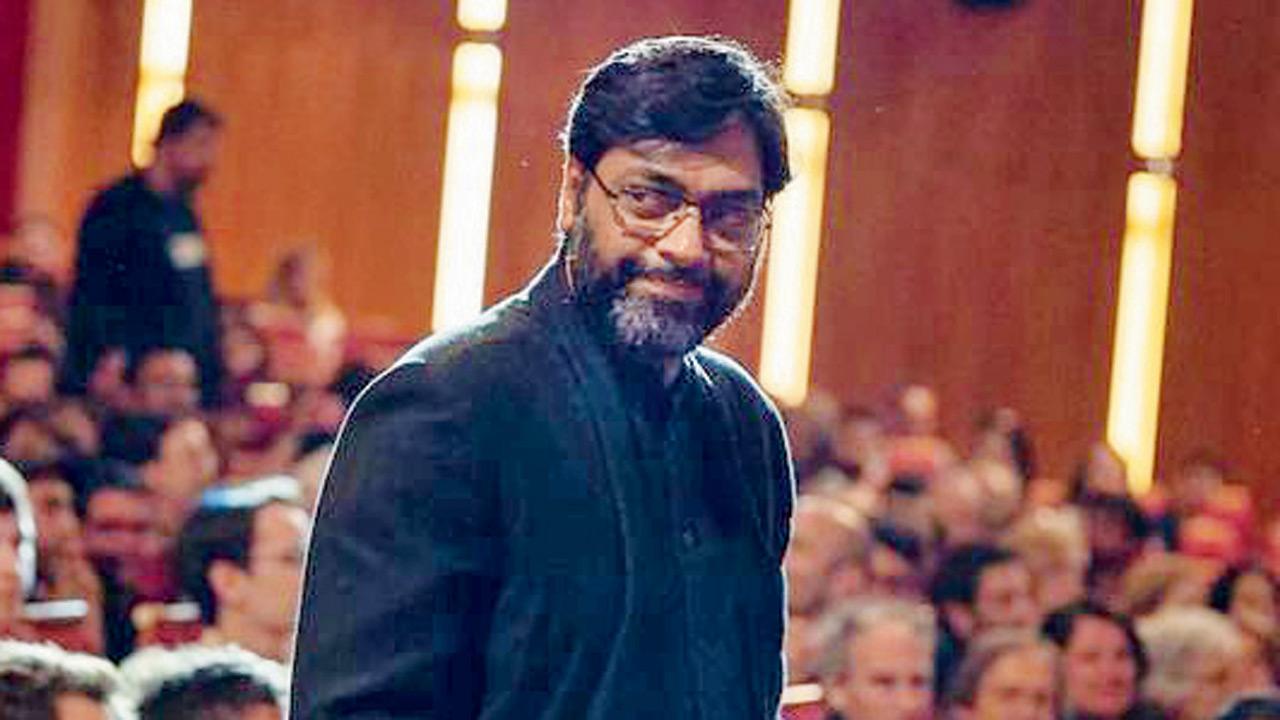
Priyanka Sharma (MID-DAY; November 15, 2025)
The morning of a release day for a filmmaker is usually filled with hope, excitement and anxiety about the audience’s response. But for director Kanu Behl, it was marked by struggle and disillusionment. After a wait of almost two years, Behl’s Agra released on Friday on 70 screens across the country. The filmmaker criticised multiplexes on social media over the film’s showcasing. “We’re being denied shows because small films ‘don’t fit into’ multiplex chain programming,” he wrote on X.
On a call with mid-day, Behl shared his frustration over the relentless fight he had to put up until the day before the release. “Till the last minute, we were told [by theatres], ‘We’ll figure, but nothing [happened],” he said.
When told that only four shows were available in Mumbai on the opening day, Behl pointed out the irony. “On Thursday night, we held a screening in Bengaluru. We had to turn away people because it was houseful. We got a standing ovation. I did around 12 pre-release screenings in India and at least 10 were with aam janta. It played to packed halls,” he said.
Agra has also gained recognition on global platforms, premiering at the Cannes Film Festival 2023. The anticipation was heightened because this is Behl’s theatrical comeback after the 2015 acclaimed Titli. It’s why the cold response of theatrical stakeholders has alarmed Behl — not for himself but for the future of young filmmakers.
“If this is their treatment of a film that opened at Cannes, I shudder to think what younger filmmakers and the next generation will go through. Then they [multiplexes] turn around and say, ‘Aisi filme chalti nahi hain.’ And those they run across 2000 screens, play to empty theatres. So when is this system going to change?”
Behl shared that releasing a film on the big screen is becoming a mental health crisis for independent filmmakers. “The illusion that multiplexes were there to accommodate all kinds of films is long gone. Now it is just about fighting for survival. But I am not going to fight for survival anymore. Either this system has to work or I’m out. I don’t want to do this anymore. How long will a filmmaker fight? This is a larger mental health issue within the industry. This happened with All We Imagine As Light and Sabar Bonda. It will keep happening,” he lamented.
Unless, the audience proves the decision makers wrong, Behl said. Even though the director never believed in putting the onus on the audience to make a film breathe on the big screen, this time he could only look towards the viewers for some hope. Behl said that if Agra doesn’t find audience support, he would quit filmmaking.
“I really want to reach out to the audience and say, ‘It’s in your hands. You come and watch this film and show these guys how much money a film like this can earn or I'm quitting filmmaking. Mujhe nahi karna. I cannot struggle anymore. I will not keep pushing anymore. I will leave filmmaking. (In any other scenario) I would never put this sort of a responsibility on the audience. It's not their responsibility. It is of the gatekeepers. It is these guys who should be doing their job. But in the absence of that, I think the responsibility finally comes upon the audience, including me. This has to be a protest and some sort of a coming together for the audience. So, if there’s only one show available, it should run houseful. If the audience wants to give them an answer and tell them what it wants, this has to come out of the social media echo chamber. Only that will wake these guys up.”
Shouldn’t the industry also unite against the crisis, we asked the filmmaker. The industry would never do it, he replied. “Because they are a cabal. They're a mafia. They all have their families. They all have the kids within the families to protect. It is an incestuous sort of mafianess. So they are not going to move,” he said.
Kanu Behl on bringing Agra to Indian theatres: "Difficult, disheartening, and sometimes depressing"
9:27 AM
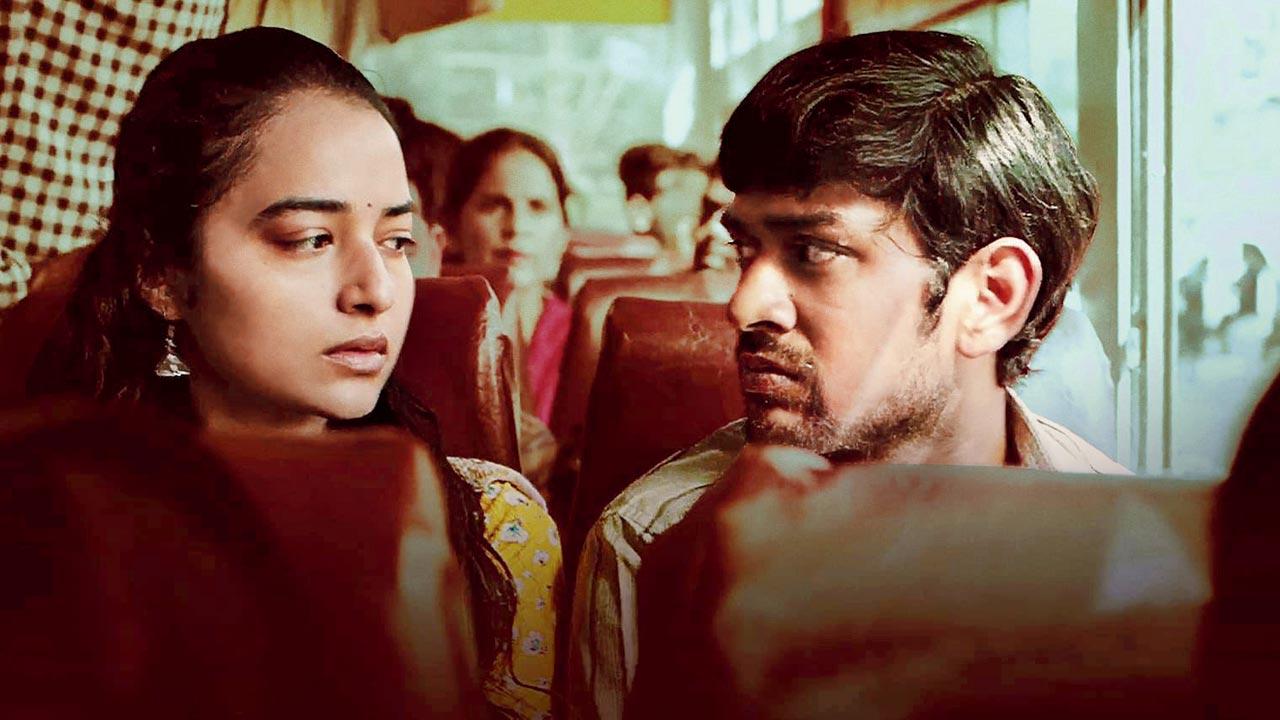
Priyanka Sharma (MID-DAY; October 14, 2025)
“Difficult, disheartening, and sometimes depressing” — that’s how Kanu Behl describes his last two years as he fought to bring Agra to Indian theatres. This, even though the Rahul Roy, Priyanka Bose, and Mohit Agarwal-starrer won wide praise at the Cannes Film Festival 2023. Now, the drama is finally arriving in Indian cinemas on November 14.
Behl’s jubilation is evident when he, over a phone call, tells us, “It was such a long and hard battle. We all know the state of independent cinema now. To finally get here where the film will meet its real audience is an indescribable feeling of joy.”
Finding a distributor that could put faith in the story — of a sexually repressed man in the context of India’s space crunch — was the struggle. Eventually, Saregama Films came on board as the distributor. Behl, who has written the story with Atika Chohan, shares, “It was a daily battle. If you’re trying to make a difficult film, you need to have strong collaborators from the production point of view.”
Film banners apart, the director has another collaborator in mind — the government. He believes it’s imperative for the government to sponsor a distribution channel so that independent films can thrive in Indian cinema.
He says, “The top five or 10 films that come through festivals should get government support. There must be a quality check. If a film clears that, the government must mandate a certain number of screens for its release. It also needs to give tax breaks so that the audience has an incentive to watch that film as opposed to the next blockbuster playing in the next screen.”
Agra is coming to theatres a month after a slew of indie films, from Jugnuma to Sabar Bonda, released on the big screen. Does it seem like a shift? “I hope it’s a shift,” asserts Behl, before adding, “But I’ve seen this before. When I came out with Titli [2014], a lot of independent voices were emerging. Then there was a lull. So, I’m happy about all of these films, but I’m also wary because I don’t see a sustainable system. I hope we all can create a system for independent films.”
Kanu Behl talks about Agra and Cannes honour: "Like me, I had seen a lot of young men who had felt this repression"
8:23 AM
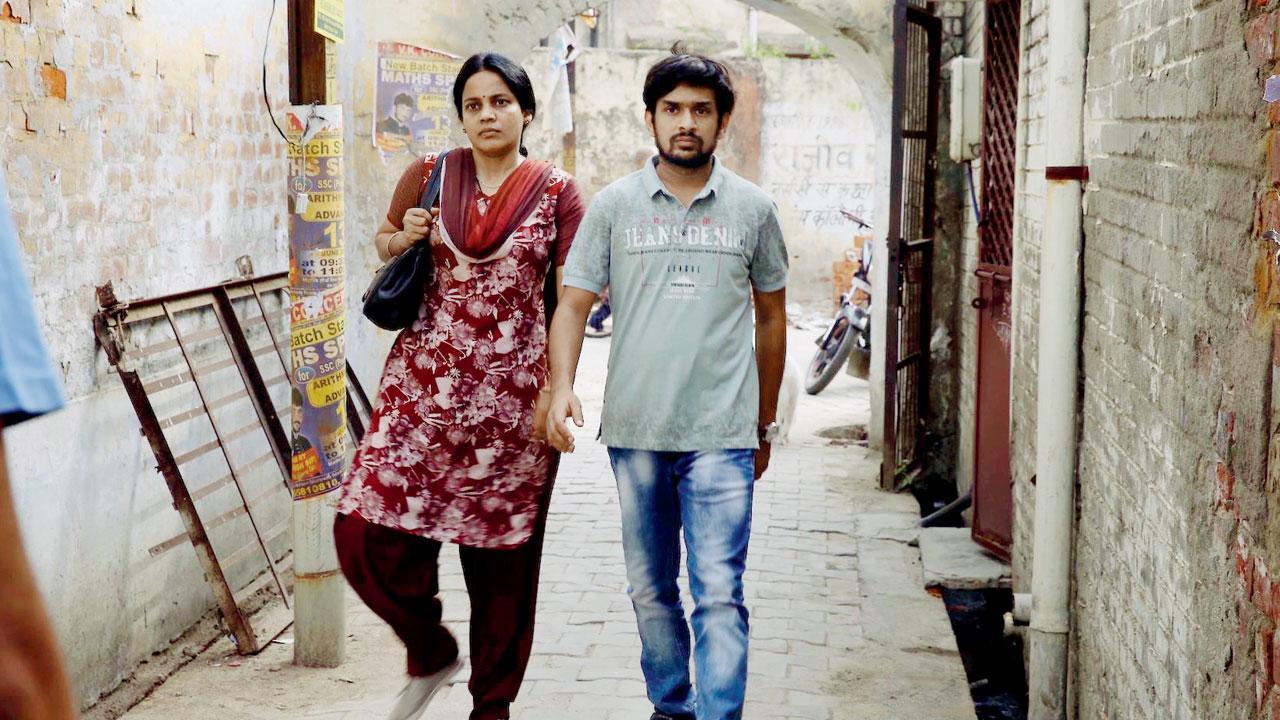
As Agra is set to premiere at Cannes, director Behl says festival support is important for offbeat films to reach the audience
Priyanka Sharma (MID-DAY; April 24, 2023)
Having one’s feature screen in the prestigious section of Directors’ Fortnight at the Cannes Film Festival is a matter of pride. But to director Kanu Behl, the upcoming première of Agra at the French Riviera is the means to an end. “The biggest reason for feeling good is because I know that the film is one step closer to reaching the audiences in India,” beams Behl, whose last feature film, Titli (2015), premièred at the Un Certain Regard section of the 2014 Cannes Film Festival.
Behl’s films are divorced from the mainstream, frothy offerings of Bollywood. This knowledge has come to him with the realization that his movies will need a festival endorsement to see the light of day in India.
“I am clearly not Bollywood. There is a certain kind of film that gets financed here through a certain structure. Unfortunately, there is no commercial structure for the cinema I subscribe to, and hope a certain audience would want to engage with. So, a film festival debut becomes a necessary component in the journey of such a movie,” he explains.
Starring Rahul Roy and Priyanka Bose, Agra is described as an exploration of sexual dynamics within a family. The director believes that the movie tackles an urgent subject.
“After Titli released, I asked myself, ‘What do I want to talk about?’ That’s when I realized there was a part of me, which I had felt over the years, but not expressed. Like me, I had seen a lot of young men who had felt this repression. It made me question the presence of sexuality and desire within our lives in the specific cultural context of our country.”
Actor Lalit Behl succumbs to Covid-19; Adil Hussain mourns
8:01 AM

HINDUSTAN TIMES (April 25, 2021)
Veteran actor-filmmaker Lalit Behl, known for films like Titli (2014) and Mukti Bhawan (2016), died of Covid-19 related complications, his son, director Kanu Behl said. The 71-year-old actor was diagnosed with the Coronavirus last week.
Among those who mourned his demise was actor Adil Hussain who starred with him in Mukti Bhawan. Hussain tweeted: “Extremely saddened by the demise of one of my dearest and most respected Co-actors, Lalit Behl jee. Who, so brilliantly played the father in @MuktiBhawan! I feel the loss of my father again! Dear Kanu I am so very sorry for your loss!”
Image: Titli director Kanu Behl gets married to music director Sneha Khanwalkar
8:07 AM

Natasha Coutinho (MUMBAI MIRROR; January 24, 2019)
Director Kanu Behl tied the knot with music director Sneha Khanwalkar in Indore on Wednesday. The couple met on the sets of Dibakar Banerjee’s 2008 slice-of-life comedy Oye Lucky! Lucky Oye! on which Kanu was the assistant director and Sneha the composer. They also teamed up for Kanu’s directorial, Binnu Ka Sapna.
It was a traditional Maharashtrian wedding that started at 11.30 am on Wednesday and went on till afternoon. “Later at night, the couple hosted a reception for family and close friends. On the menu were popular Maharashtrian dishes along with Indore specialities and continental cuisine,” informed a guest. The haldi and mehendi ceremony happened the previous day. There will be another reception for friends in Delhi on January 27. Among their industry friends was producer Guneet Monga, actor-musician Piyush Mishra and actress Amruta Subhash.
Next, the couple will be heading to France for the Clermont-Ferrand Film Festival where Kanu’s film will premiere.
Love Sonia has been a tough journey but definitely worth it-Tabrez Noorani
8:06 AM
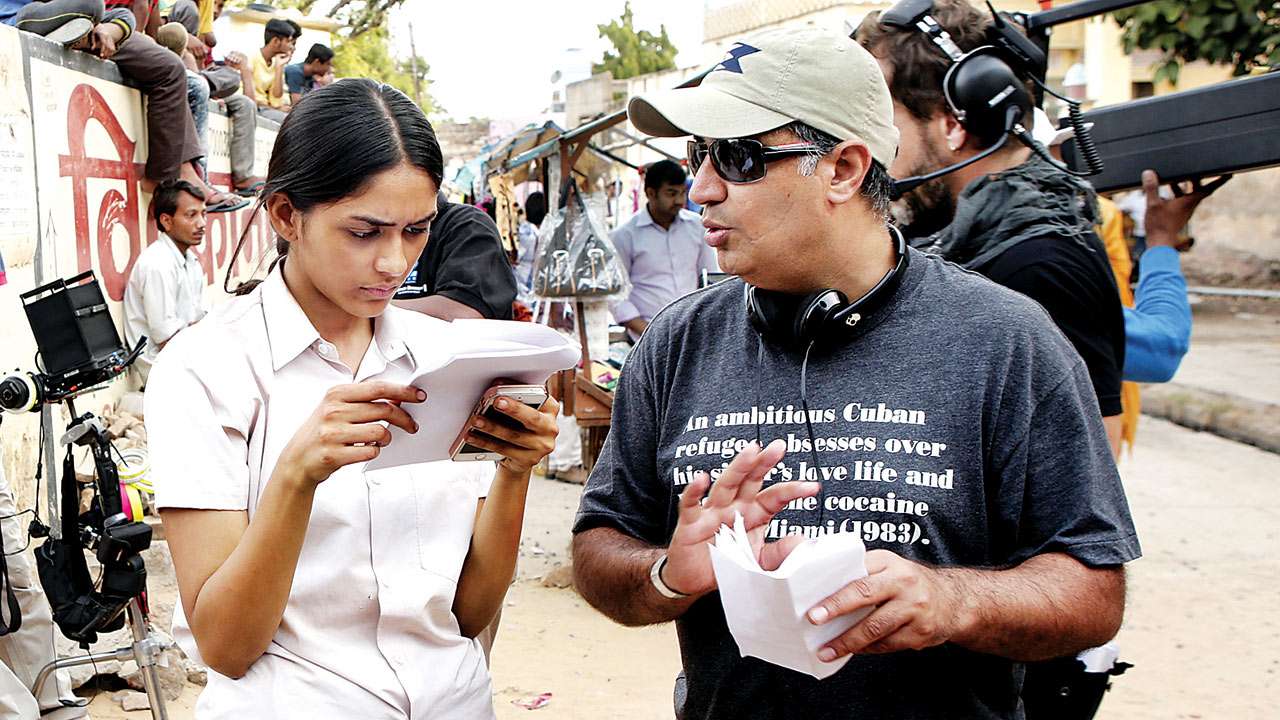
Dhaval Roy (DNA; September 15, 2018)
Love Sonia has just released in India and its director Tabrez Noorani is excited to bring the tale of human trafficking to a wider audience. “It’s like the line from Life of Pi (2012) — ‘The story’s yours now’. This one belongs to the viewers and I am making them a part of the journey that may not be an easy one,” he says. However, the Hollywood producer (Slumdog Millionaire, 2008; Eat Pray Love, 2010 and more) and now debutant director hopes that cinegoers will leave the cinema hall with hope and a ray of light after seeing the courage of the characters and real-life survivors. The filmmaker talks to us about the challenges of making the movie and more.
The idea of Love Sonia believably germinated in 2003 when you worked towards rehabilitating human trafficking victims. What took the film so long to make?
It’s taken a lot of time for various reasons — the tough topic, money, casting and not having stars attached to the project. We ran into a wall because there was no one to fund a movie about human trafficking at that point of time. We wanted to be in the business with the right people and not someone who would exploit the film. So, I refused to compromise and let someone milk the situation. We also had to be extremely careful that we were respectful to the victims and honest to the subject. After all, these were girls I have known and helped rehabilitate. So, it’s been a tough journey but definitely worth it.
Tell us about casting for the film...
I had to chase Richa Chadha and Manoj Bajpayee both. Richa didn’t know me from Adam and I refused to do a script narration because I don’t know what that means. I sent her a draft and she wanted to make sure that the one she read was the same that I would make. But once we started talking, she became more confident about me as a filmmaker and then she took the script to another level. I just got extremely lucky that everyone came on board.
Didn’t you feel the film was getting too delayed?
I’m glad I didn’t make this earlier because the research continued and I kept developing the characters. After the first season of Sense8, I decided to stop producing and focus on this project.
In spite of having produced a number of big Hollywood flicks, why didn’t you venture into direction earlier?
I wanted to debut with this film. I believe for your first outing you need to make something that you feel passionately about. I had other offers, but I felt anyone else could have directed those films but no one could have done this one.
With realistic cinema, filmmakers can often get self-indulgent. How did you ensure that didn’t happen with your movie?
Yeah, self-indulgence was one of the biggest concerns for me. And that’s why I had members of the NGOs as well as trafficked girls on the sets in Los Angeles, Hong Kong, and India. Survivors were also involved in the scripting and editing processes and we made a conscious effort to not exploit the exploited. Once both parties saw the film, it was a validation that we navigated the land very well.
With many so-called parallel films doing well in India these days, do you think it’s a good time for stories like Love Sonia?
Absolutely! I think the audience here has been more open to different kinds of films of late — more than they were, say, three to five years ago. India is making such fantastic cinema, whether it’s a large film like Padmaavat (2018) or a low-budget one like Titli (2014). People here want to go see Stree and a Gali Guleiyan releases at the same time, too.
Which films have impressed you of late?
I thought Titli was an outstanding movie. Udaan (2010), Masaan (2015), Anurag Kashyap’s works, and the Marathi film Fandry (2013) were quite impressive.
What’s next? Would one have to wait too long for another film from you?
Hopefully not. I’m working on two films and they will be very different from this one.
Apart from human trafficking, is there another cause you’d like to make a film on?
That’s an interesting question, but I haven’t thought about it. Anyway, this work won’t end after the release of the project. Trafficking is a massive problem all over the world and I can do anything to help tackle it — even if I have to disguise it in the form of a movie, I would do it because down the line, it will create awareness.
I can’t treat filmmaking like any other business-Shashank Arora
7:59 AM

Currently busy with his upcoming web show, Gangster Newton, Shashank Arora on why it’s important for filmmakers to be passionate about craft of storytelling
Letty Mariam Abraham (MID-DAY; May 15, 2018)
Shashank Arora is a man who dons many hats, and each one, with panache. Currently filming for actor Nakuul Mehta’s production, the web show Gangster Newton, the writer, music composer and actor is now set to explore direction too. Apart from his upcoming Indian project, Manto, starring Nawazuddin Siddiqui, Purab Kohli and Paresh Rawal, Arora is also awaiting the release of Songs Of Scorpions. The latter features Golshifteh Farahani, Irrfan Khan and Waheeda Rehman and is set to release next month. When we meet him at his Goregaon apartment, he talks to us about juggling multiple roles, and turning down big projects. Edited excerpts from the interview.
Your upcoming web show, Gangster Newton, has an unusual title. Tell us about it.
It’s about a young Maharashtrian boy who fails to find a job despite being an IIT topper. He has struggled all his life, and despite being studious, doesn’t get a job. He never made friends or fell in love, because he wanted to study and be an achiever. In the end, a garage owner gives him a job. He later realises that there is something sinister going on in the garage and they [the workers] are part of a mafia gang. He kills everyone and rises to the top [to be part of the mafia circle]. He has no physical strength, and only uses his mind to make his move. He uses mathematics to fight and calls himself Newton.
What is the status of the project?
We are yet to shoot the entire series. Since everyone got busy with other projects, this one took a backseat. But, we will wrap it up this year. We don’t have a The Big Bang Theory [American show, based on geeks] here. We don’t have to copy them, but the effect it [the show] has had on the population is brilliant.
Is the show expected to have violence?
There will be a bit of it, but ultimately, it is a story of a boy and his use of maths. Every episode is based on a [real-life] scientist and that is more than I should have said. There is nothing like it in the web space right now.
Are you consciously choosing non-commercial projects?
My decisions have been organic. I have refused conventional roles since Titli (2015) released. I refuse to do films where I can’t bring something to the table or grow as an actor. I want to serve the audience with something good.
There were reports of you turning down some big-ticket projects. Were those decisions easy to take?
I did feel scared and worried that if I gave the wrong impression, I would be ignored in the industry. But it depends on how you say no. If you have a legitimate reason, the person will understand. I never let the producers feel there is something lacking in the project. I ask two questions before I agree to take up a role: ‘Why does this person want to tell this story’ and ‘do they like telling stories’. If a filmmaker is making a film for money alone, they will not be able to tell the story. Money is important, but it is not my primary motive.
But not all projects you take up can be successful, take the example of Rock On 2 (2016).
I liked the script [of Rock On 2]. It was a story of a band that was trying to make people aware of the plight of farmers. But certain films don’t turn out the way you expect them to. [Even today] I don’t see Rock On as something I wouldn’t be part of.
You’ve dabbled in various fields. What part of the business comes naturally to you?
Music and writing comes easier than acting and direction.
Are you composing anything new?
I am composing for a Malayalam film called Moothon, which has been written by Anurag Kashyap. It stars Nivin Pauly and sees me as the villain. It is about a boy who comes to Mumbai in search of his brother. It was shot in Kamathipura, Dharavi and Andaman. We are expecting a year-end release.
After bagging Titli, I got myself a beer at 12:30 in the afternoon-Shashank Arora
12:19 PM

Following a string of failed auditions, his debut took him to Cannes, his second to Sundance
Kunal Guha (MUMBAI MIRROR; October 2, 2016)
"I hope you don’t mind if I keep my shades on,” says Shashank Arora, as he settles down for breakfast at an all-day eatery in Versova. The actor made waves with his piercing gaze as the lead in last year’s disturbing tale of desperate measures, Titli. The reason for hiding behind his kaala chashma, he continues, is because he can barely keep his eyes open. “I was dubbing for Rock On 2 till 4:30 this morning,” he says of his upcoming release, where he plays a bassist in a rock band. Also on the cards for Shashank, is Alankrita Shrivastava’s Lipstick Under My Burkha and Qissa director Anup Singh’s The Song of Scorpions, which stars Irrfan Khan, Waheeda Rahman and Iranian actor Golshifteh Farahani. “Galti se I’m also there in it,” he says cheekily of the latter.
“When I first came to Mumbai, following a film course in Montreal, I auditioned for every role — films, TV, commercials — but didn’t nail a single one. From Famous Studios to Aaram Nagar, I walked as much as the next guy and eventually took up art direction for a horrible TV show which didn’t even pay me.” It is then that it dawned on the 27-year-old that “Mumbai was a city of business” and that breaking into Bollywood was about more “than just the craft”. “My mom and dad have always taken care of me, so I was never into it for the money. But then, people took advantage of this and wouldn’t pay me.”
Following a string of rejections, when Shashank was on the verge of a breakdown, his dad suggested he approach the art “like it were a science”. “Acting is something one can invest the entire life in learning, so I joined Whistling Woods,” the Delhi-born actor says. He credits his professor, Robert Reece, for teaching everything he knows. “Most actors say that they ‘feel it’. But what is the process to conjure an emotion required in a scene, is what I learnt from him.” Reece even hired him as an assistant at the film school for a year, posing a more pertinent question. “If I was good enough to teach, why wasn’t I getting a single break? But teaching taught me a lot and I convinced myself that cracking auditions has little to do with my knowledge and kept at it.”
He even took a job with casting director Saher Latif (Furious 7, The Best Exotic Marigold Hotel) on the condition that she’d allowed him to audition for every part that came her way. While nothing materialised from this arrangement, in 2012 Shashank met writer-director Kanu Behl, who offered him hope. “Kanu told me he’s writing something and that I should come and see him in a year.” When he did, he learnt that he hadn’t made the cut. “Then he (Behl) asked me to make tea for him and I went into kitchen. That’s when he said that Dibakar (Banerjee) and Aditya Chopra (the producers) liked my audition and I was cast for the lead in Titli. I broke into tears. Just a day prior to that, I was willing to do a one-scene role as a security guard. I thanked him and left his apartment, and sat down on the street and called my dad to share the news. Then, I got myself a beer at 12:30 in the afternoon.”
Shashank’s performance didn’t go unnoticed as the film travelled to festivals across the world, endorsing his potential. “Steve Barron, a producer, saw it at London Film Festival and cast me as the lead in Brahman Naman,” he says of the Netflix release, directed by Q. “I hadn’t seen many films by Q apart from Gandu, which I saw half and didn’t quite like.” In the film, Shashank essays the eponymous role of a quiz nerd from the 1980s. “It was a Brahman character from 1980s Bangalore. I am from Delhi and I had no clue of that time or culture. So, I did my own research.” His best compliment remains the one he received from Reece, who felt that “Titli and Naman were two different people”. Abhishek Banerjee, the casting director of Rock On 2 was also impressed with Shashank’s debut. “I had initially auditioned for a different role but then I got cast as a band mate,” says the actor who has learnt to play the ukulele, guitar and flute.
“My first film went to Cannes and my second (Brahman Naman) to Sundance in the competition category for Best Drama feature, so I am very lucky.” But despite all the accolades, he feels that the audience for films depicting reality is scattered. “We don’t want to confront our lives through films. This is why most prefer films which are like happy meals. But a happy meal doesn’t stay with you. That fish you once had, which had a million bones, of which one even pricked you, stays.”
Even if I fail miserably in life, I'll always have dad-Varun Dhawan
8:11 AM

Varun Dhawan on the close bond he shares with his father, and three upcoming double-hero films
Sanyukta Iyer (MUMBAI MIRROR; November 12, 2015)
Earlier this year, Varun Dhawan stunned everyone with his intense faceoff with Nawazuddin Siddiqui in Sriram Raghavan's crime drama, Badlapur. Last week, he travelled to Dubai to receive his first Best Actor award, for the film.
 Accompanying him was his Dishoom co-star Jacqueline Fernandez, who he describes as a "complete goofball".
 "John, Jackie and I are taking off to Abu Dhabi in January-end and will be shooting through February. The schedule was supposed to be postponed because of John's injury (The 42-year-old-actor was hospitalised following a knee injury while shooting for Abhinay Deo's Force 2 in Budapest). But he has recovered faster than anyone expected and will be back on the film's Mumbai set on November 13," Varun reveals, adding that his older co-star is like a brother to him. The duo spends hours discussing women, football, fitness and bikes.
The actor has been in the news throughout this year, owing to his role as Shah Rukh Khan's younger brother in Rohit Shetty's much awaited Christmas release. And it has made industry insiders question his decision of picking two back-to-back ensemble films. "My character, Veer's eccentricity and quirks are the most important part of this film. The script is the driving force behind my choice of projects. I have given a lot of days and energy to this film. I'm not doing run-of-the-mill roles," he asserts.
And what is it like to share the attention on the sets with another Varun (Sharma), who plays a crucial role in the film? "He's quite something, this boy, who comes from Jalandhar. He is always saying, 'gedi marne chale?' after pack-up, which basically means roaming the streets in cars and checking out girls, a popular pastime among the youth in North India. He hugs everyone, including Rohit (Shetty) sir but is so awkward around Kajol ma'am, it's quite a sight," he guffaws.
For Varun, the highpoint was filming a salsa sequence with Farah Khan in Hyderabad. The actor was supposed to shake a leg with his love interest in the film, Kriti Sanon, who he considers to be "way out of his league".
"Kriti towers over me, while I try hard to woo her. Every guy will definitely relate to this. We've all tried hard to impress a girl who is way too cool for us," he says.
With his schedule locked until March 2016, Varun begins work on dad David Dhawan's next, which is still in the scripting stage. Then there's a Karan Johar production lined up for later in the year. "It's a special film and I'm really looking forward to it," he reveals, adding that he's also eager to collaborate with his father again.
"In a career spanning over 50 films, my dad has explored every aspect of comedy with films ranging from Shola Aur Shabnam, Aankhen, Raja Babu to Partner and our first film together, Main Tera Hero. Now, I want him to make a film straight from his heart. He has nothing to prove anymore. Few people know that he was the editor on the acclaimed Saaransh (directed by Mahesh Bhatt)," he says.
It's not hard to believe that the Dhawans devoured movies even on the dinner table. And it's a close-knit unit too. "It's usually Skype with the family for Diwali but I was home this time. We had a special pooja at my dad's office too. Spending time with him made me realise that he is the centre of my universe. He is always asking people around me to take care of me. It's a constant reminder that no matter how miserably I fail in life, I will always have my dad and family to fall back on," Varun says.
After his family, his dedicated fitness regime provides a solid support to his well being. "When I am working out, I let go of all my demons. I have started spending more time in the gym because it makes me happy," he insists.
What about elder brother, Dishoom director Rohit Dhawan? "He is strict and sincere. He'll get upset if I praise him," Varun says cheekily, insisting that his reel life elder brother SRK is more "khulla and bindaas".
Is Varun himself more of a diplomatic person in real life? "Not at all," he laughs, adding, "Most of us younger actors are careful about what we say in public because we are constantly abused on social media. All this has made all of us very good at being more secretive, like I have been several times in the past. I have noticed that Boman (Irani) sir, Johnny (Lever) sir, Rohit sir, they're all so chilled out. SRK sir fights fire with fire, there is no diplomacy there," Varun says matter-of-factly.
The actor who was a part of the recently concluded MAMI Mumbai Film Festival, is set to fly to Goa to close the country's largest film festival - IFFI 2015 -on November 30.
He recently caught Kanu Behl's directorial debut Titli and was admittedly blown away. "I'd love to do a film like that next. I love exploring different genres and that's where a film like Dishoom comes in. It's a combination of action and dialogue executed intelligently," he explains.
A lot of his contemporaries are dabbling in music videos and short films. Is that something that interests him? Varun says he'd be absolutely game to explore a web series where he can film seven-eight episodes at a stretch. "I was 16 years old when I made a short film. It gave me such a creative high but it was such a bad film, it should have been banned. It was about a frustrated actor. I would love to do a short film and even explore a smaller, more Indie film," he reveals.
Buzz is Varun Dhawan will be seen in another two-hero film, alongside Hrithik Roshan, in a big budget Hindi remake of Mahesh Babu's Telugu blockbuster, Srimanthudu. "There might be something there," he winks.
Charlie Kay Chakkar Mein collects 60 lacs in 3 days; other releases poor
3:08 PM

Box Office India Trade Network
The new releases all fared poorly with even last weeks flop MAIN AUR CHARLES managing to record better collections than all the new releases despite being in its second weekend. The weekend collections of the new releases are as follows.
Charlie Kay Chakkar Mein - 60,00,000
Four Pillars Of Basement - 10,00,000
Ranbanka - 25,00,000
Yaara Silly Silly - 35,00,000
The collections of the holdover releases are as follows.
Main Aur Charles - 75,00,000 (second weekend)
Titli - 25,00,000 (second weekend)
Talvar - 15,00,000 (sixth weekend)
(Crisp) Movie Review: TITLI by FENIL SETA
4:09 PM

Titli is shocking and fine piece of cinema but somewhere the film doesn’t reach its true potential. The storyline is fantastic and the manner in which director Kanu Behl has brought the world and characters alive is seen to be believed. Despite the trailers giving out a fair idea about the plot, there’s always something to look forward to in the film and there’s never a dull moment. However, after a point, the interest level dips a bit. Few things fail to make sense and an important scene in the pre-climax just doesn’t seem convincing at all. The film however has a justified end and that saves the day thankfully. Shashank Arora is highly talented. Great to see a ‘hero’ who is feeble and miles away from getting six pack abs. Shivani Raghuvanshi is a great find. Ranvir Shorey is terrific while Amit Sial deserves to be seen much more. Lalit Bahl is alright. A good film but surely could have been much better!
My rating - *** out of 5!
It doesn’t bother me if Titli is being perceived as a Dibakar Banerjee film-Kanu Behl
7:42 AM

MID-DAY (October 27, 2015)
The marketing of films hinges on big, established names and the same seems to be happening in case of Kanu Behl’s Titli, albeit inadvertently. The critically acclaimed indie film is being talked of mostly as a Dibakar Banerjee project, although he is only co-producing it with Yash Raj Films.
Is it a tad unfair on Kanu? The debutant director disagrees, stating, “The general perception to a lot of things in the universe is different from the way it should be. I don’t believe in the idea of films being directors’ films. It belongs to Dibakar as much as me, the cinematographer, actors and everyone who is part of the film. So, it doesn’t bother me. All I want is the film to be promoted and people should see it in theatres.”
Dibakar, on the other hand, says he does not believe in the concept of using a big name to market a film. “My brand value is not as big as Rajkumar Hirani’s or Mahesh Bhatt’s. Everyone knows I am a small-to-medium-budget filmmaker. I tried to do one big budget film, Detective Byomkesh Bakshy, but it didn’t do well commercially. So, going by that logic, YRF will have to exercise caution with regard to the treatment of a film like Titli because they are trying to make it a profitable project,” he tells hitlist.
Dibakar says those looking at Titli solely as his film or his directorial venture will change their mind after watching the film. “In the first few minutes, they will know it’s not my film. As far as marketing is concerned, we never said that I have directed it. If mediapersons want me to give interviews, I can’t step back and not promote the film,” he adds.
We were scared of clashing Titli with Pyaar Ka Punchnama 2-Dibakar Banerjee
7:49 AM

Anirban Das (MID-DAY; October 22, 2015)
Indie film lovers had long been waiting for October 16 to catch Kanu Behl-directed Titli, which has travelled to film festivals across the globe. However, its release was pushed to the month-end since Dibakar Banerjee, who has produced the film, admits that he was “scared” about a clash with rom-com, Pyaar Ka Punchnama 2.
Says Dibakar, “We were absolutely right about getting scared of Pyaar Ka Punchnama 2. If we were to make 5 paise and another film releasing on the same day aims at making Rs 100, but ends up collecting 2 paisa more, then we would make just 3 paise. That would have been a loss for us.”
But with the release date being pushed ahead, Titli will have to compete with two much- awaited films, Main Aur Charles featuring Randeep Hooda and Kunal Kemmu-starrer Guddu Ki Gun. Wouldn’t that affect the film’s business? “Whatever happens, we will accept it as our fate. You can only wait till a certain period of time. If we had waited longer, the film would have clashed with Salman Khan’s Prem Ratan Dhan Payo,” says Dibakar.
I lived the pregnant character of Vidya Balan in Kahaani myself-Namrata Rao
8:09 AM

Film editor Namrata Rao tells us what it takes to be Bollywood’s most wanted
Gaurav Dubey (MID-DAY; October 11, 2015)
A favorite of Yash Raj Films, Namrata Rao is considered one of the leading film editors in the industry today. She bagged the National Award for Best Editor for Kahaani (2012). Namrata started her career with Oye Lucky! Lucky Oye! (2008), Ishqiya (2010), Band Baaja Baaraat (2010) and Love Sex aur Dhokha (2010). She also worked on this year’s Detective Byomkesh Bakshy and Dum Laga Ke Haisha. We caught up with her at the Yash Raj Studios in Andheri, where she is busy working on the Shah Rukh Khan-starrer, Fan. Excerpts from a conversation:
How has your journey been in the industry been so far?
It’s been great fun. I didn’t even realise that it’s been eight years already. I am lucky I’m doing something I enjoy. I have only done films which I can connect to — every film has a part of me.
Bollywood has always been a male-dominated industry. How difficult was it to get a break?
Firstly, to be a film editor was a tough call to take. I took time to even convince myself. There was no one from my family in this line. But once I decided that I’ll jump off the cliff and see where I land, I had also figured out my way up, if I failed miserably. The industry may be male-dominated, but that is the case with life as well.
You have been associated with filmmaker Dibakar Banerjee for a long time. How is it to work with him?
I was editing a lot of documentaries when I was studying in Kolkata. One of them, I Am The Very Beautiful (2006), was directed by Shyamal Karmakar who was also my professor. It was an interesting documentary about homosexuality. After seeing the documentary, Dibakar connected with me. We spoke a lot about the docu and he later asked me to edit his film, Oye Lucky! Lucky Oye!
There is a growing audience for unconventional films nowadays. What is your take on it?
There’s a limitation on stories and there are limited stories to be told, so then you start experimenting — that’s the reason why people are loving the unconventional films and stories nowadays.
How do you choose your projects?
The first reading of a script should touch me. If it doesn’t, I reject it. I have to relate to the character or a part of the story to edit the film.
What was your turning point in the industry?
An important film for me was Kahaani. I lived the pregnant character of Vidya Balan in the film myself. For an entire year, I was with Vidya’s character. It is difficult for me to explain the experience, but I had no connectivity with reality when I was editing the film. I’m again waiting for that miracle to happen. Oye Lucky! Lucky Oye! was also a game changer for me. If Dibakar had not shown trust in me, it would have been difficult. When I did Ishqiya, I realised how everyone has their own way of making a film.
What was your first reaction when you heard about getting a National Award for Kahaani?
I didn’t believe it. I first got a call from a news agency asking for my reaction. I told them you have the wrong information. Then, I saw it in the news — that’s when I realised that I had bagged the award. I was estatic.
Did life change after that?
My life did not change, but it gave me more bargaining power for money. I could make better choices. But more than the National Award, it was the success of the film that mattered.
You are in great demand right now and everyone wants to work with you.
I don’t give much importance to all this. I don’t even think about awards. My biggest nightmare is when I finish the edit of a film, I wonder if I will be able to edit another one. With every new film, I feel the same way. Storytelling is a skill. It keeps getting better with practice, but you have to keep trying and do your best.
How difficult was it to work on Kanu Behl’s upcoming film, Titli, after your divorce with him?
Kanu and I know each other since we were teenagers. We grew up together, got married and then got divorced. He will always be a part of my life. After the divorce, there was a bit of awkwardness, but when we started working together, it was just like old times. It was the same problem, the same fights and same issues and that’s because we are still good friends.
What are your suggestions for upcoming film editors?
They need to be fearless and believe in themselves. Only a good storyteller can be a film editor. You also need a lot of patience. You need to take risks and then keep at it. I don’t think too much about the awards.
Titli's story came from my own dysfunctional relationship with my father-Kanu Behl
8:21 AM

In his directorial debut, Kanu Behl takes a leaf from his relationship with his father to turn it into a universal story of rage and disillusionment
Ananya Ghosh (MID-DAY; October 4, 2015)
When we meet Titli director Kanu Behl at the sprawling Yash Raj studio, the first thing he clarifies is that, inspite of the noir-ish feel of the initial trailers, Titli is not a crime thriller. It’s actually a socio-political comment with a family drama at its core, which the 35-year-old, confesses began as “a personal rant”. The inspiration for the story came from his own dysfunctional relationship with his father, Lalit Behl. “My dad and I are at loggerheads over almost everything,” says Kanu with a smile as we settle down for the interview.
His parents Lalit, 66, director, producer and actor who produced, directed and acted in Doordarshan telefilms such as Tapish and Sunehri Jild, and Navnindra, 65, who has acted in films like Maachis, Queen and is an award-winning director and producer, also join in.
The new trailers of Titli came out last week and reflect the angst. Kanu’s directorial debut earned the critics’ nod when it was screened in the Un Certain Regard section of the Cannes Film Festival last year. Many other awards later, it’s now gearing up to test the waters on the home turf and will be hitting theatres on October 30.
Kanu grew up in a small, cramped house swarming with people. He remembers always having someone breathing down his neck, a problem his main character Titli deals with. His relationship with his father is more complicated. The father-son relationship stems from a deep- rooted anger — something that both binds and distances them. “Ours is a joint family that lost everything but their ideologies during the Partition and began their lives in India penniless, living in camps. The Independent India we dreamt of gave us only poverty and disillusionment. We as youths were an angry lot. And I guess we unknowingly passed it on to our next generation,” says the patriarch.
However, he has no qualms that his son has built the story around their strained relationship. “What better than taking inspiration from your own life?” he says nonchalantly. One of the major differences the father and son had was over Kanu’s career choices. “Well, I wanted him to start off as an actor,” says Lalit. “According to me, directing a film requires a certain degree of maturity, which I thought Kanu is yet to acquire. I didn’t want him to come up with some nonsense stuff,” he adds.
Things didn’t get any better when his son decided to follow his dreams ignoring his advice. For him, disrespecting one’s elders is akin to a criminal offense. But, when Kanu came to him urging him to act in his directorial debut, he decided to give him a chance. He took up the offer, and that too without reading the script. “Dad had no clue that the role is based on him,” says Kanu, who knew Lalit would be the best for the role. But Lalit reveals that he knew what was in store for him. “We had an extensive workshop. It was no rocket science to decipher that the character was inspired by me.” Once he saw his son behind the camera helming the project, he knew that his son has chosen the right path. And today he is proud of his son’s achievement, “I am happy for him, but I don’t like the fact that he has proven me wrong,” he complains.
Although even today, the difference of opinion between them has not decreased. “They both have become more tolerant. Maybe somewhere, they have started to understand each other’s perspective, even if they are hardly on the same page,” says Navnindra, who has seen the evolution of anger that binds this family and the film from an uncomfortable proximity.
However, what transformed this semi-autobiographical film to what Kanu prefers to call an ‘autostory’ is the fact that with each draft of the script, the story got new layers, and eventually became a kitchen sink drama about two generations in conflict with each other — their angst, ambition, and disappointments. “It is not about any incident that happened between my dad and I. With each draft, each character gained more flesh and blood. Each has his own reason to behave the way he does in the film. It is a film about circularity inherent in this family. The dad gets his anger from his dad and in turn, passes on the same anger to his elder son. The one struggling against all this, is Titli — the youngest in the family. But slowly he realises that he can’t escape his genes as he increasingly becomes like one of them. Can he escape his destiny?” Kanu signs off throwing that pregnant question at us as a parting gift.
'Most abusive Indian film ever' Titli passed by Censors with 'A' certificate
8:48 AM

Subhash K Jha (DNA; June 29, 2015)
Cuss words are the new item songs. Recently the
trailer of Sunny Deol starrer Mohala Assi released. It was full of
gaalis. And now debutant Director Kanu Behl has gotten away with murder,
literally. And a lot else in his much-acclaimed film Titli. The film,
produced jointly by Dibakar Banerjee and Yash Raj Films, has already
received much praise at various film international festivals. It was
submitted for censorship last week. It was passed with an ‘A’
certificate.
Apparently, the Censor Board was shocked and “educated” by the outpouring of abuses expletives and profanities in the film.
“We are aware of a very long list of gaalis. But the ones used in Titli are in a league of their own. They go way beyond the routine insult to mothers and sisters,” says a shocked member of the censor board, confessing that his colleagues and he had never heard some of these abuses. “These are gaalis that even Anurag Kashyap and Vishal Bhardwaj are probably not aware of,” says the CBFC member.
The Censor Board member added that the CBFC was in a dilemma as to how to deal with the torrent of profanities. “If we deleted or muted the gaalis, the entire film would have gaps in the soundtrack. Besides, this is a good film. So the strong language is permissible,” says the Censor Board member. Also, the names of Dibakar Banerjee and Yash Raj gave the gaalis a certain sanction that would otherwise have been impossible.
Fandry, Titli to be screened at Melbourne International Film Festival
8:46 AM

Agencies (MUMBAI MIRROR; July 15, 2014)
Eight independent Indian films will be screened during Melbourne International Film Festival (MIFF) 2014, which will be held from July 31st.
A total of 11 films from India will be screened in various sections of the festival this year.
The India In Flux section, will showcase films including Rajesh S Jala's Children of the Pyre, Rajesh Dhanraj's Invoking Justice, Anand Patwardhan's Jai Bhim Comrade, Ranu Ghosh's Quarter number 4/11, Ashim Ahluwalia's John & Jane, Farida Pacha's My Name is Salt and Avijit Mukul Kishore's Vertical City.
"Currently experiencing a prolific phase of production and circulation, this cinema is one of the best examples of truly independent filmmaking. India in Flux brings a selection of its most important films and filmmakers to Melbourne," said an official statement released by the festival.
Feature films picked for the festival include Marathi film Fandry, directed by Nagraj Munjale, which will be screened under Accent of Asia section, along with Kanu Behl's film Titli.
Marathi film The Fort (Killa), directed by Avinash Arun, has also been selected for screening in this year's festival which will end on August 17th.
Do B-Town filmmakers really benefit from the Cannes Film Festival?
9:27 AM

From left: Actor Lalit Behl, Ranveer Shorey, YRF’s Avtar Panesar, director Kanu Behl, actor Shashank Arora and Guneet Monga at a photo call for their film, Titli, at the ongoing Cannes Film Festival. Titli is the only Indian film in contention for an award at the fest. Pic/PTI - See more at: http://www.mid-day.com/articles/do-b-town-filmmakers-really-benefit-from-the-cannes-film-festival/15321174#sthash.6z1M1UlI.dpuf
From
left: Actor Lalit Behl, Ranveer Shorey, YRF’s Avtar Panesar, director
Kanu Behl, actor Shashank Arora and Guneet Monga at a photo call for
their film, Titli, at the ongoing Cannes Film Festival. Titli is the
only Indian film in contention for an award at the fest. Pic/PTI - See
more at:
http://www.mid-day.com/articles/do-b-town-filmmakers-really-benefit-from-the-cannes-film-festival/15321174#sthash.6z1M1UlI.dpuf
Even though half of Bollywood ends up at Cannes Film Festival every year, the returns from the film festival are said to be disturbingly low. Is the festival bringing good returns or is it just a matter of prestige to be there?
Shakti Shetty (MID-DAY; May 23, 2014)
At the Cannes film festival that is currently
underway, red carpet appearances by Indian beauties once again grabbed
the headlines. Like every year, there has been a steady stream of
delegates from B-Town who find themselves at the French Riviera — where
they pose for pictures, if nothing else. This has been so because Cannes
is not just about competition; the festival offers scope for exploring
new markets and that’s a race our industrywallahs don’t wish to be left
behind in. The fact remains that it has been more than six decades since
an Indian film bagged the top honour there.
All of which begs the question: is all the brouhaha worth it in the end? Do filmmakers get decent returns after spending huge amounts on exhibiting their films at the festival in the non-competitive categories? Turns out the answers are not really straightforward. But there is an underlying hope to do better, regardless of the film’s fate.

Indian premieres
Dibakar Banerjee, co-producer of Titli, the only Indian feature film in contention for an award this year, doesn’t sound worried about the film’s business prospects — at least for now. “Films and their market are interlinked and festivals act as a medium between the two. That’s also why we thought Titli should premiere at Cannes. We feel that it’s the best possible launch pad for the film. It is in the competitive category so obviously, it’s going to attract the best possible distributors.”
The competition category does get more eyeballs although Indian films have peripheral channels too. Like setting up stalls at the festival and hoping to find interested parties and territories. That’s one of the reasons why run-of-the-mill films like Shortcut Romeo, Kites and Hissss manage to get screened.

Making waves
Not very long ago, there was a stigma attached to the film fest circuit. But there’s no doubt that now there’s a sudden rise in Hindi films being screened at film festivals.
Ashim Ahluwalia’s Miss Lovely — which was screened at Cannes in 2012 — followed a slightly different route. Although the film hardly created waves upon its release in India, he managed to sell its theatrical rights in many territories, including the US, where the film will release on June 20, 2014. The film was also sold to distributors in Europe, including France and Eastern Europe as well as Latin America. Thanks to it screening at Cannes, Fortissimo Films sold the film in new markets such as Japan and Taiwan.
Ask him whether the hype about Cannes is for real and Ahluwalia chooses to play it safe. “I can’t comment on other films, but having Miss Lovely in the official competition category at Cannes was helped boost my film’s international sales. I would say that it was an essential platform for my film.”

Last year, DAR Motion Pictures, with films like The Lunchbox, Ugly and Monsoon Shootout, attended Cannes. All three ventures were premiered at the event although none were slated to win a major award. In such a scenario, business must be the motive, right? Wrong. According to Vivek Rangachari, producer at DAR, it’s too early to discuss profits. “It will take years before we talk about money. We have a long way to go before we stand shoulder to shoulder with international films. It won’t happen overnight anyway. Cannes might look like a glitzy event but it’s all about business. And that happens in the background with the sales agents, distributors and publicists from across the globe at work,” says Rangachari.
Wider reach
Director Anand Gandhi of The Ship of Theseus fame is currently working on his second cinematic venture, Tumbad. Interestingly, Ruchi Bhimani, the film’s producer, is at Cannes and she has an agenda on her mind; she’s scouting for suitable co-producers for the film. “The whole industry lands up there. The curiosity surrounding Indian films is recent and it has to be generated regularly because of the opportunities that lie ahead. It’s the same old question: How am I going to make my next film? Who’s going to watch it and how will I reach out to more people in different territories? Once you find people willing to back you, money is going to follow,” says Gandhi.
Obscure figures
Having shown three films at Cannes, including Bombay Talkies, Ugly and The Lunchbox, Anurag Kashyap is another regular at Cannes. He’s clearly in favour of the current trend. He believes that the event does help cinema — both art house as well as the commercial variety. “I don’t think the Cannes film festival is overrated. For instance, I don’t think people had any idea about how much business The Lunchbox did. Let me tell you that it’s much more than our mainstream films.”
Indeed, the latest buzz says that it has replaced Indonesian blockbuster The Raid 2 as the most profitable non-American film in the USA. But at the same time, getting the exact box office figures for this Ritesh Batra film has become quite a task.
Kashyap explains that when you sell a film’s worldwide rights to a distribution company, the company will exploit the film’s potential and they aren’t transparent about its collections. So we don’t get to read the exact figures. There are many companies that have their own overseas distribution houses. Why are they running them if these films are not making any money overseas? The answer is pretty simple. "They make money but they just don’t report the figures,” he says.
All about the business
Trade analyst Komal Nahta says that when production houses or filmmakers set up stalls at Cannes in a bid to lure international distributors, they end up shelling out a hefty sum of money. “It’s more of an investment for the future. If a film sells well, great. If not, it’s a loss for the makers. But that’s what this business is all about — it’s a gamble,” he says.
Then again, not all Indian films manage to get to Cannes, despite many makers trying their best to showcase their work there. Director Ajay Bahl knows a thing or two about it. His film, BA Pass, missed the deadline for Cannes last year. He eventually released the film in India instead of waiting for one more year. “Getting selected in the competitive categories is the way to go for any film — be it Indian or international. Setting up a stall to sell a film in international territories, on the other hand, could be a cumbersome task,” he says.
(with inputs from Asira Tarannum)

All of which begs the question: is all the brouhaha worth it in the end? Do filmmakers get decent returns after spending huge amounts on exhibiting their films at the festival in the non-competitive categories? Turns out the answers are not really straightforward. But there is an underlying hope to do better, regardless of the film’s fate.
Indian premieres
Dibakar Banerjee, co-producer of Titli, the only Indian feature film in contention for an award this year, doesn’t sound worried about the film’s business prospects — at least for now. “Films and their market are interlinked and festivals act as a medium between the two. That’s also why we thought Titli should premiere at Cannes. We feel that it’s the best possible launch pad for the film. It is in the competitive category so obviously, it’s going to attract the best possible distributors.”
The competition category does get more eyeballs although Indian films have peripheral channels too. Like setting up stalls at the festival and hoping to find interested parties and territories. That’s one of the reasons why run-of-the-mill films like Shortcut Romeo, Kites and Hissss manage to get screened.
Making waves
Not very long ago, there was a stigma attached to the film fest circuit. But there’s no doubt that now there’s a sudden rise in Hindi films being screened at film festivals.
Ashim Ahluwalia’s Miss Lovely — which was screened at Cannes in 2012 — followed a slightly different route. Although the film hardly created waves upon its release in India, he managed to sell its theatrical rights in many territories, including the US, where the film will release on June 20, 2014. The film was also sold to distributors in Europe, including France and Eastern Europe as well as Latin America. Thanks to it screening at Cannes, Fortissimo Films sold the film in new markets such as Japan and Taiwan.
Ask him whether the hype about Cannes is for real and Ahluwalia chooses to play it safe. “I can’t comment on other films, but having Miss Lovely in the official competition category at Cannes was helped boost my film’s international sales. I would say that it was an essential platform for my film.”
Last year, DAR Motion Pictures, with films like The Lunchbox, Ugly and Monsoon Shootout, attended Cannes. All three ventures were premiered at the event although none were slated to win a major award. In such a scenario, business must be the motive, right? Wrong. According to Vivek Rangachari, producer at DAR, it’s too early to discuss profits. “It will take years before we talk about money. We have a long way to go before we stand shoulder to shoulder with international films. It won’t happen overnight anyway. Cannes might look like a glitzy event but it’s all about business. And that happens in the background with the sales agents, distributors and publicists from across the globe at work,” says Rangachari.
Wider reach
Director Anand Gandhi of The Ship of Theseus fame is currently working on his second cinematic venture, Tumbad. Interestingly, Ruchi Bhimani, the film’s producer, is at Cannes and she has an agenda on her mind; she’s scouting for suitable co-producers for the film. “The whole industry lands up there. The curiosity surrounding Indian films is recent and it has to be generated regularly because of the opportunities that lie ahead. It’s the same old question: How am I going to make my next film? Who’s going to watch it and how will I reach out to more people in different territories? Once you find people willing to back you, money is going to follow,” says Gandhi.
Obscure figures
Having shown three films at Cannes, including Bombay Talkies, Ugly and The Lunchbox, Anurag Kashyap is another regular at Cannes. He’s clearly in favour of the current trend. He believes that the event does help cinema — both art house as well as the commercial variety. “I don’t think the Cannes film festival is overrated. For instance, I don’t think people had any idea about how much business The Lunchbox did. Let me tell you that it’s much more than our mainstream films.”
Indeed, the latest buzz says that it has replaced Indonesian blockbuster The Raid 2 as the most profitable non-American film in the USA. But at the same time, getting the exact box office figures for this Ritesh Batra film has become quite a task.
Kashyap explains that when you sell a film’s worldwide rights to a distribution company, the company will exploit the film’s potential and they aren’t transparent about its collections. So we don’t get to read the exact figures. There are many companies that have their own overseas distribution houses. Why are they running them if these films are not making any money overseas? The answer is pretty simple. "They make money but they just don’t report the figures,” he says.
All about the business
Trade analyst Komal Nahta says that when production houses or filmmakers set up stalls at Cannes in a bid to lure international distributors, they end up shelling out a hefty sum of money. “It’s more of an investment for the future. If a film sells well, great. If not, it’s a loss for the makers. But that’s what this business is all about — it’s a gamble,” he says.
Then again, not all Indian films manage to get to Cannes, despite many makers trying their best to showcase their work there. Director Ajay Bahl knows a thing or two about it. His film, BA Pass, missed the deadline for Cannes last year. He eventually released the film in India instead of waiting for one more year. “Getting selected in the competitive categories is the way to go for any film — be it Indian or international. Setting up a stall to sell a film in international territories, on the other hand, could be a cumbersome task,” he says.
(with inputs from Asira Tarannum)
If
one had to consider box office collections, admission and screen counts
across the world, only India has not been able to win top honours at
Cannes over the past five years. - See more at:
http://www.mid-day.com/articles/do-b-town-filmmakers-really-benefit-from-the-cannes-film-festival/15321174#sthash.6z1M1UlI.dpuf
A look at the Indian films that have been screened at the Cannes over the years
7:43 AM

Shakti Shetty (MID-DAY; May 15, 2014)
The 67th edition of the Cannes film festival kicked off yesterday with the screening of the Nicole Kidman-starrer, Grace of Monaco.
Uday Chopra happens to be one of the producers of this biopic. However, he’s not the only Indian face at the French Riviera this year. Along with the usual dose of Bollywood glamour (read: Aishwarya Rai-Bachchan, Sonam Kapoor and many more), this year will see director Kanu Behl keeping his fingers crossed even as his film Titli competes in the Camera d’Or category, which acknowledges the best debut effort.
Interestingly, over the years, several films have been screened at Cannes but none have won an award in the competitive categories. hitlist takes you down the memory lane to look at films from India that were not only screened at the prestigious film fest but also won laurels...
'Neecha Nagar' (1946)

Director: Chetan Anand
The lowdown: When the Cannes Film Festival was held for the first time after the World War II in 1946, this Hindi film bagged the Palm d’Or (Golden Palm) along with 10 other entries from around the world.
'Do Bigha Zamin' (1953)

Director: Bimal Roy
The lowdown: Heavily inspired by Bicycle Thieves (1948), this Bengali film — starring Balraj Sahni and Nirupa Roy in leading roles — won the Golden Palm along with eight other movies.
'Boot Polish' (1954)

Director: Prakash Arora
The lowdown: A Raj Kapoor production, the film’s socialist approach was difficult to ignore but its story won the audiences over. To add to this, the festival made a special mention of child actress Naaz who rendered a heartwarming performance in the film.
'Pather Panchali' (1955)Director: Satyajit Ray
The lowdown: This film is counted among Ray’s best works. At the Cannes film fest, it unanimously won the Best Human Document award.

'Gotoma the Buddha' (1956)
Director: Rajbans Khanna
The lowdown: The film’s title may have not been conventional but its message was clear. This feted documentary was nominated for Palm d’Or and it won a special mention for the director who, interestingly, never made another film.
'Kharij' (1982)Director: Mrinal Sen
The lowdown: This Bengali film was nominated for the Palm d’Or, which was won by the Japanese film, The Ballad of Narayama. However, Sen didn’t return home emptyhanded as he was awarded the Jury Prize.
'Salaam Bombay!' (1988)

Director: Mira Nair
The lowdown: Before it became the second Indian film to be nominated by the Academy, this Camera d’Or (Golden Camera) winning film bowled over critics as well as the public at Cannes.
'Piravi' (1989)

Director: Shaji N. Karun
The lowdown: Just a year after Salaam Bombay! took the honours, this Malayalam feature film — it deals with rural and urban disparity — earned a special mention in the Camera d’Or category.
'Marana Simhasanam' (1999)Director: Murali Nair
The lowdown: This Malayalam film threw light on the relationship between elections and idiocy in the country. It won the Camera d’Or — a feat yet to be repeated by an Indian film.
'The Lunchbox' (2013)

Director: Ritesh Batra
The lowdown: Although it didn’t win a major award in the competition category at the 66th Cannes Film Festival, it bagged the Grand Rail d’Or.
Filmmakers speak out: Why aren’t we winning top honours lately?
Dibakar Banerjee, producer of Titli

"I haven’t had the time to think about it. Maybe because it’s not an important issue."
Goutam Ghose, filmmaker

"It’s unfortunate because our films haven’t really matched the standards set by the Cannes jury. Of late, there have been many interesting Indian films but the question has always been the same: How rooted to Indianness are they?"
Buddhadeb Dasgupta, filmmaker

"There is no dearth of good films in our country but how many make it to Cannes, or for that matter, other international festivals? Maybe the required channels for such films are missing and that should be our concern."
Govind Nihalani, filmmaker

"To win an award at a film festival, your film should be in the competitive category. In the past few years, we’ve read about films travelling to Cannes, but I don’t think many were competing for awards. So winning anything big is out of the question."
"I haven’t had the time to think about it. Maybe because it’s not an important issue."
Goutam Ghose, filmmaker
"It’s unfortunate because our films haven’t really matched the standards set by the Cannes jury. Of late, there have been many interesting Indian films but the question has always been the same: How rooted to Indianness are they?"
Buddhadeb Dasgupta, filmmaker
"There is no dearth of good films in our country but how many make it to Cannes, or for that matter, other international festivals? Maybe the required channels for such films are missing and that should be our concern."
Govind Nihalani, filmmaker
"To win an award at a film festival, your film should be in the competitive category. In the past few years, we’ve read about films travelling to Cannes, but I don’t think many were competing for awards. So winning anything big is out of the question."
Subscribe to:
Posts (Atom)