Showing posts with label Tisca Chopra interview. Show all posts
Showing posts with label Tisca Chopra interview. Show all posts
Your child not only carries your DNA, but also carries your sense of your spirituality and life state with them-Tisca Chopra
9:48 AM

No matter how busy actor-writer-filmmaker Tisca Chopra is, her calendar always has ample space for her daughter. “The secret sauce is time spent together,” wrote Chopra when she posted photos of herself tucking into sushi and ramen with 11-year-old Tara at a restaurant. The Kasauli-born actor whose earnest performance as mommy to a boy with dyslexia made her one of the most adored reel moms, has penned two books and is now directing her first feature film. She spoke to Neha Bhayana about her childhood in Kabul, and her idea of discipline
Neha Bhayana (THE TIMES OF INDIA; February 11, 2024)
You’re an actor, director, author and a mommy. Which, according to you, is the toughest role?
Mommy, hands down. There is no Sunday off for a mommy. In fact, Sunday is more mommy than most other jobs. Besides, I think your child not only carries your DNA, but also carries your sense of your spirituality and life state with them. So, if your child is being a little cranky or not getting along with people, you can see a direct reflection of how you have been behaving and how you’re getting on with people and what you’re doing with your own life. A child is a mirror of a very, very high magnification in your face. So, one has to face up to that and understand that one needs to see where one is messing up. I see it like that. At the same time, there is no more satisfying feeling than your child curled up in your lap, looking up at you, adoring you and saying, “Mamma, story.” One would not swap that for anything.
Your second book ‘What’s up with me?’ talks about pimples, periods and other problems related to puberty. What made you want to write a book for adolescent girls?
Several years ago, I went to a chemist to buy a pack of sanitary napkins. The man at the counter told me, “Idhar aayiye, side mein.” Then he wrapped the packet in a newspaper and put that newspaper in a black polythene. Out of the corner of my eye, I could see a guy going to a paan-beedi dukaan next door and openly buying a pack of cigarettes and some gutka. It struck me that you can openly buy something which is going to cause damage to your health, but something that happens to half the planet or is going to happen to half the planet has to be concealed and covered as if it’s an object of shame. That got me thinking about this whole conversation and the strange behaviour that we have towards menstruation. And this is in Mumbai, not a small town. All of these thoughts started a conversation in my head and then came the idea of a book about navigating the phase of puberty which is extremely hard for most girls. The moment a girl gets her period, society starts treating her differently. A lot of the common notions are very cultural — don’t touch the achaar, don’t go near the temple and so on. I wanted to instil a sense of pride in girls with regard to the miracle that the female body is, instead of shame and guilt.
Has Tara read it?
She was my first reader. When I gave her a copy, she disappeared for about an hour. And she came back and said, “I like it. It’s nice.” That meant a lot to me because I wanted to book to talk to little girls.
Very few people know that you are the grandniece of Khushwant Singh. Are you too drawn to writing?
I think I’m essentially an introvert. I have always relied on reading and writing as being the mainstays of my life. Now, of course, there’s also screenwriting, movie watching and storytelling via the movies that we make. It comes from having a very rich inner life. I was a single child for a very long time. My brother was born when I was six. And then he wasn’t good company till he was at least five or six years old himself. By then I was 12. So, I had to rely a lot on my own resources. And we lived in Kabul. It would be a biting cold night. And then you wake up the next morning and there is a white sheet spread over everything. It felt like a blank canvas to draw your own fairy tales upon. My parents would go away for parties and I’d be left thinking of stories, reading, doing stuff myself. So, I think that kind of aided my imagination.
Boredom inspires creativity, doesn't it?
It does, provided there is no device. If you have a tablet or a phone, then free time is all going into YouTube videos and all of that. So, one has to navigate that space a little bit more carefully in the current time.
Are you strict about screen time?
I try to be. But she’s a dodgy little creature, my child. She does her own thing often enough. But so long as she’s aware that there is a certain limit. She’s a good kid.
You seem to have fond memories of your years in Kabul (her father was principal of India International School there). What do you feel when you read about the situation there today?
I remember when the Bamiyan Buddhas were blown up, I was howling. My father had taken us there. There was a metal staircase going up to the head of the Buddha and from the top one could see two beautiful, azure lakes that looked like little pieces of heaven. It was the most magnificent sight. Of all the great men who walked on the earth, the one who wanted peace for every single person was the Buddha. It is still unfathomable to me that they destroyed the statues. The country seems to attract war, war-mongering and conflict. It bothers me because when we stayed there, it was some of the most joyful, beautiful years of my life.
How did your upbringing influence your choices as a parent?
We had a lot of interface with nature when we were growing up, so I feel a bit sad that my daughter is being brought up in Mumbai. I remember always being outdoors. The only time we were stuck indoors was when it was snowing. Later, we used to go make snowmen and roll in the snow and go skiing and do all sorts of fun things. I can’t offer my daughter that because of our jobs. I think that’s a gap. We try to do safaris whenever possible but it’s not the same thing.
Do you believe in being a friend to your child?
I haven’t encouraged the friend concept because friendship necessarily entails equality. And I make it a point for her to know that she and I are not equal. We’re equal in God’s eyes and we’re equal human beings. But there are some rules that she will have to follow. It’s not that I am not friendly with her. It’s not that she can’t talk to me. I tell her: “Friends may come and go, but mothers aren’t going anywhere. Whether you like me, don’t like me, agree with me or disagree with me, I’m here. You’re likely to only have one mother and that’s me. And let’s get on from there. I’m your mattress. I’m your rock. I have your back, no matter what.” (pauses) I am a slightly tough parent. But sometimes when I see her face and she goes like (curls her lips downward to demonstrate), I just melt.
She has her way with you?
Sometimes she does, but not all the time.
What’s your take on the new wave of gentle parenting and positive discipline these days?
My father is an educationist, so I have an in-house counsellor in him. One day, my daughter forgot her tiffin at home. I was planning to send my driver to drop her tiffin to school. My dad was around and he said: “Well, that’s good parenting but that’s not effective parenting.” I asked him what he meant. He said that if she doesn’t get her tiffin, three things will happen. One, she will never forget her tiffin again. Two, she will find a way to cope in school. She will either speak to her teachers or her friends. She will have to develop people skills because she would need to eat. And three, I will learn to let my kid be in difficult situations without letting it bother me. I understood what he meant so I didn’t drop the tiffin to school. And she did find a way. She actually had a better time because she ate from a lot of her friends’ tiffins and it was really fun. But she also realized that she can’t do this every day. So, she hasn’t forgotten her tiffin since.
I feel that my job is to get out of the way and be there to just sort of gently guide the flow of her life. I don’t want her to look at me as being the center of her universe. I need to help her find the center of her own universe and to make her the center of her own universe. I don’t want parenting to be an ego trip where I am like, “You listen to me. Me. I am the one who is saying it.”
You have openly spoken about your casting couch experience and how you managed to escape. How are you preparing your daughter to deal with such unpleasant situations?
I think there’s a while before she needs to be told about any sort of couch situation because she’s quite protected. However, they’ve been taught about good and bad touch very well in school. And, I have seen her and all her friends. They are very, very hyper aware kids. They know what is ok and what isn’t. I’m happy about that. I do tell her that there are people who will make you uncomfortable. There are people who will say things that you don’t want to hear... so long as it’s not dangerous to your physical self or your mental health. But if it is, bring it up to me or your teachers or whoever’s around. Do not keep quiet. Don’t take stuff lying down. But don’t become a bully either.
Indian parents tend to be obsessed with marks. What, according to you, are the important life lessons they should focus on instead?
I always tell my daughter that a valuable life is a life that contributes something to the world. You're here to bring joy to the world through your talents, whatever those might be. She’s a fantastic keyboard player and a singer. So, I think she understands this at a fundamental level. I don’t know if she’s done anything about it so far. But she’s a bit of an agony aunt for her friends so it’s started off good. I feel that every skill at the end of the day, whether it’s banking or acting or driving a truck is a human skill. You’re only trying to make the lives of human beings better through whatever it is that you’re doing. If that sense of ego is dropped from the job that you're doing, and you’re not looking at it as self-aggrandizement and self-propulsion, then you’re actually creating something. Like in the case of art, you’re creating it for the sake of art because you believe in that story. You have something to say, you have a point of view that you want others to know and you want to give them joy through that. And that’s where one sees maximum fulfilment.
You have become a director. Do you find it difficult to go for outdoor shoots, leaving your daughter behind?
Tara has been travelling with me since the beginning. She was just a year old when we were shooting in the interiors of Maharashtra in Chiplun. She used to hang around on set, admiring the turkeys that would wander around. I remember there was a little kitten that would come to our room to eat our leftovers. Things got tougher when she started school. My husband is a pilot so he was on flights. But now it’s a lot easier because she’s older and my parents have moved to Mumbai from Delhi. They live in the same building. So nanu and nani are there to take care of her. I don’t have so much stress. But it does break my heart a little bit because every time I come back, she’s grown a little bit and I’ve missed out on some experiences.
I remember leaving Kabul overnight as a child due to the escalating violence-Tisca Chopra
8:27 AM
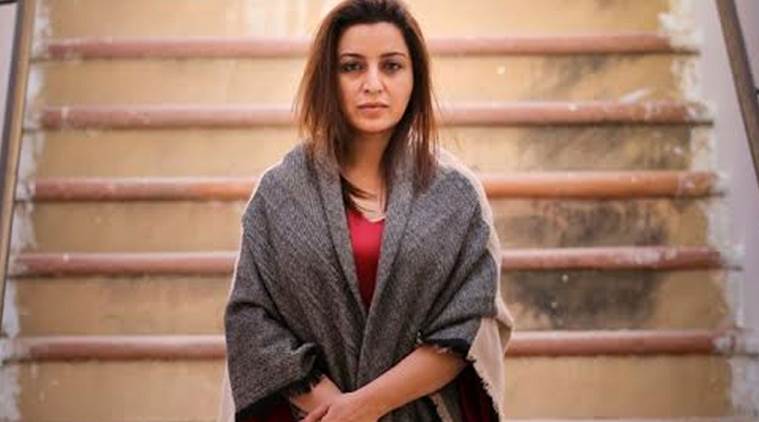
The actress, who lived in Kabul for ten years, says her “whole childhood is connected to that land” and that the pictures and videos of people attempting to flee the country have left her heartbroken
Divya Kaushik (BOMBAY TIMES; August 19, 2021)
For Tisca Chopra, who spent 10 years of her childhood in Kabul, the photos and videos of Afghanis attempting to flee the country as Taliban took over the capital city of Afghanistan, were “disturbing and heartbreaking”.
“I worry for the women and children of Afghanistan under the Taliban regime because the freedom to work, education... all that might no longer exist. So many women fought so hard for years for progress, for their basic rights, and all that might just disappear, which is heartbreaking. From what we all have been seeing on the Internet, and whatever I have been reading and watching about Afghanistan, everything is disturbing. My whole childhood is connected to that land. I can understand the sense of betrayal that the Afghanis might be feeling. What are they going to do? The images of people hanging to the wheels of the aircraft that was leaving, falling to their death, were heartbreaking. For them, death was better than living in that country. To see such images, to think about what those people must be going through is disturbing,” says Tisca.
Tisca, who recently shared a picture of her as a child in Kabul on social media, says that Afghanistan “is the land of utmost beauty and utmost turmoil.”. “It is very tragic that the beauty and splendour of something so beautiful has to be cursed by something like this. It’s a strange dichotomy that the land faces. It’s constantly been in turmoil over years. I have so many Afghan filmmaker friends, now settled in different parts of the world. I have been talking to them and they all are so heartbroken. It is going to be the worst for women and children. I just hope something could prevent what we all could see is now going to happen in Afghanistan,” she says.
Reminiscing about her growing up years in Kabul, Tisca says that even that was a time of war for the country. “I don’t think Afghanistan has never not been at war. In my childhood I have seen some very violent incidents, like a tank burning in the middle of the street, just two streets away from my house. We went to somebody’s house on Christmas and had to stay there for three days because curfew was declared in Kabul. These were just some of the things that we saw while growing up in Kabul. My dad was the principal of India International School and we were very good friends with the entire Indian community that was staying in Kabul at that time. It was a close-knit community and those friendships exist even now. I remember we had to leave Kabul overnight as it was getting very violent and the Indian embassy asked all the Indians to evacuate. Leaving overnight was very similar to what is happening now, but at least we had a chance to leave. I never had the chance to visit Afghanistan again and it looks like I am not going to get it for a long time now,” says Tisca.
Last year, I realised that I have a voice on social media-Tisca Chopra
7:58 AM

Harshada Rege (BOMBAY TIMES; May 27, 2021)
Last month, Tisca Chopra was in Jaipur shooting for a web show when Coronavirus cases started increasing across the country. When filming was halted, the actress decided to head to her family home in Delhi. She says, “I was in the middle of a shoot. We had finished 30 solid days of work and were about to move from Jaipur to Nawalgarh to continue filming when the second wave hit, and we stopped shooting. Luckily, nobody fell sick. I reached my home on April 13, and within a few days, someone in the family tested positive for Coronavirus.”
‘I HAD ALL THE SYMPTOMS OF COVID, BUT TESTED NEGATIVE FOR IT’
While Tisca’s father-in-law and daughter were among the family members who tested positive for the virus, her reports were negative. The actress says, “Though I didn’t test positive, I had all the symptoms… I had lost my sense of taste and smell, had a fever, body ache, etc. It felt strange that on a set where there were more people, I didn’t have any health issues, and within a few days at my home in Delhi, I was unwell. So, it doesn’t matter where you are, you can’t predict what’s going to happen, and that’s the reason you should never let your guard down. I am glad I got my first jab of the vaccine before I left for my shoot.”
Tisca and her family isolated at their home in the capital. “My way to deal with any illness is to be combative. When I was in isolation, I would sleep a lot because I would feel exhausted. But after a few days, I ensured that I would do my yoga, wash my clothes, sweep and swab the room, so that I wasn’t sedentary,” she shares.
‘THE LAST FEW MONTHS HAVE BEEN LIKE A ROLLER-COASTER RIDE’
Tisca says she wasn’t surprised with the second wave hitting the country. “Looking at the way the second wave was affecting people across the world, it seemed like something drastic was going to happen. Of course, nobody expected something of this magnitude. I knew it wouldn’t be as easy as thinking that we have managed to beat the virus so soon,” she says, adding, “Last year, I realised that I have a voice on social media.”
Tisca recalls, “Back then, I had opened my social media to give a shout-out to smaller businesses because I knew they would be suffering the most. So, it was natural that I would do the same to help people this time around, too. Besides amplifying people’s requests, I used all the contacts I had from the times I shot at different places. The last few months have been an emotional roller-coaster ride as sometimes you are able to help someone, and then you get some bad news.”
‘PEOPLE HAVE ORGANISED THEMSELVES IN A BETTER WAY TODAY TO HELP THOSE IN NEED’
Tisca says that while earlier there was a bit of chaos, now, helping people seems to have become more streamlined. She says, “At first, one would reach out to whoever one could, but today, people and social media are far more organised when it comes to helping people. Now, there are city-specific and need-specific groups. Also, there are these young kids who work 20 hours a day to help people, and when they aren’t able to meet a requirement, they reach out for help on social media.”
‘IT IS IMPORTANT TO REACH OUT TO PEOPLE WHO NEED TO TALK’
Tisca believes that conversations around mental health are very important. She further adds, “Personally, I believe that happiness is a choice. I have made it a practice to tell myself that my time on this planet is limited, so anything that robs my happiness is my worst enemy. Yes, we are probably in the middle of the worst time that we are going to see in our lives, but dwelling on it won’t help. We should reach out to people who we think need to talk and follow the same rule ourselves.”
‘USING THIS TIME TO RELOOK AT THE SCRIPT OF MY DIRECTORIAL FILM’
As for work, while shootings may have come to a halt, she is spending her time constructively. Tisca says, “Work is very much on my mind. I am going to direct a film soon, so I am relooking at my script. I have a narration coming up for it. I have series that I am producing, and I am also reading a few scripts. I often divide my time between amplifying people’s messages on social media and my work. Sometimes, I feel it is actually more hectic than before.”
It is just the shameful neglect of governance and I think all of us feel that very strongly-Tisca Chopra
7:56 AM

Juhi Chakraborty (HINDUSTAN TIMES; May 13, 2021)
In these testing times when the second wave of Coronavirus has wreaked havoc in the country, actor Tisca Chopra has stepped up in a big way and is working round the clock to help people in need via social media.
She has been amplifying thousands of requests of people asking for oxygen, plasma, medicines and hospital beds. “We understand that it is [about] a life, one cry for help is [to save] one life. I don’t think I’d be able to sleep at night if I wasn't doing anything to help people at this time, my conscience would kill me,” she says, adding “It is just the shameful neglect of governance and I think all of us feel that very strongly. Despite that, if every single person steps up and helps two-three others around them, the problem can be mitigated. Last year was the trailer, this year is the main film — and it’s a horror.”
She recalls getting the first request for help around mid-April, after which there have been only more and more of them. “I took to social media to say if anybody needs anything they’d let me know... Lots of people who needed oxygen, plasma started to reach out and we began to amplify,” she says.
In order to help maximum people, Chopra, 47, reveals that an informal group has been formed — consisting of a bunch of like-minded individuals – categorizing, filtering and forwarding requests. “There’s a group for plasma, there’s a group for Delhi, and Mumbai. We’re reaching out to whoever we know. If I know somebody in the south (of India), an actor or someone prominent, I reach out to them also. We are using whatever we have, personal contacts, even cold calling or sending a direct message to who one doesn’t know personally, that’s how we’re working,” the actor concludes.
Irrfan Khan would find the whisperings of the universe in the mundane-Tisca Chopra
7:58 AM

Tisca Chopra, who knew Irrfan for 20 years, talks about the banter she shared with him and remembers him for his ability to see something special even in the ordinary
By Tisca Chopra (BOMBAY TIMES; April 27, 2021)

Firstly, when I hear anyone say ‘he was’, it doesn’t stop shocking me. Irrfan was one of those people with whom it became hard to come to terms with (his death) because I knew him for almost 20 years. I did one of my works with him, called Ek Shaam Ki Mulaquat, which was part of a series called Star Bestsellers (1999). When we started shooting for it, I was in a space where I was considering giving up movies because I thought it wasn’t the place for me. He figured out my personality quickly and realised that if he tells me mat chhor, I won’t buy into that narrative. So instead, he goaded me into staying, saying, ‘Chhor de, kya hai. Tere mein guts toh hai nahi’, ‘Tere se hoga nahi, tu chhor de’, ‘Mujhe pata hai tu chhor degi’, and that kind of made sure that I didn’t quit.
‘HE SAW MANY STRANGE THINGS IN THE ORDINARY’
Years later, we worked together in Qissa (2015). The wonderful thing about Irrfan was that he created an atmosphere on the set and in the scene, particularly in that moment, when everything seemed alive, and be the reality of that moment. He sought and saw many strange things, which I don’t think many other people notice in the ordinary... he’d notice the light switch in the frame not working, and he’d use that in the scene. He would switch it on and off to show that the place is crumbling.
‘HE DIDN’T WORRY TOO MUCH ABOUT LINES & DIALOGUES’
In a particular scene (in Qissa), I was rubbing my forefinger on my thumb to show that my character was stressed. During the shot, he put his finger between my forefinger and thumb and pulled them apart, like a husband would, to say ‘don’t get stressed’. It communicated just that in such an intimate and fragile way... that’s what made him Irrfan. He didn’t worry much about lines and dialogues, and he would make others feel comfortable about it too.
‘IRRFAN BECAME A FRIEND, PHILOSOPHER AND GUIDE’
He would send me films such as Once Upon a Time In America and would say, ‘Dekhi toh hogi nahi tune.’ When I’d tell him that I have watched it, we would talk about it. In many ways, he became a friend, philosopher and guide.
‘THERE WAS CONSTANT BANTER BETWEEN US’
I had a sort of bantering relationship with him, like people who go back a long way do. We travelled a lot with Qissa – to Abu Dhabi, Rotterdam, Toronto – and whenever we’d spend time talking, he would reveal something that would stay with you forever. He would find the whisperings of the universe in the mundane.
‘IRRFAN’S AFFECTION WAS FOR WHAT HE BELIEVED WAS THE AUTHENTICITY OF THE PERSON’
I remember I’d be dressing up for the Toronto International Film Festival or in Abu Dhabi, he would say, ‘Kar le fashion, kar le. Iss se kya hoga?’ He would pull my leg, and I’d keep telling him, ‘Farak padta hai. Aap bhi dress up karo thoda sa. Aise thodi na aata hai koi.’ He would say, “Nahi, aisi baat nahi hai, maine Cannes mein pehna tha tuxedo...’ His expression and affection were for what he believed was the authenticity of the person, and he wouldn’t take a moment to call out something or someone. His passing shattered me to the point where I couldn’t collect myself for days, and I still can’t.
— As told to Harshada Rege
The fact that you have your periods is great-Tisca Chopra
7:58 AM

Actor-writer-mum Tisca Chopra hopes to instill period pride and self-confidence in teenage girls with her latest book, a lockdown project
Jane Borges (MID-DAY; April 4, 2021)
As a teen, the four Ps (puberty, periods, pimples and people) hung like an albatross around our neck. What made it tough was the stigma that came with some. Add to that, the lack of access to good information. It didn’t help my 14-year-old self, who was a bundle of nerves, back then.
Actor-writer Tisca Chopra shares our sentiment, when we connect with her to discuss her new book What’s Up With Me? (Red Panda, Westland). The just released title is a handy guide for young girls, offering practical suggestions for coping with the roller-coaster that growing up is, especially tackling the four Ps.
The idea came from Vidhi Bhargava, editor at Westland and Chopra’s schoolmate. “Because I am quite invested in my daughter’s life, as all mums are, I started looking at her, and her friends more carefully, trying to understand their level of curiosity about things, and how trusting they are about our generation,” says Chopra.
Edited excerpts from the interview.
Most of the issues you discuss in the book are still considered taboo here. How did you negotiate them?
I have had some issues with this when I was growing up as well. I always talk very directly about things, and find it puzzling, when this happens with [conversations around] periods. The fact that you have your periods is great. What should be a concern is when we don’t get it. Historically, in many cultures, there used to be celebrations when girls got their periods, because it was a biological necessity for survival of the species. I wonder when this narrative changed, and when we started making cloaked or veiled references to it. At home, I have taken a lead in this matter. I call a vagina, vagina, and the penis, penis. If you can talk about your hands and feet, why won’t you talk about the rest of the body? I feel this is also a way of putting women on the back-foot. It angers me. [Through this book] I wanted to give girls the power to change and control their own narrative. Subtly, I wanted to put a scaffolding around their spine, and make them stand upright, and say, ‘You know what? We are the reason why the human race is procreating.’ We need to instill period pride in our girls.
What kind of research did you have to do for the book?
Apart from Vidhi, I had three other wonderful women holding my hand through the process. There is Dr Mala Arora, a leading gynaecologist from Delhi, and Malvika Varma, counselling psychologist and therapist, who discussed teen angst, hormonal issues, and mood swings, among other things with me. Akanksha Angnihotri did the lovely illustrations for the book. We have tried to keep the book as inclusive as possible, not just talking about the equations between girls and boys, but between girls as well. Though I am a mother, I chose to write this book from the perspective of an informed friend.
You also have a chapter dedicated to the boys. Why?
The fact is that having your period, at some point, does involve procreation, and there is a curiosity attached to it. I wanted to satisfy this curiosity in a very matter of fact way. Like women, men are biological entities too. They have their own issues and it’s not easy for them either. We need to have empathy for the other gender. I wanted to demystify this whole idea of boy-ness. I hope this book becomes a conversation starter of sorts, and that both, mothers as well as fathers become part of it. Why are fathers being kept out of period talk? It needs to be normalised, and that’s the narrative I want to push for.
What: What’s Up With Me?
Price: Rs 350
To buy: amazon.in
Actors have privileges as well as pressure-Tisca Chopra
8:14 AM

Tisca Chopra on underlining the demanding nature of showbiz, highs and lows of artistes' lives with her directorial debut Rubaru
Mohar Basu (MID-DAY; December 6, 2020)
After Tisca Chopra wrote and produced Chutney, she had a nagging feeling that she needed to stretch herself. That's where Rubaru, her directorial debut, emerged from. Initially conceptualised as a full-length feature film, the Arjun Mathur and Chopra-starrer eventually became a short film. "As actors, we are always servicing the vision of the director and writer. But it's not our story. With Rubaru, I wanted to explore if I had it in me to direct. This was a natural progression after having worked with wonderful filmmakers and learnt a great deal," begins the first-time director.
Always inclined towards writing, Chopra teamed up with husband Sanjay, and Namrata Shenoy to develop Rubaru, which draws from her personal experiences. The short film explores the fragilities of stardom, complete with its highs and lows. "We've all seen how magazines and aam junta talk about actors. Artistes constantly have a mask on, with manicured nails, lashes and mascara on point. But when the garb comes off, what does it feel like? At their most vulnerable, they are regular people. Actors have privileges as well as pressure. Here, we've shown how our lives could be crumbling, but the show must go on. I hope it evokes empathy for the performer."
She emphasises that the pressure of stardom affects the mental health of actors. "You are chosen from billions to be the star. Then suddenly, for no reason known to you, you aren't the flavour of the month anymore. The adulation and social media following drops," she says, alluding that living in the public glare is far from easy.
Ever since the tragic demise of Sushant Singh Rajput, the dialogue about Bollywood's cliques and the pressure of the profession has only intensified. "The [discussion about] Sushant, narcotics, nepotism were not on the radar when we made this film in February. But this subject has been relevant for a few years. The idea of being kinder to performers needs to be the focus, because when the world was falling apart, artistes kept everyone in good cheer."

Dono Rhea aur Kangana mein kaafi galtiyan hai and acchhe points bhi hai, why do we have to choose sides?-Tisca Chopra
8:17 AM

Juhi Chakraborty (HINDUSTAN TIMES; September 21, 2020)
The chatter around Bollywood being a toxic workplace gets louder and louder with each passing day, but actor Tisca Chopra wants to maintain a middle ground.
“The whole government vs government, channel vs channel, actress vs actress situation has been created, and the common sense point of view has no place in it. Amid the whole discussion, understanding and sensibility has been lost,” shares the actor.
The 46-year-old says she is appalled to see how divisive things have become. “I am neither here nor there. The destruction of Kangana’s (Ranaut) house is a terrible thing but Rhea’s (Chakraborty) manhandling is also terrible. Neither is good, but moderate thinking has no place. Dono mein kaafi galtiyan hai and acchhe points bhi hai, why do we have to choose sides?” she further asks.
Chopra says there is no chance of having a sane discussion, anymore. “Free speech and tolerance are getting off track. Aise kyu bewakoof ban rahe hai ki koi kucch bhi bol raha hai. If there is a conspiracy surrounding Sushant (Singh Rajput) and Disha Salian’s death, it should come out. And if there are consumers and dealers (of drugs), filter them out. But, you can’t say that everyone is like that,” she concludes.
The Coronavirus caller tune is not at all effective-Tisca Chopra
8:17 AM

Tisca Chopra finds the automated voice before a phone call ‘highly annoying’, urges better measures
Sangeeta Yadav (HINDUSTAN TIMES; March 18, 2020)
The Coronavirus outbreak has become a sort of a conversation starter with most people these days. And as we talk to actor Tisca Chopra, the automated advisory on the pandemic that plays out before a phone call sets the tone of the conversation. The actor finds it to be “highly annoying” and rues that though the intent is to create awareness, “it’s not at all effective”.
The need of the hour, Chopra says, is stricter measures by the government. “For instance, they should ensue a steady supply of medicines, masks and other essentials. They need to bring the army to create quarantine camps and assist hospitals with support staff. Also, give healthcare workers as much support and funds as they need,” she says.
The Indian Film and Television Directors’ Association (IFTDA) has issued an advisory calling for a complete shutdown in the shooting of ongoing films, TV shows and web content from March 19 till March 31. Hailing this decision, the 46-year-old feels “it’s only for a good reason because a film unit is a tight group of people that come in close contact. So, it’s better to be safe than sorry”.
Ask how her work has been affected and the actor says, “Most public events and film shoots planned for March have been cancelled. I was to shoot for a project in May, that has also been indefinitely pushed.”
Staying optimistic in these trying times, the actor says, “I’m not unhappy about this shutdown as it’s been a hectic few months directing my short film. So, I’m looking forward to spend time with family and friends.”
Chopra shares that her daughter, Tara, hasn’t been going to school either and “frequent hand-washing and gargles have become mandatory at home. We aren’t stepping out for meals at all.”
Working with a fresh director and newcomers is always fun-Tisca Chopra
7:54 AM

Chaya Unnikrishnan (DNA; August 6, 2018)
Ever since Taare Zameen Par (2007), which won Tisca Chopra rave reviews for her performance as the mother of a dyslexic boy, the actress has been playing strong roles in films that are off the beaten track. She will be seen next in Lashtam Pashtam, which is about brotherhood and friendship. Here, she talks about her role, working with newcomers and doing a web series...
The title Lashtam Pashtam has created quite a buzz. What does it mean?
It is from a song in the film, which is very catchy. The makers thought they would keep that as the title. It means a code of brotherhood. It’s also a folk proverb. I actually got to know the title after we finished the shoot!
Tell us about the film and your role.
The film is essentially about two boys — one from Pakistan and the other from India — who live in Dubai. They become friends, but their relationship takes a turn for the worse. How their friendship triumphs is what the film is about. I play a woman who is affected by one of the wars between India and Pakistan. She lives with the emotional scars of a personal tragedy, which she passes on to the next generation. It’s a character that starts off young and ages through the film.
How was it working with a debutant director, Manav Bhalla, and the newcomers?
It’s always nice to work with fresh directors. They bring such passion and enthusiasm to the work. It was fun working with Manav. The new actors are full of ideas. It’s lovely working with them. They are all a lot more trained than we used to be.
Did you share screen space with Om Puri in the film?
No, I didn’t share screen space with him because we are in different segments of the film. He plays a Pakistani character and I play an Indian. But the day Omji passed away, I was with Naseer sir (Naseeruddin Shah) and he told us a lot about him and one could gather he was a wonderful, warm man.
Besides this film, what are you working on?
I am shooting for a web series Hostages directed by Sudhir Mishra. It’s the official adaptation of an Israeli show by the same name. Then, I will start a bunch of films in September. I am also scripting a feature film.
Image: Tisca Chopra to be seen as a burkha boxer in Bioscopewala
7:58 AM

Harshada Rege (DNA; May 22, 2018)
Tisca Chopra essays a rather interesting part in the film Bioscopewala. While Danny Denzongpa plays the title role, Tisca is a burkha boxer. She portrays the role of an Afghan immigrant, Wahida, who finds herself in the boxing ring. Tisca says, “I had heard about burkha boxers in Kolkata in passing as a documentary was made on them. But they don’t wear burkhas for their bouts. In fact, they sport hijabs. I explored their lives a lot more to play the character because I needed to know what their circumstances might be. Director Deb Medhekar, also gave me a lot of feedback.”
She adds, “Some Muslim immigrant women get into this to avoid prostitution. They are used just the way roosters are used in cockfights. Most people who come to watch them are immigrant labourers, who are away from their families. For them, it’s a kind of illicit pleasure. These women often get hurt, but don’t get proper medical care. There’s no training or equipment. They don’t even have access to gloves or gear. It’s just an improvised boxing area where they sometimes have to fight their friends.”
BACK TO HER ROOTS
Tisca also took up this role for personal reasons. She reveals, “My father was the principal of the India International School in Afghanistan and was attached to the Embassy there. So, I grew up in that country. When the makers told me this character was an Afghan immigrant, I knew I had to take it up. I always wanted to portray a character that would help me connect with that part of my life. I speak fluent Persian and I got a chance to say some lines in the film, which was delightful.”
FIGHTING IT OUT
Besides getting to know about the personal struggles of the women who are burkha boxers, Tisca also underwent physical training for the role. She says, “I learnt a bit of mixed martial arts and boxing to get into the groove of the character. Though this is not the longest role, it’s the most exciting role. Wahida ages from 22-23 to 45 years. She goes through the entire journey and is a big part of Bioscopewala’s (Danny Denzongpa’s) life.” While most of the boxing scenes were choreographed, the actress says that they also left room for improvement. “Or else, it would’ve seemed like a rehearsed fight,” she feels. Tisca gushes about their shooting locale, Leh. “Shooting there was an amazing experience. The landscape is something that I am used to, but the locations were stunning and a joy to shoot at,” she concludes.
The industry doesn’t have enough space for artistes like me-Tisca Chopra
7:58 AM

Mohar Basu (MID-DAY; September 4, 2017)
Although she was applauded for her role as Darsheel Safary’s mother in Aamir Khan’s directorial debut, Taare Zameen Par (2007), Tisca Chopra’s appearances in commercial Bollywood films have been far and few between.
Ageism, a phenomenon that Hollywood artistes are being increasingly vocal about, is cited as the reason for the limited screen time the actor enjoys. “I am willing to do any film, even mainstream Bollywood projects. But, the industry doesn’t have enough space for artistes like me. It doesn’t know how to cast an actor who would not fit into the quintessential role of a bhabhi, behen or biji. There aren’t enough characters written [for such actors]. While people talk about how the industry is changing, it will take several years for such stronger characters to become a part of cinema.”
Chopra, who is gearing up for her forthcoming Indian drama, The Hungry, an adaptation of William Shakespeare’s Titus Andronicus, alongside Naseeruddin Shah, says that despite its progress, Bollywood still banks on stereotypes. The actor says she derives satisfaction by creating her own content instead. “Who would have thought that a film called Chutney will earn over a million views and bag awards,” she questions of her 2016 short which revolved around a housewife and her cheating husband.
The Hungry pairs Chopra with Shah for the first time. The actor, she admits, she has known “beyond movies”, but terms watching him perform, and enacting alongside him ‘surreal’. “There’s so much to learn from him.”
Subscribe to:
Posts (Atom)