Showing posts with label Tillotama Shome interview. Show all posts
Showing posts with label Tillotama Shome interview. Show all posts
As a society, women are thrust into the shadows as they enter their forties-Tillotama Shome
8:41 AM
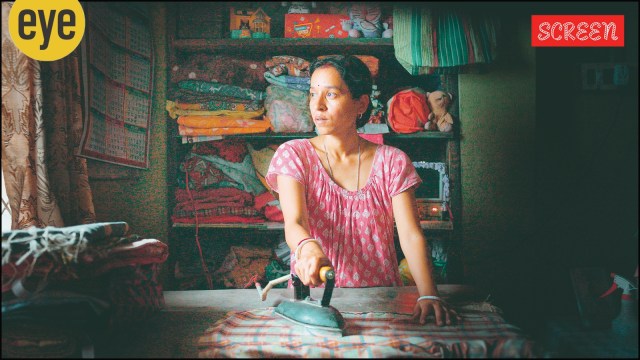
Tillotama Shome (BOMBAY TIMES; May 30, 2025)
A change in perspective is medicinal and life altering. A person, a book, an institution, a conversation, a walk, a disease, a film; can do that for you. In my case, professionally speaking, Shadowbox (pictured above) became the gift that kept giving. Because Tanushree Das and Saumyananda Sahi (the directors) were generous and open at a time when my life was very tumultuous. Being at the Berlinale was not just extraordinary creative stimulation, but also a celebration of the six-year long journey with this film.
As a society, women are thrust into the shadows as they enter their forties. Our worth is directly proportional to our ability to reproduce. As women fight back against these archaic ways of thinking, it will take more than platitudes of equality to calm us down. We are asking for information, access, and education to be shared. That is power. Women in films is an aggregator that is talking to this urgent need. WIF chapters around the world have seen clear success in increasing the number of women at work and better advocacy. So it’s not a shot in the dark and hope and a prayer, IT is real change. Give women access to rooms where knowledge is shared and decisions are made. We are not asking for favours.
The maiden outing of the WIF India chapter, was to send three of us to attend the producers network at Cannes. Seven days of rapid information shared about the various aspects of producing, case studies of models that worked and those that failed. The collective is not a warm, fuzzy, emotional relationship (nothing wrong with any of this) that can easily devolve into yet another clique, but a professional network that gains momentum with its strength of number and its desire to share information and access. The core focus is to skill women up and close the gap between men and women in our industry. Men who become allies will only benefit from this inclusion and those who resist it, will be resisting the very idea of change, which is inevitable.
To go from the Baksho Bondi collective to the WIF collective, from Berlin to Cannes, I see a pattern emerge. I am my best, when I am learning without the fear of ridicule and when I am sharing without the fear of competition. From Feb to May of 2025 I have learnt from many lives, and I hope to continue actively nurturing this collective, while I enjoy the solitude of my own creative process. One feeds the other.
A woman’s desire is still a taboo subject-Tillotama Shome
8:30 AM

Raima Ganguly (BOMBAY TIMES; January 30, 2024)
Today, many know her as Ishita Sengupta from Lust Stories 2, or as Lipika Saikia Rao from The Night Manager, but for a 21 year old Tillotama Shome, being on the set of her first film- Monsoon Wedding (2001) was like Alice (which also happened to be her character name) discovering her wonderland. The actress was recently in town for the Literary Meet, and CT took the opportunity to speak to her about the importance of being able to connect to a script, her plans of doing a Bengali film and more.
‘It’s important to be able to connect with the script’
There are two factors that Tillotama considers before saying yes to a script. First, how it is written and second, whether the director trusts and inspires the actor. “If the writing is not powerful, the actor’s hands are cuffed. How the director makes me feel is very important. It doesn’t matter if it’s a big or a lesser known director I’m working with, they need to see the potential in me to be able to pull off a challenging role,” shares the Sir actor.
Stereotypes, a myth?
According to Tillotama, an actor is often cast in a role based on a character they’ve essayed before. Even though she was going through a Goth phase when Mira Nair cast her in Monsoon Wedding, it was after its release that she started receiving numerous maid roles. She explains, “I didn’t want to do the same thing again, even if it meant waiting for a prolonged period and compromising on opportunities and money. It was almost two decades after the film that I said yes to Sir. In between, I was lucky to have done so many different types of roles.”
On the new crop of writers
The actress believes the kind of work she’s been doing over the past few years is because of the writers who’ve come into the industry. “There are writers who have come in from different parts of the country. The strength of their vernacular, woh jahaan se hain, unki kahaniya, upbringing, lehza require ‘actors’. It’s only after such roles are portrayed on screen that the actor’s prowess is acknowledged,” adds the Kolkata born actress.
“I’m grateful to Konkona for giving me an age appropriate role”
The Mirror from Lust Stories 2, according to the actress, was an important exploration of an individual’s relation with their body, beyond moral judgment. “Women’s desires are not limited to their 20’s but it’s there in their 40’s too. It’s such a taboo, even today, to be able to talk about it. The episode, to me, was deliciously complicated. It also explores complex, day-to-day female relationships in urban spaces which still have very little space for a woman’s desires,” adds Tillotama.
Quotes:
- “I was amazed to know that now, the director is often the writer of a show. It makes a huge difference to have the writer on the set with you”
- “Our industry is obsessed with young, conventionally beautiful and rich actresses. Directors often don’t know what to do with an actor who’s not all that”
- “The maximum number of films that have come to me happened to be Hindi, but it has never been a conscious choice. I’d love to do more Bengali films, but it’s just that not many has happened yet”
- “It was freeing to be able to do The Mirror in my 40’s where the man didn’t have agency. I’m grateful to Konkona for giving me something age appropriate”
Pics: Samik Sen
I had to respond to the ‘maid’ comment-Tillotama Shome
8:19 AM

Rishabh Suri (HINDUSTAN TIMES; September 19, 2021)
Tillotama Shome has been winning hearts and awards alike for her performances, but trolling on social media is something even she hasn’t been spared from. Recently, the actor tweeted that a hater called her a “flop actress who looks like a maid”.
“I rarely get nasty remarks, at least I’ve not seen them. This one I had to respond to, not for the ‘flop actress’ bit, but for the ‘looks like a maid’ comment,” she clarifies about what compelled her to call out the troll. “I felt the person gave me an opportunity for a dialogue about our deep-rooted biases around beauty, class and caste, and its ugly intersections that give birth to such casual utterances of hate and, frankly, stupidity.”
Shome asserts that what people say about her acting skills doesn’t bother her at all. “I can’t help how you feel about me as an actor, and actually, I don’t care. But about this I care. This was meant to be an insult, so it was easier to respond to,” says the Angrezi Medium (2019) actor.
Compliments, in fact, are trickier territories for her. “For example, ‘You played Ratna (her character in Is Love Enough - Sir) so well, that now I’ve the hots for my maid’. Its implications are too insidious and a response on social media would just not be enough,” says Shome, who was recently awarded Best Actress at South Asian Film Festival for Raahgir.
On how much importance she gives to awards, she says, “The news of a win feels like a movie within a movie — a bit removed from life’s reality but yet grateful. Any win is a win for the whole team.”
The audience has given me license to dream bigger and not give in to commercial calibrations-Tillotama Shome
8:21 AM

Actor Tillotama Shome finds audiences’ praise for her recent project inspiriting
Shreya Mukherjee (HINDUSTAN TIMES; February 1, 2021)
Tillotama Shome’s poignant performance as Ratna in Rohena Gera’s Is Love Enough - Sir evokes realisations regarding class divisions inherent in our social structure. No doubt, viewers are showering praises on Shome. “The audience has given me the license to dream bigger and not give in to calculations and commercial calibrations. For good or bad, it has made me more idealistic... I’m genuinely grateful for the sudden surge of projects. But I’m taking time to decide what I want to do and why,” the actor shares.
In her career spanning two decades, Shome has been part of interesting films such as Monsoon Wedding (2001), Shadows Of Time (2005) and Qissa (2013). Many of her works, including these films, travelled to various international film festivals. But, closer to home, recognition for her has been limited. However, with Sir — that premiered at Cannes Critics Week — things have become different. If this acknowledgement had come earlier, would her career have taken a different turn?
“Who knows? But my practice of Buddhism allows me to enjoy the belief that a strong foundation takes a long time to build and is unseen. It needs time, away from the glare and the gaze of others… So where I’m is exactly where I need to be,” she replies.
Appreciation raises expectations. But Shome has a different perspective. “I’m looking at it as an anomaly, a glitch in the system, an exception... the algorithm has momentarily been taken over by audiences’ love for an independent film. It’s heartwarming. I’m grateful and it’s definitely a first. But, one is accustomed to working in the shadows and taking joy from it. This is a bonus and an encouragement to continue being an oddball,” adds the actor, who’s working in directors Rima Das, Anup Singh, Saumyananda Sahi and Madhuja Mukherjee’s upcoming projects.
Sir was the new Hindi release that opened Indian theatres, but it worked better when it released on an OTT platform. Asked if she thinks the web offers a more democratic space to creators and performers, Shome says, “I’ve not done enough work on OTT to answer this question with much authenticity or research. But I hear things aren’t ‘so democratic’ in this brave new world either. This is sad but expected, I suppose. Steering things to a more positive note, I thank the OTTs for bringing home a host of wonderful actors and writers who’re speak different tongues — the sounds are diverse, the languages embrace the richness of the vernacular and specificity of a place and time. This plurality of voices is exciting.”
I feel like giving that young girl in the picture a tight hug-Tillotama Shome
7:29 AM

Tillotama Shome on playing Alice in her first film and her contest with the looking glass
As told to Yoshita Sengupta (MUMBAI MIRROR; October 19, 2014)
'Relax, it's a film,' said Naseeruddin Shah, playfully slapping me on my back. 'Mistakes are a critical ingredient of an actor's life,' said Kulbhushanji (Kharbanda).
Everyone around was merely trying to restore order in Wonderland. Alice's Wonderland. I was Alice (it was also the name of the character I was playing in the 2001 film) on the sets of my first film, Mira Nair's Monsoon Wedding.
Blissfully unaware of the technicalities of filmmaking, I Alice-d around the sets, basking in the benevolence of Mira Nair, who allowed me to do what I wanted, with few but clear instructions. The strong shouldered Director of Photography Declan Quinn allowed me to meander. He said, 'You do what you have to do and the camera will follow.'
One scene had me in front of a mirror. I had to repeat a particular sequence, catching the light, balancing on one foot, and ensuring that the body does not shift axis — else the camera would be visible in the mirror.
I was anxious, alarmed and nervous. I made one mistake after another. Each take compounded my guilt of slowing down the team. As I sat quietly by myself in tears, Kulbhushanji walked up to me and asked what was wrong. I told him that I was an unmitigated disaster. In return, he regaled me with stories of the mistakes he had made.
A few hours later, I delivered what was required of me. Quinn, walked up to me and whispered, 'Mirrors are difficult; not just for you, but for the biggest actors.' Mira, the captain of the ship, enveloped me in her warmth and restored order in Wonderland by making me feel important.
I was humbled by this - a huge team, comprising legends, where each of them was working hard to ensure I was comfortable.
Recently, I met Kulbhushanji at the Mumbai Film Festival. We reminisced about the mirror scene. We laughed a lot and then he said, 'Your Hindi has become really good, shabash beta!' His shabashi meant the world to me.
On many occasions, Mira and I have also laughed over this photograph and my general Alicelike cluelessness. When she came to see Qissa in New York, she stood up after the film and called it a powerful dream. She appreciated my work and spoke of a possibility of us working together again. It felt like a parent had approved of the man in my life. It reminded me of the charmed mirror.
You can look in the mirror and yet not find yourself. Veterans like Mira and Kulbhushanji, kept things real and that's the lesson that this photograph gives me.
More than a decade has passed since the film. I have done a quite a few 'mirror' scenes, including one in Shanghai, Tasher Desh and Qissa. But, even today, when I look at this photograph, I feel like giving that young girl in the picture a tight hug and telling her that everything will be fine.
I would do the same thing if, on a set, I come across a nervous debutante struggling with a scene.
Subscribe to:
Posts (Atom)