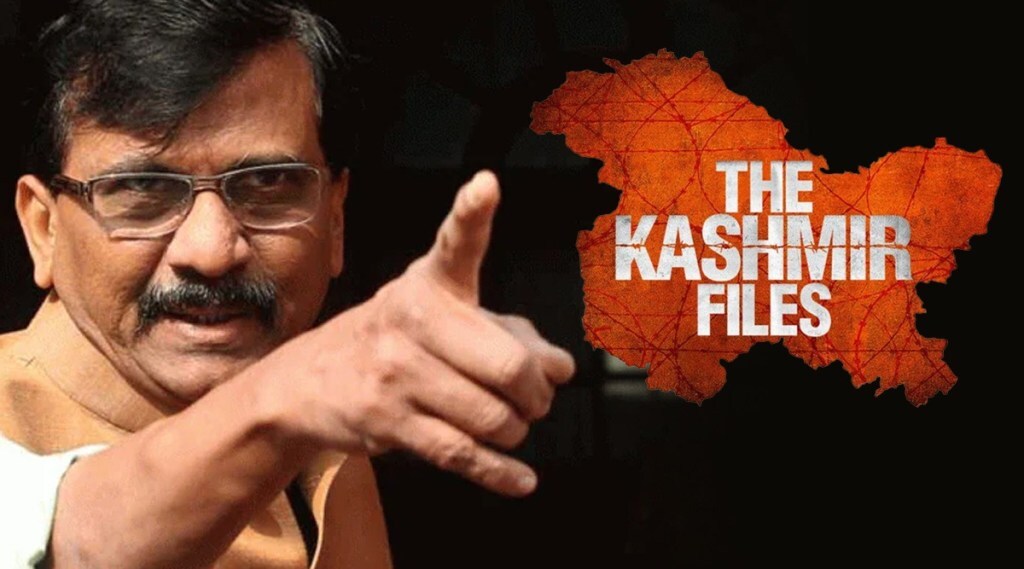
The Kashmir Files row: We know the pain of Pandits, says Shiv Sena; questions BJP ‘agenda’
7:56 PM
Fenil's Bollywood Talk # 716
10:26 AM

WILL PRABHAS BE ABLE TO DELIVER ONE MORE HIT WITH RADHE SHYAM?
Prabhas became India’s biggest star with the success of Baahubali and the blockbuster success of Baahubali 2. His next film, Saaho, opened big time due to his following. Despite not being upto the mark, Saaho was a hit in Hindi as many went to just see him on the big screen. As a result, the expectations are there from his next movie, Radhe Shyam.
This is a fantasy love story and Pooja Hegde stars opposite Prabhas. The film is mounted on a huge scale, as evident from the trailers and songs. The chemistry between the lead actors seems great. However, the film has several challenges. The content hasn’t excited viewers. The songs haven’t worked at all. Moreover, Prabhas is seen in a romantic avatar. He’s not bashing baddies and his fans love him in an action avatar. As a result, the excitement is not as much as it was during Saaho.
The other major release of the week is The Kashmir Files. It is directed by Vivek Agnihotri and stars Anupam Kher, Mithun Chakraborty, Darshan Kumaar and Pallavi Joshi. It tells the story of the persecution of Kashmiri Pandits in 1990. The buzz is there among a section of audience and the trade and industry feel the film can spring a surprise, just like Vivek Agnihotri’s last film, The Tashkent Files. That film started at Rs. 36 lakhs and ended up collecting Rs. 16.97 crore, which stunned everyone. The Kashmir Files opening can be around Rs. 1-2 crore, and could even go higher. If the word of mouth is positive, it can pick up substantially.
I support films like Roohi and Mumbai Saga, which opted for theatrical runs-Shariq Patel
8:02 AM


Now no one will question my ability-Vivek Agnihotri
7:57 AM

67th National Award winners open up; explain why the trophy is 'a big deal'
8:46 AM
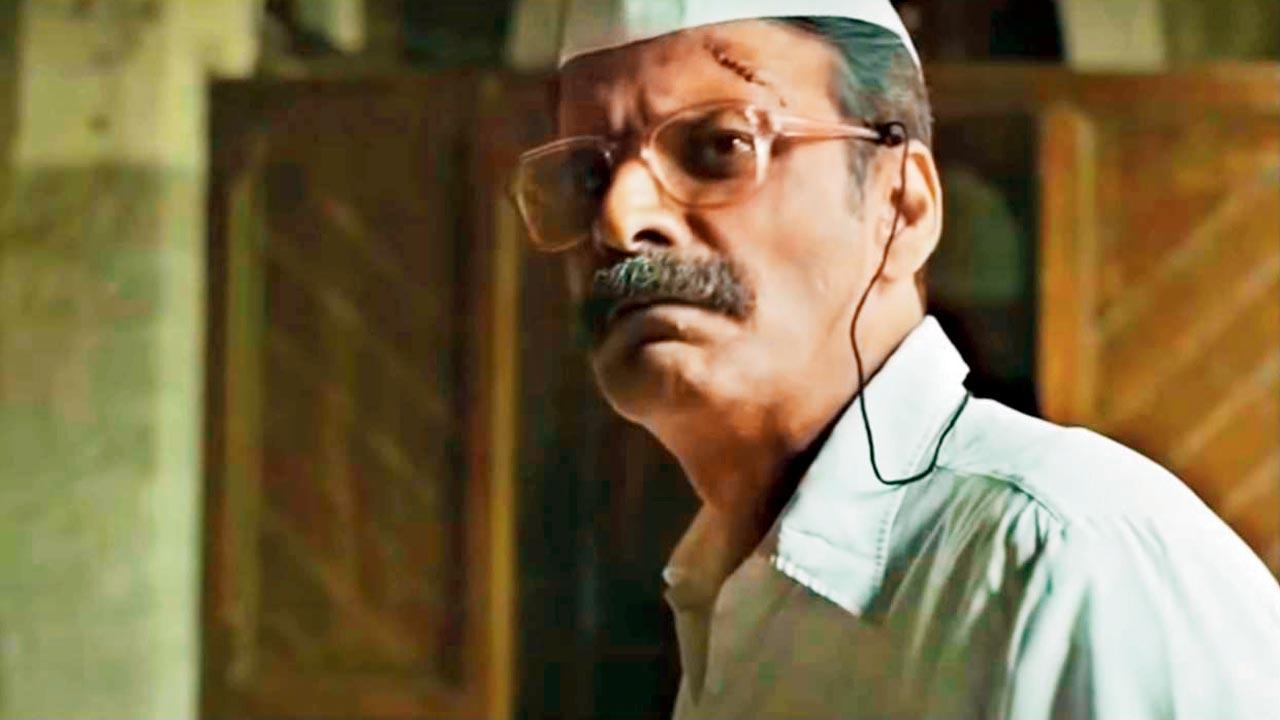
Directors mourn the passing away of 'very happy actor' Asif Basra
8:28 AM

Everyone would look at Asif Basra and say, he is so sorted-Divya Dutta
8:26 AM

Had it not been for OTT projects, I’d be doing character roles in films or lead in TV shows-Shweta Basu Prasad
8:17 AM

Kavita Awaasthi (HINDUSTAN TIMES; September 8, 2020)
“OTT has given work to actors like me,” says actor Shweta Basu Prasad, who has five projects coming up this year on various online platforms. “I have never been this busy in my life. This is common for every actor like me who are getting good roles. Web projects give respect to writers who then create characters that can shine, so content has become king and due to that, actors like me are getting really substantial roles. Had it not be for OTT projects, I’d be doing character roles in films or lead in a TV show. Before The Tashkent Files (2019), I didn’t get good enough roles but now I am.” She has been enjoying doing projects on OTT including short films and web shows.
Prasad was noticed as a child actor in Makdee (2002) and Iqbal (2005) and recently was seen in Badrinath Ki Dulhania (2017), and the TV show Chandra Nandini (2016-2017).
Having being exposed to world cinema since childhood, she is glad that finally audiences are able to enjoy good content from around the world. “I am also enjoying watching actors like Neena Gupta, Pankaj Kapur, Kumud Mishra, Sanjay Mishra playing lead roles in OTT shows. It is a great time to be an actor as everyone is experimenting. (Actor) Vijay Varma said, that now actors are not feeling insecure that their prime is getting wasted. That time nikal raha hai as everyone is getting good work. People of all ages and all kinds of images are getting work, provided you are a good actor. In fact, in the pandemic taught us that we need art - books, music and cinema - to survive and this is the time,” she says.
The Tashkent Files should've been India's entry to Oscars-Vivek Agnihotri
7:11 AM
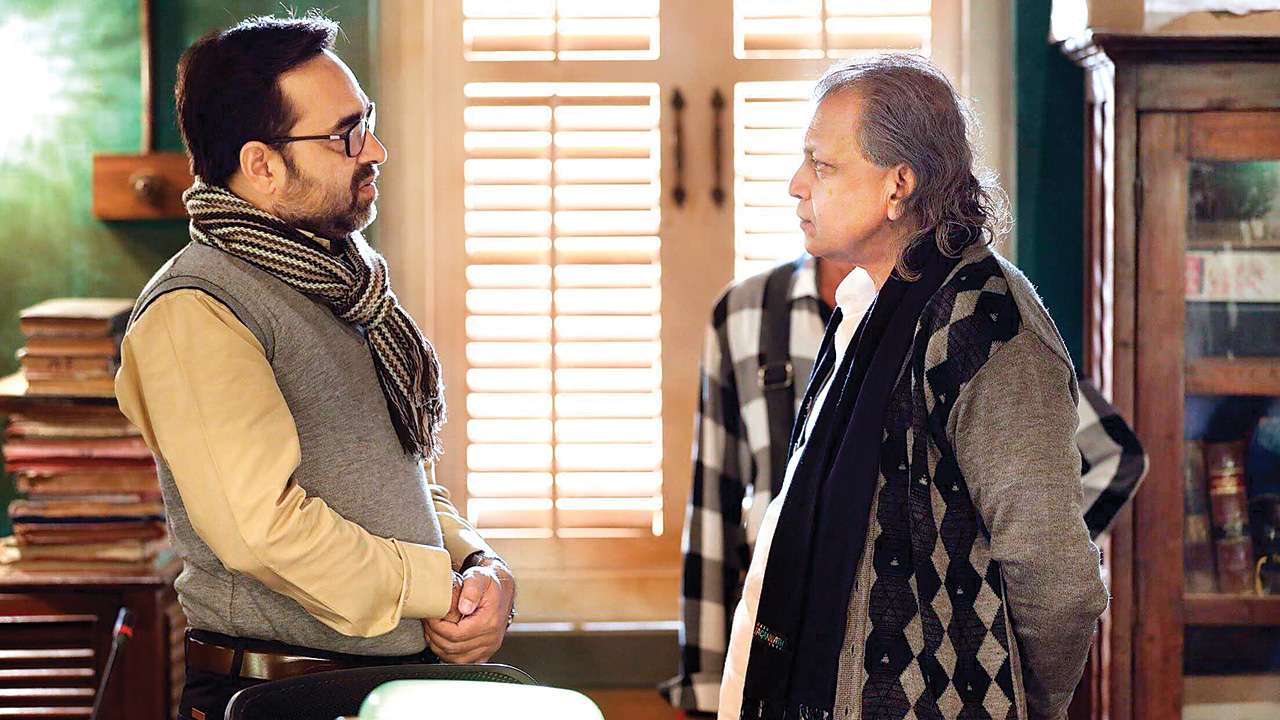
Shalabh Anand Bajpai (DNA; October 2, 2019)
Not only Mahatma Gandhi, October 2 is also freedom fighter and former Prime Minister Lal Bahadur Shastri’s birth anniversary. To celebrate it, &pictures is all set to premier The Tashkent Files, which is based on the life and the circumstances surrounding the mysterious death of the nation’s second PM. “I’m happy that for the first time in the history of India, apart from Gandhi ji’s films, something different will be premiered on television. Watching this movie will also give facts that haven’t been clear to the new gen. Shastri ji’s life is what the youth should watch. They will know what type of India he wanted,” says director Vivek Agnihotri.
Ask him what prompted him to make a film on Shastri and he says, “I wanted a subject that was not touched by anyone. Moreover, it was a topic no one had explored because of the controversy surrounding his death. When a country’s government is involved in something, no filmmaker tries to make a film on it. It took me four years to make this movie, we filed a RTI, and also went through all the CIA, KGB and parliamentarian records. I wanted to make an honest film.”
Vivek feels The Tashkent Files should have been India’s Oscar entry. “It truly deserves to be one of the top runners but due to politics, it couldn’t make it,” says he.
About his upcoming projects, he stated he’s making another film that’s controversial. “The Kashmir Files is based on the mass exodus of Kashmiri pandits from the valley in 1989-90 due to militancy. I am also working on a web-series, based on controversial Supreme Court cases. I am penning a book called India For Sale,” shares the filmmaker.
The Tashkent Files will premiere on &pictures today at 12 pm.
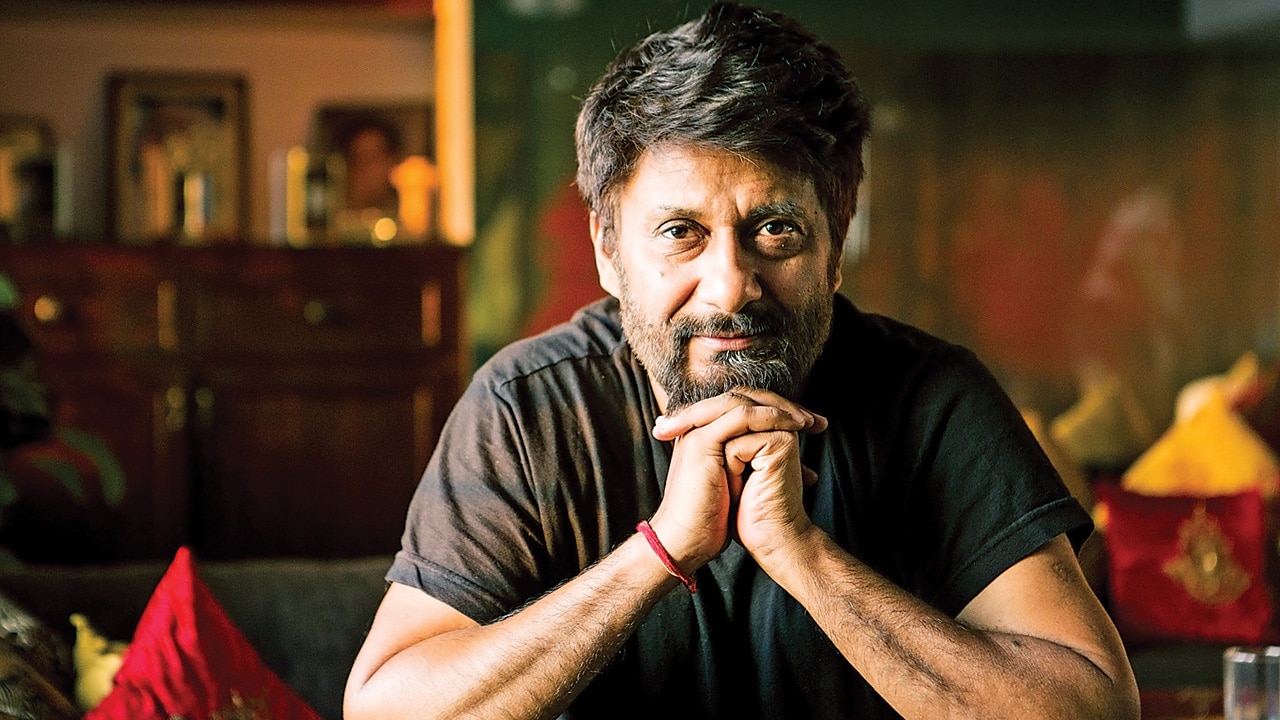
Vivek Agnihotri’s next will be a film on Kashmiri Pandit refugees
8:55 AM

Vivek Agnihotri’s next will roll in six months and have first-hand accounts of victims
Natasha Coutinho (MUMBAI MIRROR; June 3, 2019)
After The Tashkent Files, Vivek Agnihotri’s next is titled, The Kashmir Files and revolves around Kashmiri Pandits. “I’ve been wanting to make a film on the Kashmir issue for a long time and after my recent success, I have the confidence to tackle the sensitive subject. Little kids were shot, women raped and people told to leave their houses at night, the film will be an honest investigation into one of the biggest human tragedies,” asserts the director who will begin shooting in the next six months with an ensemble cast.
Vivek plans to visit all the places where Kashmiri Pandit refugees have settled, from Jammu, Delhi and Mumbai to abroad and record the first-hand accounts of the victims. “I’ve been working closely with activists in Kashmir and spoken to top politicians. Initially I was planning a book, now it’s a film,” he says, sighing over the fact that films on Kashmir have mostly portrayed the army in a poor light and justified terrorism. “That’s the wrong narrative based on propaganda, I’m going to break this myth.”
Meanwhile The Tashkent Files released last month is still running in theatres and Vivek admits he is not surprised. “We released in only 250 screens and survived Kalank, Avengers: Endgame, De De Pyaar De, Student Of The Year 2 and more. IIM Ahmedabad has included the film in its curriculum as a case study now,” he signs off on a jubilant note.
I’d rather belong to the truth than to a group. I can’t be a chamcha, a sycophant or a groupie-Vivek Oberoi
8:31 AM

Vivek Anand Oberoi in a no-holds-barred conversation about the roadblocks that his film on the life of Prime Minister Narendra Modi has faced and the way ahead
Rachana Dubey (BOMBAY TIMES; April 20, 2019)
On Wednesday (April 17), the Election Commission of India (EC) watched the biopic on Prime Minister Narendra Modi as per the directive from the Supreme Court. Though Vivek Anand Oberoi, who plays the central character in PM Narendra Modi, isn’t divulging the response of the Election Commission (EC) after the film was screened for its officials, he stated that he is happy with their answer. The actor spoke to Bombay Times about the various roadblocks that this upcoming project has faced and what lies ahead for him. Meanwhile, a hearing based on the report submitted by the EC is due in the Supreme Court on April 22.
Though your film was cleared by the Supreme Court and the CBFC, the ECI stalled it less than 24 hours before its release. All the promotional material, too, has been pulled off the web. Did you anticipate that you would have to fight so many battles?
No one did! But at least now we are absolved of the allegation that this is a propaganda film funded by the BJP. Yes, it was saddening to see our promotional material vanish from the web-space. It’s painful because it’s our effort, our time and our money out there. But if something is the law, rule or principle, it should apply to everyone. It angers and upsets me that we are being singled out. A web-series on the same subject continues to air. A controversial political drama like The Tashkent Files released and nobody raised an eyebrow. Shashi Tharoor, who is contesting in the Lok Sabha polls, has brought out a book called The Paradoxical Prime Minister, and no one has questioned its sale. If all of this is not influence, then what is? Why is my film being singled out? I want to know who will bear the financial responsibility of this project, and the collaterals of stalling its release hours before it hits theatres. The team was disappointed, but not disheartened. We decided to fight tooth and nail and I believe that justice will happen.
Could you relay what happened on April 10?
None of us anticipated the EC’s move because they were a party in the High Court cases against our film. Their representative had given an oral submission that they have no objection to the film as long as the CBFC clears it. The EC even sent a notice to the CBFC with guidelines of the Model Code of Conduct (MCC) that must be taken into consideration while certifying it. They approached it with dual guidelines, and asked for more than 10 cuts. We didn’t contest any of those because we wanted to release the film on time. Despite knowing our situation very well, knowing what their oral submissions have been and that we are not in violation of the MCC, the EC decided to stop our film. Only our film. Our distribution, exhibition and promotional amplification went for a toss. We are still figuring why and how it happened. Arbitrarily, the EC, suo moto took the initiative to stall the release of our movie.
Why do you think your film lacks support from the industry? Is it because of your brazenness?
I don’t think so! This always happens. An iconic filmmaker like Sanjay Leela Bhansali gets slapped on his set and no one says a word. The industry should have shut down in protest. We all should have said that if this country can’t protect its creative workforce and its freedom to express, then what is the point of bestowing awards? Kisi ko panga nahi lena hai. No matter which government comes to power, it’s essential that irrespective of our political views, we are protected against violations.
Lately, we have seen the industry becoming more vocal about their political opinions than ever before, but standing up for another film which could have political repercussions is probably another matter...
These are dark days for the industry. I am not the first victim and I won’t be the last. If I don’t fight and just meekly walk away, it will become a precedent and our judiciary works on precedents. If I don’t fight, it will give overarching powers to bodies like the EC, while the MCC will become the greatest tool in the hands of any fringe group, community or a party. Tragically, this industry wakes up and unites when it’s too late. They don’t stand up for their own people. I know I will get through all of this. We are a strong team. But there will be more victims in the future and it’s a shame and a travesty that industry seniors and power figures are quiet. Where are the intolerance, award wapsi, fundamental rights, free speech, selfie, pro-Modi and anti-Modi brigades? There is no unity here; there are hundreds of factions within the industry. If we were united, the changes we’re making or trying to make today would have happened 25 years ago. When it comes to campaigning for a political party, we have faces, but not for supporting another colleague within the industry. I am a small fry, who promises to stand up for anyone who is wronged like me, probably because no one has stood up for me. Today, I am not asking anyone to help me, but people should remember that we could have banded together and set a precedent for our industry’s future.
You’re openly speaking about lack of support and unity. Won’t that isolate you further?
I’d rather belong to the truth than to a group. I don’t believe in wearing a mask to blend in. I can’t be a chamcha, a sycophant or a groupie. I am proud of the decisions I take, I speak with a lot of thought. Reaching out to people is not a sign of weakness. It’s being brave. I am holding a mirror to the industry and this episode is not the first and last episode of its kind. If I help someone tomorrow, it’s my payback to this industry. We forget that this is all transient. We need to remind ourselves that we are here because of this industry and not the other way round.
Being brutally blunt isn’t easy and you have taken on industry biggies in the past, too, which has cost you dearly. Don’t you fear ruining your chances again?
No! Didn’t this film come to me? Didn’t we make it in record time? I am more focused on what we have at hand. I’d rather be my own truth than being someone else’s lie to fit into a space. The years when powerful people hampered my career and tried to crush it could have made me a bitter person. I could have taken off on an ego trip, but I chose to do the exact opposite. I found peaceful ways to deal with my problems. That is my way of moving forward. Till date, with whatever strength I have, there has been an effort on my part to support new talent without making a noise about it, something that no one ever did for me. I am grateful to those newcomers who didn’t go out and talk about the calls I made for them. That is how I like it to be.
Coming back to your film, you’ve constantly harped on the fact that it’s not propaganda but due to your proximity to certain political forces people tend to think otherwise. In fact, even the trade pundits felt your film was not widely anticipated and that your presence could have hampered footfalls. Are your own political leanings affecting the chances of this biopic?
Today, people might say that viewers were not looking forward to watching my film. These are the same people who will not say a word when my film runs housefull in their theatres. It’s very easy to be flippantly negative. We know what we have been through to make this film well, that too, in record time. And no matter who says what, I know that people are looking forward to the film, more so, after its release was randomly stalled. I find a new conspiracy theory about my film every day. I recently read that Mamata Banerjee’s biopic has expressed its release date as May 3. The conversation around the CBFC clearance and the EC’s clearance is happening now, weeks before its release. The same people knew all along when my film was expected. Why did they wait for the last day (before its release) to stall it?
You’ve still not answered whether you think your political leanings marred your film’s chances?
Counter question: Naseer saab is clearly anti-establishment. He’s one of the top names in the list of 600-700 people, who are dissuading people from voting the current party back in power. But did his film stop? The EC didn’t care for a film that insinuates that Indira Gandhi and Congress were responsible for Lal Bahadur Shastri’s sudden demise. What does this say? Are political leanings their benchmark to assess things? We have decided to fight for justice and we will do that till the very end. It’s funny that as long as the EC wasn’t stopping our film, people said, “EC is playing into the hands of the powers that be.” Today, why is no one saying that the EC is in the Congress pockets? If the earlier statements are true, so is this.
Have you thought about what you will do from this point onwards?
If the ruling is in our favour, we will chalk out a plan for the film’s release. If not, then we will fight it out till the end; there’s no looking back. It takes a lot of money, but everything is not about that. Principles bhi kuch hote hain na...

(Crisp) Movie Review: THE TASHKENT FILES by FENIL SETA
10:48 AM

The Tashkent Files rests on a great idea and reveals some shocking facts surrounding the mysterious demise of the second Prime Minister of India, Lal Bahadur Shastri. The film is extremely enlightening and puts forward the facts nicely and hopefully should resume the discussion on what a character describes in the film as ‘modern India’s biggest cover up’. The execution sadly leaves a lot to be desired. The impact is not made in some scenes and some developments seem convenient and difficult to digest. At a few points, the makers give too much of information and it becomes difficult to process it. Few of the trivia don’t have any relevance to the principle plot and could have been done away with it. The setting of people with conflicting views shouting at each other in a closed room will give one a déjà vu of 12 Angry Men and Ek Ruka Hua Faisla. Also, the film is too long at 144 minutes and could have been shorter for a better impact. Performances however are excellent. Shweta Basu Prasad delivers a terrific performance and single handedly rocks the show in the climax. This is the much needed film for her to prove her worth to Bollywood filmmakers who will now hopefully sit up and take notice about her. Mithun Chakraborty hams a bit but leaves a mark. Pankaj Tripathi is quite fun initially and then as his character shows his true side, it gets even better. A fine performance as always, though it looks a bit similar to his Stree act. Pallavi Joshi is too good. Mandira Bedi is okay and her character backstory should have been shown. Prakash Belawadi is fine as always and also funny. Prashantt Gupta, Rajesh Sharma, Vishwa Mohan Badola and Asif Basra are okay. Vinay Pathak looks too young for a spy who was active in the 70s. Naseerudin Shah shockingly gives an average performance. All in all, watch The Tashkent Files for the shock element and if such kind of offbeat films interest you!
My rating - *** out of 5!
Fenil's Bollywood Talk # 564
10:38 AM

MAJOR ‘PROPAGANDA’ FILM POSTPONED; WILL THE OTHER POLITICAL FILM SCORE?
It's election season and unlike previous times, Bollywood is playing a huge role here. Multiple films have come up to show the ruling government in good light and thereby help them to win the elections yet again. Earlier this year, The Accidental Prime Minister came out and this week, two political films were to release. Out of these two films, PM Narendra Modi, was postponed at the eleventh hour after the Election Commission found that the release violated level-playing field scenario. The film will now release only after the polling is over, on May 19. The other political film however is not about any current leader and talks about a previous public figure and it is all set to release. My analysis:
THE TASHKENT FILES: It is directed by Vivek Agnihotri, who has earned a sizeable fan following on social media for his right-wing views and for coining the term ‘Urban Naxals’. The film promises to be an investigative thriller on the mysterious death of India’s second Prime Minister, Lal Bahadur Shastri. Most of the films is set in one room and the star cast comprises of Naseeruddin Shah, Mithun Chakraborty, Shweta Basu Prasad, Mandira Bedi, Pallavi Joshi, Rajesh Sharma, Vinay Pathak and Pankaj Tripathi. The star cast, as one can see, is impressive and also the subject. The trailer seems loud but raises some important points and the film can make for a nice viewing if made well. The buzz and awareness sadly hasn’t been high. It releases on a Friday and has just 5 days to score after which Kalank will take over since it releases on Wednesday April 17. The opening can be in the range of Rs. 1-2 crore and can grow well if response is positive. Vivek Agnihotri’s earlier film, Buddha In A Traffic Jam, was well-made and was publicized extensively on social media as 'anti-Left' film. But outside social media, no one was interested to see it and it shockingly did a business of just Rs. 28.75 lakhs. Here’s hoping The Tashkent Files doesn’t go the same way and gets its due.
Another release of the week is Albert Pinto Ko Gussa Kyun Aata Hai, a remake of the 1980 classic Albert Pinto Ko Gussa Kyoon Aata Hai. As evident from the trailer, the plot has been changed a bit and looks interesting. It is directed by Jajantaram Mamantaram director Soumitra Ranade and stars Manav Kaul, Nandita Das, Saurabh Shukla, and Kishore Kadam. The awareness is negligible and the film might later score on digital platforms if it's worth it.
Every time my dad goes to LA, people just assume he’s sick-Namashi Chakraborty
10:05 PM

Mithun Chakraborty’s youngest son, Namashi, clarifies that his father is in the last leg of therapy for back pain
Avinash Lohana (MUMBAI MIRROR; April 8, 2019)
 A few months ago, Mithun Chakraborty’s absence from the public eye raised concerns that he may be battling a life-threatening illness. However, the veteran actor’s youngest son Namashi tells Mirror that the only thing ailing his father is back pain. “Whenever dad travels to Los Angeles, people assume he is sick. He is currently in Kerala undergoing therapy for his back and will be in Mumbai closer to the release date of The Tashkent Files (his next film). 90 per cent of the pain is gone, and he is now waiting to return to work,” Namashi informs.
The 26-year-old aspiring actor goes on to add that he was born in Mumbai, but the family moved to Ooty when he was two. “The only source of entertainment there were television and dad’s movie trials. There was just one theatre in the area and he would book the entire 9 pm show. I grew up watching his films and wanting to be a hero like him but as a ’90s kid, I was obsessed with Shah Rukh Khan and Govinda too,” Namashi says, adding that he returned to Mumbai in 2006, two years before his elder brother Mahaakshay’s debut with the Raj N Sippy-directed Jimmy.
In 2012, he started losing weight as part of his prep for an acting career. “I also joined Kishore Namit Kapoor and Alok Ulfat’s acting class. A two-year dance training at Shiamak Davar’s boosted my confidence. I have done improv comedy in theatre and assisted director VK Prakash on Ishqedaariyan,” he reveals.
Recent reports had claimed that he has a role in Anubhav Sinha’s Ayushmann Khurrana-starrer Article 15. Namashi denies it, saying, “I had gone to meet Anubhav sir and (filmmaker) Ratnaa (Sinha) ma’am for a lead role in a different project. It has nothing to do with Article 15.”
While his sister, Dishani, has already featured in two short films and is also now looking for a feature-length break, Namashi asserts that the only tip his father gave him was to never depend on him for work and not be disheartened by rejections. “Main Aaram Nagar (Andheri) mein bahut bhatka hoon, but I love it,” he smiles, adding that he reaches out to casting directors, and filmmakers through his struggling and established friends for auditions.
It takes an idiot or someone guilty to call The Tashkent Files propaganda-Vivek Agnihotri
10:47 PM

Vivek Agnihotri, whose directorial The Tashkent Files featuring Naseeruddin Shah and Mithun Chakraborty is releasing today, discusses the genesis of the film
MUMBAI MIRROR (April 5, 2019)
How did you research the subject of your film, which revolves around the death of former prime minister, Lal Bahadur Shastri?
The idea was conceived when I expressed my frustration about the fact that October 2 is known only as Mahatma Gandhi’s birthday, when it is also Lal Bahadur Shastri’s birthday. People reached out to me and asked me to make a film on the Shastri ji’s mysterious death. After I started researching, I realised the most authentic way to dig deeper would be to ask the government and I decided to become a whistle-blower. For almost a year, I filed around two dozen RTIs with the Ministry of Home Affairs, the Foreign Ministry, the PMO with the Parliament and national archives. To my surprise, nobody could furnish any information on Shastri ji’s death.
I was aghast. How could we not have documents or information on India’s second prime minister, who went to the USSR immediately after winning a war with Pakistan. That’s when I decided that I must make the film and crowd-source the research, asking anyone who knew anything on the subject to share it with me. Thousands and thousands of people sent me links, books, ideas, articles, context and I started getting connected from one person to the next.
Did you speak to the Shastri family as well?
Yes, they have been involved in the process right from the beginning. His sons, grandchildren and a whole lot of other people who knew him were consulted, including veteran journalist Kuldeep Nayyar, who passed away recently and was present when Shastri ji died. I also got a lot of inputs from people who had worked closely with Shastri ji or knew somebody who had worked closely with him. So, in a way, I had access to the entire close ecosystem.
People are saying this is a propaganda film that attempts to portray the Congress party in a bad light...
I haven’t met anyone from the general public who thinks it’s a propaganda film; people don’t look at films like that. Yes, some people from the media and politics are claiming so. But then the media people who are saying this are doing propaganda for somebody else. So, it doesn’t matter. It takes an idiot or someone guilty to call it propaganda, because let’s not forget, Shastri was a Congress prime minister. If there’s any party which is going to benefit by revealing the truth of Shastri ji, it is going be the party he belonged to, unless they are guilty. It’s like you have a senior citizen in your family—your grandfather or somebody—they die mysteriously and 53 years later somebody comes and tells you the truth behind his death. Would it be against you or in your favour? I think this kind of talk can come only from people who are guilty or idiots.
Mithun Chakraborty and Naseeruddin Shah loved working with each other-Vivek Agnihotri
7:56 AM

The Tashkent Files director Vivek Agnihotri on roping in Chakraborty and Naseeruddin Shah for film, 30 years after their fallout
Upala KBR (MID-DAY; April 3, 2019)
An array of offerings brought the two powerhouses, Mithun Chakraborty and Naseeruddin Shah, together on screen, but professional rivalry, it was suggested, caused havoc on their relationship. Approached to join forces again after 34 years for The Tashkent Files, it took a bit of cajoling to get one of them on board. Director Vivek Aagnihotri tells mid-day, “Naseer came on board immediately, but Mithun took time. But, they loved working with each other, and we realised that their fight was media-created. They both told me that they had problems [with each other], but, they were big stars in their prime, and are more mature now.”
Apprehensive and “awkward” about bringing the duo together to share screen space 30 years after they had a fall out, the director says, “This is a sensitive movie [based on the mysterious death of Lal Bahadur Shastri], and there’s not much documentation about the events. It was important that those associated with it play their part earnestly.”
Agnihotri states that the duo took active interest in their characters. “Mithun da studied the character and asked me questions like why he wasn’t a certain way.” Shah, he adds, plays the role of a home minister; a mastermind who is sharp and suave.
Breaking the myth: No Indian feature film has made it to Cannes' prestigious competition section in 24 years
8:02 AM

CANNES DO: Shyam Benegal’s Nishant was selected to compete for the Palme d’Or in 1976. Shabana Azmi, who starred in the movie, said the director had asked them to walk up and down the promenade at Cannes, wearing saris and coaxing pedestrians to watch the film
Taken in by the ‘screened at Cannes’ tag? The truth is that no Indian feature film has made it to the prestigious competition section in 24 years
Sonam Joshi (TIMES LIFE; May 27, 2018)
For more than seven decades, the who’s who of the film world — and lots of wannabes — have been heading to the French Riviera in May for the biggest event of the year: the Cannes Film Festival. Besides photos of Bollywood stars on the red carpet, the Indian press is full of headlines that declare that India is creating a “splash” or “shining” at Cannes.
Social media feeds of some directors and producers also proclaim that their movies are showing at Cannes. The reality is that it’s been 24 years since an Indian feature film made it to the festival’s ‘In Competition’ section. Kerala filmmaker Shaji Karun’s Swaham, the story of a young widow who loses her son in a stampede, was the last to make the cut in 1994.
So when filmmakers boast of ‘showing at Cannes’, they’re actually talking about the cluster of events held alongside the festival. These include the Cannes Film Market or Marché du Film, one of the world’s largest movie marketplaces.
In fact this week, filmmaker Vivek Agnihotri was called out for making misleading claims when he tweeted about a standing ovation for a screening of his forthcoming film, The Tashkent Files at Cannes. Agnihotri’s film was screened at the India Pavillion, curated by the information and broadcasting ministry at the Cannes Film Market every year, and not in the official competition lineup. Responding to the comments on social media, Agnihotri said he’d just retweeted links to news reports about his screening, and made no such claims. “How they frame their headlines is their prerogative. We are proud of our film and enthused with the overwhelming response it got. People can criticize whatever they want,” he said.
Veteran Cannes visitors point out that the lines between films that are officially selected for the festival and those promoted in the market are often conveniently blurred because of the exclusivity of the festival, which has launched the careers of many prominent filmmakers like Quentin Tarantino and Steven Soderbergh.
“It is the most prestigious film festival in the world,” says film critic Anupama Chopra. “It occupies a space in the Indian imagination because of its glamour but there isn’t a real understanding of what the official section is.”
Besides the competition section in which movies compete for the top prize, the Palme d’Or (Golden Palm), there is also Un Certain Regard for films with an “original aim and aesthetic”. This year, for example, Nandita Das’s biopic Manto was in Un Certain Regard, while another film, Rohena Gera’s Sir, was shortlisted for the sidebar, International Critics’ Week.
Film critic Gautaman Bhaskaran recalls seeing newspaper advertisements of films that had supposedly “premiered at Cannes”. “It has one of the biggest film markets where you can sell or promote your film. There are several small auditoriums that you can hire to screen your film, but it is not a part of the Cannes film festival unless it is an official selection.”
While anyone can screen a film at the official market, it means little in terms of prestige. “There are hundreds of films screened at the Cannes market, so it is not a stamp of quality,” Chopra says. More than 12,000 producers, distributors and sales agents, all looking to sell and buy movie rights, are at the market. With such a crowd, it is difficult to stand out though there are exceptions. “People saw and loved The Lunchbox, which was in one of the sidebars,” she says. “The sales agents have to see the film and love it.”
François-Xavier Durandy, who subtitles Hindi films in French, cites the example of two short films Asthi and Pournami, which were reportedly selected for Cannes, but were in fact part of the Short Film Corner. “Registering a film at the Short Film Corner, which is basically a market, is not the same feat as being selected at the festival,” says Durandy. “Two weeks before the festival, I got a message from the father of a young actor in one of these films expressing hope that his son would win an award. There are no awards at the Short Film Corner, Marché du Film or Directors’ Fortnight.”
So why doesn’t India, which produces a record number of films, make the Cannes cut? While Durandy blames it partly on substandard subtitles, Bhaskaran says that though India has great stories and a storytelling culture, “we don’t know how to present these stories to an audience that may or may not be familiar with the Indian milieu and way of life.”
Chopra, who was part of the Un Certain Regard jury in 2008, has her own take. “Mainstream films aren’t screened because filmmakers don’t want to expose the film before its release in India, while independent films are competing against the best in the world,” says Chopra. “I’m hoping someone cracks the main competition soon.” Till then, it’s more about the fashion than the films.

Naseeruddin Shah, Mithun Chakraborty to feature in a film on Lal Bahadur Shastri’s mysterious death
8:03 AM

Sonil Dedhia (MID-DAY; January 11, 2018)
 In January last year on the occasion of Lal Bahadur Shastri’s death
anniversary, filmmaker Vivek Agnihotri had announced that his next
revolved around India’s second Prime Minister. mid-day has now learnt
that the filmmaker has roped in veteran actors Naseeruddin Shah and
Mithun Chakraborty for The Tashkent Files, a film, which aims to investigate the “mysterious death” of the leader.
In January last year on the occasion of Lal Bahadur Shastri’s death
anniversary, filmmaker Vivek Agnihotri had announced that his next
revolved around India’s second Prime Minister. mid-day has now learnt
that the filmmaker has roped in veteran actors Naseeruddin Shah and
Mithun Chakraborty for The Tashkent Files, a film, which aims to investigate the “mysterious death” of the leader.Shastri passed away in 1966 in Uzbekistan after signing the Tashkent declaration with Pakistan.
Confirming the development, Agnihotri says, “Shastri ji’s death has been a big mystery and there have been a lot of theories around it. There are two narratives to any controversy. I wanted to narrate the two sides of the story to the audience, and thought who better than Naseer ji and Mithun ji?”
In an industry obsessed with stars, the director believes that his film, given its central theme, required “credible actors.” “I have done my casting on merit. I was sure that I didn’t want to rope in a star for commercial reasons.”
At the very onset, Agnihotri had initiated crowdsourcing of ideas on the subject and says that he is delighted with the response. “I received a lot of emails, which helped me do thorough research on the project. The film is almost a citizen investigation report.”
Ask him whether he expects any kind of backlash and he says, “ I believe this is the most researched work on Shastri ji. This is the most apolitical film about a political leader.”
The director is scouting for an actor to play the former Prime Minister before the film goes on floors next week.