Showing posts with label The Married Woman. Show all posts
Showing posts with label The Married Woman. Show all posts
Despite good intentions, visuals can end up sexualised even if that wasn't the intent on paper-Rasika Dugal
8:30 AM

Actors from web series share experiences, apprehensions amidst entertainment’s changing narrative
THE ECONOMIC TIMES (June 16, 2025)
In a panel discussion titled 'Women in OTT: Changing the Script' at The Economic Times Women's Forum 2025, acclaimed actors Rasika Dugal, Tillotama Shome, Riddhi Dogra, Sheeba Chaddha, and Anjali Anand came together to share personal journeys, career pivots, and how the streaming revolution transformed the narrative arc for women in Indian entertainment.
Rasika Dugal, widely recognized for her role as Beena Tripathi in the critically acclaimed web series Mirzapur, opened the conversation with a candid take on the early promise of streaming platforms.
"When OTT first exploded, everyone was suddenly saying 'female-centric story, female-led character'. It was exciting, but I was skeptical. Would it be real change or just another form of tokenism-women doing the same things men do?"
Dugal added that scripts are now beginning to explore femininity more meaningfully. "We don't always succeed because our ingrained references often objectify women. Despite good intentions, visuals can end up sexualised even if that wasn't the intent on paper. We're all working to unlearn and undo that baggage," she said.
Veteran performer Sheeba Chaddha, who has transitioned fluidly between theatre, film, and streaming, spoke of clarity rather than challenge. "I've always approached them (theatre and film) as completely separate mediums and we engage with them differently," she noted.
Tillotama Shome reflected on her shift from theatre to film and OTT, emphasizing the emotional safety the camera offered. "The camera was like an unobtrusive, gentle friend," she said.
"The concept of multiple takes wasn't about repetition-it was about trying something new. It suited someone like me who doesn't enjoy the adrenaline rush of a live performance." She also spoke about the impact of her role in Qissa, where she played a woman raised as a man by her father. The part, she said, reshaped her understanding of gender and identity.
Riddhi Dogra, who played a woman grappling with same-sex desire in The Married Woman, admitted to initial hesitation. "It was a subject that needed absolute non-judgement and great sensitivity," she said. "But when I met the director and writer, I understood the care they were bringing to the story."
She said that a script supervisor-herself in a same-sex relationship-was brought in to guide the process. "I think that is what has sort of resonated with the audience, whoever has appreciated that show, is that they see that care, they see that sensitivity but not overly doing it. We kept it as normal as possible," she added.
For Anjali Anand, Rocky Aur Rani Kii Prem Kahaani marked a turning point. "I came from television-did it for three years after my first web show, back in 2016-17, when the web shows weren't really considered cool. Television throws every imaginable situation at you-especially if you're the protagonist in a daily show," she said.
"When Rocky Aur Rani came along, it felt like the right opportunity to finally show what I was capable of. I had been preparing for it, and I chose to take it on."
Reflecting on her role as Beena Tripathi in Mirzapur, Dugal said the role became a form of exploration-something she hadn't had the courage to pursue or allowed herself to experience in real life.
"I feel I had an upbringing that was as free from gender bias as possible within a patriarchal society. I also went to a college with a strong feminist ideology," she added.
Speaking about changing perceptions of indie cinema, Shome observed that independent films are experiencing a resurgence. "It feels funny-like coming full circle. When I started out with independent cinema, it was looked down upon, and considered neither mainstream nor commercially viable. So it's really nice to now be in an environment where people understand the commercial viability of an independent project. And by 'independent,' I mean having the creative freedom to do what you want."
Lesbian love stories are blossoming on screen
8:33 AM

It’s been 25 years since Deepa Mehta made Fire, India’s first mainstream same-sex story. But it’s only now that queer women are getting their space on screen
Sonam Joshi (BOMBAY TIMES; April 4, 2021)
A female bank employee finds herself irresistibly drawn to a woman who sings jazz at a pub in Mumbai. A closeted student confesses to her best friend that she’s finally found someone she likes — another girl on their campus in Jaipur. Two women, a gym trainer and a film star, walk down the aisle in Udaipur in the presence of friends. A married woman begins a clandestine affair with her late colleague’s widow in Delhi. A queer woman and non-binary person seek acceptance from their families.
These storylines from recent films (Sheer Qorma) and web shows (Bombay Begums, Mismatched, Four More Shots Please! and The Married Woman) show how much screen portrayals of queer women have evolved, reflecting not just the hurdles of same-sex relationships but also the fun, the romance and heck, even the ordinariness of it all. Not surprising since many of them have LGBTQ writers and filmmakers at the helm.
Director Faraz Arif Ansari, whose latest film Sheer Qorma stars Swara Bhasker and Divya Dutta as a couple, recalls being asked why they chose to make a film about queer men and not women during a screening of their debut Sisak. “It got me thinking ‘Where are the queer women?” says Ansari, who is non-binary. Ansari adds that the film hopes “to open a deeper dialogue about love and acceptance, especially in South Asian communities across the world”.
Shohini Ghosh, media professor at Jamia Millia Islamia, says it’s just the beginning and as the idea of same-sex love becomes more acceptable in society, queer sexuality will become more visible on screen. “I think the exciting process has begun and will continue,” she says, giving the example of the 2019 queer romance Ek Ladki Ko Dekha Toh Aisa Laga. “When the star body, in this case Sonam Kapoor’s, embraces queer sexuality it becomes a powerful statement in itself,” she says. “It is a delight to see a whole new generation of women, like Bani J and Lisa Ray for example, who are comfortable and uninhibited about playing queer roles.”
So why has it taken so long, though there were subtle hints at lesbian love in Dedh Ishqiya? After all, it’s been 25 years since Fire introduced a lesbian love story to mainstream audiences for the first time in 1996. Writer Apurva Asrani, who has worked on Aligarh and Made In Heaven which had queer men in lead roles, says that it simply boils down to the fact that the dominant voice continues to be that of men. “Women’s voices are muffled in our society, so even within the LGBTQ scene and pride marches, the representation for women is lesser than that of men,” he says. “Maybe that’s why we haven’t had many stories out there.”
Ansari says that when they reached out to producers for Sheer Qorma, they were told to change the lead characters of the queer woman and non-binary individual to men. “I was even told to cast ‘hot, muscular, fair men’ and I would have the required investment,” they say. “Misogyny is real and runs deeper than you and I can imagine.”
But some of that’s changing, and Ghosh credits the blossoming of queer romance to the hard work of activists. “In the early 1990s, none of us would have guessed that queer sexuality would find such wide acceptance. To a very great extent the activism of the LGBTQI community has been responsible for this.”
Gazal Dhaliwal, a trans woman who wrote Ek Ladki Ko Dekha Toh Aisa Laga and Mismatched, says the reading down of section 377 in 2018 has given creators more freedom. “Earlier, there was an inhibition because the very act of loving someone from the same sex was a crime but that is not there anymore. I see more people coming out and owning their identities so there are more stories both on and off screen.”
There has also been a rise in the number of queer women like Dhaliwal in the television and film industries. Dhaliwal says it is important to give space to queer creators to tell their stories, and create nuanced characters rather than caricatures. For instance, while adapting a rom-com novel into the Netflix series Mismatched, she consciously stayed away from clichés. “We wanted to flip the cliche of the female lead’s gay male best friend by having a male protagonist with a female gay best friend,” she says. “She’s also a regular girl-next-door who falls in love with a character who isn’t gay.”
Asrani feels it’s important to have queer creators if you want to tell a story sensitively. “Otherwise it is like mansplaining,” says Asrani, adding that “the Hindi film industry is one of the gayest and also very closeted film industries and to find queer writers and filmmakers is actually very easy.”
Sulagna Chatterjee, 24, is a queer screenwriter who has penned slice-of-life same-sex romances such as Firsts on YouTube and the forthcoming short film Feels Like Ishq on Netflix. “I wanted to tell love stories that our community can relate to,” she says. “Growing up, I barely had such content. There were stories of discrimination, pain and the hard side of accepting our sexuality but we deserve to have our sappy romances to watch with our partners too.”
Firsts follows the relationship of a young lesbian couple who move in together soon after they start dating, and explores the themes of coming out and being in a relationship for the first time. “Many queer women said it was an inside joke, since we are known to jump into relationships,” she says. Feels Like Ishq is also about navigating romance and youth. “Often sexuality is used as a plot point to drive the story, but queer people have lives that are not just defined by their sexuality,” she says.
However, filmmaker Onir, whose next film We Are celebrates gay, lesbian, trans and bisexual love stories, feels that on-screen representation still amounts to tokenism “which keeps a heteronormative audience comfortable”. Ansari agrees. “The whole increase in queer content has not really been about representation but about cishet people (a heterosexual person who identifies as the gender they were born with) using their inauthentic, tokenism to tell queer narratives.” Ansari says it’s time to put the spotlight on queer makers. “Let us tell our stories. Like I keep saying, move, cis!”
Chatterjee says even LGBTQ stories need to go a step further. “We need to talk about gender fluidity, asexuality, trans lives. Our spectrum shouldn’t be about just men loving men and women loving women.”
A second edition of The Married Woman is inevitable-Ekta Kapoor
7:55 AM
Uma Ramasubramanian (MID-DAY; March 30, 2021)
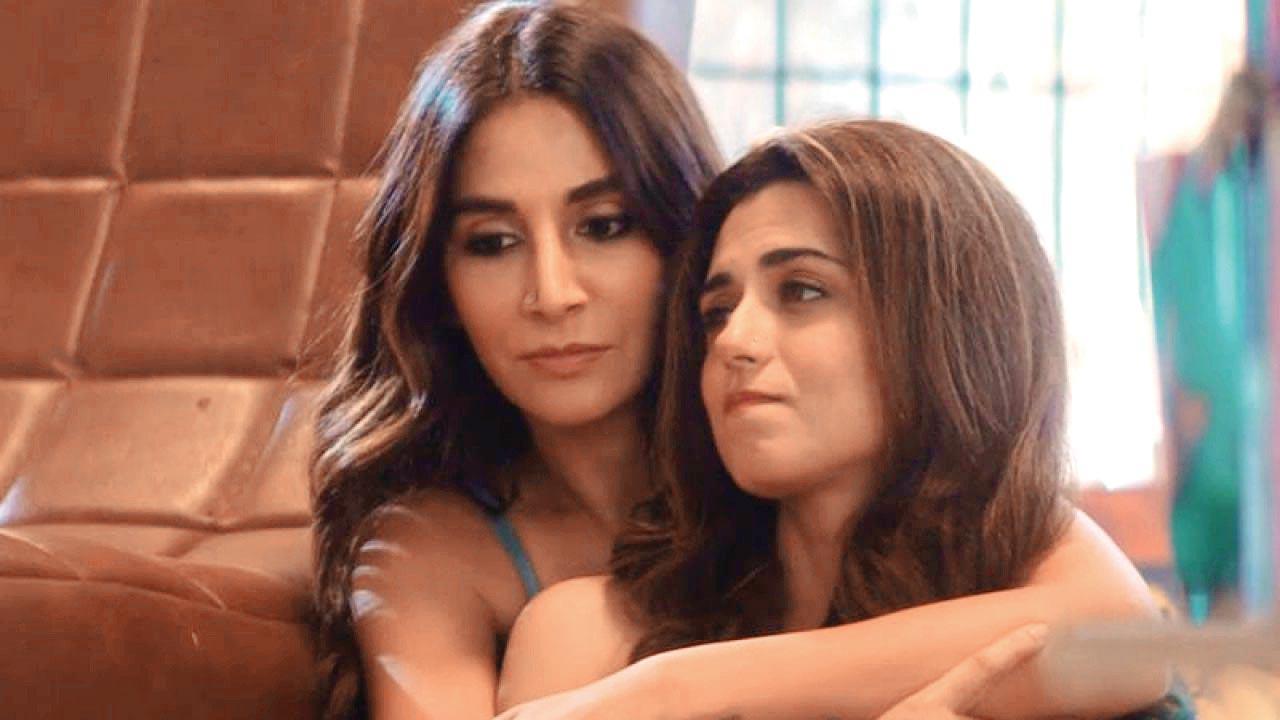
In the three weeks that The Married Woman dropped online, the Ridhi Dogra and Monica Dogra-fronted show has won praise for its nuanced portrayal of same-sex love in a society that unfortunately burdens women with expectations and conditioning. Elated at the series’ success, the creative team at ALT Balaji is apparently discussing rolling out a subsequent season. “The series has generated tremendous buzz, which, in turn, has encouraged the makers to take the story ahead,” says a source close to the project.
The true win for producer Ekta Kapoor is that the show has sparked a conversation on women’s agency. Kapoor hints at the possibility of a second instalment as she says, “The Married Woman is trending as one of the most-watched shows, which is heartening. With the kind of numbers that the [offering] has got, I don’t want to say anything at this moment, but [a second edition] is inevitable.”
Based on Manju Kapur’s novel A Married Woman, the Sahir Raza-directed series also features Imaad Shah, Ayesha Raza and Nadira Babbar, among others.
I was replaced in as many as six to seven projects; it was heartbreaking-Monica Dogra
8:01 AM

Kavita Awaasthi (HINDUSTAN TIMES; March 19, 2021)
Best known for her work in films such as Rock On (2008) and Dhobi Ghat (2011), actor Monica Dogra has been seen in acting projects intermittently. Dogra made her digital debut recently, with the web series, The Married Woman (TMW) and has been thrilled with the response. She says, “The reactions have been positive and warm. I feel like I am dreaming. I had been shooting another web show, Cartel, and when I was offered this part, I knew I had to take it up. There are so many similarities between my character and my real life. I am an artiste, have been estranged from my mum, grew up in a troubled home, have fallen with a Muslim guy and all of these things happened with my character, too.”
Talking about gaps between her acting projects, she explains that wasn’t planned. “Nothing kept me away from acting. I got many projects and then they didn’t happen. And I didn’t know why. I went through a lot of struggle. I was replaced in as many as six to seven projects and it was heartbreaking; especially as those projects became hits. It was difficult and hard. I am fortunate that I have my music to fall back on. Sometimes, I would think, why was it happening?”
After being part of a show that talks about women being bound by societal rules, ask her how empowered are Indian women today, and she says, “There is definitely a move towards more equality but as I say that, I know we have a long way to go. If you were to ask a room full of women between the ages of 15 to 70 years, 95% of those women will say that they have been subjected to some form of sexual violence, misogyny, patriarchy, inequality in families and at work. I do feel women are stepping up and being far more vocal than before, but it is not just a woman’s responsibility but the world’s. We need men to wake up and take up the fight. We need corporations and governments to work on things that make up for all the lost time and undo the damage.”
Dogra has finished writing an EP and an album, and has worked on her music which should be out this year, she says. Moreover, she is quite excited about the boom in Indian OTT content. “A lot of our web shows have gone on to win awards on global platforms, which is awesome. The content has allowed storytelling to go to the next level. It has allowed actors who didn’t get their due to position themselves better. It is an exciting time to be an actor,” she says.
Subscribe to:
Posts (Atom)