Showing posts with label The Disciple. Show all posts
Showing posts with label The Disciple. Show all posts
Chaitanya Tamhane on lack of support to indie filmmakers: "Stars can do one for the kitchen, one for the soul"
9:35 AM

As he turns producer with Next, Please, National Award-winning director Chaitanya Tamhane rues the lack of institutional support for indie filmmakers; urges India’s top stars to empower the community
Mohar Basu (MID-DAY; February 24, 2025)
It’s hard for a new voice to be heard in the Indian film industry. Director Chaitanya Tamhane of The Disciple (2021) fame knows this all too well. That’s why he has turned producer for Next, Please, a short film directed by Rishav Kapoor that explores modern relationships through the lens of virtual reality.
“If I can support other voices and make projects materialise, why not? There are a bunch of films that I’m involved with unofficially,” says Tamhane, happy that he gave the reins of the short film, written by him, to Kapoor.
The past year has been wonderful for independent cinema. Girls Will Be Girls won two awards at the Sundance Film Festival, while Payal Kapadia’s All We Imagine As Light won the Grand Prix at the Cannes Film Festival. But Tamhane emphasizes that indie filmmakers aren’t empowered in India.
“There is no institutional support for most of these films. Independent creators could always do with more support. Documentaries from India have been nominated for the Oscars, but the mainstream film industry isn’t even aware of them. They are living in a different world. I’m sure actors can help in a big way, especially in India where everything is so star-heavy and star-obsessed. It’s the responsibility of these stars to support good projects and independent voices. You can always do one for the kitchen, and one for the soul.”
With Next, Please—starring Jim Sarbh, Shreya Dhanwanthary and Shardul Bharadwaj—Tamhane wanted to marry several ideas while telling the story of a dating club. “On dating apps, people put up their best versions. People are being judged on shallow factors like their pictures, outfits and where they travel whereas that person’s reality is different. I also wanted [to explore] the illusion of choice where people believe there is someone better out there and they keep going on dates,” he explains.
Tamhane is already working on his next, which is being produced by Oscar-winning filmmaker Alfonso Cuarón. “We’re trying to raise funds for it,” says the director. When we express surprise that a film that boasts an Oscar winner and a National Award winner is struggling to raise funds, Tamhane laments, “It’s still difficult because it’s an Indian film. I took two-and-a-half years to write it, then another year to do several drafts. I was one of the five shortlisted candidates for the Rolex Mentorship Program. In the final round, Alfonso was to select one person. I was sure I had no chance. We met in a restaurant in London, and he mentioned Andheri, Bandra and he was like an India expert. It felt so comfortable. He then selected me, and that friendship is now nine years old. I feel blessed to have him as a mentor and producer.”
Decoded: India’s official film entries @ Oscars
8:17 AM

What’s the selection criteria for India’s official entry in the International Feature Film Category? Are period films or social satires more likely to make it? Does language or star power play a role? Here’s a quick look at the trends over the last two decades
Niharika Lal (BOMBAY TIMES; August 31, 2022)
In 1958, Mother India – India’s first official entry to the Oscars – was the closest the country came to winning an Academy Award in the Best Foreign Film category. The film, directed by Mehboob Khan, lost out by a single vote during the third poll to Federico Fellini’s Le notti di Cabiria (Nights Of Cabiria), in the category created the year before.
From 1957 to 2021, among all official entries from India only three films have received nominations – Mother India, Salaam Bombay! and Lagaan. No Indian entry ever won the prize, while no Indian official submissions have received nominations since Lagaan in 2002.
SO, WHY DON’T INDIAN FILMS MAKE THE CUT?
In 2019, during his India visit, then President of the Academy of Motion Picture Arts and Sciences John Bailey was asked this question multiple times. He replied, “I don’t mean to be rude, but why are Indian films not widely shown? Not just in Hollywood or the US, but worldwide. I know they are very popular in China, but are they popular in Korea or Japan? Are they popular in Southeast Asia? Are the French watching Indian films? Your PR organizations, your distributors, your government need to be asked why – ‘Why can’t Indian films be promoted across the world? The films that we are submitting, do they speak to other countries?’ I don’t know. But one thing you can do is to have an internal dialogue here, among yourselves.”
In 2010, Anurag Kashyap, who had been on various international film festival juries by that time, told TOI, “We need to make a film of international standards. We need a jury that is not chosen by the Film Federation of India (FFI) but by people who understand international cinema and are exposed to it... Most times, our films are just not good enough.’’
HOW ARE INDIAN ENTRIES IN THE INTERNATIONAL FEATURE FILM CATEGORY SELECTED?
India’s Oscar entry is picked by an 11-member independent jury set up by the Film Federation of India. However their selection process is never disclosed. Suparn Sen, General Secretary, FFI says, “Rules state that the film should be Indian, second – it should reflect the culture of the country, and third – the language should be dominantly spoken in the country.”
However, official Indian submissions have generated controversy over the years. Ahead of the 2021 Oscars, The New York Times’ film critics listed Chaitanya Tamhane’s The Disciple in their Oscar picks lists. Film critic Manohla Dargis picked the Marathi film for Best Picture and Best Original Screenplay, while AO Scott selected Aditya Modak for Best Actor. But The Disciple was not India’s official submission, neither was Jai Bhim, which some critics were in favour of. The Tamil film Pebbles was eventually selected as India’s official entry in the category.
In recent months, the film that has been creating a buzz in the West is RRR and in a recent interview, Anurag Kashyap said, “They (the West) find it (RRR) better than any Marvel movie. They’ve really gone crazy for it, even the silliness of it. And they are so blown away not only by the action sequences, but also the dance sequences. The West sees RRR differently than how we see it, and they’ve loved it. If RRR becomes the India selection, 99% it might get nominated for the Academy Award. That is the impact that the film has had in the world of Hollywood. India might actually have a nomination in the final five, if RRR is the film that we pick. I don’t know what film anybody is going to pick.”
The Disciple doesn’t require any prior knowledge or familiarity with the world of Indian classical music-Chaitanya Tamhane
8:46 AM
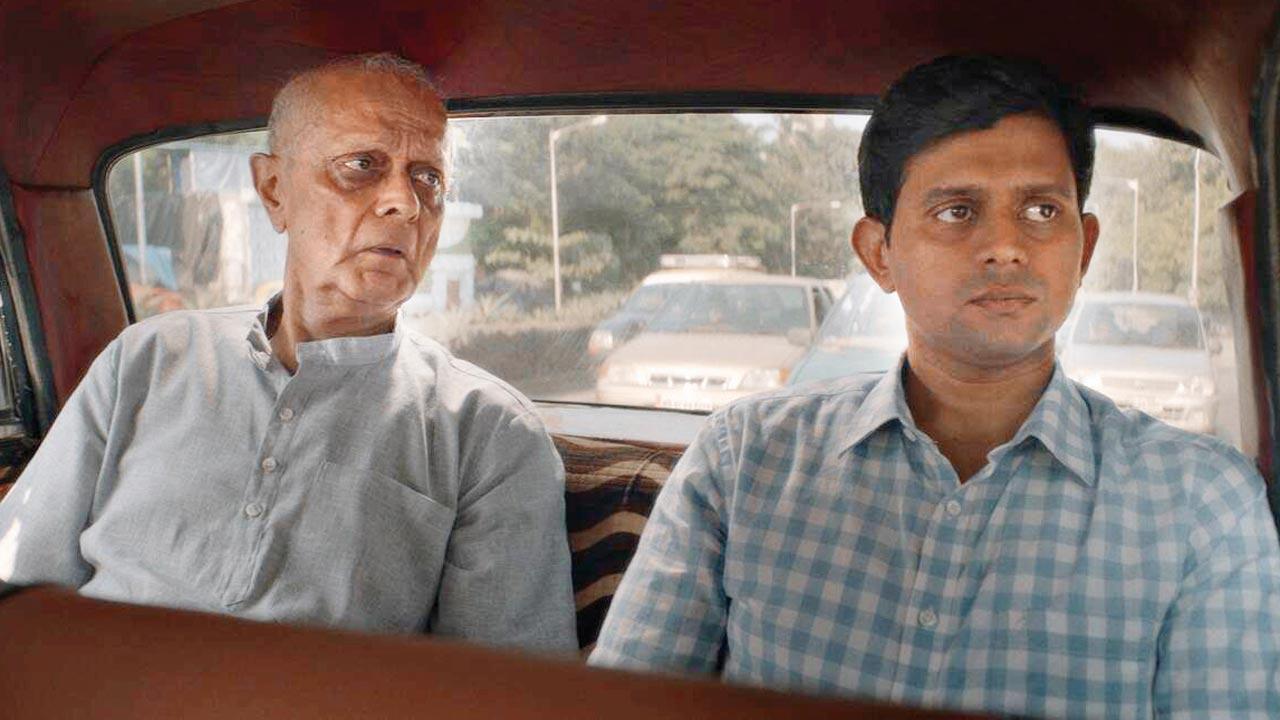
Winning rave reviews for The Disciple, director Chaitanya Tamhane says movie is not designed only for lovers of Indian classical music
Uma Ramasubramanian (MID-DAY; May 11, 2021)
Chaitanya Tamhane’s latest film, The Disciple, is being lauded for treading the path where few filmmakers have dared to go — into the world of Hindustani classical music. With his astute storytelling and protagonist Sharad Nerulkar’s journey, the director has shown how the pursuit of excellence in the field, considered almost sacred, can be deeply agonising and sometimes even fruitless.
While some believe that the movie’s setting may appeal only to a niche audience, Tamhane argues that the central theme is universal. “It took me four years of continuous and dedicated work, including two years of research, to make The Disciple. The film doesn’t require any prior knowledge or familiarity with the world of Indian classical music. Its themes connect to emotions I have found to be universal in life, no matter where in the world. For me, the viewer’s gradual discovery of this world is a big part of the narrative. I definitely didn’t have an audience of experts in mind when telling this story,” he shares.
The Netflix film did India proud by winning the FIPRESCI International Critics Award and the Best Screenplay award at the 77th Venice Film Festival. Tamhane says that he wanted to offer an authentic representation of the music world. “It was especially challenging to design and shoot the musical performances in the film. At the same time, we didn’t want to misrepresent the music, or allow its essence and relationship with time to be altered as a compromise. We prioritised Sharad’s inner world and his emotional responses as he performed the music. We made his face and eyes communicate [his feelings].”
In my 20s, all my auditions were for a best friend-Vivek Gomber
8:13 AM
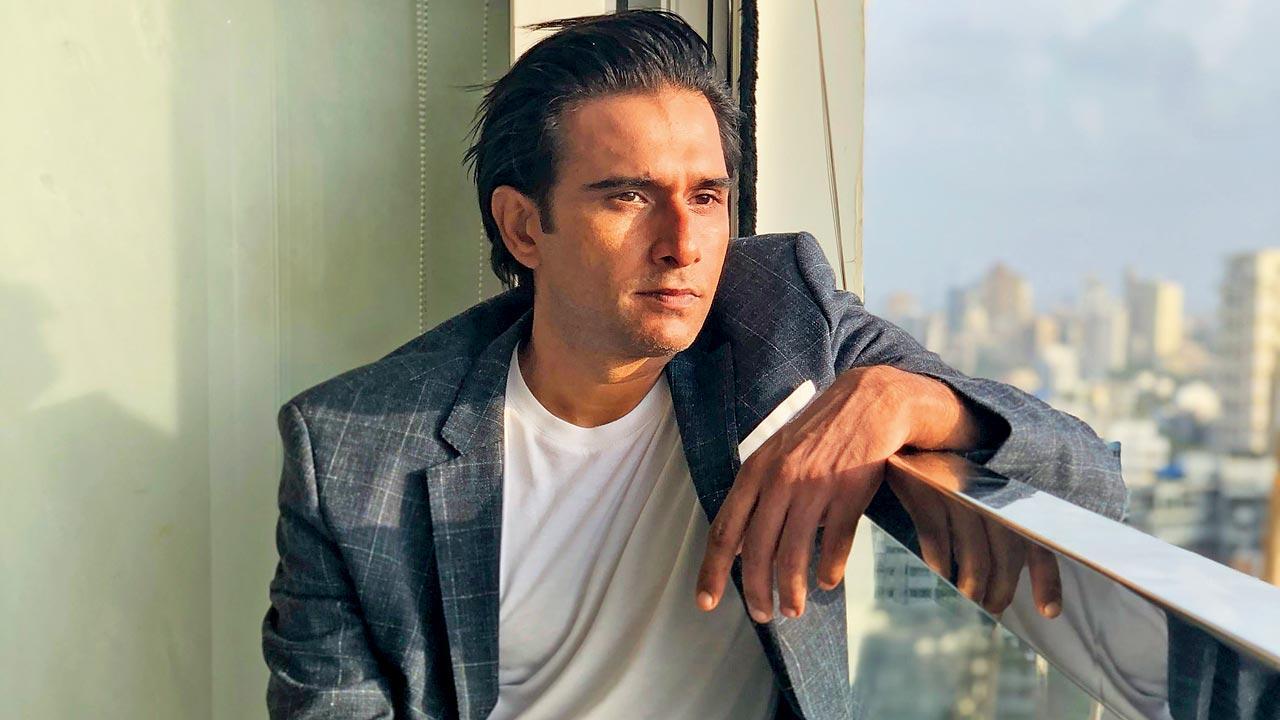
Vivek Gomber, who set hearts aflutter in Sir, and is producer of the recent toast of critics The Disciple, tells us why he is happy being a “working actor”
Aastha Atray Banan (MID-DAY; May 9, 2021)
“I think it was only because the character was written in a certain way that women found him attractive. He was a good guy,” says actor-producer Vivek Gomber of Ashwin, the character he played in Rohena Gera’s Is Love Enough - Sir, which pitted him opposite Tilotama Shome. The quiet and sweet film is about a man of privilege, who after breaking up with his would-be wife, who cheats on him, falls in love with his househelp, Ratna. It could be his soft portrayal of a man who sees a woman beyond her circumstances, or just that he comes across as a genuine and good looking catch, but he has left most female viewers say, “He’s dreamy”.
Gomber says, “I think it was because of how the character showed his vulnerabilities.” It could also be the nice shirts he wears, we tell him, and he laughs, “Yes, I want to thank everyone who made that role such a hit. And my parents!”
Ever since, it seems as if the 41-year-old is everywhere. We first noticed him in 2014 in the award-winning indie film Court, where he first worked with director Chaitanya Tamhane. In the past few months, he has entered our lives repeatedly, in Mira Nair’s A Suitable Boy, Pooja Bhatt-fronted Bombay Begums, and now of course as producer of Tamhane’s critical success, The Disciple.
But he has been at it since 2004. Gomber studied acting in Boston, but came to India to be a “working actor”. “I have always just wanted to be part of a conversation. There are many reasons you make it when you make it—you first have to arrive here, and hope to God, that the city is kind to you.”
The actor says like so many others in India, he grew up watching Amitabh Bachchan movies in Jaipur, where he spent his childhood with his banker father. His mother worked in the judiciary. He clarifies that when he says he wanted to be a working actor, he doesn’t mean that he needed a release every year. “It just means you have to be acting, and going for auditions, and meeting people in the know—like directors and casting agents, they need to know who you are. I am just grateful to be part of the conversation. And to be working with someone like Tamhane. Because you can’t work alone.”
Gomber, who started his journey in theatre, went on to act in television, including the popular Zee TV show Astitva - Ek Prem Kahani. “Maybe I didn’t do auditions as well before. I got offered too many best friend roles. In my 20s, all my auditions were for a best friend! How long can you do it?”
It’s finally his time. He says, “When I read Court, I thought it was a great film to engage with. It was very relevant then, and it is even more relevant now. I had thought of nothing except that it could be a way we could learn. And he [Tamhane] is a great director; I wanted to help him,” he says of the film that picked up a National Award and another at the 71st Venice International Film Festival. For now, he is happy that The Disciple is out there for viewers to see, because he thinks that the film is addressing an important issue—celebrating our own music, and showing people the nitty gritties of Indian classical tradition. “I didn’t know much about our music, and now I do. The worlds and the themes Tamhane explores are endless. It’s very important that the movie exists.”
He almost sounds relieved that it’s going to be a while before the audiences see him again. The entertainment industry is on pause, and wants to be safe and take care of its people, Gomber thinks. “We need to recover health-wise, focus on the lockdown, and just get out of the pandemic. But I hope there will be more work. And of course, maybe another Tamhane film, if he will have me.”
I find lots of similarities between cinema, magic and music-Chaitanya Tamhane
7:53 AM
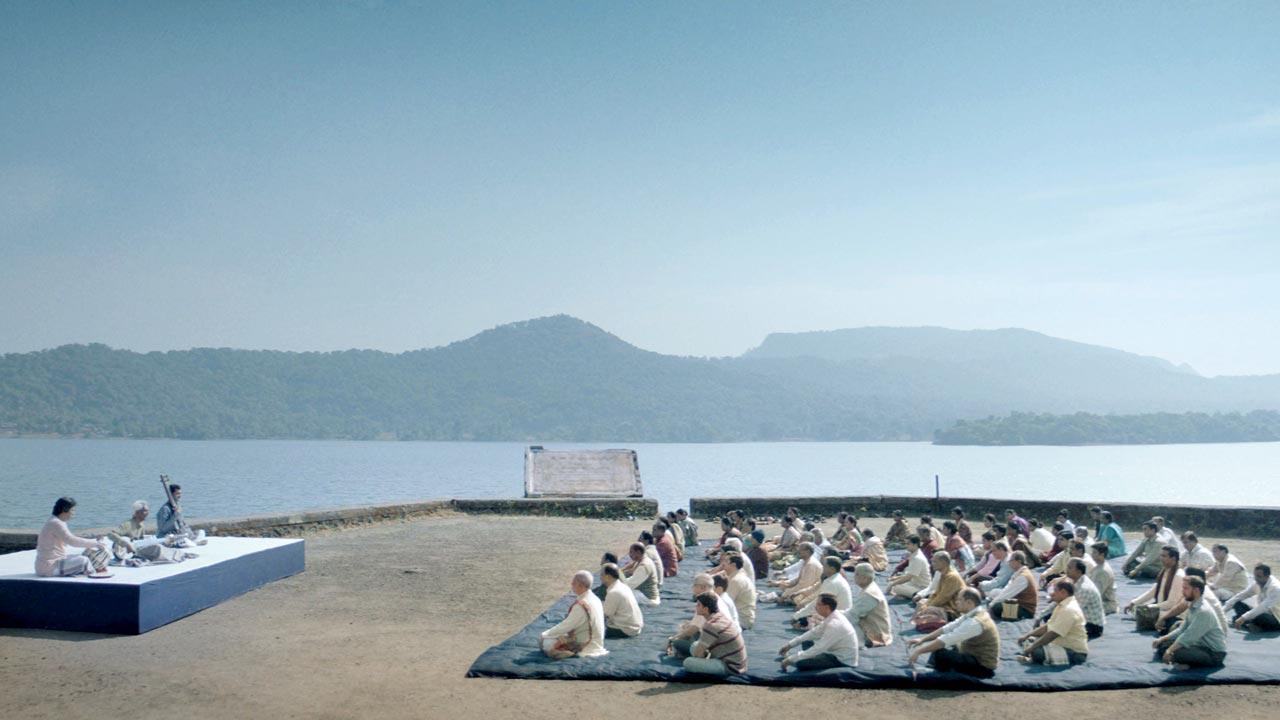
Chaitanya Tamhane's The Disciple opens up the world of Indian classical music with all its rich complexities to cinema audiences. But what does one of its own think of this representation? Carnatic vocalist, writer and activist TM Krishna puts compelling questions to the young, celebrated filmmaker
Sucheta Chakraborty (MID-DAY; May 2, 2021)
Chaitanya Tamhane’s second feature The Disciple, which premiered and won accolades at the prestigious Venice International Film Festival last year, dropped on Netflix last week. The deeply reflective piece of work enters the hallowed spaces of Indian classical music, gently probing themes of devotion, mysticism, spirituality, learning and performance through the character of classical singer Sharad Nerulkar (Aditya Modak), who is inducted into the form by his father, and is desperate to attain mastery and purpose.
mid-day played fly on the wall as Tamhane engaged in conversation with noted Carnatic vocalist T M Krishna, touching on the nuances of the guru-shishya parampara, the true meaning of artistry, Kishori Amonkar, individualism and the weight of history, the pursuit of fame and the rigidity inherent in this historically Brahmanical, middle-class tradition.
Edited excerpts from the interview:
T M Krishna: So, Chaitanya, first of all, thank you for making the film. The first thing that struck me was that it presents a world which is rarely seen and the complexities within it, and in many ways doesn’t judge too many things in that world. That was fundamentally a lovely position to take, because it allows the viewer to view that world with its rough edges, with the sublime existing with the not-so-sublime, and the conflicts therein. I enjoyed the film for its ability to just look at something. As an insider [well, I am an insider, but partially possibly, because I come from the south of the Vindhyas], personally, it reminded me of some of the conversations I had back in the ’90s. It was a little nostalgic there. Even if you’re a listener of the music, this is not a universe you actually see. I think that’s something we forget. Unless you’re really in it, you actually don’t see it, so it’s kind of a microcosm. My first question to you is, what drove you to this subject?
Chaitanya Tamhane: Thank you. Coming from you, it means a lot. I’m a big fan. I’ve attended some of your concerts and have been completely blown away. I have read your writings and followed you online.
I’ve had a weird trajectory with Indian classical music because in my early 20s, I stayed away from this music. I almost had a problem with that world because I wasn’t able to separate the music from these other concepts that surround it like extreme reverence, unquestioning faith, even simple things like touching someone’s feet as an obligation. And then around five years ago, the bug just bit me. Through the years, what has interested me are the qissas, the anecdotes, because I love stories of geniuses and secret knowledge and rare books. So, that really got me in. And then I started listening to the music and experiencing it for what it is.
TMK: Yes. Often, you wonder, what are these stories? You are told these stories which I can bluntly say are factually nonsensical. But the stories carry a lot of things within about the culture that they inhabit. So, a story about an 18th century musician being told within a community will tell you lots of things about the community, about how they perceived the individual, for example.
But I want to start with this whole notion of talent. What is the determinant of talent? If I ask of the protagonist, Sharad, was he a talented singer or was he mediocre? Was he a person trying to live his father’s life? There is the fundamental question about who is judging this talent.
CT: So, that’s the thing. For me, what’s beautiful about any art is that the viewer projects his or her own intuition, imagination and worldview on it. Otherwise it’s a bit boring. I wouldn’t like to kill that mystery for you or anybody who watches the film. It is important for me that [viewers] ask these questions. I wonder, are we judging people for their intent or their ability, because there are people who have great ability, but ill intentions.
TMK: So, if I were to judge him, I’d say he was an average singer, and it was obvious that you were showing that he had limitations, but if you dig a little deeper, that’s probably true of every singer. So, it raises the whole question of how I, as a guru, perceive limitation in a student. Is that in a way also limiting the student? Is Sharad, for example, also limiting himself because of a perception? In the classroom, for example, when he struggles, the guru simply asks him to try again without giving him an idea of how to do so. That was a fascinating part of that [guru-shishya] relationship. It made me think of what I do with my students. Sometimes, you use a template and you presume that it will work for everybody.
CT: That’s an interesting observation, and that’s also why I found this whole world of Indian classical music so apt to tell a story around. The story was originally about a magician; I had written a play called Grey Elephants in Denmark. I find lots of similarities between cinema, magic and music. The core concept refused to leave me, and I started re-imagining that conflict within the context of Indian classical music. It is a kind of life risk almost, you know: you are not supposed to doubt your guru, you can’t go guru-hopping, but you don’t know where you’ll end up. It’ll be such a long time before you’ll know whether the guru was right for you. Who is the guru to say that you are not talented and should give this up.
TMK: And what is so ingrained in the world of classical music is that if you fail, nobody is to blame but yourself. There is a scene where the guru admonishes the student who is already nervous on a performance stage in public. Now, that is power. He is a very nice man, but he is still the guru. You subtly bring that dynamic [to the fore]. This power inequality is intrinsically problematic, and as a teacher I know that I also feel the power. He [Guruji played by Arun Dravid] is a decent man, but he carries in him the historical memory of how the power should play out, and that came out nicely, I thought.
CT: I question why all our constructs of meaning, identity, self and purpose in life are shaped by visible and invisible, conscious and sub-conscious stories which we’ve been told or we have told ourselves. Like you say, maybe we are playing a role. Maybe the guru has never questioned the power dynamic. And it’s circular—he is also dependent on the student. It is also not easy for him to let go of the student.
TMK: I speak from experience when I say that you can feel that you are losing something when you let a student go. There is a selfishness; you can’t deny it, there is a sense of ownership. I also like how you explored the various generations. When the next generation of students are learning from the same guru, they see him differently.
Your protagonist’s father has told his son from childhood that he has to be a musician. This whole idea of passion is complicated. The fundamental question is: do we really love it or are we told to love it? Can you talk about that?
CT: Yeah, someone can be really good at something, that brings him or her prestige and validation. Sometimes, we mistake that to be love. This is a complicated question, which requires dissolving the ego. We often live out the dreams and aspirations of our parents and sometimes, we make the mistake of thinking that we have broken those shackles. The father is a catalyst, but I also wanted to explore the theme of our heroes being our oppressors, and how important it is sometimes to let go of idols.
TMK: I don’t know whether the Maai in your film is Tai [one of the foremost Hindustani vocalists Kishori Amonkar] but the similarity was too close…
CT: Maai is actually a combination of a bunch of different musicians.
TMK: The environment is oppressive and I want to make an insider’s observation. There is this negation of the individual in this entire culture, which is deeply problematic. You are only a passage in something that is already flowing. Your job is to flow with it and in order to flow, you have to drown fully, which is sadhana. You can’t be yourself, and therefore the past becomes a burden. And this comes out in the film; none of the individuals are seen as individuals. They are just containers of something else. Bringing Maai as a voice was a brilliant idea. I loved that you show Sharad is always on a motorbike when he listens to her. That added that idea of moving in a modern sense and also moving back, in the emotional and intellectual sense.
I want to ask you, what was the role of the reality show? I was wondering if you were passing a judgement on it.
CT: I was not interested in commenting on the state of reality shows in this country. I was more interested in that [reality show] character being a foil for Sharad’s own aspirations, [a sign of] his yearning for validation, fame. They almost become mirrors. Her trajectory is more a reflection of his state of mind. The reality show character could easily have been a YouTuber, except in his world, it’s a reality star that someone of his generation and background would be watching. There is this envy for youth.
TMK: But this is exactly what the world of Indian classical music thinks of reality shows. They will not say it publicly, so I am going to say it. [The classical world] makes an infra dig towards the reality show because it is seen as one of quick fame and money, but they [purists] envy the fame that emerges from it. It is a very interesting struggle, because they believe they are pristine and cannot be sullied by the commercial world. And yet, they yearn for that world, one of celebrity status and access.
CT: There is also another imbalance that’s unfolding [in the film]. Sharad is stuck to the old stories, but the rules of the game have changed. The speed at which somebody becomes famous, the concept of spotlight or pan-India validation has accelerated beyond our imagination because of the internet. So, it’s also a reflection on this corrosion that is happening because of the changing times.
TMK: Yes. I think this also comes out beautifully in the soundtrack. Aneesh [Pradhan, tabla player] curated it for you and a lot of credit should go to him. I like the way the tanpura comes in; it’s almost dissonant at times.
Also, I’m curious why there was no mention of the fact that this is a very Brahmanical, middle-class environment.
CT: This is an interesting question and has got to do with people’s expectation of stories, and cinema in particular. Nobody might ask you that question when you perform or sing a raag. But when it comes to stories, there is an expectation that certain boxes need to be ticked.
TMK: I think I ask because of my own preoccupation. I want people to ask this question about the raag. But was it [anywhere on your mind]?
CT: It was definitely a thought. I mean, look at the surnames. Even in Court [his 2014 film which looks at the Indian legal system through the trial of an ageing Dalit protest singer accused of encouraging a manhole worker to commit suicide through his protest poetry], I never used the word ‘Dalit’. Caste is always present as a reality, but I didn’t find it necessary to verbalise it. It’s a deliberate choice.
TMK: I’m going to propose a counterargument: the reason why you say you and I don’t see the need to utter the word is because we come from caste privilege.
CT: But that’s what I mean: to look for that need in cinema is not necessarily my preoccupation. I feel strongly [about caste reality] but when it comes to making a film, there are different aesthetics at play for me. I am also not delusional about who my audience is. I am very clear about the limited appeal [my film will have] among a bourgeois bubble of culturally literate people. I run into a lot of obstacles with that audience as well.

T M Krishna and Chaitanya Tamhane
I was the only one who had read Roma's script; not even the cast and crew had read-Chaitanya Tamhane
8:08 AM
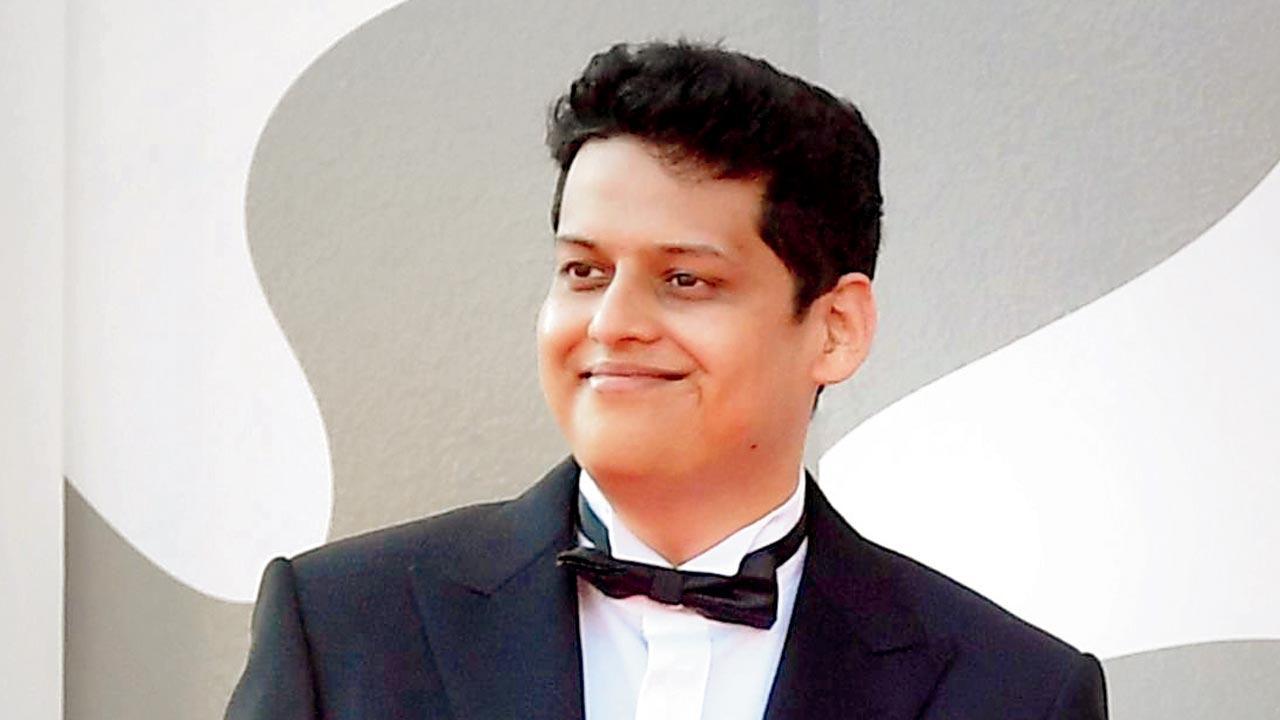
Director Chaitanya Tamhane decodes Venice's Best Screenplay and Special Jury award-winning Marathi film, The Disciple, as it drops on Netflix
Mayank Shekhar (MID-DAY; April 30, 2021)
While it’s not listed on his IMDb, director Chaitanya Tamhane feels almost as if he has three features to his credit — Court (2014), The Disciple (2020, which drops on Netflix, April 30). Third being? Alfonso Cuaron’s Best Director, Cinematographer and Foreign Film Oscar winner, Roma (2018).
Tamhane was around all through the filming of Roma, besides during the edit. He’s the only one who had read the movie’s script; not even the cast and crew had. And the only one allowed to sit before the monitor, while the movie was being shot: “It was that kinda super-secret project!”
A mentorship programme had brought Cuaron (Y Tu Mama Tambien, Gravity), and Tamhane together, wherein the latter was neither assistant nor student: “It was a dialogue between two creators. Just that one artiste happens to be in a different phase of their career.”
Cuaron treated Tamhane as an equal, “a friend.” As is usual with the securely accomplished. There was a scene during Roma’s shoot that Tamhane felt wasn’t consistent with the rest of the film. Cuaron tried a different take, and turned to him to remark, “Your questions really freak me out!” Tamhane doesn’t specifically recall which scene, perhaps to not deflect attention from the master’s work.
He was, for the most part “a fly on the wall” — on occasion unwittingly distracting Cuaron, by performing magic tricks during lunch break, that the producers had to drag him out of. Which isn’t a surprise: “Any film-lover and filmmaker would be fascinated by magic. It’s so close to cinema. Cuaron kept asking me to show him more tricks.”
He would’ve of course been first drawn to Tamhane, like film-buffs across, for a proverbially Tiger Woodsian directorial debut, the multi-lingual Court — a devastatingly realist portrayal of lower judiciary in India.
This is how the Mexican master is now executive producer of Tamhane’s second film, The Disciple — altogether in Marathi, set in the “thriving” sub-culture of Hindustani classical music (in Mumbai). The only recent Indian folk/classical music and global-cinema connect, I can think of, is Paul Thomas Anderson’s concert doc Junun (2015), filmed at the Mehrangarh Fort in Jodhpur.
That’s a soundtrack. The Disciple dives way deeper into the guru-shishya (master-disciple) parampara, which frames traditional learning of Hindustani classical music.
It’s a world Tamhane was himself a journalistic outsider to, taking around two years to simply interview/research, examining “truth and untruth, point and counterpoint”, and actually drafting the final script in about a month and half, once he’d eventually got to the tough first page!
A patient process, I guess, quite similar to Court. Which he recalls was triggered off by a story he’d heard of a person falsely arrested in a case. The accused just needed a printout to prove his alibi/innocence. But the cops in the station were bumbling over how to plug in the printer, or produce a printout. Tamhane was watching a typical American courtroom drama thereafter, wondering for a comic idea, “What if I do a ‘Bong Joon-ho court-room drama’, set in a lower court of Mumbai?” He learnt about the ‘system’, as he went along.
He isn’t sure if there was an equivalent trigger for The Disciple. But the starting point was essentially legends and anecdotes he’d listen to — presumably from audiences, experts and exponents — about the masters of Indian classical music: “Modern day mythologies about djinns, secret ragas, long hours of practice…”
The film, primarily placed in 2006, follows the life of a young, dedicated vocalist (Aditya Modak), and his evolving relationship with classical art, his aged mentor/guru (Arun Dravid), and the world around. Hopefully I’m not revealing the script’s secret sauce to suggest this isn’t quite a hero’s journey, as it were.
That standard structure Tamhane wanted to steer clear of, anyway: “What’s the point of a story that I know, from the first scene, how it’s gonna end? There is anyway too much focus on the hero, and his conquest-driven journey, and his achievement. A discourse like: ‘If you try hard enough, and believe in yourself, you’ll get it’. No. That’s not true for 99 per cent — people who work for us, or clean our toilets, have dreams and aspirations. But they have zero upward mobility.”
The other trope he evidently avoids, given the subject, is an aggressive tone/drama, often associated with the tyranny of the master-student culture in music, in particular. Recall the more recent series, Bandish Bandits (Amazon Prime Video). Or, for that matter, Damien Chazelle’s Whiplash (2014).
Tamhane reasons, “Those deviations are based on personal, observable truth — that artistes are just humans, like you and me, with down time, contradictions and temptations. There is no extreme success, or extreme tragedy. And we don’t all end up either superstars, or drunk on the road! We adapt to situations with so many greys.”
The film therefore isn’t fully clouded by the mythology surrounding the idea of the great artiste, so to say. It isn’t an unquestioning hagiography, purposed around bhakti. It is dialectic enough.
This may have something to do with Tamhane’s journalistic approach itself, and the attendant occupational hazard — that Shakespearean saying about familiarity, and contempt: “Research is a journey [you set off on with] romance in your head. The more you know, the romance gets demystified, which can also happen by knowing the artistes, rather than merely hearing about [them]. As a [fiction] writer, you have to infuse the romance back into the work — reminding yourself why you were fascinated by the subject in the first place.”
The film’s third lead character (or perhaps second, in order of appearance) is a voice-over of a late, great vocalist, named Maai. On the script, Tamhane had written this part as God. Hearing an interview of veteran Marathi filmmaker Sumitra Bhave, 78, he knew he’d found that authoritative voice that almost guides the narrative — managing to convince her to make her acting debut. Bhave passed away on April 19.
Similarly, Vira Sathidar, Nagpur-based Dalit activist, who played the protagonist (the lok shahi poet) in Court is no more. “His death [on April 13] has completely changed my relationship with the film. He was the face,” Tamhane says. Like Court, The Disciple chiefly stars non-professional actors.
The lingering, steady, wide frames from a distance allow audiences an interrupted access into the world Tamhane surveys — revealing through layer after layer, the fine details of classical music as a scene/sub-culture — playing with sound, and playing off real people, if you may.
The Bombay, for the most part, is a quieter version of the city: “[There is some] sorcery to depict the period — 2006 is very different from Bombay in 2021. Also the city starts out as full of possibilities for [the young lead character] Sharad. The [quiet] night becomes his haven/cocoon, where he doesn’t have to confront reality. The city starts getting noisy, dynamic and closing in on the character as his journey progresses.”
Through that journey you discover more than a thing or two about classical music, of course: “That, like a politician, you’re young at 40 in this field — that it’s impossible to be a fluke/overrated.”
Subtly, Tamhane also round-trips to make a more personal point about art itself, and its relationship to patronage. The guru-shishya in The Disciple belongs to a fictional Alwar gharana. The gharanas, as their names suggest, relate to princely states, that don’t exist anymore. Does art suffer as a result?
Tamhane points out: “Look at patronage for cinema. Is that why we confuse breadth for depth; quantity for quality? There are no independent institutions to fund cinema [in India] anymore. Like there are in Europe, and elsewhere —and that’s why you find more refined films, commenting on the human condition. Here it’s a do or die kinda situation.”
The Disciple is the first Indian film, in 20 years — ever since the New York-based Mira Nair’s Monsoon Wedding (2001) — to compete at the main competition stage of any of the Big Three (global film festivals) — Cannes, Berlin, Venice.
Tamhane picked up Best Screenplay, along with FIPRESCI (special jury) prize for Best Film at Venice. Having seen the film only now, unlike when Jallikattu was sent as India’s Oscars entry, it’s a mystery to me why The Disciple was overlooked. It should piss Tamhane off. He reasons, “But this is a question for others to ponder over. We did what we could, which is to apply.” Maybe guru Cuaron should’ve weighed in!

Seven Indian films selected for the 25th Busan International Film Festival
7:59 AM

MUMBAI MIRROR (September 15, 2020)
Seven Indian titles have been selected for the 25th Busan International Film Festival. Chaitanya Tamhane’s Venice Film Fest award-winner The Disciple on the struggles of a classical singer, Emraan Hashmi-led Harami, an Indo-American production set in Mumbai, have been shortlisted.
Also in the running are Sanal Kumar Sasidharan’s A'hr, featuring National Award-winner Manju Warrier, and Ananth Narayan Mahadevan’s Bittersweet, about the frightening plight of women sugarcane-cutters.
Other Indian films that will be screened at Busan include Suman Mukhopadhyay’s Captive, Ivan Ayr’s Meel Patthar, and Prithvi Konanur’s Pinki Elli?
I was told it's the worst year for a filmmaker to finish a film, since the World War II-Chaitanya Tamhane
8:30 AM

Chaitanya Tamhane and Aditya Modak at the Venice Film Festival. Pic/AFP
After The Disciple does India proud by bagging two awards at Venice Film Festival, man of the historic moment Chaitanya Tamhane on taking Marathi film global despite lockdown
Uma Ramasubramanian (MID-DAY; September 14, 2020)
 Miles away from Italy where the action was, or the UK where mentor and the film's executive producer Alfonso Cuarón lives, a wave of cheer erupted in the Tamhane household in Andheri. And with it, a wave of pride washed over Indian filmmakers and cinephiles as news broke on Saturday night that Chaitanya Tamhane's The Disciple had bagged the Best Screenplay award at the 77th Venice Film Festival, two decades after Mira Nair's Monsoon Wedding had walked away with the Golden Lion. Only a day earlier, The Disciple had won the FIPRESCI Award.
"To win two awards at Venice where you are competing with stalwarts is overwhelming. We did not make the film to win awards, but it feels special to get recognition from such accomplished jury members. It's a big moment for Indian cinema," says the two-film-old director who is quickly becoming a force on the international circuit. His directorial debut, Court (2015), had bagged the Best Film in the Orizzonti section and the Lion of the Future award at the prestigious film gala in 2014.
The Marathi movie narrates the story of a vocalist, played by Aditya Modak, who has to balance life in Mumbai with his chosen vocation. Tamhane says he was uncertain about its prospects when several film festivals were cancelled in the wake of the Coronavirus pandemic. "It was weird to have finished the movie and be sitting on it. I was told it's probably the worst year for a filmmaker to finish a film, since the World War II. Fortunately, the Venice Film Festival took place in all its glory even though there were a lot of protocols to be followed. We were there to present the film and see it on the big screen."
It must not be easy to find your feet in a country that has only now begun to look beyond Bollywood. Despite the odds, Tamhane has emerged as one of the most unique voices in Indian cinema. "I don't like to make distinctions. For me, The Disciple is not a regional film, it is an Indian film," says the unassuming filmmaker, who is now eager to show his labour of love to the Indian audience. "There is so much uncertainty whether cinemas will reopen soon. We are also in talks with OTT platforms for the digital [premiere] of the film."
You can never get used to such acclaim-Chaitanya Tamhane
8:27 AM

Chaitanya Tamhane opens up about his historic double win at the 77th Venice Intl Film Fest & reminisces about his directorial debut, Court
Roshmila Bhattacharya (MUMBAI MIRROR; September 14, 2020)
In 2014, his directorial debut, Court, was adjudged Best Film (Horizons) at the Venice Film Festival. He had also bagged the Lion of the Future Award. Six years later, The Disciple was honoured with the prestigious International Critics’ Prize, awarded by Federation Internationale de la Presse Cinematographique (FIPRESCA) jury. A day later, Chaitanya Tamhane also won the Best Screenplay Award for his Marathi feature film at the closing ceremony of the Venice Fest that was live-streamed globally. And that prompts the first question to the 33-year-old director who has done India proud…
How different were your reactions to the dual honours, given that six years later, you are no stranger to acclaim?
It was a big moment for us because even if your previous film has won some awards, every film is a new battle. So, there was a lot of curiosity and suspense over how The Disciple would be received, and it was nice to know that the FIPRESCA jury thought it was the best film for them in the competition. Also, to win the Best Screenplay Award given by the official jury with such stalwarts in the mix made it very special given that this time it was the main competition. You can never get used to such acclaim.
The last Indian to win the FIPRESCA in Venice was Adoor Gopalakrishnan for Mathilukal 20 years ago...
Yes, we are honoured and humbled because my generation is standing on the shoulders of such giants as Adoor Gopalakrishnan, Satyajit Ray, and so many Indian filmmakers who have had a great history with Venice.
And what was it like being a part of a festival during the Coronavirus pandemic?
Well, we were curious to see how a festival would be organised this year and were pleasantly surprised to see the energy and vibe were intact despite the safety protocols. It was heartening to see cinema lovers watch films together, even though everyone was wearing masks and practicing social distancing.
Has the lockdown brought about any changes in you as a person and a filmmaker?
The lockdown has made everybody pause and reflect. It’s the most apt time to watch a film like The Disciple. It will definitely have a direct or an indirect impact on not just me but what everyone does in the world.
Your mentor and executive producer, Alfonso Cuaron, won the Best Screenplay Award for Y Tu Mamá También in 2001. Would you say you are a disciple too?
Alfonso is very chilled out and modern in his mindset. So, the equation between us is like a dialogue between two artistes. He generously calls me his friend and collaborator. For me, he will always be one of my mentors who helped me grow as a filmmaker and expand my vocabulary. I hope to retain the values and lessons learnt from him in the last five years and will continue to be a good student in that sense.
You’ve said that The Disciple is influenced by the play, The Grey Elephants in Denmark, that you wrote in 2008. Any plans to revisit it on stage?
It’s a spiritual successor, a grownup adaption. The setting and mediums are very different but the core conflict and theme comes from there. Vivek Gomber, my producer, was the lead actor of the play. But now, I am done with that story. I will tell others.
How difficult was it for you to enter the closed world of Hindustani classical music? Will The Disciple revive interest in a dying art?
I see it as a dynamic, thriving art form and sub-culture, with many affordable concerts, music schools and brilliant artistes. Maybe it’s not as dominant in the mainstream as it was in the 19th century, but there’s still an audience that appreciates this music. And online platforms give you unlimited access to all music recorded, officially and unofficially. With all the material available, I was like a kid in a candy store, I just had to decide what to retain and what to let go. The intention wasn’t to revive it, but if that happens, great.
Venice, Toronto, New York, three big festivals are showcasing your film…
Yes, we couldn’t have asked for a better Fall festival launch. We feel incredibly grateful that in such an uncertain year, we could put our film out there for people to watch. The idea is to take it to a wider audience now.
With theatres in India still shut, what is the plan?
We will definitely bring it to India, be it a theatrical or an online release. We are talking to different players but nobody has an answer yet.
Court was India’s official entry for the Academy Awards. If The Disciple is picked, are you confident of bringing the Oscar home this time?
So far, we were only focused on the world premiere in Venice. If we do get picked, it would be a massive honour and we will do our best not just to promote our fim, but represent Indian cinema on a global stage.
Looking back, what do you recall about Court, and what will you remember The Disciple by?
I remember Vivek and my naivety, the innocent energy with which we got a crew together, convinced them to believe in our vision and with no film background or reference, just made Court. We were lucky that it turned out well, and proud that it was accepted. The Disciple is more ambitious in its scope, scale and budget. And I will always remember the time, patience, sweat and blood that has gone into its making. A two-year writing process, one year of prep and shoot and then, one more year on the post production.
You had mentioned that you were working on another subject when you were hooked by The Disciple. Will that be your next?
That was back in 2015-2016, when one was in a certain frame of mind. That project has been abandoned and I’m curious to know what I will give so many years of my life to next. It will be something new and totally different. But yes, maybe some ideas from that project will return in some form in a future one.
Both Court and The Disciple are about singers…
That’s a coincidence. In Court, the singer was just a catalyst, a springboard for us to get into the lives of people who are a part of some institutions. The Disciple is really about a singer, his inner struggle and survival, his artistic journey in the city of Mumbai.
So, are you a singer yourself now?
(Laughs) No, I’m not a singer, I’ve never even learnt music.

30 years on, Indian film The Disciple wins critics’ award at Venice Film Festival
8:55 AM

Chandrima Banerjee | TNN (THE TIMES OF INDIA; September 13, 2020)
The last time an Indian film won the international critics’ award at the Venice Film Festival, the world’s oldest, was in 1990, for Adoor Gopalakrishnan’s ‘Mathilukal’.
On Saturday, Chaitanya Tamhane repeated the feat with ‘The Disciple’.
The 90-year-old Fipresci, or The International Federation of Film Critics, hands out awards at major international film festivals.
“I’m feeling good, very grateful actually. It’s great for the entire team,” Tamhane told TOI, hours from the announcement of the Golden Lion, which his film is in competition for — a first in 20 years for an Indian feature.
Is he nervous? “No, I am ok. I am already happy that we got the Fipresci. I was happy since the time the film was selected and we made it to Venice. But yes, obviously, it does feel nice when you get that kind of recognition.”
To watch our film with other people at the Venice Film Festival was a surreal experience-Chaitanya Tamhane
8:25 AM

Mihir Bhanage (BOMBAY TIMES; September 12, 2020)
It’s been a few days since filmmaker Chaitanya Tamhane returned from Venice and the jet lag is yet to wear off. “I am just getting some rest for now,” says Chaitanya, who had been to the beautiful Italian city to attend the screening of his second feature film — The Disciple — at the Venice Film Festival.
The Marathi feature film is in the running for the Golden Lion at the fest, the first Indian film to do so in the last two decades after Mira Nair’s Monsoon Wedding (2001).
Speaking to us about his experience of attending the screening, which happened recently, Chaitanya said, “It was a surreal feeling to just be there. Actually, we were not even sure if we would be able to fly to Venice because international flights haven’t resumed normal operations. We had bought our clothes and were prepared, but it was a very last minute thing.” So how did they make it happen? “Well, we had sought permission from the foreign ministry and the Indian embassy. Luckily, things fell into place and we managed to attend the screening,” adds the Court filmmaker.
Though Chaitanya has been at the festival twice before, once for the screening of Court and then as a jury member, this visit was entirely different compared to the previous ones. He shares, “This was not a virtual event. People were physically present and our film was screened in a cinema hall on the big screen. Under normal circumstances, this wouldn’t have been such a big deal, but given the current scenario, a big screen world premiere was exhilarating.”
Chaitanya, who is in compulsory home quarantine after returning to Mumbai, says that the entire process of going to Venice, partaking in the festival and returning was something none of them had experienced before. “We got Coronavirus tests done before leaving India. Another a swab test was done when we reached Italy. Social distancing and strict hygiene protocols were followed at the festival, and once we returned, we are now adhering to the 14-day home quarantine. Even the cinema hall where The Disciple was screened was only half-full as per the new norms,” he says. At the fest, the team, which also included producer Vivek Gomber and lead actor Aditya Modak, was allowed to lower their masks only during the photo-call.
Despite the representation on a global stage and raving reviews that the film received after its premiere, there was hardly any buzz around it back home. Did that bother Chaitanya? “The Disciple not getting any press coverage in India is the least of my concerns. We got enough coverage in the international media, in fact, beyond our expectations, and we are happy with that. Frankly, there are many other issues that the Indian media should be focussing on and it isn’t. So, I am not complaining at all,” he says.
With the world premiere done, the team of the film, which has Gravity and Roma director Alfonso Cuaron as its executive producer, is bound to be looking at showing the film to the Indian audience. Chaitanya agrees and shares, “We can’t wait to show it to the Indian audience because it’s a film set in India, with Indian cultural contexts and Indian classical music at its core.” And will they stick to a theatrical release? “We would love to do that. But we are in no hurry. Right now, everyone’s focus should be on flattening the COVID curve. When it’s safe, people can and will venture out to catch a movie. Till then, it’s all about waiting and watching,” he concludes.

Chaitanya Tamhane's Marathi film The Disciple selected for Venice Film Festival
7:52 AM

Big moment for India as Chaitanya Tamhane's The Disciple selected in the competition section of Venice Film Festival, 20 years after Mira Nair's Monsoon Wedding bagged top honour
Shaheen Parkar (MID-DAY; July 30, 2020)
 Almost two decades after Mira Nair's Monsoon Wedding (2001) bagged the Golden Lion at the Venice Film Festival, Chaitanya Tamhane's Marathi film, The Disciple, has been selected in the competition section of the 77th edition of the prestigious gala. Scheduled from September 2 to September 12, it is one of the first film festivals to be held in the wake of the pandemic with strict social distancing guidelines and screenings in outdoor venues.
Tamhane is overwhelmed that his sophomore directorial venture is set to compete with Majid Majidi's Sun Children and Andrei Konchalovsky's Dear Comrades, among others. "The competition section has showcased some of the best films in cinema history. The selection of The Disciple is a milestone in the Indian independent cinema movement. I am relieved that it has found such a great start even in these tough times," says the director. The Disciple, which is set in the world of Indian classical music, chronicles the journey of a vocalist, who has to balance life in contemporary Mumbai with his chosen vocation. "We have poured every ounce of energy and effort into the film over the last four years," adds the filmmaker.
Counted among the finest storytellers in Indian cinema, Tamhane will return to the festival after six years. His directorial debut, Court (2015), had premiered at the gala, where it bagged the Best Film in the Orizzonti section and the Lion of the Future award. Back home too, the film — a commentary on the Indian judicial system — bagged the National Award and was India's official entry to the 2016 Oscars.
Producer Vivek Gomber, who has teamed up with Tamhane after the 2015 outing, says, "I hope this makes it easier for new voices in our country to follow their paths."
Subscribe to:
Posts (Atom)