Showing posts with label The Bengal Files. Show all posts
Showing posts with label The Bengal Files. Show all posts
What we need right now is for all politicians to shut up for five years-Vivek Agnihotri
3:33 PM
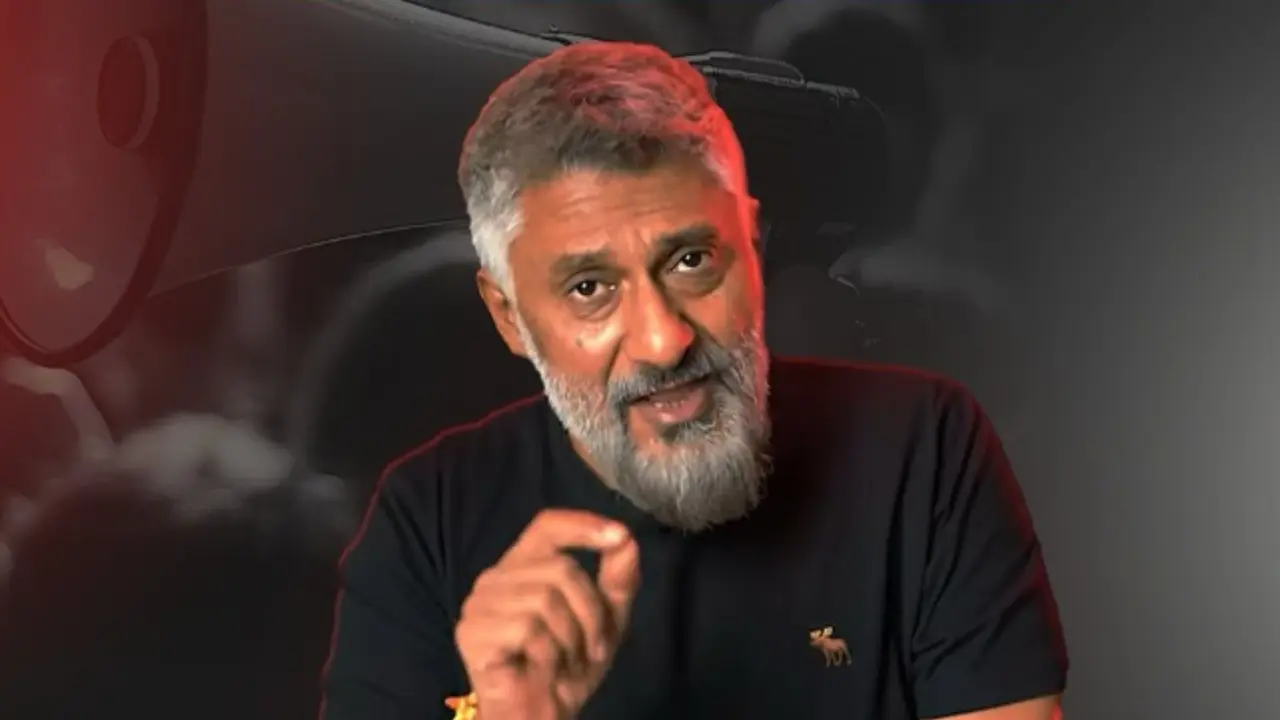
Chandrima Pal (BOMBAY TIMES; September 4, 2025)
Vivek Ranjan Agnihotri likes to make all the right—pun intended—moves. Ahead of the release of The Bengal Files, the third instalment of his Files series, he picks a Bengali-themed restaurant in suburban Mumbai for an interview, tells us that he likes Kishore Kumar’s Bengali songs and settles down for a Bengali meal with shukto and fish paturi . Excerpts from the conversation.
Let us imagine you had zero opposition to The Bengal Files, which releases in theatres tomorrow. That you had no political outfit, entity or individual to name and blame in your interviews. How would you promote your film?
I would have felt suffocated. I would have failed. My idea was to pick up taboo subjects, and in my mind the problem was that even after 78 years of Independence, we are still fighting with the same problems that led to the Partition. Unless you acknowledge there is a problem there can be no healing, no solutions. The purpose, the whole objective of my movies is to start a conversation. Since the trailer has launched, everybody is writing about Direct Action Day or Gandhi’s role, they are dissecting the film. Many Bengali Hindus are now admitting that their parents or grandparents had spoken about Direct Action Day and the Partition trauma. This, I believe, marks the beginning of healing from a generational wound.
No other place has sacrificed as much as Bengal: it was the cradle of the Renaissance, the wellspring of nationalism in all its shades—Congress, communist, centrist—with both Vande Mataram and Jana Gana Mana emerging from here. Bengal gave India its cultural crown, from cuisine and poetry to cinema, the Bengal School of Art shaped by Abanindranath Tagore. For me, Bengal is India’s lighthouse. My purpose was to shock people into realising how much we’ve lost.
How can you connect Bengal’s loss of cultural and intellectual capital directly to the Hindu– Muslim conflict at the heart of your storytelling? Isn’t it too much of an oversimplification?
That’s a very deep question. Which other state in the world has been divided three times? Without Direct Action Day or the Noakhali genocide, there would not have been Partition. Gandhi himself spent seven months in Noakhali, yet afterwards Bengalis were told not to speak of their pain—silenced by political forces that wanted to take India on a different path.
Later, communist ideology took deep root in Bengal, but it viewed everything only through oppressor versus oppressed. That western lens does not fit India, where the so-called majority was ruled and persecuted by minorities for 1,200 years—our literature, music, architecture, everything was distorted. That is why, I argue, Bengal’s decline cannot be seen separately from communal fault lines.
Films have been made on the Holocaust, Hiroshima, slavery— always with a core of humanism, empathy. Many feel your films don’t address that.
First, let’s be clear—which lot of people? Viewers? Critics? I am very research-oriented. And why should I force closure when history itself has none? Lal Bahadur Shastri’s death has no closure. Kashmir still has no closure—people were killed in Pahalgam just recently. But this film does have closure. What I believe should be done, that’s the closure.
Suppose this film triggers unrest. Would your role as a filmmaker end with reopening certain chapters in history?
Look at The Kashmir Files. People warned it would cause unrest. Nothing happened. Instead, I received thousands of emails from Kashmiri Pandits saying the film began their healing process. I can guarantee Bengali Hindus will say the same after this film; they already are, across screenings in the US.
Both communities suffered losses. Isn’t everyone part of the healing process?
Of course. Healing belongs to everyone. But not everyone had the luxury of moving on. Many were forced. Did we really move on? Germany and Poland confronted their past—they outlawed Nazi glorification, built museums, preserved Auschwitz.
Should India simply say “move on”? Or acknowledge that we have a genuine Hindu–Muslim faultline—Partition, Bombay blasts, Pahalgam killings, constant election rhetoric. If America could confront slavery through films, articles, debate, why are we in India told to stay silent about our own history?
Some of the cast members of your film — Saswata Chatterjee and Sourav Das — are facing backlash for being part of the film.
What backlash? Sourav and I had lunch recently. He never distanced himself. A journalist twisted his words, and he immediately asked, “Show me my tweet, quote me if I said that.” Same with Saswata. He never disowned the film.
Saswata did say he wasn’t told the full context.
That’s media manipulation. Do you think an actor of his calibre would sign without reading the script? He has to say things to survive in Bengal. I even spoke to his family—they shrugged it off. Look, he speaks Bengali throughout, eats paturi maach, plays a Murshidabad MLA. He knew what he was doing. After Nana Patekar in Parinda, we have not had such a cold-hearted villain in our cinema.
You say there will be closure at the end of the movie. What kind of closure?
Cinematic closure. But let’s be real—I cannot close the Hindu– Muslim conflict in Bengal or India. Who am I?
You often say you listen to your audience, pick stories that people want told. There are so many other stories that need to be told.
Honestly, what India needs right now is silence. All politicians should shut up for five years. Dalit leaders, Brahmin leaders, Muslim leaders, TV anchors— everyone. Just shut down the noise. And focus only on eradicating corruption. Solve that and 90% of India’s problems vanish.
Do you have political ambitions?
I’d rather die than join politics. But yes, I understand politics deeply. My father was a freedom fighter, I’ve debated politics since childhood. That’s why I can say what I say; most filmmakers can’t.
Many filmmakers, despite festival acclaim and dealing with socially relevant issues, can’t get theatrical releases. You always manage to make controversial films and take them to your audiences. What’s your secret?
Conviction. A filmmaker must guard their work like a mother rabbit protecting her babies from vultures. Most filmmakers lack that instinct. I don’t. I fight till the end.
But is it right to say they do not have the conviction to fight for their creative freedom?
Look, if you make a film on caste, someone’s offended. On women’s persecution, men are offended. On Muslims, Hindus are offended. Everyone is offended. But cinema cannot be hostage to sentiment. Honestly, I do not understand Muslim trauma or pain. Maybe if I am born as a Muslim in my next life, I would. But I still have the right to tell stories drawn from history and testimony.
And when films like Santosh don’t make it to audiences?
Then I fight for them. I don’t know why they don’t come to me, I would be happy to fight for them. Even my ideological enemies, I defend their freedom of speech. I fought for comedians like Kunal Kamra and Samay Raina.
Would you speak up for Umar Khalid?
He’s in jail, it’s sub judice, so I won’t comment.
Gopal Mukherjee aka Gopal Patha is a complex character. North Kolkata always remembered him as one of those powerful, street-cred strongmen—like Fata Keshto.
Yes, yes. They were the fiercest. Part of the akharas, too.
Utpal Dutt wrote in Towards a Revolutionary Theatre that after Direct Action Day, leaders used people like Gopal Patha to settle political scores—a muscleman on hire. He ran a family meat business, he ate meat, he spoke Bengali, he was no saint. You have said that after this film, kids will see him as a hero. Given the ideology to which you are aligned, are you okay with glorifying a figure like that?
Why? Bengalis eat meat. What’s wrong with that? Hindus in Kerala eat beef, Kashmiri Pandits ate meat too. India is not a vegetarian country; 73% of Indians eat non-veg. To reduce Gopal to food habits or language is just superficial politics. I believe in total freedom of food, speech, lifestyle.
----------------------------------
‘I hate disclaimers. They assume audiences are stupid’
Trailers don’t need disclaimers. The film will have one, because the law demands it. I hate disclaimers. They assume audiences are stupid. Does a painting carry a disclaimer? Cinema is art. My disclaimer will be the usual: “based on true incidents, survivor accounts, historical texts… intention not to hurt anyone.” Plus the silly statutory warnings—smoking kills, animals unharmed, etc. But because Jinnah was a chain-smoker, I was forced to add two extra minutes of anti-smoking ads.
----------------------------------
‘I am a storyteller, not a social scientist’
I am nobody to find answers. I am not the Prime Minister, not a social scientist. I am a storyteller. My job is to observe and narrate, not to prescribe solutions. People expect too much from filmmakers. Journalists often ask me — why don’t you rehabilitate Kashmiri Pandits? I tell them, I am not a politician. It’s like asking Satyajit Ray after Pather Panchali to eradicate poverty. That’s not how art works.
(Crisp) Movie Review: THE BENGAL FILES by FENIL SETA
9:41 PM

The Bengal Files doesn’t bear the brilliance of The Kashmir Files or the excellence of The Vaccine War. The film has some shocking, disturbing moments, while the performances are exceptional. A few scenes stand out big time and technically, the film is top-class. However, there are gaps in the narrative, especially in the 1946-47 track. The finale fails to give a high and it’s quite silly and unrealistic. Moreover, the film is too long (has a runtime of 205 minutes). The Kashmir Files was also quite lengthy but it didn’t drag or bore even for a moment. Sadly, the same can’t be said about The Bengal Files. Also, the depiction of a particular community is problematic. Yet again, director Vivek Agnihotri manages to extract fine performances from his actors. Darshan Kumaar (Shiva) plays his part with panache. Pallavi Joshi (old Bharati Banerjee) rocks, followed by Simratt Kaur (young Bharati Banerjee). Saswata Chatterjee (Sardar Husseini) is another actor who steals the show. Mithun Chakraborty (Chatur) does well, but his dialogues are not easy to decipher. Namashi Chakraborty (Ghulam) is menacing and he will be seen in a new light after this film. Eklavya Sood (Amar) makes his presence felt. Anupam Kher is decent as Mahatma Gandhi; as expected, the portrayal will not be acceptable to a section of the audience. Puneet Issar (Rajesh Singh), Priyanshu Chatterjee (Justice Banerjee), Rajesh Khera (Jinnah) and Dibyendu Bhattacharya (Roychowdhury) lend able support. Saurav Das is damn good as Gopal Patha, but sadly, he is forgotten after a point. All in all, The Bengal Files doesn’t make the desired impact.
My rating - ** out of 5!
My rating - ** out of 5!
Fenil's Bollywood Talk # 898
9:40 AM

WILL THE ‘A’ RATED FILMS OF THIS WEEK MANAGE TO ATTRACT THE AUDIENCE?
In a strange coincidence, all three major films, which will be released this weekend, have been given an adult rating by the Central Board of Film Certification (CBFC). Two are from Bollywood and one from Hollywood; it’s the latter that seems to be the top choice this weekend.
The Conjuring: The Last Rites is a part of the much-loved The Conjuring-The Nun-Annabelle franchise. Almost all its 8 films have worked big time in India. In fact, The Conjuring 2 collected Rs. 62 crores back in 2016, a huge amount for that time. The advance booking of The Conjuring: The Last Rites has been phenomenal and it looks to open in the range of Rs. 10-12 crores. Paid previews will take place tonight and that would further add to the day 1 earnings by a crore.
If the reports are on its side, The Conjuring: The Last Rites has a shot at collecting Rs. 100 crores in its lifetime. It’ll be the first Hollywood horror film to do so.
Baaghi 4, meanwhile, stars Tiger Shroff, Sanjay Dutt, Sonam Bajwa and Harnaaz Sandhu. It is Tiger’s first ‘A’ rated film and has excessive violence and bloodshed, as evident from the trailer. The advance booking of the film is decent. The 50% offer has probably also helped. It is all set to open at around Rs. 8.50-9 crores and might also cross the Rs. 10 crore mark. It’ll also need the support of good word of mouth to sustain at the box office.
Lastly, The Bengal Files is directed by Vivek Agnihotri and there’s a lot of noise for the film due to its controversial and hard-hitting content. The last film of the series, The Kashmir Files, opened at just Rs. 3.25 crores and then went on to do a business of Rs. 246.91 crores. Though The Bengal Files is constantly in the news, the advance booking isn’t up to the mark. Hence, its day 1 collections are expected to be less than the first day earnings of The Kashmir Files. But one can’t predict with such films. It might go anywhere once the word-of-mouth kicks in.
Everything in India today is political, whether you like it or not-Pallavi Joshi
5:35 PM
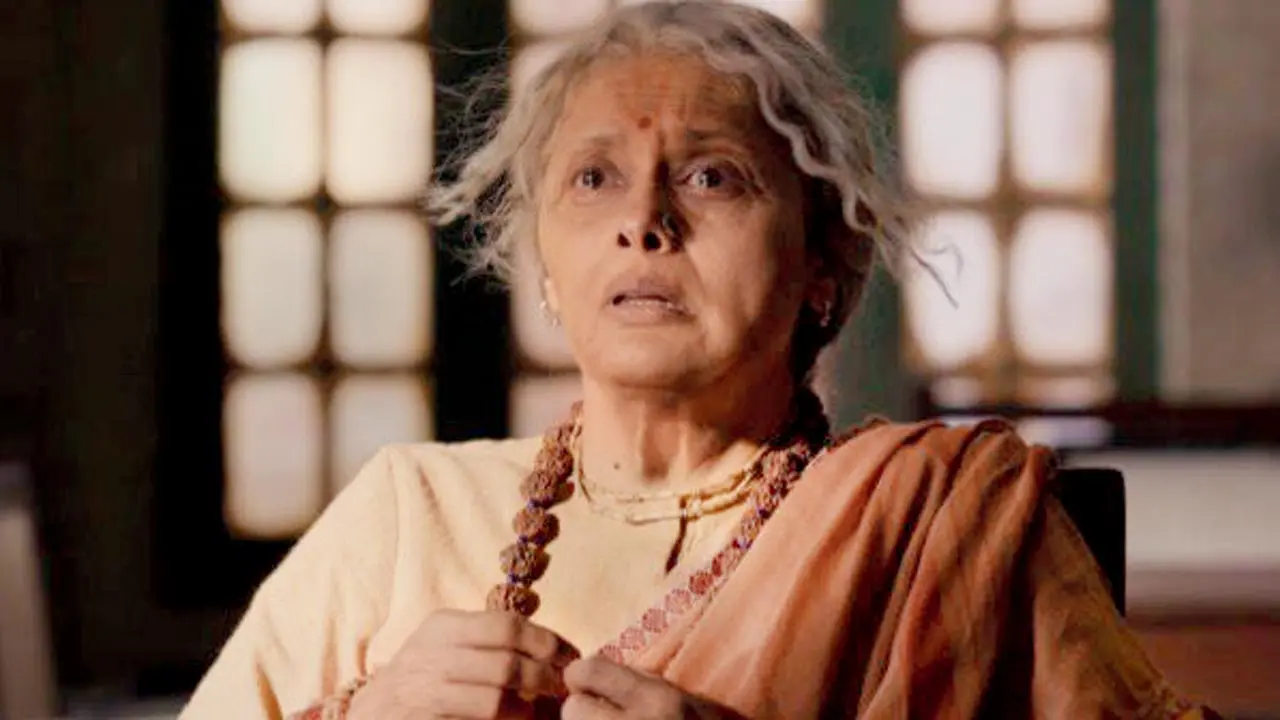
Chandrima Pal (BOMBAY TIMES; September 1, 2025)
Pallavi Joshi will appear in a pivotal role as Ma Bharati in Vivek Agnihotri’s upcoming film The Bengal Files, which releases in theatres on September 5. We caught up with the actress at her Mumbai apartment in the thick of a promotional blitz, dressed in a sari with bold typography about justice, courage and equality. Excerpts from the conversation:
What is it like to be part of the Files trilogy, that is always in the eye of a storm?
On a very artistic level, knowing what the content is, knowing what we have been trying to say through the Files films, it is an extremely proud moment for me right now to know that we have successfully completed the trilogy.
But I don’t understand this – nowhere in the world this kind of pushback happens when you try to show a slice of history. I understand that we live in very unique times, where the entire world is outraging. So maybe, we live in outrageous times and thanks to social media, everything is amplified.
What kind of response do you get, especially from the people whose stories you say you are trying to tell?
The one big takeaway from this trilogy is that they are feeling heard and acknowledged. For so long, they were invisible people whose pain never found representation. We all have a right to know what happened to our families. The past. After The Kashmir Files, I remember Kashmiri Pandits coming up to me, holding my hands and crying, saying, “Thank you for finally telling our truth.” Even now, Bengalis, especially those who have family histories tied to the Partition, are reaching out to us with similar emotions. That’s why we do this work.
How do you respond to the criticism that all your films are political?
I think everything in India today is political — whether you like it or not. The tragedy is that even history has become politicized. But what we are doing is storytelling. We’re taking documented events, survivor testimonies, and real experiences, and putting them into a cinematic form. If that is labelled political, then so be it. But our intention is very clear. We want to tell the truth of people who were silenced.
Subscribe to:
Posts (Atom)