Showing posts with label Telangana. Show all posts

Telangana theatre dispute exposes stress in single-screen economics


Rajesh N Naidu (THE ECONOMIC TIMES; May 18, 2026)

Mumbai: A dispute between single-screen theatre owners and producers in Telangana over revenue sharing has exposed the growing financial stress in India’s theatrical business, with exhibitors saying weak box-office collections and rising operating costs have made the current fixed-rental model unsustainable.

The Telangana Exhibitors Association has instead proposed a percentage-based revenue-sharing model, which has received support from some producers while others have yet to formally communicate their acceptance.

“It is an existential crisis for single-screen theatre owners,” said Vishek Chauhan, CEO of Roopbani Cinema, a single-screen theatre in Bihar. “On the one hand, they pay a fixed fee to distributors irrespective of the performance of films. On the other hand, they do not have a say in the choice of films they want to showcase or even in the number of shows,” he explained.

“Exhibitors that are part of national chains have more favourable terms, as they follow the percentage model to the hilt,” Chauhan added.

India has close to 5,000 single screens, of which 70% are in South India, according to trade analysts. Telangana accounts for 10-11% of the single-screen capacity in South India.

In a fixed-fee business model, a single-screen theatre owner must pay a fixed amount to distributors irrespective of a film’s performance. Given the high fixed costs of running theatres and the uneven box-office performance of films, theatre owners are facing significant losses.

Trade analysts said the Telangana Exhibitors Association has proposed a staggered revenue-sharing model, offering distributors 60% of the box-office collections in the first week, 50% in the second and 40% in the third week of a film’s run.

In 2025, the Indian film industry shut 124 screens, mostly single screens, even as 225 screens were added mostly in multiplexes, according to the Ficci-EY 2026 Media and Entertainment report. “Industry discussions indicate that in Hindi-speaking states, some towns now open screens only for a few days a week or when there are major film releases,” it noted.

Meanwhile, producers are also under pressure from soaring star remunerations and fewer releases from top actors due to pan-India ambitions, industry analysts said.

“A key reason for weak box-office revenues in the Telugu and Kannada markets is the pan-India ambitions of stars and filmmakers in these industries,” said Ramesh Bala, a movie trade analyst based in Chennai. “As a result, stars have not only reduced the number of films they release each year but have also increased their fees. These developments have put producers in a vulnerable position.”

The FICCI-EY report noted that pan-India films will increase pressure on regional content to scale up in both narrative and production values. “Large-scale, multilingual releases are increasingly dominating screens, often compressing theatrical windows for mid-budget and regional-language films,” it said.

The gross box office of southern films fell to Rs. 6,000 crore in 2025 from Rs. 7,000 crore in 2024, according to the report.

Analysts said even though single-screen theatre owners have promised not to raise ticket prices, they are threatening to shut down if their proposal is not considered seriously.

Producers have also pointed to the timing of the proposal, which coincides with the release of the big-budget pan-India Telugu film Peddi early next month.

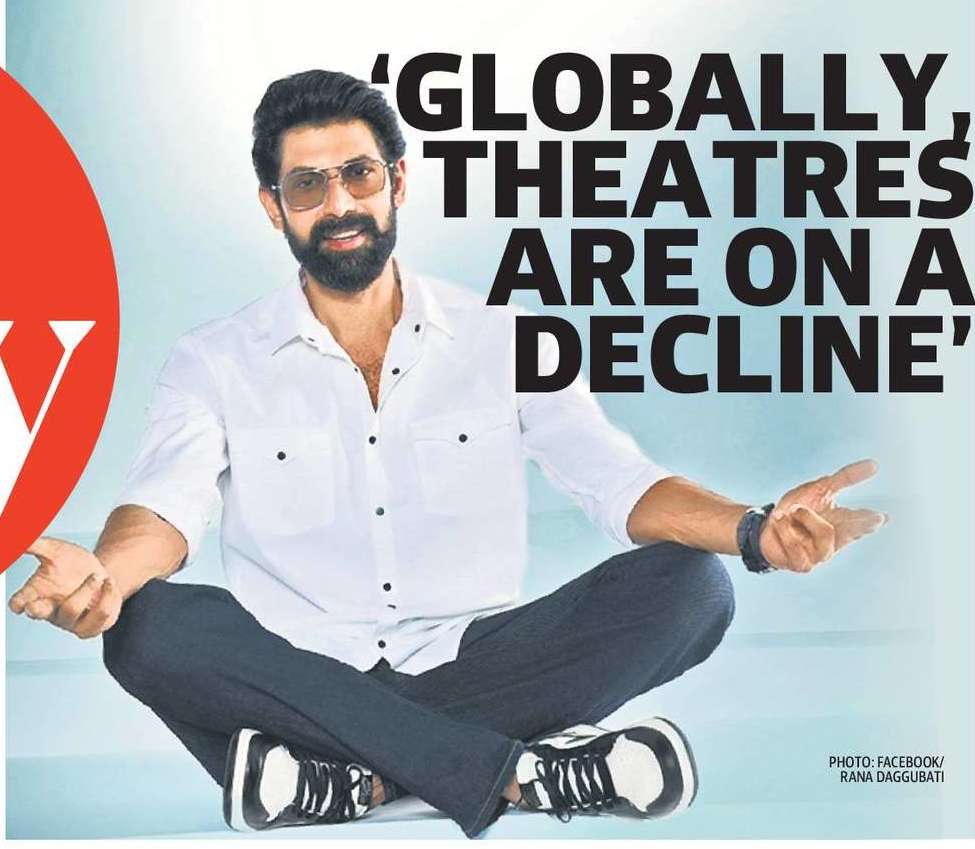
Globally, the theatres are on a decline in some manner-Rana Daggubati

‘GLOBALLY,
THEATRES
ARE ON A
DECLINE’

Actor Rana Daggubati feels that the Telugu film industry is emerging in times when the theatres biz is coming down
Yashika Mathur (HINDUSTAN TIMES; June 8, 2025)

Actor Rana Daggubati, who has been a part of Indian cinema for almost 15 years, says that the Telugu industry is showing remarkable growth, be it global success stories like the Baahubali and Pushpa series, and RRR (2022), or smaller films.

“Globally, the theatres are on a decline in some manner. Seven or eight years ago, there were three times the number of theatres that there are today,” shares the 40-year-old, who will next be seen in the web series Rana Naidu 2, adding, “Now, there are so many more mediums of entertainment or content viewing, be it OTT, YouTube or just something on your phone.”

Despite the challenges, he remains optimistic: “Cinema will always find its beat; there are a few things that are still communal as watching a film together — that doesn’t go away easily.”

He cites actor Priyadarshi Pulikonda’s Telugu legal drama Court as an example of how good cinema still resonates, despite a small budget. “There are so many independent films that have become popular, which wouldn’t have been the case a few years ago. Like Court which has done very well. Such films are almost getting to mainstream numbers,” he says.

Rana also praises the Telugu industry’s diversity and affordability. “Telugu is doing better than the other industries because of the larger variety of stuff that is being produced. And the cost of going to cinema in Andhra Pradesh and Telangana is still not as expensive as Mumbai and Delhi.”

Regarding the expectations of pan-India blockbusters from Telugu films, he emphasises that not every story is meant to be universal. “Some things are just for a local market. You need that cultural understanding. Having said that, there are also films made with the clear intention of reaching audiences across the country, and that has been happening,” he ends.

I will stop singing songs on alcohol if all states become dry states-Diljit Dosanjh

Diljit vs Telangana: A war of words

BOMBAY TIMES (November 19, 2024)

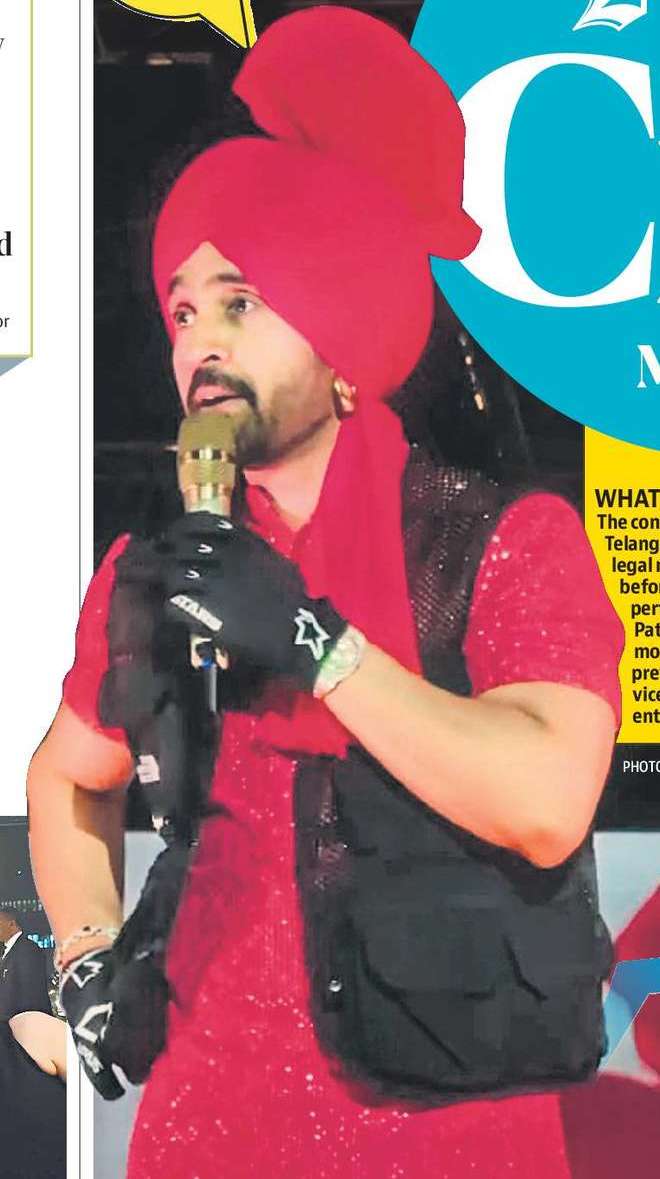
Diljit Dosanjh says he will stop singing songs with alcohol references if all the states in the country are declared dry state. At his Sunday show in Ahmedabad, the singer-actor responded to the notice sent to him ahead of his Hyderabad concert, directing him to avoid songs related to alcohol, drugs and violence.

The singer said, “There’s some good news. I didn’t get any notice today. There’s more good news: I’ll not sing a single song on alcohol to day either. Ask me why? Because Gujarat is a dry state! Let’s do something, let’s start a movement. If all states declare themselves dry states, I’ll stop singing songs on alcohol from the very next day... I will stop singing about alcohol, you shut the ‘thekas’ in the country... I take a pledge. Is this possible? It’s a big source of revenue. Everything was shut in corona (pandemic), except the thekas. You can’t fool the youth.”
--------------------------------------------------
Diljit Dosanjh takes on government’s dictate on his songs and says declare the state dry, and he will tweak his songs
HINDUSTAN TIMES (November 19, 2024)

On Sunday (November 17), while performing in Ahmedabad, singer-actor Diljit Dosanjh publicly addressed the Telangana government’s notice warning him against performing songs that glorify alcohol, drugs or violence ahead of his November 15 Hyderabad concert. The notice, issued just hours before his performance, sparked a debate that Dosanjh has carried into his subsequent shows, including the one in Gujarat.

Starting his Ahmedabad concert on a light note, Dosanjh announced his “good news” — this time, no notices had been served. Aware that Gujarat is a dry state, he refrained from performing songs referencing alcohol. However, he expressed frustration that despite releasing two devotional tracks recently, his critics focus only on songs like Patiala Peg and 5 Taara.

Clearing misconceptions, Dosanjh asserted that he neither drinks nor promotes alcohol, unlike Bollywood stars who endorse liquor brands. “Main jahan jaata hoon, chup karke apna programme karta hoon, chala jata hoon. Aap kyun chedh rahe ho mujhe?” he questioned. Comparing his handful of songs referencing alcohol to the abundance of Bollywood tracks on the same subject, he called out the hypocrisy.

The singer-actor proposed a bold solution: a pan-India movement to ban alcohol entirely. “Agar saari states dry state ghoshith ho jaayein, main kabhi sharab ka gaana nahin gaunga. Main pran karta hoon,” he declared. Highlighting the government’s reliance on liquor revenue, he mocked the system, saying, “Corona (Covid-19) mein sab bandh hogaya tha, theke bandh nahin huye thhe. Aap youth ko fuddu nahin bana sakte.”

Acknowledging the ease of adapting his performances, he cheekily offered a compromise: declaring dry days during his concerts. “Jahan jahan mere shows hain, ek din ke liye dry day ghoshith kar do, aur main gaana tweak kar doonga,” he said, promising that his fans would still enjoy the show without alcohol-themed tracks.

Praise for Gujarat govt
Lauding Gujarat’s dry-state status, the 40-year-old expressed hope that Amritsar, his hometown, might follow suit. “Main Gujarat government ka fan hoon,” he remarked, urging his fellow Punjabis to consider the benefits of such a policy. HTC

What happened
The controversy began when Telangana authorities issued a legal notice to Dosanjh hours before his Hyderabad performance, citing tracks like Patiala Peg and 5 Taara. The move, they claimed, was to prevent glorification of vices in public entertainment.

Telangana govt responds
Defending their notice, Telangana Deputy Chief Minister Bhatti Vikramarka Mallu stated that the guidelines were intended for the betterment of society and its youth. “The government of India has issued clear guidelines against songs promoting drugs and alcohol. Mentioning these guidelines while granting concert permissions is standard procedure, so there is nothing wrong in it,” he said.

Aditi Rao Hydari ties the knot with Siddharth in Telangana?

Aditi ties the  knot with  Siddharth in  Telangana?

Priyanka Goud (BOMBAY TIMES; March 28, 2024)

Speculation about actors Aditi Rao Hydari and Siddharth’s secret wedding made headlines yesterday, with reports of the couple tying the knot at Sri Ranganathaswamy Temple, Wanaparthy, Telangana, spreading like wildfire in the morning. While there was no official confirmation from either Aditi or Siddharth, the word in Wanaparthy is that the couple did tie the knot.

According to a resident, “The wedding ceremony was an intimate affair held between 4 am and 9.30 am. The temple was closed to visitors from the evening before. Rituals were conducted by priests from Tamil Nadu. The temple trustee handled all the arrangements.”
--------------------------------------------
HINDUSTAN TIMES (March 28, 2024)

Actor-couple Aditi Rao Hydari and Siddharth have reportedly gotten married. They tied the knot at a temple in Telangana on March 27 in an intimate ceremony that saw only close friends and family in attendance.

Aditi and Siddharth got married at Srirangapur’s Sri Ranganayakaswamy temple in Wanaparthy district, according to a GreatAndhra report. Aditi’s family has a special connection with the wedding venue as the actor’s maternal grandfather was the last ruler of Wanaparthy Samsthanam. The priests were called in from Tamil Nadu to officiate the ceremony as Siddharth’s roots are from there.

Rumours of their romance started swirling after the duo worked together in the 2021 Tamil-Telugu film Maha Samudram. Aditi was previously married to actor Satyadeep Misra (2009-2013).

We also tried reaching out to the couple individually but received no response, neither was an official statement put out by the couple till the time of going to press.

With Jawan, Shah Rukh Khan isn’t making inroads, but a highway into the south film industry-Atul Mohan

The maska before the tadka

Upala KBR (MID-DAY; September 7, 2023)

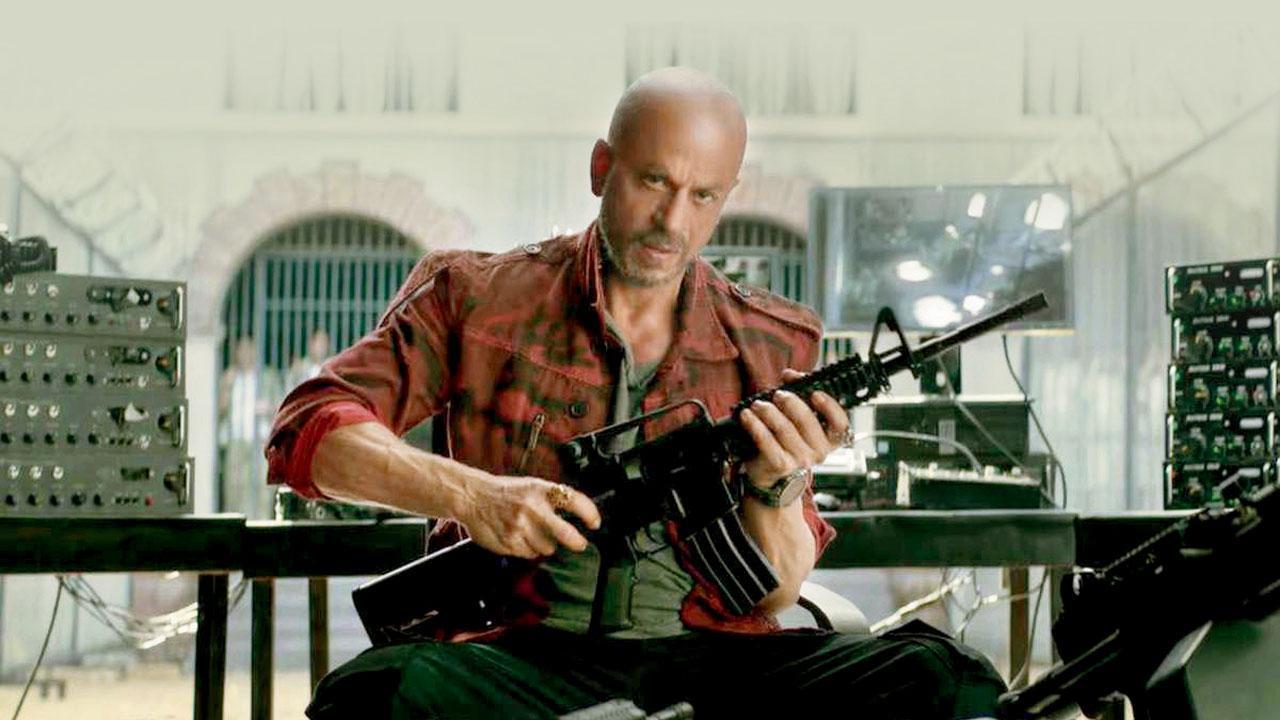
What's a pan-India Hindi film without some South Indian tadka? The makers of the highly anticipated Shah Rukh Khan-led Jawan have devised a strategic distribution plan that will have something for fans from Kashmir to Kanyakumari. While director Atlee—known for his massy films—will bring his sensibilities to the fore, the inclusion of Nayanthara and Vijay Sethupathi has already sent cinegoers into a tizzy. Add to that Anirudh Ravichander’s musicality, and you have the perfect recipe. But that’s not all; the high-octane actioner will be peppered with cameos from south superstars.

“It is true that Jawan is making one of the biggest openings in the south for any Hindi film till date,” says film distributor-multiplex owner Raj Bansal, adding that the year that started with Pathaan has been strengthened by Sunny Deol’s Gadar. And Jawan will take it a notch higher.

“To win over the south audiences, top stars from the Tamil and Telugu film industries, including Nayanthara, Atlee, and music director Anirudh, have been roped in. I am told there are two cameos—Tamil superstar Thala Vijay and Telugu superstar Allu Arjun—but they haven’t revealed them as yet. In Hindi, Sanjay Dutt will be the surprise element,” he reveals.

The star quotient will increase footfall in theatres. To meet that demand, distributors have increased screens. Going by the advance booking, Telengana and Andhra Pradesh’s distributor, Riaz Hyder, says, “The release of Jawan is like a big, regular Telugu film with 800 plus screens in Telengana and Andhra Pradesh. Every hour, new shows and screens are added. In cities like Tirupati, Nandiyal, Hyderabad, Rajahmundry, and Vizag, theatres are already full, including the 6 am, 8am, and 9 am shows.”

Trade expert Taran Adarsh explains that while Pathaan had the maximum number of screens in the south, soon Jawan will cross that mark. “There are many reasons for this—one of them being the Pathaan effect and Shah Rukh’s growing popularity down south. He has become a much bigger brand today,” he says.

While Jawan is not the first movie to open in regional languages or regions, a targeted distribution plan to “woo southern audiences” is novel. “There’s definitely a strategy in this,” says trade analyst Atul Mohan. He further explains that Khan made his inroads into the south film industry with Chennai Express (2013). “which was his first stepping stone,” followed by Pathaan.

“In Jawan, he has perfectly balanced the north and south. Besides Atlee, Nayanthara, Vijay Sethupathi, and Anirudh, Thala Vijay is a huge crowd-puller. He is close to Atlee. [In addition to that], Shah Rukh and he have a mutual admiration for each other and are good friends, which will translate on screen. I think the first day of opening in Hindi would [approximately] be over Rs. 75 crore, and for the Tamil and Telugu versions, [approximately] over Rs. 20 crore. With Jawan, he isn’t making inroads, but a highway into the south film industry.”

S S Rajamouli takes up questions on religious extremism, regional politics etc in his interviews in the West

Rajamouli bags New York Film Critics Circle award for 'RRR', 'This is just the beginning', says Jr NTR

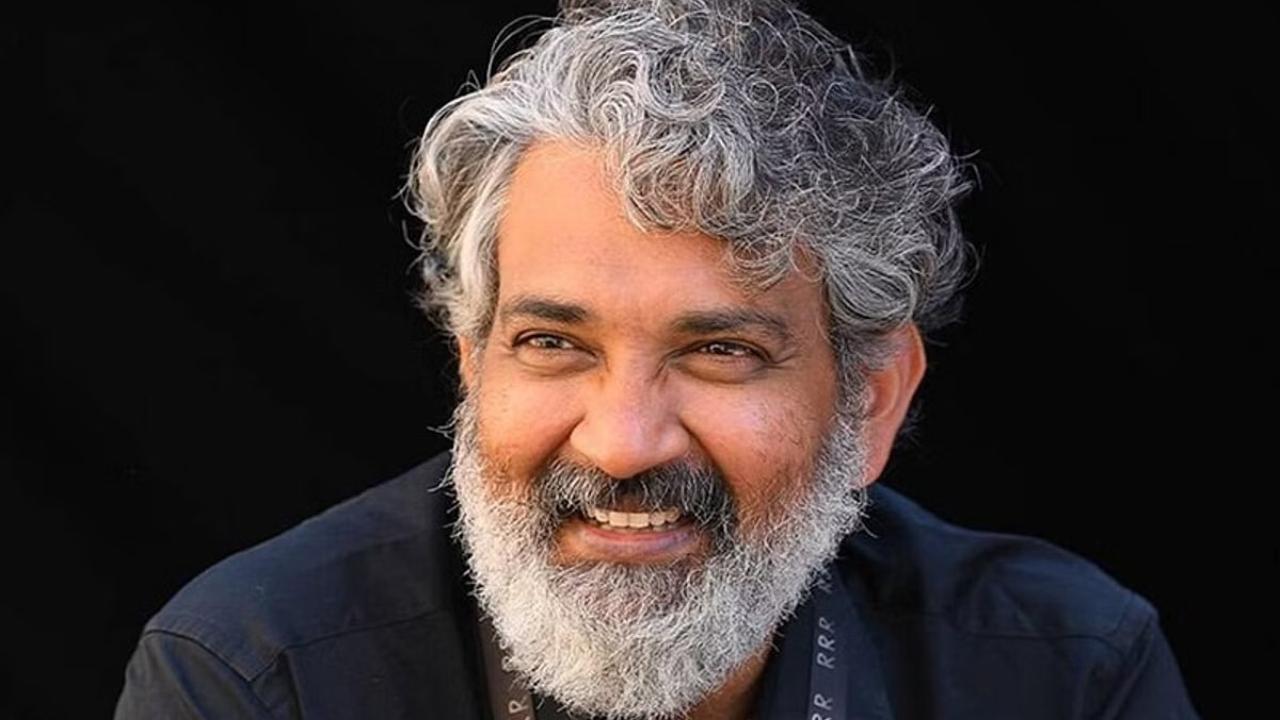
S S Rajamouli’s no-holds-barred interviews in the West during his Oscar campaign for RRR have been a far-cry from his otherwise play-it-safe-and-simple media approach back home. The filmmaker – who’s been getting tough love from the US press, that doesn’t mind pressing him on sensitive topics – hasn’t shied away from questions on atheism, spirituality, religious extremism, regional politics and more
Niharika Lal (BOMBAY TIMES; March 4, 2023)

“Personally, I’m an atheist. I don’t believe in god. I don’t believe in any religion. But I understand the power of spiritualism. For me, spiritualism is an emotion. And I write stories filled with emotions,” Rajamouli told The Associated Press.

To The New Yorker, he said, “There might be some overlap, but I don’t try to bring my personal beliefs into my films. For me, there is a very clear and pure relationship between the audience and me. The audience is paying me their hard-earned money, giving me their time, and expecting some kind of entertainment. That’s my job.”

In a departure from his otherwise cookie-cutter interactions with the Indian media, Rajamouli’s recent spate of interviews to the US press have seen him shoot straight when it comes to hot-button topics, sometimes at the cost of being not-so-politically correct.

Delving further into his personal beliefs, he told the outlet recently that at one point in his life, “I got caught up in my family’s religious fervour. I started reading religious texts, going on pilgrimages, wearing saffron cloth, and living like a sanyasi for a few years. Then I caught onto Christianity, thanks to some friends. I’d read the Bible, go to church, all kinds of stuff. Gradually, all these things somehow made me feel that religion is essentially a kind of exploitation...My love for stories like the Mahabharata or the Ramayana never diminished. I did start pushing away from those texts’ religious aspects, but what stayed with me was the complexity and the greatness of their drama and storytelling.” 

Among the other topics the filmmaker’s touched upon are religious extremism, the Andhra Pradesh-Telangana bifurcation connect in RRR, his political leanings and whether or not there’s an undercurrent of the latter in his films.

‘I KNOW THAT THERE ARE EXTREME GROUPS IN MY AUDIENCE, I’M NOT CATERING TO THEM’
“I hate extremism. I hate extreme people in any section of society,” said Rajamouli, when quizzed about his own politics and whether his films may reflect them. While talking about the rise of extremist sentiments in society and their impact on its films, the filmmaker added, “I don’t think in those terms. I always feel like films reflect the society that created them, whatever that society’s feelings are. Films reflect the pace of society because filmmakers have to cater to audiences. They’ll see what audiences like, what their present mood is, and make films for that. If there is a rise in that kind of sentiment in society, those kinds of films will come out. But I always stay away from that. I go a completely different route,” he said.

“I don’t have any kind of hidden agenda. I make films for people who are willing to pay their hard-earned money for the film ticket ,” he reiterated to AFP, adding, “I like to get them entertained, make them feel dramatic about the characters, about the situations, have a good time, go back and live their lives.”

‘WITH RRR, I THOUGHT WHY NOT BRING THESE TWO PEOPLE – ONE FROM AP, ONE TELANGANA – AND HAVE THEM BE FRIENDS?’
During The Hollywood Reporter’s Awards Chatter podcast, Rajamouli addressed the bifurcation of Andhra Pradesh, saying, “The bifurcation of the state itself was not a painful one. You can bifurcate a state, but nothing is going to change. The distance is not going to change, the people are not going to change. The relationships are not going to change. It’s just a matter of thinking they are two different states. But what really troubled me was in the process of bifurcating the states, the kind of angst and the kind of anger the people were spewing against each other. And, like, for a small period of time, which part of the state we belonged to became a major topic of discussion for everything. For 45 years, we didn’t even have this notion. Why is this suddenly coming up? Why are the people whom we thought of as brothers and sisters suddenly asking about my regionality and looking at each other as enemies? That really made me feel bad. And there was nothing I could do. So when the idea of RRR came out, my main idea was to bring the two heroes together. And I realized, what if I can bring these two people – one from Andhra, one from the Telangana region – and if I could say these two people were friends? Yes, it is completely fictional, but it’s my way of saying, ‘guys, these two heroes, whom we look up to as demigods, are friends. If they can be friends, if they can sacrifice their life for each other, we can also be the same’. I don’t think many of the people would have got it. I was not vocally saying, that is the reason why I was making it, but it’s almost for myself that I was making it .”

‘IF I WERE TO REPLACE NETAJI’S PORTRAIT IN RRR WITH GANDHIJI’S WOULD PEOPLE STILL THINK I DISRESPECTED NETAJI?’
On accusations that RRR’s concluding musical number highlights Subhas Chandra Bose and Bhagat Singh but omits others like Mahatma Gandhi and B R Ambedkar, Rajamouli told The New Yorker, “Whichever stories touched me, made me cry, or made my heart swell with pride – those are the historic figures that I chose for that scene. I could also only highlight eight people in that musical number. I would need room for 80 in order to put all the figures that I respect in the movie. Still, I respect all of the revolutionaries that I chose, and, if I didn’t put Gandhiji’s portrait there, it doesn’t mean I disrespect him. I have huge respect for Gandhiji, no doubt about that. My question is : If I were to replace Netaji Subhas Chandra Bose’s portrait with Gandhiji’s, would all these people ever question me, saying that I disrespected Subhas Chandra Bose by not portraying him there?”

You don’t always have to tell your story-Sonu Sood breaks silence following IT searches

Sonu Sood

Vijay V Singh (THE TIMES OF INDIA; September 21, 2021)

Mumbai: Two days after the income tax department alleged that Sonu Sood had indulged in tax evasion and indicated violations pertaining to foreign contributions received by his charity foundation, the actor told TOI that he worked for the poor and extended financial assistance to the needy after establishing their credentials.

“I have not received a single penny into the account of my foundation from abroad, so there is no question of any violation. All I did was to raise the voice for the needy on crowdfunding platforms in India and abroad, and they directly provided financial assistance after examining their documents,” he said.

Last week, the I-T department searched 28 premises in Mumbai and north India.
-----------------------
Vijay V Singh (THE TIMES OF INDIA; September 21, 2021)

Mumbai: Sonu Sood on Monday told TOI that he worked for the poor. The Income Tax Department had searched 28 premises in Lucknow, Kanpur, Jaipur, Delhi and Gurgaon connected with the actor and an Uttar Pradesh-based infrastructure company associated with him last week.

The department alleged Sood had evaded Rs 20 crore income-tax and accused Sood Charity Foundation of raising Rs 2.1 crore from overseas donors on a crowdfunding platform in violation of Foreign Contribution (Regulation) Act, 2010. The search continued for four days, due to which Sood claimed he had been unable to reach out to the needy approaching him for help. The actor stated his foundation just provided documents of those in hospital to the crowdfunding platforms.

Sood said, “Today I came out and saw people sleeping outside my house in the open to meet me for help. Some of them sold their valuables to travel to reach me. I was feeling helpless as I could not reach them in the last four days. I will continue doing good work irrespective of the political party in power. So even if Gujarat, Tamil Nadu, or any other state governments call me for help, I will do it everywhere, to bring a smile to the face of the poor and needy.”

“I am even talking with top people in Telangana to open a big hospital where poor patients can be treated and operated for free,” he said. The actor claimed there are 53,000 emails and 8,000 messages on his WhatsApp which his team has yet to attend, where people have sought help.

Sood claimed I-T officials said there was no problem with his books and appreciated his good work. He said, “I provided them all documents and will do the same in future if more documents are needed. Officials talked good about my work and I am cooperating with them.”

The I-T department also raised doubts after stating that the actor’s foundation collected donations of Rs 18.94 crore from April this year and utilised Rs 1.9 crore towards various relief works, while the rest of the money was lying in the foundation’s account. “I am spending all the money donated to my foundation according to the needs of the poor, there is a time limit to use the donation amount, and we are using it according to rules,” the actor said. 
-----------------------
BOMBAY TIMES (September 21, 2021)

After the Central Board of Direct Taxes (CBDT) conducted searches on several premises associated with Sonu Sood last week, on Saturday, the Income Tax Department – in a statement – accused ‘a prominent actor’ of evading over Rs. 20 crore in taxes. The I-T department also alleged in a statement that the actor’s charity foundation (founded last year) has collected Rs. 18.94 crore in donations from April 2021 till date, but spent only around Rs. 1.9 crore in relief work. The statement mentioned that funds to the tune of Rs. 2.1 crore were raised from overseas donors on a crowd-funding platform in violation of FCRA (Foreign Contribution (Regulation) Act) regulations, and that investigation on the matter was ongoing.

Sood, who had remained tightlipped on the matter so far, took to social media on Monday morning to write, “You don’t always have to tell your story. Time will. I have pledged myself to the service of the people of India with all my strength and heart.”

The actor – who shot to national prominence after he arranged free transport through rail, air and road for migrant workers to reach their home states during the nationwide lockdown last year and has continued his humanitarian work through his charity established during the Coronavirus outbreak last year – added, “Every rupee in my foundation is awaiting its turn to save a precious life and reach the needy. In addition, on many occasions, I have encouraged brands to donate my endorsement fees for humanitarian causes too, which keeps us going.”

Sood added that he had been busy attending to “a few guests” for the last four days, “hence was unable to be at your service.” He ended the note with the quote – kar bhala, ho bhala, anth bhale ka bhala – adding, “My journey continues.”

The bifurcation between what’s suited for big screen and what’s better for OTT will become clearer-Rana Daggubati


Rachana Dubey (BOMBAY TIMES; July 20, 2021)

Shortly before the second wave of the pandemic hit the country hard, the film business down South had taken off in a big way. Rana Daggubati’s bilingual Haathi Mere Saathi, which was up for release at that time, had to be held back, yet again. It faced a similar situation in 2020, too. In a conversation with BT, Rana spoke about the impact of the pandemic, his understanding of the new normal and way he sees things moving, hereon. Excerpts:

A year ago, the Coronavirus pandemic pushed the film industry into uncertain territory. At this point, what do you think is the extent of its impact?
The pandemic has affected every business, brought it to a stop, and moved it to a point of reinvention and innovation. Where there has been a big pause, there has also been extreme growth of different kinds, and that is not restricted to any one business in the country. In our line of work, movies started going to OTT platforms in big numbers, and writers and directors are developing way more content than they have done in the past because they have the time on hand to do that extensively and deeply. It’s a wait like it is for everyone for things to open up, but there will be a significant change in the way we create our content and the way people consume it.

While the Hindi film industry was slowly getting back on its feet, with fewer releases and dismal openings before the second wave of the pandemic hit us, the south film industry opened up to huge box office figures in the same period. How did the businesses differ so drastically?
The opening of theatres and the way the theatre ecosystem depends on their ownership and the kind of films that are being made. In South India — I can talk about Andhra Pradesh and Telangana — the filmmakers and the film studios run large theatre chains. It was in their best interest to open theatre chains and have them full with films quickly. That is not the case in other business territories. Also, in the South, we have a larger mainstream film narrative with stories that are larger than life, written for the big screen and they are the spectacle kind of movies. It was something that the audience had been waiting to watch on the big screen.

What do you think will be the greatest impact of the pandemic on film business when we get to the other side of this situation?
The audience has watched so much content across languages and cultures on different channels in the last 18 months that filmmaking across the board will now have to be upped and improved. On the other side, we will have to see what kind of content will work in which space. That bifurcation between what’s suited for the big screen and what’s better for the OTT space will become clearer. Cinema consumption everywhere will see a drastic shift. Something meant for a big screen and the wholesome experience will go to the big screen, and the rest will be consumed on other platforms.

Now more than ever, we are seeing actors crossing language barriers. Hindi film actors are increasingly taking up work down South and South movie stars are featuring in Hindi film projects. Do you see that cross-pollination strengthening further in the times ahead?
This crossing over has always happened. More Hindi film actors have taken up work down South. In comparison, there are fewer Telugu stars in Hindi cinema. But now that everything else is merging even more, and everyone is watching everything, people have begun to show a liking for individual talents from different industries. In the future, it will be interesting to see the kind of cinema that will come out of this, how the industries will grow, and how newer artistes will emerge in different territories in the country.

Your film, Haathi Mere Saathi, was on the verge of release when the makers were forced to push the dates ahead, for the second time in two years. How does that impact you as an actor?
Haathi Mere Saathi’s release had to be moved around. The impact of such a decision had to be kept at bay looking at what people around us were going through. It is a very difficult phase for people. Their lives have been impacted severely. Haathi Mere Saathi is a very special and poignant film for today’s times when we understand and value nature more than we ever did. It was a beautiful experience putting that film together in different languages with different cast members.

Lastly, as an actor, do you find yourself attracted to the digital medium?
Yes, I do, I find the space very interesting. I am interested in taking up something in the long-format narrative. I think it’s very interesting how a story has a longer shelf life and also characters have a wider spectrum and actors have the scope to play out the arc. In comparison, there’s a definite start and finish to a story and a character’s journey in films. In the OTT show space, the connection and the duration one gets to play with is much longer. I would love to find something in the long-form that interests me.


Goa and Telangana under lockdown; what’s the next move for Bollywood and Television producers?


The shoots of Adipurush and Shabaash Mithu are in limbo

With lockdowns announced in Goa and Telangana, makers of Adipurush, Shabaash Mithu play the waiting game; TV producers seek new locations for shoot
Mohar Basu, Uma Ramasubramanian (MID-DAY; May 15, 2021)

The past four weeks haven’t been easy on film and television producers. After the Maharashtra government imposed a junta curfew on April 15, some producers called off their shoots while several others promptly moved base to Goa, Hyderabad and Silvassa to continue filming their projects. Now, with a lockdown announced in the beach state and Telangana, it’s a déjà vu moment of the worst kind for the makers.

The unit of Taapsee Pannu-starrer Shabaash Mithu was Hyderabad-bound in April. “A few days into the shoot, the production found it too risky to work amid the rising cases, even though they were in a bio-bubble. One of their gravest concerns was the fragile healthcare infrastructure in the city, so they returned to Mumbai by April-end,” says a unit hand.

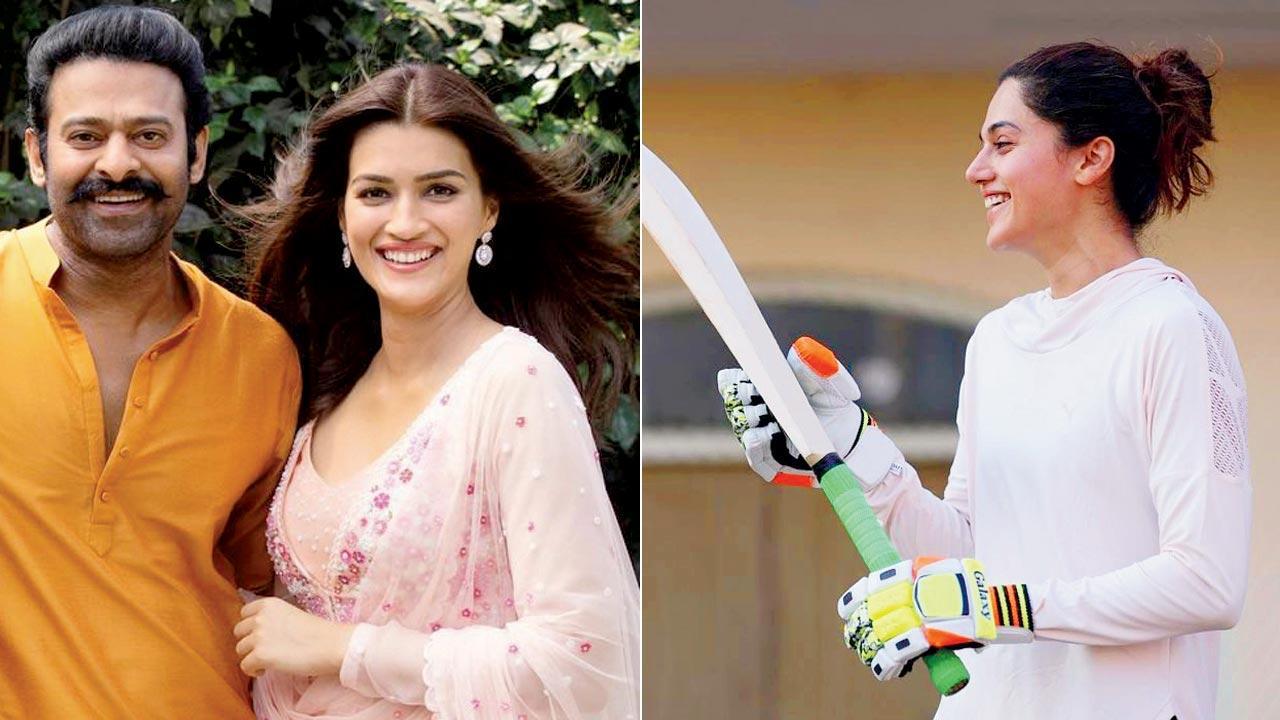
The makers of Adipurush are at their wits’ end. The team, including Prabhas, Saif Ali Khan and Kriti Sanon, were expected to leave for the south Indian city in the second-half of May. A source from the project reveals, “Director Om Raut had drawn up a plan where not more than 20 people would be required on set at any given time as he would shoot, using CGI, at Ramoji Film City. But with the lockdown brought into effect in Telangana, the makers will take a call after two weeks.” 

Goa that was reeling under the pressure of television shoots, including Apna Time Bhi Aayega and Ghum Hai Kisikey Pyaar Meiin, is finally breathing easy. “There were 13 serials, three web shows and three films being shot,” says Sandeep Natwarlal Kotecha, a line producer in the state. He rues that illegal shoots had become rampant in the past few weeks. “Around 25 units were filming without procuring the necessary permission. The work was halted after they were caught.” 

No sooner were the restrictions imposed in the beach state last week than the crew of the Star TV show, Ghum Hai..., flew down to Hyderabad. “The Andhra Pradesh government has yet to issue a lockdown. So, the unit is continuing the shoot of their own accord in a bio-bubble,” says a source. 

Even as the team of Mehndi Hai Rachne Waali, currently stationed in Hyderabad, figures out the way forward, creator Sandiip Sikcand says he is unfazed about the hiccup as they have a bank of episodes. “We’re looking at options in Gujarat and Chandigarh.” Meanwhile, industry sources indicate that Daman will become the next shooting hub.

Fenil's Bollywood Talk # 671

AND CINEMAS SHUT ONCE AGAIN

India is in the second wave of Coronavirus right now and it’s much more extreme than the first wave. A lot of states went under lockdown or introduced curbs and as part of it, theatres were asked to shut down. This is because cinema halls are believed to be venues where the Covid-19 virus can spread rapidly. That there has rarely been a case where a person got infected after a theatre outing is a different matter! But with non-essential shops, malls, restaurants etc being asked to shut shop, cinema halls obviously won’t be left out.

On April 27, Kerala government ordered theatres in the state to down shutters. Even the Gujarat government passed a similar order earlier this week. As a result, theatres are now only open in Andhra Pradesh, Arunachal Pradesh, Assam, Telangana and West Bengal. With the cases refusing to subside in most parts of India, the fear is that in the next 10 days, even these states would ask cinemas to halt operations.

Many cinema halls in these states have already downed shutters, due to lack of content. Since April 2, no new Hindi film has been released. Godzilla vs. Kong was the last major film that worked pan-India but even that was released a month ago. And in North, West and East India, it failed to reach the desired numbers due to fear psychosis about the virus. Hence, the belief is that even if state governments don’t take the harsh decision, the exhibition themselves will stop playing films to save on the costs.

2-3 days ago, the makers of Satyameva Jayate 2 announced that their actioner stands postponed. Starring John Abraham and Divya Khosla Kumar, it was supposed to release on May 13, on Eid. The other upcoming films like Bellbottom (scheduled to release on May 28) and ’83 (scheduled to release on June 4) will soon be pushed ahead too.

The experts have predicted that the cases will reach a peak in mid-May after which there’ll be a reduction in numbers. In such a scenario, it is said that cinemas in most states will be allowed to open only after mid-June or in July.

Hyderabad, Vizag become new shoot hubs for Bollywood?


Suresh Babu, Rana Daggubati reveal A-list filmmakers want to rent their studios, which also offer accommodation, equipment, production services
Akash Bhatnagar (MUMBAI MIRROR; June 18, 2020)

Bhushan Kumar confirmed to Mirror (June 11) that next month, the Mumbai Saga team will head to Ramoji Rao Film City in Hyderabad, with actors John Abraham, Emraan Hashmi and Suniel Shetty, among others, to wrap up its shoot. On Tuesday, he announced that another John-starrer, Satyameva Jayate 2, will roll in August, even though they have yet to fix the location.

Meanwhile, veteran producer and studio owner Suresh Babu informs that he’s been approached by several Bollywood filmmakers to rent out their three studios, two in Hyderabad and one in Vishakapatnam, for shoots.

“Producers want their team isolated together during shoots to mitigate risk of infection. When you are filming in your city, you’d want to return home to your family, which is why makers are looking at locations outside the state,” he reasons, pointing out that they wrapped up a small-budget Telugu film at Ramoji a few days ago.

On the makers who have reached out to him, he says, “My son Rana (Daggubati) is close to Sajid (Nadiadwala) and Karan (Johar). If they need anything, as studio owners we will go out of our way for them. This is not the time for balance sheets but to help the fraternity move forward.”

Rana adds that they are ready to welcome filmmakers from across the country. “Shoots for TV and web shows have already begun according to government guidelines and several more will kick off in the next few weeks. Around next month, we should see some Hindi films readying for shoot across Telangana and Andhra Pradesh,” he shares.

The actor points out that between the three studios, they have 50-55 acres of land to erect sets and standing sets, along with a lake and in Vizag, a picturesque ocean nearby. “The studios offer end-to-end solutions, from accommodation to shooting, for which equipment including cameras can be rented, and post-production work. We have fully functional editing and dubbing rooms, recording studios and VFX facilities. Even in-house technicians are available,” Rana informs.

With Bollywood producers moving in, won’t Telugu film shoots get affected? “The big Telugu films are yet to take a call but even if Ramoji fills up, we can quickly set them up at other studios in Hyderabad,” Suresh Babu assures.

One of the most disputed guideline in Maharashtra is that actors over 65 are not allowed to resume work. In Andhra and Telangana, they have left the call to them. “If an actor needs to finish a shoot, they can come quietly and do it quickly. There won’t be officials monitoring every shoot,” Suresh Babu reasons. But with cases going up in Maharashtra, aren’t they worried? “I have a wedding coming up in my family and I am concerned on a personal level. But as a city and state, we are happy to host filmmakers from across the country,” says Suresh Babu.

The groom-to-be points out that it’s mandatory for the whole unit to be tested before shooting starts and PPE kits and sanitisation is compulsory. “We will keep units isolated during schedules, with medical support on the set. We are following a Comprehensive Sanitation Protocol Solution as outlined by the MHA guidelines and using formulations that are more effective than regular disinfectants. We are also adopting smartphone-based technologies to manage meetings, resources and inventory. We are confident of providing a safe environment for work,” Rana adds.

Makers of Sidharth Malhotra-starrer Thadam remake to consider new location?

Sidharth Malhotra
With Thadam remake initially slated to roll in Delhi, makers of Sidharth Malhotra-starrer consider new location as they hope to kick off the film in August
Upala KBR (MID-DAY; June 12, 2020)

A still from ThadamSidharth Malhotra was eagerly waiting to kick off the shoot of the Thadam remake, and with good reason — the remake of the 2019 Tamil hit marks his first attempt at a double role. The schedule of the Vardhan Ketkar-directed venture, originally slated to go on floors in May, was naturally hampered by the lockdown. Now, as producers Murad Khetani and Bhushan Kumar are hoping to begin the project in August, they are in a dilemma over the film's location.

"As per the original plan, the unit was to head to Delhi in May where the film would be shot in a start-to-finish schedule. The director was keen on shooting certain crucial sequences across real locations. Now, even as the state government has allowed the resumption of shoots, there has been no such development in the capital. So, the makers are considering other possible locations where they can set the story," reveals a trade source.

Far from being bogged down by the delay, Khetani says they are charting out a plan to ensure the project kicks off on the right note. "Currently, Karnataka, Tamil Nadu, Telangana and Maharashtra have given permission to shoot. It is too early to decide whether we will film in Delhi or another city; we don't know which state governments will allow shooting by August. We will take a call early next month."

Given the recent turn of events, a November release is off the cards. "We were eyeing a November 23 release, but that is not possible," concedes Khetani, adding that they have the Herculean task of reworking the schedule. "Sidharth was to shoot for Indra Kumar's film before he began our movie, so he will have to work out his dates. Since he has two different looks, he will need to do look tests and a 10-day prep."

John Abraham and Emraan Hashmi's Mumbai Saga among the first films to resume shoot post lockdown


Their gangster drama, among first films to emerge from lockdown, gearing up for 12-day schedule in Hyderabad’s Ramoji Film City in July
Himesh Mankad (MUMBAI MIRROR; June 11, 2020)

Following the Coronavirus outbreak, which led to a nationwide lockdown, the shooting schedule and release dates of many films got hit for a six. Sanjay Gupta’s gangster-drama, Mumbai Saga, fronted by John Abraham and Emraan Hashmi, with Suniel Shetty, Jackie Shroff, Gulshan Grover, Rohit Roy and Prateik Babbar, was nearing completion and targeting a June release when work came to a halt. The team was shooting an action-packed confrontation at a real location in Mumbai when they hit the Covid-19 roadblock. Now, Mirror has learnt that the Bhushan Kumar-Anuradha Gupta production is going to be among the first films to get back to action next month. After getting the go-ahead from the Telangana government in-sync with the guidelines laid down by the Producers Guild of India and the state, Gupta will take off to Hyderabad with his actors soon to complete the shoot.

“Yes, we are planning to shoot in Ramoji Rao Film City as they have all the facilities and equipment required, including an in-house crew and technical staff, along with hotels for the team from Mumbai. It’s all contained within the studio premises and that cuts down on the risk,” Gupta confirmed.

Ten-12 days of work on the film remains, for which the entire ensemble cast is required to be present. Gupta informs that all the actors have reacted positively to the development. “They have all worked really hard on the film and are happy to finish it on time so that we can present it to the audience,” said director Gupta, assuring that “the well-being of the team is paramount.”

During the lockdown, the team has been working from home on the visual effects and editing. “Yes, we’ve been working in a limited way, but we still need around four months, from the time we complete the shoot to lock the final print,” admits Gupta, who has previously directed several gangster dramas, including Kaante, Musafir, Shootout At Wadala, and written Shootout At Lokhandwala. His next is based on a real incident, with Emraan playing a cop and John a gangster from the ’80s and ’90s, and narrates the story of how Bombay became Mumbai. “It’s a commercial action entertainer and the audience will get their paisa vasool,” he promises.

Meanwhile, Bhushan is happy that his team is gearing up to take the multi-starrer back on the floors. “It’s a very difficult time for the industry, but with the government’s support and approval, we can look at completing our films. I am grateful to the Telangana government for agreeing to let us fly our cast and crew to Ramoji Rao Film City to shoot,” stated the producer, who is currently working out the safety measures which would be followed during the shoot. “The health of everyone working on the project is our foremost concern. I am happy our supportive cast and crew have agreed to shoot next month,” he concludes.

I intend to work till the last migrant reaches his hometown-Sonu Sood


The actor talks to BT about what motivated him to reach out to the migrant workers who are stuck in Mumbai, and how their plight reminded him of his struggling days
Onkar Kulkarni (BOMBAY TIMES; May 28, 2020)

Over the past few weeks, Sonu Sood has been in the news for being a saviour of migrant workers, who are stuck in Mumbai amidst the Coronavirus lockdown. The actor, with the help of his friends Neeti Goel, Pankaj Jalisatgi and Harsh Sikariya, has been arranging buses to help them return home.

He says, “I went all out to help these migrants because I was a migrant, too, who came to Mumbai with a lot of dreams. When I saw photographs of their sufferings and read heart-wrenching stories of how they are walking thousands of kilometres without food and water, it reminded me of my early days. I first came to Mumbai by train, without a reserved ticket. I stood by the door and slept in the space next to the washroom. I know what struggle is.”

So far, Sonu and his team have managed to send buses to Karnataka, Rajasthan, Jharkhand, Odisha, Uttar Pradesh and Bihar. His wife Sonali and sons Eshaan and Ayaan, too, have joined him in his endeavour. “We recently started a helpline, on which we have been receiving calls from distressed migrants. When I get a call, my wife notes it down and the kids make a list of who will go in which bus,” says the actor, who also looks into the paperwork for the travel, including medical test reports.

His friends from the film industry are also supporting him wholeheartedly. “Rohit Shetty and Tabu are in touch with me. Farah Khan calls me everyday to check if I need any help. She also volunteered to offer drinking water to these migrants,” says Sonu, who often ends up working 22 hours a day, to get everything organised.

“I am also looking at sending migrants home to Telangana, but the state is not accepting people from Maharashtra as of now. So, I will wait. I intend to work till the last migrant reaches his hometown,” he signs off.

Tollywood resumes post production from today


P Pavan (MUMBAI MIRROR; May 22, 2020)

A week ago, reports claimed that two British shows, Top Gear and Eastenders, are to resume shooting by June-end, while in the US, California Governor Gavin Newsom said on Wednesday that the state is mulling reopening production. Closer home, the FWICE (Federation of Western India Cine Employees) is seeking Maharashtra Chief Minister Uddhav Thackeray’s permission to resume work (Mirror, May 20). Before that, Telangana government has given the go-ahead to the Telugu film industry to resume post-production work from today.

On Thursday, some of Tollywood’s bigwigs, including Nagarjuna, S S Rajamouli, Allu Aravind, Suresh Babu, and Dil Raju, assembled at actor-politician Chiranjeevi’s residence in Hyderabad for a meeting with Minister T Srinivas Yadav, who assured the group that an order to resume production would be issued. Work in film and TV industries across the country came to an abrupt halt on March 23 in the wake of the Coronavirus outbreak.

Forest officers deserve respect, not violent blows from hooligans-Randeep Hooda


Roshna Ali (BOMBAY TIMES; July 3, 2019)

Randeep Hooda is known for not pulling back punches. In the wake of the recent news of a Forest Range Officer being mercilessly beaten up by a group of men in Telangana the Bollywood actor went a step further, tagging PM Narendra Modi in a Twitter post asking him to intervene on the issue.

The incident came to light when a video went viral on social media, in which Forest Range Officer (FRO) C Anitha is seen being beaten up with sticks and rods while she was on duty. She along with other police personnel was there for a tree plantation drive. Hooda shared the viral video, and said, “An attack on uniformed personnel of the state is an attack on the state itself,” appealing for a response from the state’s representatives as well.

Now, news that the main accused, Koneru Krishna Rao, and 15 others with him have been arrested and charged with attempt to murder has come as a relief, says the actor, who has been following the case quite closely.

He finds it strange that he’s being asked why he chose to react, when no celebrity from the Telugu film industry or Telangana raised a voice against this. “What does that even mean? This is my country and I have every right to talk about issues that bother me and do whatever I can to bring the attention of people or authorities to any matter which deserves attention. Ever since a friend shared this video of the lady officer being beaten up and asked if I could do something about it, I’ve been disturbed. I’m glad that action has been taken by the Telangana DGP and the government, who have come down very heavily on the culprits,” says Randeep, adding, “It’s disturbing to see how some local mafia with political power can dare to do something so heinous, that too with a lady officer! It’s absolutely unacceptable. I have immense respect for IAS officers and people who are working for the betterment of our country.”

Hooda has, in the past, been both applauded and criticised for his intervention in social issues. Though most of his opinions don’t pertain to the topics of silver screen, he maintains an active social media presence and has always shared his perspectives and made his voice heard on social media. “I’ve always been interested in environmental issues and have been doing my bit as well. I work at the grassroot level and am in touch with a lot of people. So, I know what issues officers who work in the forest department go through and how they live in hostile conditions. They deserve respect. Local people turning hostile just because they have some political support is simply not done,” he says, emphatically, laying stress on the fact that we should all raise our voices when such issues come to our notice.

— Inputs by Elina Nayak

I named my son Arjun Reddy-Sandeep Vanga


Avinash Lohana (MUMBAI MIRROR; June 3, 2019)

After making his directorial debut in Telugu films with Arjun Reddy which turned Vijay Deverakonda into an overnight star, Sandeep Vanga is all set to kick off his Bollywood innings with the Hindi remake of the 2017 drama, titled Kabir Singh. The filmmaker admits that since the original was in his mother tongue, it was easier to write and connect with the character as compared to the Hindi version.

“The challenge this time was to create a Punjabi boy born and raised in Mumbai, who goes to Delhi to study medicine. It was important to get the colloquial accent and meter right. I like the way Arjun Reddy has metamorphosed into Kabir Singh,” he smiles.

Pointing to the parallels between the two, he observes that a Reddy from Telangana and a Punjabi Singh are quite similar in their eating and drinking habits. “Also, in South India, those from Telangana are a tad louder in their expression of emotions. Whenever something good happens, it’s time to party. Ditto, the Punjabis,” laughs Sandeep, who was born in Warangal and has invested a lot of himself in the character. “I also named my son Arjun Reddy because he was born while we were shooting the film, backed by my father Prabhakar and brother Pranay.” For the Hindi version, he always saw Shahid Kapoor in the titular role. “I love his work and collaborating with an actor of his calibre who I had only seen on screen before, was exciting. Shahid suits the part to the T,” he exults.

It has been reported that the producers had also approached Arjun Kapoor? “Yeah, but before that Shahid and I were already in talks, so I couldn’t just jump to another actor. It’s not about whose acting calibre is greater but about the commitment,” he points out, all raves for leading lady, Kiara Advani, saying she’s “extremely professional” and “understood the character well”. The response to the trailer has been positive and Sandeep is thrilled. “People are saying that it doesn’t feel like a remake, that’s a huge compliment,” he beams.

Buzz is, he’s partnering with Mahesh Babu in his next. “I’ve briefly narrated a story to him, let’s see,” shrugs the director who is in touch with his first hero Vijay too. “More than my writing ability or his acting prowess, it’s our actor-director sync that comes through on the screen. We haven’t discussed any other project yet as both of us have been busy with our respective commitments,” says Sandeep.

So, what’s next for the Hindi audience? “I’m scripting a crime drama but there’s no distinction between the Hindi and Telugu today. Bahubali, followed by KGF have erased that divide. So, mine will be a pan-India film,” he signs off.

People called me a b***h and slut-shamed me, but today I stand indicated-Sri Reddy


South actress Sri Reddy talks after the Telangana government constituted a high-level committee to look into issues of sexual harassment in the Telugu film & TV industry
Suhas Yellapantula (BOMBAY TIMES; April 25, 2019)

Over a year after actress Sri Reddy stripped down and sat bare-chested on the streets in front of the Movie Artistes Association in Hyderabad, the Telangana government finally woke up to take concrete steps to deal with the menace of casting couch in Tollywood. The government recently set up a first-of-its-kind panel to look into issues of sexual harassment faced by women artistes in the Telugu film and TV industry.

The actress now feels vindicated that her efforts have not gone in vain. “This is a big slap on the face for all those people who mocked me and belittled me and my movement. People said that I was doing all this for publicity. Nobody took me seriously,” she says, returning to her combative self. “And yet, I have been relentlessly fighting to create a safer environment for women in the film industry and the government has finally relented. I hope women coming into the industry will not have to suffer like I have,” she adds.

Elaborating further on the ordeal that she went through over the last 12 months, Sri Reddy says, “Fans of Tollywood biggies called me a b***h and slut-shamed me for speaking out against a big family. I was subjected to the worst kind of abuse online. How can fans speak with such brazenness? It’s only because these ‘big families’ allow them to do so. I hope this committee will look into this too.”

‘CAN ‘BIG NAMES’ IN THE COMMITTEE REALLY STAND BY POOR ARTISTES FROM THE INDUSTRY?’
While Sri Reddy, who first raised the issue of casting couch in Tollywood in March 2018, six months before the #MeToo gained momentum in India, is happy with a government-appointed committee being in place, she hopes that it will actually bring about necessary change.

“My only concern is that certain ‘big names’ are now a part of this panel and I’m not sure if they will address the problems of artistes hailing from poor backgrounds. You see, most perpetrators of sexual harassment are connected or even related to powerful film families, so if their family members are a part of this committee, then how will they help these women?” she asks, adding, “These people are also not easily accessible. People sometimes have to wait for days just to get their appointment. Even then, there’s no guarantee that you will get to meet them. The victims are already traumatised and not many have the energy and will to wait for days for someone to just hear them out.”

‘SURVIVORS, WHO SPEAK UP, MUST ALSO BE ABLE TO WORK AGAIN IN THE INDUSTRY. OTHERWISE, THIS COMMITTEE IS AN EYEWASH’
While reporting an assault or harassment is one thing, surviving in the industry after coming out, is quite another task. Those who dare to speak up against their harassers are shunned by the industry and are left without any work, Sri Reddy points out.

“Today, I’m non-existent in the Telugu film industry. Opportunities stopped coming my way the moment I opened my mouth. The committee must ensure that women, who speak up won’t have to worry about losing opportunities and their livelihood. Only then will they be able to bring about a change. Otherwise, this is nothing but an eyewash,” she says, firmly.

‘T’WOOD STARS’ HEARTS BEATS FOR CHINMAYEE, TANUSHREE BUT NOT FOR PEOPLE LIKE ME. THEIR HYPOCRISY MUST BE CALLED OUT’
Twelve months after her nude protest shook the nation, Sri Reddy is a lot more calm, composed and even polished. For someone who rose to the limelight for using expletives publicly against big stars from the industry, Sri Reddy now chooses her words a lot more carefully. This marked difference is perhaps because she now feels the additional responsibility of taking forward the #MeToo movement and is the voice for women who feel powerless.

“My career is anyway finished and I’ve lost hope for myself. But at least I can speak up for these women and ensure what happened to me, does not happen to anybody else,” she quips, philosophically.

The high-level committee includes prominent faces from the industry, including producer Supriya Yarlagadda, film artistes Preeti Nigam, Sruthi, writer Pauruchuri Gopalakrishna, TV anchor Jhansi and directors N Shankar and Tammareddy Bharadwaja, besides govt officials, activists and SHE Teams members.

While welcoming the initiative, Sri Reddy takes a parting shot at all those who didn’t stand by her when she protested. “Samantha Ruth Prabhu decided to speak up when her friend Chinmayee Sripaada was harassed. Rakul Preet Singh only spoke up after Tanushree Dutta caused a stir in Bollywood. But not one person spoke in support of me. The hypocrisy is damning. The saddest part about the Telugu film industry is the selective outrage of the bigwigs. They must be called out for it,” she says, signing off.

Telangana migrants star in Solapur poll theatre


Three movie theatres in Solapur cater primarily to the Telugu migrants who have lived in Maharashtra for generations

Priyanka Kakodkar (THE TIMES OF INDIA; April 14, 2019)

Solapur: Padma Chitra Mandir in the heart of Solapur city has just finished screening NTR’s biopic. More than 70 years old — its stunning art deco facade still intact — the theatre shows mainly Telugu films.

Its among the three theatres that cater to the large population of Telugu migrants in Maharashtra city, which is close to both Telangana and Karnataka. Though fewer in numbers than Kannada speakers, Telugu migrants account for 2-3 lakh people. Nearly 70% belong to the weaving community of Padmashalis.

“When there is a big release of our favourite heroes like Pawan Kalyan, Chiranjeevi or Junior NTR, we garland their posters with marigold flowers and lemons,” says Naresh Konda, who works in a garment factory.

In the past, for big-ticket releases, the police were called in for crowd control and fans would set up large cardboard cutouts of their heroes. Today, a large section watches Telugu films on TV though there is a dedicated theatre audience.

“Telugu speakers form a sizeable voter base. Solapur has had three Telugus peaking MPs,” says Ashok Indapure, former general secretary of the Padmashali jati sanstha.

Earlier, the Padmashalis voted mainly Congress but now they have shifted towards BJP, says Indapure. CPM has a following among the beedi workers, with its leader Narsayya Adam winning assembly polls thrice from here.

The Telangana migrants made their way to the state more than 175 years ago, escaping a fierce drought. They settled mainly in Solapur, Icchalkaranji, Nanded, Jalna, Pune and Bhiwandi.

Since Solapur was historically a textile town, Telugu migrants worked mainly in its mills and handloom enterprises. Later, they moved to powerlooms, ready-made garments and beedi trade.

In the beedi-workers colony in Shastri Nagar, locals retain much of Telangana culture including food and customs. Many even arrange marriages in Telangana or find partners for their children from there. “I got my daughter married in Telangana because of its Re 1 rice scheme,” says Laxmibai Vashi, whose family has been in Solapur for generations.

“We eat traditional Telangana food. The only difference is we started eating chapatis in Solapur. Earlier it was only rice,” says Vithalbai Enganti.

The religious jatras in Telangana draw many from Solapur. “At least 10,000 people from Solapur travel each year for the jatra at the Edupayala Durgamma temple in Telangana,” says Srinivas Dasari, reporter with a local paper.

While the migrants speak Telugu, most cannot read or write it. “Since there were no Telugu schools here, they find it difficult to read and write,” says Dasari.

Now, the community is undergoing reverse migration. The educated younger generations no longer wants to work in beedi or garment trade. “They’re migrating to Mumbai, Pune and Hyderabad,” says Indapure. “The need to work and fill their stomachs brought them to Solapur. Now, it’s taking them away.”

Why Mersal was not released in Telugu

Vijay
Subhash K Jha (DNA; October 30, 2017)

While it is being speculated that the Central Board of Film Certification (CBFC) has played the villain in the release of the Telugu version of Mersal, it now comes to light that the film’s producers have themselves opted to hold back the release in Andhra Pradesh and Telangana.

According to a source, the producers now plan to release more than 800 prints of the Telugu version. CBFC chairperson Prasoon Joshi clarifies that the Board has nothing to do with the delay of the Telugu version, “Why would we cause any delay? The process of censorship takes time. That process should be respected. Having said that, we must be very clear on this: there are no cuts in the Telugu version. The Tamil and Telugu versions are exactly the same.”

Says former CBFC chairperson, Pahlaj Nihalani, “All the versions of a multilingual film are viewed separately, but certified one after another. So, there is no question of the Telugu version remaining uncertified for weeks after the release of the Tamil version. Someone is trying to gain mileage out of the controversies surrounding this film.”